Musicians

Tattoo guides for singers, rappers, DJs and musicians, with photographs, documented meanings and the stories behind their designs.

Lil Durk’s tattoos map out loyalty, loss and the long way up

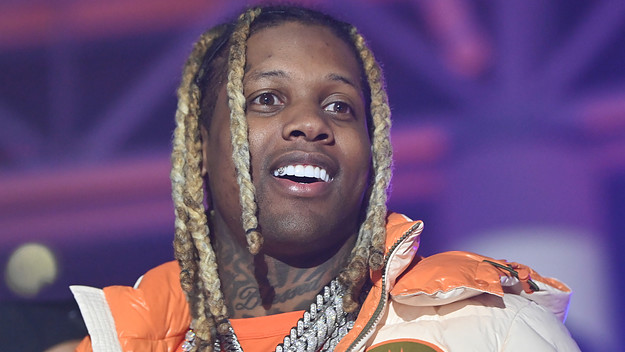
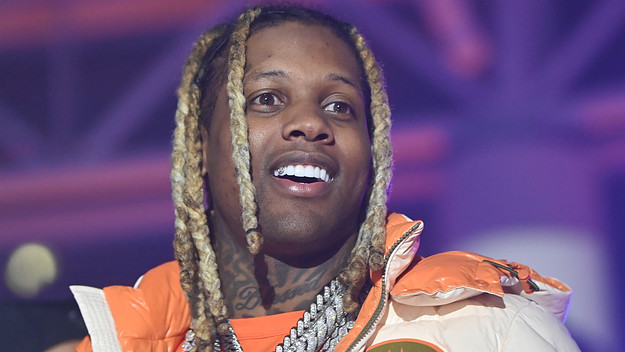
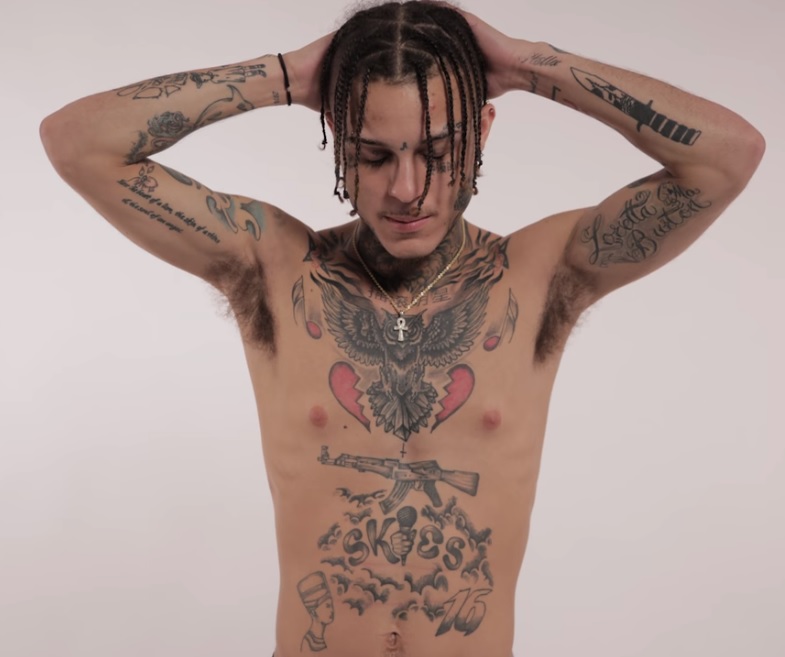
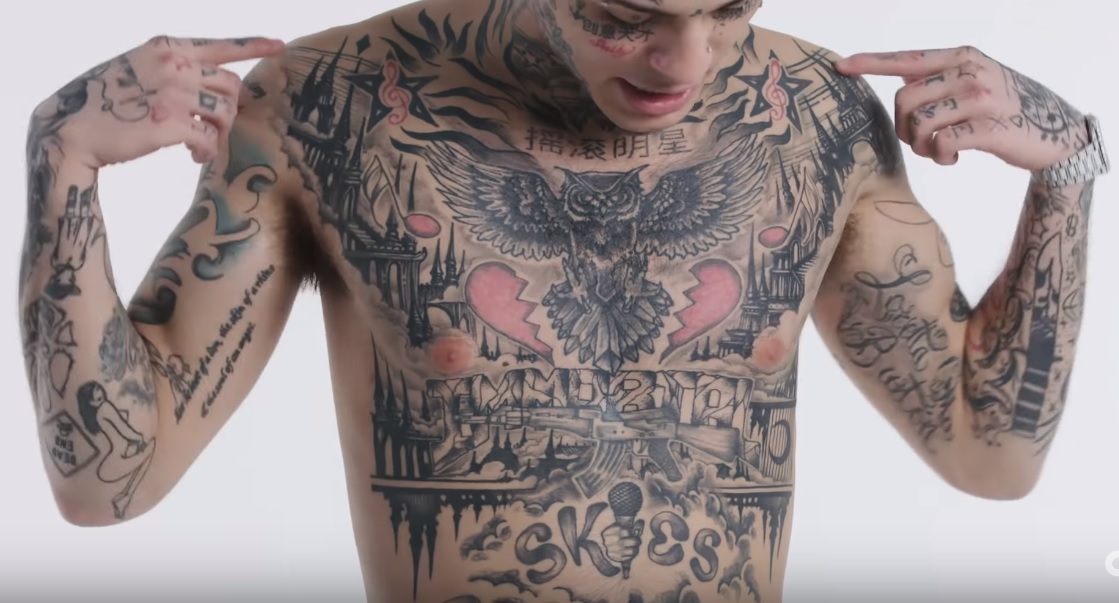
Lil Durk’s tattoos cover his face, hands, arms and back. Some refer to Only the Family (OTF), while others are connected in public accounts to people he has lost or to his career. Interviews and tattoo videos explain a few designs; many others are visible in photos without a clear account of what they mean. The collection has changed over time, too, with newer large-scale work appearing alongside older lettering. This guide sticks to repeated or well-documented details and leaves uncertain shapes and meanings unnamed. The clearest themes are OTF lettering, memorials, names and the large back tattoo.

OTF is the collection’s clearest visual thread
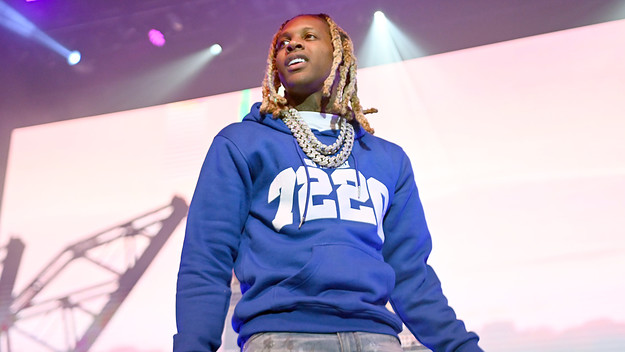
Lil Durk tattoos The letters OTF refer to Only the Family, the collective and label associated with Durk’s career. Photos show the initials on his body, though their placement and style vary. Other designs are sometimes labeled OTF by fans; a blurry crop may not be enough to confirm the lettering. It’s better to name the initials only when the image or a reliable account supports them. OTF is a recurring public reference, but that doesn’t establish the meaning of every tattoo near it.

His face tattoos make the message public
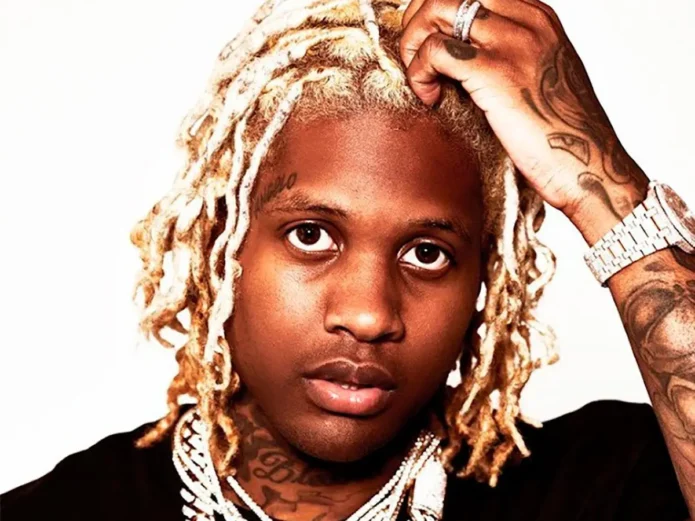
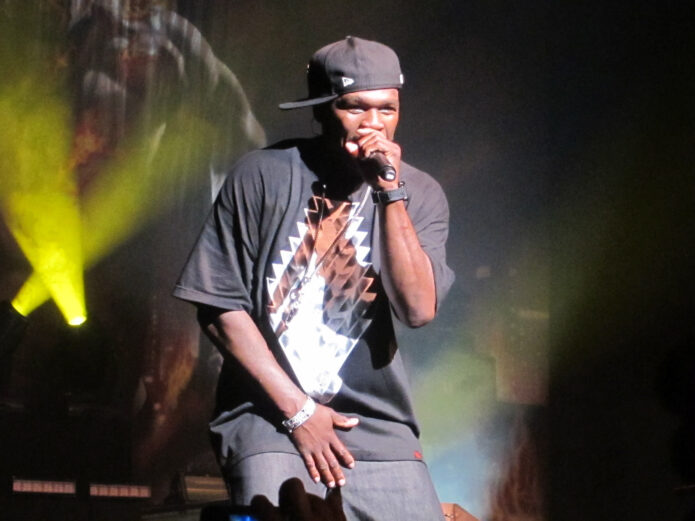
Lil Durk face tattoos Lil Durk performing with face and arm tattoos visible Face tattoos stay visible in portraits, unlike arm designs that can disappear under clothing. Photos show small marks around Durk’s eyes, cheeks and forehead, along with lettering that is easier to read in close-ups. Some pieces have been associated with names, phrases, street identity or people he has lost, but each connection needs its own support. Visibility is part of the public image. It still doesn’t give us the full story behind a tattoo.

Memorial ink sits beside the career symbols
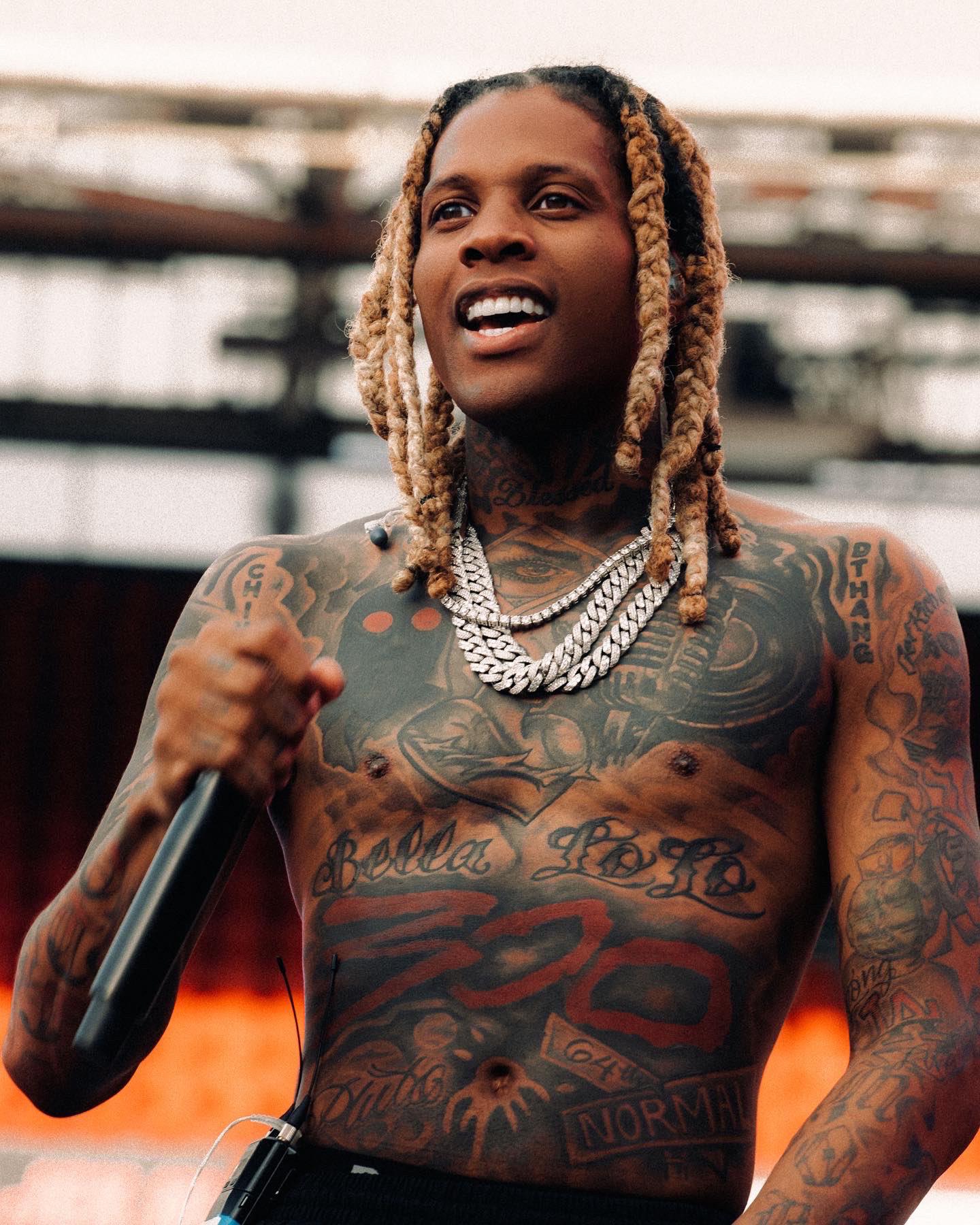
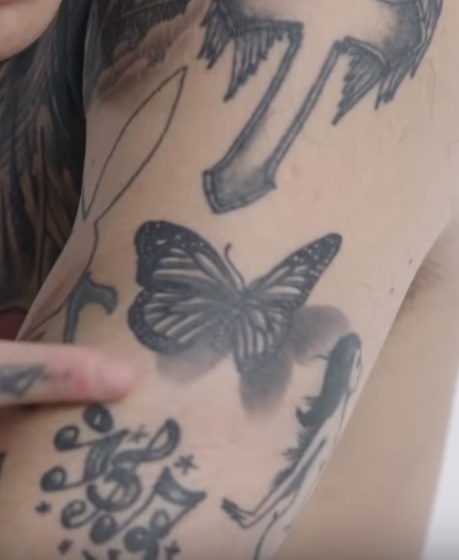
Lil Durk tattoo detail Names, portraits and symbols connected to friends or family appear in coverage alongside OTF designs. Public accounts don’t always identify the person or story behind each piece, so it’s better not to call every image a memorial without a source. Where a reliable account names the connection, that detail can be included; otherwise, describe what is visible and leave the rest open. Online captions can be incomplete or repeated without a source. The photos show the ink, but the person or meaning behind some marks may remain private.

The large back tattoo changed the scale of the collection
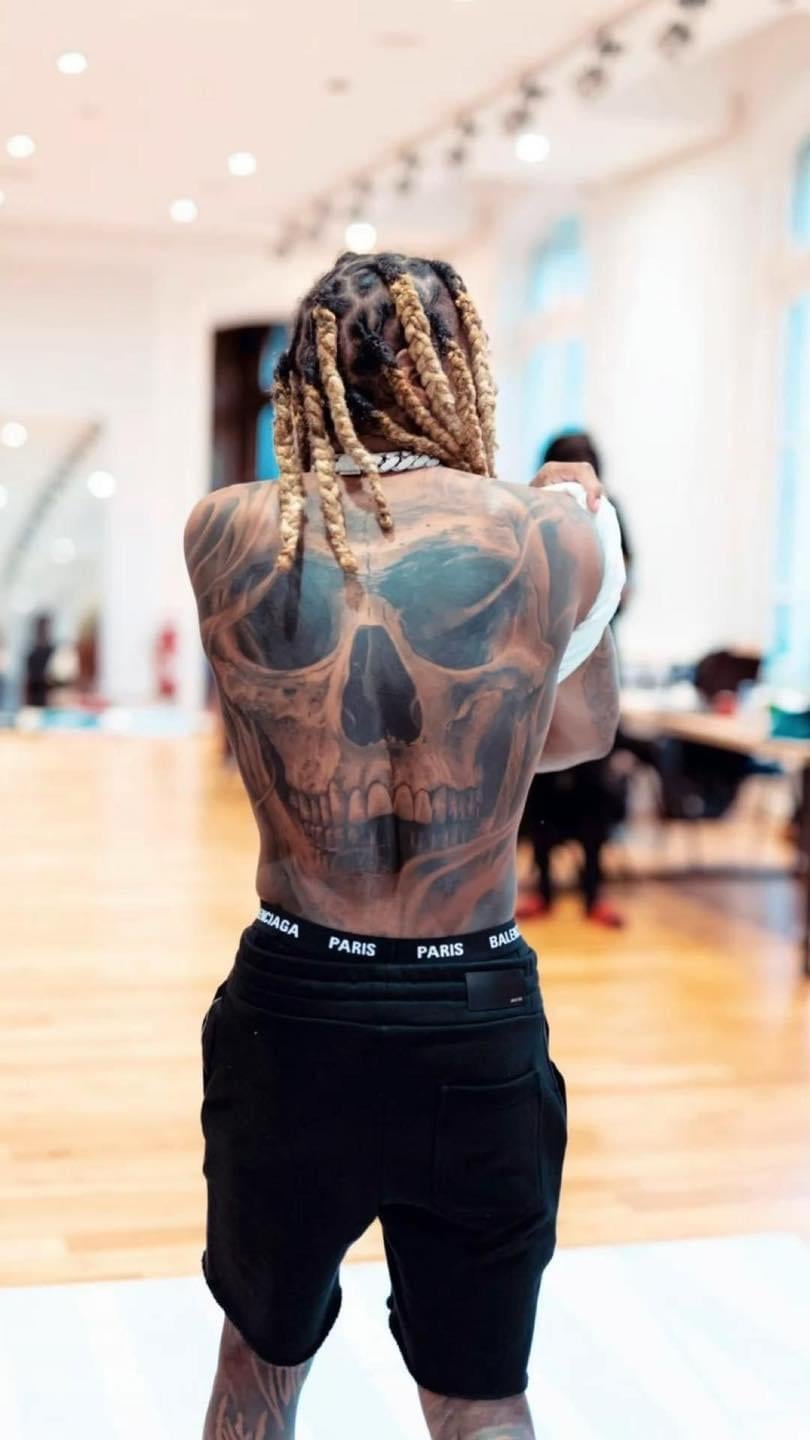
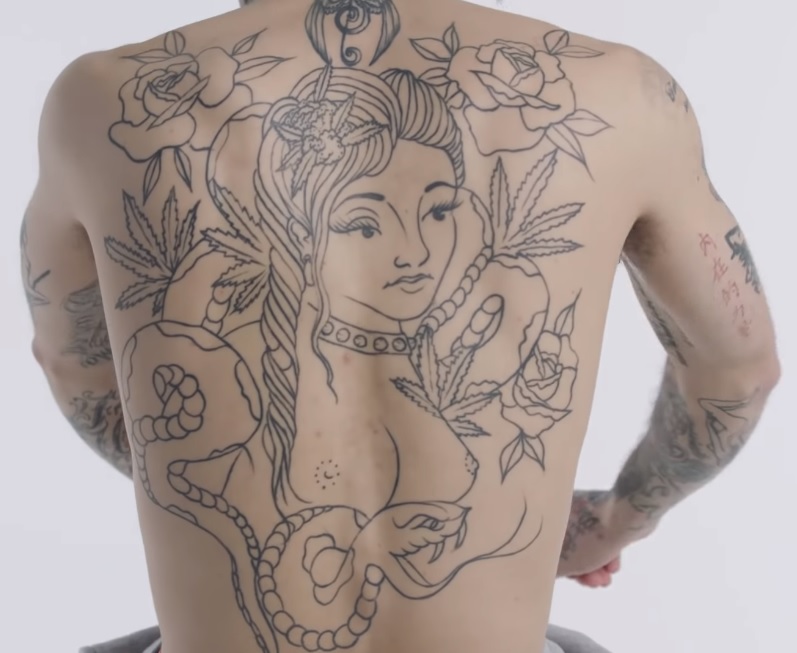
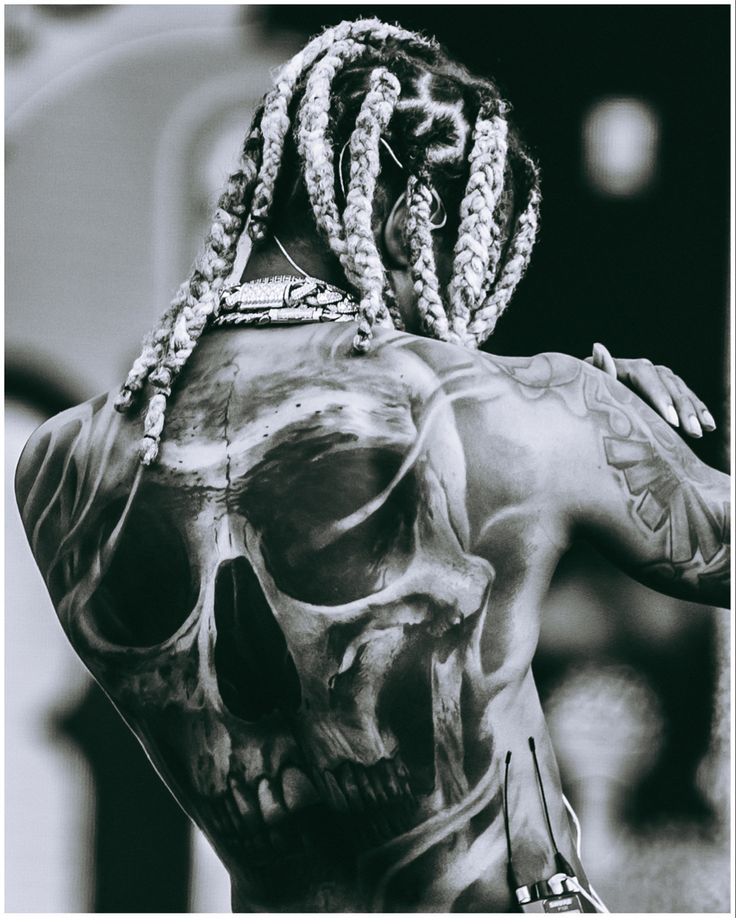
Lil Durk back tattoo Lil Durk tattoos visible during a live performance Recent photos and posts brought a large tattoo across Durk’s back into view. Coverage describes an extensive full-back session, but the cost and every symbol’s meaning aren’t established by the images alone. When visible, the work takes up most of his back and reads as one composition, unlike the smaller face, hand and arm pieces. Some viewers identify skulls and crossed-out symbols; those are visual readings unless Durk or a reliable report confirms them. The photographs tell us more about size and placement than about private meaning.

Hands and arms keep the ink in motion
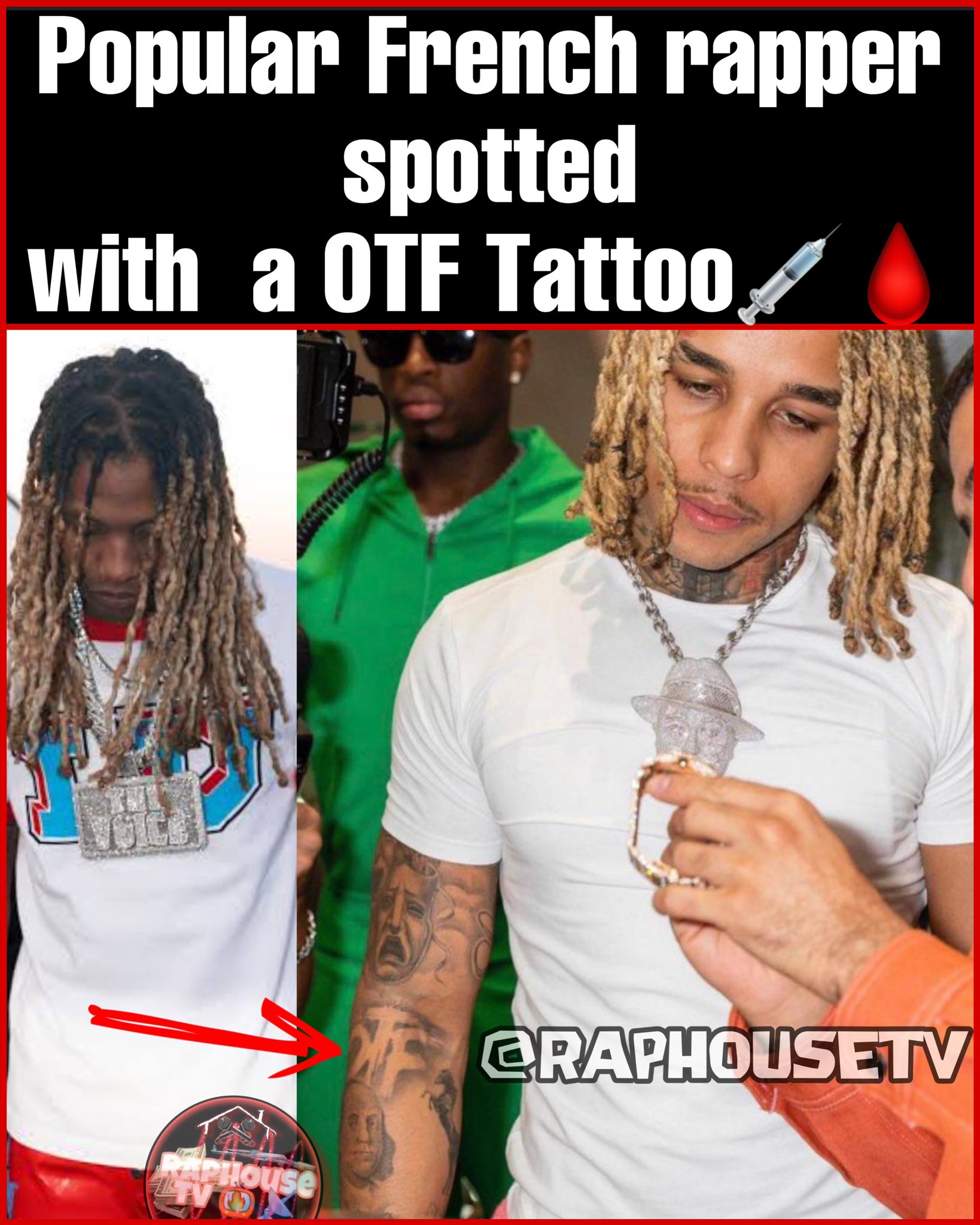
Lil Durk stage tattoos Performance photos often show Durk’s hands and arms, but motion can make the smaller designs hard to identify. A raised hand, microphone, sleeve or change in angle can reveal one mark and hide another. Photos from different years show lettering and symbols added in layers, without giving a complete timeline. A mark that looks like a number in one frame may be lettering in another. A careful inventory names designs that recur clearly or that Durk has identified, and leaves one-off guesses out.

Names and words do more work than decoration

Lettering includes OTF initials, names and short phrases. A tattoo can refer to a person, a group or a promise, but words on skin aren’t automatically illustrations of lyrics. A tattoo is a permanent reference; its link to a song needs separate confirmation. Cropped photos may show only part of a word. It’s more accurate to describe partial lettering than to finish a phrase from memory. Close-ups help read the words; wider photos show how each piece sits beside the rest, but neither view reveals a private meaning.

A careful inventory of Lil Durk’s documented tattoos

The clearest categories are OTF lettering; face marks, including names and symbols; hand and arm tattoos; memorial pieces identified by reliable sources; and the large back tattoo shown in recent coverage. Body Art Guru’s older catalogue lists many designs, while later photos show additions and changes. Counts depend on when an inventory was made. Any tattoo count needs a date and a source. A visible design and its assigned meaning are different things. A confirmed initial can be named; a shape in shadow should stay unidentified. That leaves room to update the record as clearer photos appear.

Why his tattoos feel like a timeline

The collection brings together OTF lettering, memorials and newer large-scale work. Photos don’t give us a full chronology, but they show a mix built up over time. New pieces sit beside old names and symbols; one doesn’t erase the other. The tattoos can be read as a record of loyalty, loss and ambition, but that framing doesn’t explain every mark. The public story changes as Durk’s career moves forward, while the meaning of each specific piece remains his to share.

Watch Lil Durk’s tattoo story unfold

The video below covers Durk’s newer tattoos and the large back piece that drew attention online.
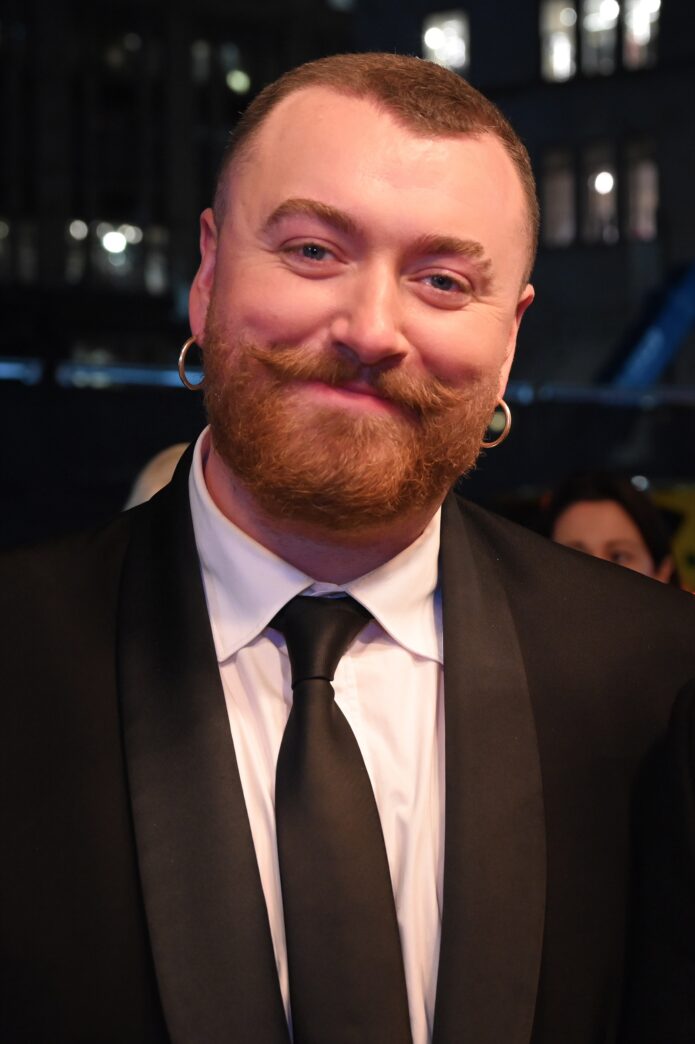
More musician tattoo guides

Sam Smith lets every tattoo keep its own story

Sam Smith has more than thirty tattoos, according to older guides, though the total varies with how small marks are counted. Their collection ranges from hand symbols and blunt words to music references and designs connected to identity. Smith has described tattoos as stamps that record a feeling, a time or a decision. That gives the pieces a personal context, but it doesn’t make every design a public statement. This guide focuses on tattoos Smith has shown or discussed and leaves fan guesses separate.

The equality sign that became a personal symbol

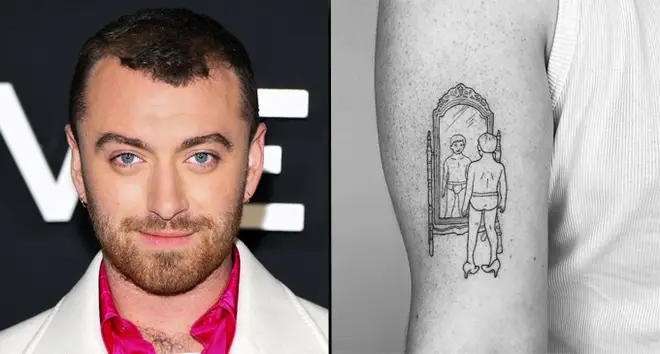
Sam Smith non-binary identity tattoo One of Smith’s best-known designs is the equality sign on their wedding finger. Smith described it as a statement about marriage equality and the right to love openly. The placement keeps it visible in ordinary gestures, but the public message is the part Smith has shared; the private meaning beyond that is theirs to explain. It’s a small mark with a clear stated message. The rest of the collection moves between text, rough lines and simple symbols rather than one coordinated style.
Honesty and alone tell a more vulnerable story

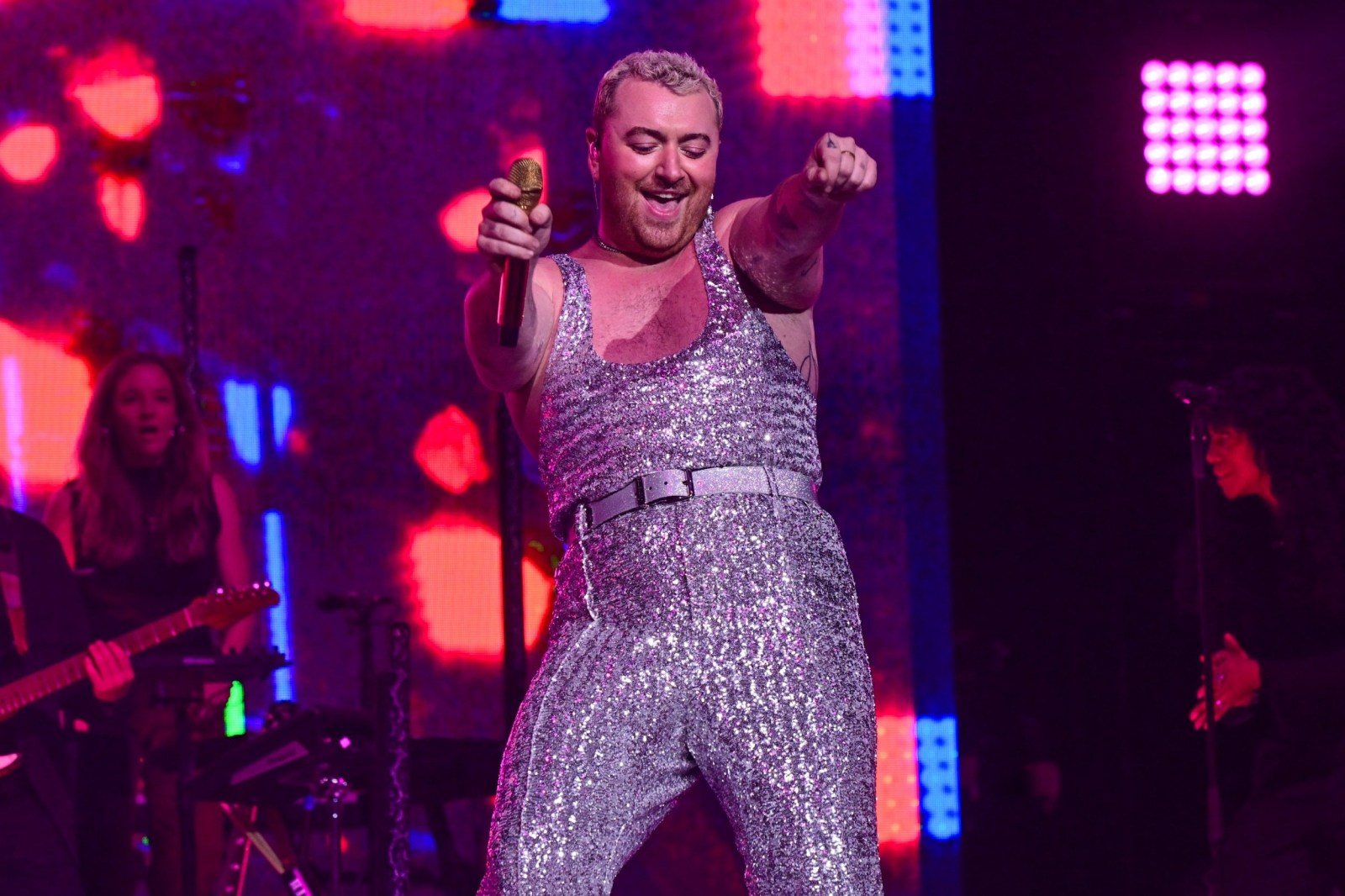
Sam Smith arm tattoos on stage In 2015, Smith showed two new words on their arms: “honesty” and “alone”. The designs are plain enough to read at a glance. Smith was also speaking publicly about loneliness and love, which gives the words some context without turning them into a diagnosis. “Honesty” is direct; “alone” is more exposed. People can keep a tattoo after the feeling behind it has changed. The ink records a state of mind, not a permanent diagnosis. These words add a personal note to a collection that also includes symbols and music references.
The prehistoric mark that inspired an old tattoo

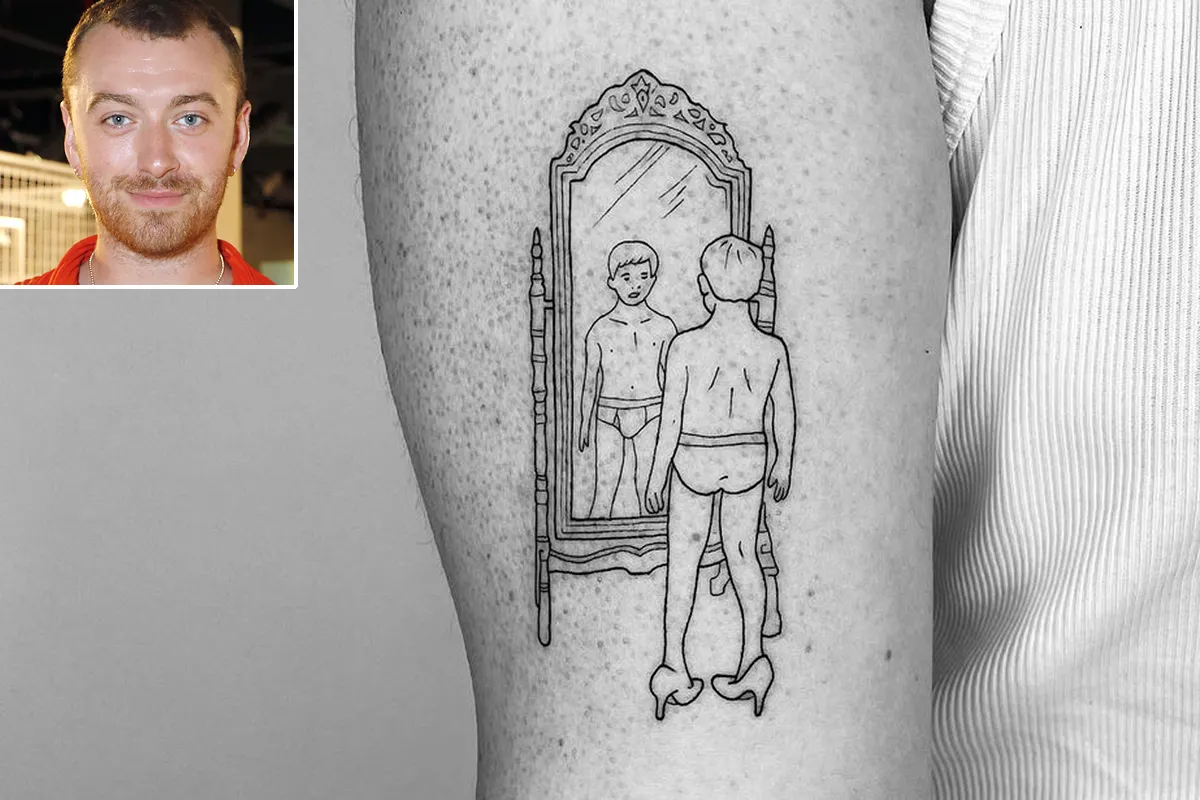
Sam Smith tattoo close-up Smith has described one tattoo as inspired by the markings found on the Iceman, a preserved body with some of the oldest known tattoo marks. Accounts differ on how to describe every line in Smith’s design, so the clearest point is the ancient reference Smith has shared. It adds a historical note to a collection better known for personal words and music references. The connection reaches beyond celebrity culture: people have marked their skin for thousands of years. It is a small design tied to Smith’s interest in tattoo history.
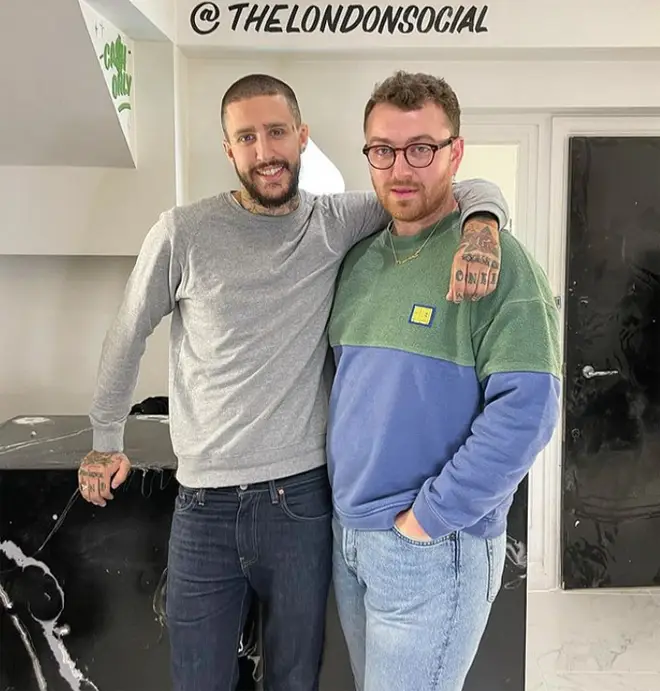
Hand tattoos, matchsticks and the idea of potential

Sam Smith with tattoo artist and new ink Smith has many small tattoos on their hands and fingers, including a Venus symbol, Roman-numeral-style marks, crosses and other simple shapes. One story that comes up often is the matching matchstick tattoos Smith got with fans. They have described the matchstick as a sign of potential: something that could be lit or started. The shared design gave fans a small mark connected to the music. Finger tattoos can be hard to document; hands move, and fine lines look different from one photo to another. The hand collection is extensive, but not every mark has a confirmed name or meaning. That is one reason different guides reach different counts.
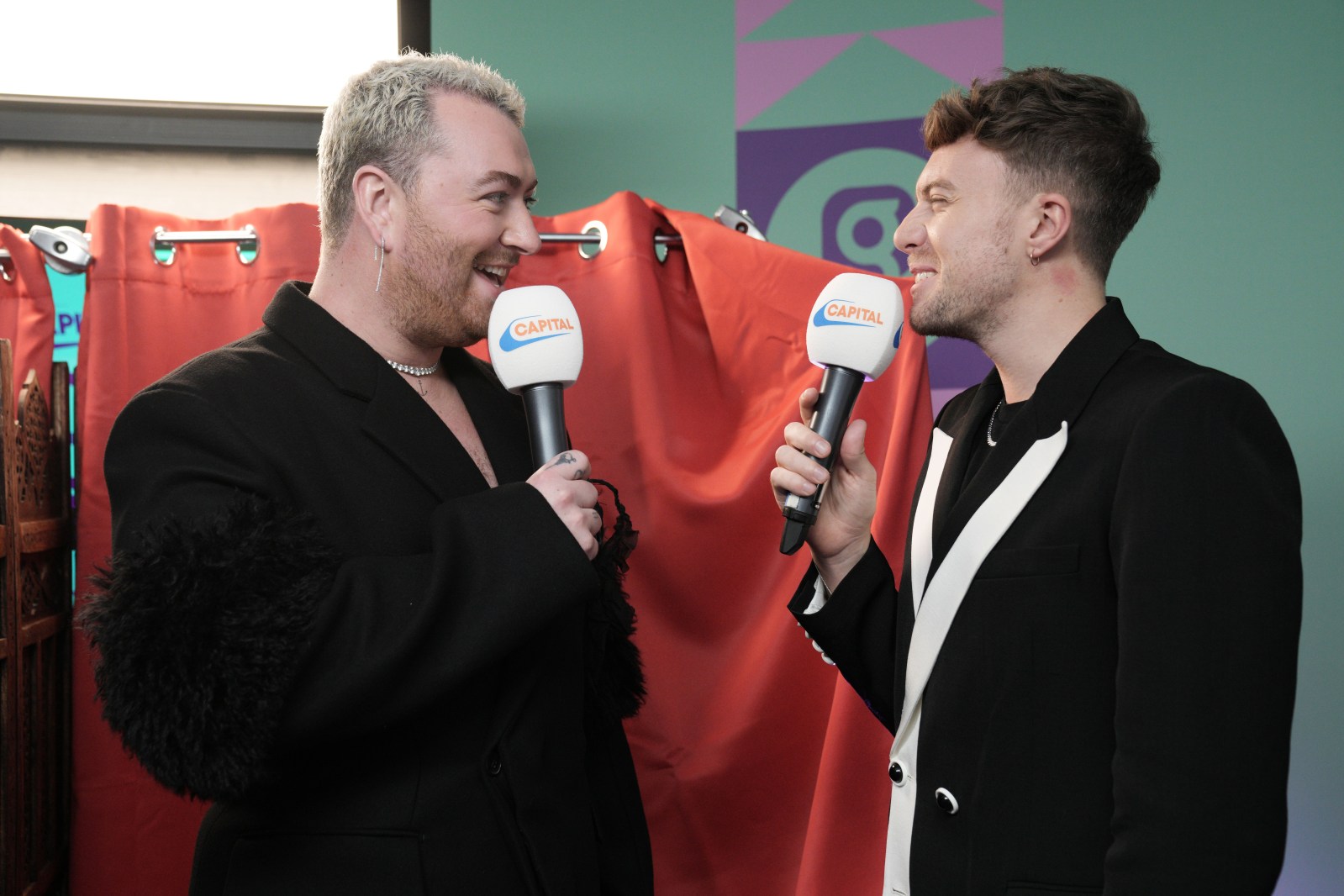
The Nirvana and music references

Sam Smith hand and arm tattoos during performance Coverage also identifies a Nirvana reference among Smith’s tattoos. It may be a tribute, or simply a design Smith liked. Without a direct explanation, the reference is clear but its private meaning is not. Smith’s collection includes personal words as well as music symbols. Not every tattoo has an official caption. A design can be visible and still mean something private to the person wearing it.
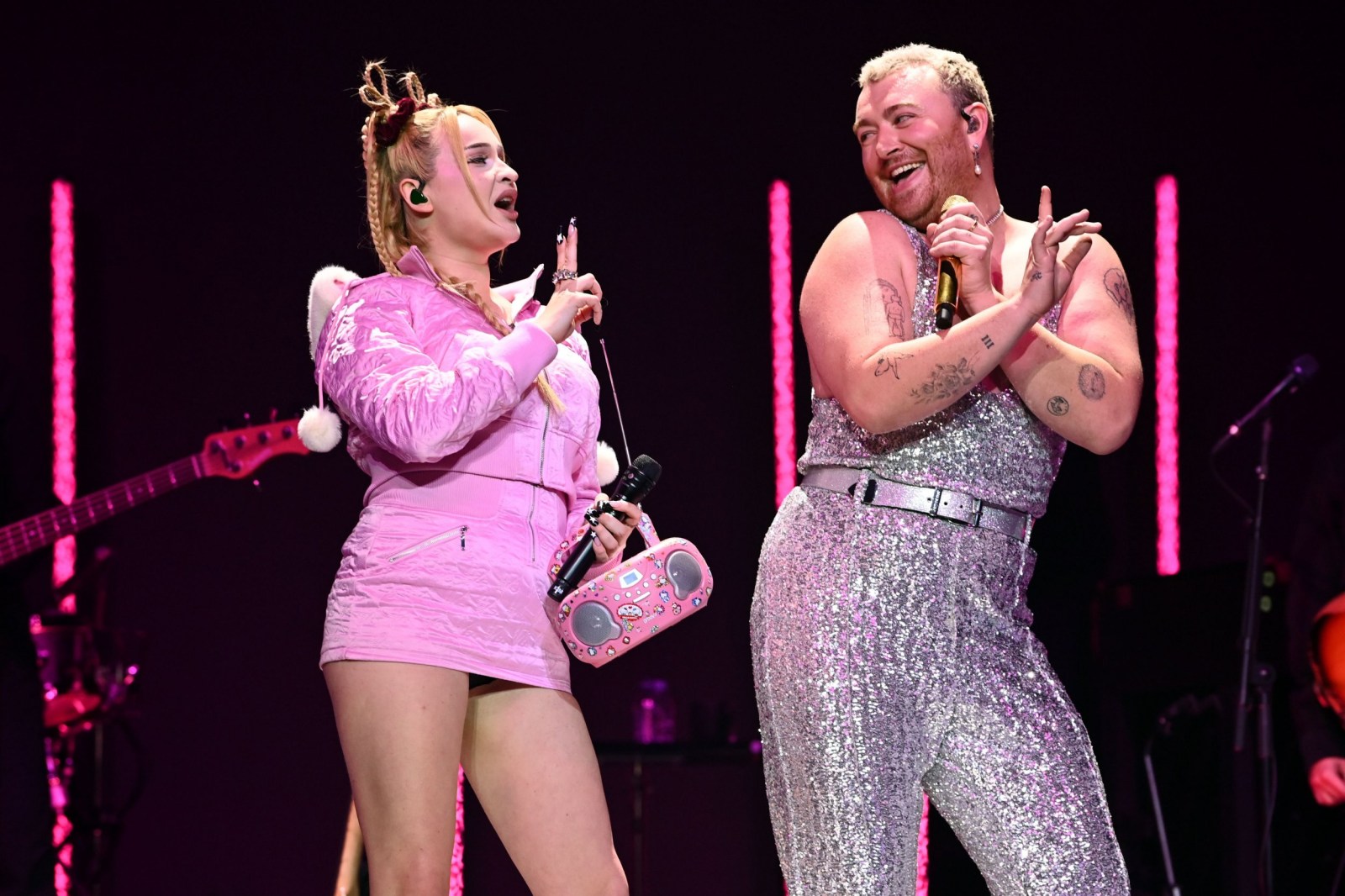
Why the collection feels like a timeline

Sam Smith tattoos visible on stage Public photos show a mix of identity-related symbols, text and music references, but they don’t give a complete chronology. “Alone” can preserve a feeling without defining Smith; the equality sign can express a value without summing up their life. Each tattoo is a marker, not a complete biography. New pieces sit beside older ones, adding to the collection without erasing what came before.
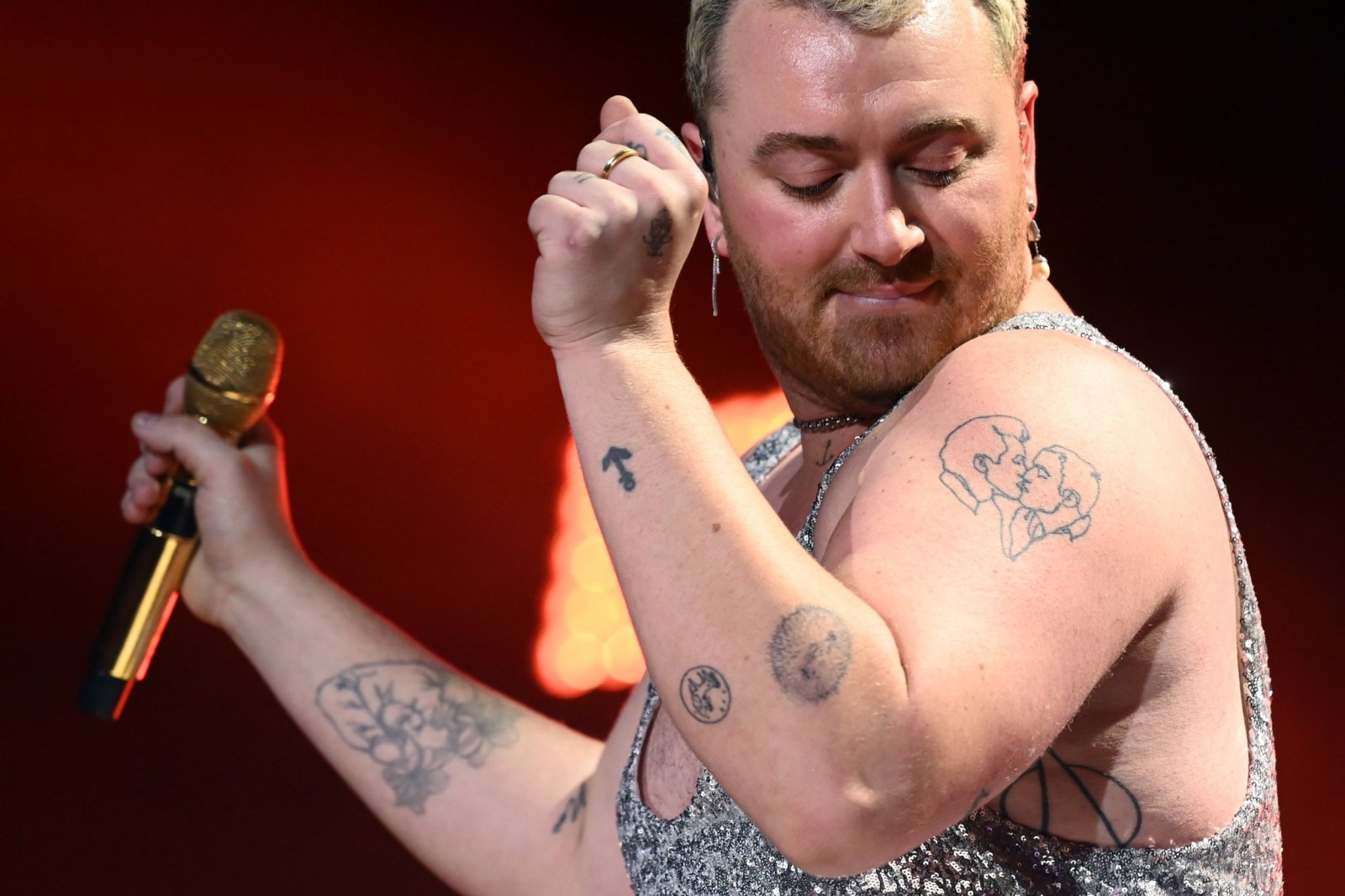
A careful inventory of Sam Smith’s documented tattoos

Sam Smith tattoo collection visible on stage Public accounts clearly identify the equality sign on Smith’s wedding finger; “honesty” and “alone” on their arms; the ancient-tattoo-inspired design; small Venus and other symbols on their hands; matching matchsticks with fans; and a Nirvana reference. Older guides count more than thirty tattoos, though they differ in how they list the smallest marks. No single photograph shows the full collection. A useful inventory can be detailed without claiming to know what Smith has kept private. The designs range from words to music to small hand symbols; some meanings have been shared, others haven’t. Smith’s description of tattoos as stamps fits the way they talk about the collection: a mark can record a moment even if its meaning shifts later. The images show both rough lines and neater pieces, but not whether each choice was quick or considered. The two styles sit side by side. That mix is the thread running through the collection.
Watch Sam Smith explain what their tattoos mean

The interview below focuses on meanings Smith has shared about their tattoos.

More musician tattoo guides

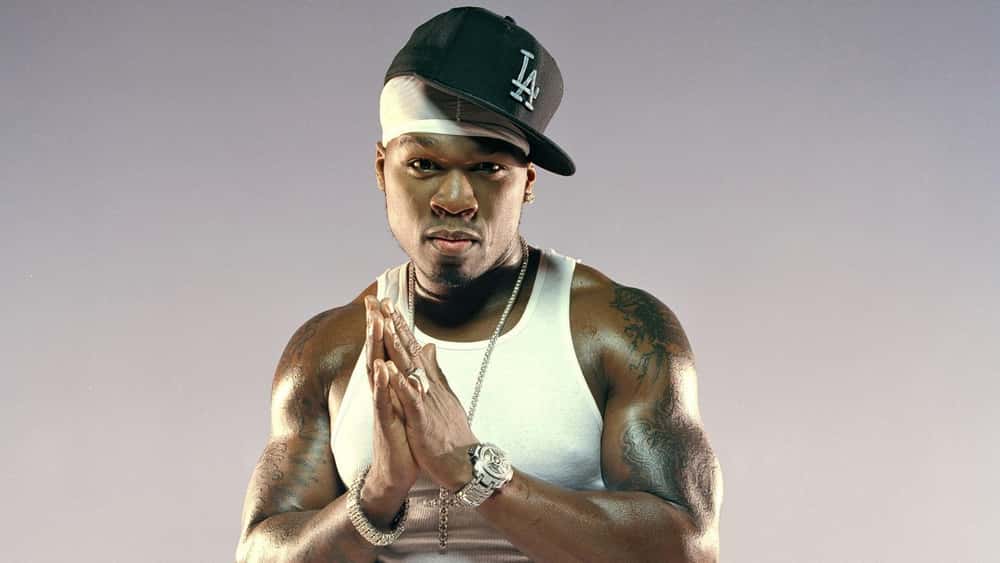
50 Cent Tattoos: His Southside Back Piece and More Ink

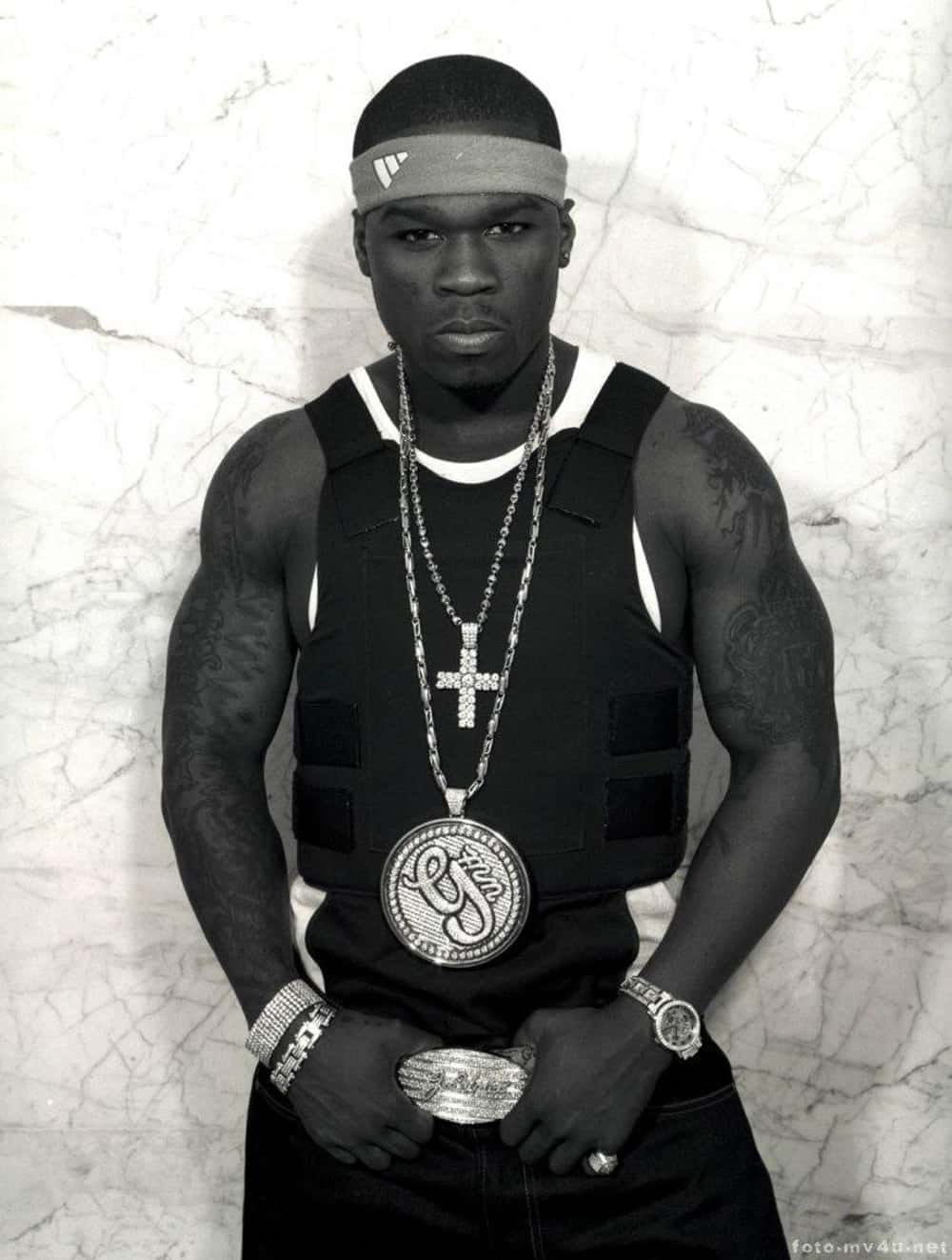
50 Cent’s tattoos have changed over the years. The large Southside and 50 design across his back is the piece most people recognize first. Older photos show more ink across his arms, including names and religious images.

He later removed many of those arm tattoos for acting work. In 2010, he said covering the ink for film roles took extra time in makeup, and that he planned to keep the large back tattoo.

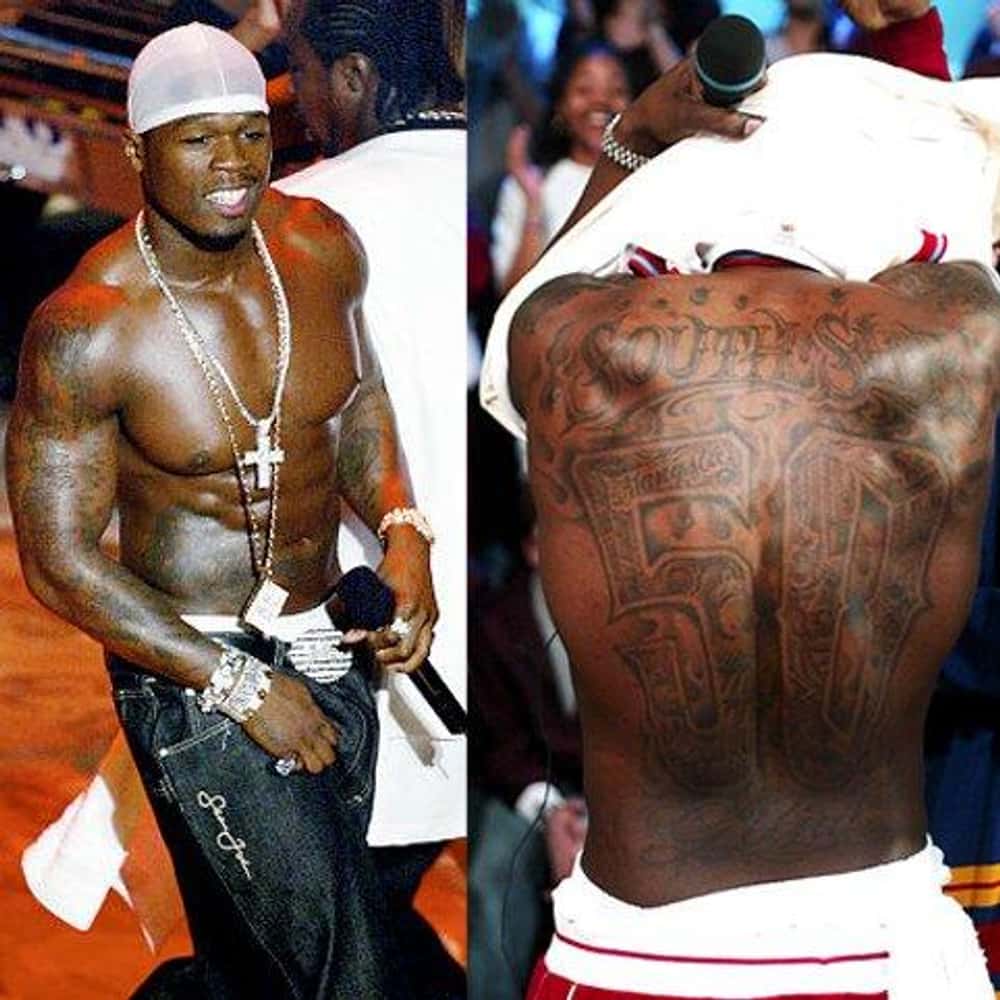
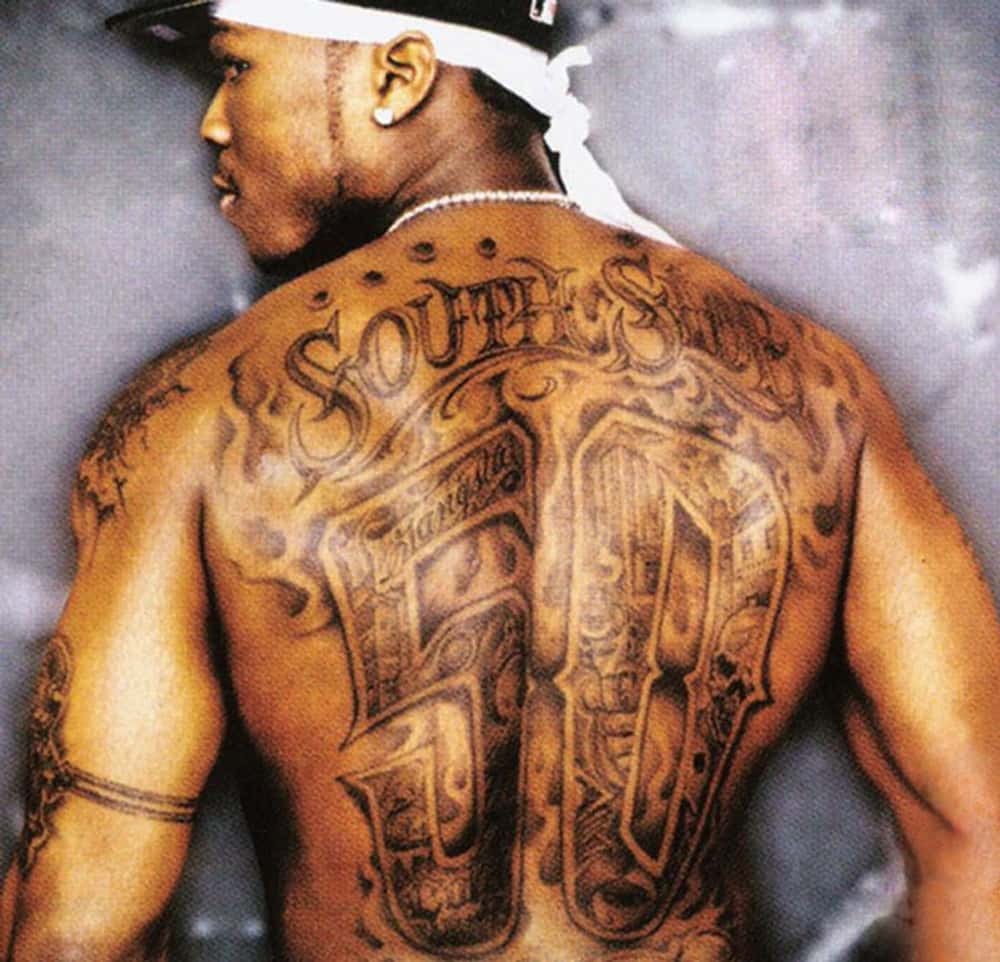
The giant Southside and 50 back tattoo

50 Cent's Southside and 50 back tattoo
50 Cent’s large back piece combines the word Southside with a huge 50 design.

The large back piece is the best-known tattoo in his collection. “Southside” crosses his upper back, above a large 50 that takes up much of the space below it.

The word Southside refers to South Jamaica, Queens, where Curtis Jackson grew up. The tattoo ties that place to his stage name.

Heavy black-and-gray shading, broad lettering and large figures fill the back. In early music videos and photos, it was the easiest part of his tattoo collection to recognize.

God Understands Me on his left lower arm

50 Cent God Understands Me arm tattoo
The phrase “God Understands Me” is tattooed along 50 Cent’s left lower arm.

On his left lower arm, the words God Understands Me appear in older photos. The phrase is clear and direct.

It reads as a statement of faith, though the words alone don’t tell us what personal meaning he gives it. Anything more specific would be a guess.

The tattoo was easy to see when he wore sleeveless tops. Older photos show his arms covered with many designs; this is one of the clearer pieces in those images.

The angel tattoo on his left shoulder

50 Cent angel shoulder tattoo
50 Cent has an angel tattoo on his left shoulder.

An angel tattoo on his left shoulder is another part of the collection. It has the black-and-gray look seen in many of his earlier tattoos.

Set high on the shoulder, the design can disappear under a T-shirt and show when he wears sleeveless clothing. It’s smaller than the back piece, but it adds another figure to the mix.

There’s more religious imagery elsewhere on his body. The Love and Hate tattoo below his stomach, for example, sits between heads of Jesus and the Devil.

Sabrina and the ghetto angel on his right arm

50 Cent Sabrina and Ghetto Angel arm tattoo
The right arm piece includes part of “Sabrina” alongside a larger ghetto angel design.

A design on 50 Cent’s right arm includes the name Sabrina, his mother’s name, beside a larger figure described as a ghetto angel.

The lettering and figure share the same section of his arm. The name is part of the larger image, rather than a separate tattoo on its own.

50 Cent’s chest and back tattoos in a two-photo collage

His mother died when he was young, and the Sabrina lettering has been described as a tribute to her.

Love and Hate below his stomach

50 Cent Love and Hate stomach tattoo
The words “Love” and “Hate” sit below 50 Cent’s stomach, between religious images.

Below his belly button, the words Love and Hate sit between the heads of Jesus and the Devil. The figures frame the two words and give the design its strong visual contrast.

The tattoo sits low on his abdomen, so it’s usually covered by clothing. It shows most clearly in shirtless photos.

Marquise and Warrior on his right arm

50 Cent Marquise and Warrior arm tattoo
“Marquise” and “Warrior” appear together on 50 Cent’s right arm.

The name Marquise refers to 50 Cent’s son, and the word Warrior appears alongside it on his right arm.

The piece pairs a family name with another word, both worked into a larger arm design. Older photos show this section among the many tattoos that once covered his arm.

The ink ran from his shoulder toward his forearm, so the Marquise and Warrior lettering wasn’t an isolated name tattoo. It sat within a much denser arrangement.

The second 50 tattoo on his left bicep

50 Cent second 50 bicep tattoo
A second 50 design sits on 50 Cent’s left bicep.

50 Cent has another 50 tattoo on his left bicep. This one has a detailed frame around the number, unlike the much larger design on his back.

Both tattoos use the number from his stage name. The back piece covers a large area; the bicep design repeats the number on a smaller scale.

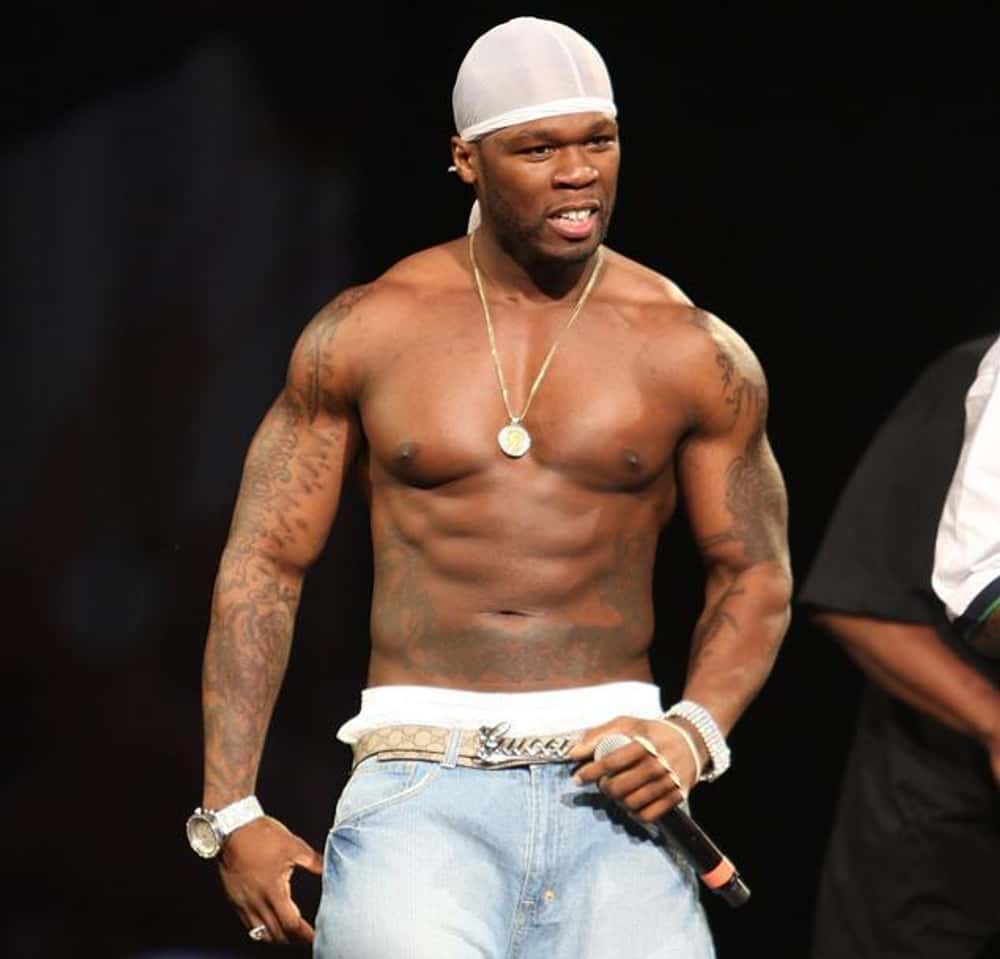
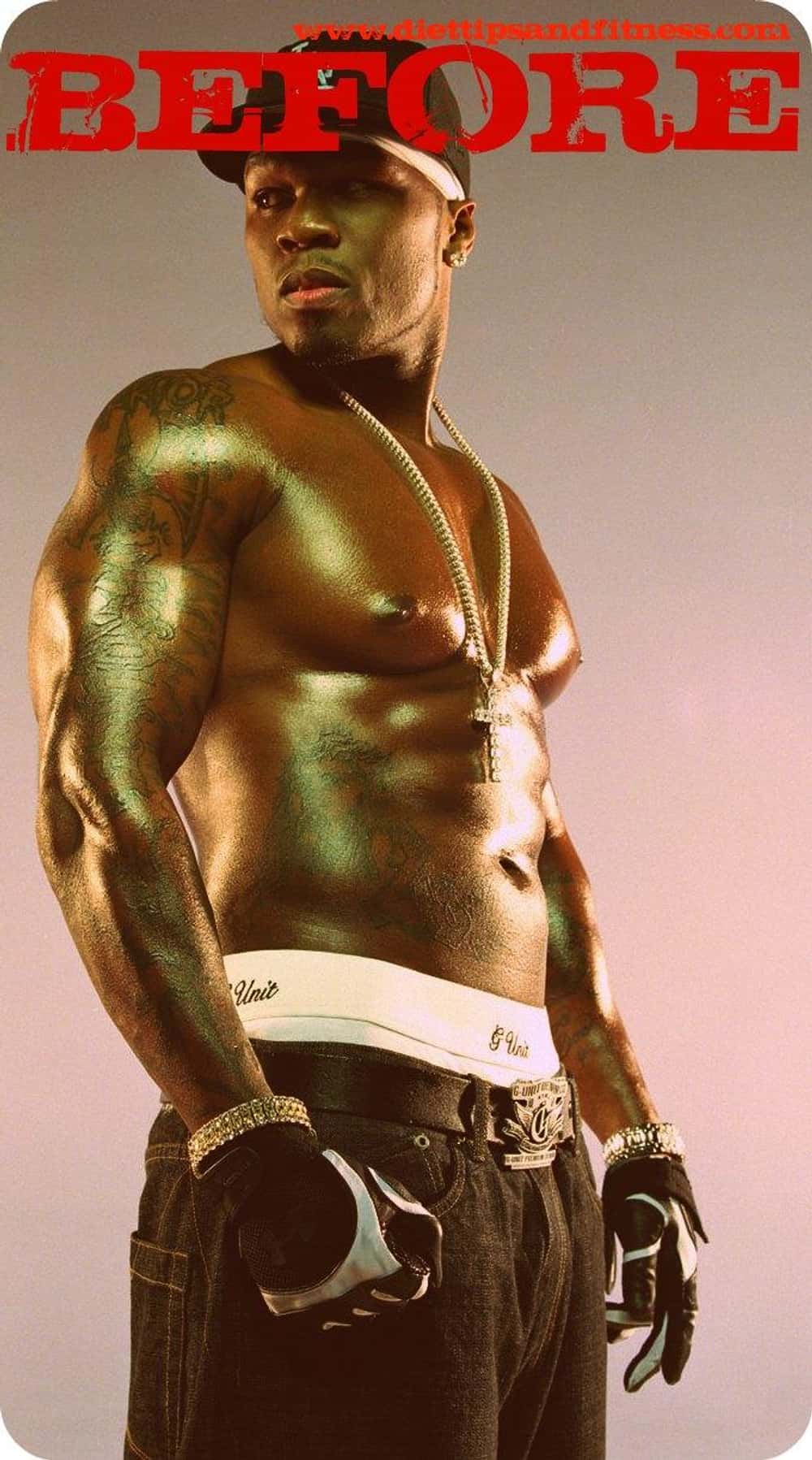
Photos taken years apart show different amounts of ink on his arms. Some tattoos visible in earlier pictures were later removed for film roles, so images from different periods don’t show the same collection.

Why did 50 Cent remove some of his arm tattoos?

In 2010, 50 Cent said he had removed some tattoos because film makeup took too long. Makeup artists had to cover the ink before each shoot, which could mean hours of preparation. He described removal as an ongoing process.

At the time, he expected his arms to be tattoo-free and said he planned to keep the large back tattoo. That helps explain why later photos show less ink on his arms while the back piece remained part of his look.

The change took place over time. Older photos show heavy arm coverage; later ones show the collection after some of that ink had been removed.

Here’s a video about the story behind 50 Cent’s famous back tattoo and its artist, Mister Cartoon:

More musician tattoo guides

LeAnn Rimes Tattoos: Foot Quote, “God’s Work” and More

LeAnn Rimes has small script tattoos on her foot, wrists, back, waist and ribs. Some have stories she has shared publicly: a phrase Eddie Cibrian came up with, matching initials, and a feather she tied to the end of a long recording contract.

An older photo also shows a butterfly drawn on her wrist for a campaign. It was temporary body art, not a permanent tattoo.

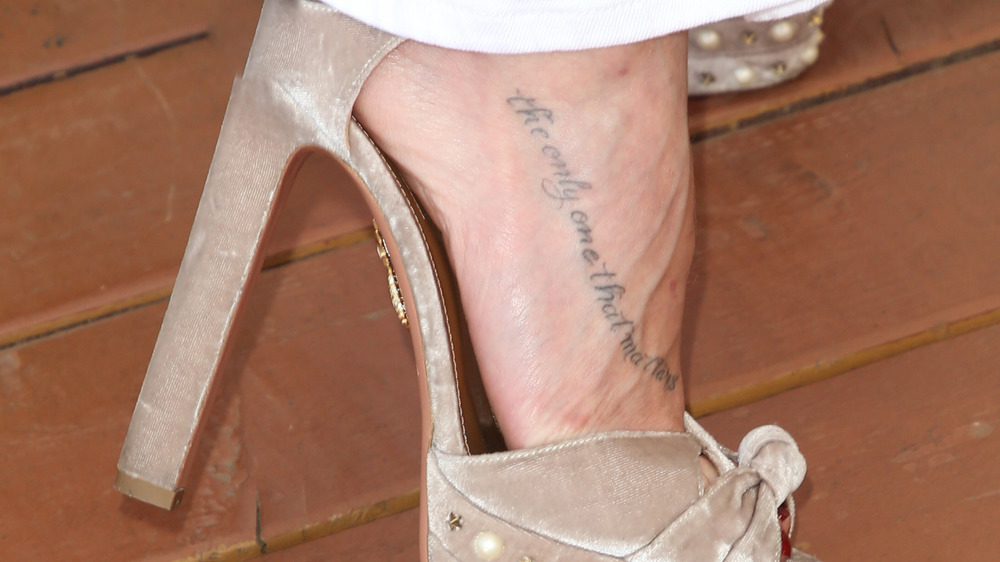
The foot tattoo says “the only one that matters”

LeAnn Rimes foot tattoo reading the only one that matters

The script across the top of LeAnn’s right foot reads “the only one that matters.” She said Eddie came up with the phrase during a vacation, and she liked it enough to have it tattooed.

She later told Taste of Country that getting a tattoo on her foot hurt less than she expected. The lettering is fine and runs across the top of her foot, where it shows with sandals.

“God’s work” brought a lot of comments

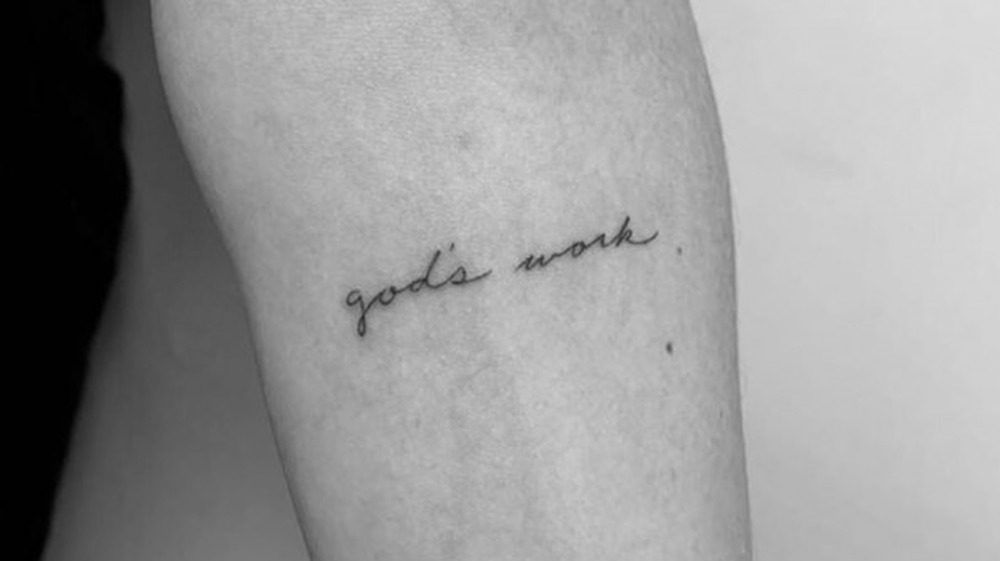
LeAnn Rimes god's work forearm tattoo

In 2019, LeAnn added “god’s work” to her left forearm. Tattoo artist Daniel Winter did the script, and she thanked him in an Instagram post.

Some of the reaction focused on the lowercase “g.” People disagreed over whether it should be capitalized. The debate was about spelling; LeAnn’s post showed the tattoo and thanked Winter.

The lettering is light and easy to miss in wider photos.

The butterfly on her wrist was campaign body art

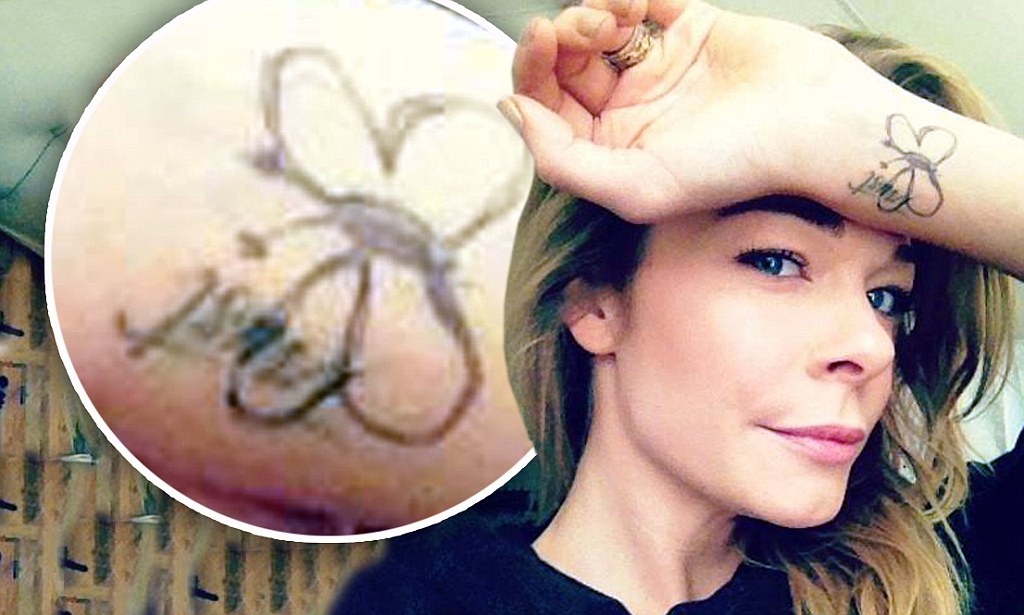
LeAnn Rimes butterfly wrist body art

In 2012, LeAnn shared a butterfly drawn on her left wrist to support The Butterfly Project. It was campaign body art, not a permanent tattoo.

The project offered support to people dealing with self-harm. LeAnn said she wanted to show support for people affected by bullying, and shared the drawing as part of that message.

LeAnn shared it as a sign of support, but it shouldn’t be counted as permanent ink.

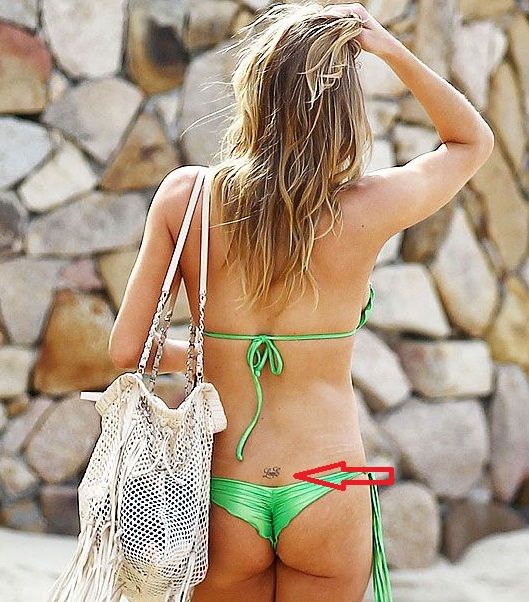
“Love” sits low on her back

LeAnn Rimes Love lower back tattoo

LeAnn has the word “Love” low on her back, near the waistband. It tends to show in bikini or low-backed photos and stays covered by most clothes.

There’s no reported backstory for this one. The word and its placement are the clearest details.

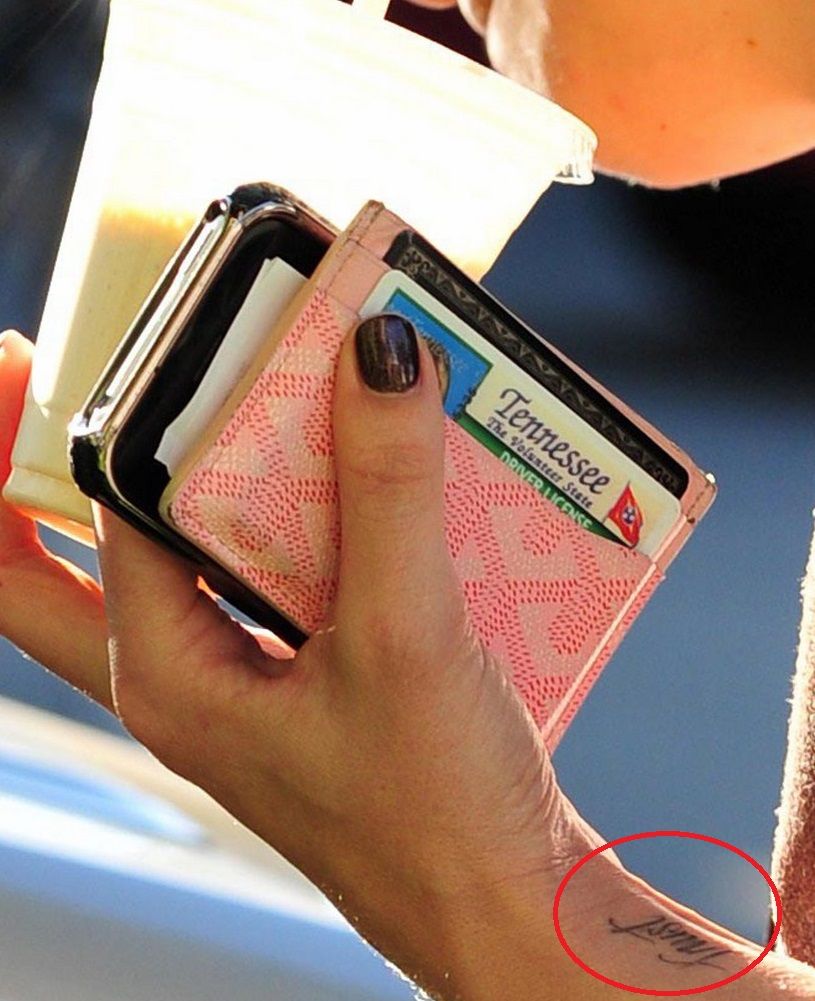
“Trust” and the arrow are easy to miss on her wrists

LeAnn Rimes Trust wrist tattoo with arrow

Two small tattoos sit around LeAnn’s wrists. “Trust” is on her left wrist, and a fine-line arrow is on her right.

Before getting the arrow, she called Kacey Musgraves’s “Follow Your Arrow” her theme song. Both designs are small enough to disappear in a wider stage photo.

The “E” on her finger matches Eddie’s “L”

LeAnn Rimes ring finger E tattoo

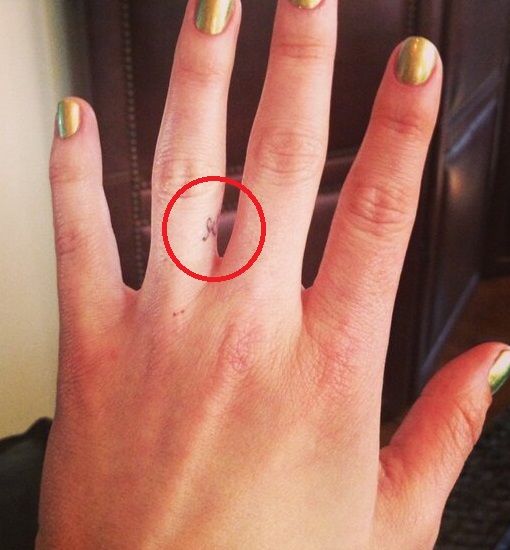
LeAnn has a small “E” on her ring finger; Eddie has an “L” on his. The matching initials stand for their first names. She shared the detail after a fan noticed the letter in a photo.

The marks are easy to miss because they’re so small, but the matching letters make the connection clear.

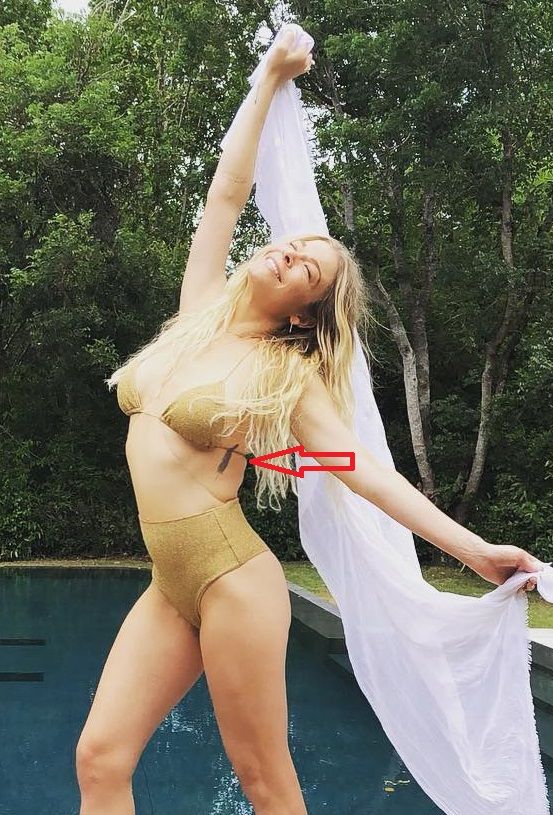
Her feather tattoo marks a big career change

LeAnn Rimes feather ribcage tattoo

The feather on LeAnn’s left ribcage is tied to the end of a long recording contract. She said she got it after spending about 20 years under a deal she described as one of the worst in the music business.

The placement lets her keep it covered most of the time. It can show in a swimsuit or a cutout outfit, though the fine lines are partly hidden in some photos.

Another phrase associated with LeAnn is “Still I Rise,” from Maya Angelou’s poem. It appears around her hip or waist in older photos. The words are often read as a message about resilience, though the exact placement is hard to pin down from those images.

LeAnn Rimes portrait beside a close-up of a small script tattoo

Why LeAnn’s tattoo collection feels so personal

Some of LeAnn’s tattoos have a public story: the foot phrase came from Eddie, their finger initials match, and she linked the feather to the end of her recording contract. The “god’s work” script drew comments about its spelling. The butterfly was different because it was drawn on for a campaign, not meant to be permanent.

Most of the designs are small and easy to cover. Script appears across her foot and forearm, while the feather and hip lettering sit beneath clothing. The collection has grown over time, but it isn’t built around one large sleeve or a single image.

For another country singer’s tattoos, see our Kellie Pickler tattoo breakdown. The designs are different, but both collections include small pieces tied to personal memories.

Watch LeAnn get the foot tattoo

The old Splash News clip below shows LeAnn getting the foot tattoo and talking about the phrase behind it.

Rob Zombie Tattoos: Horror Sleeves, Arms and More

Rob Zombie has extensive tattoo work across both arms. Concert photos show dense, dark designs with a horror-illustration feel, though lighting and clothing make individual pieces hard to identify.

There is no dependable public inventory of every tattoo or its meaning. Most pictures come from performances, magazine shoots and portraits, so some details disappear in shadows or under sleeves.

His tattoos are part of a larger stage image built around horror. There’s a similar theatrical streak in Jonathan Davis’ tattoos, though Zombie’s visible work leans into his own creature-feature style.

Rob Zombie’s left arm tattoos are the first thing you notice

Rob Zombie colorful arm tattoos

In stage photos, dark work covers much of Zombie’s left arm, from the upper arm toward the forearm. Hair, gloves and shadows obscure the edges, but heavy shading and several separate forms are visible.

The arm reads as dense, sleeve-like coverage rather than one logo or a few small designs. Some details stand out when the light hits them; others appear only when he turns toward the crowd.

Concert lighting can make the tattoos look red or purple. In more neutral photos, the ink appears much darker. The horror effect comes from the imagery and shading, not bright colors.

The forearm ink has a rough, illustrated feel

Rob Zombie close-up tattoo portrait

The forearm is easier to see when Zombie pushes up his sleeves or reaches for the microphone. Dark outlines and shaded sections sit close together, forming a near-solid block from a distance.

Some shapes resemble faces or creatures, but the photos are too blurry to identify each one confidently. Stage lights obscure lines, and movement can blur the details.

The overall style recalls old horror illustrations: rough outlines, deep shadows and tightly packed imagery. Individual designs are harder to pin down than the shared mood.

Both arms carry more than one big tattoo

Rob Zombie with his tattooed arms crossed

Photos show tattoos on both arms, though the coverage looks different from one side to the other. The balance also changes with the year, clothing and angle of the shot.

The two arms aren’t mirror images. They have different shapes, patches of open skin and degrees of shading, with smaller marks and lines between the larger pieces.

Those details can disappear in a portrait but show up in a wide stage photo. A single close-up rarely gives a full view of both sleeves.

The sleeve leans hard into monsters and shadowy imagery

Rob Zombie full sleeve tattoos

Public photos show monster-like faces, skull-shaped forms and sharp, dark figures across Zombie’s arms. Not every design is clear enough to name.

Dark areas sit beside breaks of lighter skin, creating a collage-like effect. From a distance the arm reads as one image; closer photos reveal separate forms and textures.

There isn’t a reliable public explanation for each tattoo. The horror influence is visible, but the private story behind individual designs hasn’t been documented in detail.

The tattoos are part of Rob’s whole horror look

Rob Zombie tattoos in a clear arm portrait

The tattoos appear alongside Zombie’s long hair, dark clothes, hats and stage makeup. They’re a lasting part of the horror look he brings to performances.

In concert photos, he points, reaches for the microphone and throws his arms up, so the designs appear and disappear as he moves. A posed portrait shows the ink differently from a live shot.

Zombie’s films and Fozzy’s stage shows both use exaggerated characters and horror references. His tattoos sit within that visual world. They look connected to his public image, rather than like a separate theme.

How many tattoos does Rob Zombie have? There’s no confirmed public count. Large pieces appear to run together, and smaller marks are often hidden by clothing or hair. An exact number would be guesswork.

The visible coverage is extensive, especially across both arms, and older photos may not show the collection as it looks now. A shirt, vest or camera angle can change how much of it is visible.

It’s possible to describe the general look without assigning a story to every shape. The photos show substantial arm coverage, dark shading and horror imagery; the meanings, dates and artist credits for individual pieces aren’t all public.

Short version: Rob Zombie has large, dark tattoos across both arms, with monster-like imagery and heavy shading. Photos show the style clearly, but not the exact meaning of every design.

A tattoo time-lapse of one Rob Zombie design appears below:

Axl Rose Tattoos: Black Rose, Cross and More

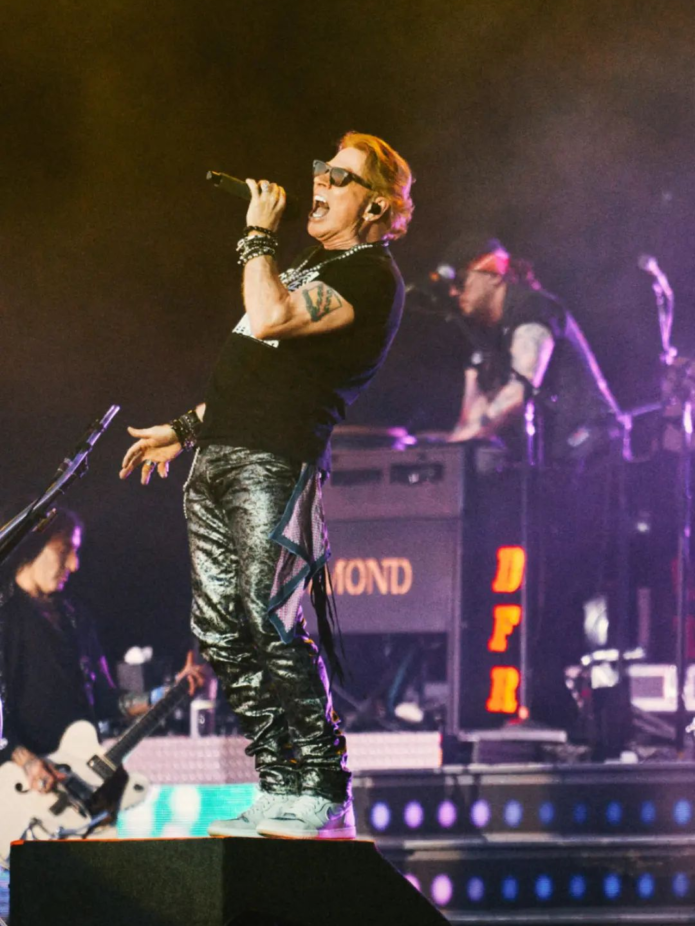
Axl Rose has said he thinks over tattoo ideas before committing to them. The designs most often documented on his arms connect to music, people from his life and Guns N’ Roses history.

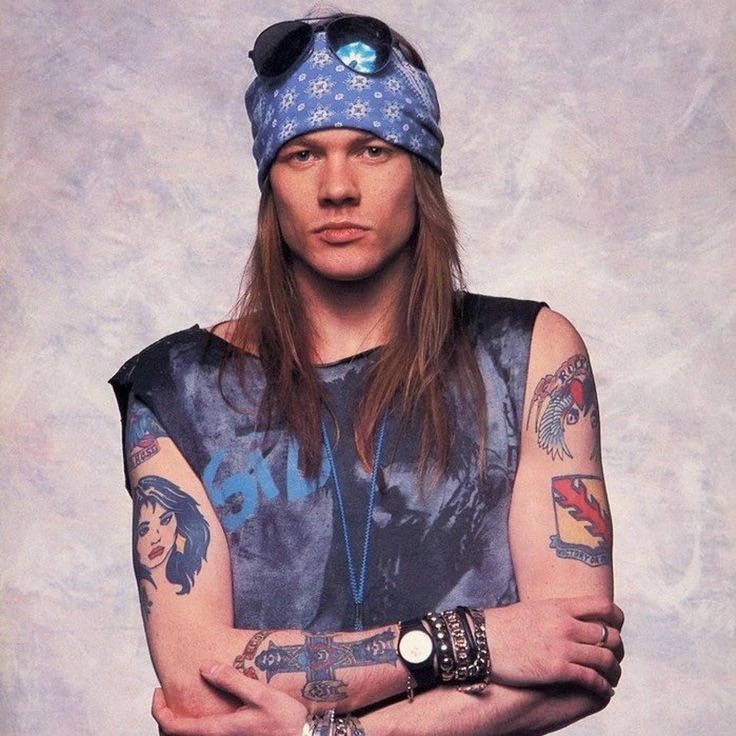
Not every mark in old concert photos is easy to identify. The black rose, the portrait on his arm and the Appetite for Destruction cross are among the clearest pieces; other details are less certain.

Axl Rose’s tattoo collection at a glance

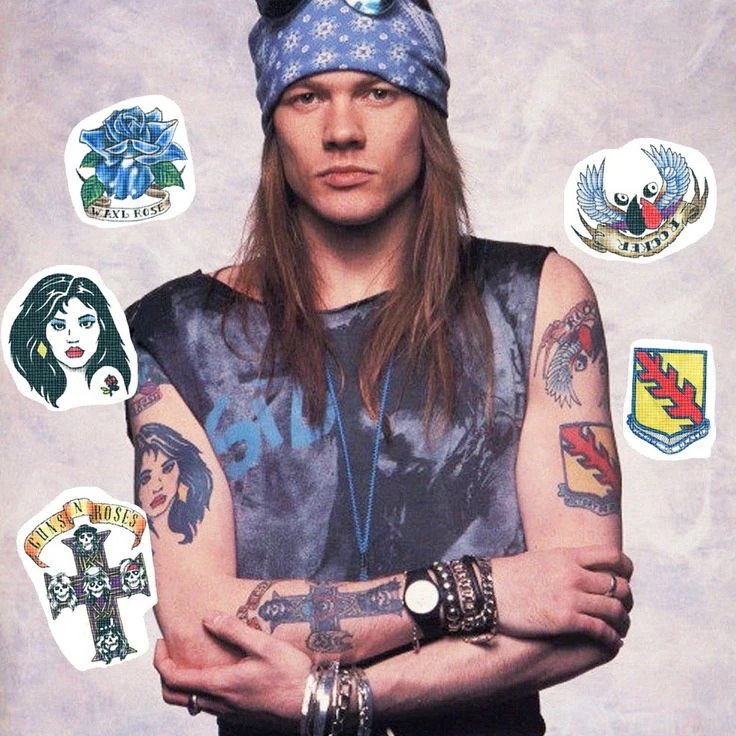
The pieces most consistently linked to Axl include:

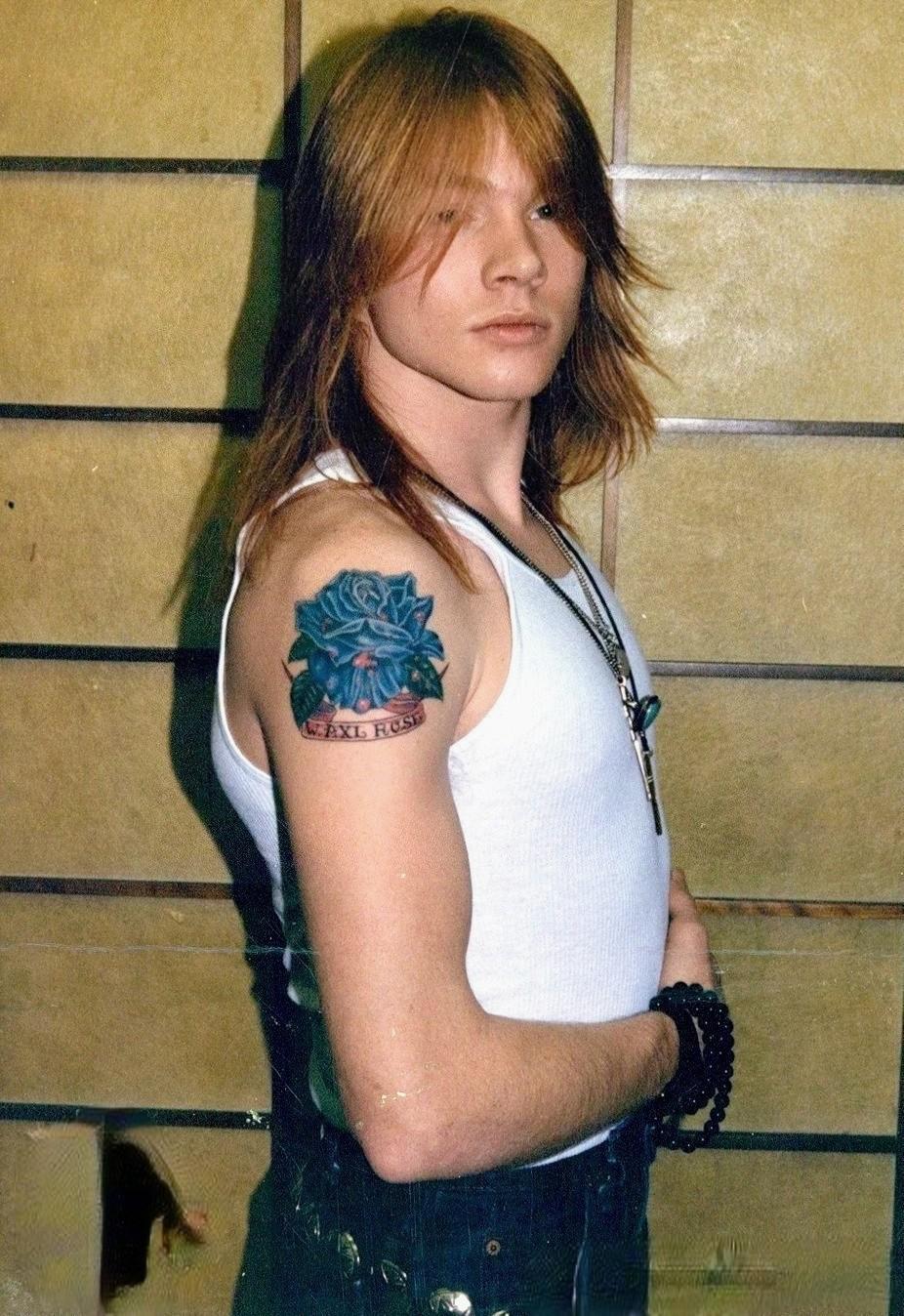
  • The Thin Lizzy black rose, tied to the band’s Black Rose album artwork.
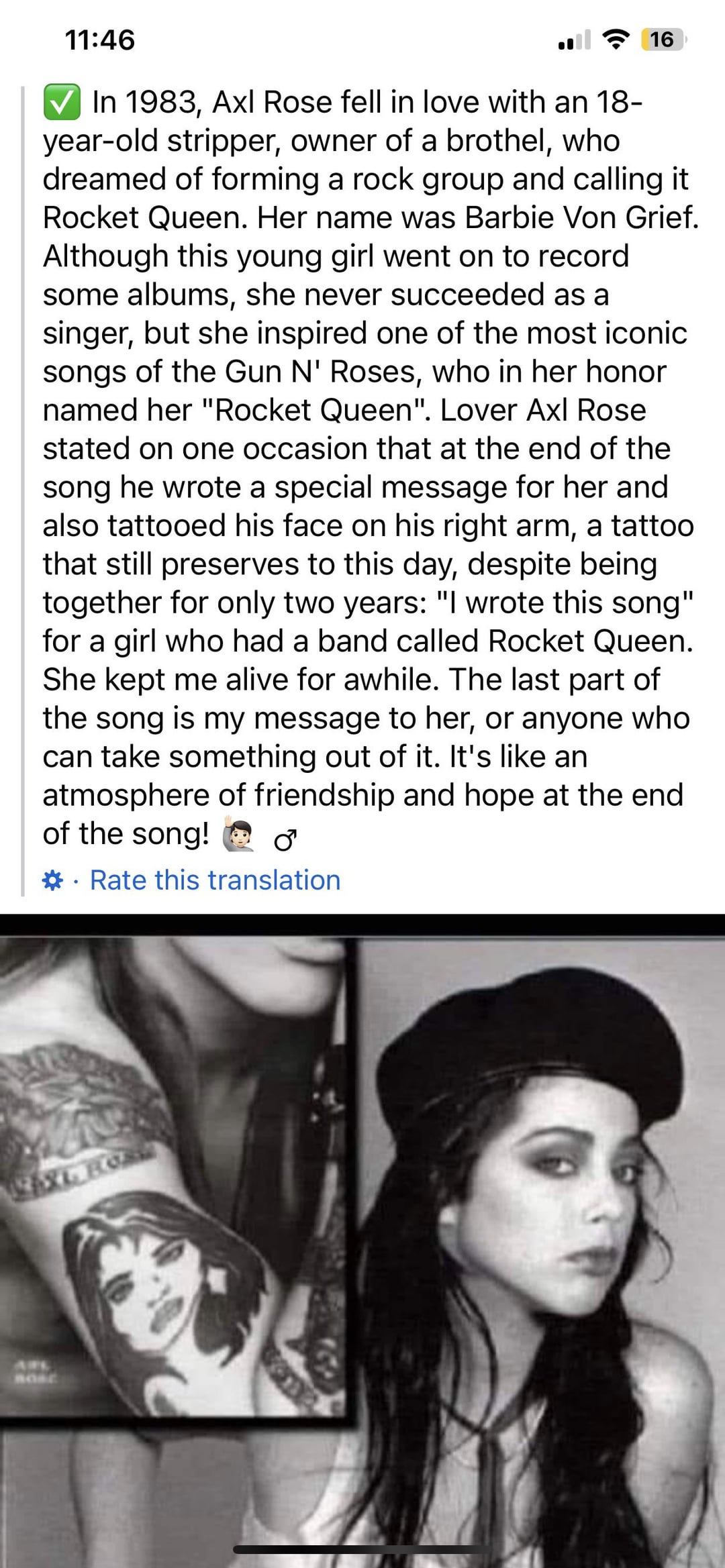
  • The woman’s portrait on his upper arm, commonly identified as Monique Lewis.
  • The Appetite cross, with skulls associated with Guns N’ Roses members.
  • “Rocker”, linked to Axl’s early Hollywood Rose years.
  • “Victory or Death”, often connected to the 32nd Armored Regiment insignia.
  • A small skull and knot design visible in some photos from the 2000s onward.
Axl Rose black rose tattoo
Axl Rose’s arm tattoos include the famous black rose and several other pieces.

The black rose tattoo and the Thin Lizzy connection

The black rose is probably Axl’s best-known tattoo. It draws on Thin Lizzy’s Black Rose imagery, and Axl has said he wanted to show it to Phil Lynott. The piece has a direct link to a band he admired.

Early photos show a large, colorful rose on his upper arm, with a banner identifying Axl. It takes up much of the space rather than sitting like a small logo.

Axl has also spoken about taking his time before getting a tattoo. In a 1987 interview often shared by Guns N’ Roses fans, he said he thinks about ideas for a long time and doesn’t want ink just for its own sake. The black rose had a clear musical connection from the start.

Axl Rose young black rose tattoo
The black rose is visible on Axl’s upper arm in early photos.

The woman’s portrait on Axl Rose’s arm

The portrait is commonly identified as Monique Lewis, who was connected to both Axl Rose and Izzy Stradlin. Some accounts tie it to “Rocket Queen,” but the story around the song and the people associated with it has been debated. The tattoo alone doesn’t settle those questions.

In photos, the large portrait sits below the rose on the same arm. Its dark outline keeps the face visible even in older stage shots.

A name in lettering would have been more explicit; a portrait leaves more room for people to interpret who it shows and why Axl chose it. The commonly reported identification is Monique Lewis, though some of the surrounding stories remain disputed.

Axl Rose Monique Lewis tattoo
The portrait tattoo on Axl Rose’s arm is commonly identified as Monique Lewis.

The Appetite for Destruction cross and skulls

A fan account says Axl had the cross-and-skull design before the Appetite for Destruction album art was developed, and that the label later used it as part of the visual direction. That account is often repeated, but the details are best treated as a reported story.

Artist Billy White Jr. has described the process as beginning with Axl’s cross and basic skull idea, then adding knotwork and other details. The design ties the tattoo to the band’s identity and its best-known album.

Older designs can be harder to read in later photos. The ink may fade, lines spread, and stage lighting obscures details. The cross and skulls remain among the pieces most closely associated with Axl.

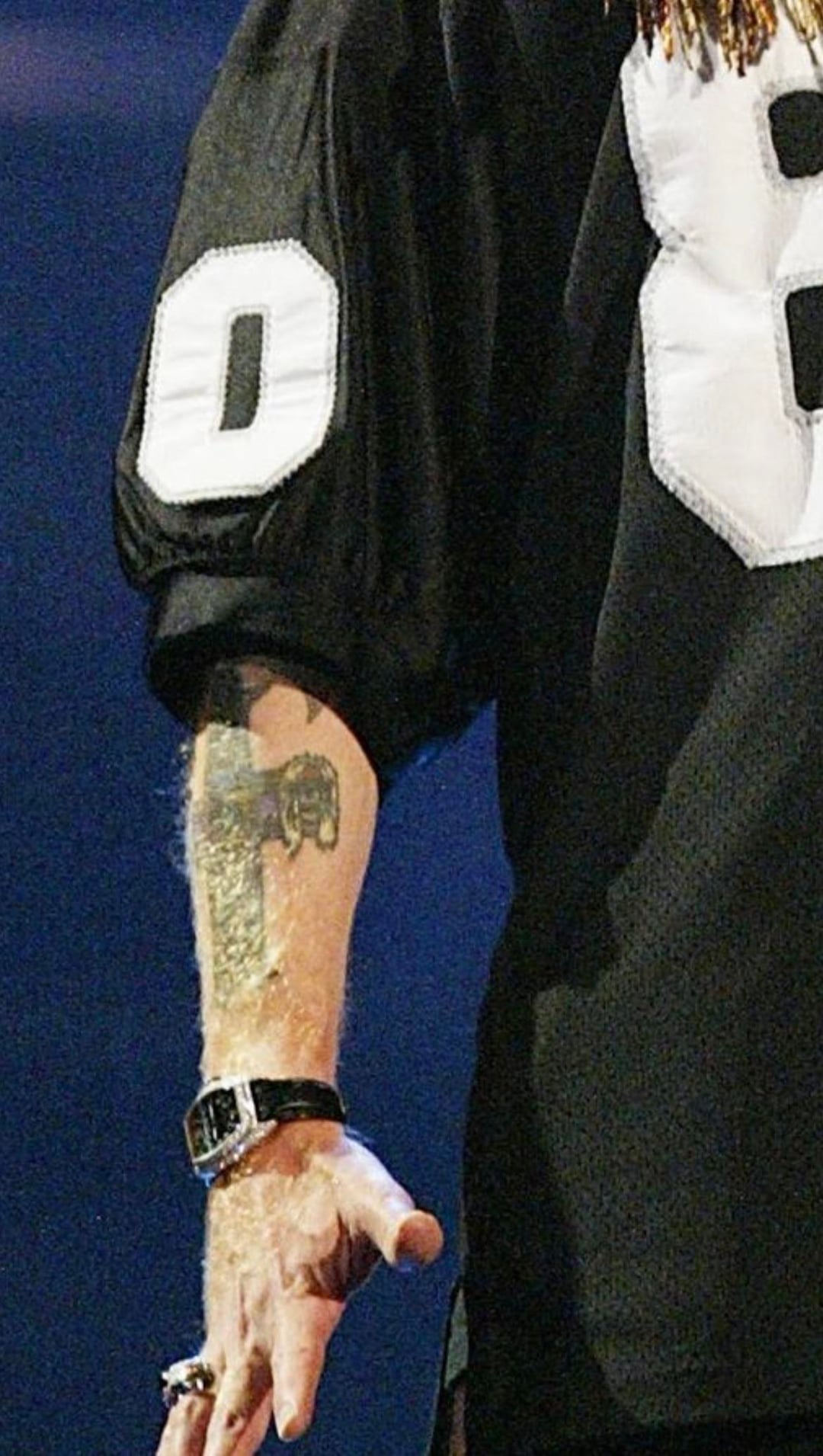
Axl Rose 2002 arm tattoo
An archival arm photo shows the older tattoo work around Axl’s larger designs.

“Rocker” and Axl’s early music years

The word “Rocker” is linked to Hollywood Rose, the band Axl was in before Guns N’ Roses. It is less prominent than the black rose or cross, but it points to his earlier music years.

The tattoo is a single word rather than a large image. Its reported connection to Hollywood Rose keeps the focus on the period before Axl became known for stadium shows.

Axl Rose tattoo overview
A wider tattoo photo shows how the larger pieces work together across both arms.

“Victory or Death” and the smaller wrist skulls

Another design seen in Axl Rose photos reads “Victory or Death.” Accounts connect it to the 32nd Armored Regiment insignia, which has also been discussed in relation to Elvis Presley’s military service.

Axl Rose performing shirtless, showing his snake chest tattoo and arm ink

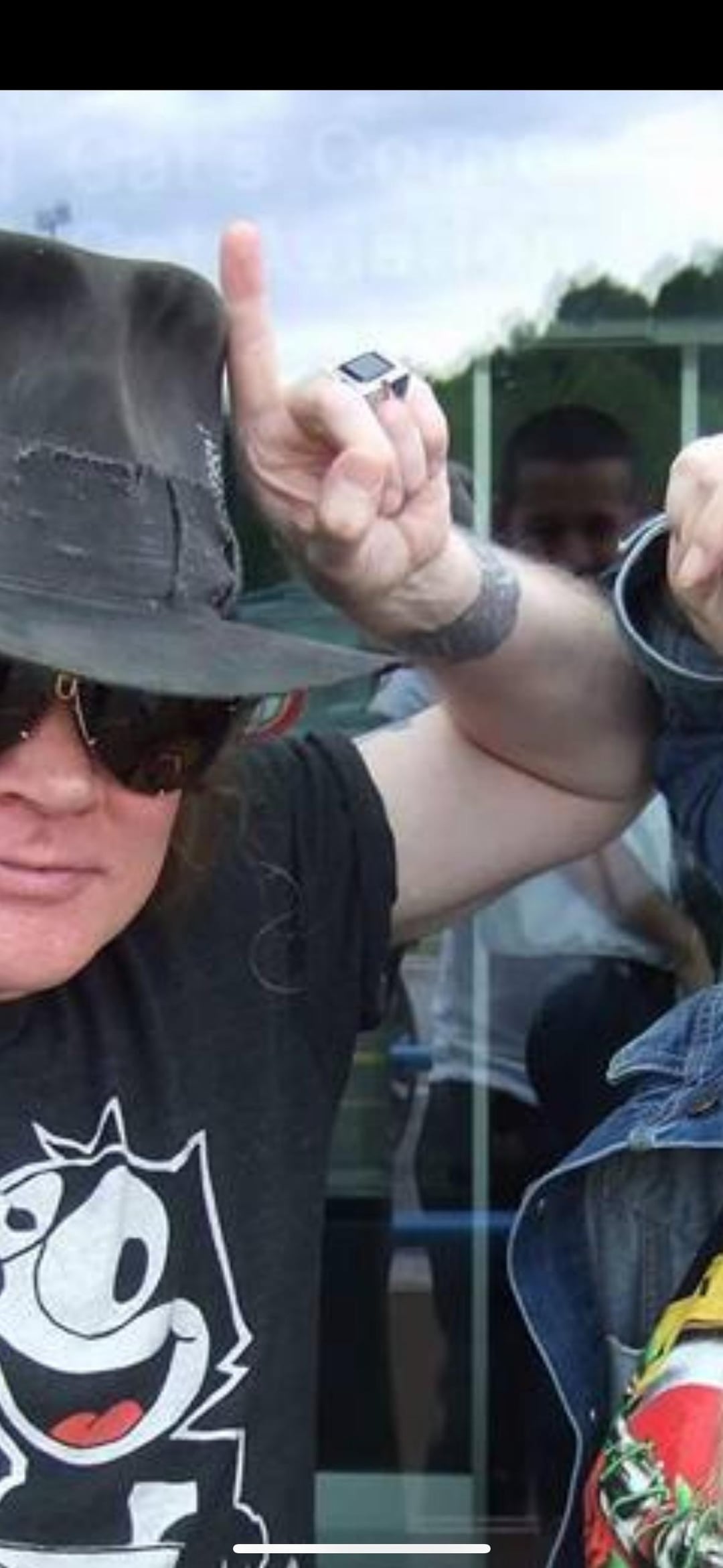
A smaller skull-and-knot design appears around his wrist in later photos. Its exact date and meaning aren’t firmly established, so the simplest description is a compact knotwork skull.

The pieces have different looks: the black rose is colorful, the portrait is personal, the cross is tied to the band, and the wrist design is darker and smaller.

Axl Rose wrist skull tattoo
The smaller skull and knot design can be seen around Axl’s wrist in later photos.

There is no official public count of Axl’s tattoos. Photos show several large designs across his arms, along with smaller words and symbols. Angle, clothing and shadow can make it hard to tell where one piece ends and another begins.

The most consistently identified pieces are the black rose, the portrait, the Appetite cross, “Rocker,” “Victory or Death” and the wrist skull. Other marks may be tattoos, but they’re not documented clearly enough to name with confidence.

The bigger picture: Axl’s best-known tattoos point to music, relationships and the bands that shaped his early career. The black rose connects to Thin Lizzy; the cross and skulls connect to Guns N’ Roses; “Rocker” recalls Hollywood Rose. Some details remain debated, so the clearest stories are the ones attributed to him or to named accounts.

More musician tattoo guides

Kellie Pickler Tattoos: Faye, Stars and Pray Ink

Kellie Pickler’s tattoos are personal and easy to miss in a concert or red-carpet photo. There is no huge sleeve or sprawling collection; instead, she has a few small designs tied to family, faith and parts of her life that matter to her.

Three pieces come up most often in older interviews and photos: “Faye” on her foot, three stars on her left arm, and “Pray” on her right wrist. Here is what Pickler has said about them, along with what the clearest pictures show.

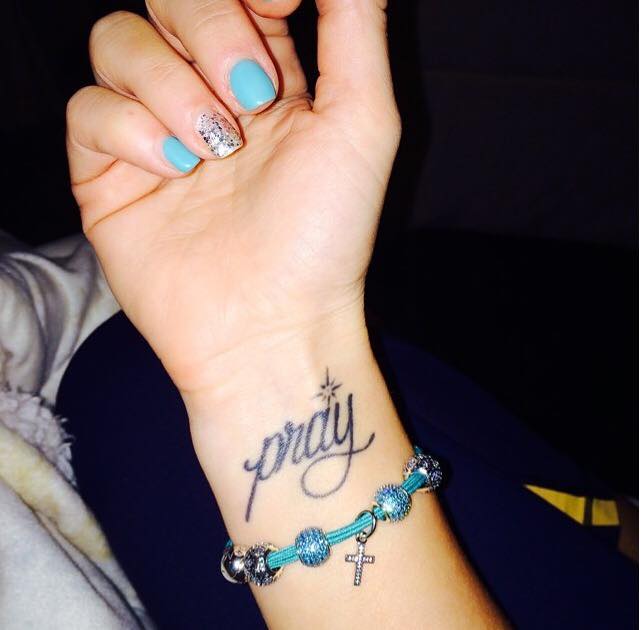
Kellie Pickler’s “Pray” wrist tattoo

Kellie Pickler Pray wrist tattoo

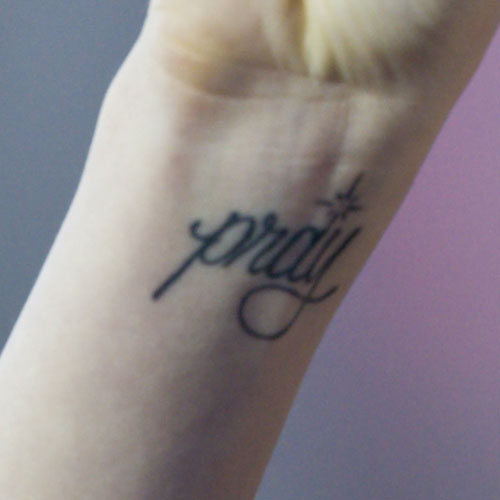
“Pray” runs across Pickler’s right wrist in loose, flowing script. A tiny star-like mark above it gives the simple lettering a little extra shape.

Pickler has described this tattoo as a reminder rather than a mystery. She called it self-explanatory and said it was her newest tattoo at the time. The wrist placement suits the idea: she can see the word during a busy day, and it is visible when she works or reaches for a microphone.

The close-up shows that the lettering is not barely visible. The dark script runs across much of the inside of her wrist and reads clearly when she turns her hand over. It is often the first tattoo people notice when she wears short sleeves or bracelets.

The three stars on her left arm

Kellie Pickler stars tattoo on left arm

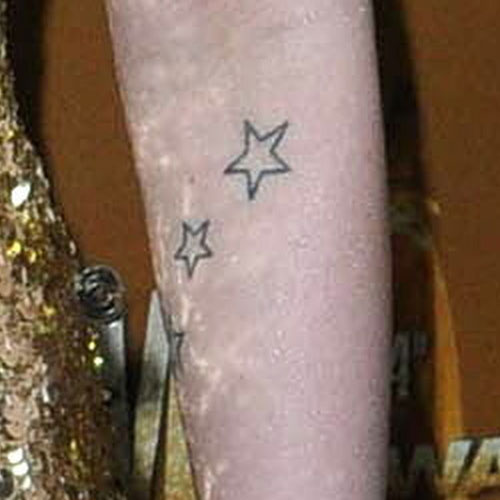
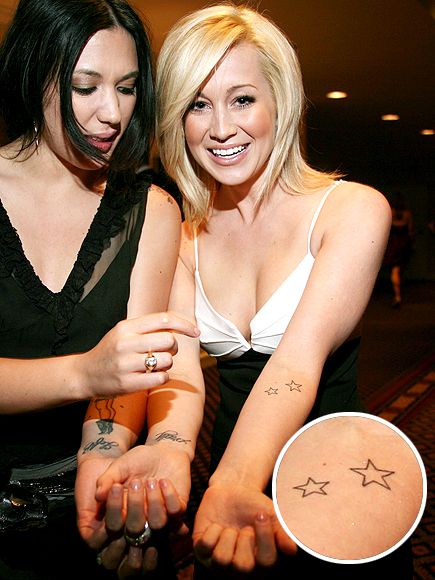
Three outlined stars sit on Pickler’s left arm: one larger star with two smaller ones nearby. The light, almost hand-drawn lines look softer than the heavy black stars common in traditional designs.

Pickler has connected the stars to her USO tours, adding one for each trip she made to perform for service members. She later said she might stop adding stars and had even considered changing direction with an American flag design.

Kellie Pickler showing three outlined stars on her arm, with a close-up inset

That background gives the design a clear purpose. The stars are not just filler; they mark a part of her career that mattered to her, while leaving room for the idea to change over time.

“Faye” honors her grandmother

Kellie Pickler Faye foot tattoo

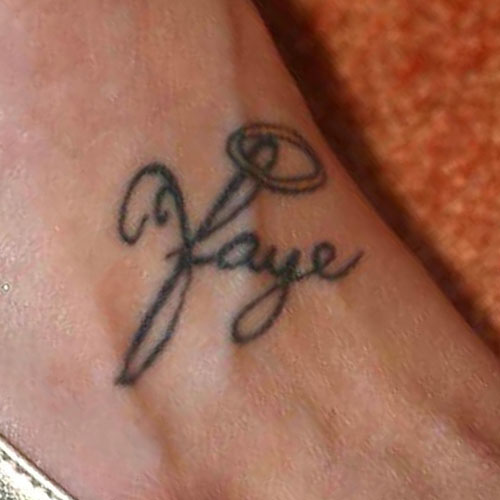
Pickler’s first tattoo was her grandmother’s name, “Faye.” The decorative script sits on the top of her foot, with a small flourish above it. It is delicate but readable in a close photo.

She has joked that her grandmother was not thrilled when she first saw it. The reason for the tattoo is sweet, though: Pickler wanted to keep her grandmother’s name close. The foot is a personal placement, not the first thing people see.

Shoes and camera angles can hide it completely. With open heels, the name appears above the shoe and is easy to spot; in most other red-carpet photos, the tattoo is out of view.

A closer look at the wrist ink

Kellie Pickler Pray tattoo close view

A second close-up shows how the wrist tattoo sits beside Pickler’s everyday jewellery. The word is high enough to remain visible above a bracelet, and the script looks settled in rather than freshly done.

This angle also clears up details a distant red-carpet photo can blur. The letters and the small mark above them are easier to see, confirming that it is the same “Pray” tattoo from a more useful viewpoint.

Pickler has not presented it as a complicated symbol that needs decoding. It is a word she can see, a straightforward reminder to carry with her.

What the street photos add

Kellie Pickler tattoo detail photographed in 2017

Street-style photos help explain why the tattoos are easy to overlook. They are small and placed where shoes, sleeves or accessories often cover them. A design may be clear in one picture and completely hidden in the next.

The close views also support the basic picture from Pickler’s interviews: this is a short list of tattoos with personal stories, not a secret collection revealed by online rumours. “Faye” is for her grandmother, the stars connect to her USO work, and “Pray” is a faith-based reminder.

That is a useful way to read Kellie Pickler’s tattoo history. Each design is simple, but each has a reason behind it. For more singer tattoos with stories attached, browse the musicians tattoo archive.

Kellie Pickler seated in a light-colored dress

The difference between a confirmed meaning and a guess based on a photo is worth keeping clear. Pickler has talked about the stars, the name on her foot and the reminder on her wrist. Those explanations say more than a caption calling them “three cute tattoos”; together they connect family, her USO work and faith.

She also seems to prefer designs that can stay private when she wants. Most shoes cover the foot tattoo; a bracelet or long sleeve can hide the wrist; the stars are easy to miss when her arm is turned away. That is different from a large piece across a shoulder or chest.

The documented list is fairly short, but the stories are in the details. Each tattoo points to a person, a belief or a meaningful part of her work, without needing an elaborate explanation.

Before the video, one quick note: a photo can show where a tattoo sits and what it looks like, but it cannot prove every rumour repeated online. For Pickler, these are the three pieces backed by her own comments and clear image coverage.

https://www.youtube.com/watch?v=vgIsfpeNb3A

More musician tattoo guides

Oliver (Oli) Sykes Tattoos: Face, Neck and Sleeves

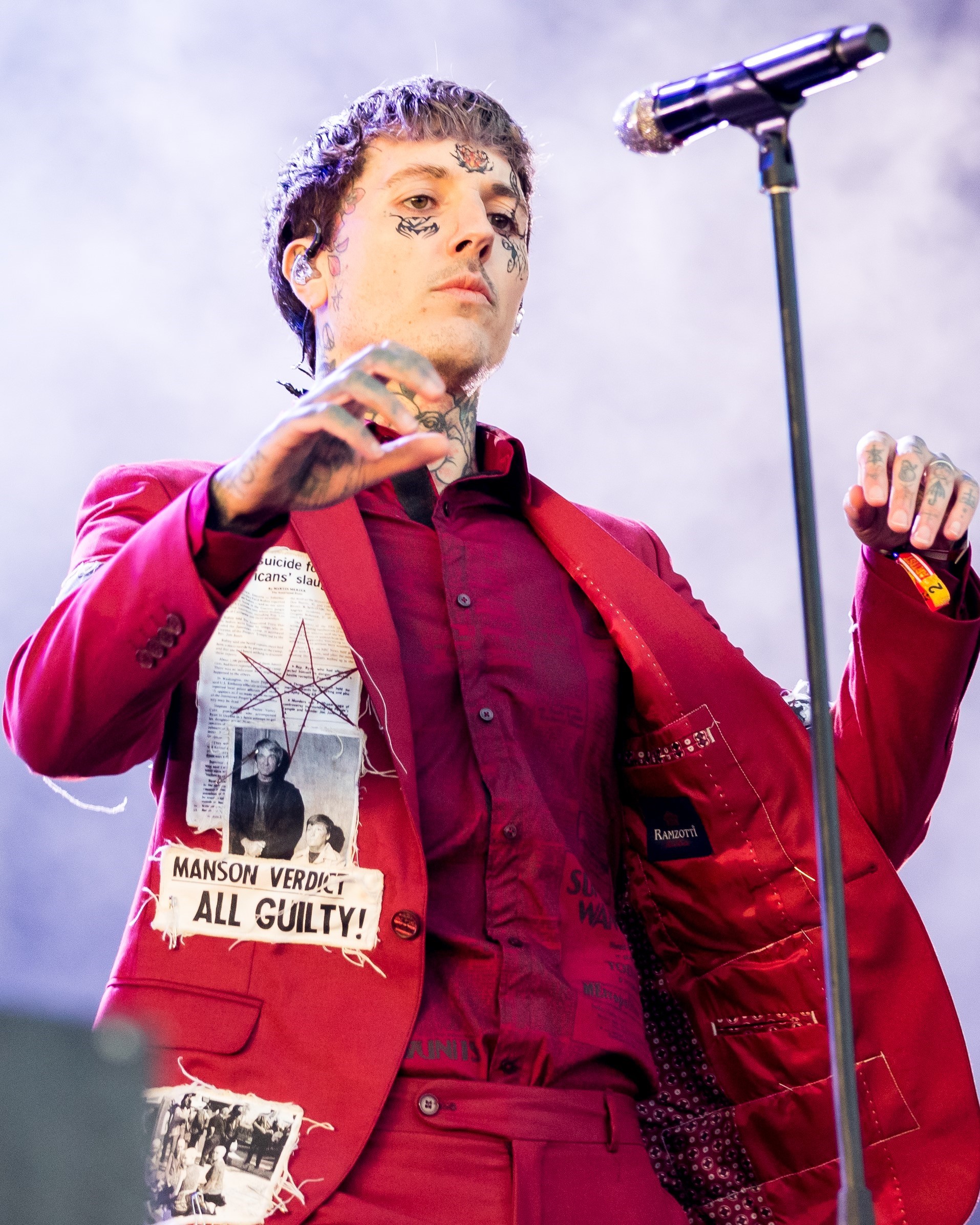
Oliver Sykes, also known as Oli Sykes, has been open about his tattoos. The Bring Me The Horizon singer has colourful sleeves, dense blackwork, face and neck ink, hand tattoos, and older pieces he has covered or reworked. His collection has changed over the years.

Some details are easy to spot in photos; others are hard to confirm. This article sticks to what can be seen or has been discussed in tattoo coverage. His tattoos have changed over time, so an early Bring Me The Horizon photo may not match what he wears on stage now.

Oli Sykes’ colorful sleeve tattoos

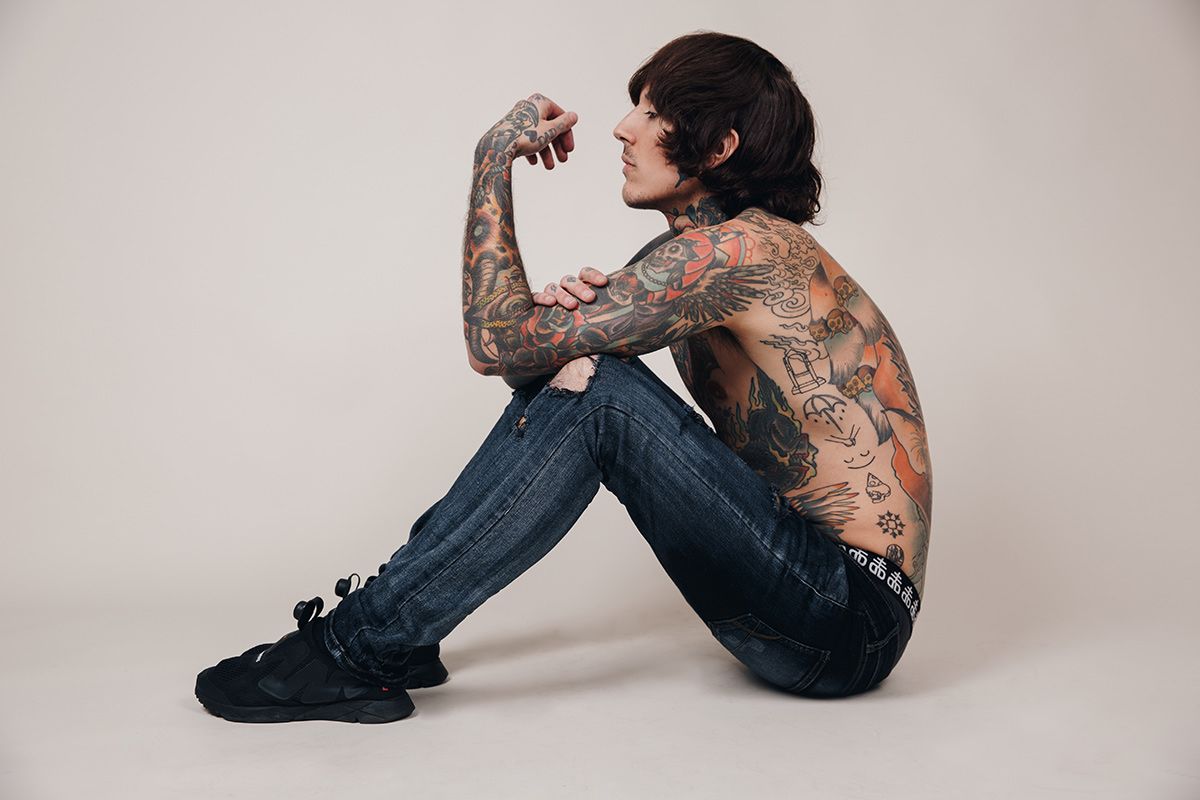
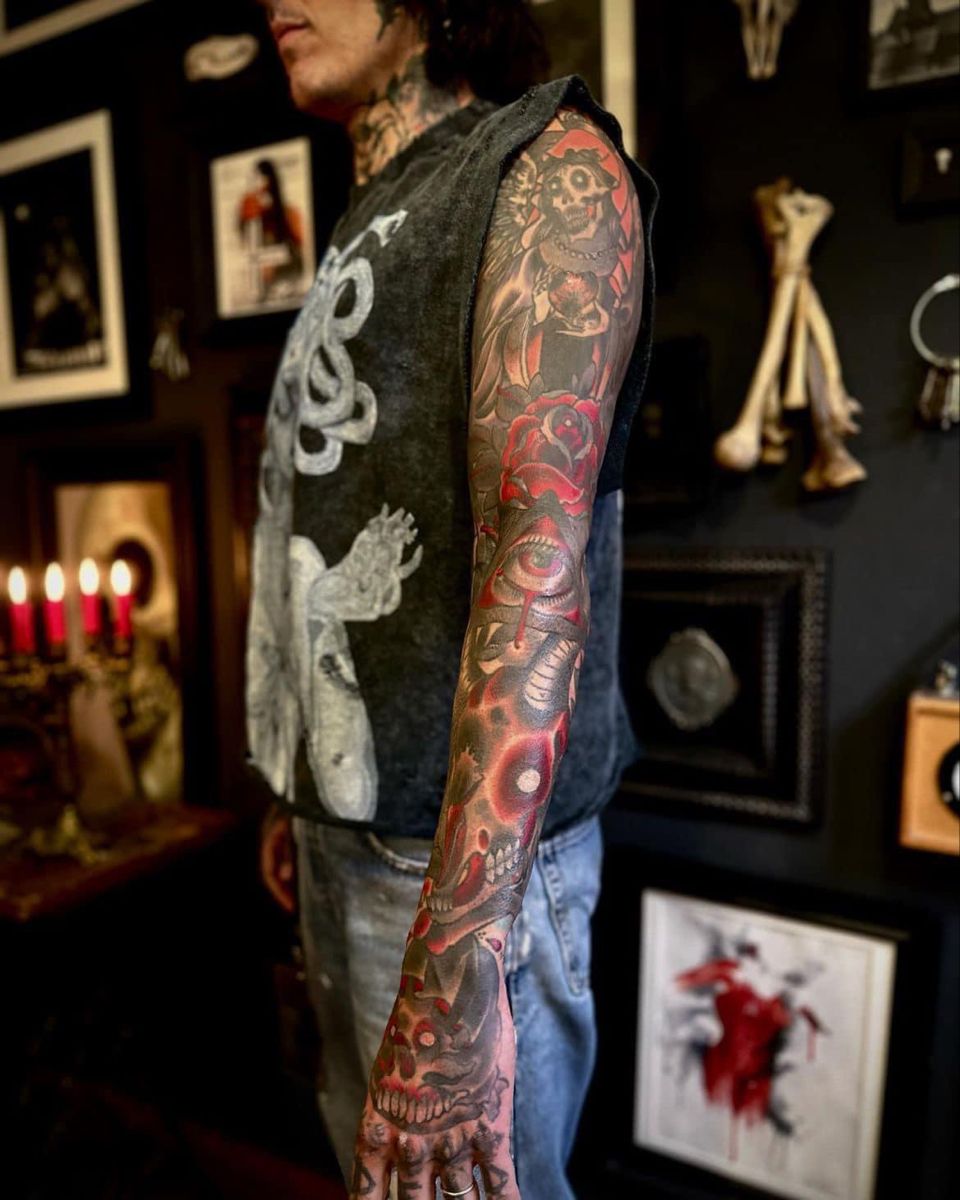
His arm work makes up a large part of the collection. The sleeve combines red roses, skulls, eyes, dark shapes and old-school color. It doesn’t follow one neat theme; it looks like it grew through different ideas, artists and stages of his life.

Oli Sykes colorful tattoo sleeve

The sleeve is easiest to see in older promotional and fan photos where Sykes wears a vest or sleeveless shirt. Darker areas sit beside brighter red and green pieces, keeping the arm from looking like one solid block of ink.

Changes to his arm work over time

A wider photograph shows the colour and density of Oliver Sykes’ sleeve.

Photographs from different years show how Sykes’ sleeves have developed. Traditional colour work sits beside areas of denser, darker ink. A photograph can record the coverage at one point in time, while the reason for a change or cover-up needs an explanation from Sykes or the artist.

His face and forehead tattoos

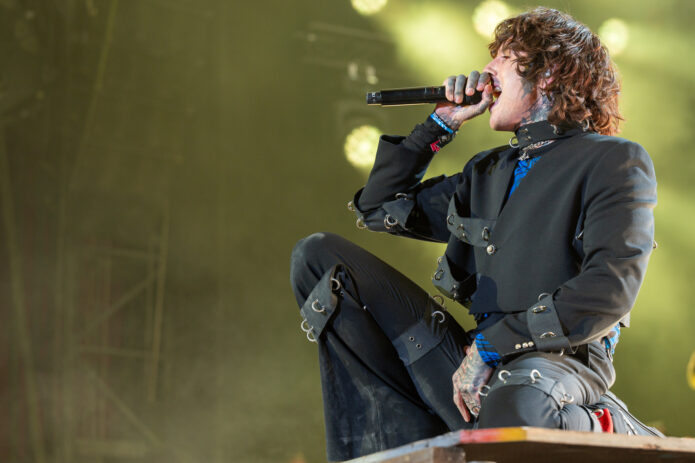
His tattoos reach his face too, where they’re hard to hide on stage. Small marks sit around his forehead and eyes; larger designs run along the sides of his face and neck. Recent interviews show the forehead ink clearly, especially when his hair is short.

Oli Sykes face and neck tattoos

Early photos show less ink on his face. Later ones show more around the hairline and cheek, along with the small marks near his eyes. That makes them part of his everyday image as well as his stage look.

The rose and other neck tattoos

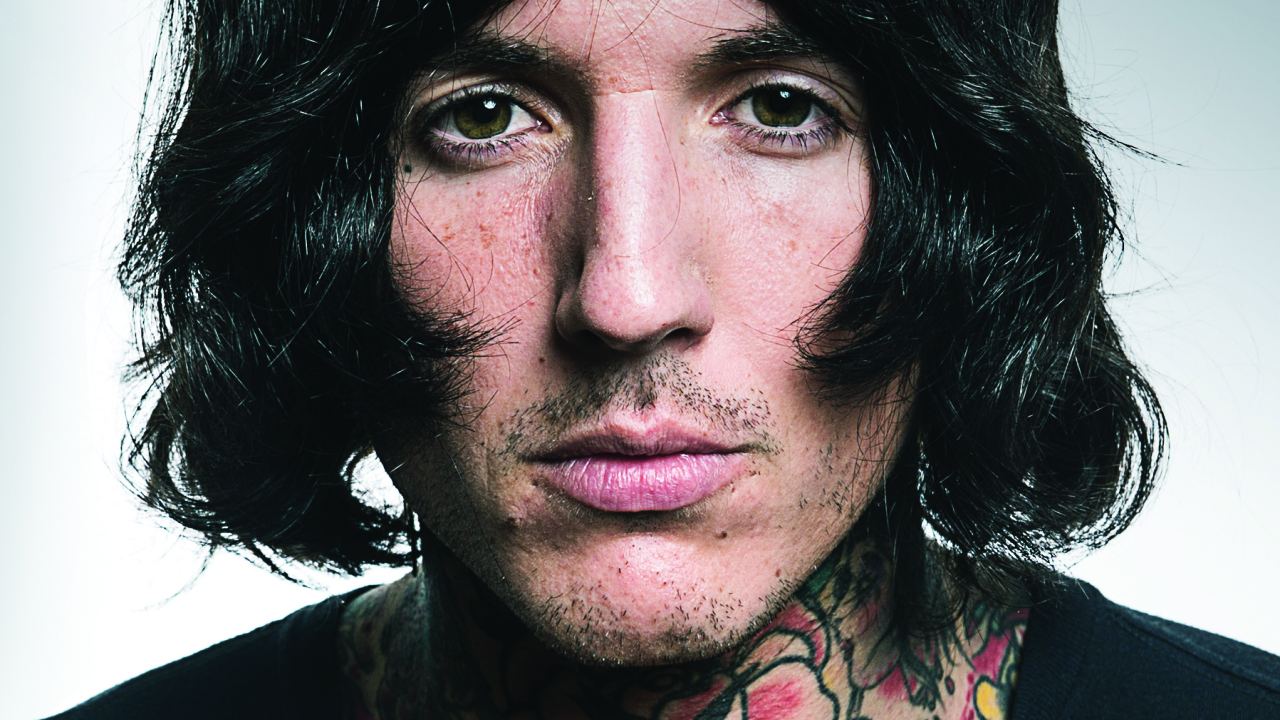
A rose and darker designs cover much of his neck and continue toward his chest. Some details only show when he turns his head or wears an open shirt. Close-ups make the overlapping pieces easier to see.

Concert photos can hide how the neck tattoos fit together. Smaller work around the ear and jaw leads into larger shapes below; the collar and chest pieces fill the gaps. The tattoos sit close together, leaving little blank skin between them.

Oli Sykes rose and side neck tattoos

There are smaller symbols by his ear and jaw too. Lighting can change how they look, which is one reason online tattoo lists don’t always agree. The neck work links the face tattoos to the larger chest and sleeve designs.

Hand and finger tattoos

His hands are tattooed as well, visible when he holds a microphone. Photos show lettering and small symbols on his fingers and the backs of his hands. Rings, the mic or stage shadows can hide some of the designs.

Oli Sykes hand and neck tattoos

Hand tattoos tend to fade or change sooner than ink in other places. An older photo records what was visible then, not necessarily what remains now. That distinction matters here because Sykes has reworked his collection more than once.

Chest and torso tattoos

When he performs shirtless or wears a low-cut top, more of the tattoos on his chest and torso show. They connect with the neck and arms, so the pieces read as part of one collection instead of separate designs.

The name or meaning of every chest design hasn’t been confirmed. The photos show a mix of styles: bright traditional colors beside blackwork, small symbols beside larger illustrations, and older tattoos partly covered by later work.

What Oli has said about his tattoos

In older interviews, Sykes has said he got his first tattoo as soon as he turned 18. He has joked about running out of space and said tattoo artists close to him helped shape some of his ideas.

Not every symbol has a confirmed meaning. Some designs seem personal; others may simply be pieces of art he liked. It’s better to leave those meanings open than to give every design a story without evidence.

Oli Sykes tattoos: the short version

His tattoos cover his arms, hands, neck, face, chest and more. The most visible are the colourful sleeves, dense arm work, rose and other neck work, forehead marks and hand tattoos. Since his ink has changed over time, the date of a photo matters.

The interview below shows the designs and includes Sykes talking about his tattoos.

Oliver Sykes’ Behind the INK interview

In this PITCAM interview, Sykes talks about his tattoos and the experiences behind them in his own words.

More musician tattoo guides

More photographs of Oliver Sykes’s tattoos

Oliver Sykes performing. Photo: Achim Raschka ( talk ); CC BY-SA 4.0.
Oliver Sykes performing. Photo: Achim Raschka ( talk ); CC BY-SA 4.0. Source and licence
Oliver Sykes performing. Photo: Stefan Brending ( 2eight ); CC BY-SA 3.0.
Oliver Sykes performing. Photo: Stefan Brending ( 2eight ); CC BY-SA 3.0. Source and licence
Oliver Sykes performing. Photo: Stefan Brending ( 2eight ); CC BY-SA 4.0.
Oliver Sykes performing. Photo: Stefan Brending ( 2eight ); CC BY-SA 4.0. Source and licence
Oliver Sykes performing. Photo: Sven Mandel; CC BY-SA 4.0.
Oliver Sykes performing. Photo: Sven Mandel; CC BY-SA 4.0. Source and licence
Oliver Sykes performing. Photo: HXCLIFE; CC BY-SA 4.0.
Oliver Sykes performing. Photo: HXCLIFE; CC BY-SA 4.0. Source and licence
Oliver Sykes in an earlier portrait, with his neck tattoos visible.

Lil Skies wears his face ink like a promise

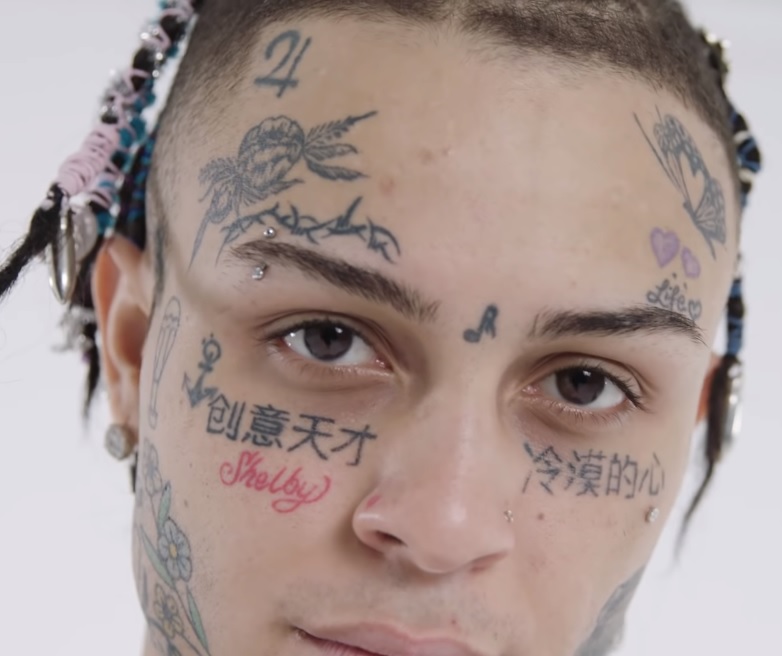
Lil Skies has never treated tattoos as a quiet accessory. His ink is tied to music, independence and a decision to build a life that couldn’t easily fold back into a regular job. People notice his face tattoos first, but the stories behind them go beyond shock value. He has explained that the name of his mother, Shelby, is tattooed on his face, and described other pieces as motivation. The ink keeps his commitment visible. He has called his tattoos “the scars I chose for my life,” a line that captures their personal meaning.
Lil Skies face tattoo close-up

That idea comes through in an older GQ tattoo breakdown. Lil Skies talks through several designs, while his mother’s reaction gives the conversation another layer. He isn’t expressing regret; he’s explaining why he wanted his appearance to match a decision he had already made: music first, and no easy return to a regular job. The face became a promise he couldn’t quietly walk away from.
Lil Skies AK47 tattoo

The name Shelby is the clearest face tattoo because Lil Skies has explained it himself. Other lettering is commonly identified as “Creative Genius” and “Cold Heart,” phrases that fit themes he has discussed. Still, designs are best read from what can actually be seen, rather than repeated from an uncertain fan list. His face ink isn’t random filler; the words carry a message.
Lil Skies back tattoo

Another phrase associated with his face tattoos is “Memento Mori,” the Latin reminder to remember death. Coverage connected it to his Mac Miller-inspired period. The phrase adds a darker edge, but Lil Skies has also talked about making music for young people who need to feel free to be themselves. His tattoos hold both pressure and encouragement.

Lil Skies butterfly tattoo

The ink also follows his music. An Audiomack Ink interview includes him discussing designs connected to “Red Roses,” the track and era that helped shape his early image. The tattoos arrived alongside a creative identity, not years later as a branding exercise. They mark a sound, a circle and a version of himself.
Lil Skies chest tattoos

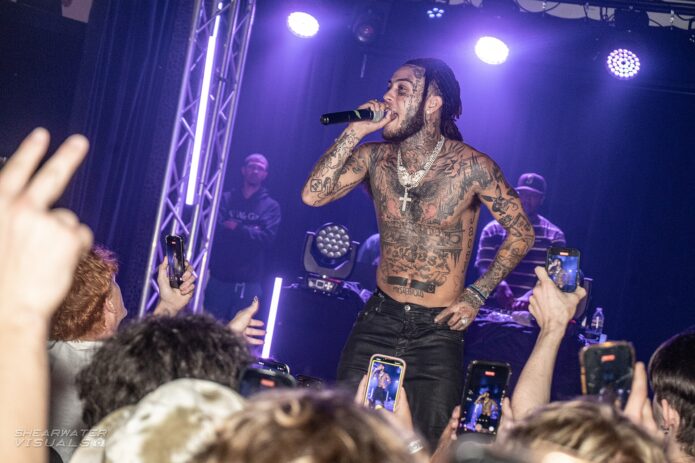
Photos from the Fillmore Auditorium period show why the collection became recognizable. Face lettering stands out under stage lights, while the rest of the tattoos appear and disappear with clothing, angles and shadows. No single performance photo gives a full inventory, but the pictures show the same visual language: heavy face work, expressive lettering and a willingness to make the tattoos part of his first impression.

Lil Skies has said he got face tattoos so a traditional nine-to-five job wouldn’t be an option. It was an extreme commitment for a young artist still building his career. He wasn’t just saying music mattered; he was removing the easy exit.

His mother’s dislike of the tattoos is part of the story, too, but it isn’t a simple family argument. Shelby’s name on his face makes the decision more complicated: a tattoo can honour someone and frustrate them at the same time. That tension is part of what makes the piece memorable.

The back tattoo is another reminder that the collection isn’t only about his face. In an All Def interview, he discusses a nude woman design on his back and connects it to an earlier tattoo story. It looks very different from the motivational lettering, but it fits his open-ended approach. His tattoos can be serious, intimate, playful or provocative without settling into one theme.

Some smaller pieces are harder to catalogue. Hair, jewellery, stage clothing and image quality can hide details; older footage may offer only a quick glimpse. It’s better to call those tattoos visible than to invent names or meanings. What Lil Skies has explained directly carries more weight than what a caption claims.

A timeline runs through the collection. Early face tattoos set a public identity; music references give it a soundtrack; later additions carry the same directness. The designs still show the rough edges of choices that mattered to him at the time.
“Creative Genius” sounds like a declaration of possibility. “Cold Heart” can read as a piece of armour. “Memento Mori” adds a reminder that time is limited. Shelby’s name brings family into the most public part of his appearance. These are readings suggested by the words and by Lil Skies’ interviews, not a claim to know every private meaning.

Not every design has a full public explanation. Fan pages can repeat the same description until it sounds official, but the honest label for an unclear mark is simply “visible tattoo.” That keeps the confirmed stories clear.

Placement changes how the tattoos read. Face ink is hard to hide, so it makes a statement before anyone knows what it says. A back tattoo is more private, appearing when he performs or turns in a photo. Arm and hand tattoos come into view through gestures onstage. No single angle tells the whole story.

Lil Skies emerged when SoundCloud rap made raw presentation part of the music’s identity. Face tattoos, coloured hair and homemade visuals could signal that an artist wasn’t waiting for permission from the traditional industry. His ink belongs to that moment, but his explanations bring it back to family, motivation and songs.

The career choice behind the tattoos had a practical edge. If music was the plan, visible ink made a day job less available. The tattoos marked a boundary, and that permanence was part of their power. Years later, they still show the shape of that decision.

Fans don’t need to copy the face tattoos to understand the message. Lil Skies used his appearance to make his priorities hard to ignore. Family, music, mortality and self-expression all show up in the words. The designs tell a living story, not a finished logo.

A documented inventory of Lil Skies’ tattoos

The clearest public inventory includes Shelby’s name on his face, lettering commonly identified as “Creative Genius” and “Cold Heart,” the “Memento Mori” phrase, and the back design discussed in his All Def interview. Photos also show other face and body tattoos whose exact wording or placement isn’t consistently documented. A responsible list describes what is visible and leaves the meaning open until Lil Skies or the artist explains it.

Why the face tattoos still matter

The designs connect to decisions. Shelby’s name marks family; “Memento Mori” carries a reminder of mortality and influence; the motivational words show his refusal to shrink his ambition. The back piece leaves room for humour and desire, too. Those ideas can sit beside one another. Together, the tattoos form a timeline of the person behind the songs.

Watch Lil Skies explain the ink

The GQ breakdown is a useful companion, especially for the face tattoos and his decision to make music the path he was committed to taking.

Zonnique Pullins wears her stories in ink

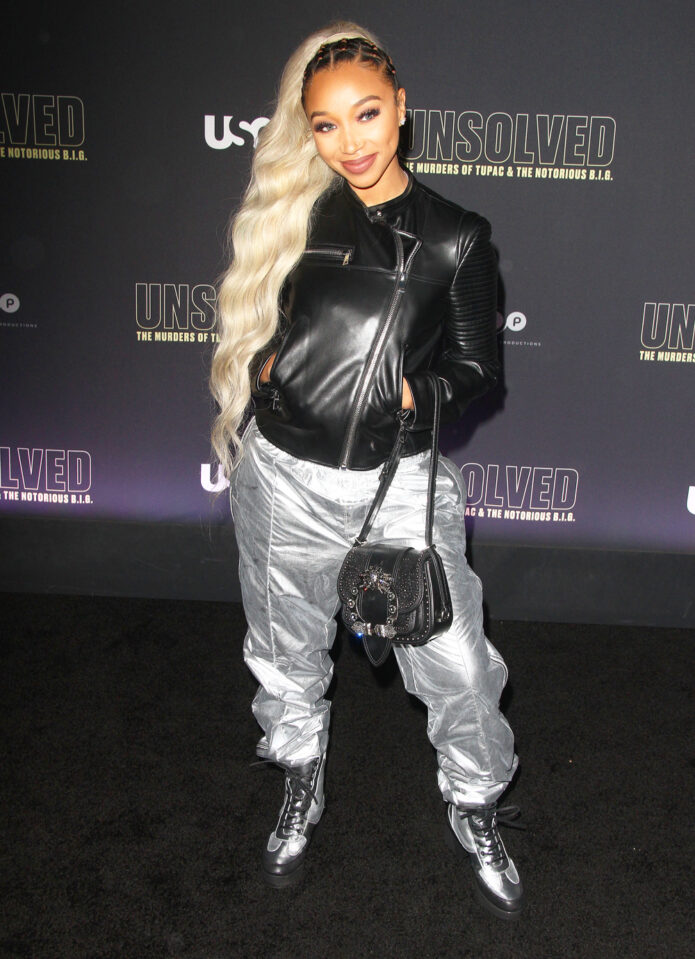
Zonnique Pullins has more tattoos than a quick red-carpet photo might suggest. Her documented designs include a colorful rabbit on her upper arm, hibiscus flowers on her lower back, a dreamcatcher on her side, a motorcycle on her ribs, small symbols around her ears, and phrases on her neck, hands and other areas.

Some pieces are playful; others are tied to music, family and loss. Zonnique has also shared a tattoo-tour video, which gives more context than a list of designs alone.

Many older photos are small or cropped, so placement and fine details are not always easy to make out. The sections below group the tattoos by area and keep confirmed details separate from interpretation.

The upper-arm tattoos carry the biggest visual pieces

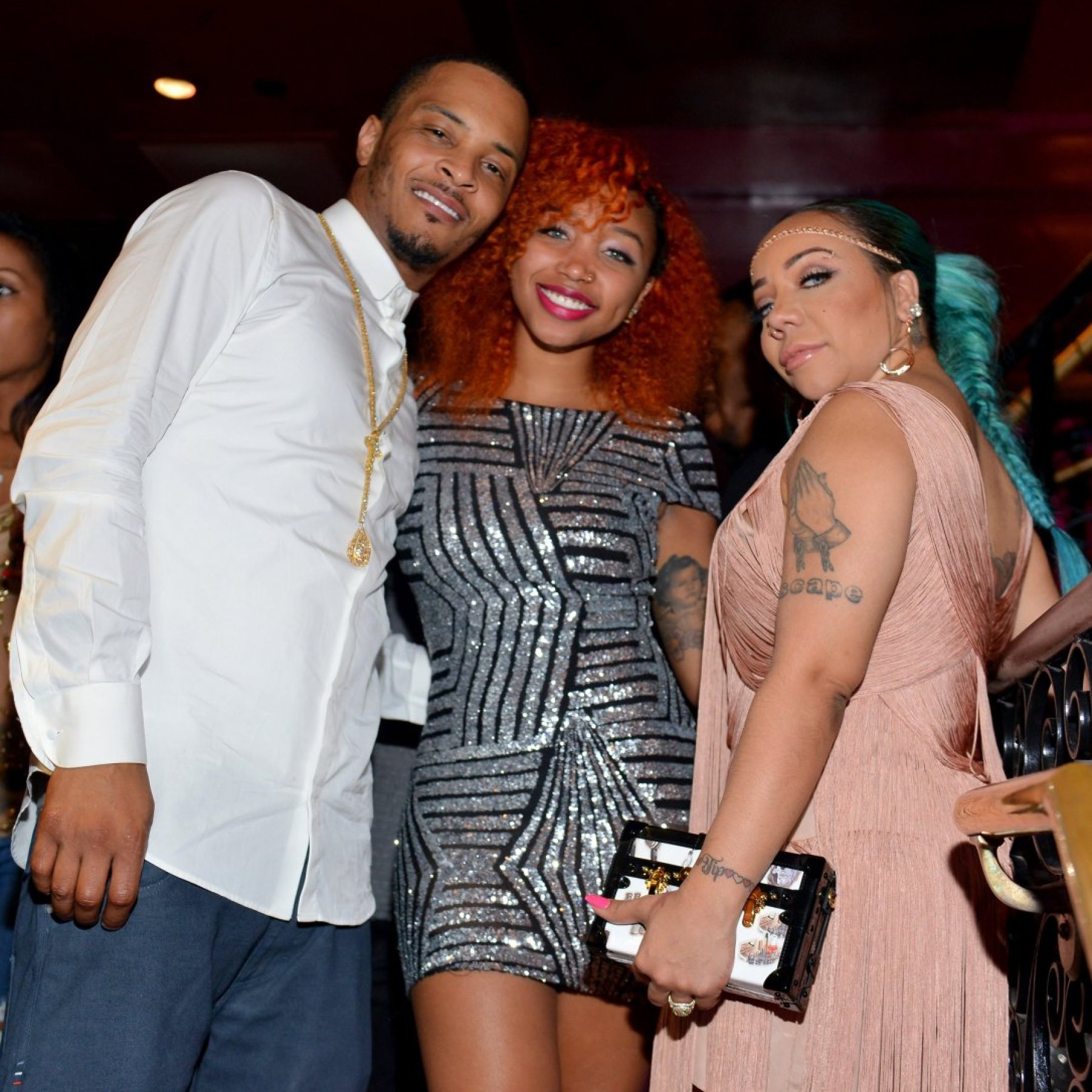
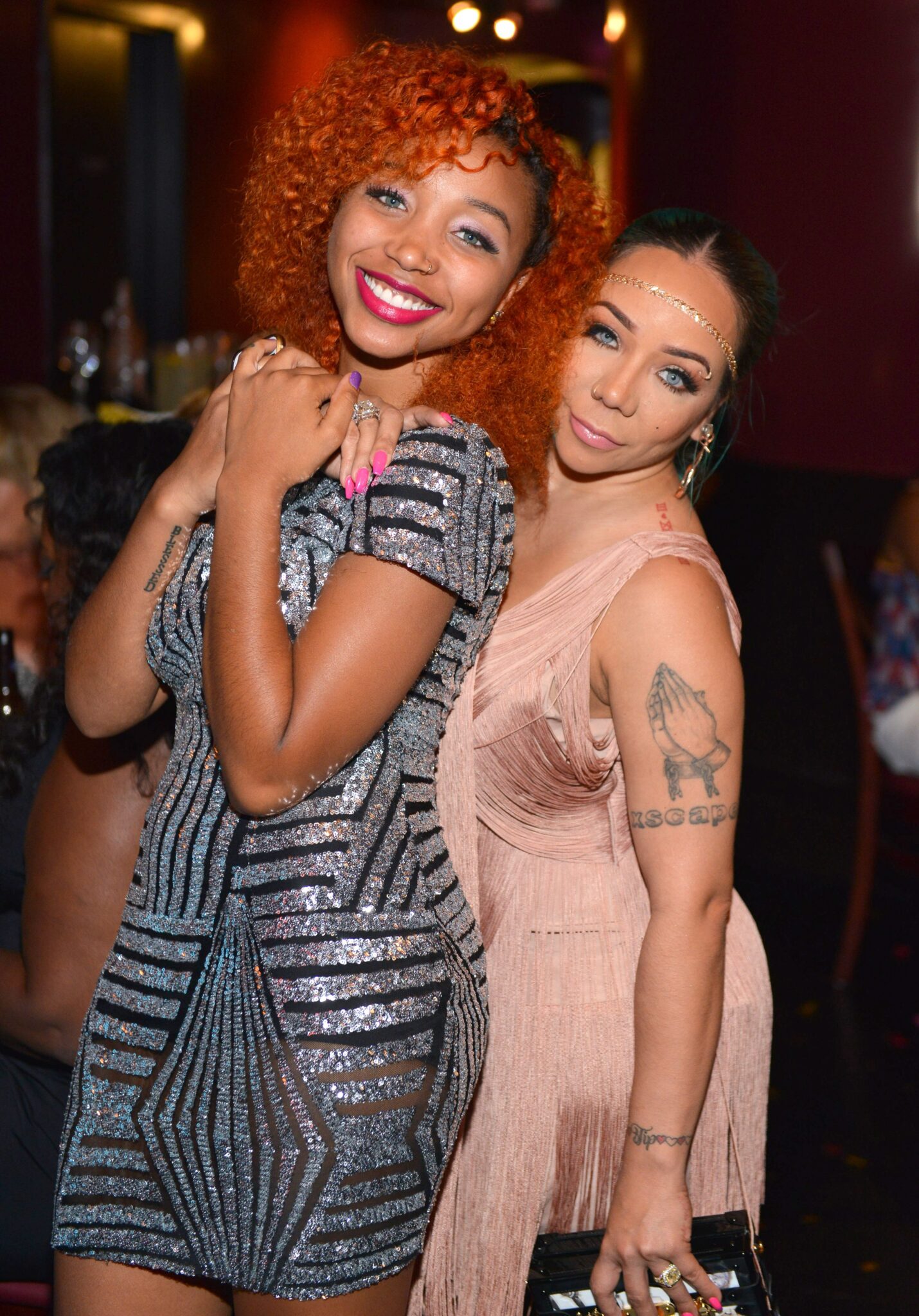
Zonnique Pullins arm tattoos visible in a group photo

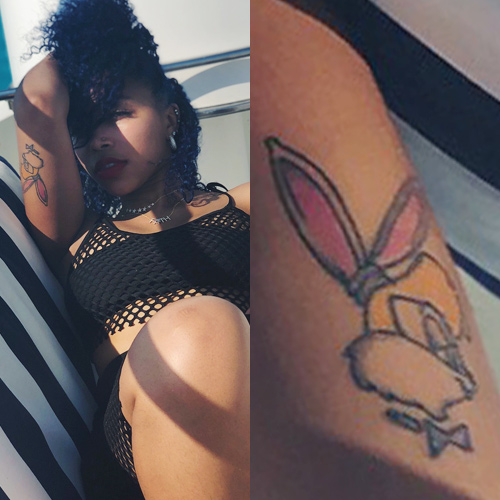
Several of Zonnique’s most noticeable tattoos sit on her upper arm. On her right arm is a colorful Lola rabbit, outlined in black with bright red and yellow details. The character gives the collection a playful note, while its size makes it more than a tiny accent.

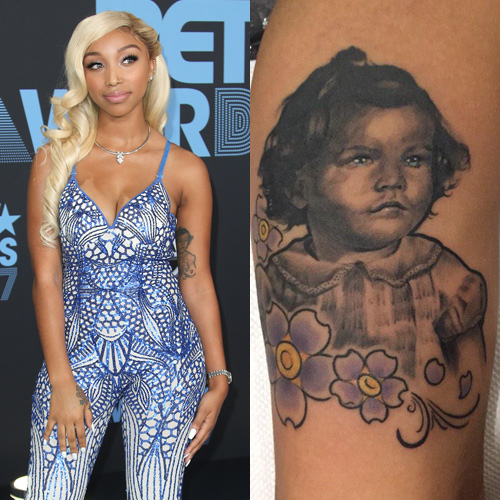
A portrait of Zonnique’s Mamaw, surrounded by purple flowers, is also part of the arm collection. It has a more personal story: Zonnique shared the tattoo with a caption about losing someone to Alzheimer’s, making it a documented family memorial.

The rabbit and the portrait bring very different feelings to the same area. One is light and playful; the other keeps a family memory close.

The colors help distinguish them. Red and yellow give the rabbit energy, while the purple flowers soften the portrait. The designs do not need to match to sit well together.

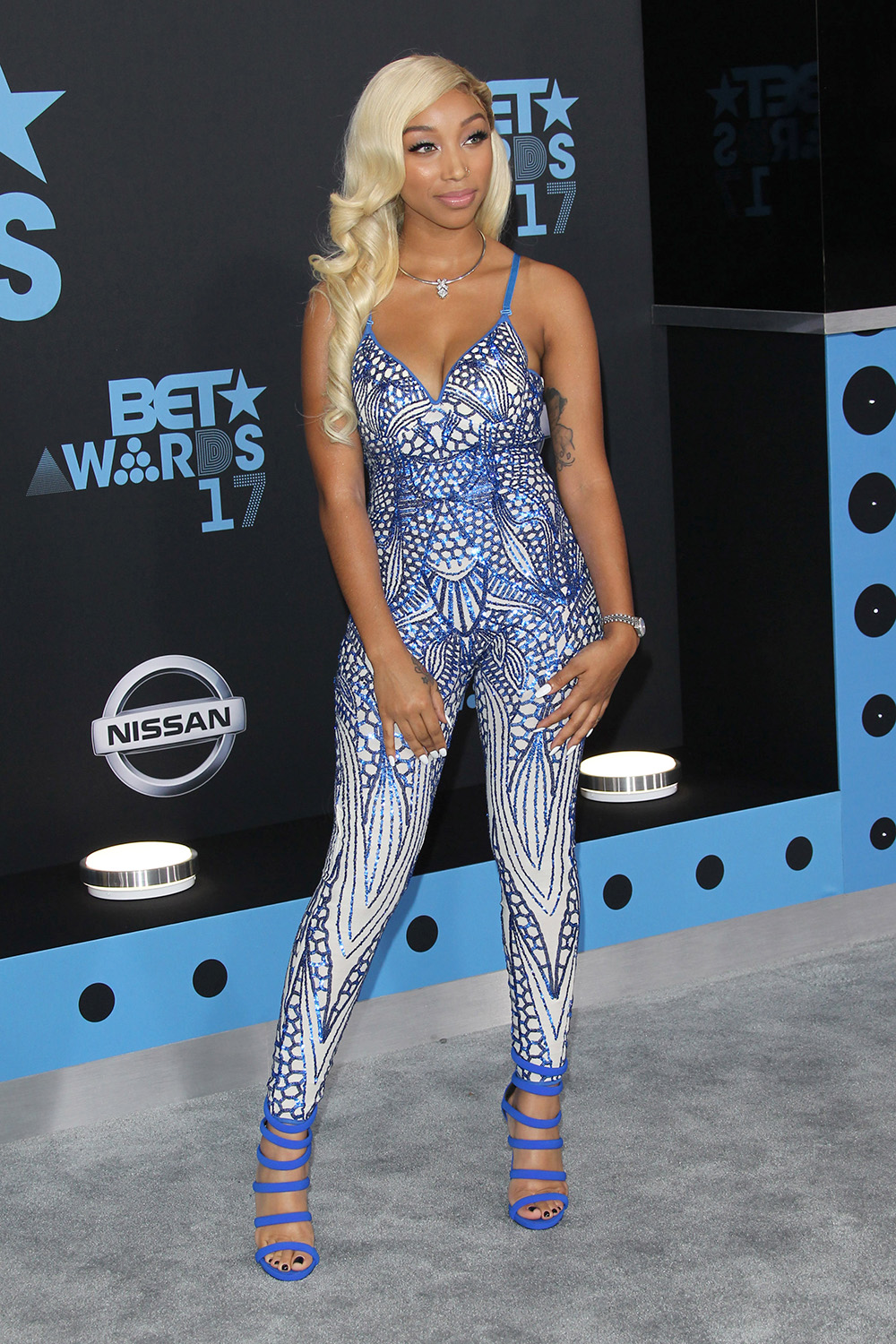
Zonnique Pullins arm tattoo at the 2017 BET Awards

Hand and palm tattoos make the writing and dagger personal

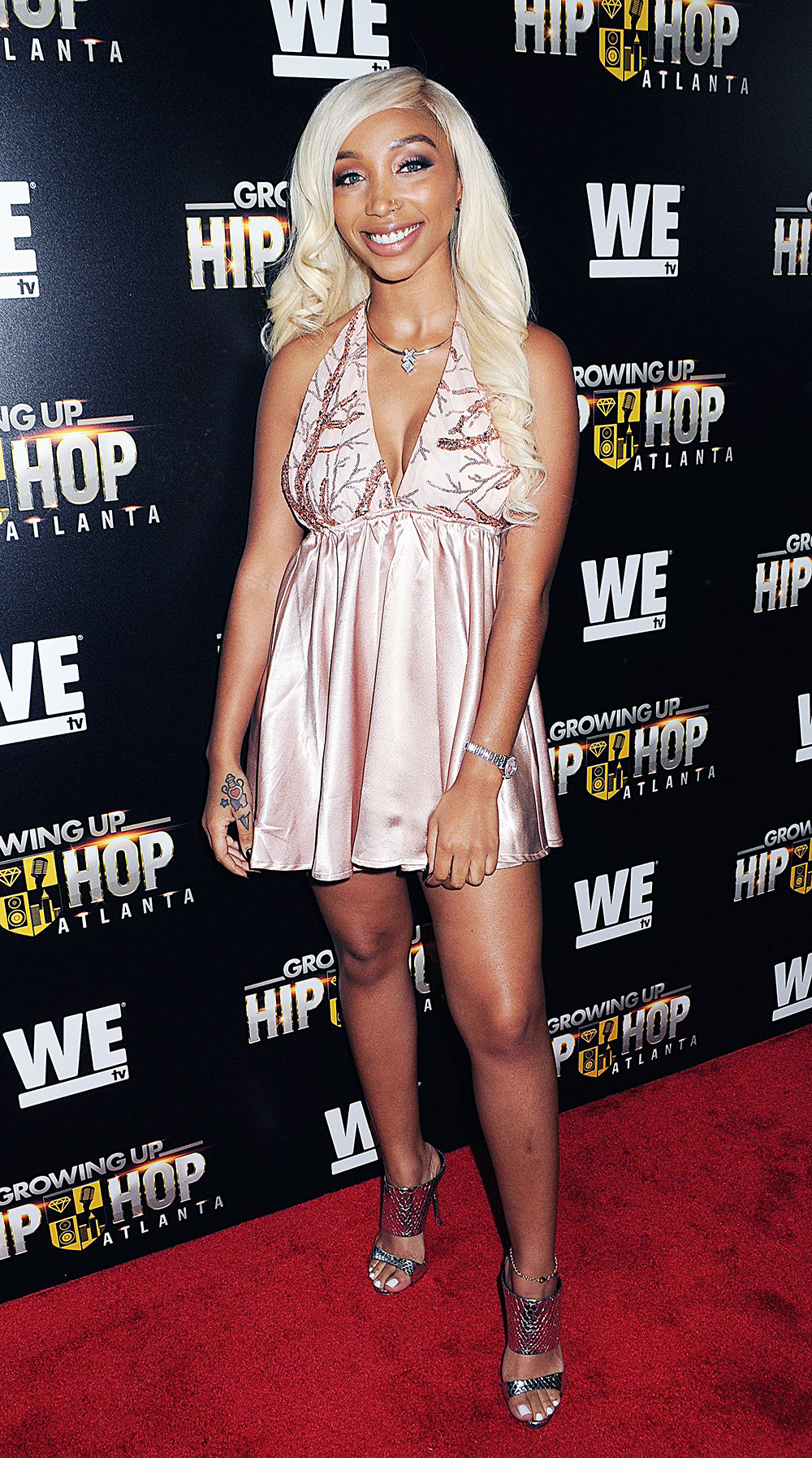
Zonnique Pullins hand tattoo at a red carpet event

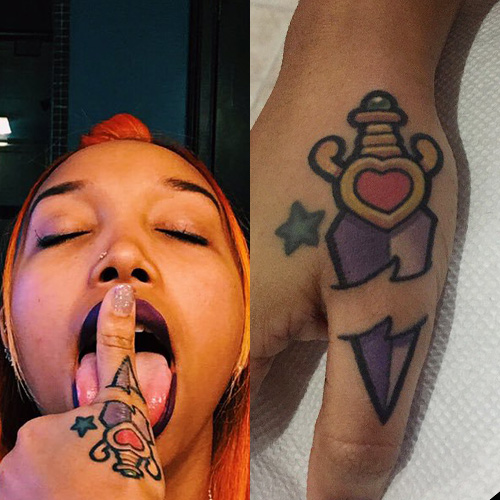
On her right palm, Zonnique has the words “Send me an angel,” a phrase credited to tattoo artist Roger Parrilla. The palm is visible during everyday gestures and when she chooses to show it in a photo.

The words might be a lyric or a personal request, but Zonnique has not given a confirmed explanation. Their placement and wording are clear; the rest is hers to explain.

She also has a colorful dagger on her right hand, another design associated with Parrilla. The sharper shape adds contrast to the flowers, script and rabbit elsewhere in the collection.
Hand tattoos can be hard to judge in older, low-resolution photos. Close-ups show more detail than the small square images often used in older coverage.

Zonnique Pullins dagger hand tattoo

Lettering on her arm adds a quieter thread

Zonnique Pullins arm lettering tattoo

Words appear on several parts of Zonnique’s body, including her forearm, lip, foot and palm. They are easy to miss in a full-body photo, but they add a recurring text element to the collection.
Across the back of her neck, cursive lettering reads “Hello Beautiful.” The phrase shows when her hair is lifted or she turns away from the camera. Coverage identifies the words, but Zonnique has not provided a specific explanation for them.

Music notes behind her ear bring another small symbol into the mix, fitting her work as a singer. The other phrases have their own context and need not share the same meaning. Lettering is one thread among several in the collection.
Zonnique Pullins Lola rabbit upper arm tattoo

Smaller symbols and ear ink stay deliberately discreet

Zonnique Pullins symbol tattoo inside her ear

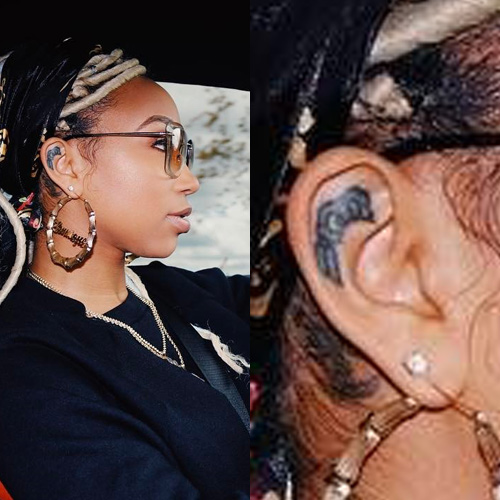
Small symbols near Zonnique’s ears are easy to miss in photographs. One is behind her right ear; another sits inside the ear. Hair, camera angle and lighting can all affect how clearly they show.

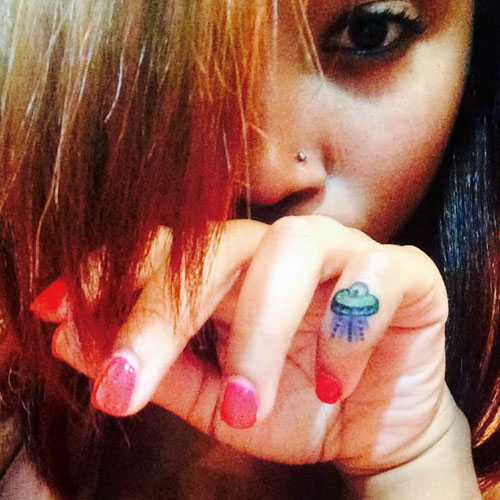
A spaceship tattoo on one knuckle adds another playful detail. Like the ear symbols and music notes, it becomes visible in a close-up rather than dominating her overall look.

There is not enough information to assign a specific meaning to the ear symbols. It is more useful to identify what the photos show than to guess based on a blurry image.

Some of Zonnique’s tattoos are details that only show up when you look closely.

Zonnique Pullins spaceship knuckle tattoo

Side, rib and memorial pieces make the collection feel personal

Zonnique Pullins dreamcatcher side tattoo

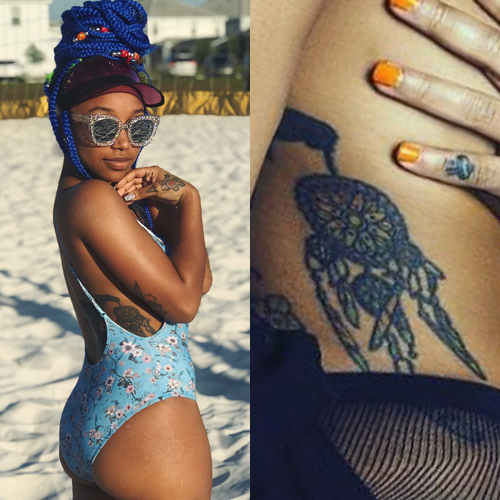
Zonnique has a dreamcatcher on her right side and a motorcycle on the left side of her ribs. Both can stay covered under everyday clothing and appear in open-back outfits or photos that show more skin.

Dreamcatchers are often associated with protection, but that common symbolism does not establish Zonnique’s personal reason for choosing one. The visible design and its placement are clearer than its private meaning.

The motorcycle brings a different shape to the collection. It sits among flowers, writing and music notes, adding a harder edge. Freedom or movement are possible readings, but Zonnique has not confirmed them.
Two hibiscus flowers sit on the right side of her lower back. They add a softer decorative piece, usually visible only in swimwear, open-back clothing or a deliberate photo.

The memorial portrait, flowers, dreamcatcher and motorcycle give the collection a mix of family, memory, music and playful imagery. A single style does not define all the tattoos, and that variety is part of the appeal.

Photos can flatten a collection. A tiny crop may make a hand design look like an unclear mark, while a full-body image can hide details on the arm. The tattoos also vary in how publicly visible they are. Zonnique can show her hands and arms while keeping the rib, side and lower-back pieces covered.
Together, the designs feel like choices made over time. Some are bright and playful, some mark family connections, and others are short phrases or symbols. Looking at them individually gives a clearer picture than treating them as a generic list of celebrity tattoos.

For a closer look at Zonnique discussing her choices, watch her tattoo tour:

Zonnique Pullins Mamaw portrait and flower tattoo

More musician tattoo guides