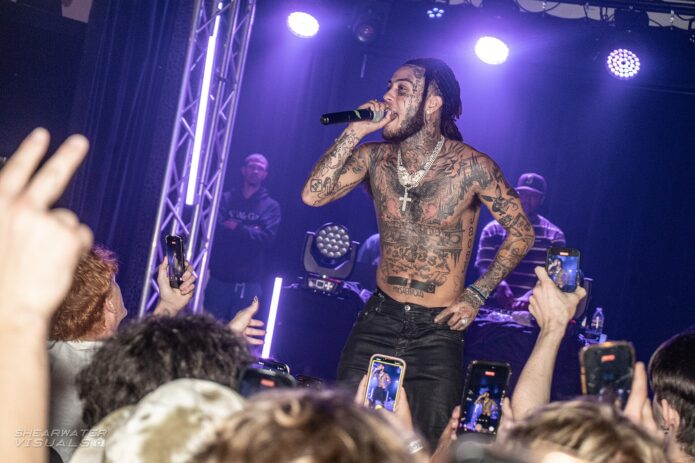
Lil Skies has never treated tattoos as a quiet accessory. His ink is tied to music, independence and a decision to build a life that couldn’t easily fold back into a regular job. People notice his face tattoos first, but the stories behind them go beyond shock value. He has explained that the name of his mother, Shelby, is tattooed on his face, and described other pieces as motivation. The ink keeps his commitment visible. He has called his tattoos “the scars I chose for my life,” a line that captures their personal meaning.
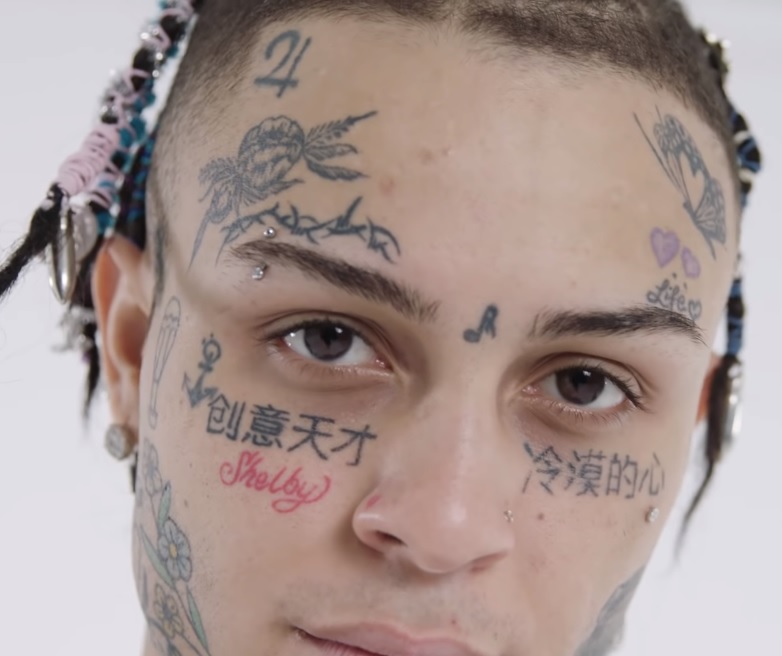
That idea comes through in an older GQ tattoo breakdown. Lil Skies talks through several designs, while his mother’s reaction gives the conversation another layer. He isn’t expressing regret; he’s explaining why he wanted his appearance to match a decision he had already made: music first, and no easy return to a regular job. The face became a promise he couldn’t quietly walk away from.
The name Shelby is the clearest face tattoo because Lil Skies has explained it himself. Other lettering is commonly identified as “Creative Genius” and “Cold Heart,” phrases that fit themes he has discussed. Still, designs are best read from what can actually be seen, rather than repeated from an uncertain fan list. His face ink isn’t random filler; the words carry a message.
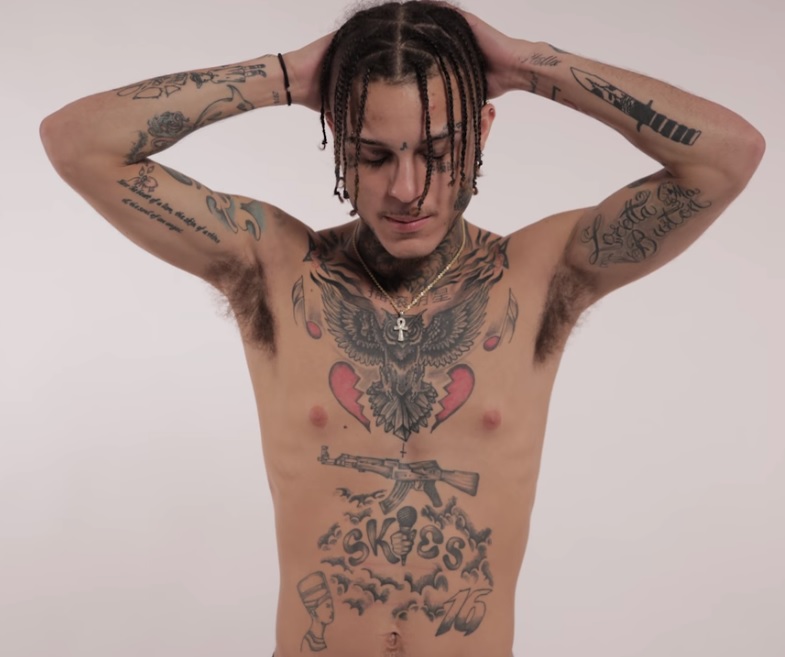
Another phrase associated with his face tattoos is “Memento Mori,” the Latin reminder to remember death. Coverage connected it to his Mac Miller-inspired period. The phrase adds a darker edge, but Lil Skies has also talked about making music for young people who need to feel free to be themselves. His tattoos hold both pressure and encouragement.
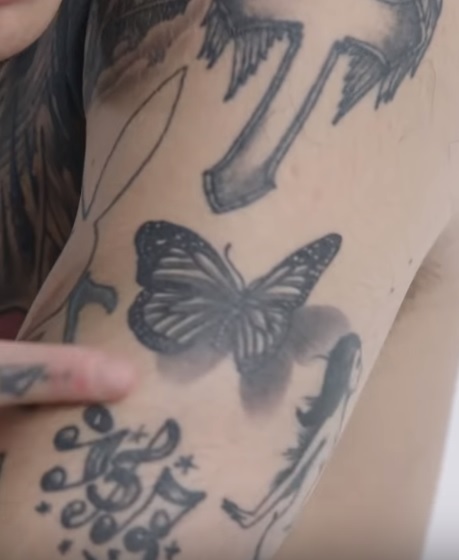
The ink also follows his music. An Audiomack Ink interview includes him discussing designs connected to “Red Roses,” the track and era that helped shape his early image. The tattoos arrived alongside a creative identity, not years later as a branding exercise. They mark a sound, a circle and a version of himself.
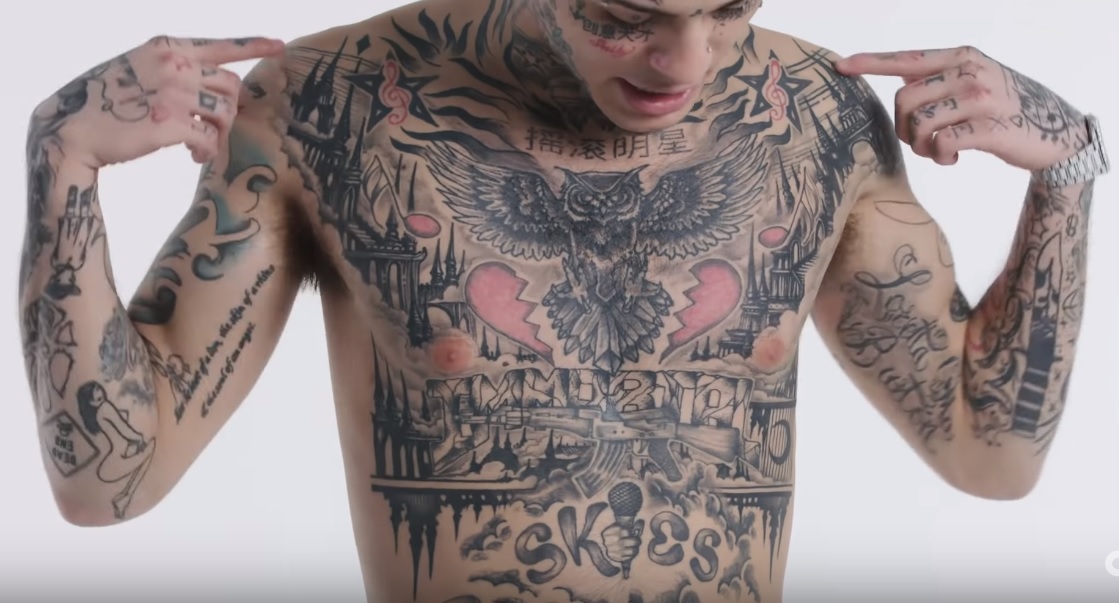
Photos from the Fillmore Auditorium period show why the collection became recognizable. Face lettering stands out under stage lights, while the rest of the tattoos appear and disappear with clothing, angles and shadows. No single performance photo gives a full inventory, but the pictures show the same visual language: heavy face work, expressive lettering and a willingness to make the tattoos part of his first impression.
Lil Skies has said he got face tattoos so a traditional nine-to-five job wouldn’t be an option. It was an extreme commitment for a young artist still building his career. He wasn’t just saying music mattered; he was removing the easy exit.
His mother’s dislike of the tattoos is part of the story, too, but it isn’t a simple family argument. Shelby’s name on his face makes the decision more complicated: a tattoo can honour someone and frustrate them at the same time. That tension is part of what makes the piece memorable.
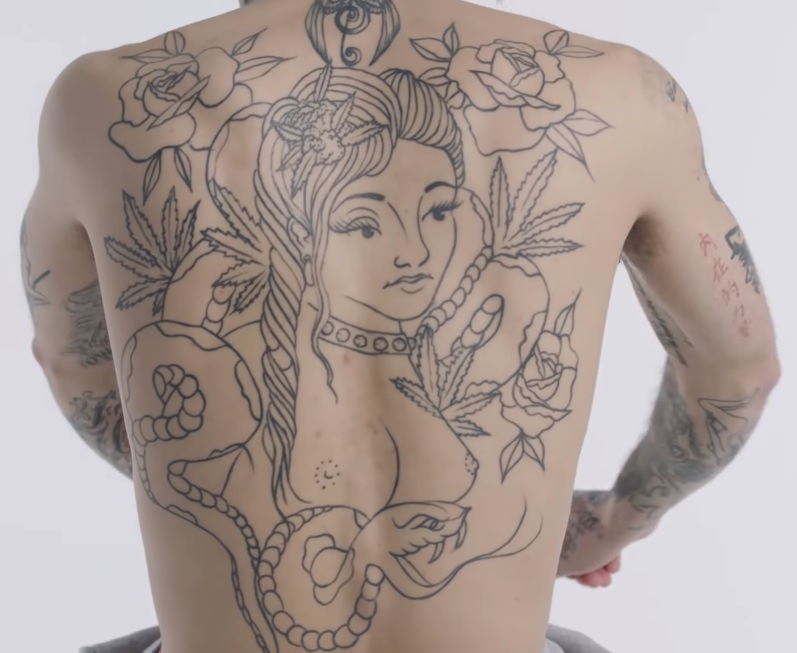
The back tattoo is another reminder that the collection isn’t only about his face. In an All Def interview, he discusses a nude woman design on his back and connects it to an earlier tattoo story. It looks very different from the motivational lettering, but it fits his open-ended approach. His tattoos can be serious, intimate, playful or provocative without settling into one theme.
Some smaller pieces are harder to catalogue. Hair, jewellery, stage clothing and image quality can hide details; older footage may offer only a quick glimpse. It’s better to call those tattoos visible than to invent names or meanings. What Lil Skies has explained directly carries more weight than what a caption claims.
A timeline runs through the collection. Early face tattoos set a public identity; music references give it a soundtrack; later additions carry the same directness. The designs still show the rough edges of choices that mattered to him at the time.
“Creative Genius” sounds like a declaration of possibility. “Cold Heart” can read as a piece of armour. “Memento Mori” adds a reminder that time is limited. Shelby’s name brings family into the most public part of his appearance. These are readings suggested by the words and by Lil Skies’ interviews, not a claim to know every private meaning.
Not every design has a full public explanation. Fan pages can repeat the same description until it sounds official, but the honest label for an unclear mark is simply “visible tattoo.” That keeps the confirmed stories clear.
Placement changes how the tattoos read. Face ink is hard to hide, so it makes a statement before anyone knows what it says. A back tattoo is more private, appearing when he performs or turns in a photo. Arm and hand tattoos come into view through gestures onstage. No single angle tells the whole story.
Lil Skies emerged when SoundCloud rap made raw presentation part of the music’s identity. Face tattoos, coloured hair and homemade visuals could signal that an artist wasn’t waiting for permission from the traditional industry. His ink belongs to that moment, but his explanations bring it back to family, motivation and songs.
The career choice behind the tattoos had a practical edge. If music was the plan, visible ink made a day job less available. The tattoos marked a boundary, and that permanence was part of their power. Years later, they still show the shape of that decision.
Fans don’t need to copy the face tattoos to understand the message. Lil Skies used his appearance to make his priorities hard to ignore. Family, music, mortality and self-expression all show up in the words. The designs tell a living story, not a finished logo.
A documented inventory of Lil Skies’ tattoos
The clearest public inventory includes Shelby’s name on his face, lettering commonly identified as “Creative Genius” and “Cold Heart,” the “Memento Mori” phrase, and the back design discussed in his All Def interview. Photos also show other face and body tattoos whose exact wording or placement isn’t consistently documented. A responsible list describes what is visible and leaves the meaning open until Lil Skies or the artist explains it.
Why the face tattoos still matter
The designs connect to decisions. Shelby’s name marks family; “Memento Mori” carries a reminder of mortality and influence; the motivational words show his refusal to shrink his ambition. The back piece leaves room for humour and desire, too. Those ideas can sit beside one another. Together, the tattoos form a timeline of the person behind the songs.
Watch Lil Skies explain the ink
The GQ breakdown is a useful companion, especially for the face tattoos and his decision to make music the path he was committed to taking.
One thought on “Lil Skies wears his face ink like a promise”