Musicians

Tattoo guides for singers, rappers, DJs and musicians, with photographs, documented meanings and the stories behind their designs.

Christina Perri Tattoos: Dog, Johnny Cash, Stargirl and More

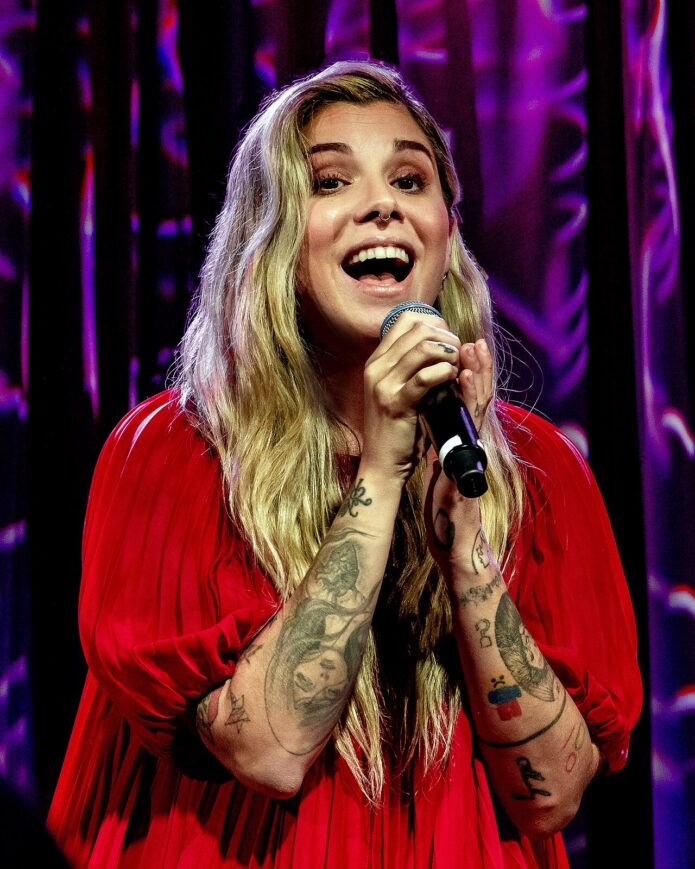
Christina Perri tattoos are spread across her arms and chest, but the designs don’t all come from the same place. They point to family, books, music, old friends and small details she has carried with her. Among the pieces fans notice are her dog portrait, the Johnny Cash reference, the line “to thine own self be true,” and the Stargirl tattoo. She has also talked about covering older work as her taste changed. Her collection has grown in layers. New pieces sit beside older ones, and some designs have changed along the way.

Christina Perri’s dog tattoo
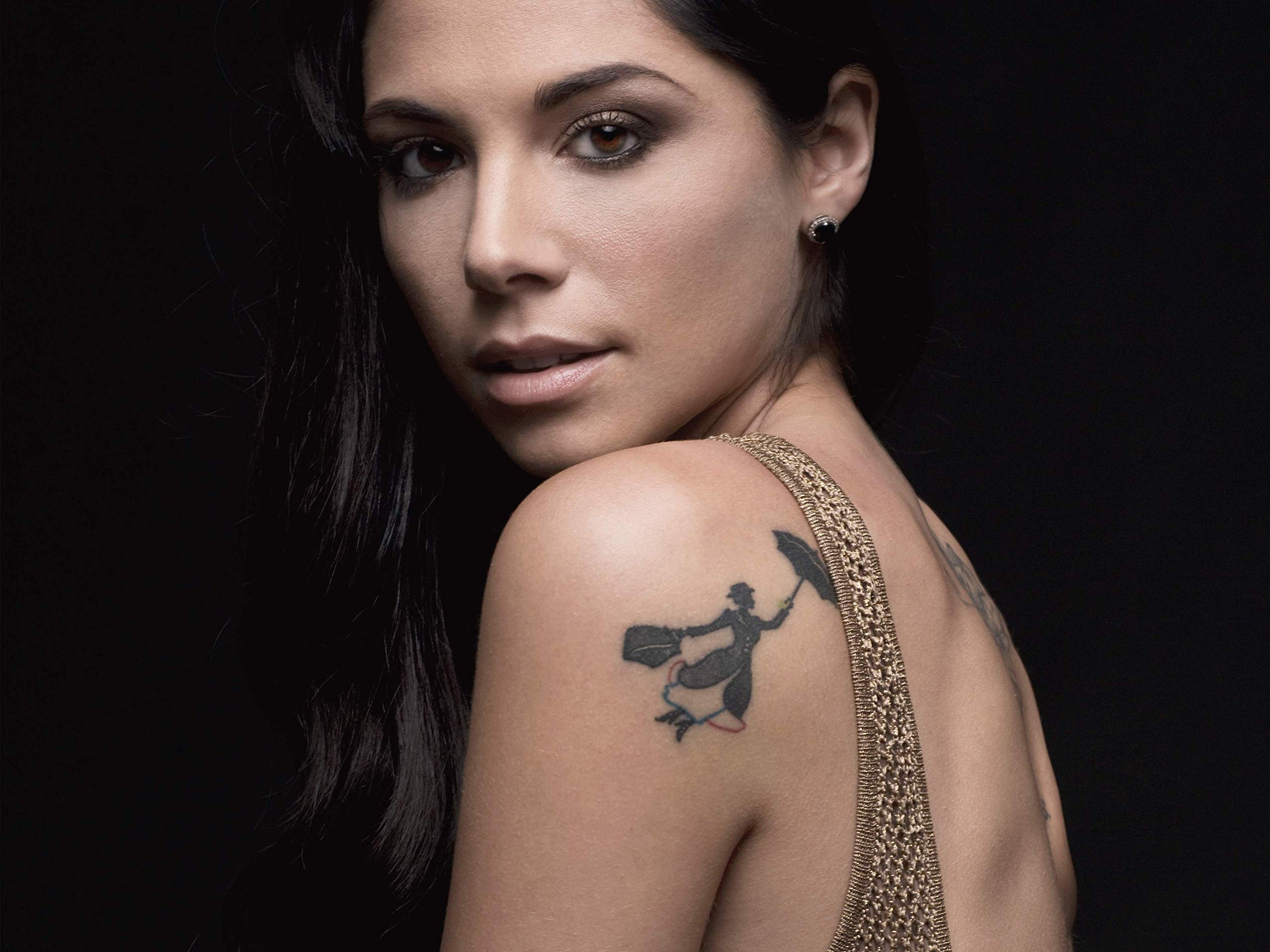
Christina Perri shoulder tattoo

A portrait of her dog is one of the more personal images in Perri’s collection. It’s described as a tribute to her pet, though the public details don’t give a date or explain the story behind it. In a full-arm photo the portrait can be easy to miss; a closer view brings the face into focus. It sits among other tattoos, alongside larger images and smaller marks.

The Johnny Cash tattoo
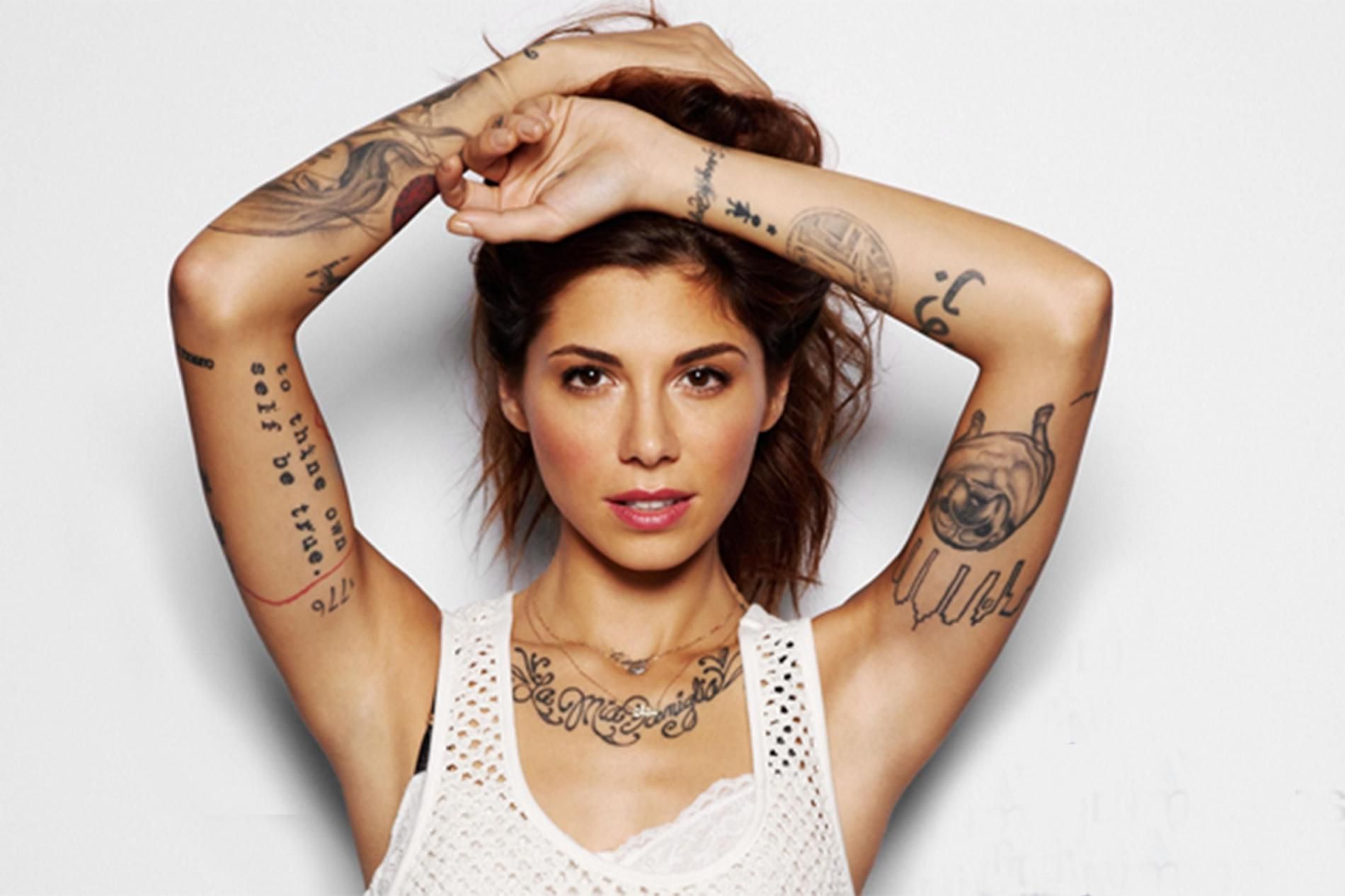
Christina Perri visible arm tattoos

Perri also has a tattoo connected to Johnny Cash, one of the artists who influenced her. The reference joins the music-related pieces in her collection. It’s tempting to connect Cash’s plain-spoken songs with Perri’s own writing, but that’s an outside reading; the tattoo itself is the clearest evidence of the connection. The exact personal story behind her choice isn’t spelled out here.

“To thine own self be true”
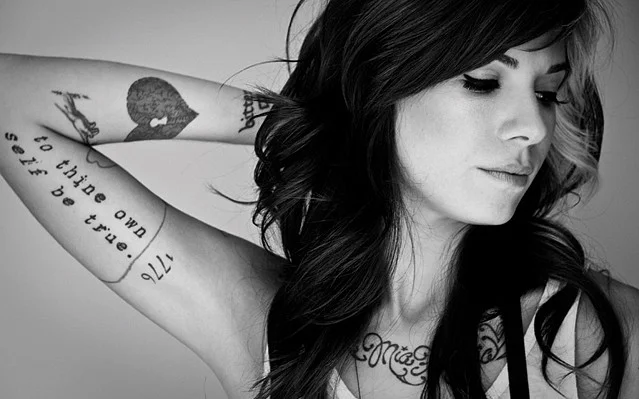
Christina Perri script and arm tattoos

The phrase comes from Shakespeare’s Hamlet and is one of Perri’s most recognizable tattoos. It runs in script along her arm and often shows in sleeveless performance photos. Its message about being honest with yourself is direct, and it fits the openness of her songwriting without much explanation. The lettering stretches along her arm, so it’s both a readable sentence and part of the larger patchwork around it.

Her apple tattoo
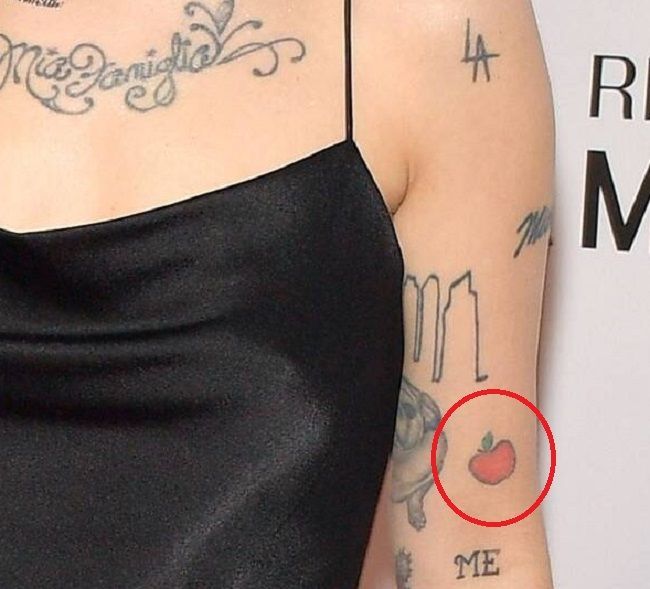
Christina Perri apple tattoo

A small apple adds a lighter note. Perri hasn’t offered a single public explanation for it, and there’s no need to assign it one. It appears among the other small designs rather than taking center stage; in a busy photo, you may spot it only after looking again.

The “CAPO NODO” finger tattoo
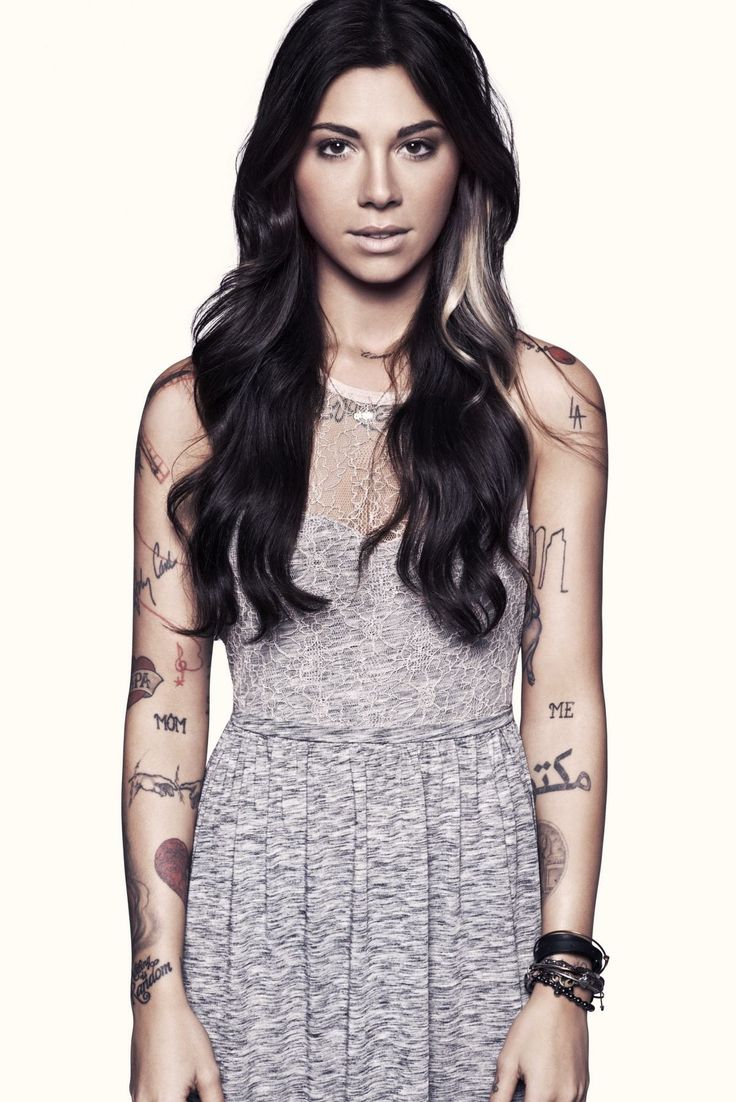
Christina Perri arm and chest tattoos

The letters “CAPO NODO” appear across Perri’s fingers. The Italian phrase is commonly translated as “head knot” or “main knot,” but that translation alone doesn’t settle what she means by it. The placement makes the tattoo hard to miss when she holds a microphone or reaches for a guitar. It adds another piece of lettering to a collection where words, names and pictures share space without forming one long quote sleeve.

The Stargirl tattoo
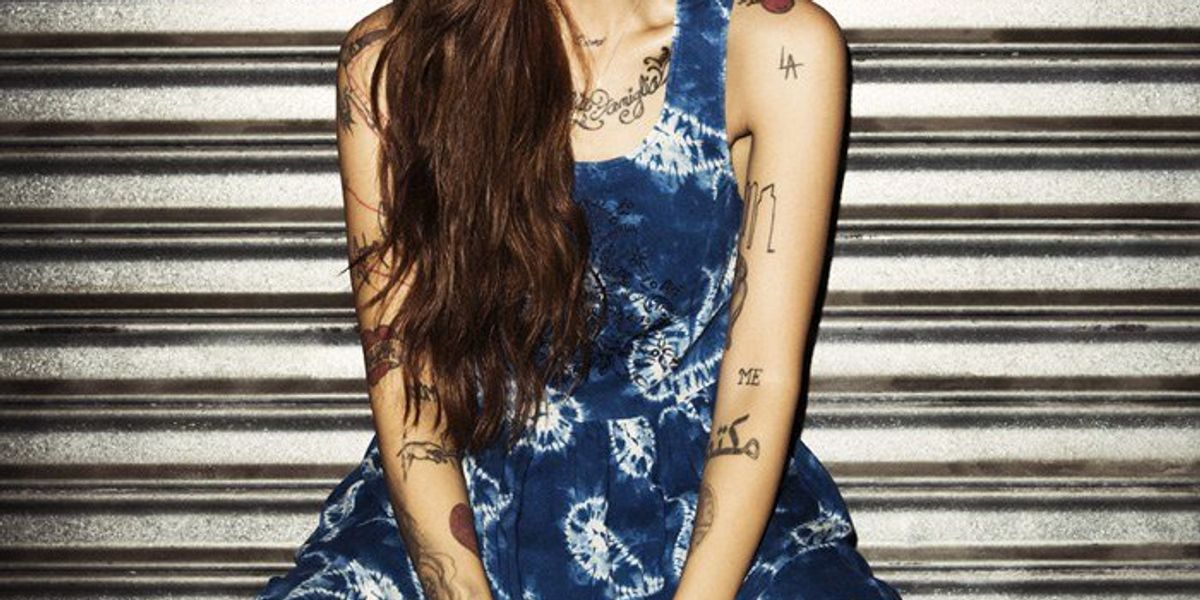
Christina Perri tattooed arms and chest

Perri’s Stargirl tattoo refers to Jerry Spinelli’s novel, which she has described as meaningful to her. It’s another book reference among pieces tied to music and personal memories. Readers may connect the story with being different without apology, but that doesn’t establish Perri’s own reason for choosing the design. The title gives her collection a link to a book as well as to songs and people.

The crescent moon tattoo
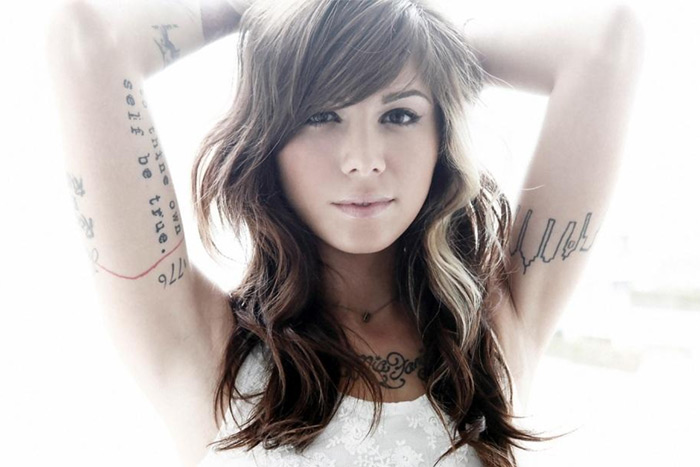
Christina Perri tattoos on arms and chest

A crescent moon is another small design in the mix. Perri hasn’t publicly explained every symbol, so its exact meaning isn’t clear. In photos, the curved shape sits near longer script and darker images, giving the eye another shape to pick out among those denser pieces.

Why Christina’s tattoos feel like a scrapbook

Dog, book, music, Shakespeare and an apple: the references point in different directions, with no single style tying them together. Perri has also talked about covering older tattoos as her taste changed. Over time, some designs stop feeling right, while others take on more meaning. That changing mix is what makes the collection feel like a scrapbook: each piece can be read on its own, and the tattoos have shifted as she has.

Watch a Christina Perri tattoo video

The video below offers a closer look at Christina’s tattoo designs and how the smaller symbols sit among the larger pieces.

 

More musician tattoo guides

T-Pain turned internet culture into permanent ink

The tattoos that made T-Pain’s hands part of the joke

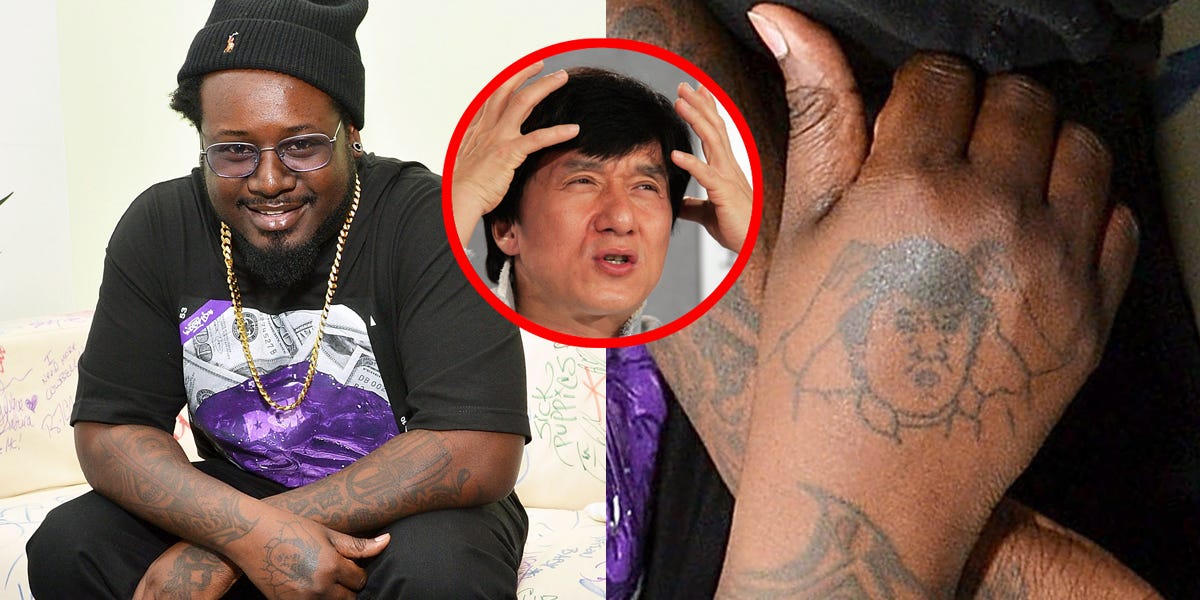
T-Pain Jackie Chan hand tattoo

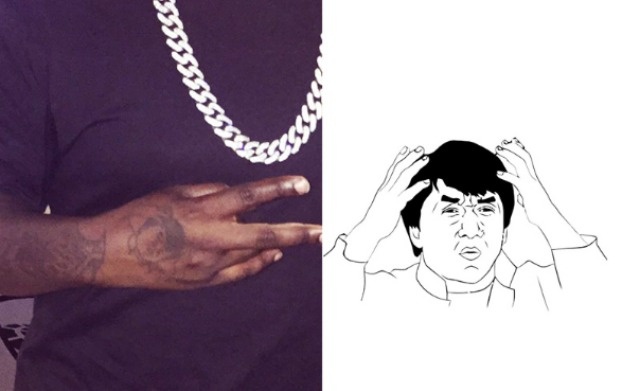
T-Pain’s tattoos share the same dry humour as his public persona. The best-known is the Jackie Chan meme on his hand. He got it after people kept saying things he thought were stupid. Rather than argue, he said he wanted them to look at the tattoo while they were talking. It turns an irritation into a joke, right where people can’t miss it.

The image comes from a widely shared photo of Jackie Chan looking confused. Business Insider, VICE and other outlets have covered the story, and T-Pain has explained the idea himself. This is one of the easiest tattoos in his collection to identify: the image is familiar, the placement is clear and the reason has been reported. It’s more than a portrait of a movie star. On the hand, it’s bound to catch someone’s eye.

The piece is funny, but it also has a purpose. T-Pain took a bit of internet culture and made it part of how he handles an awkward conversation. The joke is silly, and the placement is deliberate.

The Facebook Like button on his arm

T-Pain Facebook Like tattoo

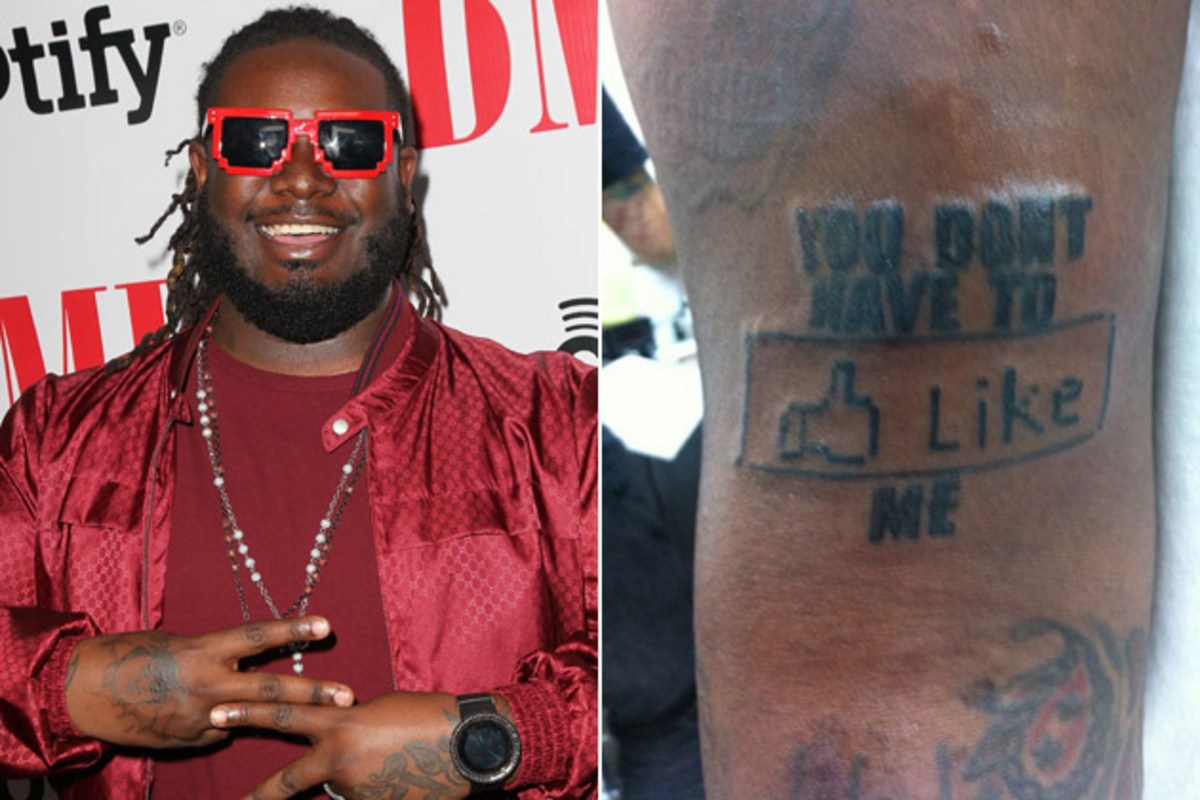
Before the Jackie Chan tattoo, T-Pain made headlines for a Facebook Like button tattoo. Reports from 2011 said he got the familiar thumbs-up in Hawaii, along with words tied to the social network. He turned a small piece of a website into body art just as Facebook was becoming part of daily life.

The tattoo also fits his interest in bringing online culture into the real world. At the time, putting an interface symbol on skin was a joke about how much space Facebook took up in people’s lives. It came with an obvious risk: platforms change, and a symbol that once felt universal can quickly look dated.

That’s part of its appeal now. The Facebook mark captures one internet era, while the Jackie Chan tattoo points to the meme culture that came after it. His tattoos preserve the moment he chose them. They show what was in the air then.

The neck tattoo that simply says Tattoo

T-Pain neck Tattoo tattoo

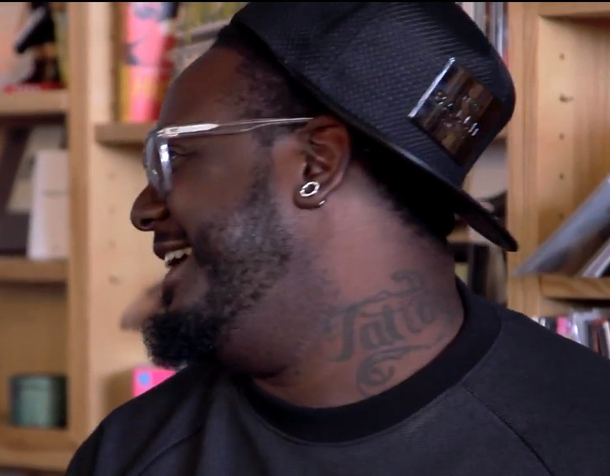
Searches for T-Pain tattoos also turn up the small neck design that reads Tattoo. It’s blunt: the word names the thing it is. Like the Facebook and Jackie Chan pieces, it has a self-aware joke in it.

The word sits close to his face, where it shows in profile photos, interviews and performances. A simple word can draw as much attention as a detailed picture when it’s placed well. This one doesn’t need a long explanation; the joke is in its directness.

Image searches can mix T-Pain’s neck tattoo with fan-made designs or unrelated pictures. The clearest way to identify it is to look for photos that show T-Pain and the word on his neck. For a joke this simple, a clear photo is enough.

Words, symbols and the wider collection

T-Pain Like Me arm tattoo

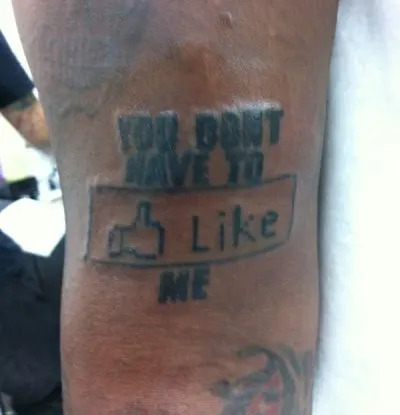
Complex has reported that T-Pain has roughly a dozen tattoos, including the phrase You don’t have to Like me, a play on Facebook’s Like language. It carries the button’s idea further, turning a joke about approval into a statement about attention. It can read as humour or as a boundary.

Photos also show lettering, symbols and other work on his hands and arms, but not every piece is identified with the same certainty. That’s common with tattoos seen in music videos, red-carpet pictures and social posts: one close-up may show a design while hiding another, and lighting can change how old ink looks. A visible tattoo isn’t always an explained tattoo.

The common thread is how T-Pain takes things that are usually temporary and puts them on his body. A Facebook button gets clicked and forgotten; a meme gets replaced by the next one; a line about being liked might stay on a profile. His tattoos keep those ideas around after the news cycle has moved on.

Why the Jackie Chan tattoo fits the whole idea

T-Pain Jackie meme hand tattoo

The Jackie Chan tattoo sums up T-Pain’s humour and interest in internet culture. Its placement matters too. It isn’t under a sleeve; people can see it when he reaches out, gestures or performs. Anyone looking at his hand becomes part of the joke.

That doesn’t mean every T-Pain tattoo is supposed to be funny. The phrase about not needing a Like has a sharper edge, and the word on his neck has a different feel from the Facebook logo. Together, the designs show an artist who lets body art comment on the world around him. Some of the tattoos work like captions.

His ink also shapes how he handles attention. People sometimes approach famous musicians as if they’re entitled to a response. T-Pain has described the Jackie Chan image as a way to answer foolish comments without an argument. If someone asks about it, the story becomes part of the exchange. The tattoo is personal, but it’s also made to be seen.

A careful inventory of T-Pain’s documented tattoos

The designs named in public reporting include the Jackie Chan meme on his hand, the Facebook Like button, the phrase You don’t have to Like me, the neck tattoo that reads Tattoo, and other hand, arm and neck marks that haven’t been consistently identified. That’s a shorter list than some accounts give, but each item is tied to a photograph or a published explanation.

Fan posts sometimes attribute other people’s tattoos to T-Pain, including designs worn by other rappers or copied from his ideas. Cropped pictures can be hard to verify too. A photo of a hand tattoo doesn’t establish that the hand belongs to him.

There’s no need to give every design a profound meaning. Some of his best-known tattoos are funny because they’re so direct: the Facebook symbol is a Like button, the neck tattoo says Tattoo, and the Jackie Chan image interrupts a conversation. Humour is part of what they mean.

To compare photos, start with the designs covered in reporting and check where they sit: on the hand, forearm, arm or neck. Look for the Jackie Chan expression, the Facebook thumbs-up or the word Tattoo. Treat other marks as unconfirmed unless T-Pain or a reliable contemporary source identifies them.

Watch T-Pain explain the Facebook tattoo

This clip shows T-Pain talking about the Facebook Like button tattoo, the design discussed above.

More musician tattoo guides

CeeLo Green wears the truth on his head tattoo

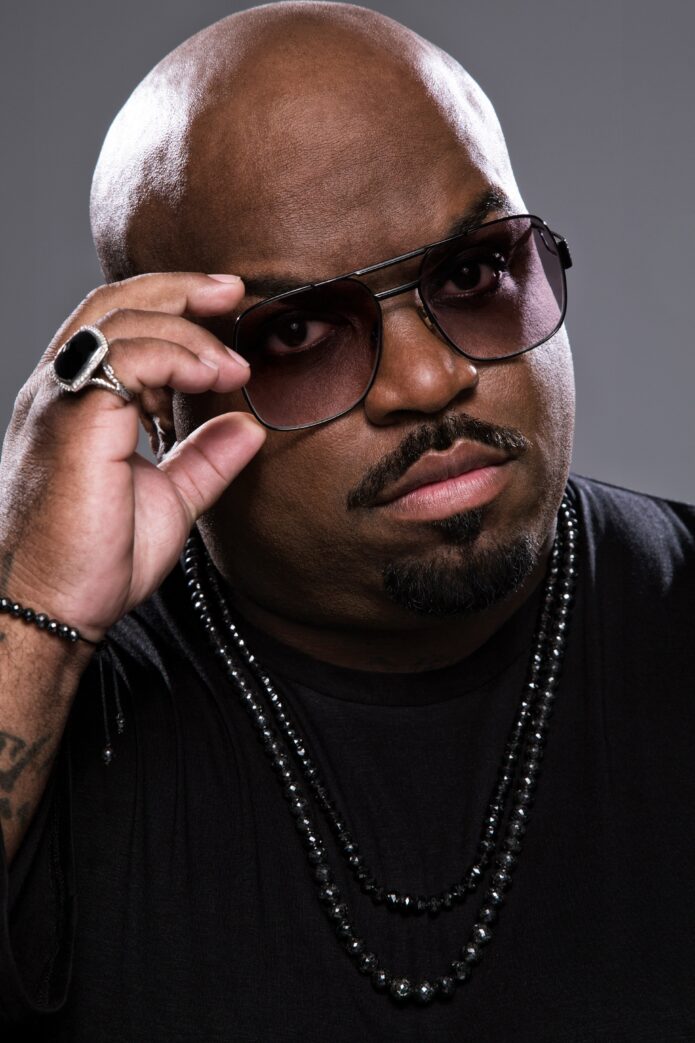
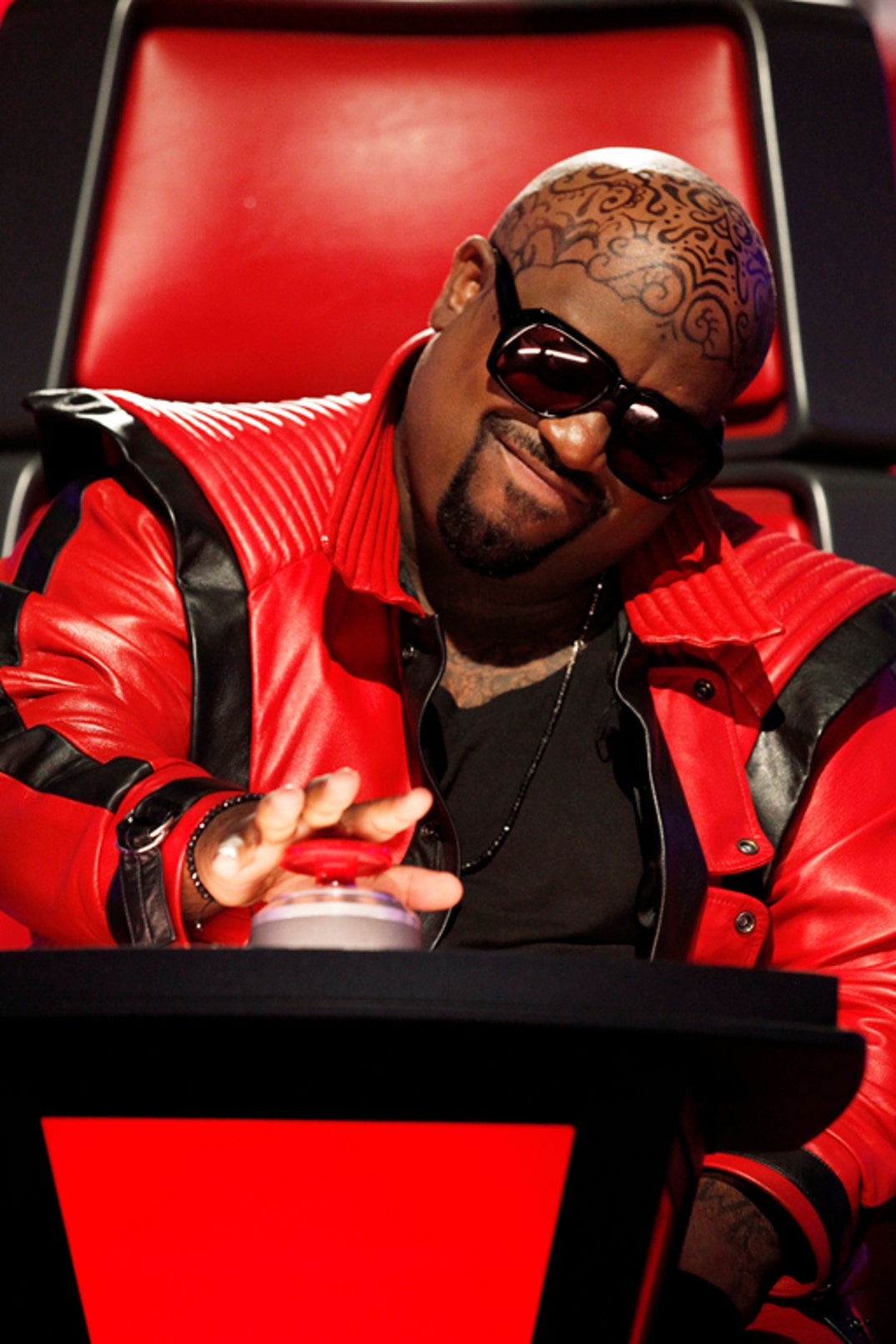
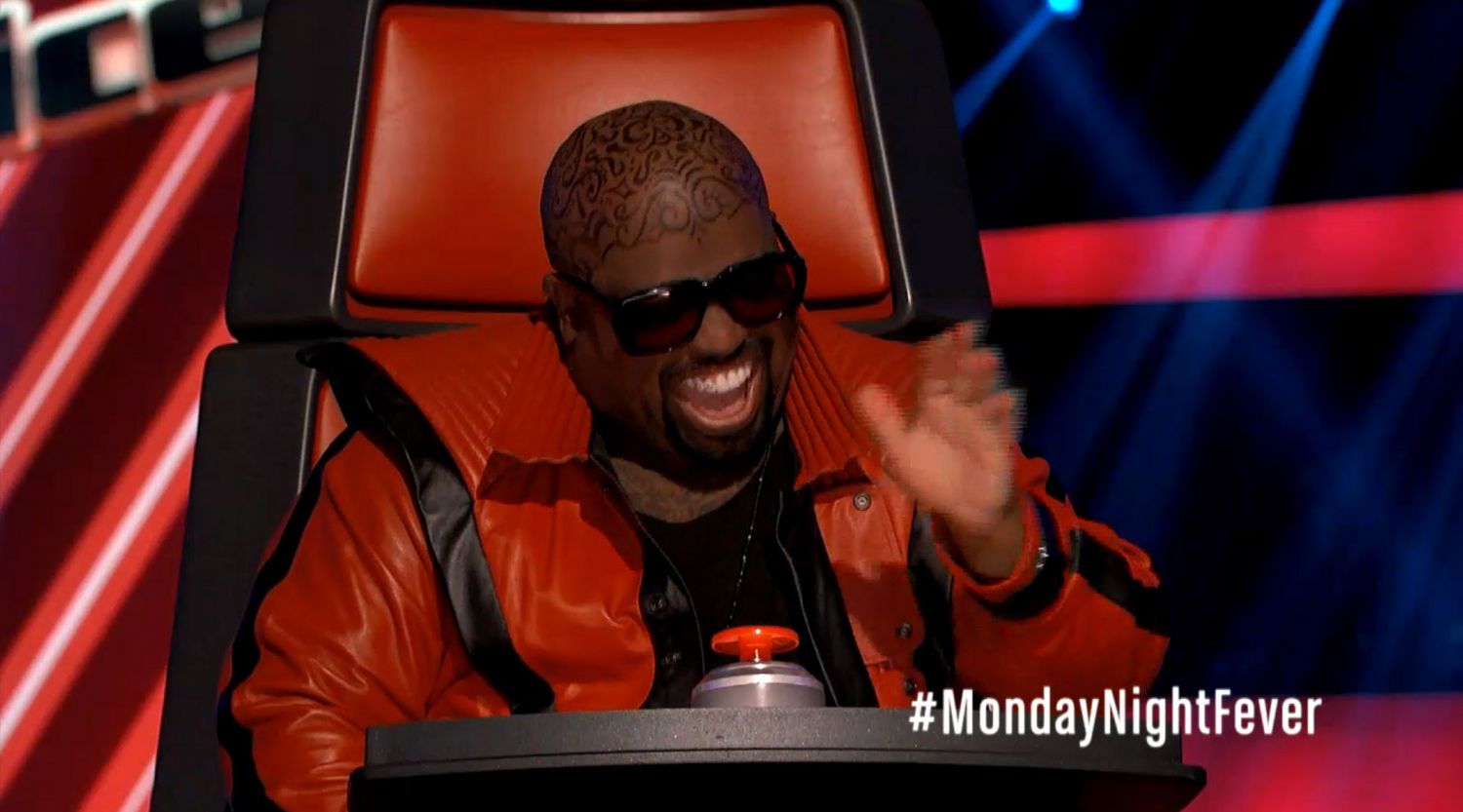
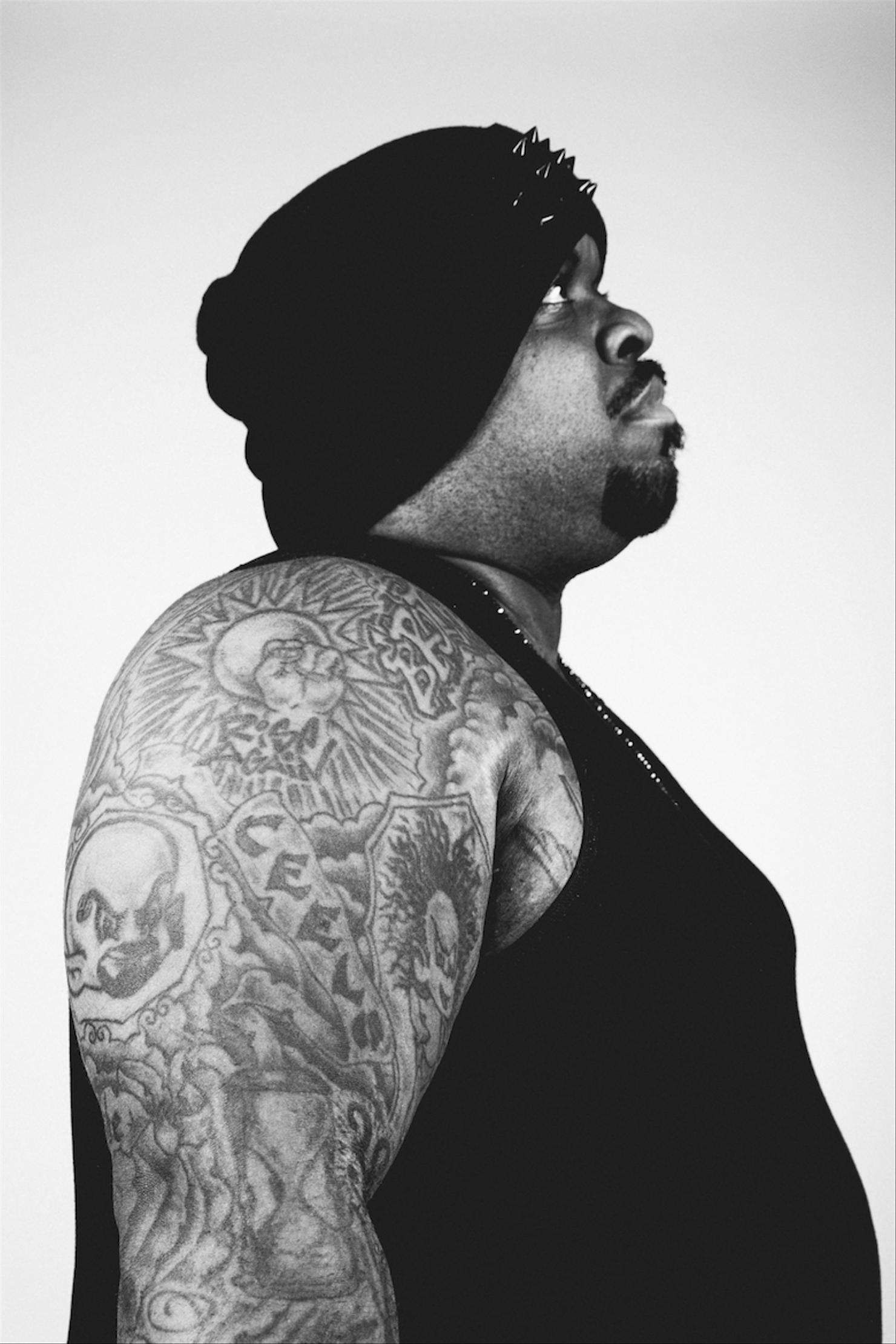
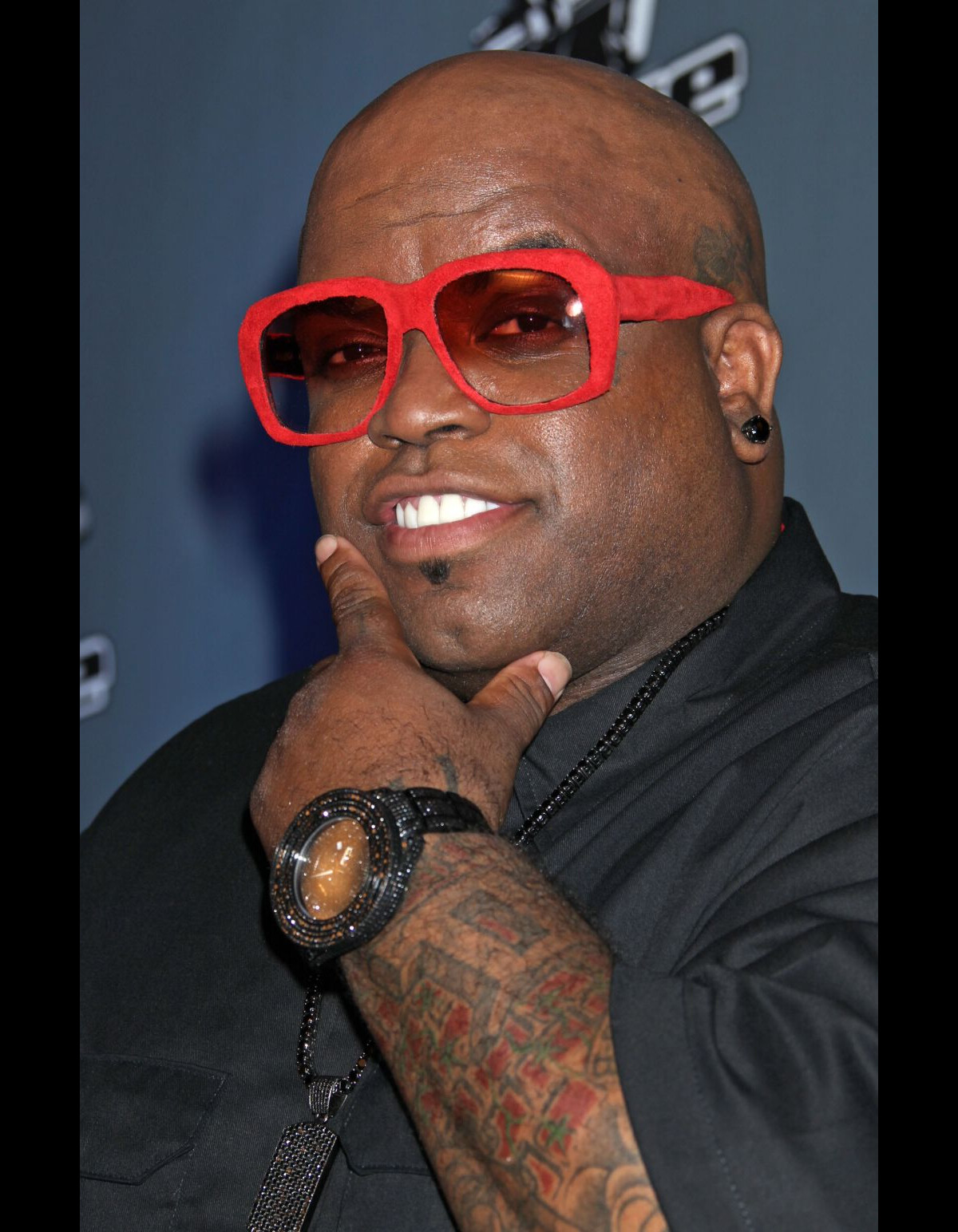
CeeLo Green’s permanent head tattoos include a Tibetan Sanskrit word meaning “wisdom” on the back of his head, “Trill” above his right ear, a rose near the ear, a cross by his right eye and a question mark by his left. He has also worn large temporary designs on his head that looked like tattoos on television but were henna.

The difference matters. CeeLo has permanent face tattoos, but the elaborate design he wore on The Voice lasted about one to four weeks. His collection includes permanent words and symbols as well as temporary head art.

The wisdom tattoo sits on the back of CeeLo’s head

CeeLo Green head tattoo design

In a tattoo interview, CeeLo said the Tibetan Sanskrit on the back of his head means “Wisdom.” That meaning comes from his own explanation, not a guess based on a blurry photo.

The tattoo can be covered by his hair or a hat and revealed when he turns. It’s less exposed than a forehead or cheek tattoo, so the placement gives him some say over when people see it.

The Sanskrit looks different from the English lettering elsewhere on his head. Public accounts don’t identify it as a longer quote or sentence. The documented piece is a wisdom-related word, separate from the henna design that later covered more of his scalp.

“Wisdom” is a quieter idea than “Trill,” the rose, cross and question mark elsewhere on his face. It’s the one tattoo in the collection with a meaning CeeLo has explained clearly.

The other marks draw attention through their placement. The back-of-head tattoo is easier to miss, but it adds a personal idea to the collection.

“Trill” is a word tattoo with a specific meaning

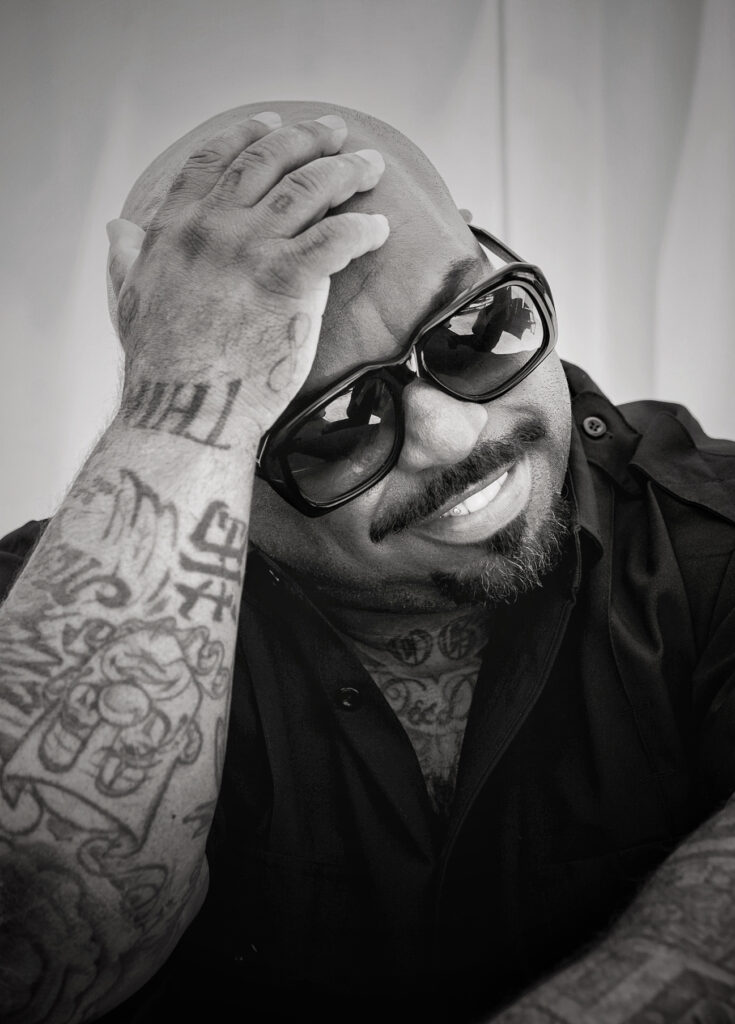
CeeLo Green hand and forearm tattoos

CeeLo has “TRILL” tattooed above his right ear. It’s easy to read in profile photos and is one of the facial tattoos most often mentioned in coverage.

He has explained that “trill” means “true and real.” He has also linked the slang to the late Pimp C of UGK, who helped popularize the term in Southern hip-hop. The tattoo has a musical and regional reference as well as CeeLo’s own definition.

Above the ear, the word is visible without sitting in the middle of his face. It comes into view when he turns, and shows clearly in profile shots from television and performances.

CeeLo’s definition gives the word a specific meaning for him: honesty and authenticity. It’s a short statement about how he wants “Trill” understood.

Without his explanation, the tattoo could be described but its meaning would be less certain. His comments connect it to Southern rap and to a value he associates with himself.

The rose, cross and question mark turn his face into a symbol set

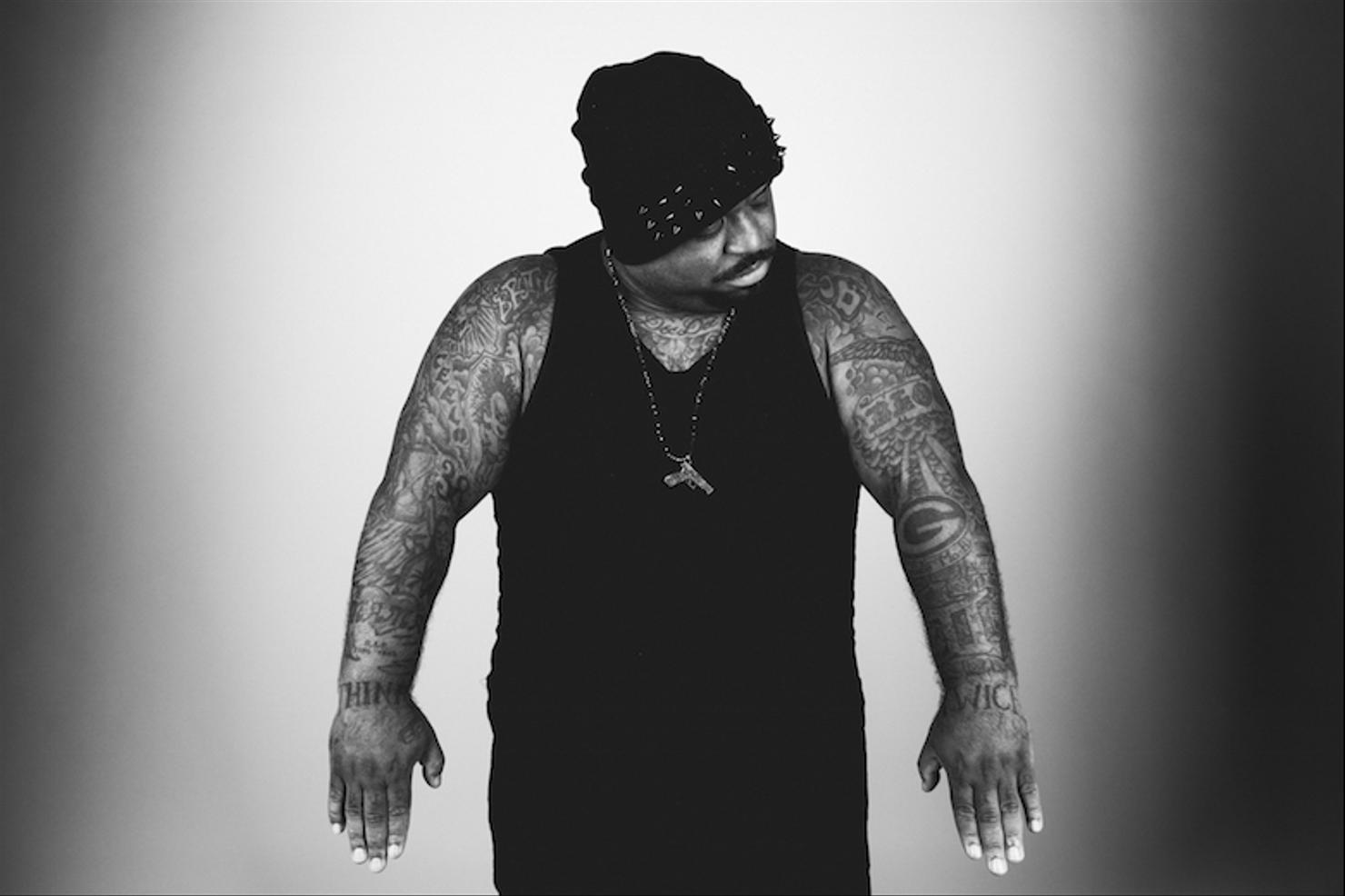
CeeLo Green hand and chest tattoos

Photos also show a rose near his ear, a cross by his right eye and a question mark by his left. The marks are small, but together they give his face a collection of distinct symbols.

A rose often invites a personal interpretation, but the available accounts don’t establish what CeeLo meant by this one. What can be identified is its placement near the ear, separate from the “Trill” lettering.

The cross by his right eye is clear in photos, but CeeLo’s specific reason for getting it hasn’t been established. It may have a spiritual meaning, but that remains uncertain. Seeing the symbol doesn’t tell us his private reason for it.

The question mark by his left eye leaves its meaning open. It has become part of his recognizable look in photos where the small mark is visible. Together, it and the cross sit on either side of his eyes.

These tattoos are simple marks, but they read differently as a group: a flower, a cross and a punctuation mark. They make his face feel like a sentence left open.

The elaborate head tattoo on The Voice was temporary henna

CeeLo Green temporary henna head tattoo

When CeeLo appeared on The Voice with an intricate design across his head, viewers wondered if he had gotten a large new tattoo. He hadn’t: the pattern was henna, which was expected to last about one to four weeks.

The design covered enough of his head to draw attention from the smaller permanent tattoos. For a short time, the Sanskrit, “Trill,” rose, cross and question mark appeared against a much denser pattern.

Permanent ink stays for years; henna fades. CeeLo could try a dramatic look and let it disappear without covering or replacing his existing tattoos.

The head design suited his performance style and changed his silhouette on television. In a still photograph it looks like a full-head tattoo, but it wasn’t a permanent commitment.

Some headlines call it a head tattoo, while the accompanying coverage identifies it as henna. It belongs in the story of his body art, but not in an inventory of his permanent tattoos.

His permanent ink is smaller than the temporary spectacle

CeeLo Green arm and shoulder tattoos

CeeLo’s clearest permanent tattoos are the Sanskrit word for “Wisdom” at the back of his head, “Trill” above his right ear, and the rose, cross and question mark around his face. Photos may show other marks, but these are the ones most consistently identified in coverage.

The henna pattern can make the collection look larger than it is. It covered much of his scalp, but it was temporary. That design shouldn’t be counted as permanent ink.

The permanent pieces are mostly words and small symbols around his head and face. The temporary pattern was much denser and more decorative, closer to a performance look.

CeeLo has explained “Wisdom” and “Trill.” The rose, cross and question mark are visible, but their personal meanings are less certain. It’s useful to keep those two kinds of detail separate.

Why CeeLo’s tattoos work as part of his public image

CeeLo Green forearm tattoos

The tattoos show up as he turns. “Trill” makes a line above his ear; the rose, cross and question mark sit around his face; and the Sanskrit on the back of his head appears only from certain angles.

That makes them visible in performance and television photos without forming one large design. The camera catches different pieces as he moves. Together, the marks have become part of his recognizable look.

The henna pattern amplified that look for a short time, but it didn’t define the permanent collection. CeeLo’s smaller tattoos were already familiar to viewers; the temporary design made them part of a much larger headpiece.

CeeLo has explained the meanings of “Wisdom” and “Trill.” The rose, cross and question mark are easy to identify, though their personal meanings aren’t as clear. The full-head design was henna, a temporary choice for television rather than permanent ink.

Watch CeeLo Green talk about his head tattoo

This video looks at CeeLo’s head design and the reaction to it.

More musician tattoo guides

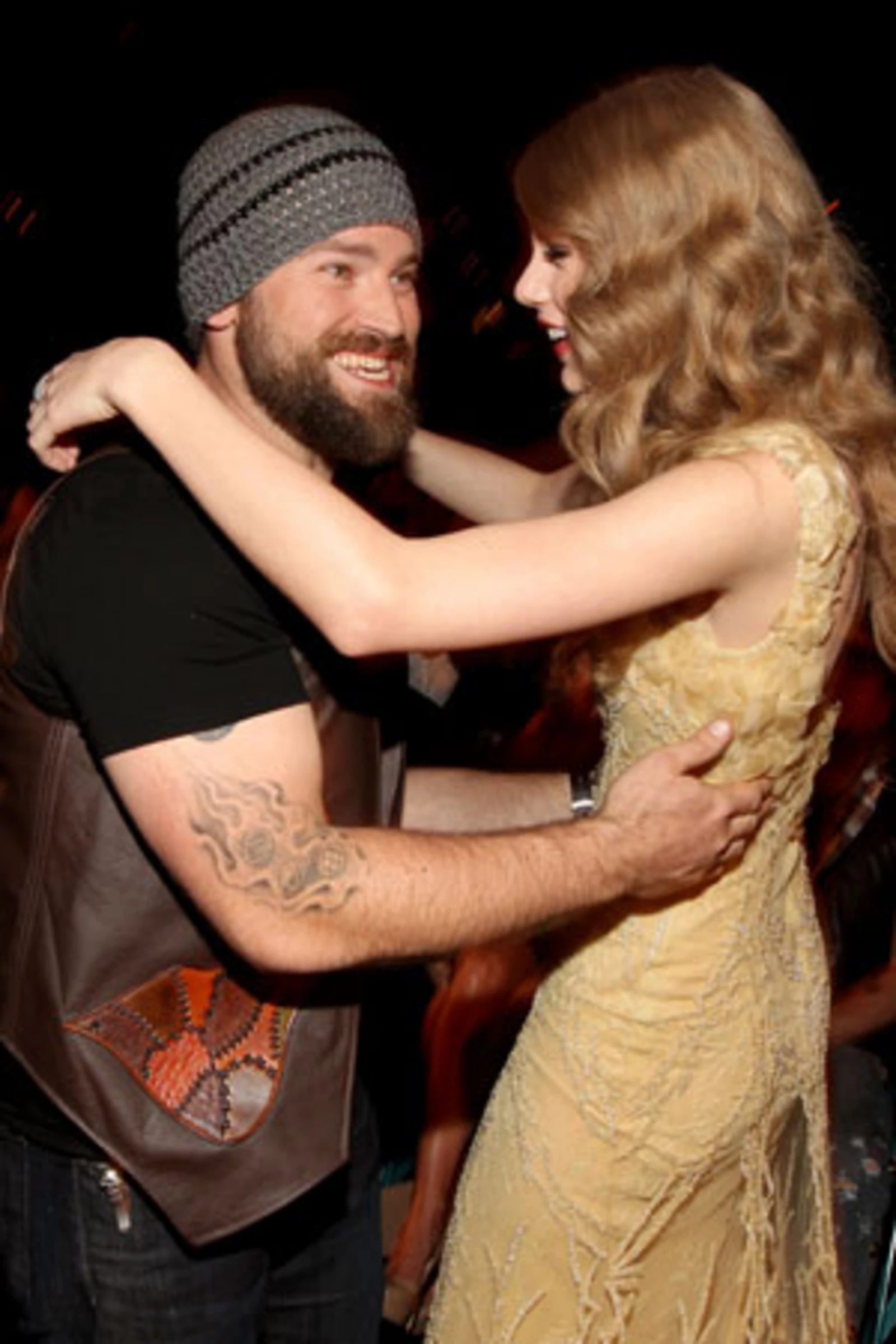
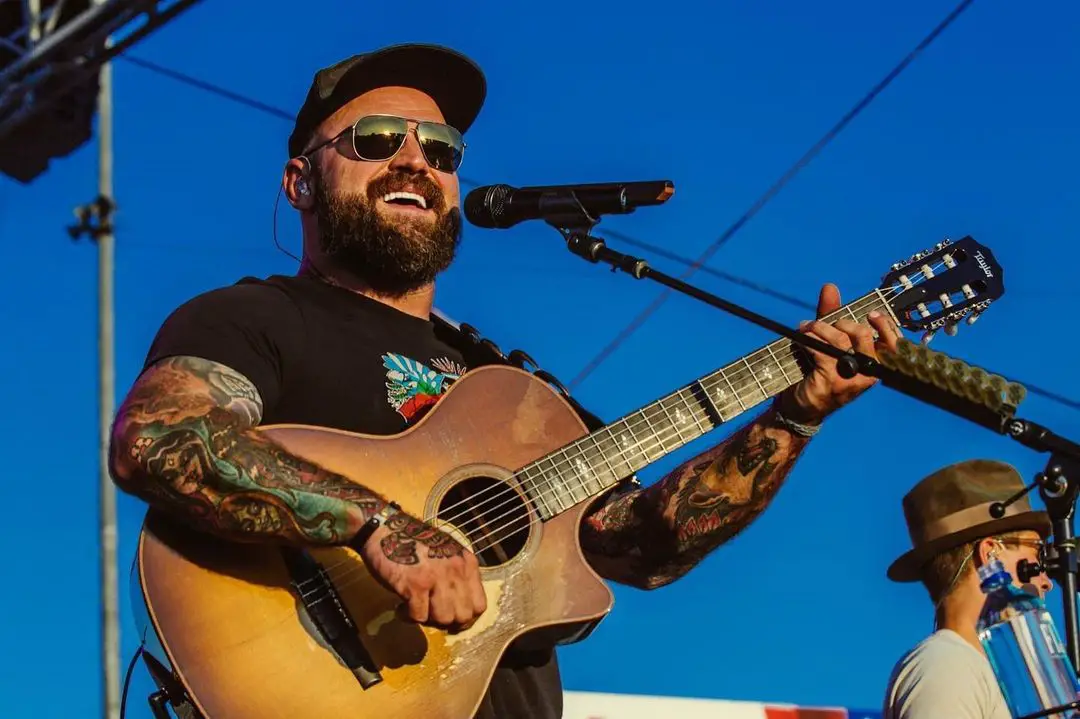
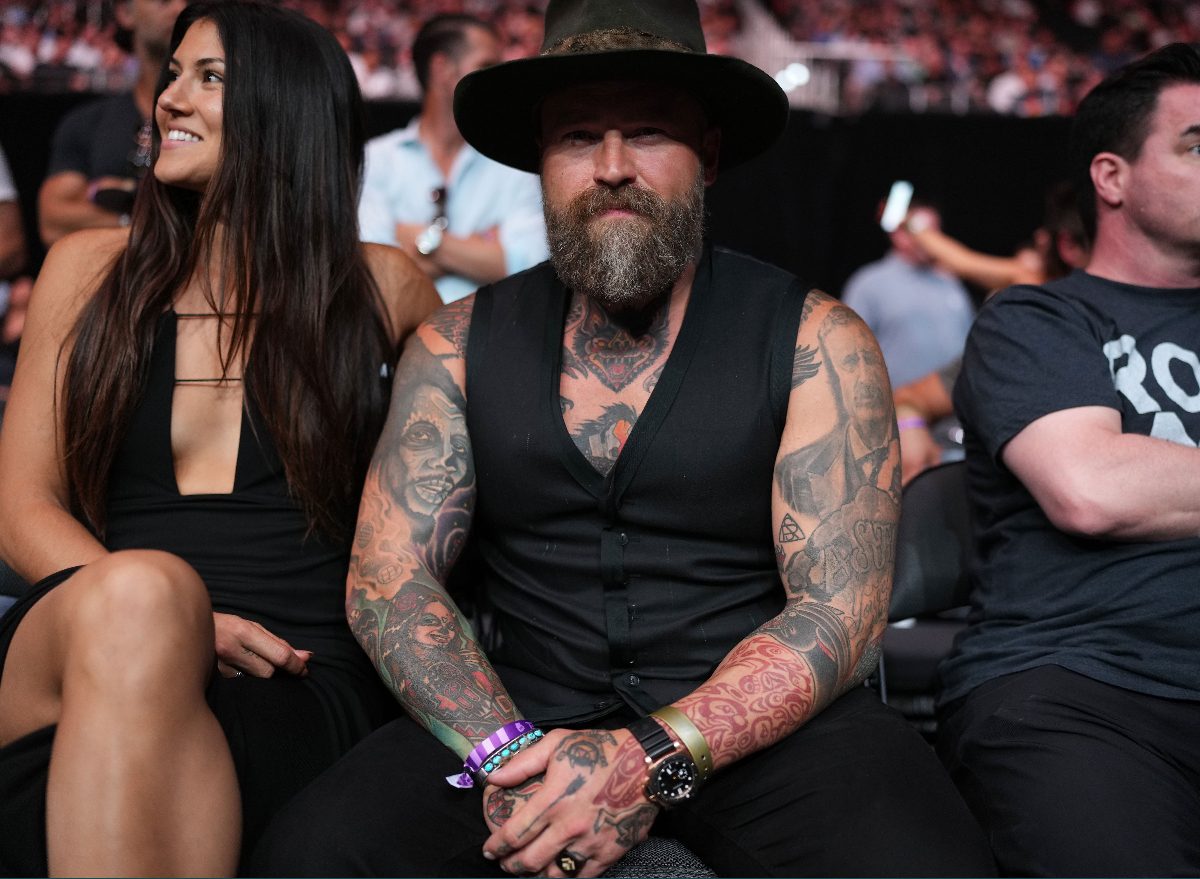
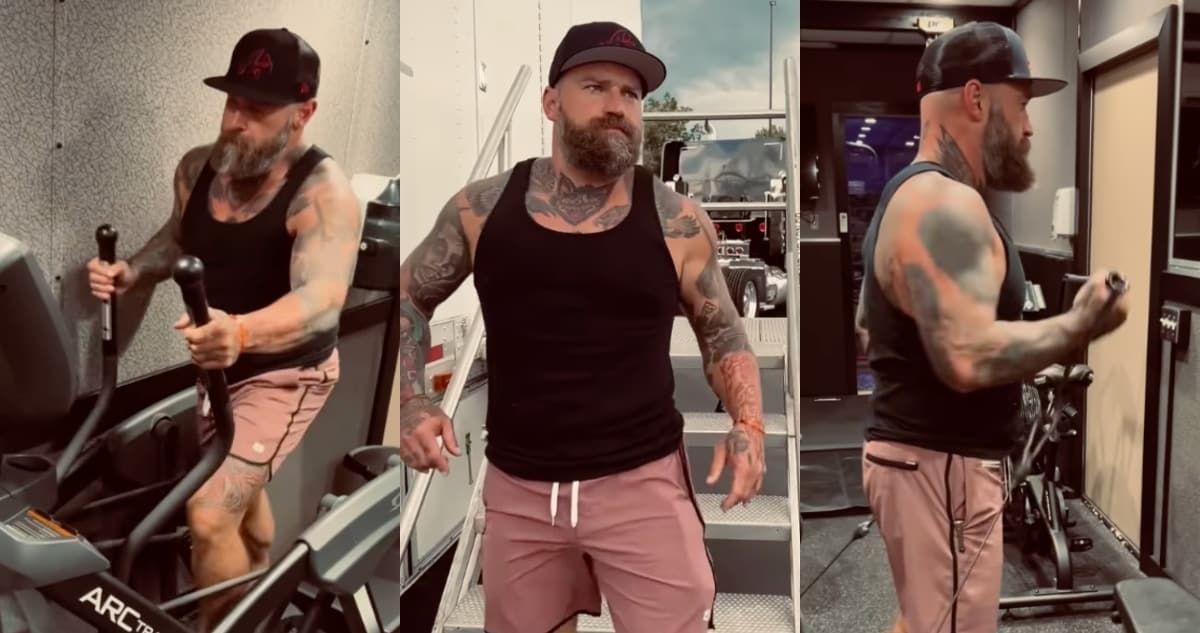
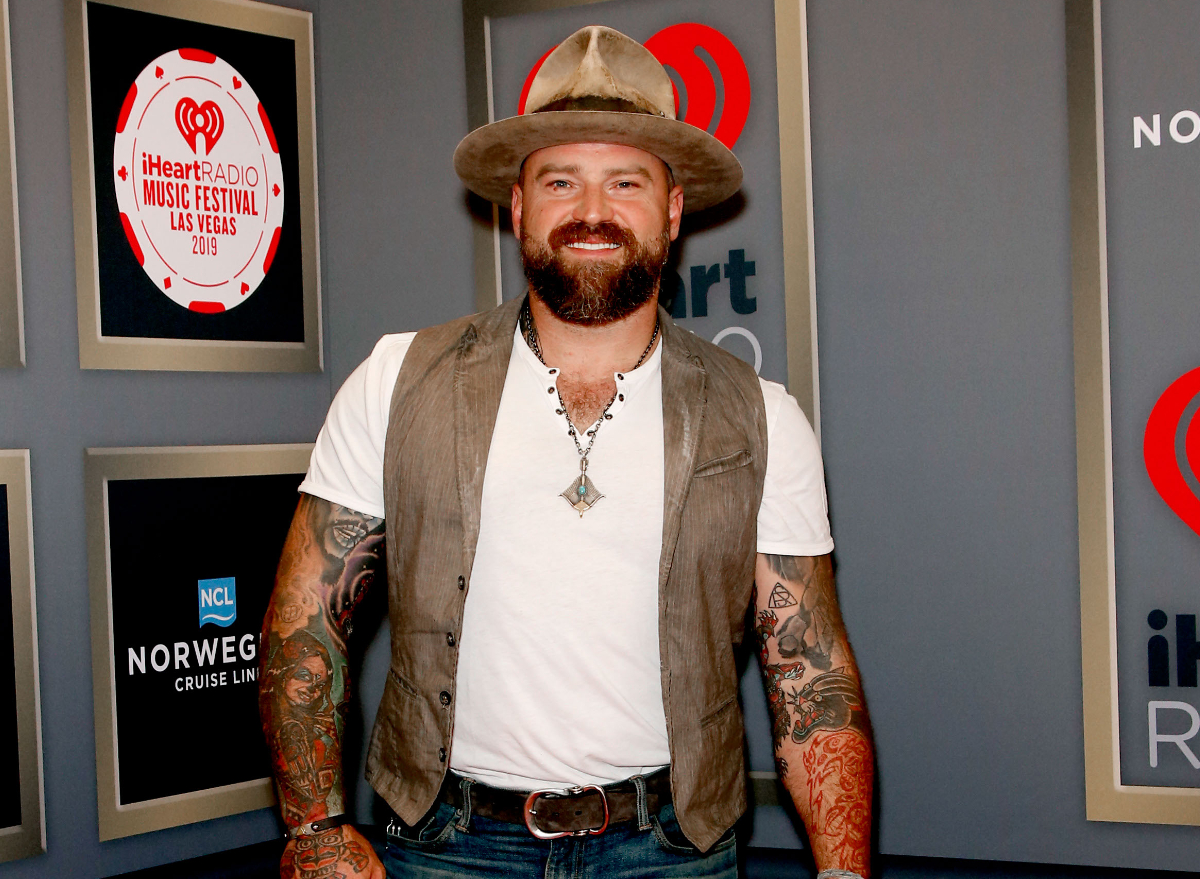
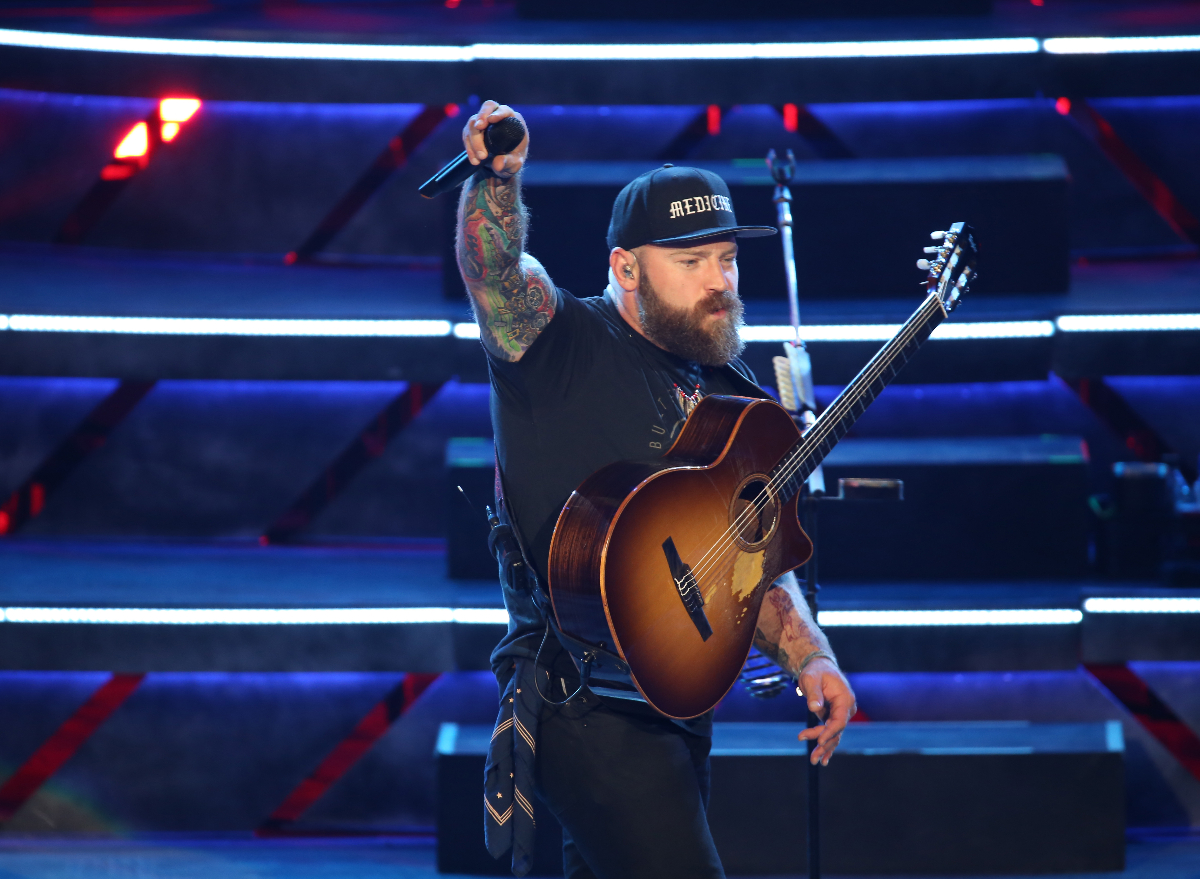
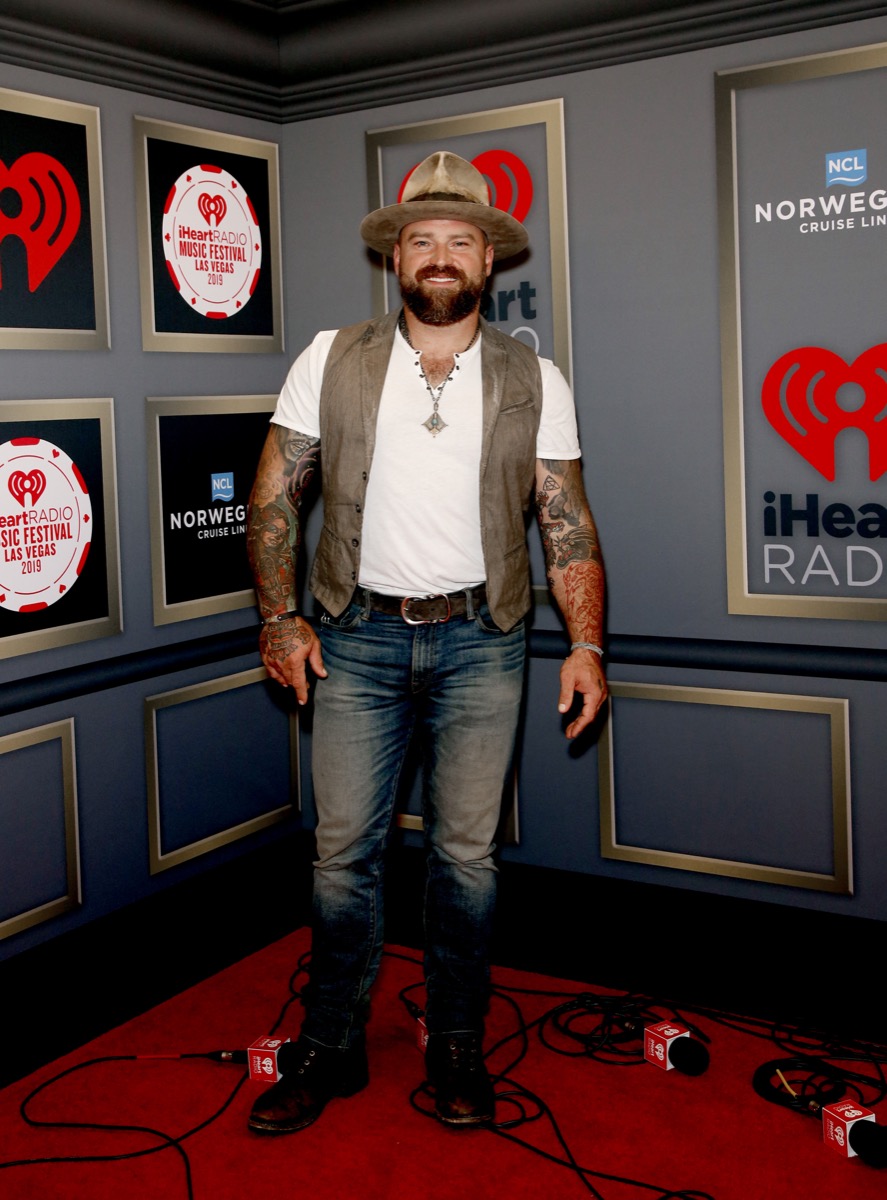
Zac Brown wears every chapter of his life in Tattoos

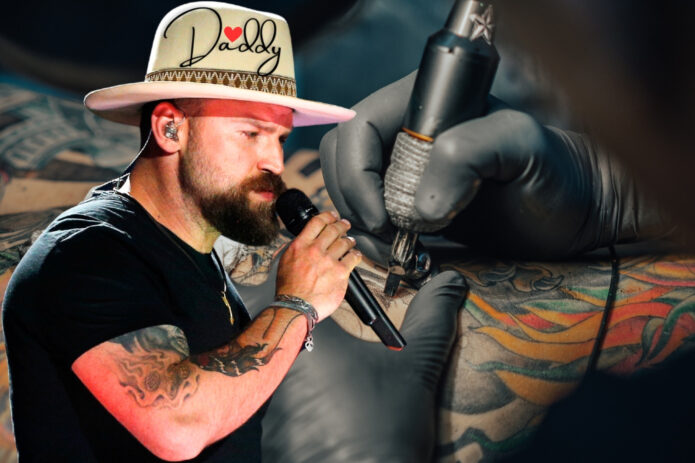
Zac Brown’s tattoos include a personal phrase, animal designs, family ink and darker imagery. He has talked about collecting art, and his CMT tattoo tour gives the clearest public look at several pieces.
The available record is uneven. The tour and photos show some designs clearly, but don’t establish every date, artist or smaller mark. The confirmed pieces are easier to describe than the details that remain uncertain.

The phrase on his skin is a working mantra

Zac Brown detailed arm tattoo

One of Brown’s clearest tattoos is the phrase “you get what you give.” In CMT’s tattoo tour, he describes it as a mantra rather than decoration.

He connects the words to effort, generosity and consequences: what you put into the world comes back through the life you build. The sentence is short, but Brown has said what it means to him.

It works as a reminder he can carry with him.

Brown’s explanation gives this tattoo a meaning that photos alone couldn’t provide. The footage doesn’t establish its exact date, artist or placement, so those details are best left open.

Animal designs give the collection its wild edge

Zac Brown tattoo portrait
Zac Brown sleeve tattoo

Brown’s tattoo tour shows several animal designs, including a lion and an owl. He presents them as art with stories behind it, rather than random images from a wall.

The lion is the more forceful image. It can suggest courage or protection, but Brown hasn’t assigned it one fixed meaning. The owl brings a different feel and is often associated with watchfulness or knowledge; those remain readings of the image, not confirmed explanations from Brown.

CMT documents the lion and owl, but the tour doesn’t establish when they were done or name their artists. Both are clearly part of the collection he chose to show.

The animals give the collection larger images alongside the lettering and smaller symbols. Brown has described tattoos as art, and these designs work as visual pieces in their own right.

Their chronology and exact placement aren’t clear from the tour alone. There’s no need to fill those gaps to describe what the video shows.

Family ink brings the story back home

Zac Brown full arm tattoos

CMT also highlights matching ink Brown shares with his daughter. The tattoo is presented as a family memory they chose together, giving it a different context from the larger animal designs.

The symbol can be hard to read in some photos. The reliable details are that Brown and his daughter have matching tattoos and that the piece matters to them; its exact design or translation hasn’t been confirmed.

The phrase is a personal rule, the animals are larger images, and the matching tattoo points to a relationship. It’s one of the more intimate pieces in the collection.

These family designs keep Brown’s tattoos connected to people outside his music and touring life. The specific symbol is uncertain, but the family connection is clear.

The darker symbols are part of the contrast

Zac Brown chest and arm tattoos
Zac Brown concert arm tattoos

CMT’s tattoo-tour coverage also shows a devil tattoo. It adds a darker image alongside the phrase, family ink and animals, but Brown hasn’t given it a specific meaning in the available footage.

A striking figure doesn’t automatically make the whole collection a statement about evil or rebellion. Brown has said he’s drawn to art and collecting it; without a more specific explanation, the devil’s meaning remains open.

What’s documented is the design’s presence in the tour and in photos, alongside the lion, owl and lettering. The collection moves between several kinds of imagery rather than staying with one theme.

What the visible pieces say about Brown’s approach

Zac Brown stage tattoos

Brown has said he’s drawn to art and sees tattoos as art he can carry. That idea fits the mix of words, animal designs, matching family ink and darker imagery.

Not every tattoo needs one grand explanation. A design can matter because the wearer likes it, because it marks a relationship or because it captures a feeling. Brown’s collection includes different kinds of pieces without making them all fit the same style.

Photos most often show his arms and upper body, but clothing, lighting and camera angles hide smaller details. The larger designs are easier to confirm; marks that only appear in a blurry frame shouldn’t be added to the inventory as fact.

The clearest account comes from the tattoos Brown has shown and discussed in the CMT tour, along with public family photos. Other pieces may be visible, but not every one has a documented story.

Brown’s tattoos keep growing with the story

Zac Brown tattoo collection

The best-documented designs include the “you get what you give” mantra, the lion, the owl, the matching tattoo with his daughter and the devil image shown in CMT’s tattoo tour. The collection spans words, animals, family and darker imagery.

The tour is useful because Brown talks through the pieces instead of leaving viewers to guess at every detail. His comments give the phrase and family tattoo context that a photograph can’t.

The exact dates, artists and locations of some smaller designs are still unclear. The visible pieces are enough to describe the collection without filling in those gaps.

Brown’s tattoos range from a line he lives by to animal art and a family memory. Some pieces are explained; others are best left open.

Watch Zac Brown explain the stories behind his tattoos

In this CMT tattoo tour, Brown talks about the designs and the memories attached to them.

More musician tattoo guides

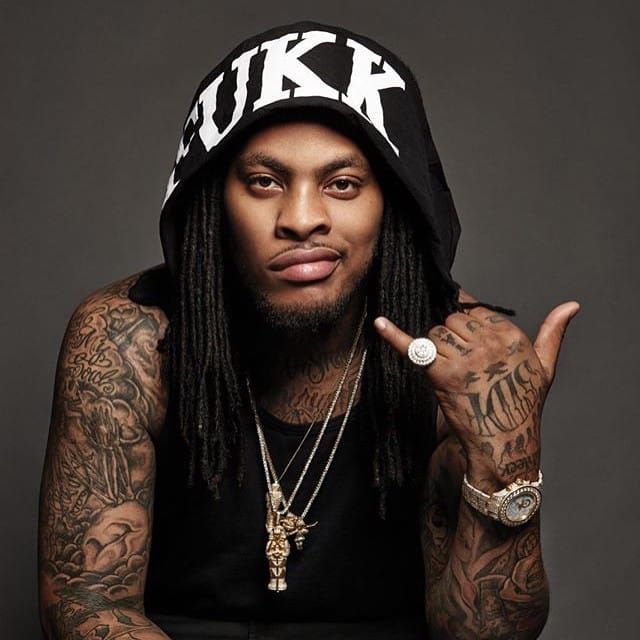
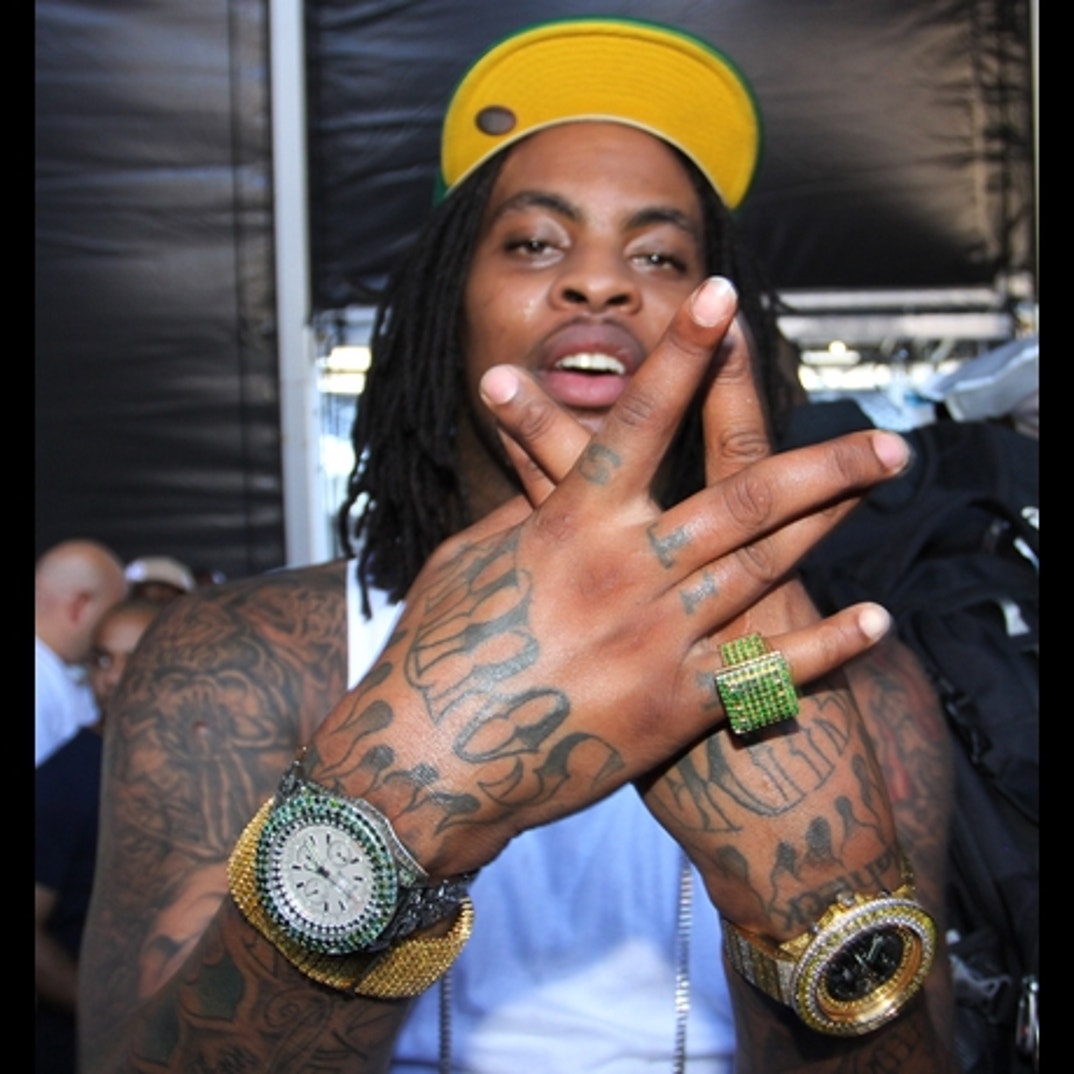
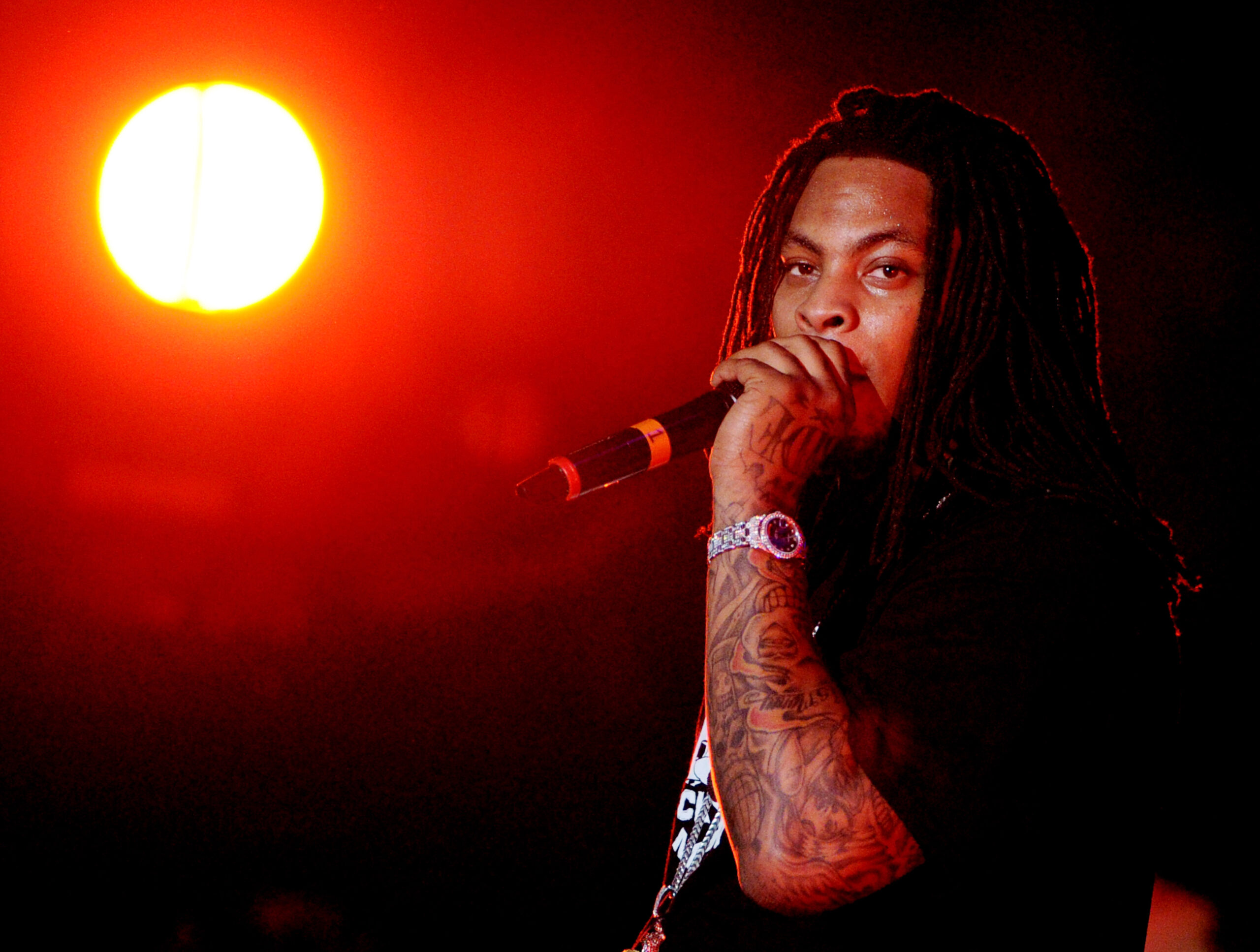
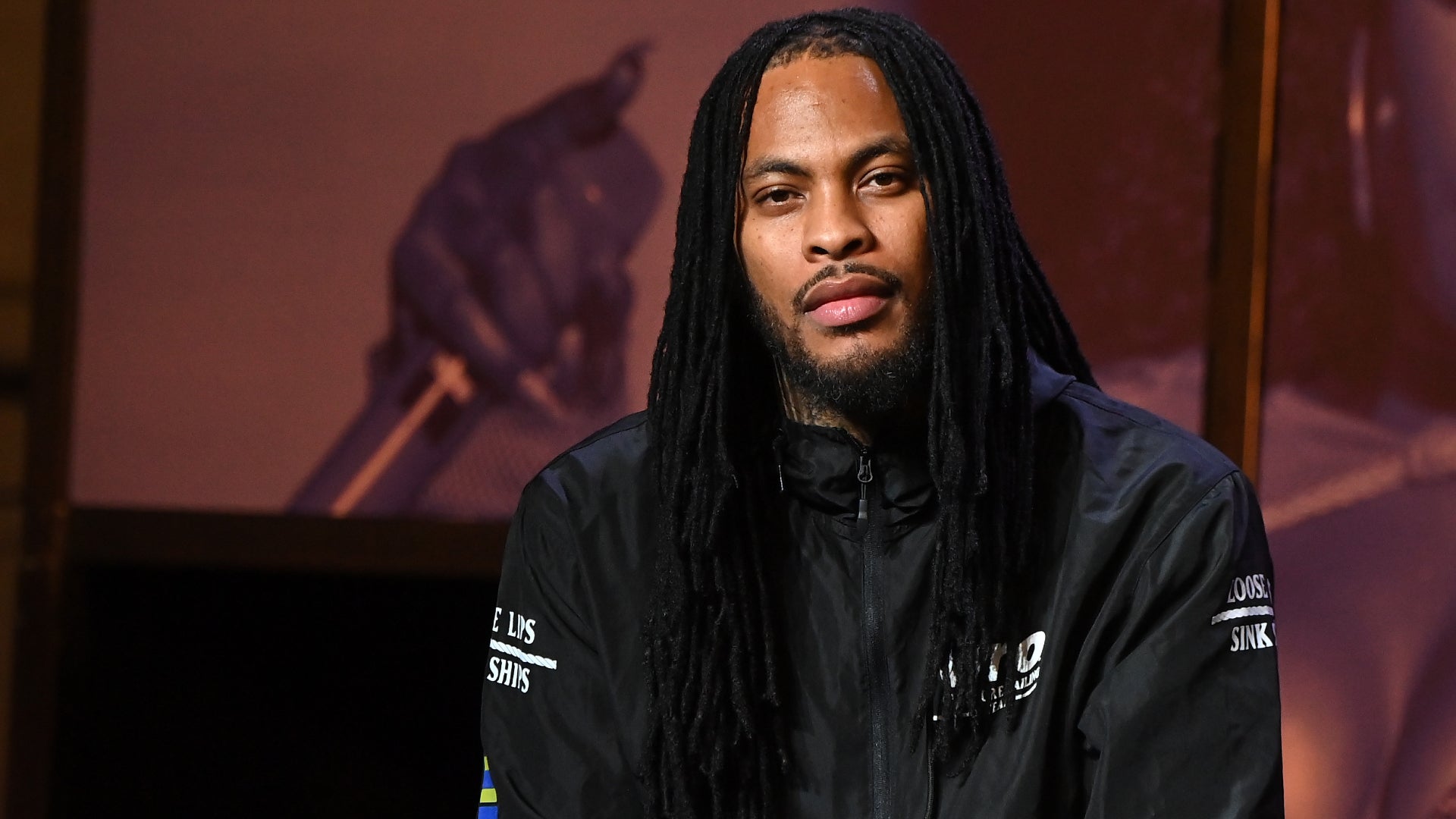
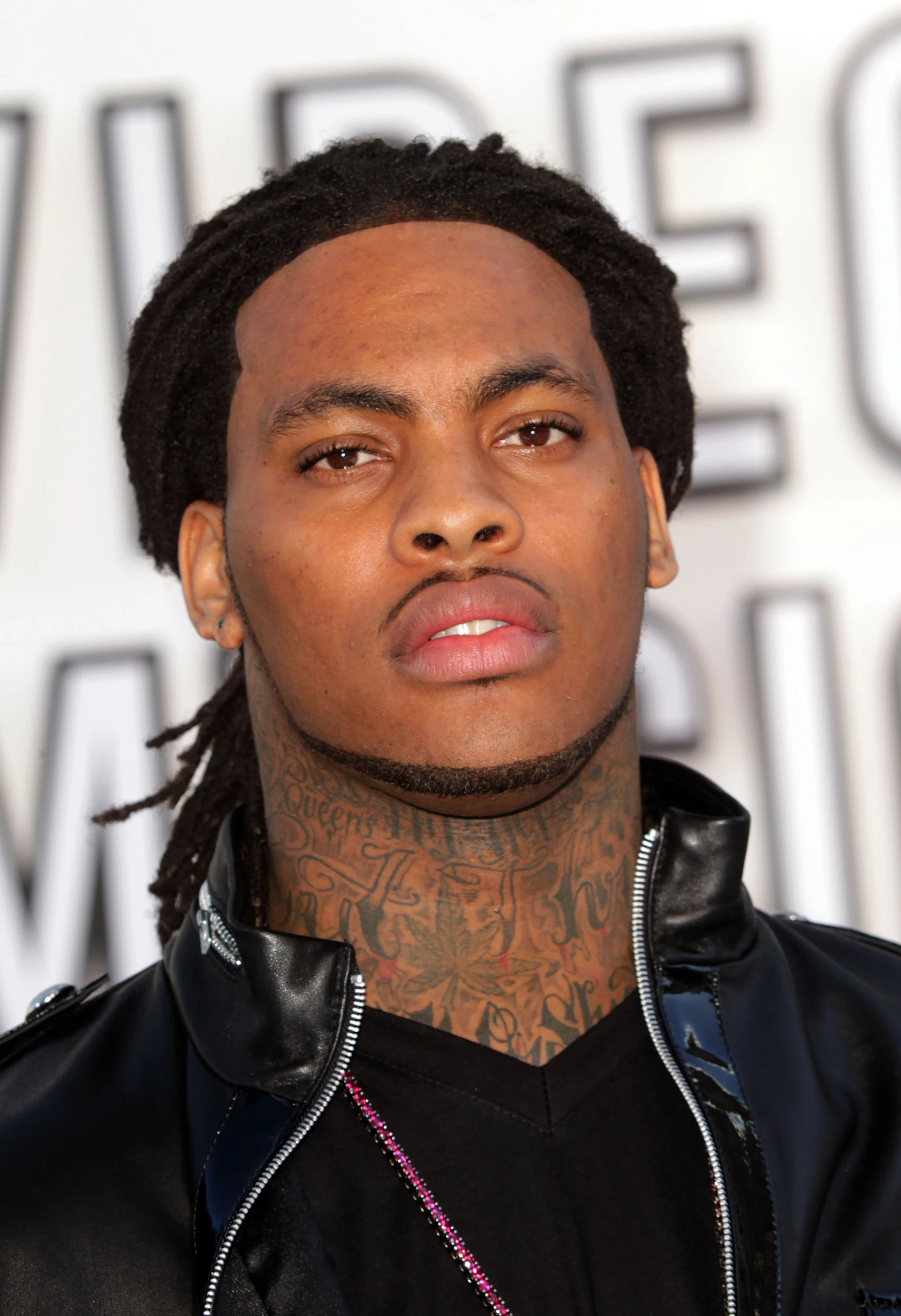
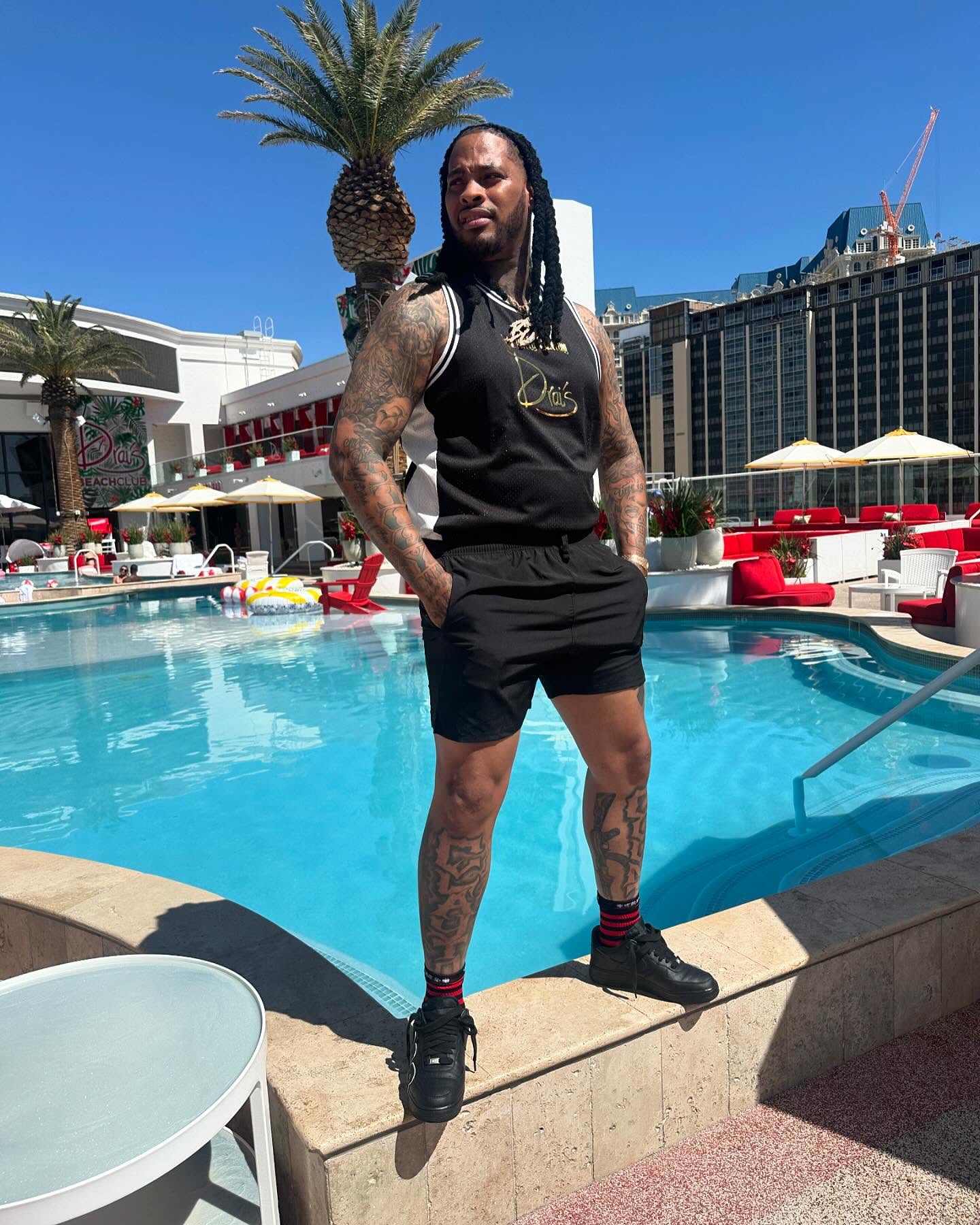
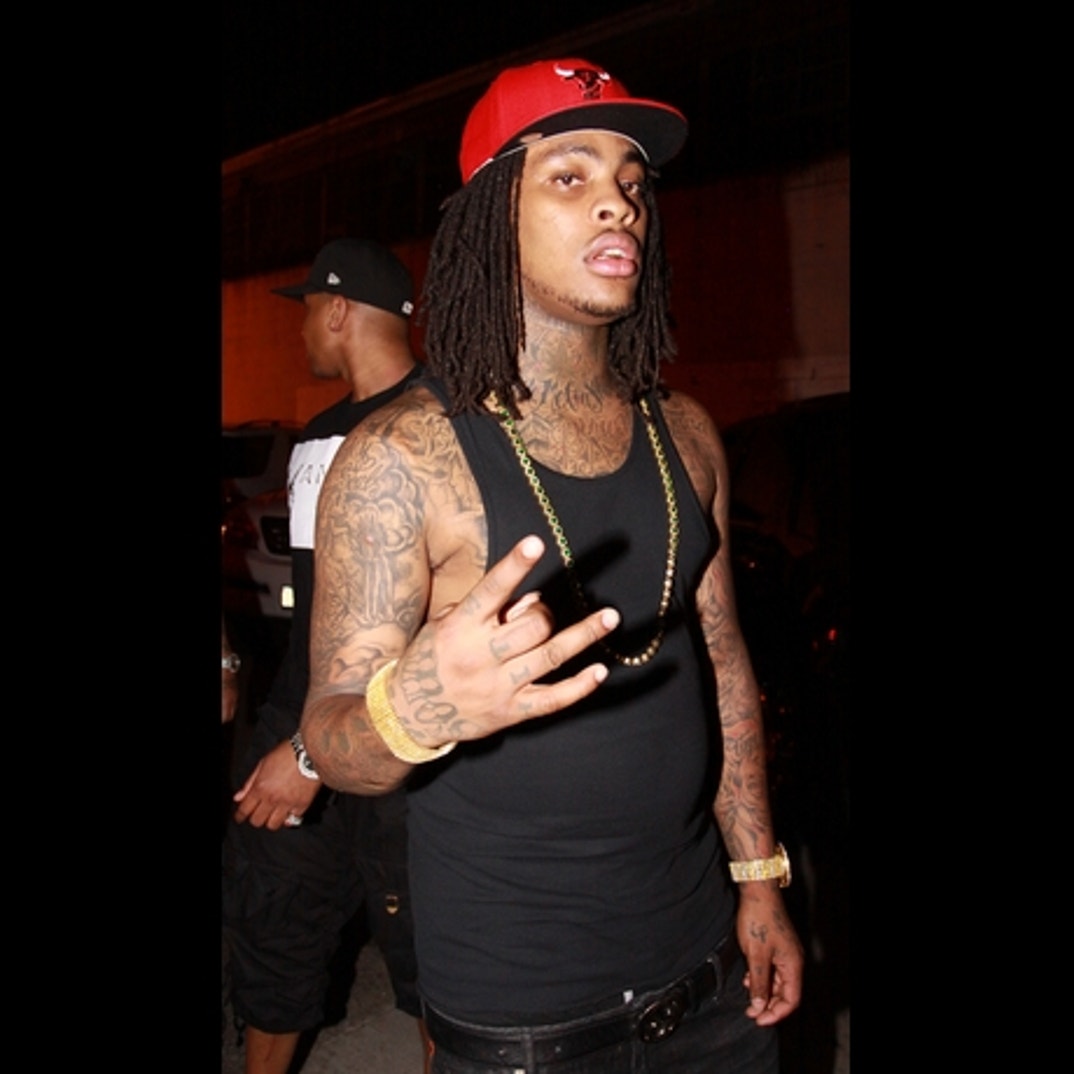
Waka Flocka Flame Has Awesome Tattoos

Waka Flocka Flame’s tattoos have been discussed in a few different videos, and he’s been open about liking some pieces more than others. His GQ tattoo tour is the clearest guide: he talks about the good, the bad and the beautiful, including his nickname, his career and a tattoo he regrets.

Other clips fill in parts of the story, from his first tattoo to the “World’s Baddest Bitch” piece documented by Pitchfork. They don’t provide a complete list of every tattoo, but they do show how Waka has talked about several of the designs.

The collection starts with a paperclip and a lot of nerve

Waka Flocka Flame arm tattoos

In a clip titled “The Backwash with DB: Waka Flocka Speaks on Getting his First Tattoo with a Paperclip,” Waka describes his first tattoo as a paperclip job. It’s a brief account, but it gives the collection an early chapter: his first piece came through an improvised method, before the later tattoo-tour interviews.

The clip’s title is the source for the paperclip detail. There’s no need to fill in the scene around it or guess what Waka was thinking at the time. What he has shared is enough to place the tattoo in the history of his collection.

His tattoos were added over time, so they don’t all come from one plan or one period. The different styles are visible in the collection; the paperclip story is one specific memory he has chosen to tell.

His name became one of the tattoos he questioned

Waka Flocka Flame hand and arm tattoos

GQ has described the tattoo of Waka’s own name as his most regretted tattoo. He has spoken about it as a piece he would rethink, a candid answer from someone whose body art is a visible part of his public image.

A tattoo of your own name can be read in more than one way, but Waka’s explanation is the useful part here: he no longer feels the same about this one. That doesn’t erase its place in the collection. It records an earlier choice that he now sees differently.

The name is direct. Unlike a symbol or a design with a story that needs explaining, it identifies him plainly. GQ’s account doesn’t give a fuller explanation for why he regrets it, so the reason should stay with Waka.

His comments also show that a tattoo can remain part of someone’s history even after the person’s feelings about it change. The own-name tattoo is notable because he has publicly singled it out, not because he still considers it a favorite.

The nickname became permanent in more than one way

Waka Flocka Flame stage tattoos

In the GQ tour, Waka talks about how he got the name Waka Flocka Flame. His tattoos are part of the public image built around that name, though the interview doesn’t assign a single meaning to every flame-like mark.

The connection to his stage name is clear. The exact meaning of each design is less so. It’s safer to describe the tattoos as part of the image Waka has built around his name than to give every one a fixed interpretation.

Photos from performances show the ink alongside his clothes and jewelry. In the GQ video, he can discuss pieces directly and say which ones he likes or regrets. Those settings show different things: the photos capture how the tattoos appear onstage, while the interview gives some of his own context.

Waka links his tattoos to his name and career, but not every design comes with a public explanation. That leaves some parts of the collection open to view without a confirmed story behind them.

The “World’s Baddest Bitch” tattoo was a whole event

Waka Flocka Flame chest tattoos

Pitchfork documented Waka getting a “World’s Baddest Bitch” tattoo. The wording is blunt and draws attention, which is part of why the piece stands out in coverage of his tattoos.

The footage shows the tattoo being done, rather than only the finished design in a later photograph. That gives the piece a little more context: viewers can see Waka choosing the phrase and sitting for the session. The article doesn’t need to assign a deeper meaning to it than the one the words state.

The tattoo fits alongside other parts of Waka’s collection that he has discussed in public, including pieces he likes and one he regrets. The Pitchfork video captures this particular choice at the time he made it; it doesn’t tell us how he feels about it now.

The best pieces are the ones he still claims

Waka Flocka Flame older body tattoos

GQ’s “good, bad and beautiful” framing leaves room for Waka to talk about tattoos differently. Some are favorites, some are regrets, and others are simply part of the record of his career. He doesn’t present every design as equally important to him.

That range is useful when looking at a collection built over time. A tattoo can stay because it matters to someone, even if it isn’t the most elaborate piece. Waka’s comments tell us which one he regrets; the video also gives him space to discuss designs he still likes.

The collection includes the paperclip first-tattoo story, the own-name tattoo he questions, pieces connected with his stage name and the phrase documented by Pitchfork. They belong to different moments, and the public accounts don’t suggest that Waka planned them as one coordinated set.

The details make the collection more specific than a count of how many tattoos he has. Waka has shared a few stories about particular designs, while others remain visible without a confirmed explanation.

What Waka’s tattoo history says about regret

Waka Flocka Flame full body tattoos

Waka’s own-name tattoo is the clearest example in the public record of him regretting a piece. He has looked back at it differently, but the tattoo remains part of his collection and the story he tells about it.

That’s a more grounded view of tattoo regret than treating it as a verdict on the whole collection. One design can stop feeling right while others still matter. In Waka’s case, the GQ tour gives him a chance to talk about both sides.

The meaning of an old tattoo can change as the person does. Waka has shared that he would rethink his name tattoo; he hasn’t said that every piece now feels the same way. The distinction matters when describing the collection.

Watch Waka Flocka Flame break down his tattoos

Waka Flocka Flame profile tattoos

Waka’s GQ tattoo tour is the best place to hear him talk about the pieces he likes, the tattoo he regrets and how his stage name came about.

More musician tattoo guides

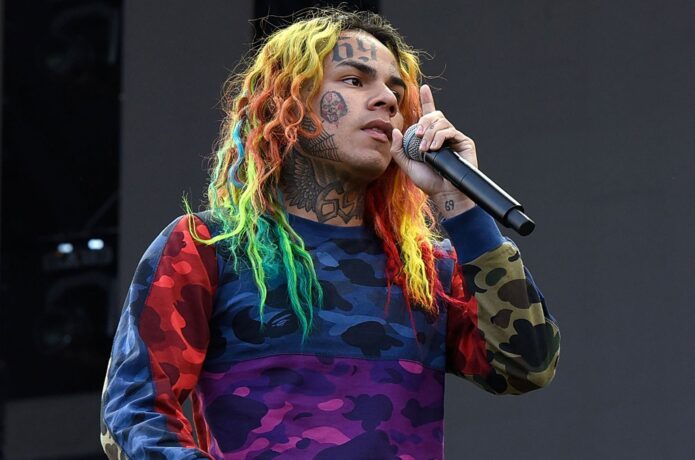
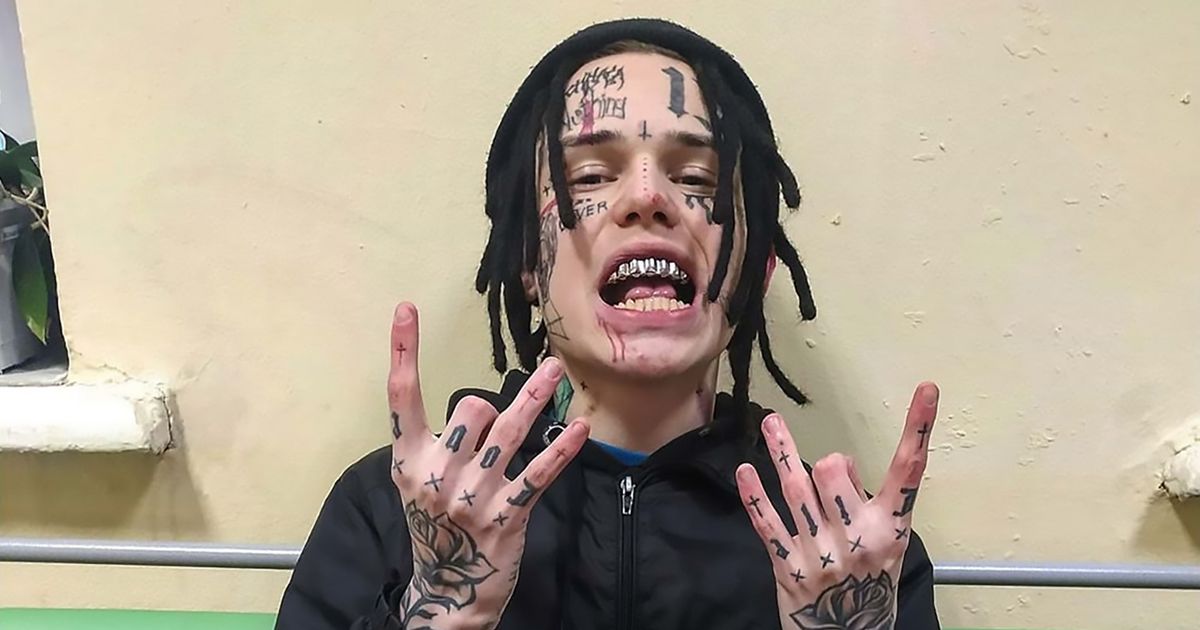
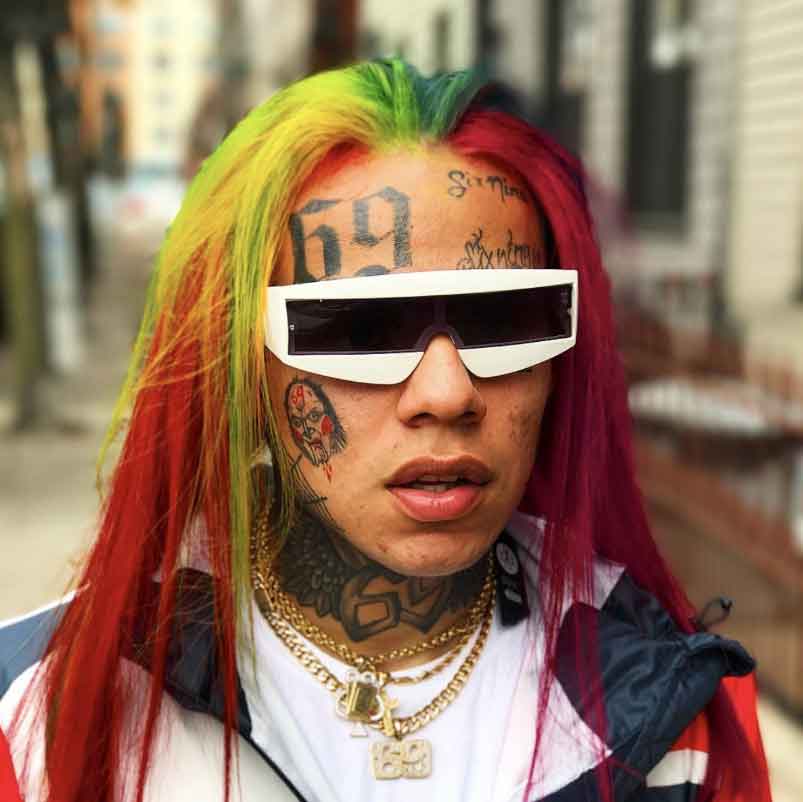
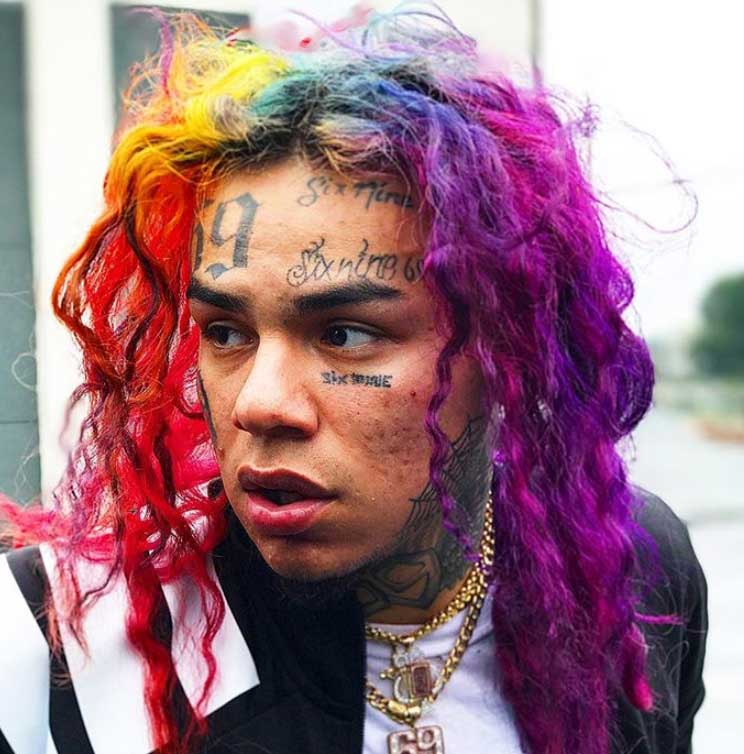
6ix9ine turned his face into the loudest part of the story

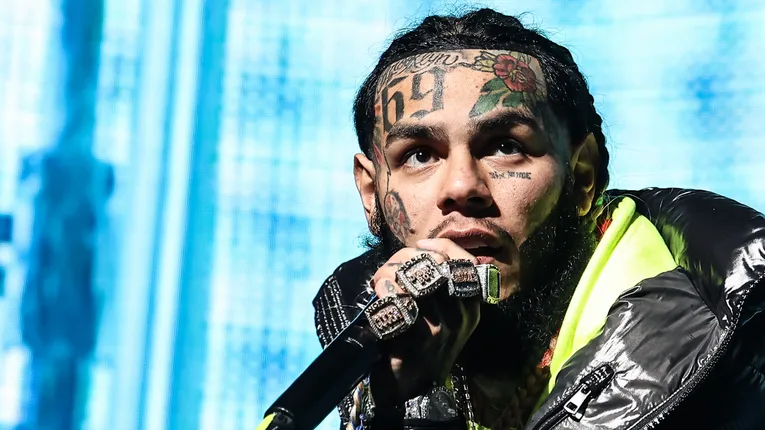
6ix9ine is known for the rainbow hair, stage name and face tattoos. The 69 and Jigsaw designs are among the pieces he has discussed in tattoo breakdown videos. Later photos show more changes, including face tattoos and the lion design he showed before returning to prison.

There isn’t a complete public inventory of his ink. Interviews and photos offer a partial timeline of the designs he has explained and the changes visible over time.

The 69 tattoo is the core of the whole identity

6ix9ine face tattoos portrait

The number 69 is closely tied to 6ix9ine’s stage name and public image. It appears in his branding and face tattoos, and tattoo-explainer videos treat it as one of the collection’s central designs.

Six and nine can be turned or mirrored, but that alone doesn’t establish what the symbol means to him. Its connection to his name is clear; any more specific reading should come from his own explanation.

The number is easy to recognize in photos and videos, where it appears alongside the Jigsaw imagery and other face tattoos. It’s a recurring mark in his public look, though that doesn’t make every 69 tattoo mean the same thing.

Jigsaw gave the face ink a darker character

6ix9ine face and hand tattoos

The Jigsaw tattoo became one of the most recognizable designs on 6ix9ine’s face. Its puzzle pattern stood apart from the numbers and lettering around it.

The character may call horror films to mind, but the available coverage doesn’t confirm that as the tattoo’s meaning. It does report that the design was later covered up.

Earlier photos show the Jigsaw tattoo; later coverage shows the area after it changed. The reason for the cover-up isn’t clear, so there’s no need to guess. The first design remains part of the record, alongside what came after it.

His face became a timeline of new designs

6ix9ine close-up face tattoos

Later close-ups show face tattoos that look different from the earlier Jigsaw era. News coverage has highlighted new designs, though a single photo doesn’t establish exactly when each one was added.

A new mark on the face is hard to miss in portraits or performances. In tattoo-explainer videos, 6ix9ine talks about some of the designs and references; other marks are only visible in photos.
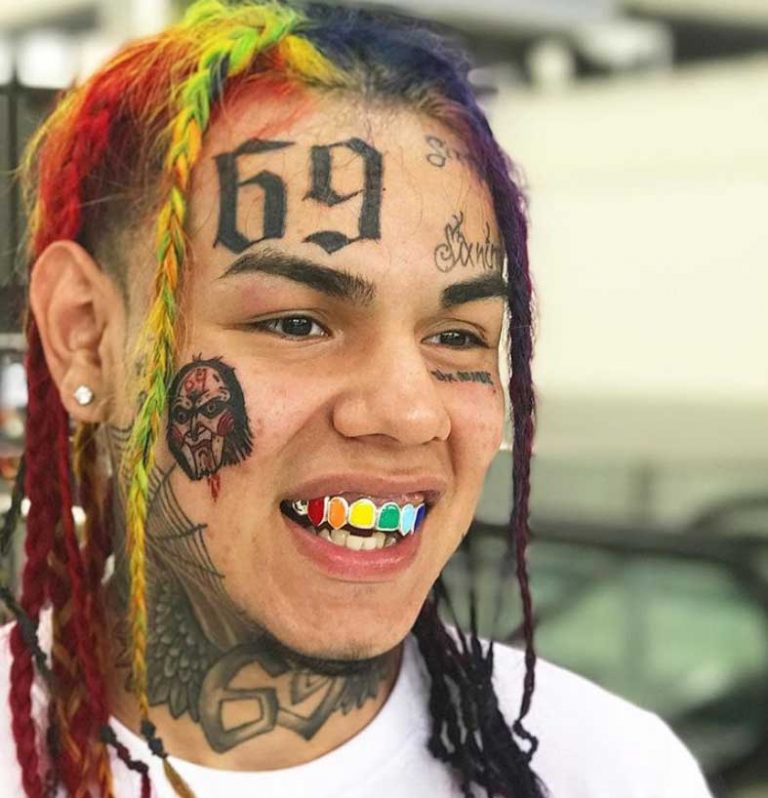
Small details can be hard to track across images. Lighting, filters and image quality change how a tattoo looks, so an unclear mark shouldn’t be given a name or meaning without evidence. The broader timeline is visible even when every detail isn’t.
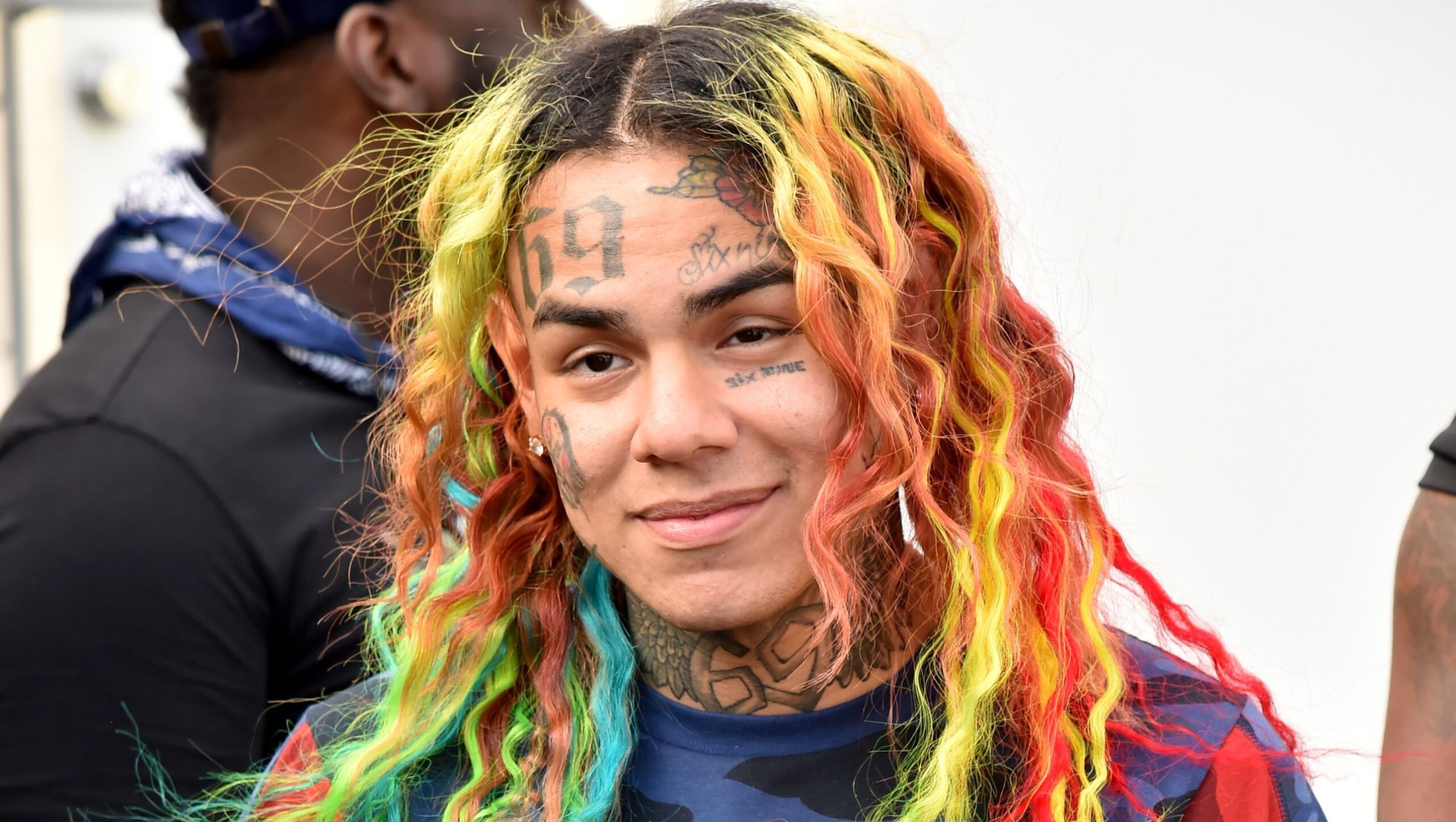
The lion tattoo added a fresh symbol

6ix9ine face tattoos profile view

Before returning to prison, 6ix9ine showed a large lion face tattoo. It was a new animal design alongside the numbers and puzzle imagery already associated with his face.

Lions often stand for strength or authority, but those are general associations. The coverage here doesn’t give his personal explanation for choosing one. What it shows is a large lion tattoo shared publicly.
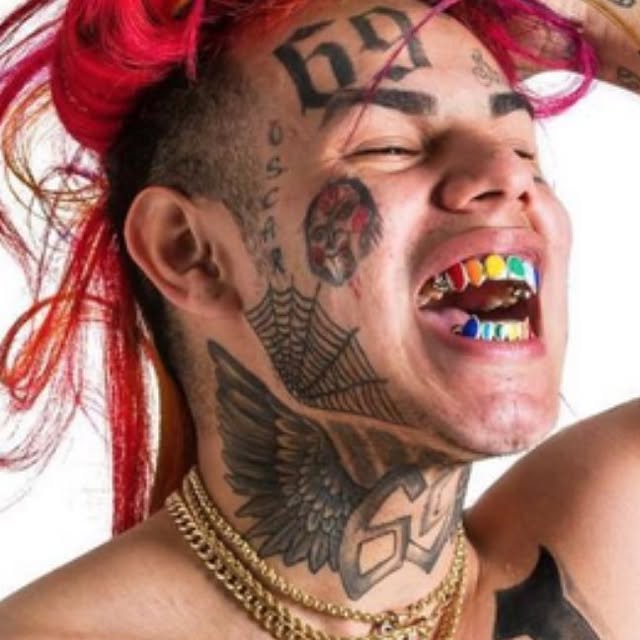
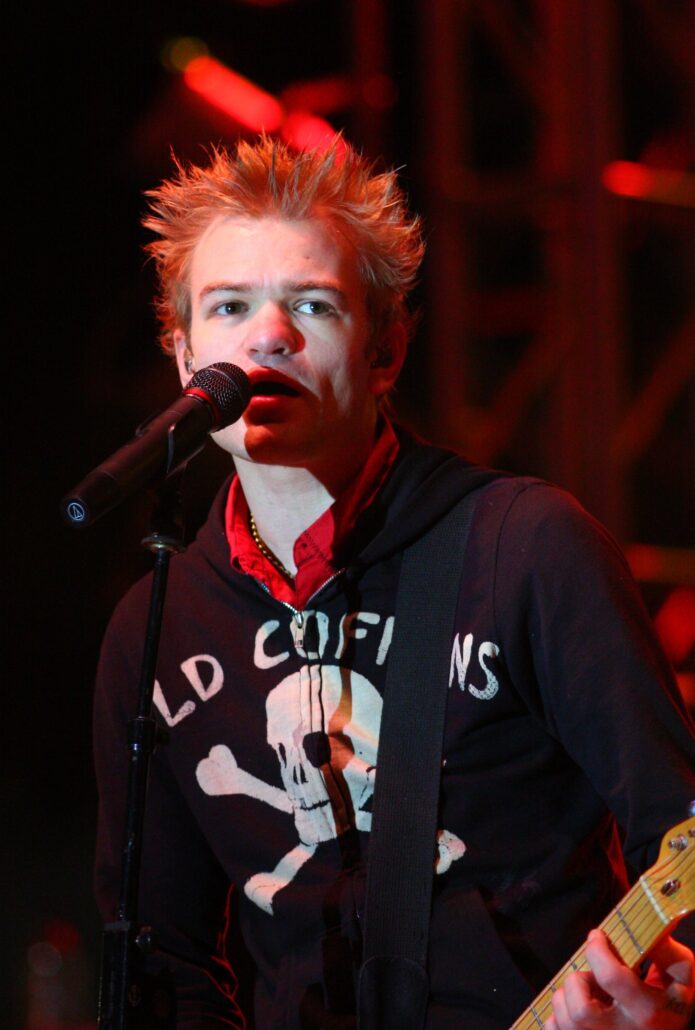
The lion’s textured shape looks different from the earlier graphic symbols and takes up a substantial area of the face. It’s a clear addition to the timeline, even without a confirmed meaning.

The rest of the ink keeps the same high-contrast energy

6ix9ine Jigsaw cheek tattoo

Photos show other lettering, symbols and body tattoos beyond the major face designs. What’s visible changes from one year and image to the next, so the collection is better understood as a timeline than a fixed list.

Dark lines, bright color and large shapes stand out in music videos and social posts. Some tattoos have been discussed by 6ix9ine; others can only be described from photographs.

The clearest public examples are the 69 imagery, Jigsaw and its cover-up, later face designs, the lion, and the lettering and symbols visible in photos. Not every tattoo has a confirmed explanation, and there’s no need to invent one.

Why the tattoos remain central to the 6IX9INE image

6ix9ine face tattoos portrait

The face tattoos have become closely associated with the 6IX9INE image. The 69 connects to his stage name, Jigsaw was a recognizable earlier design, the cover-up changed that part of the picture, and the lion came later.

That public role doesn’t mean the tattoos are only branding. A tattoo can be personal and still become part of an artist’s image. These designs are visible even as his music and public profile change.

The collection has changed too. The Jigsaw cover-up and later lion design show different stages; the 69 remains easy to identify in photos. Any private meaning beyond what 6ix9ine has explained is his to share.

Watch 6ix9ine explain the meanings behind his tattoos

6ix9ine Jigsaw face tattoo close-up

The video below covers the 69 imagery, Jigsaw and other designs in 6ix9ine’s collection.

More musician tattoo guides

Deryck Whibley keeps his memories in plain black ink

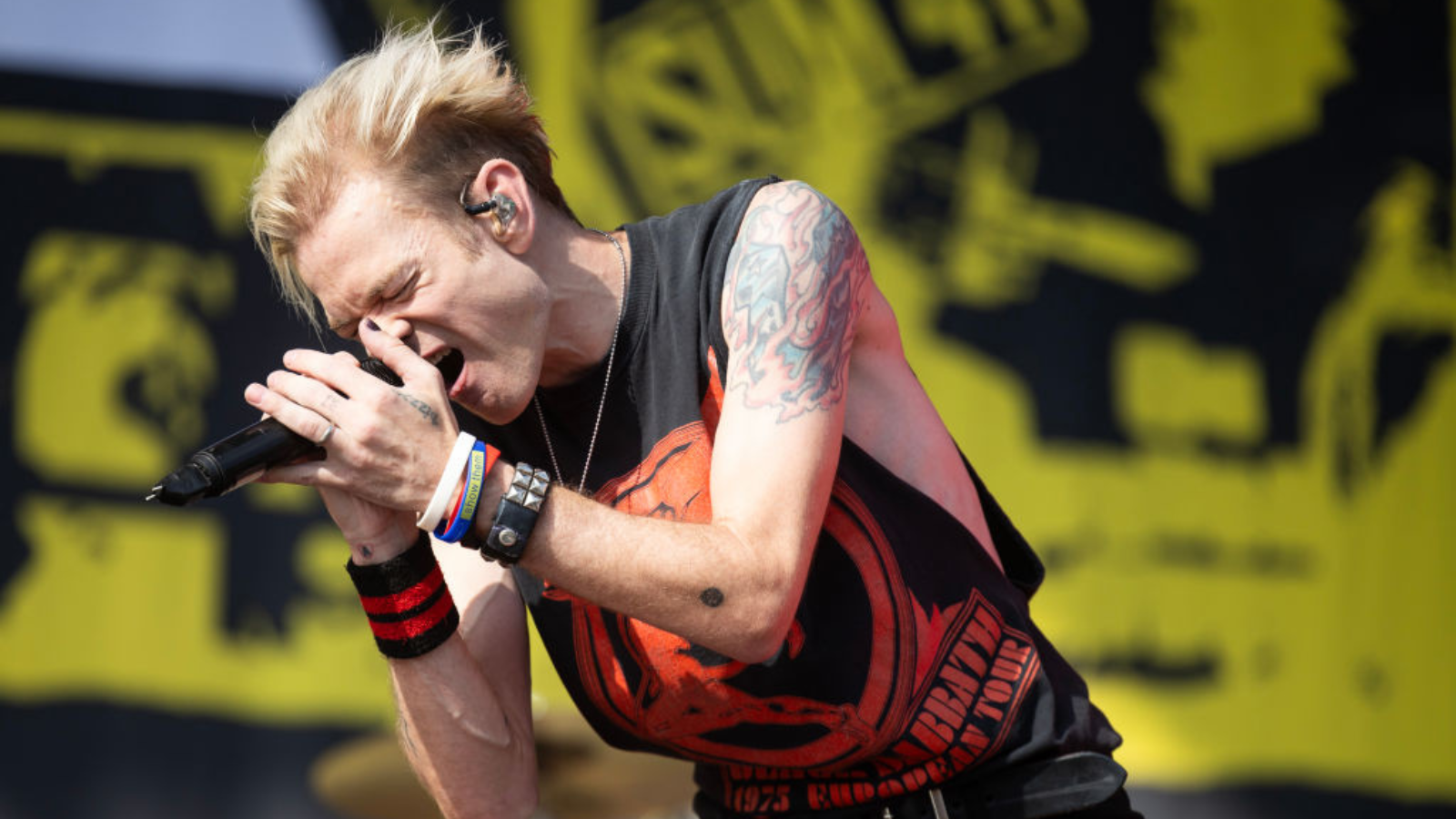
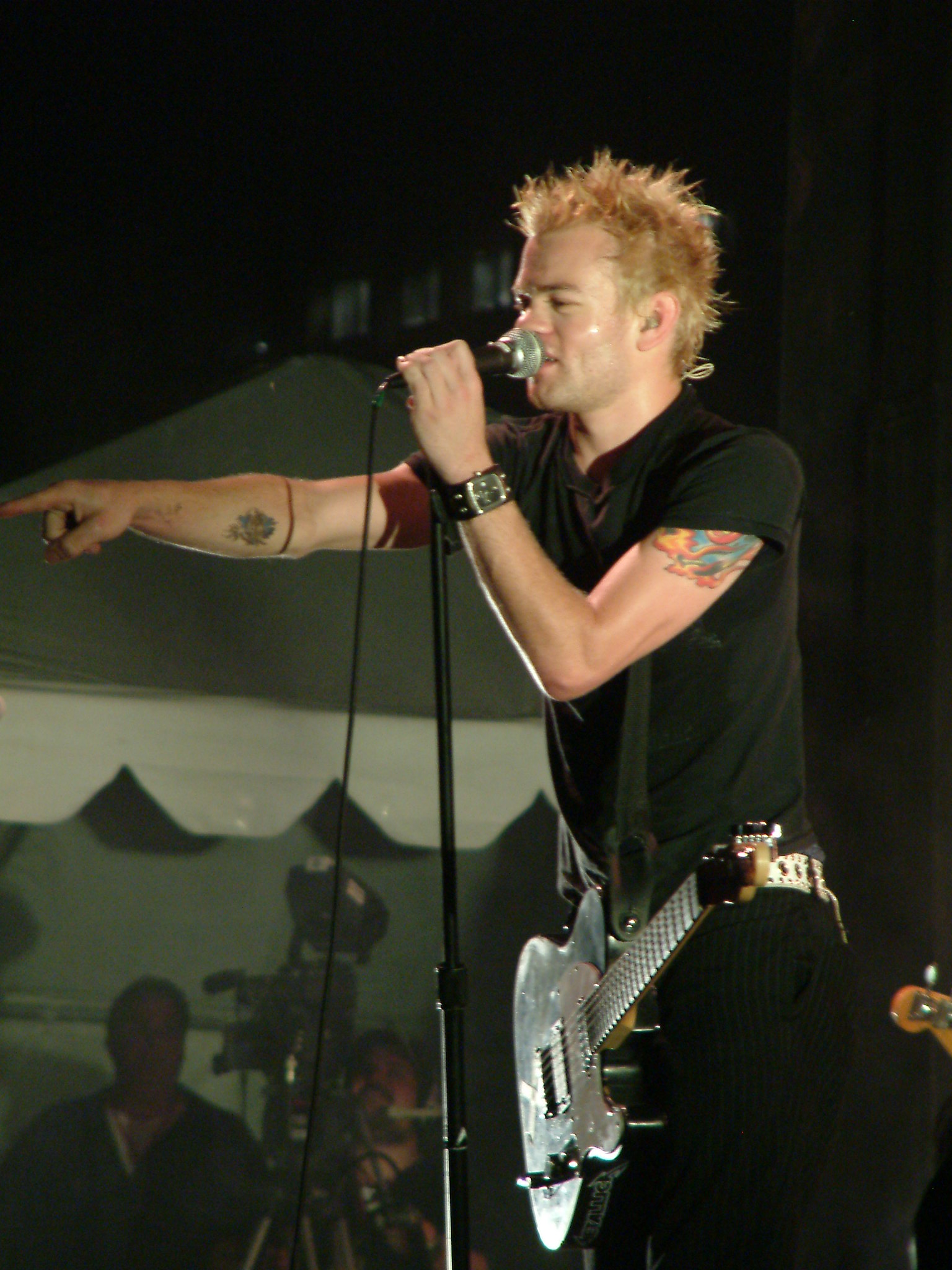
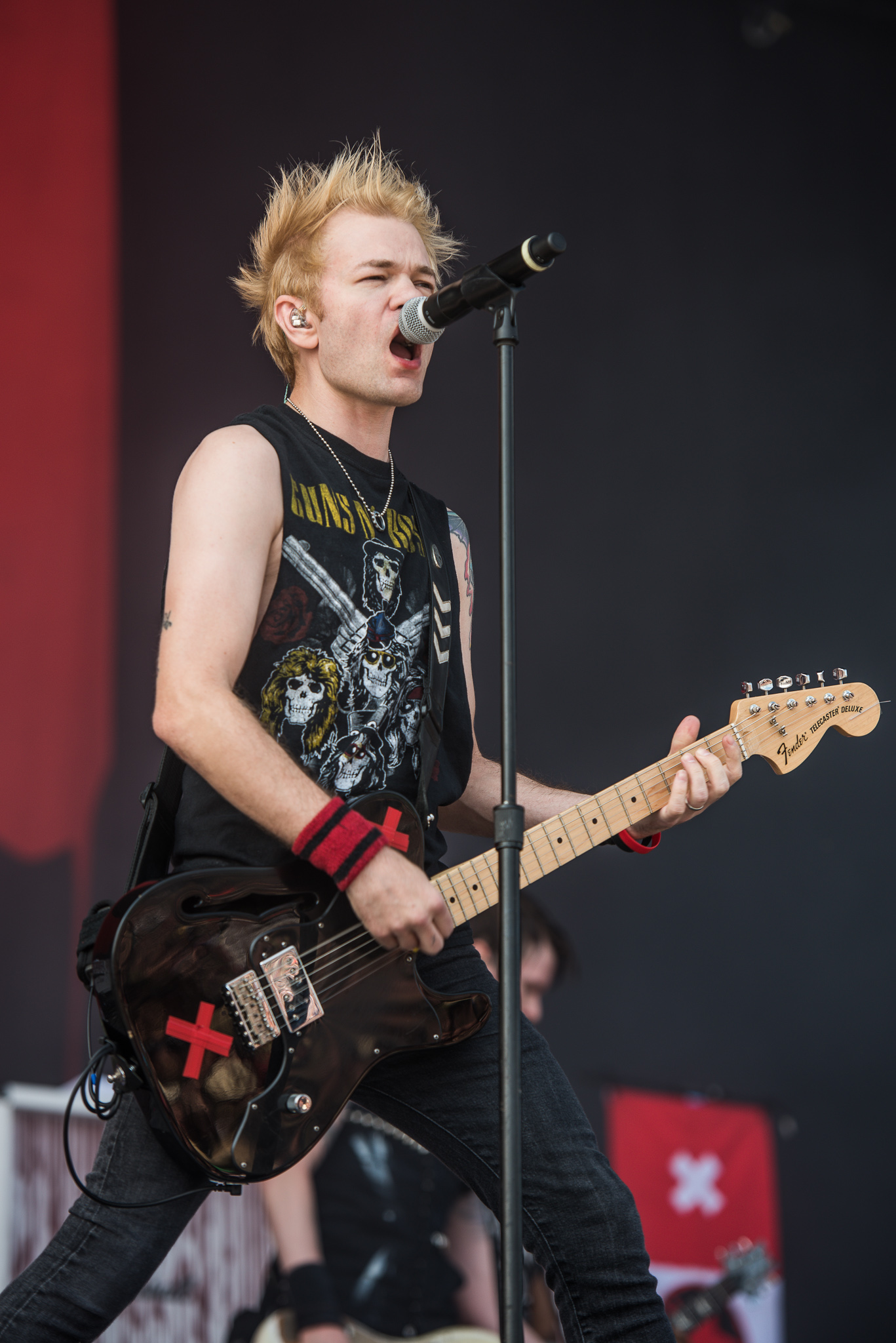
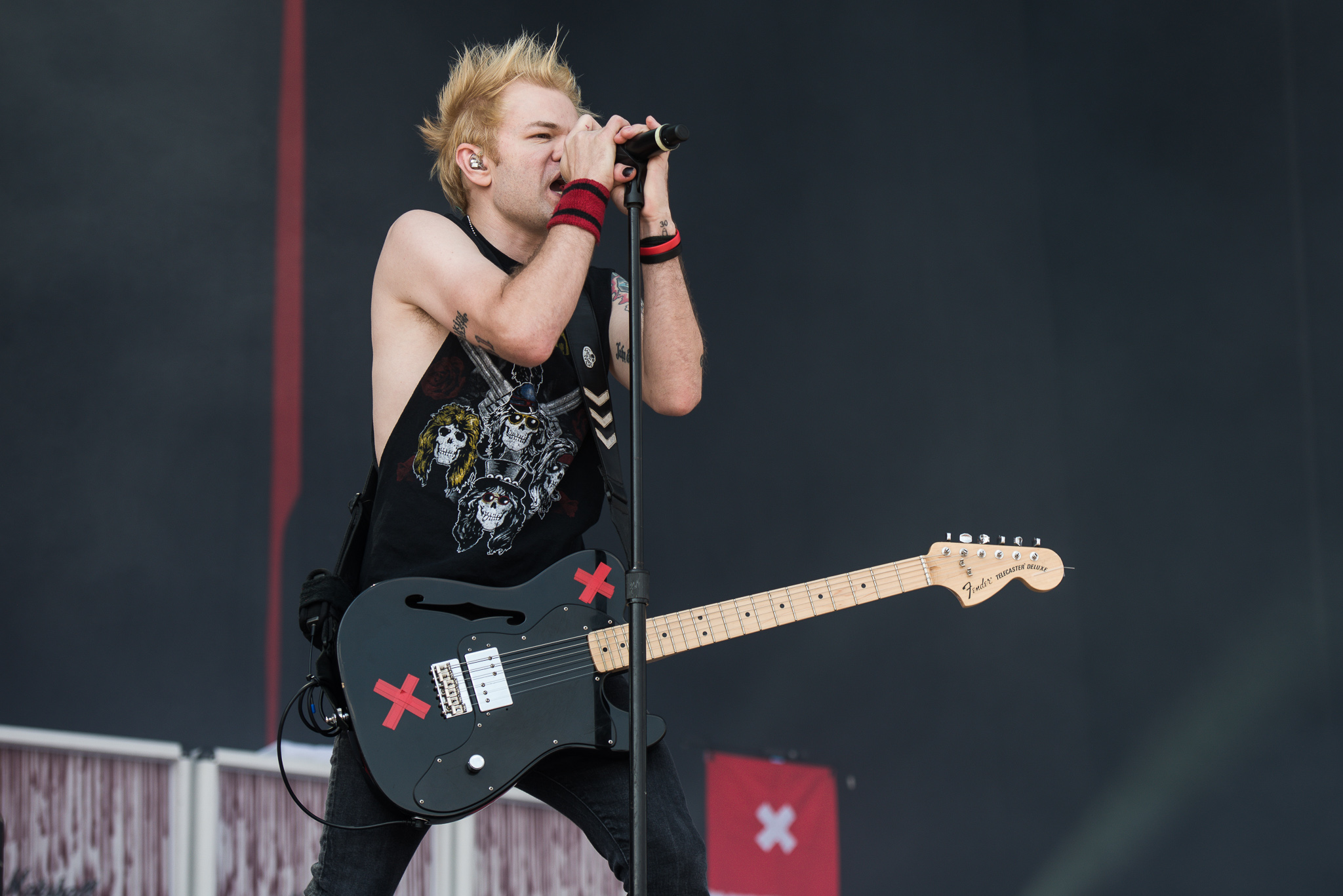
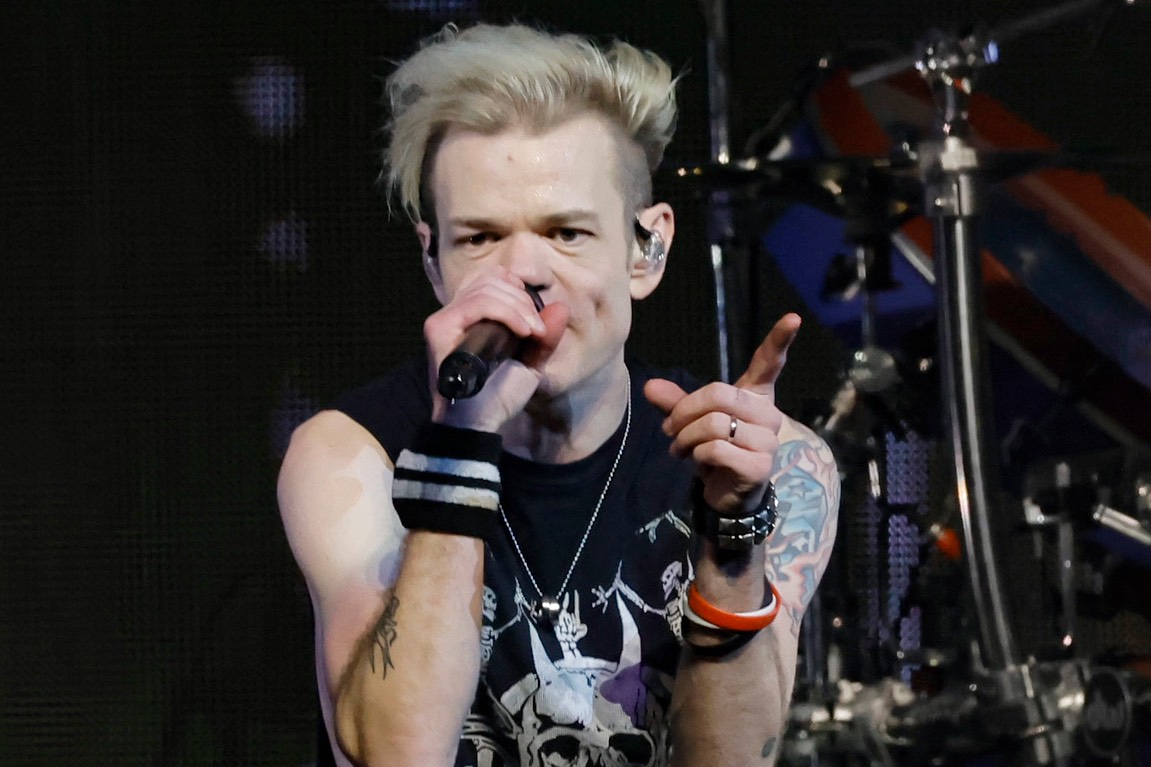
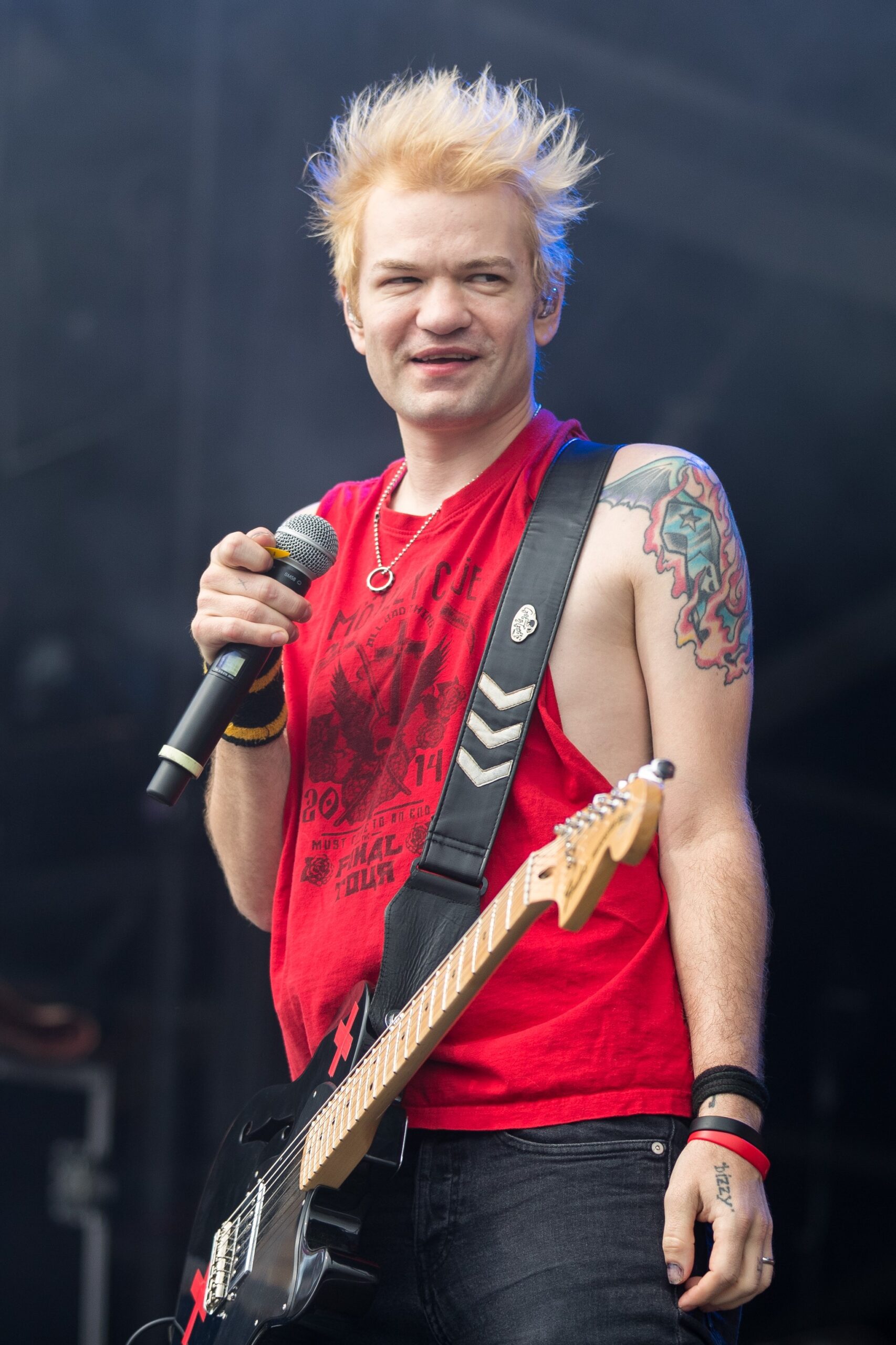
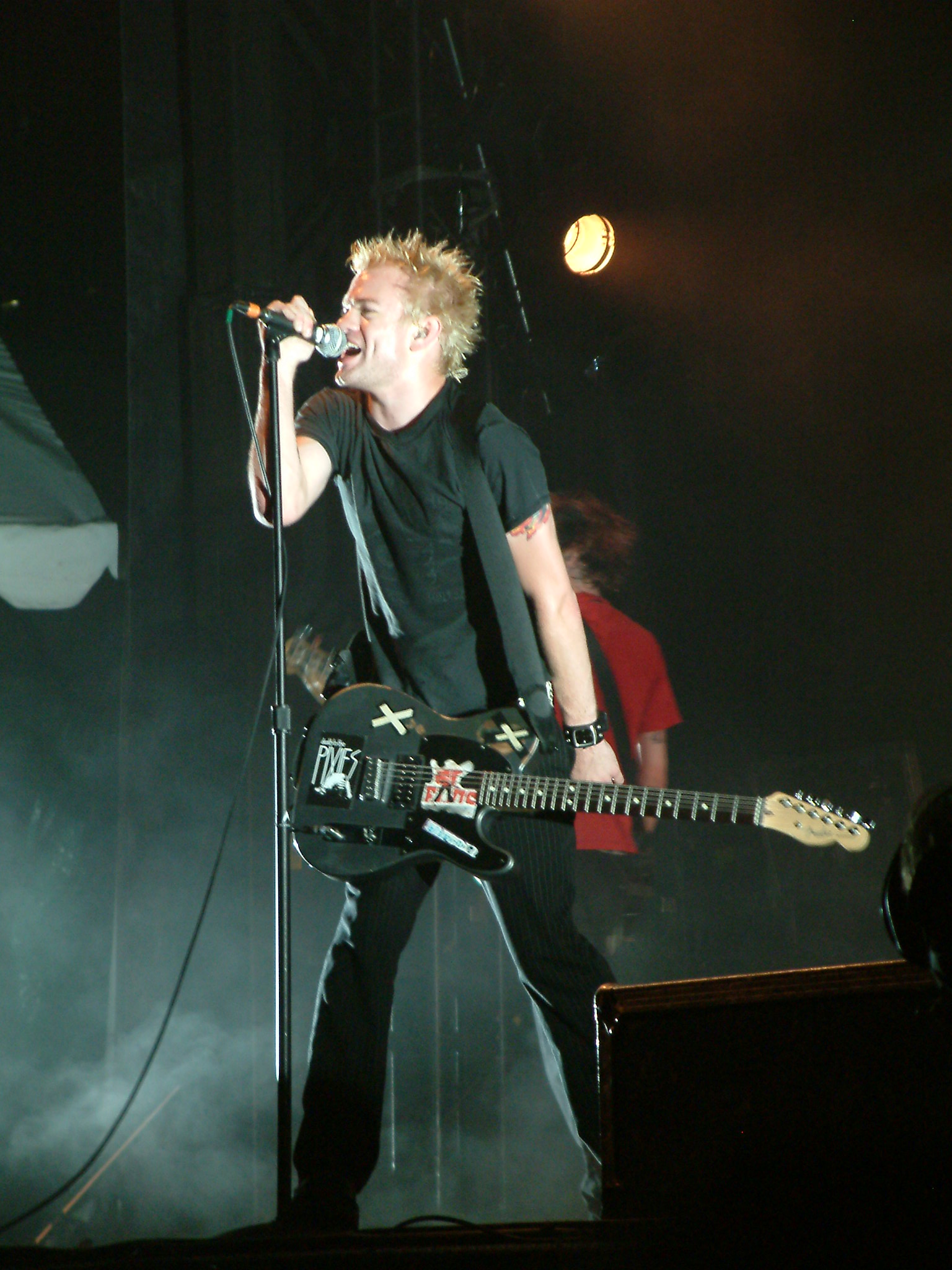
Deryck Whibley’s tattoos are mostly black and easy to recognize: straight lines on his forearms, family names, stars and a keyhole. In interviews, he has said the lines aren’t a secret code. He described the keyhole as a reminder that some things are his alone.

The photos span different years, so they don’t show every tattoo at once. A 2019 post documented a later piece wrapped around his bicep. The sections below focus on designs Whibley has discussed and details visible in the public record.

The straight black lines became his signature

Deryck Whibley stage arm tattoos

Whibley has several straight black lines on his forearms. They became one of the tattoos most associated with him during Sum 41’s rise. In interviews, he explained that they weren’t meant to hide a message; the simple, graphic look was the point.

The lines work with his punk style, but there’s no deeper story to add beyond what he has said. They’re easy to see when he’s playing guitar or holding a microphone, and they recur in stage photos.

The keyhole tattoo was about keeping something for himself

Deryck Whibley tattooed arms on stage

Whibley has given a clear explanation for the keyhole tattoo: he described it as a reminder that some things are just his. He didn’t frame it as a puzzle for fans to solve.

A keyhole can suggest privacy, but Whibley’s explanation is the one to keep. He has shared parts of his life through songs and interviews; this tattoo points to the parts he keeps to himself.

That makes it different from the forearm lines, which are simple and visible. The keyhole has a personal meaning, but he hasn’t shared more than that.

John and Mary keep his grandparents close

Deryck Whibley 2017 stage tattoos

The names John and Mary refer to Whibley’s grandparents. They’re among the clearest family tributes in his documented tattoos.

The lettering stands apart from the lines and symbols elsewhere in the collection. Whibley has named the people behind these tattoos; the meaning is direct.

The star tattoos connect love and shared history

Deryck Whibley 2017 arm tattoos

Whibley is also associated with star tattoos, including a matching star connected to Avril Lavigne. Their marriage and shared pop-punk history made the design part of the public story around them.

The star itself is a simple shape; its connection to Lavigne gives it context. Their relationship later changed, but the tattoo remains a record of that shared period.

A later bicep piece expanded the collection

Deryck Whibley stage tattoos

In 2019, a public tattoo post showed a new piece wrapped around Whibley’s bicep. The post described it as a new addition after he had gone years without getting tattooed.

The wraparound design has more room than the narrow lines on his forearms. The original post gives its timing and placement, but no detailed interpretation from Whibley. It’s one of the few dated additions to the timeline.

The tattoos changed with the stages of his life

Deryck Whibley colorful arm tattoos

Older and newer photos show the forearm lines, keyhole, grandparents’ names, matching star and later bicep piece at different points. The images don’t present one complete collection.

What’s visible depends on the photograph. A stage image may show his forearms, while a vest or short sleeves reveal more of his arms. The year, angle and lighting can also change what you can see.

The tattoos weren’t added as one finished set. They appeared during different periods in Whibley’s career and personal life, including changes in relationships and recovery.

Why his ink still feels recognisably Deryck Whibley

Deryck Whibley singing arm tattoo

Whibley’s look brings together straight lines beside names, a keyhole beside open skin, stars beside family lettering. The marks fit a rock musician, but they aren’t a costume or a message to the audience.

The keyhole refers to privacy; John and Mary are family; the matching star is linked to a relationship. The later bicep piece is part of the timeline, though Whibley hasn’t explained its meaning here.

Those documented stories are enough to describe the collection. Other details can stay with him.

Watch a closer look at the matching tattoos

The clip below shows the matching tattoo story connected to Deryck Whibley and Avril Lavigne.

Dimebag Darrell wore his whole story on his skin

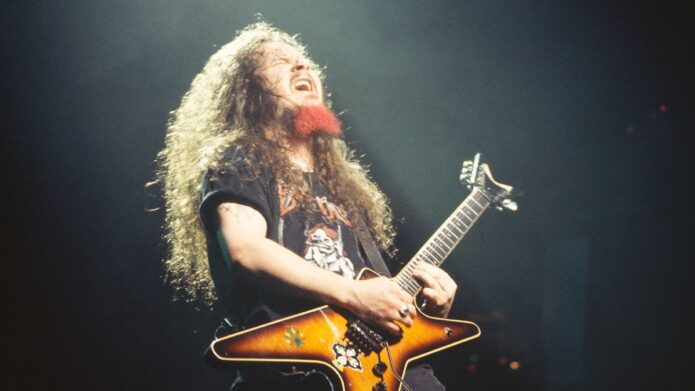
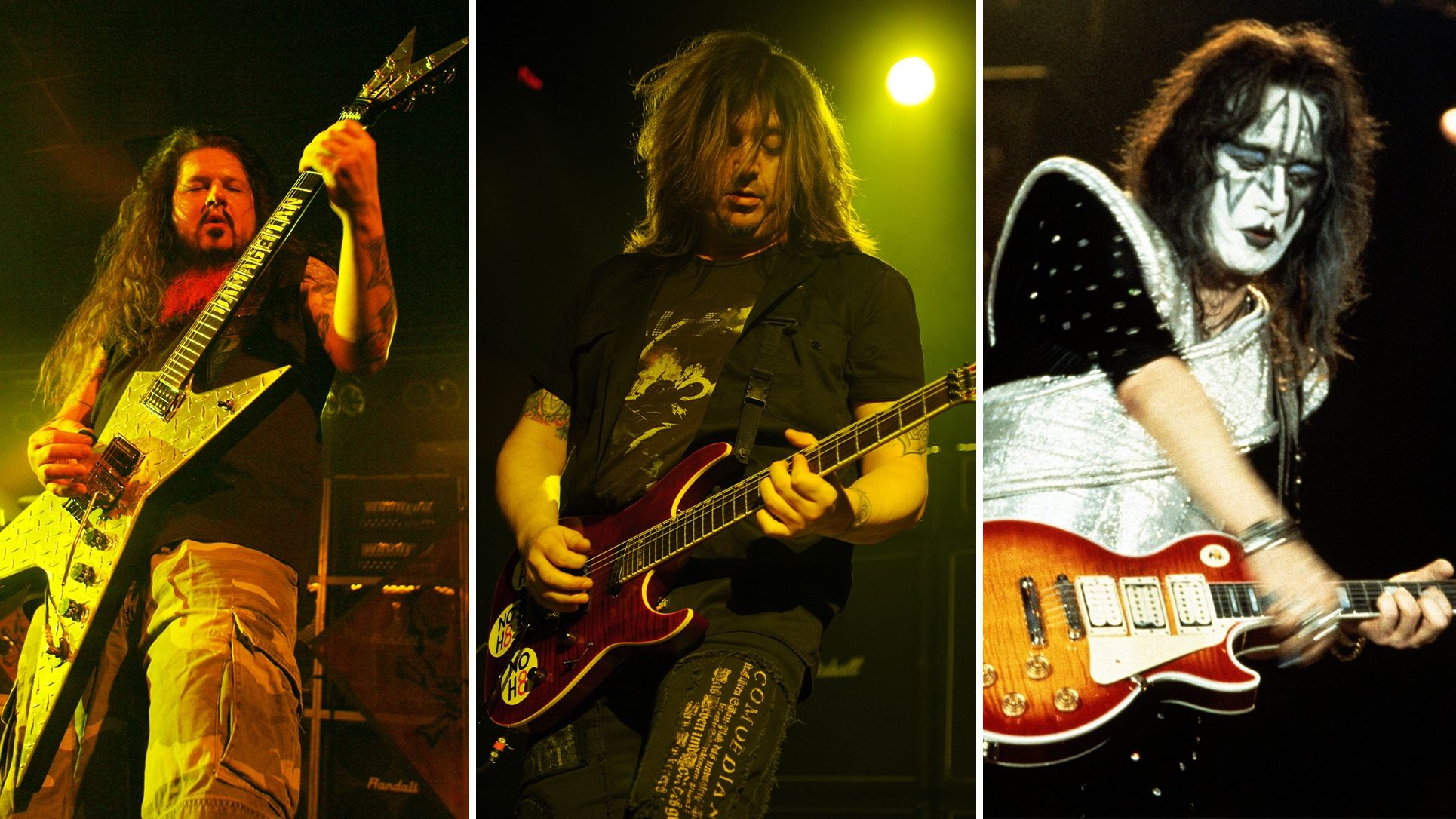
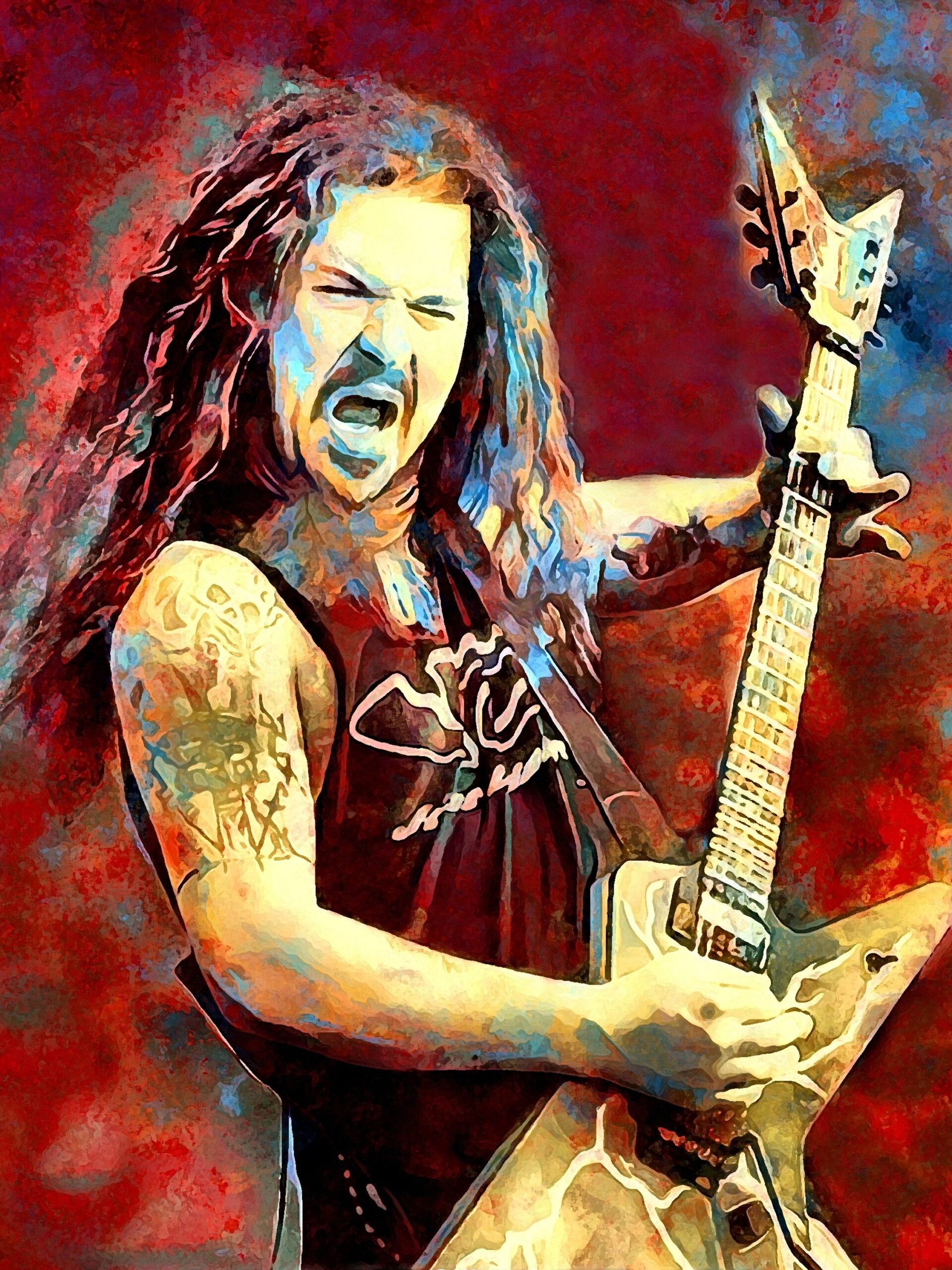
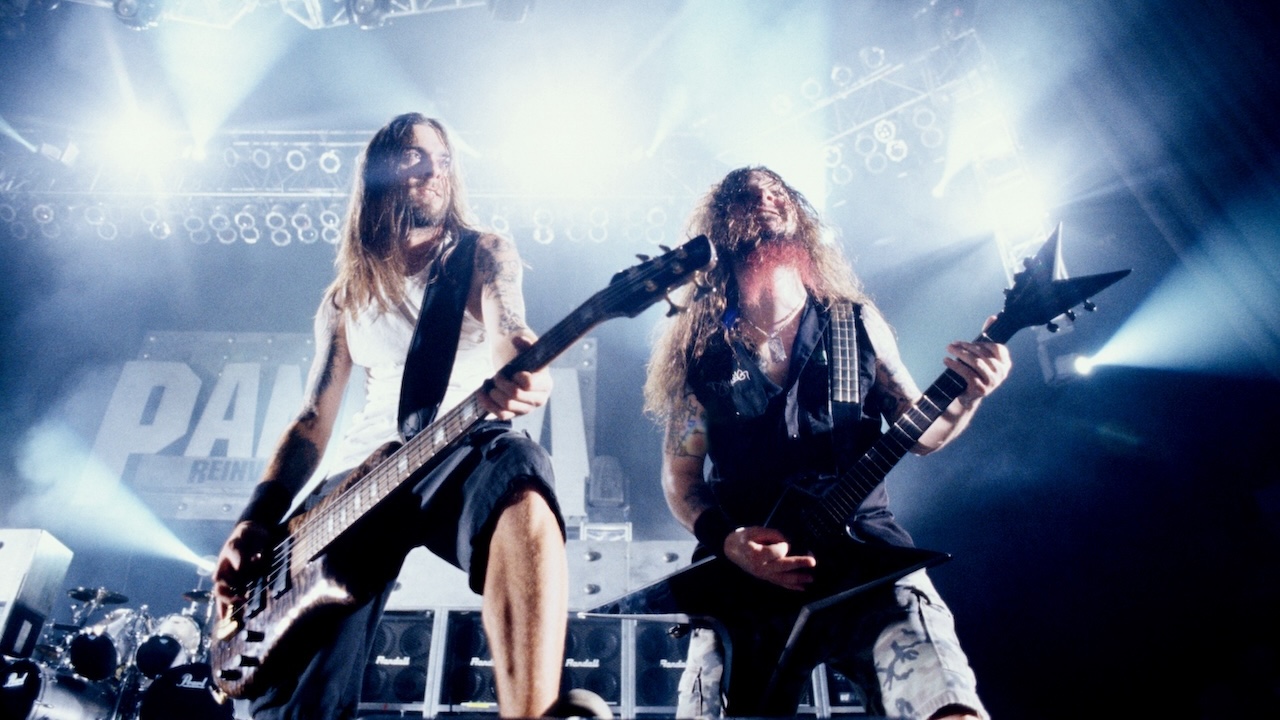
Dimebag Darrell’s tattoos were part of the look people knew him by, alongside the red beard, denim and guitars. The designs connect to the music he played and the people he admired, including the large Cowboys From Hell arm piece and the Ace Frehley portrait on his chest.

Dimebag died in 2004, and the available photographs don’t show every tattoo clearly. Interviews and close-ups document the better-known pieces; where an old image is too blurry to identify a design, its meaning should stay uncertain.

The Cowboys From Hell arm piece

Dimebag Darrell arm tattoos

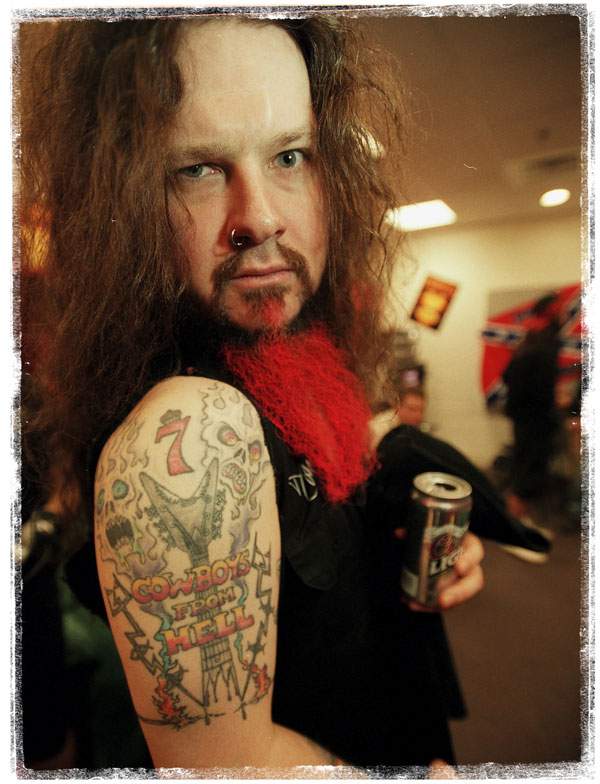
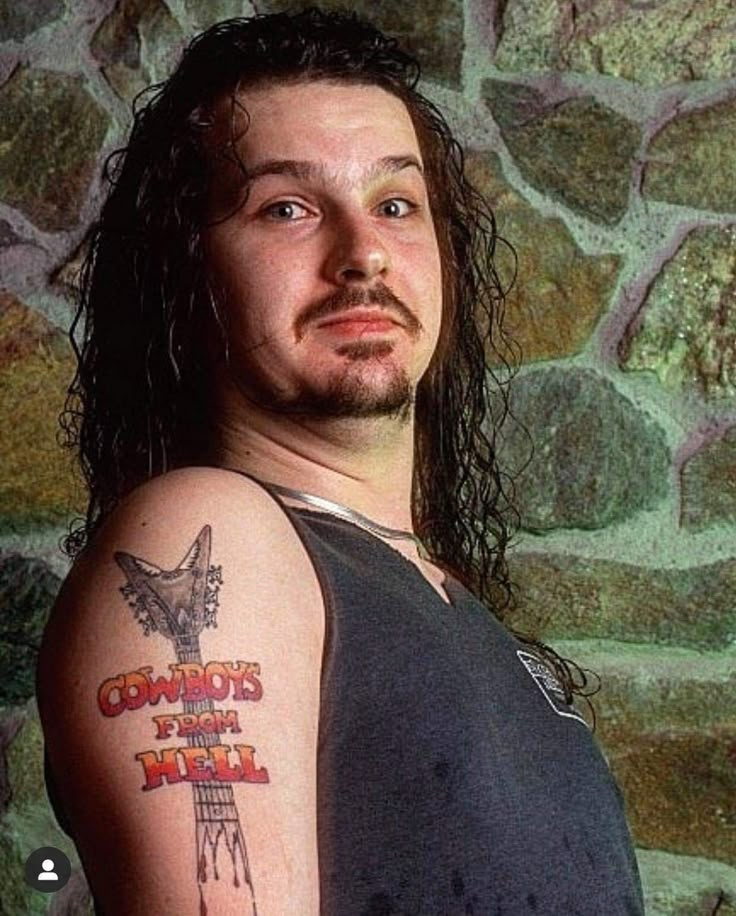
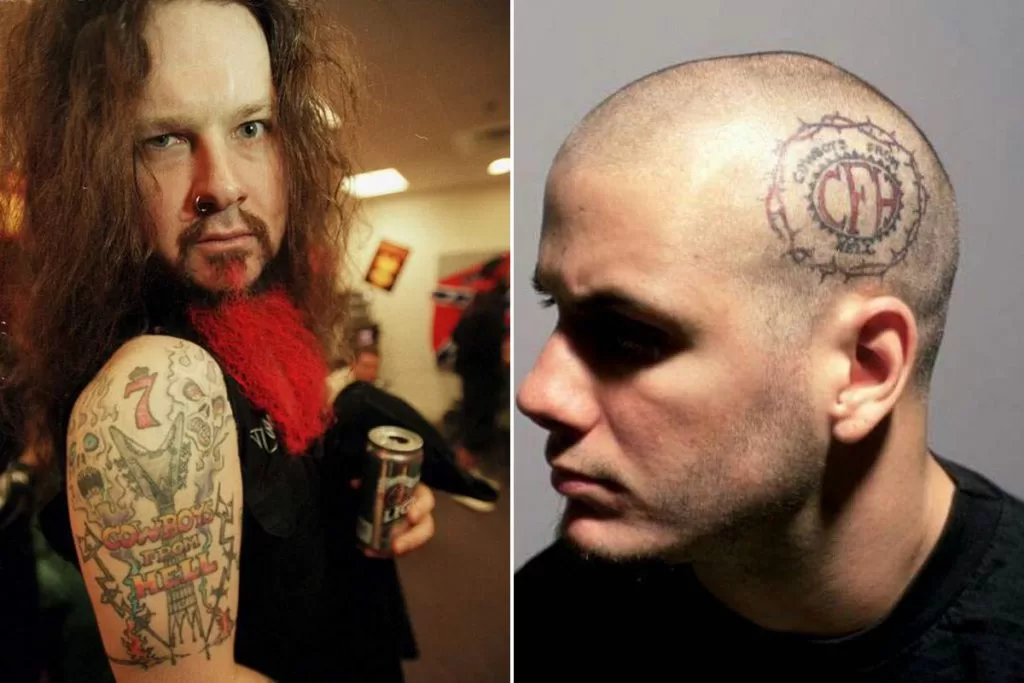
The large arm tattoo built around the words Cowboys From Hell is one of Dimebag’s most recognizable designs. The lettering sits among a skull, horns, sharp points and other heavy-metal imagery. The phrase refers to Pantera’s 1990 album and became one of the band’s best-known names.

In photographs, the design wraps around his upper arm. Red and yellow lettering stands out from the surrounding linework, and the smaller details can be harder to make out in older or low-light images. The words remain clear even when the rest of the tattoo is not.

The Ace Frehley chest portrait

Dimebag Darrell Cowboys From Hell arm tattoo

Dimebag’s best-known tattoo story is the portrait of Ace Frehley in his Spaceman makeup. Frehley, the KISS guitarist, was one of Dimebag’s heroes. He later signed the portrait in person, and Dimebag had the autograph tattooed over the image.

That made the tattoo a tribute twice over: first to the musician who influenced him, then to Frehley himself adding his signature. Dimebag was open about the guitarists he admired, and the portrait put that admiration on his chest.

Pantera marks and the visual language of metal

Dimebag Darrell Ace Frehley chest tattoo

Photographs show other designs around the sleeve, including heavy outlines, dark shading and smaller motifs beside the Cowboys From Hell lettering. A Pantera identity runs through the sleeve, even where the photos don’t show a readable wordmark.

The arm looks like it was filled in over time rather than planned as one symmetrical piece. Some images show a skull clearly; in others, the camera angle, stage lights or film quality obscure the smaller shapes.

The smaller symbols around the sleeve

Dimebag Darrell tattoo detail

Close-ups show smaller designs around Dimebag’s upper arm and bicep. Some look like stars or pointed emblems, while others blend into the larger skull-and-lettering composition.

The photographs don’t establish what the smaller designs mean. The chest portrait and Cowboys From Hell lettering have clearer stories.

How the tattoos worked with his stage image

Dimebag Darrell live arm tattoos

Dimebag’s tattoos appeared with the rest of his familiar look: long hair, red beard, sleeveless shirts and Dean guitars. In performance photos, the arm designs are visible as he plays; the chest portrait shows when his vest opens.

The named pieces point to the music he loved: Ace Frehley, Pantera and Cowboys From Hell. The surrounding skulls, stars and pointed shapes use familiar heavy-metal imagery. The smaller designs are harder to identify, but they sit in the same visual world.

What can be confirmed and what remains unclear

The best-documented pieces are the Ace Frehley portrait on Dimebag’s chest, later signed by Frehley; the large Cowboys From Hell arm tattoo; and a dense sleeve with skulls, lettering, stars and other metal imagery. Photos also show smaller marks around the bicep and forearm, though they don’t always show enough detail to identify them.

That’s enough to describe the main stories without guessing at every shape. One tattoo honours a hero; another connects directly to Pantera. The smaller details complete the sleeve, but their meanings haven’t been confirmed.

The meaning behind Dimebag Darrell’s ink

Dimebag Darrell Pantera arm tattoos

The Ace Frehley portrait points to a guitarist Dimebag admired. The Cowboys From Hell piece connects to Pantera and the album of the same name. Skulls, sharp lines and dark shading fill out the sleeve’s heavy-metal look.

The designs made those influences visible. Dimebag wore the people and music he cared about on his body, in tattoos that appeared in the same photos as his guitars and stage clothes.

Why the designs still matter

Photographs from different years show different parts of the collection. A shape that’s hard to read in one image may be clearer in another, so it helps to separate recognizable pieces from details that remain uncertain.

The tattoos carry more than one kind of meaning. The Ace Frehley portrait is a tribute to a person; Cowboys From Hell refers to the band and album; the skulls and pointed forms draw on heavy-metal imagery. Personal admiration and Pantera’s public identity share the same arm.

The imagery is dark, but the stories behind the best-known pieces are tributes to a guitarist, a band and the music Dimebag loved.

Watch Dimebag talk about his tattoos

In the clip below, Dimebag discusses the designs himself.

More musician tattoo guides

Zakk Wylde keeps his tattoo story deliberately small

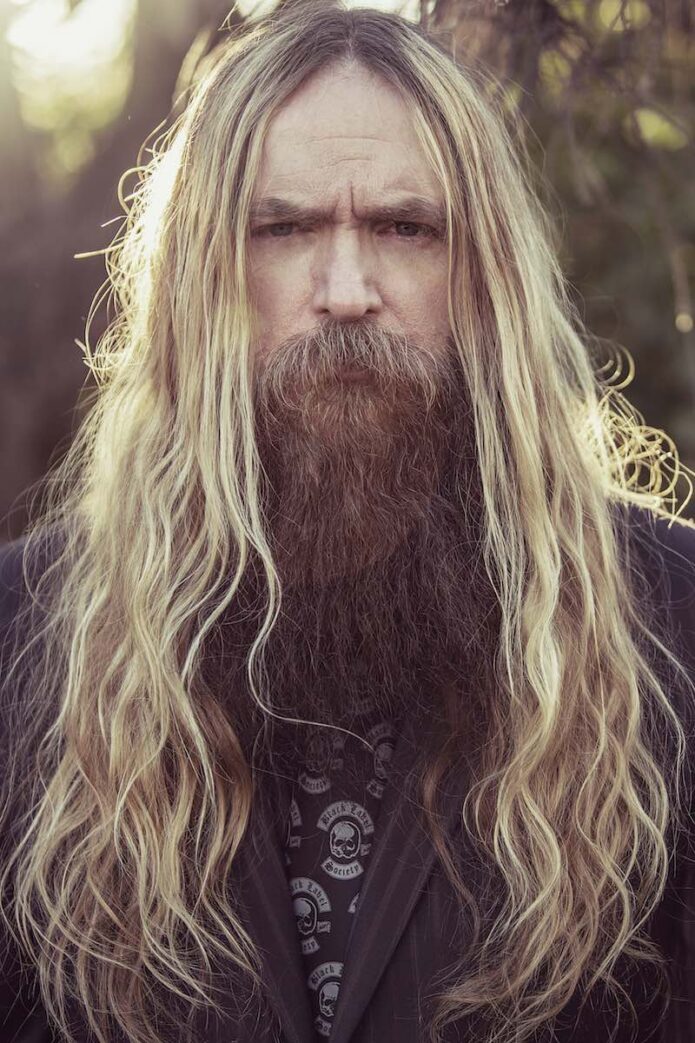
Zakk Wylde’s beard, black clothes and bullseye guitar make for a familiar heavy-metal look, but the tattoos he has discussed are few. He has joked that his wife has more tattoos than he does.

The clearest permanent design is a small bat on his hand. Wylde said he, Andrew, Chad and Kelly all got bat tattoos as a mark of friendship. Older photographs also show chain tattoos, but he has described those as fake, part of the stage look rather than permanent ink.

The bat on his hand

Zakk Wylde bat hand tattoo

The hand tattoo is the design most consistently identified in recent coverage. Wylde said it came from the period around his work with Ozzy: he, Andrew, Chad and Kelly all had bats as a friendship mark.

The bat tattoo on his hand is small, but the story is specific. Wylde described it as something shared among friends and collaborators, not just a gothic image he picked to match his guitar.

How his stage look shaped the confusion

Wylde’s beard, clothes and instruments usually do most of the visual work in wide stage photos, so the hand tattoo can be easy to miss. A closer image makes it easier to see, while the familiar chains in older pictures have sometimes been mistaken for more permanent ink.

The bat is easiest to spot in a close-up. From a wide shot, the chain effect can make his arms look more heavily tattooed than they are.

The stage look that made the story fuzzy

Older profiles mention fake chain tattoos Wylde wore on his arms, particularly around the early Black Label Society years. They were temporary or cosmetic, not permanent body art.

In concert photos, painted or temporary chains can look like a full tattoo from a distance, especially under stage lights. Those images are part of the story, but the chains shouldn’t be counted as permanent tattoos.

Why he never needed a crowded image

Wylde has said his wife has more tattoos than he does. He also praised her “Z” tattoo as especially cool. His comments make clear that he notices and appreciates tattoos without needing a large collection of his own.

The hand bat has its own meaning because it is tied to friends. The chains, by contrast, were part of his performance look. His wife’s “Z” is a tattoo he likes on someone else.

What the available record actually shows

The confirmed inventory is brief: one small bat on his hand, plus the fake chain tattoos documented as part of an earlier stage look. Photos may show dark shapes around clothing or jewellery, but that isn’t enough to identify additional permanent tattoos.

There’s no reliable support for a long list of sleeves, neck pieces or chest designs. The bat is the clear tattoo; the chains help explain why older photos can give a different impression.

How the bat fits his wider image

The bat fits the heavy-metal world around Black Label Society, but Wylde ties it to specific friends. The chains were a separate choice for the stage. Keeping those stories apart makes it clear what is permanent and what was part of the outfit.

A small story with a clear shape

Wylde has talked about only a few designs. The bat has a story tied to friends, while the chains were temporary. His praise for his wife’s “Z” gives another small detail about how he thinks about tattoos.

Why close-up photos matter

The bat can disappear behind a guitar neck, microphone or wristband in a wide shot. Close-up interview footage shows the design more clearly than a distant concert photograph.

A printed shirt, bracelet or shadow can also resemble ink. In the available interviews, the hand bat is the only permanent design with a first-hand explanation. Other marks should stay unidentified unless clearer evidence turns up.

What the limited record says about his taste

Wylde’s comments point to tattoos with a personal story. The bat is shared with friends; his wife’s “Z” is one he admires. He hasn’t suggested that he wants a large collection of his own.

His music and performance already give him a distinct look. The tattoo is one small part of it, not the whole image.

The cleanest takeaway

The reliable inventory is short: one friendship bat on his hand and temporary chain tattoos from an earlier stage look. The chains belong in the story, but they weren’t permanent tattoos. Other designs remain unconfirmed.

Watch the interview clip

In the clip below, Wylde talks about the bat tattoo and his approach to ink.

More musician tattoo guides

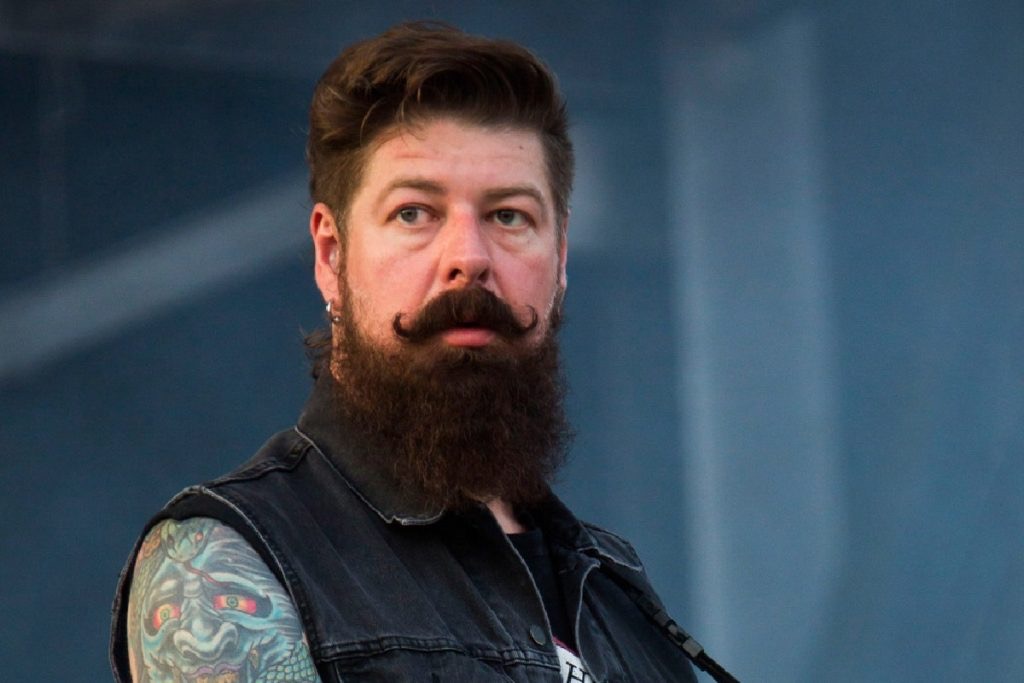
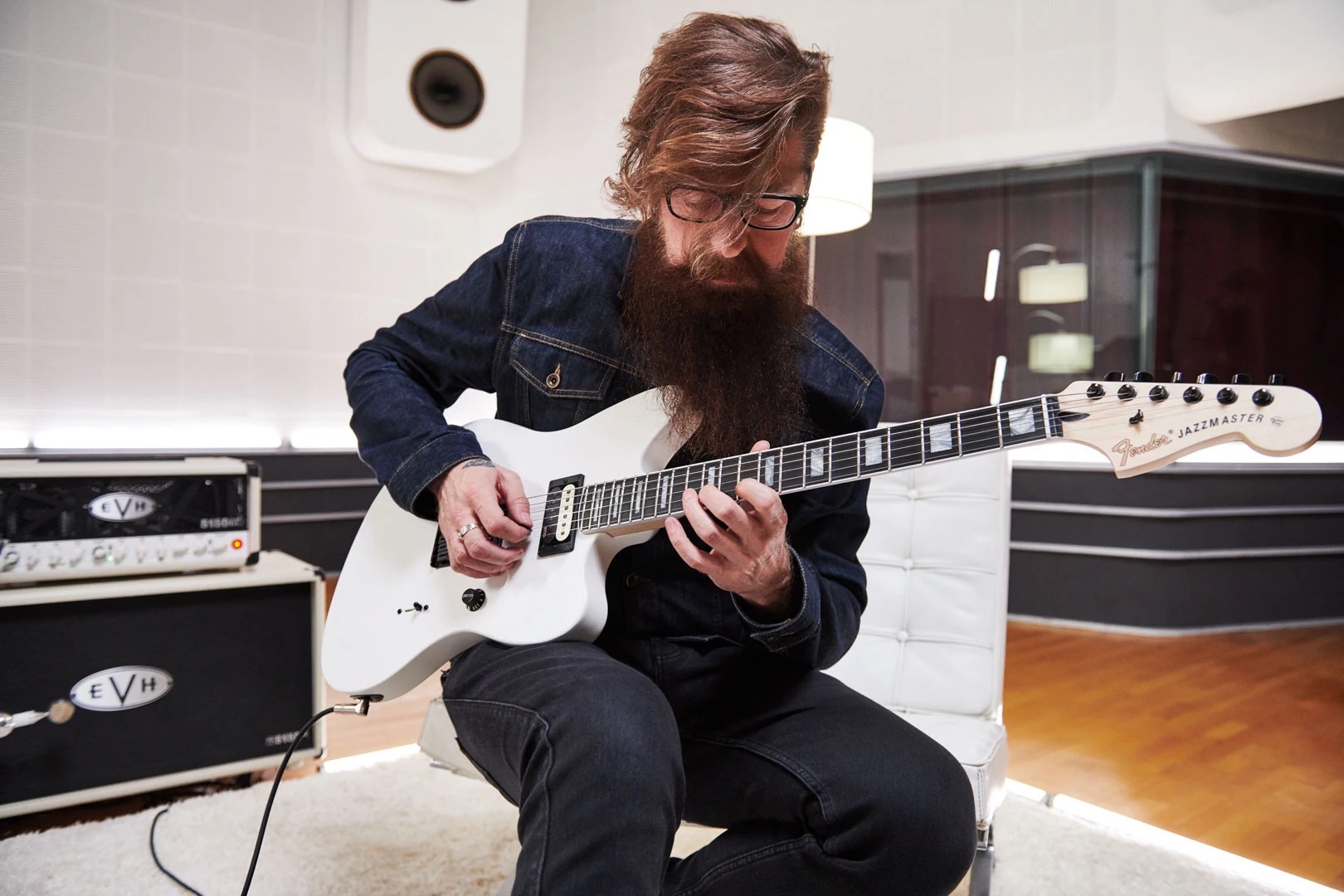
Jim Root Tattoos: The Shovelhead Hand Piece and More

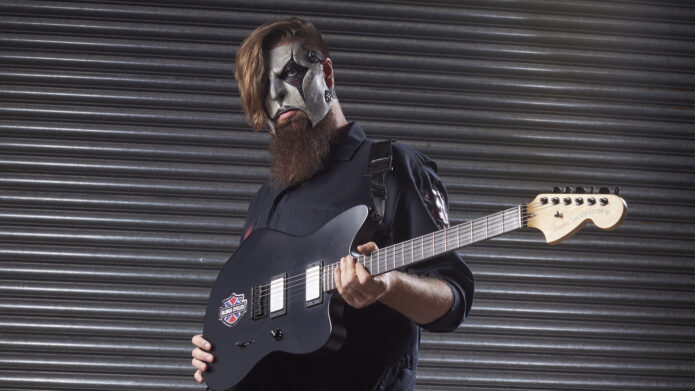
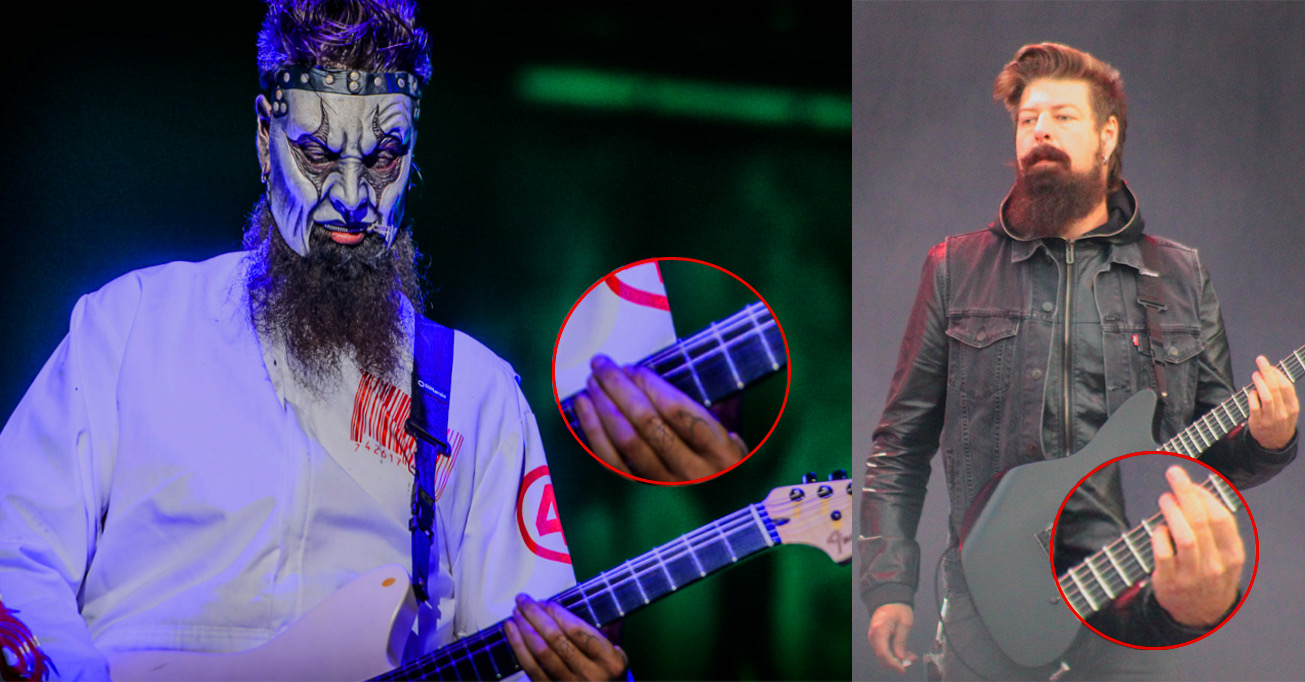
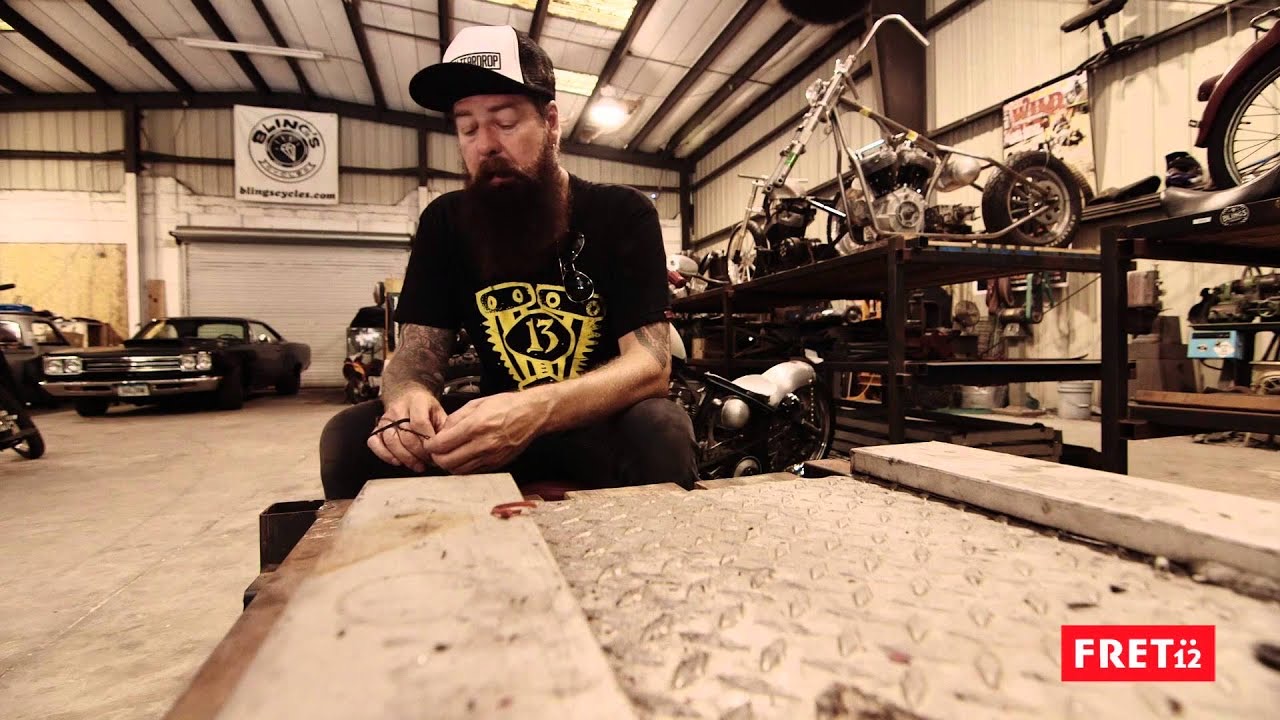
Jim Root’s documented tattoo story centers on one design: a Shovelhead on his hand. In a FRET12 interview, he connects it to the Engine 13 name and a shovelhead engine. The design also became the basis for a signature apparel line.

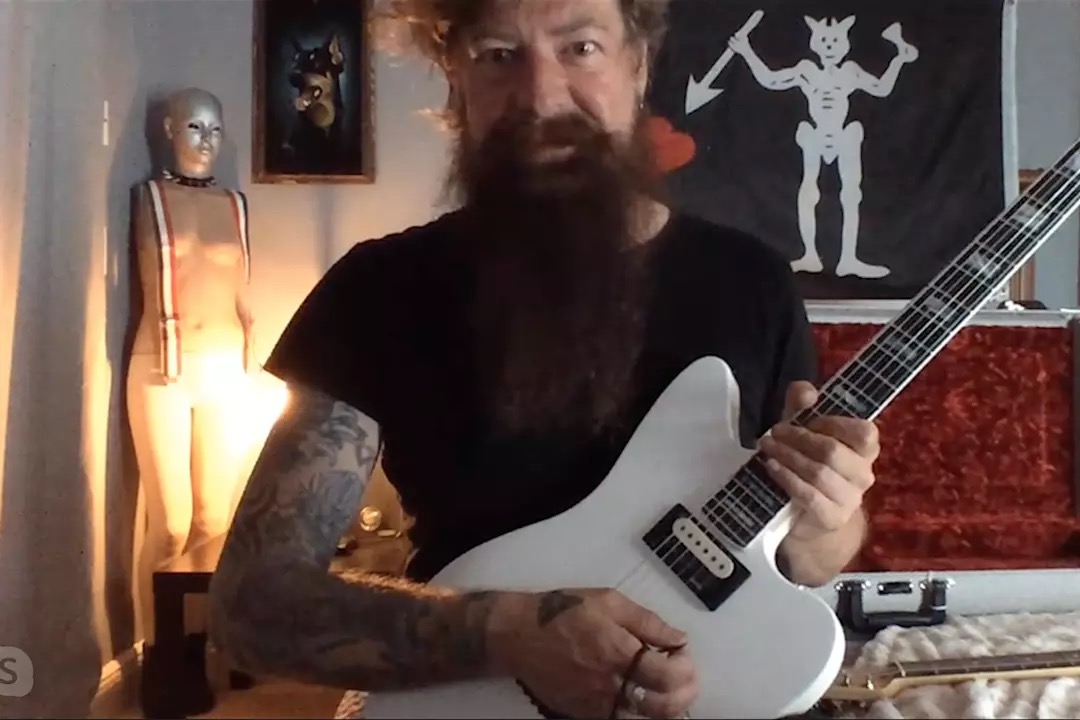
Photos show other marks on his arms and hands, but they don’t provide a reliable inventory. The Shovelhead is the tattoo Root has explained; other shapes are harder to identify with confidence.

The Shovelhead hand tattoo

Jim Root Shovelhead hand tattoo

FRET12 filmed Root explaining the Shovelhead design on his hand. He connects it to Engine 13 and to a shovelhead engine, a specific machine rather than a generic metal symbol.

The hand stays visible when Root plays or reaches for his guitar, though gloves and instruments can cover it in some photos.

Why Engine 13 matters

Root’s explanation connects the tattoo with Engine 13, a name that became part of his creative identity and later appeared on merchandise. The hand design links the tattoo to the name and the visual identity around it.

The machine reference came first. The apparel line followed because the image already had meaning for him; the tattoo wasn’t simply a logo chosen for merchandise.

The tattoos visible in Slipknot photographs

Jim Root forearm tattoos

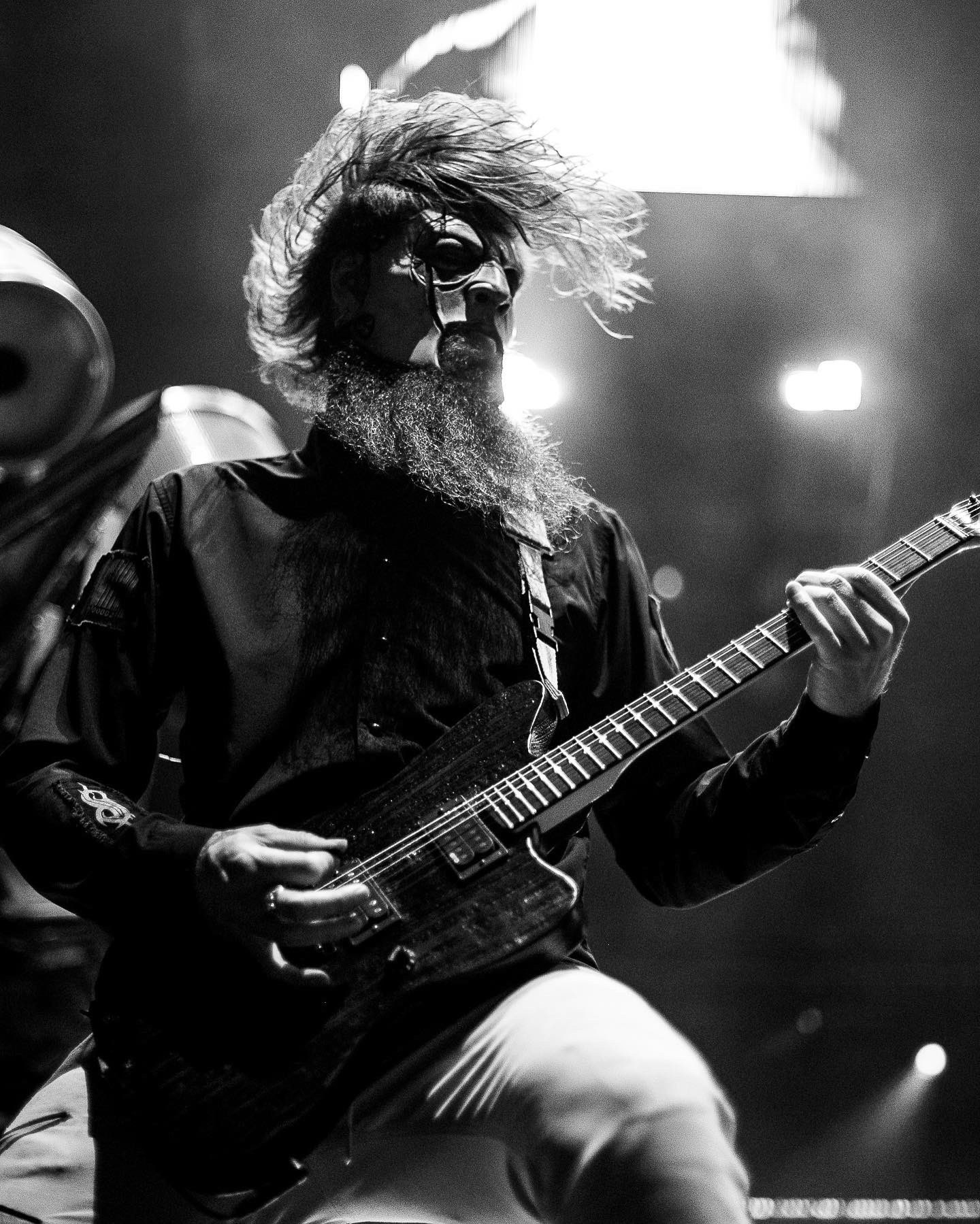
Touring photos show more of Root’s arms and hands, but they don’t provide a dependable list of tattoos. Stage lights, gloves, instruments and costumes can hide small areas, and clothing or artwork can look like permanent ink.

The Shovelhead is the clearest documented piece. Other shapes should stay unidentified unless a sharper image or Root’s own account confirms them.

A mechanical idea rather than a generic symbol

The Shovelhead design refers to a real machine. That gives it a more specific story than an image chosen only for a heavy-metal look: Root has connected it to Engine 13 and to equipment he cared about.

It’s a reference to something concrete, and the name carried through into his creative work and merchandise.

How the hand placement changes the reading

Jim Root Engine 13 tattoo

Root’s hands are often in motion in photos: holding a pick, resting on a guitar or hidden by a glove. The tattoo can be hard to see in one frame and clear in the next.

That changing view is part of why the interview close-up is useful. It shows the design while Root explains it, without requiring a guess from a distant stage photo.

What the sources actually confirm

The confirmed story is narrow: Root has a Shovelhead hand tattoo linked to Engine 13, and the FRET12 video records his explanation. Photographs show the mark alongside his Slipknot stage look, but they don’t clearly identify every other shape.

That is enough to describe the tattoo without adding names or meanings to blurry details. Root’s explanation is the strongest source for the design.

The design fits Root’s wider visual language

Jim Root sleeve tattoos

Root’s guitars, masks, clothes and stage photos often use hard edges and mechanical surfaces. The Shovelhead fits that visual world, but it also has a personal reference: a machine he connected to Engine 13.

That link between machinery and music is what gives the design its place in his tattoo story.

Why fans keep returning to the Shovelhead story

The FRET12 interview gives fans Root’s own explanation, and Engine 13 later appeared on merchandise. The tattoo remains the personal starting point.

Jim Root’s tattoo profile in one line

Jim Root hand tattoos

In one line: Root’s best-documented tattoo is a Shovelhead on his hand, tied to Engine 13; other marks remain unidentified.

Why a focused inventory is more useful

Gloves, cables, guitars and costumes obscure Root’s arms in touring photos, and a patch or shadow can resemble a tattoo. The FRET12 close-up and Root’s own explanation establish the Shovelhead; other visible marks remain uncertain.

The mark behind the merchandise

Jim Root tattooed forearms

Engine 13 reached fans through Root’s apparel line, while his FRET12 explanation ties the name back to the Shovelhead tattoo and the machine behind it. The merchandise gave the idea another life without changing its personal origin.

Watch Jim Root explain the original interview

In this short FRET12 clip, Root talks about the Shovelhead design and where it came from.

More musician tattoo guides