
The tattoos that made T-Pain’s hands part of the joke
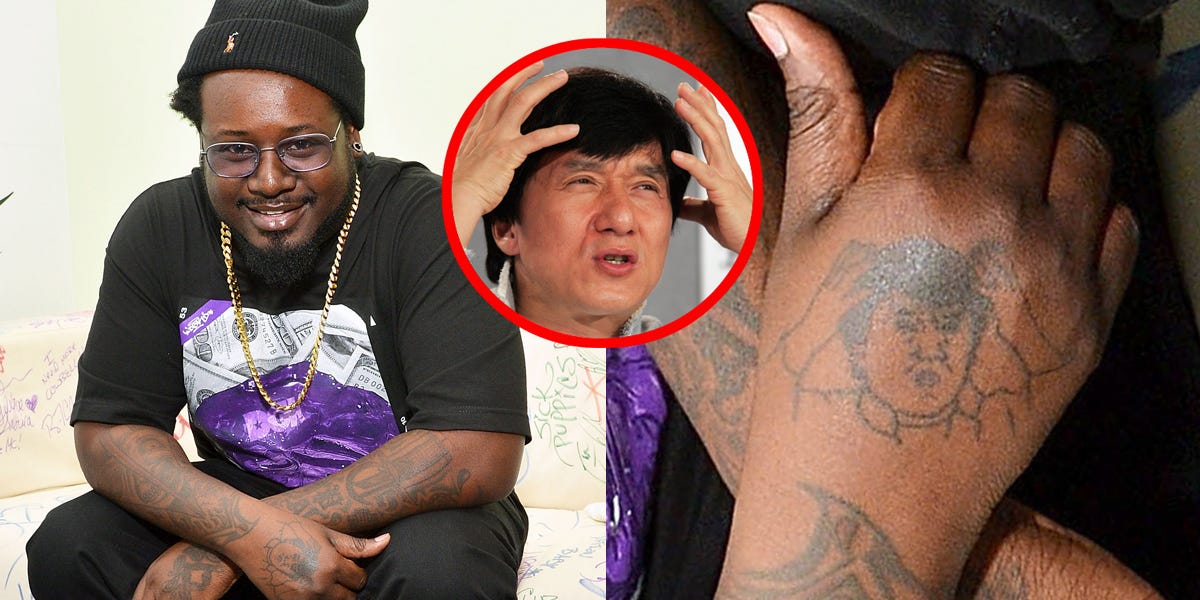
T-Pain’s tattoos share the same dry humour as his public persona. The best-known is the Jackie Chan meme on his hand. He got it after people kept saying things he thought were stupid. Rather than argue, he said he wanted them to look at the tattoo while they were talking. It turns an irritation into a joke, right where people can’t miss it.
The image comes from a widely shared photo of Jackie Chan looking confused. Business Insider, VICE and other outlets have covered the story, and T-Pain has explained the idea himself. This is one of the easiest tattoos in his collection to identify: the image is familiar, the placement is clear and the reason has been reported. It’s more than a portrait of a movie star. On the hand, it’s bound to catch someone’s eye.
The piece is funny, but it also has a purpose. T-Pain took a bit of internet culture and made it part of how he handles an awkward conversation. The joke is silly, and the placement is deliberate.
The Facebook Like button on his arm
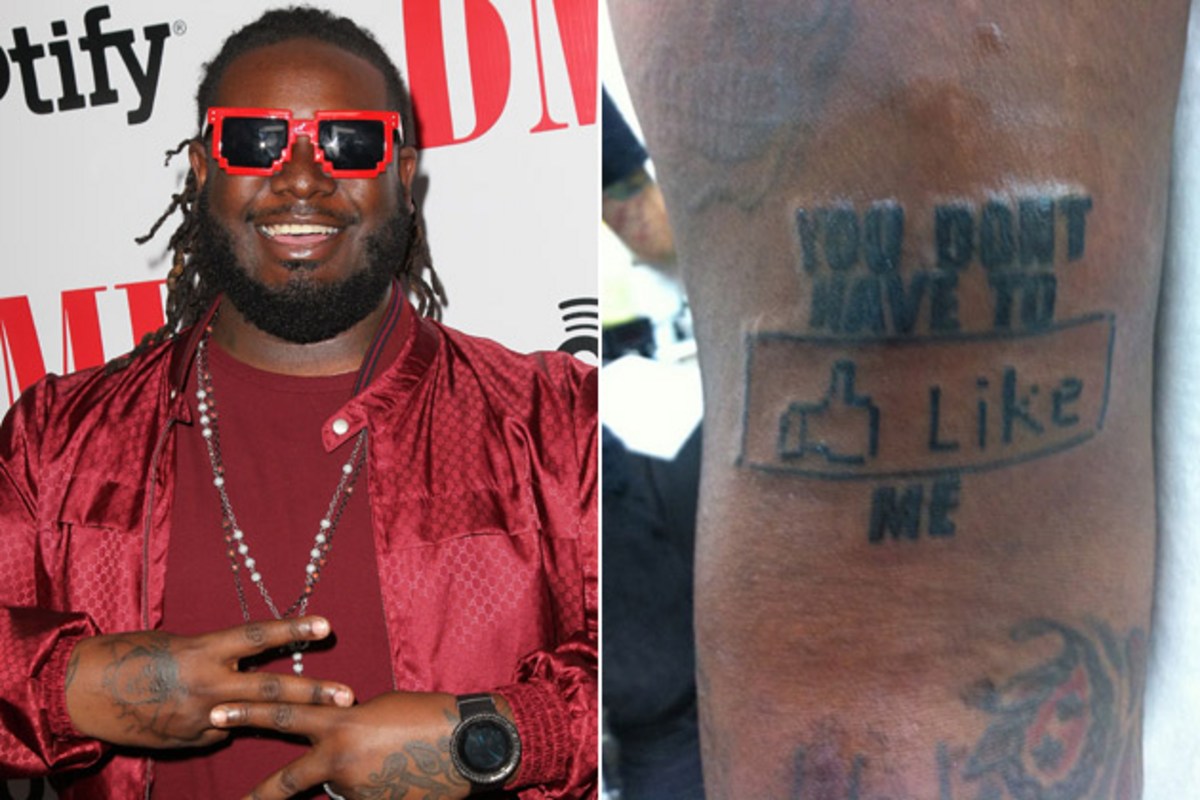
Before the Jackie Chan tattoo, T-Pain made headlines for a Facebook Like button tattoo. Reports from 2011 said he got the familiar thumbs-up in Hawaii, along with words tied to the social network. He turned a small piece of a website into body art just as Facebook was becoming part of daily life.
The tattoo also fits his interest in bringing online culture into the real world. At the time, putting an interface symbol on skin was a joke about how much space Facebook took up in people’s lives. It came with an obvious risk: platforms change, and a symbol that once felt universal can quickly look dated.
That’s part of its appeal now. The Facebook mark captures one internet era, while the Jackie Chan tattoo points to the meme culture that came after it. His tattoos preserve the moment he chose them. They show what was in the air then.
The neck tattoo that simply says Tattoo
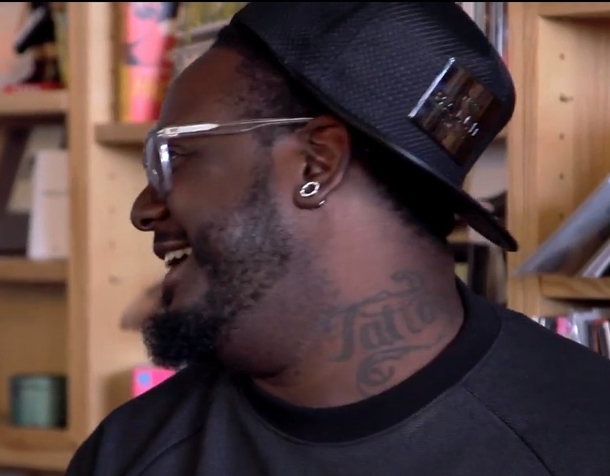
Searches for T-Pain tattoos also turn up the small neck design that reads Tattoo. It’s blunt: the word names the thing it is. Like the Facebook and Jackie Chan pieces, it has a self-aware joke in it.
The word sits close to his face, where it shows in profile photos, interviews and performances. A simple word can draw as much attention as a detailed picture when it’s placed well. This one doesn’t need a long explanation; the joke is in its directness.
Image searches can mix T-Pain’s neck tattoo with fan-made designs or unrelated pictures. The clearest way to identify it is to look for photos that show T-Pain and the word on his neck. For a joke this simple, a clear photo is enough.
Words, symbols and the wider collection
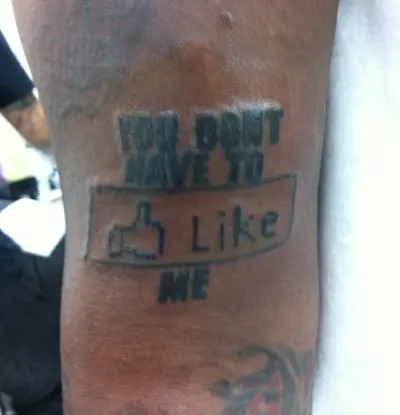
Complex has reported that T-Pain has roughly a dozen tattoos, including the phrase You don’t have to Like me, a play on Facebook’s Like language. It carries the button’s idea further, turning a joke about approval into a statement about attention. It can read as humour or as a boundary.
Photos also show lettering, symbols and other work on his hands and arms, but not every piece is identified with the same certainty. That’s common with tattoos seen in music videos, red-carpet pictures and social posts: one close-up may show a design while hiding another, and lighting can change how old ink looks. A visible tattoo isn’t always an explained tattoo.
The common thread is how T-Pain takes things that are usually temporary and puts them on his body. A Facebook button gets clicked and forgotten; a meme gets replaced by the next one; a line about being liked might stay on a profile. His tattoos keep those ideas around after the news cycle has moved on.
Why the Jackie Chan tattoo fits the whole idea
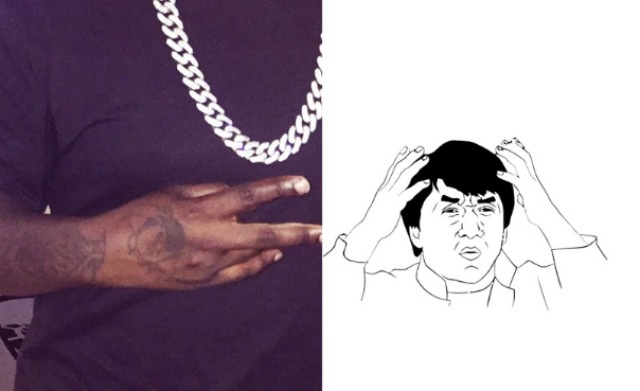
The Jackie Chan tattoo sums up T-Pain’s humour and interest in internet culture. Its placement matters too. It isn’t under a sleeve; people can see it when he reaches out, gestures or performs. Anyone looking at his hand becomes part of the joke.
That doesn’t mean every T-Pain tattoo is supposed to be funny. The phrase about not needing a Like has a sharper edge, and the word on his neck has a different feel from the Facebook logo. Together, the designs show an artist who lets body art comment on the world around him. Some of the tattoos work like captions.
His ink also shapes how he handles attention. People sometimes approach famous musicians as if they’re entitled to a response. T-Pain has described the Jackie Chan image as a way to answer foolish comments without an argument. If someone asks about it, the story becomes part of the exchange. The tattoo is personal, but it’s also made to be seen.
A careful inventory of T-Pain’s documented tattoos
The designs named in public reporting include the Jackie Chan meme on his hand, the Facebook Like button, the phrase You don’t have to Like me, the neck tattoo that reads Tattoo, and other hand, arm and neck marks that haven’t been consistently identified. That’s a shorter list than some accounts give, but each item is tied to a photograph or a published explanation.
Fan posts sometimes attribute other people’s tattoos to T-Pain, including designs worn by other rappers or copied from his ideas. Cropped pictures can be hard to verify too. A photo of a hand tattoo doesn’t establish that the hand belongs to him.
There’s no need to give every design a profound meaning. Some of his best-known tattoos are funny because they’re so direct: the Facebook symbol is a Like button, the neck tattoo says Tattoo, and the Jackie Chan image interrupts a conversation. Humour is part of what they mean.
To compare photos, start with the designs covered in reporting and check where they sit: on the hand, forearm, arm or neck. Look for the Jackie Chan expression, the Facebook thumbs-up or the word Tattoo. Treat other marks as unconfirmed unless T-Pain or a reliable contemporary source identifies them.
Watch T-Pain explain the Facebook tattoo
This clip shows T-Pain talking about the Facebook Like button tattoo, the design discussed above.
One thought on “T-Pain turned internet culture into permanent ink”