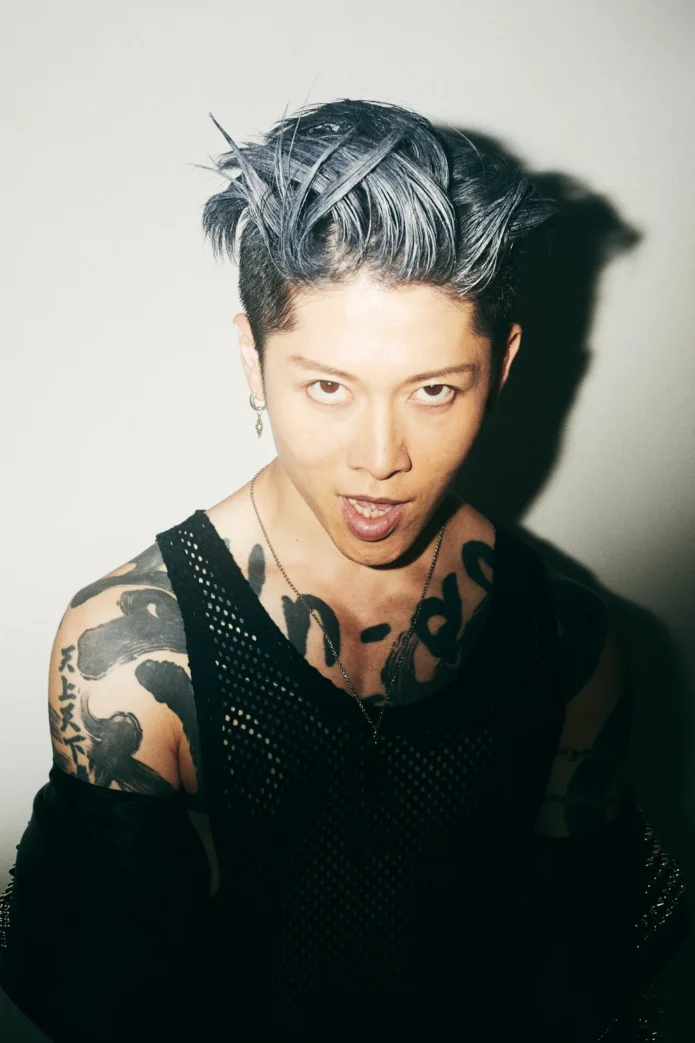
Miyavi’s tattoos use black ink, brush-like shapes, characters, and short phrases. The largest designs sit across his chest and shoulders; smaller marks run along his arms, wrists, and hands. They are visible when he reaches for a guitar or microphone.
The collection doesn’t form one matching sleeve. Large characters create broad shapes, narrow bands break up the forearms, and English lettering adds smaller details. The work varies in size while leaving skin visible between pieces.
The chest kanji gives the collection its centre
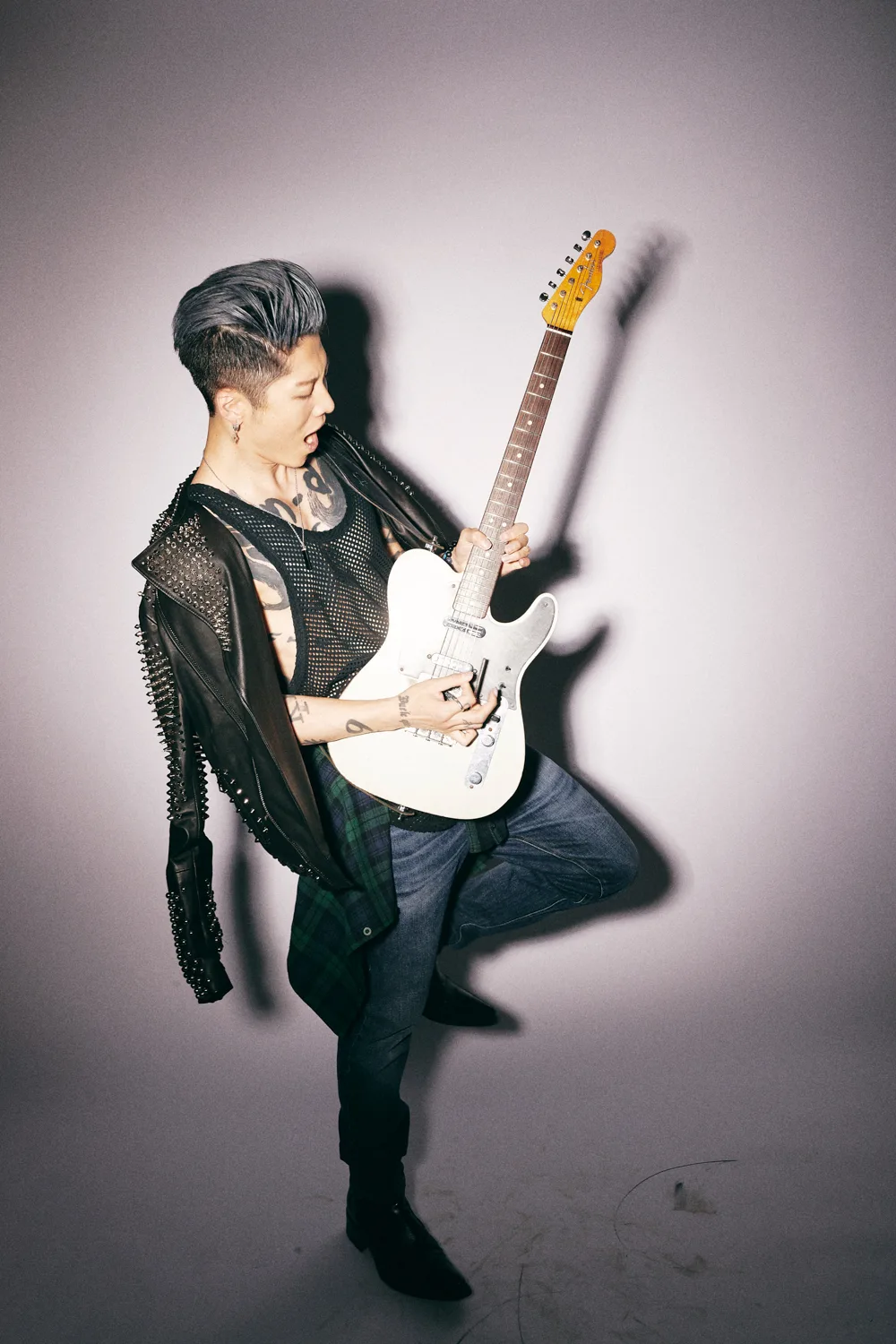
Heavy black characters stretch across Miyavi’s chest, set between broad brush-like forms. A guitar crosses the lower part of the photo, but the chest design remains the main shape.
The characters are large and the surrounding marks give them weight. A design across the chest also has to fit around the collarbones, ribs, and the edges hidden by clothes.
Brushwork across the shoulders keeps the ink loose
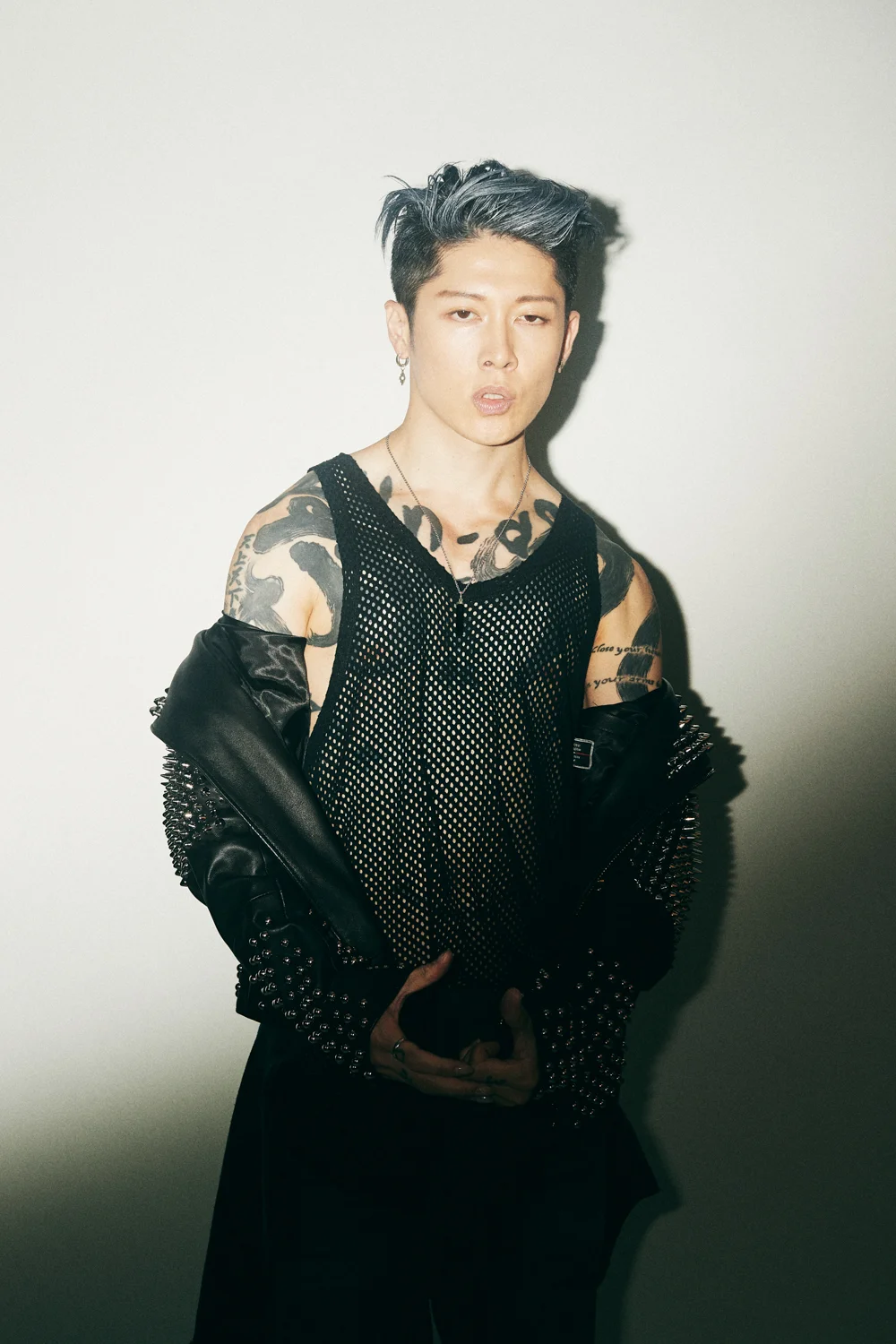
From the front, dark brush-like shapes spread from the chest over the shoulders. They don’t form a tidy geometric pattern. Their outline changes as Miyavi moves and turns, which is especially clear in performance photos.
The shoulder changes shape as the arm lifts, bends, and rotates. Looking at placement from several angles shows how the tattoo sits beyond a still, front-facing pose.
His arms mix big characters with narrow bands
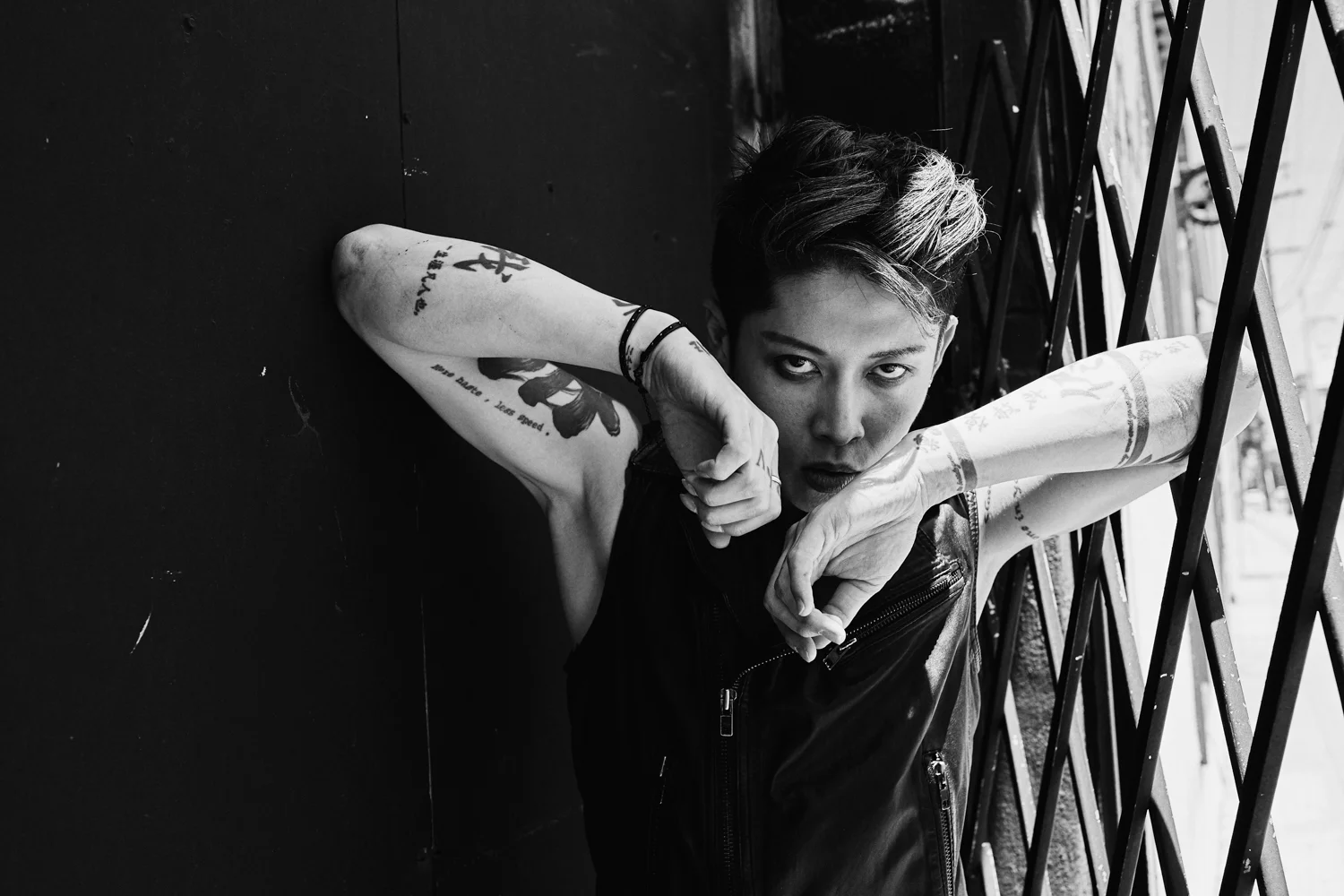
The arms shift to a narrower rhythm: tall characters sit beside bands and short script closer to the skin. A phrase is visible on the inner arm, while wider black bands leave some space around the lettering. The designs differ, but their scale and black ink give the arms a related look.
One large mark can sit beside smaller words or symbols. Thin lettering needs enough space to remain clear as it heals.
The wrist and hand marks are small but easy to spot
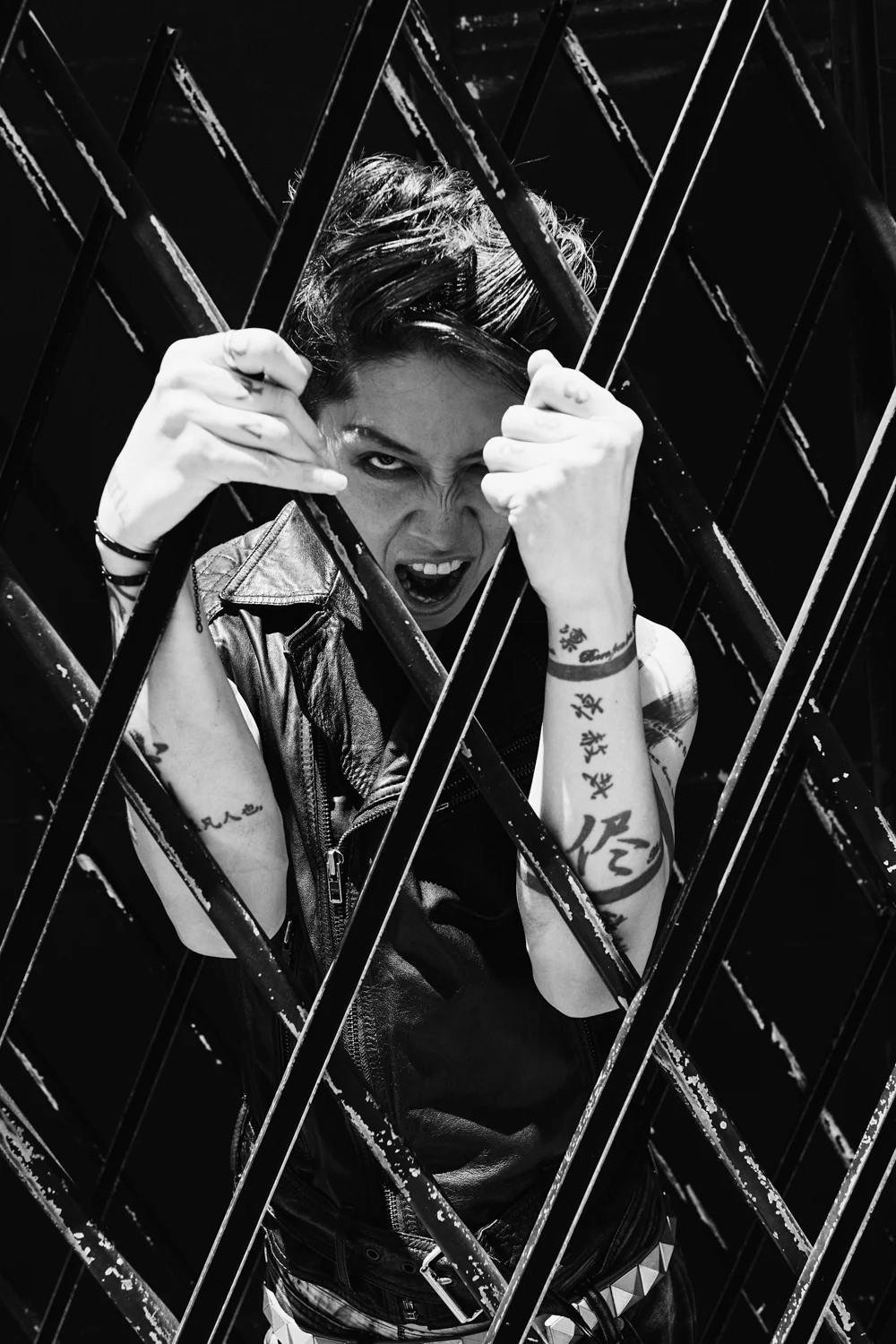
Bands sit above Miyavi’s wrists, characters run down his forearms, and smaller marks appear on his fingers and hands. The designs are visible when he plays, grips a microphone, or reaches toward the crowd.
Hands and wrists move constantly, and small lines can soften with wear. Lettering and characters need enough space to remain legible over time.
The guitar photos show how the tattoos move with him

With a guitar in the frame, Miyavi’s hands, wrists, forearms, and chest are all in motion. A wrist band appears as the hand turns; the chest design is visible between the strap and shirt; forearm lettering shifts as he plays.
The tattoos become part of the performance because of where they sit. Their visibility changes with the position of the instrument and his hands.
How to borrow the layout without copying Miyavi
Miyavi’s collection uses different scales for different areas: broad chest shapes, narrower arm lettering, and compact hand marks. The designs feel related without repeating one image.
If a tattoo uses characters in another language, have the wording and context checked by someone qualified to read it. Look at healed examples as well as fresh work, and leave space between pieces if you plan to add more later.
The chest carries the largest forms, the arms shift with movement, and the hand tattoos stay close to the work Miyavi does onstage. The placement is as much a part of the look as the drawings themselves.