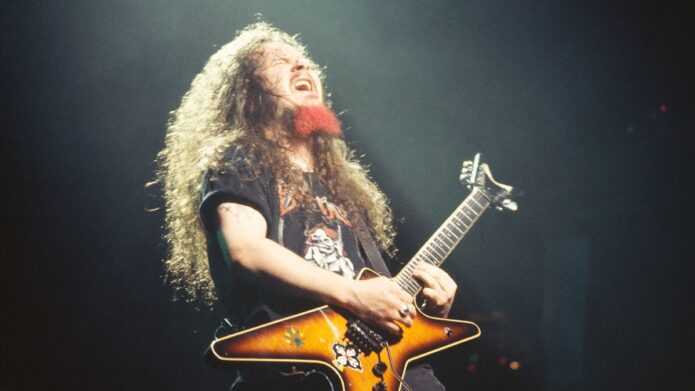
Dimebag Darrell’s tattoos were part of the look people knew him by, alongside the red beard, denim and guitars. The designs connect to the music he played and the people he admired, including the large Cowboys From Hell arm piece and the Ace Frehley portrait on his chest.
Dimebag died in 2004, and the available photographs don’t show every tattoo clearly. Interviews and close-ups document the better-known pieces; where an old image is too blurry to identify a design, its meaning should stay uncertain.
The Cowboys From Hell arm piece
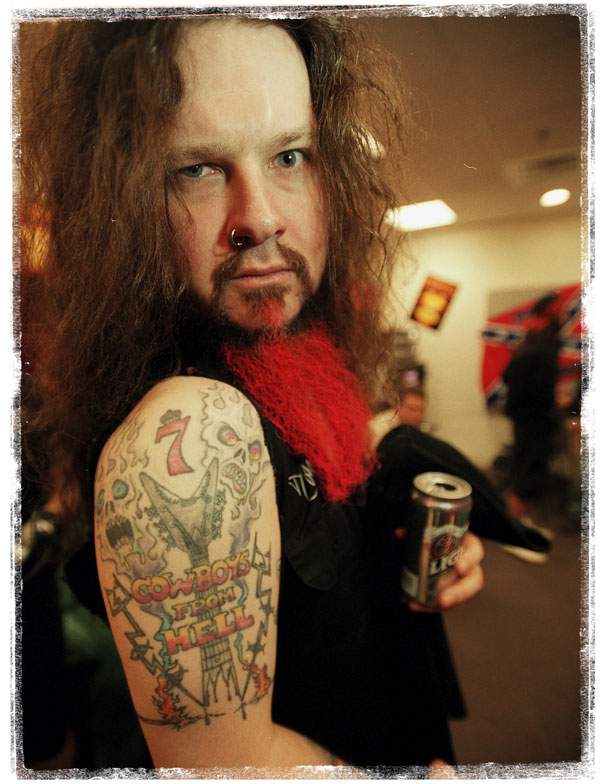
The large arm tattoo built around the words Cowboys From Hell is one of Dimebag’s most recognizable designs. The lettering sits among a skull, horns, sharp points and other heavy-metal imagery. The phrase refers to Pantera’s 1990 album and became one of the band’s best-known names.
In photographs, the design wraps around his upper arm. Red and yellow lettering stands out from the surrounding linework, and the smaller details can be harder to make out in older or low-light images. The words remain clear even when the rest of the tattoo is not.
The Ace Frehley chest portrait
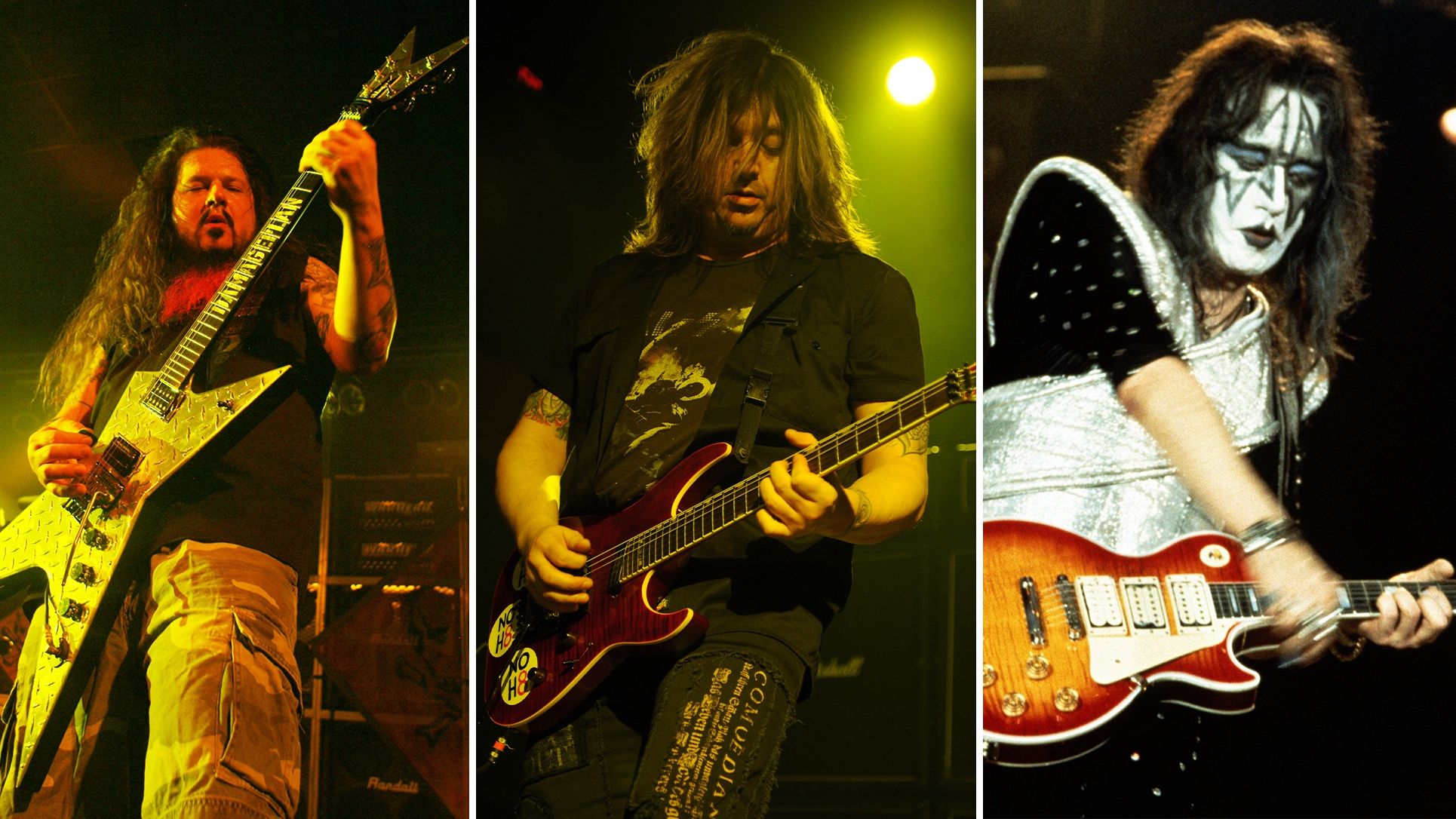
Dimebag’s best-known tattoo story is the portrait of Ace Frehley in his Spaceman makeup. Frehley, the KISS guitarist, was one of Dimebag’s heroes. He later signed the portrait in person, and Dimebag had the autograph tattooed over the image.
That made the tattoo a tribute twice over: first to the musician who influenced him, then to Frehley himself adding his signature. Dimebag was open about the guitarists he admired, and the portrait put that admiration on his chest.
Pantera marks and the visual language of metal
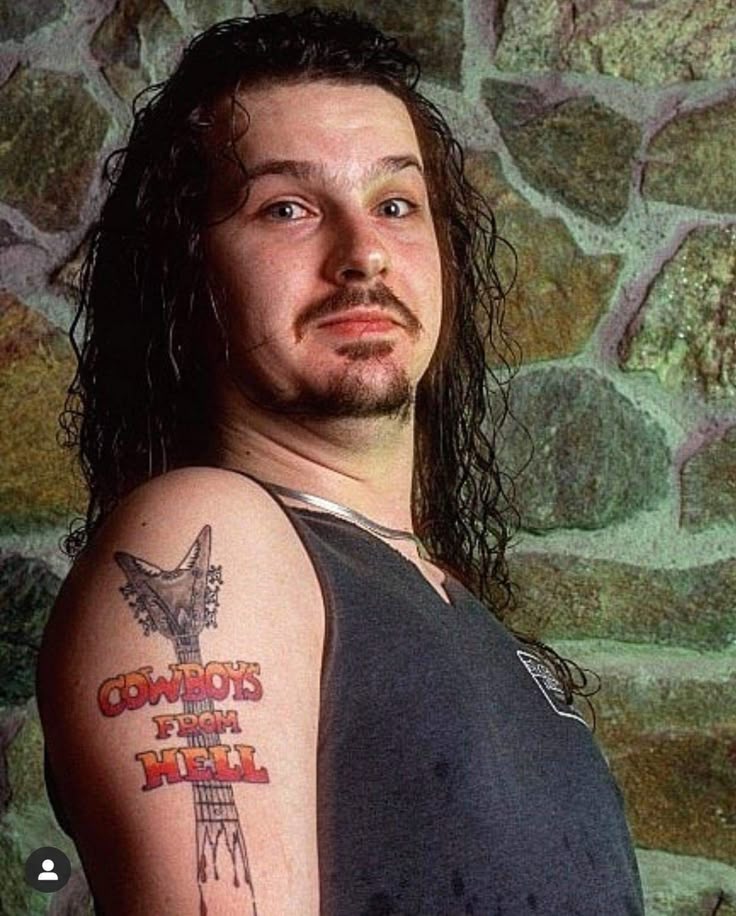
Photographs show other designs around the sleeve, including heavy outlines, dark shading and smaller motifs beside the Cowboys From Hell lettering. A Pantera identity runs through the sleeve, even where the photos don’t show a readable wordmark.
The arm looks like it was filled in over time rather than planned as one symmetrical piece. Some images show a skull clearly; in others, the camera angle, stage lights or film quality obscure the smaller shapes.
The smaller symbols around the sleeve
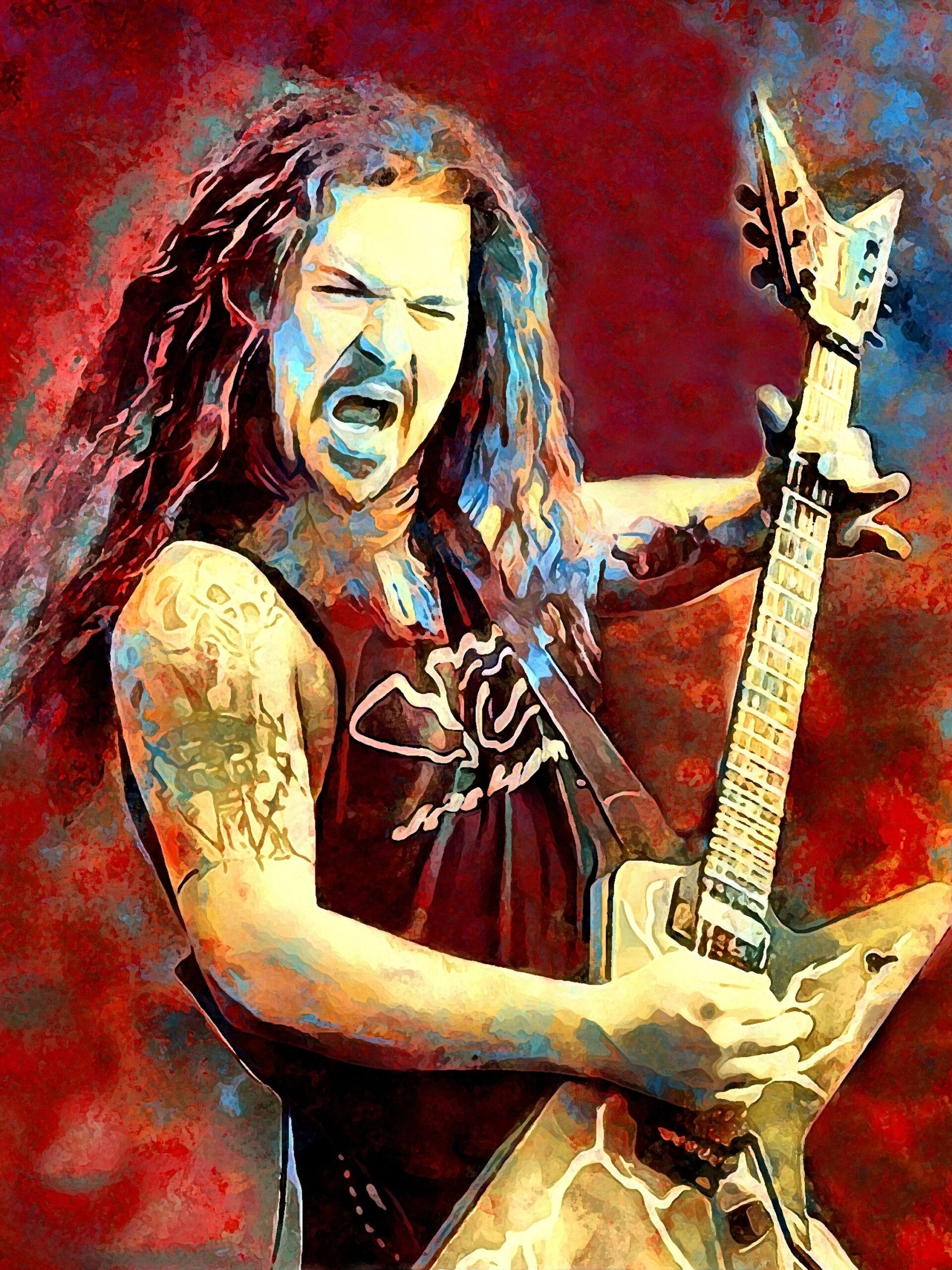
Close-ups show smaller designs around Dimebag’s upper arm and bicep. Some look like stars or pointed emblems, while others blend into the larger skull-and-lettering composition.
The photographs don’t establish what the smaller designs mean. The chest portrait and Cowboys From Hell lettering have clearer stories.
How the tattoos worked with his stage image
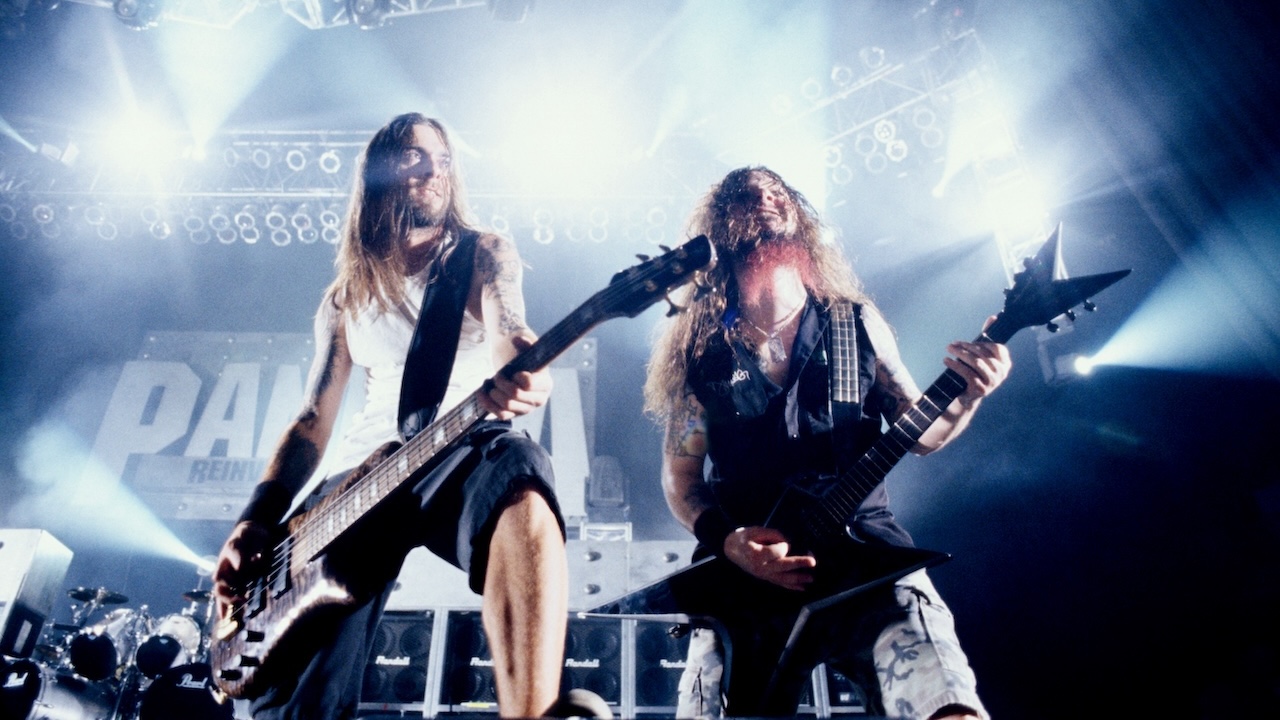
Dimebag’s tattoos appeared with the rest of his familiar look: long hair, red beard, sleeveless shirts and Dean guitars. In performance photos, the arm designs are visible as he plays; the chest portrait shows when his vest opens.
The named pieces point to the music he loved: Ace Frehley, Pantera and Cowboys From Hell. The surrounding skulls, stars and pointed shapes use familiar heavy-metal imagery. The smaller designs are harder to identify, but they sit in the same visual world.
What can be confirmed and what remains unclear
The best-documented pieces are the Ace Frehley portrait on Dimebag’s chest, later signed by Frehley; the large Cowboys From Hell arm tattoo; and a dense sleeve with skulls, lettering, stars and other metal imagery. Photos also show smaller marks around the bicep and forearm, though they don’t always show enough detail to identify them.
That’s enough to describe the main stories without guessing at every shape. One tattoo honours a hero; another connects directly to Pantera. The smaller details complete the sleeve, but their meanings haven’t been confirmed.
The meaning behind Dimebag Darrell’s ink
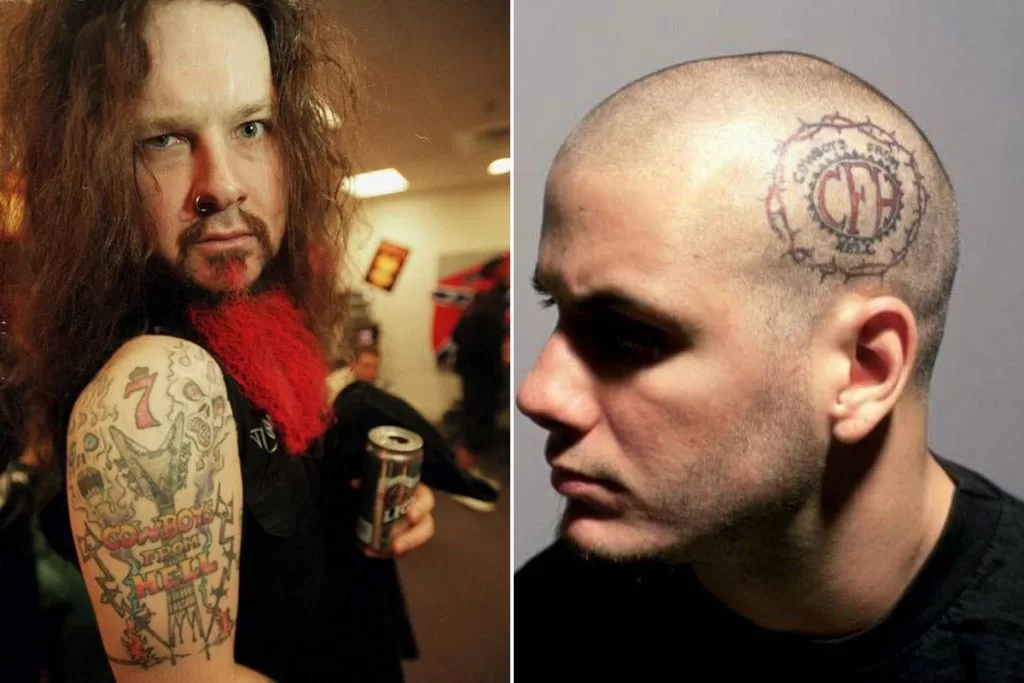
The Ace Frehley portrait points to a guitarist Dimebag admired. The Cowboys From Hell piece connects to Pantera and the album of the same name. Skulls, sharp lines and dark shading fill out the sleeve’s heavy-metal look.
The designs made those influences visible. Dimebag wore the people and music he cared about on his body, in tattoos that appeared in the same photos as his guitars and stage clothes.
Why the designs still matter
Photographs from different years show different parts of the collection. A shape that’s hard to read in one image may be clearer in another, so it helps to separate recognizable pieces from details that remain uncertain.
The tattoos carry more than one kind of meaning. The Ace Frehley portrait is a tribute to a person; Cowboys From Hell refers to the band and album; the skulls and pointed forms draw on heavy-metal imagery. Personal admiration and Pantera’s public identity share the same arm.
The imagery is dark, but the stories behind the best-known pieces are tributes to a guitarist, a band and the music Dimebag loved.
Watch Dimebag talk about his tattoos
In the clip below, Dimebag discusses the designs himself.