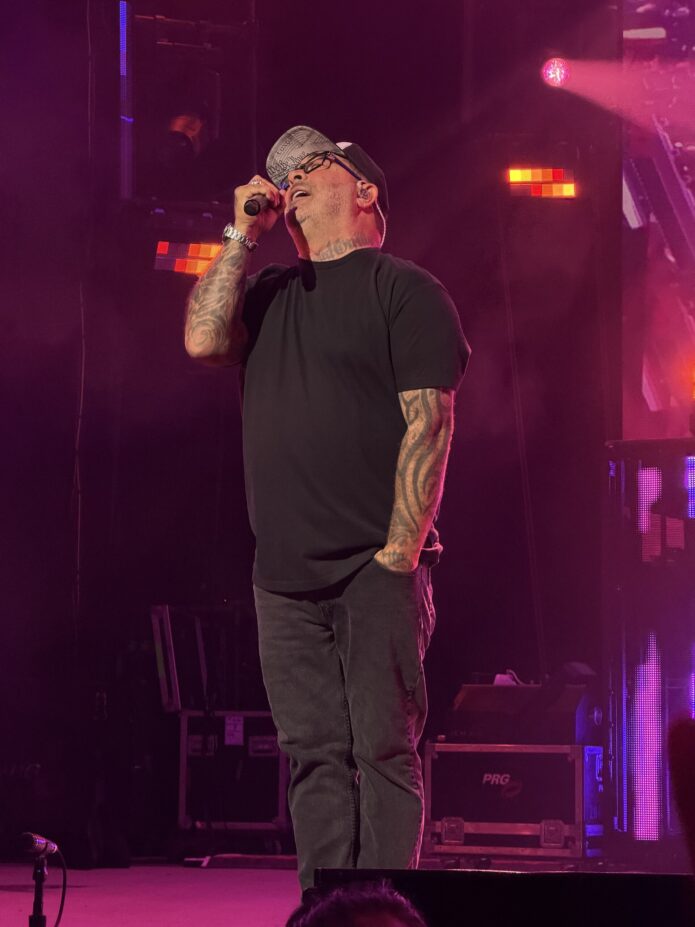
It can be hard to see Aaron Lewis’s tattoos behind a microphone, guitar and baseball cap. Clear views of his arms, hands and neck show dark, heavily shaded work across both arms. The ink looks worn in, not like a fresh sheet of matching designs.
Lewis has discussed his tattoo choices with Tattoo Life. He said the tattoos on his hands form an ornate Tibetan monk skull when he brings his fists together. He prefers black and grey and likes how it ages; small areas of color stand out against it. Concert photos show how those choices look under different lights.
Aaron Lewis has a full, lived-in sleeve look
There isn’t one logo or repeated symbol that defines Lewis’s collection. Both arms are covered from the hands and wrists through the forearms and upper arms. From a distance, most of it reads as dark shading; close-ups show faces, lettering, curves and small areas of color.
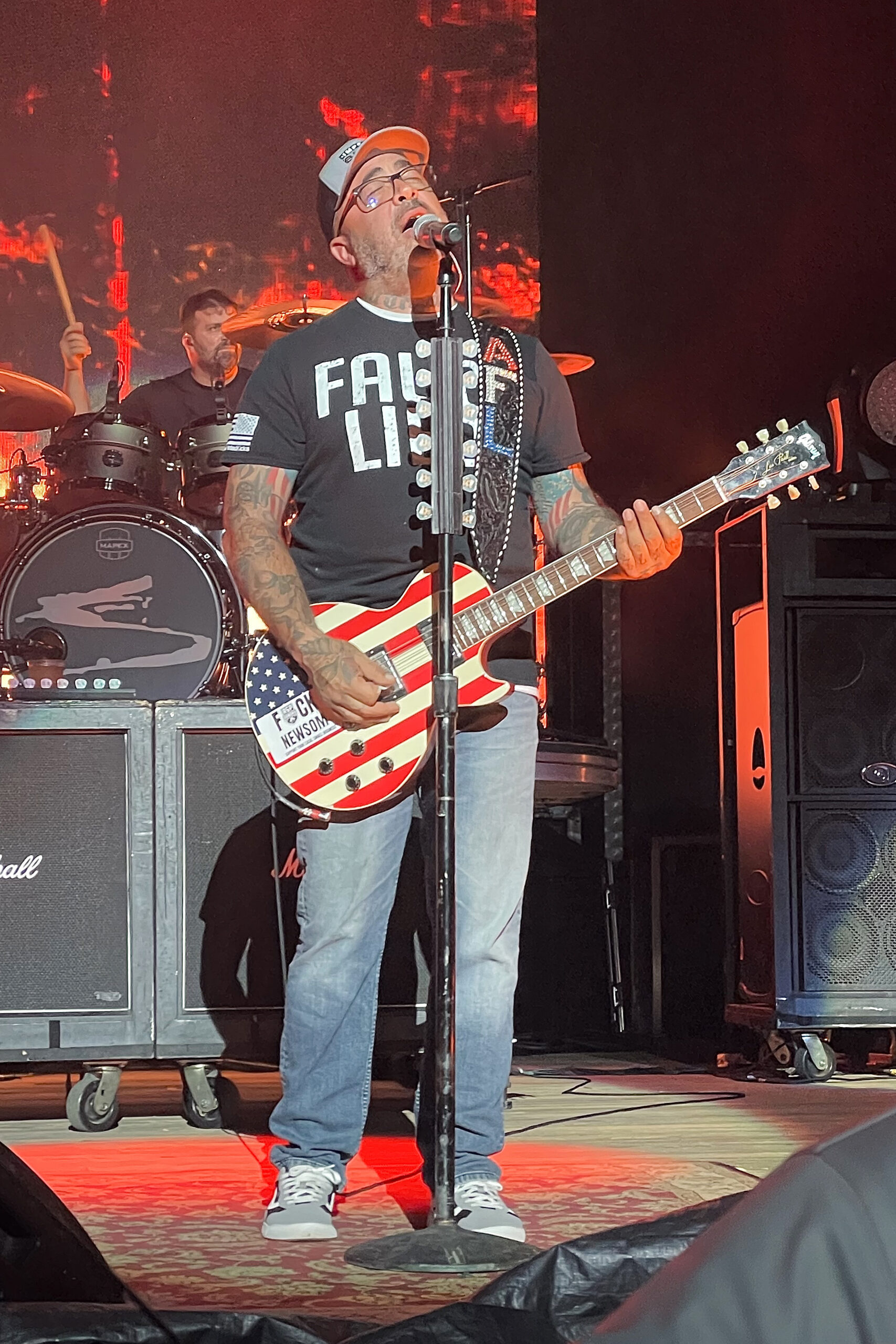
This concert shot shows both arms. His left forearm angles toward the camera, and his other arm crosses the guitar. Red and muted green come through under the stage lights, while dark outlines hold the design together. A shirt sleeve or the guitar can hide parts of the ink, so the same arm looks different in other photos.
The collection looks as if it grew over time, with different pieces beside older work. Lewis has said he likes black ink that weathers over time; the photos show that worn look across both arms.
The black and grey work does most of the heavy lifting
Side light makes Lewis’s preference for black and grey easy to see. The shading gives the arms a smoky look and keeps the designs visible against a busy stage. Color appears in smaller areas, breaking up the darker work.
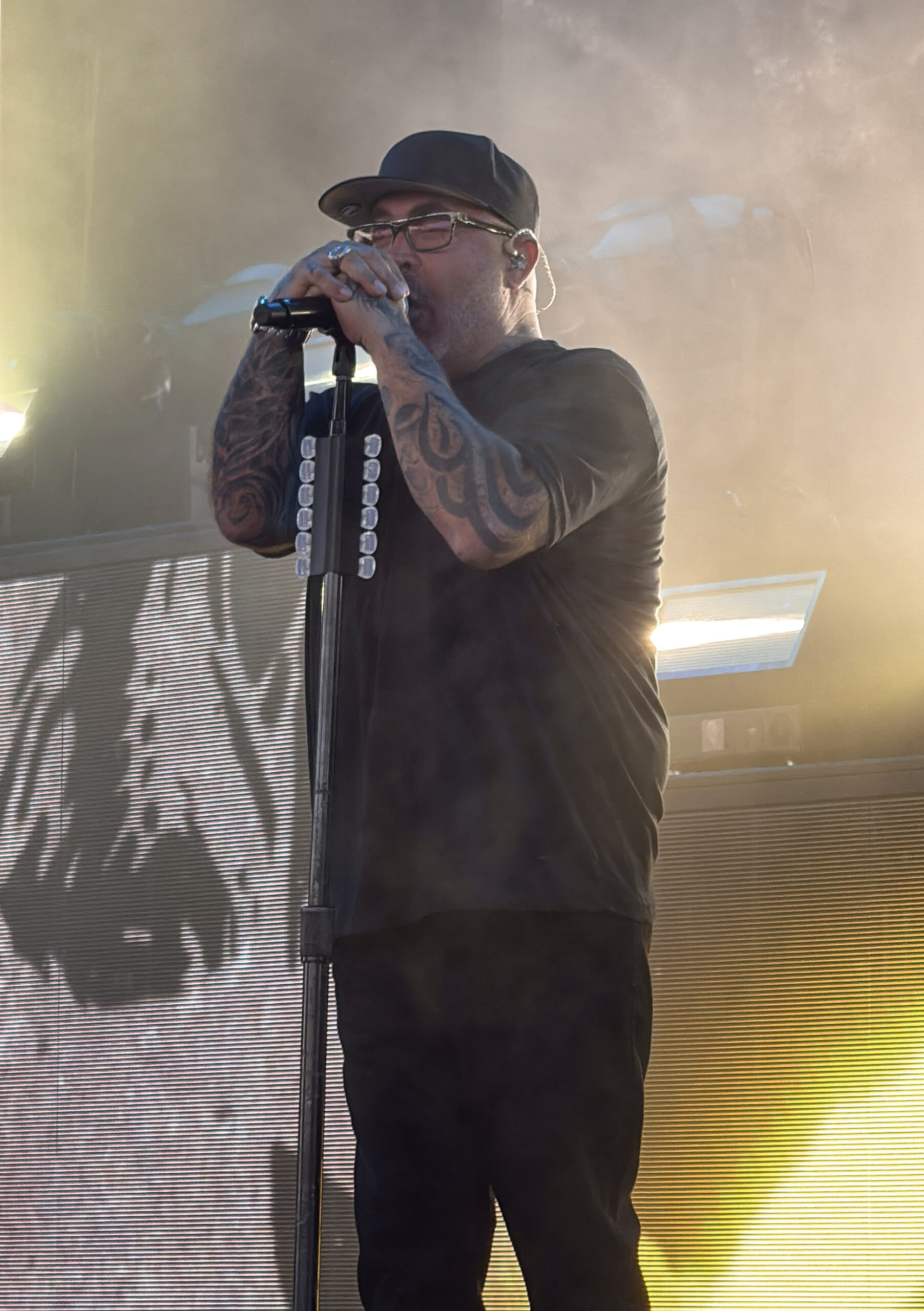
In this close stage shot, the forearms show two different arrangements. The nearer arm has broad dark shapes and areas of open skin; the other uses a different mix of lines and shading. They don’t repeat the same pattern.
Red and blue stand out because most of the surrounding ink is dark. That contrast is the part of Lewis’s color approach he described to Tattoo Life.
His hand tattoo has a story behind it
Lewis told Tattoo Life that the tattoos on his hands form an ornate Tibetan monk skull when he closes his fists. He described the eyes as metal-looking and the carving as intricate. It’s the clearest explanation he has given for a particular design.
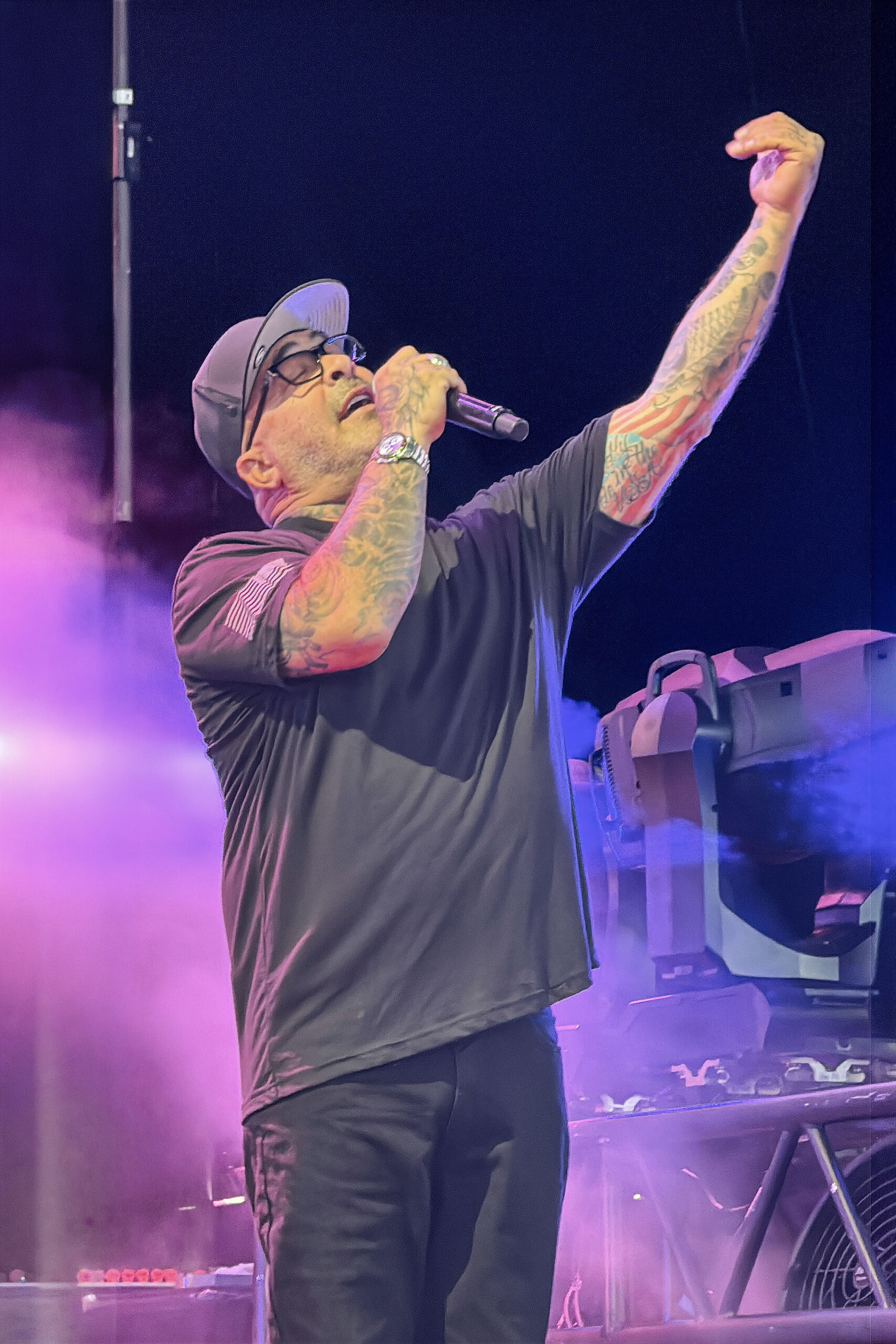
From this side, the microphone, guitar and movement break up the hand design. The ink crosses several fingers, so the skull comes together when he joins his fists. It isn’t a single image sitting on one flat patch of skin.
The hand work shares the collection’s texture and deep shading. Some symbols are hard to identify in photos, but the overall look is closer to worn black ink than to bright, sticker-like designs.
The neck lettering gives the collection a harder edge
Lewis has prominent lettering high on his neck. Its exact reading isn’t clear in every photo; light and camera angle change what shows. It sits above a T-shirt collar and is visible in many public photos.

This older photo gives a clear view of the neck lettering and the arm beside it. The lettering is bold, while the nearby arm designs have softer shapes and heavier shading. They look quite different in the same frame.
Onstage, the tattoos move with Lewis’s playing. He grips a microphone or guitar and shifts his arms, so designs that sit close together can appear in separate sections as he performs.
Different stage photos reveal different parts of the sleeves
Photos from different years and angles fill in more of the layout. One shows the outside of an arm, another the inner forearm or hand. Together, they show where the ink sits without explaining what every mark means to him.
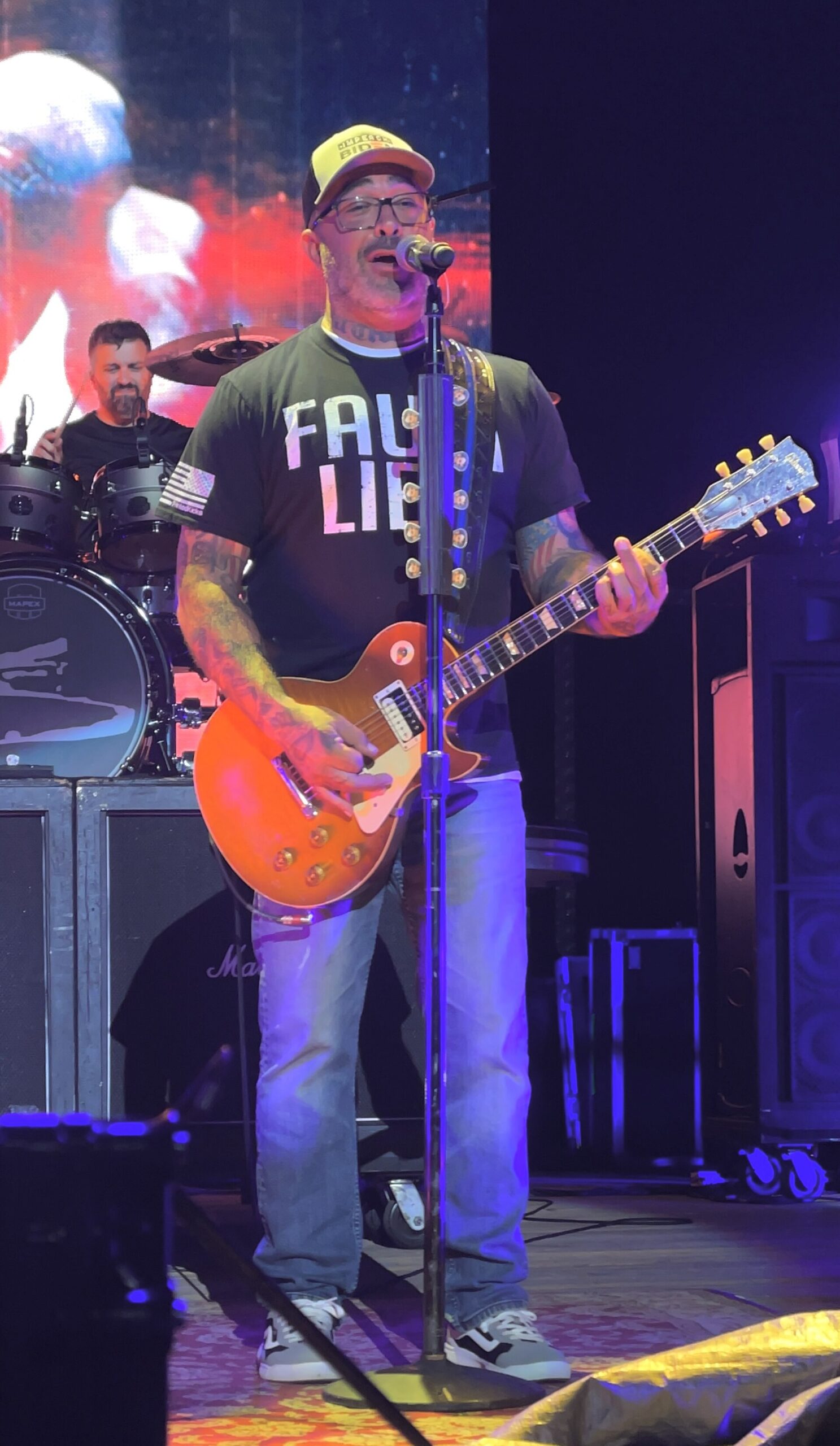
In this front view, both arms are easier to compare, while the guitar covers part of his torso. The warmer light brings out greens, reds and browns that are less visible in the red-lit shot. The same tattoo can look almost black in one photo and more colorful in another.
The sleeves aren’t identical. They appear to have grown over time around the way Lewis wears and uses his arms. Perspective matters too: one side can look busier because it’s closer to the lens, while the light makes the other look smoother.
What Aaron Lewis has actually confirmed
Lewis has explained the hand design and his preference for black and grey in Tattoo Life. He also discussed a full backpiece and plans for more work on his back. Those points are on record; the meaning of every arm tattoo isn’t.
He hasn’t published an explanation for every piece. The photos show tattoos on both arms, his hands and neck, mostly in black and grey with some color. A fan’s interpretation may be interesting, but it shouldn’t be presented as Lewis’s own account without a source.
The worn shading and stage photos have some overlap with other heavily tattooed rock musicians. Compare Lewis’s work with our James Hetfield tattoos feature; Lewis’s ink is spread across both arms and hands.
Why the ink works so well onstage
The sleeves stay visible under bright stage lights, and the neck lettering shows above his collar. The hand tattoo changes shape when he closes his fists, including when he grips a microphone or guitar.
His tattoos are part of his everyday look too. Photos of Lewis with an acoustic guitar show the same worn shading; red or purple concert lights make the dark ink stand out more.
The quick version
Lewis has tattoos across both arms, his hands and neck. He told Tattoo Life that his hand tattoos come together as a Tibetan monk skull and said he favors black and grey because of how it ages. Photos show dark sleeves with some color, though he hasn’t confirmed a meaning for every design.
The interview below has Lewis talking about his tattoos. The close-ups help show how the hand design and sleeves look from different angles.