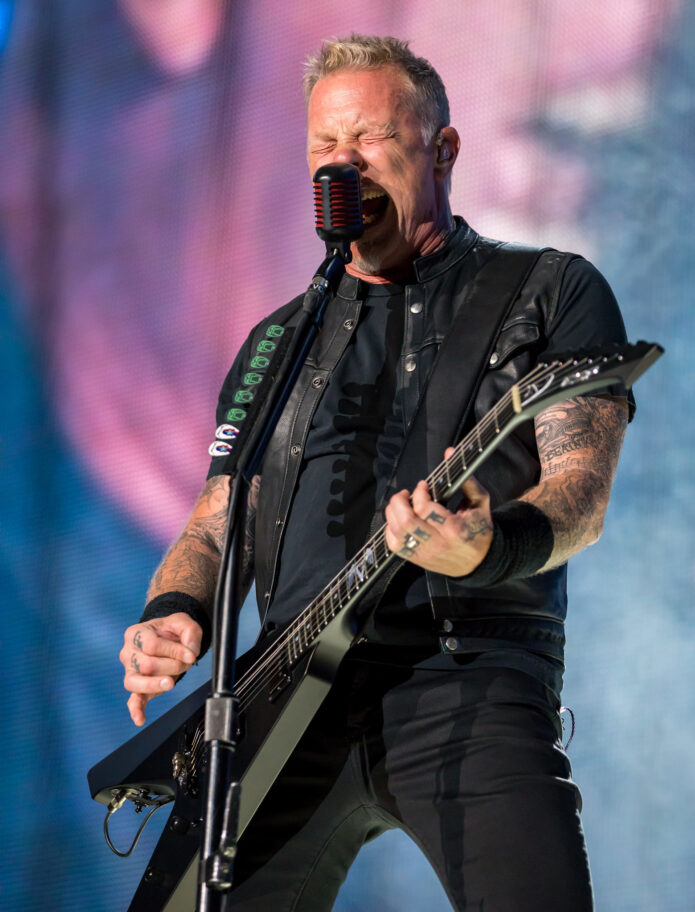
James Hetfield’s tattoos stand out as soon as he steps onstage in a sleeveless shirt. The Metallica frontman has dense ink on both arms, plus tattoos on his hands, chest and neck. The coverage is extensive, but the pieces have a lived-in look rather than one matched design.
In an interview, Hetfield spoke about starting tattoos later than many people expect and how the pieces came together. The photos fill in the visual side: where the tattoos sit and how they look under stage lights. They don’t settle the meaning of every small mark.
James Hetfield’s tattooed arms at a glance

The clear stage photo shows how much ink covers his arms. Black-and-grey tattoos run from the shoulders toward the wrists, close enough to look like sleeves, though there are breaks of skin. Separate designs overlap but still keep their own definition.
The arms aren’t identical, but the shading and texture give them a similar treatment: dark outlines, soft grey and old-school rock imagery. Exact objects can be hard to name when a guitar or microphone blocks part of his skin, so a broad visual description is more reliable.
Ink continues over his hands, where letters and symbols cross the fingers and backs. Wide concert shots often miss those details. A sharp original photo helps, especially since movement can blur a mark while he plays.
The dense sleeve work on both arms

From this angle, broad areas of shading sit beside tight linework, and the designs seem to wrap around the arms rather than stay on the front. You can see the coverage when he raises a hand or holds the microphone.
Some parts look like traditional images, while others are sketchier and crowded. The photos don’t always give enough detail to identify individual shapes. A careful description sticks to the dark graphic forms, lettering, rounded shapes and heavy shading, as well as the amount of arm coverage.
Black clothes make the ink stand out; concert lights change how it looks. Warm light picks out the skin between tattoos, while cooler light makes the dark sections feel heavier. The outlines and close spacing keep the overall style recognizable.
Chest and shoulder tattoos

With a vest or wide-neck shirt, you can see that the ink extends beyond his arms. A large dark chest design meets the shoulder pieces, filling more of his upper body in a waist-up shot.
Straps, guitars and shadows cover parts of the chest tattoo in many pictures. Closer views show its size: it sits high and spreads toward the shoulders, where it meets the sleeves.
A press portrait can show his face while keeping the tattoos covered. The performance photos are more useful for seeing how the chest, shoulder and upper-arm pieces sit together as he moves onstage.
Neck tattoos, lettering and hand details
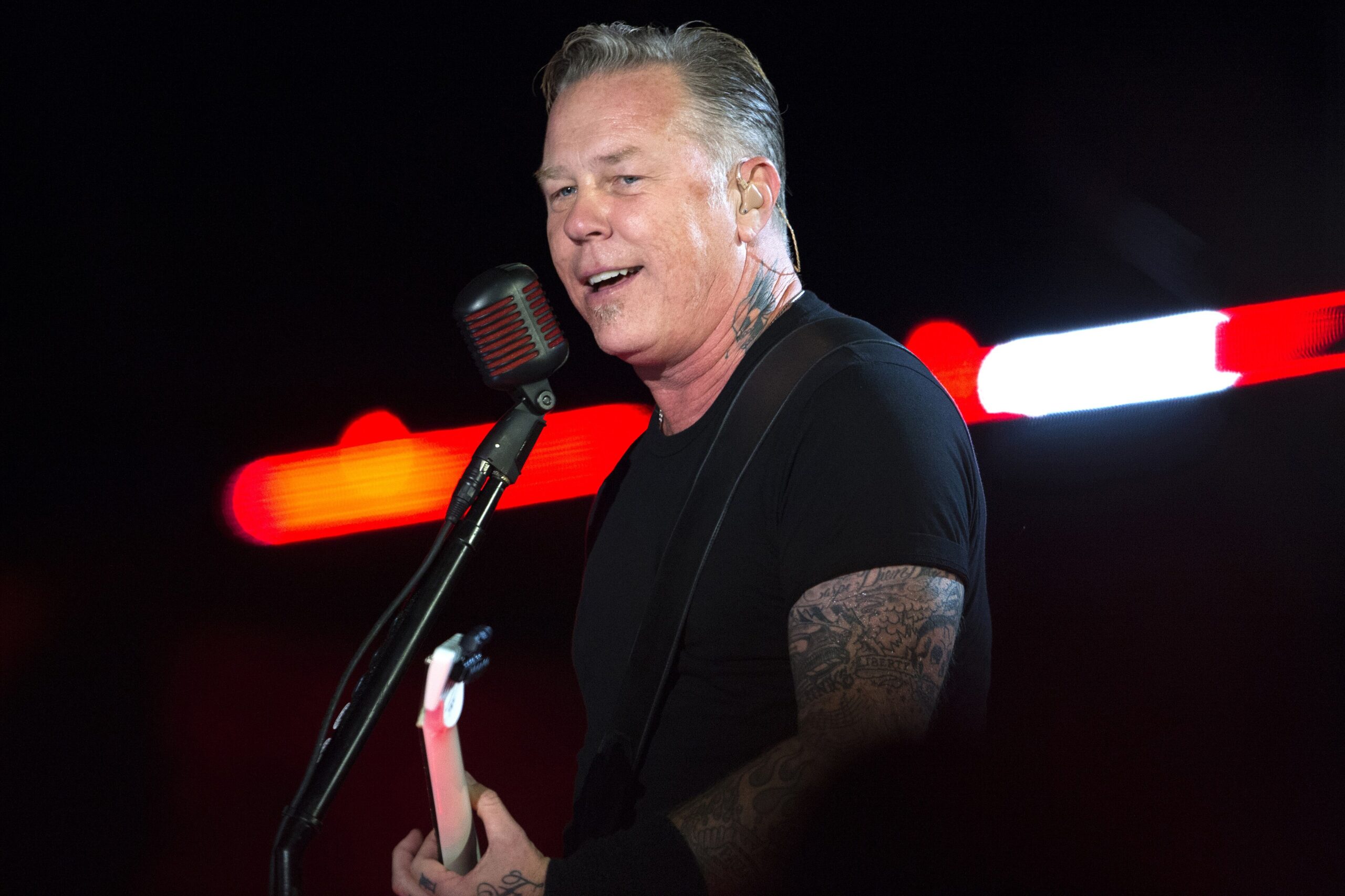
The neck ink is easier to see because it sits above the shirt line. Here, dark pointed shapes run up the side of his neck and frame his face, especially against a black outfit.
Lettering appears on his arms and hands. Some marks could be short words or initials, but they aren’t readable from every angle. Hetfield has talked publicly about his tattoos; unless a phrase is clear or he has identified it, it’s better to describe it as lettering and leave the wording open.
The finger tattoos are small beside the sleeves, but they change the look of his hands around a microphone or guitar pick. They’re also a reminder that one photo won’t show every mark: hands turn away, disappear under a wristband or sit behind an instrument.
How the ink reads under concert lights
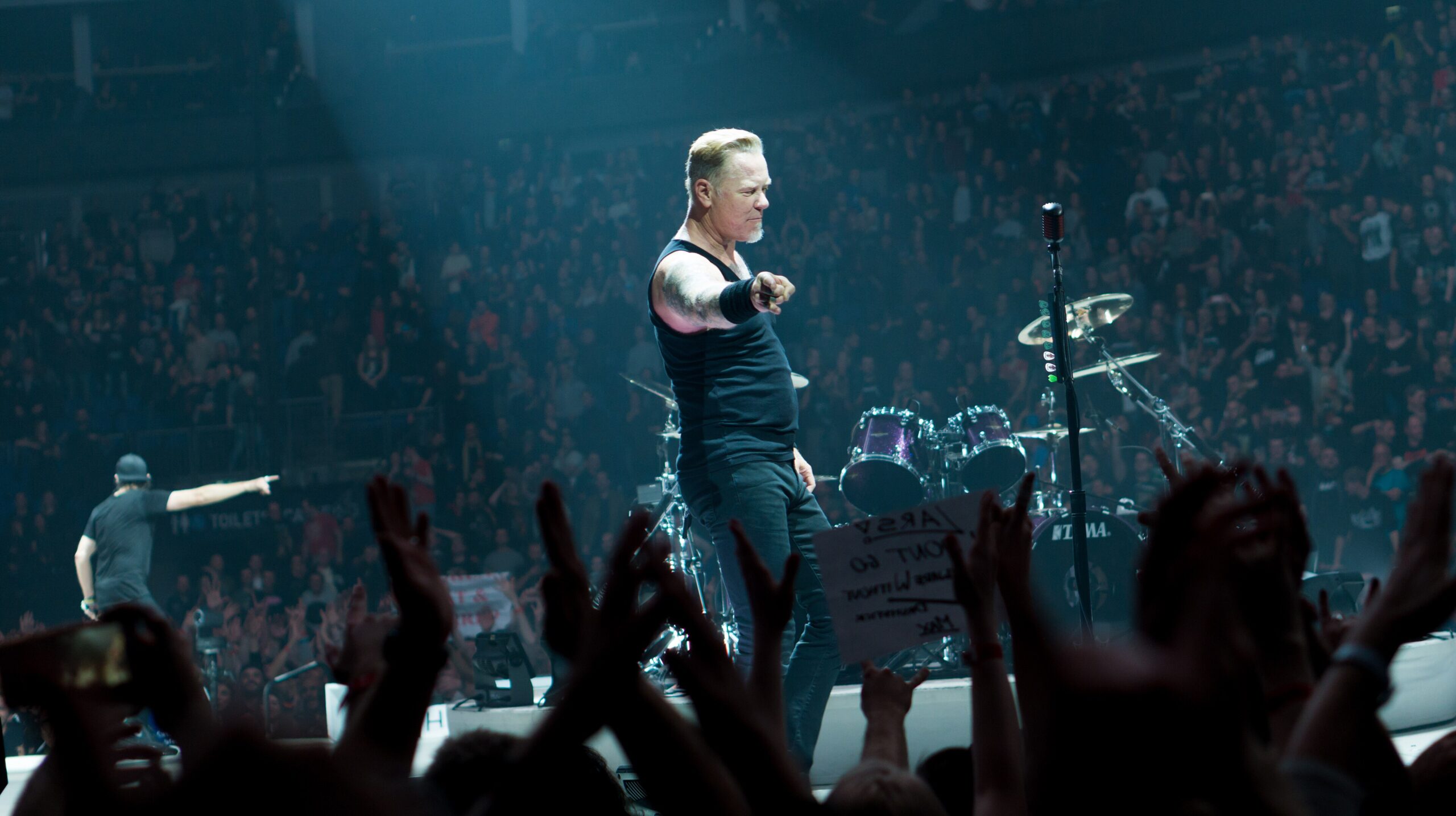
A wide shot can’t show a tiny symbol clearly, but it does show the overall effect. In front of the crowd, his arm tattoos become part of his outline against a black vest. That contrast helps the ink read from farther away.
Every pose reveals something different: an arm overhead shows the outside of the sleeve, a guitar across the body hides part of the chest and forearm, while a close microphone shot catches the neck and hand lettering. Together, the photos tell more than any single frame.
Compressed images can flatten the shading into a dark patch. A sharp original photo reveals lighter grey, gaps and changes in linework. Those differences matter if you’re studying the designs or using them as a reference.
A little context from the interview
The interview clip below lets Hetfield explain the decision himself. Celebrity tattoo stories often get simplified and repeated; hearing him talk is a better source than a copied fan caption.
In the clip, Hetfield says he started getting tattoos later in life, around 40. That places the collection at a particular point in his career, rather than at the start of Metallica. The tattoos reflect a decision he made then; they weren’t always part of his stage look.
That timing doesn’t mean every tattoo has a neat explanation. The visible work includes lettering, possible family references and larger rock or biker-style imagery, but not every meaning has been documented in one place. Keep what Hetfield has explained separate from what viewers might infer.
Why the full look works onstage
The collection is easy to recognize because the ink covers his arms, chest, neck and hands. The lines carry from one area to the next, even when individual designs are hard to identify.
The tattoos change with his playing, too. A portrait hides much of the ink; a Metallica stage photo shows it moving as he plays. The guitar, microphone, sleeveless shirt and dark ink all appear together in the frame.
For a different look from another metal guitarist, see our Alexi Laiho tattoos feature. Both use visible arm tattoos as part of their public image, but their linework, placement and stage looks differ.
The quick version
Hetfield has substantial, visible ink across both arms, along with chest, neck and hand tattoos. The work is dark and heavily shaded, with lettering and small marks mixed into larger designs. Photos show detail on the arms and neck; the interview adds context about when he started getting tattoos.
Start with clear stage photos if you’re studying the designs. Wide shots show how the tattoos fit his performance; sharper photos show the lines and placement. Leave uncertain meanings open. The tattoos don’t need invented stories to be interesting.
3 thoughts on “James Hetfield Tattoos: Sleeve, Neck and Hand Ink”