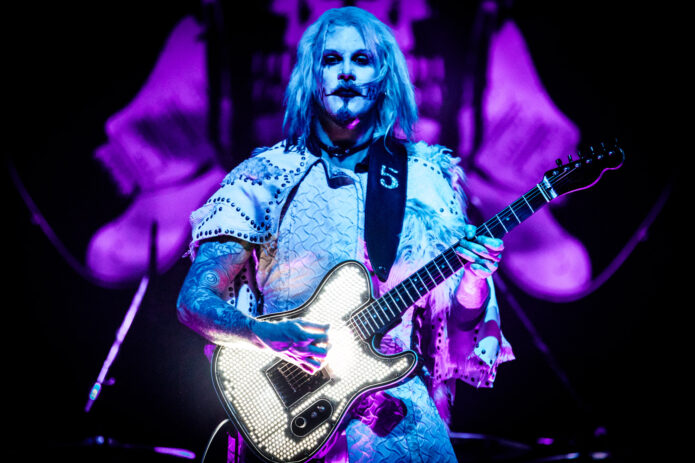
John 5’s tattoos fit the theatrical look he brings to the stage. The Rob Zombie guitarist has bold, densely packed work on both arms, still visible when the costumes change. Clear concert photos show layered sleeves, color and smaller details.
The costume, makeup and guitars can change from show to show; the tattoos remain a familiar part of his look. The photos make it possible to study the sleeves’ scale and how the designs wrap around the forearms, without guessing what every symbol means.
John 5 has appeared in coverage of musicians and tattoo culture, including the Musical Ink project. Loudwire described his arm work as Japanese-inspired. That gives some context, but the photos are still the best guide to what’s visible. I’ll stick to the shapes and placement unless John 5 has explained a meaning himself.
John 5’s tattooed arms at a glance
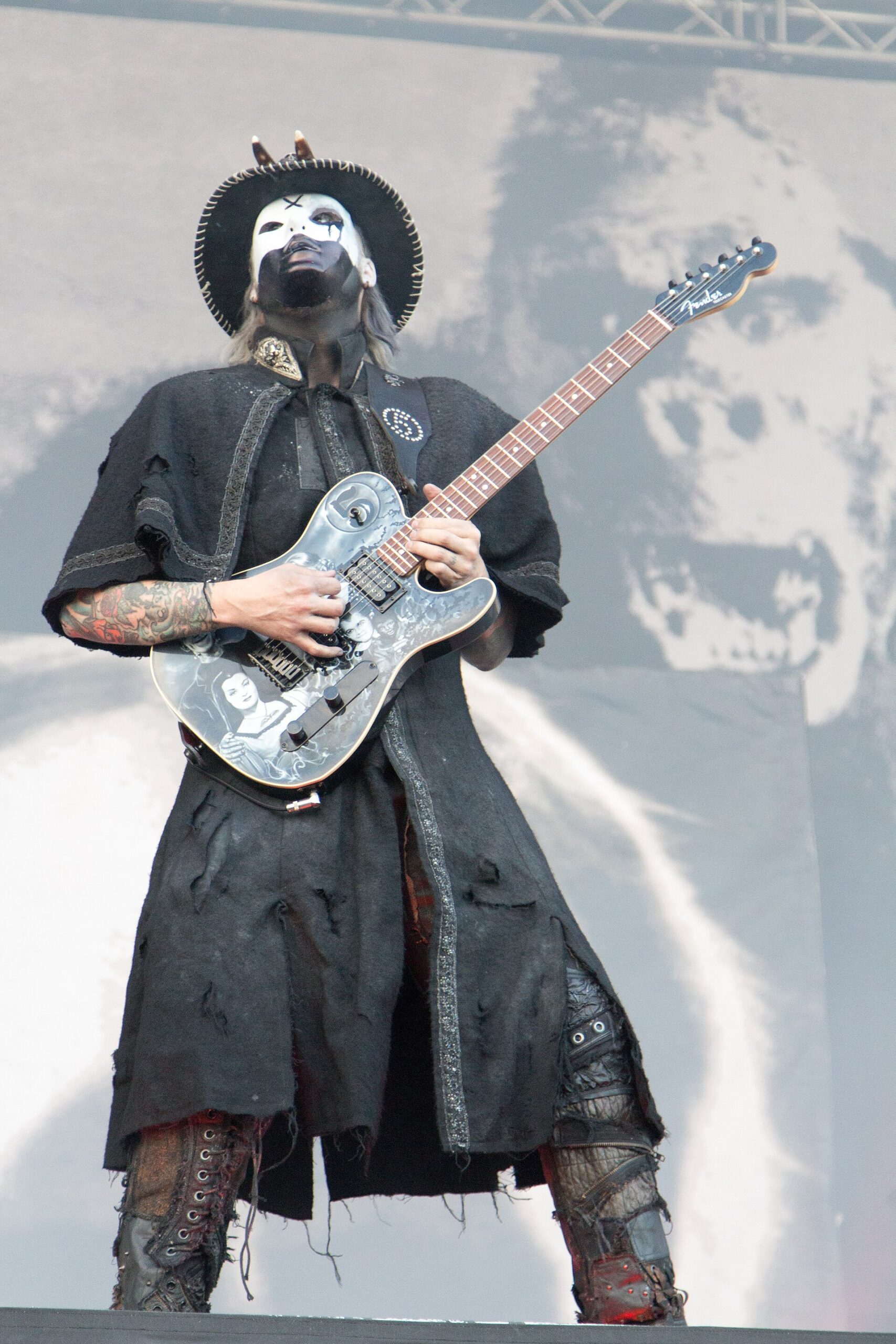
The ink covers both forearms and reaches toward the upper arms, giving them a sleeve-like look. A jacket or guitar can hide part of the view, but the larger shapes still read from the crowd. Closer photos bring out smaller marks and how one section meets the next.
This arm has a strong stage look: blocks of color, dark outlines and designs set close together. There isn’t much bare skin between them, so the sleeve looks complete from a distance. Up close, the overlapping edges give it more detail.
The guitar covers part of the lower arms in some poses, but the tattoos continue around the sections still in view. Turn his arm or change the angle and different parts of the same sleeve appear.
The Japanese-inspired arm work
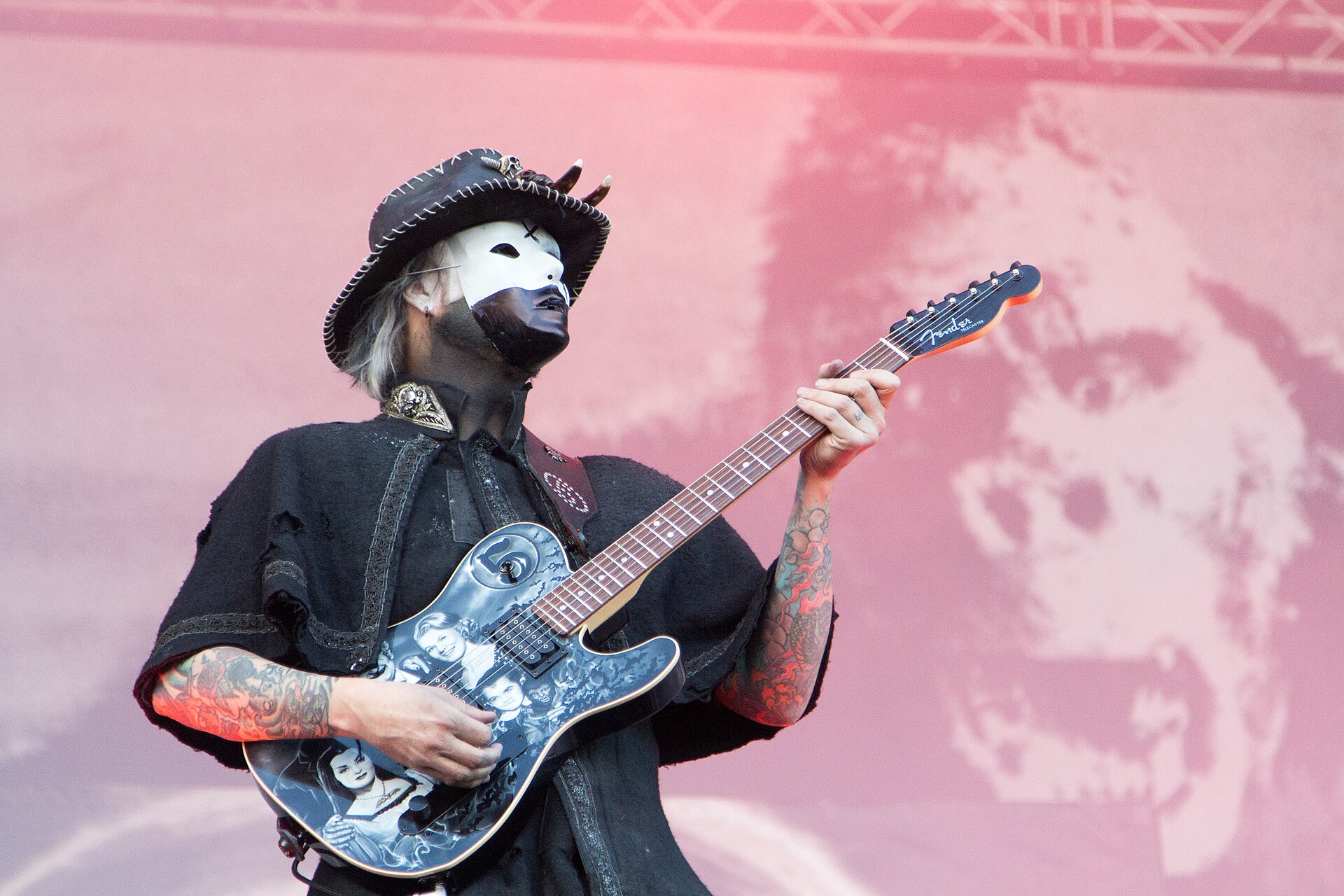
This horizontal close-up shows the sleeves more clearly. Both forearms are exposed, with large flowing shapes alongside smaller filler details. Reds, blues and dark shading sit close together, giving the work a dense, illustrated look.
“Japanese-inspired” describes the way the shapes flow around the arm rather than stopping at a flat edge. It doesn’t establish a traditional meaning for each mark; it describes the visual style: movement, close coverage and a planned layout.
The arm nearest the camera is sharp enough to show individual edges against the pink stage backdrop. His other arm is turned partly away, a reminder that one front-facing photo can’t show every side. The outer arm, inner arm and elbow each look different as he moves.
The red areas look brighter under stage lights, while black shading gives the arm weight. Cooler light makes the dark sections heavier; in daylight, the colors might read more evenly. The outlines keep the sleeve readable in both settings.
What the wider stage angle shows
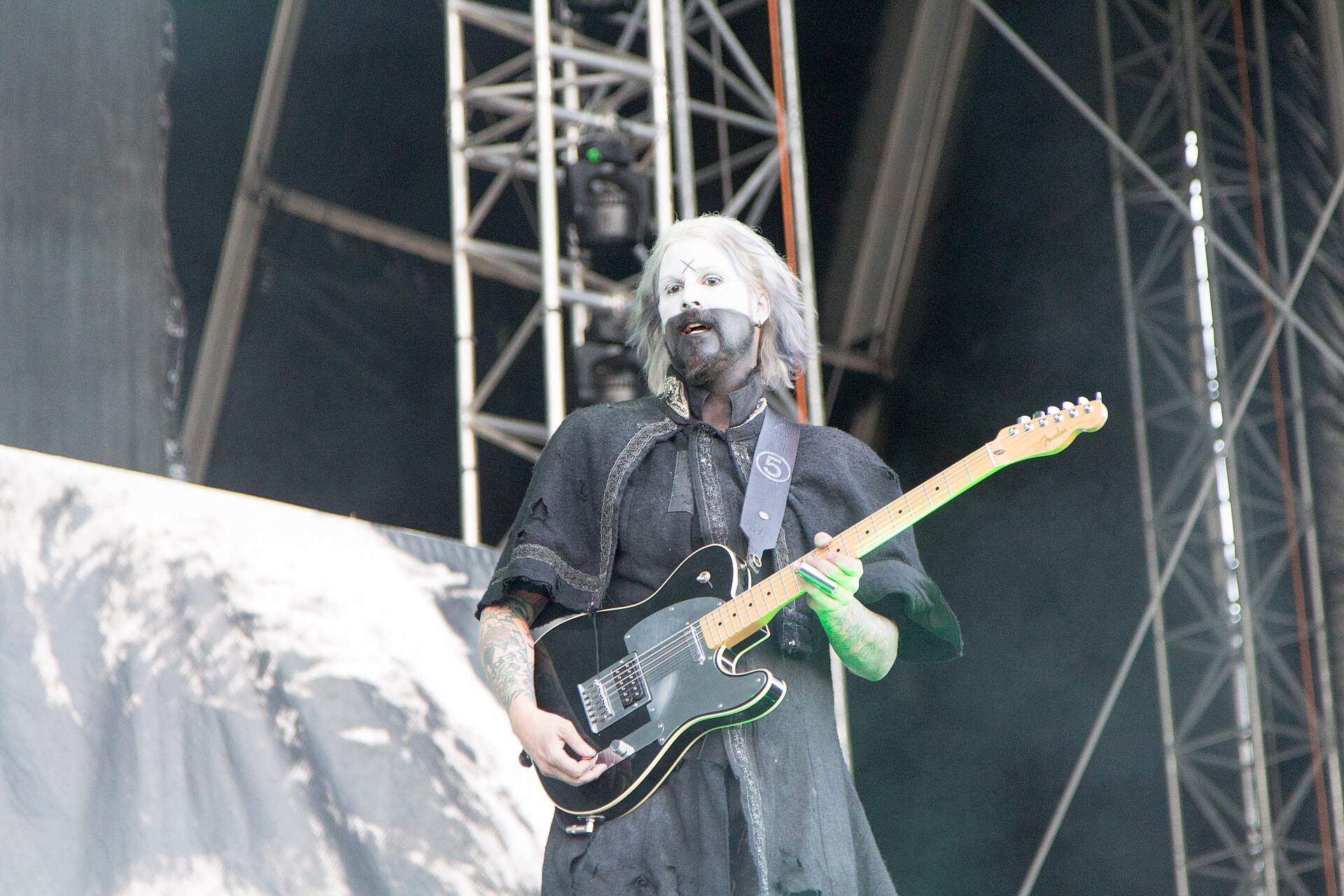
The wider photo shows the tattoos against his black costume. His right arm is more open in this pose, while the guitar body blocks part of the other. That change in position shows how movement affects what a photo can reveal.
This image doesn’t identify every design, but it does show the scale of the arm work and how central it is to John 5’s stage look. The tattoos are on display whenever he plays in short sleeves or a sleeveless costume.
A second front-facing photo would add little here. This angle shows more of his body position, the sleeve’s outline and how the ink sits beside the guitar and strap.
Dense forearm detail under the mask
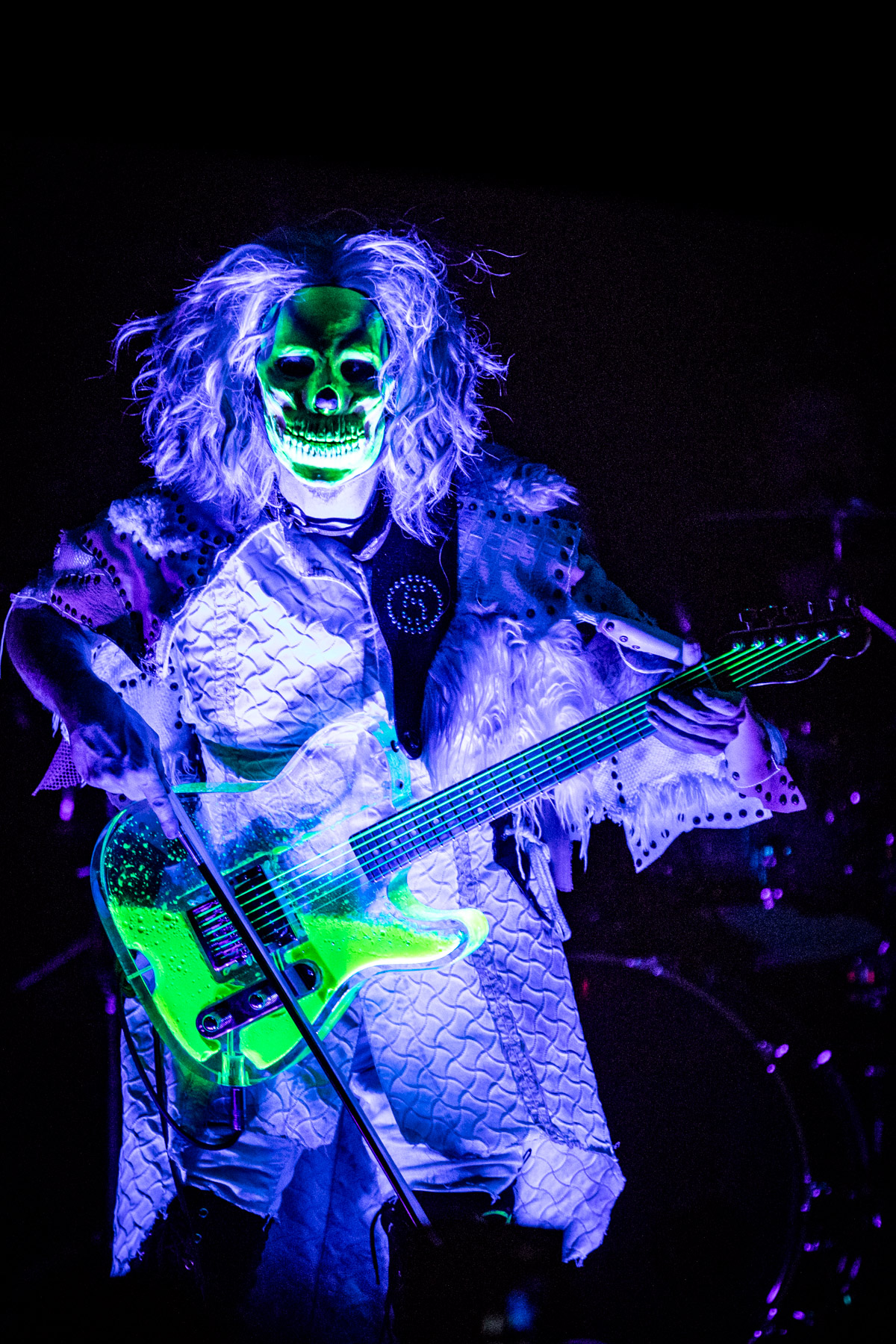
The mask changes the mood of the photo, but the sleeve remains visible. Under blue and green light, the forearm reads as a dense patchwork of shapes. The colors are harder to separate than in the daylight shots, while the outline stays clear.
With his arm angled toward the guitar, the tattoos follow its curve instead of sitting like a flat panel. Dark shading gathers around the elbow and forearm, with brighter pieces breaking through. The light exaggerates some areas but leaves the overall layout visible.
John 5’s stage character is theatrical and often strange. The tattoos add detail without competing with the makeup; even when his face is hidden, the exposed sleeve helps identify him.
The Halloween stage look

This darker, busier image adds another setting. Purple light and stage props give the scene a Halloween feel, while the tattooed arm remains visible at the left edge. The ink works alongside the costume, but it still belongs to the person beneath the character.
A spooky stage photo doesn’t prove that every tattoo has a horror theme. It shows the arm work beside skull imagery, masks and theatrical props. The sleeve’s movement and texture make it fit the scene without confirming a meaning for each piece.
This image works best alongside the sharper close-ups. It isn’t detailed enough for studying small lines, but it shows how the guitar, pose and visible coverage come together in the full look.
A little context from the interview and book coverage
Musical Ink and Loudwire offer some context around the arm work, including its Japanese-inspired look. That still doesn’t confirm the meaning of each piece. Unless John 5 has named a symbol, describe what it looks like rather than fill in a backstory.
The photos consistently show heavy coverage on both arms, bold color and designs that move with the body. Those details are easy to verify. Claims about a specific character, date or meaning need a stronger source than a fan caption or a guess from one concert photo.
John 5 has played with Marilyn Manson, Rob Zombie and other artists, and his stage look has changed across those periods. Photos often show the tattoos alongside makeup and costumes, but the ink is its own part of the picture.
Why the full look works onstage
At a distance, the arms read as dark sleeve shapes. Closer in, the color and larger figures separate; a sharp photo shows smaller outlines and how the designs wrap around the arm.
A useful gallery should vary the view: the front of an arm, its outer edge and the sleeve under different light all add something. Together, those views give a fuller picture without suggesting one photo shows the whole collection.
If you’re using the photos for tattoo ideas, study how the designs flow from one section to the next. The close placement and similar visual weight help the sleeves feel connected.
The quick version
John 5 has large, visible tattoos on both arms, with bold color, dark shading and a Japanese-inspired flow. The stage clothes and makeup add to the drama, while the arm work remains clear in both masked and unmasked photos.
The photos show extensive ink across both arms and make it a clear part of his public image. They don’t confirm the meaning of every symbol. For another musician whose tattoos are easy to see onstage, read our James Hetfield tattoos feature.
Watch John 5 talk about his career and stage life:
2 thoughts on “John 5 Tattoos: Japanese-Inspired Sleeves and Stage Ink”