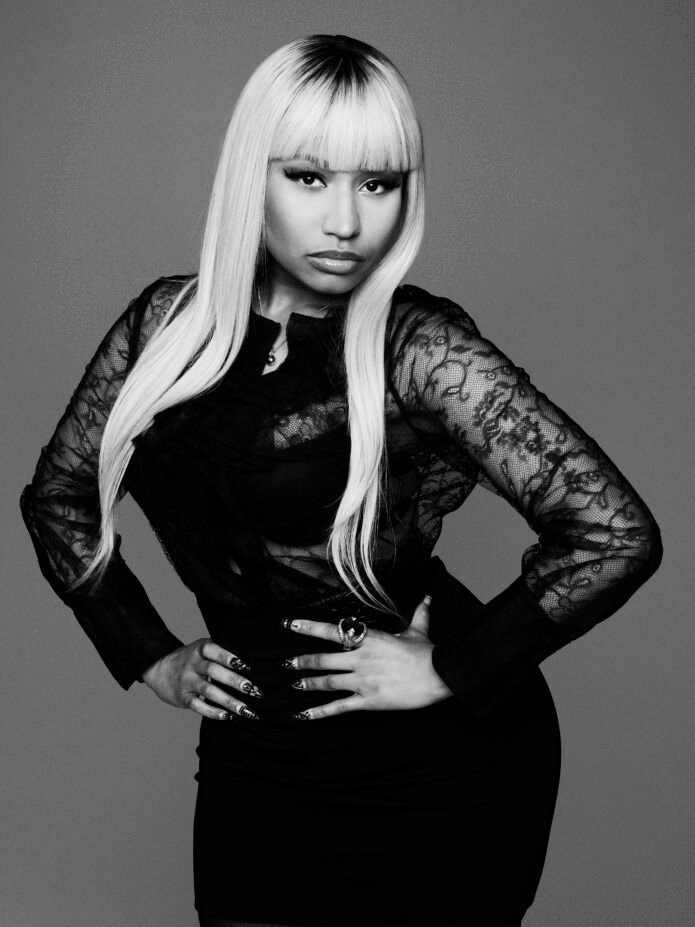
Nicki Minaj’s Chinese tattoo is easy to recognize but more complicated to explain. Six traditional characters, 上帝與你常在, run down her left upper arm. English coverage gives two common translations: “God is always with you” and “God is always with me.”
It is often described as Minaj’s first tattoo, which she got at about sixteen. Later reports say she regretted choosing such a visible spot; she had first considered the back of her neck. Language specialists have also questioned some of the character forms. The phrase is easy to identify, but its history and lettering need care.
The six Chinese characters form the tattoo’s central message
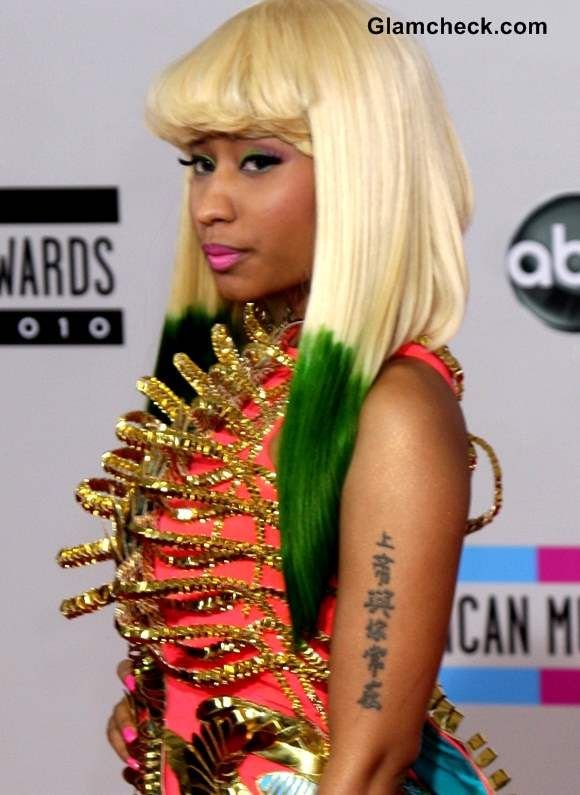
The six characters 上帝與你常在 anchor the design. Cheng & Tsui transliterates them as Shàngdì yǔ nǐ cháng zài and explains the common Christian reading. 上帝 can mean God or a supreme deity; the remaining characters convey being with someone and staying present.
English sources render that last idea in slightly different ways. Capital XTRA uses “God is always with you,”; other references say “God is always with me.” “You” and “me” reflect different English renderings, not different characters. It helps to give both common readings while keeping the original visible.
The vertical arrangement makes the phrase easy to recognize. It is not a single-character mark or a textless symbol. All six characters and their order matter; Chinese writing is not a set of interchangeable English initials.
This tattoo also shows why character tattoos need a language check. Cheng & Tsui and Sinosplice have analyzed the writing instead of repeating an online translation. Their analyses support the intended blessing while pointing out that some strokes are inaccurate.
The vertical writing sits on Minaj’s left upper arm
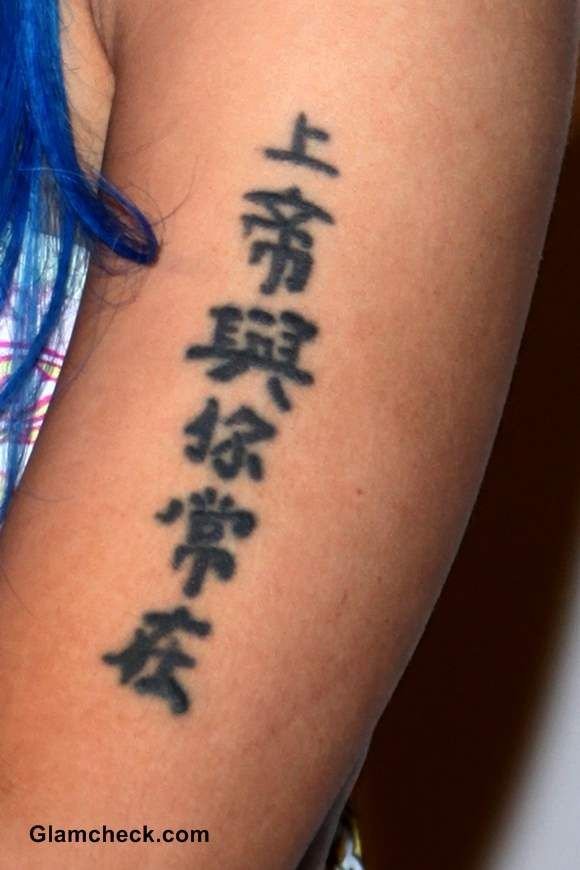
Minaj’s Chinese writing runs down her left upper arm and bicep. Capital XTRA and photo coverage place it there; Glamcheck describes it as being on the upper part of the limb. The arm is visible in sleeveless performances and red-carpet photos, which helped make the design familiar early in her career.
Steal Her Style reports that Minaj considered the back of her neck before choosing her arm. That made the tattoo easier for photographers and fans to see, but it also turned a teenage decision into a permanent part of her public image.
The characters follow the curve of her arm in a narrow vertical column, not a horizontal banner. The bicep bends as she turns, so distant photos can shorten the column or blur neighboring characters. Close-ups are better for reading the full phrase.
Her later regret was about placement, not necessarily meaning. Reports say she wished the tattoo were somewhere less visible, while still identifying the phrase as a religious blessing. That’s more precise than saying she hates the design.
Traditional forms and uneven lettering complicate the translation
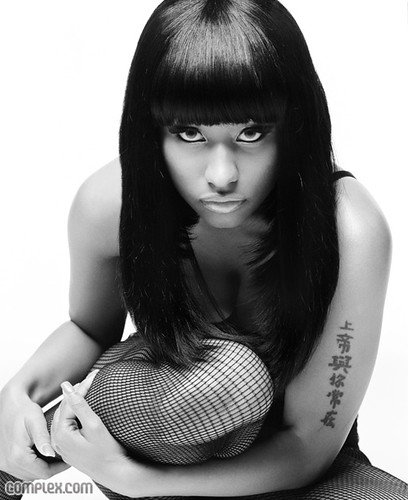
The tattoo uses traditional Chinese forms, including 與 rather than the simplified 与. Sinosplice examines the characters individually and says some are uneven or missing strokes. Cheng & Tsui compares them with standard forms and notes that the intended sentence can still be understood, even if the calligraphy isn’t fully accurate.
That distinction matters: the translation comes from reading the sequence as a sentence and comparing it with language analyses, not guessing from appearance alone. The phrase conveys a familiar blessing, but the handwriting may not meet a native calligrapher’s standard.
For anyone considering a Chinese-script tattoo, check the wording with a fluent reader before copying it. A design can matter to its wearer and still contain an awkward form or nonstandard stroke. Criticism of the lettering doesn’t prove Minaj had no intention behind it.
Minaj’s Chinese tattoo also appears in discussions of her music persona. Some later coverage connects it to her lyrics and public image, but the tattoo predates those references. She chose it as a teenager, and it stayed visible as her music and styling changed. It is the same set of characters in each photo.
What can be stated confidently about the Chinese tattoo
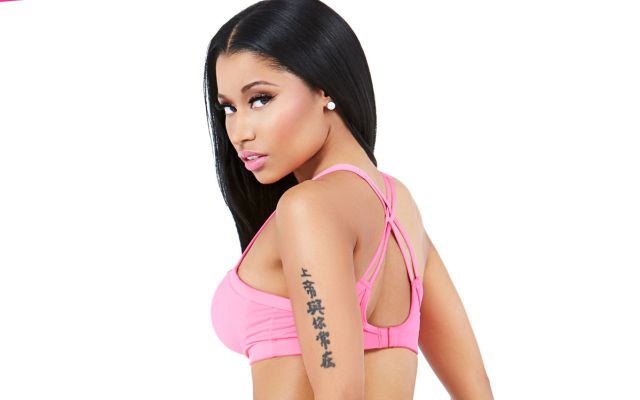
The clearest description is straightforward: Minaj has a vertical, six-character Chinese tattoo on her left upper arm, commonly read as a blessing that God is always with someone. She got it as a teenager, considered a different placement and later regretted how visible the arm location was. Language analyses say some characters look rough or nonstandard.
The real interest lies in the tattoo’s context: the wording, placement and calligraphy all matter. Show the original characters beside any English translation, and label that translation as a reported reading. That keeps the guide accurate without turning a teenage tattoo decision into a claim about Minaj’s private faith.
2 thoughts on “Nicki Minaj’s Chinese Tattoo Has a Clear Phrase and a Complicated Backstory”
Comments are closed.