admin

Derrick Lewis’s Tattoos Carry Houston Pride and Hard Times

Derrick Lewis doesn’t dress up his tattoo stories. Some pieces came from prison, others are cover-ups, and one followed a drunken night in Las Vegas. The UFC heavyweight’s ink is connected to Houston, family, faith, fighting, and the difficult years he made it through before becoming a professional athlete.

In his GQ Tattoo Tour, Lewis jokes around but explains the designs plainly. Born in New Orleans and raised in Houston, he has gorillas inspired by his Silverback gym, a Houston Texans tattoo, religious lettering, a crown and boxing gloves, plus a few direct reminders of how he tries to live. Some older tattoos were covered as his life changed.

Here’s a closer look at Derrick Lewis’s Knockout King and chest tattoos, sticking to the designs he has explained rather than guessing at every mark in a weigh-in photo.

The Houston Texans piece marks the place he calls home
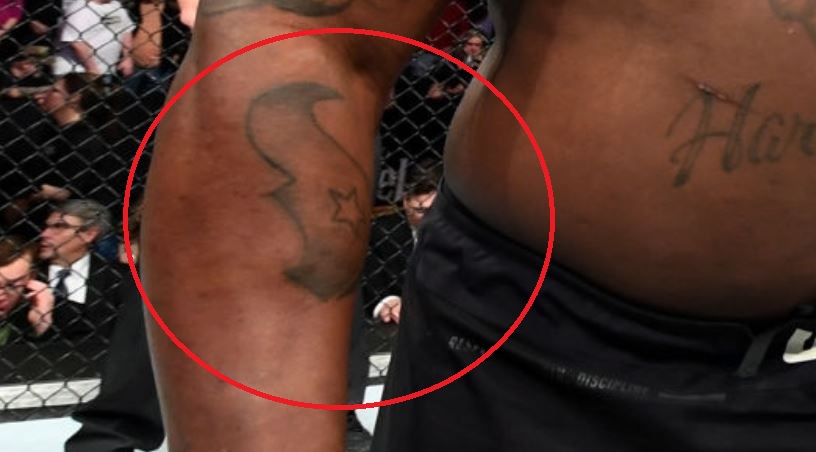
Derrick Lewis Texan arm tattoo

The most recent tattoo Lewis showed in the GQ interview was a Houston Texans design. He was born in New Orleans but has lived in Houston since 1998, and speaks warmly about the city. The tattoo is less about wearing a sports logo for its own sake than marking the place that became home after he moved there.

Houston also figures in stories beyond fighting. During Hurricane Harvey, Lewis drove his lifted truck through floodwater to help people. The Texans tattoo sits within that larger connection to the city. It says where he belongs, especially for a fighter whose public life is closely tied to Houston and its fans.

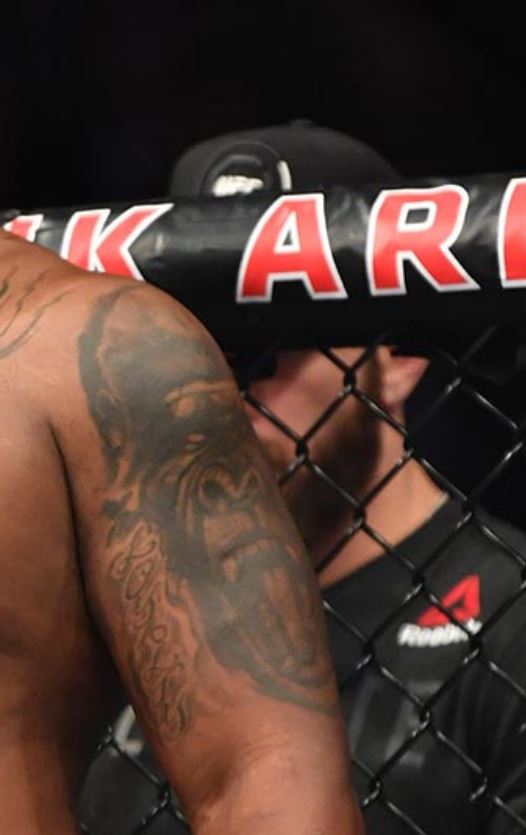
Two gorillas replaced the first tattoo he got for his mother
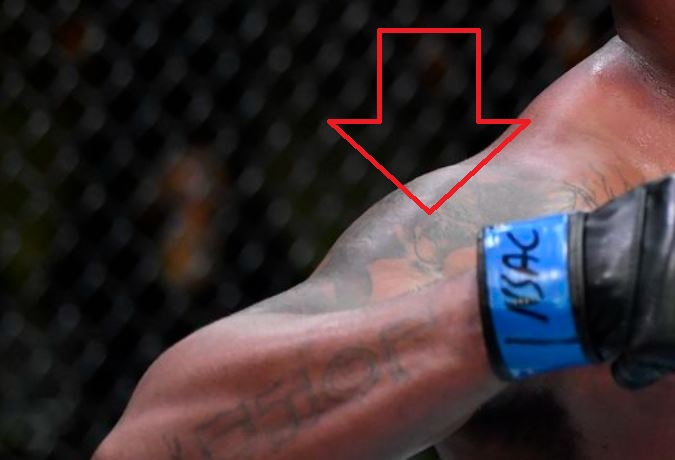
Derrick Lewis right arm gorilla tattoo
Derrick Lewis left arm gorilla tattoo

Lewis says his first tattoo was a cross for his mother. He later covered it with gorillas on both sides of his body. The choice had a few connections: he trains at Silverback, gorillas are among his favourite animals, and he has built a fighting persona around the way they move and strike.

He connects the gorilla imagery to pounding his chest and slamming the ground, too. That makes the designs feel tied to how he fights, not just like tough-looking animals from a flash book. The cover-up also marks a change: the cross belongs to a younger Lewis, while the gorillas reflect the fighter he became.

Lewis has said that most of his tattoos were done in prison, which helps explain the collection’s rougher, more personal look. He described making do with improvised equipment, including electricity from an exit sign and ink from a pen. It’s an unusual detail, but it’s part of the tattoos’ history.

Respect and loyalty are written into the collection
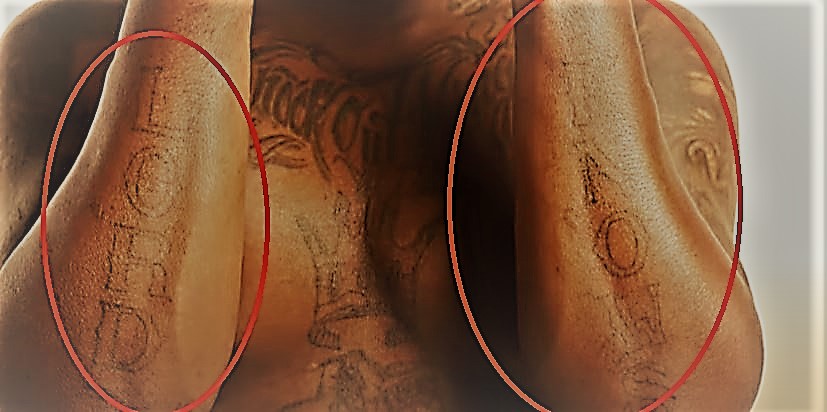
Derrick Lewis Lord Knows and loyalty tattoos

One tattoo reads respect and loyalty. Lewis says those are values he tries to live by: he expects respect from others and sees himself as loyal. The wording is direct, much like the way he explains his tattoos. He doesn’t build a mystery around every phrase; if it matters to him, he puts it on his skin.

That idea connects a few of the other designs. The gorillas relate to his gym and fighting identity, the Houston tattoo to home, and the lettering to how he wants to treat people. The pieces don’t all match, but their themes overlap naturally.

The owl is a cover-up of his old Black Beast tattoo
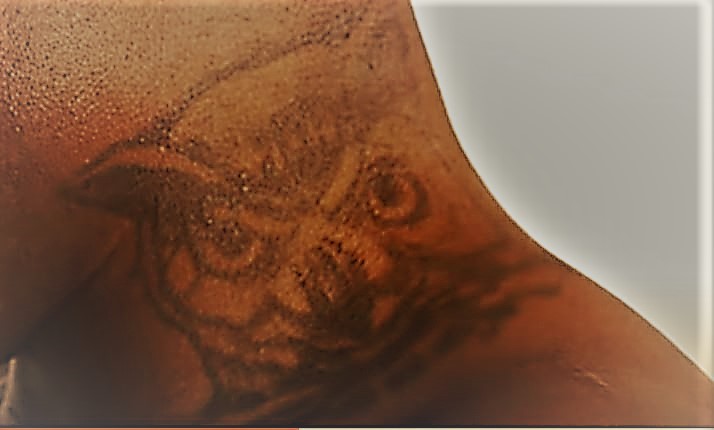
Derrick Lewis owl neck tattoo

Lewis once had “Black Beast,” his MMA nickname, tattooed on his neck. He later covered it with an owl, saying he considers himself wiser than he used to be. It’s a small change with a clear point: he replaced an old nickname with something that reflected a different stage of his life.

The owl also shows how a cover-up can become part of the story. The old lettering is hidden, but the reason for replacing it remains. Lewis doesn’t pretend he has always made the same choices. He has changed, and the ink records that in a very literal way.

Respect, loyalty and Lord Knows are the phrases he lives by

Another tattoo reads Lord knows. Lewis describes it as religious, then makes a joke about what he might do with his hands. That mix of sincere words and a grin feels like him. The phrase gives the collection a faith element without turning the whole thing solemn.

His hands are part of the practical side of the story, too. Lewis is a heavyweight known for his punching power, so hand tattoos naturally become part of how fans read his image. He doesn’t claim the ink makes him dangerous; the designs simply sit where his work happens.

Knockout King, boxing gloves and hard times
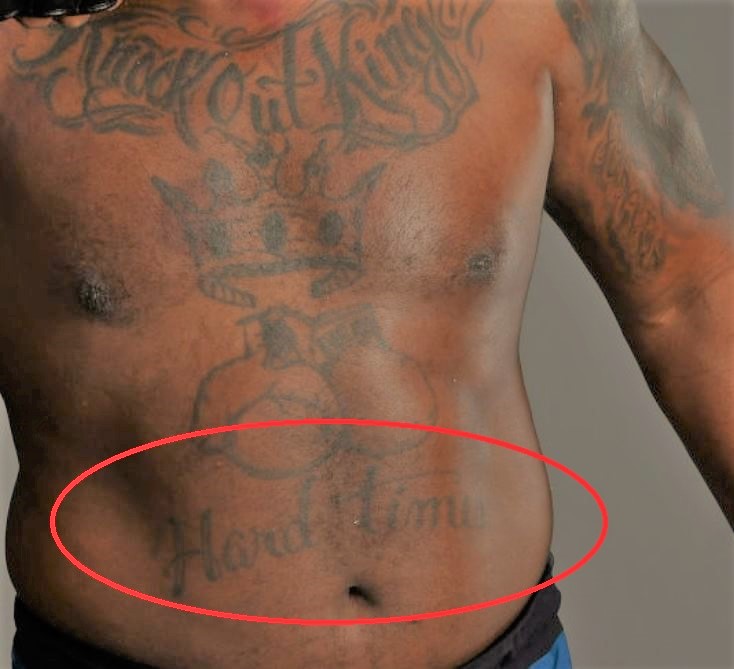
Derrick Lewis hard times chest tattoo

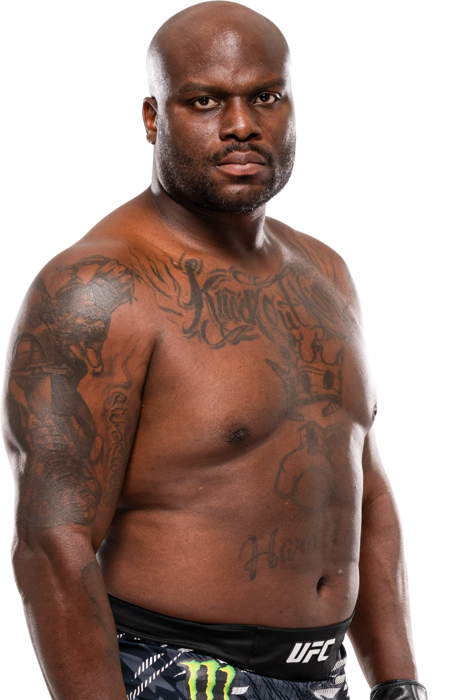
Lewis has a crown, boxing gloves, and the words Knockout King, alongside “hard times” as part of the same fighting-and-survival theme. The crown is confident, but the words add context. He sees the tattoo as a reminder of what he made it through before his UFC career brought a different life.

He started MMA training after leaving prison in 2008 and had his first amateur fight in 2009. That background matters: these aren’t just generic boxing designs. They come from a life that included street fighting, prison, training, and eventually professional competition. The crown and gloves are easy to read; the words make the story personal.

The small symbols fill in his family and faith references
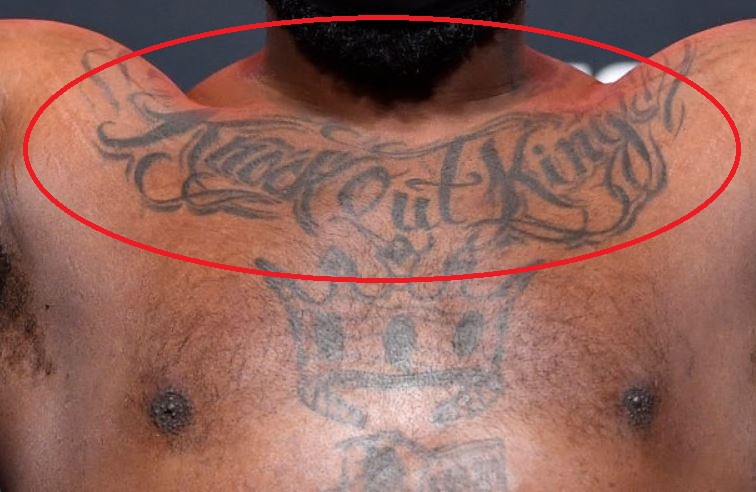
Derrick Lewis Knockout King and chest tattoos

Photos show more lettering and small symbols across Lewis’s arms and torso, but he hasn’t publicly explained every mark. The documented designs include religious words, the Houston Texans tattoo, gorillas, the owl, the crown, gloves, “Knockout King,” and “hard times.” Those are enough to see the main themes without inventing meanings for blurred details in weigh-in photos.

He has also considered getting his wife’s name, though he hadn’t done it when the GQ video was filmed. They had been together for 11 years and married for two at the time. He joked about putting her name under his foot. The comment captures his attitude to future tattoos: he’s open to adding one, but isn’t racing to fill every patch of skin.

Why the tattoos fit Derrick Lewis better than a perfect sleeve would

Lewis’s tattoos bring together cover-ups, rough prison work, hometown pride, and symbols tied to family or his career. They don’t look like one artist planned the whole body at once, which is part of why they feel believable. The designs accumulated as he moved through different places and versions of himself.

The rough edges belong to the story. A tattoo made with improvised tools in prison carries a different history from a professional piece added after a UFC win. A gorilla beside a cover-up says something different from the Houston Texans design. Together, they form a timeline rather than a coordinated fashion statement.

There’s humour in how Lewis talks about the collection, too. He warns people against getting their first tattoo drunk in Las Vegas, jokes about his wife’s name, and seems happy to explain the pieces he kept. He doesn’t claim every decision was perfect; he says the tattoos are his, cover-ups and strange origin stories included.

For anyone interested in meaningful fighter tattoos, the strongest ideas aren’t always the biggest. Lewis’s designs point to home, family, faith, loyalty, work, and the difficult parts of reaching a goal.

He often connects the tattoos to something he does. The gorillas link to his gym and fighting style, the Houston mark to the city he chose as home, and the crown and gloves to the career he built after a hard earlier chapter. Even the owl is about changing and seeing himself differently. That’s a more useful way to read the ink than simply counting what shows in a photo.

His tattoos also leave room for change. Lewis has covered older work, left other pieces visible, and talked about what he might add next. The Houston design came after years in the city; the owl replaced a nickname he no longer wanted; the gorillas link his earlier prison tattoos to the gym and career that followed. His jokes help keep a complicated history from turning into a polished highlight reel.

Watch Derrick Lewis explain his ink

GQ’s Tattoo Tour is the clearest place to hear Lewis talk about the gorillas, the owl, the Houston tattoo, and the work he got in prison.
More athlete tattoo guides

Lil Yachty’s Tattoos Read Like a Sketchbook of Atlanta, Family and Old Ideas

Lil Yachty has a casual way of talking about tattoos. He jokes about the pain, admits when a design looks rough, and keeps adding to the collection. In his GQ Tattoo Tour, he said he got his first batch after high school using a coupon he’d scammed. The designs range from family names and old crew initials to a boat he never finished.

That’s part of the appeal of Lil Yachty tattoos. There’s Atlanta pride, personal history, and a few pieces that feel like snapshots from different stages of his life. He has also said he doesn’t want face tattoos; he likes leaving his face open for acting, fashion, and whatever comes next.

Here’s a look at the documented pieces, from those early bargain-session tattoos to the names and symbols that still mean something to him.

The unfinished boat is the tattoo he cannot stop roasting

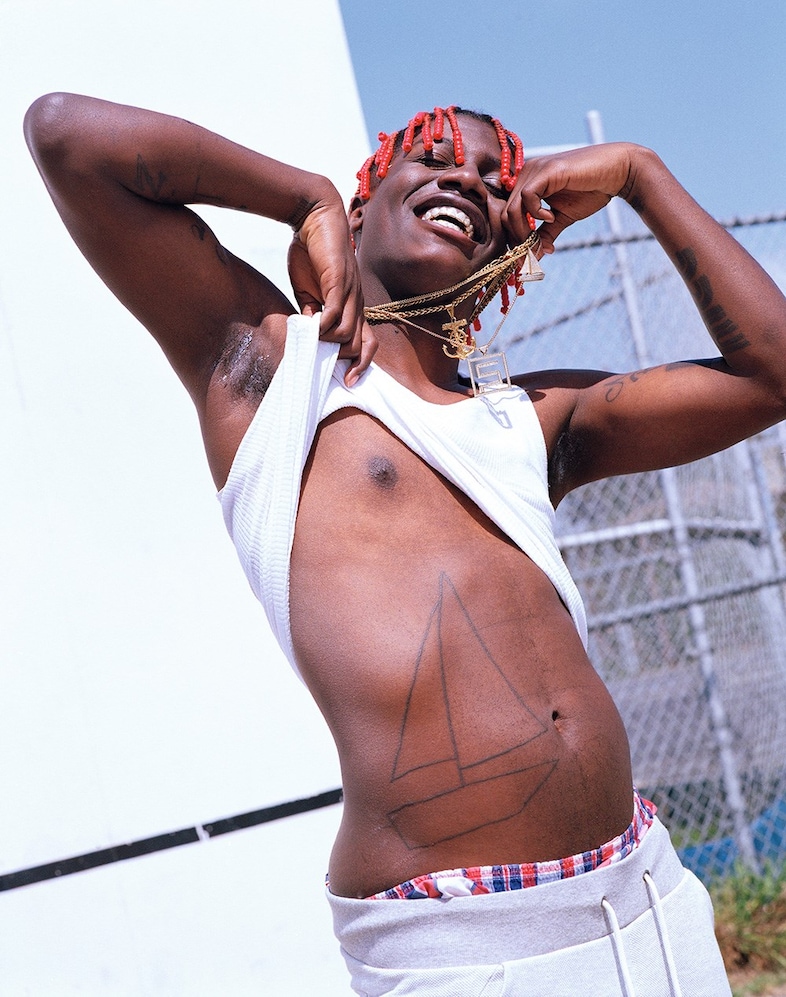
Lil Yachty sailboat abdomen tattoo

One of the first designs Yachty points out is a sailboat. It was supposed to have more detail, but the finished tattoo never got there. He calls it a cheap-looking stencil and says he didn’t complete it because the session hurt so much. His willingness to laugh about it is part of the story; he doesn’t pretend every tattoo was carefully planned.

The boat also nods to the Lil Boat nickname from his early career. It’s a simple image that fits the playful nautical identity around his first music. Rather than trying to pass it off as perfect, Yachty treats it as a story from when he was young and experimenting.

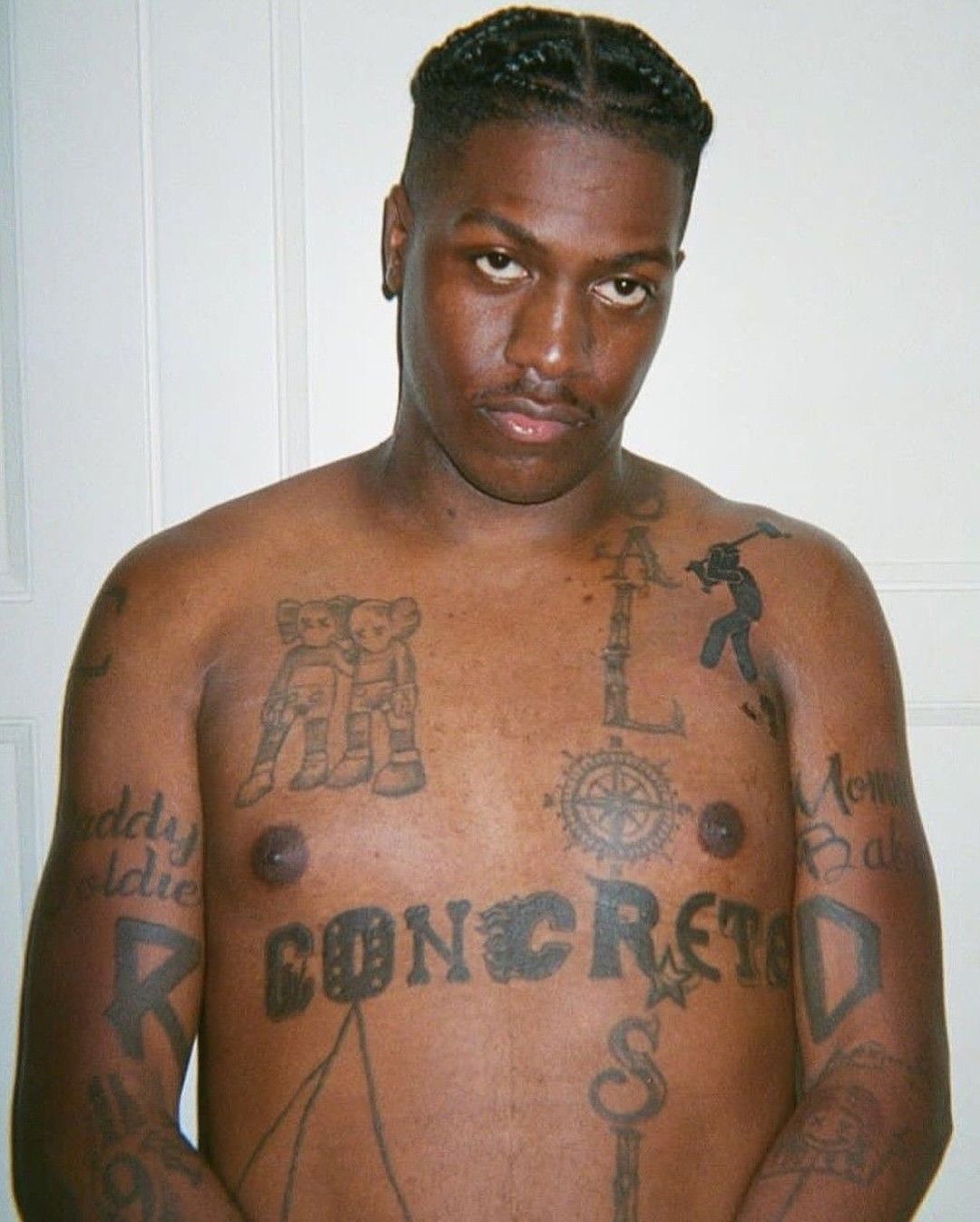
His chest carries the Concrete Boys era

Lil Yachty concrete chest tattoos

The lettering across Yachty’s chest connects to Concrete Boys, the music and creative collective he has promoted in recent years. It sits among other blackwork shapes and script, making it part of a larger patchwork rather than a lone logo.

That patchwork is characteristic of his collection. Yachty adds words, figures, and symbols as they fit, rather than building one coordinated sleeve. The chest work shares space with his chains and clothes, and close-up photos show separate decisions that accumulated over time.

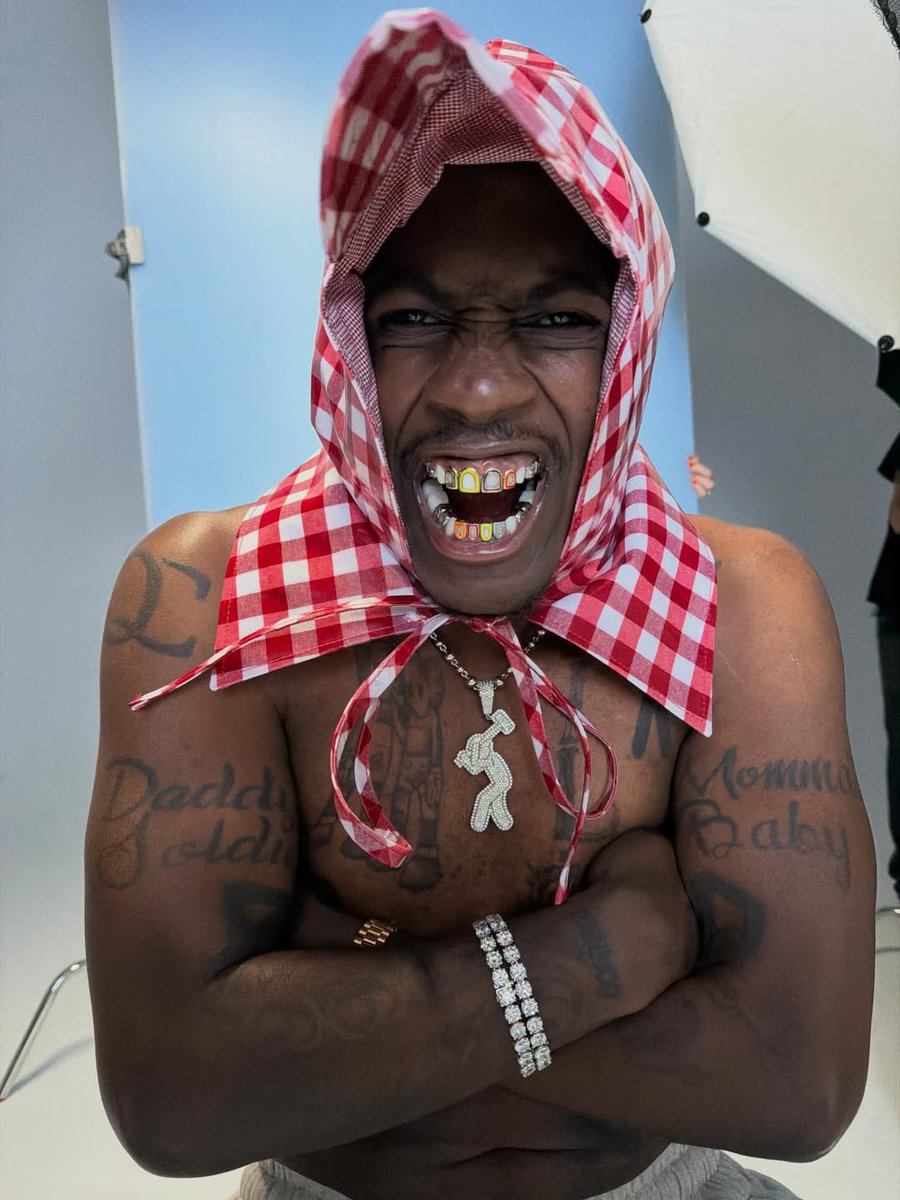
Mommy’s Baby and Daddy’s Soldier sit on opposite arms

Lil Yachty Mommy Baby and Daddy Soldier arm tattoos

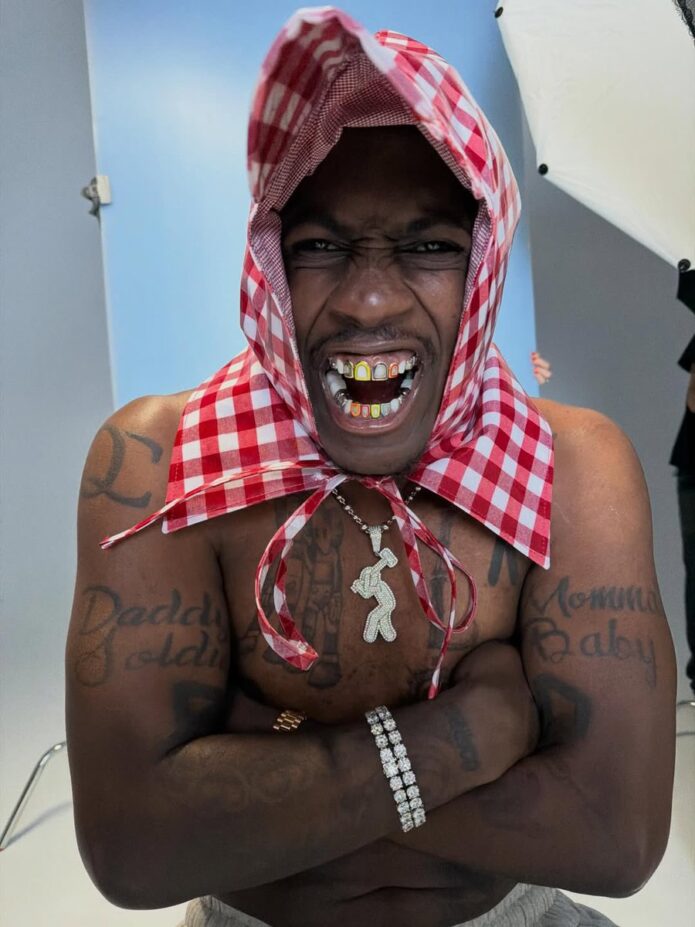
Family is one of the most direct themes in Yachty’s tattoos. “Mommy’s Baby” is on one arm and “Daddy’s Soldier” on the other. The phrases are easy to read; you don’t need a fan page to understand who they’re about.

He also has his mother Venita’s name on his left wrist. In the GQ tour, he said his father had tattooed his own mother’s name, and Yachty borrowed the idea for his mom. Even simple lettering can carry family history. The two arm phrases and the wrist name make this one of the collection’s most personal corners.

The old Atlanta barcode turns his wrist into a label

Lil Yachty stage arm tattoos

Yachty has a barcode on his wrist using numbers based on Georgia’s area code. He said he wanted to look like a product of Atlanta. It works as a barcode at first glance, then becomes a specific hometown reference once you know the numbers.

The rest of his arms have smaller lettering that built up over several years. Not every piece has the same weight or finish, which is part of the look. Instead of one clean sleeve, the tattoos read like a running record of aliases, friends, labels, and passing ideas.

Boat Boy, RD and the crew initials fill in the gaps

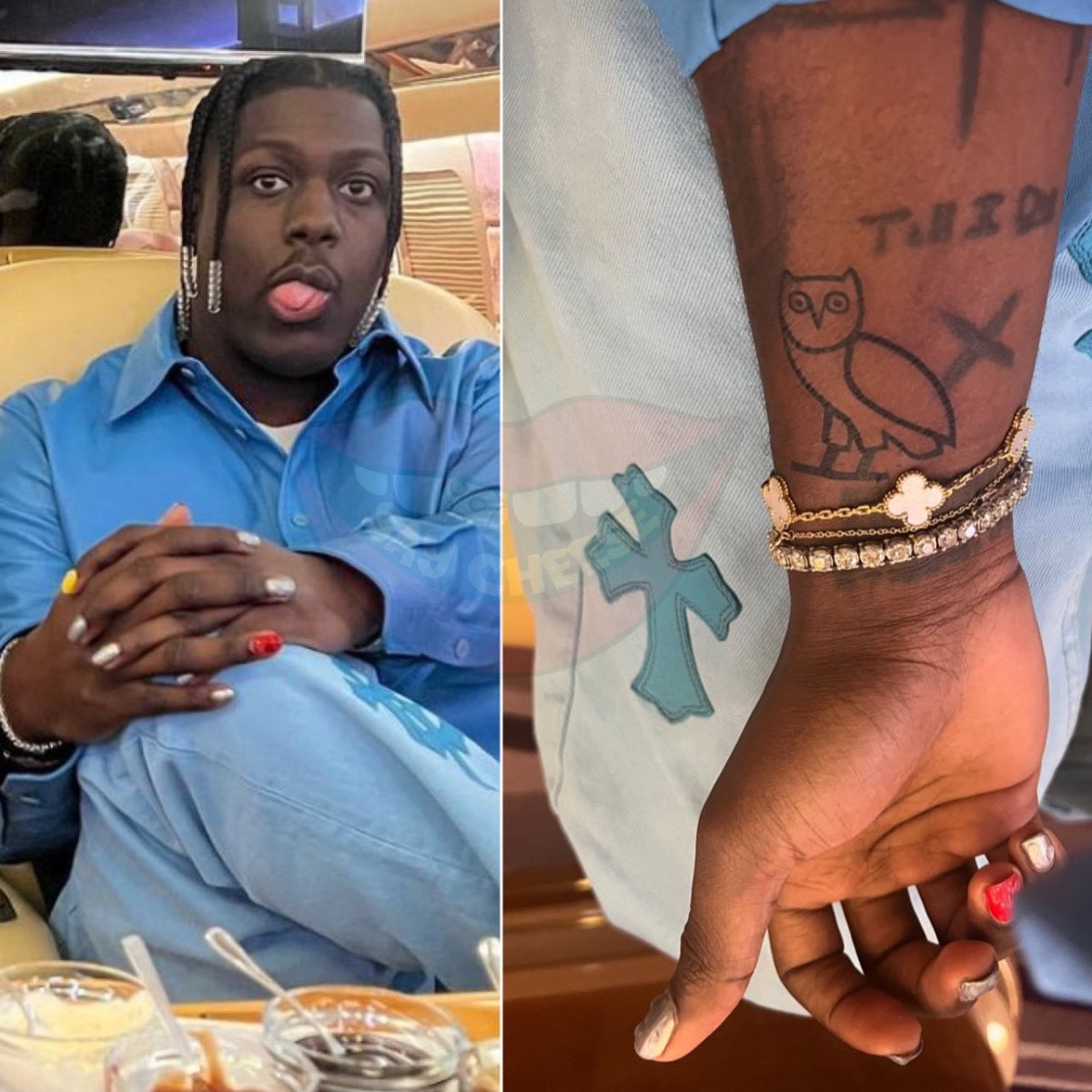
Lil Yachty OVO owl arm tattoo

“Boat Boy” wraps around his wrist like a bracelet, another nod to the nickname that became part of his public identity. He also has “RD,” which he said came from an early rap name he used in high school. Beside the larger chest tattoos, these small pieces add to the sense of a timeline: younger Miles McCollum and the later Lil Yachty appear in the same collection.

Other groups of letters include MCC, a reference to his real name, along with NAZ, YC, and SKT. Yachty said those stood for Nazareth, Yacht Club, and Skeem Team, names tied to the people and places around him as he grew up. They can look cryptic from a distance, but they map out his earlier circles.

A lightning bolt is tied to Quality Control, the label he was signed to. It’s more immediately recognizable than the initials and adds a graphic flash to an arm already filled with text.

The KAWS piece brings cartoon energy to his chest

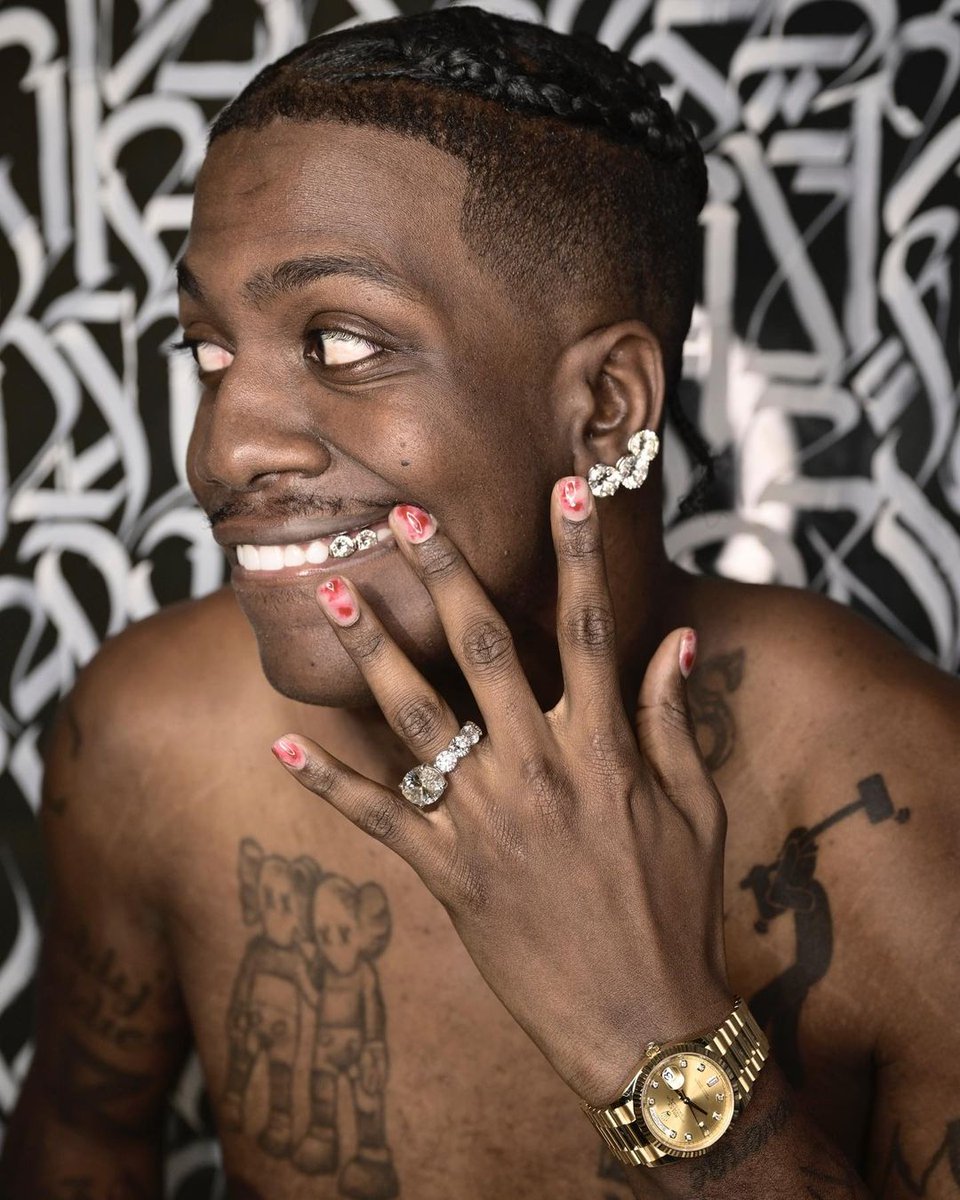
Lil Yachty KAWS chest tattoo

Yachty’s chest also has a KAWS-inspired figure, a match for his interest in cartoons, pop art, and playful characters. It brings a different mood from the family lettering, with a collectible, design-world feel in the middle of his personal scrapbook.

That contrast is what keeps the tattoos from feeling formal. A family phrase can sit next to a cartoon figure, the unfinished boat, or rough lettering. He doesn’t need every piece to match; each design has its own little place in the collection.

The newer VARSH neck tattoo is hard to miss

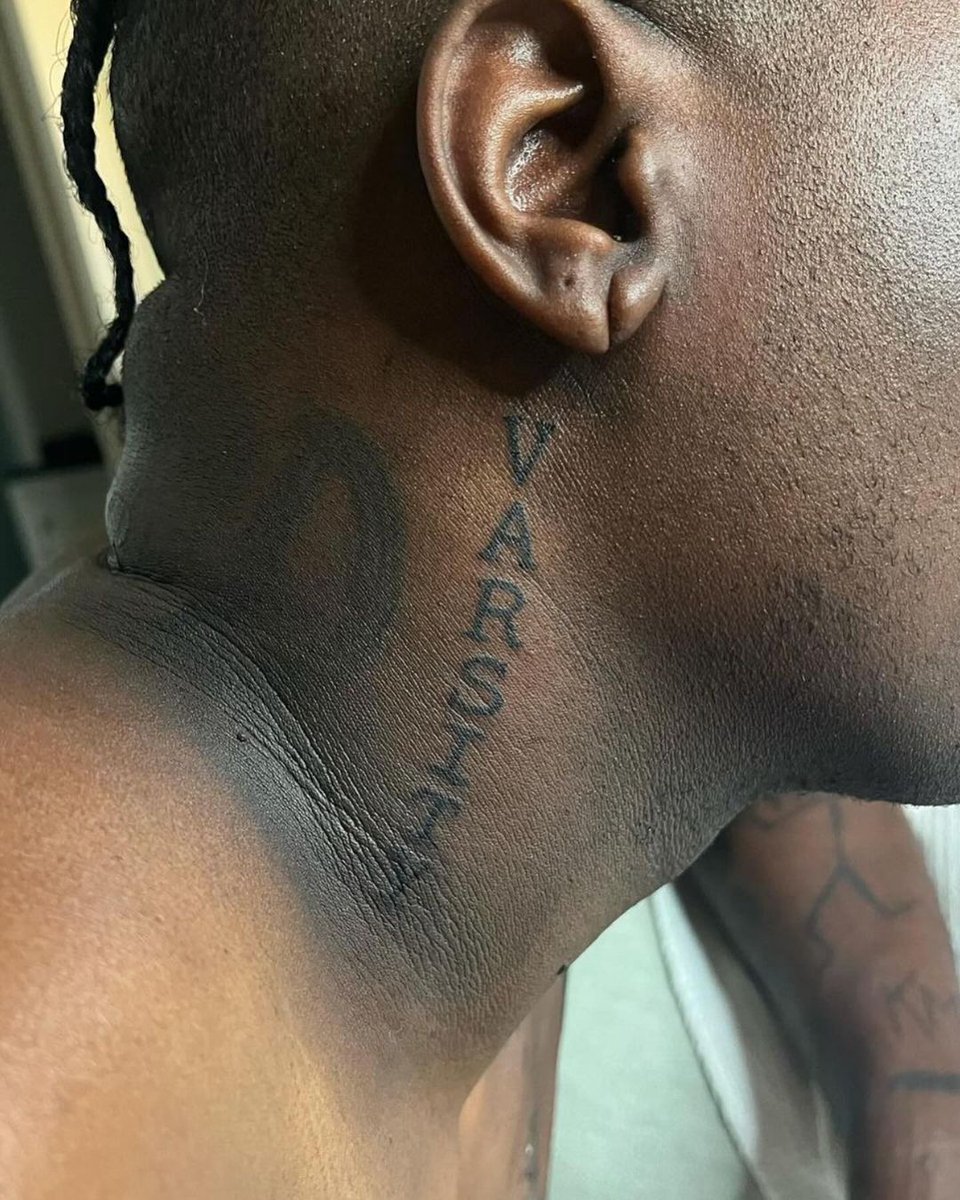
Lil Yachty VARSH neck tattoo

A later neck tattoo spells VARSH in tall lettering. Because the neck is always visible, the placement shifts the balance of his look even when his outfit covers the rest. Its clean vertical lines stand out beside the more scattered work on his arms.

Yachty has said he keeps his face clear because he wants options in acting and fashion. The neck piece moves closer to that boundary without crossing it. It adds attitude while leaving his face open, which fits the way he talks about his tattoos: he likes them, complains about the pain, and still wants control over how they shape his image.

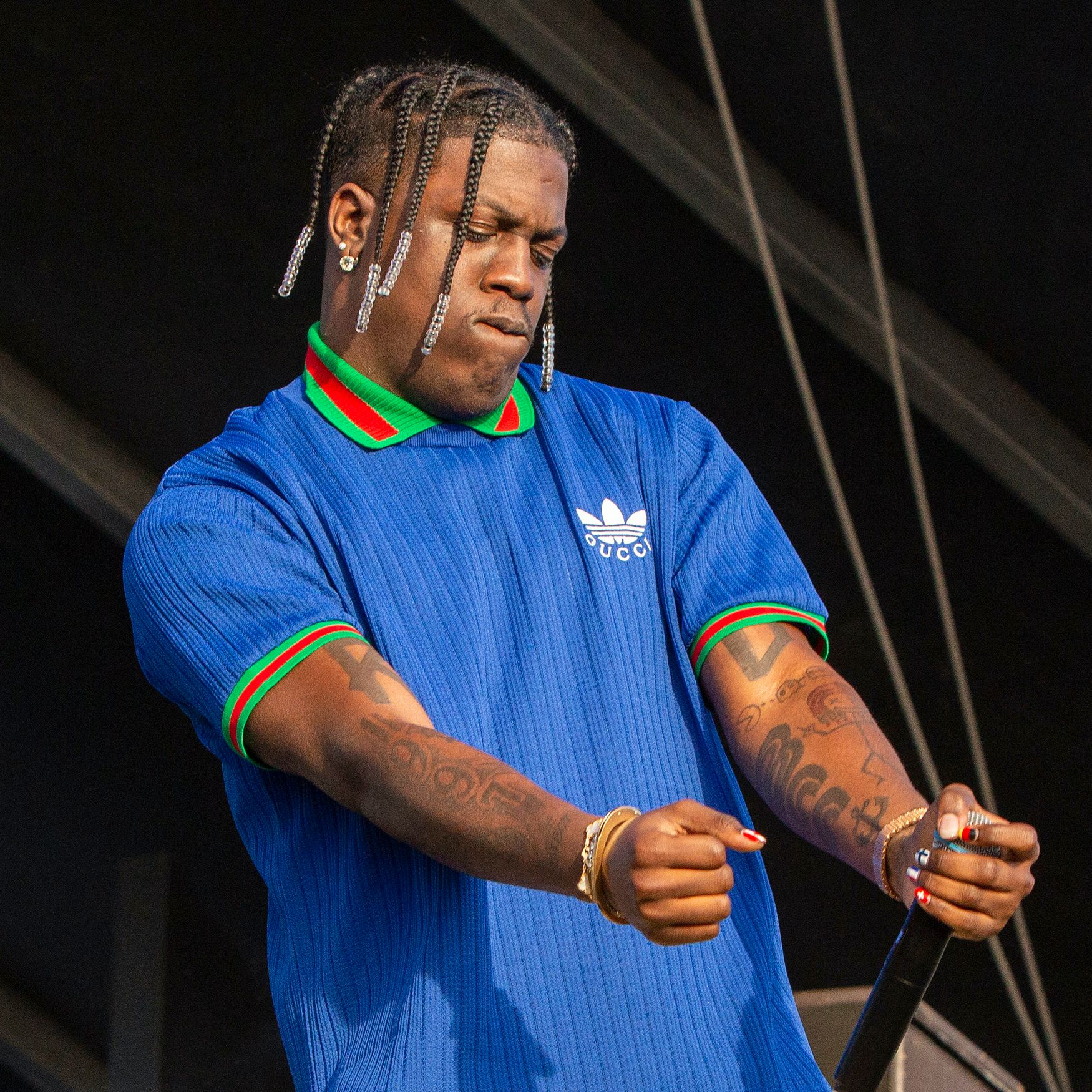
The OVO owl and newer pieces keep the collection moving

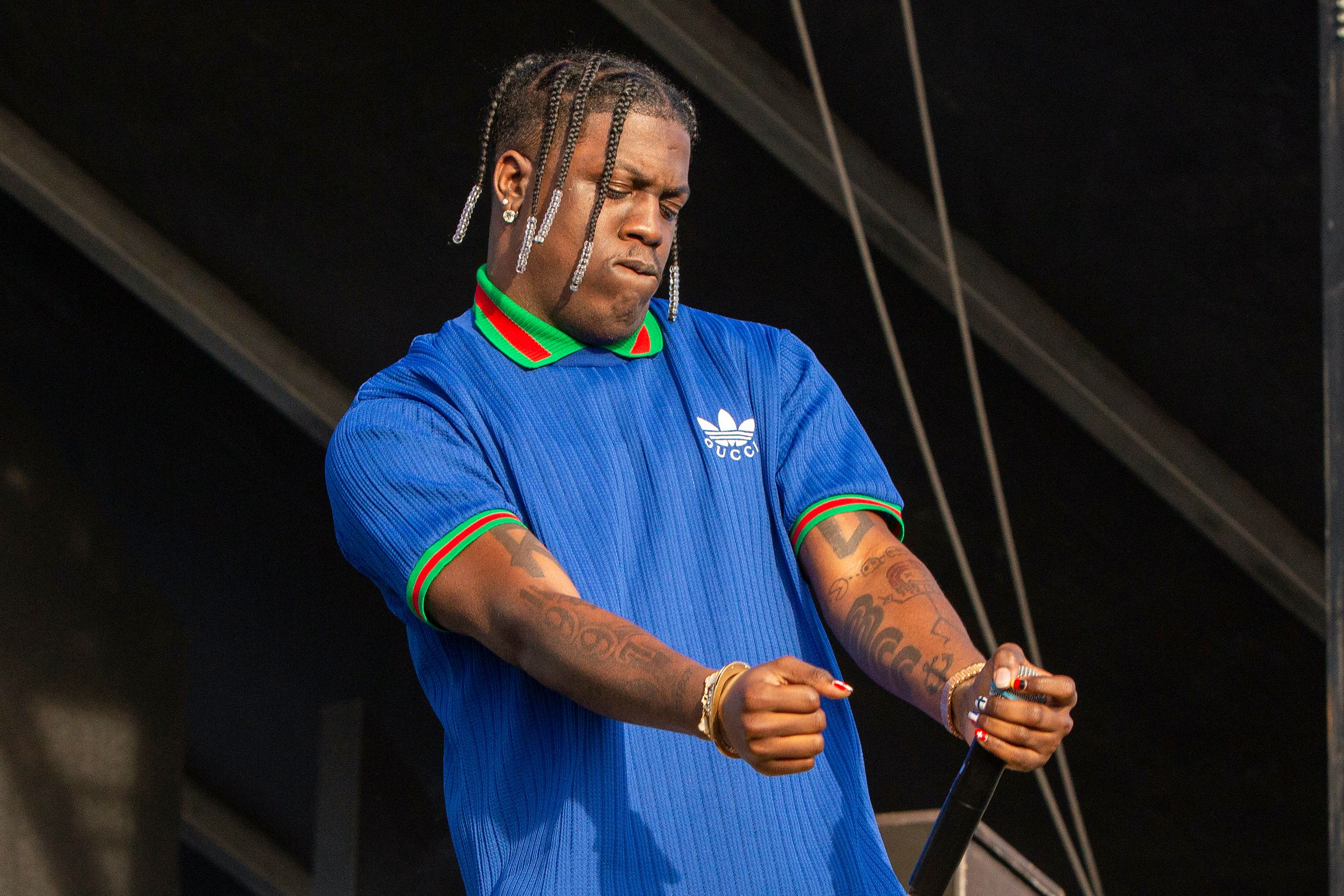
Lil Yachty live arm tattoos

Yachty has also shown an OVO owl on his arm, linking the compact emblem to Drake’s Toronto-based brand and its wider circle. It’s easy to recognize and offers a contrast to the initials whose meaning is more personal.

Live and backstage photos reveal other script, small symbols, and designs partly hidden by sleeves or jewellery. It’s best not to invent a story for every mark. Some appear in the GQ tour; others can be seen in photos without a confirmed explanation. The clearly documented pieces include the family names, Concrete Boys lettering, crew initials, barcode, boat, owl, KAWS figure, and VARSH tattoo.

Why Lil Yachty’s ink feels more like a sketchbook than a sleeve

Yachty has said he got many of his first tattoos through a cheap coupon and sometimes borrowed ideas from his dad or brother. That background helps explain the collection’s loose rhythm: meaningful names beside jokes, unfinished work beside newer designs, and tattoos chosen simply to fill an open spot.

He has also admitted that tattoos hurt and that he sometimes hates them, which makes the collection feel refreshingly ordinary. There’s no need to sell it as perfect. It holds the ritual, jokes, and memories even when some results are uneven. For anyone looking at his tattoos for ideas, the takeaway is to choose something personal instead of forcing every piece into one theme.

That’s why the family lettering matters as much as the chest work. The tattoos aren’t just decoration for a stage persona. They preserve traces of Atlanta, his parents, old names, friends, labels, and the early years when Lil Boat was still figuring out what kind of artist he wanted to be.

Watch Lil Yachty explain the tattoos himself

His GQ Tattoo Tour is still the quickest way to hear the stories, especially the coupon, unfinished boat, and family names.

Tyga’s Ink Tells the Story of His Life

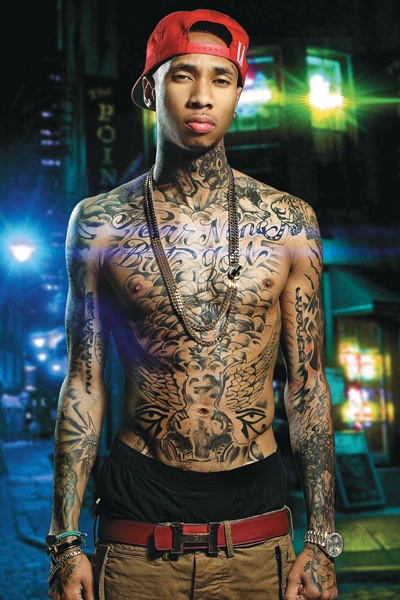
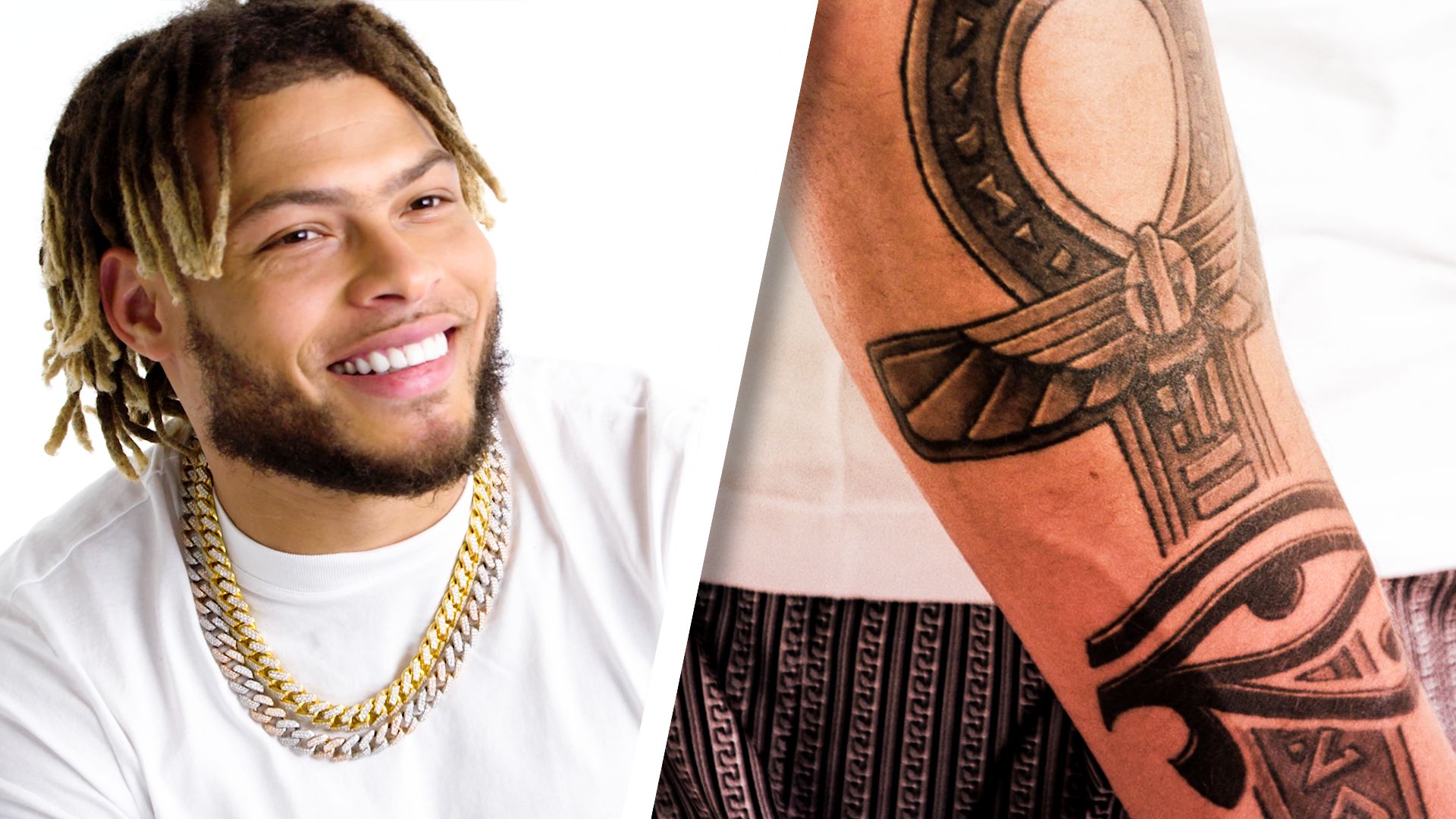
Tyga has been getting tattooed since he was a teenager, and the collection still reads like a timeline. Some pieces are carefully finished; others come from a younger, more impulsive period. His chest, arms, stomach, neck, hands, and face hold different chapters, from family and faith to his Vietnamese background and the years when he wanted as much ink as possible.

In his GQ tattoo tour, Tyga said he got his first tattoo at 14 and sometimes returned to the shop twice a week between 14 and 17. He also admits that “ghetto tattoos” sit beside more detailed work. That candour makes the collection easier to understand: it isn’t built around one perfect style, but around memories and ideas that stayed with him.

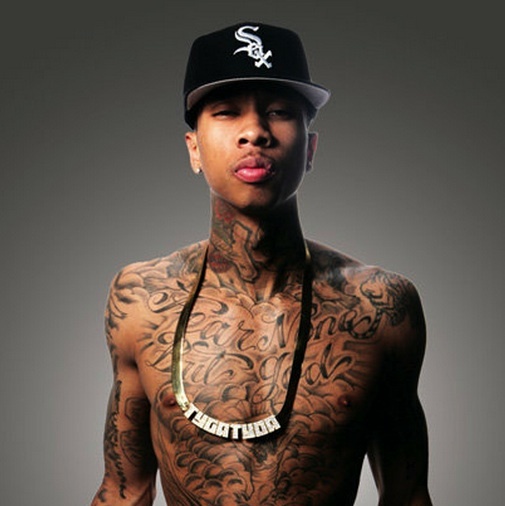
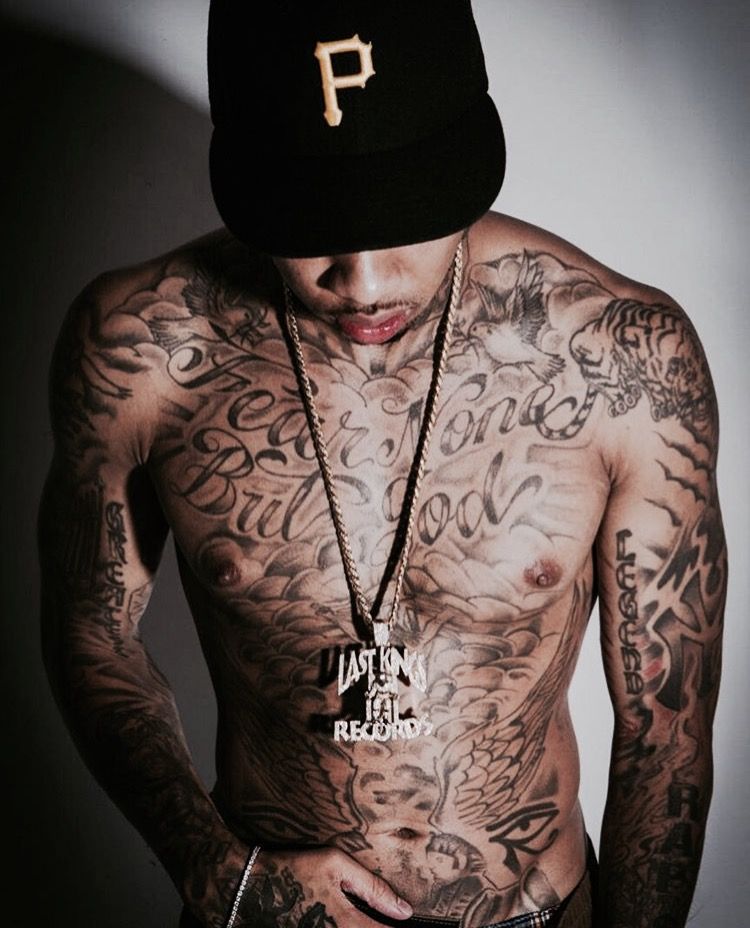
His chest is built around “Fear None But God”

Tyga Fear None But God chest tattoo

The largest piece across Tyga’s chest reads “Fear None But God.” The script stretches across his pectorals and stands out whenever he’s shirtless. Heavy shading and surrounding imagery make it feel like a full chest composition rather than a single line of text.

The religious phrase gives the chest a clear centre amid the more decorative work. It also sits alongside Jesus imagery lower on his torso and other faith references on his arms. The front of his body feels layered, not designed as one matching sleeve.

The old-school pieces show where he started

Tyga chest and upper arm tattoos

Tyga’s early work helps give the collection its lived-in feel. In the GQ tour, he points to an arm tattoo of the Lord’s Prayer with John 3:16, one of his first designs. He says he was 14 and excited to get tattooed without his parents’ permission.

He also has lettering from his teenage years tied to his crew and ambitions, including GED, which he explained as “getting every dollar, getting educated daily.” Those pieces aren’t as polished as his later work, but they show an earlier Tyga before the large chest projects, Asian-inspired imagery, and longer sessions.

Vietnam and family history shaped the later work

Tyga Vietnam inspired torso tattoos

One of Tyga’s most personal designs is a Vietnam tattoo he discusses in the GQ video. He says it connects to his mother, who was born in Vietnam during the war, and to his own interest in his Asian background. The piece marks a shift from choosing whatever looked good that week to using tattoos to explore family and identity.

He has described later work as Asian-inspired, including a dragon and related designs. These sit beside earlier tattoos rather than replacing them, giving his torso a mixed feel: religious words, clouds, traditional imagery, and dark sections all share the space. It can look busy, but it also reflects how his interests changed.

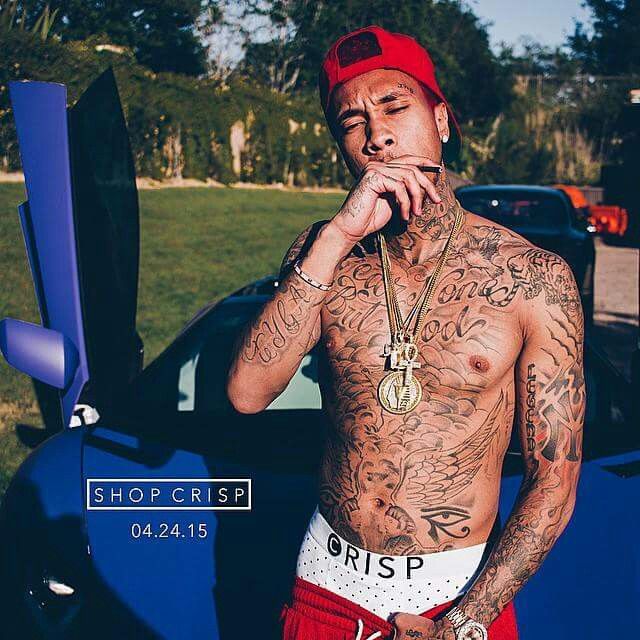
Jesus, clouds and the eye of Horus fill out his stomach

Tyga Jesus and stomach tattoos

Tyga’s stomach features some of the collection’s strongest religious and Egyptian imagery. Below the chest lettering is a Jesus tattoo surrounded by clouds and a large winged design. He also points out the eye of Horus, a symbol he connects to a period when he was studying Egyptian culture.

His process helps explain the variety. Tyga has said he brings an idea to the artist, then lets them develop their own version first. He prefers a collaboration to copying a drawing exactly as he imagined it. Scripture, religious portraits, Egyptian symbols, and later Asian influences all end up sharing the same body.

Jack from The Nightmare Before Christmas is one of the fun pieces

Tyga Jack Skellington tattoo

Not every Tyga tattoo is about faith, family, or ambition. He also has Jack Skellington from The Nightmare Before Christmas, one of his favourite movies growing up. He got it when he was around 16.

There’s a funny detail to the story: after seeing the tattoo upside down for years, he’s used to it that way. It makes the piece feel more personal than an entry on a celebrity tattoo list. He liked the film, got the character tattooed, and kept it; it doesn’t need a bigger public message.

The neck, hands and face carry the loudest details

Tyga neck and hand tattoos

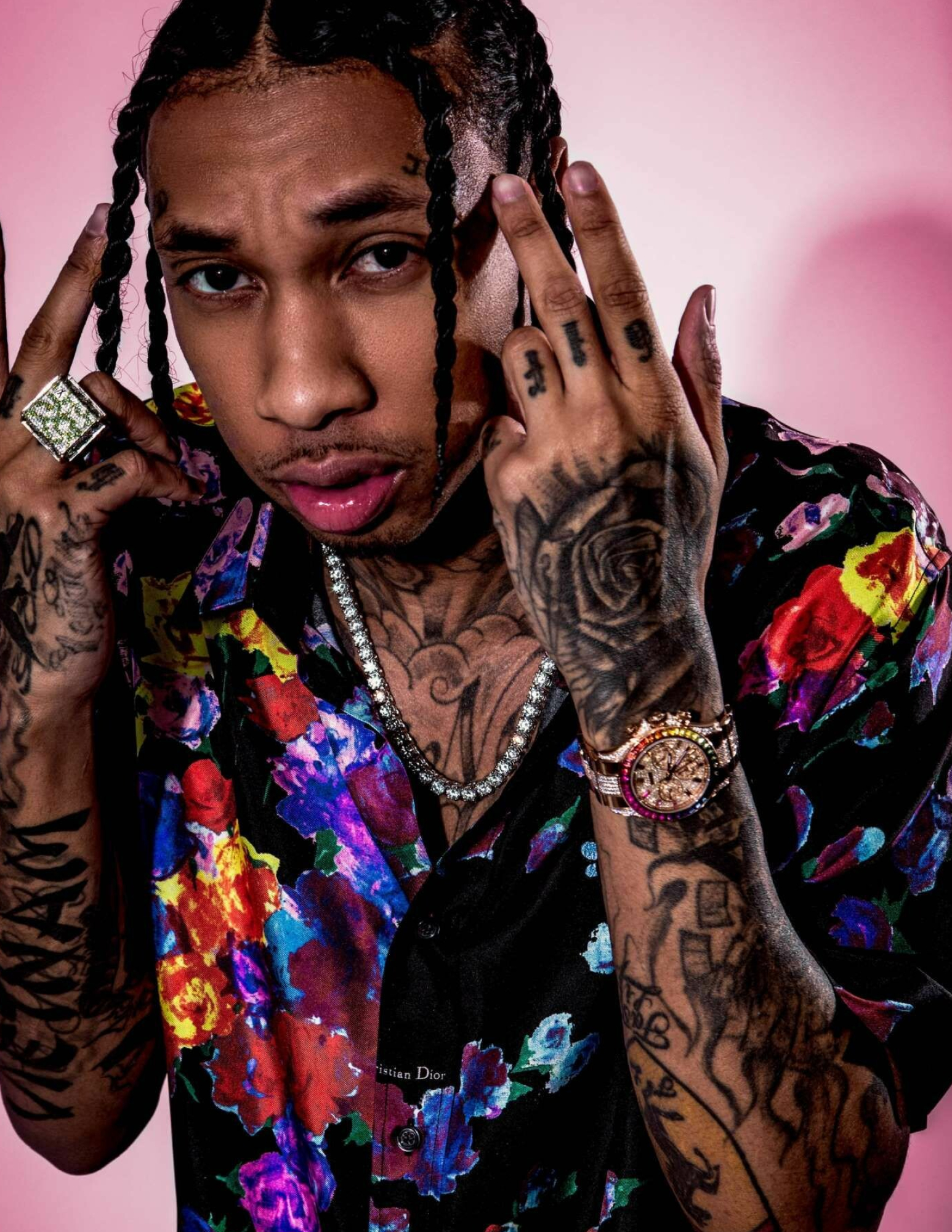
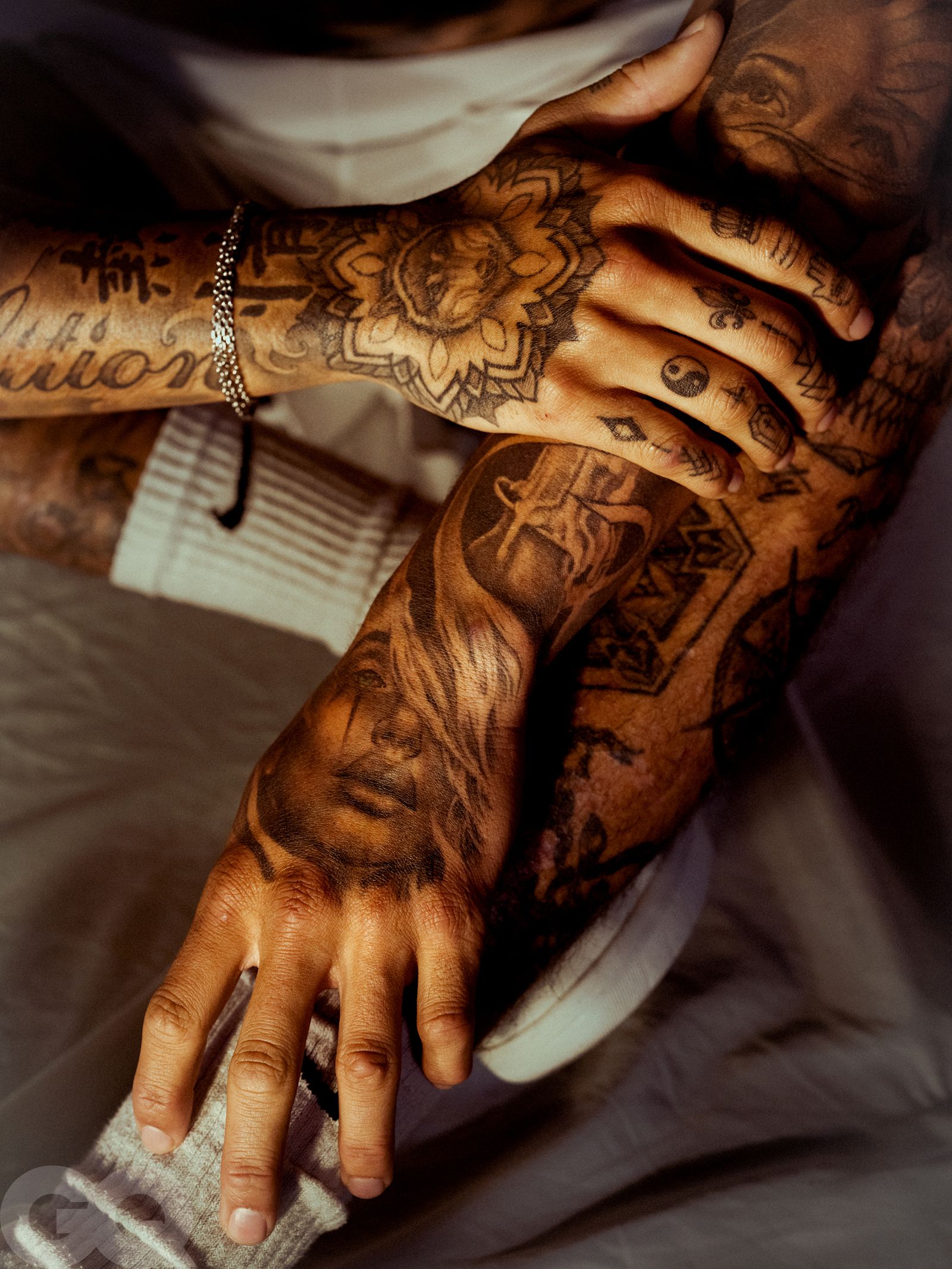
Tyga’s neck and hands are among the hardest areas to hide. He has roses on the side of his neck, lettering around it, and small face tattoos he says he barely notices now. He has also shown hand tattoos with the words “Pay Me Dollars.” These pieces make the collection feel close to full-body coverage.

He once considered a larger face tattoo but held back because he didn’t want to change his appearance too much. That restraint can be easy to miss when so much else is covered. The face tattoos stay small, while the neck, hands, and arms do most of the visual work and give his photos a familiar outline.

What Tyga’s tattoos say as a whole

Tyga’s ink makes the most sense as a timeline. He started young, got hooked on the process, and went through stretches when he was getting tattooed constantly. Some designs came from family history; others from films, religion, music, friends, or whatever he was exploring at the time.

That variety is why the work doesn’t look uniform. Early lettering sits beside large chest script, religious portraits, clouds, Egyptian symbols, roses, Asian-inspired designs, and small face tattoos. Tyga hasn’t tried to make every piece look like it came from the same artist or flash sheet. The collection feels personal more than coordinated.

He has advised people to choose something that will still mean something years later, whether that’s family, children, or an idea they care about. His own body shows both sides: thoughtful pieces beside quick choices he made as a teenager. Together, they make the tattoos feel honest.

There’s also a practical side to the placement. The ink shows in photos, onstage, and in videos, while filling gaps between larger pieces. Small marks around his face and neck connect the chest work to his jawline; the hands make even a simple outfit look heavily tattooed. A T-shirt may cover some stomach designs, but the visible neck and hand ink still shape the whole look.

The collection traces different tattoo phases. Early religious lettering is direct; later designs use more images, from clouds and dragons to roses, figures, and cultural references. The earlier tattoos haven’t stopped mattering. They remain the base layer, with newer work growing around them, so you can see the years accumulate rather than one design replacing another.

Tyga’s approach to working with artists may be one reason the styles vary. He has said he brings a rough idea and lets the tattooer create a first version. That leaves room for the artist’s line work and composition, and helps his body avoid looking like one giant sticker sheet.

You can see a related mix of personal history and changing style in Young M.A’s tattoos. Tyga’s collection is busier and more spread out, but the ink shifts as the person does.

There may not be one neat answer to what all the tattoos mean. The chest phrase gives the collection an anchor, while the Lord’s Prayer, John 3:16, Vietnam design, Jack Skellington, eye of Horus, Jesus, roses, and hand lettering each point to a different moment. Together, they read more like a scrapbook on skin than a single logo.

The variety keeps the tattoos interesting. In one photo you might notice the old scripture; in another, a small face mark, a neck rose, or the heavier work across the ribs. The collection adds chapters instead of trying to erase earlier ones.

That timeline also comes through in candid photos. The ink isn’t just one polished chest piece; it reaches into the areas people notice first, giving the collection a connected look from different angles.

The tiger on his shoulder stands out on its own

Tyga tiger shoulder and chest tattoo

A closer look at Tyga’s shoulder brings out the tiger imagery. It sits among the darker chest and upper-arm work and gives that area a sharper focal point. Describing every tattoo as part of one huge torso design can make a piece like this easy to miss.

Roses and hand ink push the collection outward

Tyga hand and rose tattoos

A closer portrait makes the hand and rose tattoos easier to see. They extend the story beyond the chest and stomach, keeping the ink visible when Tyga is dressed. The roses also soften some of the darker lettering and religious imagery nearby.

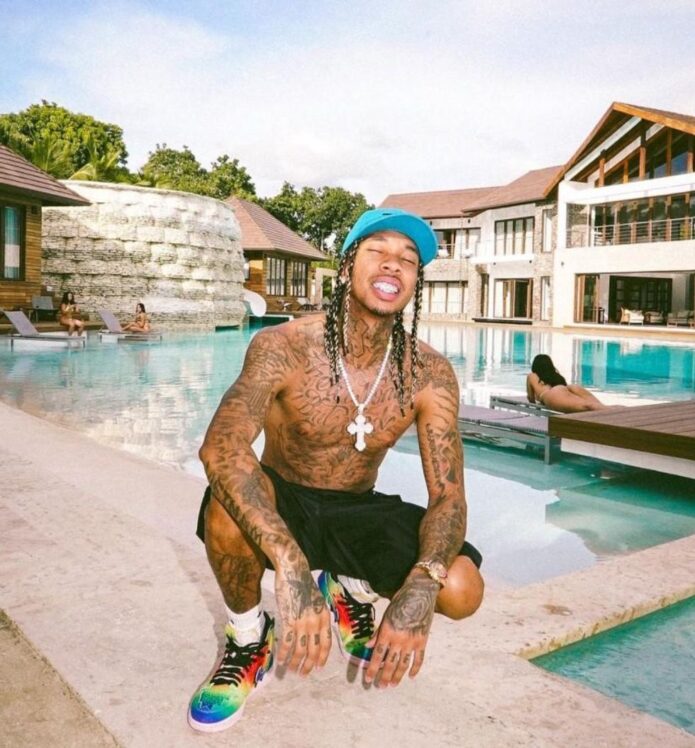
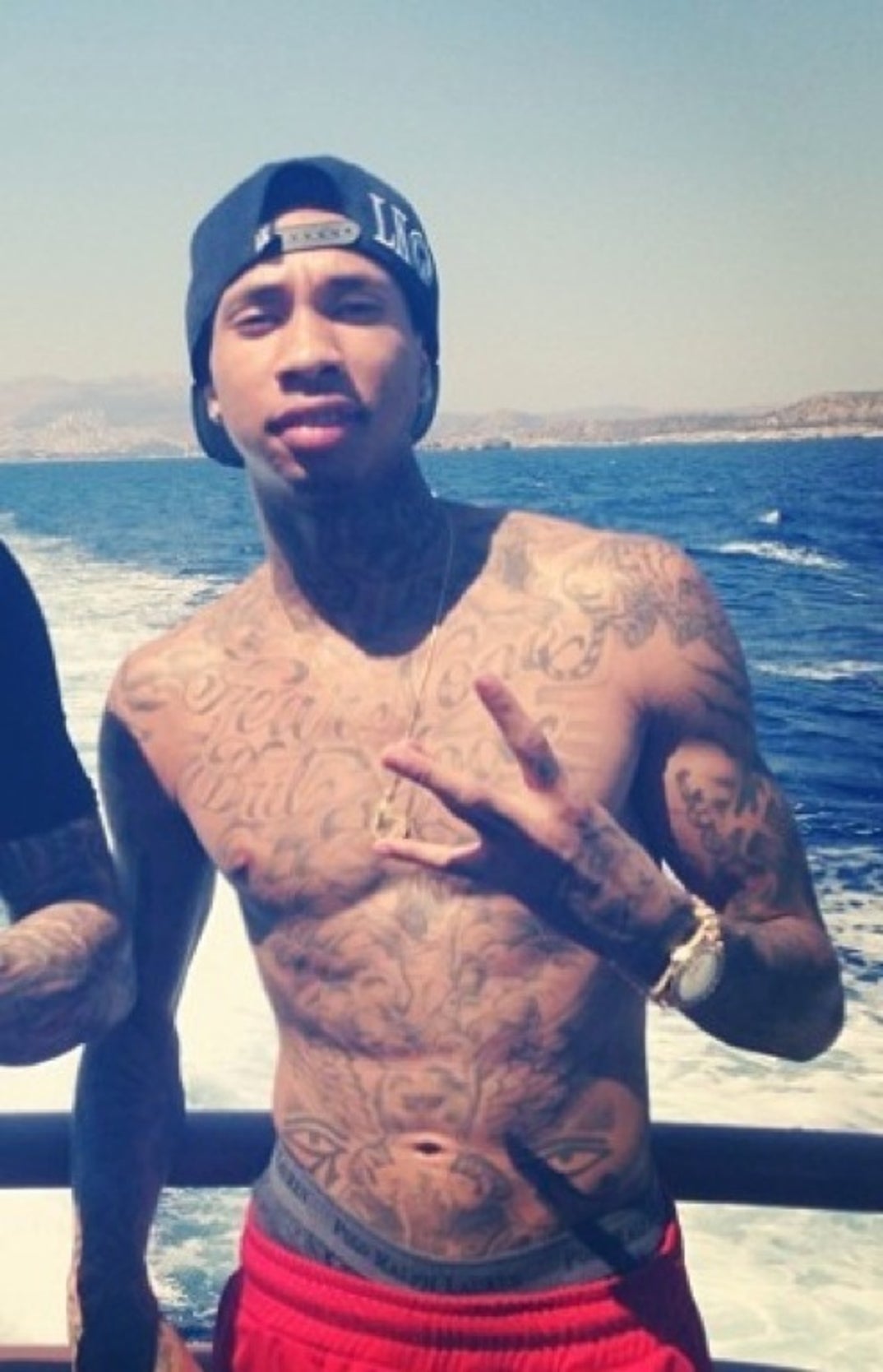
A poolside shot shows how much skin is covered

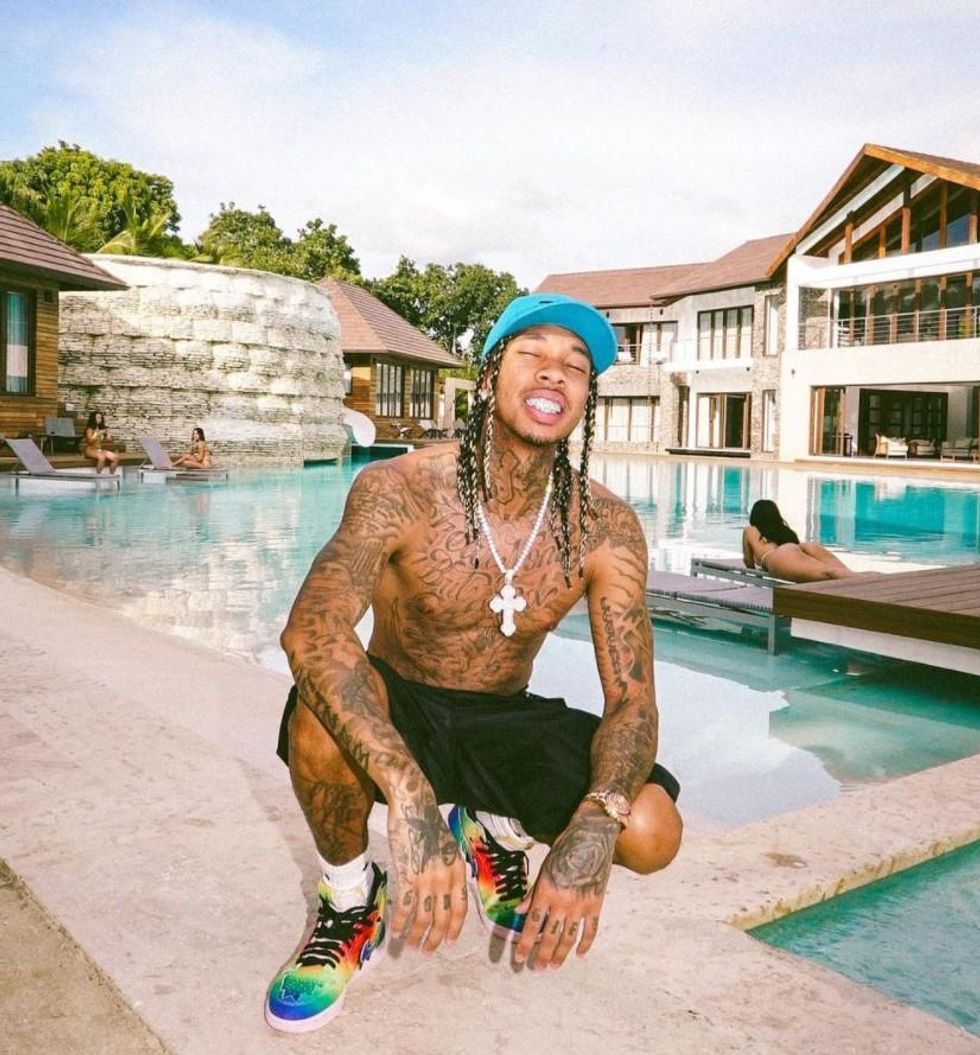
Tyga poolside torso tattoos

The poolside photo offers another view of the coverage. Separate designs run across Tyga’s chest, stomach, and arms, and remain visible in a casual setting. It’s a reminder that the collection reaches well beyond a few close-up pieces.

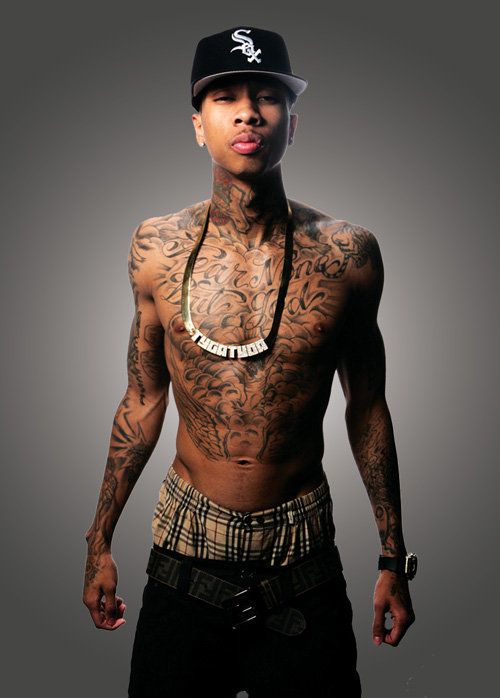
The neck and chest work read clearly in tour photos

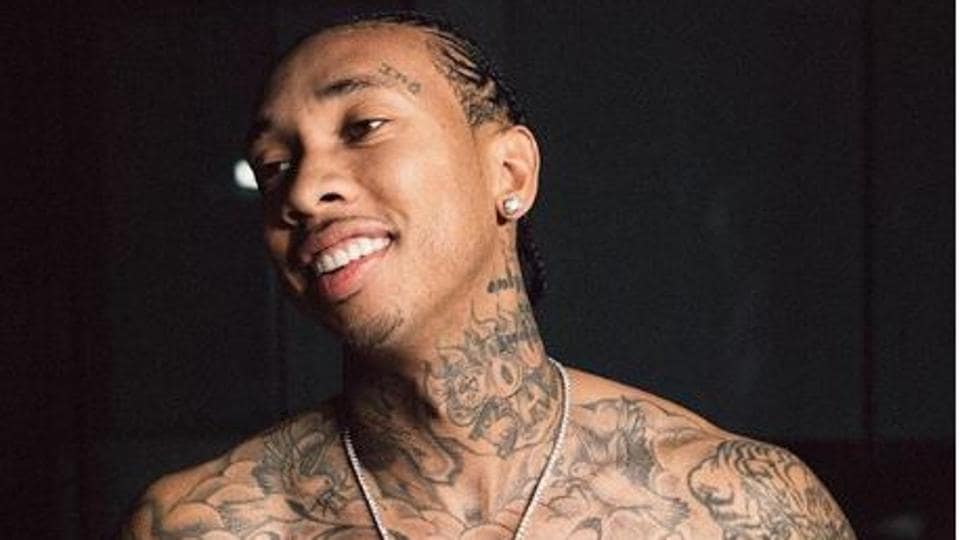
Tyga neck and chest tattoos on tour

In a tour-era portrait, Tyga’s neck ink appears above his shirt, with chest lettering and shoulder designs below it. The less formal photo makes it easier to see how the placement works in everyday life.

Watch Tyga explain his tattoos

Tyga talks through his first tattoo, the Lord’s Prayer, Jack Skellington, the Vietnam design, his Egyptian influences, and the way he works with tattoo artists in this GQ tour.

More musician tattoo guides

Young M.A’s Tattoos Tell a Brooklyn Story

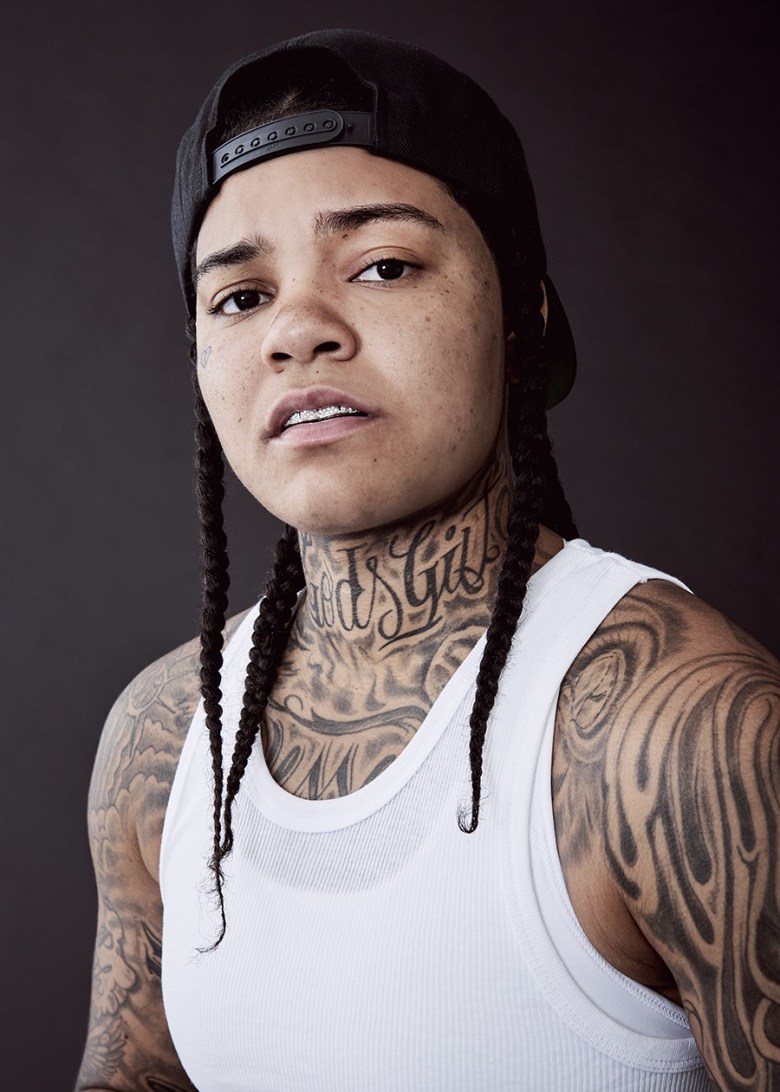
Young M.A’s tattoos stand out, but their stories give the collection its character. Ink covers her neck, face, hands, arms, and chest, with designs tied to Brooklyn, her late brother, her music, and the people close to her.

She’s open that not every piece began as a carefully planned design. Some were early ideas, some have been covered, and others only make sense once she explains them. The collection feels personal before it feels polished.

In her GQ tattoo tour, she talks about the first piece she got for her brother, the block where she grew up, her microphone tattoo, and the face ink she had thought about for years.

The first tattoo is a tribute to her late brother

Young M.A has said her first tattoo was connected to her late brother. That piece gives the collection its emotional starting point: it wasn’t just a design she liked, but a way to keep someone close while living a very public life.

She has described the tattoo as meaningful as soon as she saw it. Her later work is larger and more detailed, but that first piece still matters. It set a direction for the rest of the collection: use tattoos to hold on to names, memories, and places.

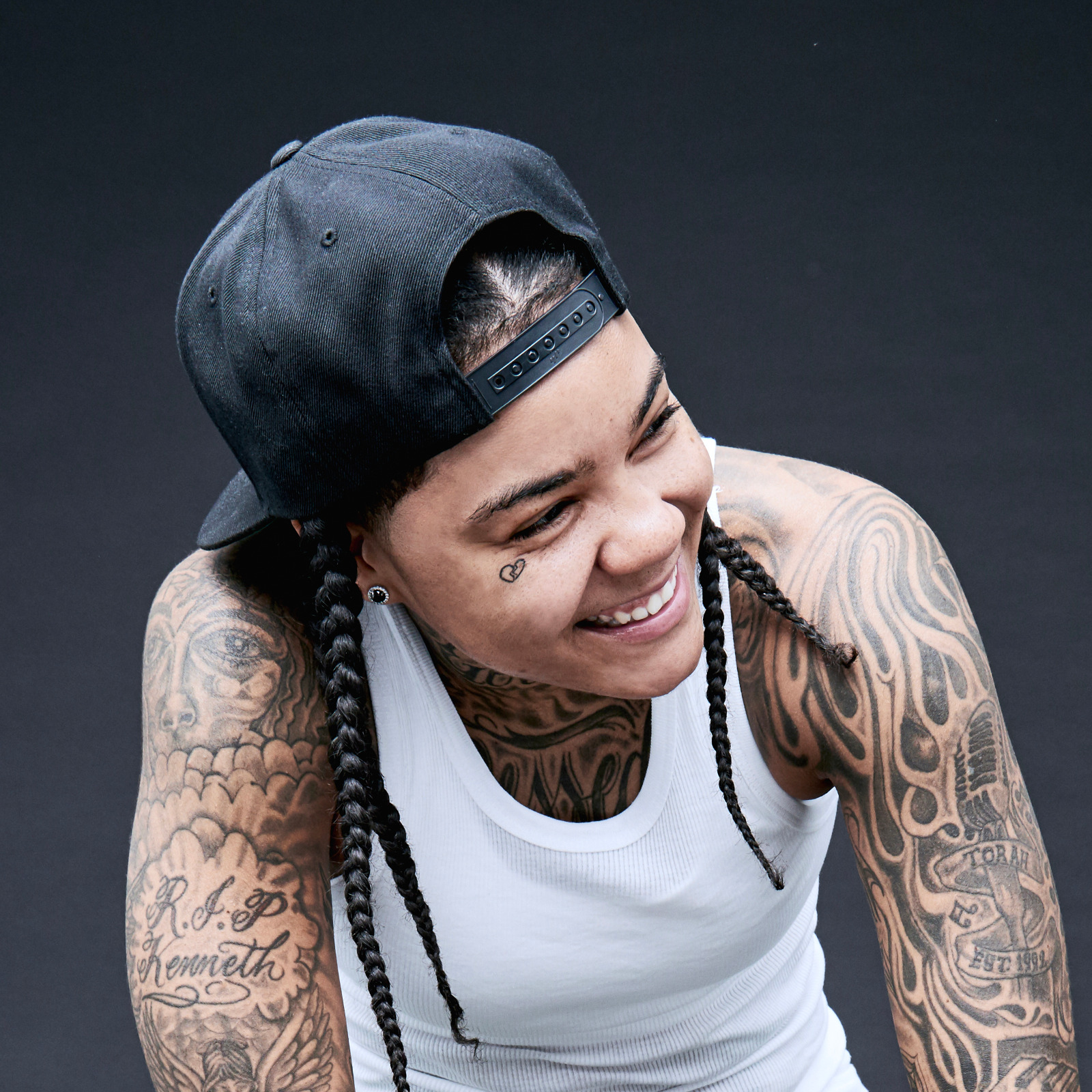
Her brother is also connected to the broken-heart tattoo on the right side of her face. She has said she wanted it as a lasting reminder of him. The placement is bold, but the reason is personal.

For Young M.A, the face tattoo isn’t there to shock people. It’s there because grief doesn’t disappear just because someone is famous.

God’s Gift sits across the neck

Young M.A God’s Gift neck tattoo

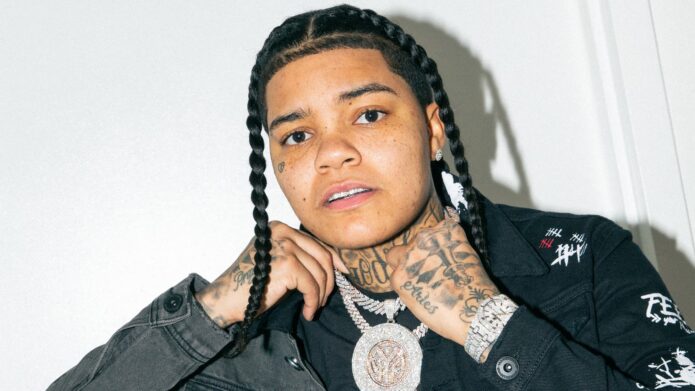
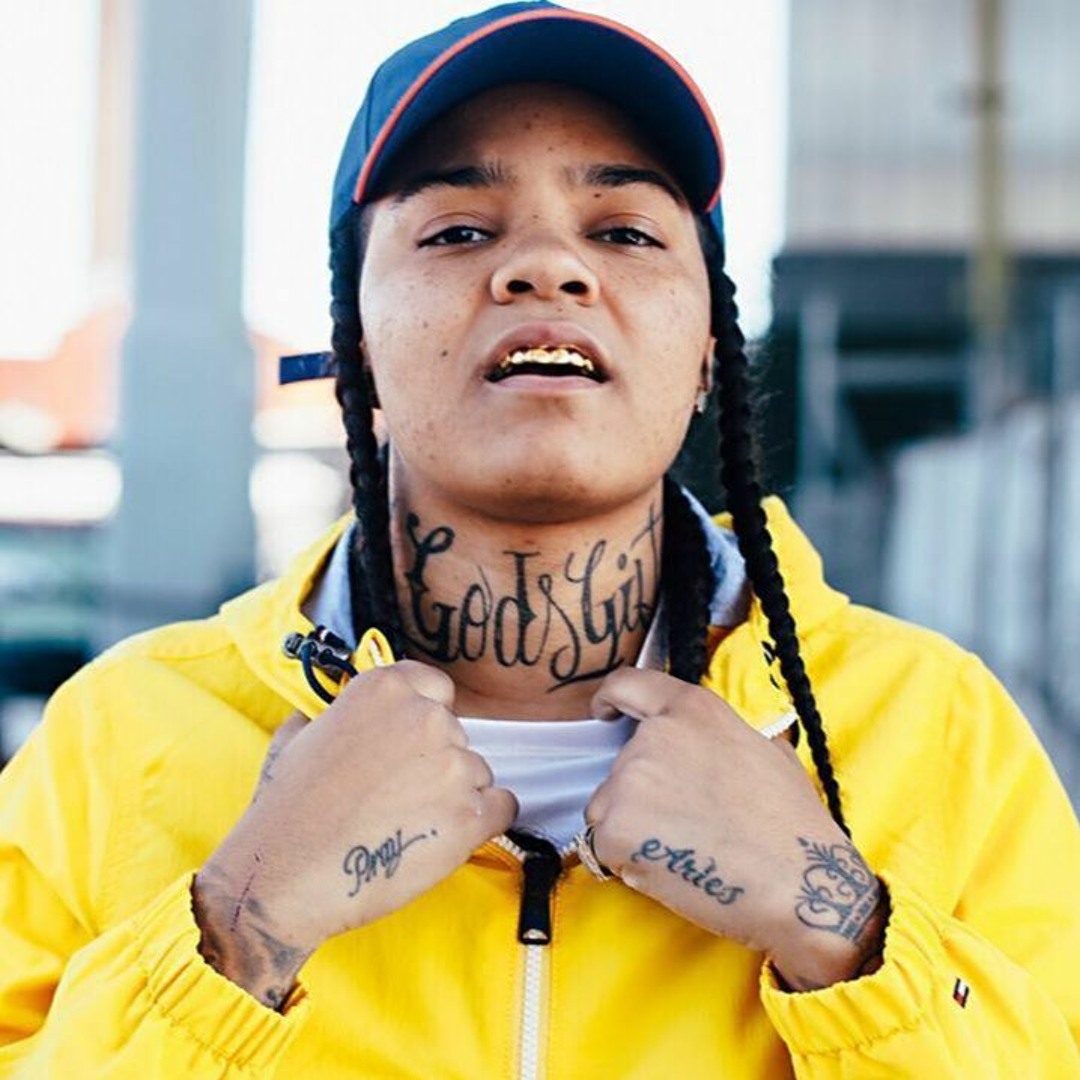
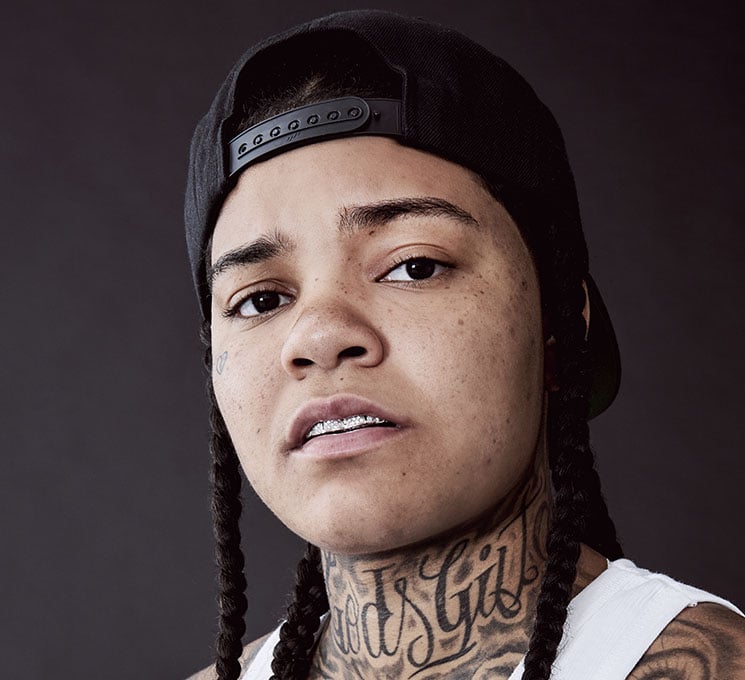
“God’s Gift” is lettered across the front of Young M.A’s neck. It’s one of her best-known pieces and changes the feel of a portrait. Whether she’s wearing a tank top, cap, or open jacket, the tattoo has become part of her everyday image.

The lettering is direct, without a lot of decoration, which suits her style. She wears it with the same relaxed confidence she brings to her music; it makes its point without needing a long explanation.

Photos show the neck tattoo alongside smaller hand pieces and heavier work on her arms. “God’s Gift” may be the headline design, but it sits within a larger collection that runs from the collar to the wrists.

Older reports also mention “Good Lyf” lettering around her neck. The appearance varies across photos, and some pieces may have been reworked. It’s best to describe what each image shows instead of treating every old picture as a perfect record of the current version.

Her hand tattoos keep the lettering close

Young M.A Pray hand tattoo

Young M.A has small hand tattoos, including lettering that has been read as “Pray” and other short words. Hand ink is difficult to keep private, especially for a performer whose hands are always in view onstage, in photos, and in music videos.

The designs aren’t large, and that’s part of their appeal. The words sit close to her fingers and knuckles, visible without turning the whole arm into a solid block of ink. Jewellery or the way she holds her hands can hide some of the letters, so close-up portraits give the clearest view.

The hand work also breaks up the heavier arm tattoos. Instead of one uninterrupted sleeve, there are gaps, lettering, and smaller marks that make the collection feel like it grew over time. That stop-and-start look feels more like real tattooing than a matching catalogue sleeve.

Short words can be personal without needing a long explanation. Young M.A’s hand ink works that way: visible, simple, and in keeping with the attitude she brings to her music.

The microphone tattoo matches her life as an artist

Young M.A arm and chest tattoos

A larger tattoo on Young M.A’s left upper arm and shoulder shows a microphone surrounded by flames. It’s a direct image for a rapper, but it connects to the work she has built her life around.

The flames add movement and help the design stand out in photos where part of her arm is covered. This isn’t a tiny microphone tucked near the wrist; it takes up space and anchors that part of the collection.

Her arm also has other shapes, script, and cover-up work. In the GQ video, she discusses one arm still being in the middle of a cover-up. It’s a reminder that tattoos aren’t always finished once they’re first done; they can be changed or reshaped as someone leaves an older idea behind.

That makes the microphone a strong marker of who she is now, surrounded by earlier pieces that show how she got there.

Brooklyn and the 92nd Street connection

Young M.A script neck tattoo

Young M.A’s Brooklyn roots appear in tattoos connected to her block and neighbourhood. The 92nd Street reference is often mentioned in coverage of her ink. It connects the public artist to where she grew up and keeps the story specific.

That hometown connection matters because her music has always carried a strong sense of place. The tattoo brings the same idea to her skin, showing where the energy came from and why Brooklyn remains part of how she presents herself.

Her collection also includes a crown and lettering tied to the Kween Foundation, an organization she started with her mother to support people dealing with grief and loss. The connection between her tattoos, family, and community comes up repeatedly.

The ink isn’t only about looking tough. Some of it is about belonging: the face tattoo remembers her brother, the neck lettering makes a statement, and the Brooklyn work keeps her roots visible. Together, those choices give the collection a strong sense of identity.

The face tattoo is small but carries the most weight.

The broken-heart tattoo on the right side of Young M.A’s face is one of the smallest pieces, but it may be the one people ask about most. She has tied it to her late brother, giving a simple shape a lot of emotional meaning.

She has said she wanted face ink before getting it, so it wasn’t a spur-of-the-moment decision. The heart sits near her eye and cheek, making it visible in close-ups without covering her features.

Photos show other small face and hand details, but the broken heart is the tattoo with the clearest public explanation. It’s easy to attach a dramatic meaning to every little mark; a good guide sticks to what the artist has actually said.

The best way to understand Young M.A’s face ink is as a memorial that happens to be impossible to miss. It isn’t her largest tattoo, but it is one of her most personal.

Young M.A’s collection keeps changing

Young M.A has enough tattoos that the collection keeps shifting as older pieces are covered, new work is added, and photographs show different angles. That’s normal for arm and neck tattoos built up over several years.

The subjects remain consistent. Her brother, Brooklyn, family, music, and foundation all appear in some form. Even the boldest pieces connect to a real part of her life.

The designs don’t all serve the same purpose. Some are memorials, some mark her hometown, and some were simply pieces she wanted at the time. Together, they feel lived-in rather than staged.

Smaller marks appear in close portraits or when she wears a different top, so one red-carpet photo can’t show the whole collection. The neck words, hand lettering, and arm pieces overlap visually, but they are still separate choices made at different points in her life. The collection makes the most sense when the details are given room to breathe.

Watch Young M.A explain her tattoos

More musician tattoo guides

The Stories Behind Damian Lillard’s Oakland Ink

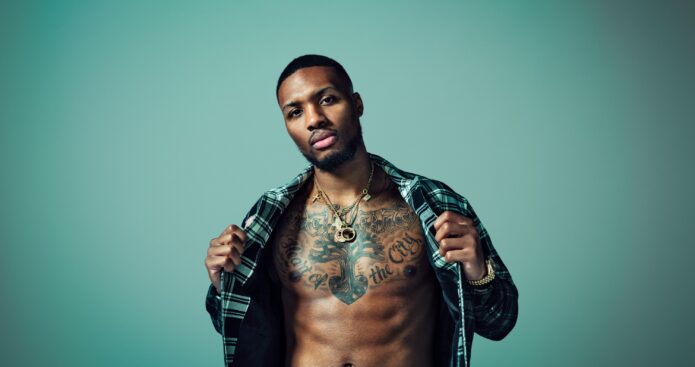
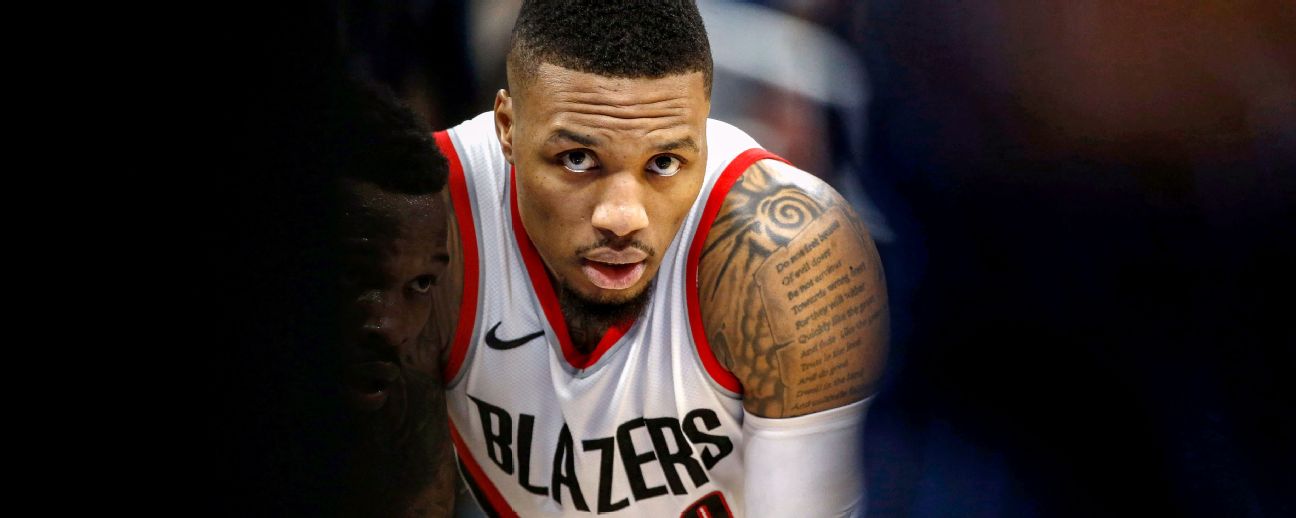
Damian Lillard’s tattoos read less like a collection of random ideas and more like a map of the people and places that shaped him. Oakland runs through the designs, alongside family, faith, his brother, and the basketball path from Weber State to the NBA.

Ink covers his chest, shoulders, wrists, and arms, but the stories are usually easy to follow. Many pieces point back home; smaller lettering honours relatives. And even when a tattoo session hurt, Lillard has been straightforward about it rather than inventing a mystery.

There’s no polished celebrity mythology here. Lillard says he got his first tattoo after high school, chose designs because they meant something, and learned that some spots hurt far more than others.

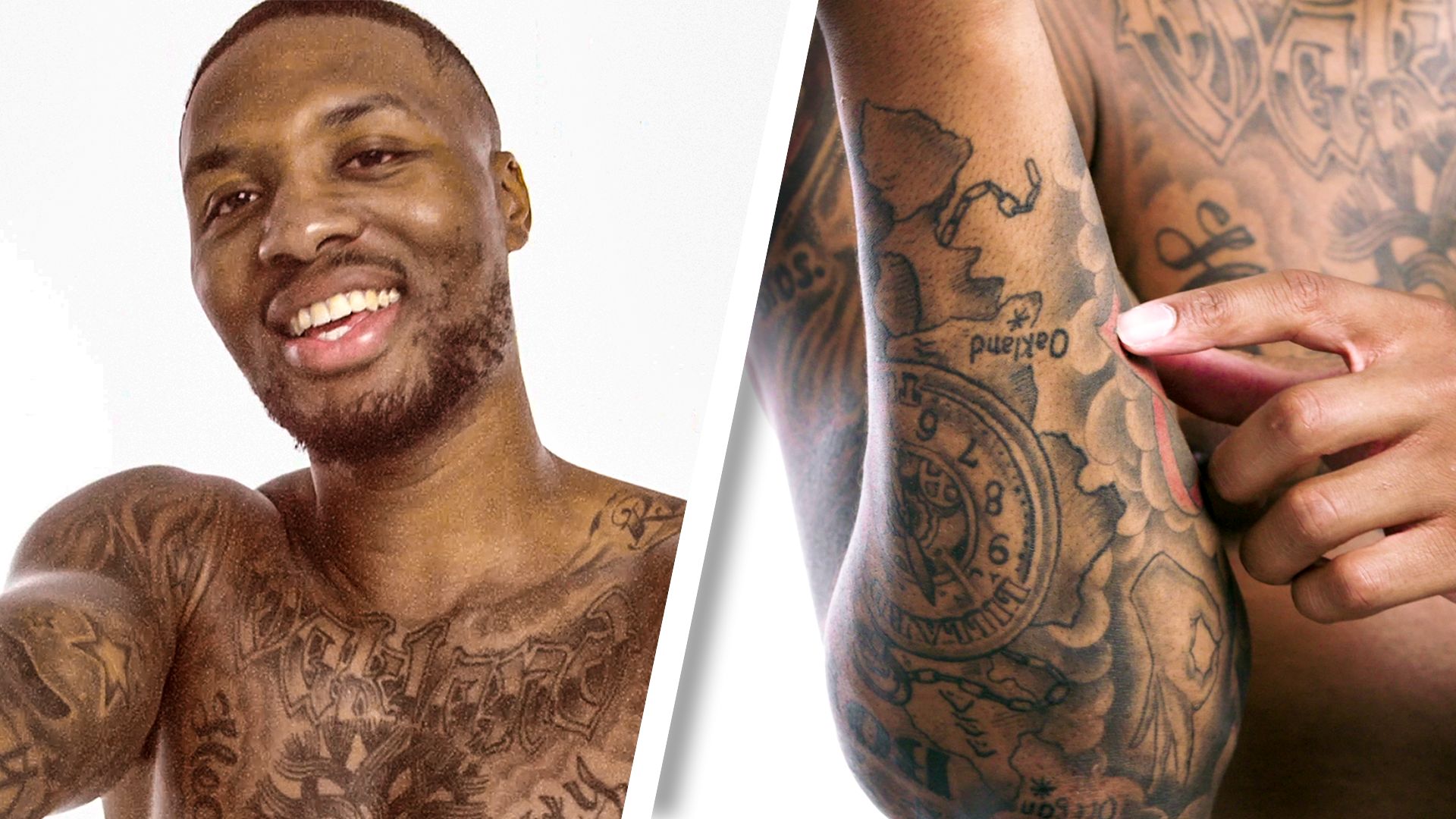
The Lillard Brothers logo was his first tattoo

Damian Lillard tattoo tour showing chest and arms

Lillard got his first tattoo at 18. It borrows the Warner Bros. logo, changing the letters to “Lillard Brothers.” He and his brother Houston got matching versions, turning a familiar shape into something personal.

The timing mattered. Lillard has said his mother wouldn’t let him get tattooed as a kid. Her rule was simple: finish high school, then make his own choices. The first design came after he had done that.

It’s a good introduction to the rest of the collection. From a distance it looks clean and simple, but the meaning is about family and his bond with his brother. It’s the kind of tattoo that can age well because the idea is clear and the connection is real.

In later photos, the logo sits among other arm tattoos instead of on its own. That’s how Lillard’s collection grew: one meaningful piece, then another, until family lettering and larger chest work began to connect.

Oakland is the centre of the chest piece

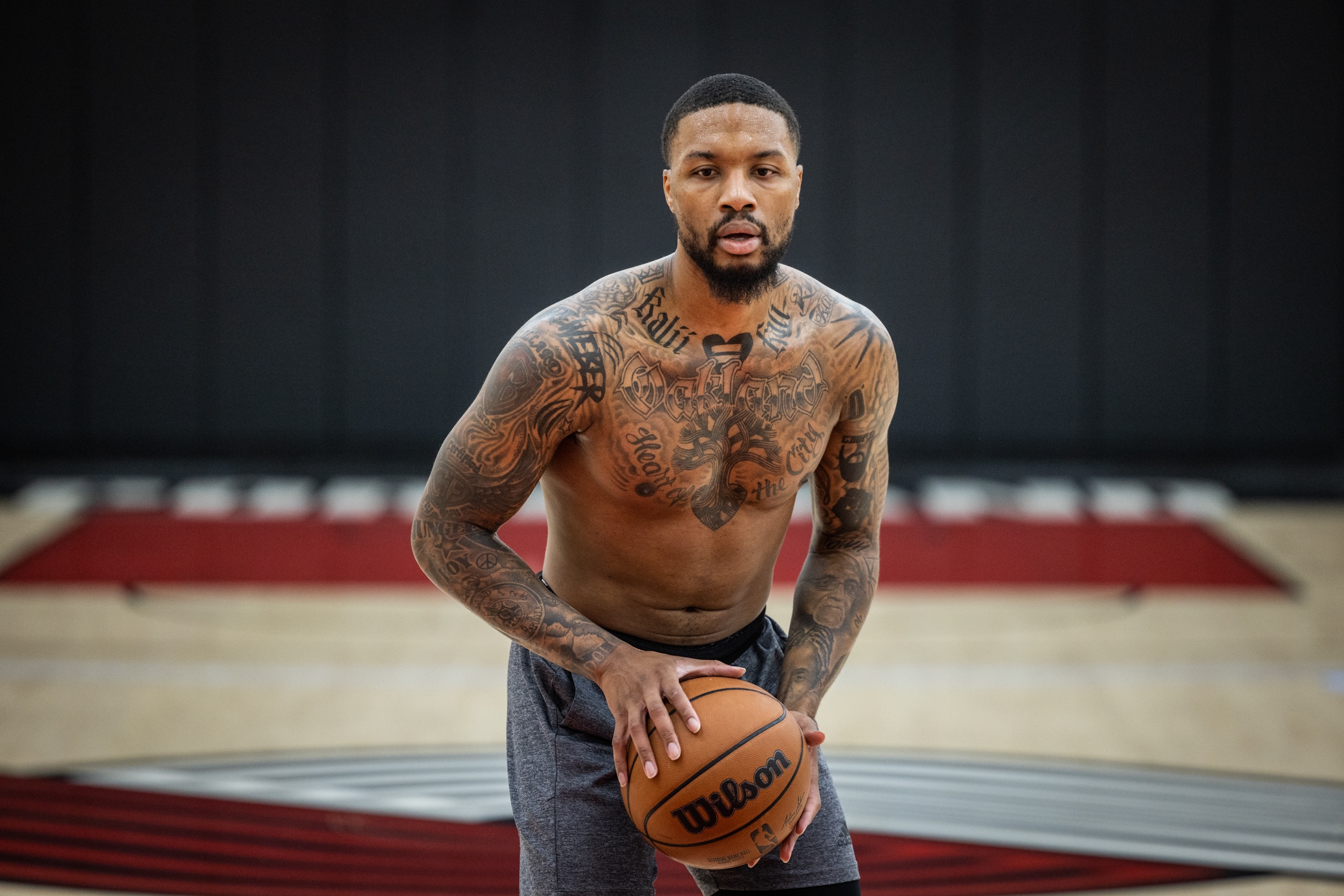
Damian Lillard shirtless training chest and arm tattoos

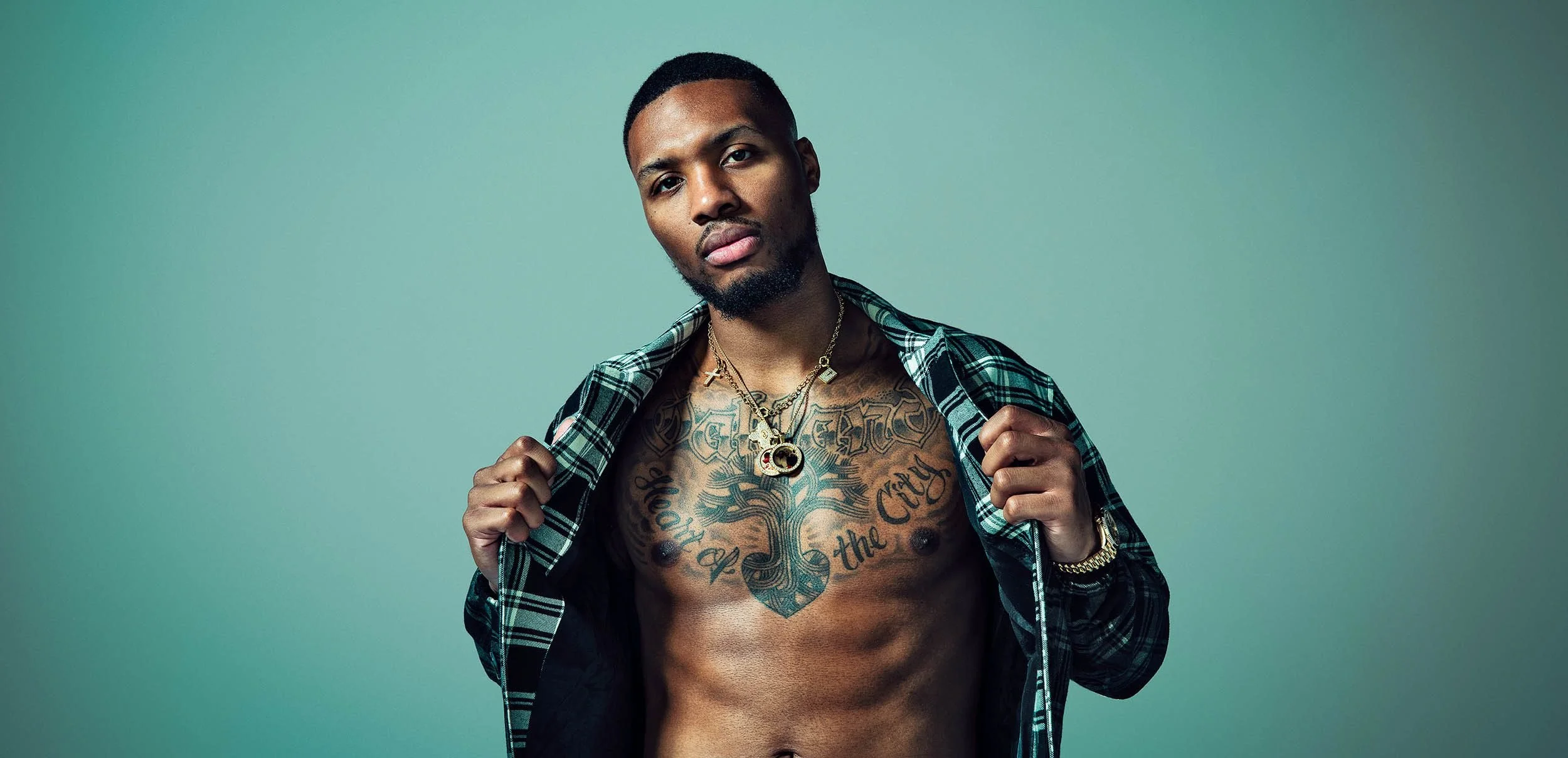
The most recognizable design across Lillard’s chest centres on a heart and tree, with “Heart of the City” tied to Oakland. Branches reach upward, making it more than a simple hometown name. The image represents where he feels he belongs.

Lillard has carried Oakland with him throughout his career. Basketball took him across the country, but the city remains central to his public identity. The chest tattoo makes that clear, visible when he’s training shirtless, posing for a shoot, or talking about life away from the court.

He has described this as one of his most painful pieces. The chest is a tough place to sit through a session, and Lillard said the pain got so bad his body went numb. He wouldn’t choose to do it again.

That makes the tattoo more than a proud hometown design or a painless accessory. It mattered enough to him that he finished it even when the session became miserable.

Names and family lettering fill the arms

Damian Lillard Heart of the City chest tattoo

Some of Lillard’s most personal tattoos are simple names. His arms include lettering for family members, including his mother and sister. The style is common among basketball players, but it still shows who he wants to keep close.

His mother’s part in the story goes back to his first tattoo. She made him wait until he finished school, and the collection he built afterward was his own choice. The family names keep that early moment in the background of the later work.

His arms also hold lines of text and smaller designs that can look different from one photo to another. A wide game-day shot may show dark shapes; a shirtless studio portrait gives the lettering more room. It helps to look at several views instead of treating one angle as the whole collection.

Lillard has said he likes tattoos that mean something to him. Not every design needs a public explanation, but the pattern is clear: the arms carry people, memories, and reminders rather than one single theme.

The Psalms verse gives the ink a quieter side

Damian Lillard wrist and arm tattoos

Lillard has a Bible verse from Psalms 37:1–3 on his left arm. It’s more understated than the chest piece and can disappear beneath a jersey. When it’s visible, it changes the mood of the collection.

The verse relates to faith and keeping steady when other people seem to be moving faster or doing better. That fits Lillard’s public outlook; he has often talked about patience, trust, and following his own path instead of chasing outside opinions.

The writing sits beside other arm tattoos rather than apart as a separate religious display. That mix keeps the collection from becoming one-note.

There are bold designs, softer details, text, portraits, and symbols. The verse doesn’t need to dominate the arm to matter. It works like a personal reminder, visible when his sleeve shifts during a game.

Wrist tattoos and the meaning behind Lillard Time

Damian Lillard shoulder tattoo game photo

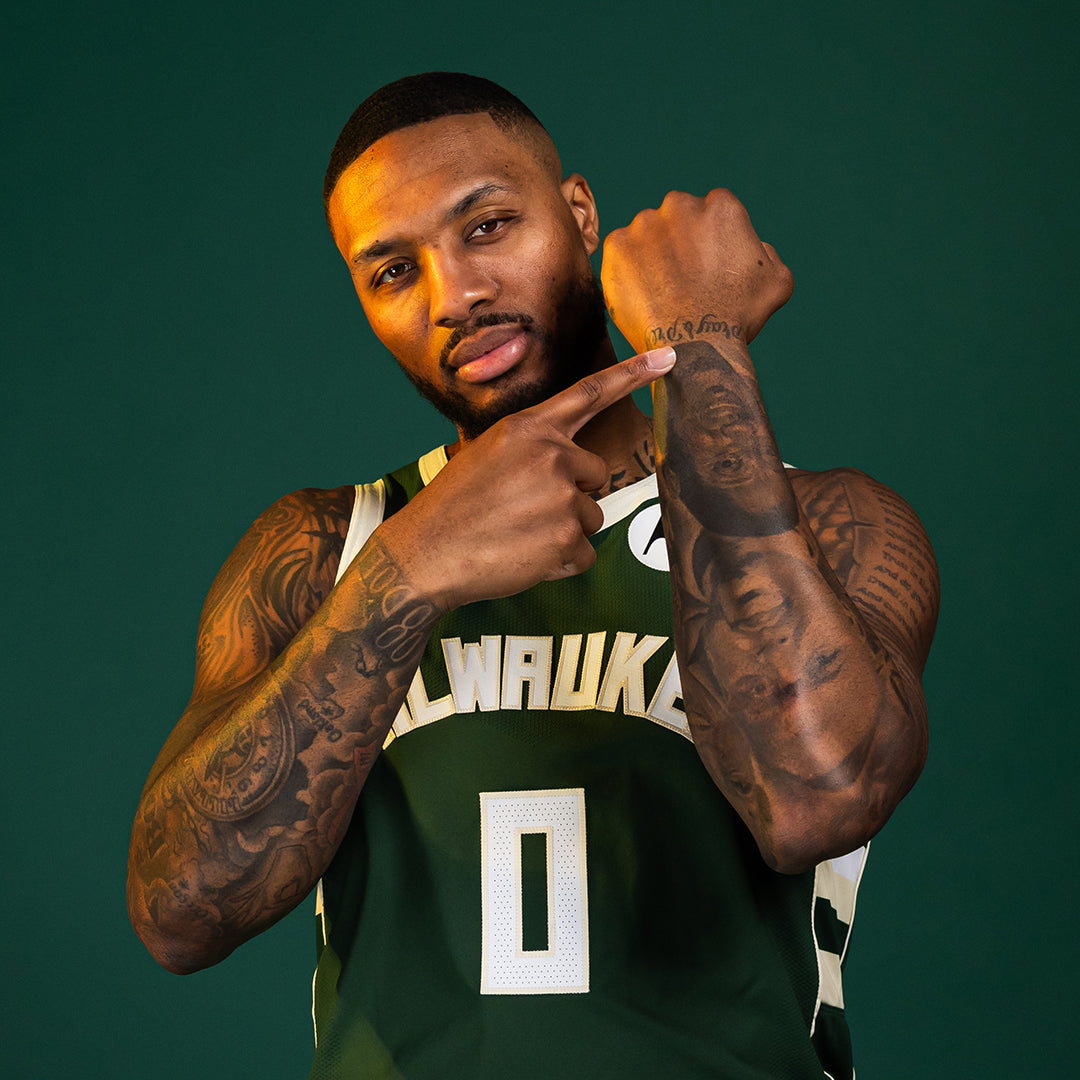
Lillard’s wrists and hands often come into view during his famous “Dame Time” celebration. When he points to his wrist after a big shot, the gesture draws attention to the tattoos around it. Some lettering is hard to make out in an action photo, but the placement has become part of how fans recognize him.

The wrist designs sit beside larger arm tattoos and can look like one continuous sleeve in some pictures. They’re actually separate pieces from different periods, a reminder that a sleeve doesn’t always begin as one big plan.

Game photos aren’t perfect references for reading tattoo details, but they show how the designs move with him. The letters and shapes are visible as he dribbles, points, or calls for the ball. A close portrait reveals more detail; an action shot shows how the tattoos have become part of his basketball image.

The smaller wrist pieces also complement the larger Oakland designs. The city provides the emotional centre, while the arms show everyday themes: family, faith, work, and the pressure of making decisions as the clock runs down.

What makes Damian Lillard’s collection stand out

Lillard’s tattoos aren’t tied to one fashionable style. Script, family names, a logo, religious writing, a large chest image, and hometown references all appear. The repeated themes help them work together.

Oakland anchors the collection; family gives it a personal core; faith adds a quieter layer; and basketball connects it to the career fans know. The first Lillard Brothers design still fits years later because it was never only a fashion choice.

Lillard is also candid about the uncomfortable parts. He wanted the chest piece because it meant something to him, but wouldn’t volunteer for that much pain again. That sounds more believable than pretending every tattoo session was easy.

For anyone looking for design ideas, the useful lesson isn’t to copy every piece. It’s to notice how the strongest tattoos connect to a real life. A hometown, a family name, a verse, or a shared logo can keep a large collection from feeling empty. Lillard’s ink works because the stories came before the artwork.

Some smaller tattoos get less attention than the Oakland chest piece. A wrist detail can disappear beneath a shooting sleeve, and arm lettering may show most clearly when he poses or points during a game. The big designs make the headlines, but the smaller pieces show how the collection grew.

It also helps to separate confirmed meaning from guesswork. Lillard has explained the brothers’ logo, the painful chest tattoo, family names, and faith-based writing. Other shapes are easier to see than to interpret, so it’s better to describe their placement and style than attach a story he hasn’t told. That balance keeps the guide honest while still giving readers plenty to look at.

Watch Damian explain the tattoos himself

More athlete tattoo guides

Tyrann Mathieu’s Ink Runs From Forever Young to a Leg Full of Icons

Tyrann Mathieu’s tattoos are more than decoration. They connect to New Orleans, family, football, faith, the people who shaped him, and parts of his past he doesn’t hide. Some designs are easy to see during a game; others need his own explanation to make sense.

He got his first tattoo as a teenager, while attending an all-boys school where he had to keep it covered. Since then, the collection has grown to include script, portraits, memorials, and symbols. Personal history is the thread running through it, even in the flashier pieces.

The first tattoo and the dark side he kept hidden

Tyrann Mathieu King forearm tattoo

Mathieu has said he was about 16 or 17 when he got his first tattoo. It was an impulsive choice made with friends after looking through a tattoo book. Since visible ink could have caused trouble at his private school, he spent senior year wearing a sweater nearly every day to hide it.

The early design he talks about most is a dark, mask-like image made of seven skulls. The number refers to New Orleans’ Seventh Ward, where he is from. Mathieu has described the tattoo as representing his darker side. It isn’t a tidy inspirational quote; it’s rough and a little unsettling, which fits a teenager trying to understand himself.

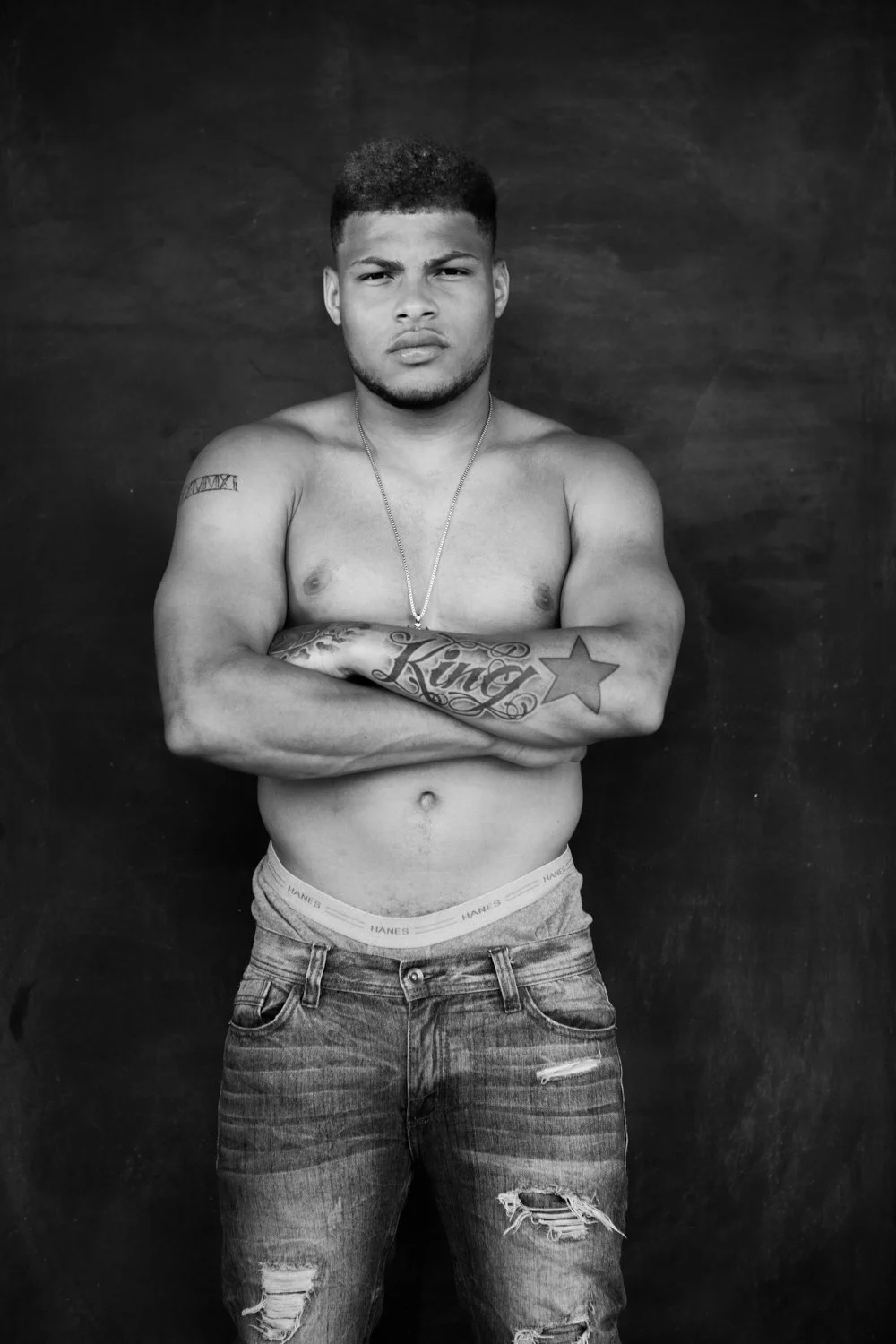
A black-and-white studio photo shows how that older piece sits beside later work. His forearm has large King lettering with a star, while smaller script and a band of Roman numerals sit higher on his arm. The mix looks like it grew over time, rather than being planned as one matching sleeve.

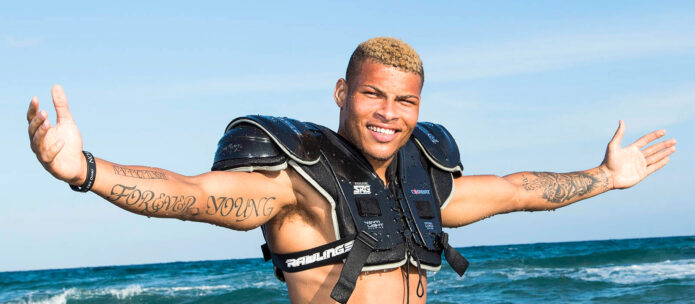
Forever Young is written across his arm

Tyrann Mathieu Forever Young forearm tattoo

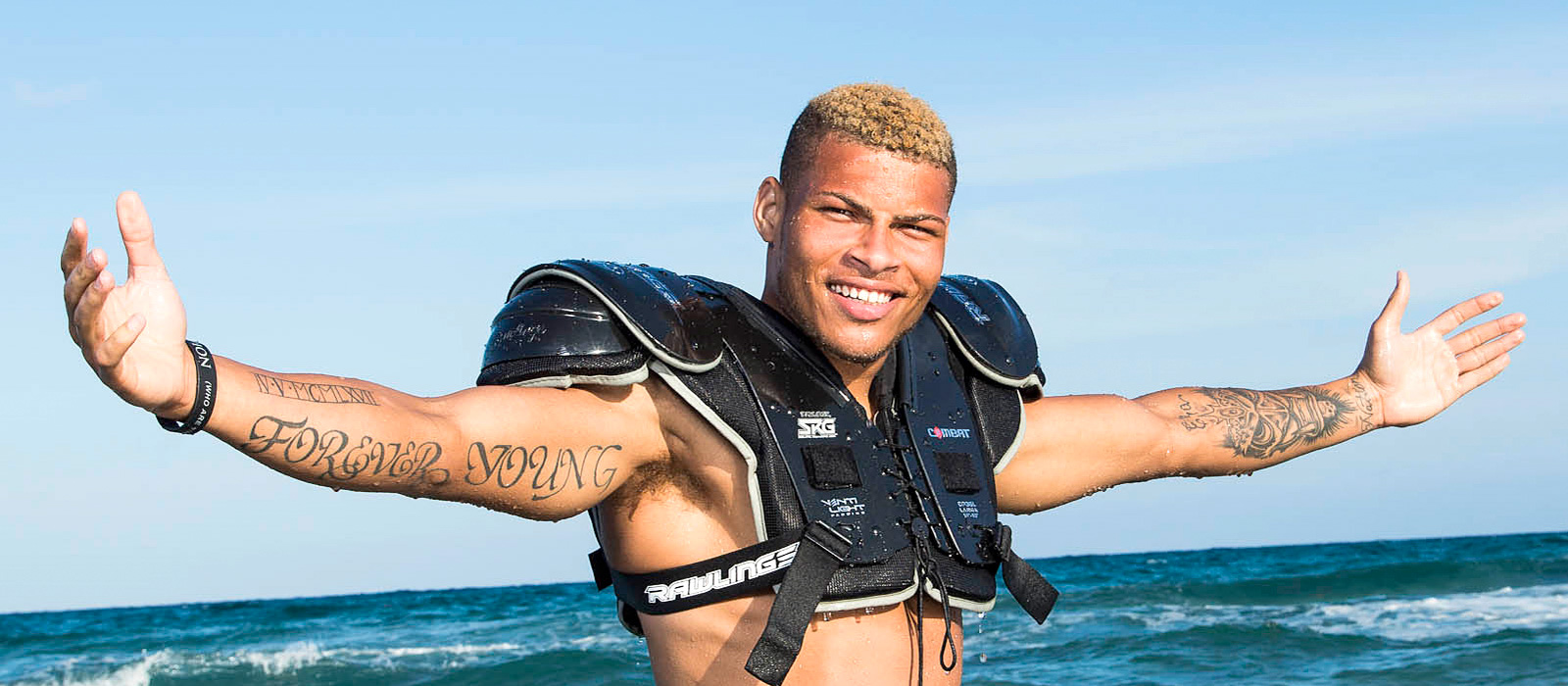
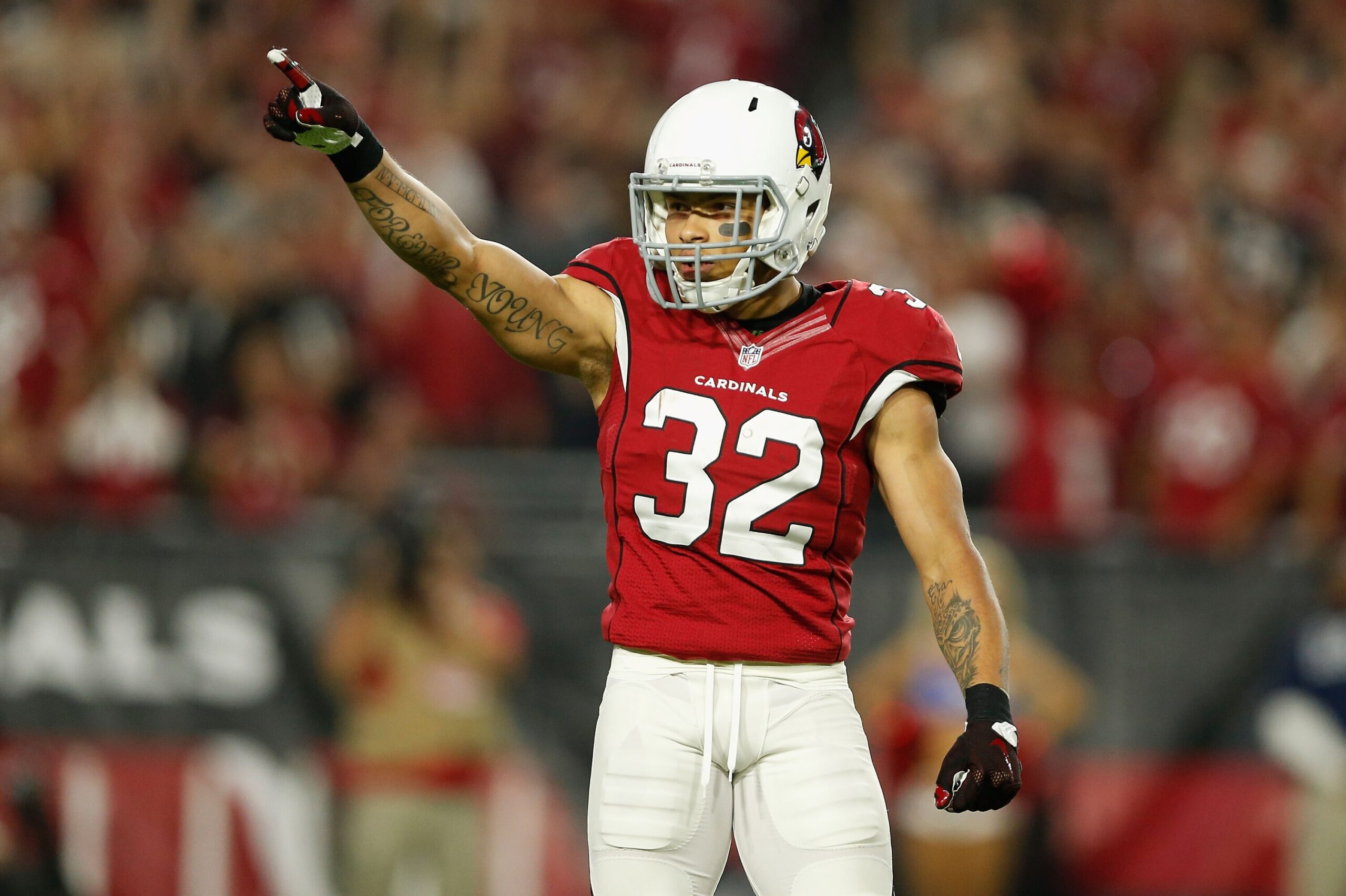
“Forever Young” flows across Mathieu’s forearm in large script, nearly the length of the arm. The phrase comes from Jay-Z’s song, and Mathieu connects it to keeping the curiosity and energy people can lose as they get older.

He has said adulthood can make people forget what made them happy as children. The tattoo reminds him to stay open, try new things, and avoid getting trapped in one version of himself. Its placement keeps that message in view whenever he raises his arms or celebrates a play.

The lettering sits beside other arm work, including “Above the top” near his thumb. That phrase is a direct reminder to keep working and stay hungry, even after reaching the NFL. Mathieu’s arm tattoos read like notes to himself that he chose to keep in public.

King, the crown and taking control of his own life

Tyrann Mathieu GQ tattoo tour arm tattoos

“King” is one of Mathieu’s most striking tattoos. The oversized script across his forearm appears with a star and crown or world imagery. In his GQ tattoo tour, he said the idea isn’t that he’s better than anyone else. It’s about taking responsibility for his own world and owning his choices.

That meaning connects to Mathieu’s uneven path. His mother left when he was young, and his biological father was sentenced to life in prison. He has spoken about the adoptive parents who gave him stability and helped him see a future in football. The “King” tattoo reflects that sense of taking ownership.
Another forearm tattoo reads “For the Family” and includes his adoptive father’s birthday, April 5, 1967. The numbers are small beside the large script but carry plenty of weight. This is where the collection becomes a family record, not just an image. It shows who Mathieu is grateful to and what he wants to live up to.

Protection, patience and the symbols on his arms.

Mathieu’s arm tattoos also include a Chinese foo dog, an elephant, and an ankh. Each has a personal role. He connects the foo dog with protection and keeping evil away, a fitting idea for someone who learned early to stay alert.

The elephant is one of his favourites. Mathieu calls it a spirit animal and associates it with patience and guidance. That’s a gentler idea than the skull mask or the portraits on his leg, adding balance to a collection where not every tattoo is meant to look tough.

The ankh brings another spiritual symbol into the mix. Mathieu has talked about reading people’s energy and sensing the feeling around them. He often connects the tattoos to instinct, identity, and finding his way through difficult situations without losing himself.

Other details, including hand lettering and the Roman numeral band on his upper arm, can be easy to miss in wide game photos. That’s why the closer studio view helps. For a tattoo site, the small work deserves as much attention as the large portraits.

The leg portraits are a personal hall of fame

Tyrann Mathieu portrait leg tattoo collection

Mathieu’s most ambitious tattoo work is on his leg: portraits of Zeus, Muhammad Ali, Bruce Lee, and Malcolm X. It’s a personal hall of fame, with each person representing a different kind of strength.

Zeus represents power. Mathieu has described him as a figure with enormous power, which makes sense of how the portrait anchors the group. Muhammad Ali stands for sporting greatness and the confidence to speak up for something bigger than himself. Bruce Lee connects to preparation and awareness; Mathieu admires how Lee understood his opponents, a quality that also fits the mental demands of playing safety.

Malcolm X represents speaking up when things are wrong. Mathieu has said Malcolm’s willingness to address uncomfortable subjects mattered to him. Together, the four portraits map out qualities he wants around him: power, courage, focus, and honesty.

Game photos don’t always show every portrait clearly, with shorts, socks, and movement in the way. Still, the different angles show how much of the leg is covered. It’s a group of portraits and symbols designed to read together, not one flat image.

Crosses, initials and the people he lost

Tyrann Mathieu memorial crosses and initials tattoos

Mathieu’s crosses are among the collection’s most emotional tattoos. They honour family members, friends, and others close to him who have died. Initials beside the crosses make each memorial specific rather than generic.

He has said the tattoos help him carry those people with him. The designs sit on his leg and move with him when he runs, cuts, and plants his feet. That placement fits an athlete, but the meaning goes beyond football: these are reminders of people who won’t be there to see the next game.

A quote on the inside of his leg reads, “When you’re a star, you put God first. Let your past guide and your future determine you.” Mathieu came up with the line himself. It brings faith, memory, and ambition together without pretending the past never happened. He isn’t trying to erase where he came from; he wants to keep it from deciding where he ends up.

Louisiana, the Seventh Ward and the number seven

Tyrann Mathieu Louisiana and Seventh Ward tattoos

New Orleans is a major part of Mathieu’s tattoo story. The Seventh Ward appears in the skull design, while the number seven also refers to the LSU jersey he wore. Another tattoo shows Louisiana with the 504 area code, keeping his home state close wherever his career takes him.

The hometown link returns in a tattoo on the back of his leg. Mathieu wore number seven at LSU and has described the design as a reminder that people in his community look to him. It carries pride, pressure, and responsibility at once.

When he talks about Louisiana, his tone shifts. He speaks about the affection and genuine support he feels when he returns. The state outline and area code are simple designs, but they carry the same message as the larger portraits: success hasn’t cut him off from home.

Why the whole collection works.

Mathieu has a lot of tattoos, but they feel connected when you hear the stories. His arms cover identity, protection, ambition, and family; his legs hold memorials, hometown references, and portraits of people he sees as guides. Even the dark early design refers to the Seventh Ward and a side of himself he once kept hidden.

That’s why the tattoos stand out in football photos. They aren’t just a visible sleeve beneath the pads; they make a running diary. Some are reminders, some are tributes, and others were simply pieces he liked when he was young. Together, they turn his background, relationships, and influences into something he can carry with him.

Watch Tyrann Mathieu explain the stories himself

More athlete tattoo guides

200 Tattoos and Counting for Nyjah Huston

Nyjah Huston’s tattoos don’t read like a collection with a tidy beginning and end. They’re closer to a sketchbook: some pieces are carefully planned black-and-grey work, some connect to skateboarding or family, and others are there because he liked the joke. That mix is what makes the collection interesting.

In his GQ tattoo tour, Huston estimated he had around 200 tattoos, covering roughly 90 percent of his body. It’s only an estimate, but the photos make it plausible. His neck, chest, arms, hands, legs, back, and even his backside have become part of the project. One photo only shows a small piece of a much bigger picture.

Here’s a closer look at the main designs Huston has discussed and how the smaller tattoos fit around them. He has said plenty of pieces are simply things he likes, so there’s no need to assign a confirmed meaning to every tiny mark. That candour makes the collection feel more human.

The first tattoo was a simple Skate and Destroy piece

Nyjah Huston hand and forearm tattoos

Huston got his first tattoo on his arm at 18. He was at Tampa Pro, where tattoo artists were working behind the contest area, and his friend Chase kept urging him to get something. He chose the familiar Skate and Destroy phrase. It sounds like an obvious choice for a pro skater until you hear how spontaneous it was.

He has said he wasn’t even sure he wanted tattoos before that day. His friend was getting one, a design he liked was available, and Huston went for it. Then he returned to skate in the contest with fresh ink. It’s a very Nyjah beginning: impulsive, rooted in skating, and followed by many more tattoos.

Close-up shots of his hands and forearms show how much the collection grew after that first piece. Small symbols, letters, and shapes cover his fingers, while larger work blends into portraits and dark shading on his forearms. The tattoos aren’t one continuous sleeve; they look like separate decisions that gradually came together.

His chest is built around roses, clocks and compass details

Nyjah Huston chest and neck tattoos

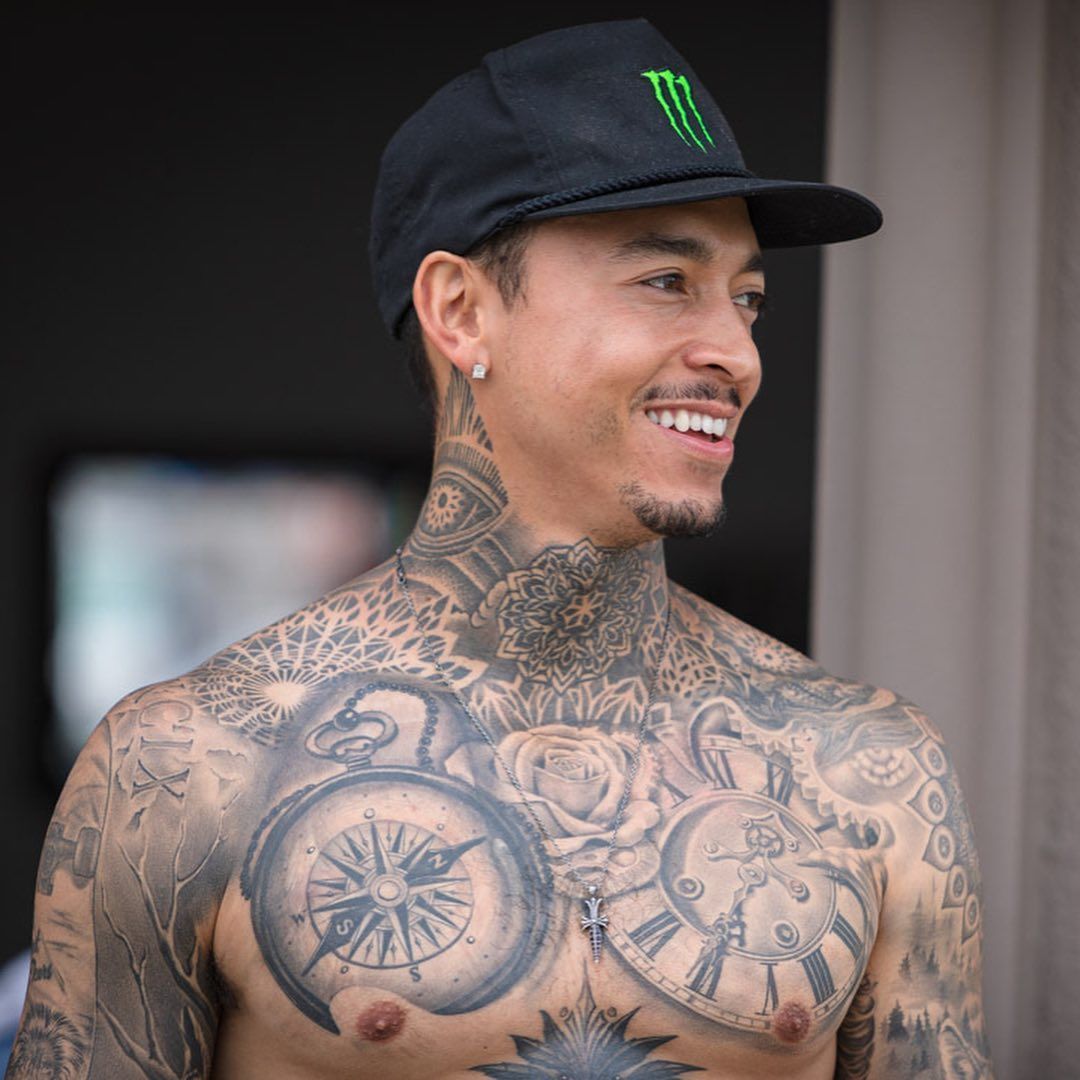
Huston’s chest looks more deliberately arranged. Photos show large black-and-grey work across both sides, with a central rose, compass imagery, clock details, and geometric patterning. These aren’t small filler designs; they give the whole torso weight.

A compass and clock sit near the rose, which softens some of the harder shapes. Smaller lines and symbols fill the spaces between the larger images. From a distance the chest can look like one large piece, but up close it’s a group of separate tattoos. The fine lines, numbers, and shading are easier to see in a close crop.

Huston has also talked about reworking the chest as his taste changed. He had an early portrait of his mother removed with laser treatment because the light-coloured tattoo didn’t sit well in that spot. He replaced it with darker work, including the clock. He was clear that his feelings for his mother hadn’t changed; he simply didn’t like the tattoo’s appearance.

The lion on his stomach carries the biggest personal story

Nyjah Huston full torso lion and chest tattoos

Huston has explained the lion on his stomach in more detail than many of his tattoos. He says the animal has been his favourite since the years when he wore long dreadlocks and became known as a young skater. To him, the lion recalls the image people had of him then: a small, fearless kid with dreadlocks and a big personality.

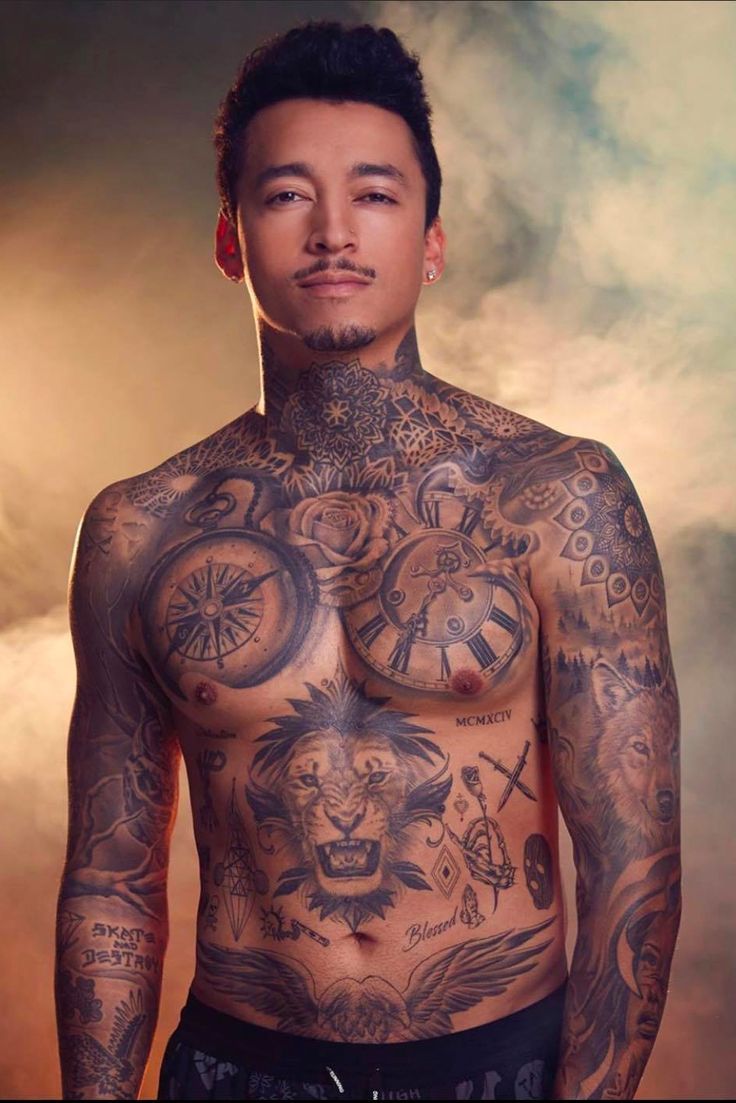
In the full-torso view, the lion sits below the chest work. Its face, mane, and dark shading create a strong focal point. The expression is fierce, but the surrounding designs connect it to the rest of his torso. The clocks, rose, and compass draw the eye toward it.

There’s also a lion skull elsewhere in the collection. That helps explain why it’s difficult to reduce Huston’s tattoos to one simple list: a theme may return in different forms, while unrelated images sit beside it. He has said he chooses tattoos that fit his vibe, not that every design needs one grand explanation.

The same photo shows torso lettering, including Blessed and the Roman numerals MCMXCIV, his birth year, 1994. Those smaller marks help tie the lion into the rest of the collection.

His neck and throat work took serious time and pain

Nyjah Huston selfie showing neck and chest tattoos

Huston’s neck is hard to miss. A large mandala-like design spreads across his throat, with patterns climbing the sides of his neck and continuing down toward his chest. The detailed lines can look like lace or carved metal in photos, giving his upper body a recognizable shape.

On the right side of his neck, he describes a triangle with an eye as having an Illuminati vibe. An eagle sits on the left. The surrounding geometry helps the separate images sit together. Open spaces, dots, and repeating lines keep the neck from reading as one solid black shape.

The sessions were intense. Huston said the work took about three days, with each session lasting five or six hours. He described the skin being stretched and his head and neck pulled into awkward positions, especially around the Adam’s apple. It was a major project and one of the most painful parts of his collection.

He has also said he might get a small face tattoo someday, but hadn’t done so when the GQ tour was filmed. For now, the neck is the closest his most visible facial area comes to a fully tattooed statement.

One leg is his home for random ideas

Nyjah Huston leg and arm tattoos at a skate session

If the chest is the more organized part of Huston’s collection, one leg is where he lets himself be silly. He calls it his random leg and points out a Jason mask, a pineapple, a grim reaper, a lion skull, and a waffle. The images don’t need to match; the fun is that they share the same space.

The waffle is exactly that: Huston likes waffles, so he got one. He’s joked that people might think it’s stupid, but he has no regrets. The ferret on a skateboard came from a similar impulse. A friend kept asking when Huston would get a ferret tattoo, and when his friend Cody was in town, he went ahead with it. He wasn’t in the mood to plan a serious design, so the ferret won.

That same leg has darker ideas too: butterflies, a tombstone marked See Ya Soon, a skeleton giving the middle finger, a mushroom, and other small drawings. On paper, the list sounds odd; in photos, it looks like a personal flash sheet that kept growing.

Skateboarding turns up among the jokes as well. Skateboards, small symbols, and lettering sit beside larger images. Huston says some tattoos come from things he notices and likes in the moment, while others take more thought. This leg shows both approaches living side by side.

The back and hips are a newer, more symmetrical project

Nyjah Huston neck mandala tattoo

Huston said he started working seriously on his back about a year before the GQ tour. His friend Kry, who works at Bang Bang in New York, did much of the tattooing. Unlike the random leg, the back has a more deliberate layout. Huston described it as symmetrical, with paired elements running down both sides and other images through the middle.

That symmetry gives the rest of his looser collection some structure without forcing all the tattoos to match. Geometric designs carry across the shoulder blades and hips, connecting with patterns already visible around his neck and shoulders.

He has also mentioned geometric tattoos on both sides of his backside that line up with the back work. They’re hard to see in a front-facing photo, another reason the collection needs several views. A chest portrait might show the rose and clocks while missing the newer back pieces entirely.

Other tattoos across his body include angels, wolf imagery, crosses, American flag details, small crowns, diamonds, praying hands, anchors, and tiny finger designs. Not all of them have a confirmed story. Some are simply images he liked, and the collection is more interesting when those can be left as they are.

The broad style is black and grey, dense, and still growing. Huston has said he prefers black-and-grey work because he thinks it suits his skin tone. Soft shading, dark outlines, geometric patterns, and realistic faces and animals recur throughout. Even the jokes sit within that wider visual style.

He has worked with a number of tattoo artists, including Thomas Hooper, Paul Timman, Sam Dusenberry, and Daniel Silva, as well as friends who have tattooed him over the years. Their styles differ, but Huston’s taste helps the tattoos feel connected.

There isn’t one message behind all 200 or so tattoos. Some relate to skating, family, or childhood; others are a waffle or ferret because he thought they’d look good. That may be the most honest way to read the collection: serious work and silly ideas share the same skin.

For anyone taking design inspiration from Huston, the lesson isn’t to copy the whole collection. Notice how a large chest piece sits beside tiny finger tattoos, or how a joke design can still become part of a personal style. Huston keeps finding room even when he says there’s hardly any left.

Watch Nyjah Huston explain the tattoos himself

Huston talks through his first tattoo, the ferret, the waffle, his neck work, the lion, and the random leg. The stories come from him rather than guesses based on a photo.

More athlete tattoo guides

Arabic Script, NASA and the Tattoos Bazzi Is Still Building

Bazzi’s tattoos are still growing, and that’s part of the idea. In his GQ tour, he said he planned to keep adding to them but didn’t want to rush into designs everyone else already had. He waited until an idea felt like his.

The collection now mixes Arabic writing from his family, space imagery, music, symmetry, and a few pieces he chose because he liked how they looked. Not every tattoo needs a big life story; Bazzi’s make room for both personal meaning and a design that simply looks good.

Here’s what he has explained so far, from the first words his dad wrote out for him to an arm piece that took more than half a day.

Three Arabic affirmations came from Bazzi’s dad

Bazzi sleeve and hand tattoos

Bazzi’s first tattoos are three short affirmations in Arabic. His dad wrote out the words, making the lettering more personal than a translation he picked from a book or an online design. Bazzi is Lebanese, and the script connects the tattoos directly to his family background.

The lines say he is a child of the universe and infinitely creative; that he’ll live to bring understanding and beauty into the world; and that he won’t live in the past or future, but stay present. They’re big ideas in clean, simple lettering, which fits the way Bazzi describes his taste.

His dad didn’t want him getting tattoos, so Bazzi used the first one as a kind of bargain: if his father wrote the words, maybe he’d be more comfortable with the tattoo. Bazzi jokes that after that, it was a lost cause. The story adds a family layer to the Arabic ink: the meaning matters, but so does the person who first put the words on paper.

The affirmations also help explain why Bazzi talks about balance when discussing his tattoos. He likes simple shapes, even spacing, and designs that sit comfortably beside each other. The writing is meaningful without being loud or overworked.

His NASA mission patch is a proper space fan tattoo

Bazzi Arabic script and music tattoos

Another major piece is a NASA mission patch. Bazzi has described himself as a big space fan, so the design makes sense. While on tour, he visited NASA and stood on the floor in mission control. He compared the experience to being a kid in a candy store.

NASA reportedly even told people in space that Bazzi had turned the patch into a tattoo. He said they were excited, and connected the story to his first album, Cosmic. The tattoo is both a souvenir from a memorable visit and an extension of the space theme he was exploring in his music.

It feels different from the Arabic affirmations. Those are about how he wants to live; the mission patch is about a place, a fascination, and an experience that made a strong impression. The collection works because the pieces don’t all try to say the same thing.

Bazzi has also pointed out smaller arrows and marks that don’t have a deep explanation. He just liked how they looked. That honesty is useful: sometimes a tattoo honours your family or beliefs, and sometimes you see a clean design and think it looks good.

The Vitruvian Man took more than twelve hours

Bazzi shoulder and arm tattoos

Bazzi’s biggest arm tattoo is based on Leonardo da Vinci’s Vitruvian Man. The full concept came from an artist named Bulloss. Bazzi trusted his eye, let him develop the design, and wanted it as soon as he saw the finished idea.

The figure remains inside the famous circle and square, with extra details around it. Bazzi points out a palm featuring Mercury, Apollo, and Jupiter, along with other elements. He likes that da Vinci was centuries ahead of his time, which fits his interest in ideas that move beyond one period or style.

The work took about 12 to 14 hours. Rather than letting that put him off, Bazzi got excited and asked the artist to start another piece the same day. He had waited for ideas that felt right, but once he found an artist he trusted, he was ready to keep going.

The Vitruvian Man also fits his love of symmetry. Bazzi wants the tattoos to feel balanced and move together at a natural pace, almost like parts of a song. The design has its own structure, giving the arm a centre without needing a huge block of dark shading.

There’s a similar interest in tattoos as a record of creative life in Trevor Jackson’s tattoo collection, though the two artists choose very different images. Jackson leans into characters, portraits, and family symbols; Bazzi returns to proportion, space, and movement.

Music, butterflies and stars sit on his arm

Bazzi musical note arm tattoos

One of Bazzi’s most recognizable tattoos is a flowing music design with butterflies and stars in place of ordinary notes. He got it while doing charity work in Bali, where he knew of an artist whose style suited the idea.

Bazzi doesn’t think music has to be perfectly technical. For him, it’s a way to create and give feeling a place to go. The wavy lines keep the design moving, while the butterflies and stars make it feel less like sheet music and more like a melody drawn out visually.

He has said he may not read every note or draw a realistic face, but he can put passion and intensity into what he makes. The tattoo reflects that: it isn’t meant to look like a textbook diagram, but to feel free and a little dreamy.

Smaller musical marks and script also appear on his arm, easier to see in close-up photos than in a full red-carpet shot. The different views help: one shows how the tattoos sit on his body, another reveals the writing, lines, and symbols.

The sun, moon and yin-yang design is about balance

Bazzi Arabic and musical arm tattoos

Bazzi has a design built around the sun, moon and yin-yang. He describes the sun and moon as coming from different worlds and meeting in the middle. The image reflects his belief that life needs both sides: light and darkness, happiness and sadness, the grounded part of him and the creative part.

The Arabic affirmations belong to that same foundation. They represent his roots and the way he tries to live, while the moon points toward music, magic, and imagination. The yin-yang brings those ideas together in one connected design.

This is where the collection’s symmetry becomes clear. Bazzi isn’t just collecting unrelated images and hoping they match. He likes the way one side can answer the other, and pays attention to how smaller pieces move around his arm.

During the GQ tour, he was still considering adding much more ink, possibly toward his neck. He wasn’t ready to get a face tattoo. Those were future ideas, not finished work, but they show how he saw his arm as a starting point.

Some tattoos connect closely to his family or beliefs. Others recall NASA, music, or the balance he wants in life. And then there are the arrows he simply liked. That mix keeps the collection from feeling stiff: it’s thoughtful without pretending every small mark needs a grand explanation.

The overall shape is easy to see. The Arabic lines provide a family and values base, the NASA patch captures his curiosity, and the Vitruvian Man gives the arm a centre grounded in art and science. The music design loosens the composition with movement and imagination. Even the marks he calls meaningless fit his taste for clean, simple forms. The pieces feel connected without all looking like copies of one idea.

Watch Bazzi talk through the ideas, artists, and stories behind his tattoos:

Mortal Kombat, Family and the Ink Trevor Jackson Chose

Trevor Jackson’s tattoos look chosen for a reason. Many connect to a person, belief, film, game, or memory he wants to keep close, so the collection feels more like a scrapbook than a random sleeve.
He has explained much of the ink himself. His first tattoo used a Bible verse in his mother’s handwriting; others refer to family, music, martial arts, and characters that shaped him. There’s even a large back piece tied to a frightening period in his life. Here’s a look at the tattoos Jackson has discussed, without trying to guess at marks hidden under his shirt.

Trevor Jackson’s first tattoo is a Bible verse from his mother

Trevor Jackson arm and shoulder tattoos

Jackson got his first tattoo at 18. It’s 2 Timothy 1:7, a Bible verse his grandmother taught him, written in his mother’s handwriting. That made it easier for his mother to accept: the words weren’t random text picked from a book, but a family memory in familiar handwriting.

The verse says God gave people power, love, and a sound mind instead of fear. Jackson has called it the first Bible verse he learned, making it both a faith tattoo and a piece of home. It sits on his left side, in the area that later grew into tattoos across his left arm and back.

It also gives a sense of how he approaches ink. Jackson has said his tattoos carry “extreme meaning,” usually tied to a situation, value, or belief. Even when the subject is a game or comic-book character, there’s generally a personal reason behind it.

The Jesus and Peter back tattoo came from a rough period

Trevor Jackson back Jesus and Peter tattoo

The clearest view of Jackson’s back shows Jesus pulling Peter out of the water, with a boat included in the scene. He said the design came from a difficult period when he felt he had been saved from something that could have gone badly.

It’s one of his larger, more detailed tattoos. Jackson said it took three sessions, which tracks with the shading and the way the figures fill his back. Water, movement, and a religious story all come together in one scene.

The message is direct but personal: being pulled out of trouble. Jackson has also said he’s proud of times when he felt lost, sad, or unsure, because those experiences helped shape him. The back piece fits that idea especially well.

Jackson explained the feeling behind the design without presenting it as a full account of his life. It’s a religious reference tied to survival and relief, not evidence that every tattoo he has carries a hidden religious message.

His left arm mixes Mortal Kombat with Toy Story

Trevor Jackson sleeve tattoos

Jackson’s left arm has some of the collection’s more playful references: designs from Mortal Kombat and the aliens from Toy Story, pointing toward the famous claw. The mix may sound unusual, but both come from things he genuinely enjoys.

The Mortal Kombat design is a tribute to his favourite game. Jackson jokes that he’s very good at it and that the tattoo warns people not to challenge him. It’s a fun detail, but it still follows his broader rule: a tattoo has to mean something before it earns a place on his skin.

The Toy Story aliens carry a more reflective idea. They’re stuck in a glass case, waiting for the claw to lift them somewhere else. Jackson related that image to the feeling that people are here to do something bigger, even if they don’t yet know what it is. Their wish to ascend became a reminder not to stay stuck or settle for a stationary life.

These aren’t just childhood references. Jackson uses familiar characters to express ideas about ambition, freedom, and growing into something bigger. The cartoon images feel approachable, while the stories behind them add another layer.

Prince, Bruce Lee and Capoeira fill out the arm story

Trevor Jackson arm tattoos portrait

Jackson has several more references on his arm. A Prince tattoo connects to the point when he started feeling more confident making music and playing guitar. Prince showed him he could do things differently, write for himself, and take charge of his own direction.
A tattoo tied to Bruce Lee recalls the martial-arts movies Jackson’s dad showed him as a child. Lee became a major influence, and the design represents making your own path instead of letting other people decide who you should be. Jackson has compared that kind of self-belief to figures such as Muhammad Ali, who carried himself as great before everyone else agreed.

Another piece represents Capoeira, the Afro-Brazilian martial art that enslaved people in Brazil disguised as dance when they were barred from training openly. Jackson has talked about its mix of discipline, acrobatics, music, and movement. The tattoo brings cultural history and physical practice into the collection.
Together, the designs explain a lot about the arm. Prince represents creative freedom, Bruce Lee self-belief, and Capoeira discipline and history. They look different, but the ideas fit beside one another.
Jackson’s approach has something in common with how Titus Welliver’s tattoos are discussed: what matters isn’t only how much skin is covered, but why certain memories stayed important enough to become permanent.

The Jackson ambigram and Silver Surfer tattoo are all about identity

Trevor Jackson forearm tattoos

One of Jackson’s cleverest pieces is an ambigram that reads “Jackson” from either direction. Turn it around and his name still works. It’s a smart bit of lettering, and it suits someone who thinks about identity and how he wants to move through the world.

Above it is a Silver Surfer tattoo. Jackson calls the Silver Surfer his favourite superhero. He likes that the character gave up his own life to save his world and carries the power of the cosmos. The tattoo is about more than a comic-book costume; it points to sacrifice, scale, and a bigger purpose.

The two images occupy the same area but carry different ideas. The ambigram is personal and name-based; the Silver Surfer looks toward a much larger fictional universe. One says who Jackson is, while the other points to the kind of heroic story he finds inspiring.

Jackson’s advice on timing is practical: get a tattoo when you actually feel ready, not because you think there’s a perfect age or schedule. His collection reflects that. He isn’t forcing every piece into one strict style; he’s recording what mattered at different points in his life.

Family ink, One Love and the woman on his arm

Trevor Jackson family and arm tattoos

Family is another strong thread in Jackson’s tattoos. He and his father have matching lion designs: his father has the large lion, with Jackson represented by a cub inside it. The pairing makes the animal imagery about their relationship rather than a generic lion tattoo.

He also has “One Love” inked on his body. The phrase comes from his family, especially his uncle Squeak, a large man Jackson describes as one of the gentlest people he knows. His uncle would say the words back whenever he saw the tattoo. The phrase caught on in the family, making the lettering a kind of private greeting that became permanent.

On the back of his arm, Jackson chose a portrait of a woman he first noticed in a tattoo shop. He didn’t know who she was; he simply liked the image and asked the artist to use it. The portrait includes a yin-yang symbol, the number 8 in the earring, and 777 in the hat.

Jackson connects those details to balance and numbers he likes. The yin-yang represents balance; eight is his favourite number, and sevens have appeared often in his life. It’s an example of how he can start with an image that catches his eye and then build personal meaning into the small details.

He has talked about filling out the other side of his body, including tattoos on his left leg and right side. Those were future plans, not completed work. The same goes for Flash, Ninja Turtles, and Rough Drafts designs he has considered; they shouldn’t be listed as tattoos he already has.

That mix of finished pieces and future ideas keeps the collection in motion. It’s best read as a timeline of people, stories, and interests rather than a fixed catalogue.

Watch Trevor Jackson talk through the stories behind his tattoos in the GQ Tattoo Tour:

Titus Welliver’s Tattoos Tell the Story of His Life

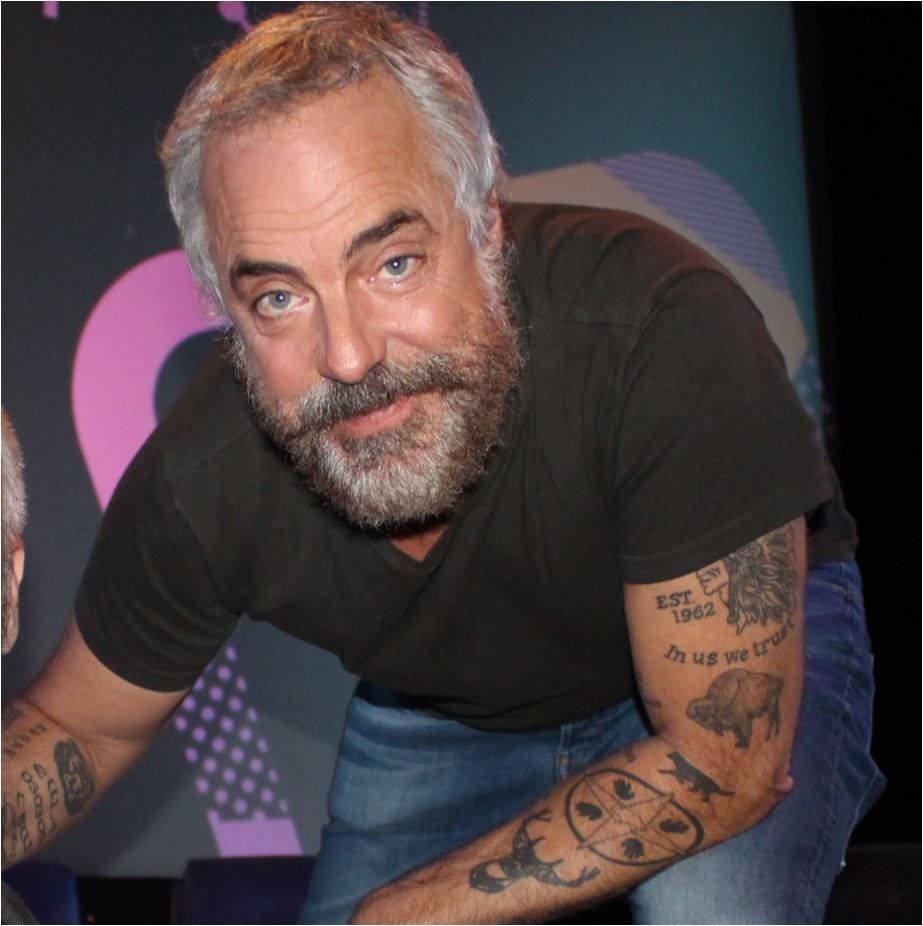
Titus Welliver has nearly thirty tattoos, and they aren’t just there to make him look tougher on screen. He’s been collecting them since he was young, and many connect to family, his background, martial arts, and long-standing interests.

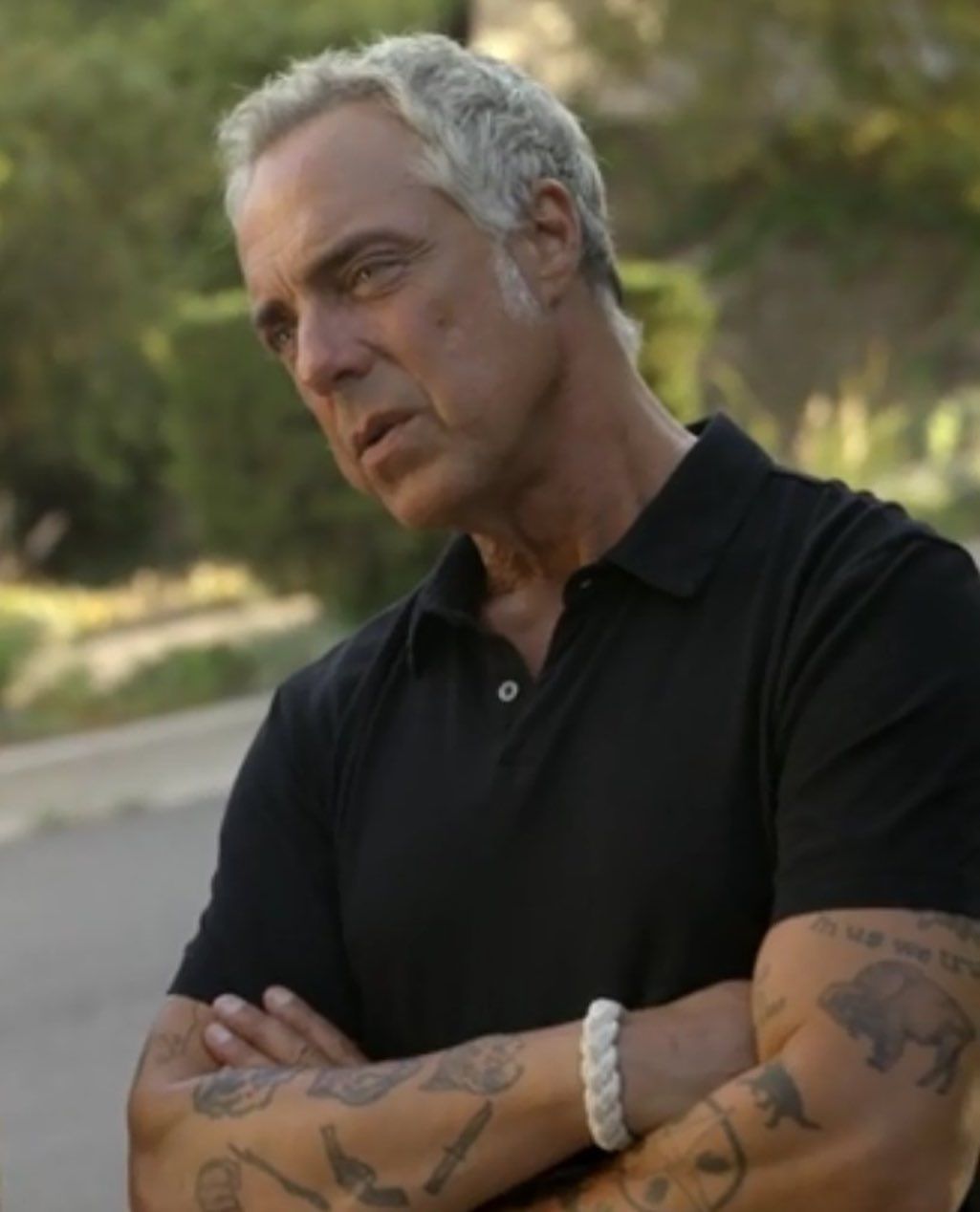
That’s one reason the tattoos work so naturally on Bosch: they look lived-in because they are. When Welliver was cast as Harry Bosch, production could have covered the ink with makeup. He explained that the tattoos were real, and the show chose to leave them visible. The detective’s sleeves feel like part of his history rather than a costume detail.

Welliver has explained some designs clearly; others take a closer look at photographs to identify. This guide sticks to what he has said and what’s visible without inventing a story for every small mark.

The dojo koi were his first tattoo

Titus Welliver dojo koi and arm tattoos

Welliver told Inked that his first tattoo represents his martial arts dojo: two koi circling a rock. He says the fish stand for strength and fluidity, so the piece means more to him than simply liking Japanese-style tattoos.

The koi sit high near his shoulders and can be covered by a T-shirt. When his arms are bare, they help explain how the sleeves grew. The traditional image gives the collection a solid starting point, alongside later lettering and pop-culture references.

It’s a fitting first tattoo. Koi are often associated with movement, persistence, and pushing against resistance. That fits Welliver’s explanation, but it’s best to stay with what he has said rather than pile on extra symbolism.

Martial arts are also part of the way he carries himself. The koi aren’t a random image hidden under a sleeve; they connect to an important part of his life that began before his best-known television role.

The Silver Surfer brings comic-book colour to the sleeve

Titus Welliver Silver Surfer arm tattoo

Below the koi, Welliver has a Silver Surfer tattoo, one of the collection’s most visible pop-culture references. It sits among flowers, lettering, and other arm designs rather than looking like a sticker on its own.

The Silver Surfer makes a playful contrast with the tougher animals and weapon images elsewhere on his arms. The character’s distinctive shape stands out even when the sleeve is busy. It’s a reminder that Welliver’s tattoos aren’t all family names or solemn personal symbols.

That variety keeps the sleeves interesting. A martial arts design, a comic character, and traditional imagery can all sit together without looking completely out of place. The collection is personal, but it leaves space for things he simply enjoys.

Unlike actors who keep their fandom hidden, Welliver lets these references show. They help the sleeves look like a real person’s arms rather than one matching design made for a photo shoot.

The White Pony tattoo and the words So It Goes

Titus Welliver White Pony So It Goes tattoo

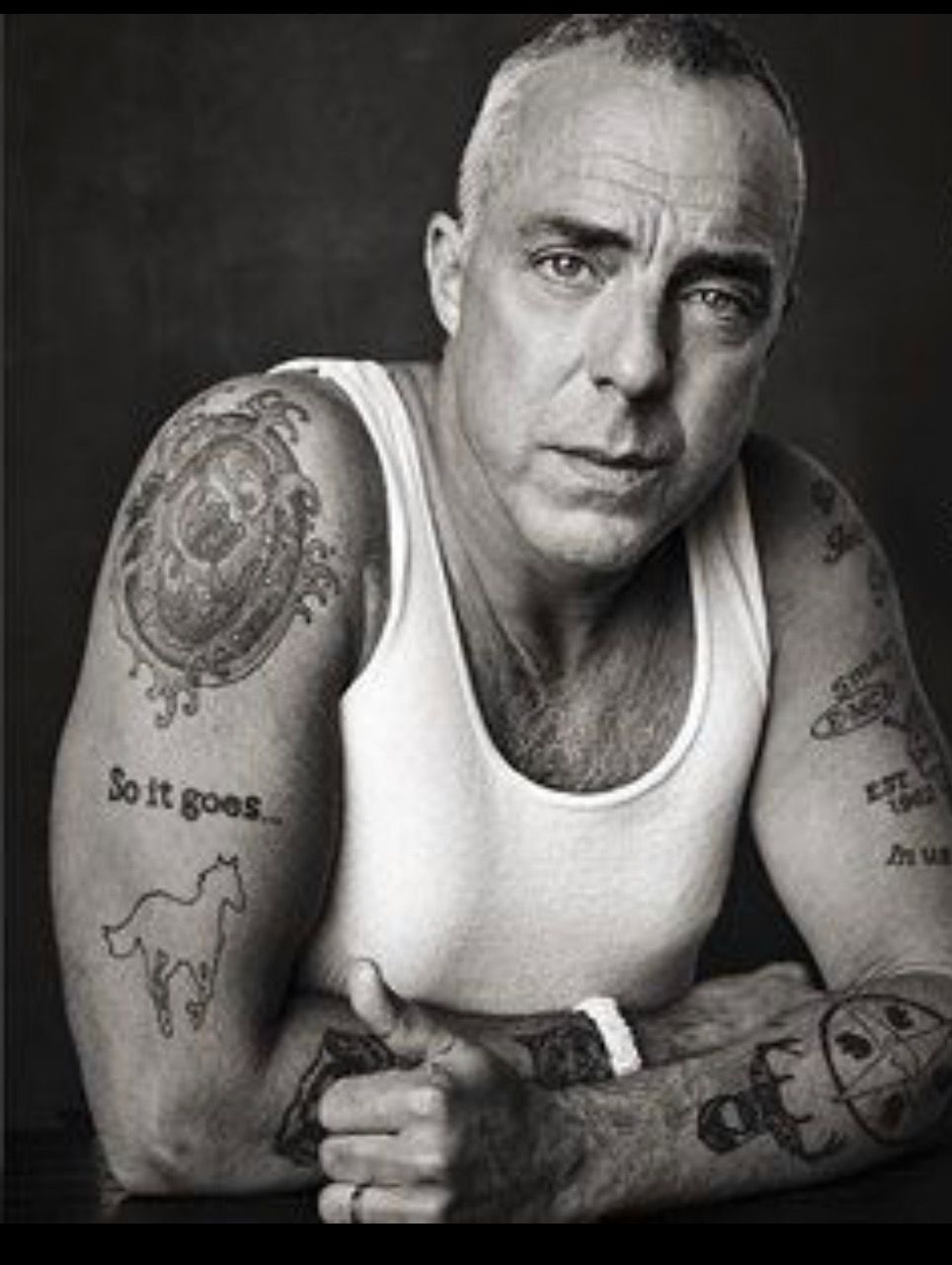
A clear music reference in Welliver’s collection is a white pony on his arm with “So it goes…” above it. He has said the tattoo was inspired by the cover of Deftones’ album White Pony, one of his favourite bands.

The horse is drawn as a simple outline, with the phrase lending it a reflective feel. It’s smaller than a full realistic portrait, and the words give the image a personal connection.

“My first tattoo is the symbol of my martial arts dojo. The two koi circling a rock represents strength and fluidity.” The quote captures how Welliver talks about his ink: he connects the designs to parts of his life instead of describing them as something that merely looks cool.

The White Pony piece also shows why one television still can be misleading. A sleeve may be covered by clothing, flipped by the camera, or partly hidden by a costume. In a clear portrait, the horse and words are much easier to distinguish from the surrounding tattoos.

Roses, wildcats and the bold right forearm work

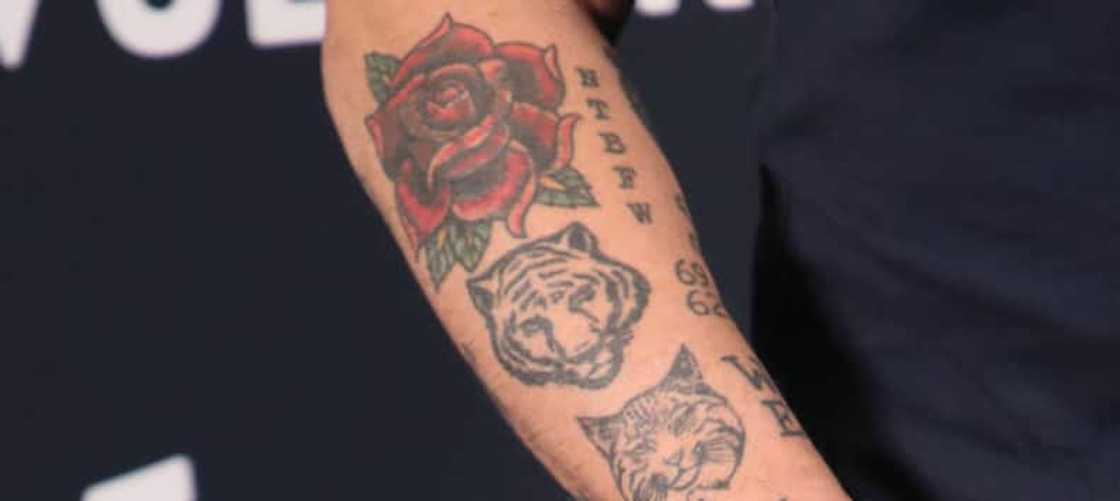
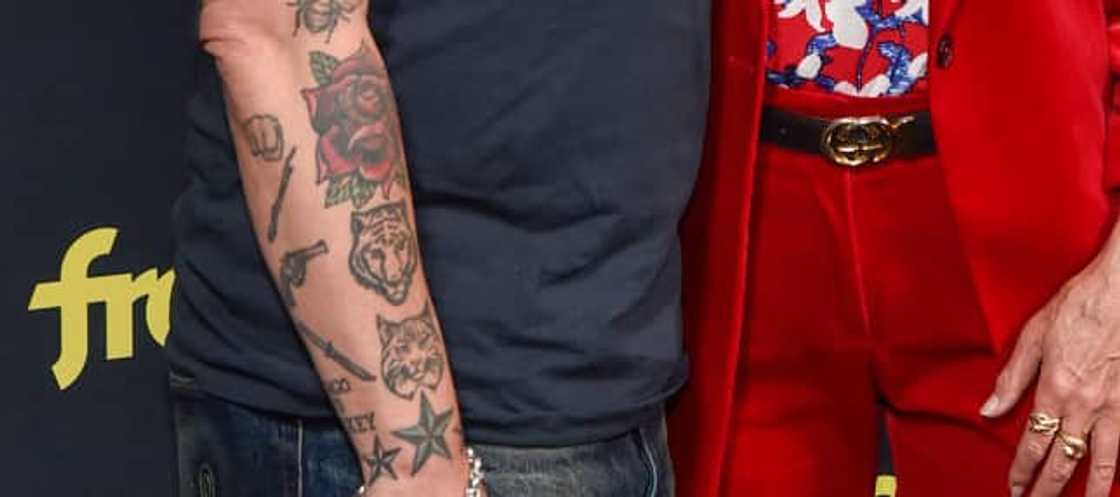
Titus Welliver rose tiger and bobcat forearm tattoos

Welliver’s right forearm is packed with recognizable designs: a red rose above three wildcat heads, a lion, tiger, and bobcat. The lion was later covered by the rose, giving this part of the sleeve its own history.

Welliver hasn’t confirmed a personal meaning for each animal, so it’s safest to describe them as wildcat portraits. People may associate lions or tigers with strength, but that doesn’t tell us why he chose them. The rose is easy to see; the more intriguing detail is the story behind the lion cover-up.

The arm also has “NTBFW” and the number 69. The initials are often read as “Not To Be F***ed With,” though Welliver hasn’t given a detailed explanation of the phrase’s personal meaning. The lettering adds an edge beside the softer flower and animal faces.

This is the part of his ink that most resembles a traditional biker-style sleeve. Roses, animals, block letters, and dark outlines bring that old-school toughness, while the rest of the collection keeps it from becoming one-note. His arms feel like a timeline rather than a matching set.

Guns, knives, stars, bears and the Lone Wolf

Titus Welliver weapons star and forearm tattoos

Another part of the sleeve features a closed fist, a stick, a revolver, and a knife, with stars and smaller marks filling the gaps. These tattoos are noticeable in Bosch, when the camera catches Welliver’s forearm as he holds a file, leans on a car, or rolls up his sleeves.

Welliver hasn’t assigned a public meaning to every weapon, so they’re best described as visible objects. Tattoo guides sometimes turn a gun or knife into a statement about violence, even when the wearer hasn’t said that.

On the inside of his arm is a bear with the letters NTBFW, and on his wrist a wolf with “Lone Wolf” above it. Welliver has connected the wolf to loyalty and love for his pack. The bear and lettering sit nearby, making the area a grouping of animal and text designs.

A blue-and-black star appears near the wrist, along with another star inside a circle with footprints. There’s also a logo-style “All Ways” and “Always” design. These smaller pieces break up the large portraits and images.

Family, Irish roots and why Bosch kept the real ink

Titus Welliver buffalo EST 1962 arm tattoo

Not every tattoo on Welliver’s arms is an animal, weapon, or comic reference. He has said some are his children’s names and birth dates. Other designs connect to his Irish and Native American background. The variety reflects how the collection grew at different times and for different reasons.

One arm photo shows a buffalo beside “EST. 1962” and the phrase “In us we trust.” Other small designs around his forearm are difficult to make out from a distance. A close-up reveals more than a red-carpet shot.

The tattoos became part of Harry Bosch almost by accident. Welliver told Inked that covering them every day would take extra time, so he spoke with Michael Connelly and production decided to leave them visible. The show incorporated Bosch’s fictional “Hold Fast” knuckle tattoos into that choice, without pausing to explain every mark.

That choice adds texture to the character. The arms don’t look like temporary props, and the tattoos don’t disappear when a scene turns serious. They’re simply part of Welliver’s life and, as a result, part of Bosch’s look.

His collection has something in common with Rag’n’Bone Man’s crowded arm work: both have a rough, collected feel, with different ideas added over time instead of one perfectly planned sleeve.

In the end, Welliver’s tattoos are compelling because they’re real, personal, and a little messy. Koi, the Silver Surfer, the White Pony horse, wildcats, roses, weapons, stars, family details, and lettering sit together without needing one grand explanation. They tell their stories in pieces, which is why another design catches the eye whenever he rolls up his sleeves.