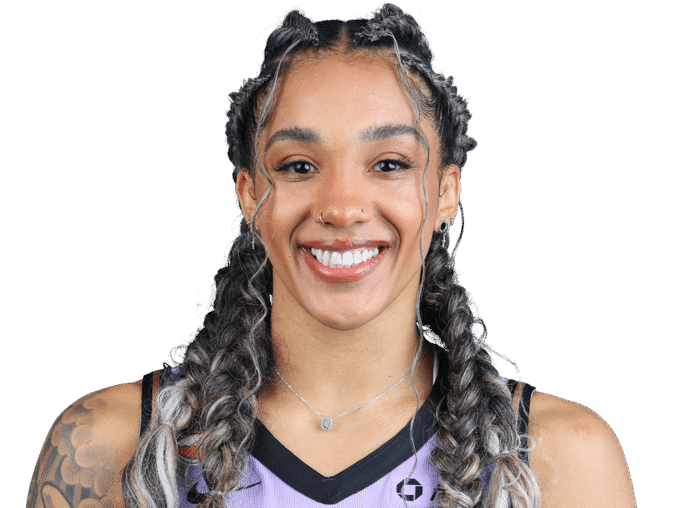
Gabby Williams’s tattoos feel more like a scrapbook than a costume. The Seattle Storm and French national-team star has designs linked to family, music, anime, basketball memories and people she has met. Some pieces are large and carefully built; others are tiny, funny or easy to miss until she turns her hand or lifts her shorts.
That variety fits Williams. She has said people can find it hard to put her in a box, and the tattoos make the same point without having to shout. A detailed black-and-grey sleeve sits beside an Olympic joke, rock music imagery and tattoos connected to friends and relatives. She has also been open about getting some designs young, sometimes in unplanned settings.
Here’s a closer look at the documented pieces and the stories she has shared, keeping the visible details separate so each tattoo has room to stand on its own.
Her black-and-gray arm sleeve is built like fine art
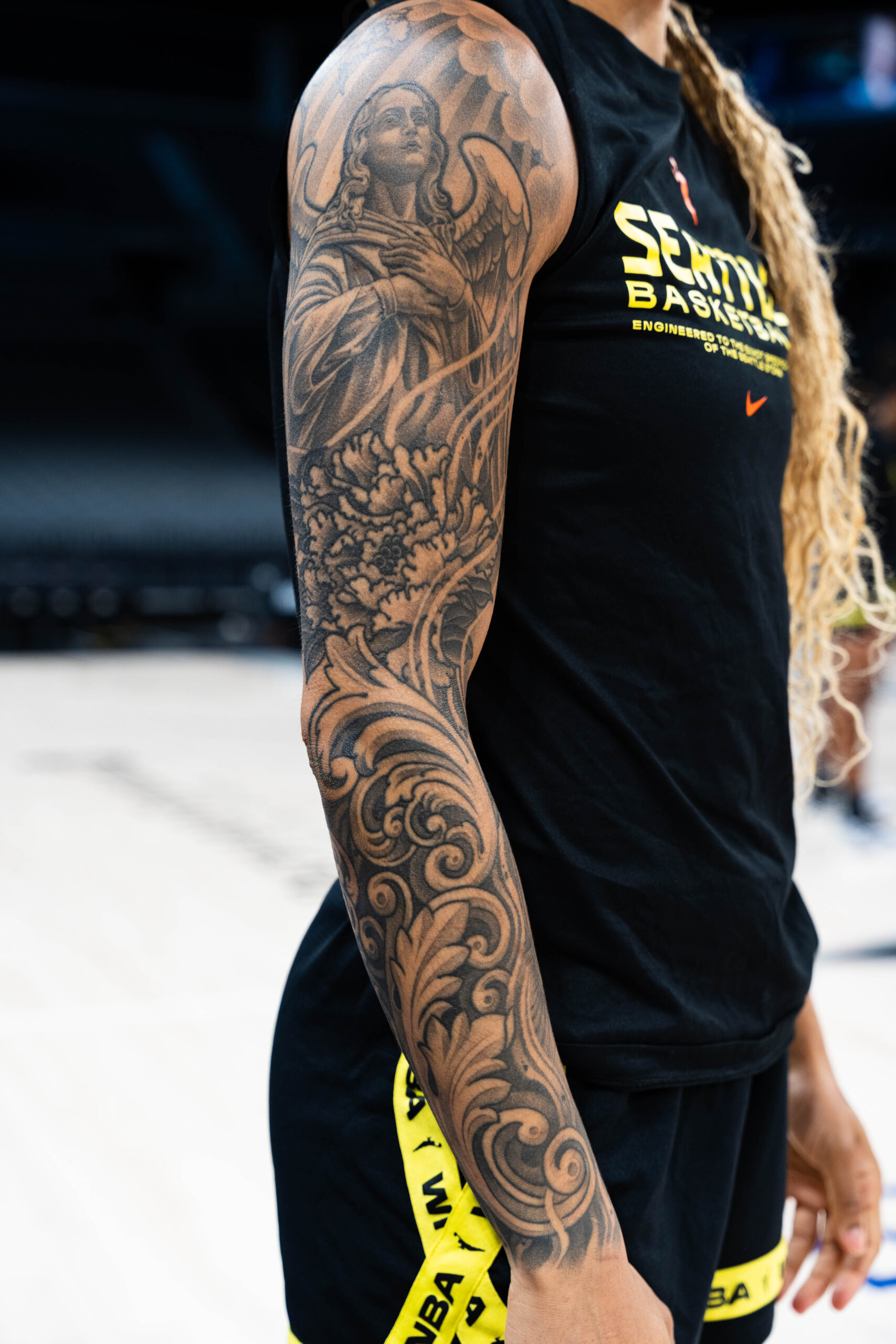
The biggest piece in Williams’s collection is the black-and-gray sleeve on her arm. It is not one symbol repeated across the skin. An angel, flowers, sculptural details and flowing shade come together in a composition with the feel of a classical illustration. Williams has credited French tattoo artist Lil’B and described it as a freestyled collaboration that took about six days.
Williams did not start with a rigid blueprint. She trusted the artist to shape a design around her arm, so it changes as you look from different angles. One view brings out the figure; another reveals more of the flowers and ornamental details. It feels like wearing a piece of art, not lining up separate stickers.
There is a calm confidence to the choice. Six days under the needle is a serious commitment, but the finished sleeve does not feel overly precious. It has movement, contrast and space to breathe. On court it is part of her look; off court it shows how much she enjoys the craft.
The Rolling Stones tongue connects her to the music she loves
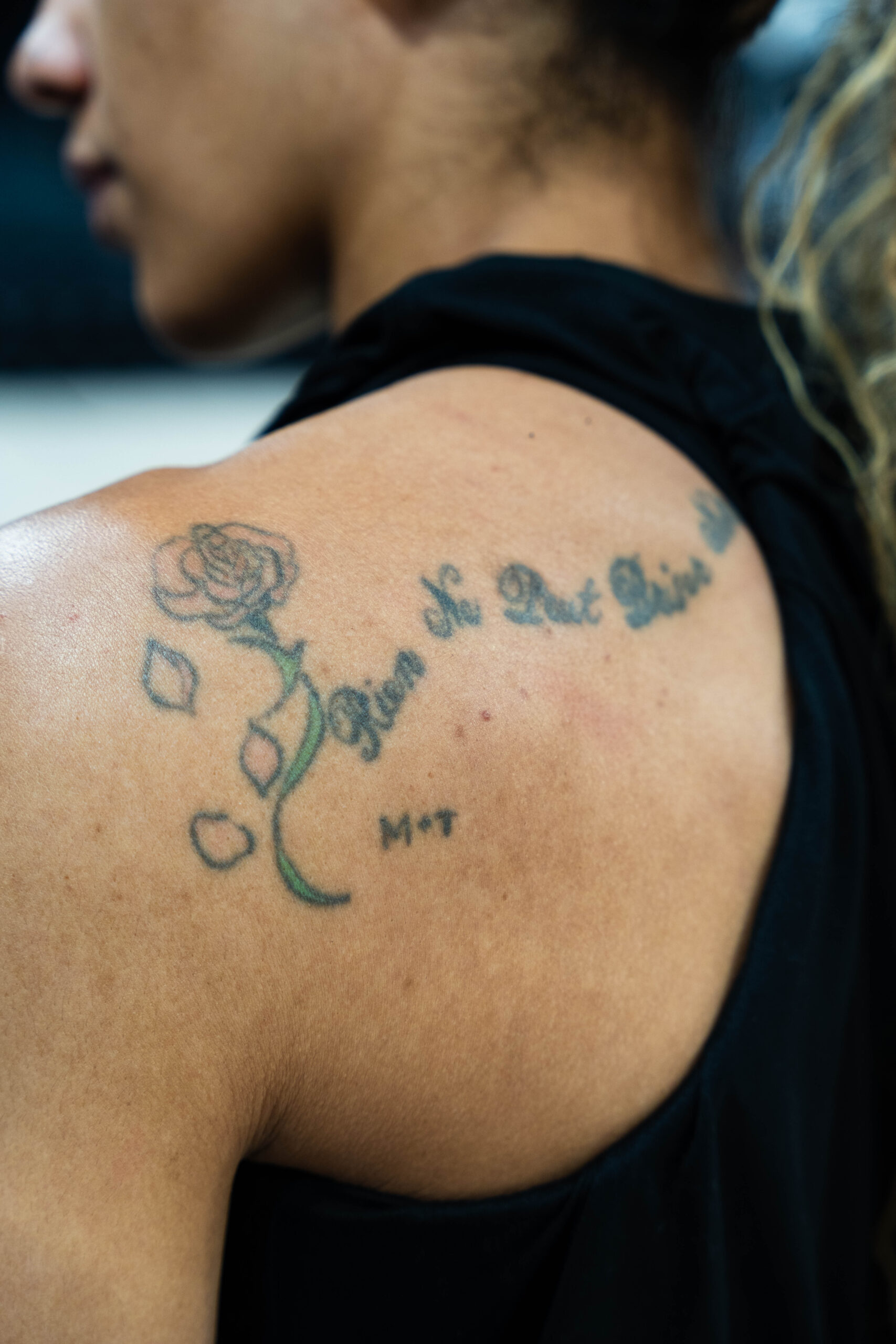
One of the clearest pop-culture references is the Rolling Stones tongue logo on Williams’s arm. It is a small, instantly recognisable design, but it also says something about her taste. She has talked about rock music as an important part of her life, and the tattoo gives that interest a place beside the more decorative sleeve.
The design does not need a complicated explanation. The red tongue reads clearly from a distance, and its connection to the band gives it an obvious personal anchor. It also brings a little colour into a collection that otherwise leans heavily on black and grey.
It is useful to distinguish what Williams has said from what viewers might infer. The image is widely identified as the Rolling Stones logo, and her interest in music is part of the context. It is best understood as a direct tribute, not a hidden code. Sometimes a favourite band is reason enough.
No-Face gives her anime fandom a permanent shape
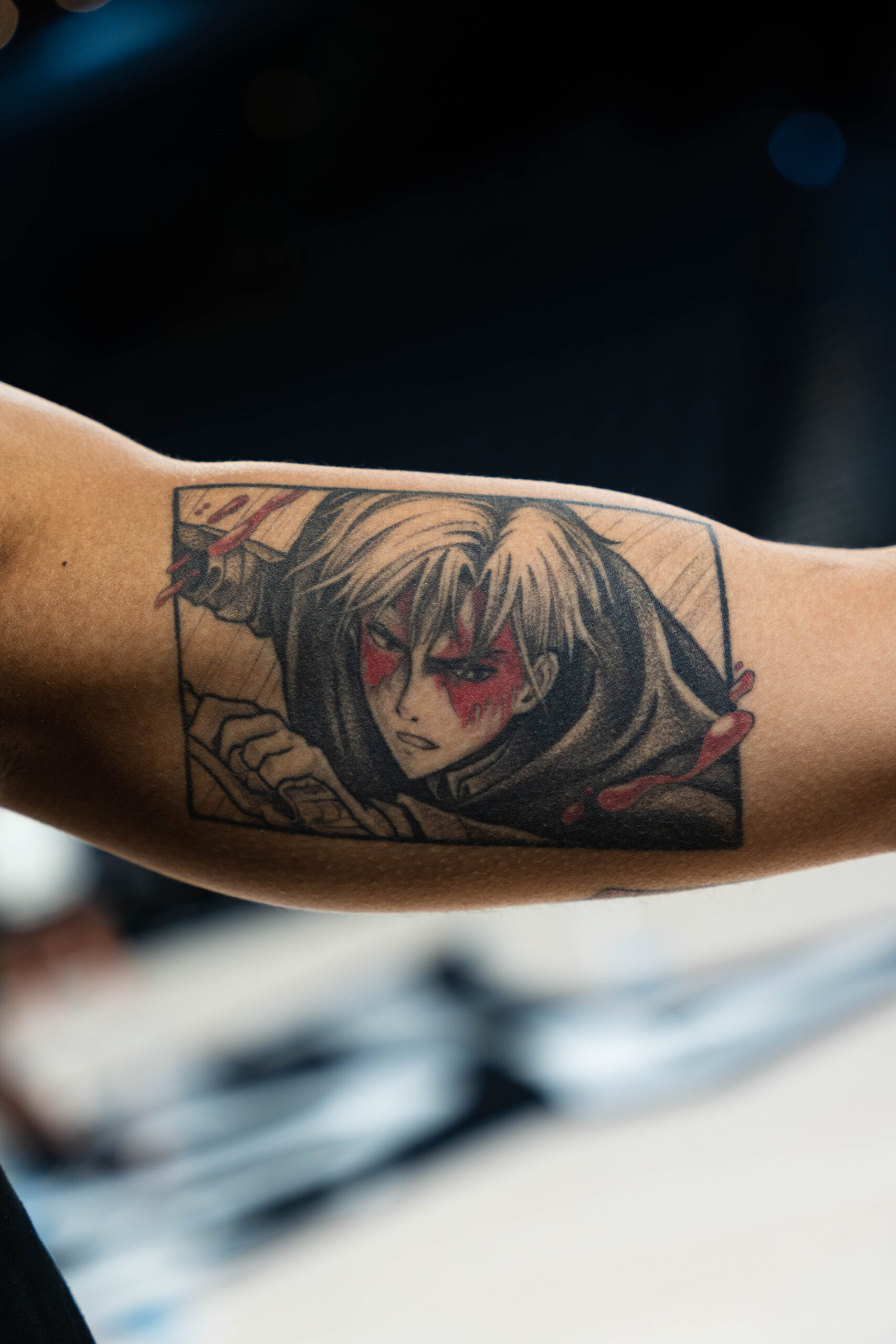
Williams’s Studio Ghibli No-Face tattoo is one she says gets a lot of compliments. The character is from Spirited Away, and the design brings a different mood from the portrait work and traditional symbols elsewhere on her body.
No-Face is quiet, strange and open to interpretation, which gives the tattoo a different feel from a team logo or a name. It hints at an imaginative side of Williams, who can enjoy a detailed animated world as much as a packed basketball arena.
Anime tattoos can look crowded when they compete with too many unrelated references. This one has a strong silhouette and an unmistakable face, so it stays readable. It is playful without feeling throwaway, and Williams has said it is a piece people often notice.
The Pac-Man tattoo remembers a medal and a bet
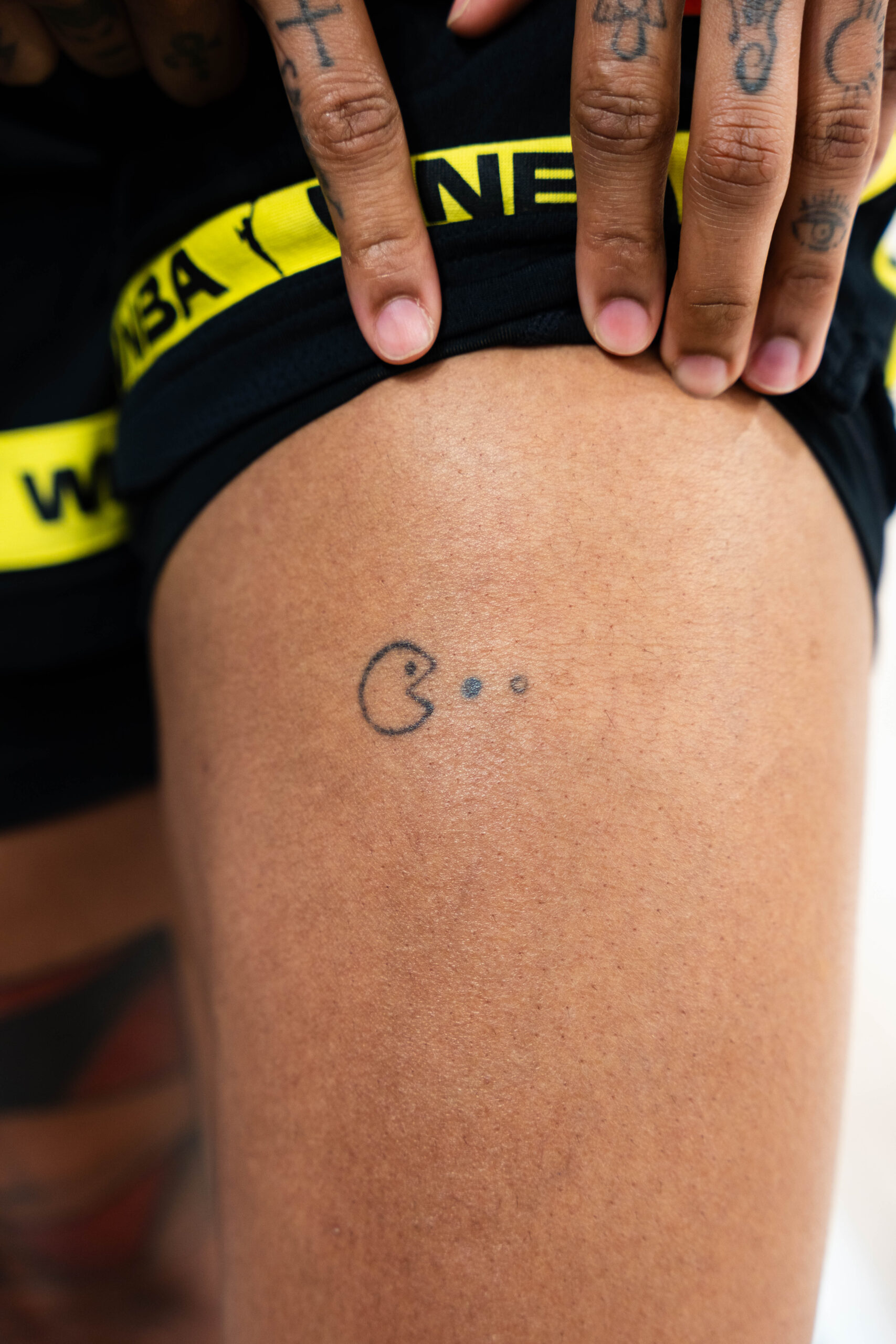
On her upper thigh, Williams has a small Pac-Man tattoo eating three dots in the French colors. The blue, white and red dots represent France. The tattoo also marks the French team’s bronze medal at the Tokyo Olympics, after Williams and teammate Marine Johannès made a bet about the result.
The design gets the tone just right. An Olympic tribute could have used rings, a date or a medal, but Williams chose an arcade character and let the national colors tell part of the story. It is a personal memory that still looks like something she picked because it made her laugh.
The upper-thigh placement gives it some privacy during games while leaving it easy to show when she wants to. It balances public identity with a private joke, marking a major sporting moment without turning it into a formal monument.
Her fingers carry smaller symbols and quick visual cues
Williams also has small finger tattoos, including a Prince symbol and a cross. They can disappear in a game-day photo and become clear in a close-up. Finger designs are more exposed than tattoos on a thigh or shoulder, so keeping certain symbols near her hands feels like a deliberate choice.
The Prince symbol brings a music reference into a smaller space than the Rolling Stones logo. The cross adds a separate spiritual note, though Williams has not described every detail as a grand statement. It is better to say what is visible and documented than to fit an entire biography onto a small mark.
The finger tattoos also break up the larger compositions. Her sleeve has room to spread, while these are compact and graphic. Together they make the collection feel lived in: she can have a six-day art project and a tiny hand symbol without pretending every piece came from one plan.
Family, friendship and the tattoos that started early
Some of Williams’s most telling tattoo stories are about the way the ink began. When she was around twelve, her older sister Kayla had a Japanese character tattoo. Williams thought her sister was the coolest person in the world and wanted to copy her. Her own version was airbrushed, though, and eventually washed off. The joke still left a mark: tattoos became tied to family, imitation, style and a desire to step outside expectations.
Williams has also said she got her first real tattoo at fourteen in a friend’s kitchen. While playing college basketball, she once hid a shoulder tattoo with tape because UConn had a policy about visible tattoos. It grounds the collection in everyday life. These were not all carefully staged celebrity choices; some came from friends, travel and youthful enthusiasm, then stayed part of her story.
Family connections appear elsewhere too, including a flower-and-triangle design linked to relatives. Not every detail is clearly visible in public photos, so it is best to leave the exact symbolism open rather than guess. What comes through is a recurring interest in people and experiences that make her feel connected.
Why the collection feels personal without being too serious
Together, Williams’s tattoos bring several visual languages into one collection. The sleeve is the most immersive piece. The Stones logo nods to music, No-Face brings in anime, and Pac-Man turns an Olympic memory into an inside joke. The finger designs keep a few small symbols close at hand.
The variety is the real theme. Williams does not seem interested in making every tattoo match. A classical-looking sleeve can sit beside an arcade character and a rock logo, just as a family story can sit beside a design she simply enjoys looking at. That is usually what makes a collection feel human: not perfect consistency, but a trail of different versions of the same person.
She has said she does not regret her tattoos, including the silly ones. That attitude comes through in the collection. Nothing has to be solemn all the time. A tattoo can honour a medal, celebrate a band, remember a friend, connect a family or make you smile when you see it in the mirror.
Watch Williams talk about the people and memories behind her ink
A fan-recorded basketball interview with Williams and her teammates includes a conversation about a tattoo she let Marine Johannès give her. It is a helpful companion to the stories above because it shows the easy, conversational side of how some of these pieces became part of her life.