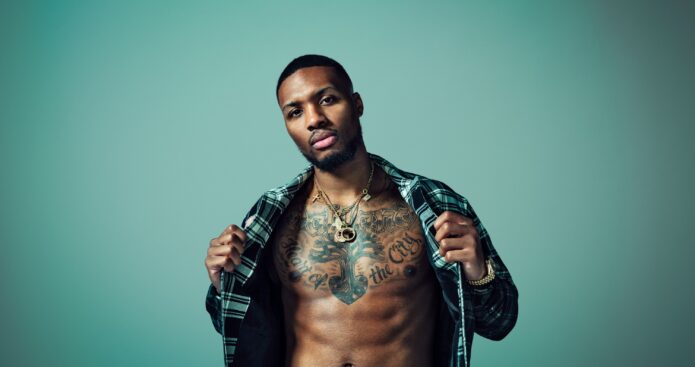
Damian Lillard’s tattoos read less like a collection of random ideas and more like a map of the people and places that shaped him. Oakland runs through the designs, alongside family, faith, his brother, and the basketball path from Weber State to the NBA.
Ink covers his chest, shoulders, wrists, and arms, but the stories are usually easy to follow. Many pieces point back home; smaller lettering honours relatives. And even when a tattoo session hurt, Lillard has been straightforward about it rather than inventing a mystery.
There’s no polished celebrity mythology here. Lillard says he got his first tattoo after high school, chose designs because they meant something, and learned that some spots hurt far more than others.
The Lillard Brothers logo was his first tattoo
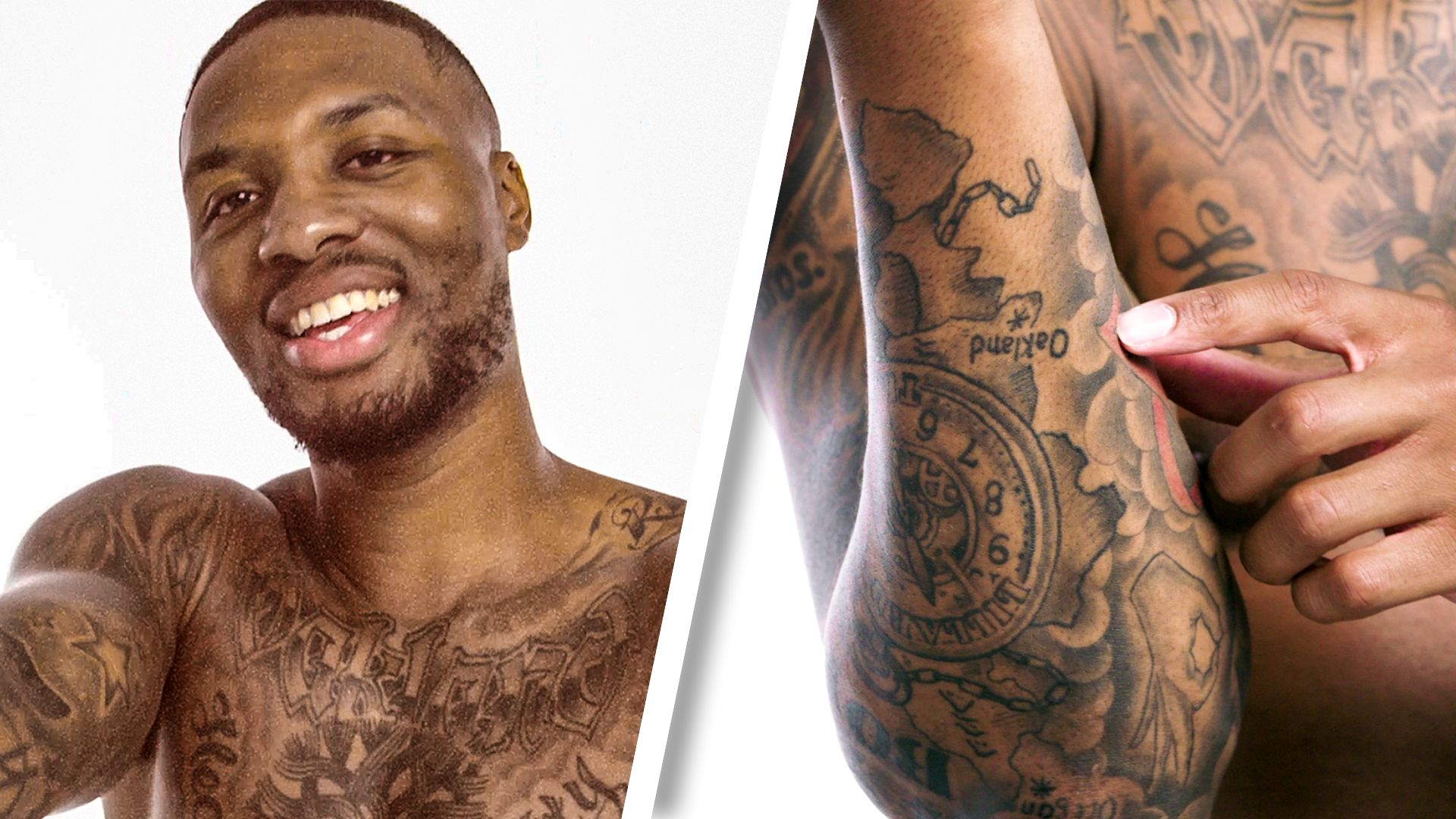
Lillard got his first tattoo at 18. It borrows the Warner Bros. logo, changing the letters to “Lillard Brothers.” He and his brother Houston got matching versions, turning a familiar shape into something personal.
The timing mattered. Lillard has said his mother wouldn’t let him get tattooed as a kid. Her rule was simple: finish high school, then make his own choices. The first design came after he had done that.
It’s a good introduction to the rest of the collection. From a distance it looks clean and simple, but the meaning is about family and his bond with his brother. It’s the kind of tattoo that can age well because the idea is clear and the connection is real.
In later photos, the logo sits among other arm tattoos instead of on its own. That’s how Lillard’s collection grew: one meaningful piece, then another, until family lettering and larger chest work began to connect.
Oakland is the centre of the chest piece
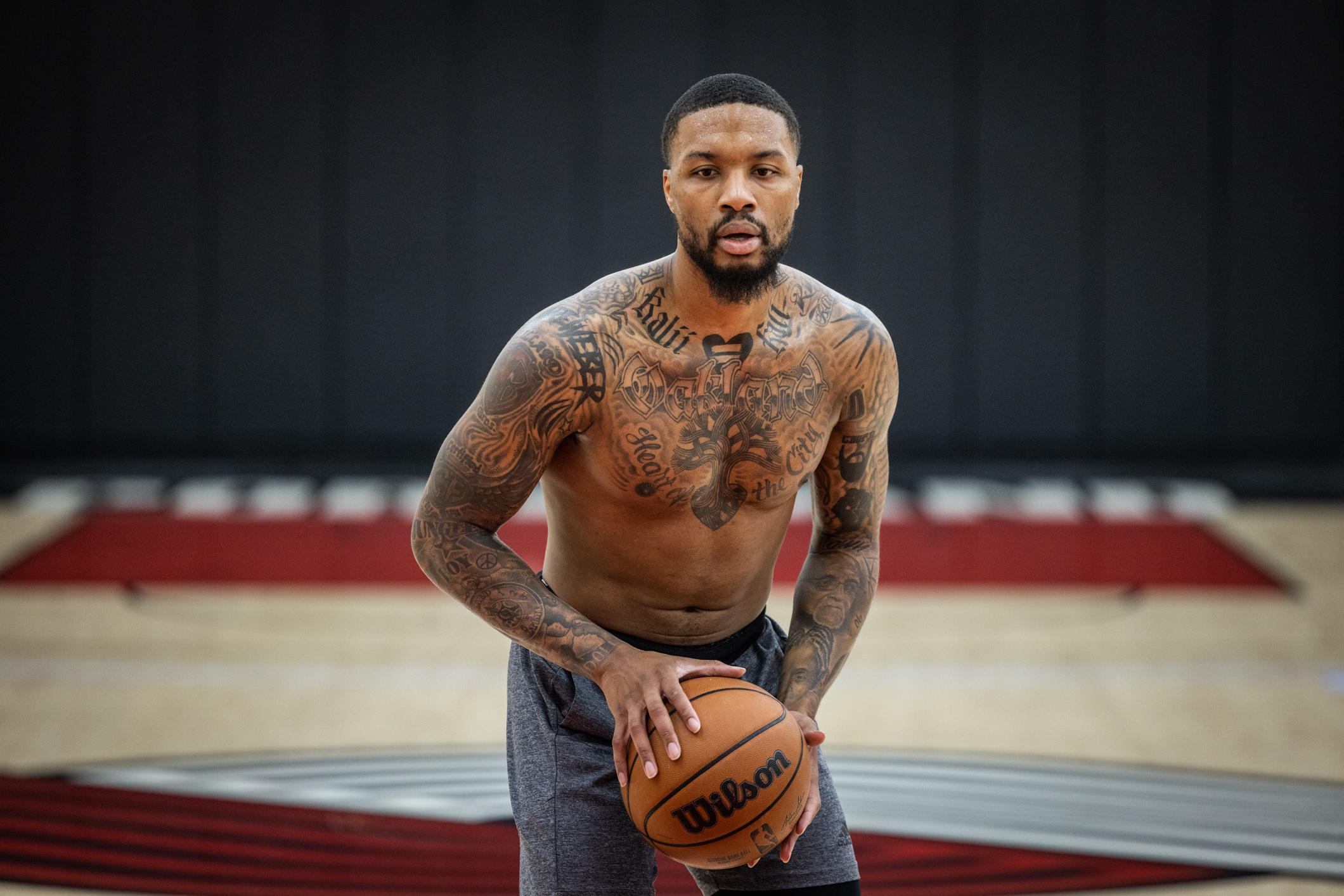
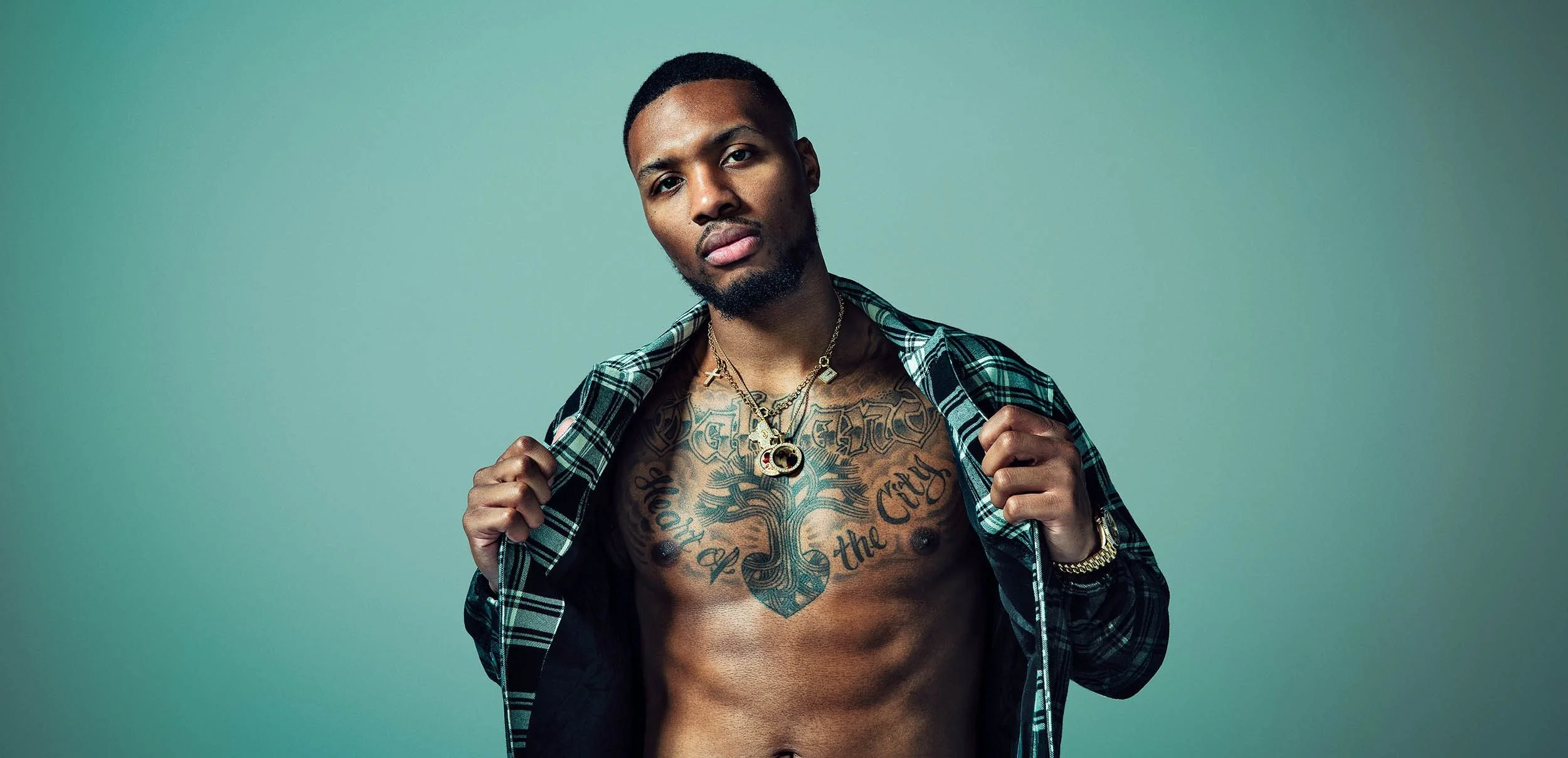
The most recognizable design across Lillard’s chest centres on a heart and tree, with “Heart of the City” tied to Oakland. Branches reach upward, making it more than a simple hometown name. The image represents where he feels he belongs.
Lillard has carried Oakland with him throughout his career. Basketball took him across the country, but the city remains central to his public identity. The chest tattoo makes that clear, visible when he’s training shirtless, posing for a shoot, or talking about life away from the court.
He has described this as one of his most painful pieces. The chest is a tough place to sit through a session, and Lillard said the pain got so bad his body went numb. He wouldn’t choose to do it again.
That makes the tattoo more than a proud hometown design or a painless accessory. It mattered enough to him that he finished it even when the session became miserable.
Names and family lettering fill the arms
Some of Lillard’s most personal tattoos are simple names. His arms include lettering for family members, including his mother and sister. The style is common among basketball players, but it still shows who he wants to keep close.
His mother’s part in the story goes back to his first tattoo. She made him wait until he finished school, and the collection he built afterward was his own choice. The family names keep that early moment in the background of the later work.
His arms also hold lines of text and smaller designs that can look different from one photo to another. A wide game-day shot may show dark shapes; a shirtless studio portrait gives the lettering more room. It helps to look at several views instead of treating one angle as the whole collection.
Lillard has said he likes tattoos that mean something to him. Not every design needs a public explanation, but the pattern is clear: the arms carry people, memories, and reminders rather than one single theme.
The Psalms verse gives the ink a quieter side
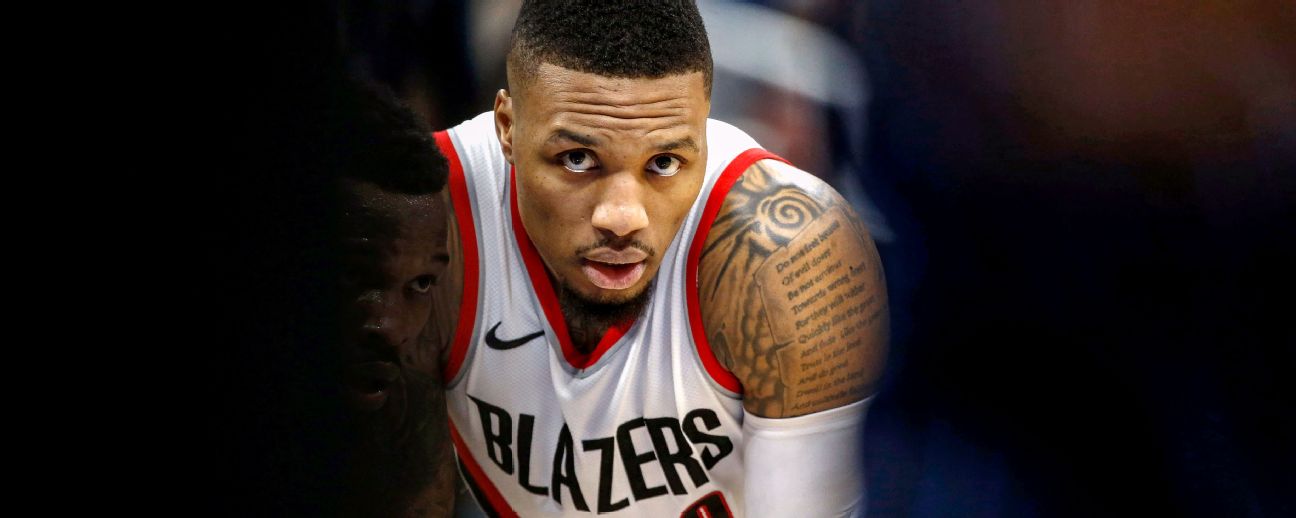
Lillard has a Bible verse from Psalms 37:1–3 on his left arm. It’s more understated than the chest piece and can disappear beneath a jersey. When it’s visible, it changes the mood of the collection.
The verse relates to faith and keeping steady when other people seem to be moving faster or doing better. That fits Lillard’s public outlook; he has often talked about patience, trust, and following his own path instead of chasing outside opinions.
The writing sits beside other arm tattoos rather than apart as a separate religious display. That mix keeps the collection from becoming one-note.
There are bold designs, softer details, text, portraits, and symbols. The verse doesn’t need to dominate the arm to matter. It works like a personal reminder, visible when his sleeve shifts during a game.
Wrist tattoos and the meaning behind Lillard Time
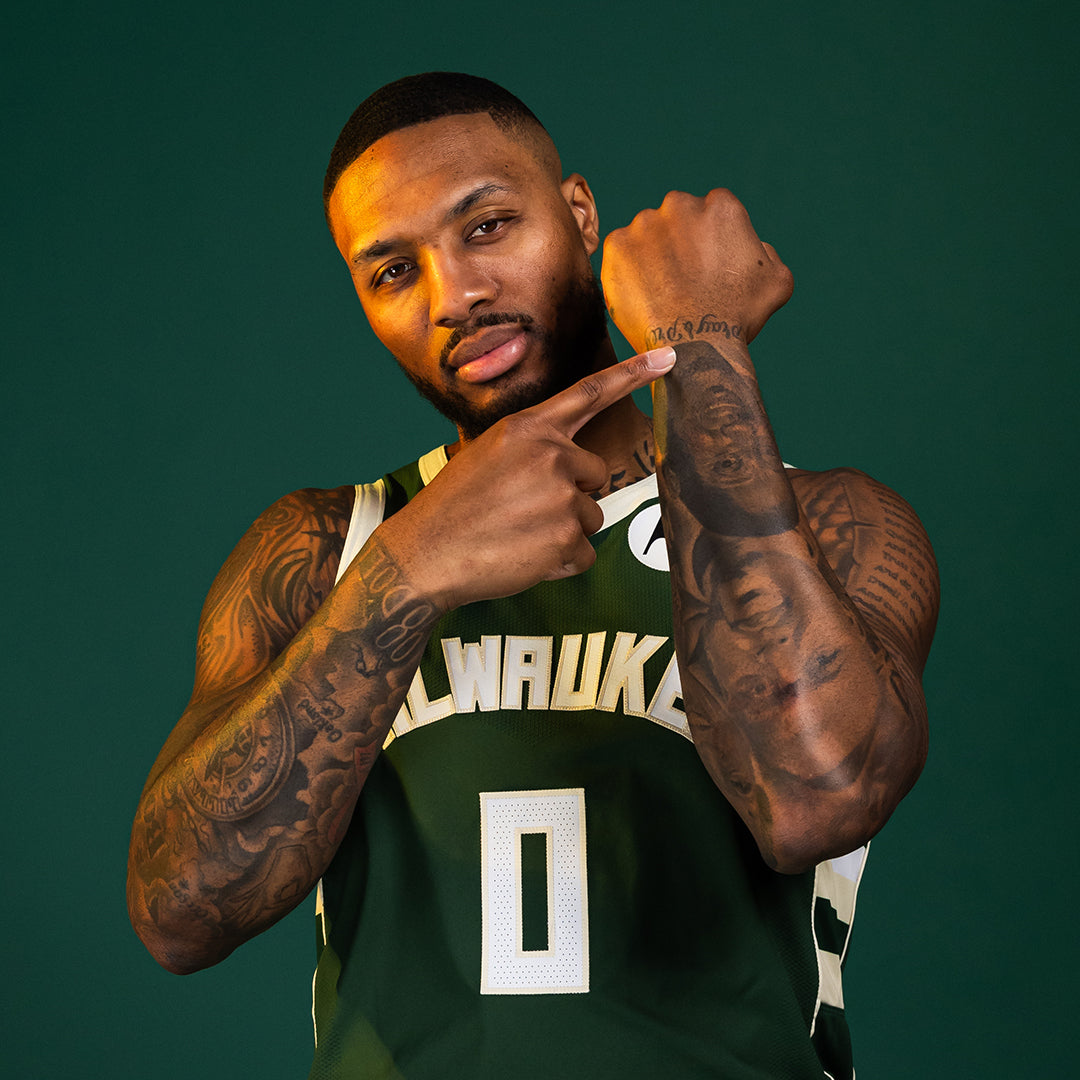
Lillard’s wrists and hands often come into view during his famous “Dame Time” celebration. When he points to his wrist after a big shot, the gesture draws attention to the tattoos around it. Some lettering is hard to make out in an action photo, but the placement has become part of how fans recognize him.
The wrist designs sit beside larger arm tattoos and can look like one continuous sleeve in some pictures. They’re actually separate pieces from different periods, a reminder that a sleeve doesn’t always begin as one big plan.
Game photos aren’t perfect references for reading tattoo details, but they show how the designs move with him. The letters and shapes are visible as he dribbles, points, or calls for the ball. A close portrait reveals more detail; an action shot shows how the tattoos have become part of his basketball image.
The smaller wrist pieces also complement the larger Oakland designs. The city provides the emotional centre, while the arms show everyday themes: family, faith, work, and the pressure of making decisions as the clock runs down.
What makes Damian Lillard’s collection stand out
Lillard’s tattoos aren’t tied to one fashionable style. Script, family names, a logo, religious writing, a large chest image, and hometown references all appear. The repeated themes help them work together.
Oakland anchors the collection; family gives it a personal core; faith adds a quieter layer; and basketball connects it to the career fans know. The first Lillard Brothers design still fits years later because it was never only a fashion choice.
Lillard is also candid about the uncomfortable parts. He wanted the chest piece because it meant something to him, but wouldn’t volunteer for that much pain again. That sounds more believable than pretending every tattoo session was easy.
For anyone looking for design ideas, the useful lesson isn’t to copy every piece. It’s to notice how the strongest tattoos connect to a real life. A hometown, a family name, a verse, or a shared logo can keep a large collection from feeling empty. Lillard’s ink works because the stories came before the artwork.
Some smaller tattoos get less attention than the Oakland chest piece. A wrist detail can disappear beneath a shooting sleeve, and arm lettering may show most clearly when he poses or points during a game. The big designs make the headlines, but the smaller pieces show how the collection grew.
It also helps to separate confirmed meaning from guesswork. Lillard has explained the brothers’ logo, the painful chest tattoo, family names, and faith-based writing. Other shapes are easier to see than to interpret, so it’s better to describe their placement and style than attach a story he hasn’t told. That balance keeps the guide honest while still giving readers plenty to look at.