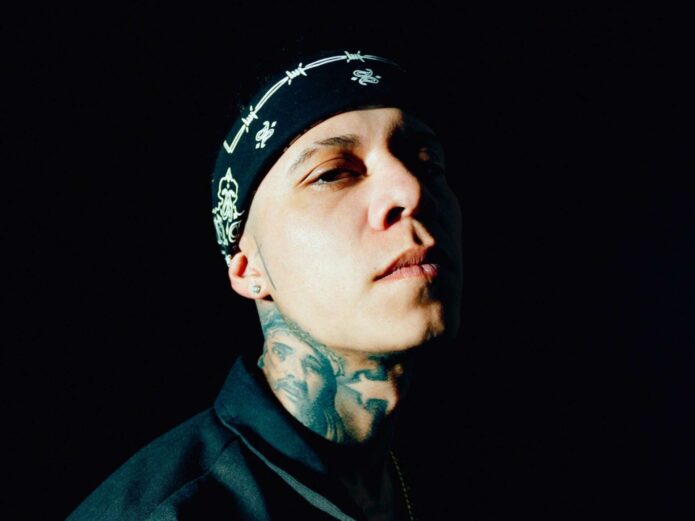
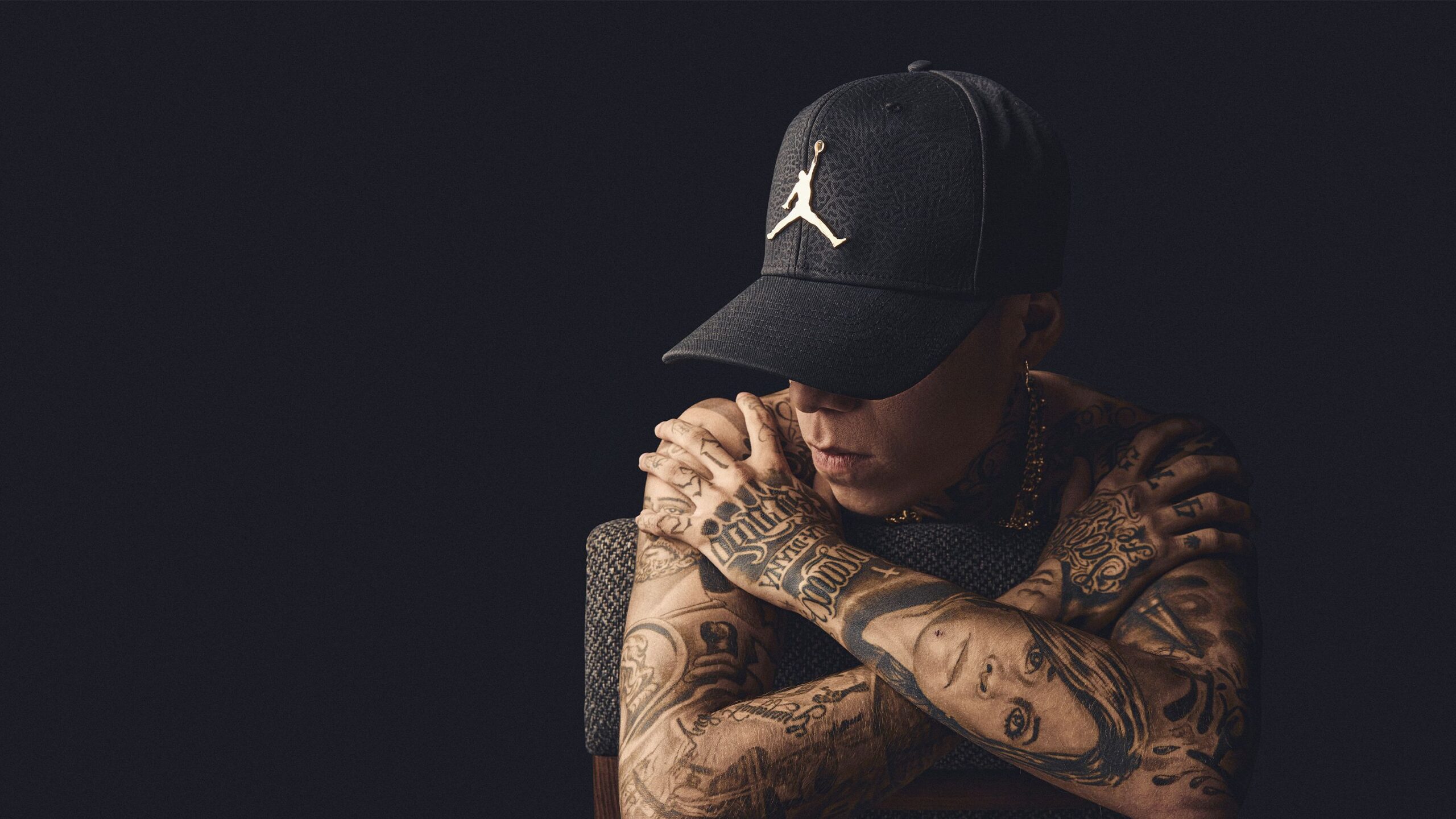
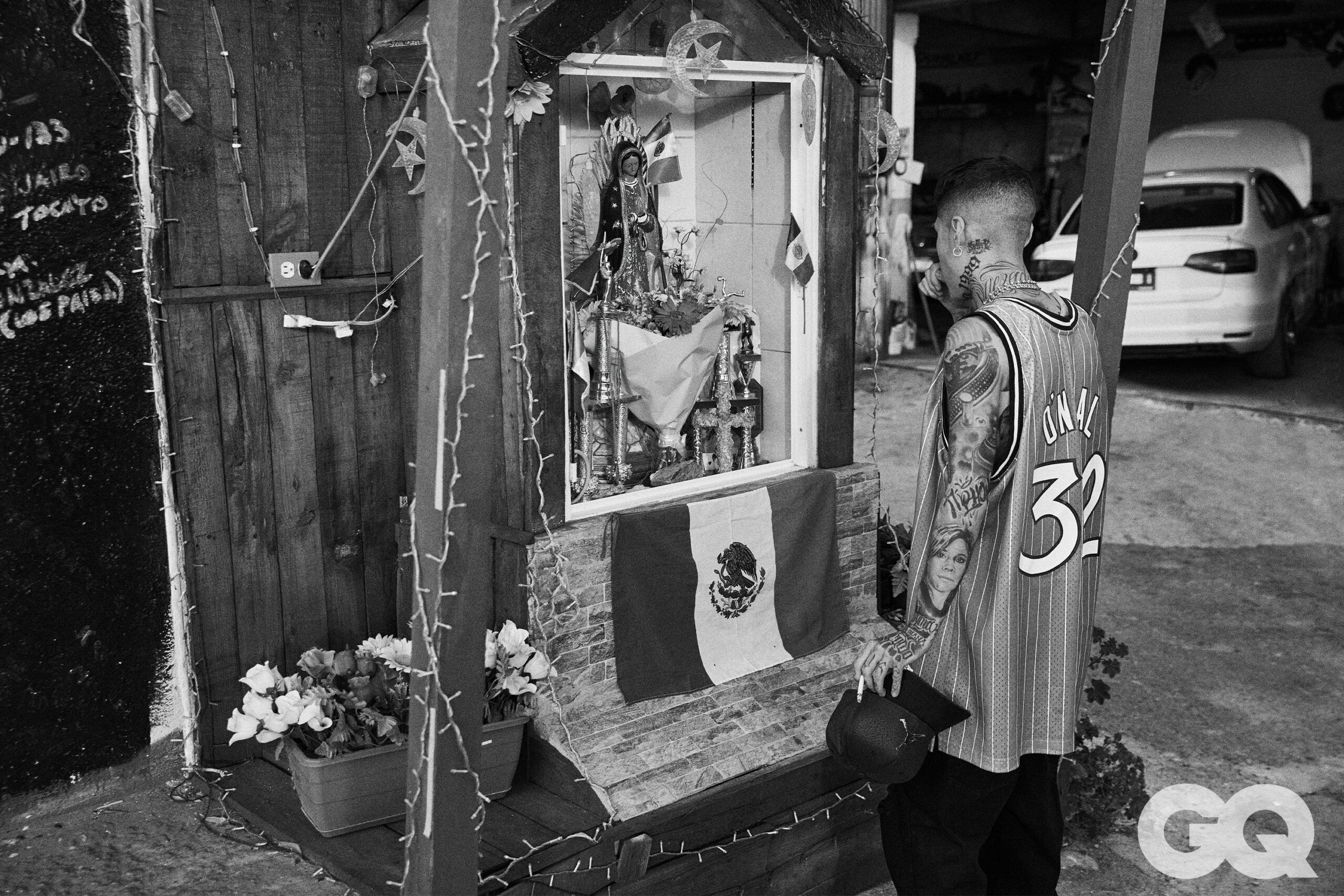
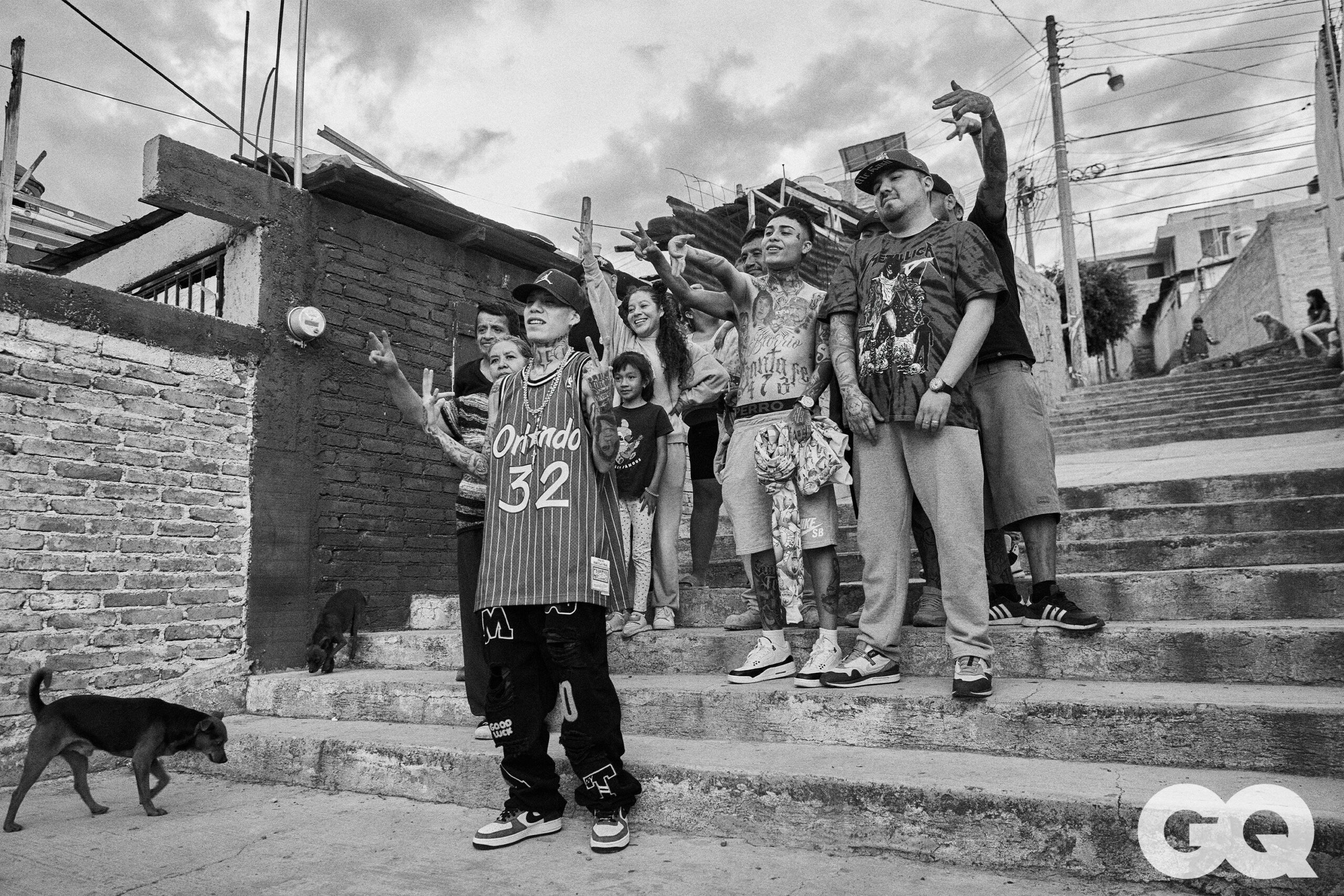
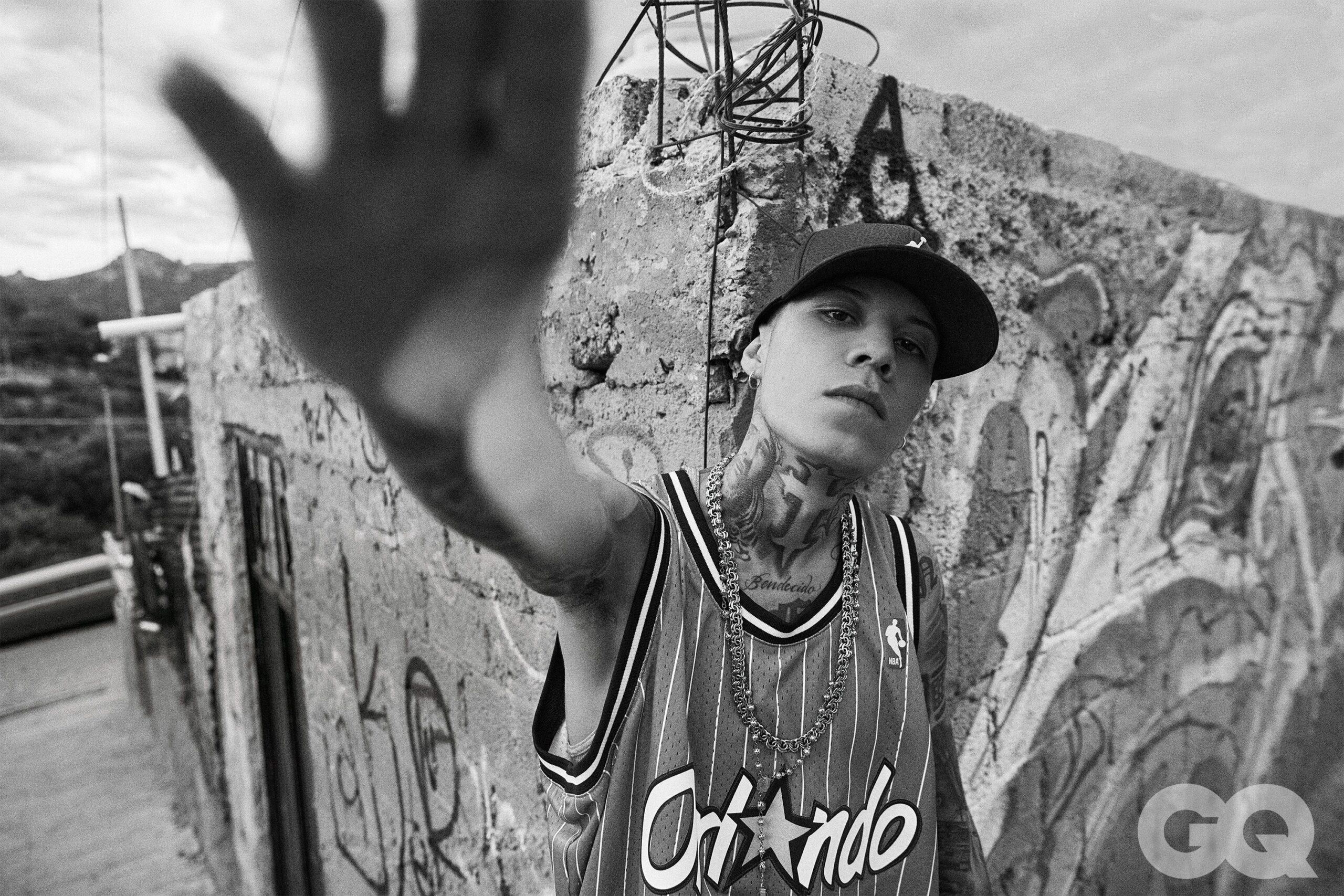
Santa Fe Klan has described his tattoos as markers of the people, places and stages that shaped his life. In a GQ México tattoo tour, he talks about the collection through his ties to Guanajuato and the Santa Fe neighborhood where he grew up.
Some pieces have explanations he’s shared publicly; others are best left as what the photos show.
Neck lettering and the Bendecido chest work
The neck lettering and “Bendecido” chest work sit alongside older black-and-gray tattoos, portraits and other lettering. The photos show how the pieces fit together; the GQ tour offers context for the place and experiences behind his ink without explaining every design.
The 473 numbers on his knuckles
Telediario reports that the 473 on his knuckles is Guanajuato’s telephone area code. The number also appears in 473 Music, the project he started to make music and support new talent. It connects a small, visible design to both his hometown and his work.
Portraits of family and people close to him
Univision and Diario del Istmo have identified portraits of his parents, José Alfredo Jiménez, Chalino Sánchez and Maya Nazor among the tattoos he has shown. The collection brings family and musical influences into the same frame, though the public explanations don’t cover every portrait in equal detail.
Religious imagery across the collection
Mexican entertainment coverage identifies a Cristo on his neck, a Virgen on his leg and a San Judas on his arm. Their placement is visible in the GQ photo set. Those details support describing the imagery, but they don’t tell us more about his private beliefs than he has chosen to share.
The barrio map and early-life lettering
One design resembles a map of the streets and courts around his neighborhood. Santa Fe Klan has connected this kind of imagery with home, memory and the places where he grew up. He has also said some of his first tattoos were done when he was young, and that he later covered or reworked pieces he no longer liked.
The collection has changed over time: portraits, religious images, lettering and neighborhood references sit beside one another, and the photos vary in what they make easy to see. Close views bring out the small marks; wider shots show how the larger pieces sit across his neck, chest and arms. For designs without a clear public explanation, the image can speak for itself.
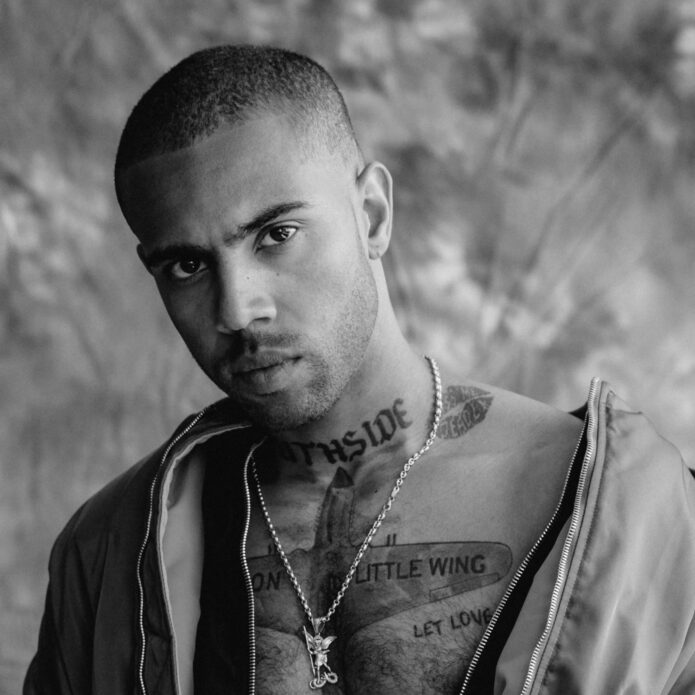
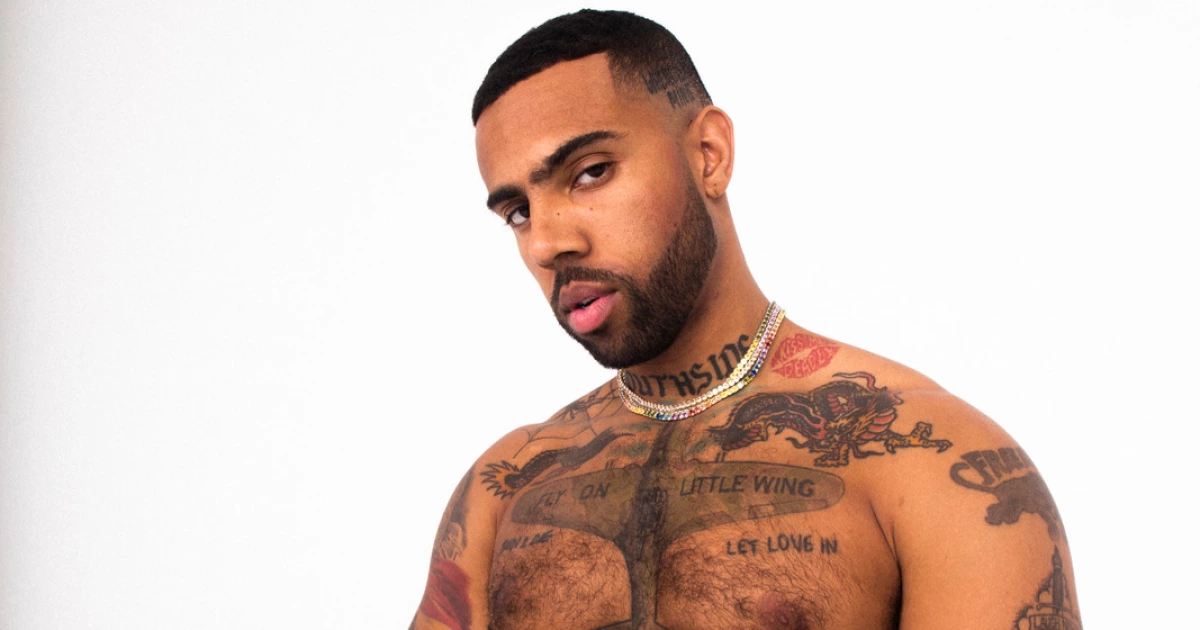
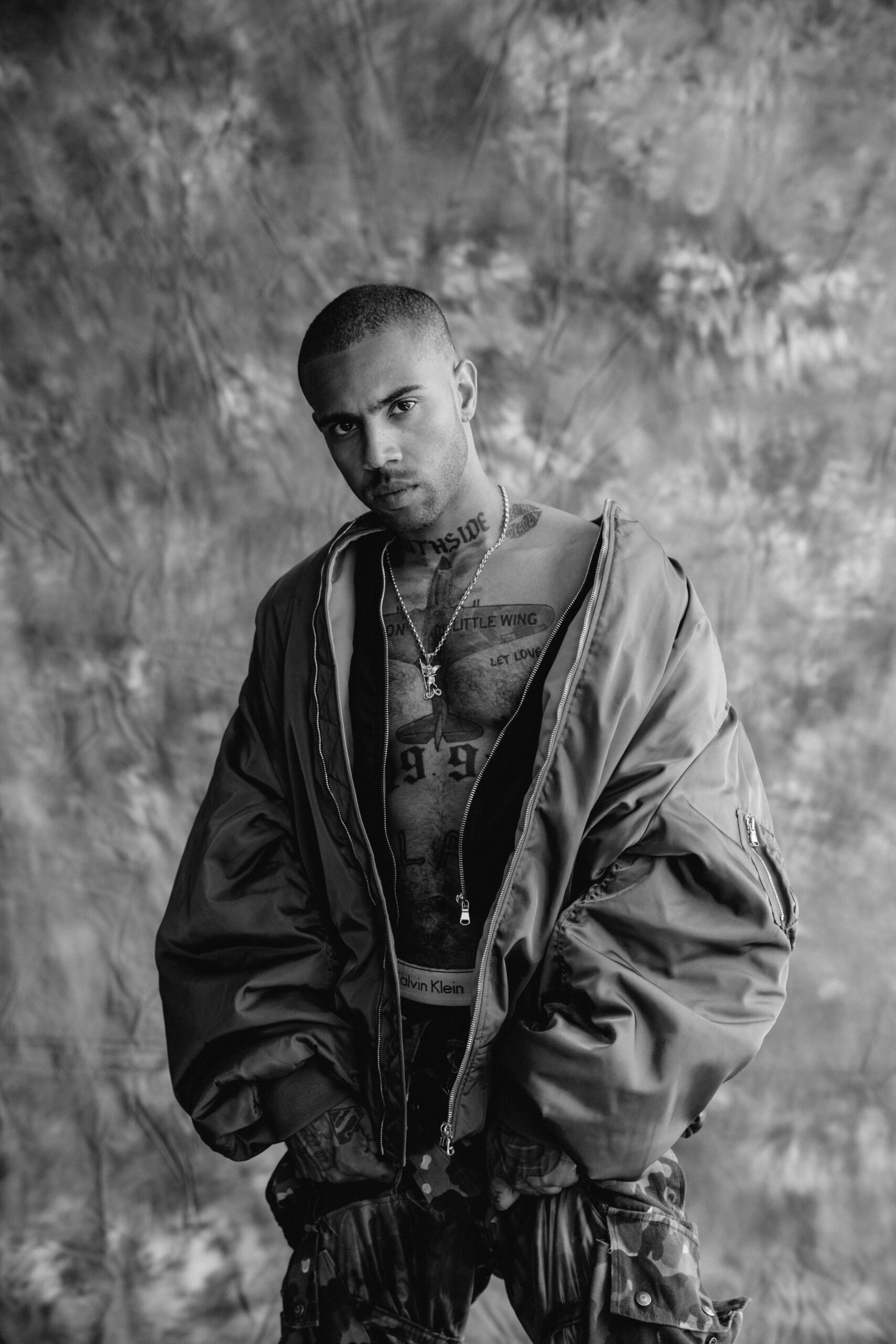
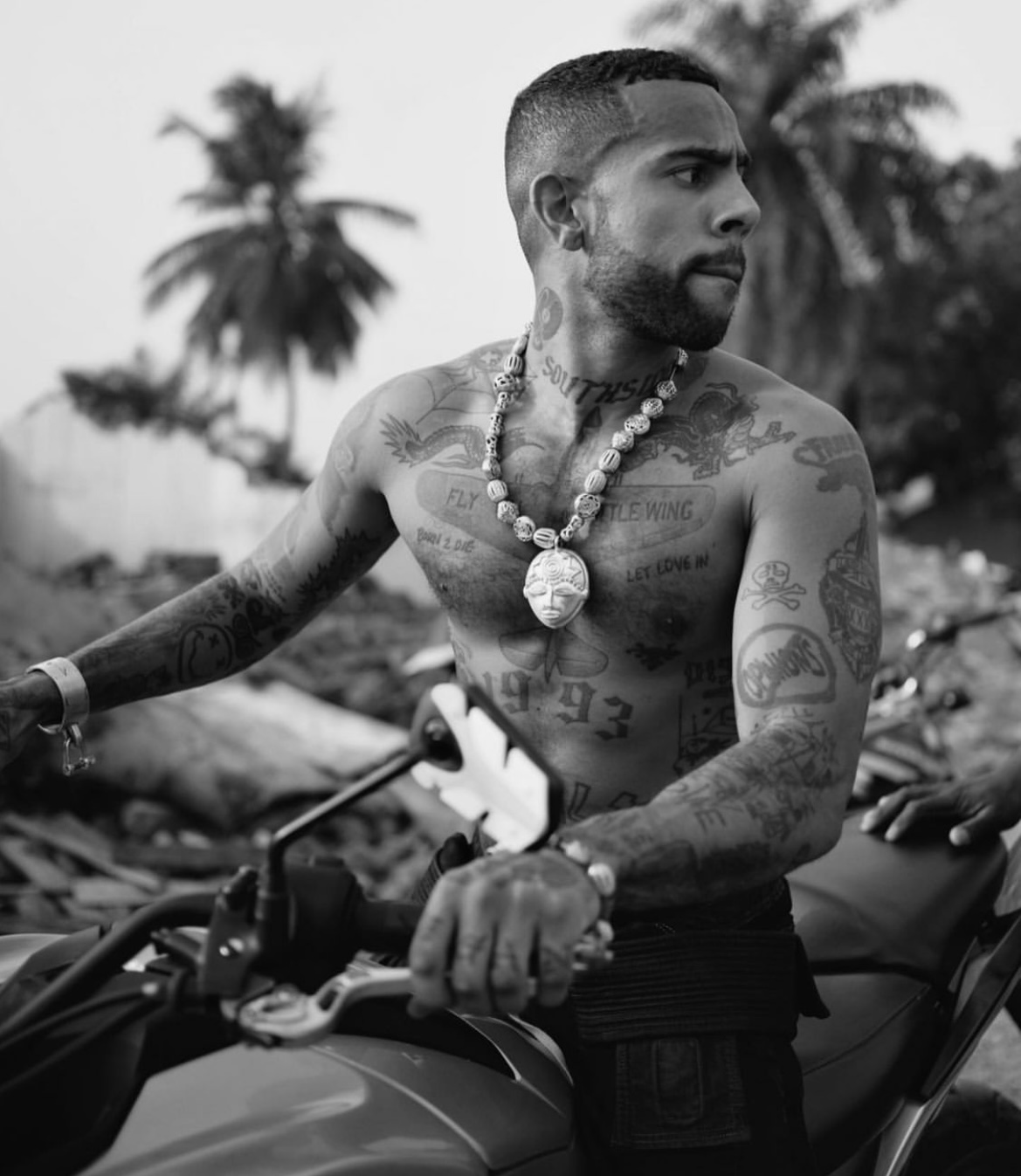
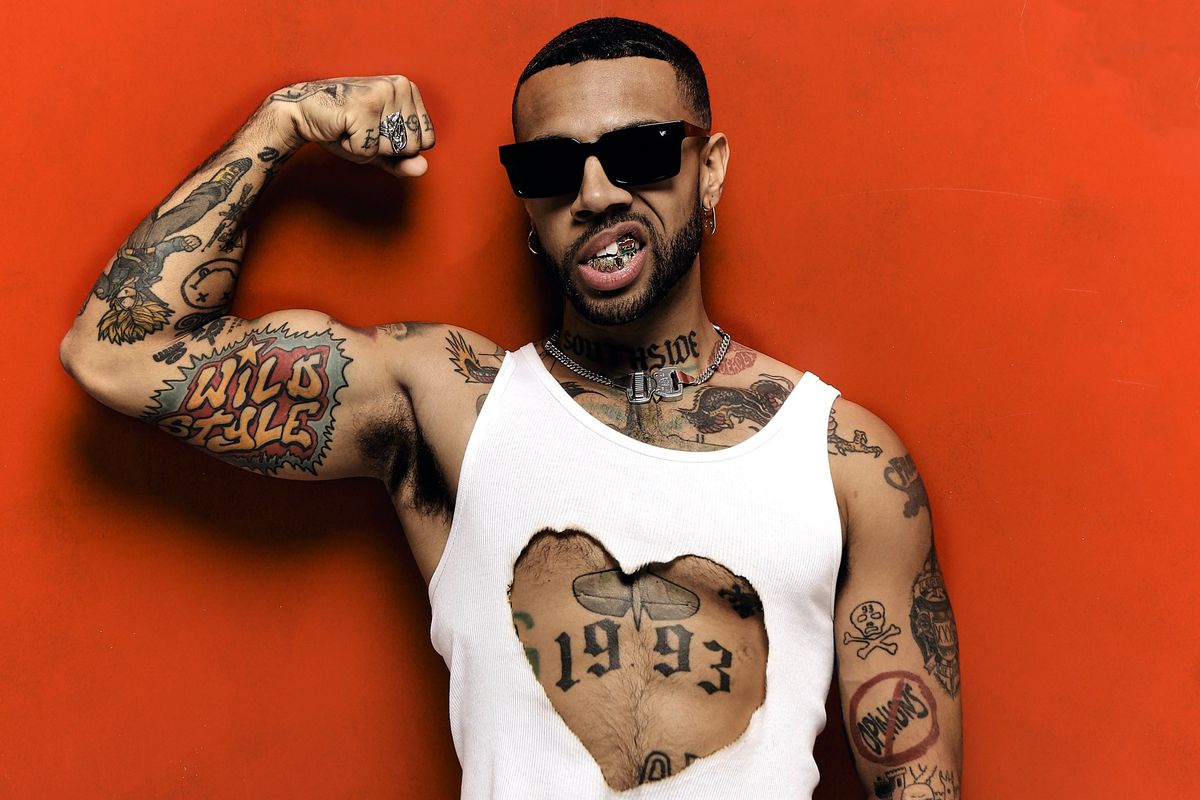
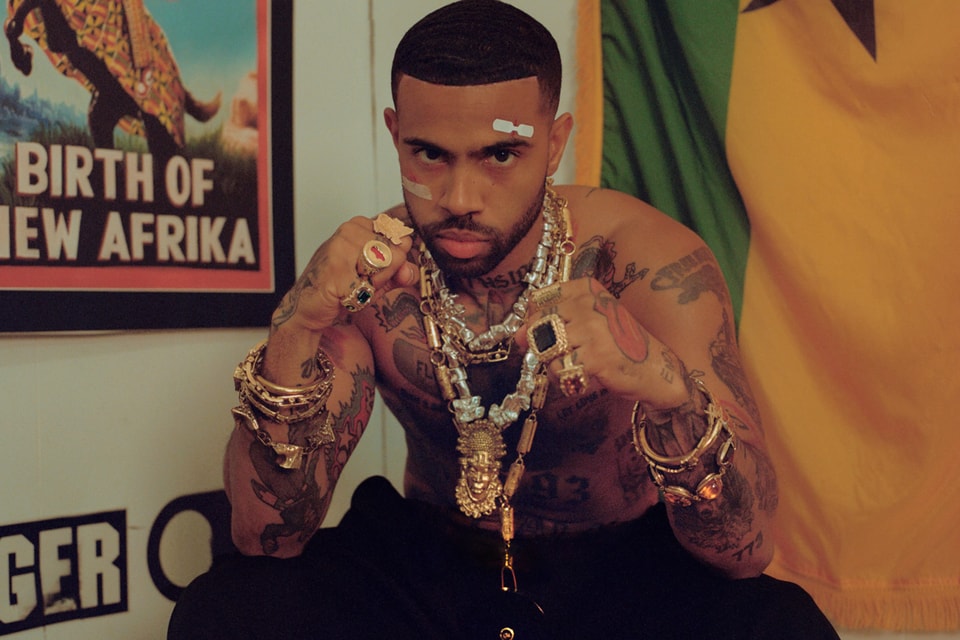
Vic Mensa’s tattoos move between personal memories and public references. In a GQ Tattoo Tour, he says he sketches ideas in Photoshop and often gets tattooed while touring. Chicago, family, music, survival and Ghanaian heritage recur across the collection. The photographs show different views of the ink, not five separate sets of designs.
Free Huey tattoo and the first piece
Mensa has said his first tattoo came when he was 16: a Black Panther image connected with Huey P. Newton and the Free Huey movement. The reference ties the piece to Black history and his South Side roots. It’s more than a striking animal design; the history behind the image is part of what he chose to carry.
Disrupt tattoo and the electric-shock story
When Mensa was 17, he survived an accident involving roughly 15,000 volts. He has linked a side tattoo to that experience: the word “Disrupt,” crash-like imagery and a message that he was fine and people shouldn’t call the police. The blunt lettering turns a frightening event into a record of survival.
Dare memorial tattoo
The word “Dare” honors Mensa’s brother, who was killed by gun violence. The lettering is simple, but the memorial is direct: it keeps his brother’s name close without trying to tell his whole story in one image.
Slave tattoo, Prince and artistic control
Mensa has discussed his “Slave” tattoo in connection with Prince’s fight with his record label over artistic control. It’s an intentionally uncomfortable word. His explanation places it in a conversation about ownership and the limits a contract can put on an artist, rather than treating it as shock for its own sake.
South Side chest tattoo, 1993 and the lettering
Photos show phrases across Mensa’s chest and neck, including “South Side,” “Little Wing” and “Let Love In,” along with the number 1993, commonly identified as his birth year. The lettering ranges from blocky to more delicate, and a chain or open jacket can hide parts of it in some shots.
“Save Money” and the 773 area code point to Chicago and the creative collective associated with Chance the Rapper and other artists. Mensa has also spoken about his Ghanaian family background and an Adinkra symbol associated with interconnectedness. The references come from different parts of his life, but they sit within the same collection.
He has said he lets his tattoos age naturally. The photographs show the ink in different settings and from different distances; what’s clearly documented is the placement and the stories he has shared. Smaller marks without a public explanation are best left open.
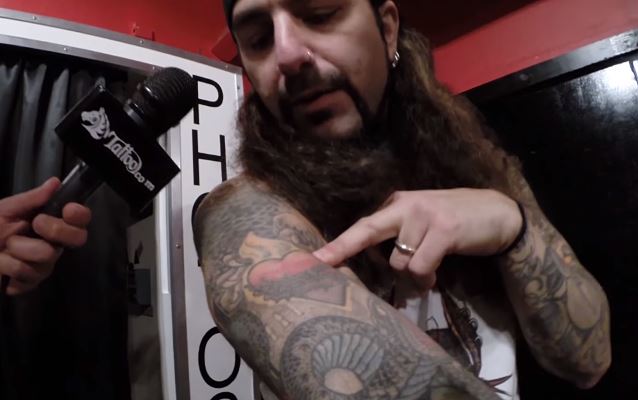
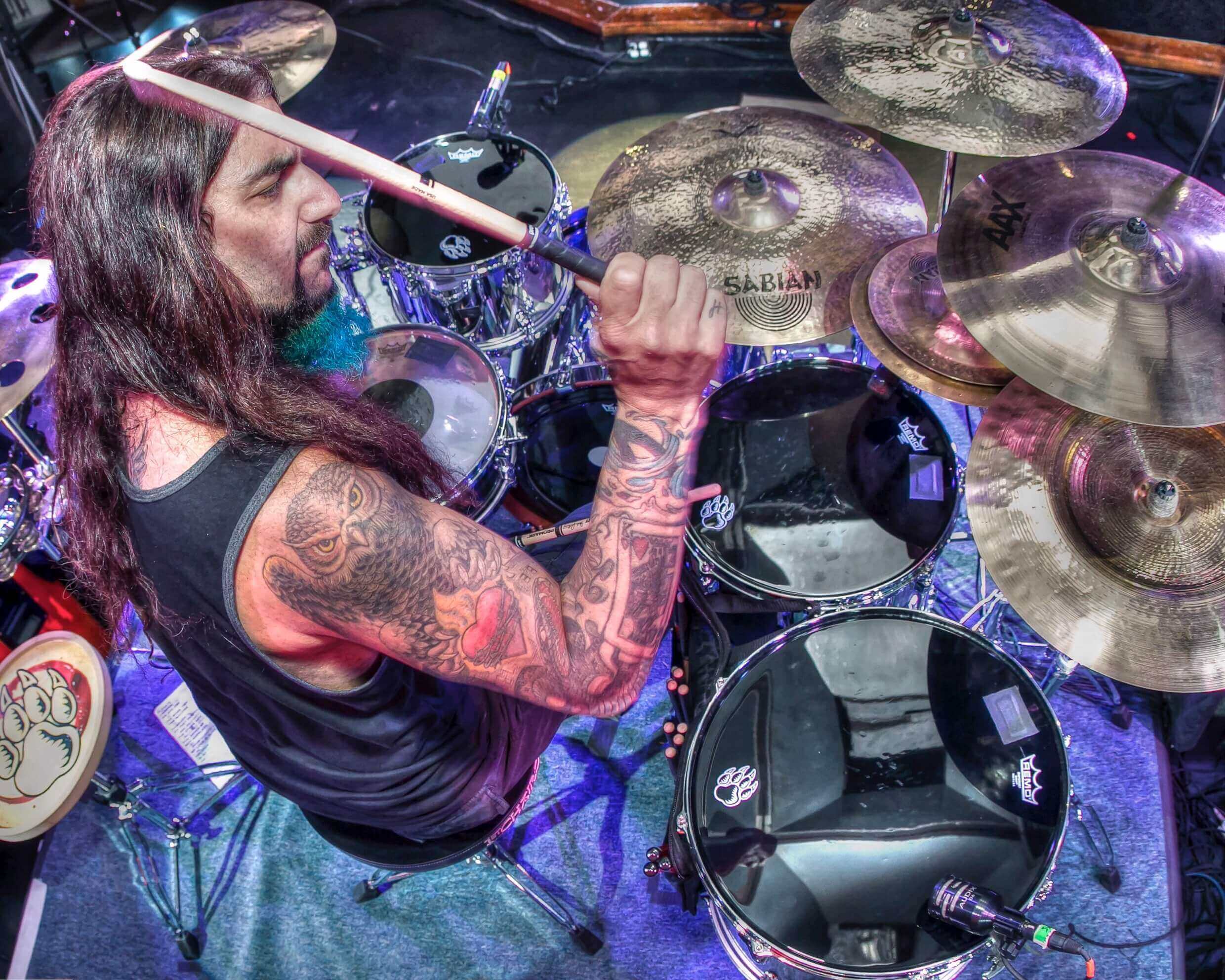
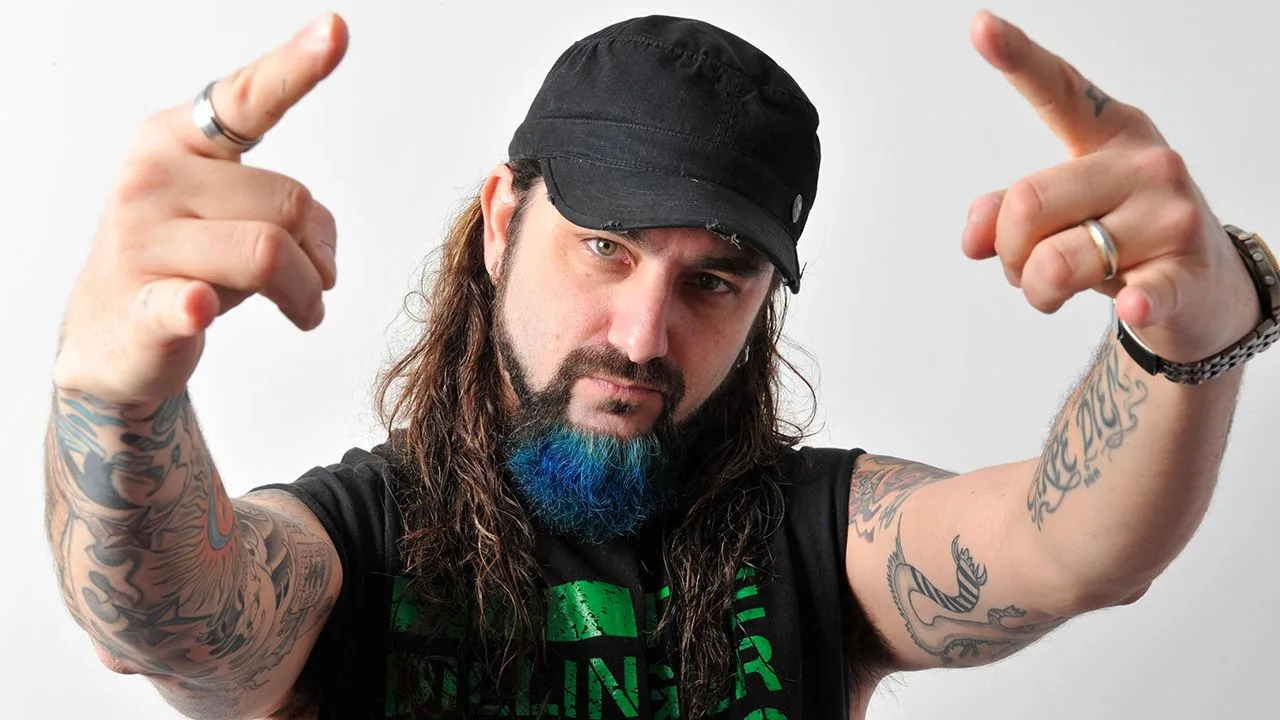
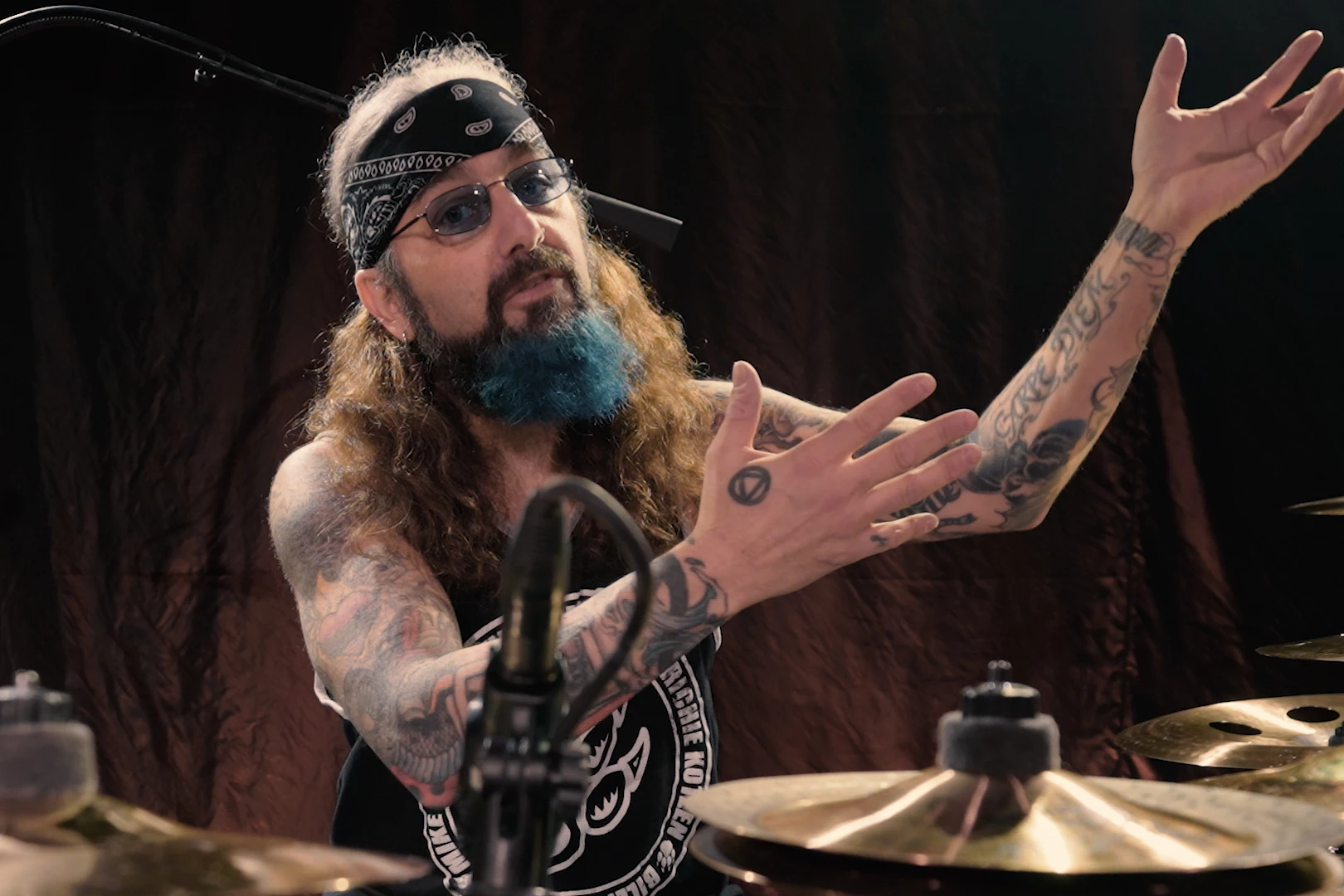
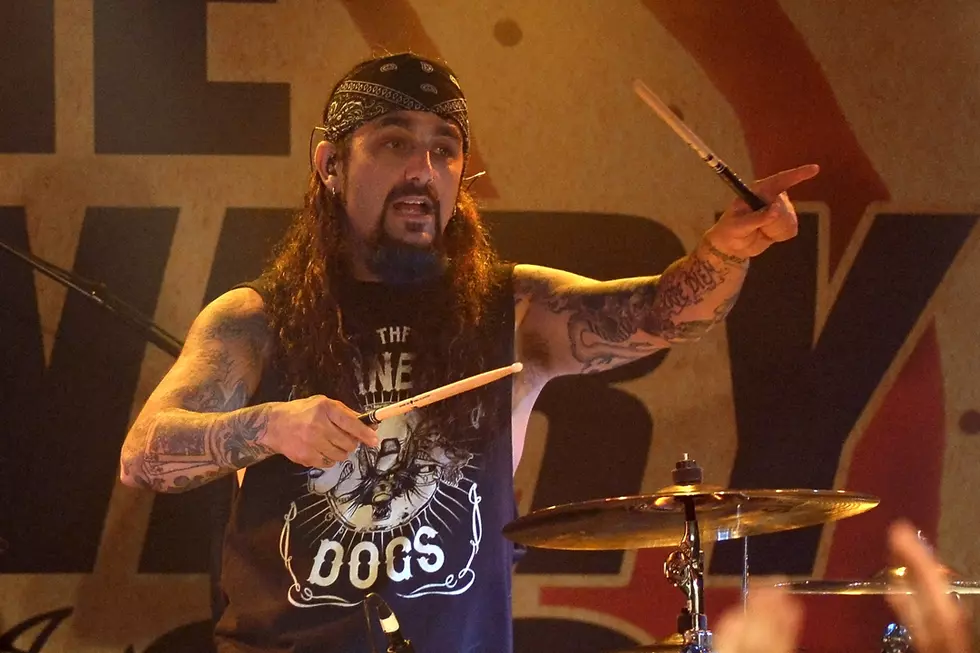
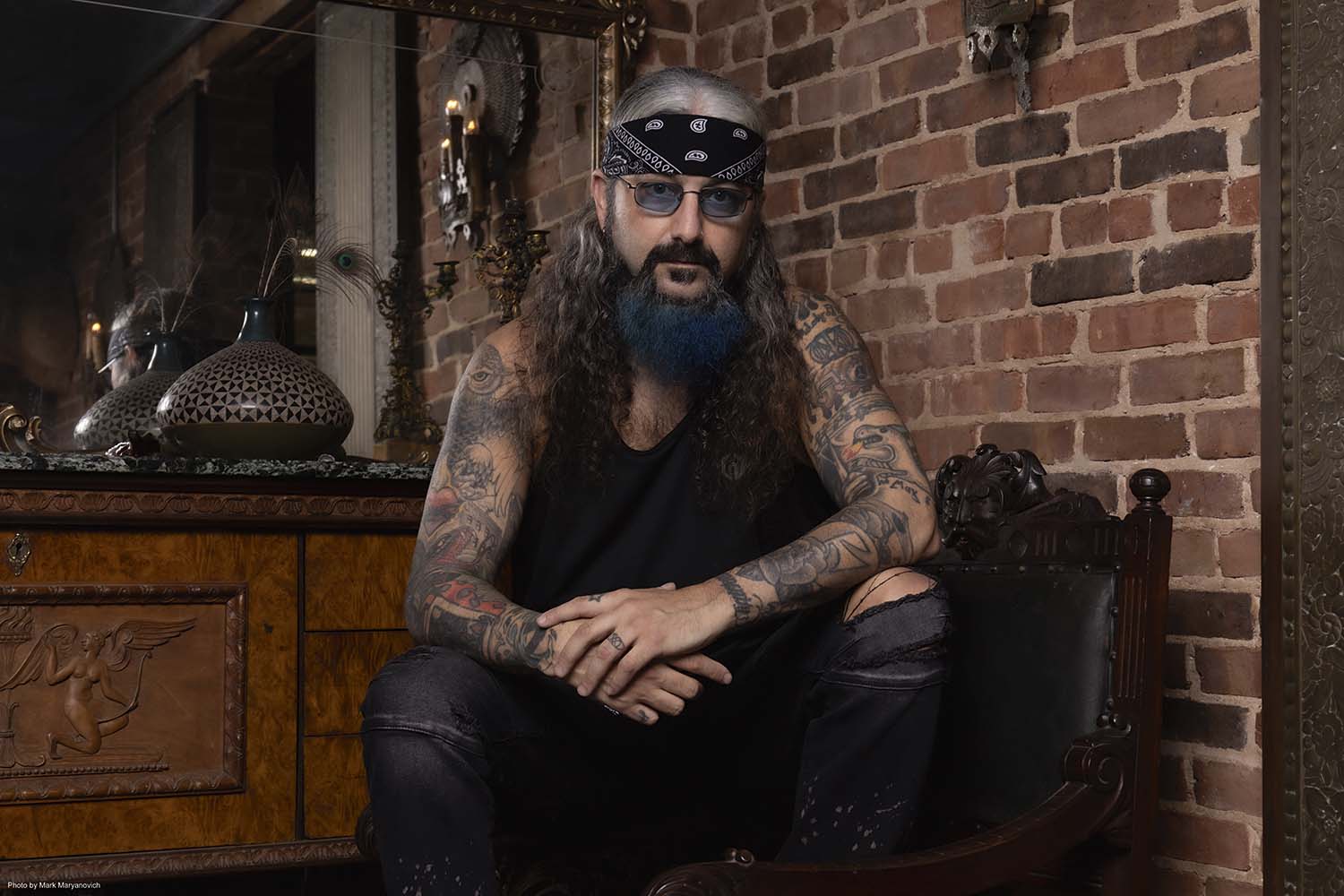
Mike Portnoy’s tattoos connect with his years in progressive metal, touring and recovery. He has talked about some of the designs in interviews, including the Tattoo.com video on this page. The five photographs show different views of his ink; they are not five separate tattoos.
He has explained selected pieces, but the available accounts don’t give a complete inventory of every mark. The clearest stories are the hand tattoo, the Deathbat, “No Regrets” and the art he links with the 12-Step Suite.
The hand tattoo and the interview
Portnoy has spoken about his tattoos in interviews, pointing to particular pieces and explaining why they stayed with him. He has also said that he got a hand tattoo during Gigantour in New Jersey. Hand ink is hard to keep out of view, especially for a drummer whose hands are constantly in motion onstage.
The photos here show the collection in several settings, from portraits to performances. A sleeve can look quite different when he turns his arm toward the camera or part of it disappears behind the kit. The images help show the scale of the work, while his interviews are the best guide to meanings he has chosen to discuss.
The Deathbat tattoo and Avenged Sevenfold
Portnoy has described the Deathbat as a way to mark his time with Avenged Sevenfold and the bond he felt with the band. He joined after drummer Jimmy Sullivan, known as The Rev, died. Portnoy stepped into a difficult role during a painful moment for the group, and the symbol records that chapter of his career.
For fans, the Deathbat is immediately recognizable as Avenged Sevenfold’s emblem. For Portnoy, getting it was also about being part of the band’s circle. Those meanings overlap, but the tattoo doesn’t need to be read as a simple career souvenir.
No Regrets tattoo and choosing a direction
Portnoy has explained “No Regrets” as a reminder that he followed his heart and doesn’t want to spend his life replaying decisions. It isn’t a claim that every choice was easy. The phrase points instead to accepting a direction and continuing forward.
That idea fits a career that has moved through Dream Theater, Avenged Sevenfold, The Winery Dogs, Sons of Apollo and other projects. The words are brief, but they hold a personal view of change: choices matter, and so does what you do next.
The 12-Step Suite tattoo story and recovery
Portnoy has connected tattoos on his arms with the 12-Step Suite, the group of songs he wrote about alcoholism and recovery. The music was among the most personal work in his catalogue, and it gives the ink a place within a larger story of struggle and change.
Not every skull, letter or shaded figure in a photograph has a public explanation. It’s better to leave those details open than assign each one a meaning. The documented pieces point to music, memory and recovery, even though the sleeves don’t follow one uniform visual style.
Artist tribute tattoos, family and the full sleeves
Portnoy’s career references reach beyond one band. Dream Theater remains central, while the Deathbat marks another chapter. His sleeves also draw on the visual language around heavy music, horror art and theatrical performance. The available interviews explain some designs, but they don’t identify every skull, symbol or portrait as a specific family or artist tribute.
A collection built over years can mix lettering, portraits, symbols, color and shading without looking like one planned set. Continuity can come from what the pieces mean to the person wearing them, rather than one palette or artist. Planning still matters when new work has to fit around older tattoos, but the varied textures are part of what makes Portnoy’s sleeves feel lived in.
The photographs also show how ink changes with time and distance. Some lines soften, colors settle, and separate shapes can merge in a wide stage shot. Behind a drum kit, his arms turn and cross, revealing parts of a sleeve that a straight portrait hides. The images offer different glimpses, not a complete record of everything he has had tattooed; Portnoy has also mentioned ink on his legs.
Taken together, the pieces he has explained mark touring, a band he joined at a difficult time, a personal philosophy and recovery. Other parts remain artwork without a published story attached. That mix is enough to give the collection a point of view without pretending every detail is known.
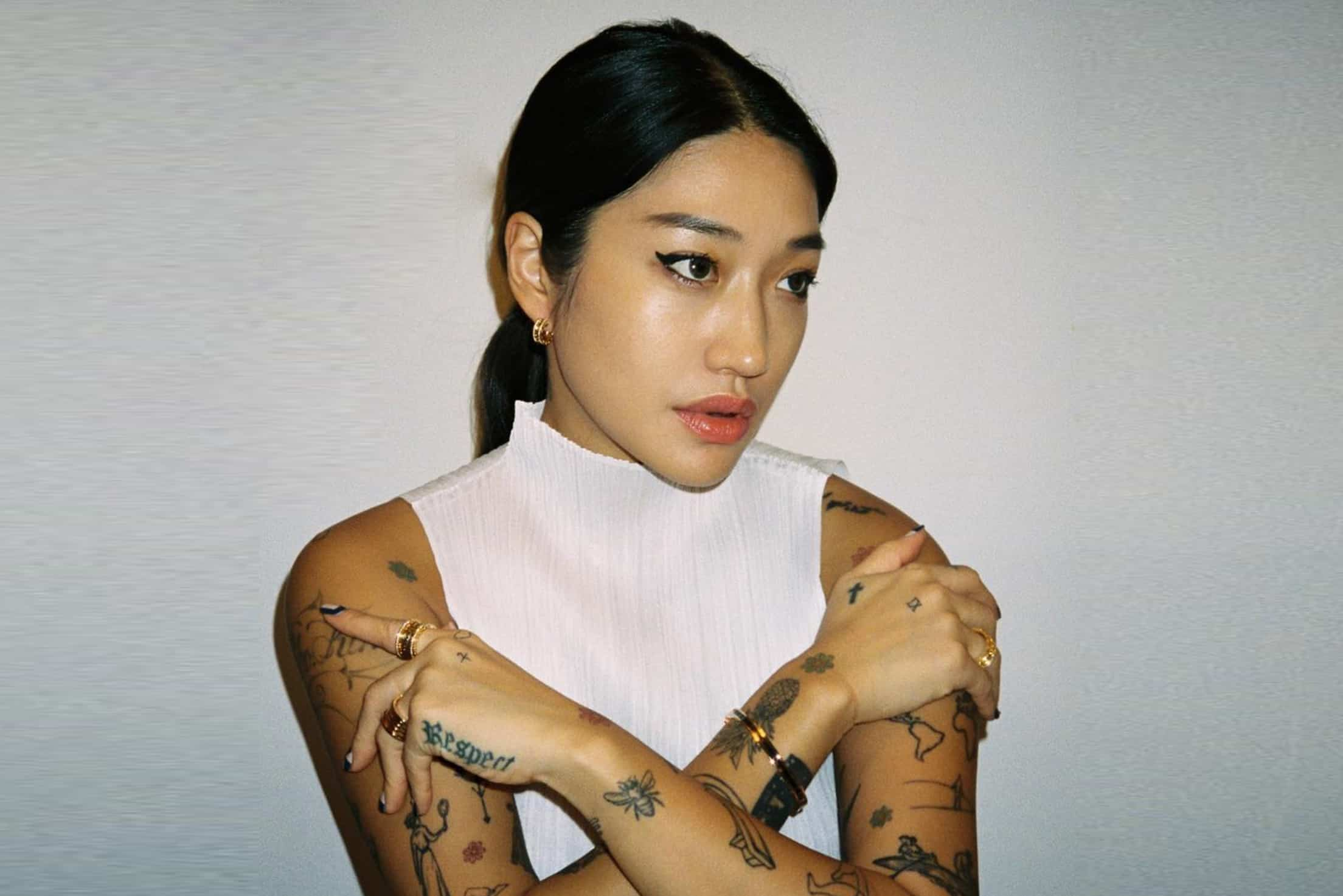
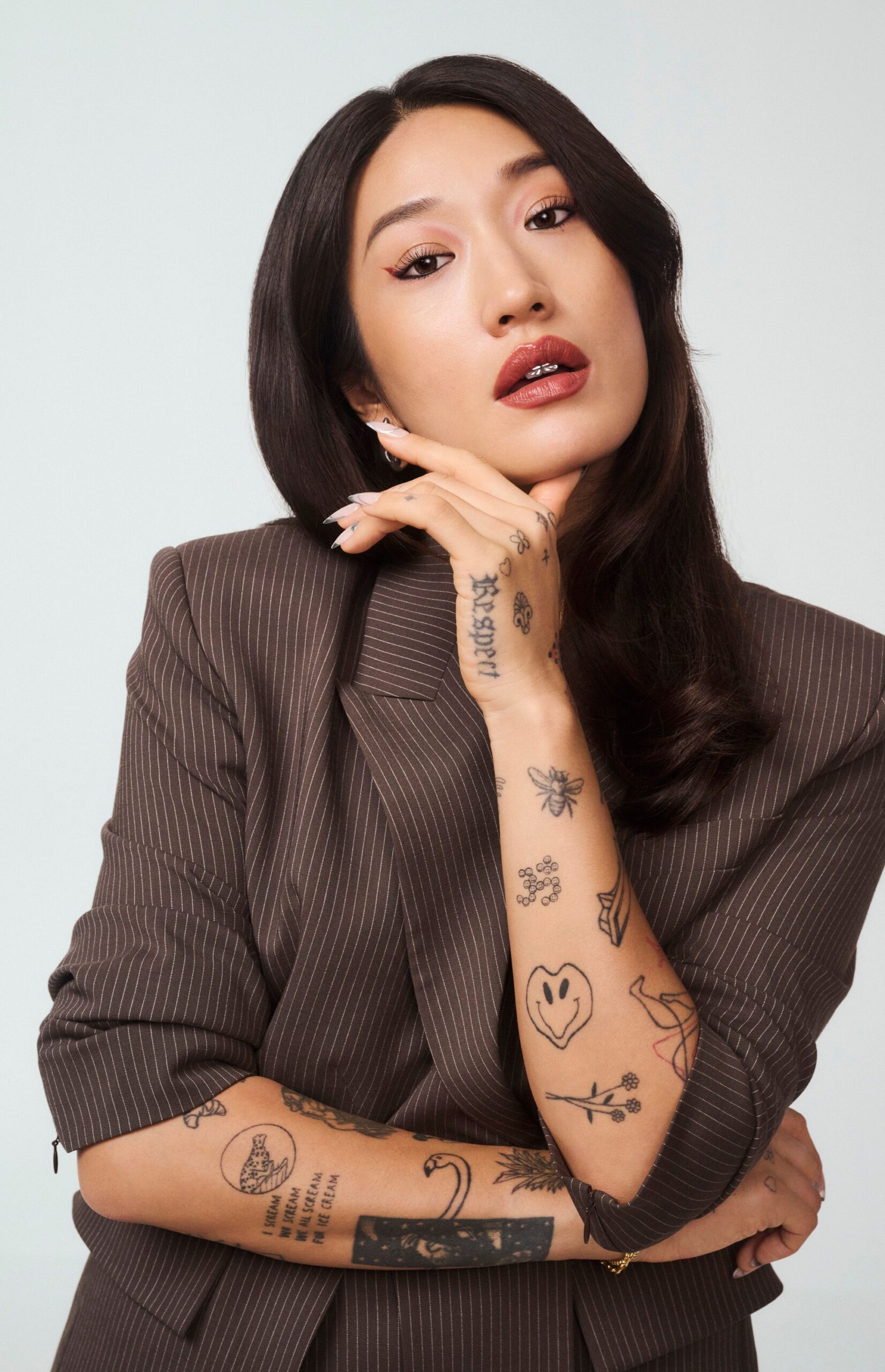
Peggy Gou’s tattoos run from her hands and arms to her shoulders, chest and collarbone. Photos show fine lines, small floral shapes, lettering and larger illustrations, but public accounts don’t explain the meaning of every design. The clearest story is how the different placements appear with her clothes and poses.
Peggy Gou’s tattoo collection is instantly recognizable
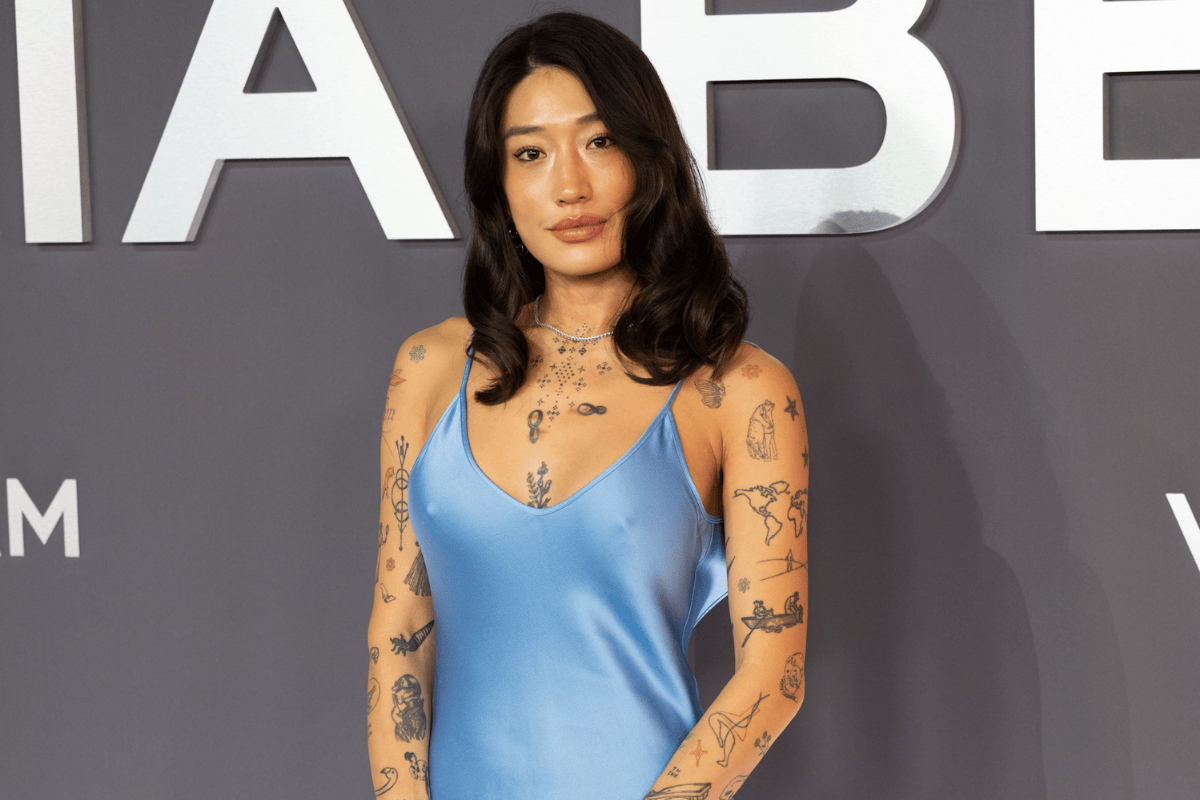
The tattoos don’t form one continuous sleeve. A single portrait can show several separate designs across Gou’s arms and shoulders, with smaller details elsewhere on her body. Metrópoles has described the ink as part of her personal style, which fits the range visible in public photos.
Some pieces are fine and open; others have heavier outlines or fill more space. From a distance, the larger shapes stand out. In close portraits, the smaller marks become easier to pick out. The mix gives the collection variety without making it look like one repeated pattern.
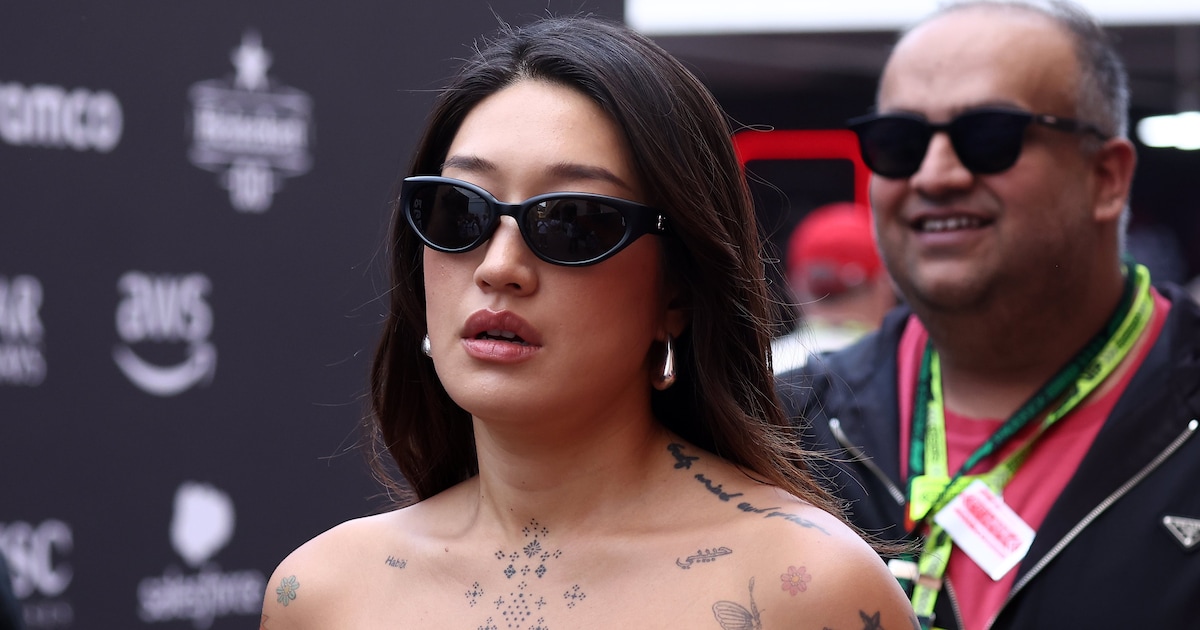
Shoulder and collarbone tattoos stand out in event looks
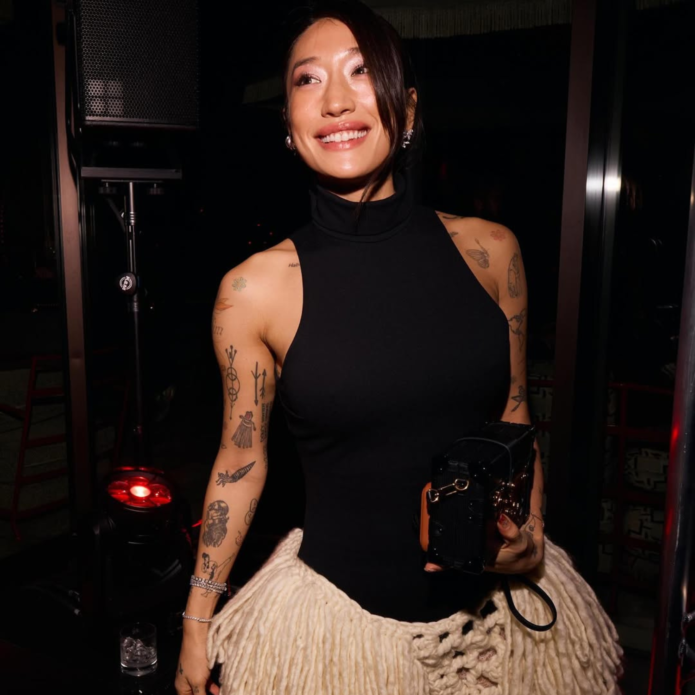
A bare shoulder or an open neckline makes Gou’s upper-body tattoos easier to see. In this event portrait, flowers, small marks and illustrated shapes sit near the shoulder and chest. They remain separate designs rather than one solid panel.
A high neckline can cover the same pieces almost completely. With an open cut, small tattoos become part of the overall look alongside the fabric and jewelry. That change comes from the clothes and pose; it doesn’t show that Gou chose a tattoo to match a particular outfit.
Her arms carry the boldest visual mix
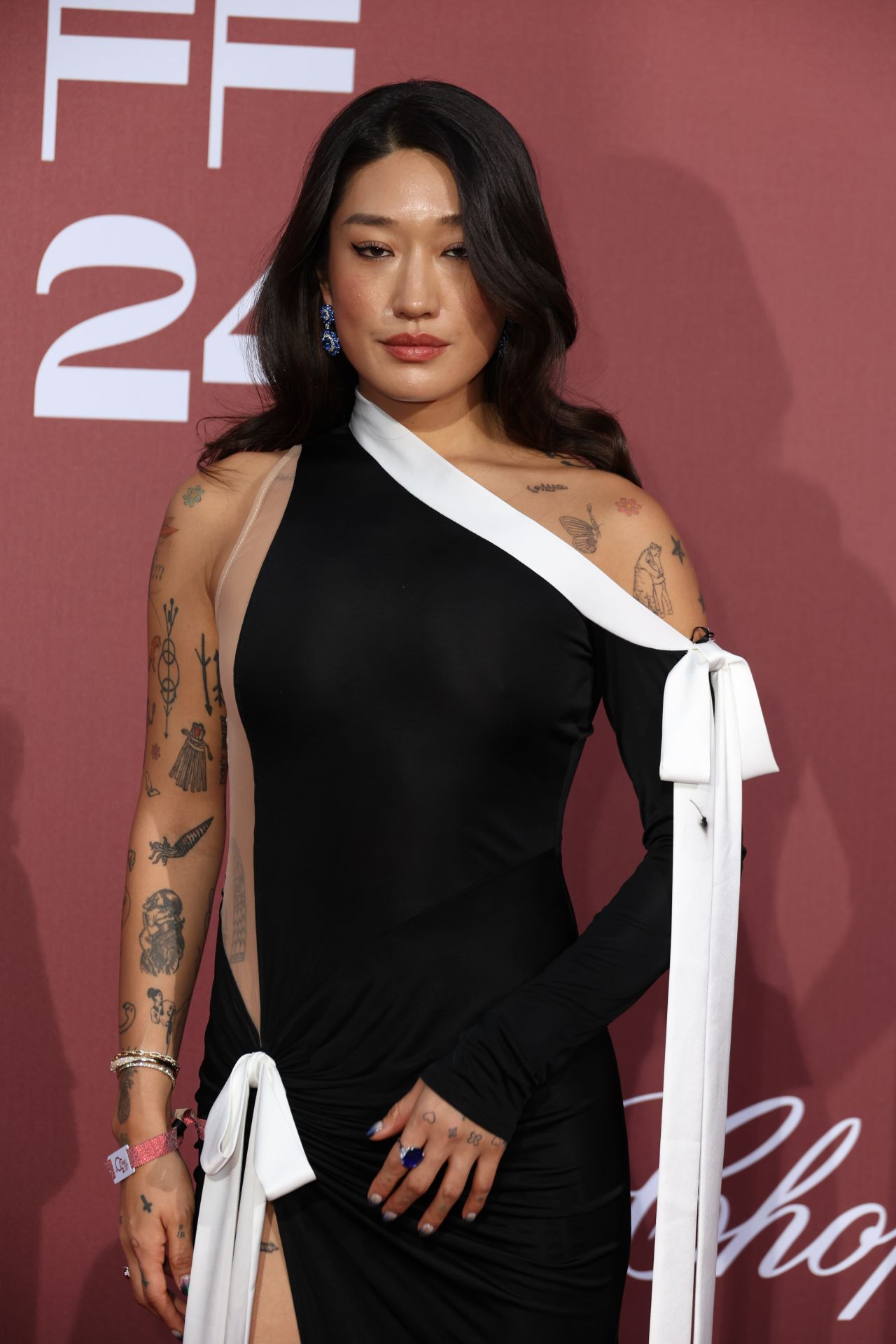
Gou’s arms have the widest range in the portraits here: fine-line drawings, lettering, darker shapes and small areas of color from the upper arm toward the wrist. The different scales keep the eye moving, while open space around each design helps them remain distinct.
Pose and lighting change how the ink reads. Crossed arms bring several designs into one frame; a relaxed pose separates them. Direct flash sharpens darker outlines, while softer light lets them blend into the portrait.
Hand tattoos make the small details easy to spot
Hand and wrist tattoos show up in close portraits and everyday gestures. The images include small marks and linework around Gou’s hand and wrist, with some designs continuing toward the forearm. A close crop makes them prominent; in a full-body photo, they can become small accents.
The Vogue portrait gives a clear view of how little space these designs occupy. Hand tattoos are also hard to hide completely, so they stay part of someone’s everyday appearance. Gou’s rings, nails and sleeves sit alongside the ink rather than covering it.
Public portraits show how placement changes the whole look
Event and editorial photos show the same tattoos under different clothes, lighting and poses. In one shot they stand out against a formal outfit; in another, they blend into a more casual look. The upper-chest and shoulder pieces follow the body’s shape and can move in and out of view as the fabric shifts.
No single photo gives a full inventory. A design may be covered, turned away from the camera or lost in shadow. Comparing the images shows more of Gou’s collection, while leaving unclear details unidentified.
How to use Peggy Gou’s looks as style inspiration
The useful details are the range of sizes, the mix of fine lines and heavier shapes, and how placement changes what a photo shows. If you’re using her photos for ideas, compare more than one angle and ask an experienced artist about size, spacing, movement and how a design may age. The photos can show placement; your arrangement should suit your own body.
For a soundtrack, here’s Peggy Gou’s official video for (It Goes Like) Nanana.
Kelsea Ballerini has talked about several tattoos, including “How sweet the sound,” her parents’ handwriting, a hummingbird, a small landscape and a wave on her hip. The pictures here offer selected views, not a complete inventory, and the story behind each design isn’t equally detailed.
The “Amazing Grace” lyric tattoo on her wrist
“How sweet the sound,” from “Amazing Grace,” was Ballerini’s first tattoo. She has said the hymn was the first solo she sang with her church choir.
She guessed she was about 19 or 20 when she got it, the day before her first promotional photo shoot. In a 2022 interview, she said she worried that if her first single succeeded, fans might wonder why she waited years to get ink. The lettering ended up larger and in a different font than she’d pictured.
The line sits on her left wrist. If you’re considering quote script, bring the exact words to an artist and check the stencil at the intended size. Ballerini’s story shows how much the font and scale can change the result.
The tiny hummingbird tattoo on her upper back
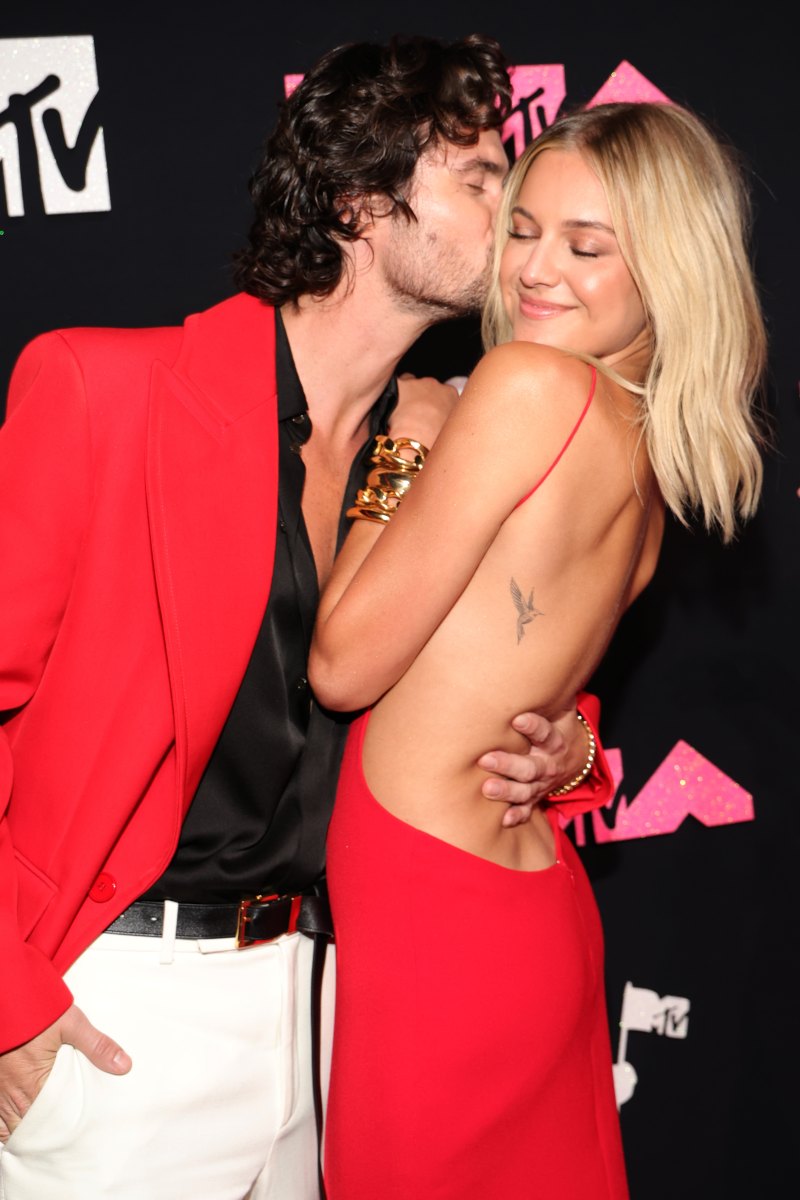
Ballerini revealed the hummingbird at the 2023 MTV VMAs, when her red open-back gown exposed the mid-back placement. She tagged tattoo artist Michelle Santana in her Instagram post. The fine-line bird is in flight and small enough to read as an accent.
A back placement stays covered in most clothes and appears with an open-back look. In her Instagram reveal, Ballerini showed the bird and tagged the artist without giving it a separate meaning.
Her parents’ handwriting tattoo: “love, love”
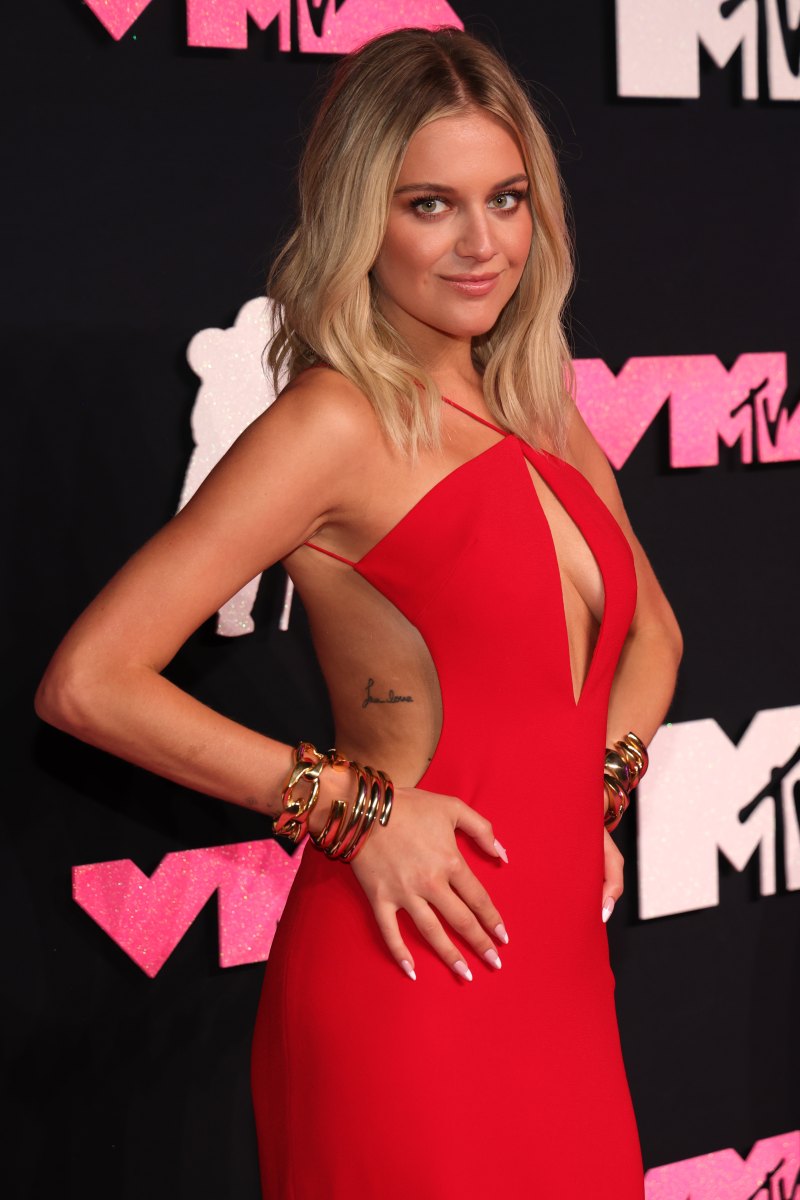
The two “love”s on Ballerini’s right ribs come from her parents’ handwriting. They sent her letters around the time her first single, “Love Me Like You Mean It,” went No. 1. While she was in New Orleans, she took each sign-off and placed them side by side.
If you’re using a relative’s handwriting, bring a real note or card to the artist. The letter shapes are what make this design personal; the artist can help keep them recognizable in the final layout.
The mountain-and-birds wrist tattoo
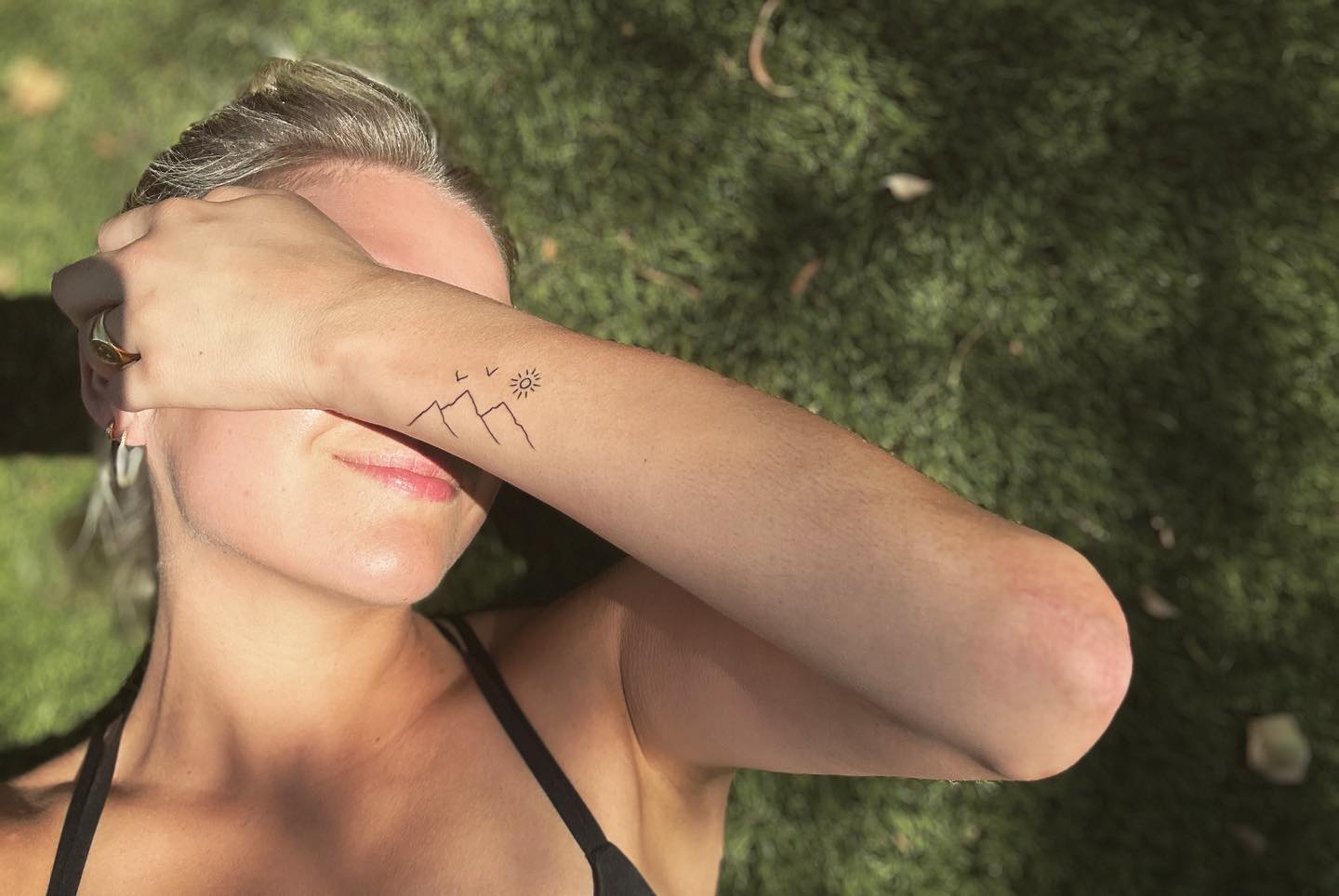
Ballerini shared this fine-line landscape after her Heartfirst tour ended in July 2023. It shows a mountain range, two birds and a sun. She later called it “Mountain With a View,” a reference to her song of the same name. The design sits near the wrist on her right forearm; open space keeps the small shapes distinct.
How her choices connect to real moments
Ballerini said she’d wanted the small wave on her left hip since 2016, then got it on a whim. She called it her “fourth little baby tat” and joked that she wanted more even if her mother might not approve. The other pieces came from distinct points in her life, so the collection doesn’t depend on one style or a single story.
Questions to take to an artist
Bring references to explain what you like—the wording, handwriting, a small silhouette or the open spacing in a landscape. Then talk through the placement and ask the artist to adapt the idea to your body instead of copying a celebrity’s exact tattoo. If the words or size still feel uncertain, wait before booking.
Kelsea on stage and offstage
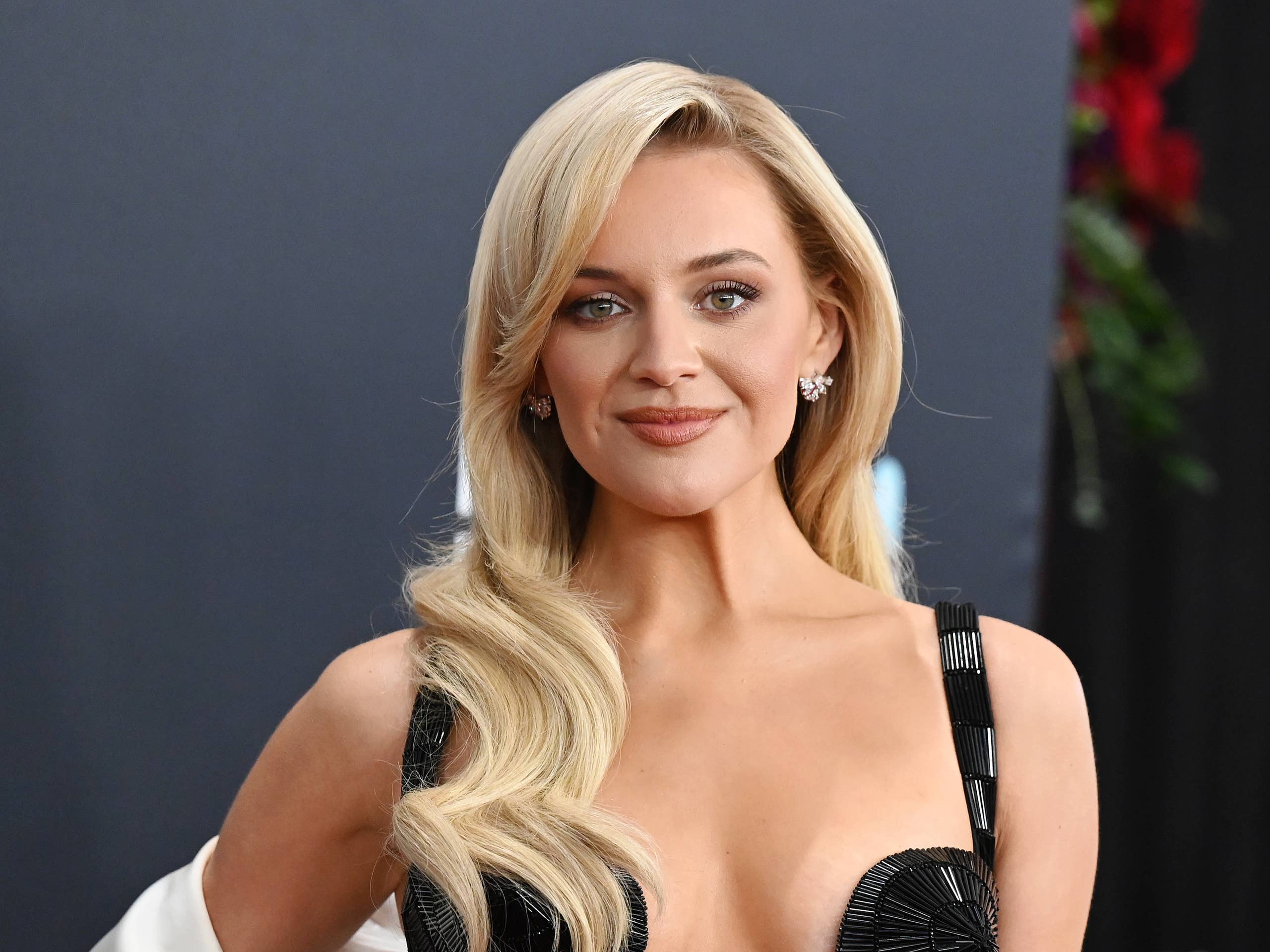
The photo shows Ballerini away from a performance. Awards looks often lean on a strong silhouette and polished styling; stage clothes need room to move under bright lights. Neither setting alone captures her whole style.
An interview with Kelsea
Kelsea joins fellow country artists to share the stories behind their tattoos in this interview.
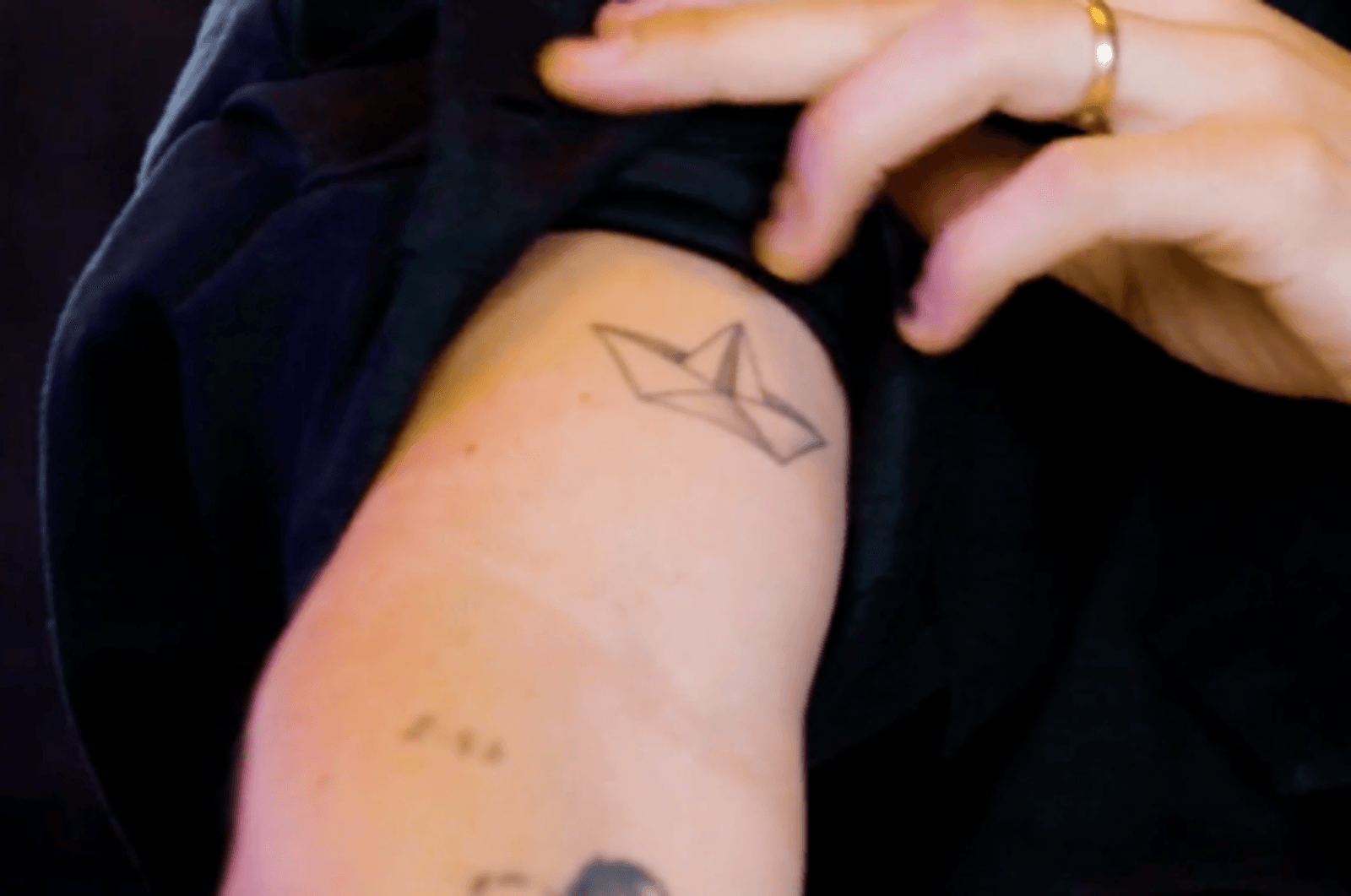
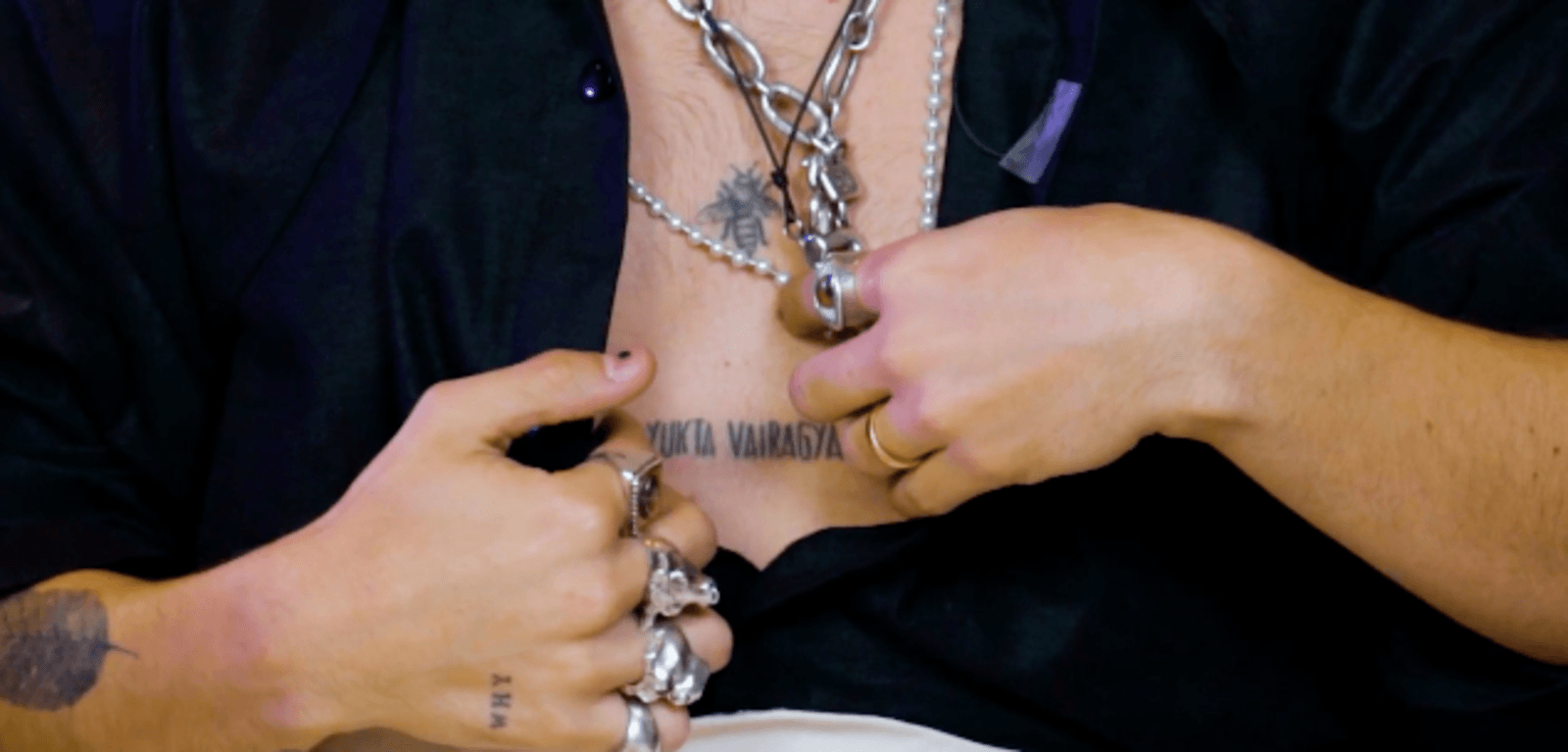
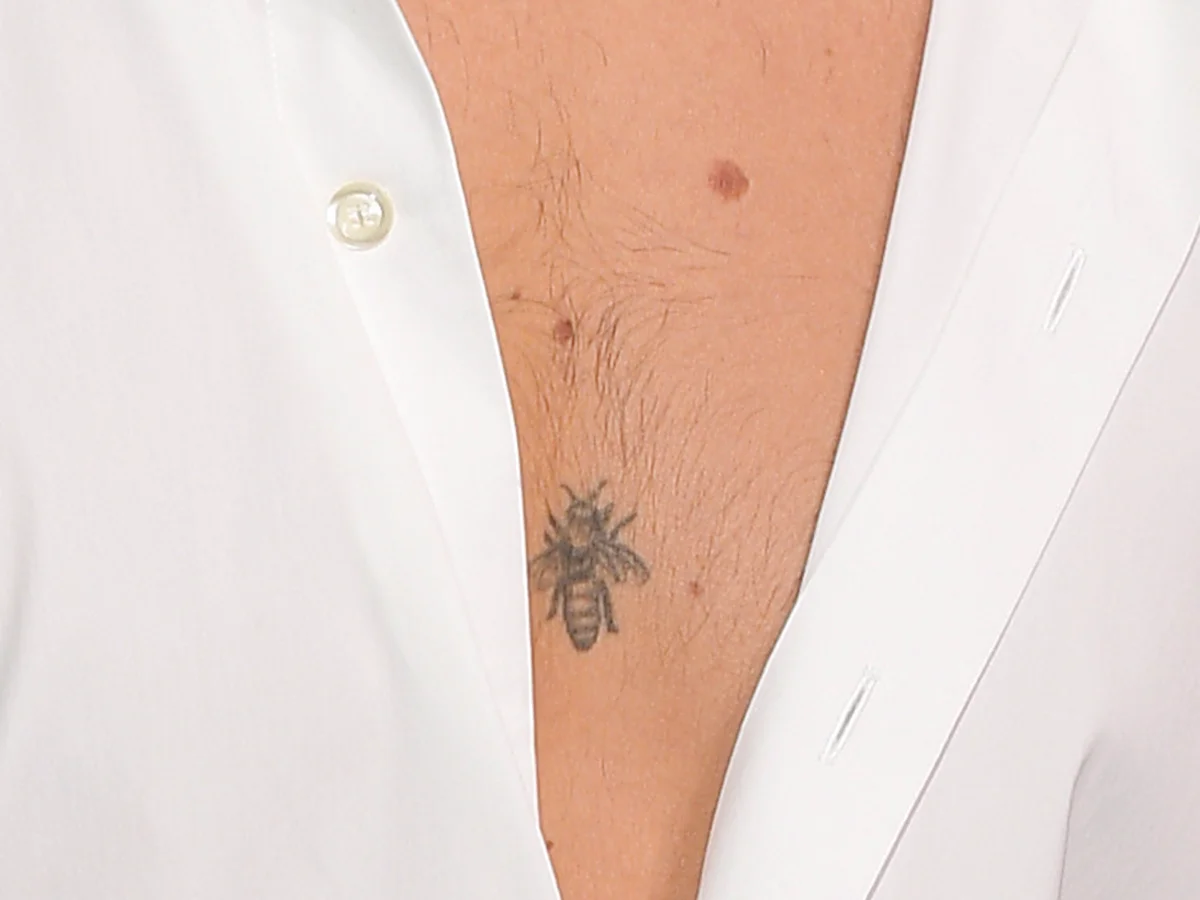
Camilo has explained a few tattoos that connect to his relationship with Evaluna and ideas he tries to keep in view. In a 2021 interview with GQ México, he talked about a paper boat, the Sanskrit phrase “Yukta Vairagya,” and a bee-and-honeycomb design. Other marks are visible in photographs, but he hasn’t given every one a public meaning.
The paper boat tattoo and a proposal story
Camilo said the paper boat was part of his proposal to Evaluna. He described himself as a castaway without her, and said she has the same design. The small outline carries that shared story without spelling it out for everyone who sees it.
The Yukta Vairagya tattoo and the idea of purpose
The words “Yukta Vairagya” stretch across Camilo’s chest. He told GQ that the phrase is about putting what you have in service of your purpose without burning everything down to pursue it. He said discovering the words changed how he approached his career. Since Sanskrit phrases can lose nuance or be copied incorrectly, the translation should be checked by someone qualified before it is used as a tattoo.
The bee tattoo and his family’s roots
Camilo described the bee-and-honeycomb design on his forearm as a tribute to his roots. The image is a family connection he chose to carry with him; the meaning comes from his explanation, rather than the bee as a general symbol.
Camilo has other small designs and lettering, but not every tattoo has a documented explanation. The boat, phrase and bee stand out because he has connected them to specific parts of his life.
Camilo’s public style
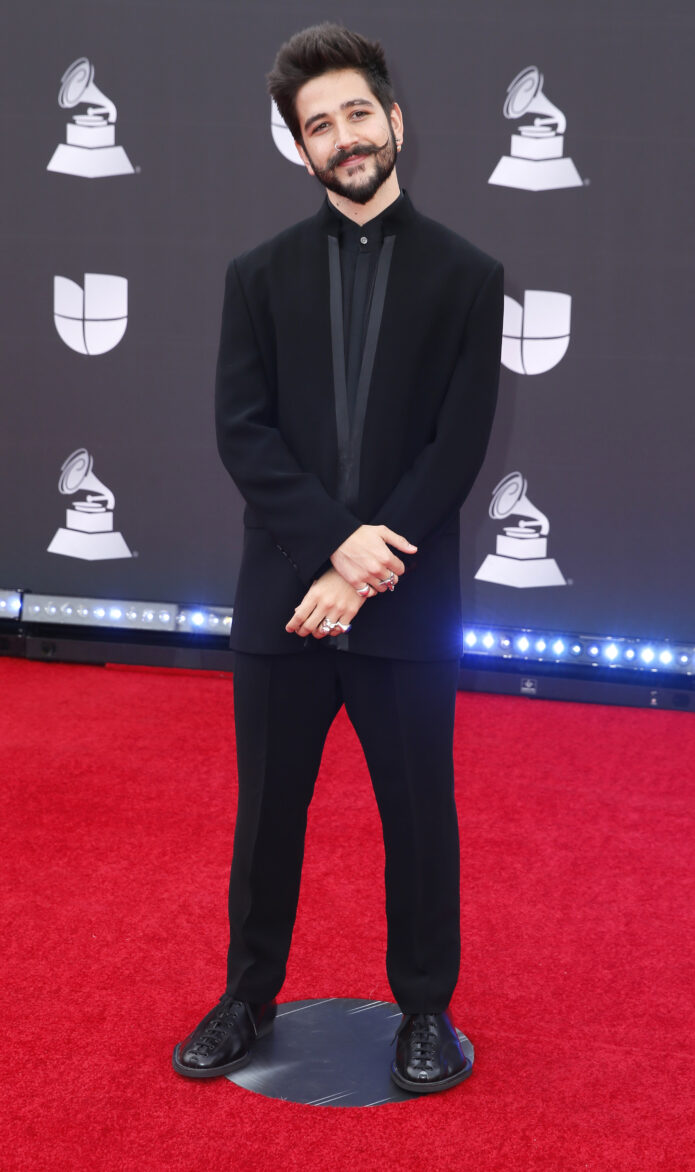
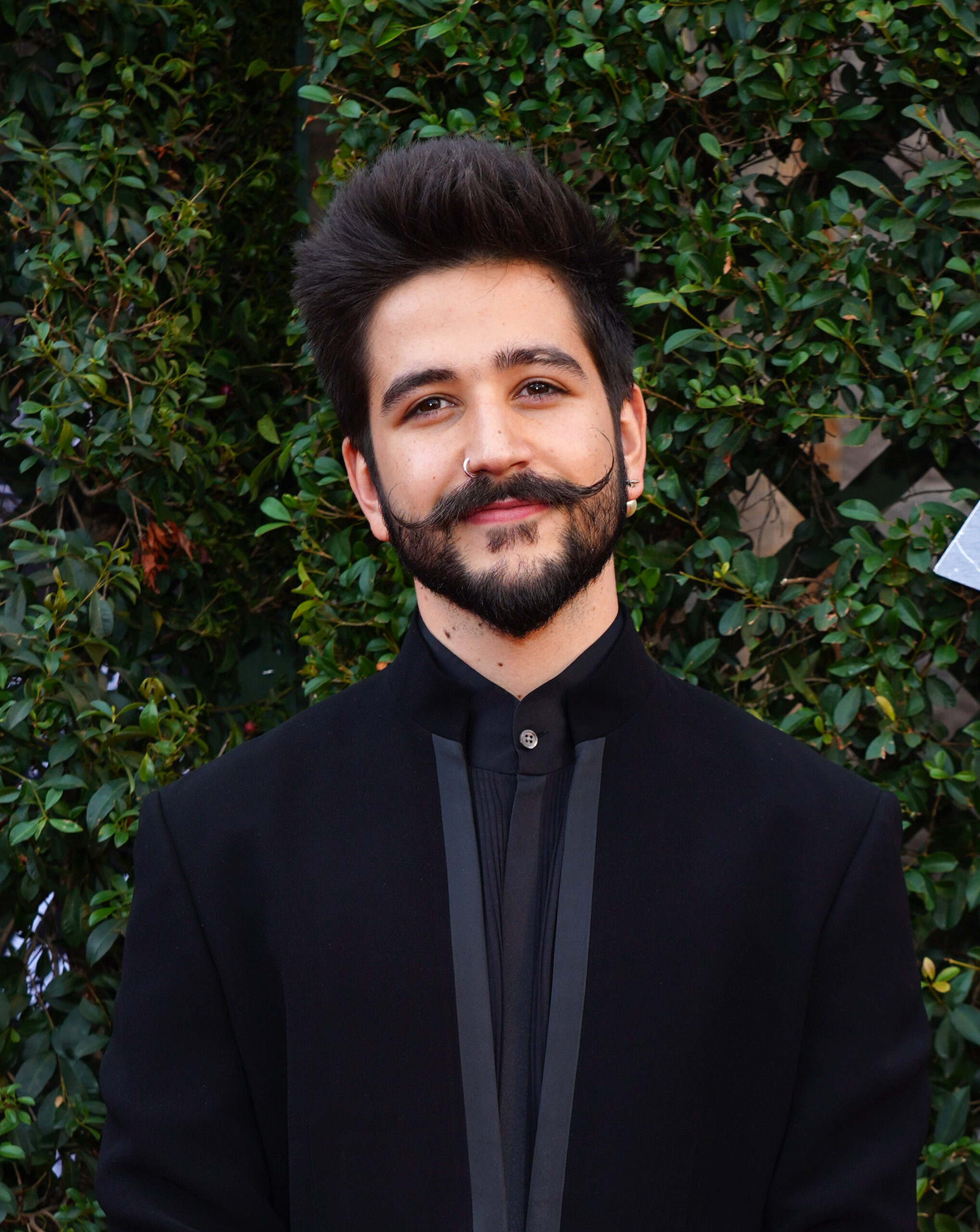
Camilo’s public look has shifted between the long hair and beard many fans recognize and more tailored outfits for performances and award appearances. This portrait shows one side of that style; it isn’t evidence of a tattoo.
A life that keeps moving
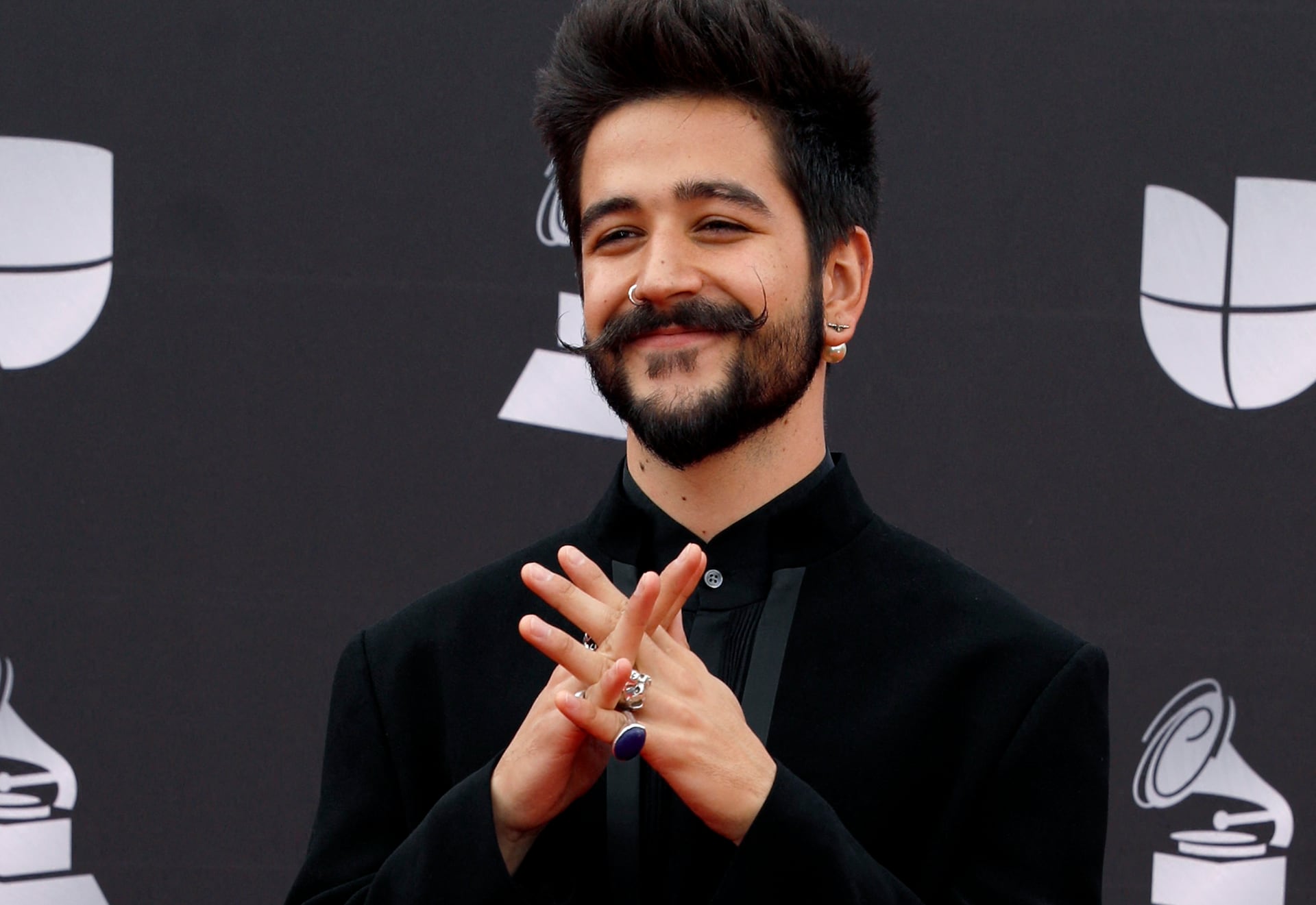
The GQ interview documents tattoos Camilo chose to explain in 2021, not a full or current inventory. This awards portrait gives a little context about his public life but doesn’t show his ink.
A conversation with Camilo
Camilo discusses the stories behind several of his tattoos in this interview.
Reneé Rapp’s tattoos are small and mostly visible on her arms. Photographs show fine lettering and other compact linework; one tattoo has a documented reference, a tribute to Frank Ocean’s Blonde. The interview confirming it doesn’t describe its placement or design, and the meaning of the other marks hasn’t been reliably reported. “Tattoos” is also the title of Rapp’s 2022 debut song, a separate subject from her body art.
That leaves a clear boundary: photos can show the ink, but they can’t fill in its story. Here’s what has been reported, what the images show, and what remains unknown.
What is actually visible in Reneé Rapp’s tattoos
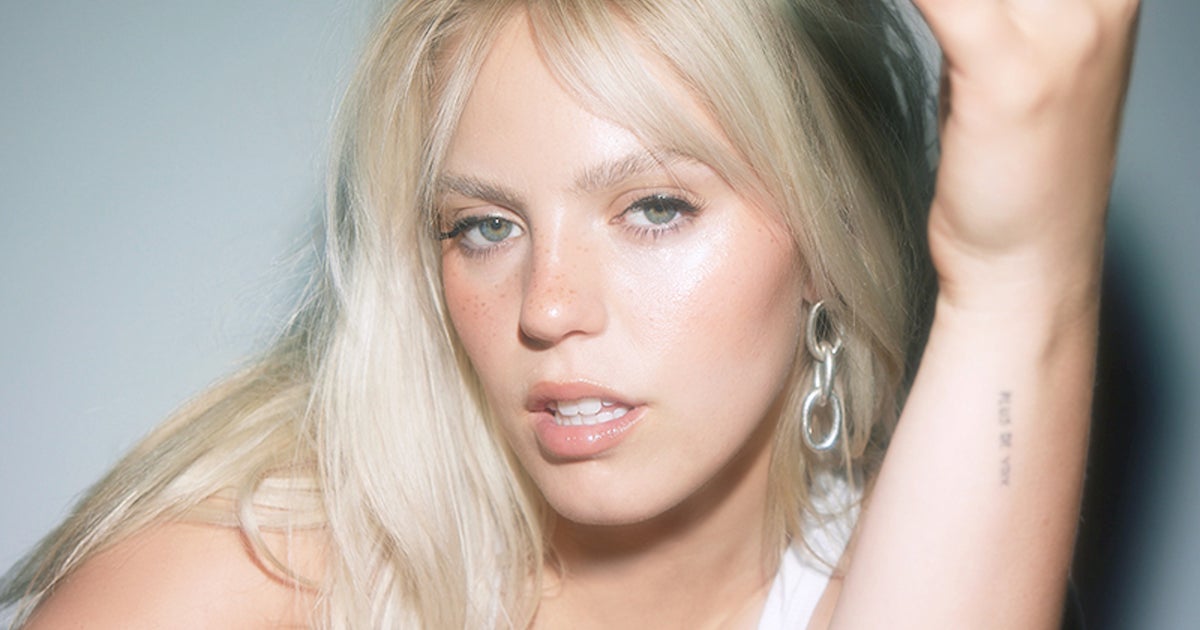
The clearest photographs show fine lettering along Rapp’s forearm and small linework pieces elsewhere on her arms. It’s a handful of separate tattoos rather than a sleeve or one large centerpiece. Some event photos show the designs sharply; others are too cropped or soft to identify each mark with confidence.
Official Charts confirms that Rapp has a Blonde tattoo in tribute to Frank Ocean’s album. That interview doesn’t give its placement or describe the artwork. Event photographs show small linework on her arms, but they don’t establish the meaning of the other designs.
The photos are useful for placement and scale, not for guessing a private meaning. Sleeves, lighting and camera angles can also make small marks hard to distinguish.
Fine-line lettering and small arm pieces
The forearm lettering is light and narrow, sitting along the arm instead of wrapping around it. In photos, it reads as a small detail beside the other designs rather than a focal piece. The camera doesn’t show enough to confidently transcribe the words.
If you’re drawn to this scale, ask an artist to show the design at its actual tattoo size. Fine strokes and tightly spaced letters can lose clarity when they’re made too small, so a slight adjustment may help the piece age and remain readable. The aim is to borrow the understated feel, not copy Rapp’s tattoo.
The Blonde tribute tattoo: a personal reference, not a design template
Rapp’s Blonde tattoo is the one with a confirmed personal reference. In an Official Charts interview, she described it as a tribute to her favorite album, Frank Ocean’s Blonde. The interview doesn’t say what the tattoo looks like, so its exact artwork and placement are still unknown.
A music reference can be a lyric, a date, a small image or something only the wearer recognizes. If an album matters to you, think about what you want to remember before settling on a design. Rapp’s tattoo is a documented example of a personal connection; it doesn’t mean fans need to reproduce the same reference.
Why the collection feels understated
In the available photos, the tattoos share a small scale and appear in separate spots on Rapp’s arms. That gives the collection a loose, personal feel; it doesn’t prove she planned them around a single theme.
For a similar layout, think about spacing as well as the individual designs. A few small pieces can sit together without filling every gap, and you can decide later whether to add more. Check how a placement looks with your arm relaxed and turned, not only in a straight-on reference photo.
How to adapt the look to your own idea
Start with the detail you actually want to keep: fine lettering, compact linework or the open spacing between tattoos. Pair it with a subject that belongs to your own life, rather than lifting a celebrity’s design.
Before committing, check the drawing at its real size and talk with your artist about line weight, readability and how it may heal. An inner forearm is visible and easy to cover with a sleeve, but it also gets sun and movement; placement should fit your daily clothes and how often you want the tattoo seen. Your artist can help adapt the idea to your body and the skin where it will sit.
Her music and acting career
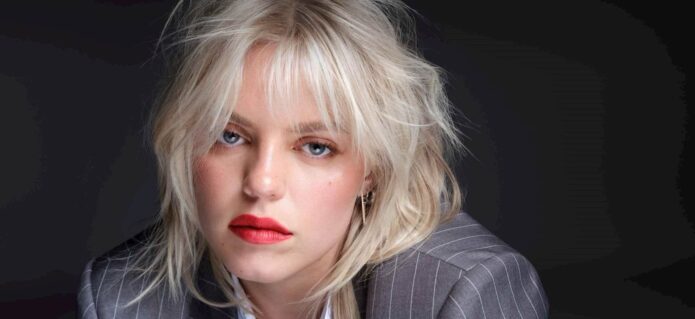
Rapp’s career spans musical theater, television and pop music. She played Regina George in the Broadway musical Mean Girls and Leighton in The Sex Lives of College Girls before building a wider audience as a singer. The photos here include interview and career portraits for context; they aren’t evidence of additional tattoos.
Rapp’s song “Tattoos” came out in 2022, before her first full-length album. The track title can confuse search results, but it isn’t a guide to her body art.
The short version
Photos show fine-line arm tattoos, while the Blonde tribute is the one with a reported explanation. The details of most other designs remain unconfirmed. If you like the look, use the scale and spacing as inspiration, then work with an artist on a design that means something to you.
Rapp’s official behind-the-scenes video for her song “Tattoos” is below. It follows her music work, not the tattoos discussed in this article.
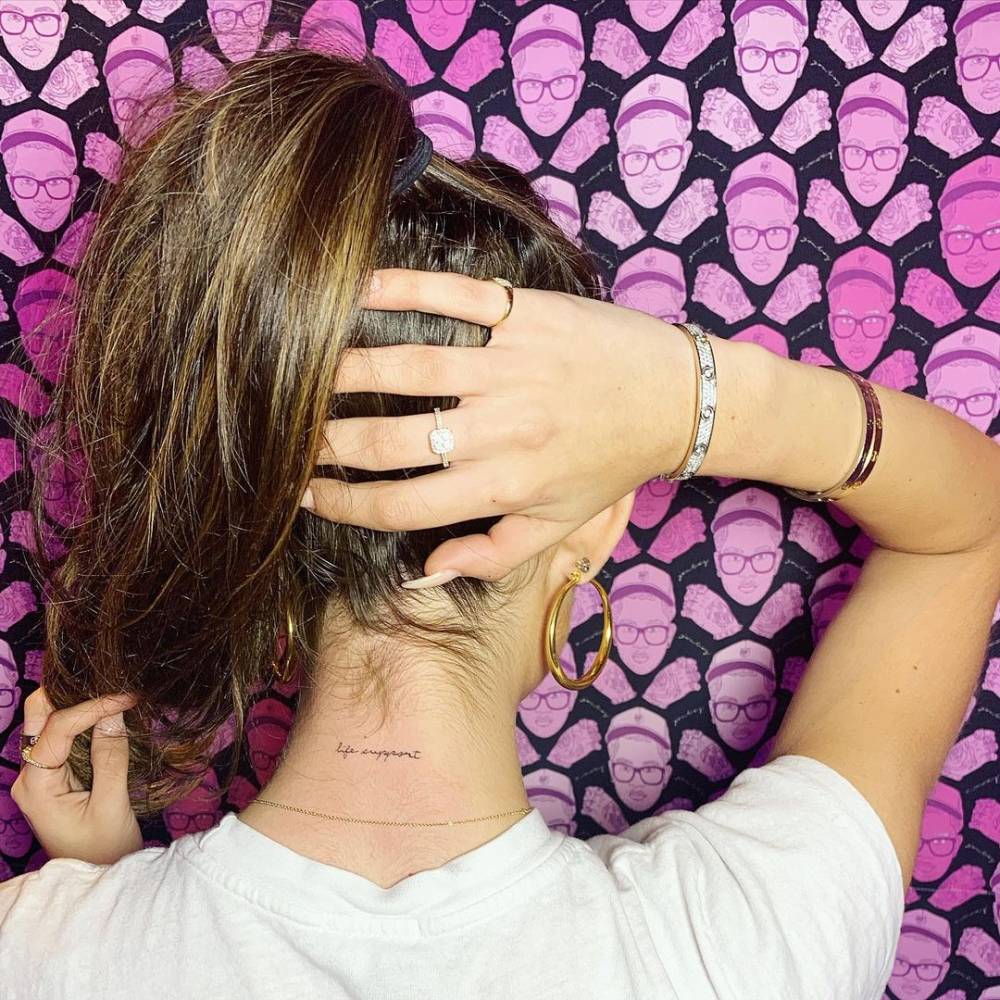
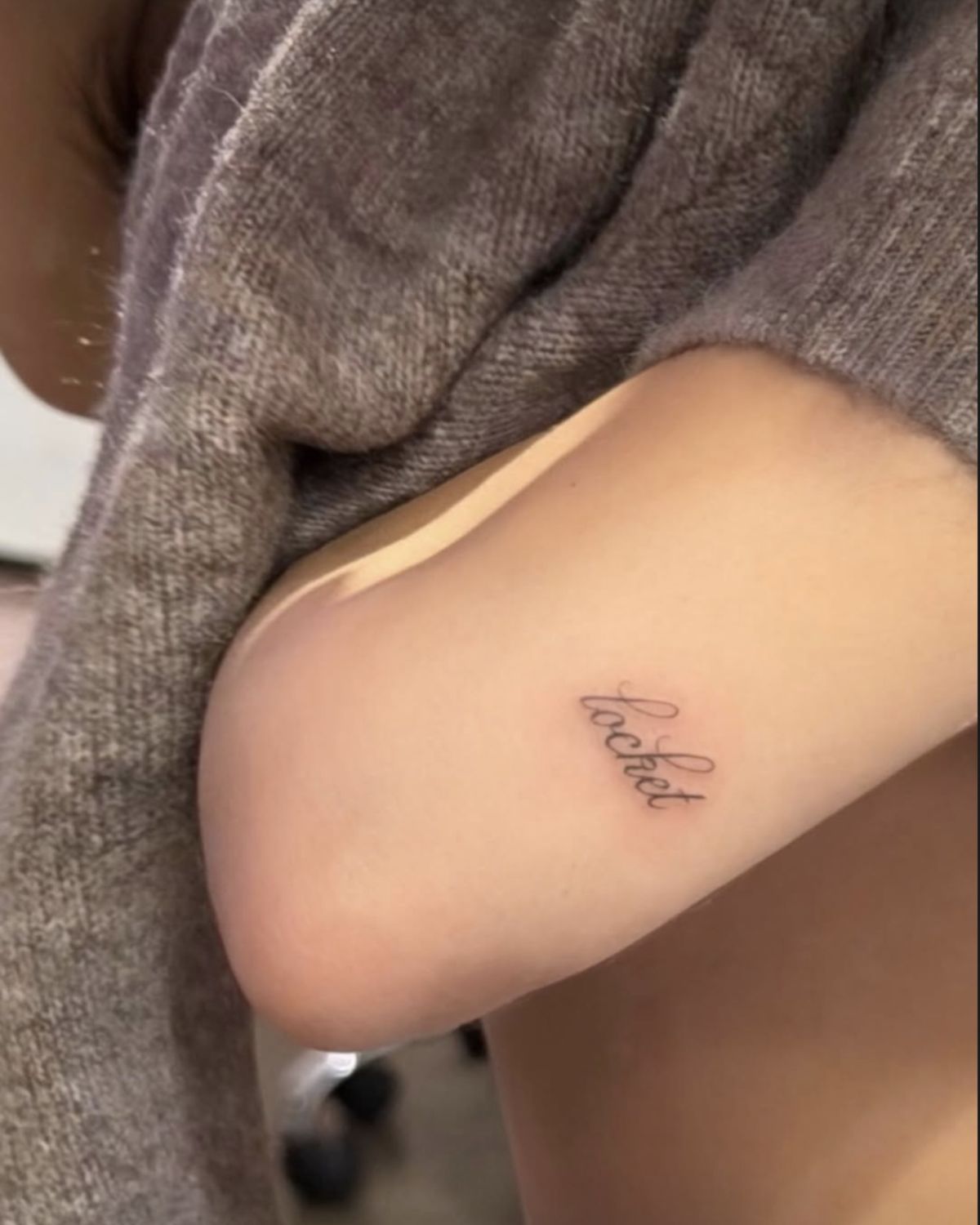
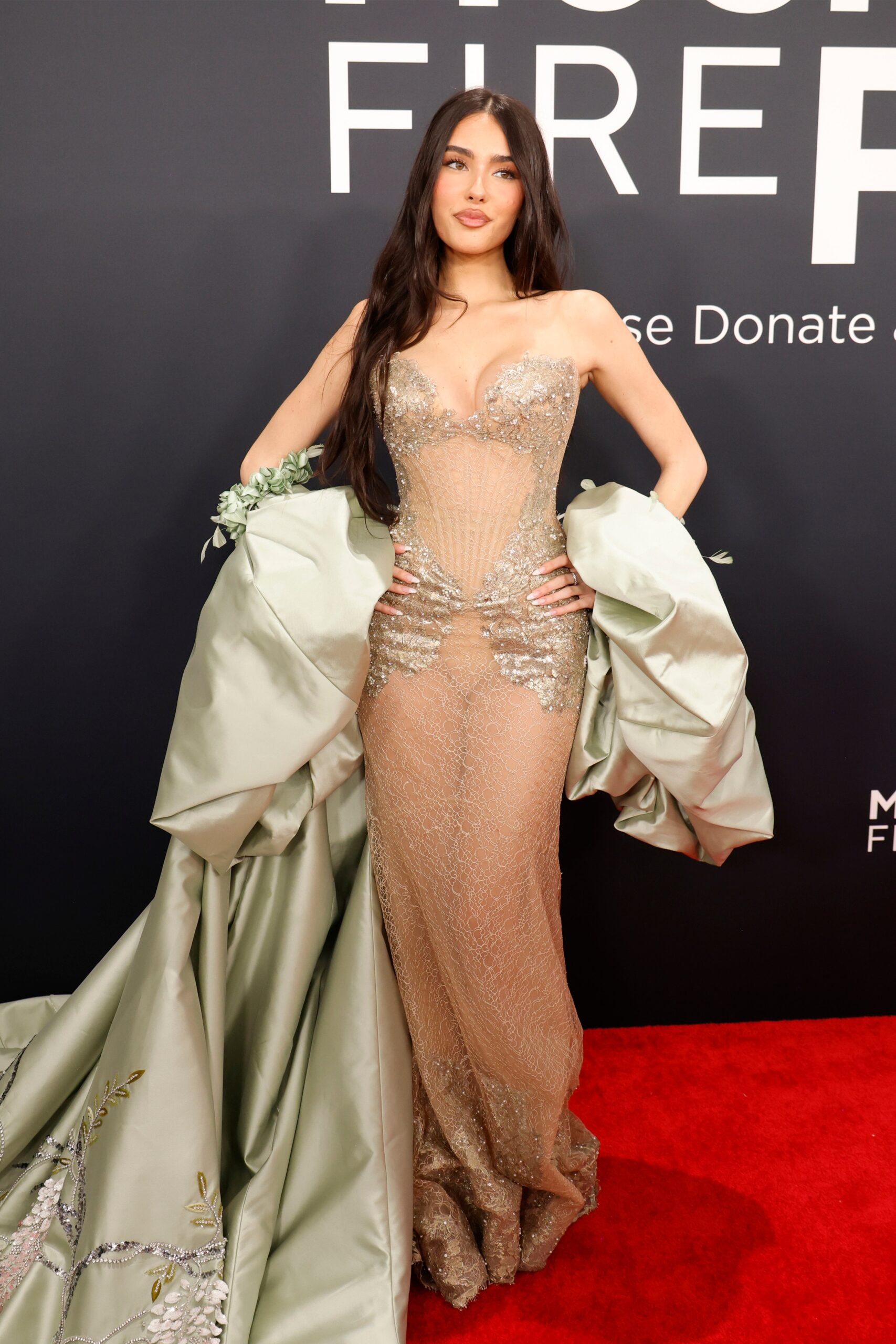
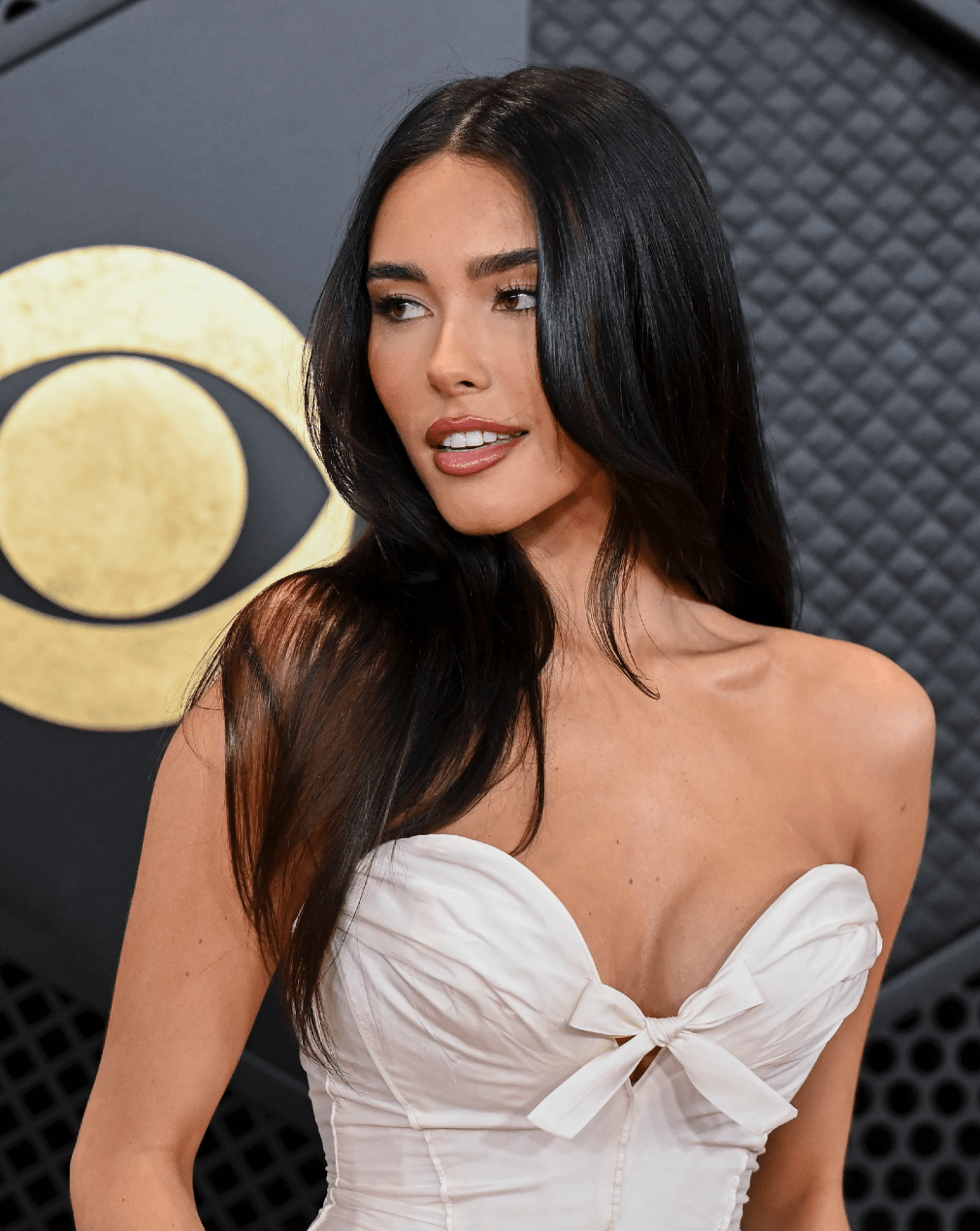
Madison Beer’s visible tattoos include fine script reading “life support” at her nape and the word “locket” on the back of her upper arm. In a Teen Vogue interview, she also recalled an early “B” tattoo.
Madison Beer’s “Life Support” tattoo
The words life support sit in small cursive at the back of Beer’s neck. TattooFilter’s listing identifies the studio as JonBoy Tattoo. The phrase is also the title of Beer’s 2021 debut album, but she hasn’t said whether the tattoo refers to the record.
It’s a short, fine-line phrase in a discreet spot. Hair can cover the nape, so the lettering appears mainly when it’s tied back or moved aside.
Madison Beer’s “Locket” tattoo
In October 2025, Beer shared an Instagram Story showing the word locket in cursive on the back of her upper arm. Coverage at the time described it as a new tattoo. The close photo shows the word on its own, without a frame or illustration.
Fans connected the word to her album locket. The matching title is easy to notice, but Beer hasn’t said whether the tattoo was chosen for the album. What the image confirms is simpler: a single cursive word on the back of her arm.
Her early years in the spotlight
In Teen Vogue’s 2022 “Firsts” interview, Beer said her first tattoo was a “B” she got with her ex-boyfriend Justin Bieber. She didn’t give its placement or say whether it has changed. Beer first reached a wider audience with YouTube covers; her 2021 debut album, Life Support, was co-written and co-produced by her.
How to read the photos without guessing
Beer’s tattoos appear in close-ups, while the event and interview portraits here provide context rather than tattoo evidence. A frame shows what’s visible in it; it isn’t a complete record of her ink.
A personal style built from small choices
The script designs share a visual scale: short words in fine lettering with clear skin around them. At the nape and upper arm, hair or clothing can cover them or leave them visible.
If you’re considering a short phrase, check the lettering at the size you’ll actually get and ask how it may read after healing. A good artist can show you examples of healed script and adjust the spacing before the stencil goes on.
Placement changes how often a tattoo is seen. Try a stencil while standing, sitting and turning, and consider how hair or clothing will cover it. The aim is to choose a phrase and location that work for you, not to reproduce Beer’s tattoos.
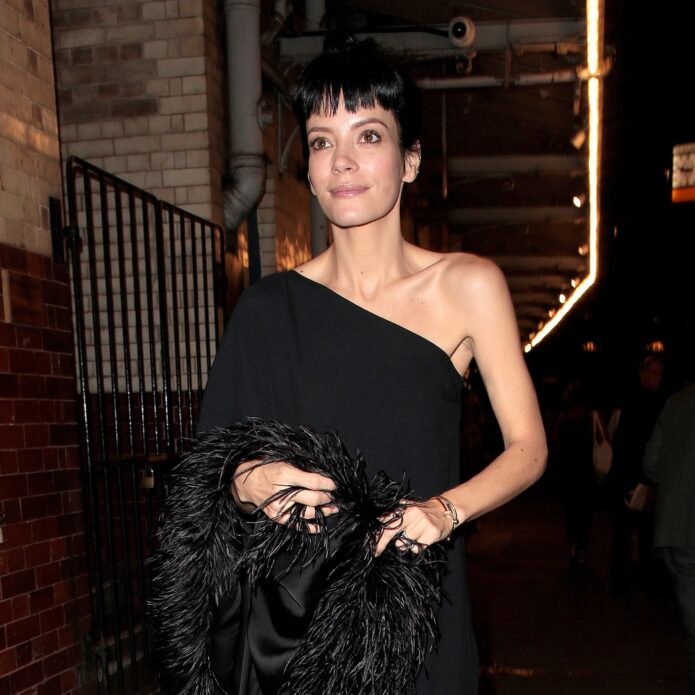
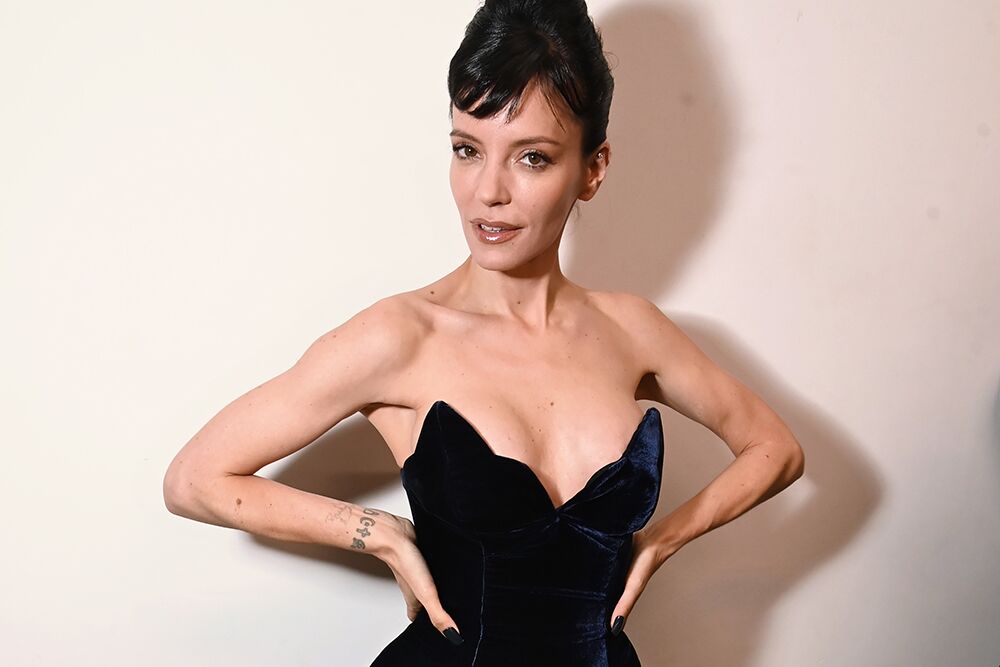
Lily Allen’s wrist tattoos are small and easy to catch only when a sleeve shifts or a photo brings her hands into view. One is a world map she captioned “world inc.” She has also told the story of a matching finger tattoo she got with Lindsay Lohan, which she later changed.
The small wrist designs she has shown publicly
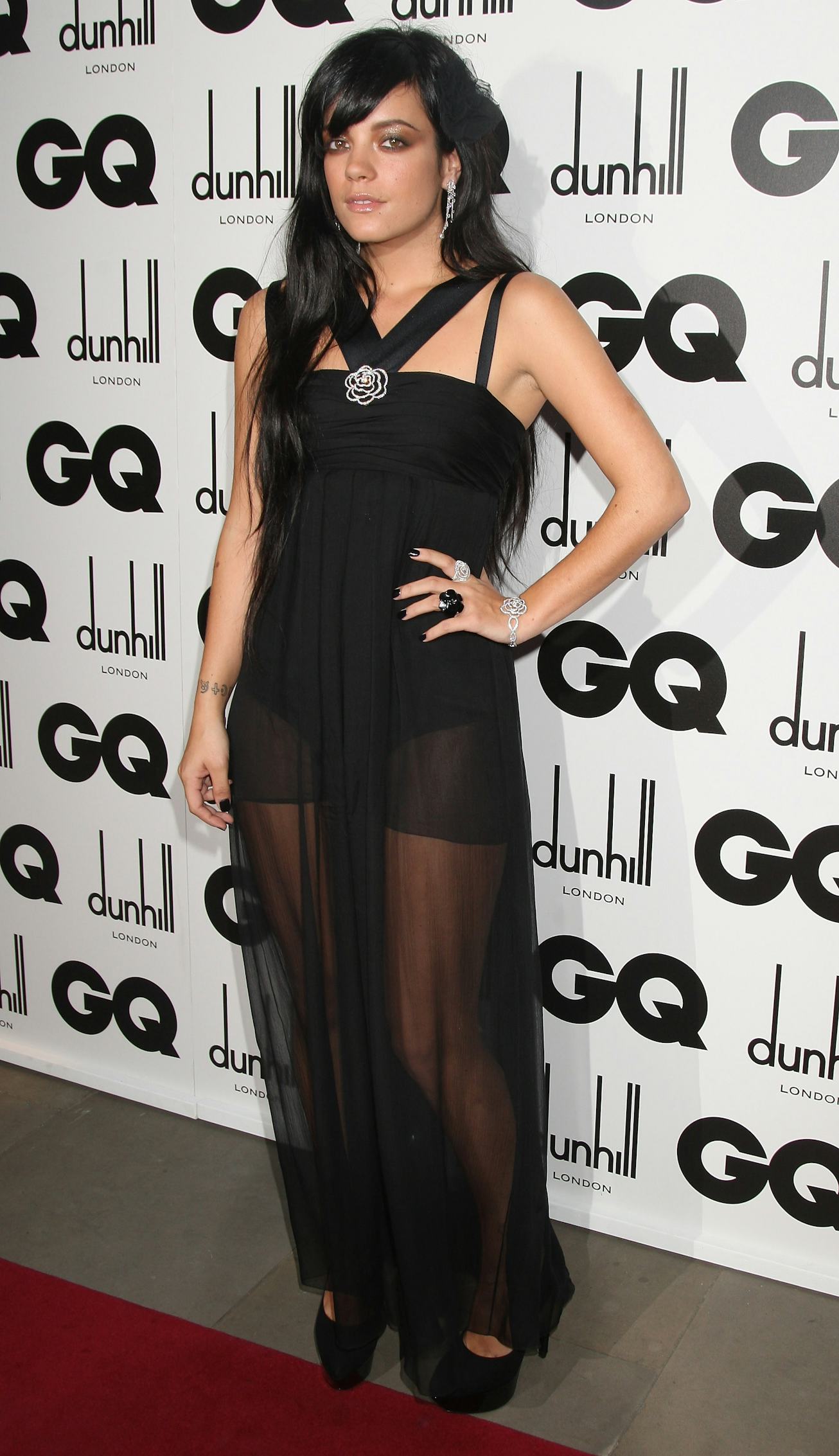
In event photographs, several fine marks sit close together along Allen’s wrist and forearm. They can read like a loose bracelet at a glance, but there’s open skin between them; the photos don’t show one continuous band.
The world-map tattoo is the clearest documented example. India Today reported in 2014 that Allen had it inked on her wrist by Dr. Woo, then shared a close-up with the caption “world inc.” That gives us the design and her own words about it; she hasn’t attached a larger explanation in the account.
Other marks appear in photos, but they’re smaller and less distinct. Some look like symbols or short lettering, though the available event shots aren’t sharp enough to identify each one confidently.
Allen has also described getting a matching index-finger tattoo with Lindsay Lohan after they slipped out of the Chateau Marmont for a late-night visit to Shamrock Tattoo. The word was “Shhh” at first. Allen later changed hers to “1985,” the year she was born, after learning Rihanna already had the same design.
Wrist ink shares space with watches, rings and sleeves, and it moves whenever the hand turns. If you’re planning a few small pieces, check their spacing together and look at the stencil with your arm relaxed. A narrow area fills quickly, and tiny letters need enough room to stay clear.
What can be confirmed? Allen has discussed the world map and the former “Shhh” finger tattoo. Photos show other small marks around her wrist, but the softer images don’t support a confident description of every symbol.
The singer in performance
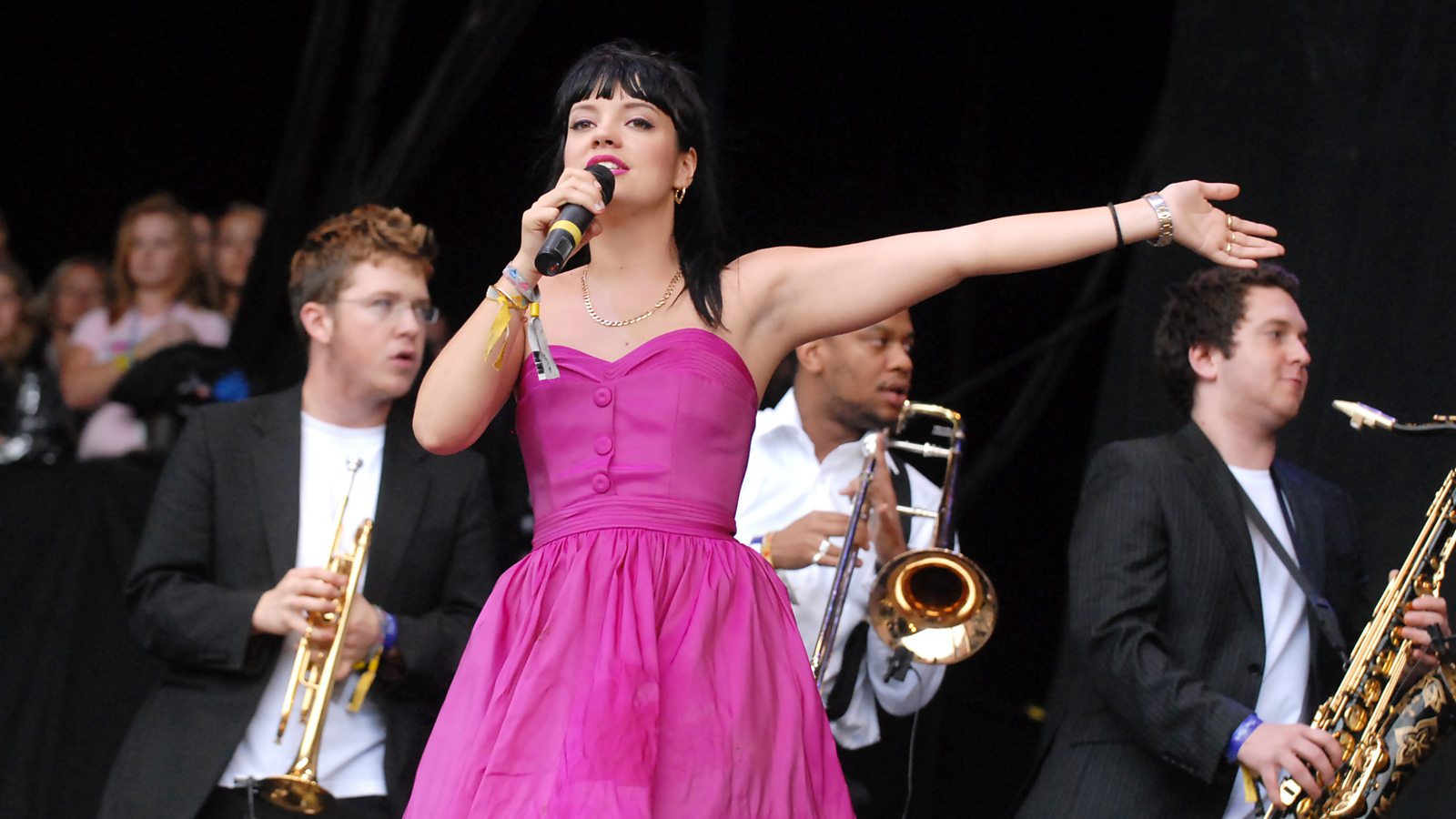
A BBC performance photo catches Allen reaching toward the audience with a brass section behind her. Her wrist tattoos aren’t clear in the frame; it shows the stage setting, not the designs.
Onstage, a raised arm or a microphone can hide the same marks that show up in a still portrait. The close-up photos are better for discussing where the ink sits; the performance image gives context for how little of it may be visible during a show.
A quieter moment
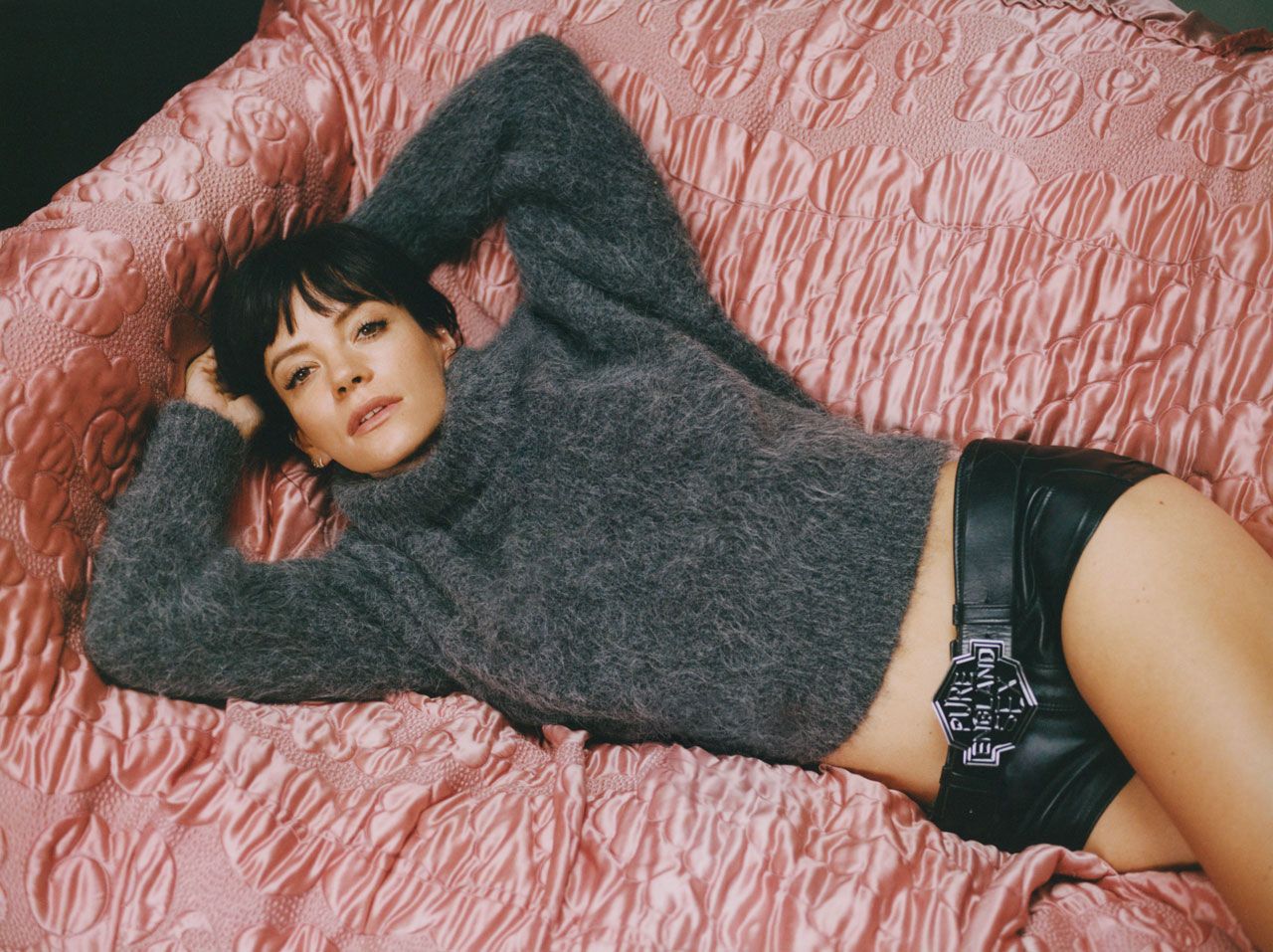
A Vogue portrait shows Allen reclining on a pink sofa in a soft grey sweater. No tattoo is visible. It’s a calmer frame than the concert and event shots, with the focus on her face and the room rather than her hands.
That portrait doesn’t add to the tattoo record, but it shows why no single photograph can serve as a full inventory. The map and smaller wrist marks are visible in other images; here, the frame simply doesn’t include them.
A public-facing moment
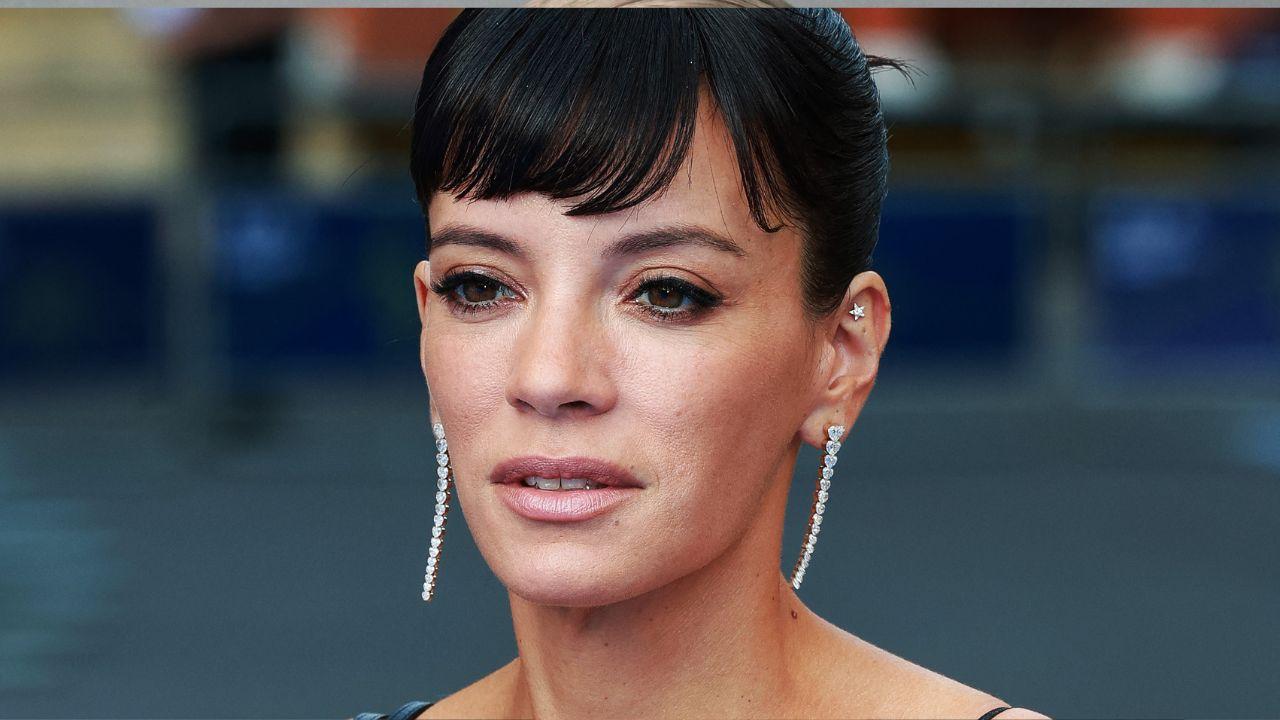
This close press portrait keeps Allen’s expression and styling in view, while her hands and wrists sit outside the crop. It captures one appearance, not evidence about the tattoos.
In this Sunday Times Style conversation, Allen talks about music, career highlights and a party trick.
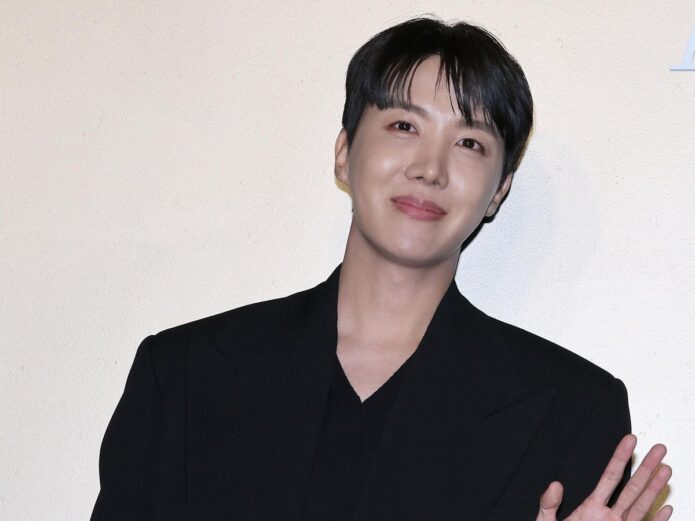
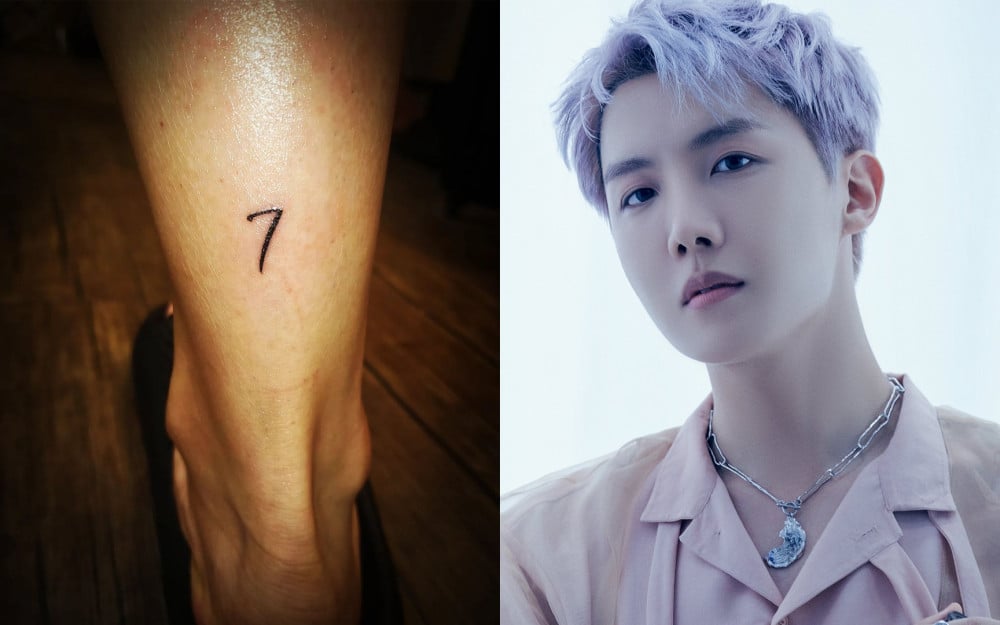
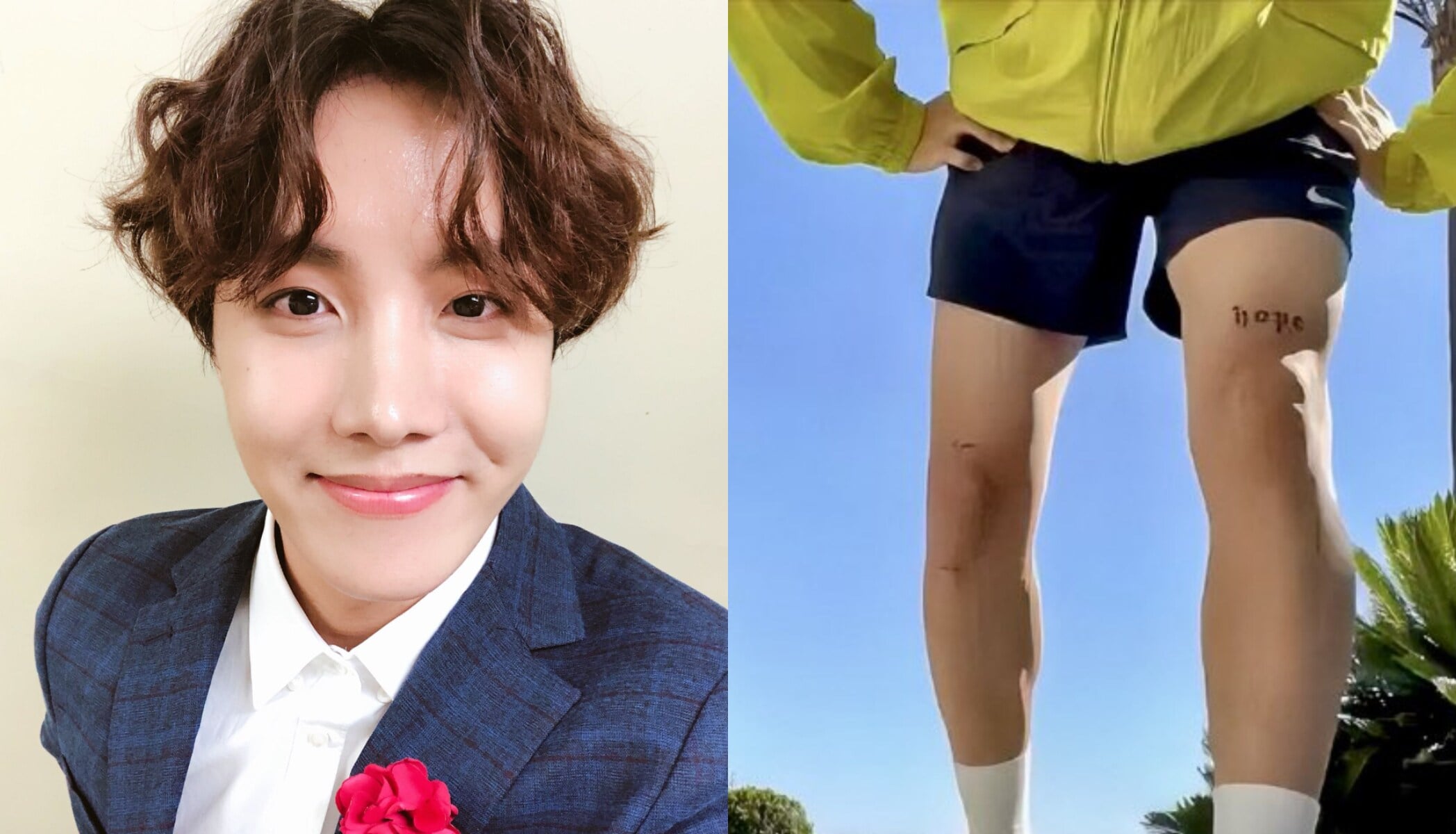
J-Hope’s tattoos are small, but two sets have clear connections to his public life: the number 7 he shares with the other BTS members, and three leg phrases that echo his familiar greeting to ARMY.
The small 7 friendship tattoo
J-Hope showed the 7 on Instagram in June 2022, during the period when BTS announced plans for more individual work. The small black number sits on the back of his lower leg, just above the ankle. It is one of the group’s matching friendship tattoos, with each member choosing where to place the number.
The design is simple, and its connection is clear: seven members, one shared mark. The photo shows the number and its placement; there’s no need to assign it a more complicated meaning.
The leg lettering revealed in 2025
In August 2025, a dance clip showed three more pieces of lettering across J-Hope’s legs: “I’m your,” “HOPE,” and “you’re my.” Read together, they make “I’m your hope, you’re my hope,” a line from his familiar introduction to fans. Reports at the time identified Dr. Woo as the tattoo artist.
The words sit across both legs rather than in one block. “HOPE” is the largest; the shorter phrases complete it. The reports describe the wording but do not explain why he arranged the phrases across both legs.
A dancer before anything else
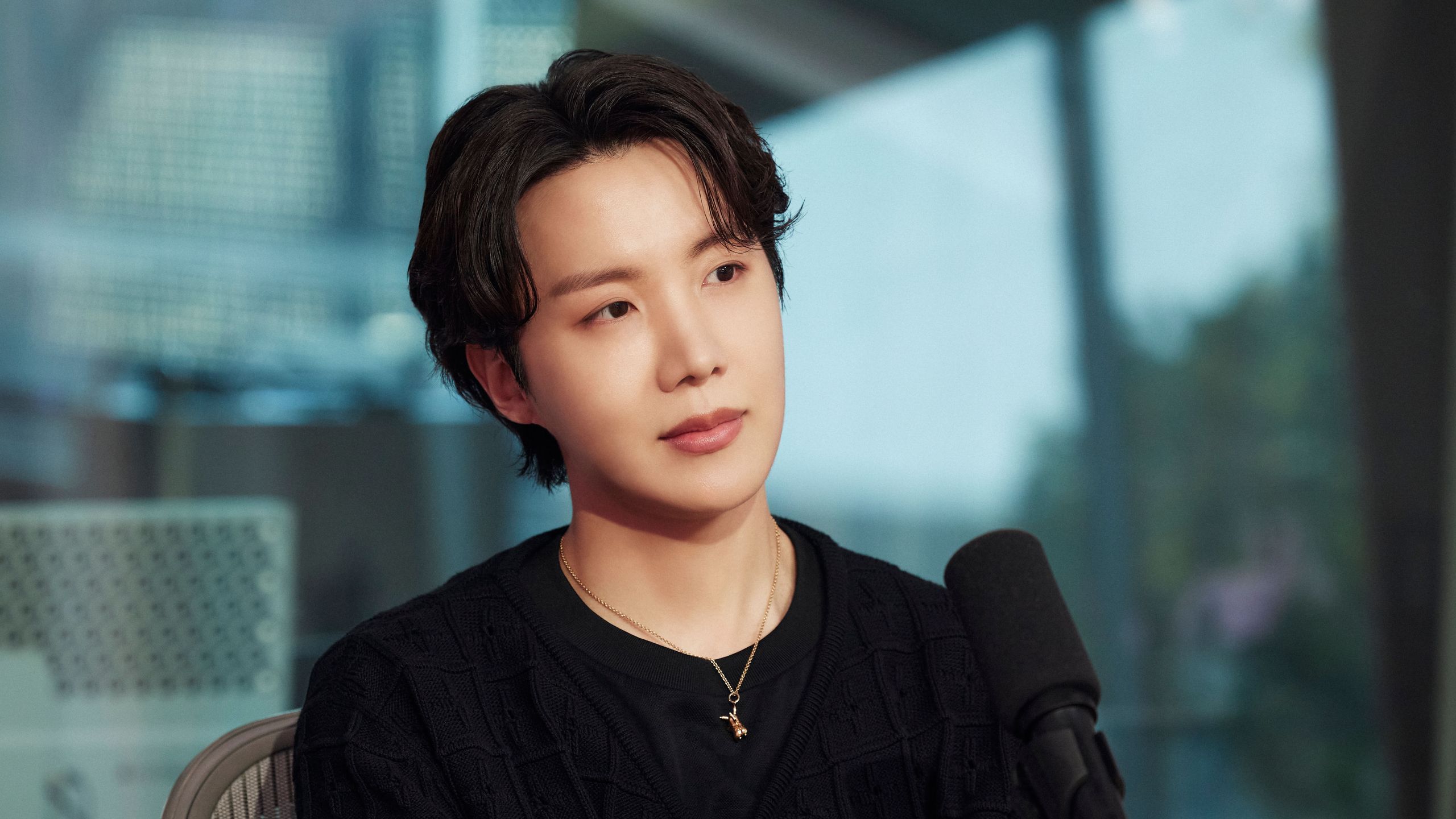
J-Hope trained as a dancer before he became known as a BTS member, and movement remains central to his performances. The tattoos are on his legs, so they appear and disappear as he dances or changes clothes. The photos give a look at the designs; they don’t reveal anything beyond their wording and placement.
What the Hope on the Stage era looks like
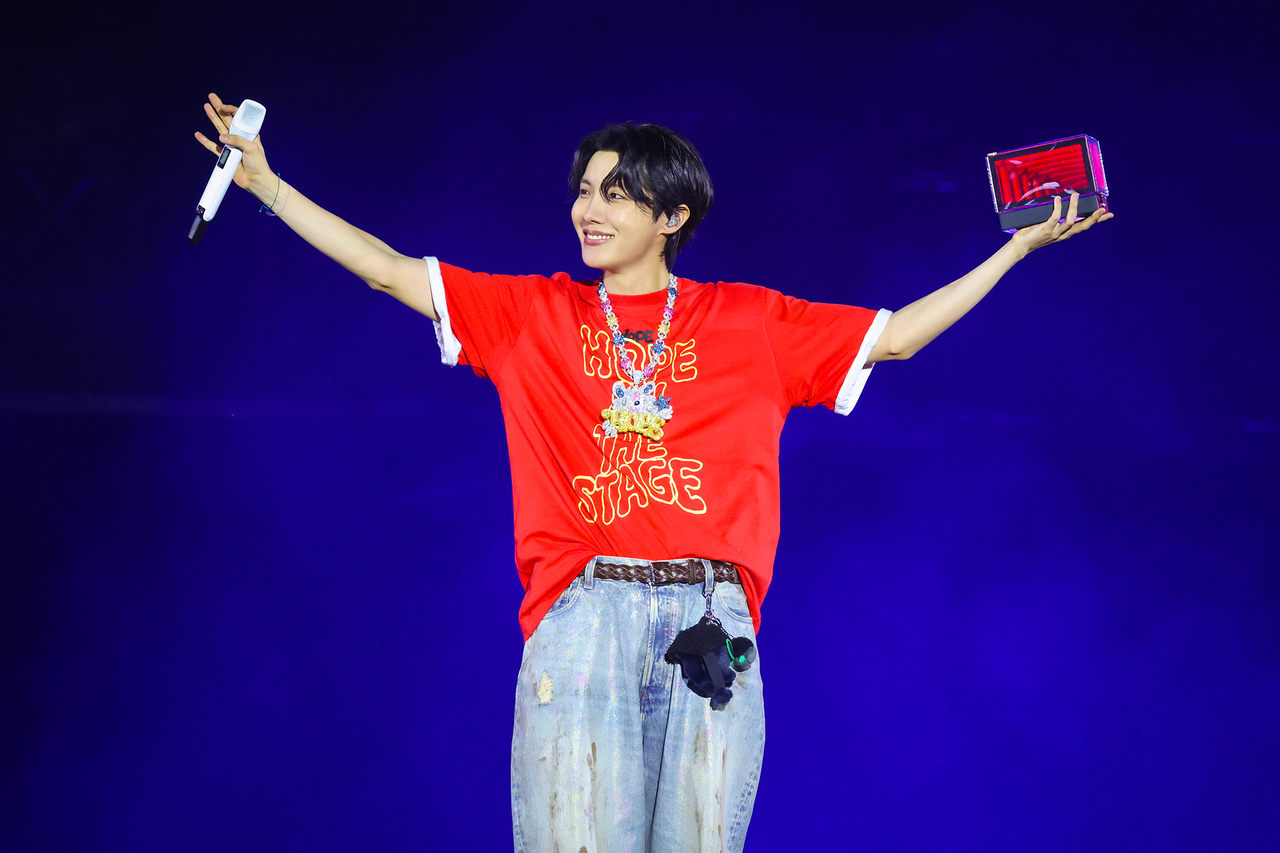
During his Hope on the Stage solo tour, J-Hope met fans through large productions built around dancing, live music and moments of conversation. In this concert photo, he reaches toward the crowd in a red shirt printed with “HOPE.” The picture gives tour context, not a close view of the leg tattoos.
Style, confidence, and a solo point of view
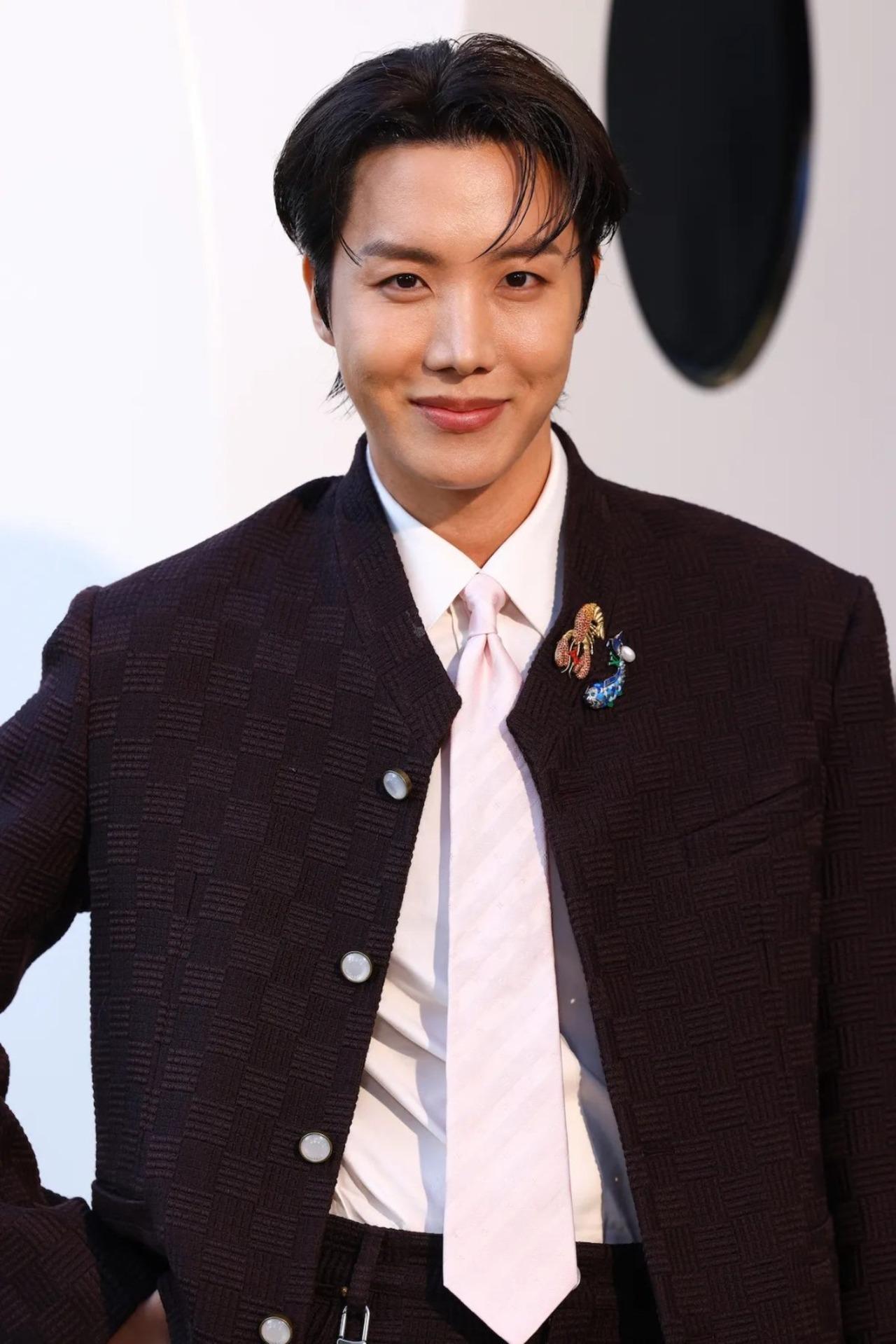
J-Hope’s clothes change from stage wear to tailored looks and casual outfits. The number and lettering can stay covered most of the time, then show in photos or while he dances. They fit his style without needing to be visible in every appearance.
If you’re considering a small text tattoo, check the lettering at its final size and make sure there’s enough space between the lines. J-Hope’s phrases are easy to read because the design gives each word room; placement also matters when the skin is moving.