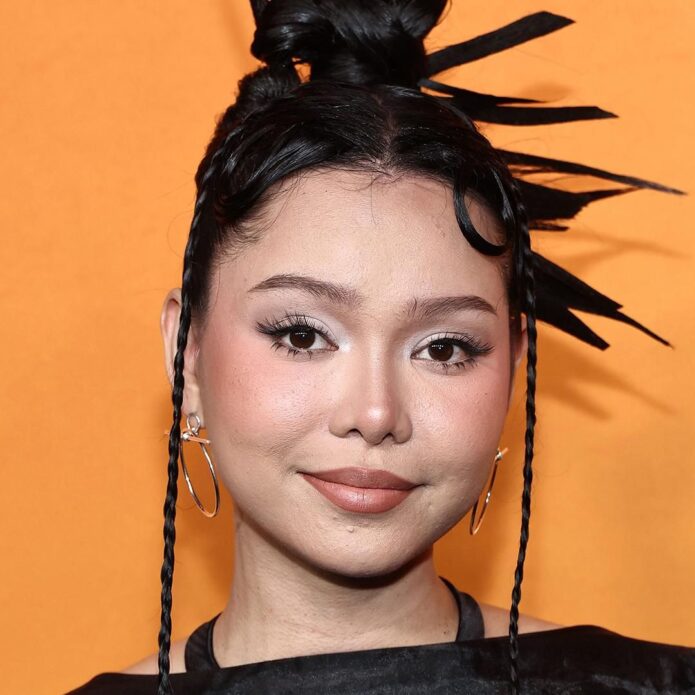
Bella Poarch’s tattoos draw on her music and fashion style, as well as her time in the U.S. Navy. Soft black-and-gray feathers sit alongside script, small symbols and pieces she has linked to personal memories.
The largest is a winged ship across her back. Poarch has said the wings refer to her work as an airman, while the ship recalls her Navy deployment. Other pieces include a long chest quote, shaded arm work, a small heart and key, and a cover-up that became part of a wider discussion about cultural harm.
This guide looks at the main tattoos, where they sit and what Poarch has said about them. It also considers some practical choices behind feather sleeves, back pieces, script and designs drawn from personal experience.
The winged ship back tattoo is Bella Poarch’s signature piece

The winged ship across Poarch’s back is the tattoo most closely associated with her. It stretches from the shoulder blade toward the upper arm, with layers of feathers around a sailing ship. The vertical shape follows the back and shoulder, so it reads as one piece rather than a small image set apart from the body.
Poarch has said the wings refer to her work in aviation. She served as an airman and worked around helicopters on an aircraft carrier; the wings give that part of her life a visual form. The ship brings in her time deployed with the Navy and being at sea. She has also described the night sky and open ocean as part of the memory behind the design.
Together, the ship and feathers carry those Navy memories without a portrait, date or long quote. The ship is easy to recognise, while the feathers add movement and keep the back piece from feeling too heavy. The shading reads from a distance; finer lines show up when you look closer.
A back tattoo like this needs a clear centre and room around it. If extra details crowd the main image, the wings can lose their shape. An artist can map the design to the shoulder blades first, then work out how far the outer feathers should extend.
Her chest quote brings a softer script style into the collection

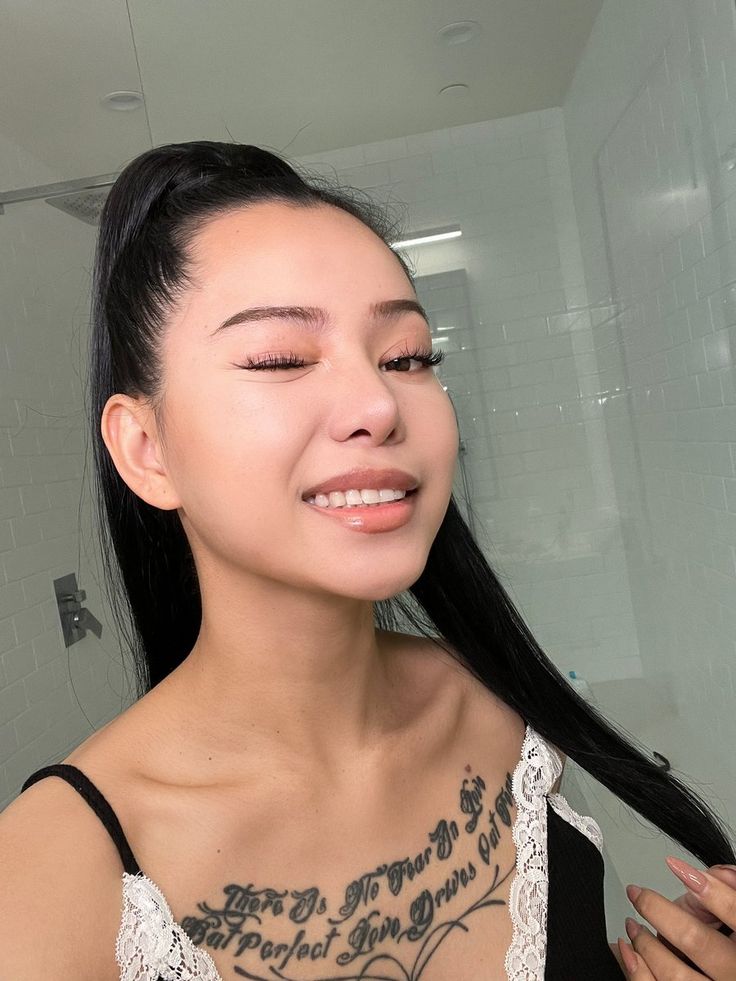
Poarch also has a large script tattoo across her upper chest. It curves beneath the collarbones and ends in a small heart-like point at the centre. The lettering is dark and decorative, but open skin around it keeps the design from reading as one solid block.
Chest script changes with posture, clothing and camera angle. From the front, the words form a line across the body; from the side, they follow the collarbone and chest. That’s why lettering that looks right on a flat reference can need adjustment before it is placed on skin.
Poarch’s tattoo shows how a longer phrase can stay readable when the letters have a clear rhythm. There is space between the words, and the flourishes support the line instead of covering it. The script is decorative, but the message remains easy to follow.
If you’re planning chest lettering, print the phrase at the size you want and wear it for a day. You’ll see whether the line feels too wide, sits too high or comes too close to the throat before booking the appointment.
The feather work on her arms gives the back piece a wider frame
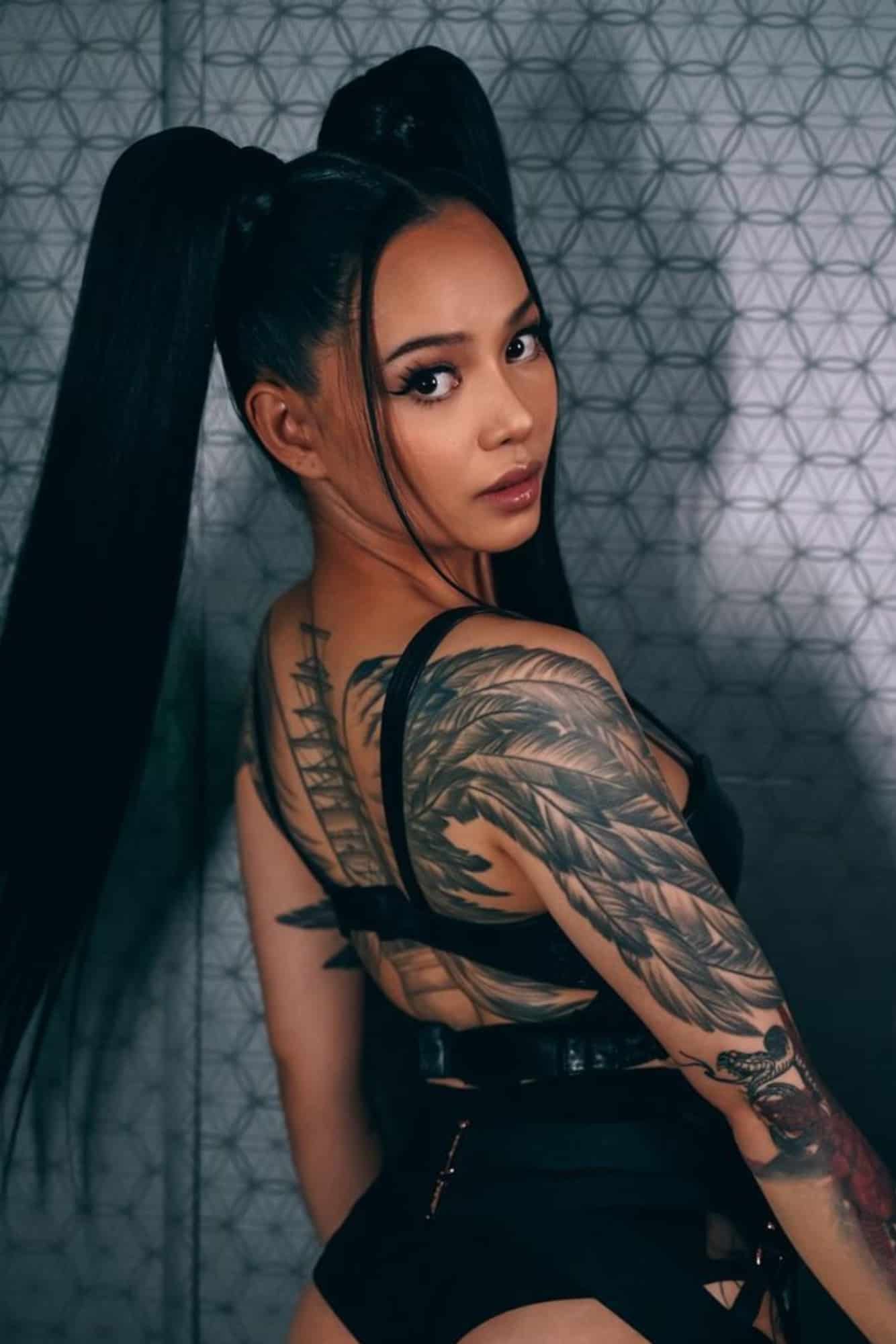
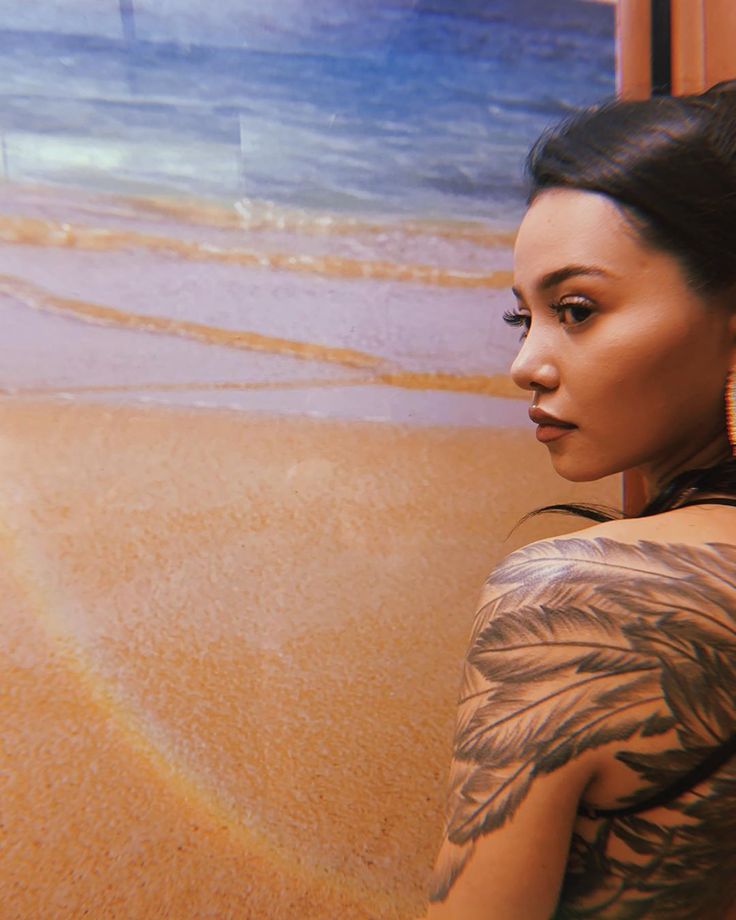
The feathers continue from Poarch’s shoulder blades down her upper arm, giving the back tattoo the look of a sleeve that carries on around the body. The outer arm appears densely shaded in photos; breaks of bare skin on the inside keep the pattern from closing up.
Linking several areas takes more planning than placing one image on its own. The artist has to consider how the feathers turn over the shoulder, how the lines change near the elbow and what the work looks like with the arm at rest. Connected pieces can be designed together even if the sessions happen at different times.
The feather work shows how black-and-gray shading can stay soft and still have definition. Darker edges hold the wing shapes together, while lighter shading inside the feathers stops them from looking flat. The contrast gives the arm movement and keeps the main outline easy to follow.
When a tattoo wraps around the shoulder, check the stencil while moving. Look with the arm down, raised and turned to the side. A small adjustment may keep the wing tips and open spaces in place across those positions.
The small heart and key tattoo marks where her collection started
Before the larger pieces became part of her look, Poarch talked about getting a small heart-and-key tattoo during her first year in the military. She described it as a simple choice she made for herself, despite feeling nervous about how her family might react.
That memory gives the heart and key a different feel from the winged ship. The back piece connects to a larger chapter of her life; the smaller tattoo marks an early step. A collection can begin with a private symbol and grow into larger pieces tied to particular moments.
A key might sit on the wrist, forearm or ribs; a heart can stay simple or take the form of a lock, charm or anatomical shape. The choice depends on whether you want others to recognise the meaning or keep it mostly for yourself.
A small first tattoo can also give you a sense of how your skin holds ink. You’ll learn about healing, placement and how much detail you like before committing to a shoulder or back piece.
The covered-up rising sun design is part of the tattoo story too
An older tattoo drew criticism because people associated its shape with the Japanese Rising Sun symbol and its history of imperial violence. Poarch apologised, said she understood why it was offensive and later covered it with a two-headed snake. The episode shows how a tattoo can carry cultural meaning beyond what its wearer intended.
The cover-up became another visible piece in the collection. A snake’s movement and scale can cover a circular, radiating design; the two heads give the new tattoo a focal point of its own. It treats the cover-up as a new design rather than simply laying dark ink over the old one.
If you’re planning a cover-up, bring clear photos of the original and tell the artist what’s underneath. They’ll need to see where the old lines are darkest, whether there is scar tissue and how much room the new design has. The plan may call for a larger outline, heavier shading or more than one session.
When a symbol has a difficult history, its meaning matters as much as its appearance. Researching a design before it goes on your skin can help you avoid wearing an image that communicates something you never intended.
Her tattoos balance personal history with a strong visual style
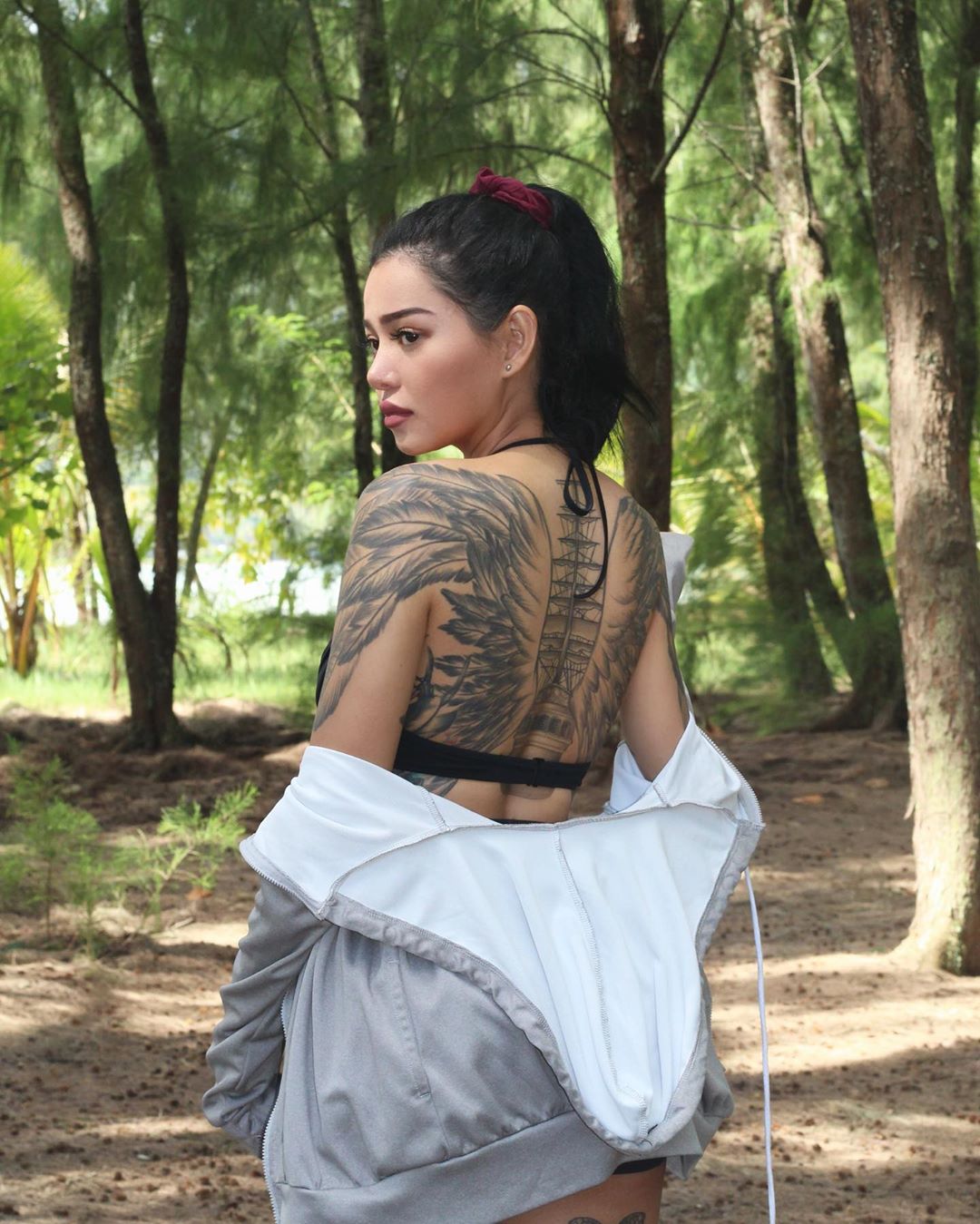
Across the collection, the visual choices repeat: large black-and-gray shapes, open feather lines, flowing script and smaller symbols. The subjects differ, but the softness and movement help the pieces sit together.
The back tattoo anchors the collection. The chest lettering brings the eye to the front, and the feathers connect the areas. Smaller designs add history without competing with the main piece. You can build several tattoos over time without filling every area at once.
The stories differ too. The winged ship refers to military service and deployment; the heart and key marks an early personal choice. The script carries a direct message, while the cover-up reflects what changed after Poarch learned more about the design’s cultural meaning.
For your own tattoo, decide which part of the story needs the most room. A person, place or life chapter might call for a larger back piece; a short reminder could fit as chest lettering or a small symbol. Match the placement to the space the idea needs.
Bella Poarch’s tattoos range from Navy memories to an early symbol and a redesigned cover-up. The winged ship and feather work dominate visually, while the heart and key and the snake add other parts of her story. If you like this style, start with one clear centrepiece, choose an artist who understands how designs move with the body, and learn the context behind each symbol.