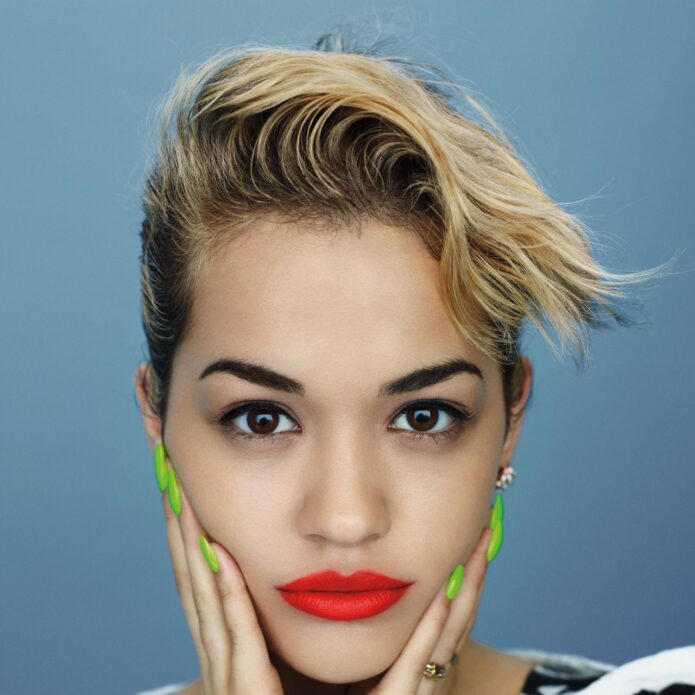
Rita Ora’s tattoo collection reaches well beyond a few small celebrity designs. There is a large woman-and-rose piece on her ribs, a Greek goddess on her arm, family references, short phrases, fine-line figures, birds and smaller marks on her hands and wrists. Ora has explained some of the tattoos herself, which helps distinguish known stories from assumptions.
The photographs are part of the story too. Hair can hide a neck design, clothes can cover a rib tattoo and stage lighting can change how an arm piece looks. Looking at each prominent tattoo alongside a clear image makes the collection easier to understand.
The zog neck tattoo is a small family story
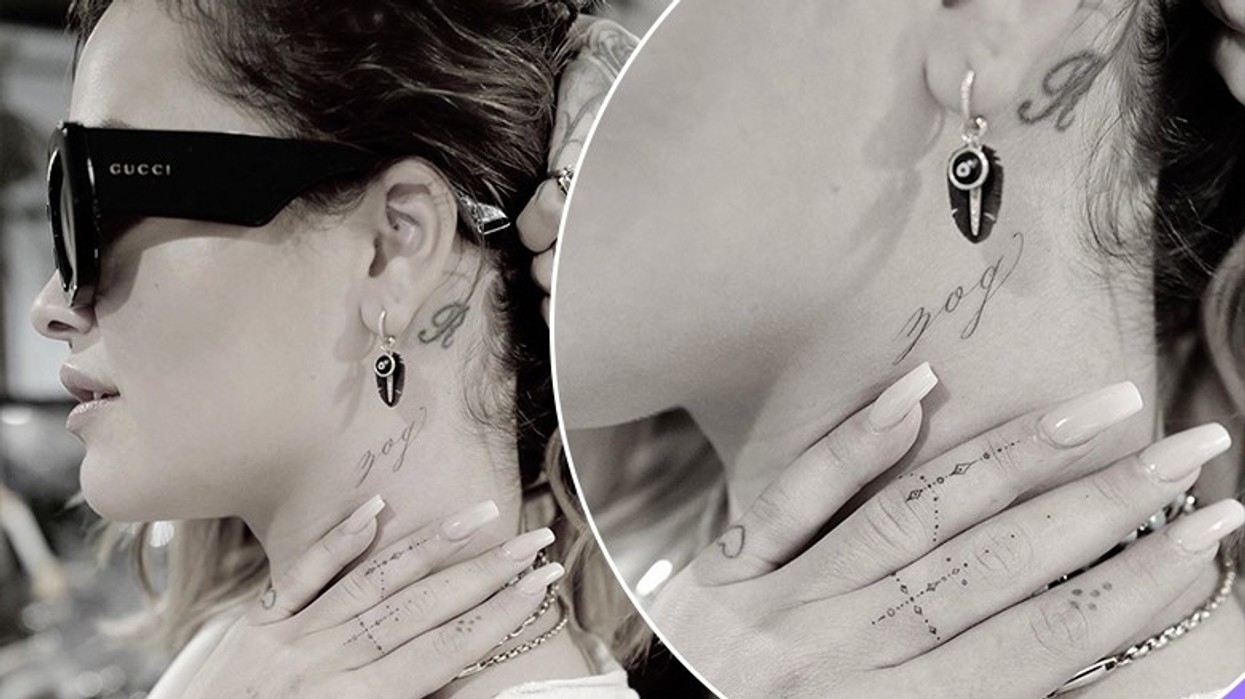
One of Ora’s best-known tattoo stories is tucked just below her ear. “zog” means bird in Albanian, and she has said her mother used it as a childhood nickname. It is a small design with a very particular family connection, rather than an explanation guessed from a photograph.
The fine lettering sits discreetly and can be hard to spot when her hair is down. In this close-up, the script is clear and the thin lines are easier to make out. It shows how a tiny tattoo can hold a personal reference without taking up much space.
Its position fits that private feel. The word can be seen when Ora wears her hair up, then covered by her hair or a collar. The photo makes the lettering visible, and Ora’s own account explains why it is there.
The same photos show a few other small marks on her hands and fingers, including a little heart. Those details are separate from the “zog” tattoo and are best described on their own.
The pin-up girl and rose take up real space on the ribs
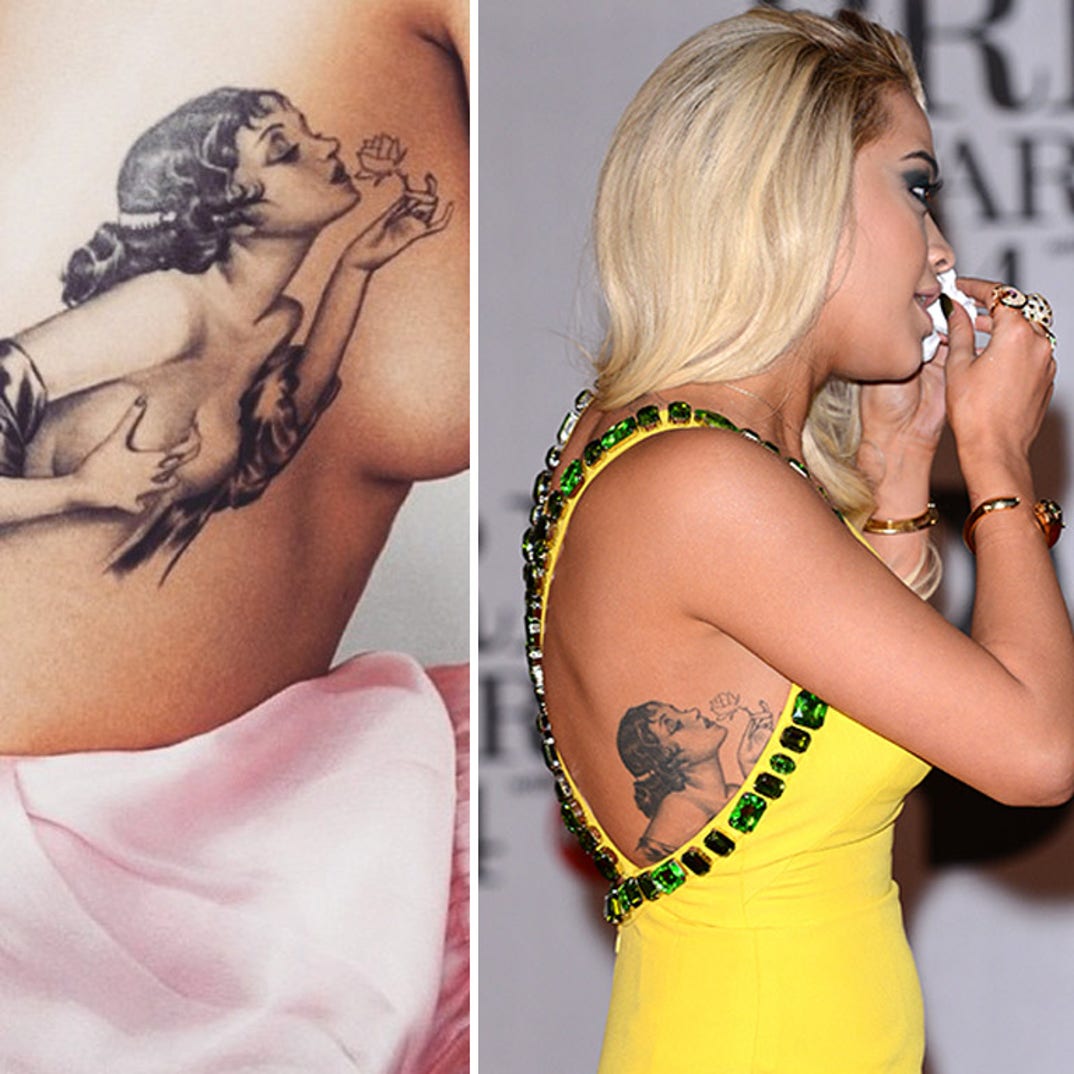
One of Ora’s most striking designs is the rib tattoo along her left side. It features a vintage-inspired woman with a rose. The profile view gives a better sense of its size: the artwork follows the curve of her ribs instead of sitting like a small, flat motif.
The pin-up style feels quite different from the fine lettering on her neck. There is more shading and movement in the figure, while the rose adds a softer detail. That is why the design is usually described as both a woman and a flower, rather than just a portrait.
Rib pieces are not always easy to capture in a photograph. Clothing, hair and the angle can hide parts of the design. This image shows enough to discuss its placement and overall look without suggesting every detail is visible in every public photo.
Other photos show smaller tattoos around Ora’s arms and wrists. The larger rib work does not mean those marks were done together; her collection has developed over time and with different artists.
The arm tattoos mix portraits, words and small symbols
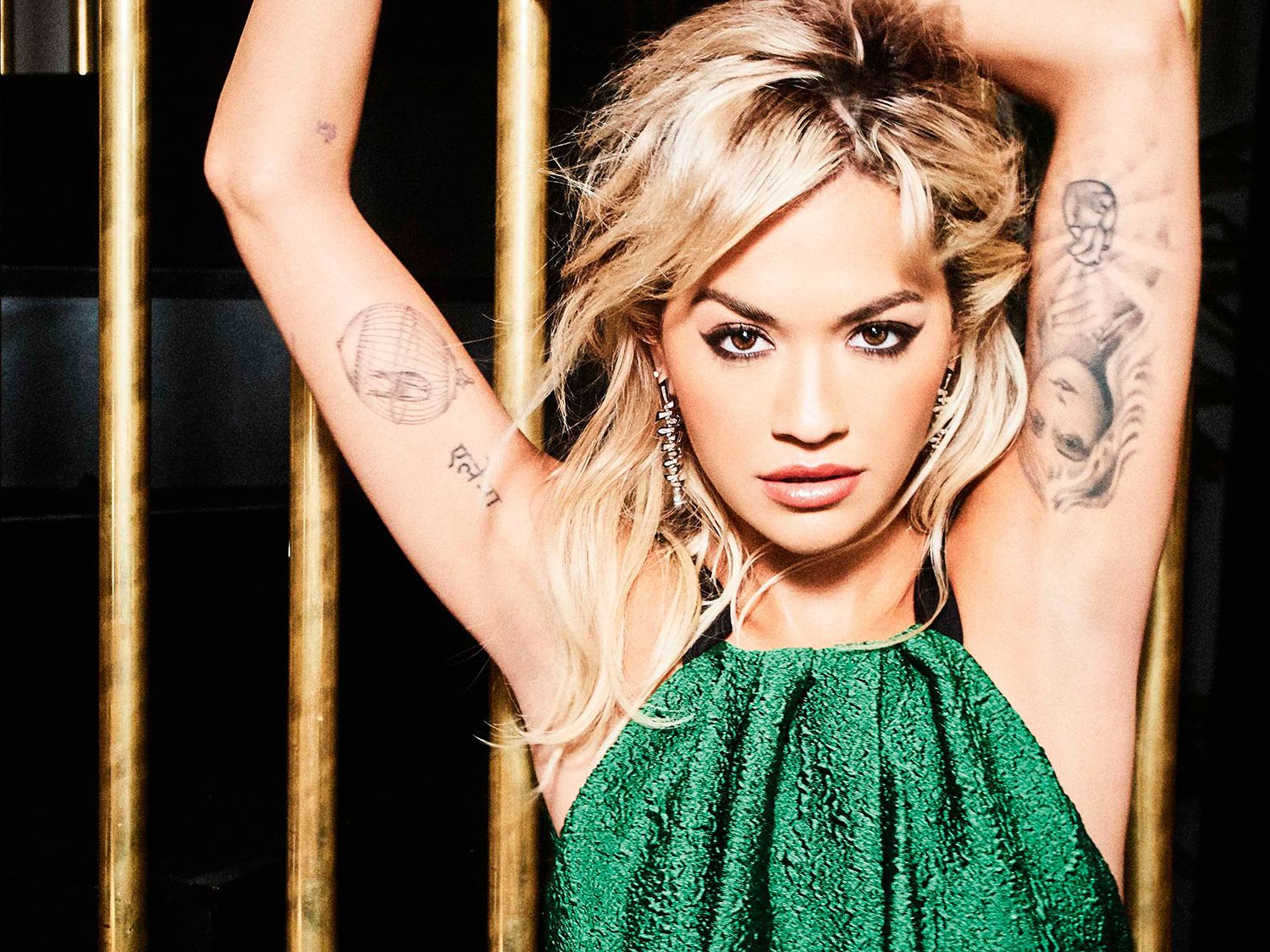
Ora’s arms bring together several styles instead of forming one continuous sleeve. Photos show a fine-line ballerina on her upper arm, small lettering, a wishbone, the phrase “Love Me” and family names in Hindi. The tattoos sit in different places, leaving plenty of skin between them.
The ballerina is easiest to see in a sleeveless look. Its delicate lines come through better in a clear, well-lit portrait than in a dark concert shot. The light treatment also contrasts with the larger goddess image elsewhere on her arm.
The writing and names add a more personal note. Her siblings’ names have been reported in Hindi, and the short phrases on her wrists read like small reminders. A photograph can show where the words sit, but it cannot explain every private reason behind them.
Small symbols appear alongside the lettering as well. In a sharp image, a wishbone, feather and other fine-line marks can be distinguished as separate designs. It is helpful to count each visible tattoo once, even when another photo shows the same line from a new angle.
The Aphrodite tattoo is her biggest obvious statement piece
The large design on Ora’s inner left arm is often identified as Aphrodite, the Greek goddess of love. She holds a heart, and the tattoo fills much of the arm when Ora raises it on stage. Ora has spoken about relating to the goddess, giving the image some context beyond what fans can infer from a photo.
Reports have connected the work to tattoo artist Keith “Bang Bang” McCurdy and a long sitting. Its scale and shading make clear that this is a full illustration, with a figure and heart that remain visible from a distance, rather than a small flash tattoo.
The stage image also shows how much clothing affects what can be seen. A sleeveless top exposes the inner arm; a jacket can cover nearly all of it. The design stays the same, even when an event photo only catches part of it.
The heart in the goddess’s hands echoes other love-related details in Ora’s collection, including the short “Love Me” phrase. That connection does not mean all the nearby tattoos share one meaning. It helps explain why the goddess stands out as a central image among her smaller marks.
The dove on the back of the neck changed the collection again
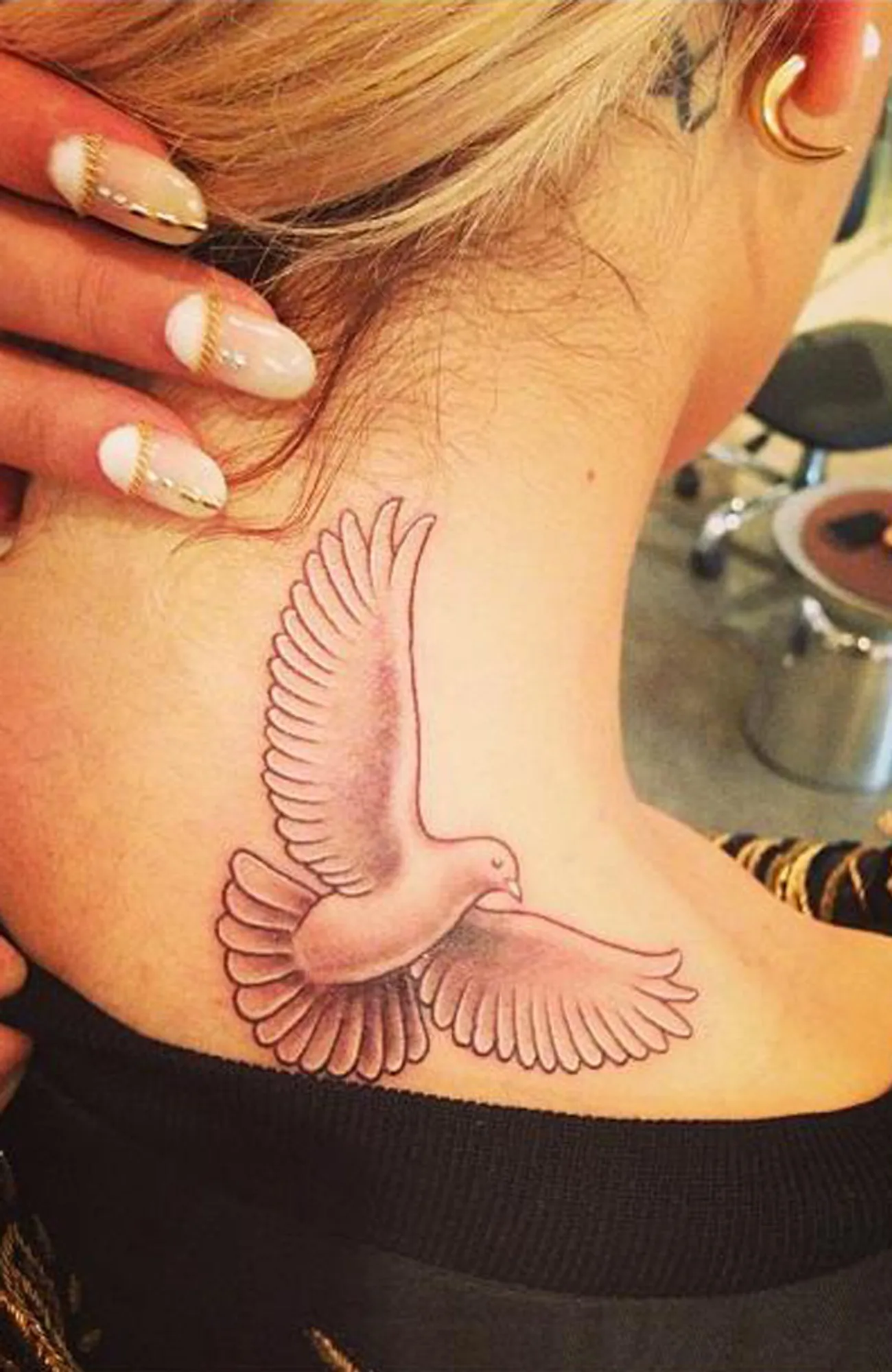
Ora has also revealed a dove tattoo at the back of her neck. Its wings are spread, with soft shading that sets it apart from the small “zog” script elsewhere on her neck. Both designs involve birds, but they are distinct tattoos.
The dove was shown in a tattoo-studio reveal, where the camera could capture it more clearly than a typical red-carpet shot. With her hair swept away from the nape, the whole design is visible; when her hair is loose, it can disappear from view.
Bird imagery has appeared in Ora’s collection for years. The Albanian “zog” is tied to her mother’s nickname for her, while the dove is a larger visual design. Her comments confirm the family story behind the word, but there is no need to assign the dove an unreported personal meaning.
Alongside the neck script, rib portrait, arm lettering and goddess, the dove shows the range of Ora’s tattoos. Some are small and personal, while others change the look of an outfit when they are visible. That variety makes more sense when each design is considered separately.
Reports also mention smaller pieces, including a Shakespeare quotation, a reversed triangle, a wishbone and family names. They can be easy to miss beside the larger tattoos, and a single full-body image rarely captures all of them.
Ora’s collection moves between glamour and private memory. The goddess and pin-up figure make a bold impression, the bird designs connect to family and heritage, and the short phrases add a personal touch to her arms. Each mark can speak for itself; the photographs show how differently the designs fit her body.
The smaller tattoos also offer clues to how the collection has grown. A newer word at the neck can sit near an older bird design, while arm portraits and family lettering appear in pictures taken years apart. That does not mean the tattoos were all added at once. The placement and design are clear, while dates and stories are best included when a source confirms them.
Good photographs make a real difference on a page like this. A wide red-carpet image can show that Ora has tattoos yet hide the rib figure or blur the writing on her wrist. A close-up clarifies a small design; a wider portrait shows how several pieces sit together. Both views help, and neither has to show every tattoo.
Taken together, Ora’s tattoos pair large artwork with small reminders. The bigger pieces catch the eye first, while the brief phrases and family references give the collection a more personal character.