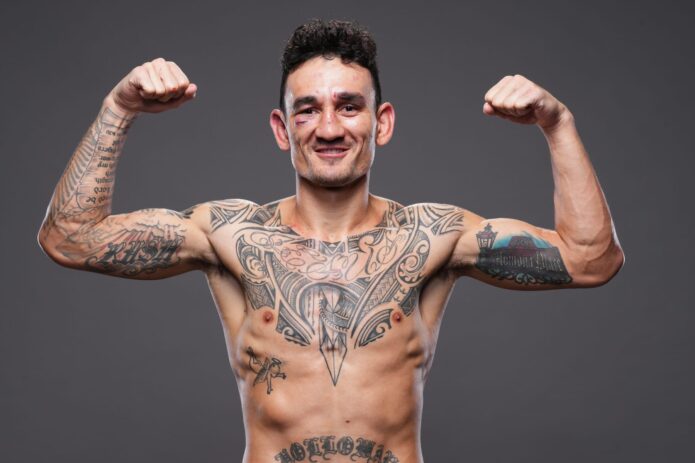
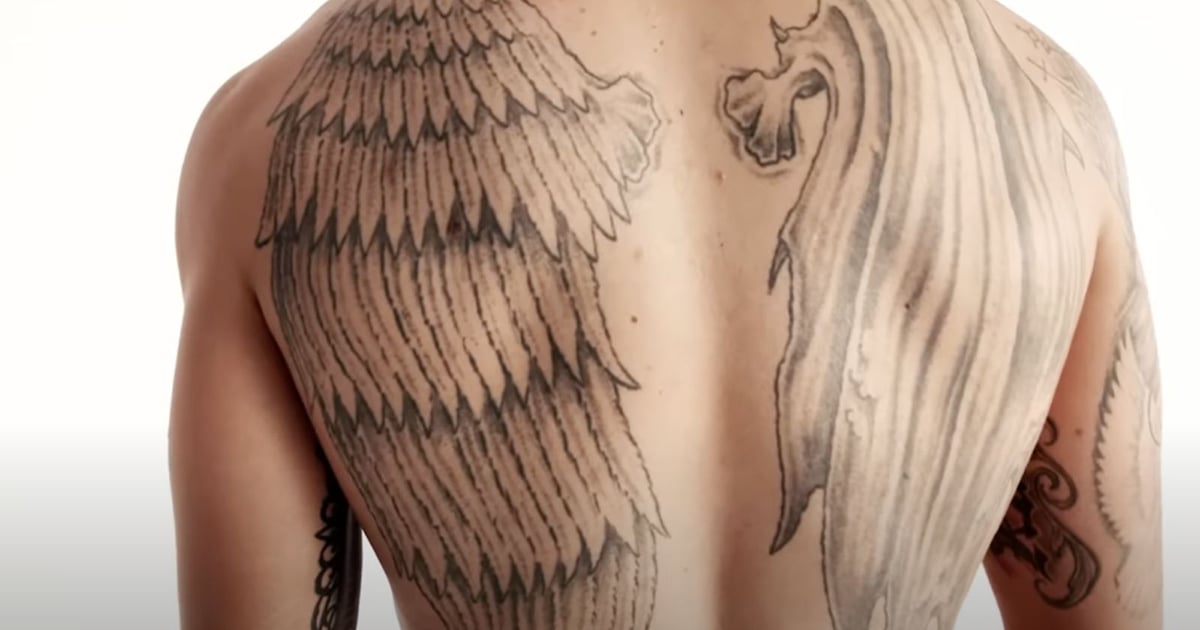
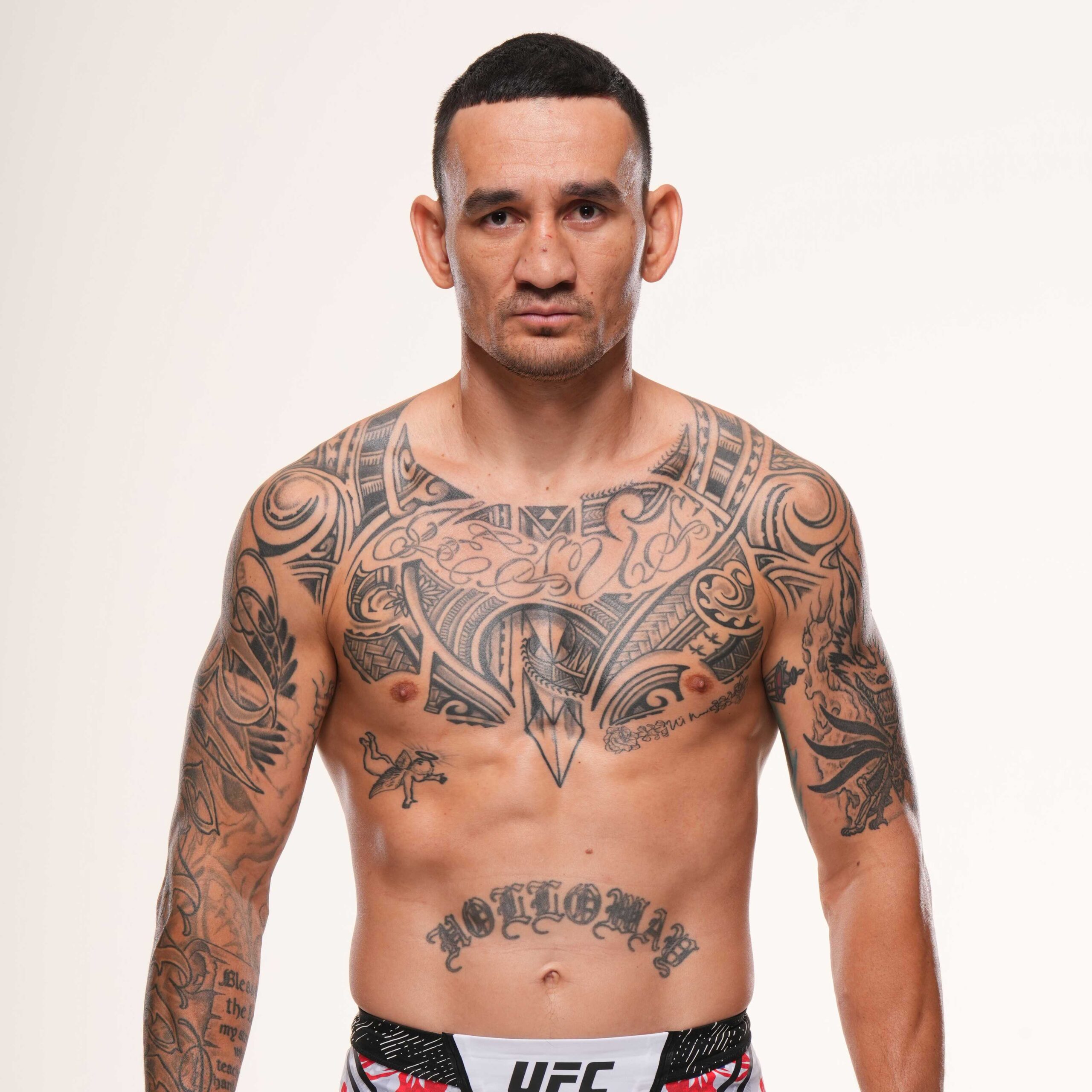
Max Holloway has explained many of his tattoos in a GQ tour, connecting them to his family, faith and life experiences. The collection includes angel-and-gargoyle wings across his back, an unfinished Polynesian chest piece, his surname on his stomach and tributes to his son.
Max Holloway’s back wings tattoo is about balance
Holloway’s second tattoo, done when he was 18, is a pair of wings stretching across most of his back. One side is angelic; the other has a darker gargoyle look. In the GQ tour, he called the contrast a yin-and-yang idea, representing balance between good and bad, light and dark. He said he wanted more balance and peace in his life. The session took about four hours, and he joked that he kept going despite the pain because he might not return to finish it.
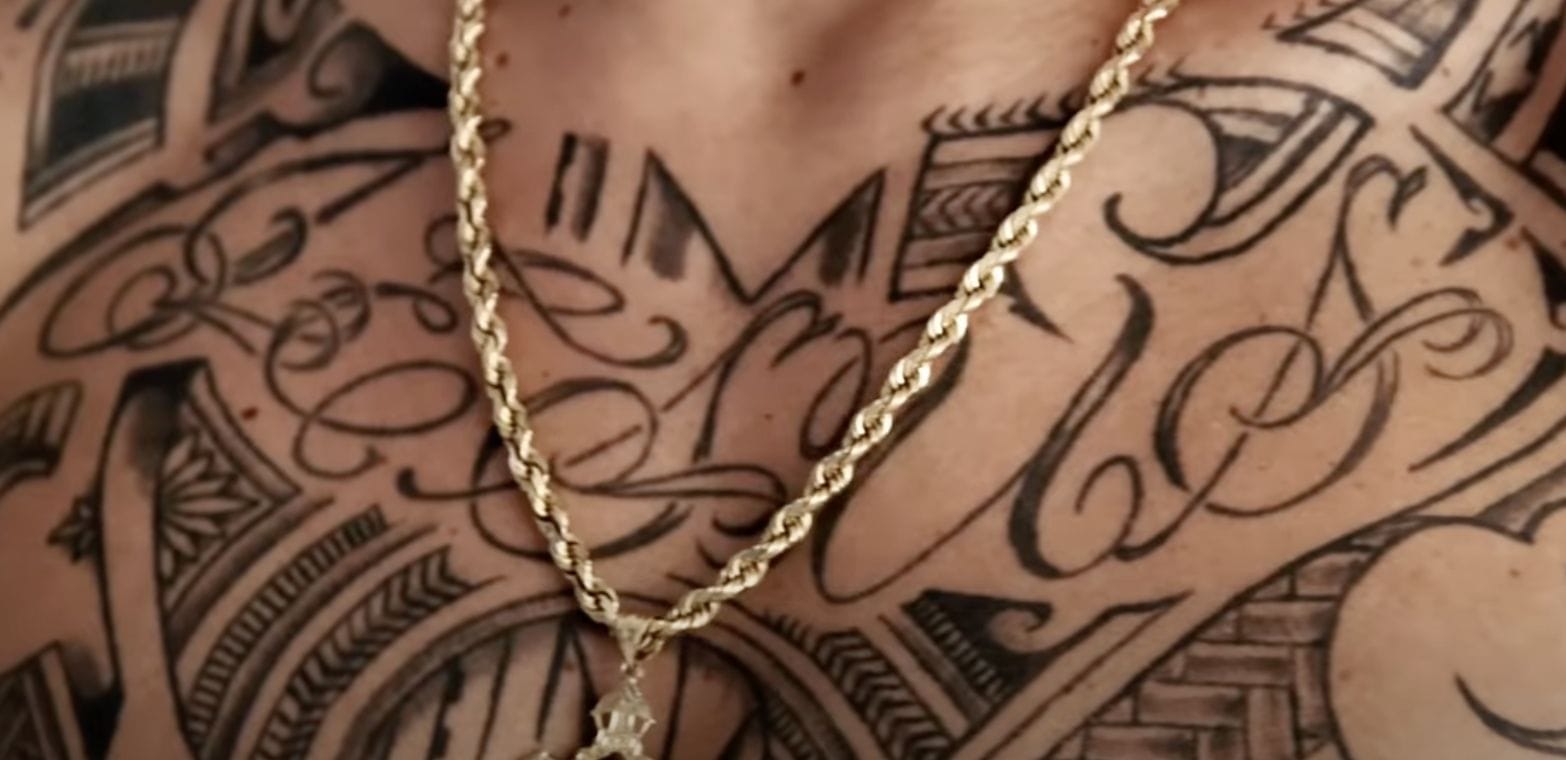
His Polynesian chest tattoo tells a family story
Holloway describes his Polynesian chest piece as unfinished: he doesn’t want to close it off as if his story were over. In the GQ interview, he pointed out two small birds—one for himself and one for his son—and linked them to being blessed with safe travels. Plant-like shapes in the pattern represent health. The symbols sit within a wider design that he expects to keep developing.
The surname on his stomach was his first tattoo
Holloway got his surname tattooed across his stomach at 17; his mother had to sign for it. He told GQ he thought it looked cool and joked that he’d never misspell his name on a test. He remembered the placement as painful and laughed that his abs seemed to disappear whenever he tried to flex. The large curved lettering remains one of the simplest designs in a collection full of patterns and symbols.
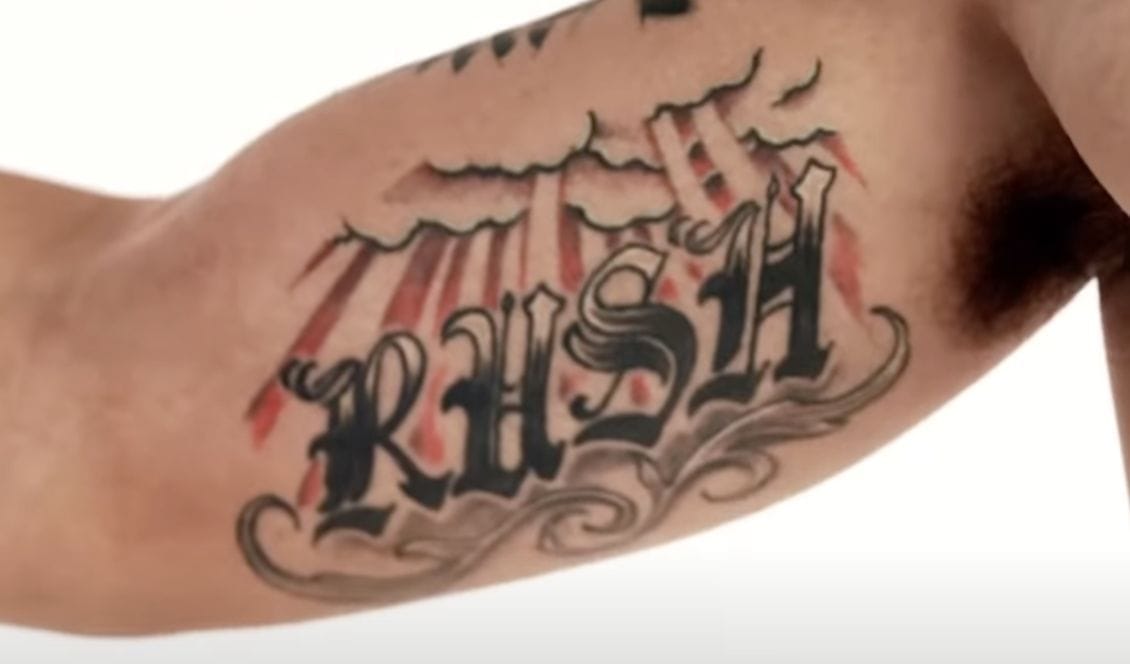
RUSH tattoo honors his son on the inner bicep
RUSH is written in ornate letters on Holloway’s inner bicep, surrounded by clouds and rays. He described it in the GQ tour as his son’s name with the heavens above him, looking down. The red accents and dark outlines give the word a clear shape, while the sky imagery frames the tribute.
The arm patterns continue his evolving tattoo story
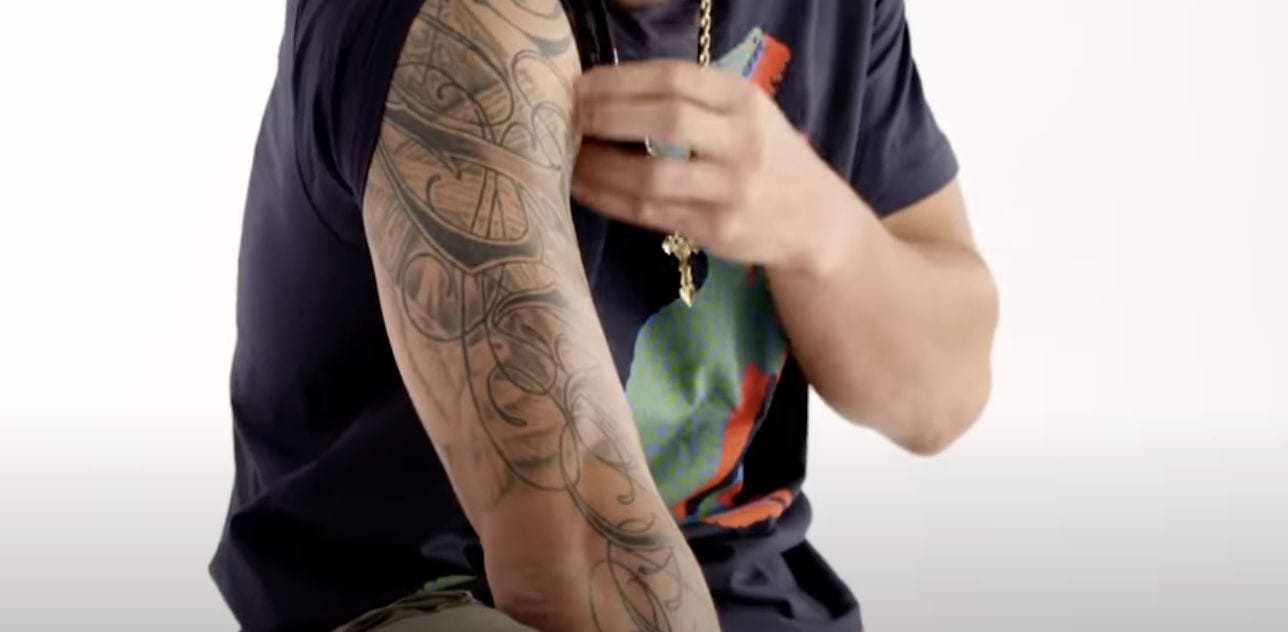
Holloway has described one arm as his Polynesian side and the other as his religious side; at the time of the interview, he was still planning more work, including scripture. A later inventory lists a Psalm 144 passage on an inner forearm and a street-name design with a number and lantern, a reference to home. Other religious pieces include a cross and light and dark doves. He connected his faith to how he was raised and the odds he felt he had overcome, adding that he wasn’t trying to push his beliefs on anyone else.
What ties the whole story together
In Holloway’s own account, the wings are about balance; the chest pattern carries family symbols and remains unfinished; his first tattoo is simply his surname. RUSH, the birds and the religious images add other parts of the same personal history. The designs use different styles, but each marks something he has chosen to remember. His GQ tattoo tour is below.
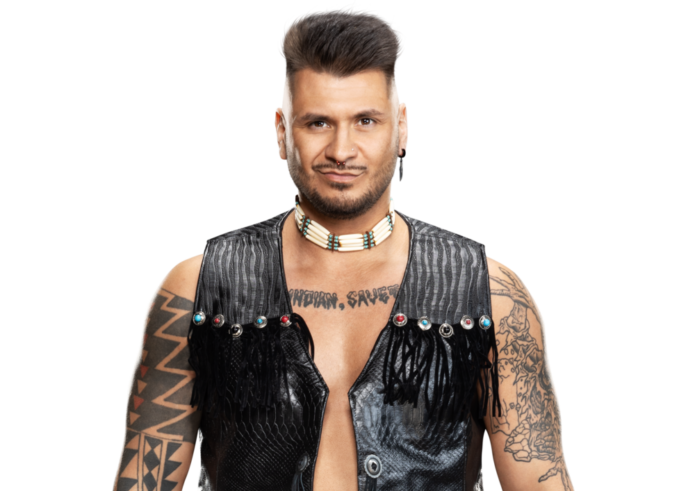
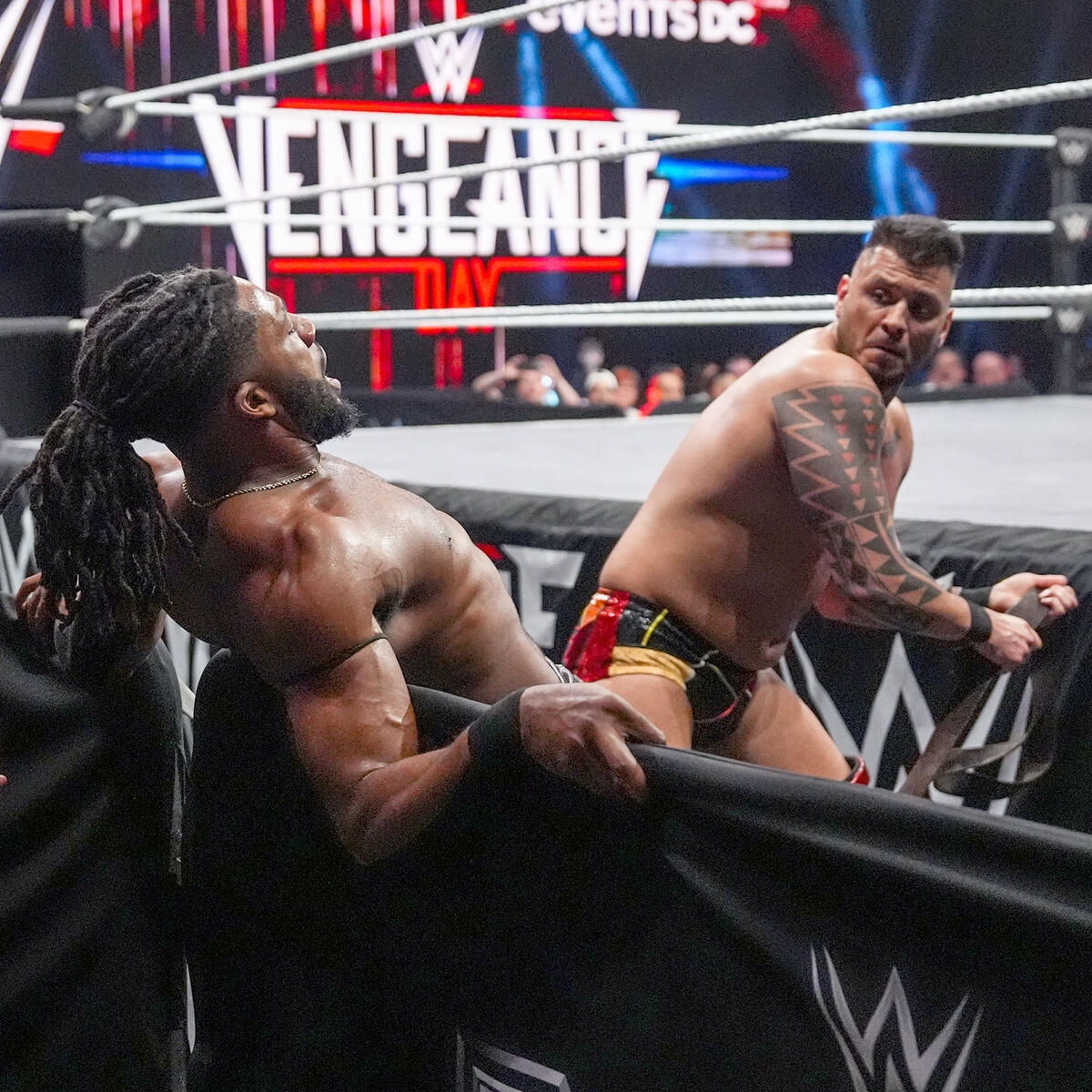
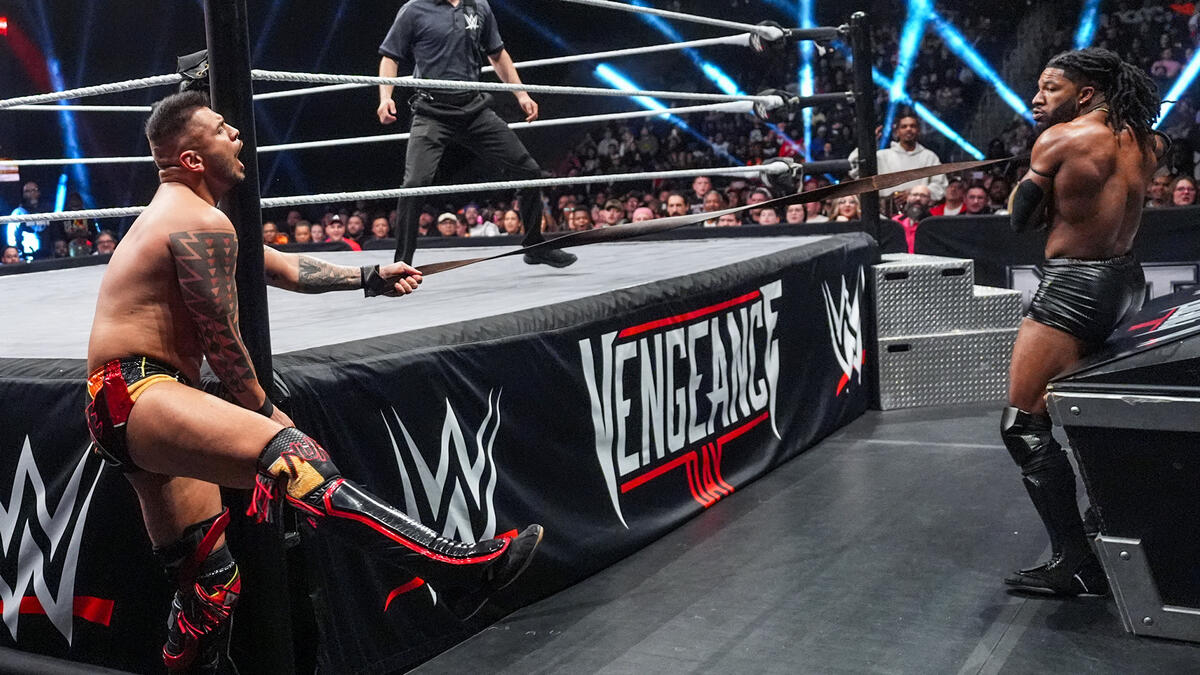
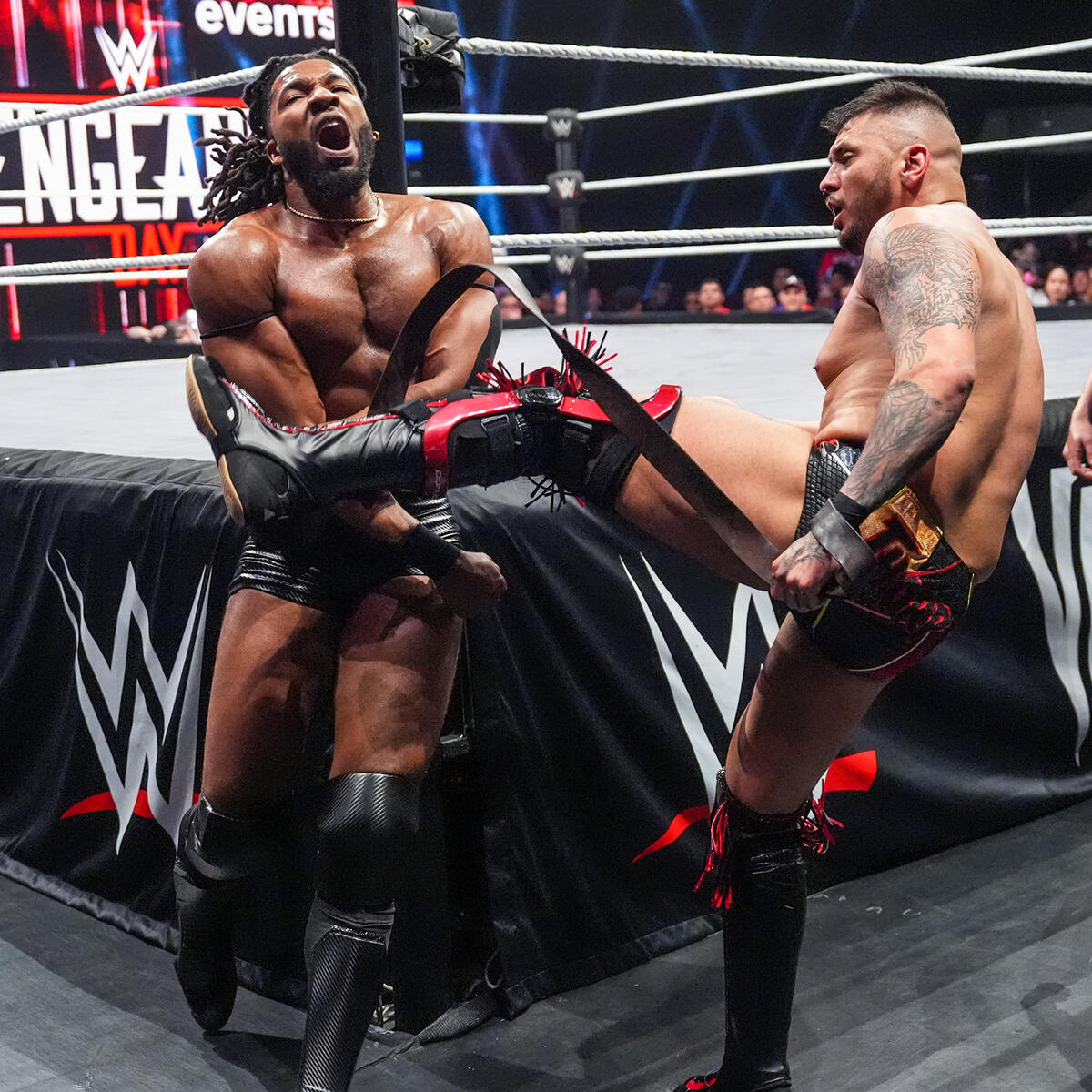
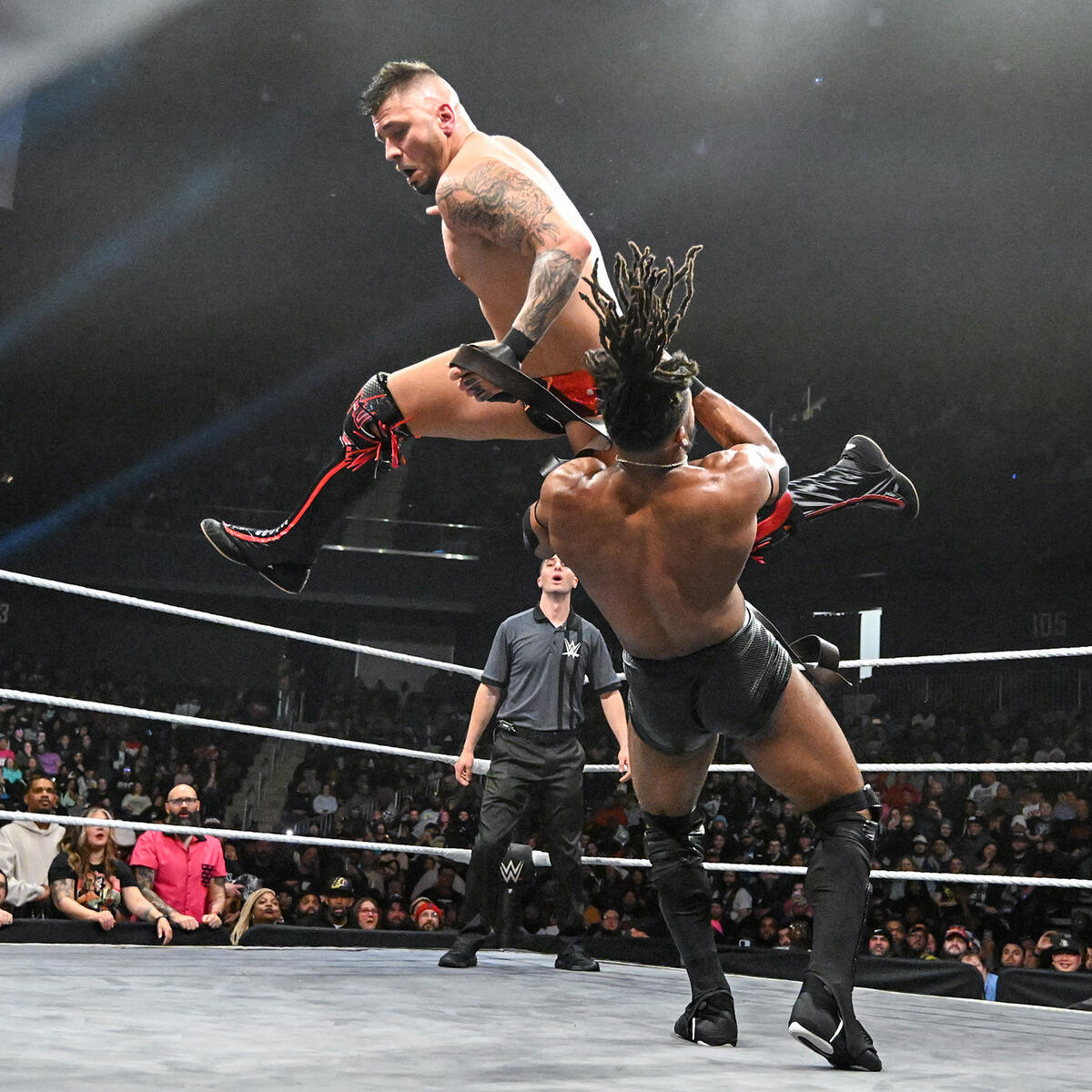
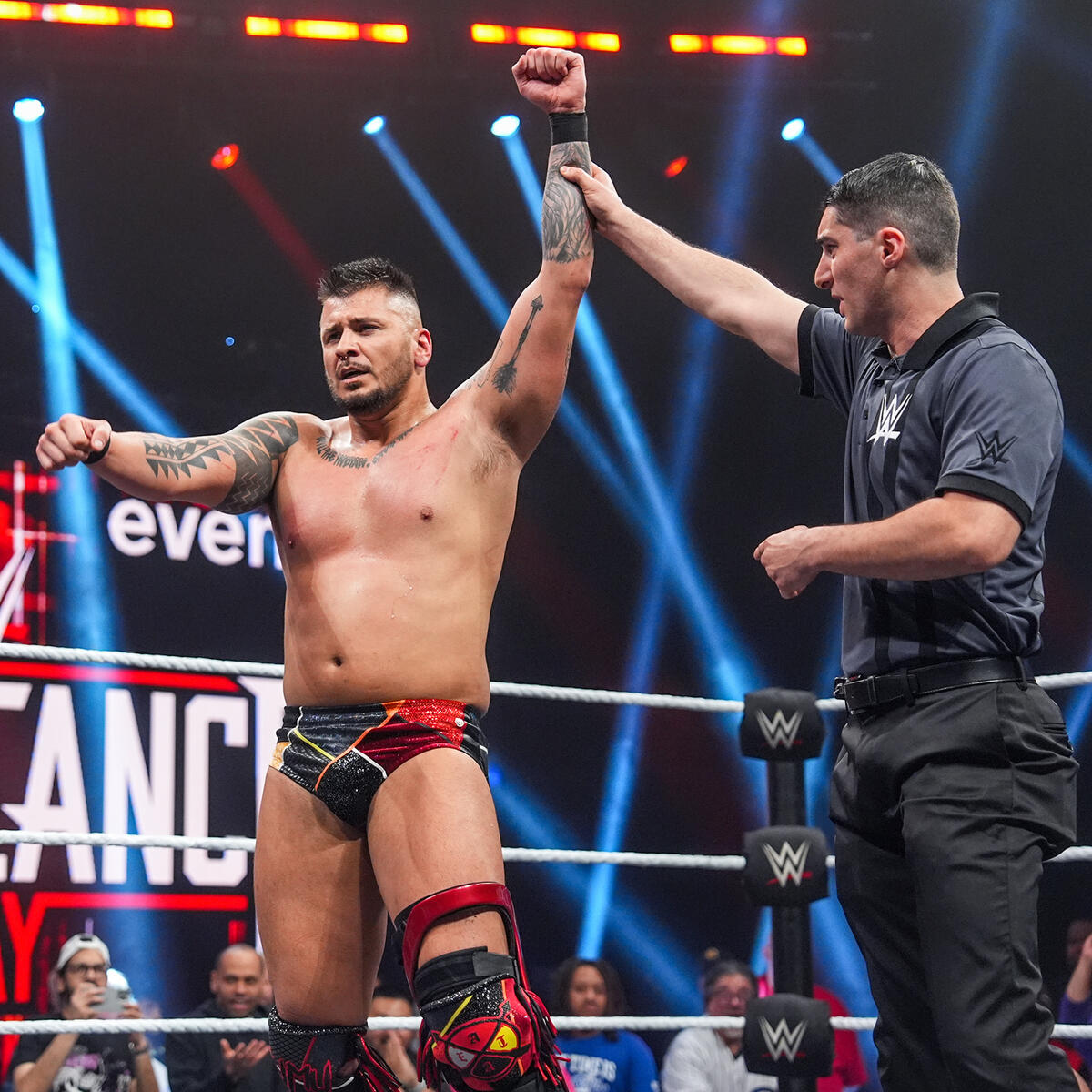
Eddy Thorpe, formerly known as Karl Fredericks in New Japan, has a bold geometric sleeve on his right arm and finer, more varied work on his left. The photos here are from NXT Vengeance Day in February 2025. Thorpe has spoken about his Native American heritage, but the photographs don’t establish a personal meaning for every pattern.
Right shoulder tattoo: black panels and a zigzag edge
A wide black panel wraps around Thorpe’s right shoulder. Smaller triangles break up the dark fill, and a zigzag of bare skin runs along its edge. The pale gaps remain visible as the design rounds the shoulder and continues down the arm.
Right forearm tattoo: triangles continuing down the sleeve
On the right forearm, larger triangles and narrow open lines continue the same sleeve past the elbow. The pattern tapers toward Thorpe’s wrist, where wrist tape covers the lower edge. The upper arm has more solid black; farther down, the skin gaps between shapes become larger.
Left upper arm tattoo: fine outlines across the shoulder
Thorpe’s left shoulder is made up of finer illustrative lines, curves and small enclosed shapes. The outline follows the rounded shoulder and drops unevenly toward the elbow rather than ending in a straight band. It has a more open, drawn look than the solid panels on his right arm.
Left forearm tattoo: shaded feather-like forms
Long, feather-like forms run down Thorpe’s left forearm, with thin lines beside darker shading. The pieces overlap and follow the arm’s length. Wrist tape hides part of the lower edge, but the change from fine shoulder outlines to this darker, softer design is clear.
Inner left arm tattoo: a long arrow
A long arrow sits on the inside of Thorpe’s left upper arm. Its pointed head faces the elbow, while a darker cluster of fletching sits nearer the armpit. The arrow is less visible when his arm rests at his side, but shows clearly when he raises it. The open skin around it gives the simple outline space apart from the larger designs; Thorpe hasn’t explained a specific meaning for it here.
In the video below, Thorpe—then wrestling as Karl Fredericks—talks with Wrestle Inn about his wrestling career and interests.
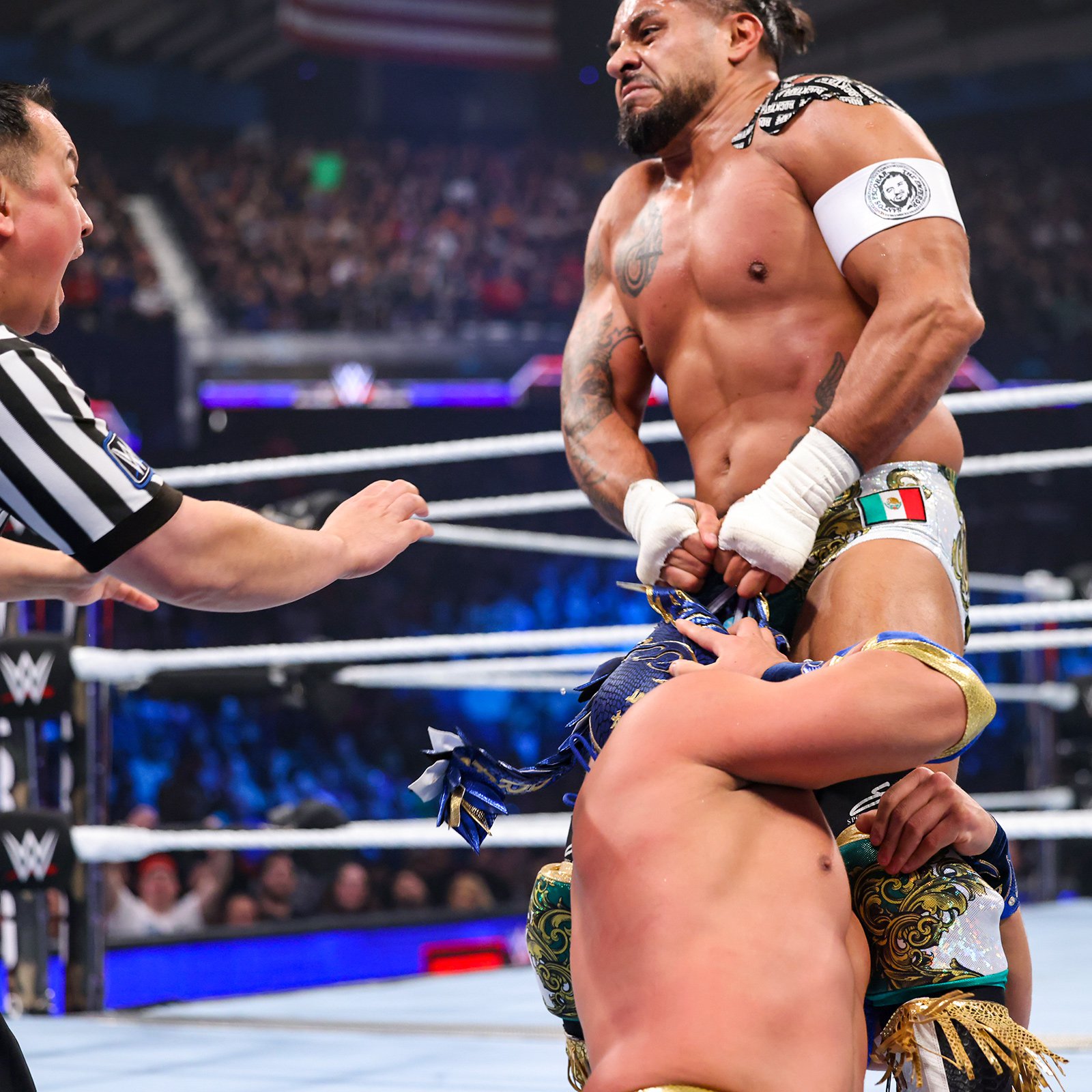
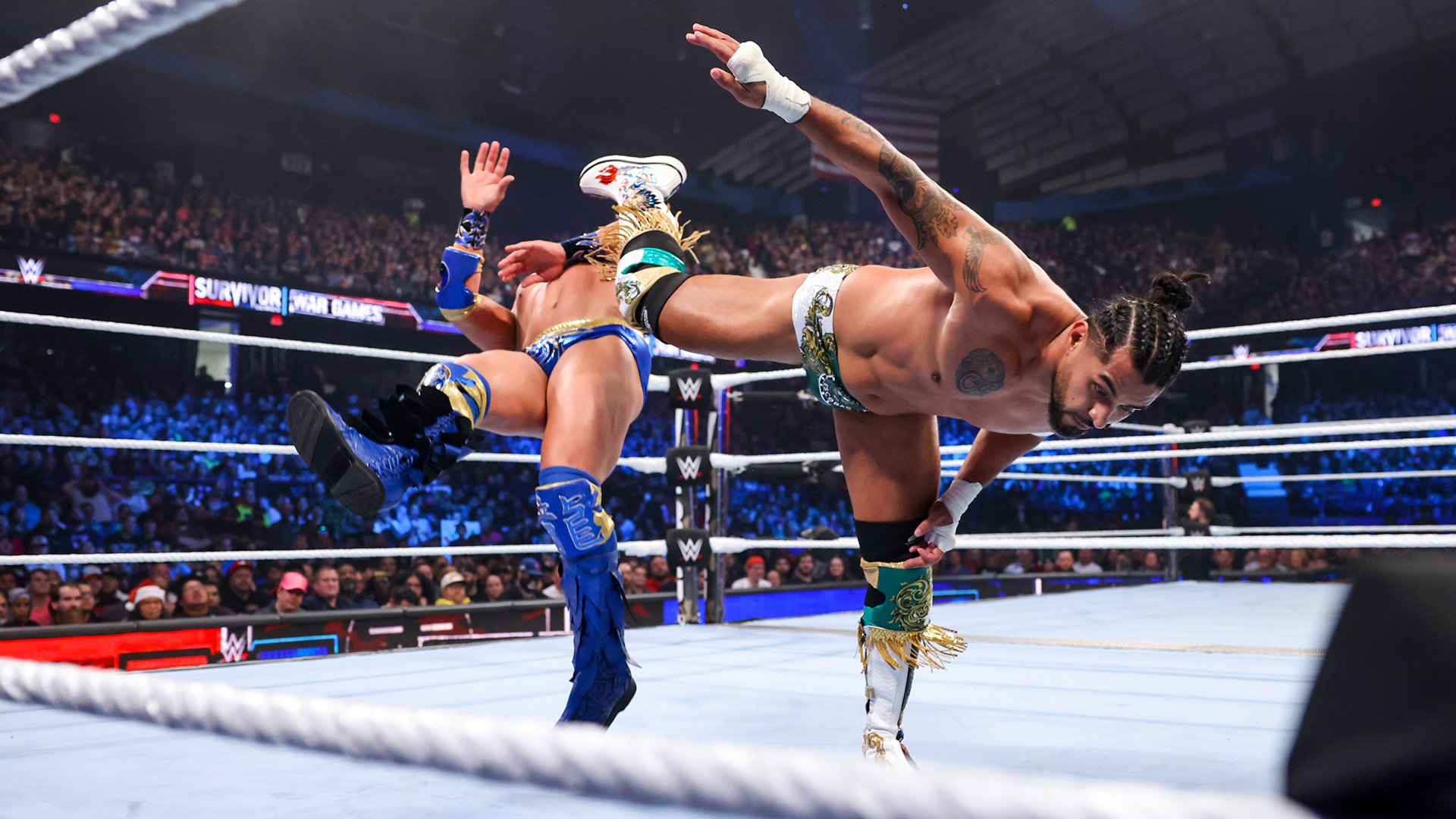
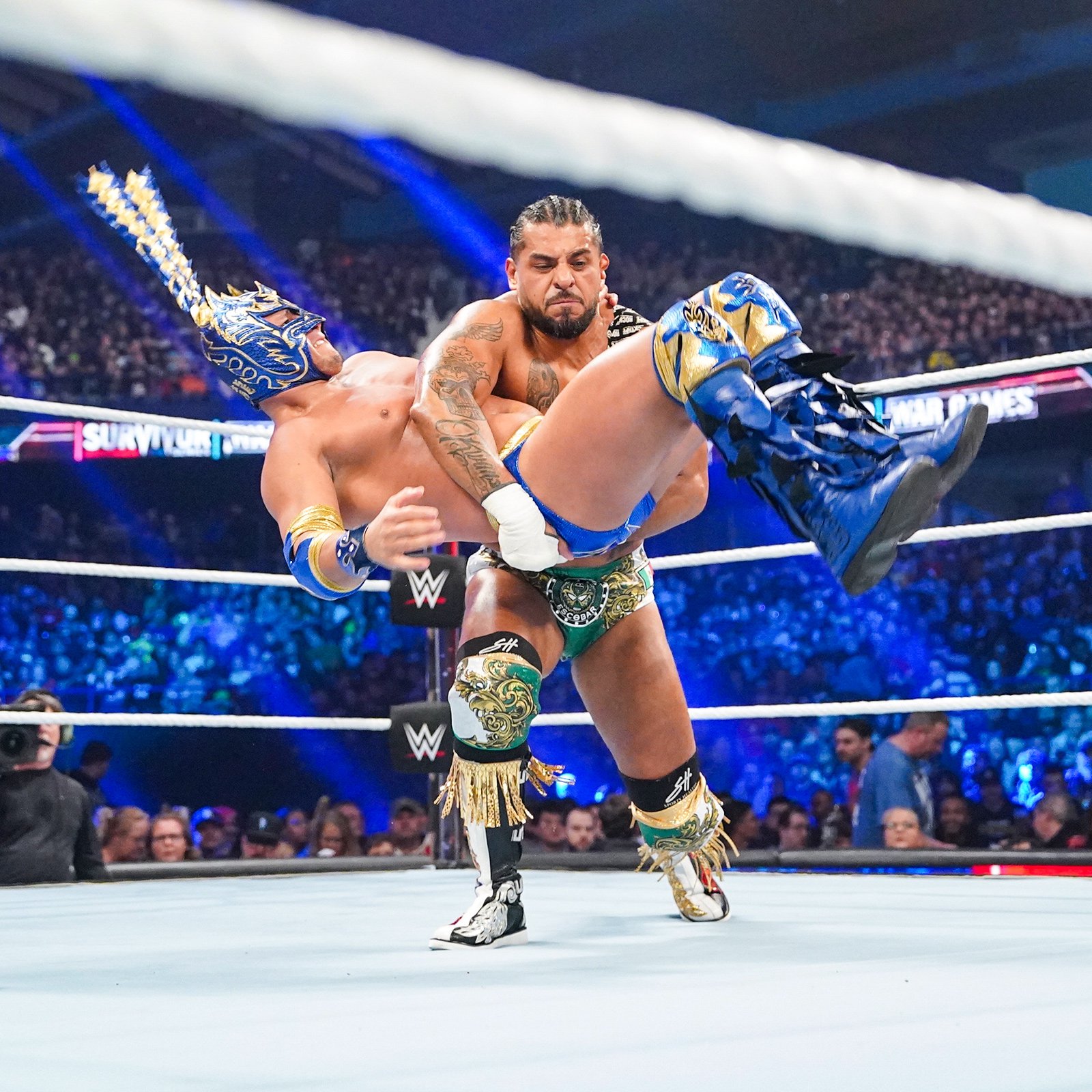
Santos Escobar, who first appeared in NXT as El Hijo del Fantasma, comes from a lucha libre family; his father wrestled as El Fantasma. The photos here show a dark chest emblem, feathered shoulder wings, a face-like upper-arm design, forearm script and a small winged symbol on his back. In May 2023, Escobar and other Latino World Order members got matching LWO hand tattoos in Puerto Rico before Backlash. The group included Rey Mysterio.
Right chest tattoo: a dark rounded emblem
A compact emblem sits on Escobar’s right pectoral, above the nipple. It has a rounded outline, darker shading at the top and looping lines below. The other side of his chest is more open, which leaves this piece on its own. Some curves may look mask-like, but Escobar hasn’t identified a specific figure or personal meaning for it.
Right shoulder tattoo: wings across the upper arm
Open wing shapes spread across Escobar’s right shoulder, with long, narrow lines marking individual feathers. The design follows the curve of the muscle and looks lighter than the shaded emblem below it. The photos show the feathered shape, but don’t establish what the wings mean to him.
Right upper-arm tattoo: a shaded face-like design
Below the shoulder, a shaded, face-like design fills the outer upper arm. Its central image has an irregular decorative outline and several projecting shapes. It can resemble a stylized mask, but the photo doesn’t identify a specific mask, wrestler or family member.
Right forearm tattoo: large flowing script
Large cursive lettering runs along the outer right forearm, led by a sweeping first letter. The arm’s angle and the overlapping strokes make the full word difficult to read, so it’s left unidentified here. The script contrasts with the shaded image above the elbow and follows the length of the forearm.
Upper-back tattoo: a small winged symbol
A small winged design sits below Escobar’s neck near the center of his upper back. Two outlined forms open to either side of a rounded center, then narrow into pointed lines below. It’s a compact accent on otherwise open skin, distinct from the broader wings on his shoulder.
Escobar’s interview with Denise Salcedo below covers his wrestling career and the name Romeo Malverde; it doesn’t explain each tattoo.
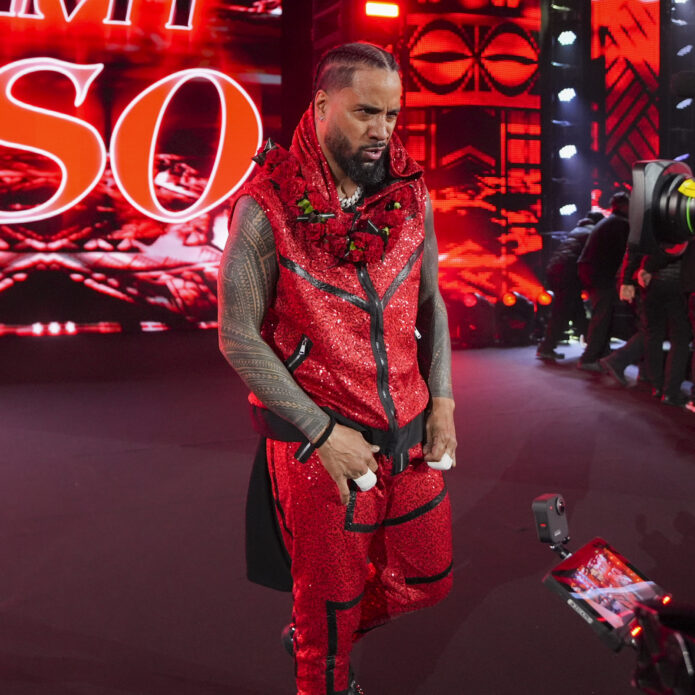
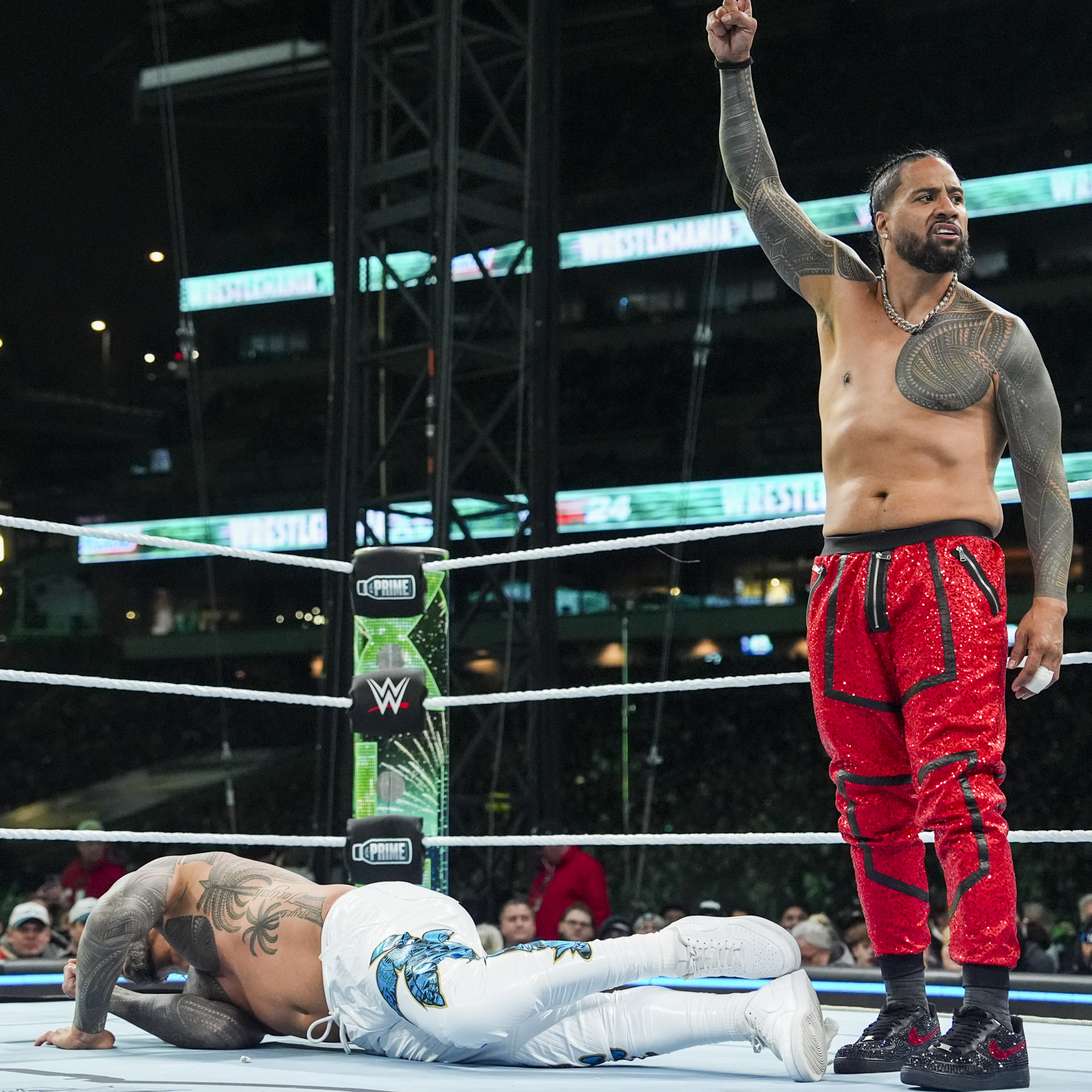
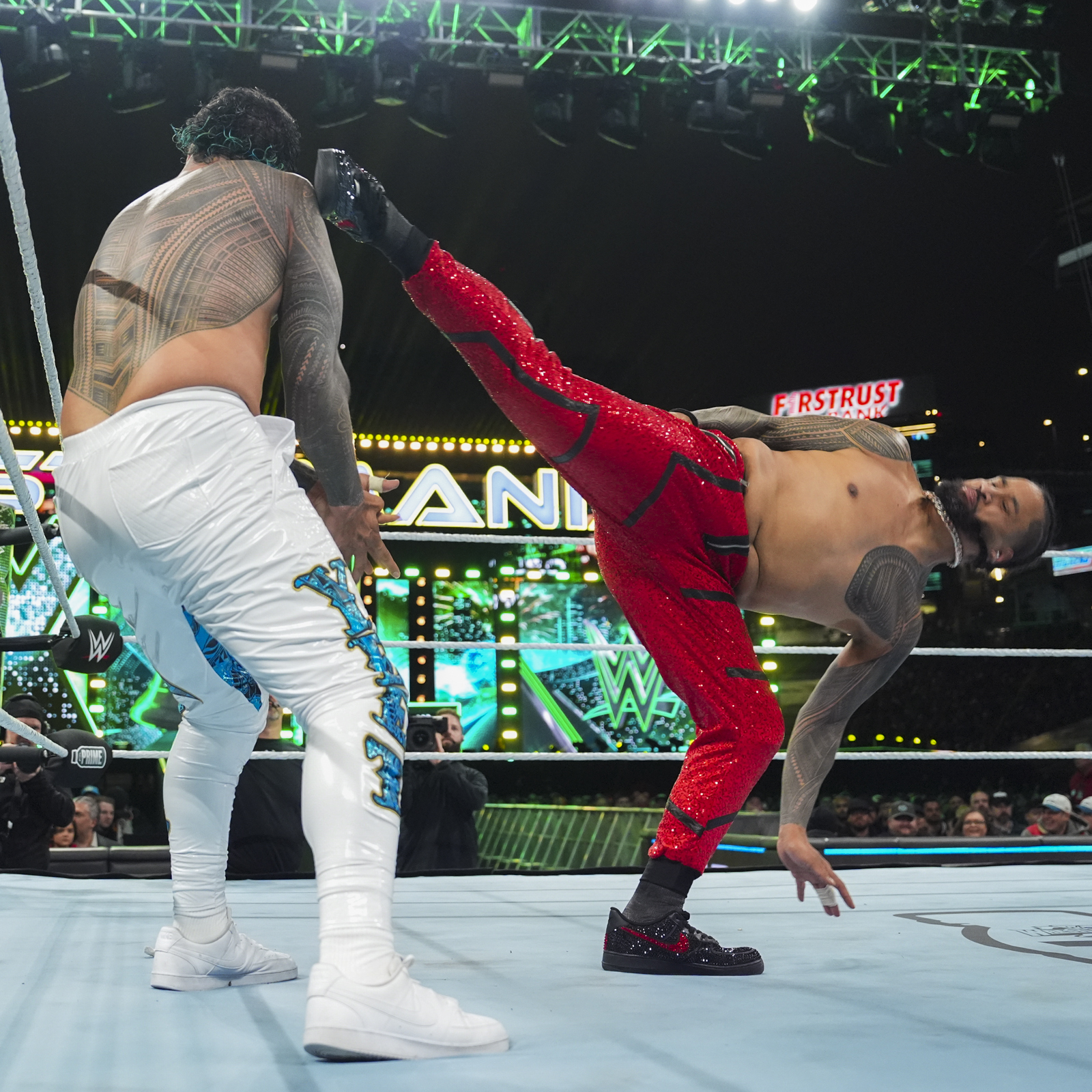
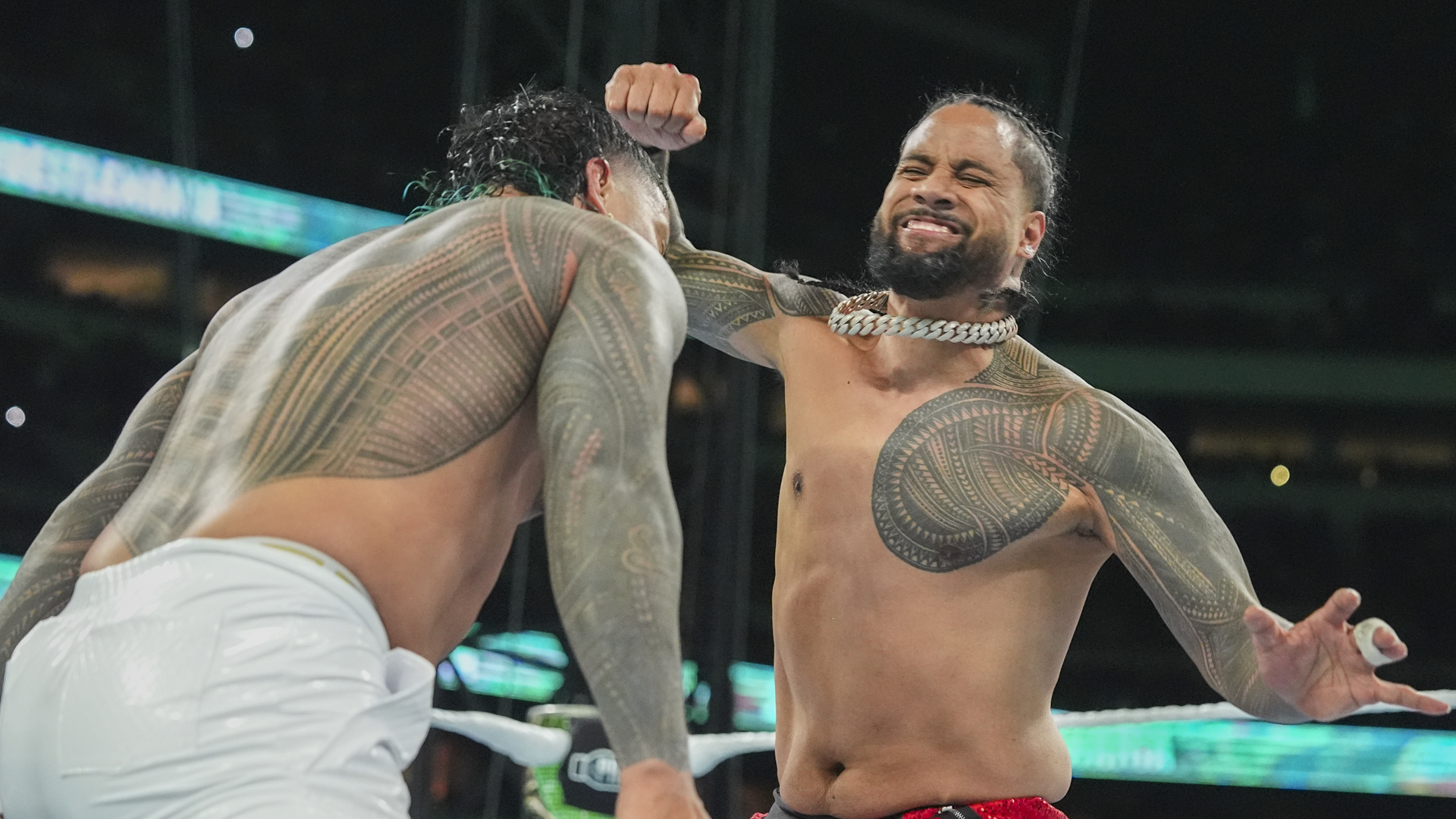
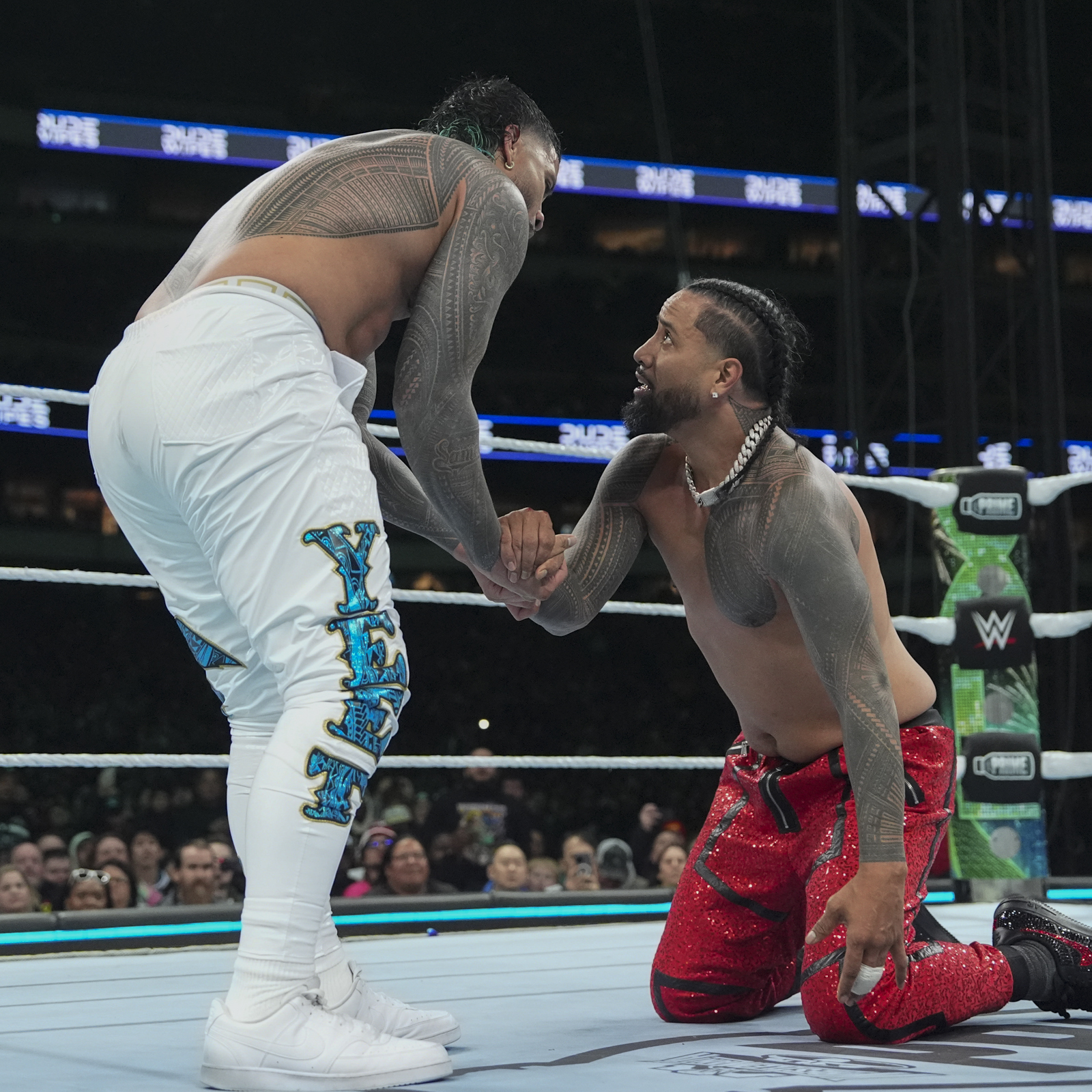
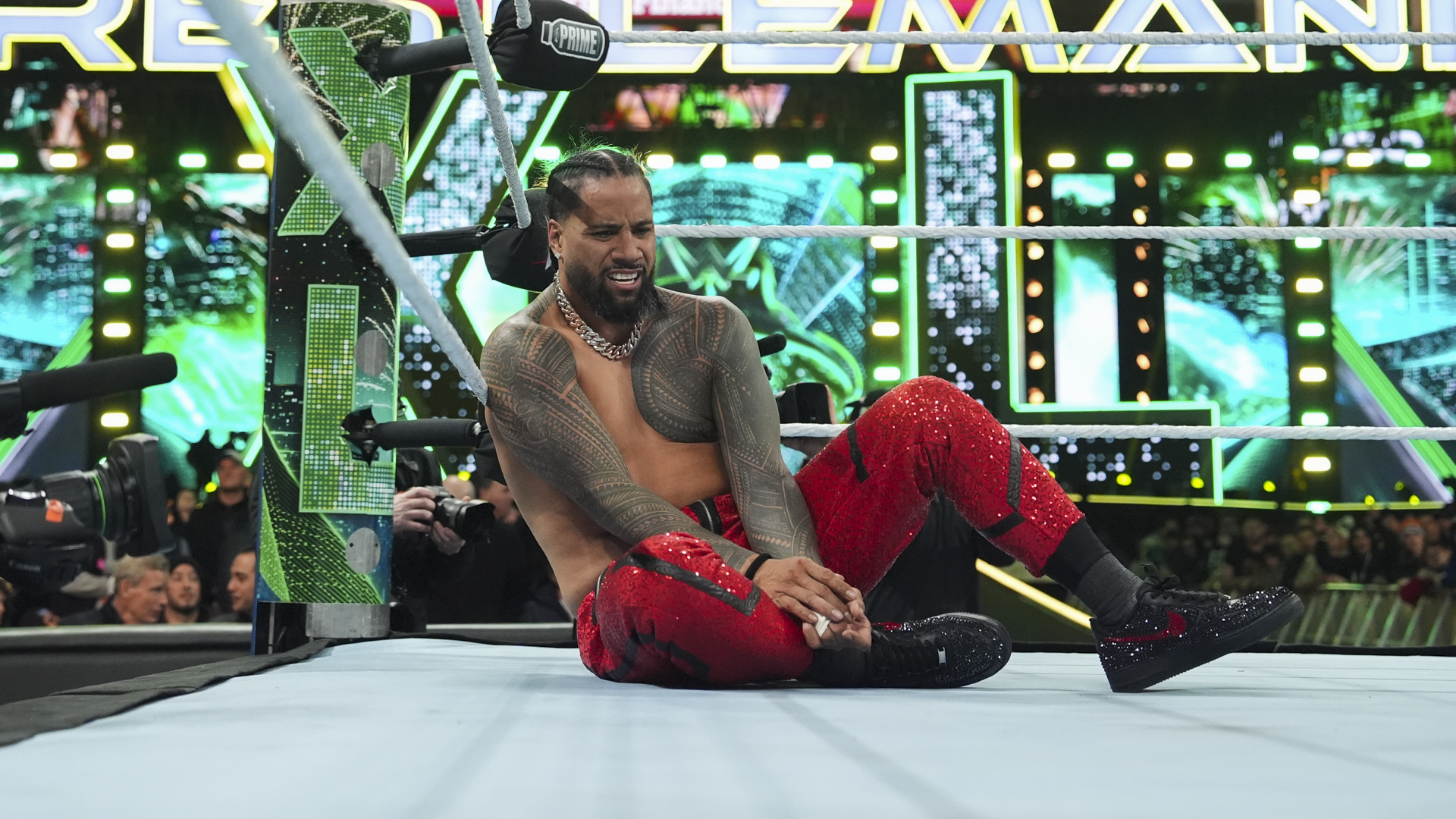
Jimmy Uso’s tattoos include dense black-and-gray sleeves, a rounded piece on his left chest and a small panel up the side of his neck. He and his twin brother Jey are part of the Anoa’i wrestling family. In the WrestleMania 40 photos here, Jimmy wears red pants and Jey wears white, which helps tell their tattoos apart.
Right upper-arm tattoo: angular panels and fine bands
Dark panels wrap around Jimmy’s right shoulder, with a zigzag of bare skin at the edge. Smaller triangles and fine bands break up the solid areas. In a 2014 Phoenix New Times interview, the profile described his arm and body work as Samoan tribal tattoos; Jimmy said he wanted to “get my arms finished.”
Left sleeve tattoo: long lines from shoulder to wrist
Long bands and smaller shapes run down Jimmy’s left sleeve, bending around the elbow and narrowing toward the wrist. The lighter channels keep the black-and-gray pattern legible, but the layout doesn’t mirror his right arm. For a look at his twin’s separate collection, see Jey Uso’s tattoos.
Chest tattoo: the rounded design on his left side
A rounded pattern fills Jimmy’s left pectoral and reaches toward his collarbone. Smaller bands and pointed marks sit inside the curved border, set apart from the larger panels on his arms by open skin at the center of his chest. In the 2014 interview, he also said he wanted a tribute to his late uncle Umaga and a back tattoo; those were plans at the time, not explanations for this chest piece.
Neck tattoo: a small panel behind his left ear
A compact dark panel sits on the left side of Jimmy’s neck, below the ear and above the shoulder. A chain crosses its lower edge, and a turned head or raised collar can hide part of it. The angled outline and lighter gaps show more clearly from the side.
Forearm tattoos: stacked bands near the wrists
The forearms carry the sleeves into tighter rows of bands, pointed shapes and narrow lines. Some run across the arm; others angle along it. The pattern reaches close to the wrists, then gives way to comparatively open hands. In the Total Divas clip below, Naomi and Jimmy get matching tattoos after she loses her wedding ring.
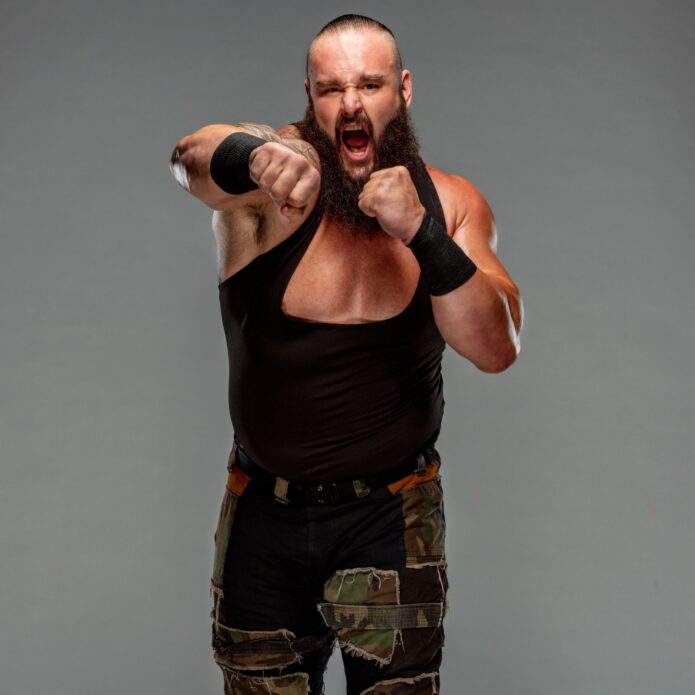
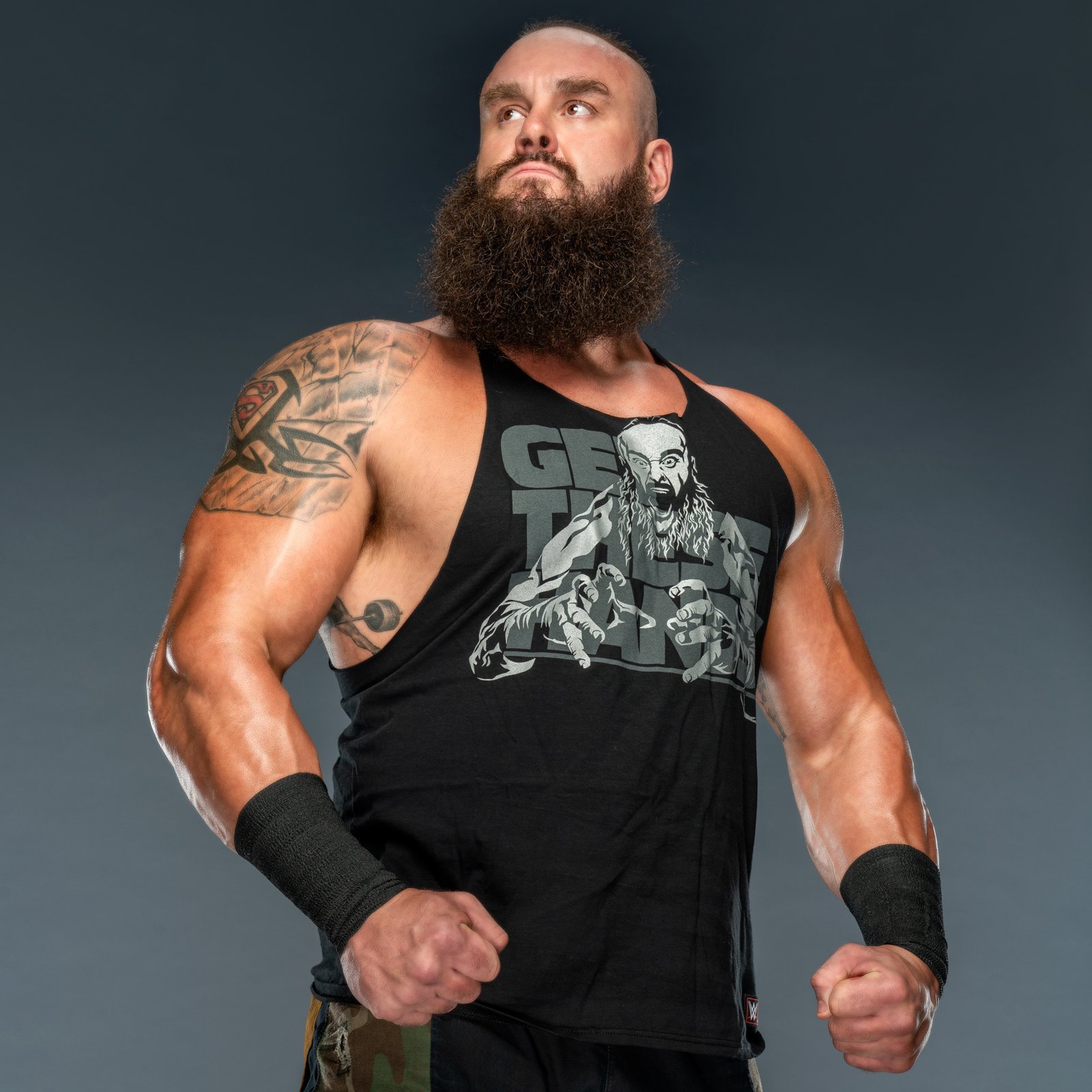
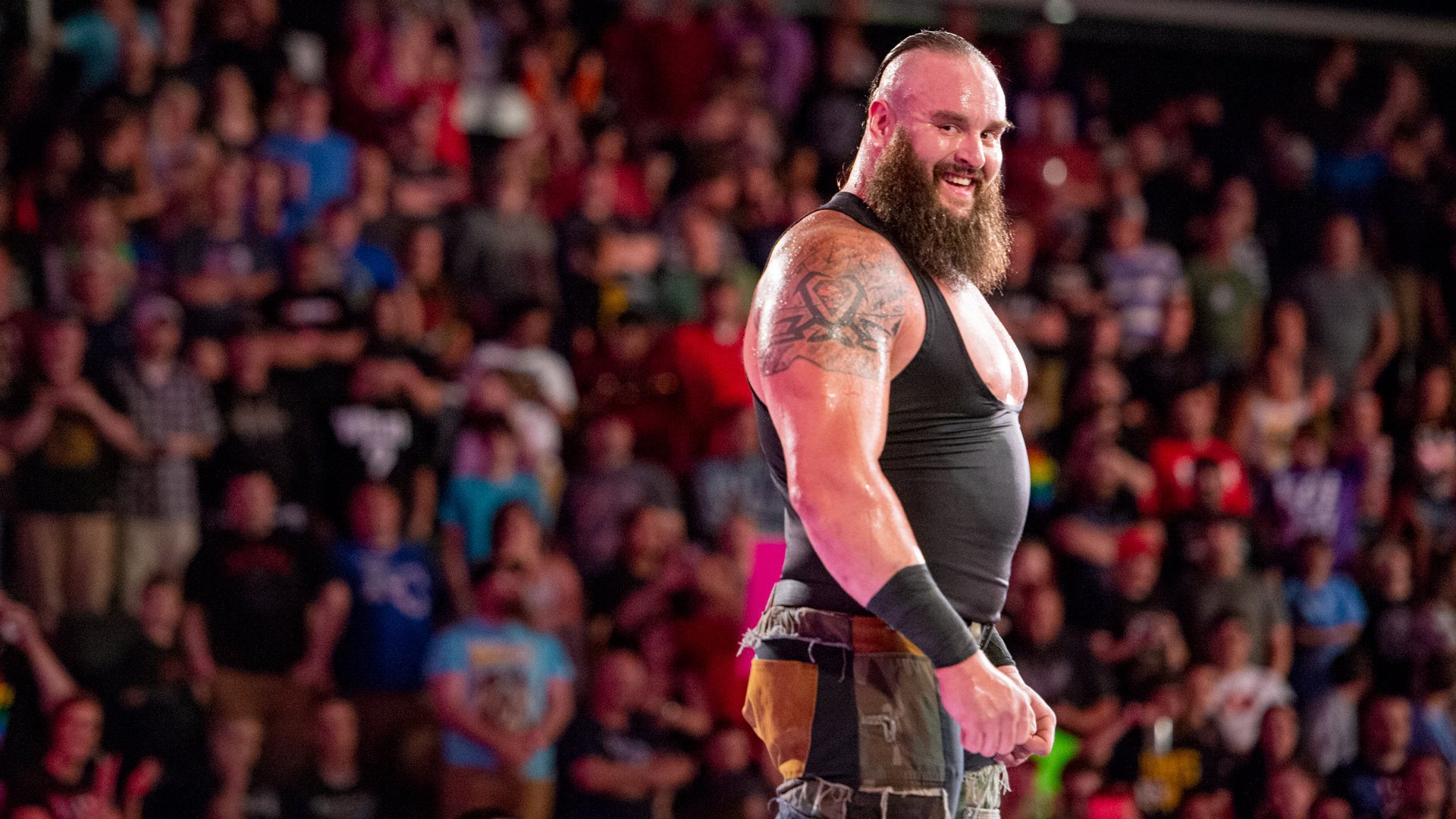
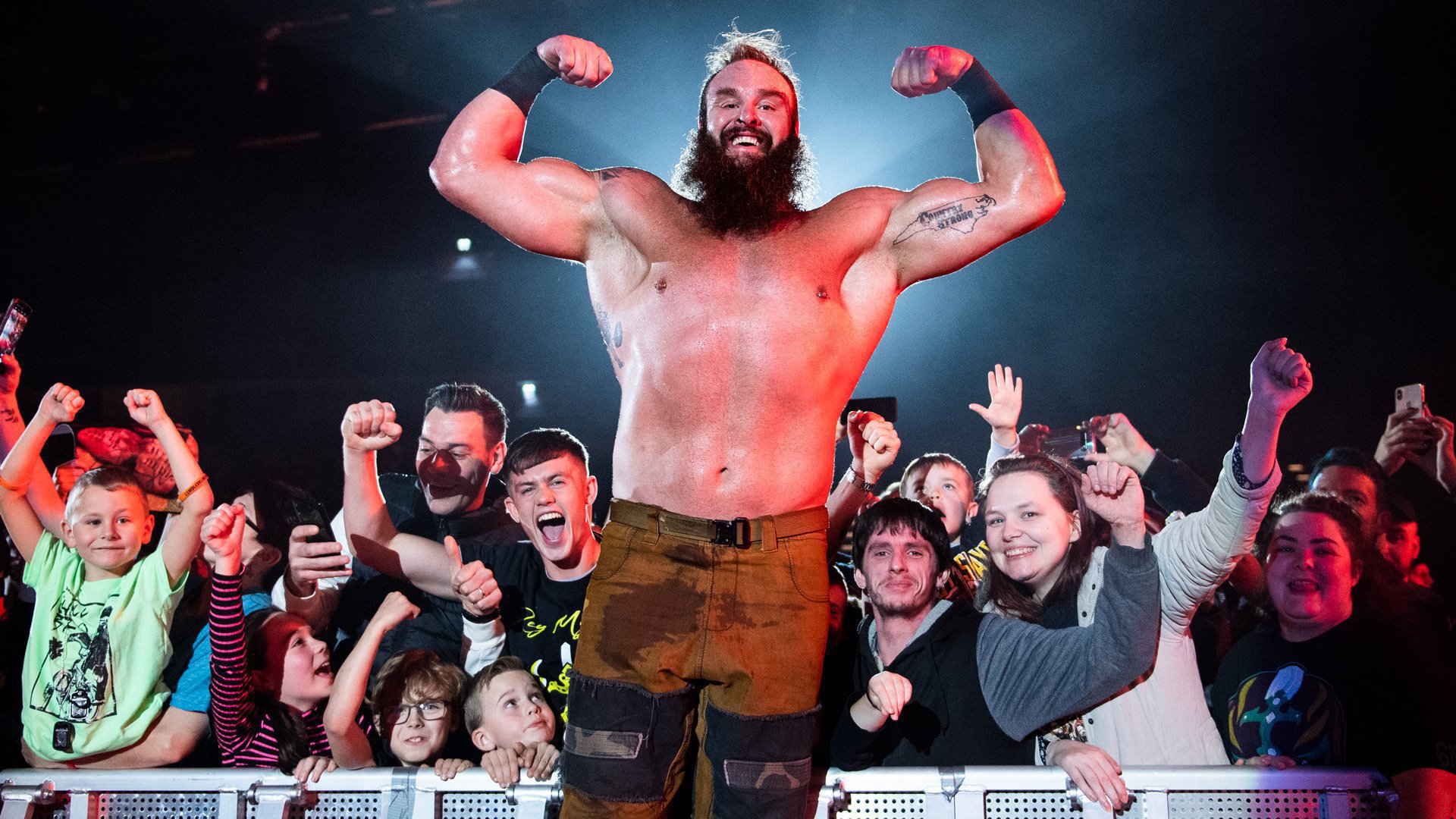
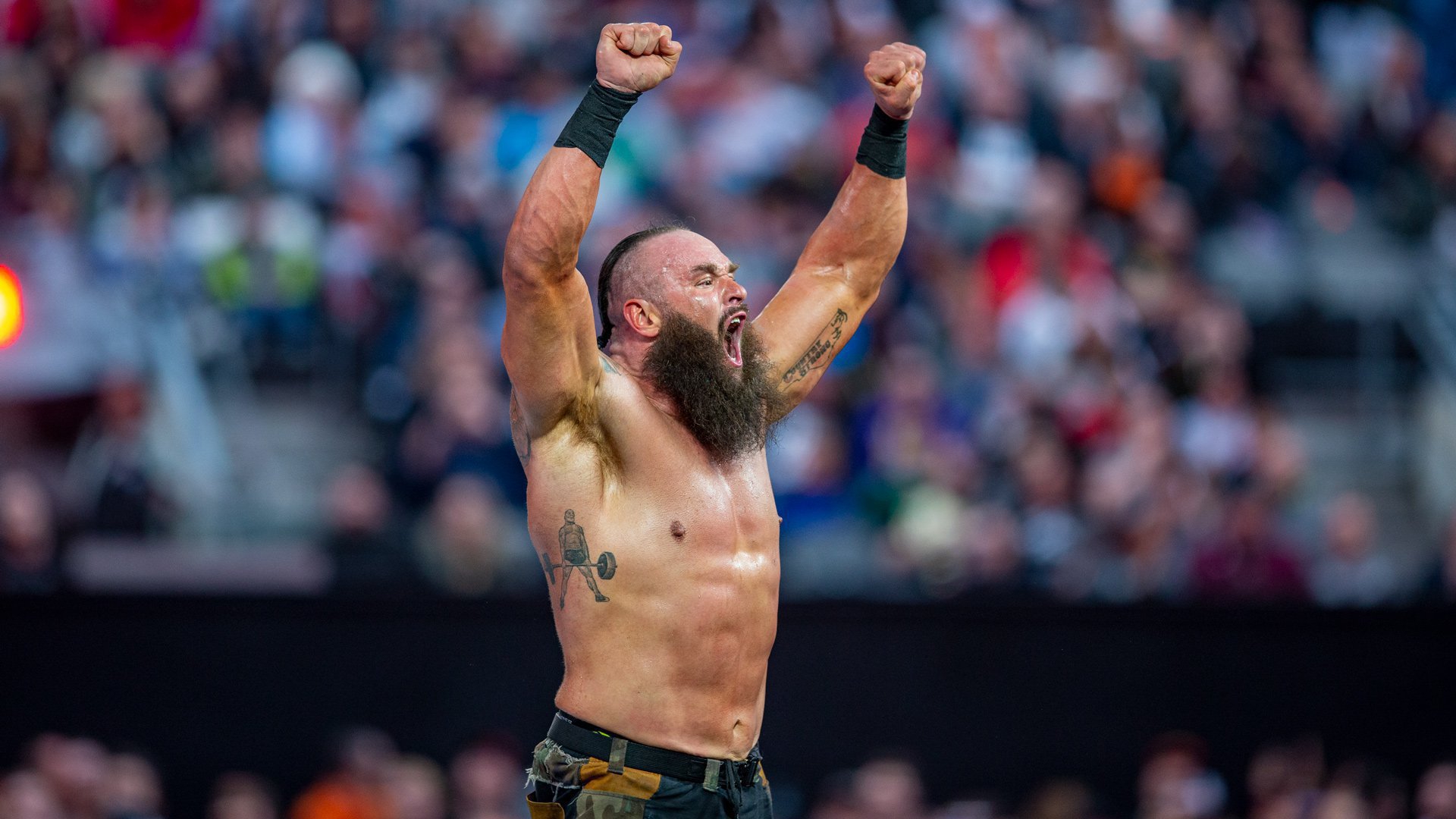
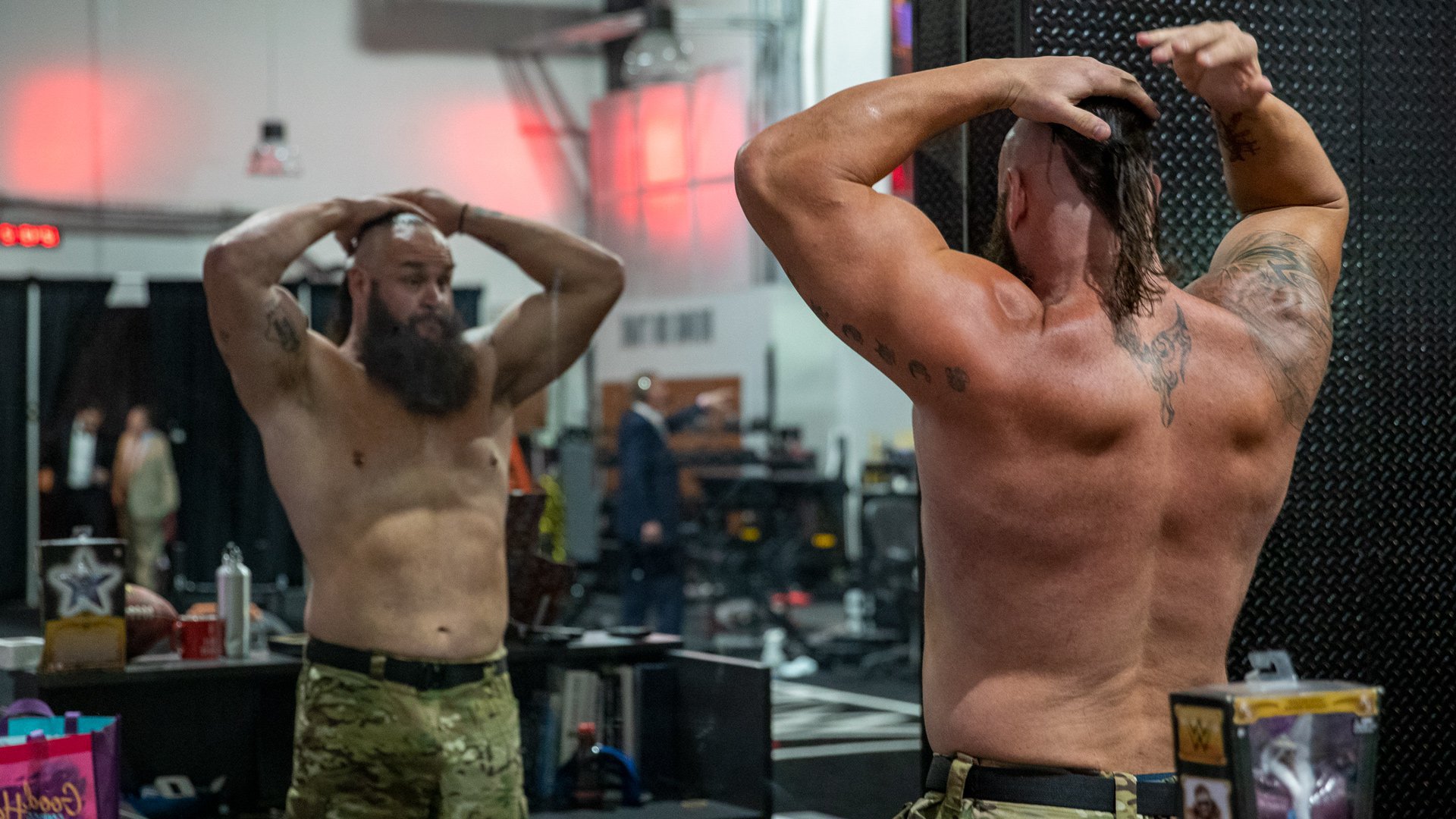
Braun Strowman’s tattoos include a red Superman shield on his right shoulder, Country Strong lettering inside his left arm, a weightlifter on his ribs and a small dragon-like design on his back. The black pattern around the Superman emblem grew from his first tattoo. These older WWE-era photos show each piece in a different pose.
The Superman tattoo on his right upper arm
The red Superman shield sits high on Strowman’s right shoulder. In a 2017 appearance on The Masked Man Show, he said it was his first tattoo, chosen from a shop’s wall when he was 17. As he put it, “There’s really no meaning behind it.”
The black pattern around his shoulder tattoo
Broad black lines and pointed shapes frame the original shield, with gray shading and open skin between them. Strowman has said he added more work around the first tattoo. Some fans call the pattern tribal, but the photos don’t establish a particular cultural source or meaning. For another chest-and-shoulder layout, see Roman Reigns’ tattoos.
The Country Strong tattoo inside his left arm
Country Strong is written inside Strowman’s left upper arm, within an outline resembling North Carolina. The inner-arm placement hides much of the lettering when his arm rests at his side; it becomes easier to read when he raises and flexes it.
The weightlifter tattoo on his right ribs
A small figure holding a loaded barbell sits on Strowman’s right ribs, below the armpit. Its separated legs and round weight plates keep the outline readable. A tank top can hide the figure while leaving part of the bar visible. The photo doesn’t identify who the weightlifter represents.
The dragon-shaped tattoo high on his back
A compact, pointed design sits below the back of Strowman’s neck. It’s commonly described as a dragon, though the photo shows a stylized outline rather than a detailed creature. Open skin separates it from the nearby shoulder work and the rest of his back.
A few quick questions
Which piece came first? Strowman said the Superman shield was his first tattoo, chosen at 17. The larger black pattern around it came later.
Do these pictures show everything? No. They show several recognizable pieces from his earlier WWE years. He has also spoken about a later memorial tattoo for Bray Wyatt. In a May 2026 Rewind, Recap, Relive interview, he discussed feeling that loved ones were watching over him while still feeling their absence.
Why do some tattoos disappear in match footage? Wrist tape, tank tops and arm position hide parts of the work. The mirrored back photo can also reverse left and right.
Does every tattoo have a serious meaning? Not according to Strowman’s account of the Superman shield. He said he chose it because he liked the image; other pieces can carry different personal weight.
The WWE After the Bell conversation below covers his 2022 return and transformation.
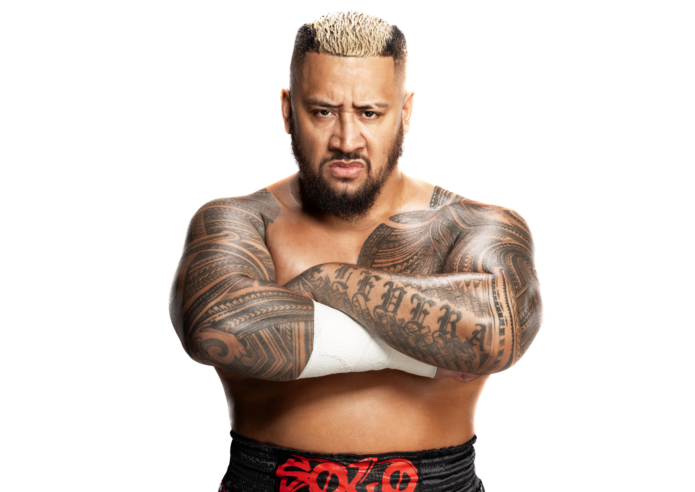
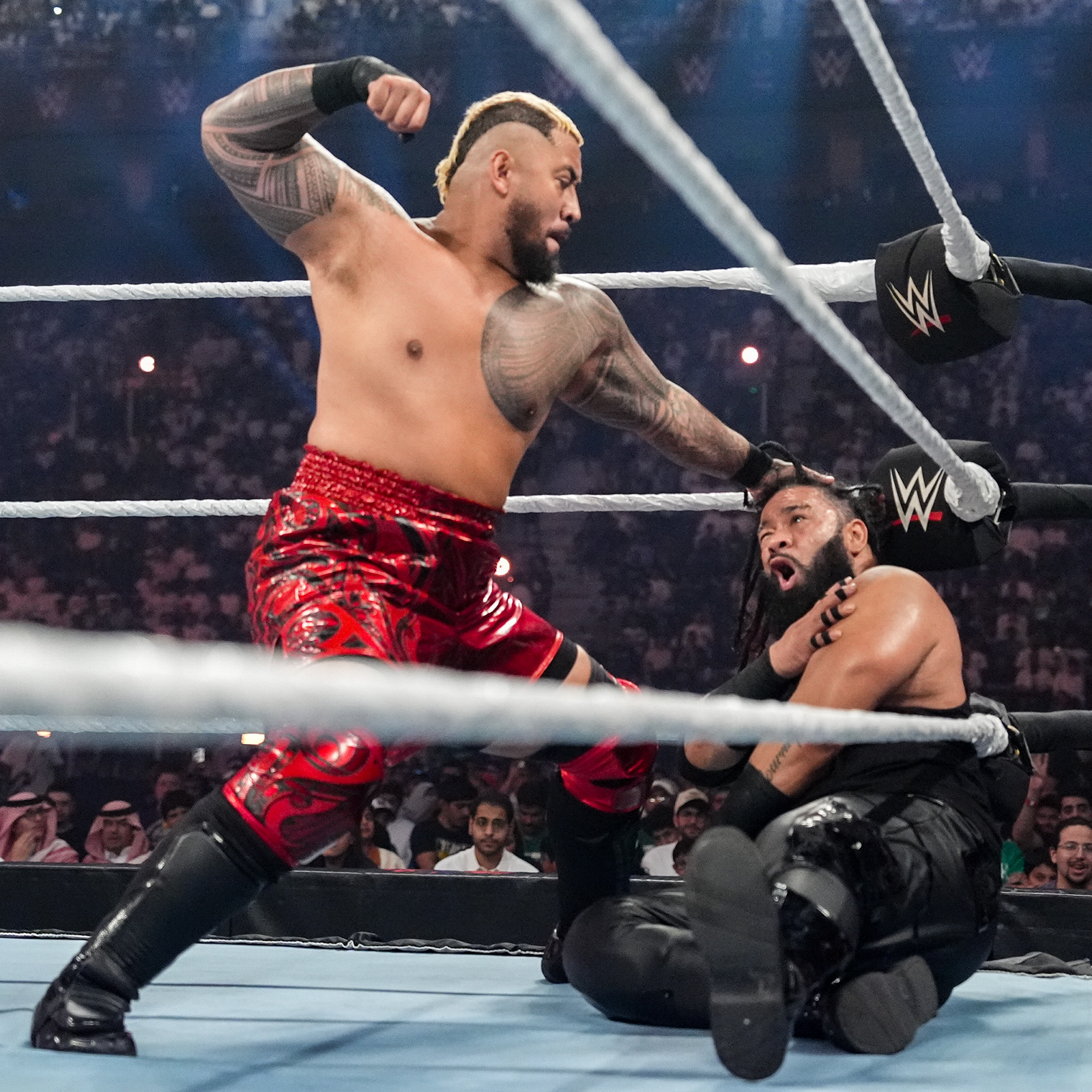
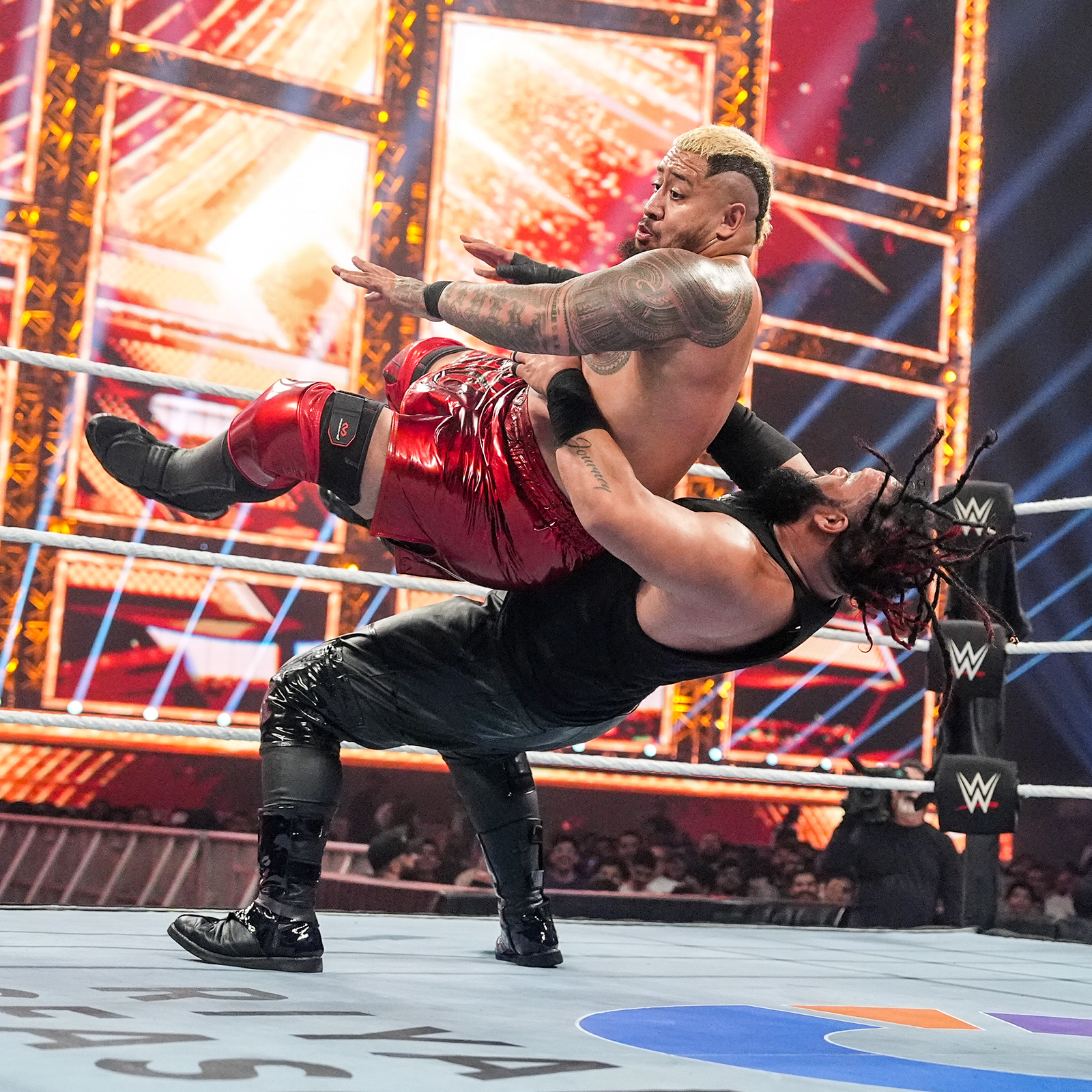
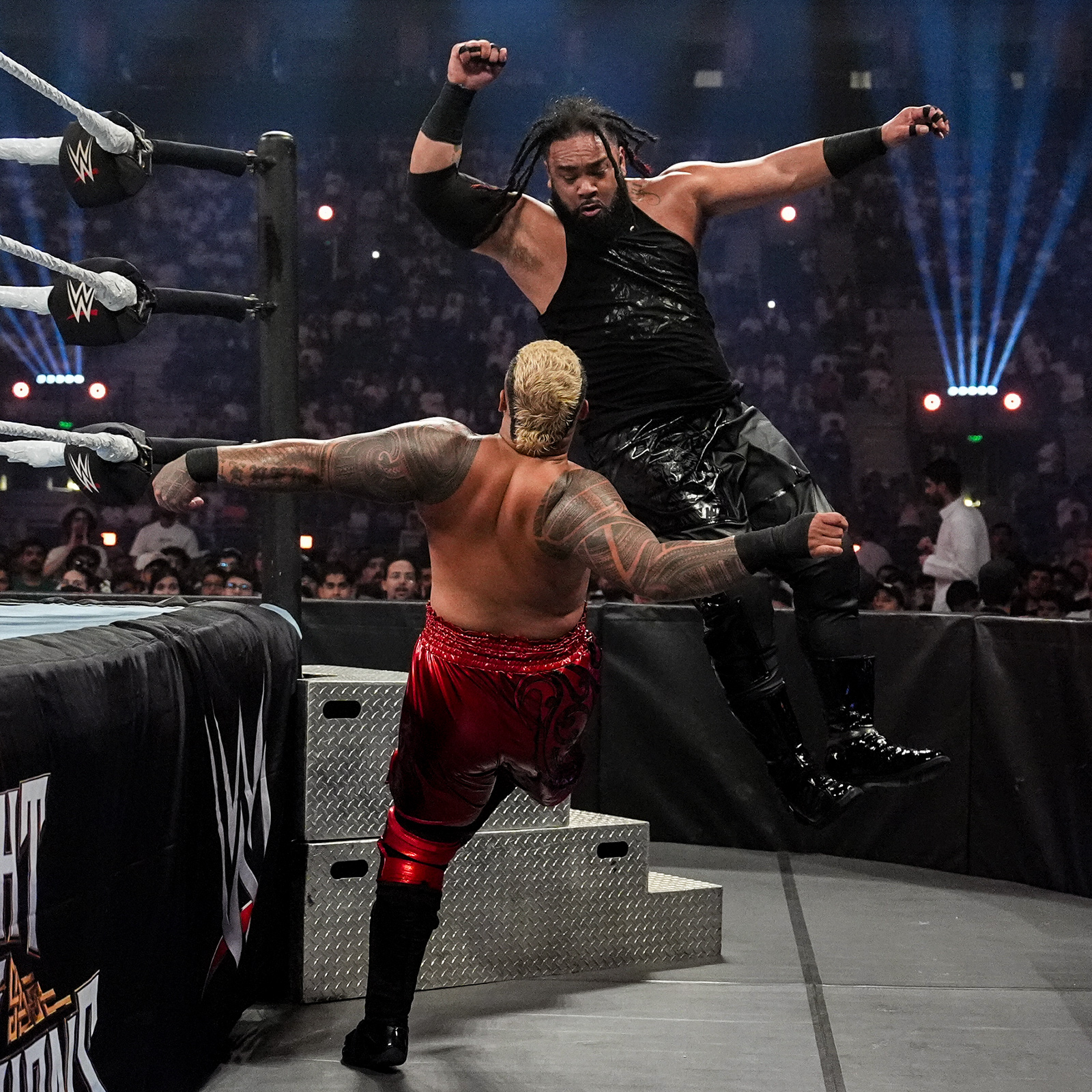
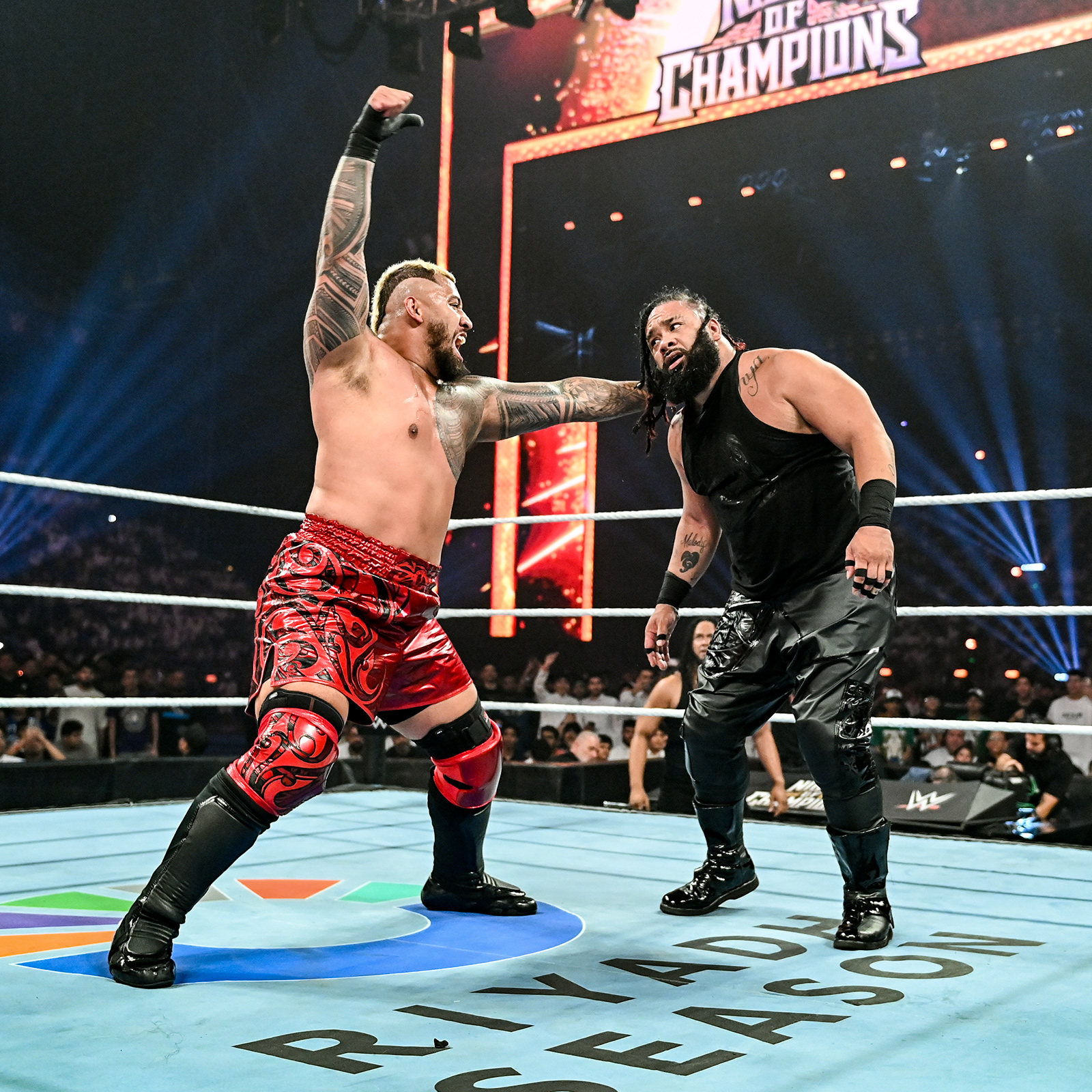
Solo Sikoa’s tattoos stand out in the ring: dense black work on both arms, a curved panel that runs from his left shoulder onto his chest, and a geometric design across the back of his left hand. The two sleeves aren’t mirror images.
The left side combines a shoulder spiral, patterned panels and lettering farther down the arm. The right is built around broader bands and sharper angles. The difference is easy to see even when he’s moving.
Sikoa, also known as Joseph Fatu, is part of the Anoa’i wrestling family. That connection doesn’t explain every mark on his skin. Here’s a closer look at five visible designs, including the hand addition reported in October 2023.
The curved tattoo panel on his left chest
The left chest panel covers one side of his upper chest and joins the shoulder sleeve. Its curved lower edge leaves the other side open and gives the design a clear outline in front-facing photos.
Rows of fine marks sit between wider curved bands. From a distance, the dark strips define the panel; up close, smaller repeated lines break up the surface.
The pattern rises toward the collarbone and meets the work around the shoulder, but it doesn’t cross both sides of his chest. For a point of comparison, Roman Reigns’ tattoos also extend from the shoulder onto the chest. The layouts differ, and the family connection doesn’t make them interchangeable.
The visible details are the panel’s curved edge, its repeated rows and how it joins the shoulder. There’s no need to assign it an object or meaning that Solo hasn’t explained.
The spiral tattoo around his left shoulder
The outside of Solo’s left shoulder has a large curling pattern, with a centre that turns inward and curved rows spreading around it. The arrangement follows the shoulder cap and gives this part of the sleeve a rounder shape than the angled bands on his right arm.
The shoulder spiral is easiest to read from the side. A front view can flatten it into the darker work around it; the outer curve and short repeated marks become clearer when he turns.
Below the spiral, the sleeve shifts into upright panels and narrow borders, then larger lettering farther down the forearm. The rounded shoulder and straighter lower sections give the arm different rhythms.
The spiral’s personal meaning isn’t established here, so the description can stay with what is visible: its curved rows, the shoulder placement and the transition into the rest of the sleeve.
The broad tattoo bands on his right upper arm
Solo’s right upper arm uses broader bands and sharper turns. Angled sections cross smaller patterned rows, keeping the main shapes visible even from across the ring.
From behind, the ink wraps around the shoulder but stops short of the centre of his back in these views. That leaves a clear boundary near the shoulder blade.
The wide bands give the right sleeve its structure. Some curve around the arm; others meet at points or change direction. Finer marks fill the spaces between them without obscuring the larger shapes.
The left shoulder’s spiral moves in a circle, while the right side leans on diagonals. Both use black ink, but the layouts aren’t copies. The contrast shows how broad shapes and smaller rows can work together; a personal or culturally rooted design still deserves more context than a photo alone provides.
The angled tattoo pattern on his right forearm
The right forearm carries the sleeve’s angled pattern downward. Long dark sections meet lighter channels, with short repeated marks along some edges and broader, simpler shapes in others.
The pattern changes with his pose. When Solo raises his arm, the bands line up and their pointed turns stand out. With his elbow bent, they curve around the muscle and appear closer together.
The forearm pattern carries the sleeve toward the wrist. Long channels fit the length of the arm, while tighter rows fill the spaces beside them. The open strips help keep the angles distinct.
Wrist tape can hide the bottom of the tattoo during a match, making it look shorter than it is. Mirrored photos can also make it easy to mix up the sides; the right forearm’s angled bands contrast with the lettering on his left.
The geometric tattoo on his left hand
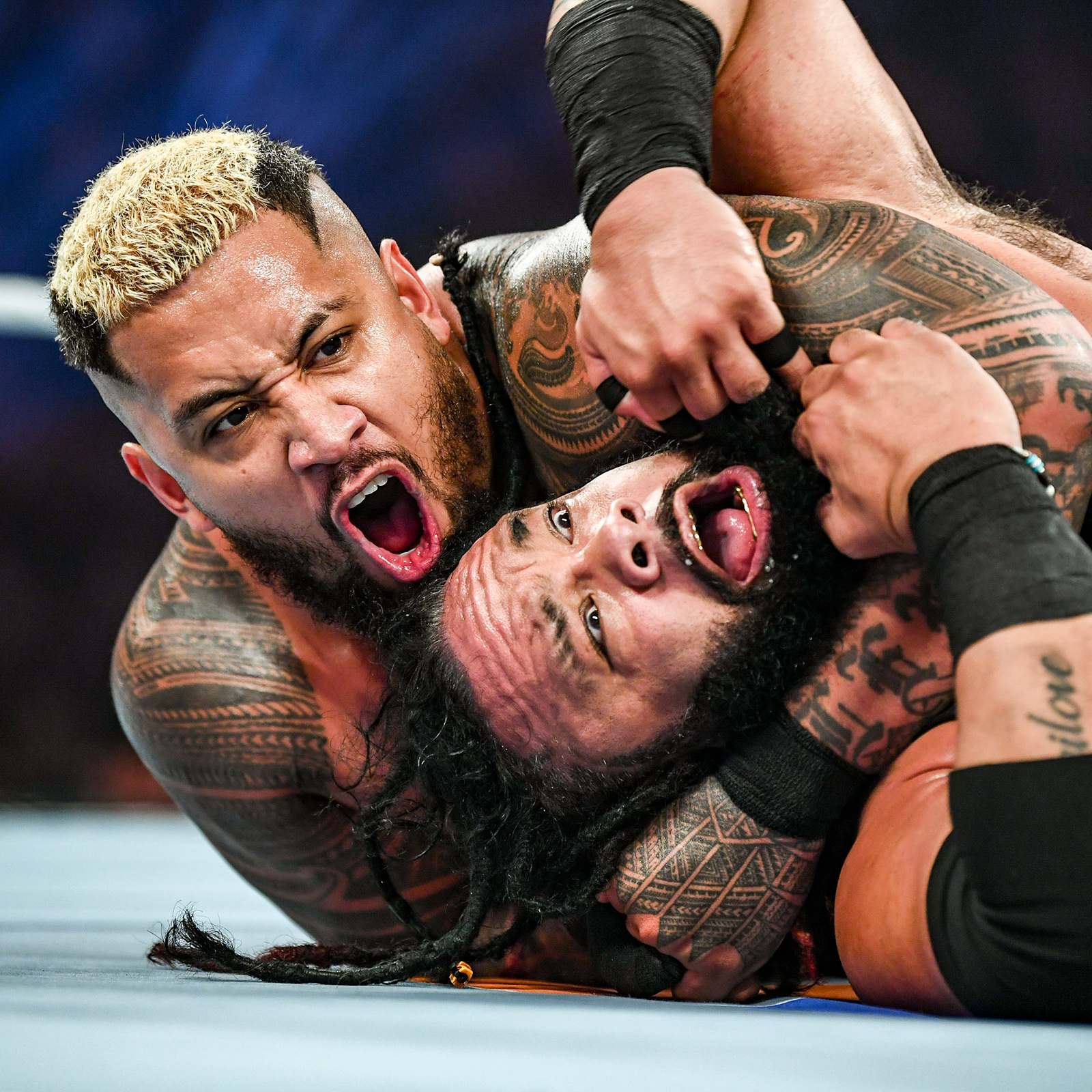
The back of Solo’s left hand has a dense geometric design: crossing lines, triangular spaces and small repeated marks that reach toward the knuckles. The detail is packed more tightly than the broad bands on his forearm.
On October 20, 2023, WrestleTalk reported that Solo had shared the new hand tattoo in his Instagram Story. The report credited the artist he thanked as Michael Fatutoa, also known as Samoan Mike, and described the new work as connecting with the tattoos already on that arm.
That credit applies to the reported hand addition; it doesn’t identify who made every older section on his chest and sleeves.
The pattern continues past the wrist onto a surface that’s visible when he grips an opponent or closes his fist. In a close wrestling shot, its crossing bands and triangular spaces can be the clearest detail in view.
Pe’a is the traditional Samoan men’s tattoo that covers the lower body from the waist to the knees. It isn’t a catch-all term for patterned arm or hand tattoos. Solo’s upper-body ink can be described by its placement and design without using the word for the wrong area.
The hand piece packs fine geometry into a small area, while the chest panel and sleeves make up the collection’s larger shapes. For a view of the tattoos in motion, the WWE highlights below show Solo against Jacob Fatu.
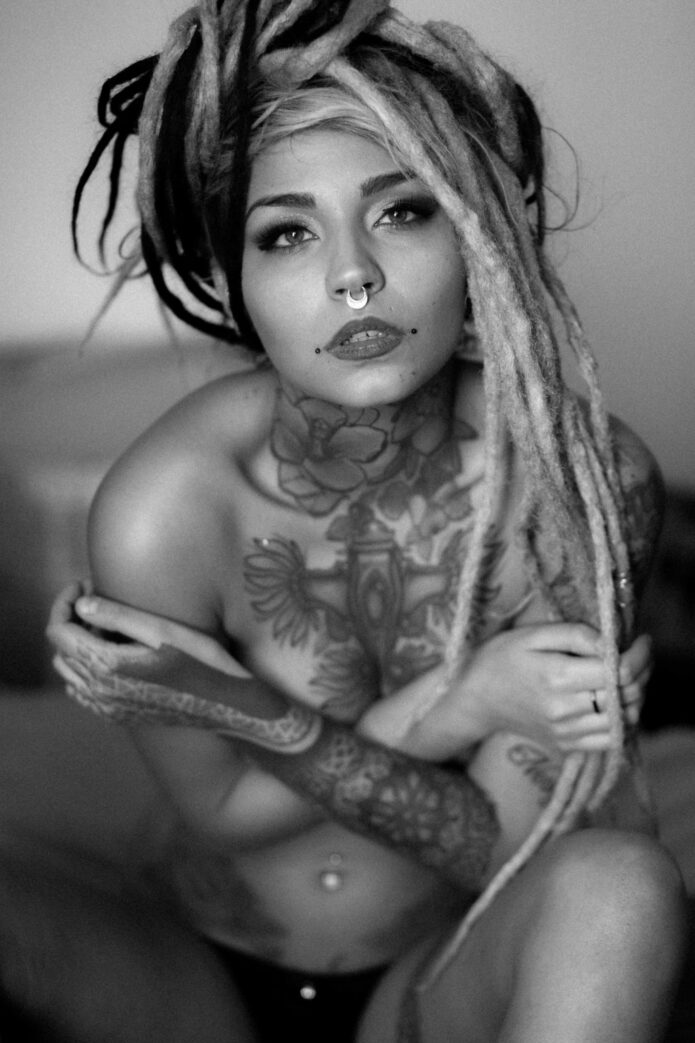
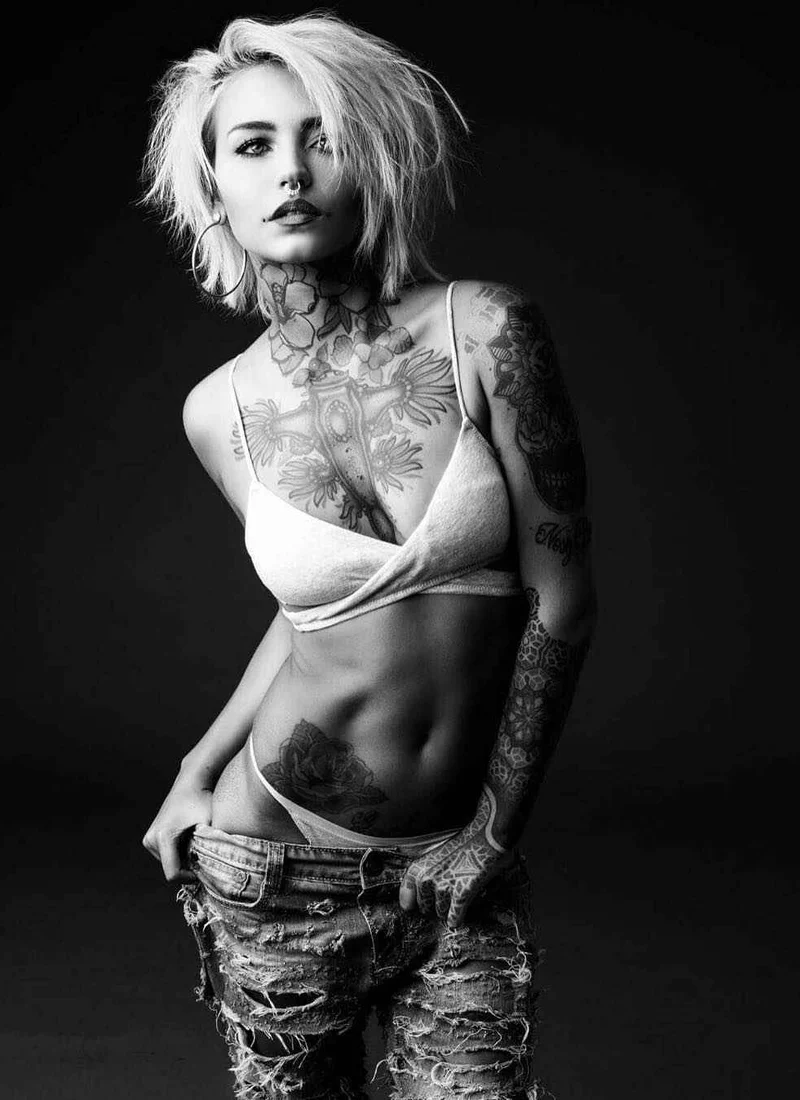
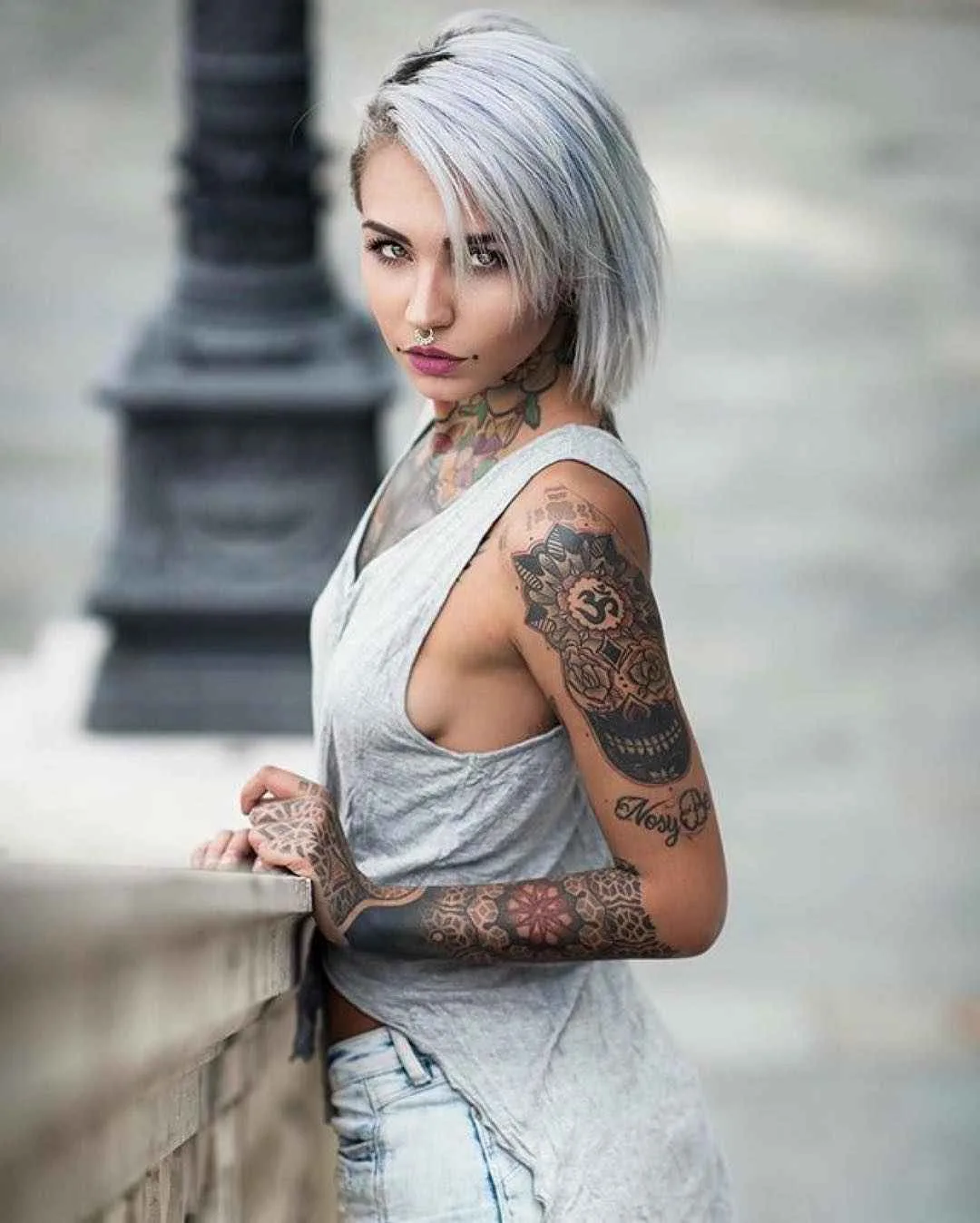
Fishball’s tattoos pair large colour pieces with dense black pattern: flowers at her neck, a dagger across her chest, geometric work down one arm and onto her hand, and two roses low on her abdomen.
She is Italian model and musician Felisja Piana. Her designs range from soft petals and script to a decorated skull and repeated geometric forms.
The photographs document her tattoos during her modelling years, not a current count.
Flower tattoos around Fishball’s neck
Large flowers cover the front of Fishball’s throat, with leaves and smaller shapes filling the spaces around them. Their thick outlines keep the petals clear even when her hair crosses part of the design.
Colour photos show warm tones in the petals and green leaves. In a black-and-white view, the outline takes over and makes it easier to see how the flowers wrap around her neck.
The flowers stay visible above most necklines, while a chest tattoo can be covered by a shirt. They meet the chest piece near the collarbones but keep distinct shapes: the flowers spread out and up; the dagger points down. Fishball hasn’t given a specific meaning for the neck flowers in the interviews cited here.
The dagger tattoo across her chest
At the centre of Fishball’s chest is a large downward-pointing dagger. Its decorated handle sits just below the neck flowers, and the blade runs toward the middle of her chest. An oval detail in the handle gives it the look of an ornamented object rather than a plain triangle.
Leaf- and petal-like forms spread to either side, widening the design across her upper chest while leaving the blade as its main vertical line. Dark outlines separate the shapes; colour and shading fill them in.
The tattoo can look different from one photo to another. A low neckline shows more of the handle and blade, while hair can cover one side. Fishball’s reason for choosing the dagger isn’t established in the material here, so there’s no basis for attaching a story about betrayal or protection to it.
The memorial skull and Nosy Be lettering on her arm
The skull on Fishball’s left upper arm is a tribute to her father. In a November 2017 interview with Snap Italy, she said he died of cancer and called the Mexican skull the tattoo with the most important meaning to her.
The skull has a broad dark grin, patterns across its face and a flower-like arrangement on the forehead. An Om symbol sits inside a circular detail near the top. Those ornaments give the image a decorative look rather than a simple anatomical one.
Below it, the script Nosy Be names the island in Madagascar where her father lived for several years, she explained. The lettering is separate from the skull, with enough space between them to read each design clearly.
Her explanation covers the tribute and the place name; it doesn’t tell us why she chose every ornament around the skull.
Geometric forearm and hand tattoos
Fishball’s forearm is covered in repeating geometric shapes: angular outlines, nested forms and star-like flowers. Some sections are dark and dense, while others leave skin visible between the lines.
The pattern continues over the back of her hand, rather than stopping at a straight edge on the wrist. As the space narrows, larger forearm shapes give way to a tighter arrangement.
A flower-like centre stands out from the surrounding polygons. Its softer petals keep a radial shape, and the colour echoes warmer tones in the neck and chest pieces.
The skull and lettering have distinct subjects and text; this part of the arm is built around spacing and repeated forms. The forearm-to-hand continuation makes the pattern feel like one connected piece.
Rose tattoos across her lower abdomen
Fishball has two large rose tattoos on her lower abdomen, one on either side of the centre, above the waistband. Leaves extend around the blooms. In the colour photograph, one rose reads as red-toned and the other as blue.
Each flower has a small centre, layered petals and dark outlines that separate the folds. The leaves give the pair an uneven edge, rather than making them look like two identical round badges.
Some lettering appears between the roses, but the angle and clothing make it hard to read accurately. It’s better to leave it unidentified than to guess at a word.
The roses sit apart, leaving open skin between them; the chest dagger, by contrast, runs down the centre. Fishball hasn’t given a personal explanation for the roses in the interviews cited here, so familiar associations with love or remembrance shouldn’t be presented as her meaning.
For a look at Fishball in her music career, here’s the official video for FREAKY with sedd.
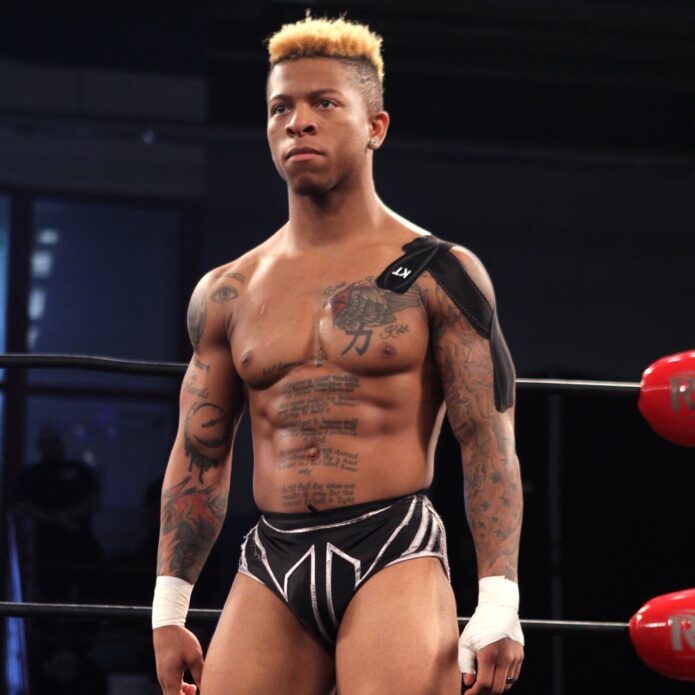
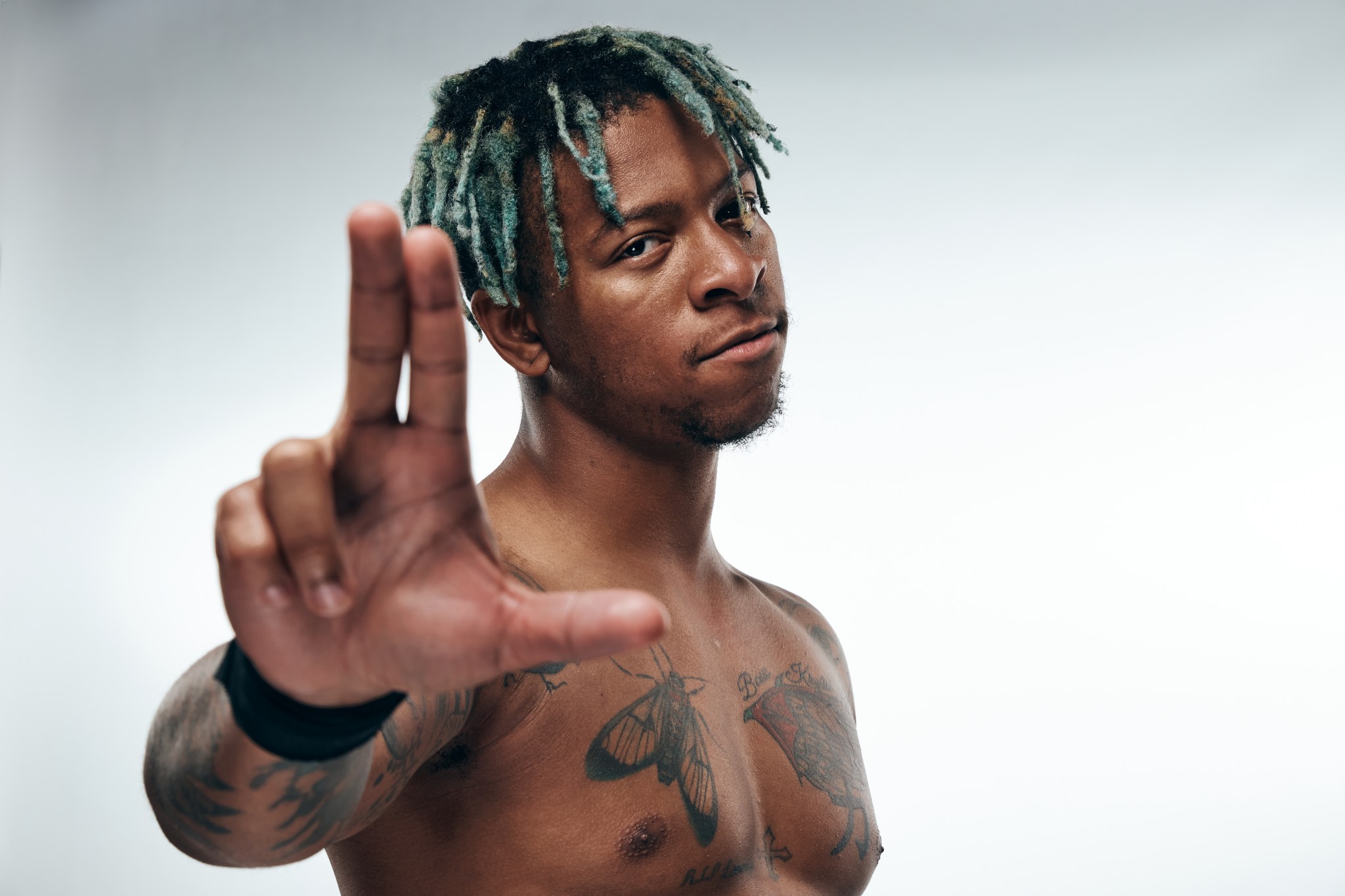
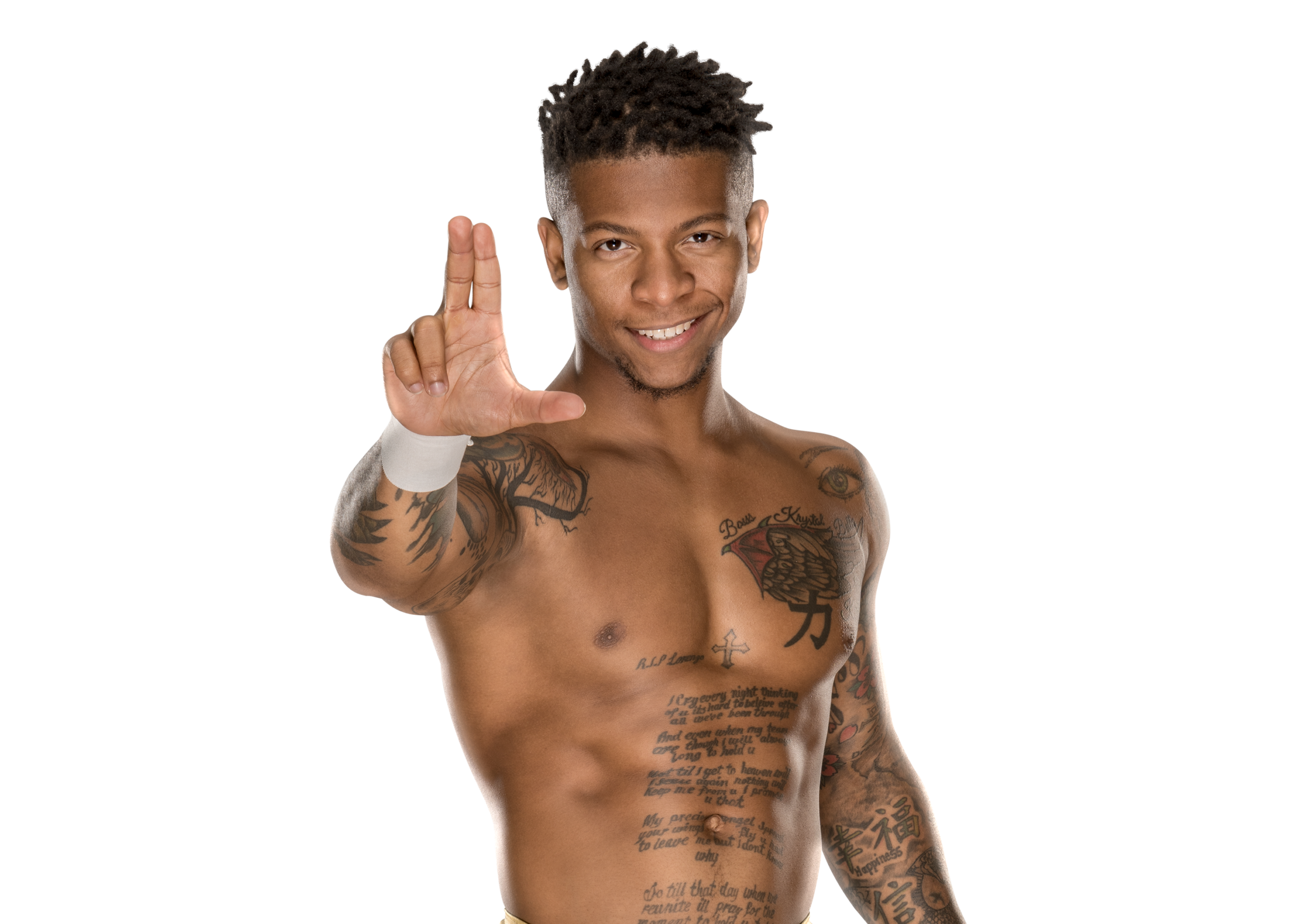
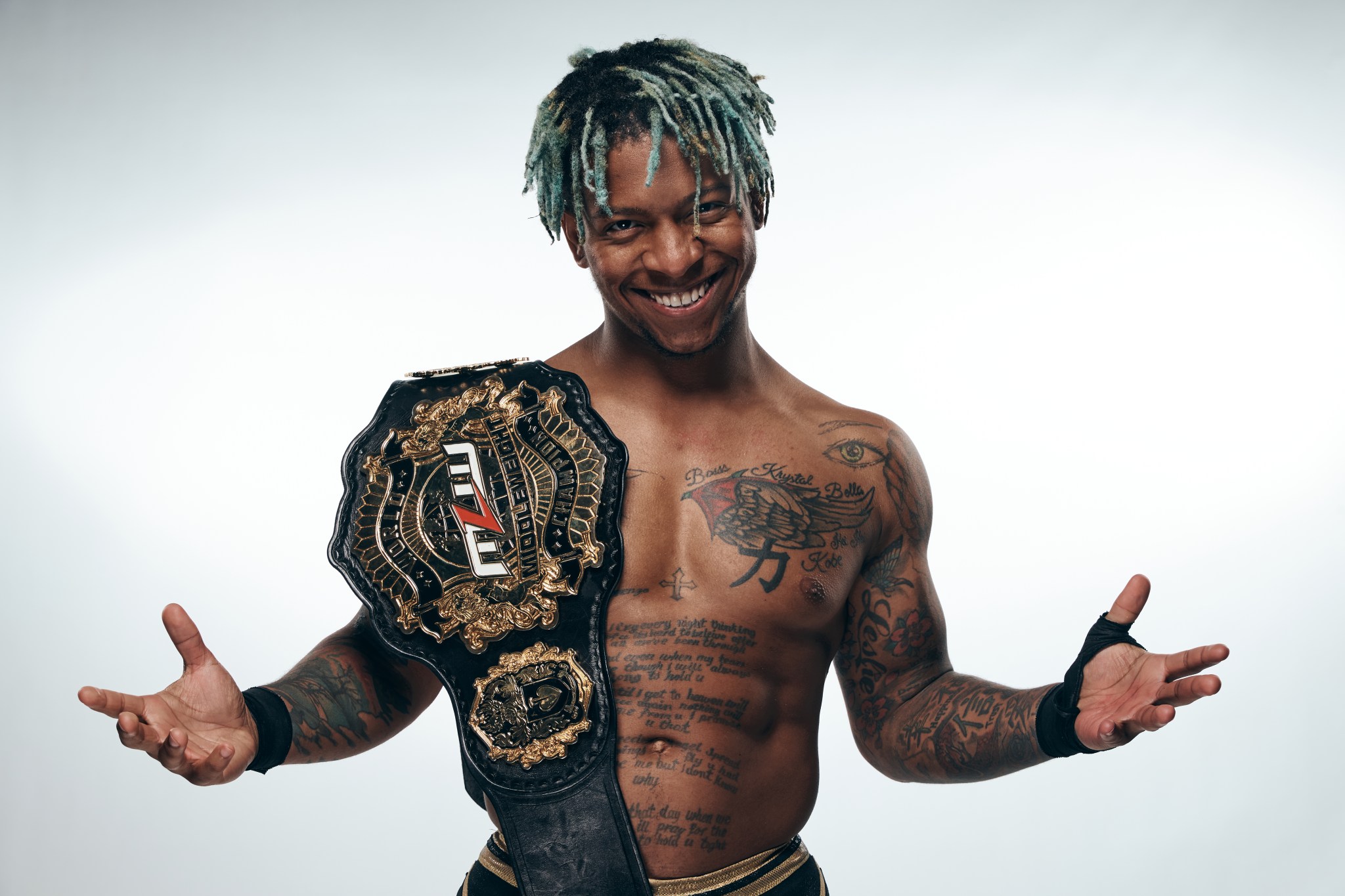
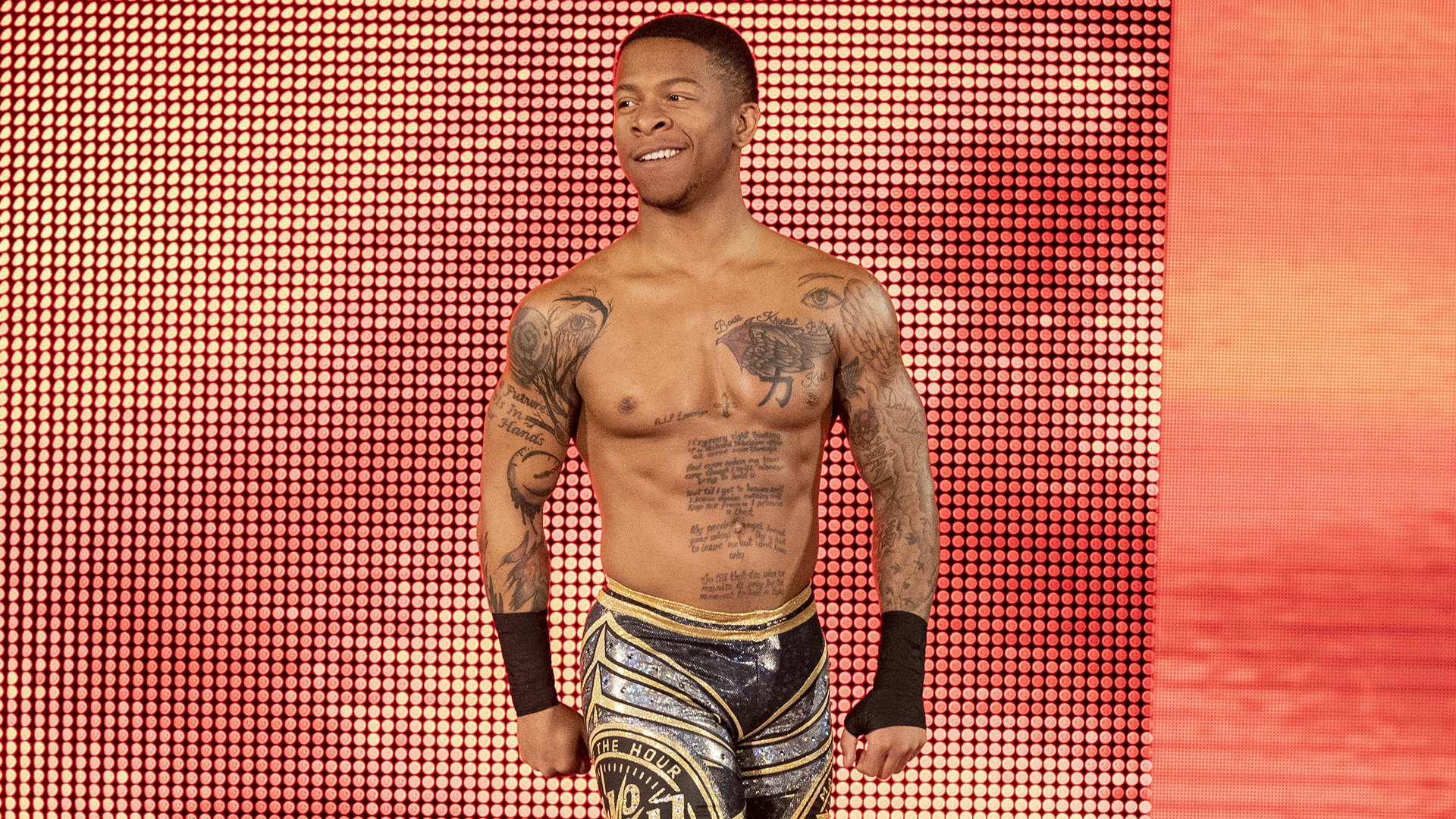
Before a match, several of Lio Rush’s tattoos are easy to spot: the poem down his stomach, a bird on his left chest, a moth on the right and dense work on both arms. His torso pairs long writing with separate images; his arms mix lettering, symbols and shaded designs.
His left and right refer to his own sides, so they look reversed in front-facing photos.
The large moth tattoo on his chest
The moth sits on Rush’s right chest, its body angled toward the middle of his torso and its long wings spread outward. Fine lines follow the wings; darker patches near their tips keep the outline visible without filling the insect in.
Earlier WWE photos showed more open skin on this side of his chest. The moth now sits opposite the older bird, which faces sideways against a red area, with a small cross below. The moth is a separate addition, not a replacement for the bird or memorial lettering.
Rush hasn’t given a personal explanation for the moth, so a meaning about change or survival would be a guess. Its narrow, downward-angled shape contrasts with the bird’s wider, sideways pose.
The stomach poem and Lorenzo memorial tattoo
Rush says his mother wrote the poem for his brother Lorenzo, who died at a very young age. He later found it among things she had kept and chose to have it tattooed; it was his first tattoo.
This is a family memorial. The poem runs from below his chest toward his waistband in groups of lines, like verses on a page. A short memorial script and small cross sit above it.
Bare skin on either side gives the writing space, while his other torso tattoos stop above it. From a distance, the poem reads as a centered column; closer in, the line breaks become part of its design.
The bird, names and symbol on his left chest
On Rush’s left chest, a bird with a long beak and curved rows of feathers faces across his body. A red patch behind its head and upper body is the main color accent. Kobe appears below the bird in an earlier portrait, with other cursive writing along its upper edge.
Additional short words and names follow the design. Rush hasn’t identified every person they refer to, so a familiar name alone isn’t enough to call the tattoo a tribute to a particular public figure.
Below the bird is a thick, character-shaped symbol, visually heavier than the feather lines and script. The nearby shoulder eye sits higher and has its own outline; it isn’t part of the bird. Along with the moth on the other side of the chest, these are separate pieces with different shapes.
The clock and eye tattoos on his right arm
A round clock sits near the inner elbow on Rush’s right arm. Its face has hands and small marks around the edge, with darker shapes trailing below. Script appears above it, and a larger eye design spreads over the shoulder toward the chest.
The clock gives this part of the arm a clear landmark. Curved lines and shading around the shoulder eye contrast with the clock’s simple circle; color appears closer to the forearm.
Rush is known as the Man of the Hour, but the nickname doesn’t establish why he chose the clock. The visible design can be described without assigning a private meaning to it or to the eye.
The flowers, lettering and shaded designs on his left sleeve
Rush’s left sleeve mixes flowers, lettering, symbols and shaded images, continuing past the elbow and around the forearm. In a front-facing photo, it sits below the bird and shoulder eye on the same side.
The arm’s position changes which parts are visible. With it straight, the upper designs sit above the lower lettering; during a hold, the outer arm turns toward the camera and other details come forward.
Flower petals and dark centres bring softer curves into the sleeve, while symbols and writing have straighter lines. His arms aren’t matching copies: the right has a distinct clock and broader shaded areas, while the left is denser and more layered. Both use dark outlines, but the designs are arranged differently.
In the video below, Rush explains the poem tattoo he got for his brother Lorenzo.
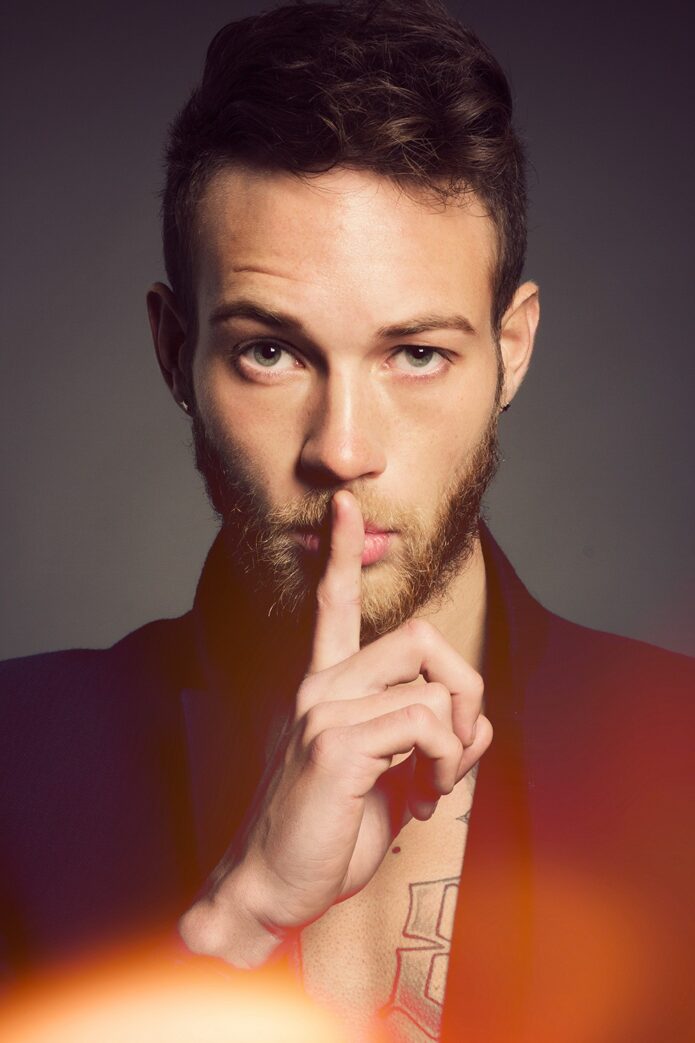
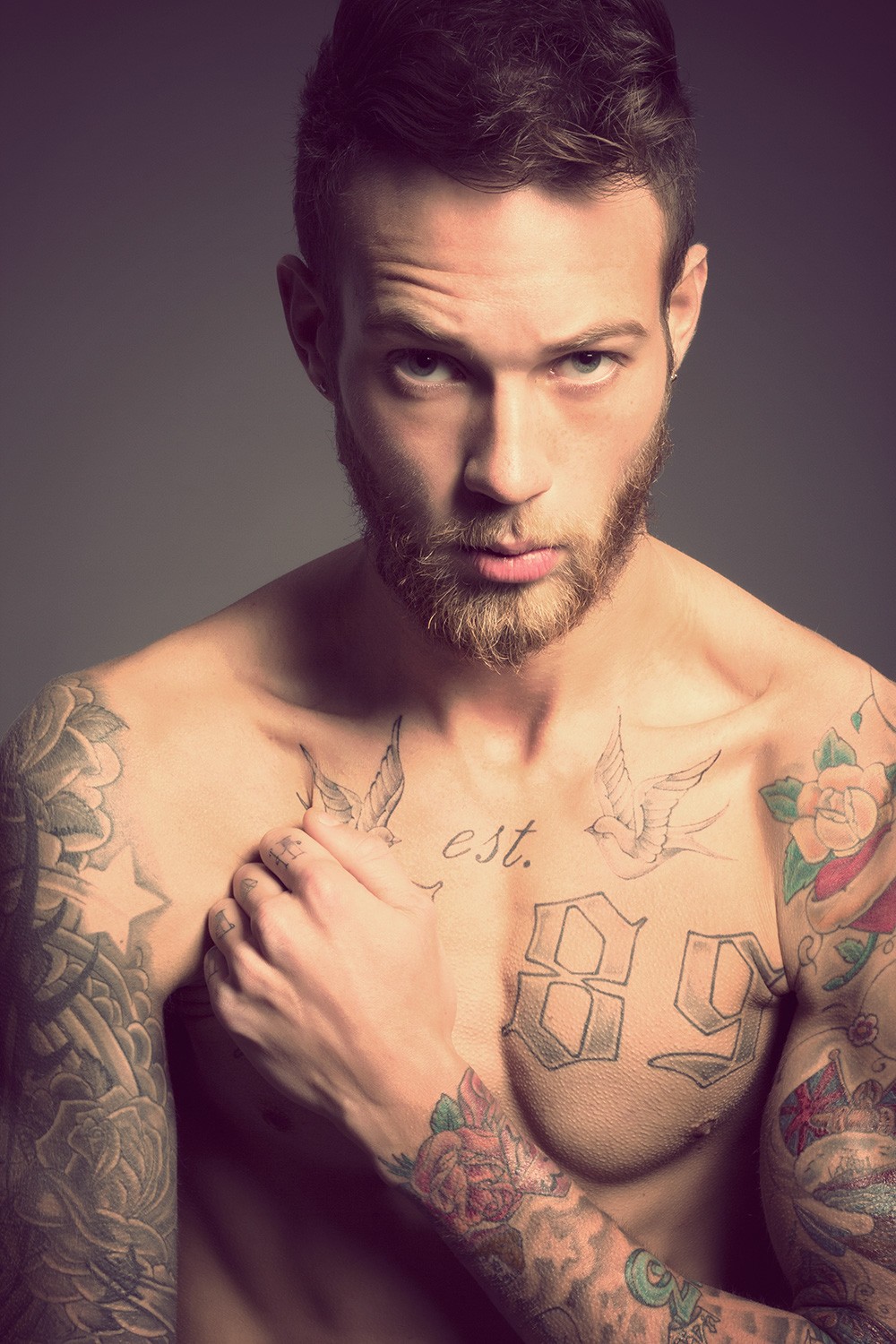
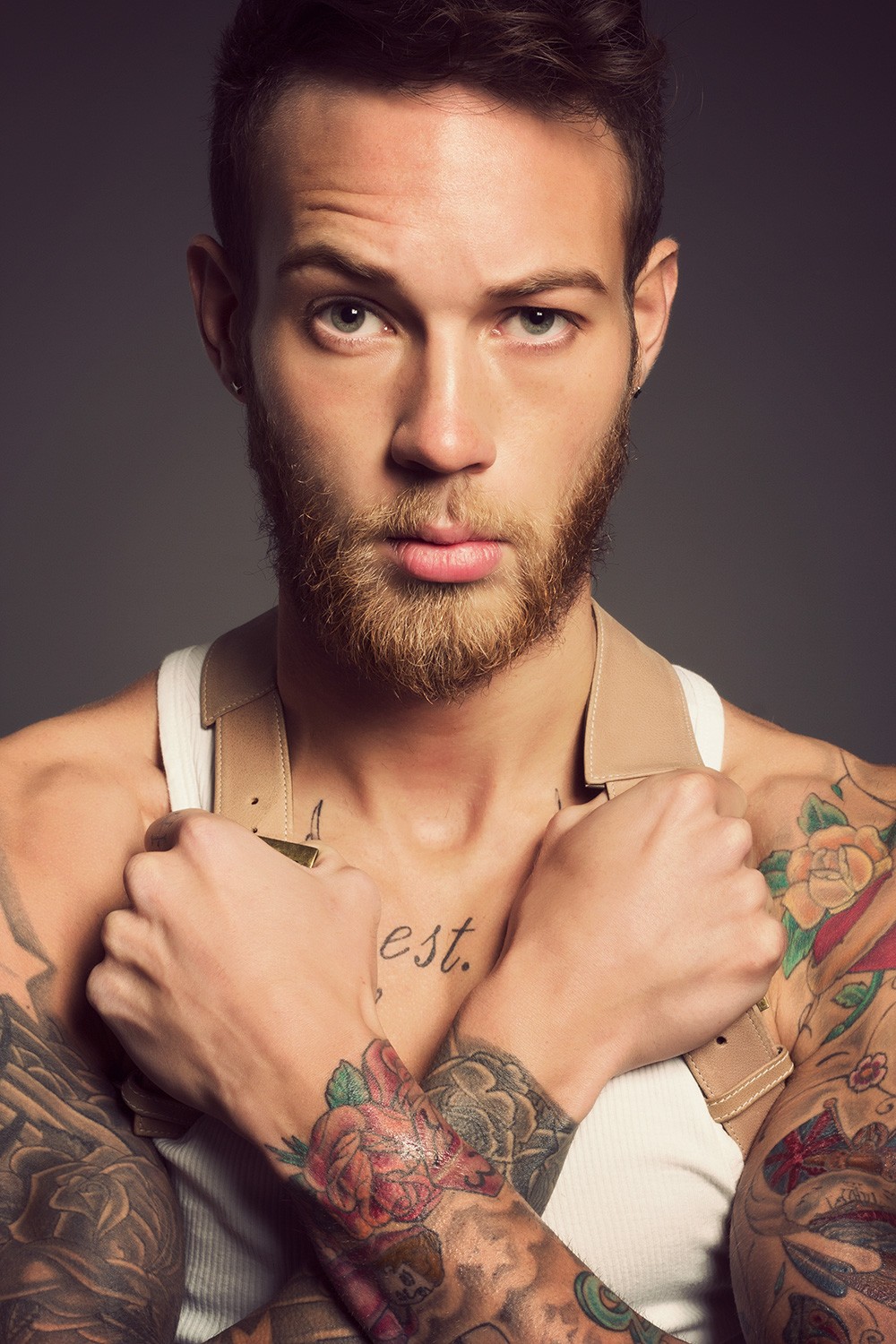
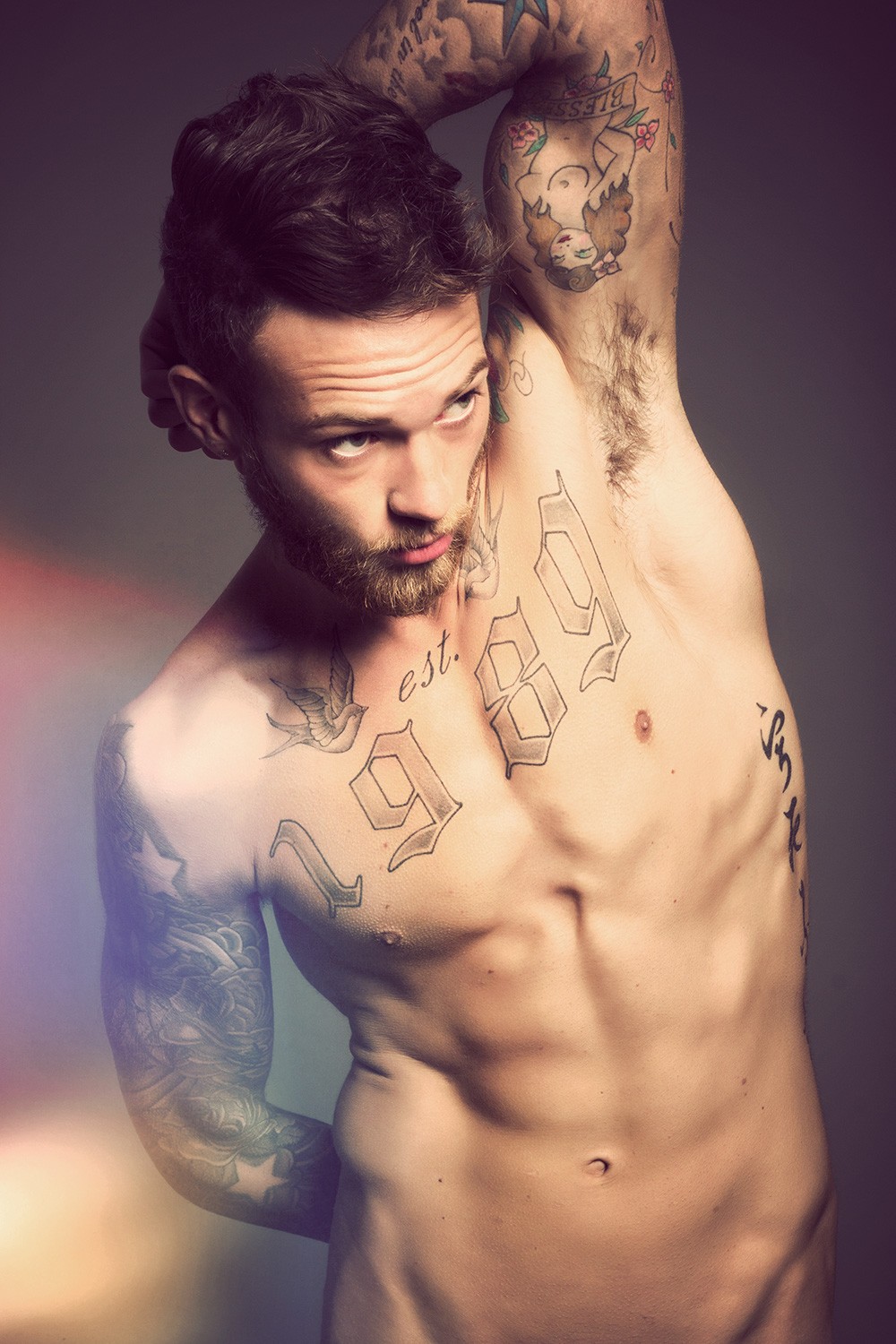
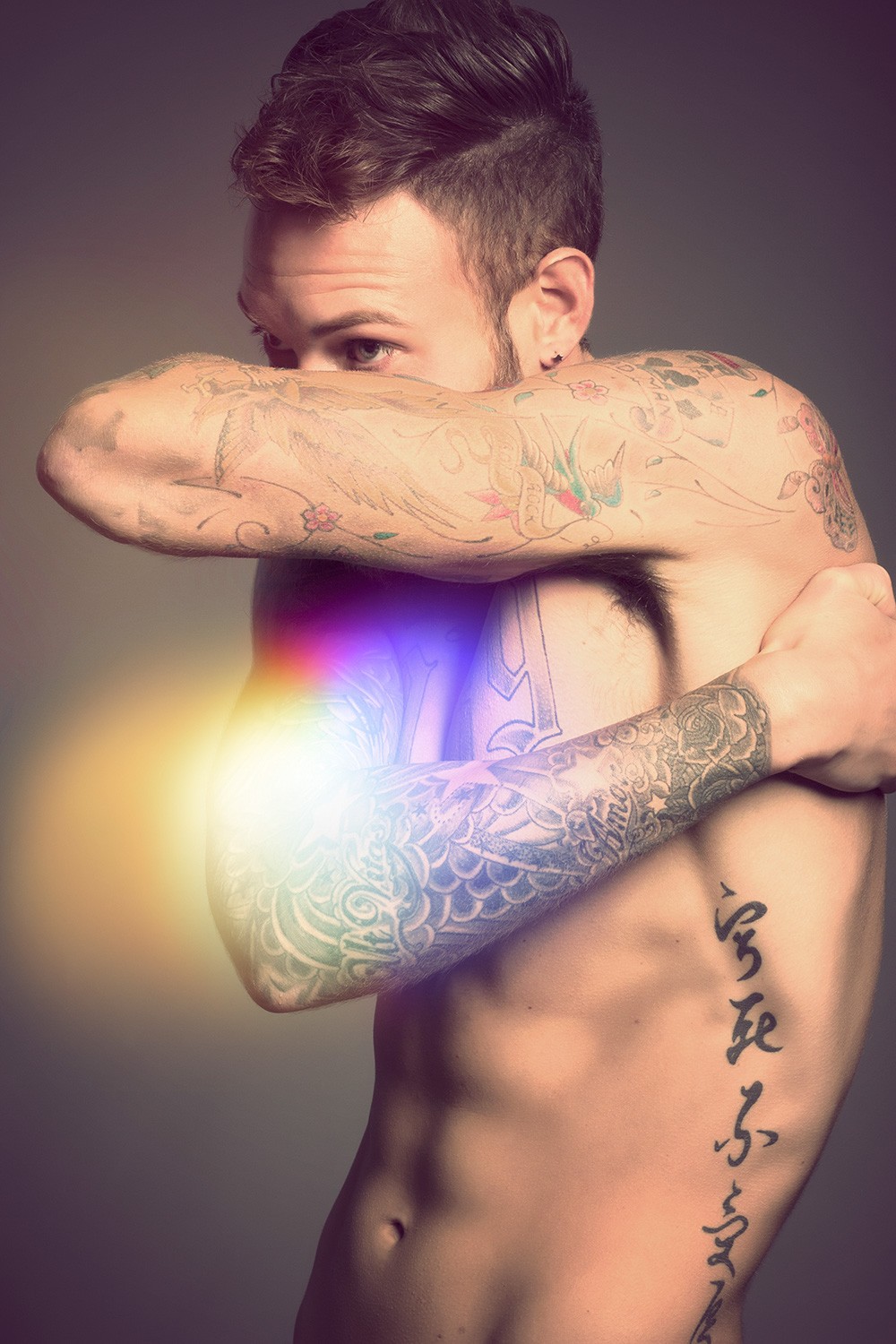
Billy Huxley’s chest numbers and arm tattoos appear in early portraits by Maciek, published in December 2012. They’re a snapshot of his collection then, not a current inventory. The photos show numerals, birds, flowers, lettering and small designs on his fingers.
An Inside Story essay about an earlier interview says Huxley collected tattoos for individuality rather than to impress other people. His Tattoodo artist profile now lists American traditional among his styles. That doesn’t identify who tattooed him or establish the style of each tattoo, though several pieces in these portraits use bold outlines and illustrated subjects.
The 1989 chest tattoo, est. lettering and two birds
The large outlined 1989 numbers span Huxley’s chest, with enough space between them to stay distinct. Their tall, pointed strokes have a gothic look rather than the shape of plain block digits.
Above them, small cursive est. lettering usually means “established,” so the layout reads like a date. The photograph doesn’t say what year or milestone it marks.
Two smaller birds sit above the writing. Their swept wings and forked tails look swallow-like, and both face toward the centre. The birds soften the heavier numbers; open skin keeps all three parts clear instead of joining them into one dark band.
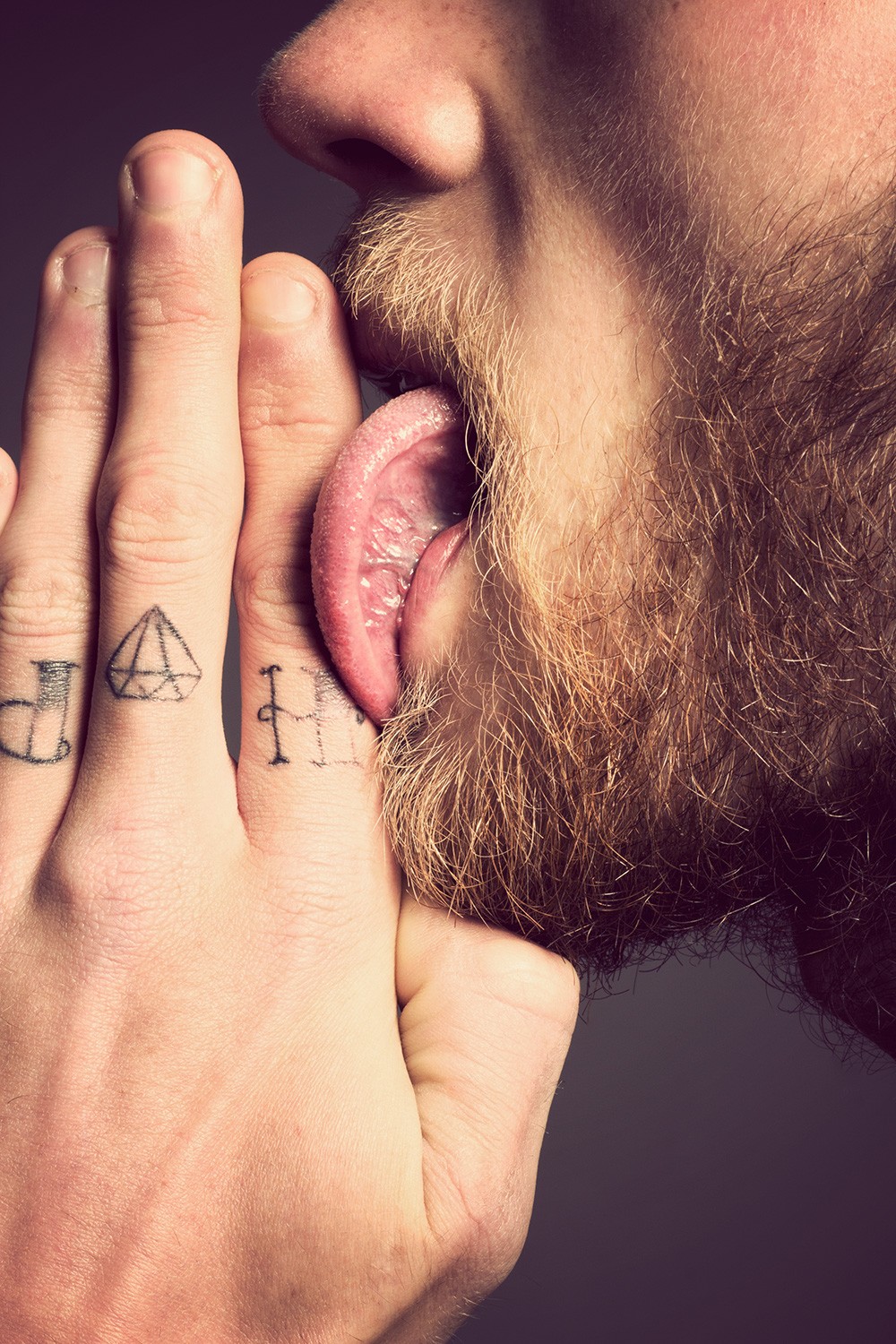
The diamond and small lettering on his fingers
A close portrait shows a small outlined diamond and letter marks on Huxley’s fingers. The diamond uses straight lines, a broad top and a pointed base to suggest a cut stone without trying to look realistic.
A serif-style H is visible on a neighboring finger. Other marks appear nearby, but the photo doesn’t show a complete word clearly enough to transcribe.
His hand is close to his face in the portrait, which makes the small designs easy to notice.
The red rose and shaded flower tattoos at his wrists
When Huxley crosses his wrists, a red rose with green leaves stands out against the darker ink around it. Layered petals and a clear outline keep the flower’s shape visible where the red shading deepens.
The other wrist has a darker, gray-shaded flower. The two share a subject but use different treatments. A small pale skull-like face is partly visible below the red rose; the overlapping hands obscure some of its outline.
The photograph doesn’t establish a personal meaning for the rose. Its visible details are enough to identify it: red petals, green leaves and a rounded shape near the wrist.
The pin-up portrait and flowers on his inner arm
With his arm raised, Huxley shows a colored pin-up portrait on his inner upper arm. The woman has wavy brown hair and a low neckline, with a flower near her hair and smaller floral details around the image.
The outlined features and blocks of color give it an illustrated look, not a photographic portrait. The woman hasn’t been reliably identified, so naming her as a partner, actress or relative would be guesswork.
A curled banner runs around part of the picture. Some lettering is visible, but the angle and bend of the arm make an exact reading uncertain. The inner arm also turns away when relaxed, then opens into view when Huxley lifts it.
The spread-wing bird, flowers and card symbols on his sleeve
A larger bird with outstretched wings fills part of Huxley’s upper arm. Fine feather lines make its silhouette more detailed than the two small chest birds. Flowers and a curled banner sit around it as separate designs rather than one continuous scene.
Near the shoulder are playing-card suit shapes, including dark spade- and club-like marks. Their simple outlines contrast with the feather detail below. The upper-arm work is lighter than the darker foreground on the forearm.
The photos show the birds, flowers, banner and card suits, but don’t establish a personal meaning for every symbol.
The Models 1 TV interview below offers a brief portrait of Huxley and his work with photographer Mr Elbank; it isn’t an explanation of each tattoo.
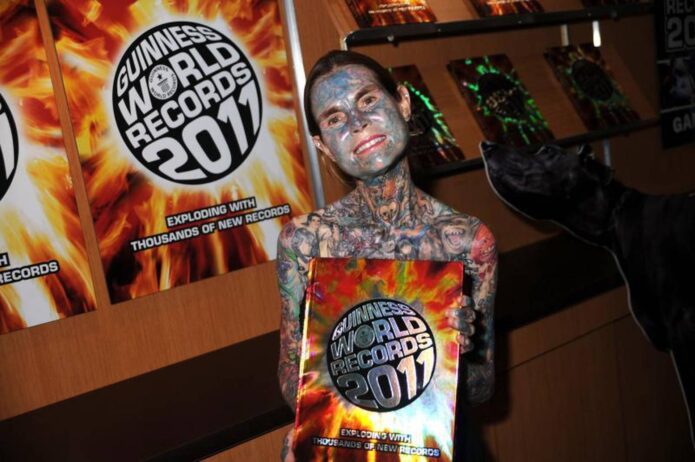
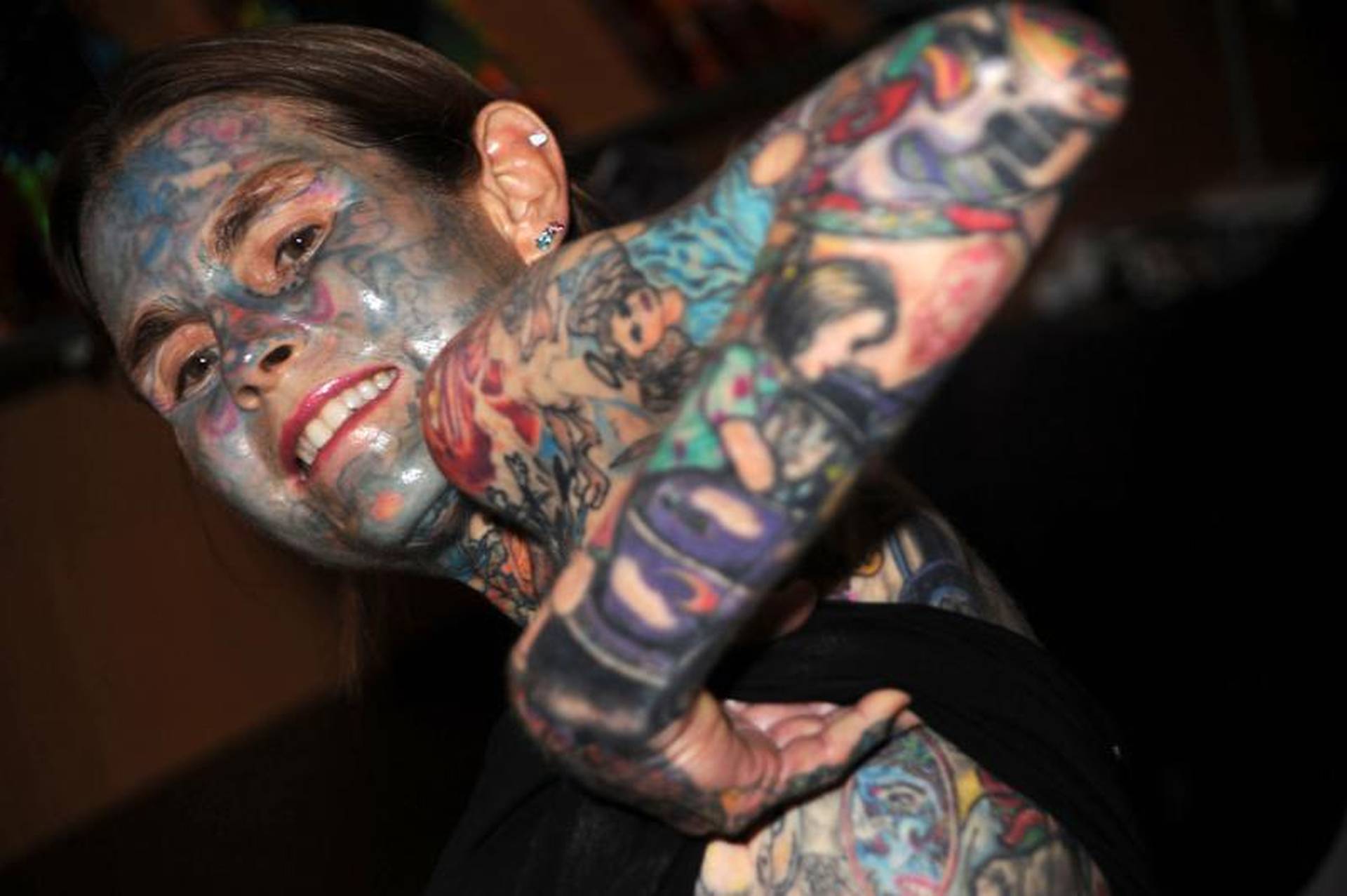
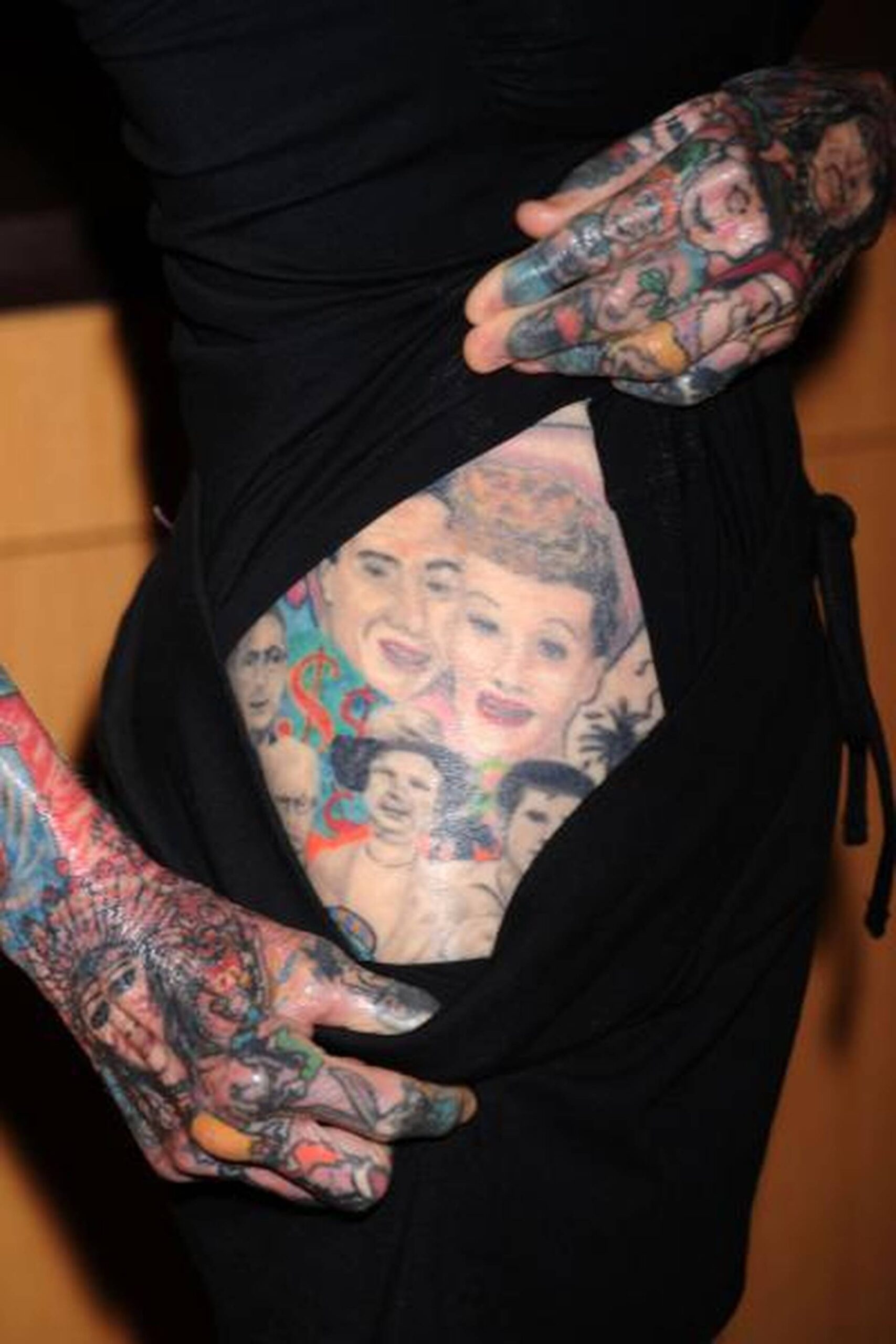
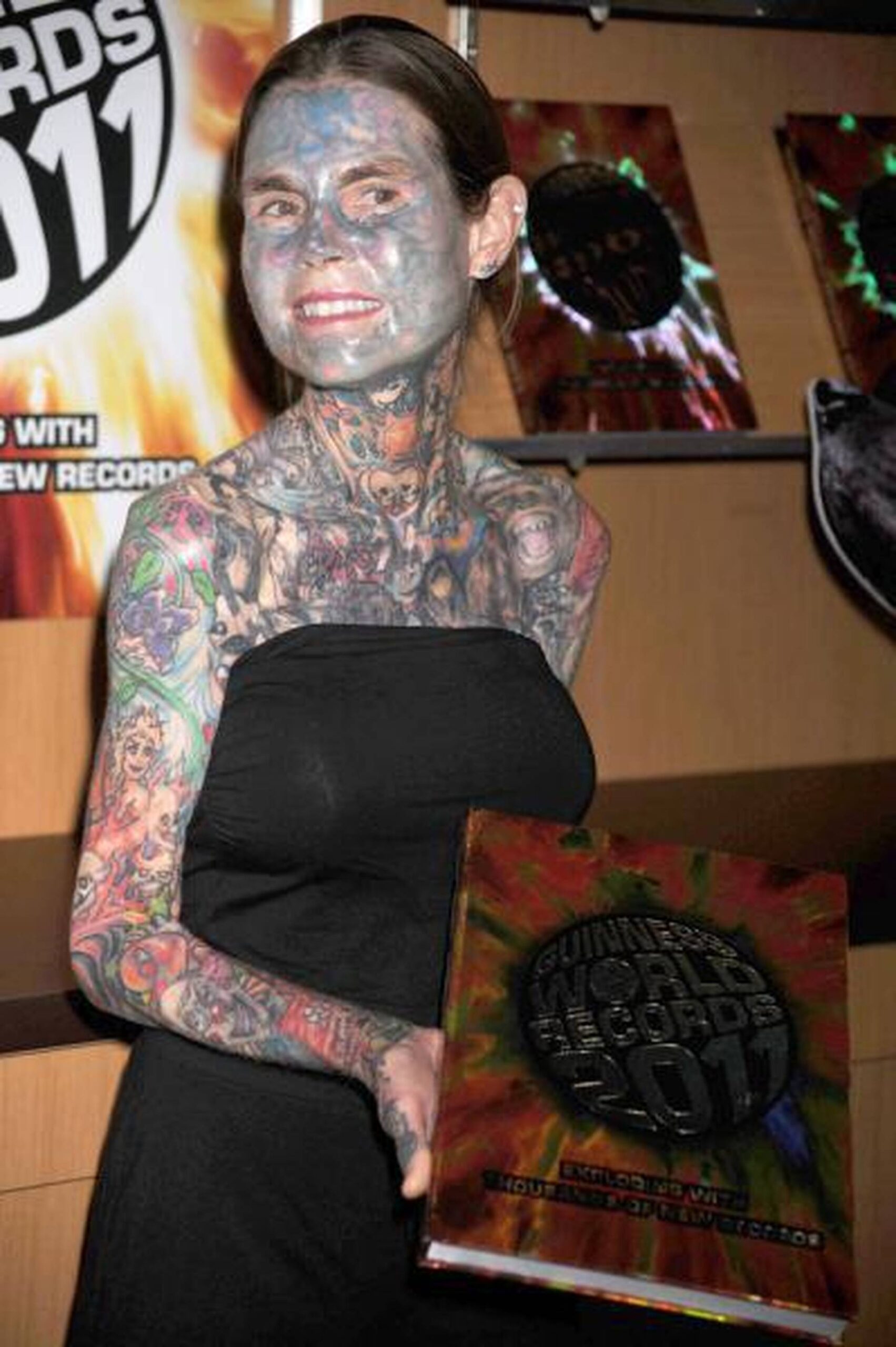
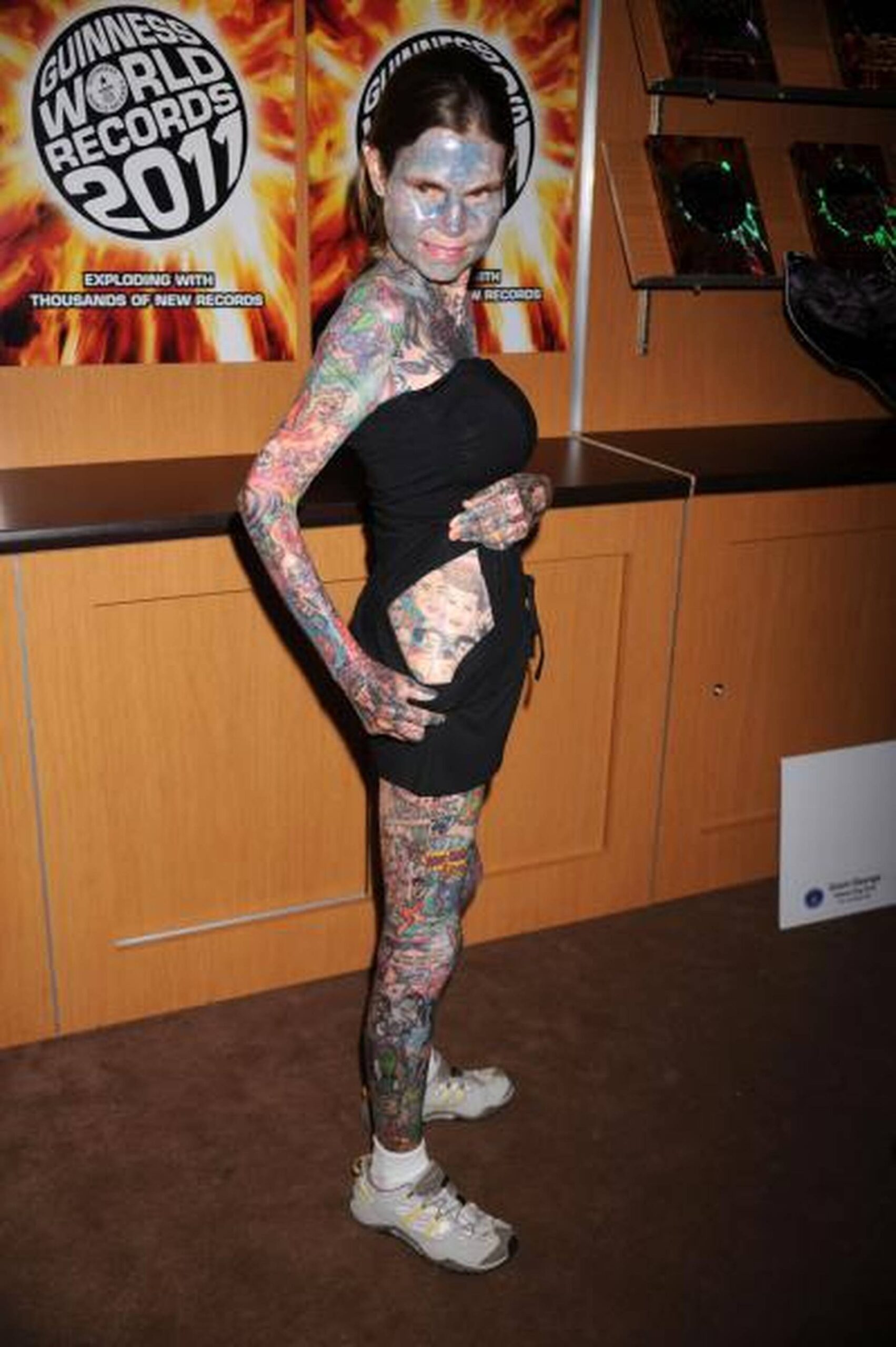
Julia Gnuse’s tattoos cover almost all of her body. Known as The Illustrated Lady, she has designs across about 95 percent of her skin, from her face and neck to her hands, torso and legs. The collection brings together cartoons, underwater scenes, portraits and bright character art; it isn’t built around one matching sleeve or a single theme.
Gnuse began getting tattooed after porphyria caused painful blisters and scarring. An early attempt to match the scars with tattoo pigment didn’t work as planned, so she turned to colorful designs instead. Over time, that first idea grew into a full-body collection and a look people recognize. What started as a response to a skin condition became a personal collection in its own right.
Photos of her work show how color, spacing and scale can connect pieces from different artists and periods. The sections below look at the placements that stand out and what their layout can teach someone planning a smaller collection.
Julia Gnuse’s face and neck work
Face and neck tattoos are hard to miss. In photos, the ink around Gnuse’s eyes, cheeks and neck changes with the light and camera angle. It sits close to her features, so a close-up can feel as visually full as a full-body shot.
A face tattoo will appear in most introductions, work photos and family pictures. Hair, makeup and collars can change what is visible, but they won’t hide it. If you’re considering facial ink, try the shape with temporary ink and check it in daylight while your face is relaxed, smiling and turned to each side.
You can use a similar framing effect on an upper arm, thigh or shoulder without making the design part of every expression. Placement decides how often a tattoo is in view.
Julia Gnuse’s hands and forearms
Close photos of Gnuse’s hands and forearms show small marks on her fingers and the backs of her hands, alongside larger images on her forearms. The pieces sit near one another, so your eye moves from the tiny details to the larger scenes without following one continuous sleeve.
Hands take a lot of wear in everyday life. Washing, sunlight and constant movement can soften fine lines, so a simpler design with open space may hold up better than a detailed picture squeezed into a narrow area. Ask an artist to show healed hand tattoos, not only fresh photos taken after an appointment.
Forearms give a design more room, though the wrist and arm change shape as you turn them. Check the stencil with your arm relaxed, palm up and palm down. A word or face may look straight in one position and angled in another. Plan for an arm that moves, not a flat picture.
Julia Gnuse’s chest and upper-body scenes
Gnuse’s upper-body photos show large colorful scenes alongside smaller faces, symbols and lettering. The chest and shoulders give those pictures room, while repeated colors and line weights help the different subjects sit together.
Chest and stomach tattoos move when you breathe, sit or raise your arms. Check a stencil standing, sitting and reaching overhead. See whether the main subject stays centered and whether its edges follow the ribs or waist in a way that feels right to you.
Cartoons, underwater creatures and portraits may seem like unrelated choices on paper. They can still make sense together when they reflect one person’s interests. You don’t need to repeat the same symbol across the body; a shared mood, palette or level of detail can tie separate ideas together.
Julia Gnuse’s leg tattoos and colorful character pieces
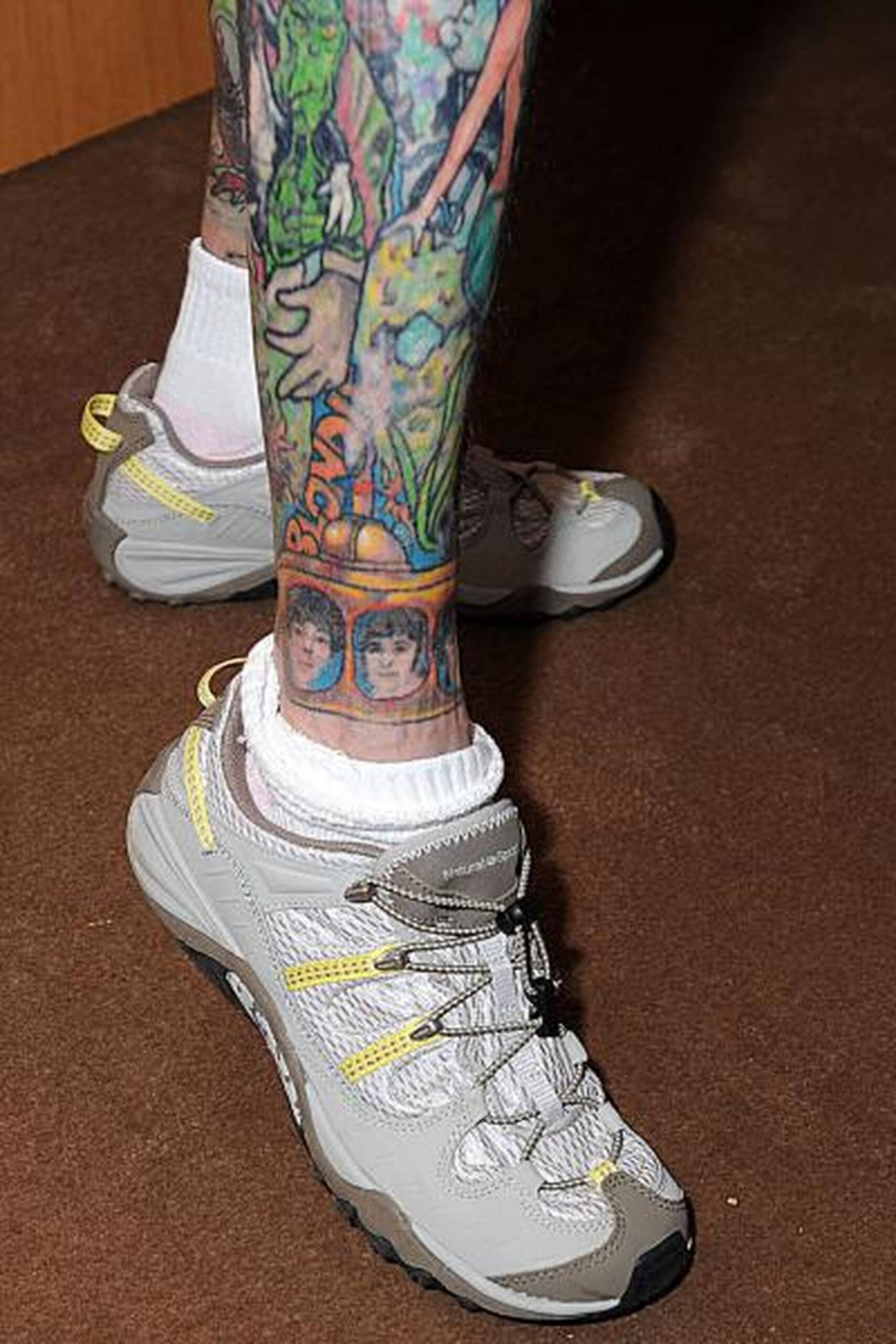
The lower-leg photo shows some of the more playful pieces in Gnuse’s collection. Bright character faces and compact scenes fit the long shape of the legs, and the outlines leave each image room to read on its own.
Legs can work well for a larger tattoo that you may want to cover. The thigh has space for a portrait or broad scene; the calf and ankle suit designs that follow the length of the limb. Check a stencil while standing and walking, since a design can sit differently when the muscle tightens.
Color depends on more than choosing bright pigments. Contrast, open skin and neighboring tones all affect how the design reads. Leave enough space around a face or central character so the colors don’t run together as the tattoo ages. Open skin is part of the palette.
Julia Gnuse’s full-body tattoo layout
The full-length side view shows how Gnuse’s tattoos fit across her body. The pieces face different directions, and they don’t form one large mural. Smaller marks sit near larger images, while brighter sections break up the darker ones. Each part of the body frames the design in a different way.
If you’re building a collection, you don’t have to plan every inch at once. Start with the areas that matter most to you and live with those pieces before adding more. Photograph yourself from the front, sides and back; some gaps are hard to see in a mirror. Clothing changes the layout too, whether you’re in a T-shirt, swimwear or a winter coat.
Let the size follow the subject. A face, animal or scene usually needs more room than a simple symbol. A tall design may suit a leg, while a wider one can follow the shoulder or chest. Give an important image enough space to read clearly.
What her collection teaches about commitment
Gnuse’s collection is an extreme example, but the same choices come up with a first tattoo: placement, scale, color and how one design sits beside another. The photos show that different subjects can share a body without being forced into one theme.
Start with images or stories you expect to care about after the excitement of a new appointment passes. It can help to name the part of a reference you like—the palette, cartoon style, portrait shading or the way it wraps around a joint. That gives an artist more to work with than a request to copy someone else’s photo.
Choose an artist whose work fits the design. Realism, color, lettering, blackwork and large layouts call for different experience. Look at healed tattoos and ask how the design might move, fade in sunlight or sit beside another piece. If an artist suggests simplifying a crowded design or making it larger, ask what will help it stay readable.
Visibility is part of the decision. Face, neck and hand tattoos are likely to appear in everyday photos and outfits. Legs, chest and stomach pieces give you more say over when they’re seen. Think about what fits your work, relationships and comfort level.
Leave some space if you want room to add to the collection. Open skin can keep a colorful design from feeling crowded and give a detailed portrait room to stand out. Waiting between appointments also lets you see what the body actually needs next. A pause can be part of the design process.
Healing matters as much as the next reference image. Follow your artist’s aftercare instructions, protect fresh work from strong sun and avoid picking at peeling skin. Judge the tattoo once it has healed, not only when the color is new and the surface is fresh.
Gnuse’s collection reflects her own interests and circumstances. You can borrow the confidence and sense of play without copying the exact subjects. Let each new piece earn its place in your collection.