
Mia Khalifa’s tattoos range across her arms, wrists, hands and the side of her body. Her collection runs across both arms, from Arabic lettering and small symbols to simple line drawings and darker pieces. Some are easy to cover with a sleeve; others show when she raises a hand or turns toward a camera.
The designs don’t follow one style. Arabic script sits near a bold red cross, tiny finger marks beside larger arm drawings. The variety makes the collection feel assembled over time rather than designed as a matching set.
Some of Khalifa’s tattoos have changed. The red cross on her wrist became part of a public conversation about Lebanon, and she later spoke about replacing it with another design. It’s helpful to view the photos as snapshots from different points in her life, not as one final version of the collection.
Mia Khalifa’s Arabic forearm script is one of her clearest tattoos
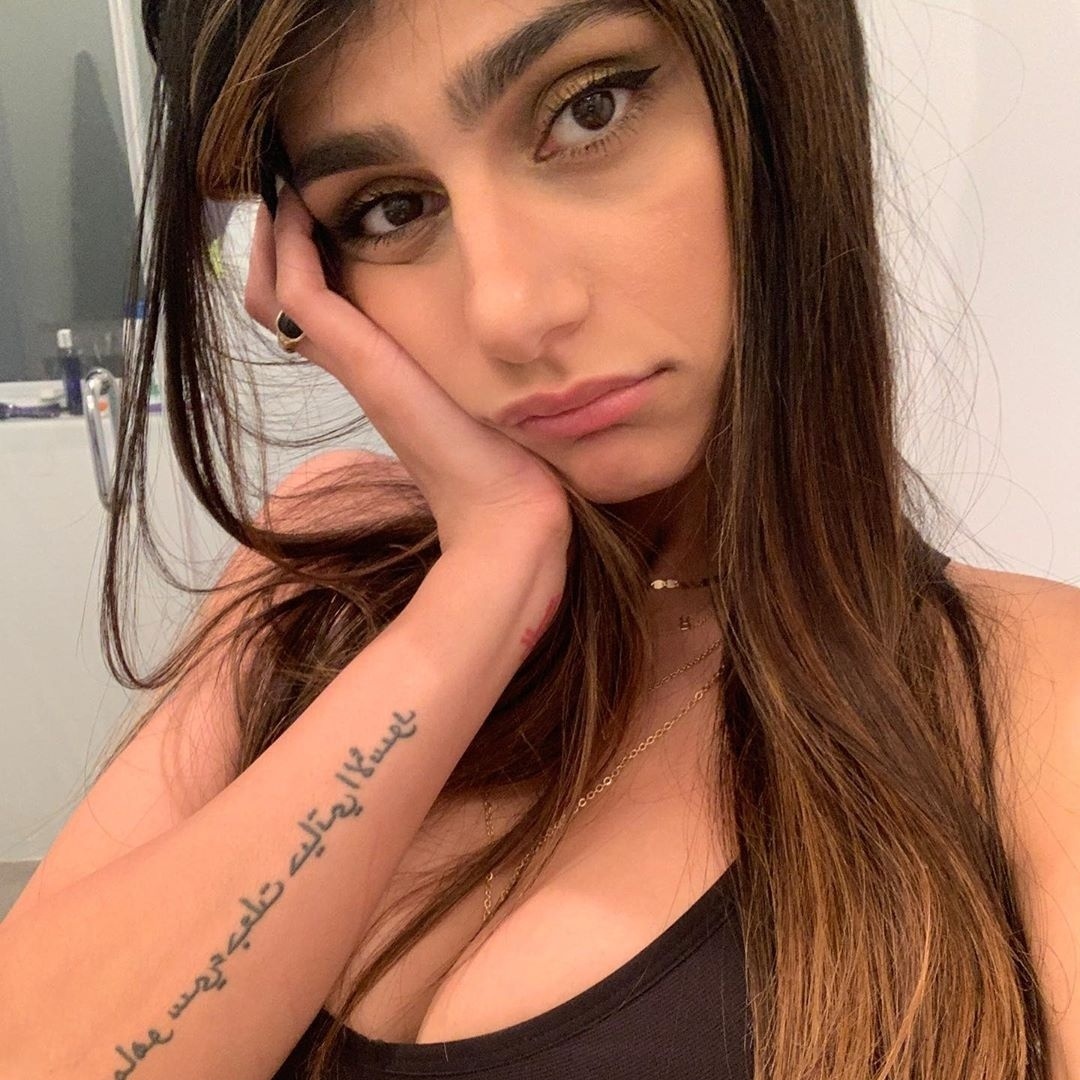
The long Arabic script on Khalifa’s forearm is one of her most recognisable tattoos. It runs in several lines along the arm, giving it a strong vertical shape. The lettering is dark and open enough to read clearly in close photos.
Spacing matters with script. When the lines sit too close together, they can blur into a dark block as the tattoo heals. Here, there is room between them, and the rounded Arabic forms give the lettering its own rhythm.
The forearm suits the design’s length. A bent arm brings the writing toward the camera; when relaxed, it follows the line of the limb. Longer phrases need more room than they might seem to on a screen.
If you’re considering Arabic script, have the text checked by a fluent reader before it is tattooed. A simple design still depends on the wording and lettering being right.
The red cross on her wrist carries a complicated chapter
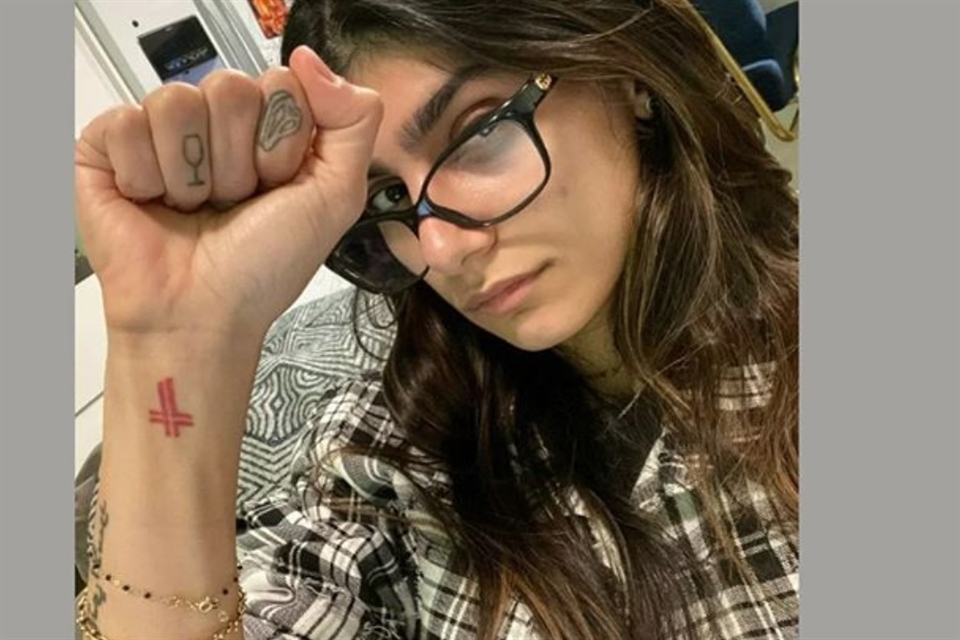
The red cross on Khalifa’s wrist stands out in close-up portraits. Its colour separates it from the black lettering nearby, and its small size keeps it from taking over the arm. When she raises her fist, it is often the first tattoo people notice.
Khalifa has linked the design to her Lebanese background and her father’s political views. After the Beirut explosion, she said she wanted to replace it with a map of Lebanon and use the change to support relief work. The tattoo is part of a larger personal and public story, not just a red symbol.
The wrist moves constantly and rubs against clothing, so it can be a demanding place for fine detail. A compact mark works there because its shape can stay clear without much shading. The red ink also gives this small design weight.
Her discussion of changing the tattoo is a reminder that the meaning of a design can shift over time. A cover-up or replacement becomes part of the story of the collection, too.
Her hand tattoos include tiny symbols and a wine glass
Khalifa’s hand tattoos are small but easy to spot in a selfie. A tiny wine-glass outline sits on one finger, and another finger has a rounded symbol. Compared with the larger arm pieces, these marks are light and sit alongside her jewellery and manicure.
Finger tattoos move with the hand. They can disappear when a fist closes or look wider from a different angle. A fine outline may spread as the finger bends, which is one reason simple shapes tend to work well there.
The designs also bring a lighter note to the collection. The Arabic lettering carries a message; the wine glass feels more casual. Both can sit together without making the whole hand look formal.
Hands get frequent washing, sun and friction, and fine lines may need touch-ups sooner than ink on the upper arm. Small symbols like these work best when their outlines are clean and uncomplicated.
The arm collection mixes line drawings with bolder black ink
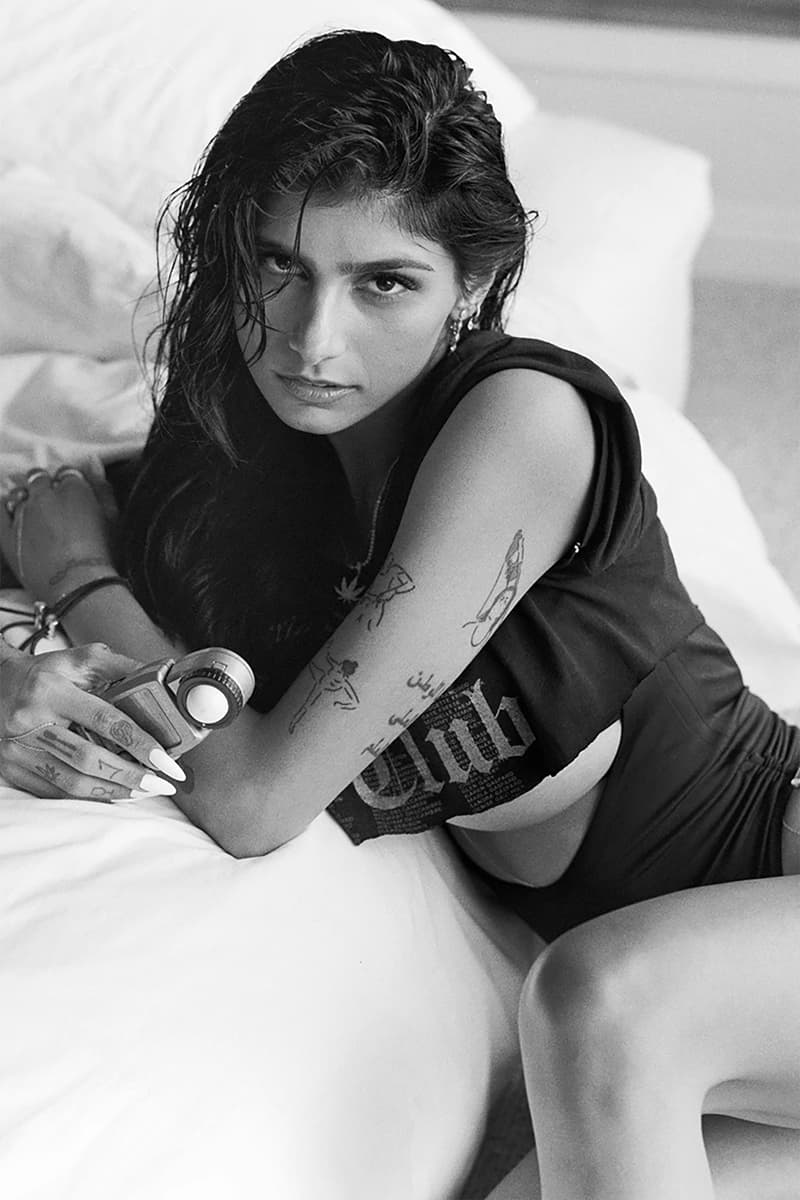
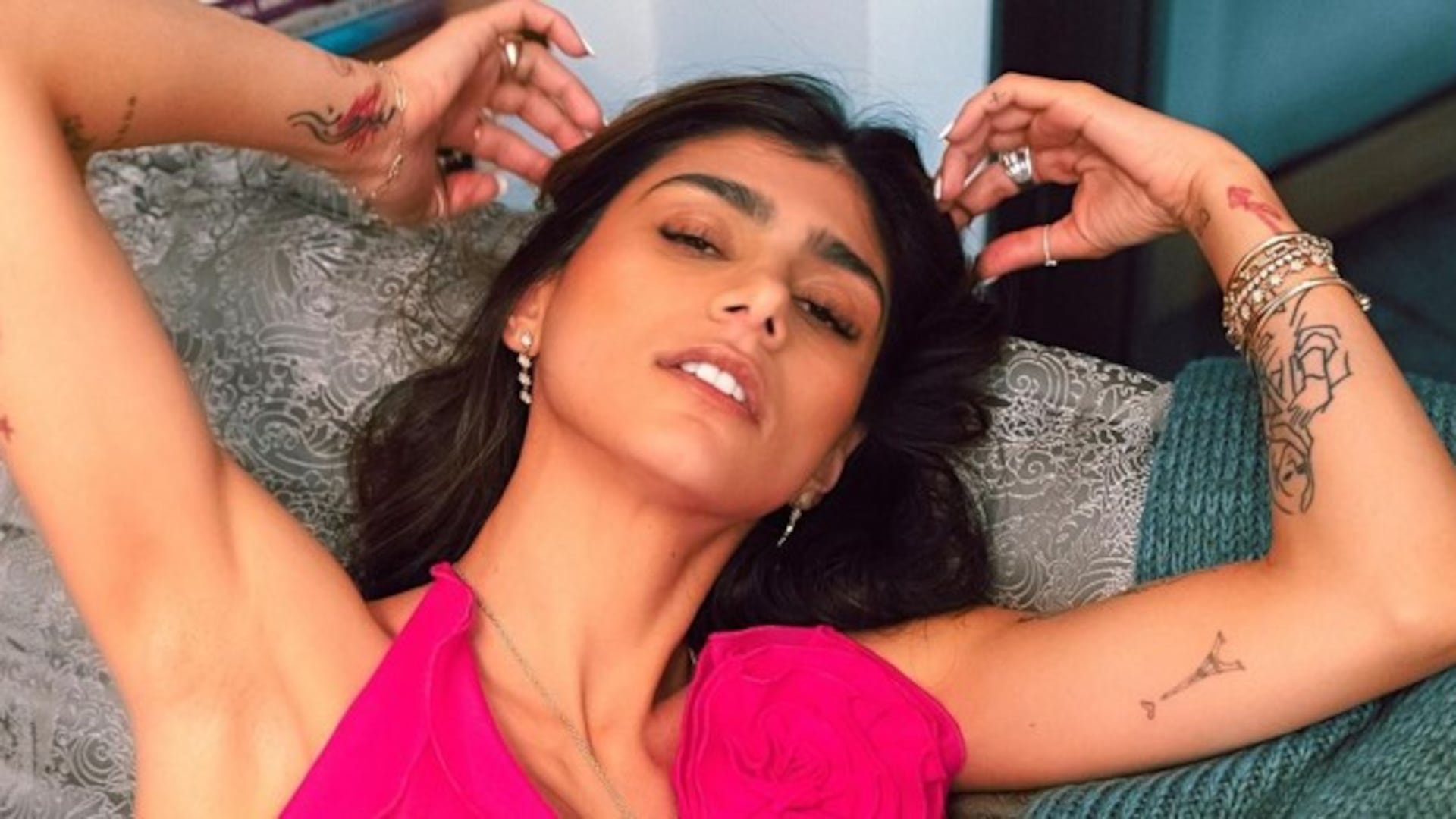
A black-and-white portrait shows how the arm collection has grown. Line drawings sit along the upper arm and forearm, alongside Arabic script, small figures and darker outlines. The designs don’t form one solid sleeve; open skin separates them and lets each piece hold its own shape.
Those gaps guide the eye from one design to the next. Darker sections act as anchors, while the open areas keep details from competing. The arm holds a lot of ink without feeling packed from end to end.
The line drawings vary in weight and angle. Some are delicate, others more solid. They don’t look like parts of one polished illustration, and that variation gives the collection a more personal feel. A new tattoo can join without having to match a finished sleeve.
If you’re planning several pieces, leave some space around the ones you already have. Blank skin doesn’t need to be filled just because it’s there. The clear gaps on Khalifa’s arms help the separate designs remain legible.
A close look at the map and star-style designs
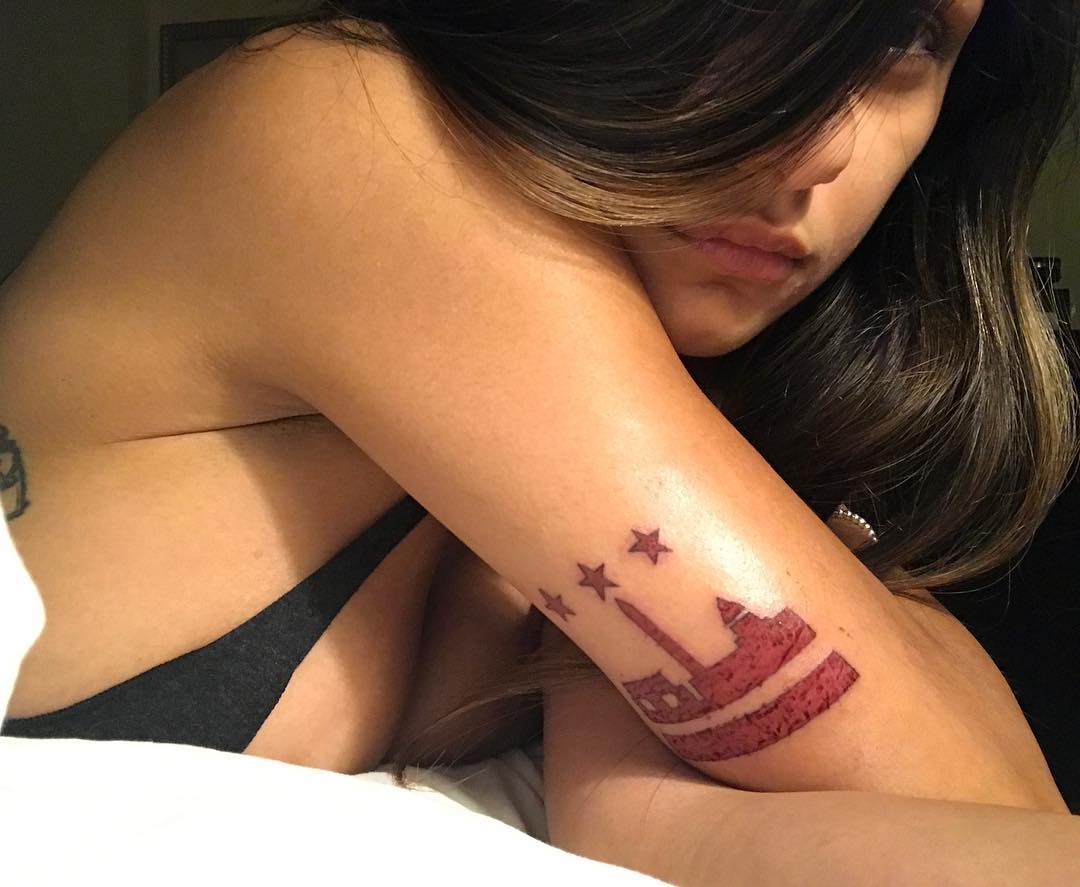
Other photos show small graphic marks on Khalifa’s arms and the side of her body. A map-style outline, stars and short symbols sit near the larger lettering. They are simple shapes, but they add another texture to the collection.
A small symbol can be personal without becoming the focus of an entire look. A map may point to a place or family connection; stars might mark a memory or be a shape the wearer likes. The photos don’t tell us what every design means, and there’s no need to guess.
The smaller pieces sit apart from the script, so the two don’t compete. One may be visible in a close portrait, while another appears when she changes clothes or raises an arm. They work as separate details rather than one large composition.
The designs share clear outlines that read well in ordinary photos. A map, star or short line of script doesn’t need to be large or heavily shaded to have a place in the collection.
Why this mix works
Khalifa’s tattoos move between different scales and moods. The Arabic forearm script is deliberate; the red wrist cross is bright and easy to spot; the finger symbols are tiny; and the arm drawings add texture. The map and stars keep the overall look from feeling too heavy.
Placement helps organize the mix. The forearms carry the longest writing and larger drawings. The wrists and fingers hold smaller marks, while the upper arms and side of the body give the broader designs more room. The styles don’t have to match exactly.
If you’re using Khalifa’s tattoos for ideas, decide which design needs the most space. A sentence needs a different plan from a small symbol. Hand ink needs more upkeep than an upper-arm tattoo, and a bright colour like red will draw the eye sooner than a soft black outline.
The collection also shows how tattoos can record change. Some pieces have family or national meaning; others are small marks chosen for their shape. A design may be covered or reworked later. That doesn’t erase the earlier chapter; it adds to the history visible in the photos.
Mia Khalifa’s tattoos feel personal because the designs aren’t over-organised. Lettering, a cross, hand symbols, maps, stars and line drawings sit together with room around them. The result is easy to recognise, with details that emerge in different photos.