codex

Adam Ramsay-Peaty Tattoos: Lion, Olympic Rings, Into the Light and More

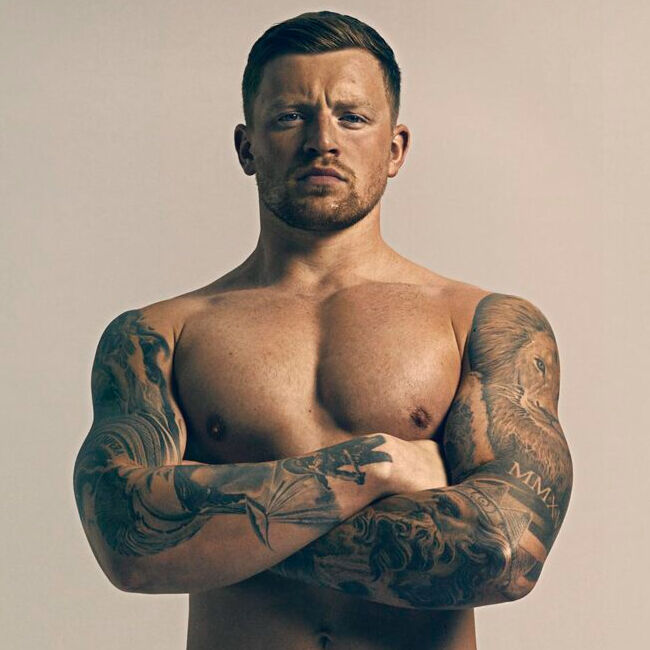
Adam Ramsay-Peaty’s tattoos cover both arms, parts of his torso and his hands. The collection mixes black-and-grey portraits, lettering and symbols. Roundups give different counts because the sleeves include many smaller marks, but several designs have a clear public account.

The lion, Olympic rings and “equilibrium,” mythological figures, and the cross with “Into the light” are the most recognisable. Together they touch on Peaty’s British identity, swimming career, family, faith and the balance he has said he needs away from the pool.

Adam Peaty’s collection at a glance

The larger pieces include a lion on his upper arm, Olympic rings with equilibrium, Poseidon and Athena imagery, and a cross with “Into the light” on his abdomen. Photos also show Roman numerals for 2016, warrior and dagger designs, the phrase “Conquer Your Demons,” and small letters linked to his family.

The British lion on his upper arm
Adam Ramsay-Peaty tattoos: inline tattoo evidence

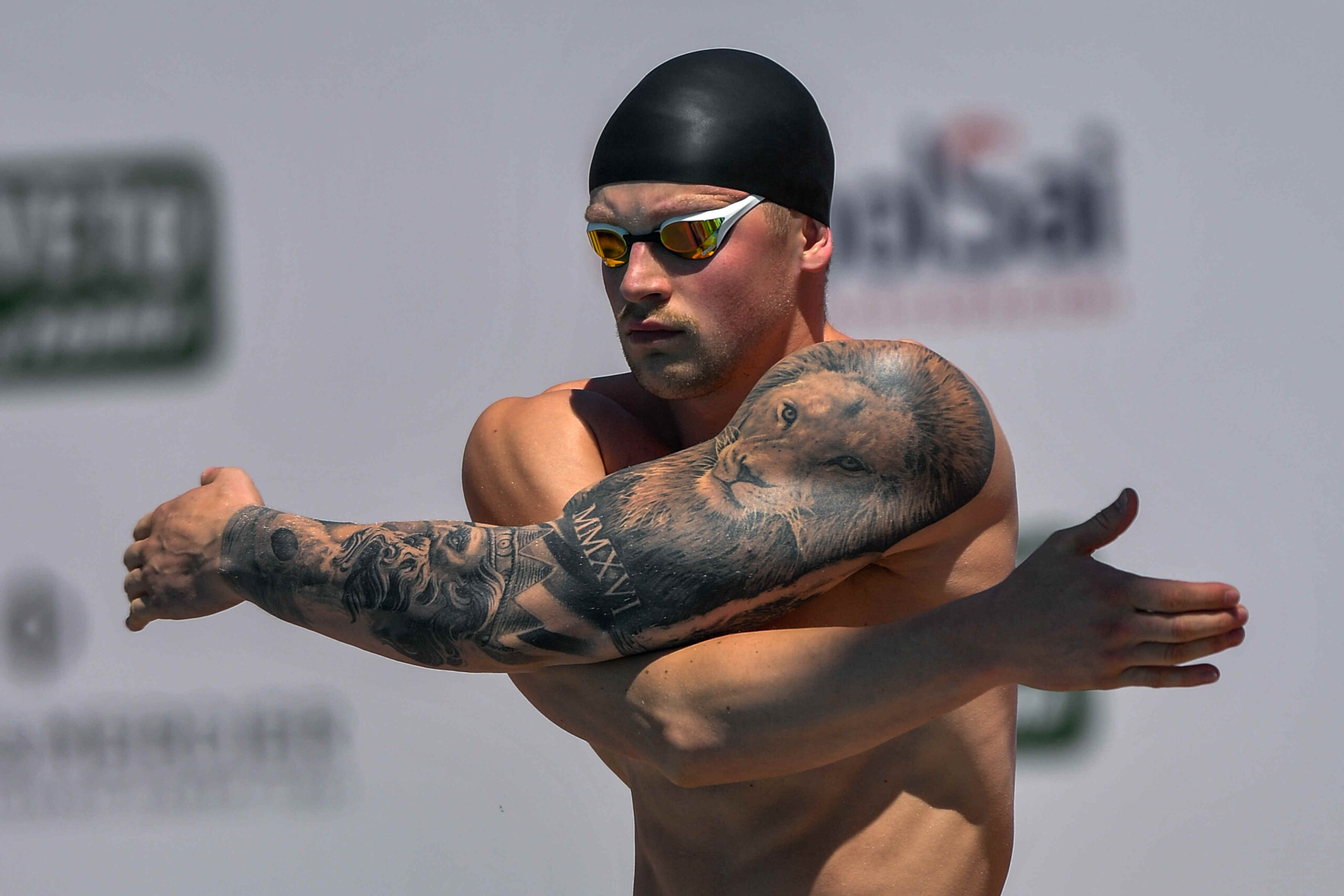
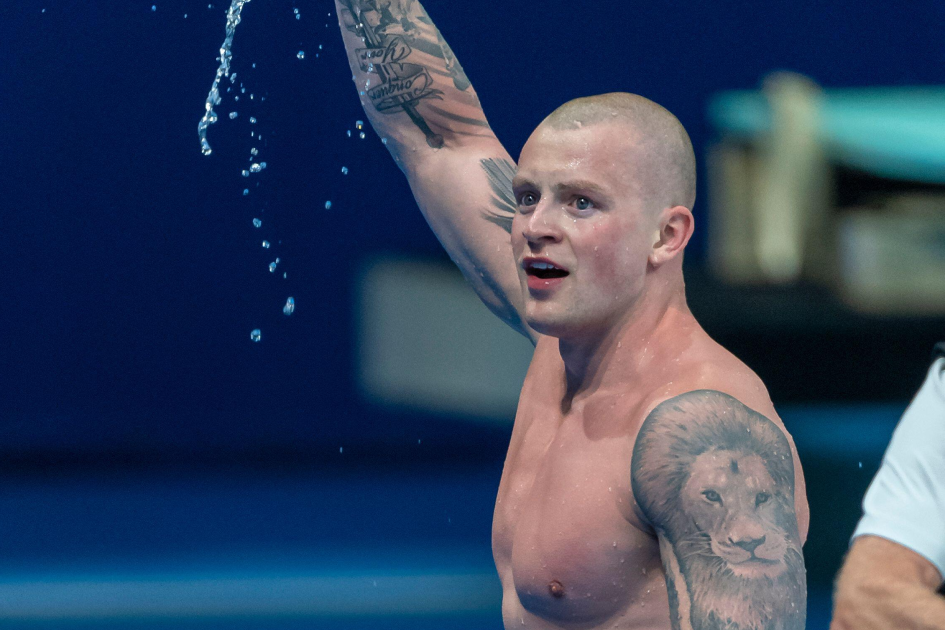
The lion covers much of Peaty’s upper arm, with its mane spreading over the shoulder and bicep. Roman numerals, MMXVI, appear beneath it in some photos. They refer to 2016.

Peaty has linked the lion to his British identity and to the qualities he wanted to bring to racing: pride, strength and readiness to face the swimmer in the next lane. He also connected it with the work behind his Rio Olympic gold and world record. In the pool, the placement makes the design easy to see when he raises his arms or celebrates at the wall.

Olympic rings and the word “equilibrium”
Adam Ramsay-Peaty tattoos: inline tattoo evidence

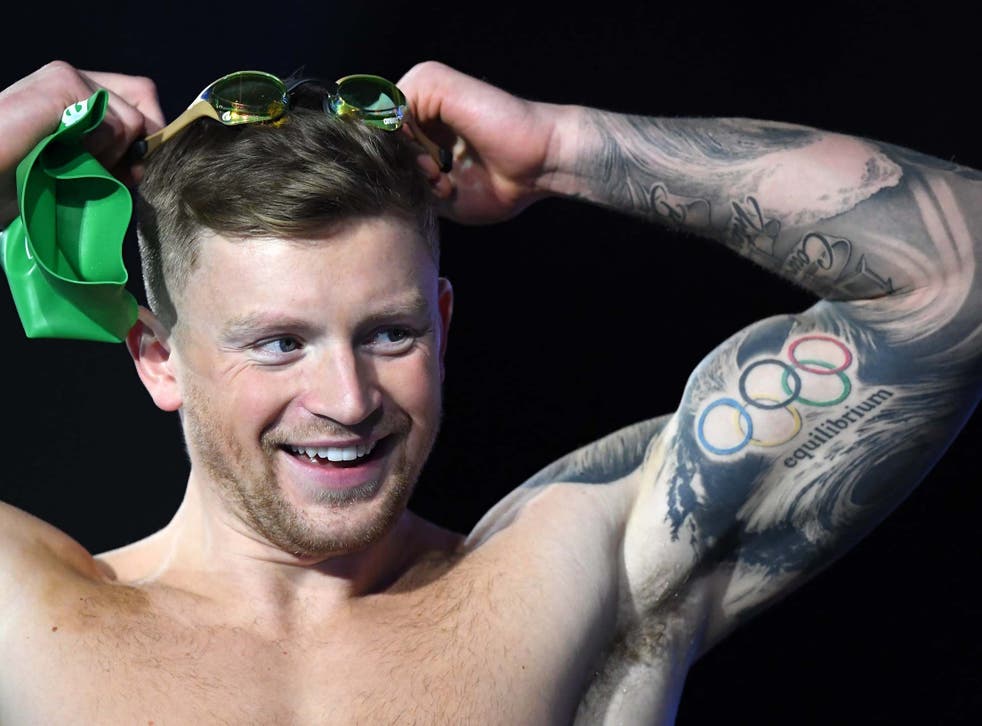
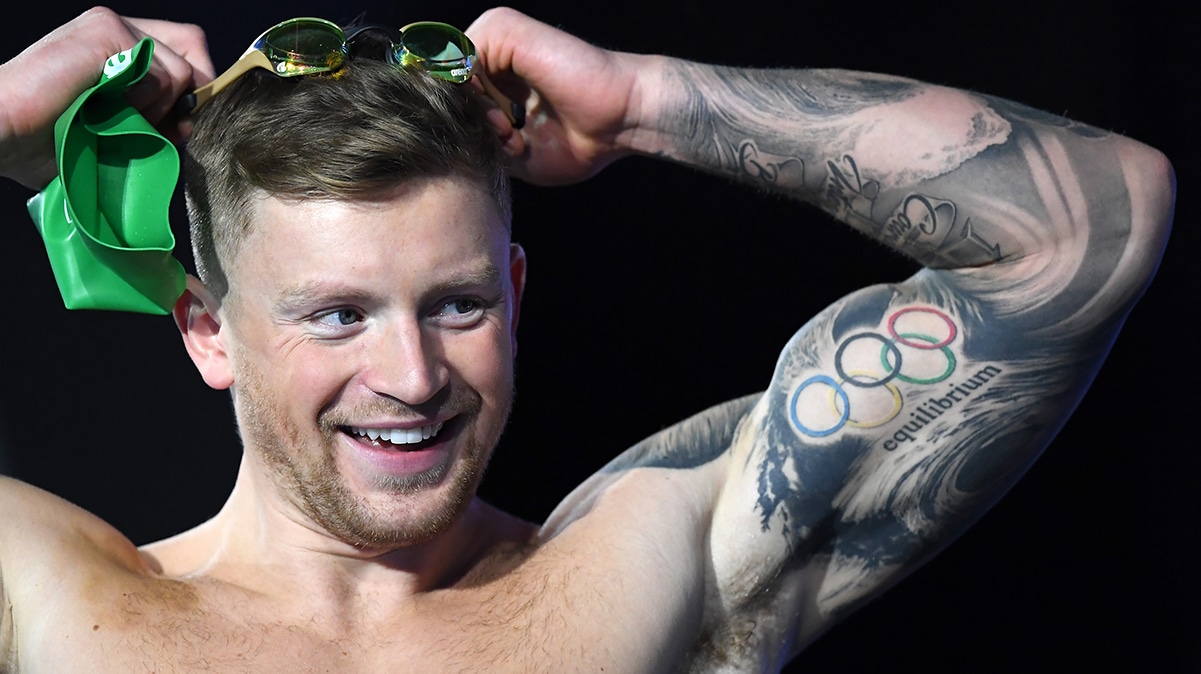
On the arm beside the lion, Peaty has the five Olympic rings with equilibrium underneath. The rings are in color; most of the surrounding tattoo work is monochrome.

He has described balance as something he needs outside the pool. Early starts, double sessions and close attention to times can make elite swimming all-consuming. The word marks a different aim from winning: keeping the rest of life steady while training remains demanding.

Poseidon, Athena, and the mythological sleeve work
Adam Ramsay-Peaty tattoos: inline tattoo evidence

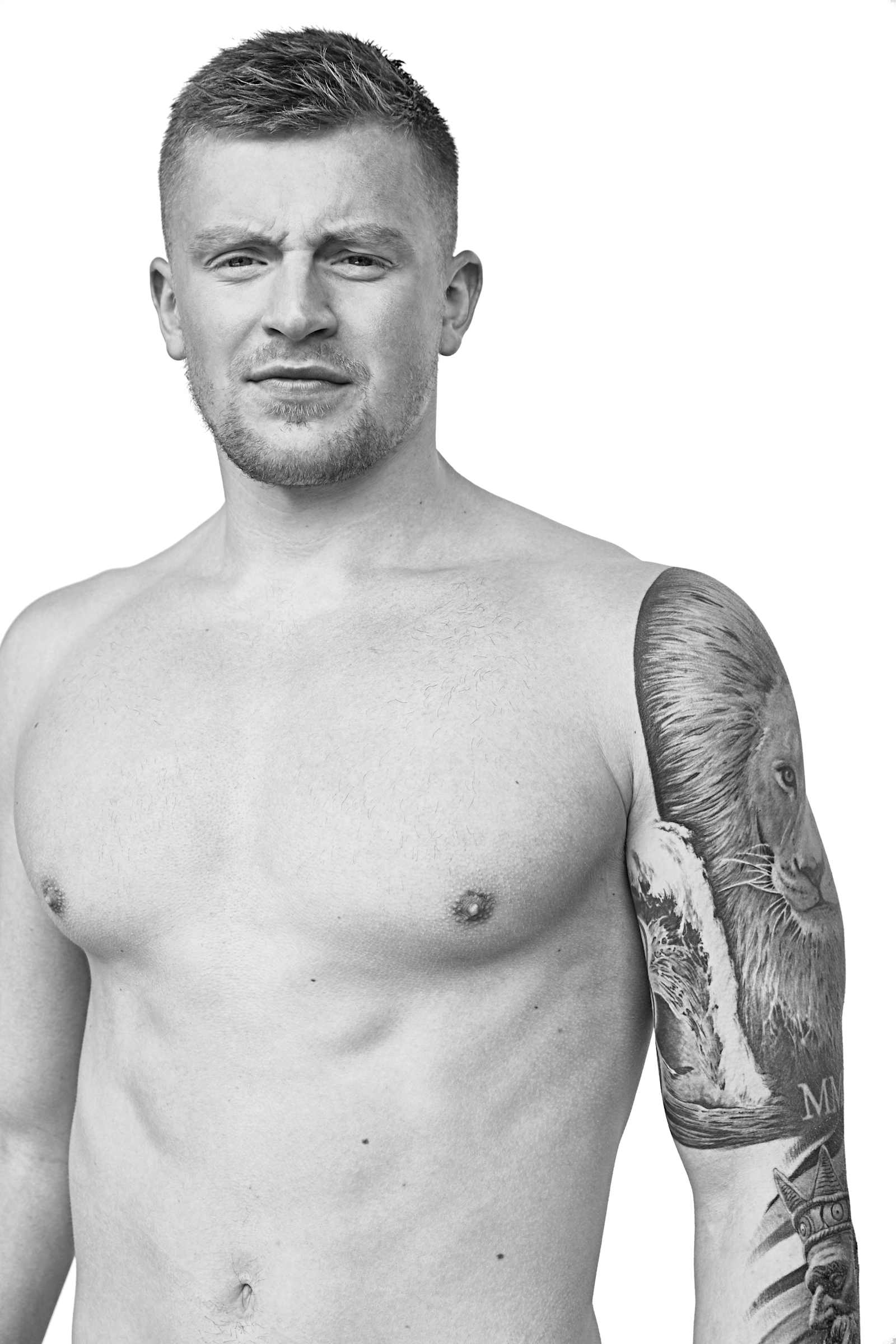
Poseidon appears on Peaty’s left forearm, with Athena and other warrior imagery on the opposite arm. Faces, armor and weapons fill out the sleeves around the larger pieces. Poseidon is associated with the sea, though the article’s sources don’t establish a specific meaning for every figure.

Reports also describe a dagger and banner on the right forearm with the words Conquer Your Demons. The phrase gives the mythological imagery a more personal reading, but Peaty’s photos alone can’t tell us what each design means to him.

The cross and “Into the light” tattoo
Adam Ramsay-Peaty tattoos: inline tattoo evidence

On his abdomen, Peaty has a cross with “Into the light” beneath it. The tattoo became easier to see in photos as he spoke publicly about Christian faith and mental-health struggles.

The phrase suggests moving through a difficult period, but Peaty’s public comments are what give it context. Its placement is also more private than the arm tattoos; it appears in shirtless photos rather than every poolside image.

Smaller details and dates
Adam Ramsay-Peaty tattoos: inline tattoo evidence

The MMXVI beneath the lion marks Peaty’s 2016 Olympic gold in Rio. Other smaller pieces include the words Courage Integrity Belief, warrior and dagger imagery, and letters on his thumbs that have been linked to his son, George-Anderson.

Hands move constantly and are often covered by water or equipment, so photos don’t provide a fixed count of every small mark. The collection shifts between large portraits, lettering, symbols and dates rather than repeating one pattern throughout.

Why the collection suits a swimmer

Swimming exposes the arms and torso in a way that everyday clothes often don’t. Peaty’s tattoos show at the blocks and during races, making them part of his public image as an athlete.

He has compared the discomfort of getting tattooed with the pain and endurance involved in training. Still, the designs don’t all point to toughness: equilibrium is about balance, and “Into the light” adds a more reflective note.

How the overall style works

The sleeves combine large focal pieces with smaller symbols and lettering. Black-and-grey realism ties together the lion, faces and warrior scenes, while the Olympic rings add color. That contrast helps the separate designs read as parts of one collection.

For a large tattoo, scale and spacing affect how the whole arm reads. Peaty’s pieces show why lettering needs room to stay legible and why an artist should consider how the design moves with the body.

Final look

Peaty’s collection holds several ideas at once: competition, balance, faith and family. The lion and Olympic rings connect directly to swimming; the smaller marks and abdomen phrase add details from outside the pool. The photos show how the work has grown without reducing it to a single message.

Watch the BBC Sport interview below for Peaty discussing his career, pressure and mindset.
Sebastian Murphy Tattoos: YOU NEED ME, LÖS and More

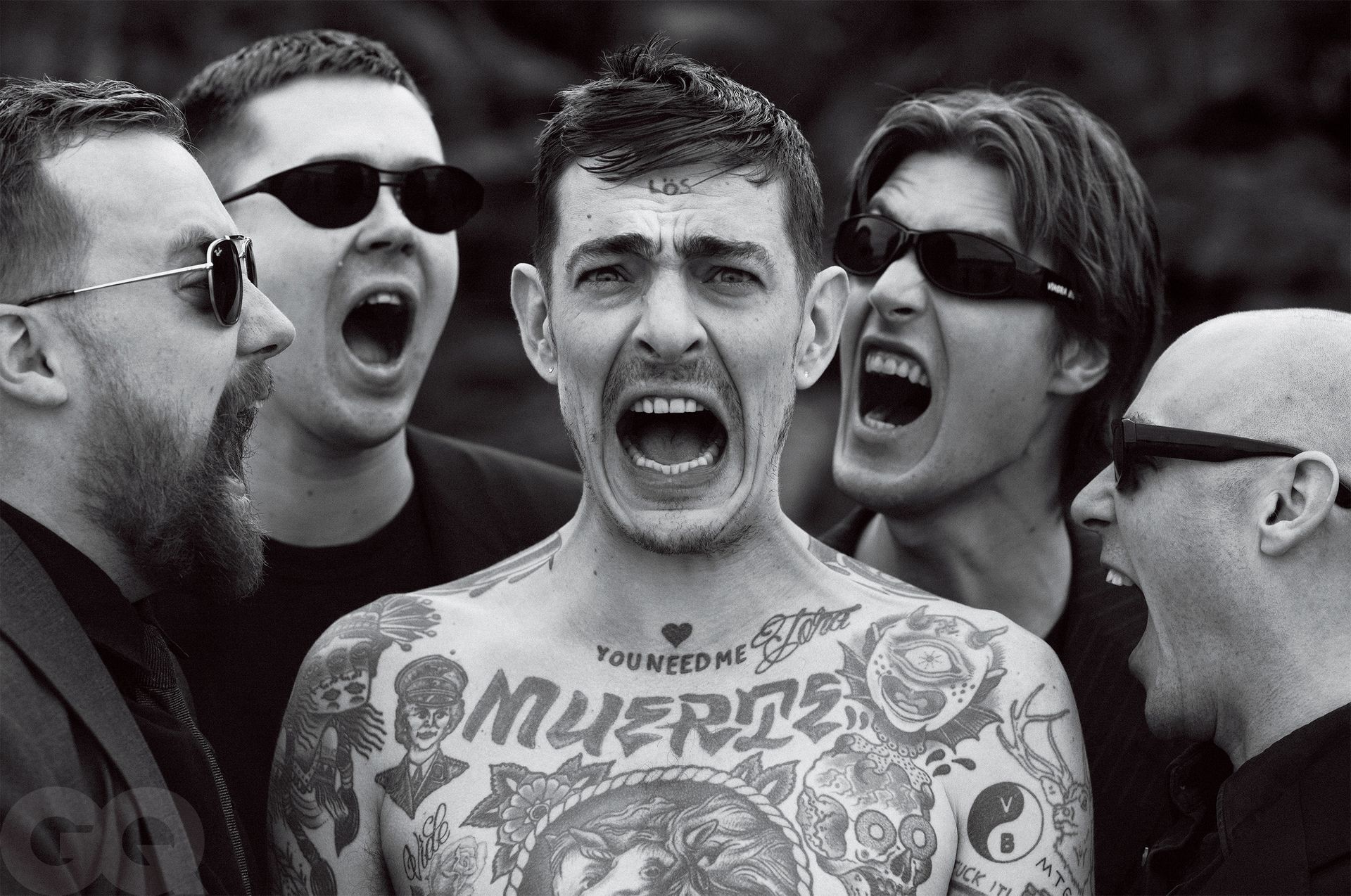
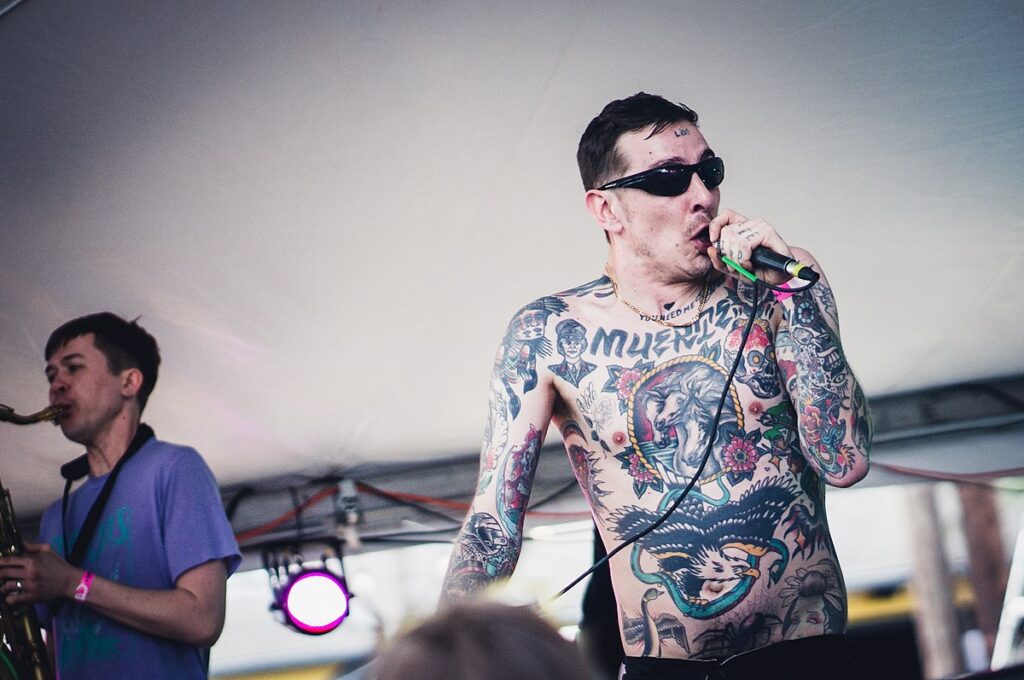
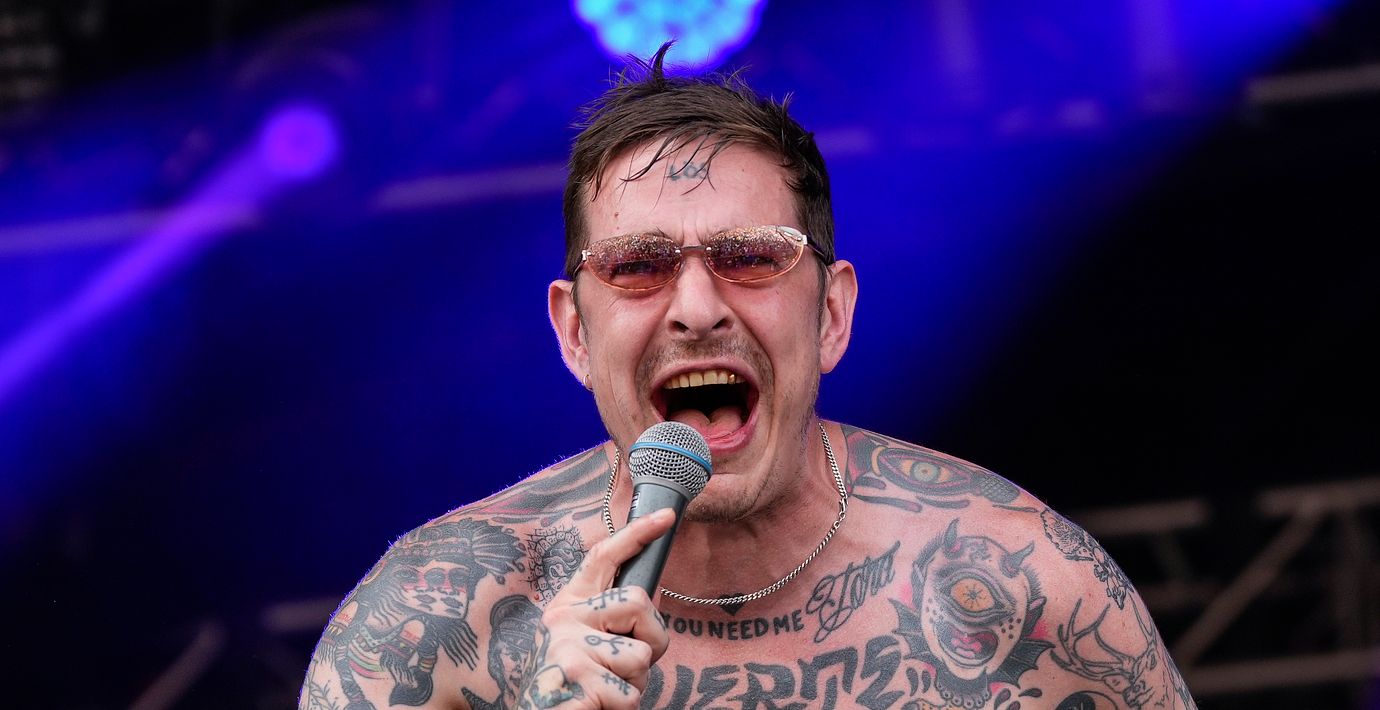
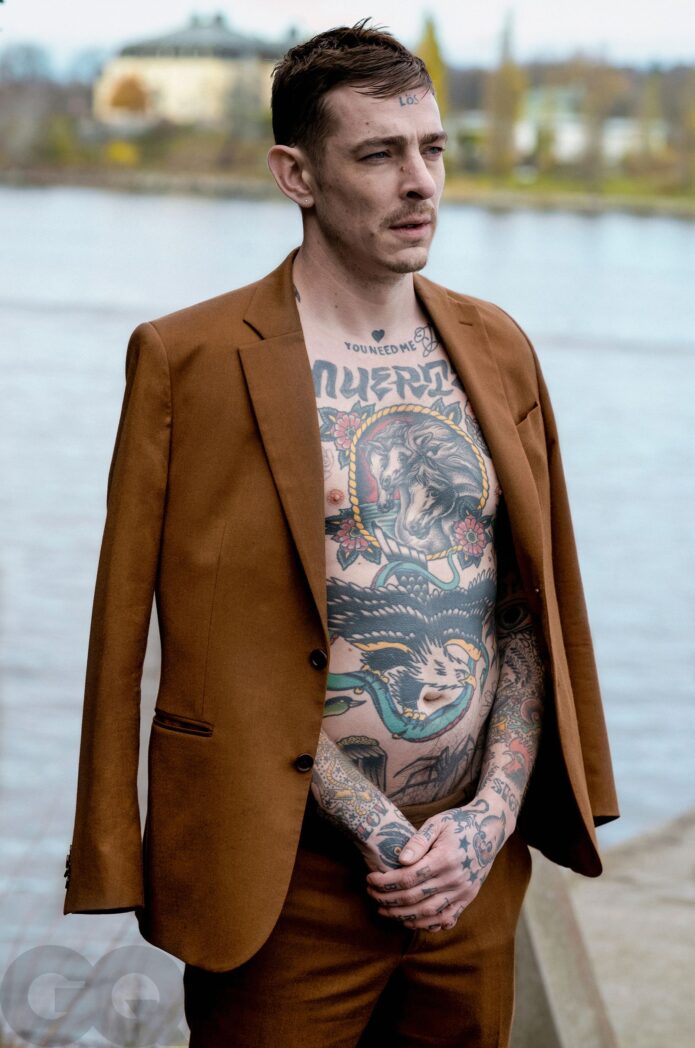
Viagra Boys singer Sebastian Murphy has tattoos across his chest, stomach, arms, hands, neck and face. Photos show a crowded mix of color, lettering, animals and small symbols. Two of the clearest stories are the words YOU NEED ME on his chest and LÖS on his forehead.

Murphy worked as a tattoo artist in Stockholm before focusing on music. Some pieces have explanations he has shared publicly; for the rest, photographs show their appearance but not necessarily their meaning.

What stands out in Murphy’s collection

The collection includes black lettering, traditional-style color, faces, flowers and animals across his torso and limbs. The exact count is hard to fix because smaller designs overlap and photos only show parts of the body. The most documented tattoos are YOU NEED ME and LÖS; other shapes are best described by what is visible.

The phrase that became a song

YOU NEED ME sits high on Murphy’s chest, near a small heart and other tattoos. In an interview with The Guardian, he connected the phrase to a period when he was using drugs and thought too highly of himself. The joke was that he didn’t need anyone else; everyone else needed him.

That line later fed into the Viagra Boys song You N33d Me. Murphy’s account gives the lettering a second meaning: it recalls an attitude he has since been able to look back on with distance. The words are blunt, but the story is more complicated than a boast.

The face that greets the crowd

Sebastian Murphy tattoos: inline tattoo evidence

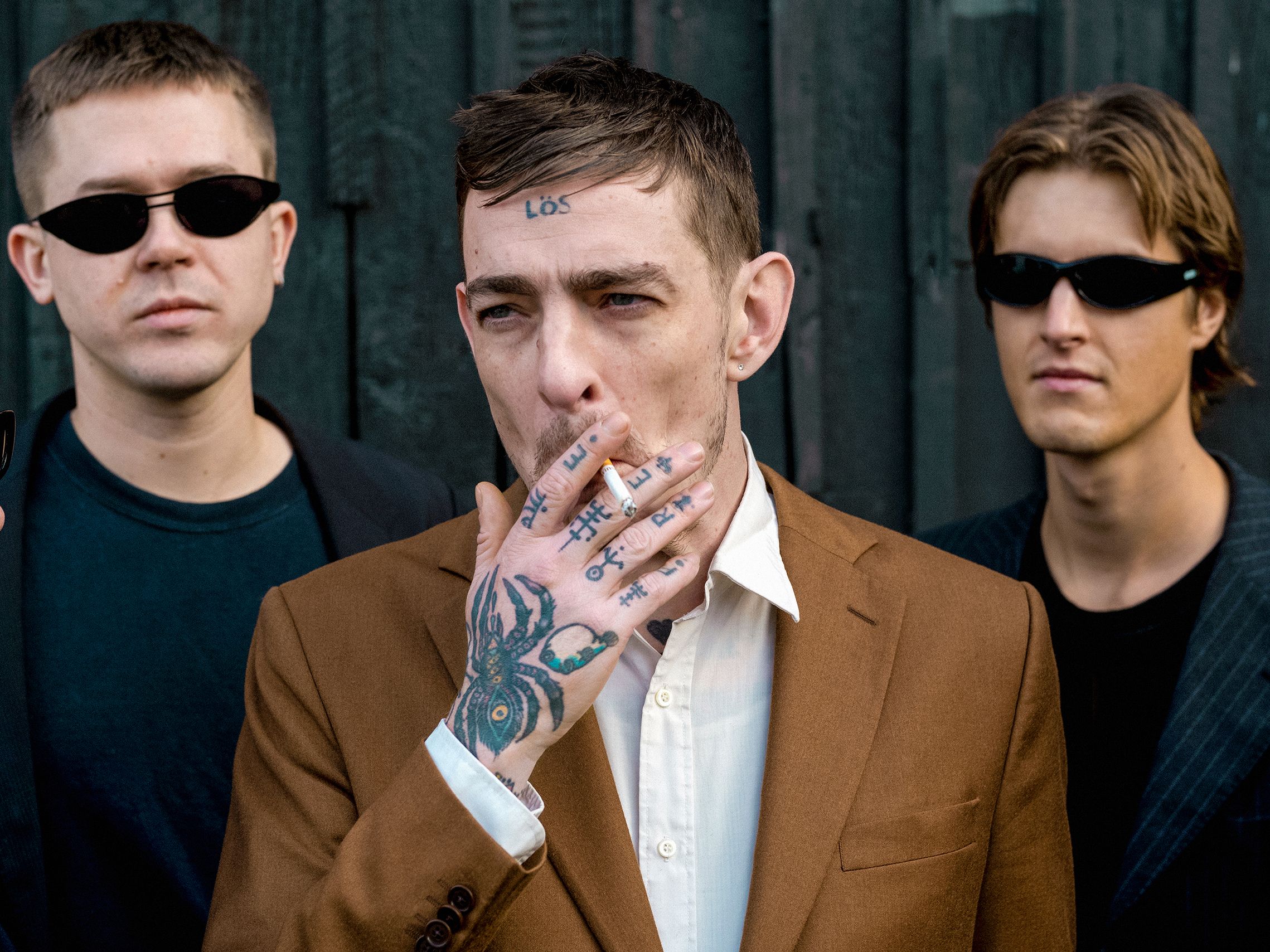
Murphy has LÖS tattooed on his forehead. In Swedish, the word means “loose.” It is small beside the larger work on his torso, but its placement makes it one of the first details people notice.

A word on the forehead reads differently from the same lettering on an arm. It becomes part of his introduction before he sings. The photos make the placement clear; they don’t establish every personal reason behind it.

The big chest and stomach pieces

Sebastian Murphy tattoos: inline tattoo evidence

Murphy’s chest and stomach carry larger images, including a central animal design, flowers, rope-like borders, lettering and smaller symbols. Different photos show different sections, so there isn’t one complete view of the whole arrangement.

Strong outlines and areas of saturated color make the larger shapes readable in concert photos. The main images draw the eye first; closer views reveal smaller pieces nearby. The work isn’t symmetrical, and it doesn’t need to be.

Animals, flowers and old-school colour

Sebastian Murphy tattoos: inline tattoo evidence

Animals and flowers recur across Murphy’s torso. The visible palette includes reds, greens and yellows, held together by dark outlines. The result is bright and densely packed, even in photos where stage lighting obscures some details.

The common colors and line weight connect designs that don’t share a subject. That helps the collection read as one body of work without making every tattoo look alike.

His arms and hands are part of the same collage

Sebastian Murphy tattoos: inline tattoo evidence

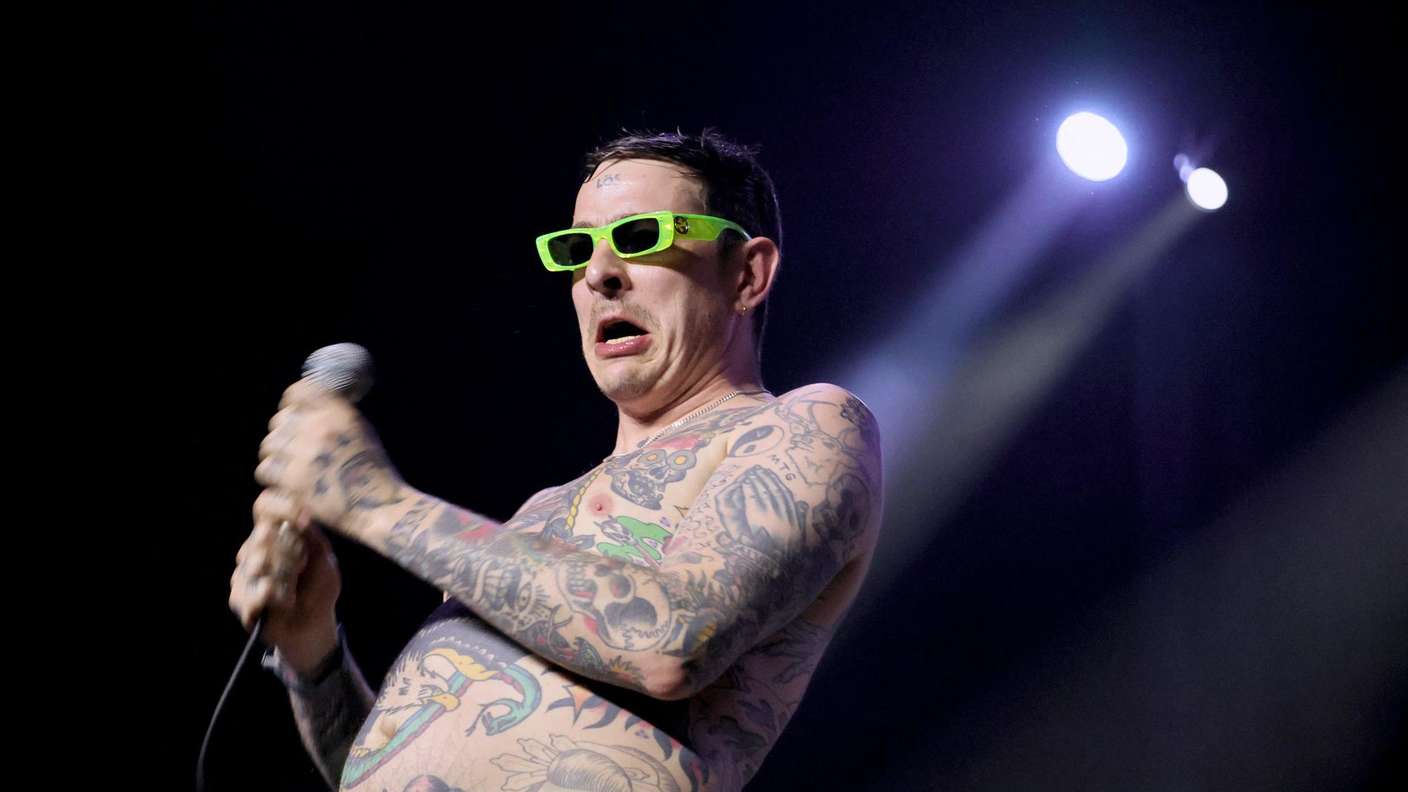
Photos show faces, lettering, small symbols and darker shading down both arms. His hands are tattooed too, so the ink stays visible when he holds a microphone or gestures onstage. The chest carries the largest color areas; the arms and hands add narrower marks around them.

Why the tattoos fit his stage persona

Sebastian Murphy tattoos: inline tattoo evidence

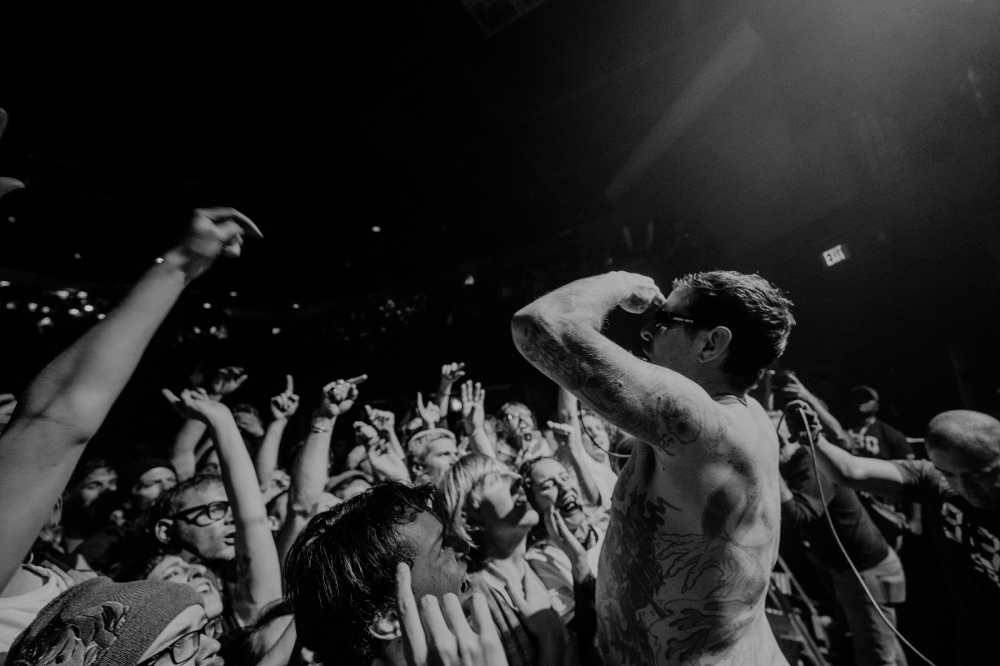
Murphy’s tattoos are visible in the way he performs: he often performs shirtless, and the collection isn’t arranged to look polished or pristine. He has spoken about how freeing it can be to see a man avoid hiding his body or trying to look like a conventional frontman. Onstage, he lets his stomach show, moves awkwardly and pulls faces; the band’s songs also take aim at macho posturing and people taking themselves too seriously.

The mix of serious images, blunt wording and smaller odd details also fits the band’s humor. The same collection can look tough in one photo and funny in another; it doesn’t settle into one mood.

A working tattoo artist’s eye

Sebastian Murphy tattoos: inline tattoo evidence

Before focusing on music, Murphy worked as a tattoo artist in Stockholm. That part of his life connects him to the city’s punk and tattoo scene, where he met future bandmates. Drawing, music, posters and body art have often sat close together in the Viagra Boys world.

His own collection looks dense and rough-edged, but that doesn’t mean each tattoo was planned to fit a master design. A tattoo artist can understand technique and still prefer work that accumulates over time.

Why the collection feels finished

Murphy told The Guardian he had stopped getting tattoos because he couldn’t handle the pain anymore. He joked that even stubbing a toe would leave him crying for a week.

That decision is part of the story too. A large collection doesn’t have to keep growing; he can leave the existing work where it is and live with it.

What to borrow from the style

If you’re planning several tattoos, repeating color or line weight can help unrelated images sit together. Think about how lettering and figures will look as the skin bends and moves, not only in a still photo.

Murphy’s collection also leaves room for tattoos to be funny, serious or simply visual. A photograph can show a design; it can’t supply a meaning the wearer hasn’t shared.

Final look

Murphy’s tattoos include the chest phrase YOU NEED ME, the forehead word LÖS, and a dense mix of animals, flowers, color and lettering. The chest phrase has a story Murphy has told; many of the other designs are visible without a public explanation.

His years as a tattoo artist and his life onstage sit behind the collection, but it doesn’t follow one tidy theme. Watch Viagra Boys’ official Sports video below for the band’s live energy.

Denzel Perryman Tattoos: Behind the Ink and the Arm Work

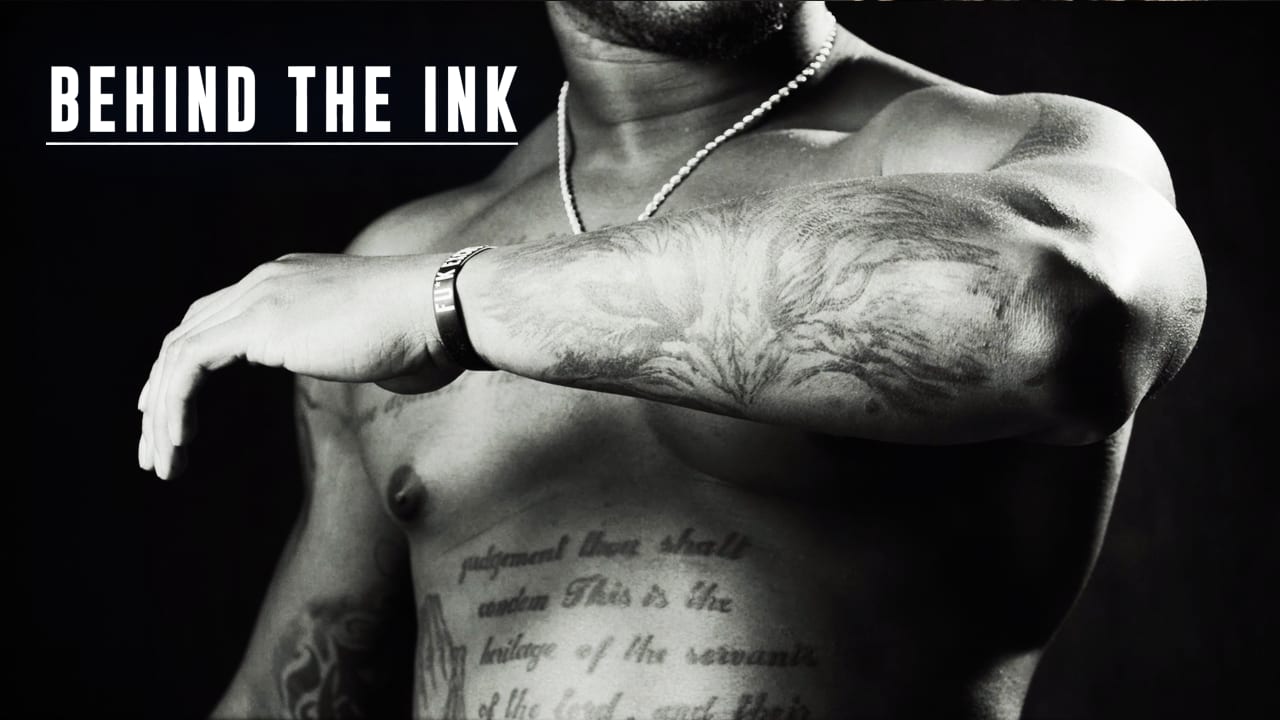
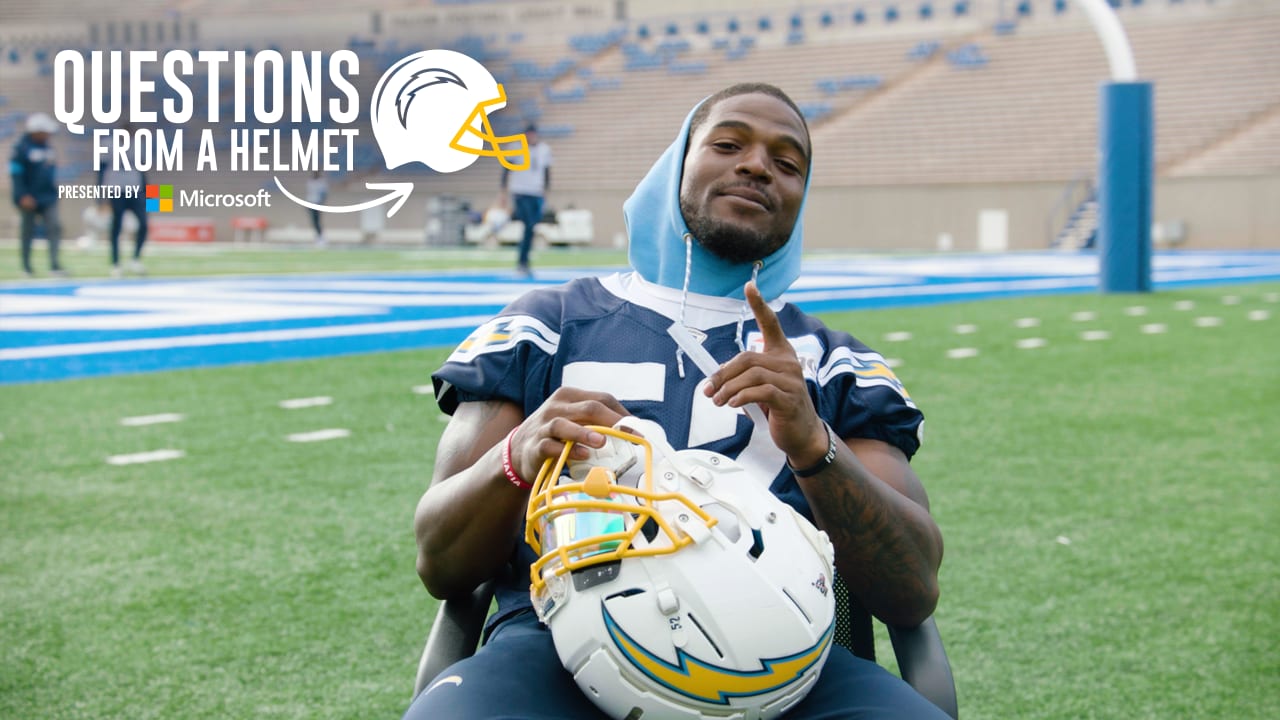
Denzel Perryman’s tattoos can be hard to see under a football uniform. Shoulder pads and a jersey cover much of his arms; a sleeveless top or interview gives a clearer view. In the Chargers’ Behind the Ink feature, he talks about his tattoos while the camera shows lettering and shaded work across his chest and arms.

The interview is the best source for his own explanations. Photos show placement and appearance, but they don’t tell us what every design means.

The tattoo story he actually explains

Denzel Perryman tattoos: inline tattoo evidence

In a black-and-white close-up, Perryman crosses his forearms over his chest. The photo shows fine lettering across the chest and denser shading on the arms, with separate pieces sitting close together.

The Chargers feature lets Perryman speak about his choices instead of having someone guess from a game photo. It gives the collection personal context, while the image shows only what is clear: lettering, shaded designs and substantial arm coverage.

The player in motion

Denzel Perryman in a contextual photograph: contextual celebrity photo; not tattoo evidence; not tattoo evidence

Most game photos show only glimpses of Perryman’s arms: a section between jersey and glove, or a forearm as he carries his helmet. The Chargers’ interview shows him sitting on the field and gesturing as he talks. That makes it easier to see how the ink moves with his arms.
What the uniform hides

Denzel Perryman in a contextual photograph: contextual celebrity photo; not tattoo evidence; not tattoo evidence

A uniform puts the helmet, number and team colors in the foreground. Shoulder pads and sleeves cover much of the tattoos, so an action photo may establish that his arms are inked without showing which designs are there.

In a sleeveless shirt, the same coverage is much more visible. The difference comes from clothing and camera angle, not necessarily from a new tattoo.

The athlete in a crowded frame

Denzel Perryman in a contextual photograph: contextual celebrity photo; not tattoo evidence; not tattoo evidence

Pads, gloves and movement add visual clutter in football photos. When an arm is exposed, dark linework stands out against the uniform; during a play, only a small part may be visible. That changes how the tattoos read in a frame, but it doesn’t explain how Perryman plays.

A quieter interview or portrait gives readers more time to look at the pieces together than a highlight does.

How the game changes the frame

Denzel Perryman in a contextual photograph: contextual celebrity photo; not tattoo evidence; not tattoo evidence

Perryman’s tattoos are personal, but most fans see them only when the uniform or camera reveals them. The Behind the Ink interview slows things down and gives him room to explain what he wants to share.

For designs he hasn’t explained in a reliable source, the accurate description stays visual: chest lettering, shading on the arms, or a tattoo partly visible near the wrist. A cropped photo can’t supply a backstory.
Practical ideas for a personal collection

Denzel Perryman in a contextual photograph: contextual celebrity photo; not tattoo evidence; not tattoo evidence

Perryman’s photos show how clothing can hide or reveal arm work. If you want a tattoo that fits different settings, consider what a sleeve covers and when the design will show.

Scale and contrast matter too. A line that reads clearly in a still picture may be harder to see as the arm moves. If you plan to add more pieces later, leave room for them instead of trying to turn every tattoo into one continuous design.

Meanings can be personal, shared or simply unspoken. You don’t have to attach a dramatic story to every mark; an honest account is enough.

Away from the field

A clean Chargers portrait introduces Perryman’s face and career; it isn’t tattoo evidence. The closer feature and photos have a different purpose: they show the ink and how it sits on his body. Keeping those images distinct makes the article easier to read.

Final look

Perryman’s tattoos are usually partly hidden by his helmet, jersey and pads. The Chargers’ Behind the Ink feature offers a closer look at the lettering and shaded arm work, along with Perryman’s own comments. The photographs show the collection’s placement; they don’t decode every design.

For more of his personality away from the snap, watch the Chargers’ Answer the Internet video below.

Ellie Kildunne Tattoos: Family Dots, a Rough Heart and DIY Ink

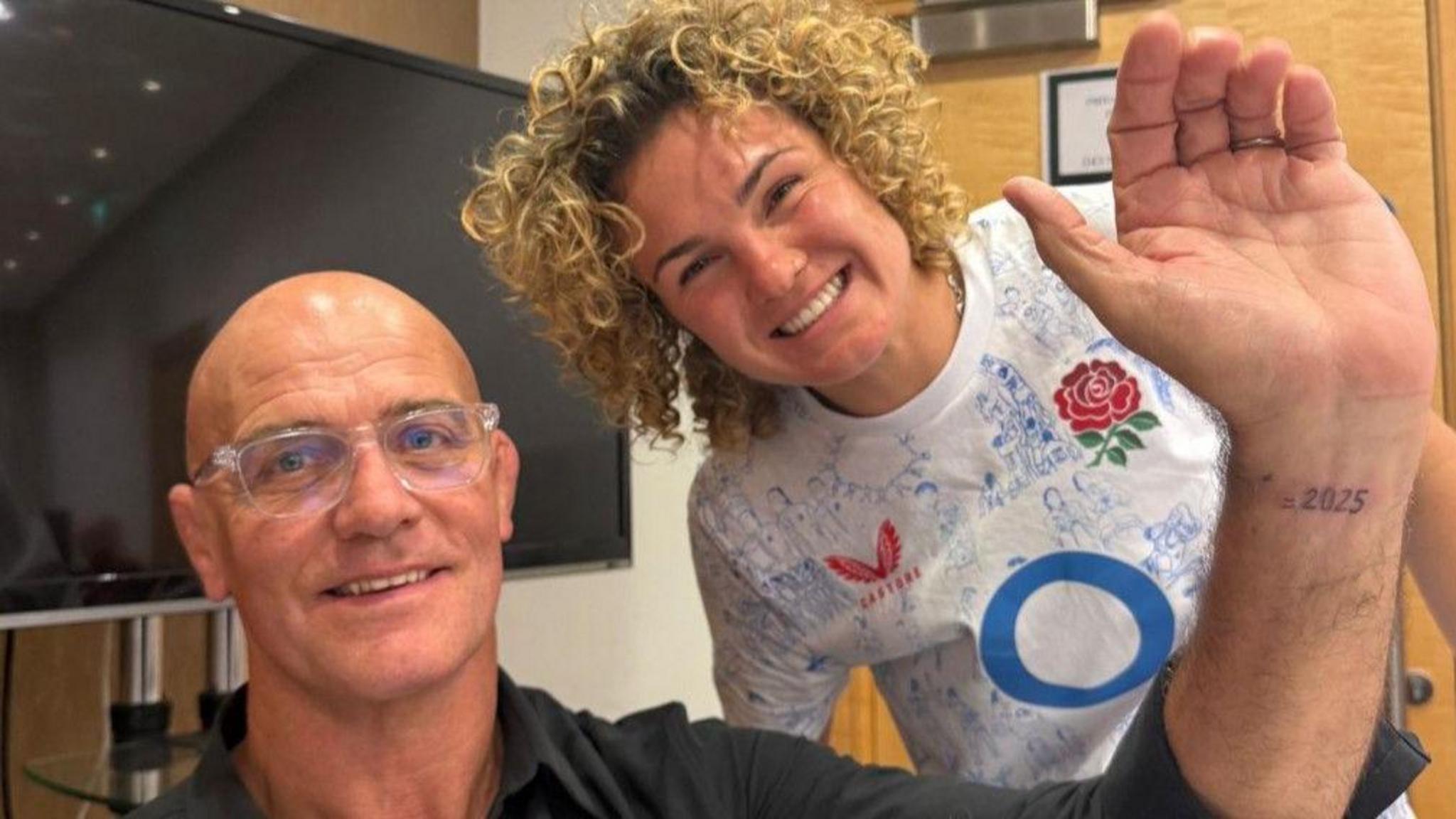
Ellie Kildunne is usually seen at full speed, breaking through a line or celebrating with England. Away from rugby, she has a much less polished hobby: she bought an inexpensive tattoo gun online, marked herself with tiny designs and started tattooing friends and teammates. In a Guardian interview, she spoke about family dots on her fingers and a rough heart on her ankle. Other coverage showed the tattoo she gave England coach John Mitchell after the 2025 World Cup.

Kildunne is open about the results being rough. That honesty is part of the story. The family marks, ankle heart and team tattoos are personal experiments, not a carefully built celebrity image. Here’s what she has said about them, and what the available photos do—and don’t—show.

The team tattoo that made the story real

Ellie Kildunne tattoos: genuine team tattoo evidence: John Mitchell displays the 2025 wrist tattoo Ellie Kildunne gave him

The clearest photo shows Mitchell’s inner wrist with the small “= 2025” tattoo Kildunne gave him after England won the World Cup. The mark is simple, but the date ties it to a specific night and a team celebration. It also gives the story a concrete detail: this was a tattoo she actually gave someone, not a rumor about an unseen design.

The moment is more useful than the design as inspiration. A date or small sign can hold a memory when it points to something real. Before borrowing the idea, decide what the mark would mean to you and whether you’ll still want it after the occasion has passed.

Family meaning can stay tiny

Ellie Kildunne in a contextual photograph: contextual GQ portrait for the family-meaning section; not tattoo evidence; not tattoo evidence

Kildunne says one dot on a finger represents her brother, while two dots on another stand for her mum and dad. The available editorial photos aren’t close-ups of her tattoos, so they don’t support guesses about their shape or placement. The meaning comes from her own explanation.

That’s enough. A tiny mark can have a complete meaning to the person who wears it, even if nobody else recognizes it. You don’t need to add detail just to make a personal symbol look more important.

Why a rough idea can still matter

Ellie Kildunne in a contextual photograph: contextual GQ portrait for the rough-DIY section; not tattoo evidence; not tattoo evidence

Kildunne says she tattooed a heart on her ankle and admits it didn’t turn out very well. There’s no need to pretend the result is secretly polished. It’s a rough first attempt that she chose to keep and talk about.

A heart is familiar; her story gives this one its own context. If you’re drawn to a simple symbol, consider what personal detail could shape it—a handwritten line, an unusual outline or a small reference to someone close to you.

The contrast is the whole point

Ellie Kildunne in a contextual photograph: contextual GQ rugby-field portrait for the contrast section; not tattoo evidence; not tattoo evidence

Most photos of Kildunne show her in motion, playing or celebrating. The tattoos she has described are small and personal. They don’t explain her career or act as a costume; they sit alongside the public image built around rugby.

She has also talked about trying photography, painting, music and tattooing. There isn’t one fixed style tying those interests together. Curiosity seems to be the common thread, and the tattoos read like another experiment she decided to keep.

A good memory can be simple

Ellie Kildunne in a contextual photograph: contextual GQ portrait for the memory section; not tattoo evidence; not tattoo evidence

Kildunne says she has tattooed several Red Roses and GB sevens players. Mitchell’s post-World Cup mark came out of a shared celebration, rather than a long design process. Reports said it was his first tattoo, which made the moment stand out even more.

A group tattoo can begin with a spontaneous memory, but the decision is still permanent. Anyone planning one with friends should agree on the design and placement before the appointment; the story behind it can be informal without leaving the choice unclear.

Context completes the story

These tattoos make more sense when their occasions stay in view: the dots are about family, the ankle heart came from Kildunne’s own experimentation, and the wrist mark recalls England’s 2025 World Cup win. The designs don’t need a bigger mythology to be worth discussing.

That’s a useful way to look at tattoo inspiration generally. Start with the person or moment you want to remember, then think about a design that can carry it. The reason can be simple, as long as it’s yours.

The personal scale works best when it has a reason

The scale of Kildunne’s tattoos is part of their appeal. Dots can stand for family, a heart can keep the story of a rough first attempt, and a team mark can recall a win. Small can still be specific.

Placement changes how often a tattoo is seen. Finger and wrist marks show during ordinary gestures; an ankle design can stay more private. Think about visibility and how your work or sport might affect the choice. Placement is part of the meaning.

Keep the idea personal and the process professional

Kildunne’s DIY tattooing is candid, but it shouldn’t be treated as a how-to. Her small symbols and team tattoos can inspire a personal idea; they don’t make a cheap machine or home setup a safe substitute for training and sterile equipment.

If you want to make the idea permanent, take the personal part to a qualified tattoo artist and give the design and placement proper thought. Safety is part of the design. The personal part can be chaotic; the safety part should not be.

Riley Sheahan Tattoos: Record Player, Wolf and Family Sleeve

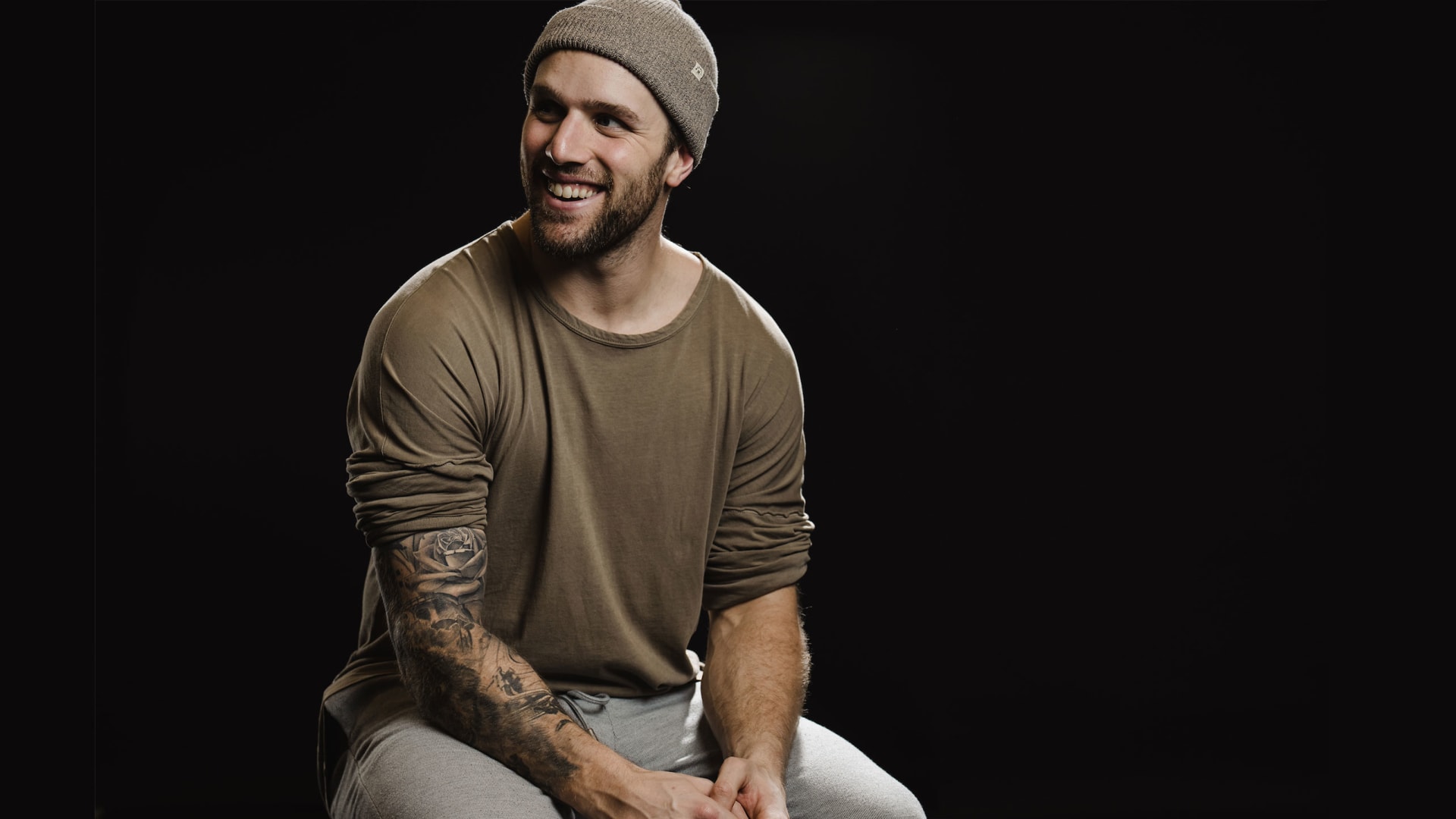
Riley Sheahan’s right-arm sleeve is mostly hidden by his hockey gear during games. In the NHL’s Deep Ink feature, he talks through the record player, wolf, windmill, tulips and other designs that bring music, family and hockey together.

Sheahan had liked tattoo art for years but waited until the ideas felt right. He and a Toronto artist built the sleeve over three long sessions near the end of an NHL season. The Kraken feature is the clearest source for its meanings because Sheahan explains the main pieces himself.

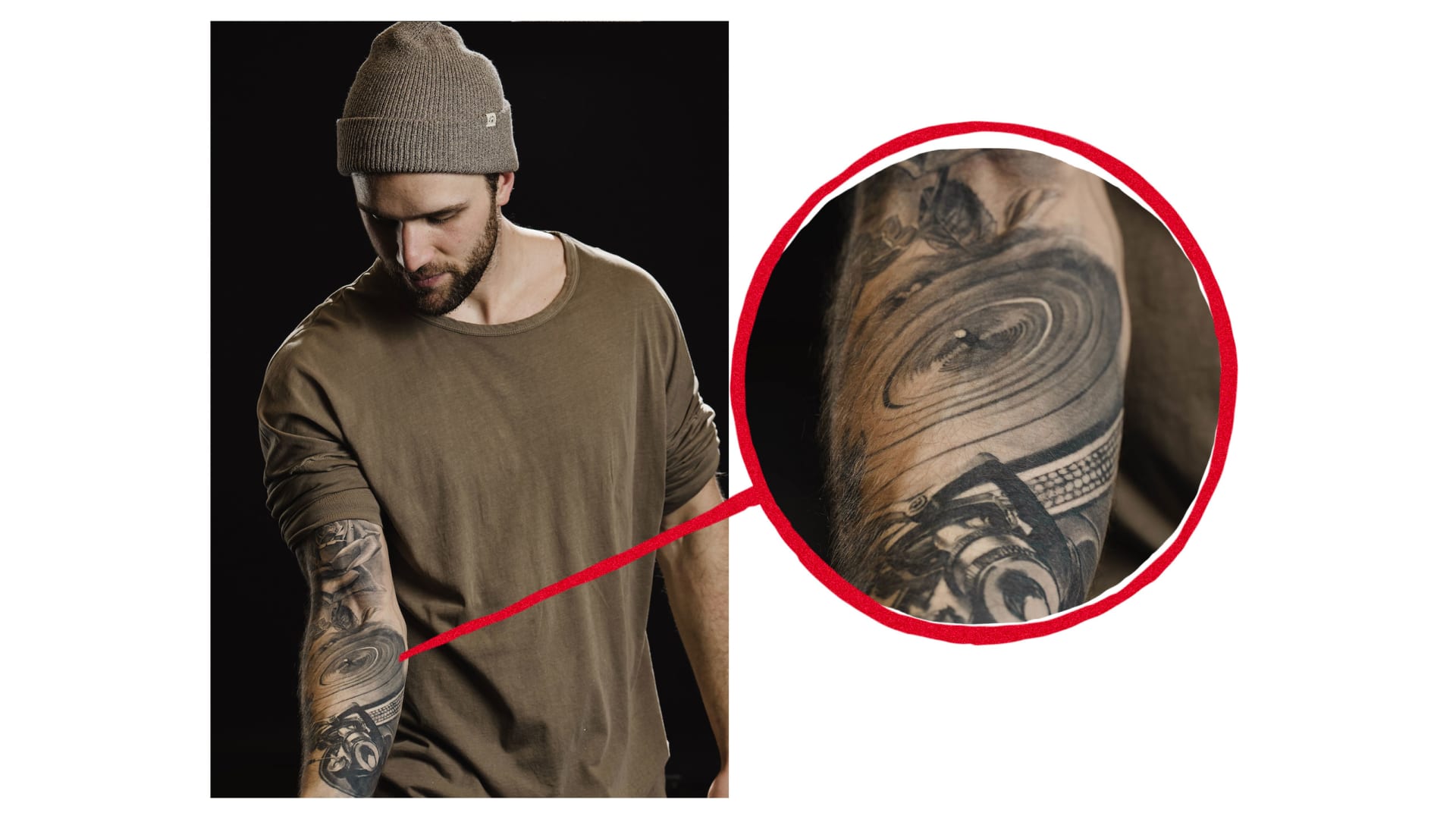
Riley Sheahan’s record player tattoo

Riley Sheahan tattoos: inline tattoo evidence

The record player was the first design Sheahan wanted. It recalls drives to hockey tournaments when he and his father traded songs, and his dad’s collection of old records, which he gave him before the tattoo sessions. Some of the albums were already worn from years of use.

That family memory gives the sleeve a clear starting point. The player and records are recognizable images, but Sheahan’s story is what makes them specific to him.

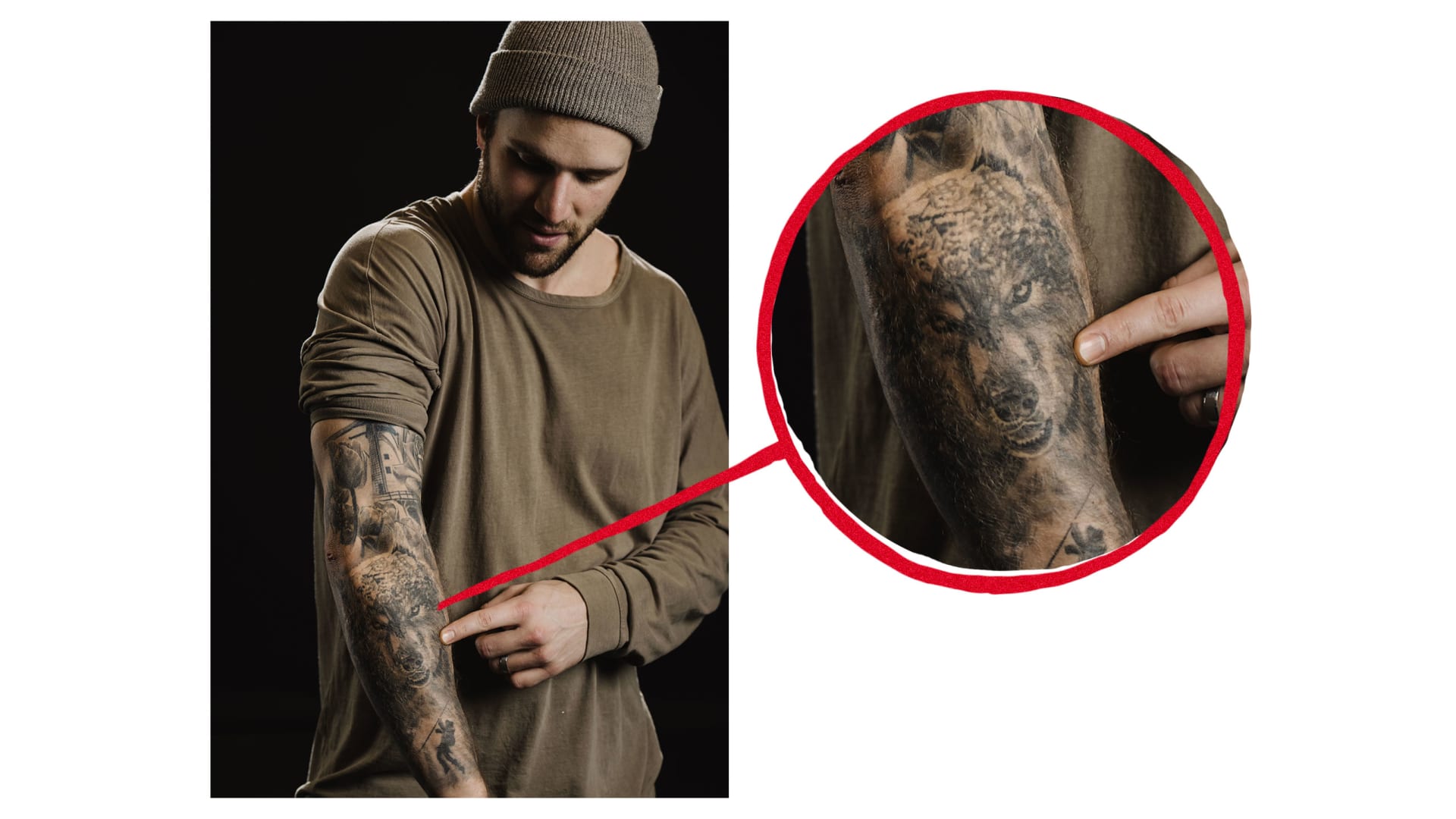
The wolf tattoo

Riley Sheahan tattoos: inline tattoo evidence

Sheahan traces the wolf to The Wisdom of Wolves: Lessons from the Sawtooth Pack, a book about people who lived with wolves and what they learned from the pack. He grew up with dogs and says he has always cared about animals.

He also connects the wolf to hockey: a team needs each player to do their part and stay connected to the group. The record player points to his childhood and his father; the wolf reflects an idea about teamwork that still matters to him.

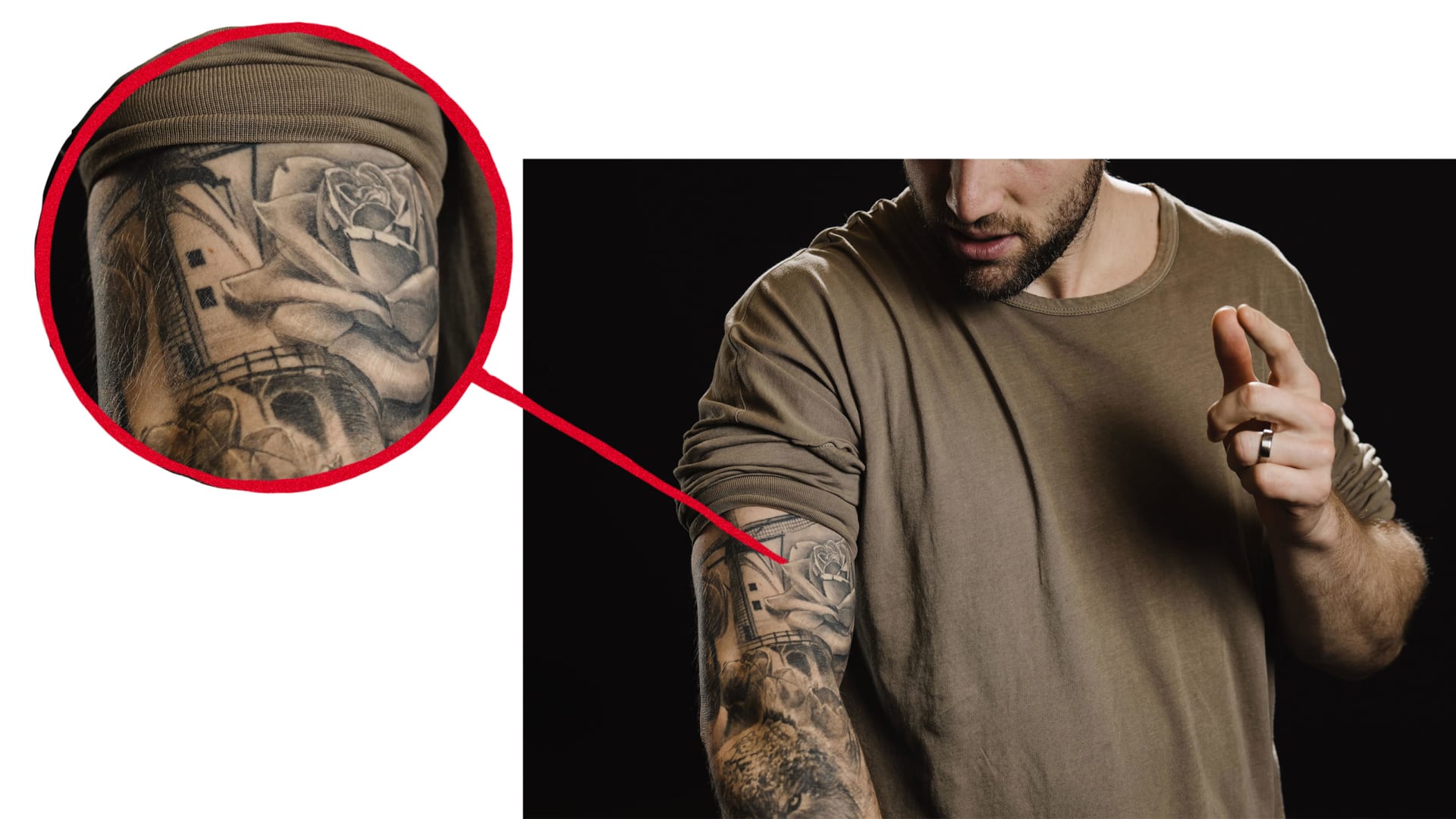
Windmill and tulips tattoo

Riley Sheahan tattoos: inline tattoo evidence

The windmill and tulips are for Sheahan’s grandmother, who is from the Netherlands. He describes her as a devoted supporter who follows his games despite being legally blind. The windmill and flowers refer to her Dutch heritage without using a name or date.

Together, the pieces turn a place into a family tribute. Sheahan can look at the images and think of his grandmother; the connection doesn’t have to be obvious to everyone else.

Building a sleeve around hockey

Riley Sheahan tattoos: inline tattoo evidence

Sheahan had the sleeve done over three days, with sessions of about five or six hours. He waited until the NHL season was ending because fresh work needed time to heal. Some parts were uncomfortable, though the time with the artist also became part of the experience.

The right arm gives the designs room, but hockey equipment covers most of it during a game. The sleeve is easier to see in short sleeves or training photos, then disappears under his gear.

Designing the remaining space

Riley Sheahan tattoos: inline tattoo evidence

Sheahan left space near the upper arm because he expected more family memories to add later. He mentioned his son as one of the people he wanted to include. The open area was planned, not a gap he had to fill immediately.

That gives the sleeve room to change without crowding its existing tributes to his father and grandmother. Sheahan didn’t try to fit every important moment into the first sessions.

Riley Sheahan away from the boards

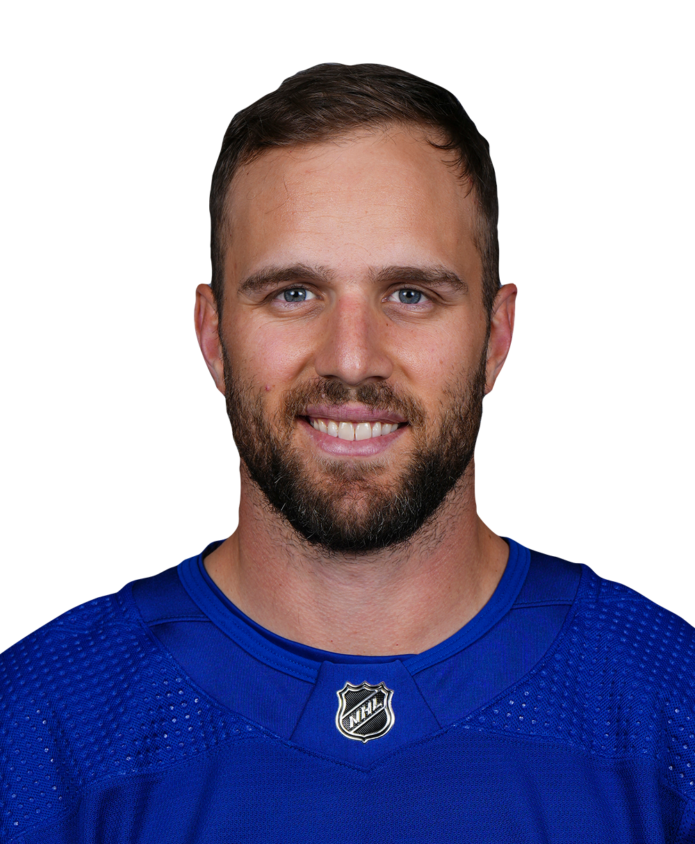
Riley Sheahan in a contextual photograph: contextual celebrity photo; not tattoo evidence; not tattoo evidence

The contextual photo shows Sheahan away from an on-ice moment; it isn’t close-up evidence of a particular tattoo. The NHL feature is the source for the designs and meanings, while game photos show how the right-arm sleeve is usually covered by his uniform.

What the photos can and cannot prove

The Kraken feature lets Sheahan identify the record player, wolf, windmill and tulips, and the photos show black-and-grey work across his right arm. They don’t provide a complete catalogue of every smaller mark, so those details are best left open.

The sleeve draws on separate parts of his life: music and his father, animals and teamwork, and his grandmother’s Dutch heritage. Those references make it personal without needing every image to share one subject.

Final look

Sheahan’s sleeve brings family, hockey and music together, with a wolf that stands for the team connection he values. The record player is a memory of his father; the windmill and tulips point to his grandmother. He also left room to add his son and other family moments later.

The Buffalo Sabres interview below offers a little more of Sheahan talking about hockey and the perspective he brought to the game.

Lukas Gage Tattoos: Arm Ink, Rib, Back and Calf Tattoos

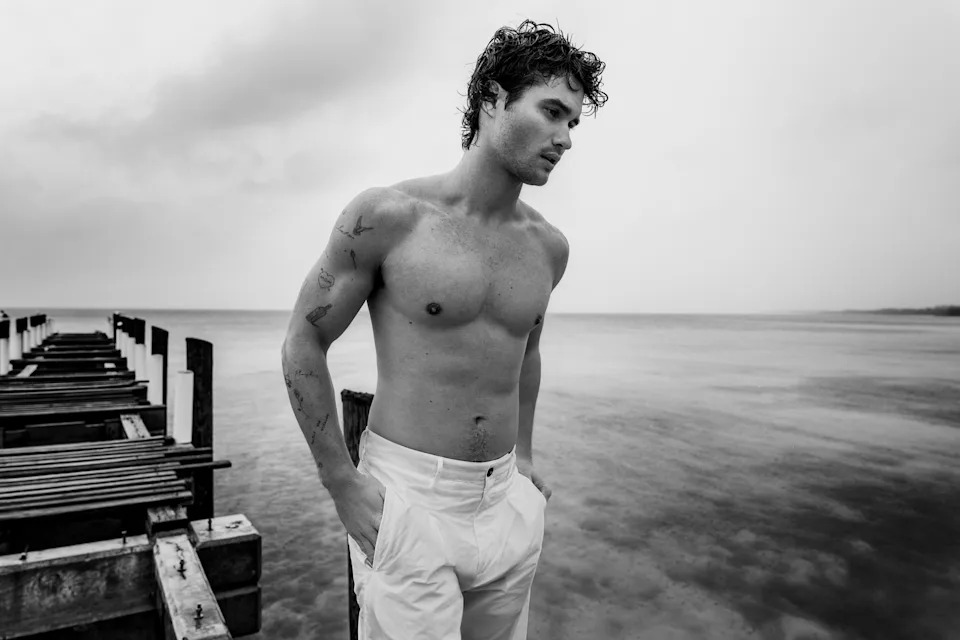
Lukas Gage’s tattoos are easiest to see outside a costume. A shirtless outdoor photo shows dark ink across his left arm and shoulder. In a Guardian interview, he also said he has tattoos on his ribs, back and calf, though the available pictures don’t clearly show those designs. This is what the photos and his own account can support.

The tattoos we can actually see

Lukas Gage tattoos: inline tattoo evidence

The black-and-white photo shows tattoos across Gage’s left arm and shoulder. The angle makes some lines hard to distinguish, and there’s no color information, but the placement is clear. It reads as a connected area of ink rather than one isolated mark.

The image doesn’t let us identify every symbol. It’s enough to describe the visible coverage without turning shadows into a list of designs.

The placements Gage has discussed

In a Guardian interview, Gage said he has tattoos on his ribs, back and calf. He also recalled a Mad Men costume fitting where agents told him his tattoos had hurt his chances of getting work. The interview names those placements, but doesn’t give a design-by-design account of the ink.

Why the placement matters for an actor

For an actor, tattoos can affect how a costume works for a role. If a character’s skin is meant to be bare, production may need to cover visible ink and keep the makeup consistent across scenes. Gage’s story about the Mad Men fitting shows that agents were thinking about his tattoos in relation to a period production, not judging the artwork itself.

That doesn’t make the tattoos a mistake. It shows how personal ink can complicate a particular job, while other roles or costumes may not expose it at all.

Lukas Gage on screen

Lukas Gage in a contextual photograph: contextual celebrity photo; not tattoo evidence; not tattoo evidence

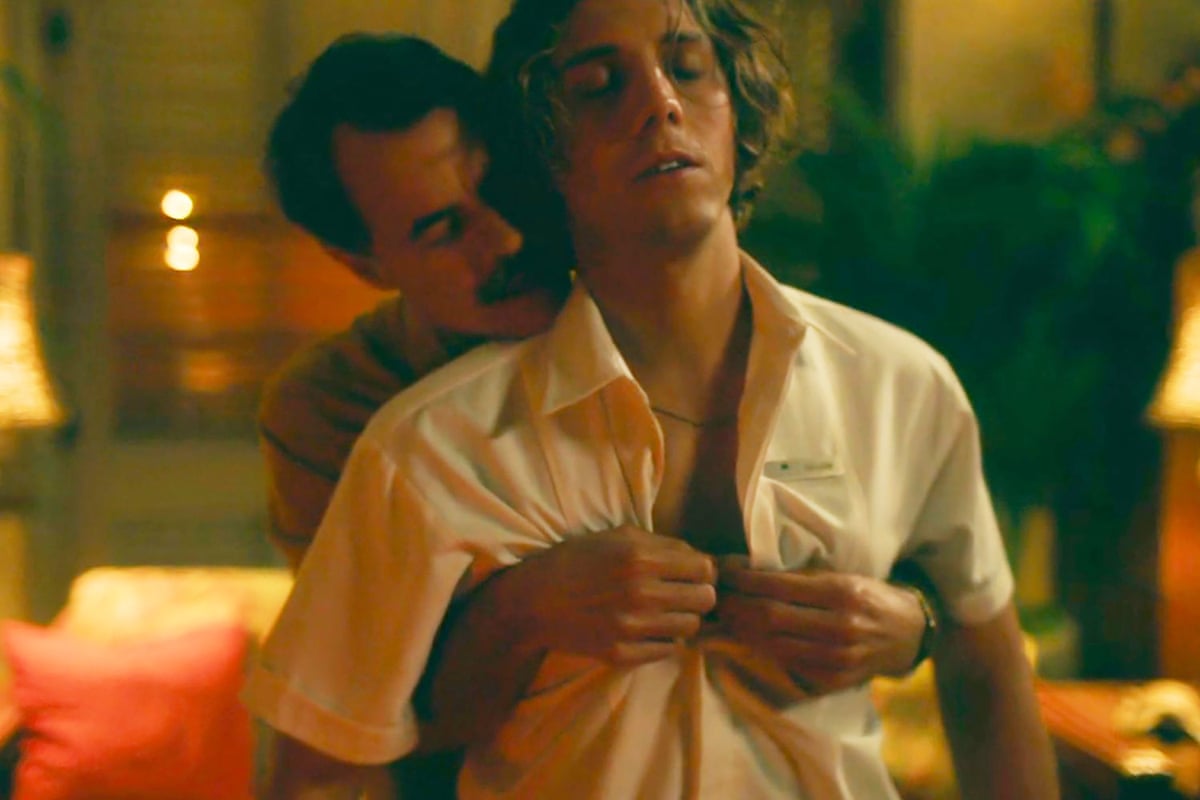
This still from The White Lotus shows Gage in a white shirt, with Murray Bartlett behind him. It’s a contextual image, not tattoo evidence. The clothing and framing help explain why his ink may be invisible in a scene, but they can’t tell us what’s under the fabric.

How the visible shapes read

The outdoor photo gives a limited style impression: against black-and-white lighting, the marks look dark and established across the shoulder and upper arm. It doesn’t confirm the original colors or prove that every piece uses blackwork. A different image could show details this one loses.

The shoulder and upper arm make a broad area for connected work, but the photograph doesn’t reveal every edge clearly enough to describe the full design.

Gage’s screen work and costumes

Lukas Gage in a contextual photograph: contextual celebrity photo; not tattoo evidence; not tattoo evidence

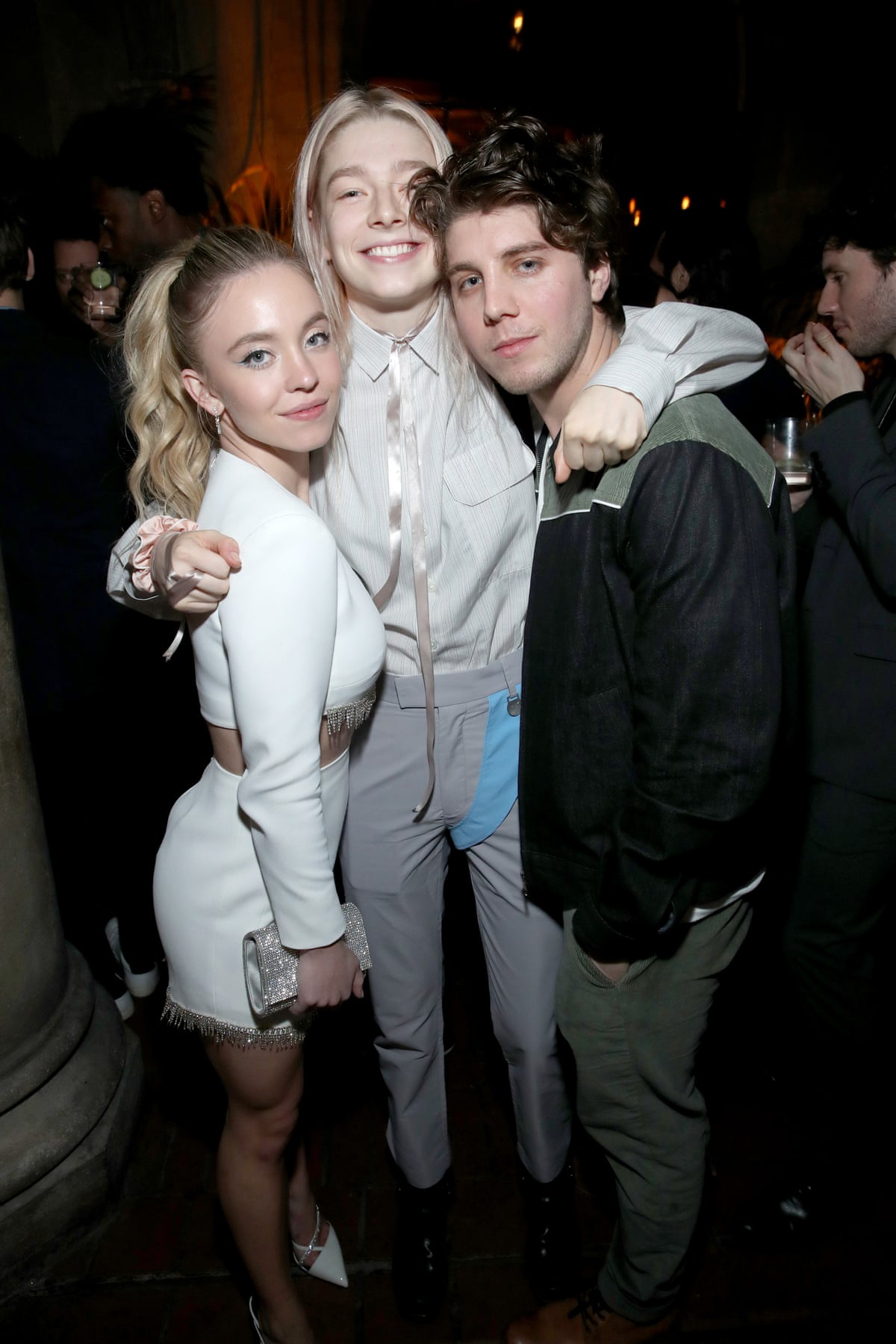
This event photo places Gage with his Euphoria co-stars. It isn’t a tattoo reference, and the group framing leaves little room to inspect one person’s arm. His public photos range from jackets and layered outfits to short sleeves, so how much ink appears changes with the clothing and camera angle.

Why the photos need different jobs

Lukas Gage in a contextual photograph: contextual celebrity photo; not tattoo evidence; not tattoo evidence

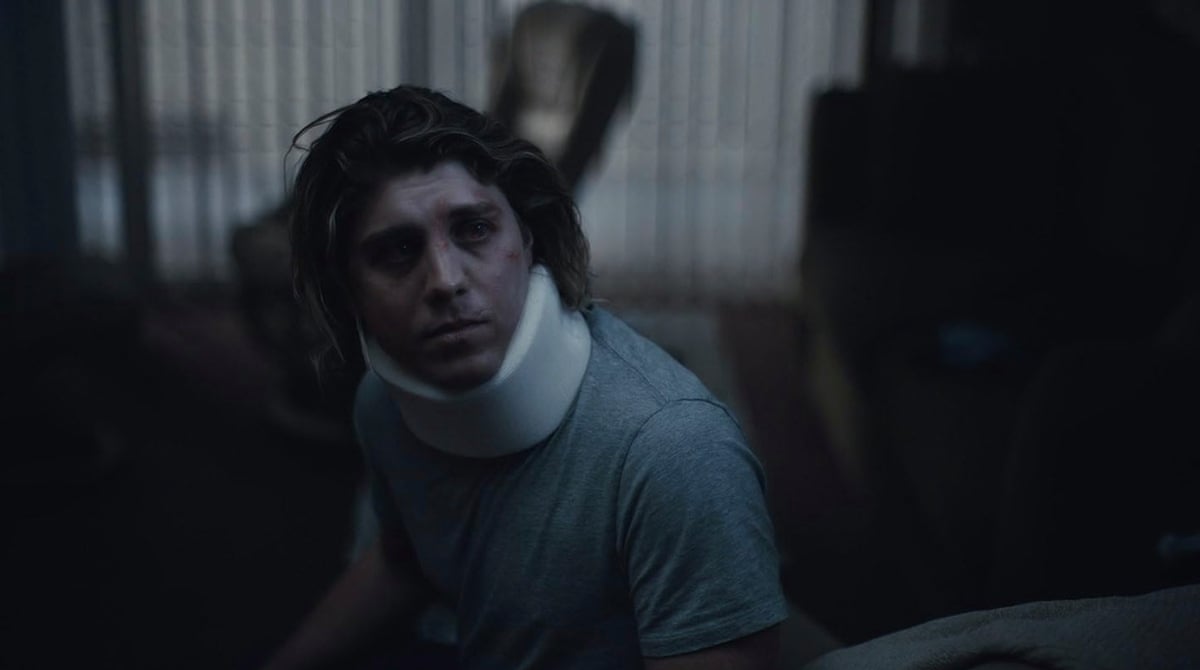
This Euphoria still shows Gage in a neck brace and grey shirt, with no tattoos visible. It helps place him in a role, but it can’t confirm or rule out ink beneath the costume. A portrait tells us who’s on screen; a tattoo photo needs to show the relevant skin clearly.

How to use the placements as inspiration

If you’re considering a similar layout, start with how visible you want the tattoo to be. Ribs and back are usually covered by clothes, while an arm or calf can show in short sleeves or shorts. Shoulders, ribs and calves also move as you walk or lift your arms, so ask an artist to consider how the design will sit in more than one position.

A different visual frame

Lukas Gage in a contextual photograph: contextual celebrity photo; not tattoo evidence; not tattoo evidence

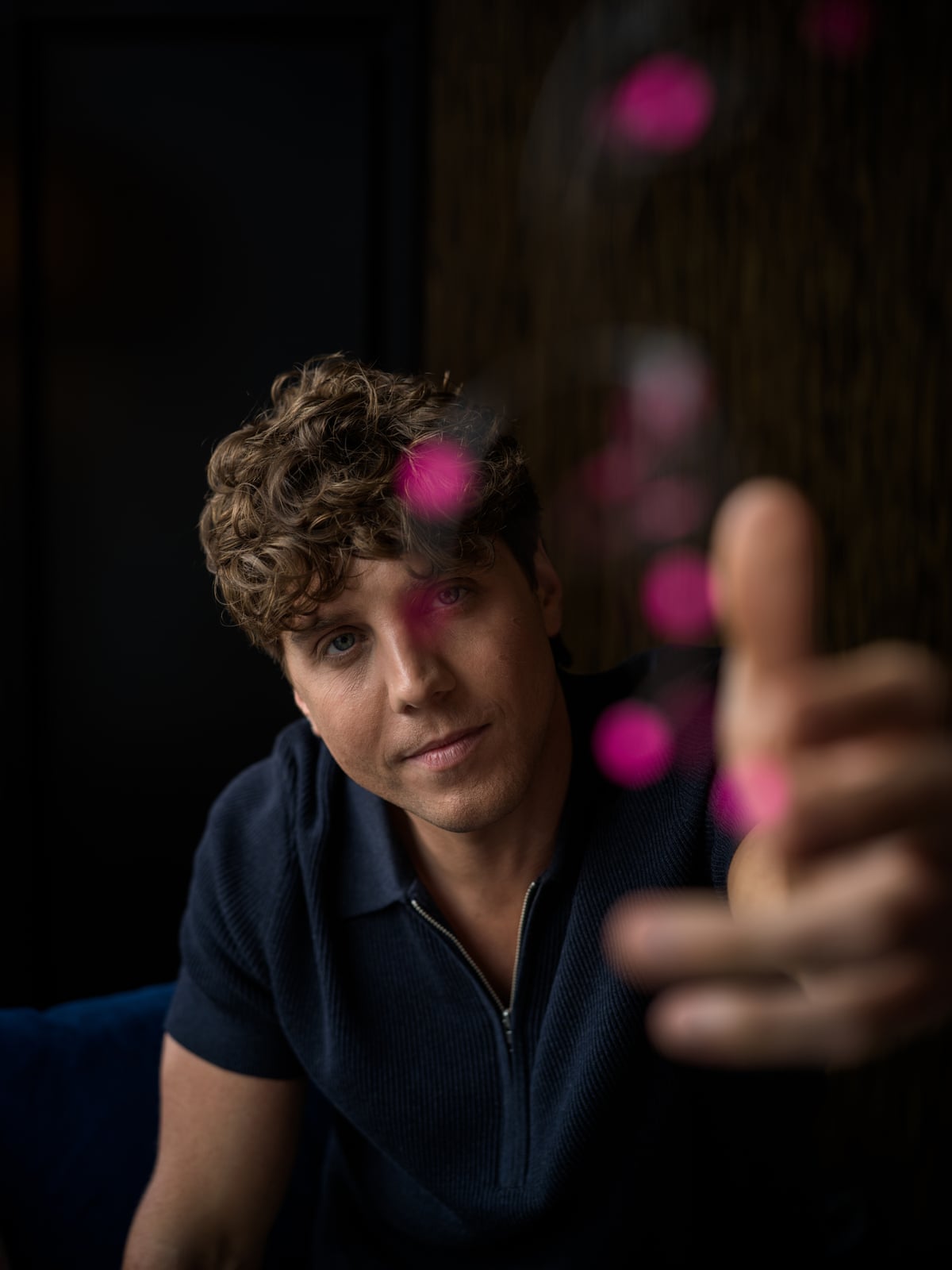
This close portrait shows Gage’s face and the pink reflections also seen in the Guardian feature, but it doesn’t show his tattooed areas. It belongs as context for the person, separate from the shirtless photo that provides the clearest evidence of his ink.

What we can say with confidence

Gage has visible tattoos across his left arm and shoulder, and he has discussed tattoos on his ribs, back and calf. He has also described a Mad Men fitting where agents said the ink had hurt his work chances. The available sources don’t identify every symbol or give a full catalogue, so those details should stay open. Clear evidence beats a confident guess.

The interview below is about Gage’s memoir and career, not a tattoo reveal. It offers a chance to hear him speak in his own voice.

Ferrugem Tattoos: The Tiny Arm Tattoo His Wife Gave Him

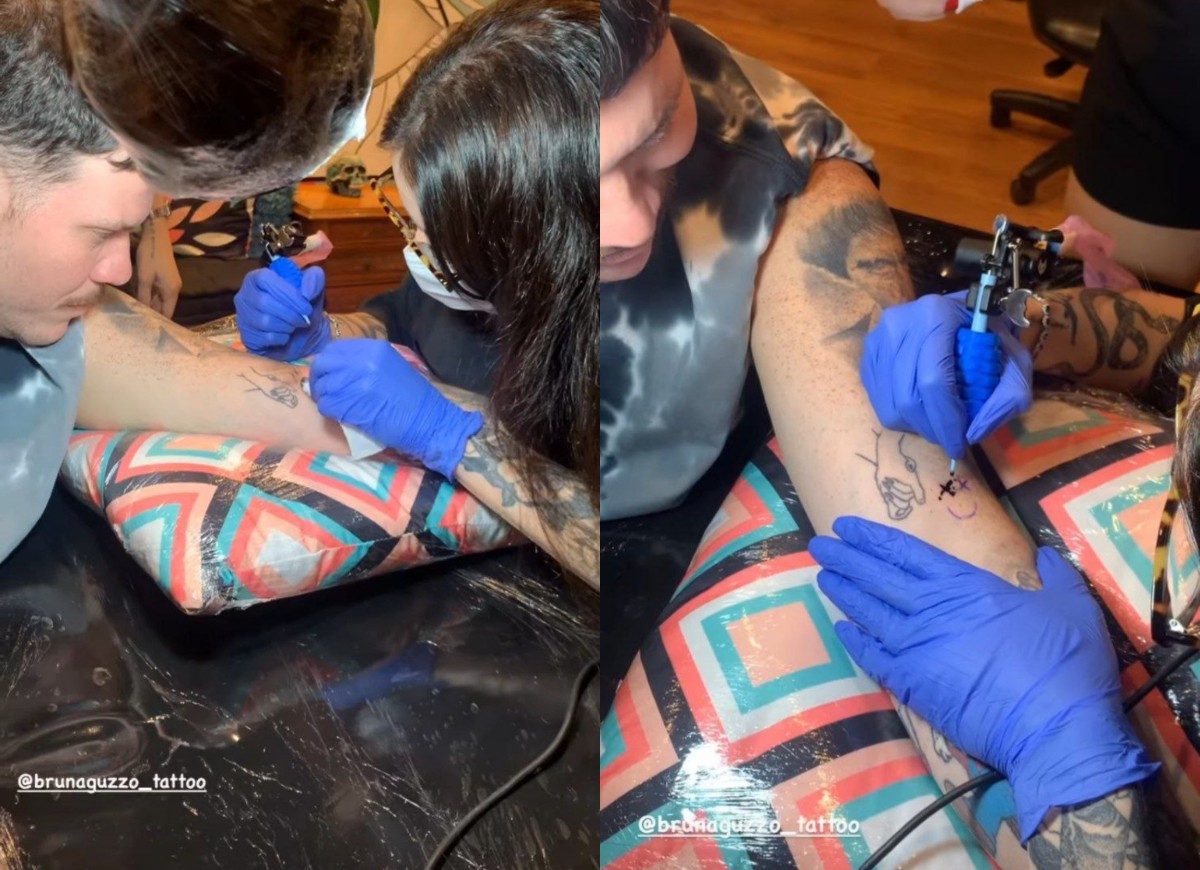
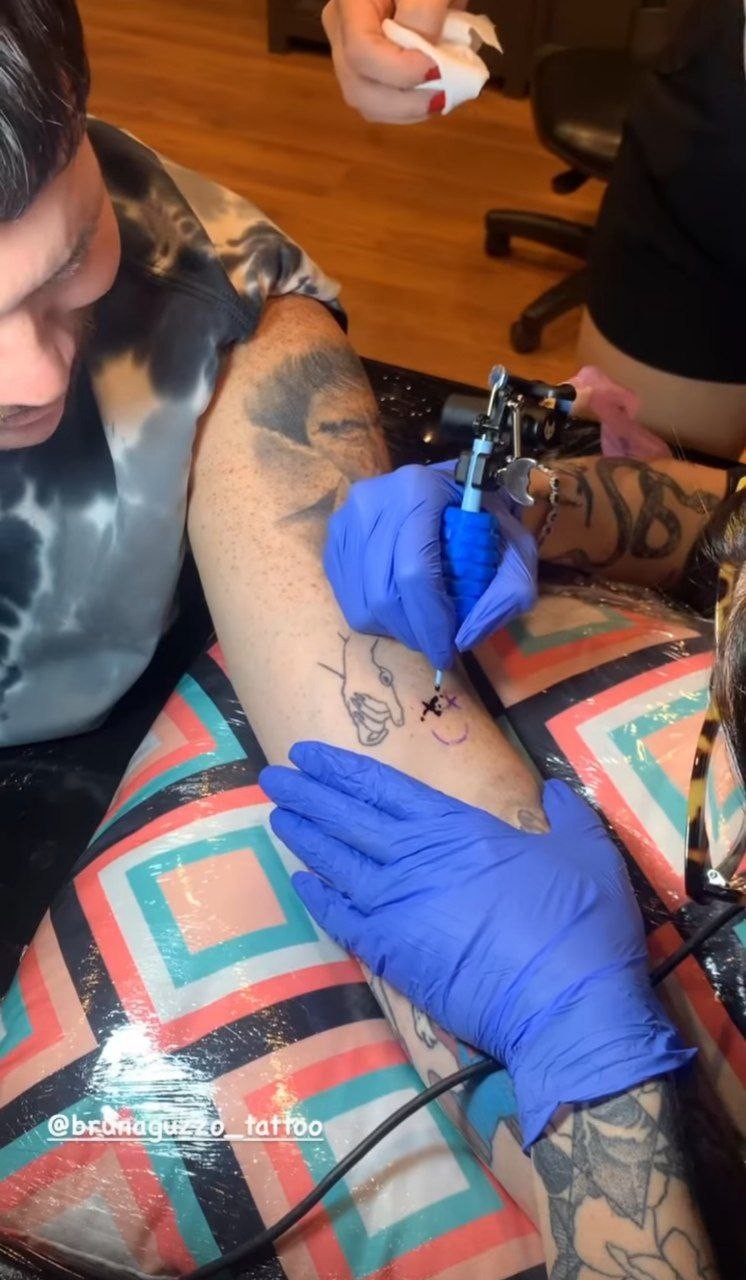
Ferrugem’s clearest documented tattoo is a tiny face with Xs for eyes and a curved smile. In 2021, his wife, Thaís Vasconcellos, gave him the arm tattoo during her first time using a tattoo machine. Quem covered the studio session and shared photos of the design taking shape.

The report doesn’t attach a grand meaning to it, so there’s no need to invent one. The story is about a couple trying something together, and a small, slightly wonky face that kept the memory of that night.

The tattoo his wife made

Ferrugem tattoos: Genuine tattoo-session photograph from the documented Quem report.

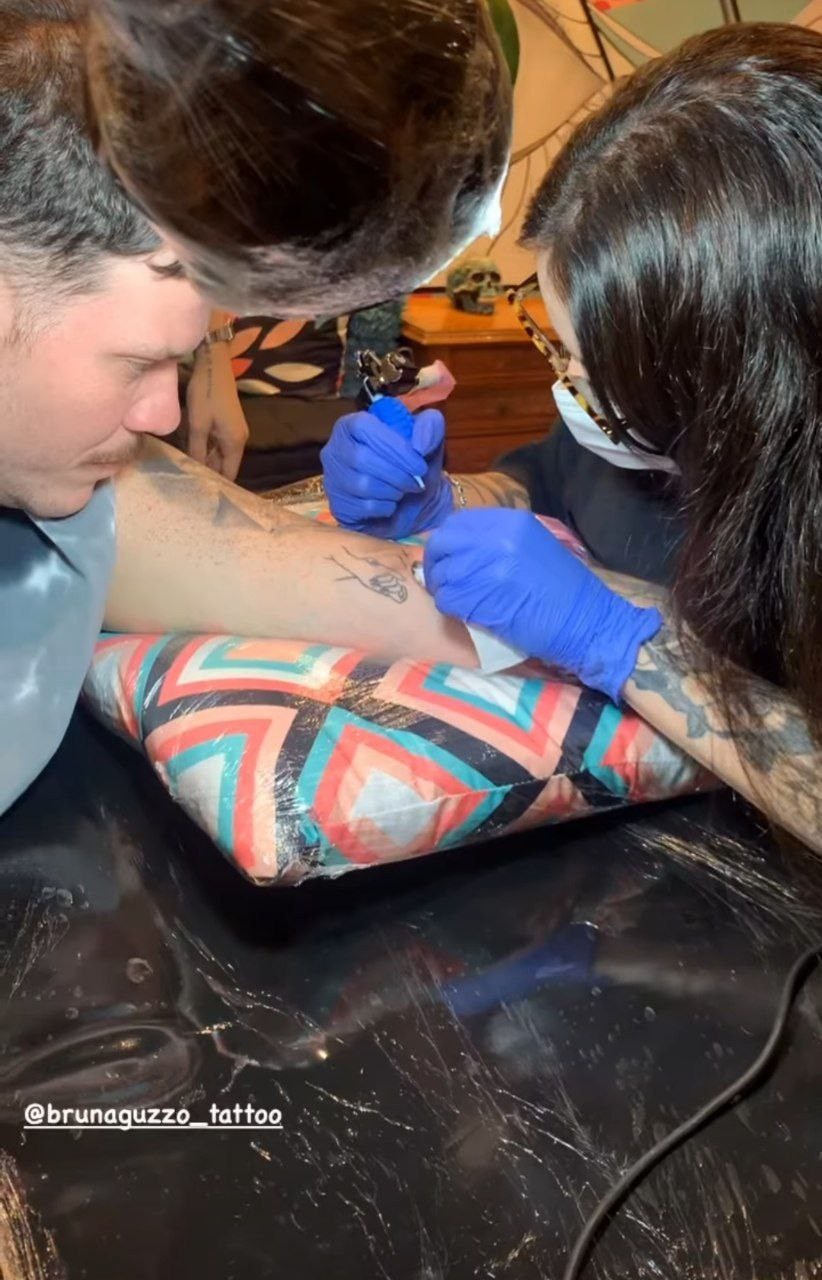
Quem reported that Thaís practiced with the machine and drew lines on foam before tattooing Ferrugem’s arm. He joked about having a beginner do the work and asked whether it might “go wrong.” The risk was part of the fun, but the setting and practice were part of the story too.

The result is a simple face: crossed-out eyes and a smile. There’s no reported secret code or formal tribute behind it. It can read as a private joke, but what’s clear from the account is that it marks a shared experience: Thaís’s first go with the machine and Ferrugem’s decision to let her try.

Ferrugem tattoos: Distinct genuine tattoo-session photograph from the same documented report.

The design gets its character from a few bold marks. The X eyes give the face a mischievous look, while the curved mouth keeps it light. It doesn’t need shading or extra detail to read clearly. Its appeal is as much in the story of the appointment as in the drawing itself.

Why a tiny face works as a tattoo idea

Ferrugem tattoos: Distinct genuine tattoo-session photograph from the documented Quem report.

A small face can feel funny, sweet or deadpan with only a few changes to the eyes and mouth. Ferrugem’s is legible because its features are uncomplicated. That matters at a small size: fine details can blur as a tattoo heals and ages, while a clear expression is easier to recognize.

If you like the idea, choose an expression tied to something in your own life: a family joke, a pet’s look or a moment from a trip. You can keep the drawing minimal without copying Ferrugem’s design. Placement is part of that choice too. The forearm is easy to show or cover; near the wrist, a small face is more noticeable; higher on the arm, it can stay more private. Think about how visible you want it and how the area fits your daily life.

The personal part is the appointment

Ferrugem in a contextual photograph: Contextual celebrity photograph for the personal and family discussion; explicitly not tattoo evidence.; not tattoo evidence

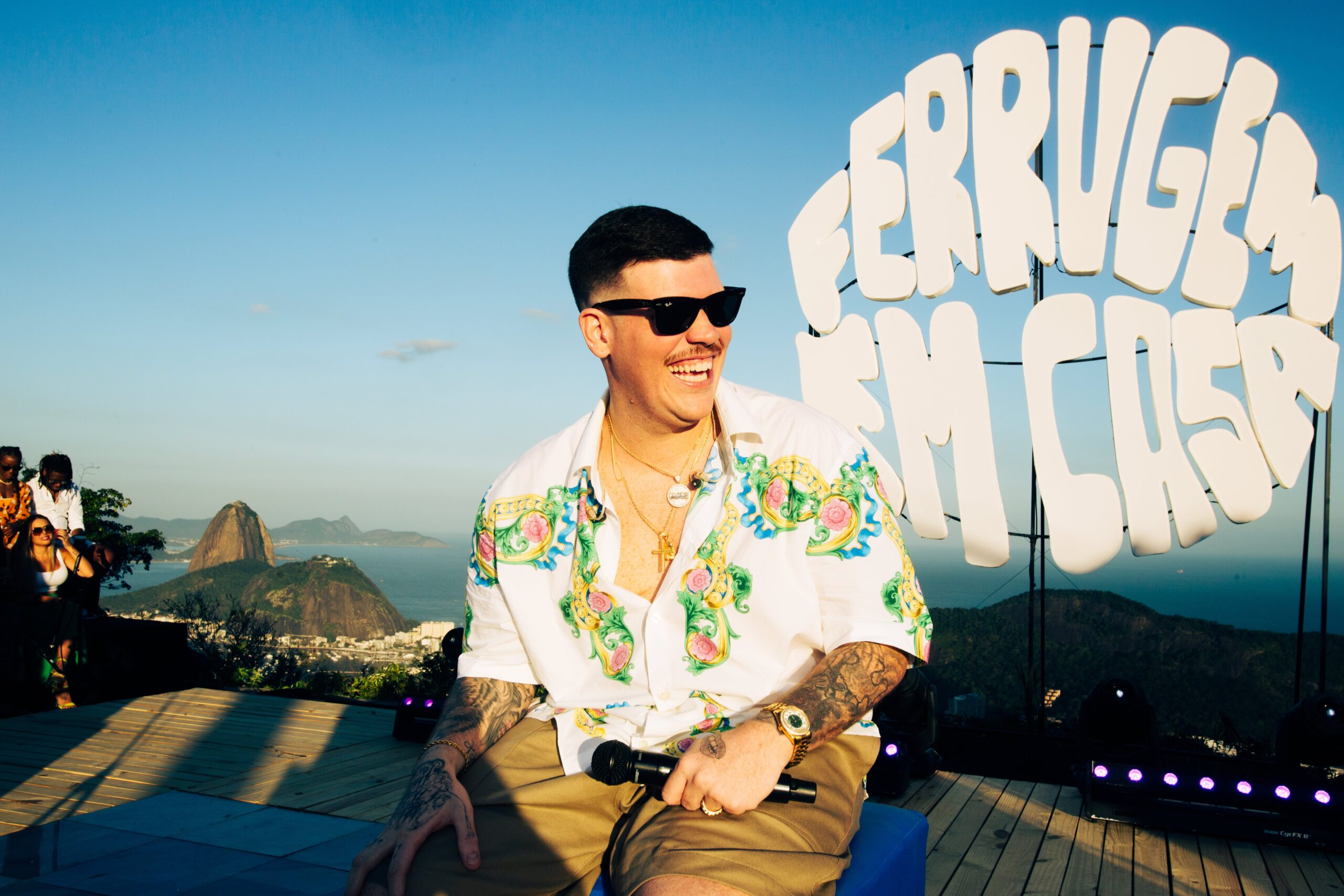
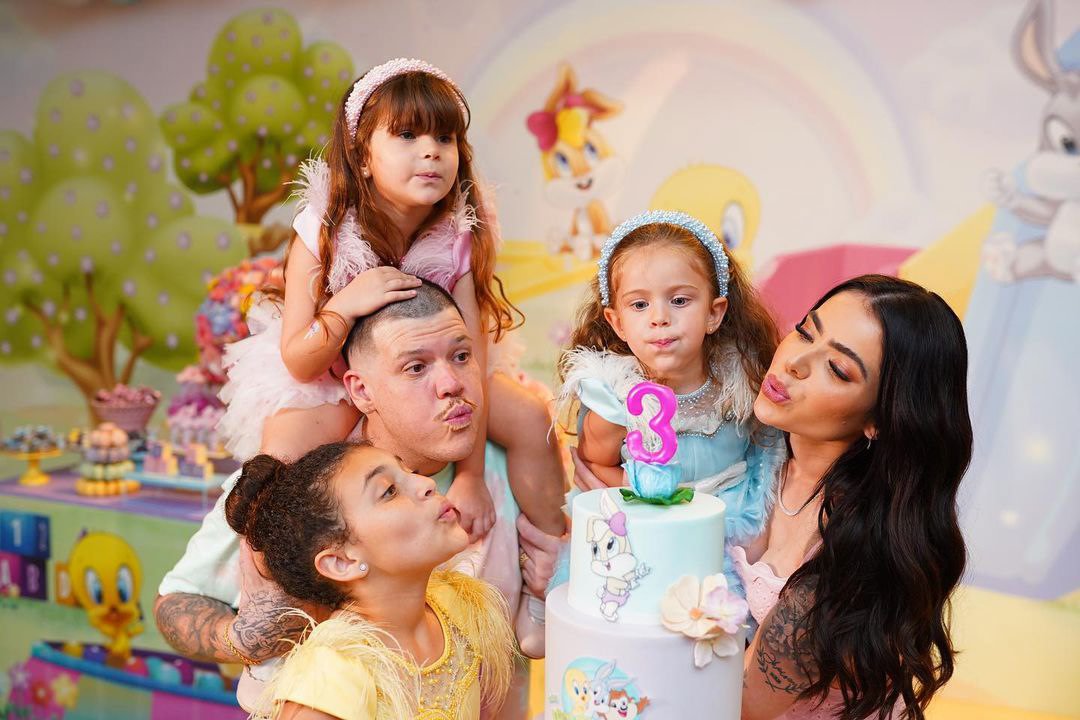
The story’s personal detail is the session with Thaís. She was his wife, trying something new, and he agreed to be her first tattoo client. The image itself doesn’t have to carry both their names or initials for the memory to matter.

For couples, siblings or friends, that can be a useful idea: share the appointment or help shape a design without choosing matching tattoos. A small sketch, odd character or intentionally uneven line may feel more personal than a polished symbol picked just because it looks good.

There’s a difference between keeping that handmade feel and copying the risky part of the story. Ferrugem’s session took place at a studio, with practice on foam first. For your own tattoo, choose a qualified professional who can talk through hygiene, placement, aftercare and how the design may age. A sentimental idea doesn’t replace training.

What the photos show, and what they don’t

Ferrugem in a contextual photograph: Contextual family photograph for the personal-style section; explicitly not tattoo evidence.; not tattoo evidence

Quem’s studio photos connect the tattoo to a particular session and show the face being worked onto Ferrugem’s arm. They give the story a date and setting, rather than leaving readers to guess from a cropped photo of an older piece.

The images don’t establish the meaning or full history of every tattoo he has. Ferrugem has talked about liking tattoos, but that doesn’t tell us what each visible design represents. The article sticks to the arm tattoo that was documented and leaves the rest open.

That’s a useful way to look at celebrity tattoo photos in general. Notice the scale, placement or linework that catches your eye, then adapt those choices to something personal. A photo can offer a starting point without serving as a complete design brief.

Ferrugem’s style beyond the studio

Ferrugem is known for pagode and samba. In a 2022 interview with A Tribuna, he also spoke about enjoying clothes, changing his hair and getting tattoos. That gives some context for the session with Thaís: he has described body art as one part of his wider style, not as a statement that has to be solemn.

A tattoo can be playful and still matter. Ferrugem’s tiny face may be a joke, a shared memory or simply a design he likes. Those reasons can sit together without needing a deeper explanation.

Ideas to take to an appointment

If the tiny face appeals to you, tell your artist what you like about it: the compact size, clear expression or loose, hand-drawn feel. Bring a few examples of linework, then explain the person, memory or joke you want the design to suggest. Let the artist simplify it while keeping that detail.

Be realistic about scale. Eyes, teeth and lettering need room; packed into a very small space, they can blur over time. A slightly larger design with clean, confident lines may stay easier to read than a miniature portrait.

You can ask for a professional finish that still feels casual, with a little wobble or sketchbook quality. There’s no need for an untrained friend to use a tattoo machine to get that effect. Give the image its own reference, too: a family expression, a pet or a moment you want to remember will make the design yours.

Why this story sticks

Ferrugem’s documented tattoo is memorable for its small scale and straightforward story. Thaís was trying the machine for the first time, Ferrugem let her tattoo his arm, and the session left him with a simple smiling face. That’s enough to make the piece specific without assigning it a meaning he hasn’t shared.

For inspiration, take the idea of pairing a clear design with a memory of your own. Keep the expression readable, choose a placement that suits you and leave the tattooing to a trained artist. The point isn’t to copy Ferrugem’s arm; it’s to come away with something that recalls your own story.

For a bit of Ferrugem’s musical world, watch the official lyric video for Eu Juro below.

Lady Donli Tattoos: Hand Linework, Arm Ink and Alté Style

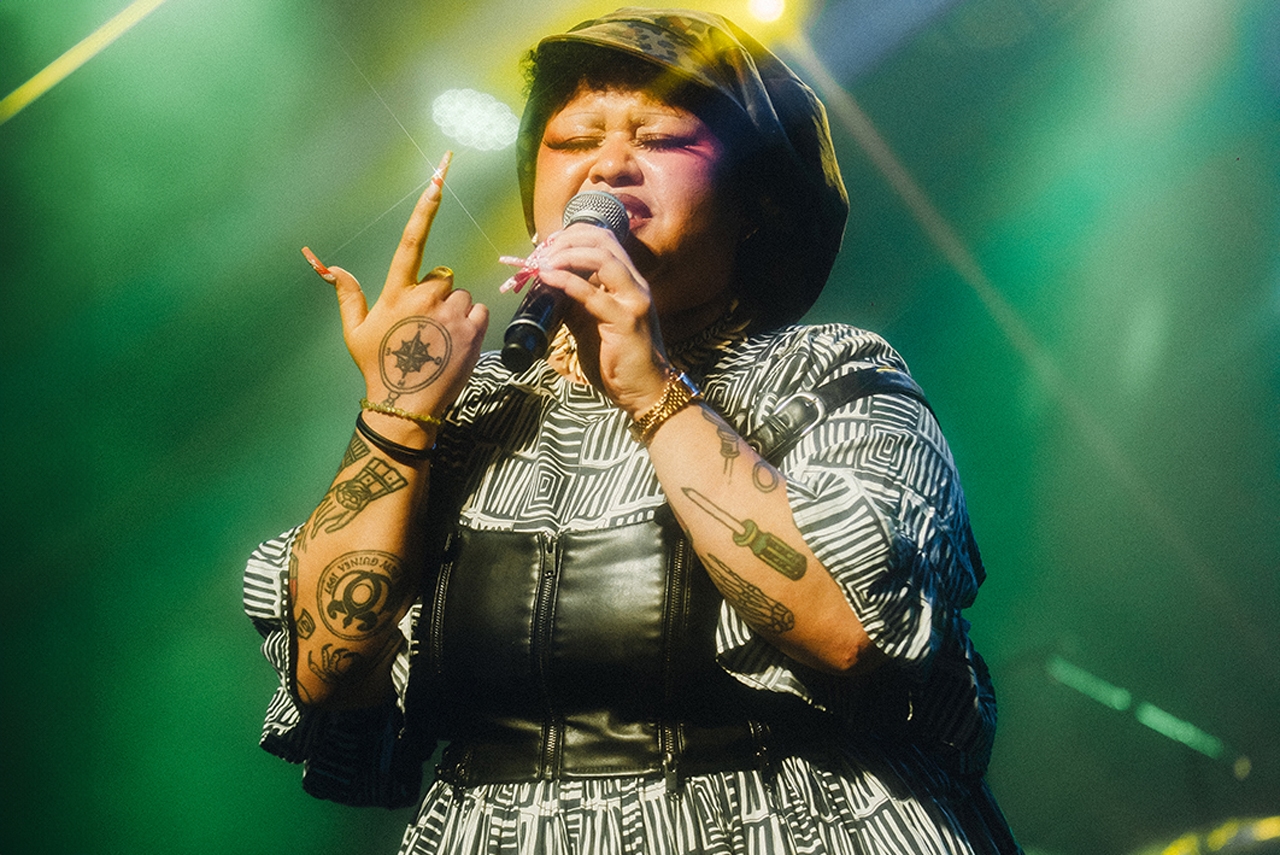
Lady Donli’s clearest documented tattoo is a black linework design on the back of her left hand. A 2025 Guardian profile points it out during a video conversation; other published photos show more ink on her arms, though they don’t explain every mark. That distinction matters: the images give us plenty to describe, but not a confirmed meaning for each tattoo.

The Nigerian singer and songwriter’s public style, like her music, brings together different influences. She has spoken about Northern Nigerian sounds alongside jazz, rock, Afrobeat and alternative R&B. Her tattoos sit within that wider visual mix, beside jewellery, clothing and the movement of performance.

Lady Donli’s hand tattoo is the clearest starting point

Lady Donli tattoos: Genuine tattoo photograph showing Lady Donli’s visible hand linework in the Guardian profile.

The Guardian’s 2025 profile identifies a tattoo on the back of Lady Donli’s left hand and describes its look as tribal linework. That gives us a clear starting point: a black graphic design in a prominent place. The article doesn’t give a personal explanation for it.

The word “tribal” is a visual description in the profile, not proof of a specific tradition or cultural lineage. It’s safer to describe the tattoo as compact black linework with a tribal-inspired look than to assign it a heritage or meaning she hasn’t shared.

A hand tattoo is hard to hide and always in view. It sits beside rings and bracelets, and it appears in the gestures people make while talking or performing. If you like the placement, consider that everyday visibility before settling on a design.

The linework and symbols in close view

Lady Donli tattoos: Genuine tattoo photograph showing visible hand and forearm linework in a close Guardian portrait.

Close portraits show additional linework between the wrist and forearm, including short bands and compact graphic shapes. The angle and lighting make some details hard to distinguish, so it’s more accurate to describe the overall look than to give every mark a name.

The black ink holds its shape against the rings, metal cuffs and bright beads in the photos. The jewellery catches the light and moves; the tattoos stay fixed. Hair beads, shells, coloured fabric and painted nails add to the setting without making the ink look like an accessory on its own. The surrounding style changes how the lines read, just as stage lighting can change a plain studio portrait.

What her arm tattoos actually show

Lady Donli tattoos: Genuine tattoo photograph showing the visible arm collection at a natural portrait distance.

The wider Guardian portraits show open skin, smaller marks and larger sections of linework sharing her arms. They don’t look like one uninterrupted sleeve. Some designs are clear; others could be misread once the photo is compressed or the arm turns away from the camera.

What the images support is a collection of black linework, repeated bands and graphic shapes across the hands and arms. They don’t tell us what each symbol means or who a portrait might represent. A straight-on portrait, a seated photo and a performance shot can also show different sides of the same placement, rather than new tattoos.

Performance photos make her tattoo placement easier to read

Lady Donli tattoos: Genuine tattoo photograph showing the arm and hand placement from a distinct close portrait angle.

In performance photos, Donli holds a microphone, points and reaches toward the crowd. Those gestures show how the arm and hand pieces sit in motion, often beside bracelets, sleeves and stage lighting. A design on the back of the hand may face the camera only briefly, then become the most visible detail in the frame.

One published image pairs the tattoos with a patterned outfit, black leather and green and blue lights. The linework remains visible against a busy background. That’s a useful view of placement; it still doesn’t reveal private meaning. A photo can show where a tattoo sits without explaining why it was chosen.

The hand and arm tattoos in performance

Lady Donli tattoos: Genuine tattoo photograph showing Lady Donli’s hand and arm tattoos during a live performance.

The live photograph shows the hand and arm tattoos in the middle of a set, not posed for close inspection. They add dark, graphic shapes to a look that can shift from one outfit or colour palette to another. Hair, clothes and accessories change; the ink stays part of her public image.

That consistency doesn’t make the tattoos a logo. Their appeal comes from how they belong to Donli’s gestures, music and styling. Copying the exact lines would miss the personal part; the useful cue is choosing a clear shape and a placement that feels like yours.

Lady Donli’s Nigerian and Pan-African identity

In the Guardian interview, Donli talks about Northern Nigerian influences, her father’s Kaduna roots, her childhood in Abuja, and her interest in Hausa and Sahel-inspired sounds. She also describes drawing on jazz, psychedelic rock, African music and other influences. That context helps explain the broader visual world around her.

It doesn’t establish that the hand tattoo represents a particular tradition. The profile identifies the linework and shows where it sits, but doesn’t attach a detailed meaning to it. Her cultural identity can be discussed through what she says in the interview; the tattoo itself should be described from the evidence in the photographs.

That distinction leaves room to appreciate her mix of influences without treating a visual resemblance as proof of heritage. For tattoo inspiration, take a style or shape you genuinely like and connect it to your own experience.

Why one confirmed piece can still tell us plenty

The clearest tattoo detail here is the hand linework identified in the Guardian profile. The photos show other ink on her arms. That’s enough to discuss placement, contrast, linework and how tattoos sit alongside performance styling, without turning indistinct shapes into a catalogue of named designs.

A celebrity’s tattoo doesn’t need a public explanation to be interesting. You can notice how a graphic design works on a moving hand or beside jewellery while leaving its personal meaning alone. The absence of a reported story isn’t an invitation to fill in the blank.

How her style can inspire your own ideas

Start with what catches your eye: the compact hand placement, the black linework or the way the tattoos sit beside jewellery and expressive clothing. Use those qualities to brief your artist rather than asking them to copy Donli’s exact design.

Think about how visible the placement will be. Hand ink shows up in everyday gestures and is harder to cover than a forearm tattoo. Look at a proposed design at its real size and with your wrist bent; details that look clear on a screen can crowd together on skin.

For graphic linework, ask to see healed examples, not only fresh studio photos. Talk about how much space the design needs and how sun or friction may affect it. A simple tattoo still depends on careful drawing and a size that lets its lines remain clear.

The final read on Lady Donli’s style

Lady Donli’s visible tattoos feel integrated with her clothes, jewellery and performance style. The hand design is the clearest documented piece; photos show additional arm work, but don’t confirm what each mark means. The linework is easy to recognise without a made-up story attached to it.

Take the placement and contrast as inspiration, then build a design around something from your own life. For more of Lady Donli’s creative world, watch the official “Corner” video below.

Lucas Torreira Tattoos: Lion, Club Crest, Portrait and Barrio Unión Ink

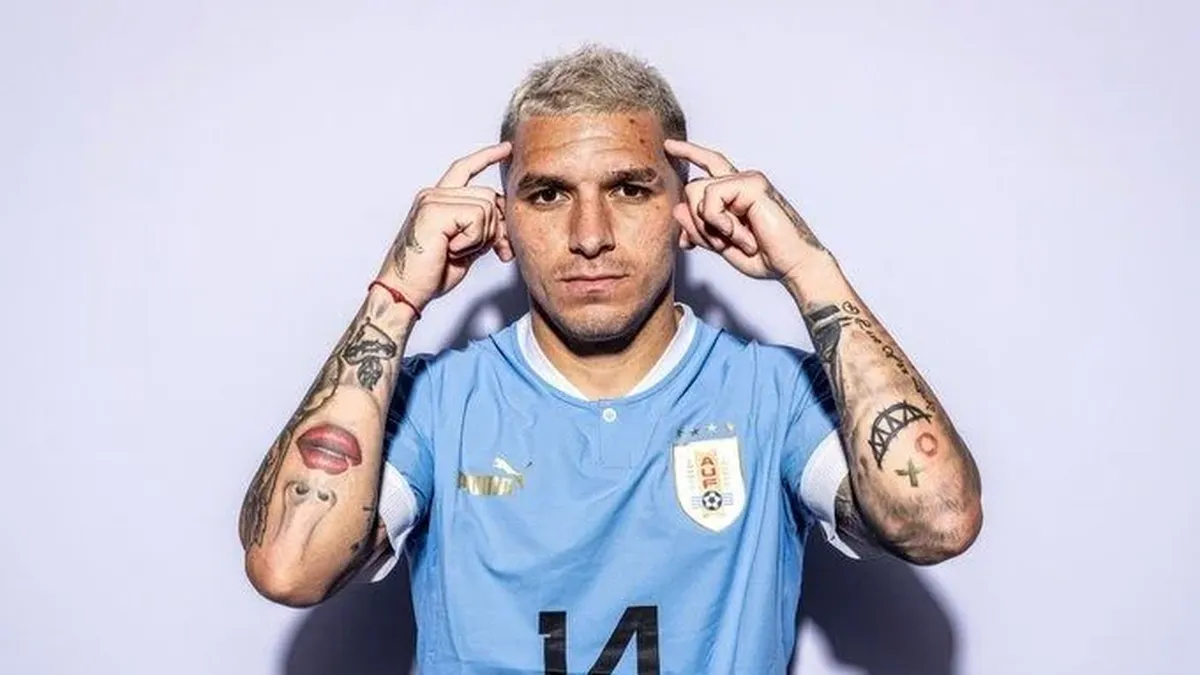
Lucas Torreira has a mix of large images, lettering and smaller symbols. The stories he has explained most clearly point to strength, family and home in Fray Bentos. Other details are visible in photos, but their meanings haven’t been confirmed, so it helps to separate what he has said from what can only be described.

In an Arsenal interview, Torreira said he chose the lion on his arm because he liked the design. He also connected it to strength, Uruguay, his family, and how he sees himself on and off the pitch. A crest from his childhood club and the words “Barrio Unión,” the neighbourhood where he grew up, are other documented links to home.

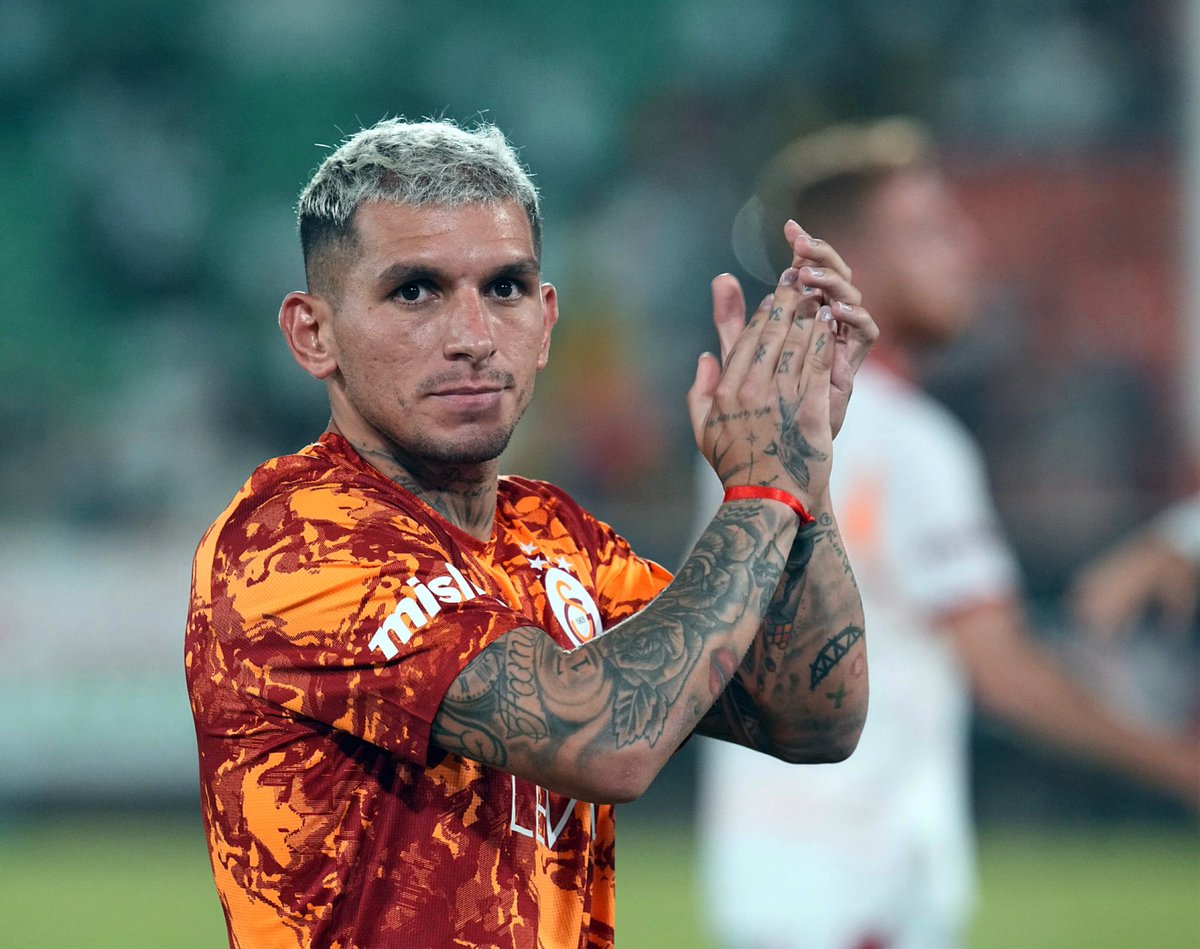
The lion and Torreira’s arm ink

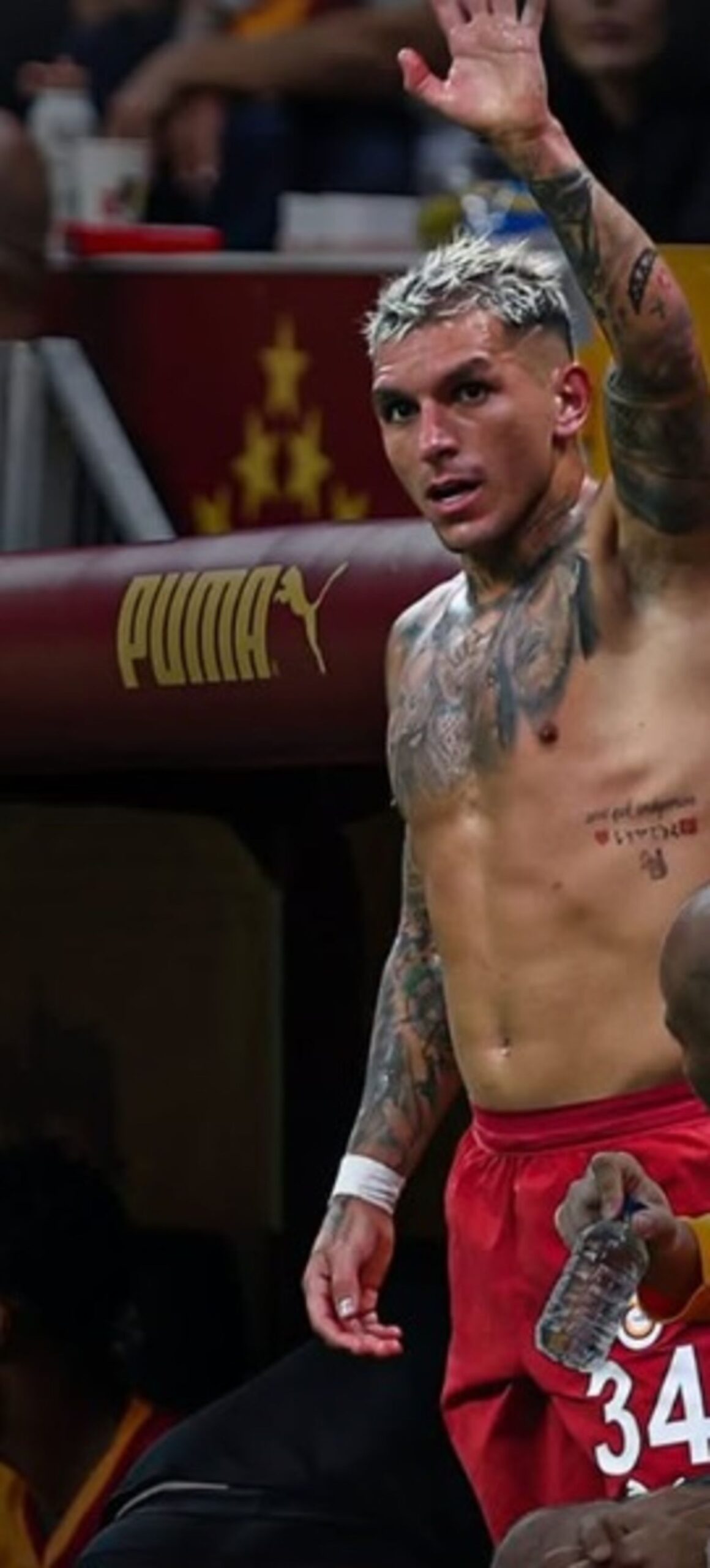
Lucas Torreira tattoos: Genuine tattoo photograph showing Torreira’s visible arm and chest collection in a football setting.

Torreira has spoken directly about the lion, which makes it the clearest place to start. He told Arsenal that he liked the design, and associated it with strength, his Uruguayan identity and his family. He also said it reflected how he sees himself away from football as well as on the pitch.

The explanation is personal without making the image carry more than it does. Lions can suggest strength or protection, but Torreira’s own account is the useful guide here. If you’re considering one, decide what you want it to mean before settling on a pose or style. An artist can help make the design fit your arm instead of copying a screenshot.

The childhood club crest tattoo and the Barrio Unión tribute

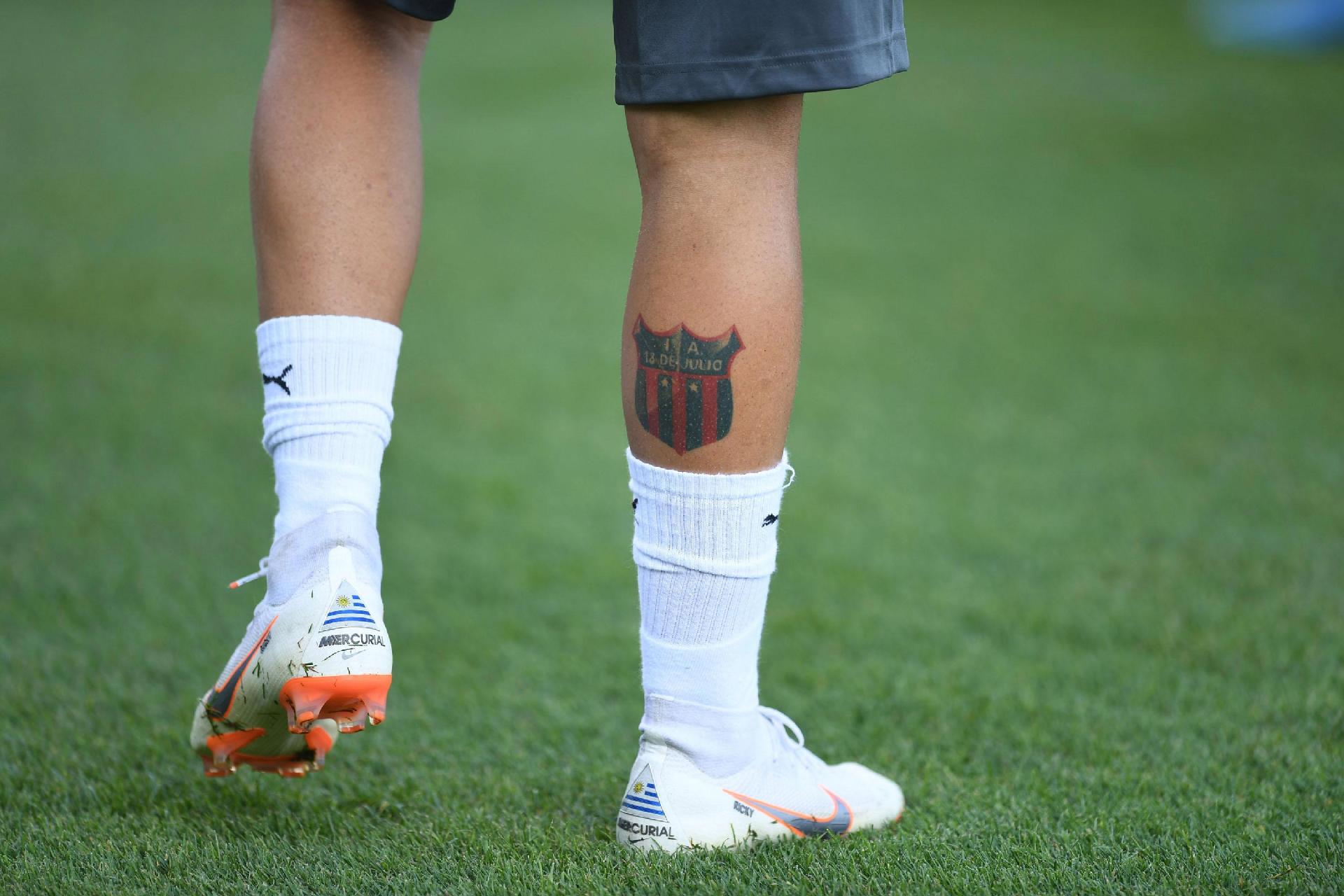
Lucas Torreira tattoos: Genuine close photograph of the 18 de Julio crest tattoo on Torreira’s calf.

The crest on Torreira’s lower leg belongs to Institución Atlética 18 de Julio, the club from his hometown of Fray Bentos. It points to the start of his football life, before European clubs and international matches. Reports have connected the tattoo with the difficult path he took as a teenager, including leaving home and working through obstacles before establishing himself in Europe.

A hometown club crest is a specific alternative to a country flag or a famous team logo. Torreira’s choice keeps an earlier part of his story close as his career moves on. A local club, street sign or landmark can do something similar for someone else, without needing to cover a large area.

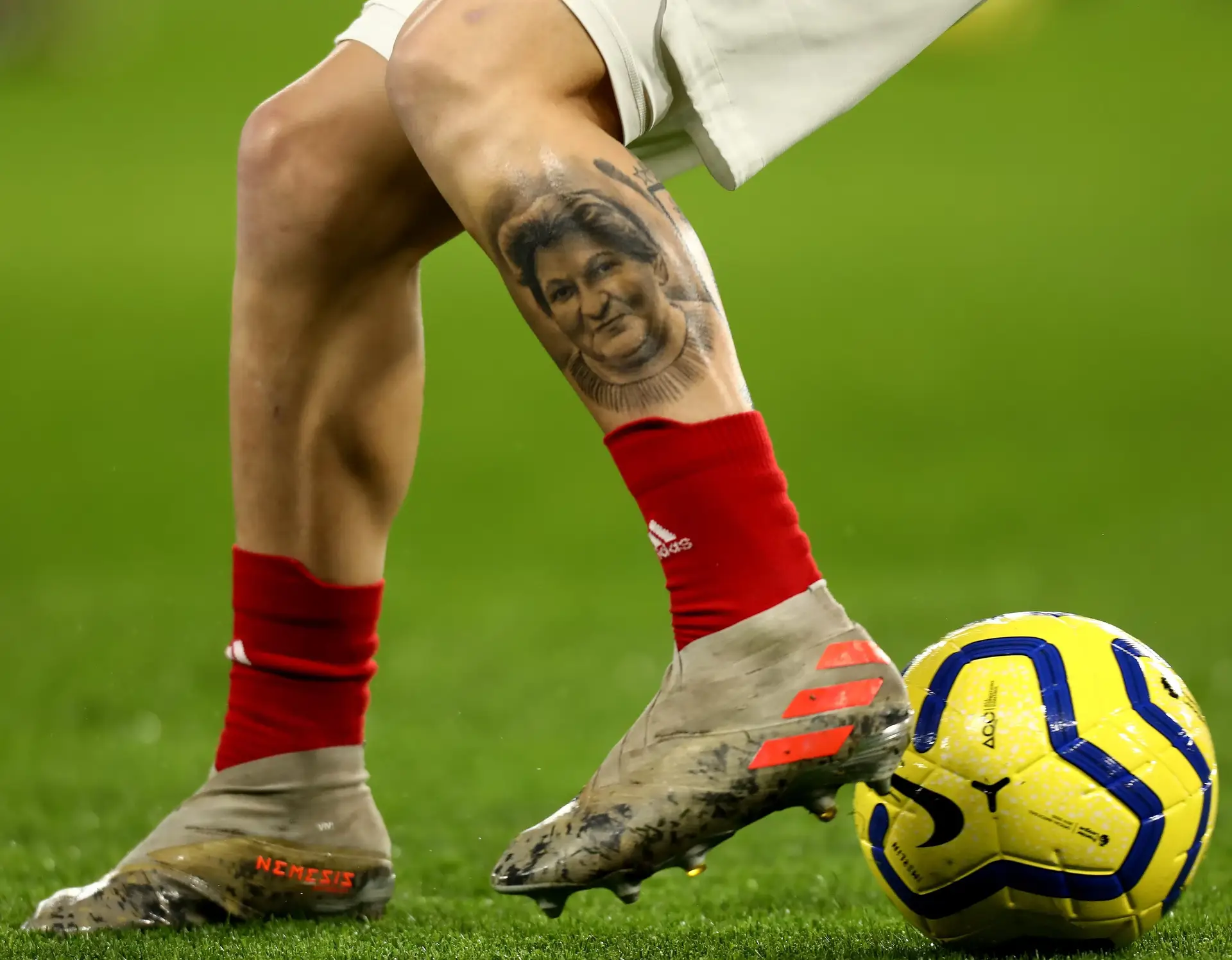
The portrait tattoo on his leg

Lucas Torreira tattoos: Genuine match photograph showing the realistic portrait tattoo on Torreira’s leg.

Match photos show a shaded portrait on Torreira’s leg, above the sock line. The face is rendered more realistically than the nearby crest, and its expression depends on careful detail around the eyes and mouth. Photos show the design but don’t identify the person depicted. Unless Torreira or a reliable source names them, it’s best to leave that question open.

If you’re thinking about a portrait, ask to see an artist’s healed work as well as fresh tattoos. Talk through the size the face needs and whether socks, shoes or sport will rub against the placement. The design needs room to remain clear as it heals.

Hometown ink and the Uruguay connection

Lucas Torreira tattoos: Genuine tattoo photograph showing Torreira’s forearm designs in a Uruguay media portrait.

El Observador reported in 2025 that Torreira had “Barrio Unión” tattooed behind his right ear. The words name the Fray Bentos neighbourhood where he was born and grew up. It’s a small mark, but more direct than a general reference to a country or city.

Fine lettering needs enough space to stay legible, and the skin behind the ear can be a sensitive area to tattoo. If you want text in a small placement, check the spelling and accents before the appointment and ask the artist how the letters may soften as they heal. Torreira’s example is a reminder that a short name can carry a place and a memory without a long caption.

Torreira’s football style beyond the close-up

Lucas Torreira in a contextual photograph: Contextual football photograph for the athlete’s public matchday style; explicitly not tattoo evidence.; not tattoo evidence

Matchday photos show Torreira in club colours and in motion, with tattoos visible as part of his public style. They help show how the ink sits alongside his football kit, but they aren’t a complete record of every design.

Across the collection, photos show black-and-grey realism, portraits, lettering and smaller graphic marks. Some pieces stand alone; others sit among more surrounding work on his chest, arms, hands and legs. A visible mark can be described without guessing what a letter, symbol or portrait means. Personal explanation and a photograph aren’t the same evidence.

Hand tattoos are especially exposed to sun, washing and friction, and they’re difficult to cover. If you’re considering that placement, factor in how it may fade and whether you want it visible every day. That’s a practical decision, separate from whether you like Torreira’s style.

What Torreira’s collection says about family and home

The lion, 18 de Julio crest and “Barrio Unión” each connect to parts of Torreira’s life beyond a single match or club. One reflects strength and family, one recalls his hometown team, and one names the neighbourhood where he grew up.

Not every tattoo needs a serious backstory. Torreira said he liked the lion’s design; that can be true alongside the personal associations he described. A tattoo can appeal visually first, then gather meaning over time.

A place, childhood club or family symbol can be a quieter tribute than a large name or portrait. It only needs to make sense to the person wearing it.

How to make the idea your own

Pick the idea behind a tattoo you like, not the exact image. Maybe it’s Torreira’s mix of portraits and lettering, his links to Uruguay, or the choice to keep a hometown club close. Bring that starting point to an artist and talk through what it means in your own life.

Then consider where the design will sit and how it fits your routine. A calf crest, an arm image and text behind the ear heal differently. Think about sport, clothing, sun exposure and visibility, and ask to see the design at actual size before committing.

Some of Torreira’s tattoos have public explanations; others are only visible in photos. Keeping that distinction in mind lets you appreciate the collection without filling gaps with guesses. Use the confirmed story as inspiration, then make the finished piece yours.

Why Lucas Torreira’s collection works

Torreira’s tattoos don’t all have the same role. The lion is a bold image he has discussed; the 18 de Julio crest and “Barrio Unión” point to home; the leg portrait adds a more realistic element. Other visible work fills in the wider collection.

Together, the documented pieces touch on strength, family and memory without forcing one theme onto every mark. If that’s what appeals to you, take the idea—not a copied design—to a qualified artist and build around your own story.

For a little more of Torreira’s football world, watch this official Galatasaray interview below.

Travis Hunter Tattoos: The Big Chest Tribute and the Ink Around It

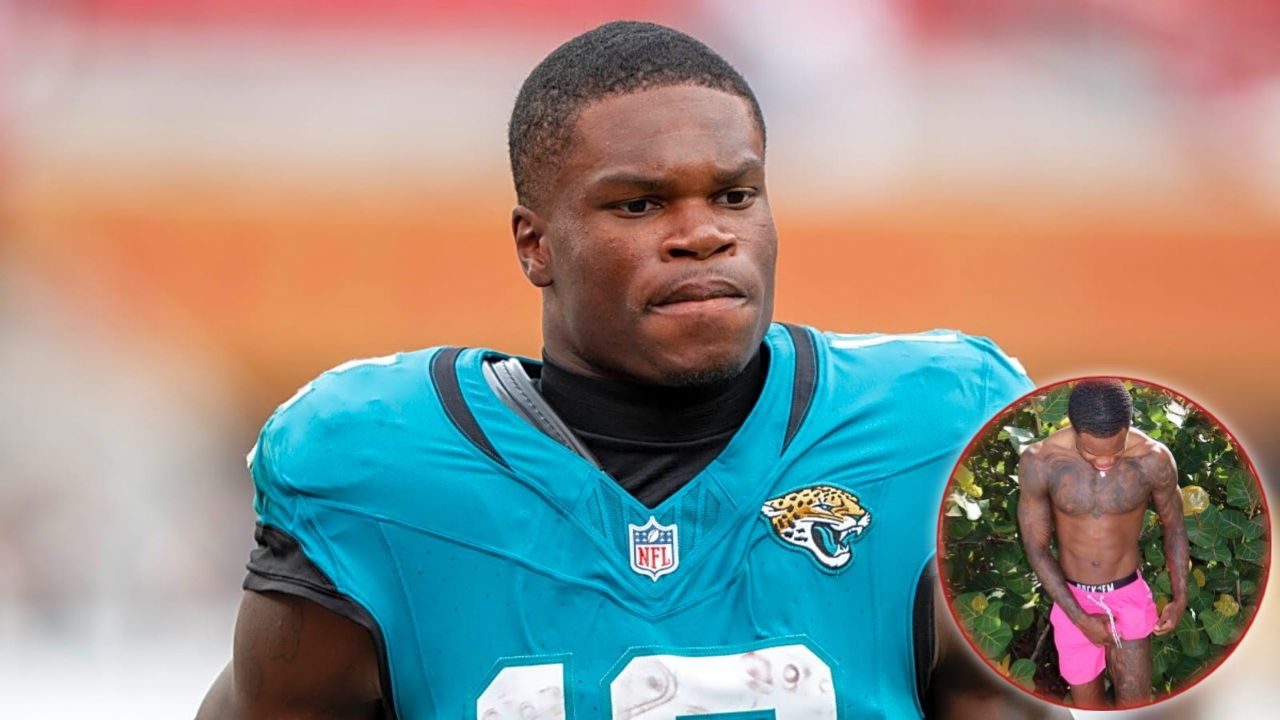
In February 2026, photos shared by Leanna Lenee showed a large chest portrait of her and her son on Travis Hunter. The family tribute drew attention for its size, but it is part of a collection Hunter already had across his arms, torso and legs. The pictures show the main subjects and placement; they don’t identify the artist or explain every detail.

Travis Hunter’s chest tattoo is the piece everyone noticed

Travis Hunter tattoos: Genuine tattoo evidence for the visible torso collection and chest reveal section.

The portrait of Lenee and the couple’s son covers a broad area of Hunter’s chest. Its scale makes it easy to see in the family photos that brought it to public attention. The image doesn’t show the stencil, the artist or when the appointment took place, so those details remain unknown.

A chest portrait also has to work with a surface that moves as someone breathes and changes posture. The public photos show a large composition, though they don’t reveal how the artist planned or executed it. The faces are the point of the tribute, and the placement leaves little doubt about whom it honors.

How the rest of the collection changes the look

Travis Hunter in a contextual photograph: Contextual family and football image; explicitly not tattoo evidence.; not tattoo evidence

The portrait sits among other visible tattoos on Hunter’s torso and arms. Depending on the photograph, the chest piece stands out on its own or reads as part of a more filled-in collection. Clothes, shadows and camera angle hide some of that work, so one image can’t show the full picture.

The wider collection matters when judging the portrait’s scale. It wasn’t added to an otherwise untattooed chest; it joins existing ink around it. Shirtless photos show the chest most clearly, while other views make the arm and lower-leg tattoos easier to see.

A beach photo made the new piece feel even more personal

Travis Hunter in a contextual photograph: Contextual earlier family photograph; explicitly not tattoo evidence.; not tattoo evidence

Sports Illustrated covered the reveal with photos of Hunter, Lenee and their baby son spending time together. The tattoo appeared in a family setting, not a studio portrait or a formal interview. Seeing the people depicted beside the tattoo gives the tribute a direct connection to the family moment in the photos.

That context also makes the placement hard to separate from the design. A large chest portrait is visible whenever Hunter is shirtless, including in beach and training photos. The subject is personal; the tattoo itself is not discreet.

The family pictures show the life around it

Travis Hunter in a contextual photograph: Contextual family photograph; explicitly not tattoo evidence.; not tattoo evidence

One family photo shows Hunter holding his son rather than posing for a close-up of the tattoo. It places the ink in the scene without pretending to show every detail. The angle and his posture also change how the chest and arm work appear, as they would in any large tattoo photographed on a moving body.

For someone planning a large piece, it’s useful to think about how it will look at rest as well as in a posed photo. An arm hanging naturally or a shoulder turned to the side can change the way a design reads.

Hunter already had a strong collection before the tribute

Travis Hunter in a contextual photograph: Contextual thumbnail for the directly relevant tattoo video; explicitly not tattoo evidence.; not tattoo evidence

Earlier photos show Hunter had tattoos before the family portrait was reported. Sports Illustrated also points to football-related leg tattoos, though the available images don’t provide a complete inventory. The chest piece is a major addition to an existing collection, not his first tattoo.

The surrounding ink affects how the portrait looks, but the photos don’t establish that it was planned as a frame. If you’re considering a family portrait, the practical choice is whether it should be the main feature or one part of a larger collection. Hunter’s chest piece takes the prominent spot.

Why the main piece gets so much attention

A chest portrait is central and difficult to keep out of view. It also names its subjects plainly: this one is a tribute to Hunter’s wife and son. That makes it a direct, highly visible choice rather than a small symbol whose meaning is known mainly to the wearer.

The size leaves room for facial detail, but realistic work needs careful planning and healing. Anyone considering a similar tattoo should talk with a qualified artist about scale, placement, skin movement, aftercare and possible touch-ups. Those are general planning questions; the photos don’t tell us how Hunter’s tattoo was made or maintained.

What the public photos prove, and what they don’t

The reporting identifies the portrait’s subjects and shows its general placement. Sports Illustrated also mentions football-related tattoos on Hunter’s legs. The photos don’t confirm every design, the artist, or a meaning for each symbol, and they aren’t a complete record of his tattoos.

That distinction matters when details are hard to see. If lettering can’t be read or a symbol isn’t explained by Hunter, it’s better to leave it uncertain than guess. The supported story is straightforward: Hunter added a large tribute to his wife and son to a body that already had visible ink.

The video adds a little more context

Travis Hunter in a contextual photograph: Contextual candidate photograph from the relevant Complex report; explicitly not tattoo evidence.; not tattoo evidence

The video below focuses on Hunter’s chest tattoo of his wife and son. It gives readers another view of the portrait against the rest of his visible ink; the available material still doesn’t confirm details such as the artist or appointment date.

The main point is the scale and placement of the family tribute. A smaller tattoo could carry the same personal meaning, but Hunter chose a design that is difficult to miss. The photos show it as the centerpiece of a collection he had already begun building.