admin

Sebastian Bach Tattoos: Arm, Wrist and Leg Ink Explained

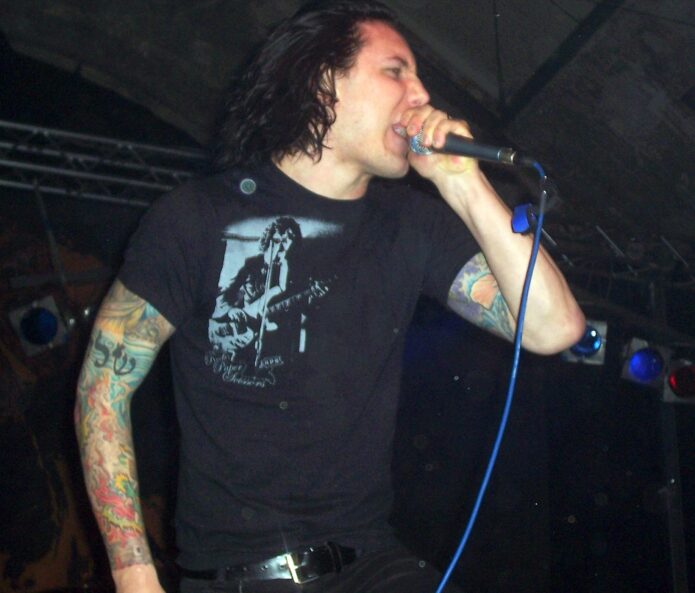
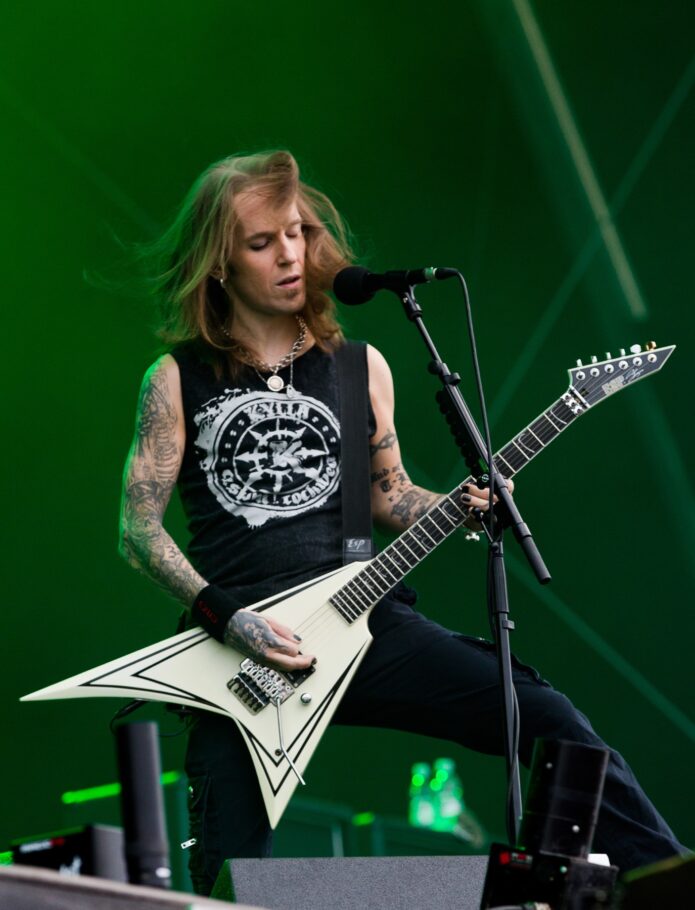
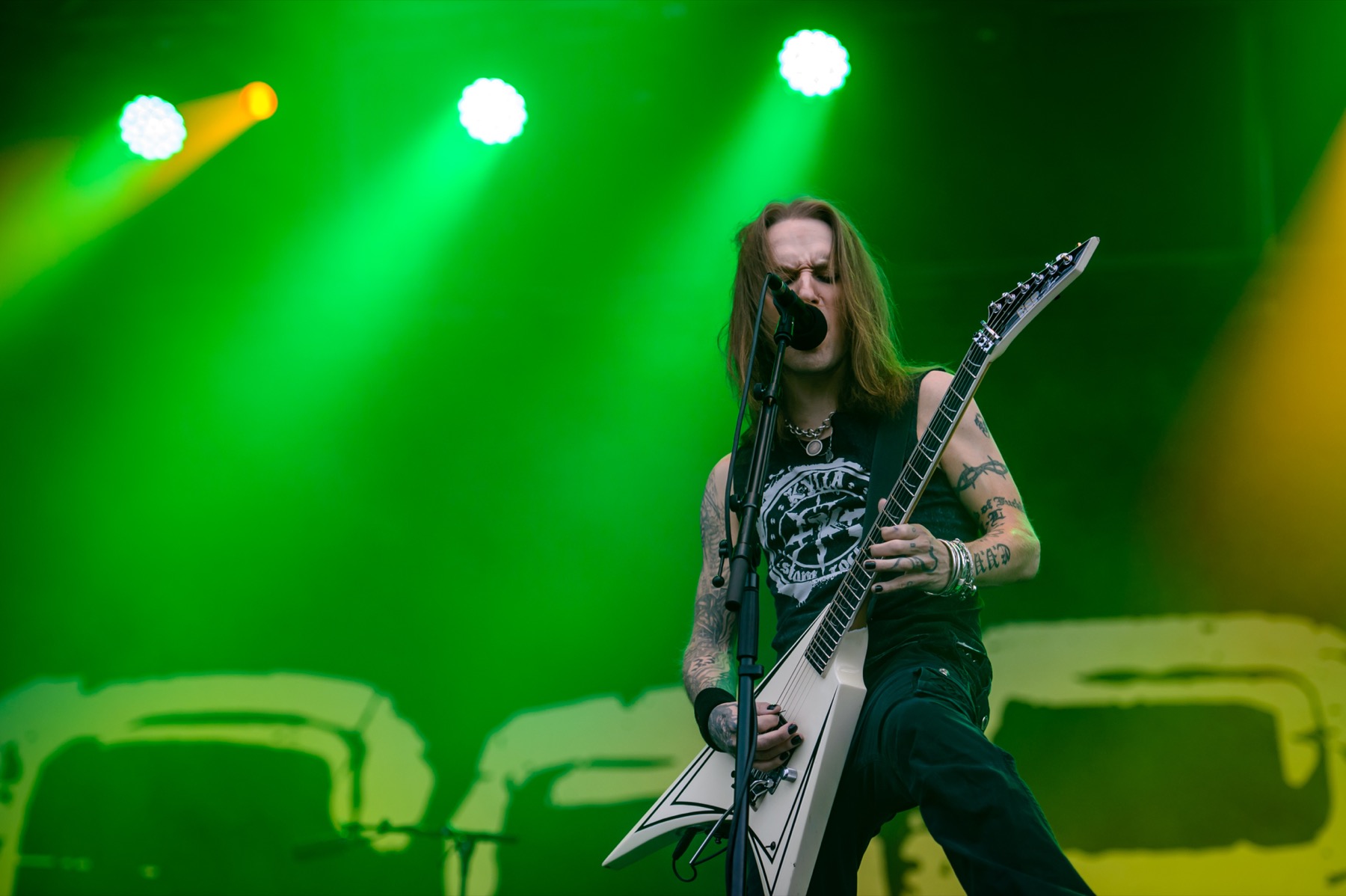
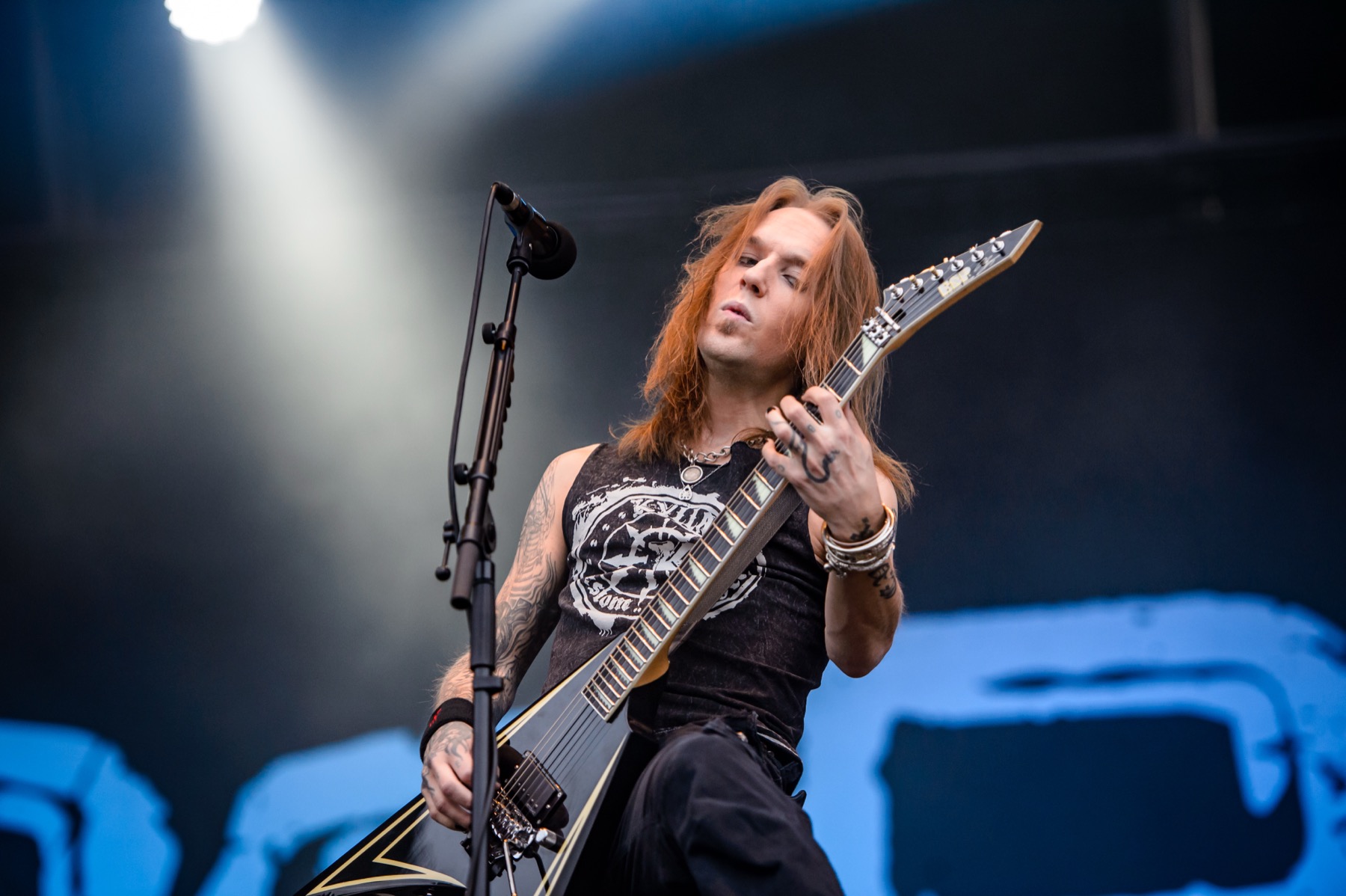
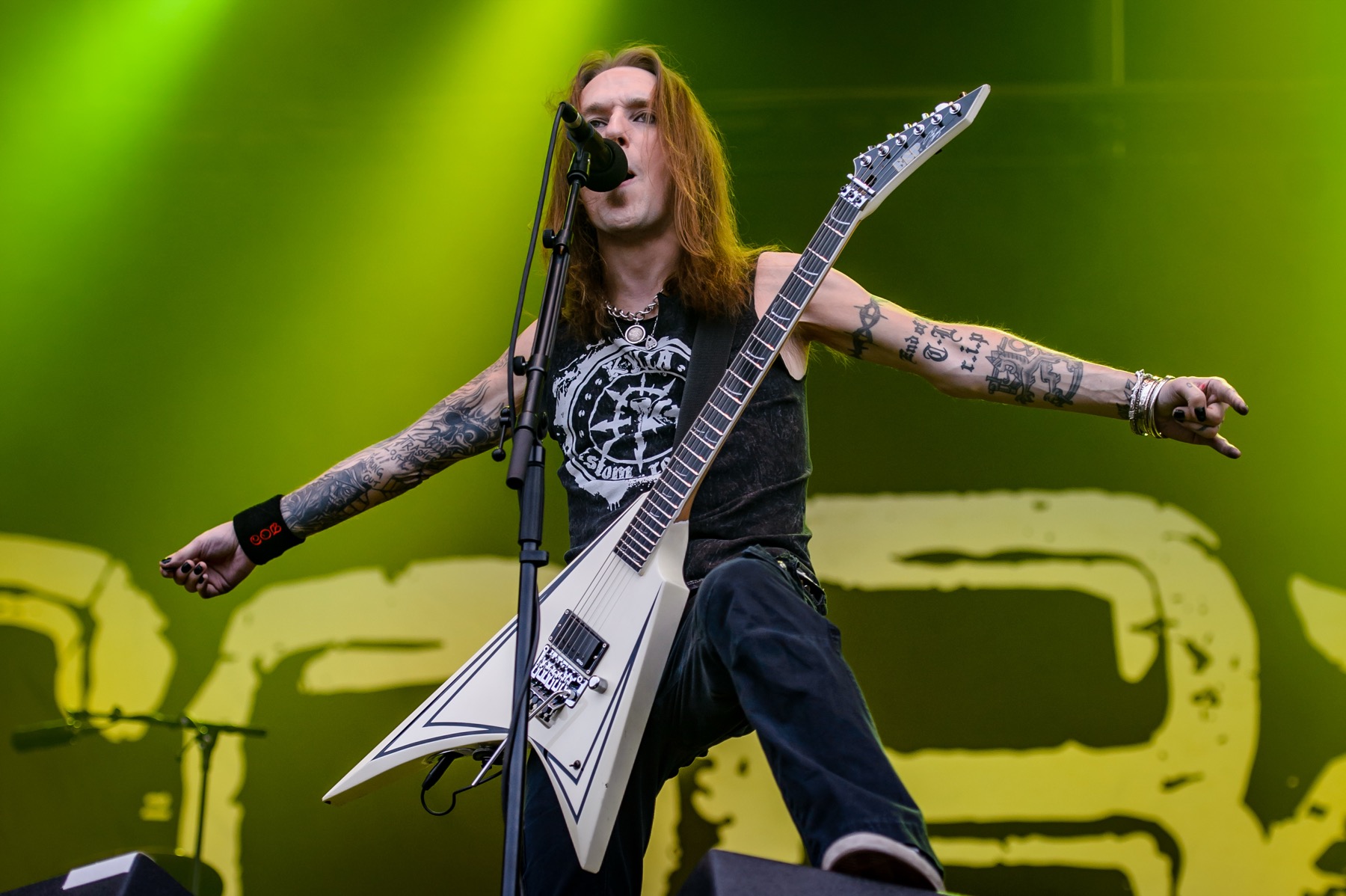
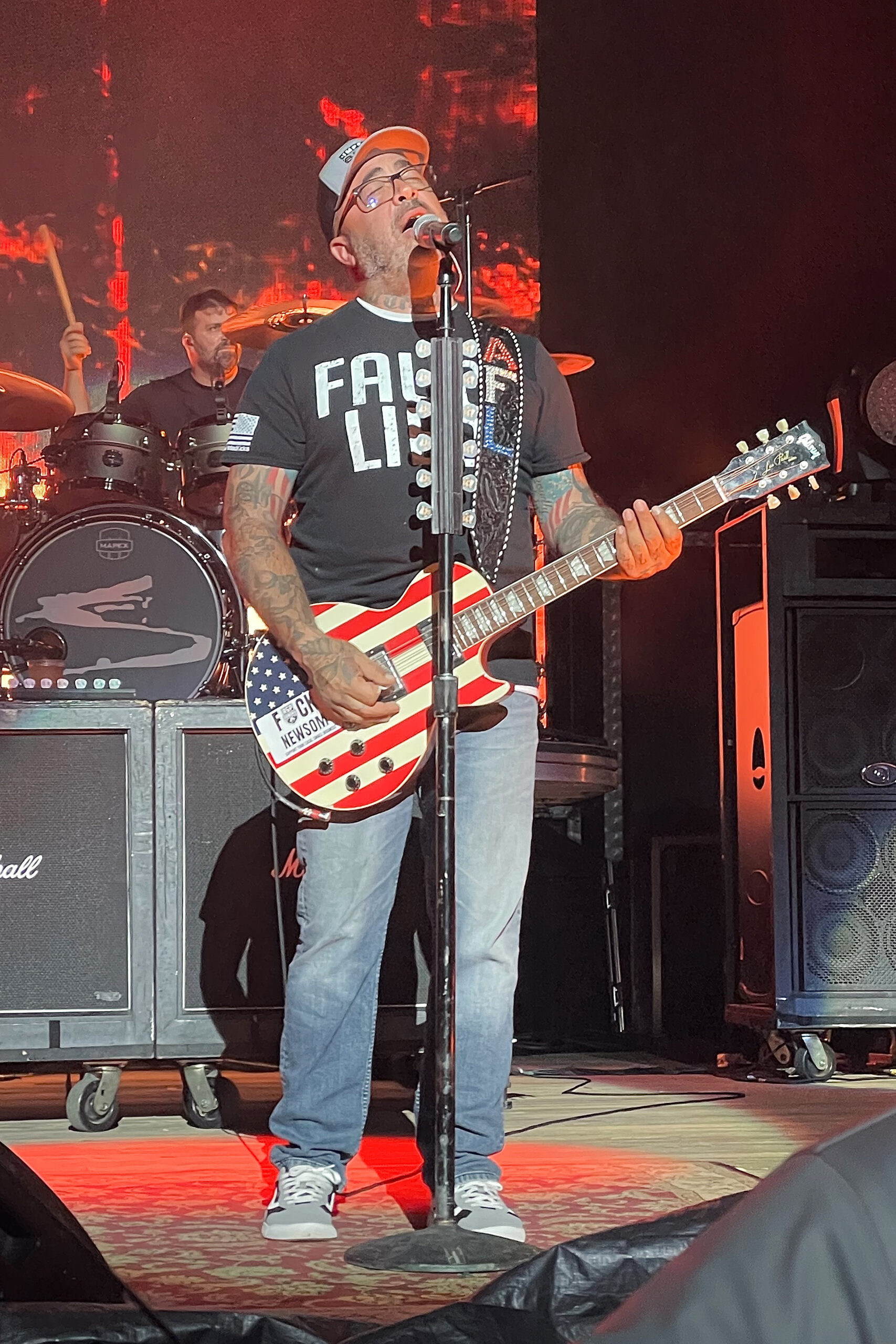
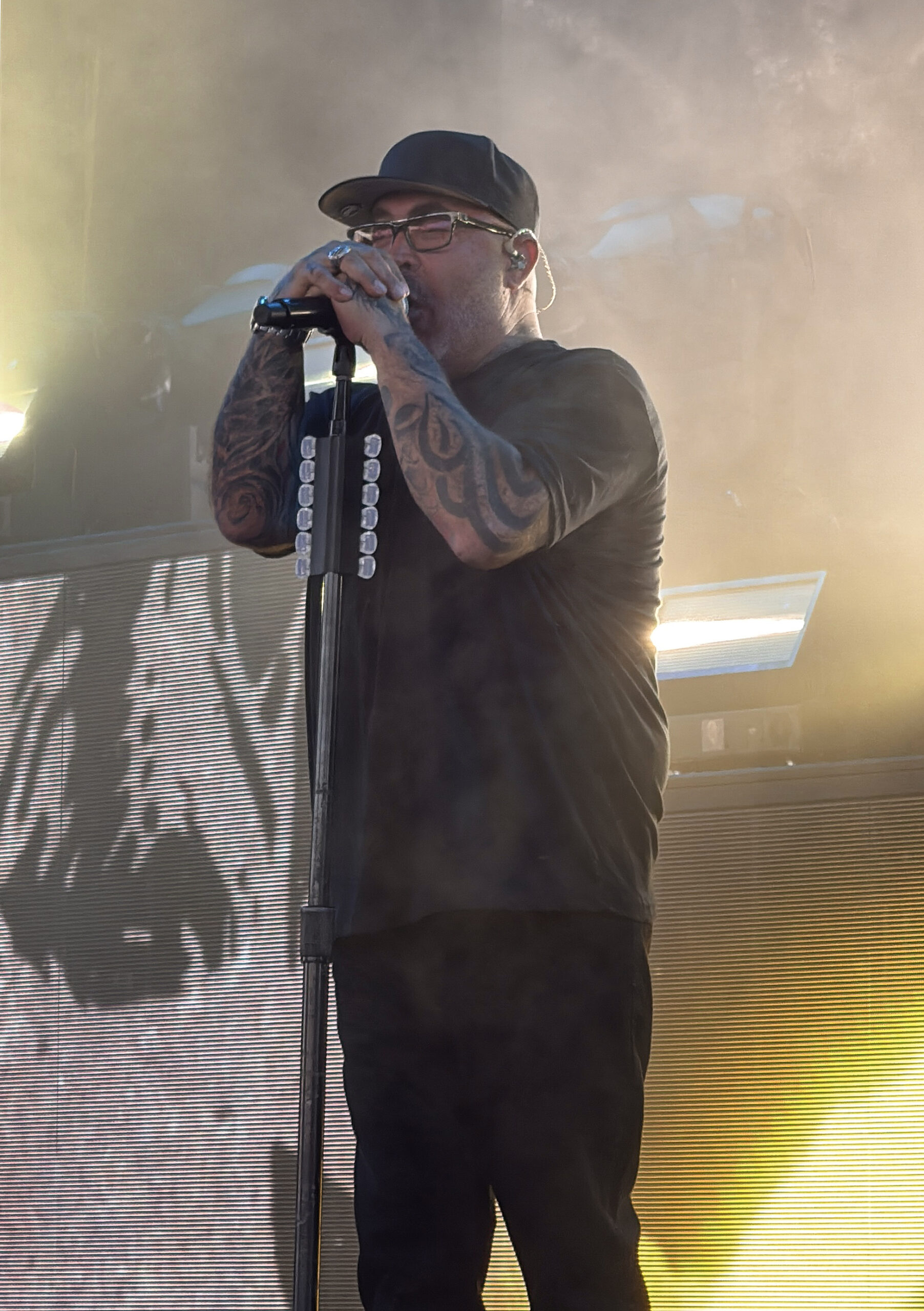
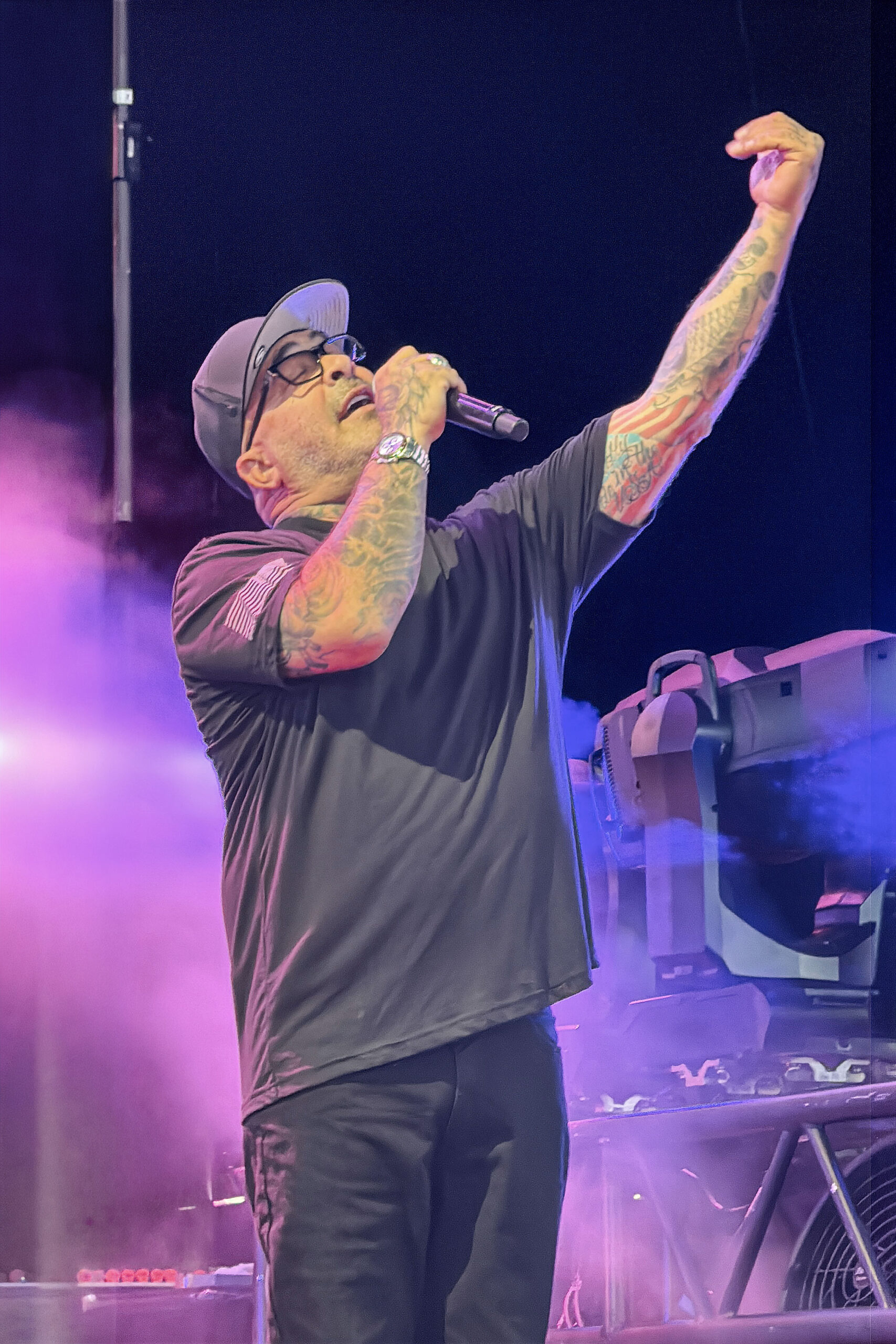
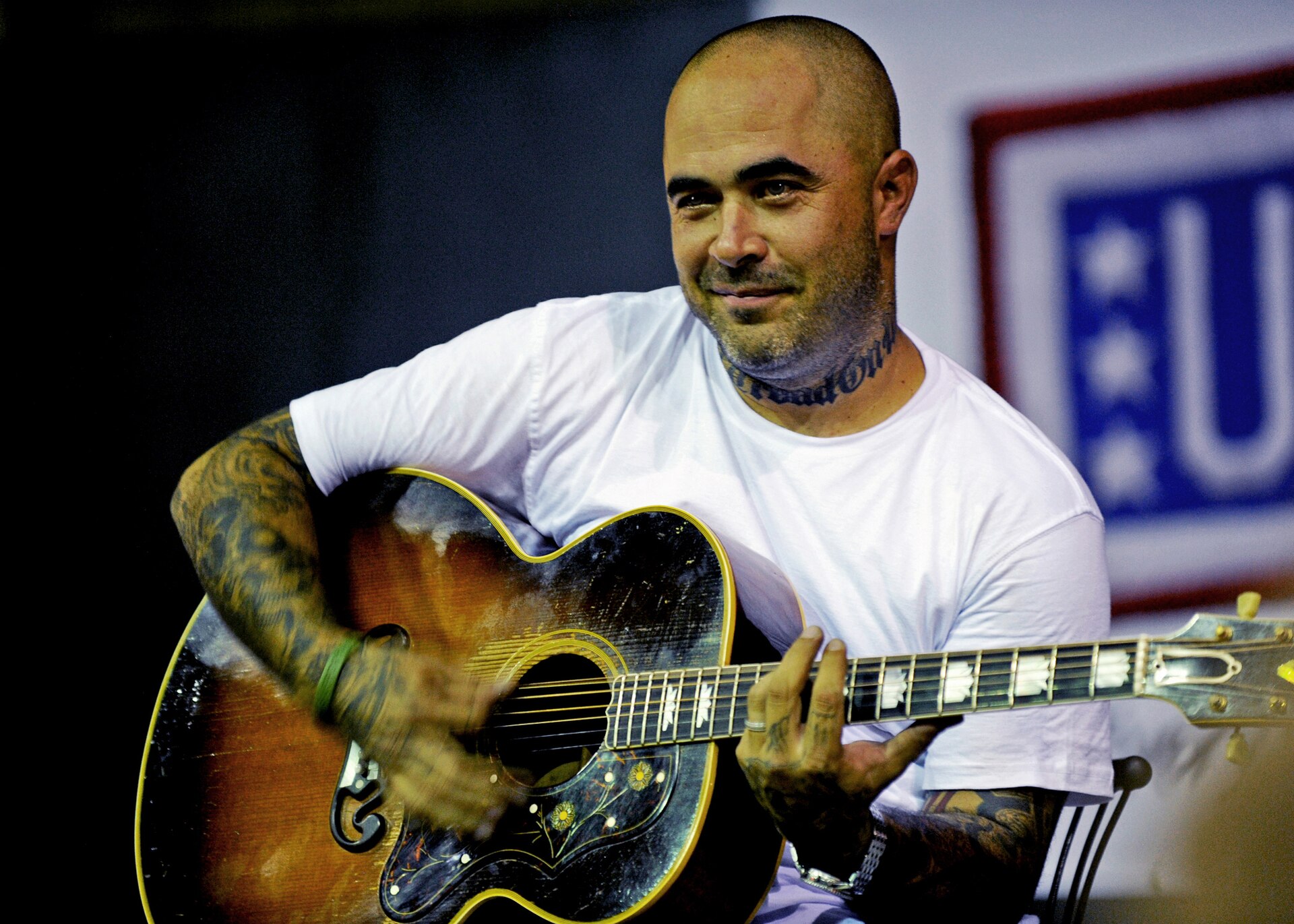
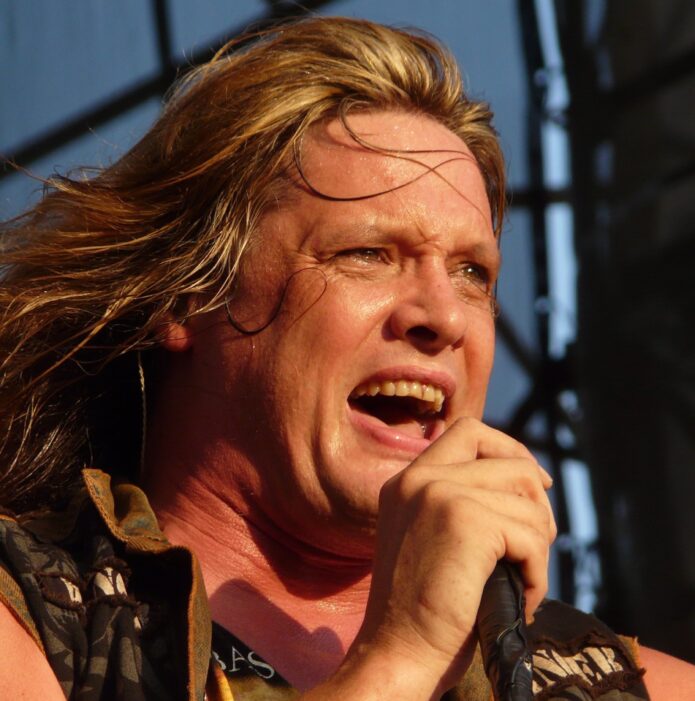
Sebastian Bach’s arm tattoos show when he pushes up his sleeves or performs in a sleeveless shirt. The ink includes color, lettering and shaded designs across his upper arms and forearms.

Public descriptions of Sebastian Bach tattoos vary. Concert and close-up photos show the clearest details, while some of the smaller pieces are hard to confirm. This guide describes what the images show and marks the less certain claims as such.

Sebastian Bach’s upper-arm tattoo

Sebastian Bach tattooed arms backstage

This close stage photo shows a sizable tattoo on Bach’s upper arm. It has dark outlines and warm color, and continues below the edge of his vest. The sharp image makes it easier to distinguish the ink from the surrounding shadows.

Bach hasn’t given a reliable public explanation for this design. The photo shows connected shapes with older-looking shading rather than one small symbol. Its high placement also means a shirt or jacket can cover it, which may be why it is missing from some portraits.

The forearm script and shaded pieces
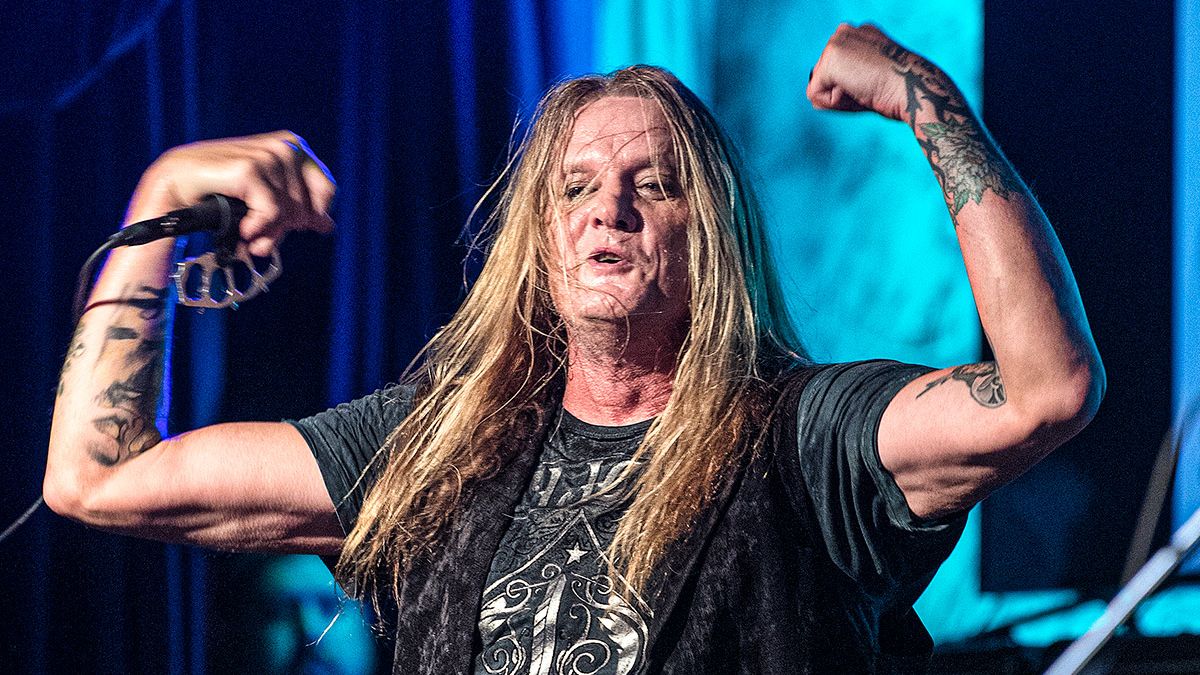
Sebastian Bach flexed arm tattoos

This closer photo shows more of Bach’s forearm. His watch covers part of the design and the crop cuts off another section, but the colored center and darker surrounding work are still visible.

The flash brings out the color and outlines more than stage lighting does. Depending on the angle, the same ink can look different, which may explain why descriptions of Sebastian Bach’s arm tattoos don’t always match.

Another clear look at the tattooed arms
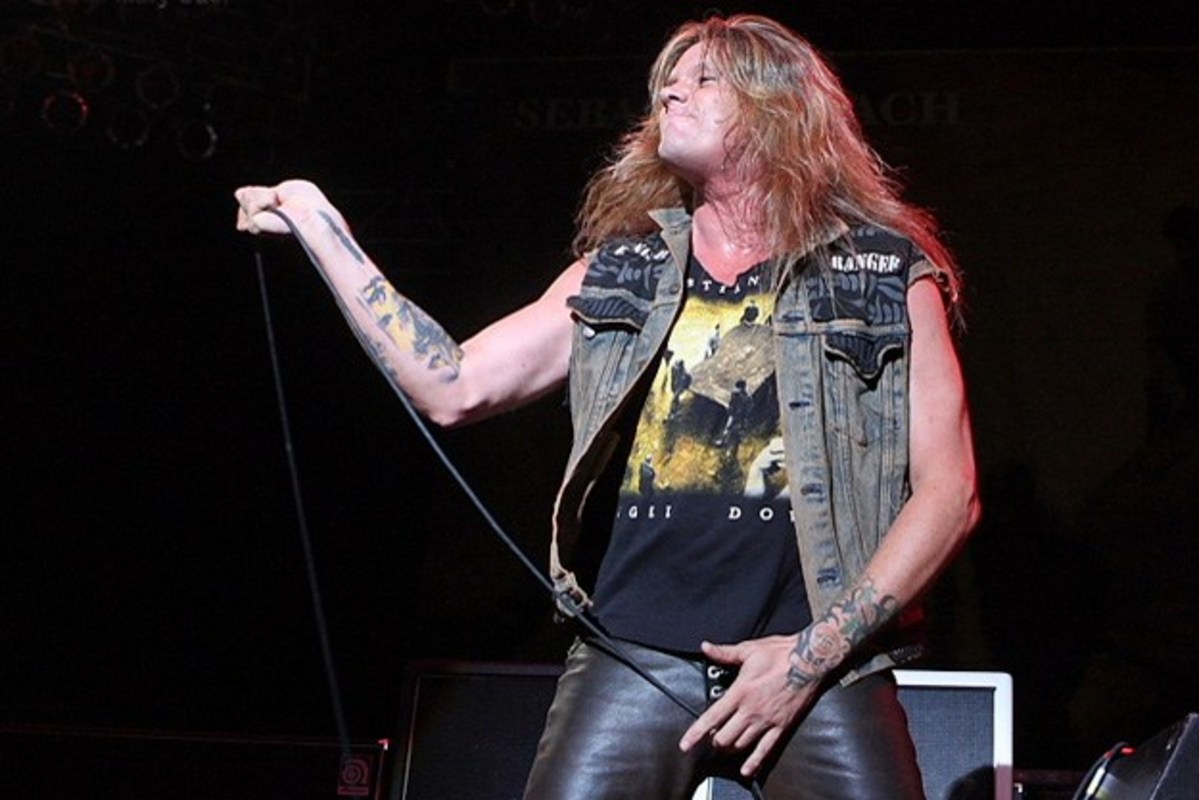
Sebastian Bach forearm tattoos during a live performance

Here the tattoos are visible on the arm holding the microphone. A dark design runs along the forearm, with another patch higher up. Although the shot is wider than a portrait, the arm is close enough to the camera for the ink to read.

The photo shows layered arm work in color and black shading. It doesn’t give each piece a name or a confirmed story, so it’s better to leave the smaller shapes undescribed.

The older stage photos still show the same ink
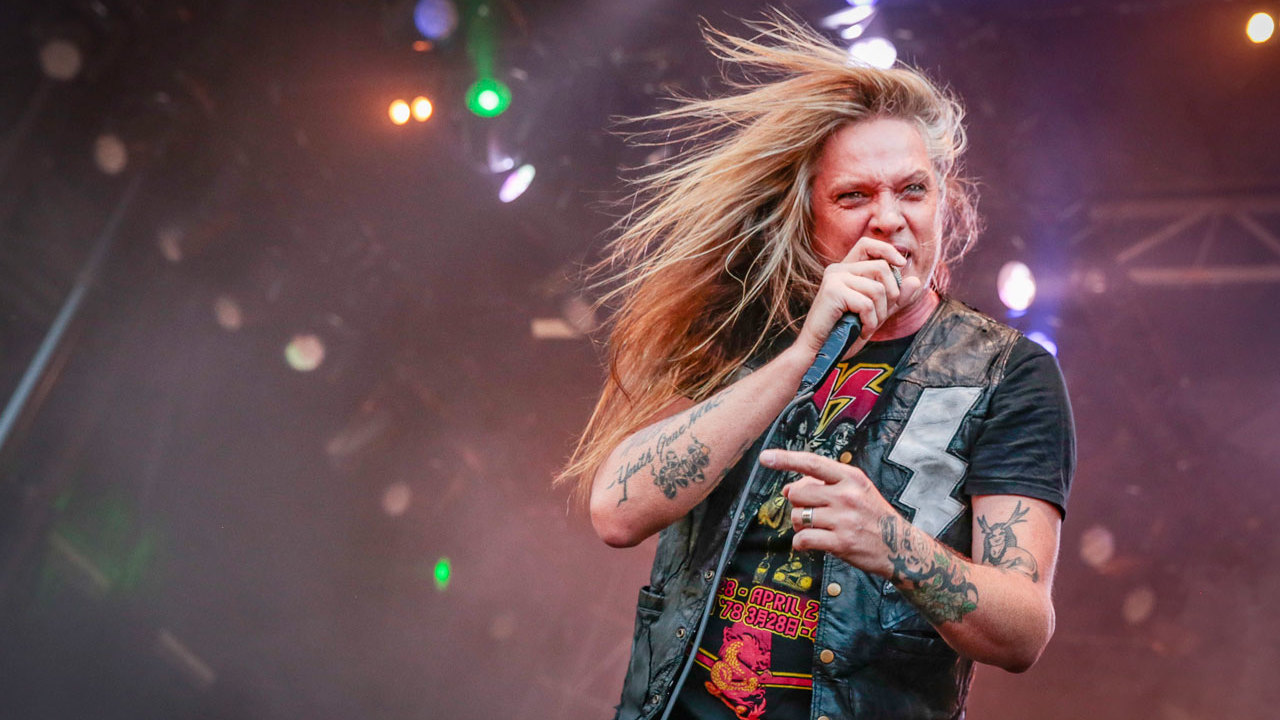
Sebastian Bach tattooed arms in close live performance

This older performance photo shows the tattoo on the outside of Bach’s upper arm. It becomes clearer when he lifts the microphone or pulls back his vest. Stage lighting softens the color, but the shape remains visible.

Across different years, the ink appears and disappears under leather, sleeves and long hair. The photos show how the tattoos have built up over time rather than as one matching set.

The later forearm look
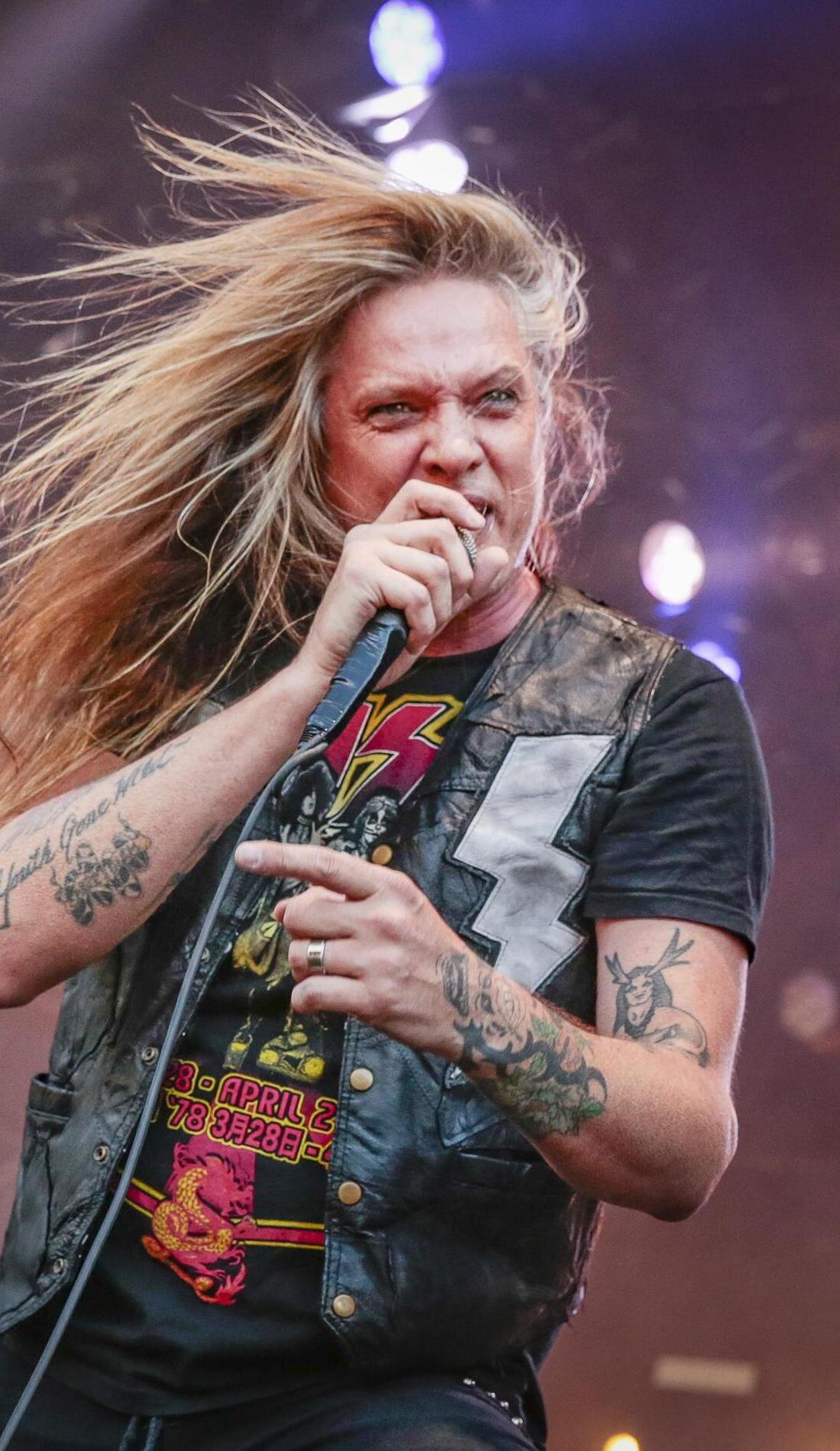
Sebastian Bach forearm tattoos in a vertical stage portrait

A more recent concert photo shows tattoos on both forearms as Bach leans toward the crowd. The designs look dark and filled in beside the smaller pieces mentioned in older write-ups. His hands are moving and the light is busy, but the ink remains clear.

This is a useful view of how the designs sit in motion. The forearm work follows the length of the arm and looks longer when Bach bends his elbows. For comparison, Tom Araya’s tattoos use a very different layout, though both collections show well under stage lights.

The clearest pieces tend to be where Bach bends his arms or leaves skin exposed beside a vest. Upper-arm tattoos show in close shots; forearm pieces appear when he reaches for the microphone. An arm covered by clothing may look bare in one photo and heavily tattooed in another.

Seeing a tattoo doesn’t tell you its story. For dates or personal meanings, a direct interview, a statement from Bach or a reliable account from the tattoo artist would be needed. Without that, those details remain guesses.

A few details need a little caution

Online descriptions mention a tattoo on Bach’s left wrist, a mouth design with eyes, red lips and a tongue, and a tribal-style piece with flowers. Fan coverage has also described a Roadrunner tattoo on his thigh. These may refer to real tattoos, but there isn’t a clear close-up for each one.

Tattoo galleries often repeat the same caption until it sounds official. In Bach’s case, photos strongly support substantial arm and forearm work, but they don’t confirm the exact name, date or meaning of every piece. The visual record is clearer than the backstory.

The overall look

Bach’s tattoos favor larger areas, bold outlines and visible color. The shapes remain readable from a distance, which suits a performer who spends much of his time under lights and in motion.

Some pieces look colorful and clear, while others soften in older concert photos or disappear beneath a vest. The changing views make it look like a collection built over time rather than a single sleeve designed at once.

Final take

The best-documented Sebastian Bach tattoos are on his upper arms and forearms. Public photos show colorful, shaded pieces and lettering; fan descriptions add possible wrist, thigh and mouth designs. The images are clear, but the meanings are less certain.

The closest photos offer the best starting point. They show Bach’s arm ink directly, while a red-carpet portrait may hide it altogether.
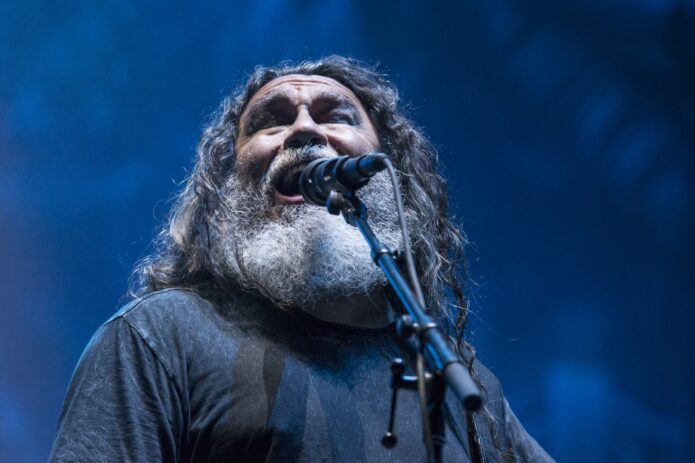
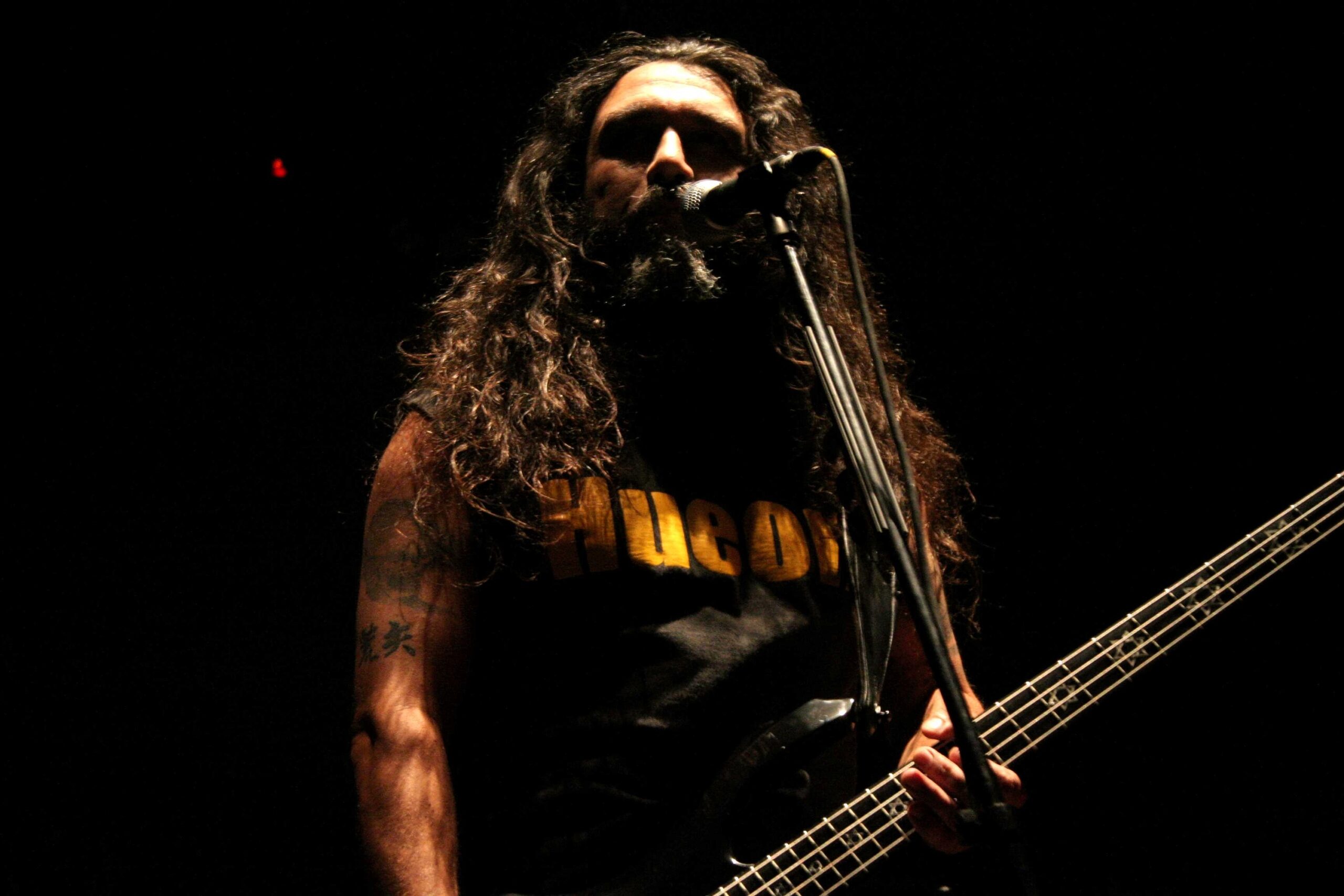
Tom Araya Tattoos: Slayer Ink and Sleeve Photos

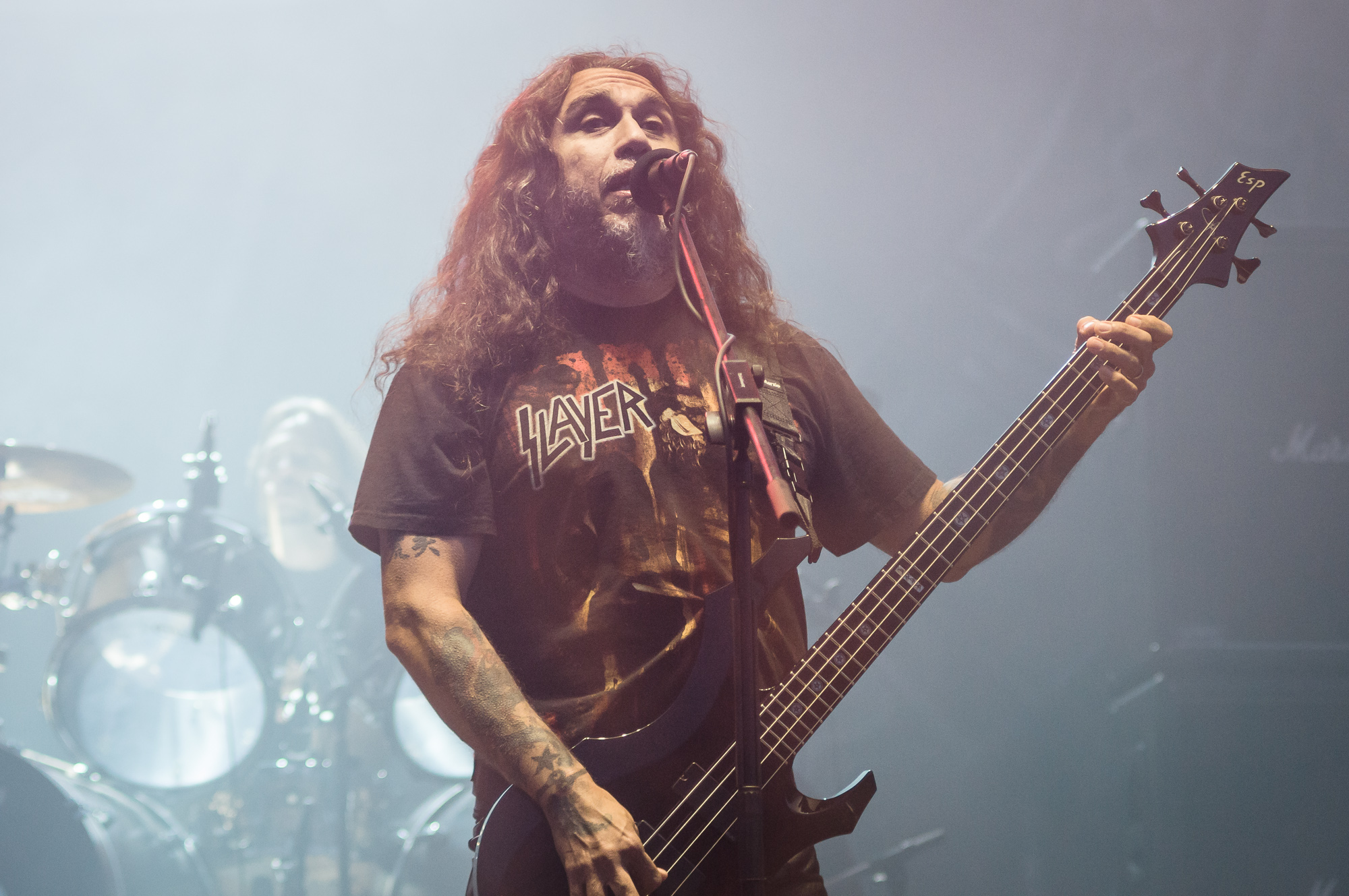
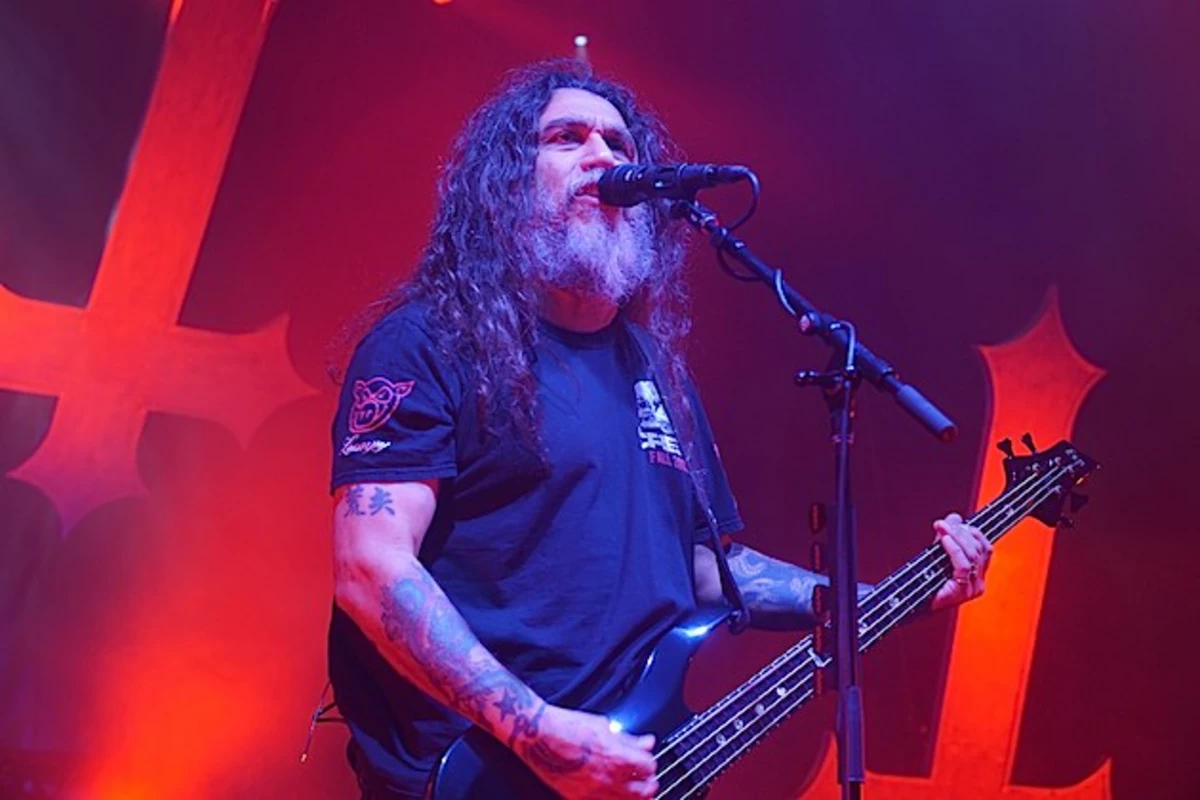
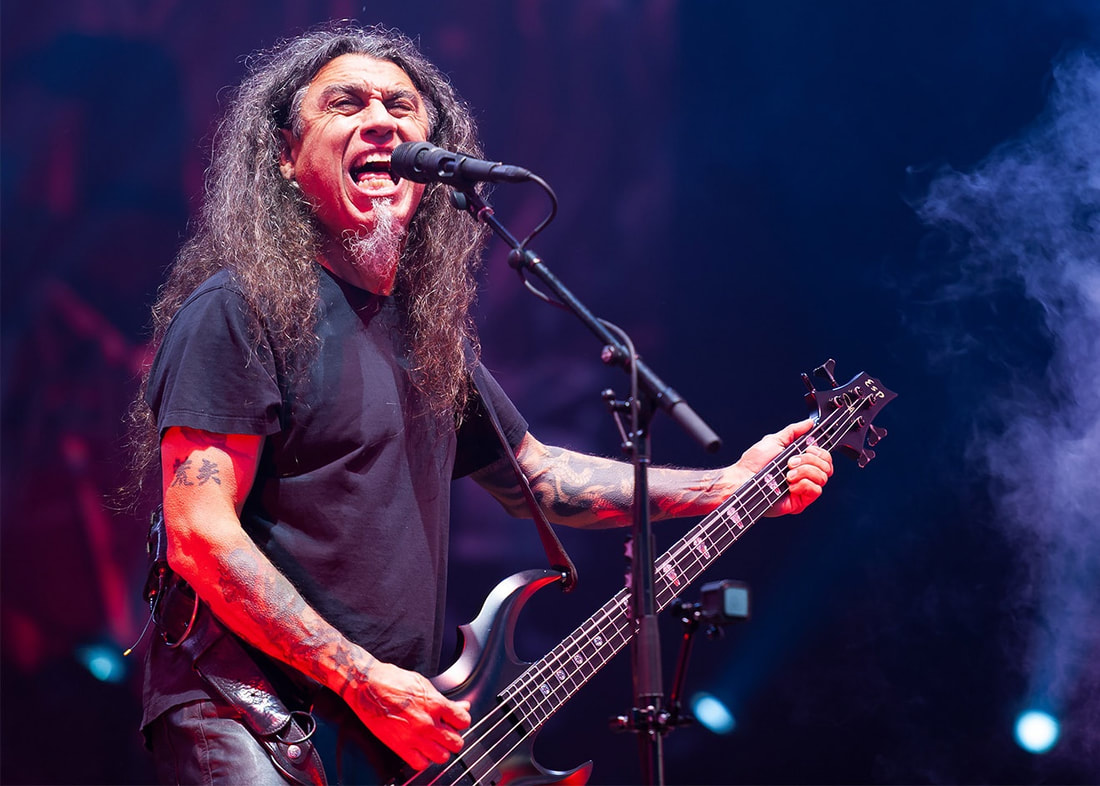
Tom Araya has spent decades onstage with Slayer, usually in black clothes, long hair and a loud room around him. When he wears short sleeves, the tattoos across both arms are easy to see. The upper arms and forearms carry a mix of larger shaded pieces and smaller designs.

There isn’t a complete public list explaining each one. Most clear photos are concert shots, where lights, guitars and movement can hide details. The images still show the extent and placement of the ink.

This guide sticks to what the clearest photos show and leaves unconfirmed meanings open.

Tom Araya’s tattoos are mostly an arm story

Most of Araya’s visible tattoos are on his arms. In sleeveless photos, the ink runs from the upper arms toward the wrists. The designs appear to have been added over time, with separate pieces sharing space across both arms.

A distant concert photo can make several tattoos look like one large design. The pictures are more useful as a record of the coverage and placement than as proof of what each mark means.

Tom Araya tattooed arms during a 2006 live performance

The upper-arm pieces stand out first

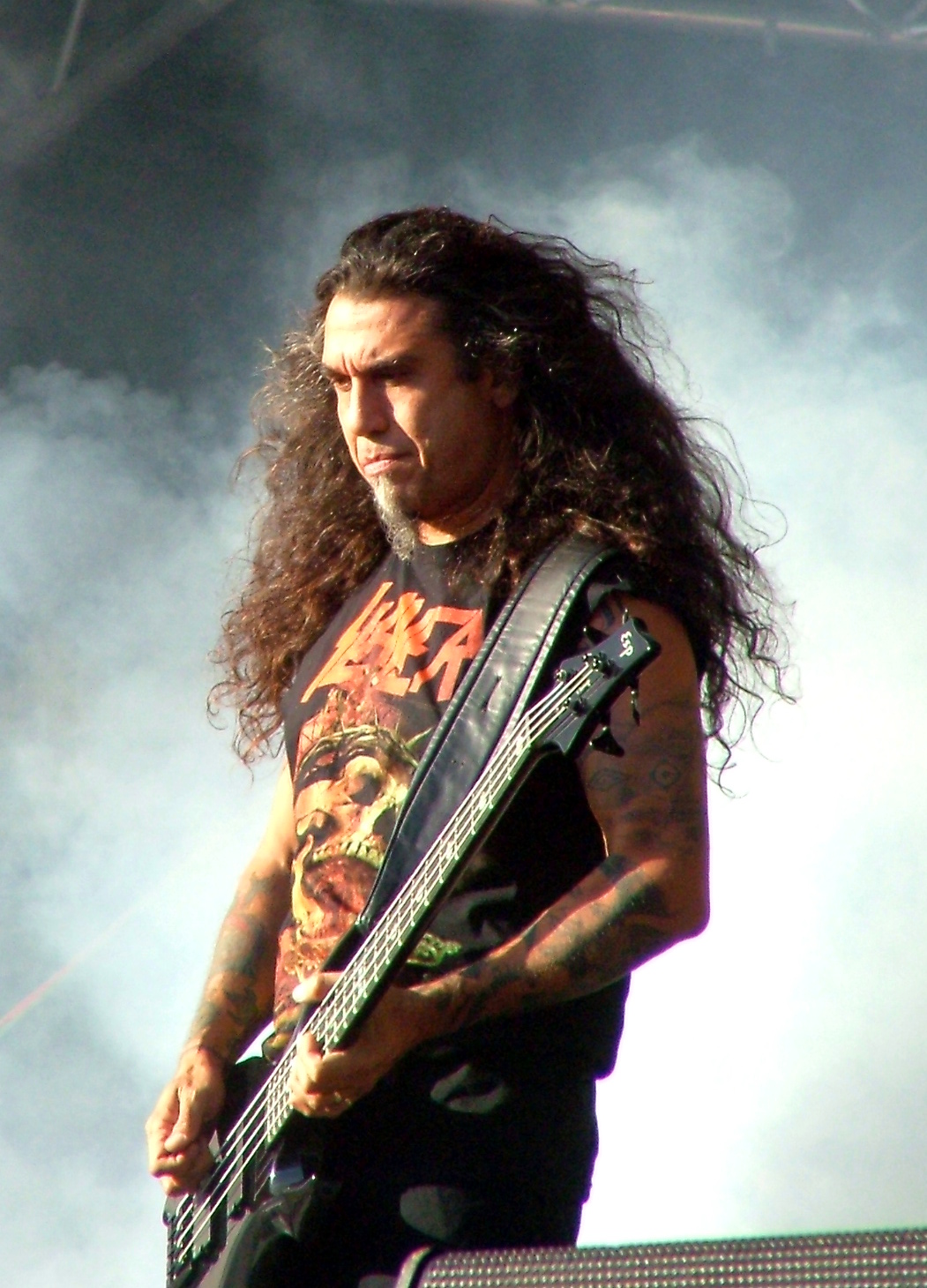
Araya’s upper arms show clearly when he plays bass in sleeveless clothes. The ink sits above the shirt line and appears darker and more settled than some of the smaller marks below. One side has a larger design rather than a single small symbol.

Concert lighting changes the colors, but the overall placement stays similar across photos. Sharp images are useful for seeing the size and shape, even when the subject of a particular tattoo isn’t clear.

The tattoos have a worn-in look beside Slayer shirts, his bass and the rest of his stage clothes. They don’t appear to be a one-album style change.
Tom Araya tattooed forearms during Slayer performance at Ursynalia 2012

His forearms carry a lot of the visible detail

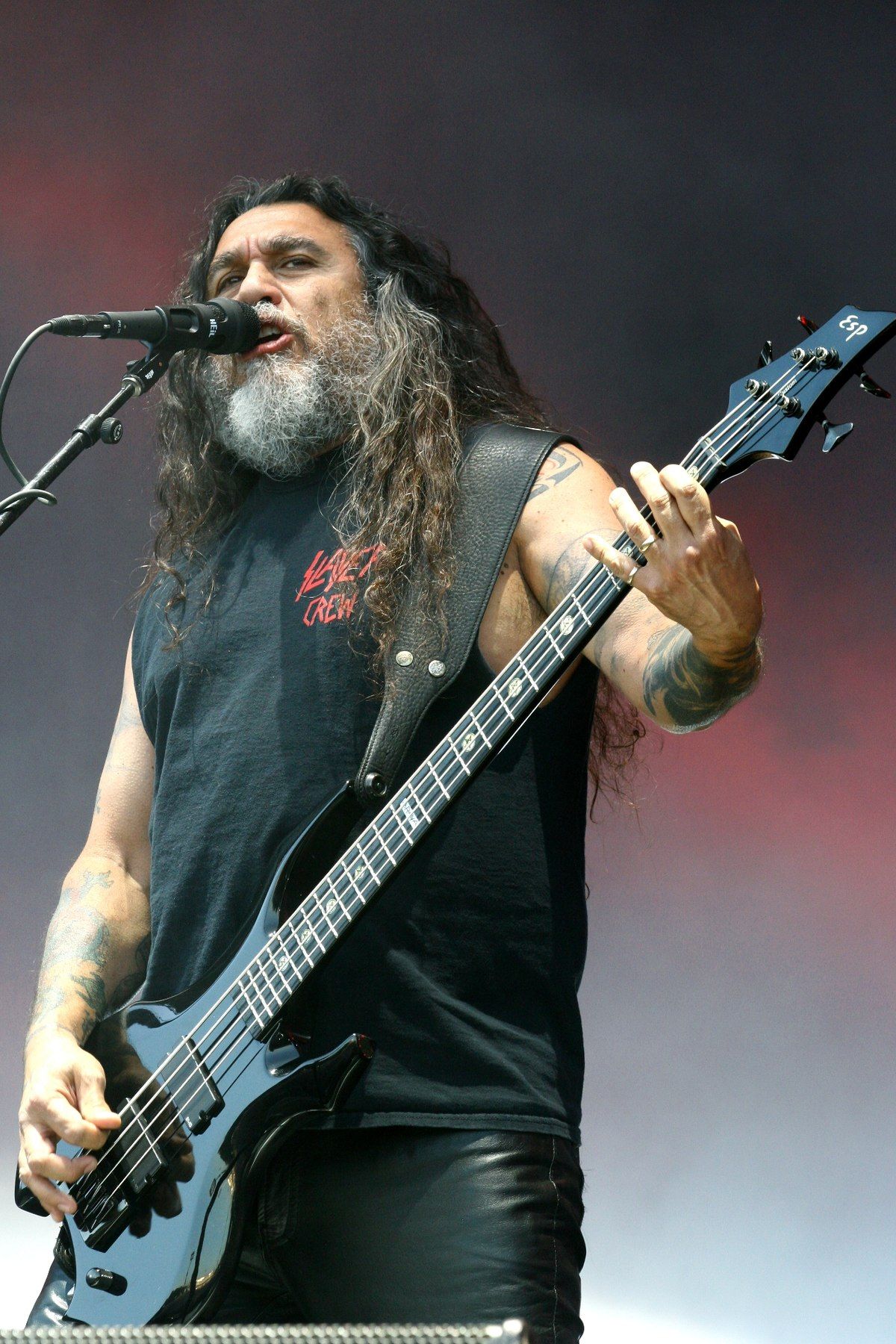
The forearms are easier to compare across photos. When Araya reaches for the bass, both can come into view, showing dark areas, open skin and designs set at different angles. The coverage looks like a collection added over time, not a single sleeve planned in one session.

Some sections have heavier shading; others leave more skin visible. A wide, sharp photo shows more of that texture than a small crop.

His hands and bass can hide the lowest part of his arms. Even a clear concert shot doesn’t show every tattoo at once, so it’s more accurate to describe the overall coverage than to claim a complete map.

Tom Araya tattooed arms during Slayer performance at Wacken 2014

There is ink on both sides, not just one sleeve

Some photos make one arm look more covered than the other. The difference often comes down to the angle: a front view shows one side, while Araya turning toward the crowd brings the other into view. Across the photos, both arms have tattoos.

That is why several angles are more useful than one cropped portrait. As Araya sings and plays, the camera catches different sections, showing how the designs wrap around the arms rather than sitting only on the front.

The tattoos are visible, but their exact names and personal meanings aren’t all documented in reliable interviews.

Tom Araya forearm tattoos during Slayer performance at Tuska 2008

The stage photos show how the sleeves read from a distance

From the crowd, Araya’s tattoos look like dark blocks and connected shapes. You notice the overall coverage before individual lines. Closer shots bring out lighter details, but the wider view shows why fans describe his arms as sleeves.

Black sleeveless shirts make the ink stand out. Concert lights can make the same tattoo look blue, green, gray or almost black; that shift doesn’t mean the tattoo itself has changed.

The arm work fits the straightforward stage look Araya has had for years. It shows clearly without an elaborate outfit or a separate costume.
Tom Araya tattooed arms while playing bass with Slayer

What can we really confirm about the designs?

The photos show multiple tattoos on both arms, including larger shaded sections and smaller pieces separated by open skin. The upper arms and forearms have the most visible coverage.

A stage photo cannot confirm the meaning behind each tattoo. If an exact story is repeated without a quote from Araya or another clear source, it should be treated carefully. The image can show a shape without explaining why he chose it.

The photos document where the ink is and how it looks. The personal story belongs to Araya unless he has shared it himself.

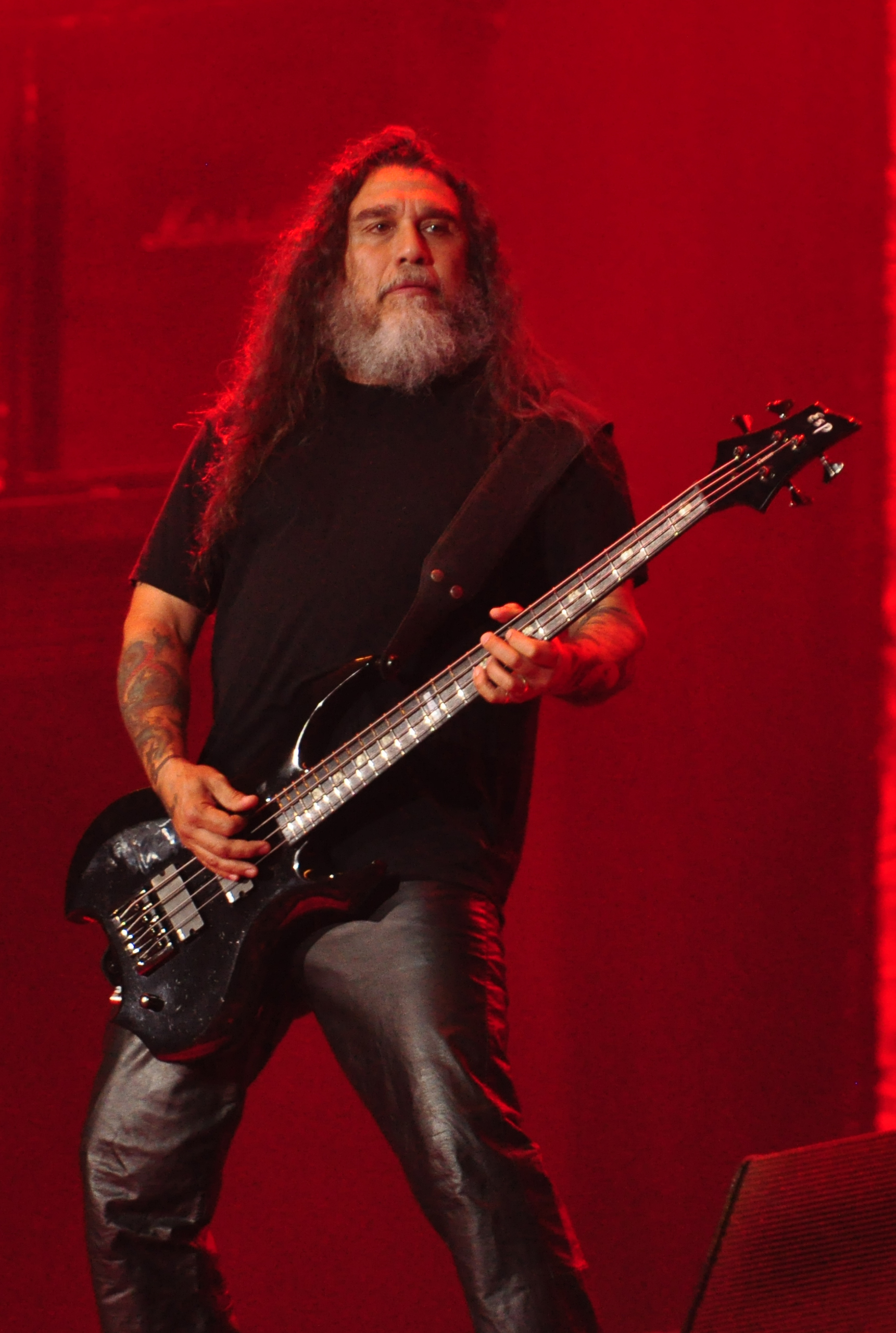
Tom Araya forearm tattoos under red stage lights

Why Tom Araya’s tattoo style fits his Slayer look

Araya’s tattoos sit naturally alongside Slayer’s dark sound and stage presence. They add texture to his arms as the bass and microphone move through the frame.

The collection also looks like it has been there for years, rather than a recent makeover. The ink appears beside familiar black shirts, long hair and a direct stage style.

For another metal musician, compare M. Shadows’ tattoos. His artwork is also part of a larger stage identity, though Araya’s full tattoo story has not been explained piece by piece in public.

Tom Araya tattooed forearms during Slayer performance at Download 2019

In short

Tom Araya has extensive tattoos on both arms, including visible upper-arm and forearm work. Concert photos show larger dark sections alongside separate designs; it isn’t one single logo or one easy-to-name piece.

The photos document the ink, not its meaning. Until Araya explains more himself, the clearest description is also the fairest: his long-running arm tattoos are part of his familiar Slayer-era look.

The interview below gives a little more of Araya’s voice away from the concert photos.

Tim Lambesis Tattoos: Colorful Sleeve Photos

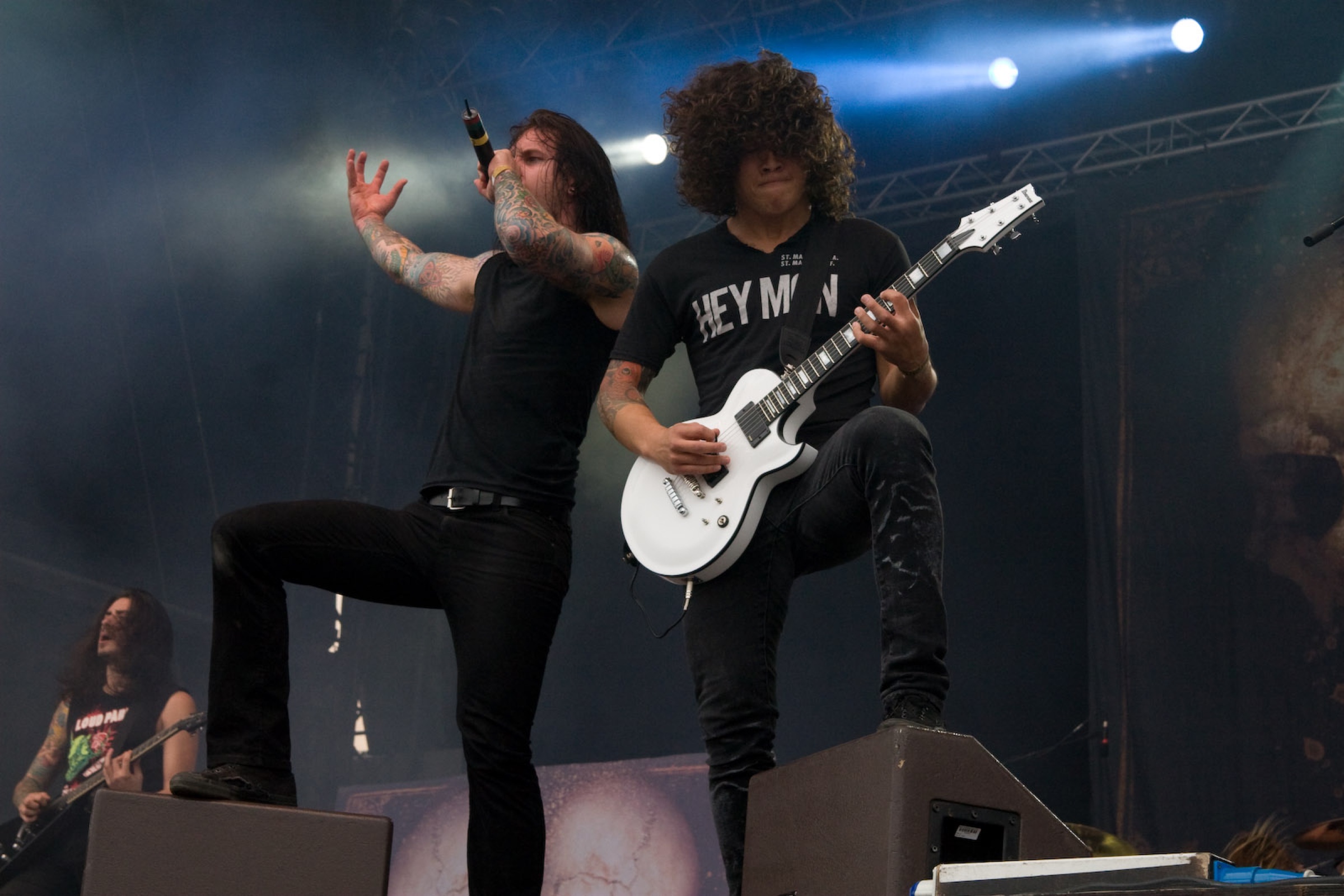
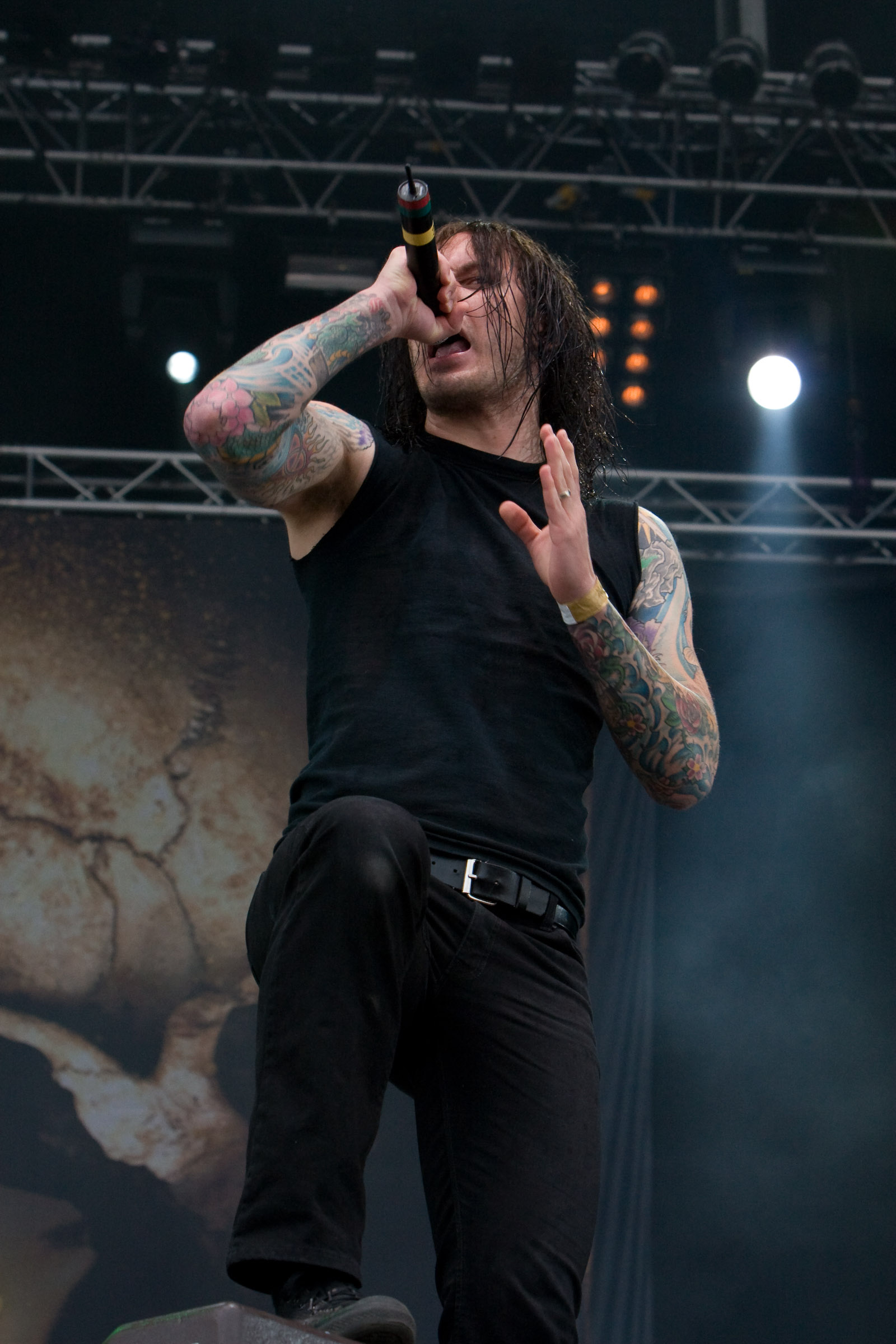
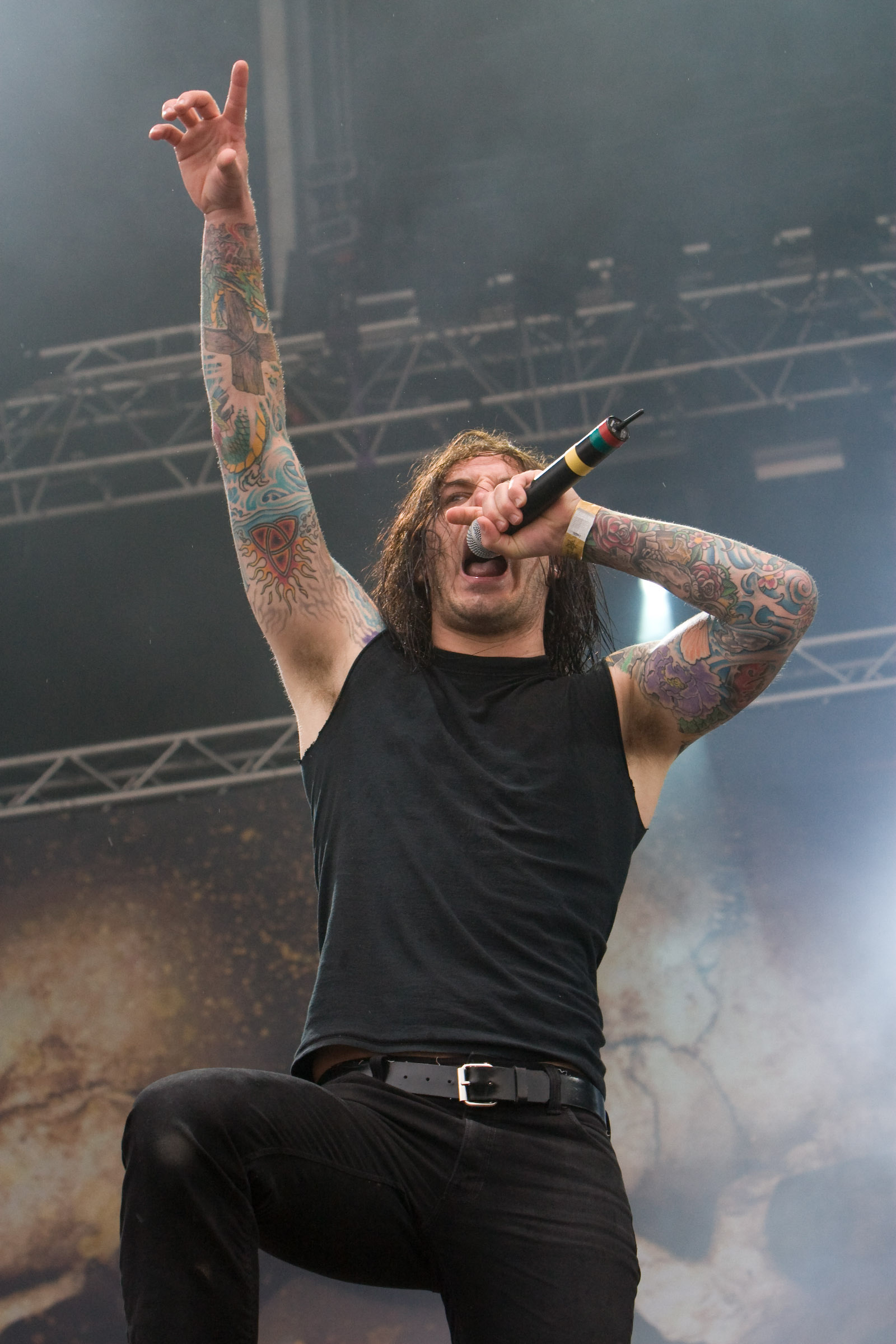
Tim Lambesis’ sleeves are easy to spot when As I Lay Dying play. Both arms are covered from the shoulders toward the wrists, with bold outlines, bright color and enough shading to separate the designs. The photos show dense sleeves, not just a few isolated tattoos.

There’s an interview to go with the photos: Lambesis discussed his tattoos in a Behind The Ink segment for PitCam TV, later covered by Blabbermouth. It offers more context than an event photo, though it doesn’t identify every design. This guide sticks to what the photos show and leaves uncertain meanings open.

Tim Lambesis’ full-sleeve tattoo look

Tim Lambesis performing with both colorful tattoo sleeves visible

This wide festival shot gives a sense of how much of each arm is covered. His left arm is raised as he sings, but the sleeve is still visible; the right has the same dense, colorful look. Separate shapes sit close together, with dark outlines holding the colors in place.

Warm reds, yellow and orange details, blue-green sections and black linework make up the palette. From the audience, the sleeves read as a single block; up close, the color separates into individual motifs. Even a standard stage photo gives a good sense of the layout.

“Full sleeve” can mean an arm with extensive coverage; it doesn’t guarantee every inch is inked. The photos show both arms heavily tattooed, but they aren’t detailed enough to count every bare patch. It’s more accurate to call them full-looking sleeves than to give an exact coverage figure.

The forearm color and heavy shading

Close view of Tim Lambesis colorful forearm tattoos on stage

This closer shot shows the forearm in more detail. Color takes up more of the design than plain black and grey, with soft shading around brighter shapes. Strong outlines keep the sections distinct while he moves and the stage lights shift.

Some shapes look floral or rounded, with darker graphic work nearby. Without a direct explanation, it’s hard to say what a particular shape means; its appearance can change with the angle. The photos show a mix of illustrative forms and bold background color.

Color wraps around the side and back of the forearm, rather than stopping on the panel facing the camera. You can follow more of the sleeve as he turns, which keeps the coverage visible in a moving stage shot.

Both arms in sharp close-up

Tim Lambesis showing both colorful tattooed arms in a close stage photo

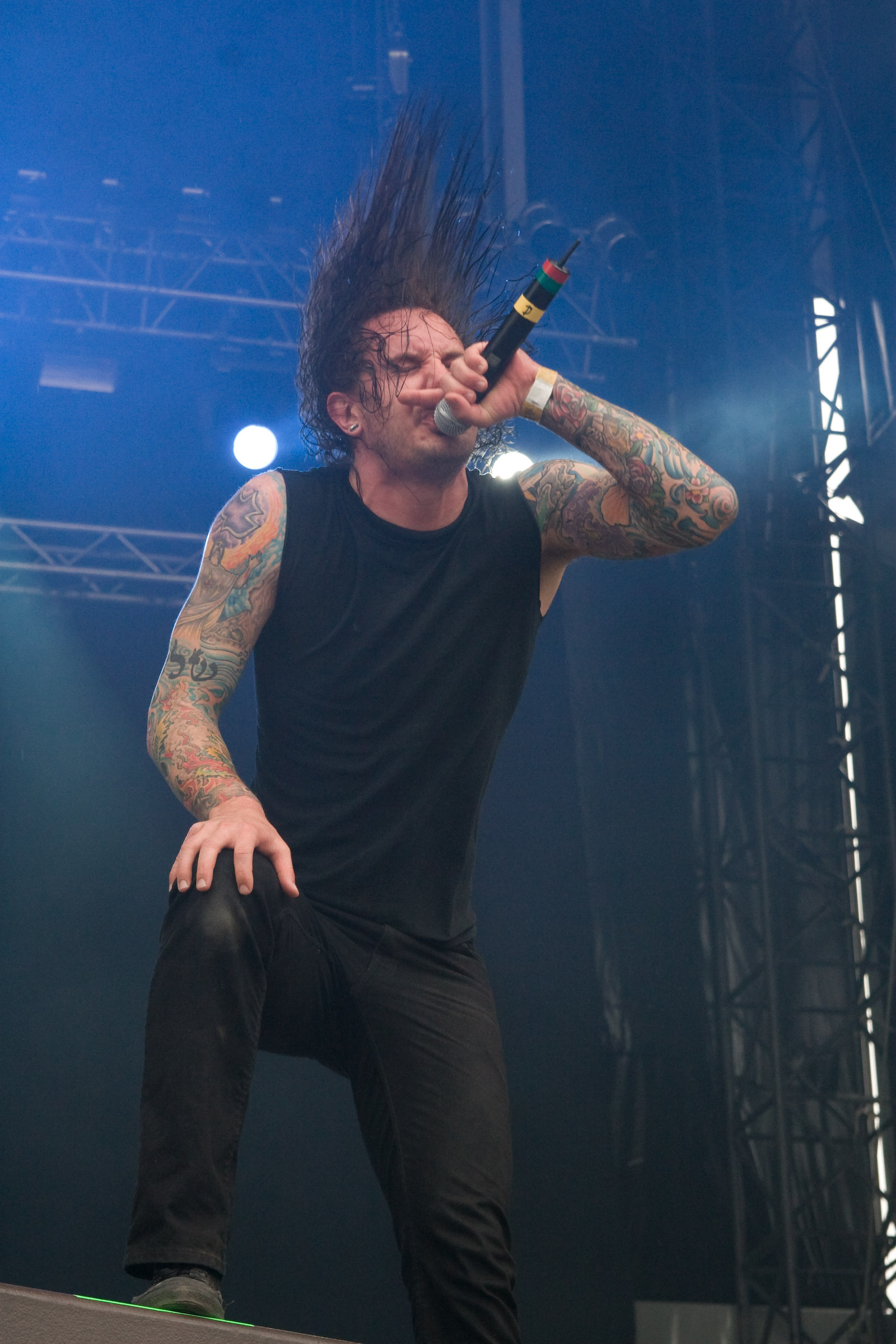
This is the clearest side-by-side view. The sleeves use similar saturated color, thick outlines and dark shading, but the layouts are different. The arms don’t mirror each other; they share a palette and overall weight.

The upper arms are packed with large rounded and floral-looking shapes, while longer designs run down the other arm toward the elbow. Black lines frame some of the color. These details are easier to pick out because the arms fill the frame.

The lighting in performance photos isn’t always even, but the sleeves can be clearer there than in a posed portrait. Here, both arms are exposed against a black shirt, and you can see where one piece meets another. The symbols are still hard to identify.

How the sleeve reads on stage

Tim Lambesis on stage with colorful arm tattoos clearly visible

The tattoos stay visible while he sings, leans forward and moves across the stage. Larger blocks of color catch the light first; the outlines and smaller shapes show up when you look closer.

On the arm at the left of the image, a dark shape sits high near the shoulder, with colorful details running down the forearm. The other arm also looks densely covered in warm colors and shading. Because the camera is low, this image shows scale and contrast better than exact placement.

The color helps separate his arms from a black stage shirt. Reds, yellows, blues and greenish tones still show under blue lights, and the heavy outlines keep the sleeves from flattening into a dark patch. It fits the high-contrast look of a metal show.

The large arm pieces from a wider view

Tim Lambesis performing live with colorful arm tattoos visible

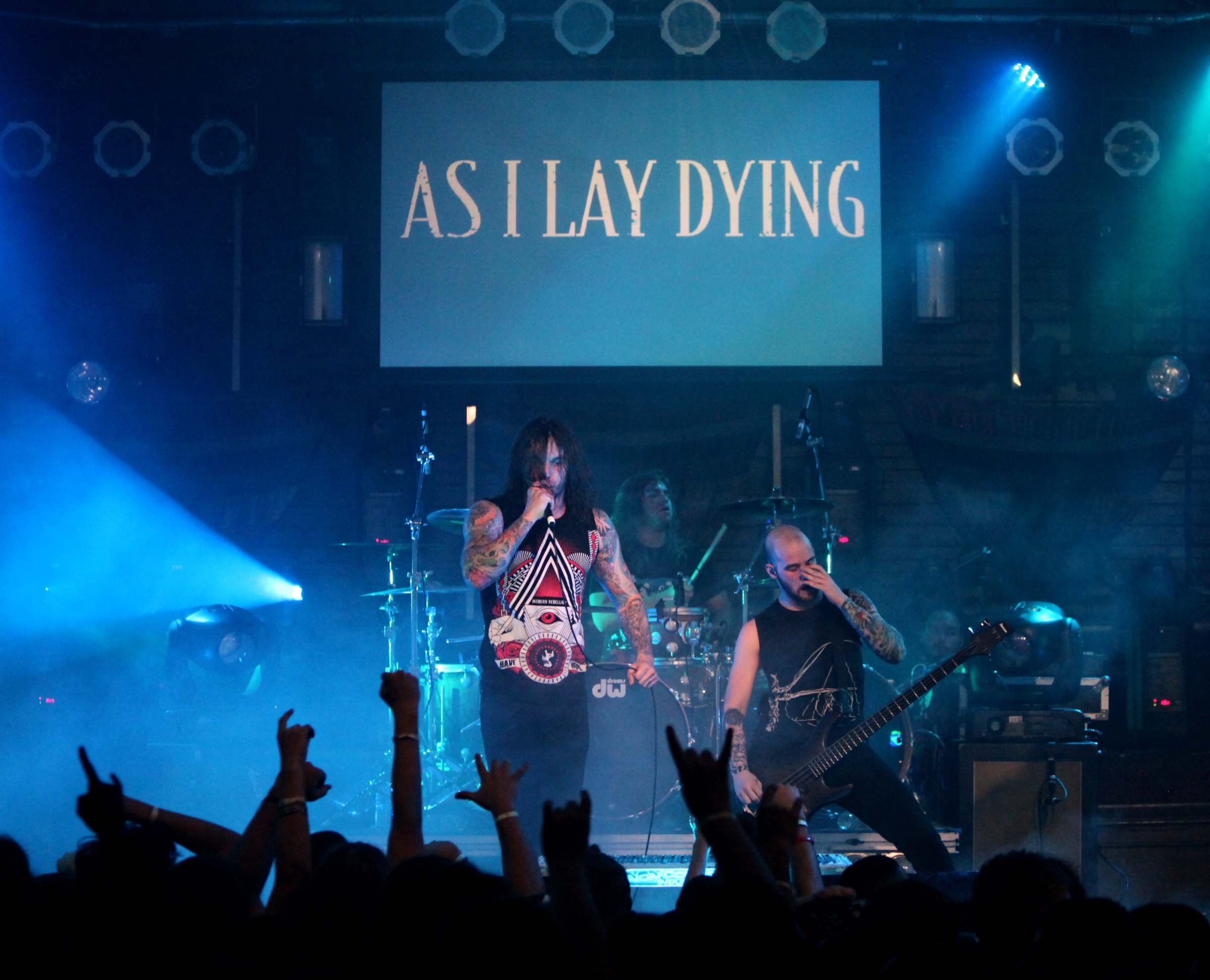
From this distance, small details disappear, but you can see the coverage on both arms. Lambesis stands at the center of the frame; the sleeves read as large, colorful pieces rather than scattered marks.

A raised arm, microphone or blue wash can hide one part of a sleeve and bring another into view. The close-ups are better for individual details; this wide frame shows how the whole look reads onstage.

If you’re comparing him with another heavily tattooed metal singer, Tom Araya’s tattoo coverage has a different visual rhythm. Lambesis’ arms use bright, packed color. The comparison shows how layout and palette change the overall impression, not just the number of tattoos.

What the public record confirms

A dedicated Behind The Ink segment from PitCam TV confirms that Lambesis has discussed his tattoos. Blabbermouth later covered the interview, giving fans a more direct source than captions repeated across fan pages. Start there for meanings the photos don’t make clear.

Even with the interview, not every design has a widely documented meaning. Photos alone can’t confirm the labels some posts give individual motifs. Unless Lambesis has explained a design in an interview or another reliable source, it’s better to leave the guess out. What is clear is that both arms are heavily covered, the work uses vivid color, and these tattoos have long been part of his public image.

Why the collection stands out

Coverage and color are what stand out most. Both sleeves create a large field of ink, and the bright illustrative sections keep it readable from the audience. The work is dense, but its outlines and lighter spaces stop it from turning into a blur.

Different sections have their own shapes, tones and levels of detail, while shared outlines and shading give both arms a similar visual weight. That’s easier to support than naming every shape as a symbol.

The short version

Tim Lambesis has extensive, colorful tattoos on both arms. The photos show floral and graphic-looking shapes, reds, blues, greenish shading and thick outlines. His PitCam TV interview is the place to look for his own explanations; the images here show how the collection looks.

The Behind The Ink segment is below. Compare the close-ups with the wide stage shot: the lighting makes small details harder to see, but the overall shape of his sleeves stays clear. They’re a visible part of his stage look.

Watch Tim Lambesis talk about his tattoos in the Behind The Ink segment:

Alexi Laiho Tattoos: Photos of His Arm Ink

Alexi Laiho’s tattoos were easy to spot in concert photos. As Children of Bodom’s guitarist, his sharp playing, bright guitars and stage presence drew attention; the dense black-and-grey work across both arms was part of that look.

The public photos show heavy coverage on both arms, with dark shading, lettering and graphic shapes. They don’t document the meaning of every mark. A confident story about celebrity ink can spread even when the original interview never said it, so this guide describes what’s visible and leaves unsupported meanings open.

Alexi Laiho’s tattooed arms at a glance

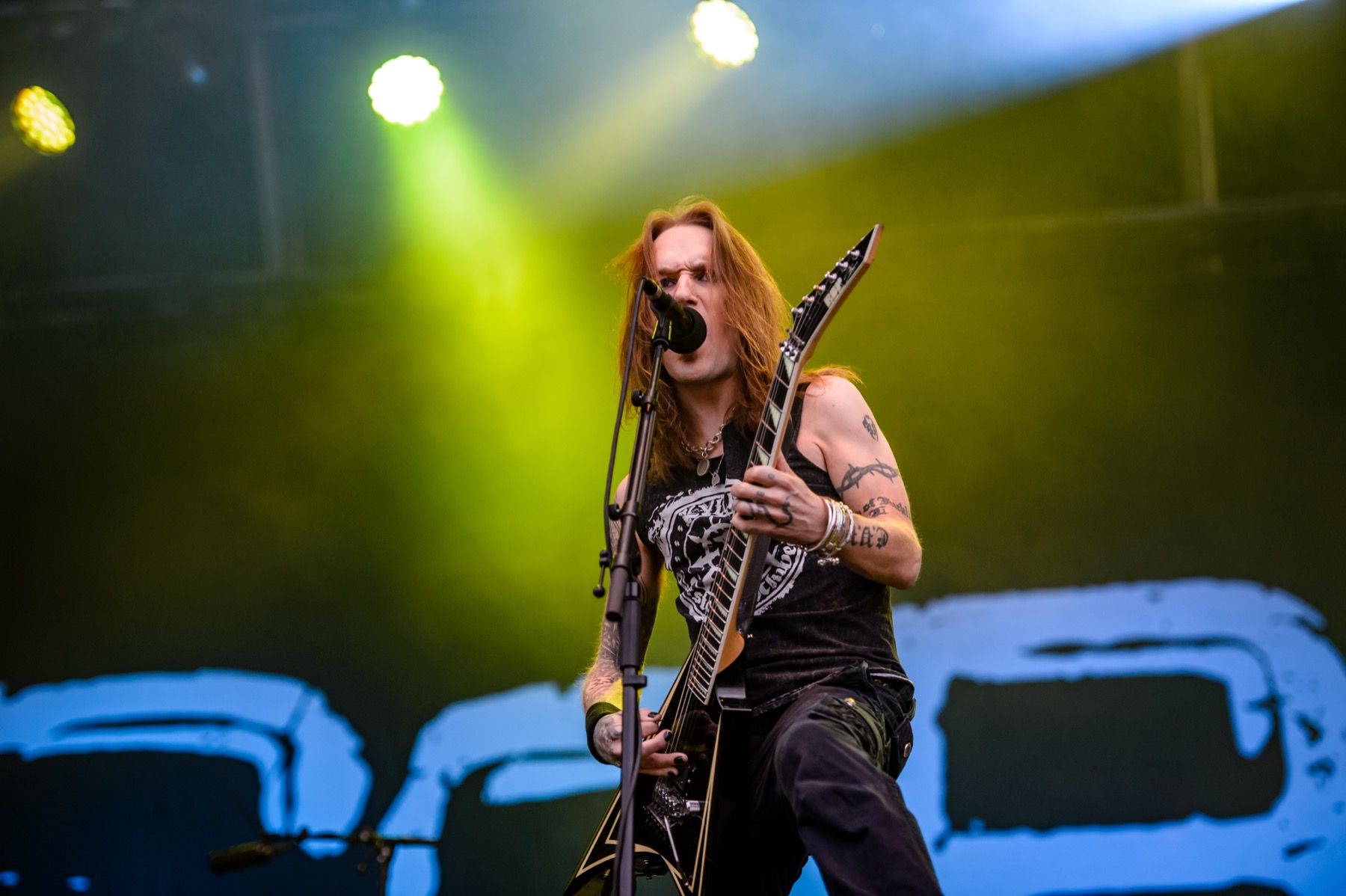
Alexi Laiho showing tattooed arms on stage

Coverage jumps out first: tattoos run across both upper arms and forearms, with pieces close enough to suggest sleeves. Heavy black outlines and shading make the arms look like connected panels at a distance; up close, smaller details separate.

Short sleeves kept the tattoos visible while he played. Black ink stands out against his skin in concert photos, but light, movement and the guitar can hide parts of the forearms. The same broad coverage appears across several years of performance photos.

“Sleeve” often means an arm with extensive tattoos, even when some skin remains visible between pieces. Laiho’s arms are densely covered, but the photos don’t give a complete tattoo map. “Sleeve-style coverage” is more accurate than claiming a confirmed catalogue of every design.

The dense black-and-grey sleeve work

Alexi Laiho's black and grey arm tattoos in a clear stage photo

In the clearest photos, the ink is mostly black and grey. Heavy outlines define darker shapes, while softer shading connects the pieces. The effect is heavy and slightly gothic, which fits the feel of Children of Bodom.

Some tattoos appear as compact graphic pieces; others curve around the arm and blend into nearby work. Contrast changes with the light: a shadow can make one section look solid black, while side lighting brings out grey texture. Small, compressed reposts lose that detail; original-resolution photos show more.

Depending on the crop, a dark shape might look like a skull or an ornament. The photos don’t confirm that or explain its meaning. What you can see is graphic blackwork, shaded forms and layers across much of both arms.

The dark palette, similar line weight and close placement tie the separate pieces together. Even a photo that shows one side still reads as part of the same collection.
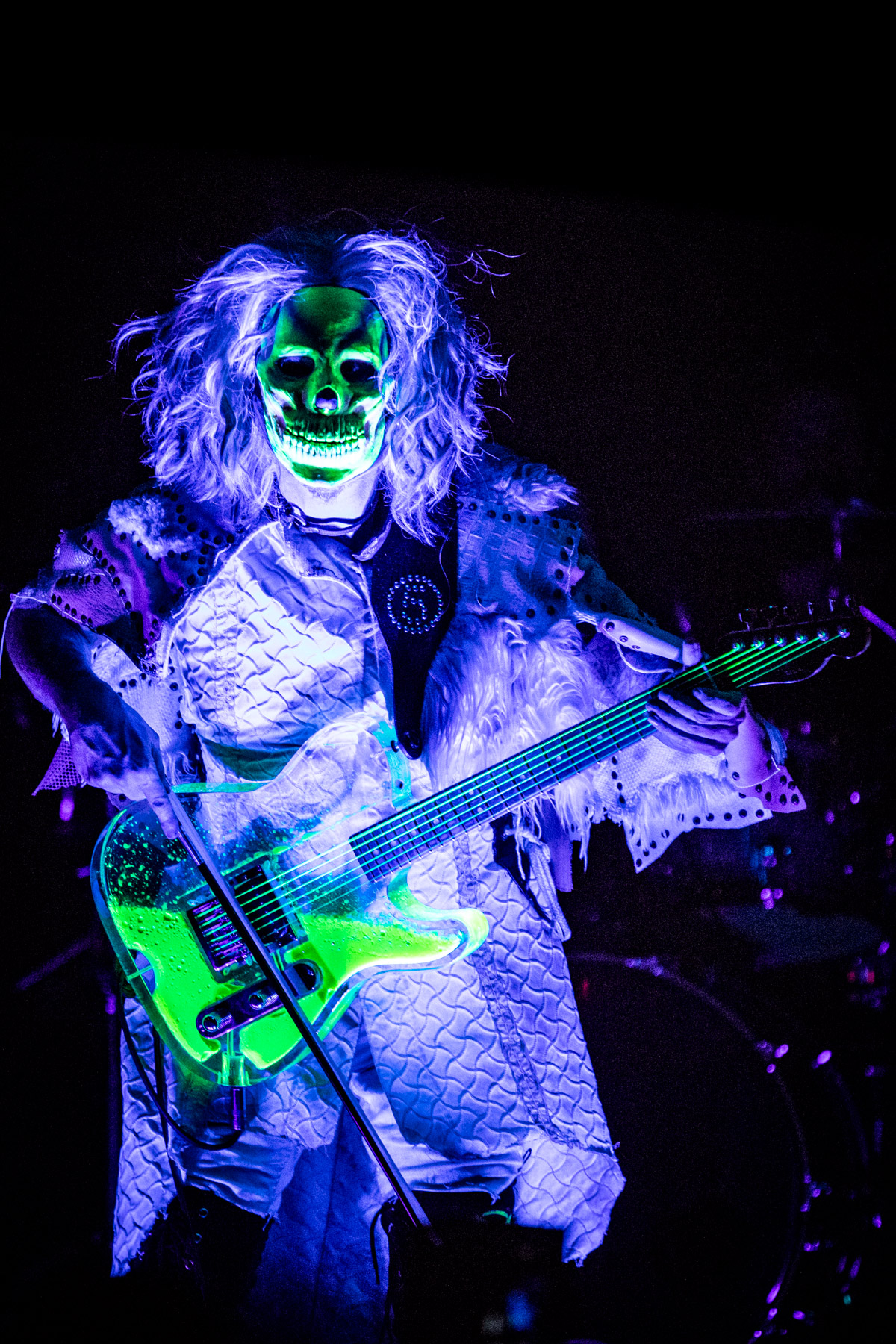
Hand, wrist and forearm details

Alexi Laiho with visible hand, wrist and forearm tattoos

The forearms make the smaller details easier to spot. In some photos, the ink continues toward the wrists and hands. Lettering and compact symbols appear in the mix, though the angle and stage lights make individual characters hard to read.

A blurred line can look like a word, and a shadow can look like part of a tattoo. Sharper images show ink on the lower arms but don’t reliably reveal each symbol. Without a direct explanation from Laiho, it’s better to describe the placement than try to translate it.

The lower-arm coverage carries the ink beyond the biceps. When Laiho holds a guitar or raises an arm toward the crowd, the tattoos draw the eye down the arm. Where visible, the marks on his hands and wrists extend that line.

How the tattoos read under stage lights

Alexi Laiho's tattooed arms under concert lights

Light changes how the shading reads. Front lighting can flatten it; side lighting picks out grey washes, edges and the gaps between designs. In live photos, the darker sections hold their shape even when the rest of the frame blurs with movement.

Different poses show different parts of the tattoos. Arms bent around the guitar reveal less than an arms-out pose; reaching toward the crowd brings the forearms and wrists into view. No single photo shows everything, but several angles give a more reliable sense of how the work wraps around him.

A close portrait may identify Laiho without showing much of his ink. The most useful photos put his arms large enough in frame and keep the tattoos clear of darkness, motion blur and a busy background. The images here were chosen for that visible arm detail.

A wider look at the full arm coverage

Alexi Laiho showing full arm tattoo coverage during a performance

A wider photo shows the tattoos alongside his clothes, guitar and movement. Most of the visible ink is on his arms, framing his upper body when he plays in short sleeves.

The two arms have similar visual weight, though the designs aren’t mirrored. That balance helped make the tattoos familiar in his public image as a metal guitarist.

For another metal musician, compare the arm coverage in our Tom Araya tattoos feature. The styles differ, but for both, a clear performance photo shows more than a random portrait.

What the public photos actually show

The photos support a few basic points: Laiho had substantial tattoo coverage on both arms, mostly black and grey, with bold outlines, shading and a mix of larger graphic areas and small details. Some ink appears to reach the wrists and hands.

Photos can’t tell us who designed each piece, when every tattoo was added or what a symbol meant to Laiho. Even a sharp image may leave part of an arm behind a guitar, microphone or shadow. Those questions need to stay separate from what the photos show.

The clearest public video reference is a YouTube clip titled Alexi Laiho Talks About His Tattoos. It lets Laiho speak for himself; the photos above show how the tattoos looked onstage. The clip is below for anyone who wants to hear him discuss them.

Why Alexi’s ink became part of his look

The tattoos fit his stage image, but there’s no evidence they were added as a marketing choice. The public record doesn’t provide a full timeline. The ink became familiar because it appeared in live shots, interviews and guitar photos.

The photos show a collection, not a matching set made for one shoot. The dark palette and close placement give the separate pieces a connected look. That accumulated style offers more to study than one tattoo seen out of context.

The short version

Across the clearest photos, dense black-and-grey ink covers both arms, with graphic forms, shading and smaller forearm and wrist details. That’s a visual description, not a list of confirmed meanings. For a closer look, compare large photos from more than one angle and watch the tattoo interview below.

James Hetfield Tattoos: Sleeve, Neck and Hand Ink

James Hetfield’s tattoos stand out as soon as he steps onstage in a sleeveless shirt. The Metallica frontman has dense ink on both arms, plus tattoos on his hands, chest and neck. The coverage is extensive, but the pieces have a lived-in look rather than one matched design.

In an interview, Hetfield spoke about starting tattoos later than many people expect and how the pieces came together. The photos fill in the visual side: where the tattoos sit and how they look under stage lights. They don’t settle the meaning of every small mark.

James Hetfield’s tattooed arms at a glance

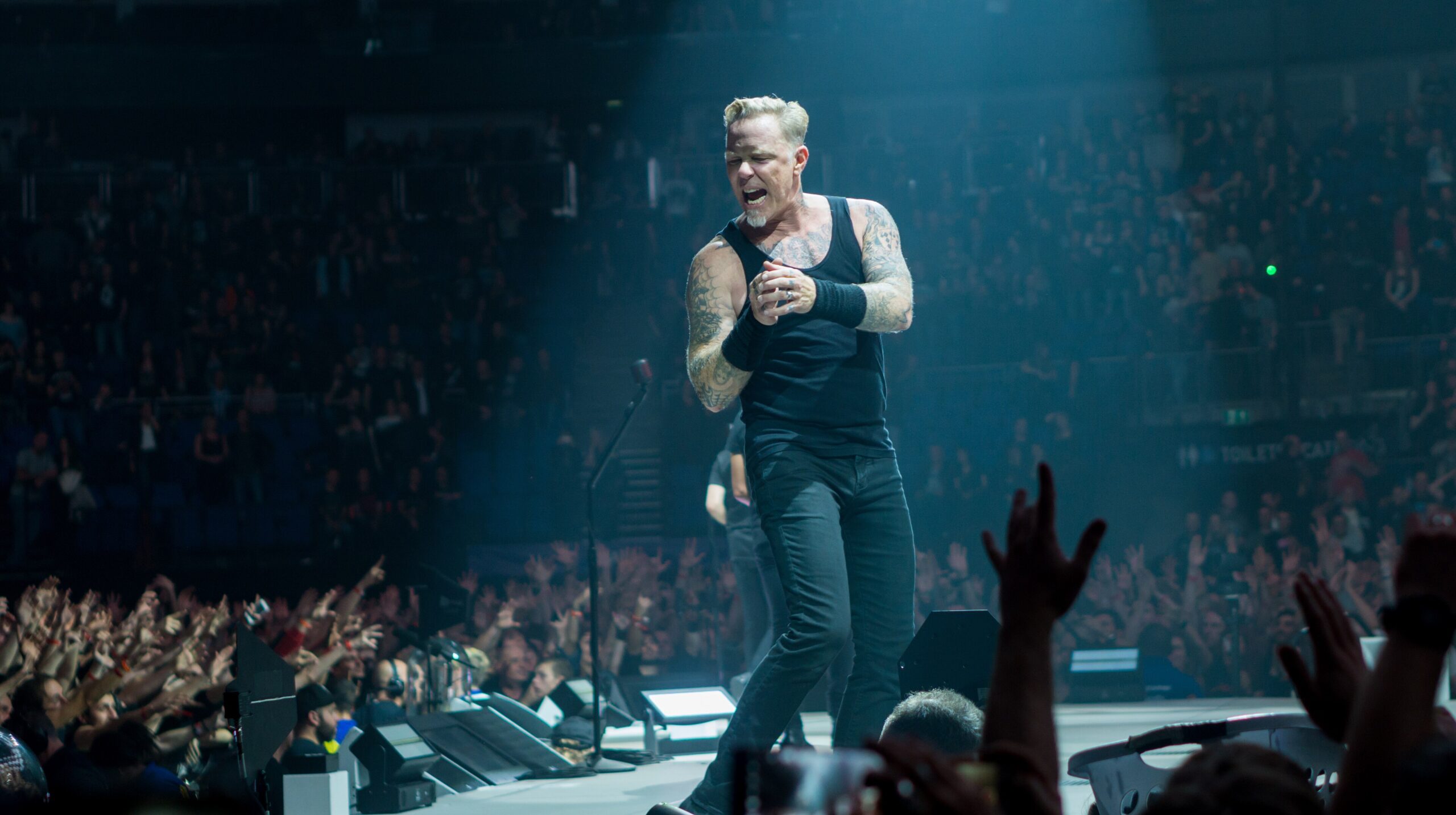
James Hetfield showing full arm tattoos on stage

The clear stage photo shows how much ink covers his arms. Black-and-grey tattoos run from the shoulders toward the wrists, close enough to look like sleeves, though there are breaks of skin. Separate designs overlap but still keep their own definition.

The arms aren’t identical, but the shading and texture give them a similar treatment: dark outlines, soft grey and old-school rock imagery. Exact objects can be hard to name when a guitar or microphone blocks part of his skin, so a broad visual description is more reliable.

Ink continues over his hands, where letters and symbols cross the fingers and backs. Wide concert shots often miss those details. A sharp original photo helps, especially since movement can blur a mark while he plays.

The dense sleeve work on both arms

James Hetfield's dense arm sleeve tattoos during a Metallica performance

From this angle, broad areas of shading sit beside tight linework, and the designs seem to wrap around the arms rather than stay on the front. You can see the coverage when he raises a hand or holds the microphone.

Some parts look like traditional images, while others are sketchier and crowded. The photos don’t always give enough detail to identify individual shapes. A careful description sticks to the dark graphic forms, lettering, rounded shapes and heavy shading, as well as the amount of arm coverage.

Black clothes make the ink stand out; concert lights change how it looks. Warm light picks out the skin between tattoos, while cooler light makes the dark sections feel heavier. The outlines and close spacing keep the overall style recognizable.

Chest and shoulder tattoos

James Hetfield showing chest and shoulder tattoos in a stage photo

With a vest or wide-neck shirt, you can see that the ink extends beyond his arms. A large dark chest design meets the shoulder pieces, filling more of his upper body in a waist-up shot.

Straps, guitars and shadows cover parts of the chest tattoo in many pictures. Closer views show its size: it sits high and spreads toward the shoulders, where it meets the sleeves.

A press portrait can show his face while keeping the tattoos covered. The performance photos are more useful for seeing how the chest, shoulder and upper-arm pieces sit together as he moves onstage.

Neck tattoos, lettering and hand details

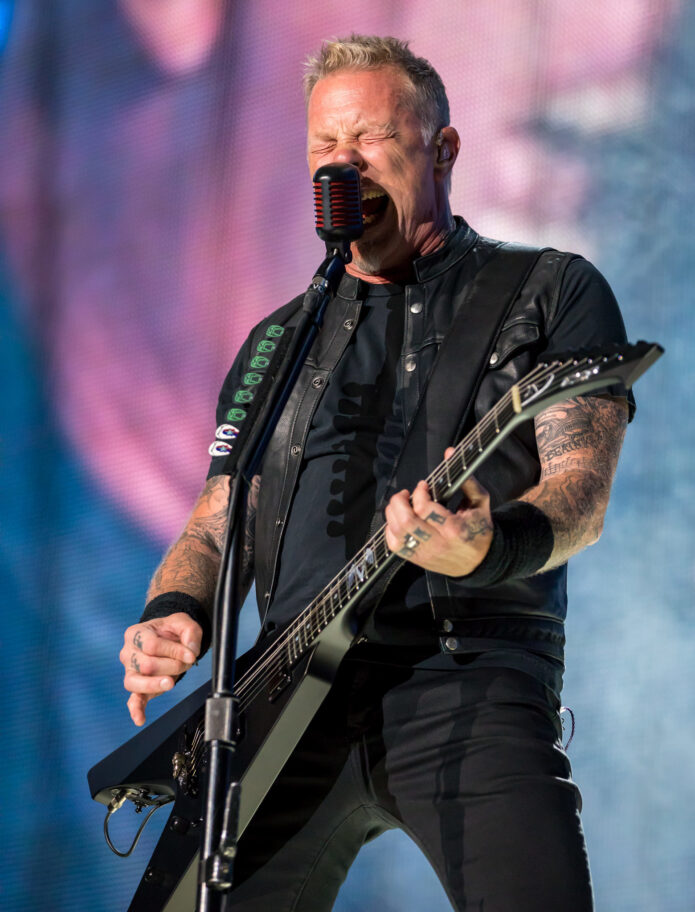
James Hetfield with visible neck, arm and hand tattoos

The neck ink is easier to see because it sits above the shirt line. Here, dark pointed shapes run up the side of his neck and frame his face, especially against a black outfit.

Lettering appears on his arms and hands. Some marks could be short words or initials, but they aren’t readable from every angle. Hetfield has talked publicly about his tattoos; unless a phrase is clear or he has identified it, it’s better to describe it as lettering and leave the wording open.

The finger tattoos are small beside the sleeves, but they change the look of his hands around a microphone or guitar pick. They’re also a reminder that one photo won’t show every mark: hands turn away, disappear under a wristband or sit behind an instrument.

How the ink reads under concert lights

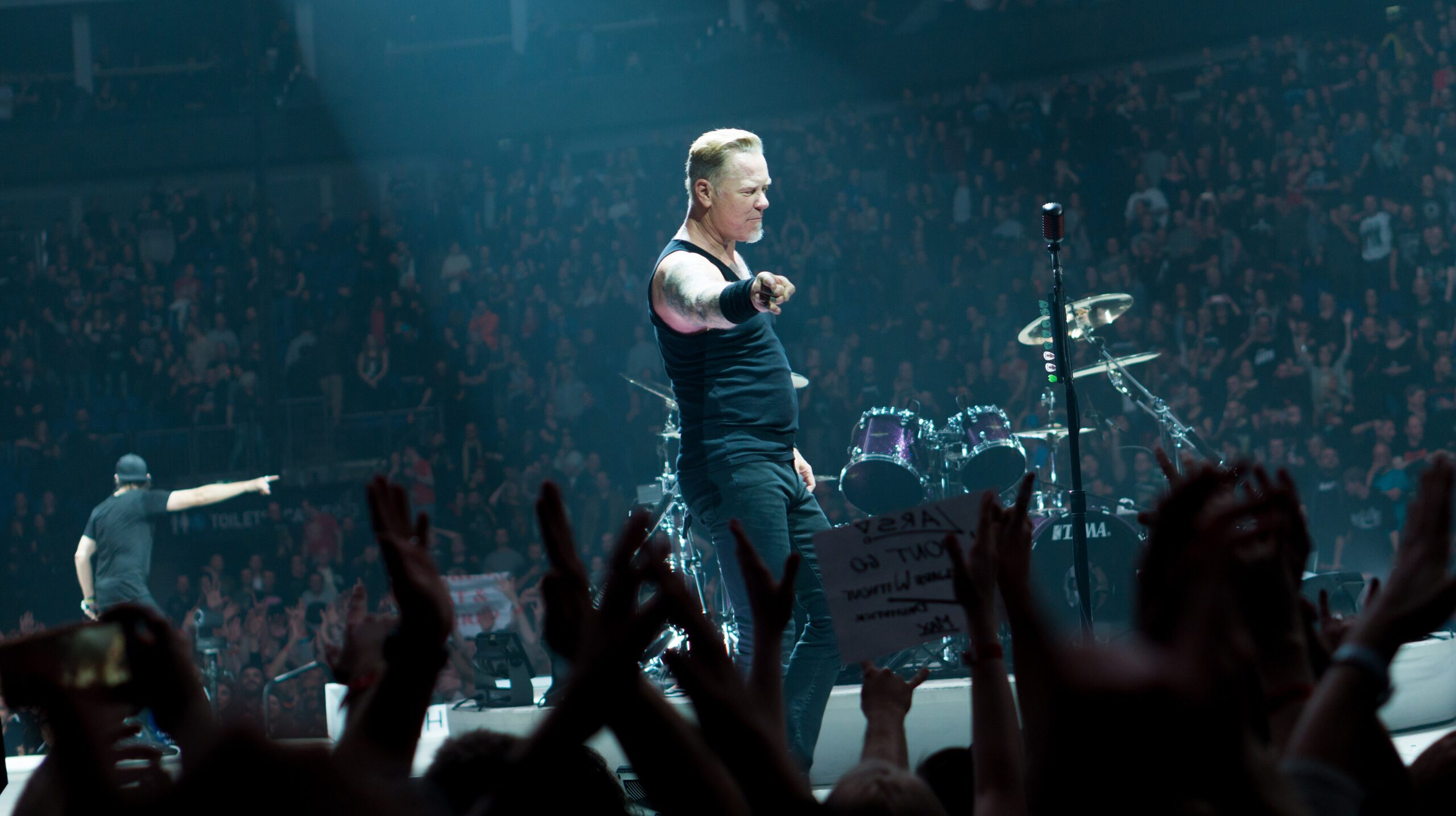
James Hetfield's tattooed arms visible under concert lights

A wide shot can’t show a tiny symbol clearly, but it does show the overall effect. In front of the crowd, his arm tattoos become part of his outline against a black vest. That contrast helps the ink read from farther away.

Every pose reveals something different: an arm overhead shows the outside of the sleeve, a guitar across the body hides part of the chest and forearm, while a close microphone shot catches the neck and hand lettering. Together, the photos tell more than any single frame.

Compressed images can flatten the shading into a dark patch. A sharp original photo reveals lighter grey, gaps and changes in linework. Those differences matter if you’re studying the designs or using them as a reference.

A little context from the interview

The interview clip below lets Hetfield explain the decision himself. Celebrity tattoo stories often get simplified and repeated; hearing him talk is a better source than a copied fan caption.

In the clip, Hetfield says he started getting tattoos later in life, around 40. That places the collection at a particular point in his career, rather than at the start of Metallica. The tattoos reflect a decision he made then; they weren’t always part of his stage look.

That timing doesn’t mean every tattoo has a neat explanation. The visible work includes lettering, possible family references and larger rock or biker-style imagery, but not every meaning has been documented in one place. Keep what Hetfield has explained separate from what viewers might infer.

Why the full look works onstage

The collection is easy to recognize because the ink covers his arms, chest, neck and hands. The lines carry from one area to the next, even when individual designs are hard to identify.

The tattoos change with his playing, too. A portrait hides much of the ink; a Metallica stage photo shows it moving as he plays. The guitar, microphone, sleeveless shirt and dark ink all appear together in the frame.

For a different look from another metal guitarist, see our Alexi Laiho tattoos feature. Both use visible arm tattoos as part of their public image, but their linework, placement and stage looks differ.

The quick version

Hetfield has substantial, visible ink across both arms, along with chest, neck and hand tattoos. The work is dark and heavily shaded, with lettering and small marks mixed into larger designs. Photos show detail on the arms and neck; the interview adds context about when he started getting tattoos.

Start with clear stage photos if you’re studying the designs. Wide shots show how the tattoos fit his performance; sharper photos show the lines and placement. Leave uncertain meanings open. The tattoos don’t need invented stories to be interesting.

John 5 Tattoos: Japanese-Inspired Sleeves and Stage Ink

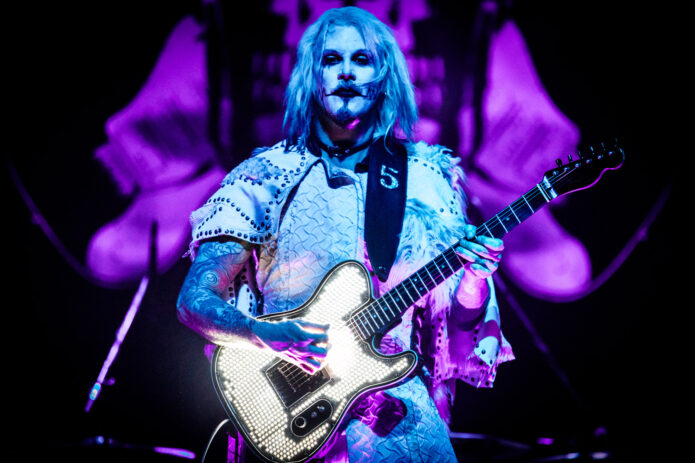
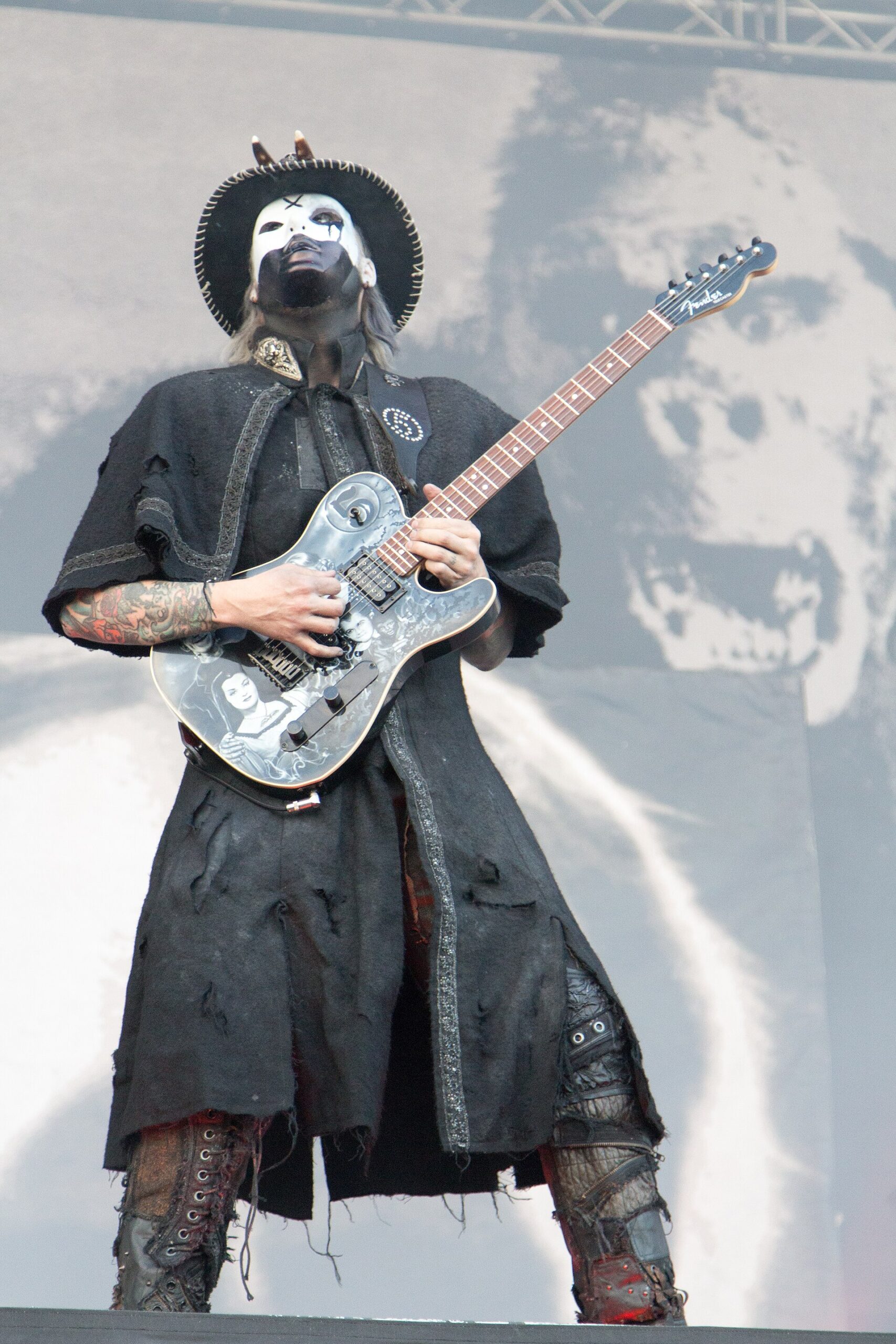
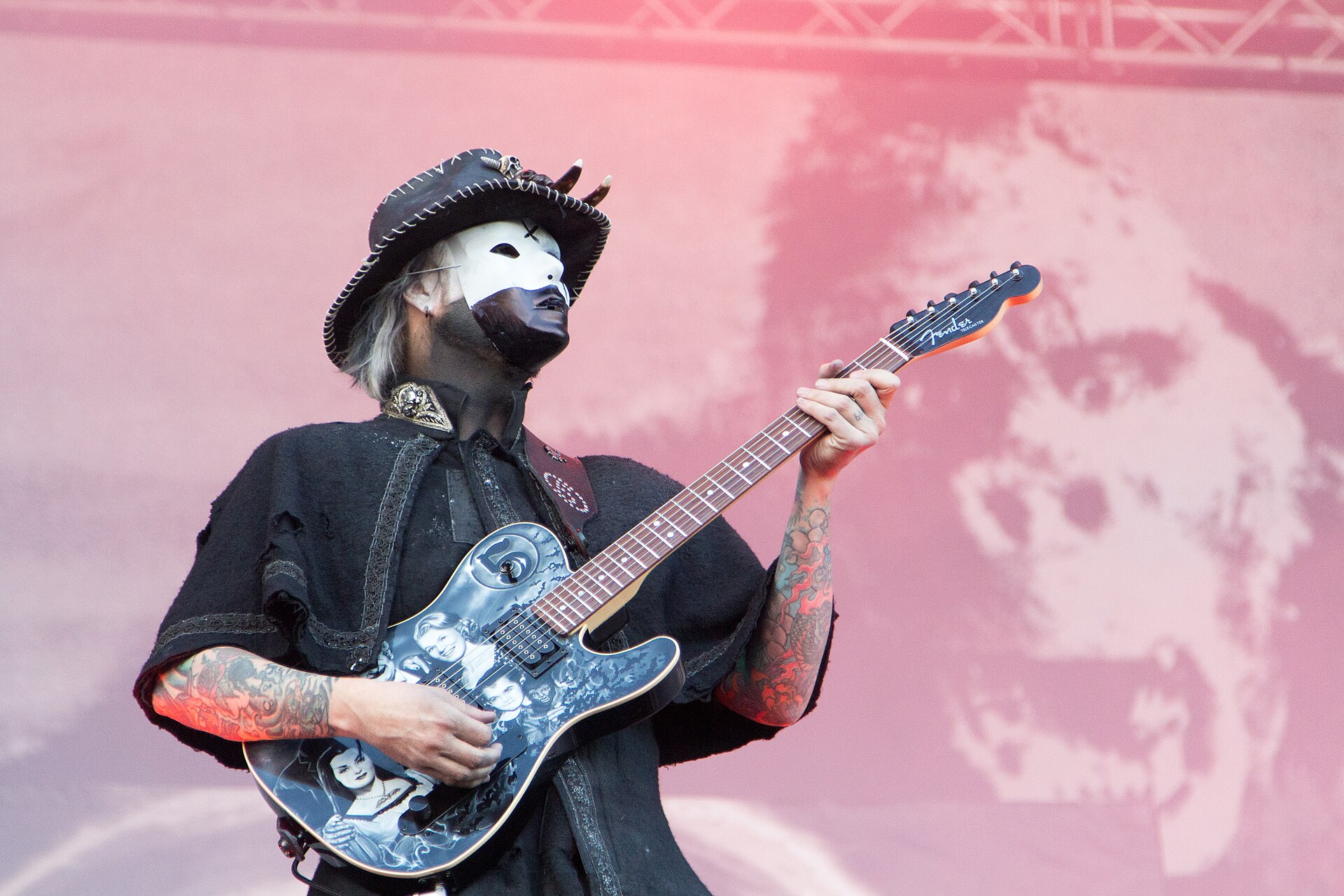
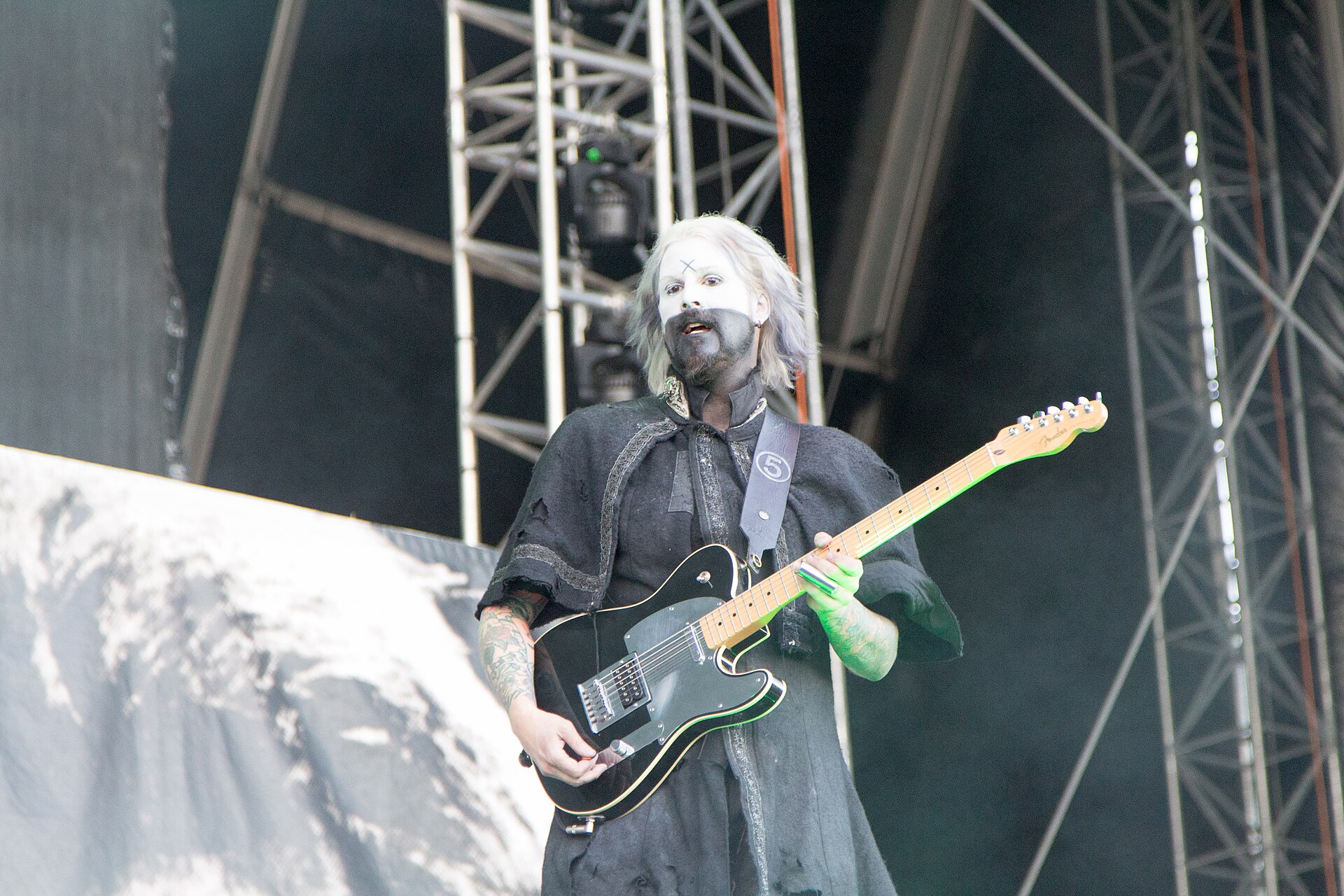
John 5’s tattoos fit the theatrical look he brings to the stage. The Rob Zombie guitarist has bold, densely packed work on both arms, still visible when the costumes change. Clear concert photos show layered sleeves, color and smaller details.

The costume, makeup and guitars can change from show to show; the tattoos remain a familiar part of his look. The photos make it possible to study the sleeves’ scale and how the designs wrap around the forearms, without guessing what every symbol means.

John 5 has appeared in coverage of musicians and tattoo culture, including the Musical Ink project. Loudwire described his arm work as Japanese-inspired. That gives some context, but the photos are still the best guide to what’s visible. I’ll stick to the shapes and placement unless John 5 has explained a meaning himself.

John 5’s tattooed arms at a glance

John 5 full arm tattoos on stage

The ink covers both forearms and reaches toward the upper arms, giving them a sleeve-like look. A jacket or guitar can hide part of the view, but the larger shapes still read from the crowd. Closer photos bring out smaller marks and how one section meets the next.

This arm has a strong stage look: blocks of color, dark outlines and designs set close together. There isn’t much bare skin between them, so the sleeve looks complete from a distance. Up close, the overlapping edges give it more detail.
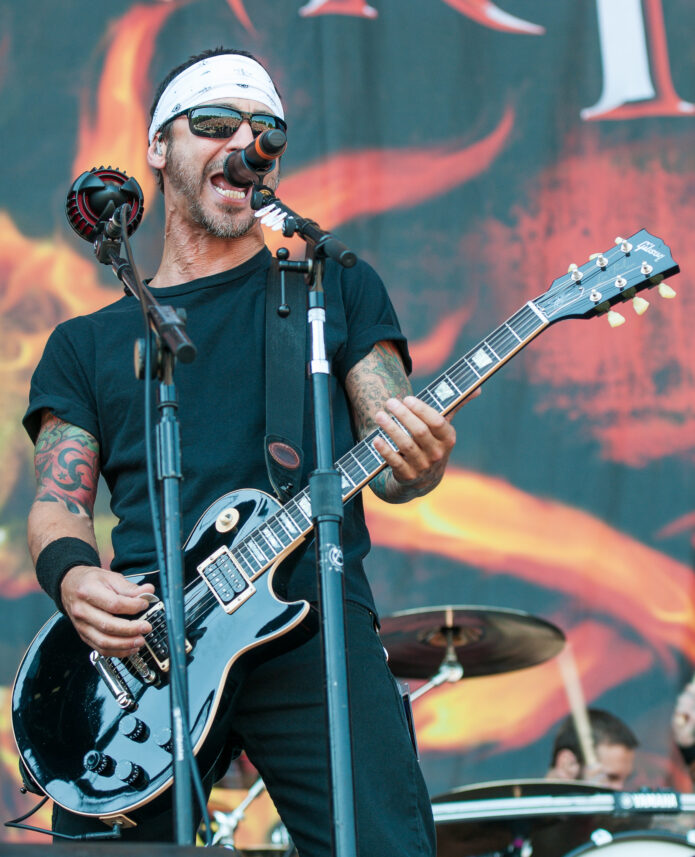
The guitar covers part of the lower arms in some poses, but the tattoos continue around the sections still in view. Turn his arm or change the angle and different parts of the same sleeve appear.

The Japanese-inspired arm work

John 5 colorful forearm tattoos

This horizontal close-up shows the sleeves more clearly. Both forearms are exposed, with large flowing shapes alongside smaller filler details. Reds, blues and dark shading sit close together, giving the work a dense, illustrated look.

“Japanese-inspired” describes the way the shapes flow around the arm rather than stopping at a flat edge. It doesn’t establish a traditional meaning for each mark; it describes the visual style: movement, close coverage and a planned layout.

The arm nearest the camera is sharp enough to show individual edges against the pink stage backdrop. His other arm is turned partly away, a reminder that one front-facing photo can’t show every side. The outer arm, inner arm and elbow each look different as he moves.

The red areas look brighter under stage lights, while black shading gives the arm weight. Cooler light makes the dark sections heavier; in daylight, the colors might read more evenly. The outlines keep the sleeve readable in both settings.

What the wider stage angle shows

John 5 arm tattoo sleeves

The wider photo shows the tattoos against his black costume. His right arm is more open in this pose, while the guitar body blocks part of the other. That change in position shows how movement affects what a photo can reveal.

This image doesn’t identify every design, but it does show the scale of the arm work and how central it is to John 5’s stage look. The tattoos are on display whenever he plays in short sleeves or a sleeveless costume.

A second front-facing photo would add little here. This angle shows more of his body position, the sleeve’s outline and how the ink sits beside the guitar and strap.

Dense forearm detail under the mask

John 5 tattooed arm under stage lights

The mask changes the mood of the photo, but the sleeve remains visible. Under blue and green light, the forearm reads as a dense patchwork of shapes. The colors are harder to separate than in the daylight shots, while the outline stays clear.

With his arm angled toward the guitar, the tattoos follow its curve instead of sitting like a flat panel. Dark shading gathers around the elbow and forearm, with brighter pieces breaking through. The light exaggerates some areas but leaves the overall layout visible.

John 5’s stage character is theatrical and often strange. The tattoos add detail without competing with the makeup; even when his face is hidden, the exposed sleeve helps identify him.

The Halloween stage look

John 5 tattooed arms in pumpkin stage show

This darker, busier image adds another setting. Purple light and stage props give the scene a Halloween feel, while the tattooed arm remains visible at the left edge. The ink works alongside the costume, but it still belongs to the person beneath the character.

A spooky stage photo doesn’t prove that every tattoo has a horror theme. It shows the arm work beside skull imagery, masks and theatrical props. The sleeve’s movement and texture make it fit the scene without confirming a meaning for each piece.

This image works best alongside the sharper close-ups. It isn’t detailed enough for studying small lines, but it shows how the guitar, pose and visible coverage come together in the full look.

A little context from the interview and book coverage

Musical Ink and Loudwire offer some context around the arm work, including its Japanese-inspired look. That still doesn’t confirm the meaning of each piece. Unless John 5 has named a symbol, describe what it looks like rather than fill in a backstory.

The photos consistently show heavy coverage on both arms, bold color and designs that move with the body. Those details are easy to verify. Claims about a specific character, date or meaning need a stronger source than a fan caption or a guess from one concert photo.

John 5 has played with Marilyn Manson, Rob Zombie and other artists, and his stage look has changed across those periods. Photos often show the tattoos alongside makeup and costumes, but the ink is its own part of the picture.

Why the full look works onstage

At a distance, the arms read as dark sleeve shapes. Closer in, the color and larger figures separate; a sharp photo shows smaller outlines and how the designs wrap around the arm.

A useful gallery should vary the view: the front of an arm, its outer edge and the sleeve under different light all add something. Together, those views give a fuller picture without suggesting one photo shows the whole collection.

If you’re using the photos for tattoo ideas, study how the designs flow from one section to the next. The close placement and similar visual weight help the sleeves feel connected.

The quick version

John 5 has large, visible tattoos on both arms, with bold color, dark shading and a Japanese-inspired flow. The stage clothes and makeup add to the drama, while the arm work remains clear in both masked and unmasked photos.

The photos show extensive ink across both arms and make it a clear part of his public image. They don’t confirm the meaning of every symbol. For another musician whose tattoos are easy to see onstage, read our James Hetfield tattoos feature.

Watch John 5 talk about his career and stage life:

Sully Erna Tattoos: Muppets, Sleeves and Old Name Cover-Ups

Sully Erna’s tattoos span both arms, from colorful sleeves and early freehand pieces to cover-ups. In a Loudwire tattoo tour, he talks about designs chosen for a rock-star look, tattoos from friends and pieces tied to people and interests in his life. Some names lasted longer than the relationships they came from.

There’s no single plan behind Sully Erna’s tattoos. They grew over time. In the Loudwire tour, Erna talks about early pieces, names he later covered, his Muppet tattoo, his daughter’s chest portrait and how he feels about the older ink now.

Sully Erna’s sleeves are the main event

The arms show how the collection grew. Both sleeves are heavily tattooed, with color, dark outlines and images close together. Erna said his right arm began with separate freehand pieces from a friend, before Godsmack had taken off. Over time, those tattoos came together as a sleeve.
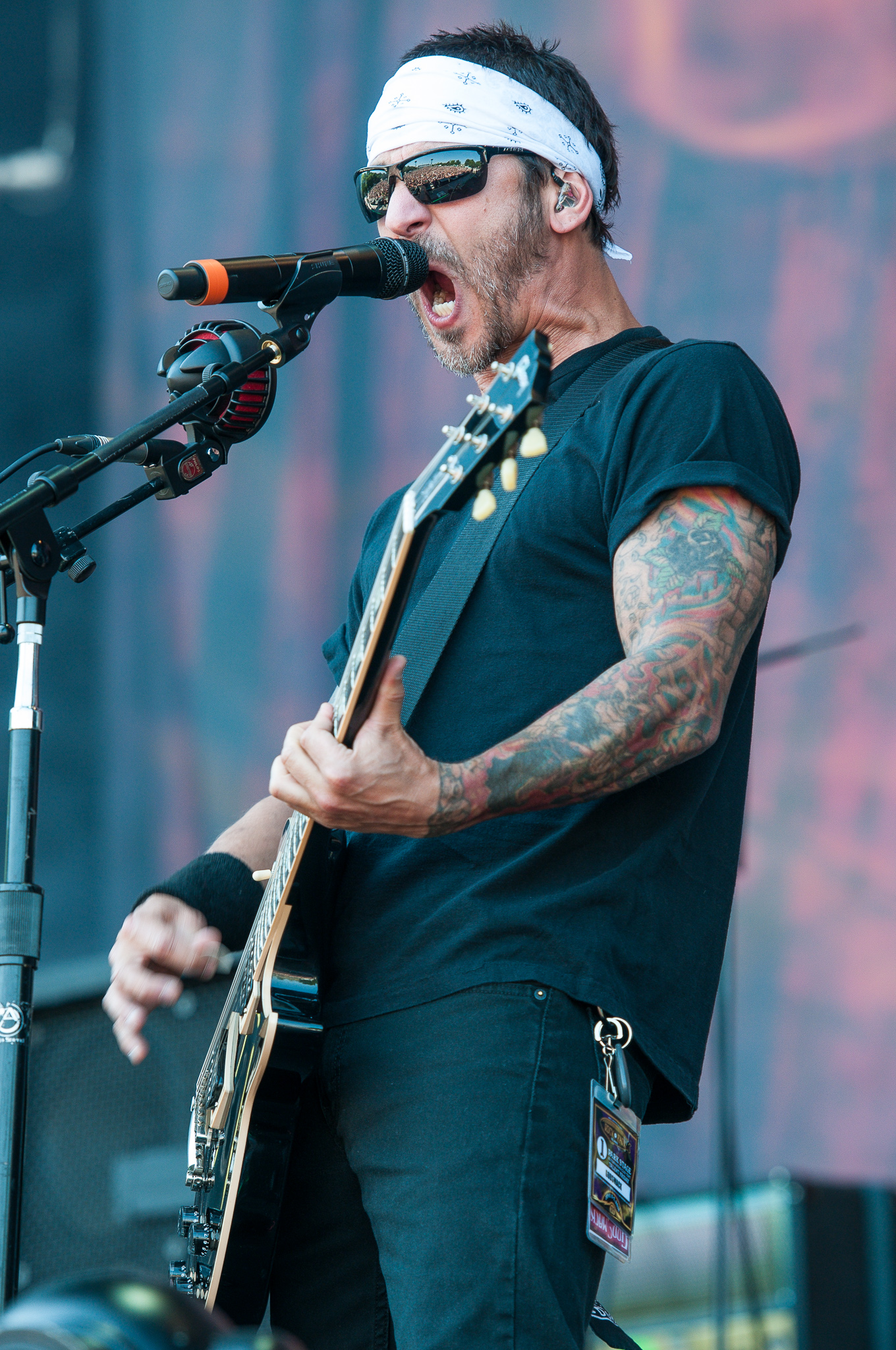
Sully Erna right arm sleeve tattoos

Erna hasn’t claimed that every early tattoo meant something profound. In the interview, he said some were chosen because they looked cool and helped him build a rock image. Some pieces simply looked right to him at the time; he found their place in the larger collection later.

The color work gives the arms their loud look

The close-ups show how tightly the color is packed. Reds, greens and dark shading sit beside one another with little bare skin between designs. You notice the larger colors first; smaller shapes become clearer as you look closer.

Close view of Sully Erna colorful arm tattoos

Erna often performs in short sleeves, so the tattoos are visible while he plays guitar, leans into the microphone and moves across the stage. They’re part of how he looks in performance, not just something arranged for a studio photo.

Some of the oldest ink came with a price

He also told Loudwire that some early tattoos were the names of strippers he dated. They offered to pay if he put their names on his arm. After the relationships ended, the names became awkward reminders, and he covered some of them with new work.

Sully Erna arm tattoos and cover-up work

The sleeves mark different points in time. Some tattoos cover earlier ideas; the collection didn’t begin as one master plan. Erna has said laser removal can be painful, so covering names he no longer wanted made more sense than trying to erase them.

The collection is not all heavy imagery

For all the dark rock imagery, Erna has a playful Muppet tattoo too. In the Loudwire tour, he showed the character and talked about it as one of his early inspirations. It adds a lighter note to the collection.

Sully Erna sleeve tattoo details from a live performance

The Muppet sits alongside references to his younger years, sense of humor, music and movies. A sleeve can hold a family tribute and a favorite character at once; Erna’s collection doesn’t have to follow one theme to feel like his.

The stories behind the ink are personal

Erna has called a portrait of his daughter at age seven on his chest his most important tattoo. It’s hard to see in performance photos because his shirt covers it. He joked that he sometimes leaves the hair around the portrait looking like a goatee and a Fu Manchu just to annoy her.

Sully Erna tattooed arms and full sleeve work

He can laugh about early choices, talk plainly about cover-ups and still take the family pieces seriously. The portrait matters because it shows his daughter; the joke about the hair around it keeps the story light.

The collection includes colorful sleeves, names he later covered, new work over old tattoos, a Muppet and his daughter’s portrait. Fans also point to an AC/DC connection. There isn’t one neat explanation for every piece because they come from different parts of his life.

Erna didn’t wait for a finished concept before getting tattooed. He added pieces when he was younger, let friends work on him and changed direction over time. The sleeves look like a record of those choices. Compare their full-arm color and stage presence with the darker, more deliberate work in M. Shadows; the two collections have different rhythms.

The short version of Sully Erna’s ink story

Sully Erna tattoo sleeve overview on stage

Sully Erna’s tattoos mix older choices with newer meaning. His sleeves began with freehand pieces and grew into large, colorful sections. He covered some names, added a Muppet and has a portrait of his daughter on his chest.

The pictures show the designs; Erna’s stories explain what some of them mean to him. His collection holds funny, regretted and family-related pieces together, from different parts of his life.

Watch Erna explain the pieces in Loudwire’s tattoo tour below:

M. Shadows Tattoos

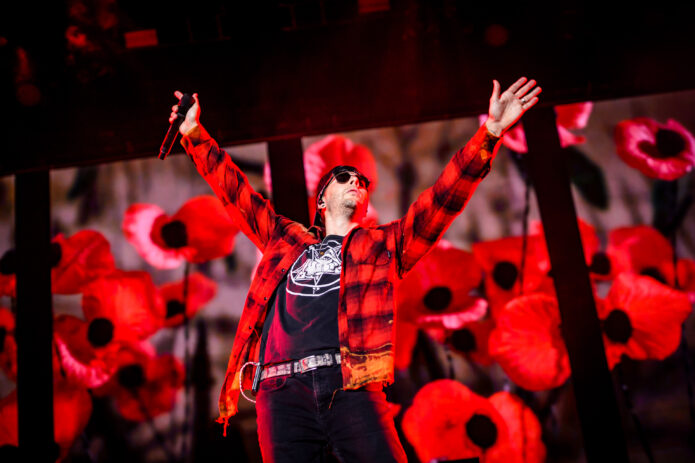
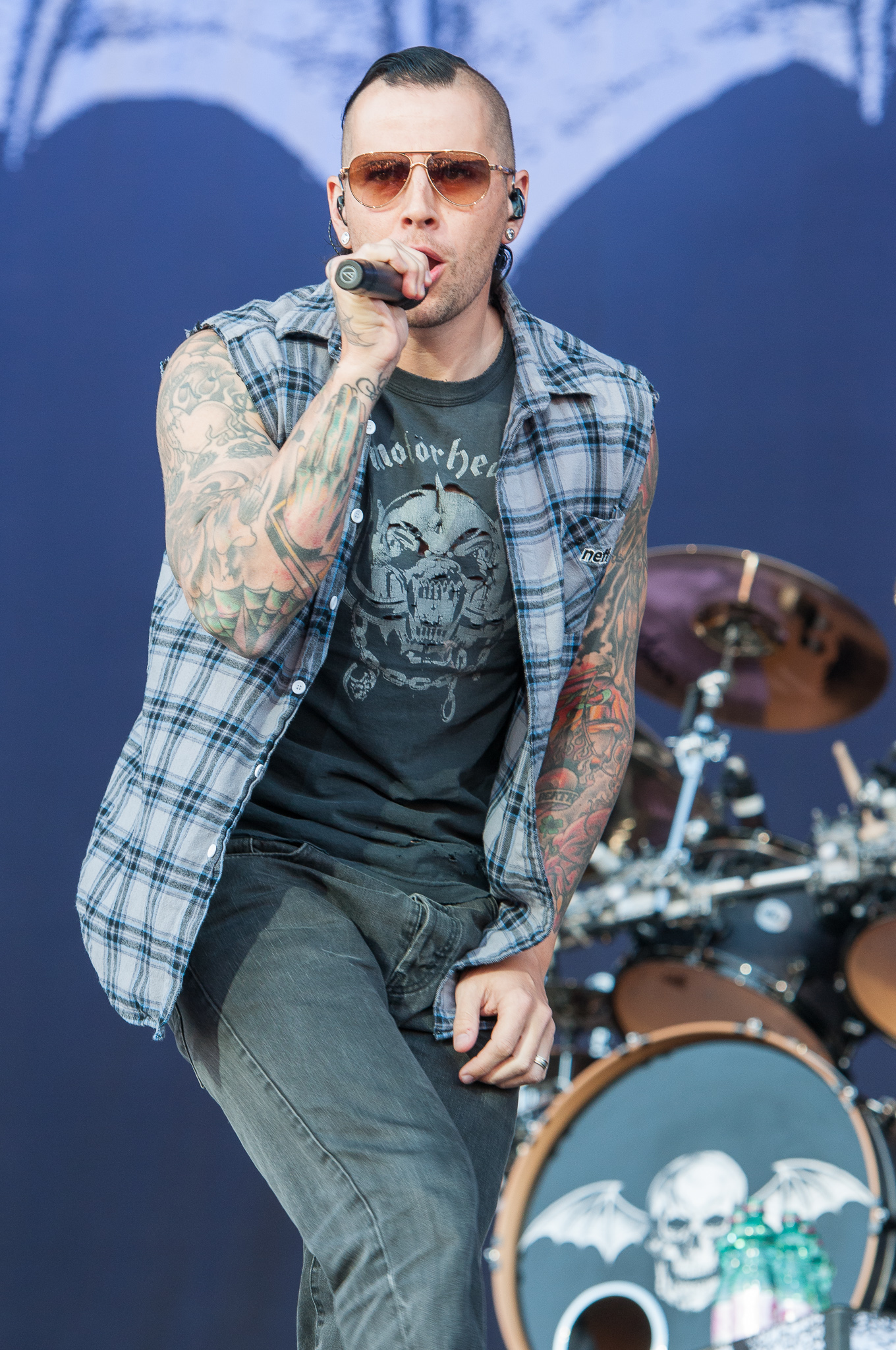
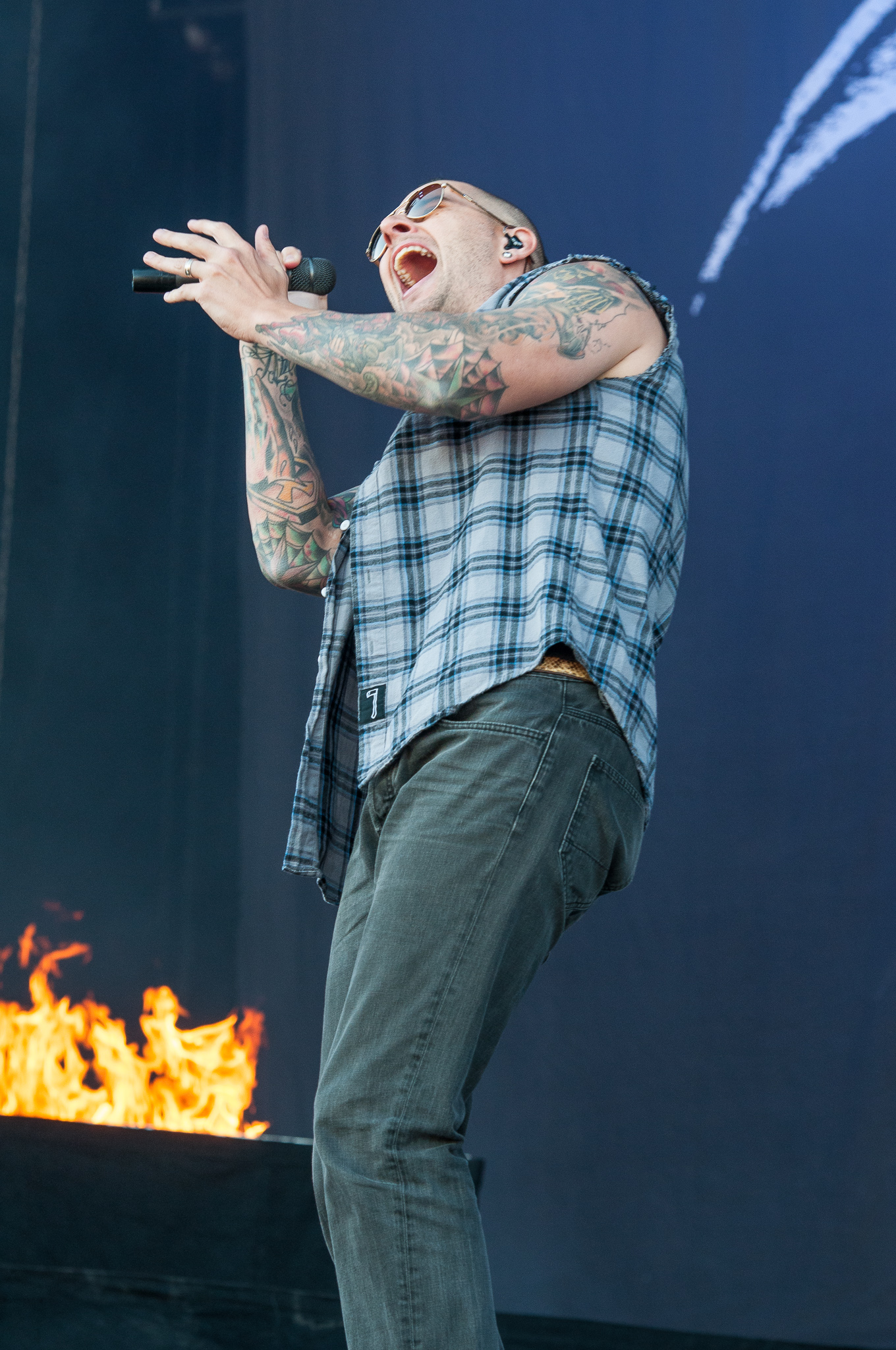
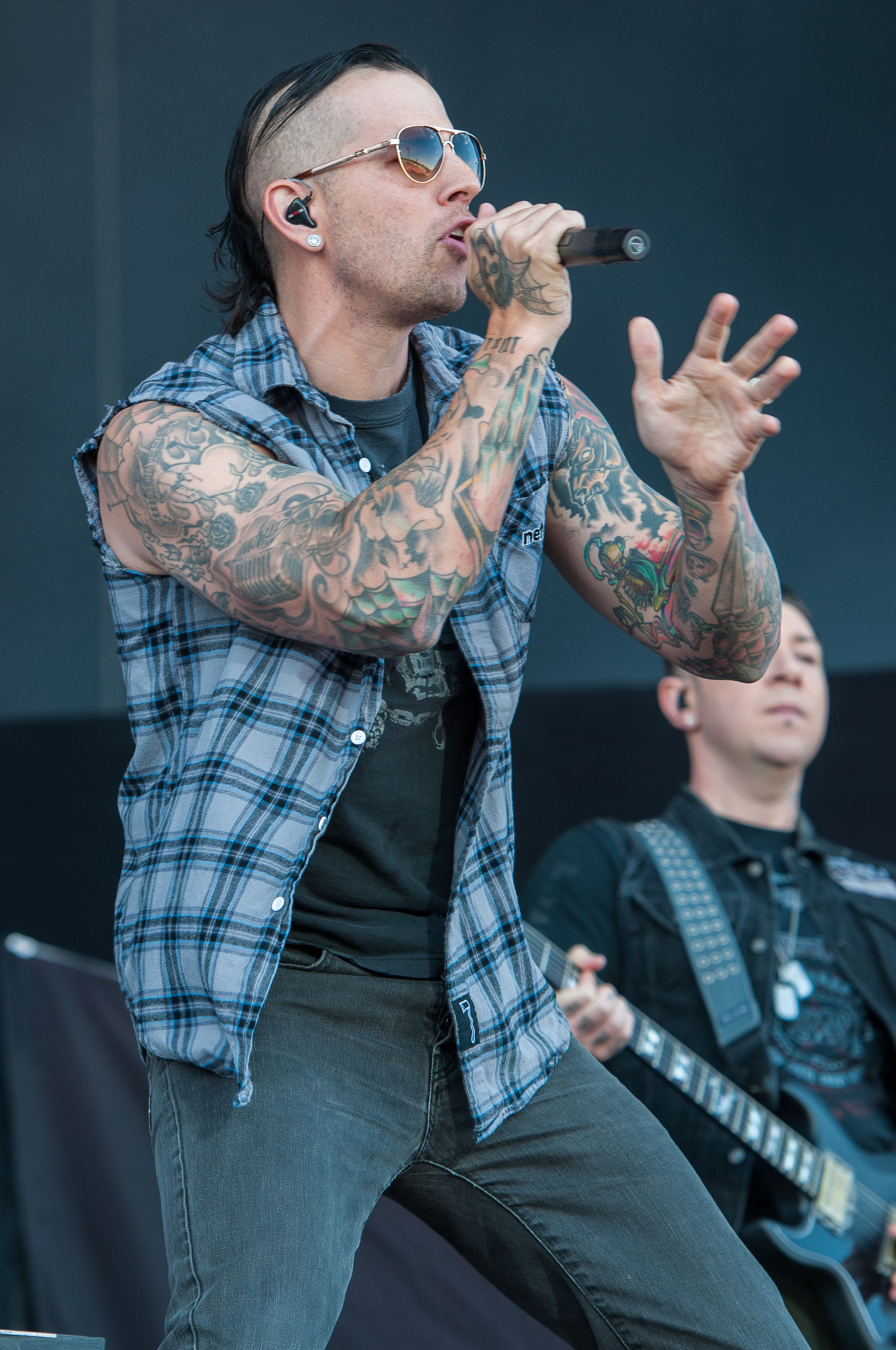
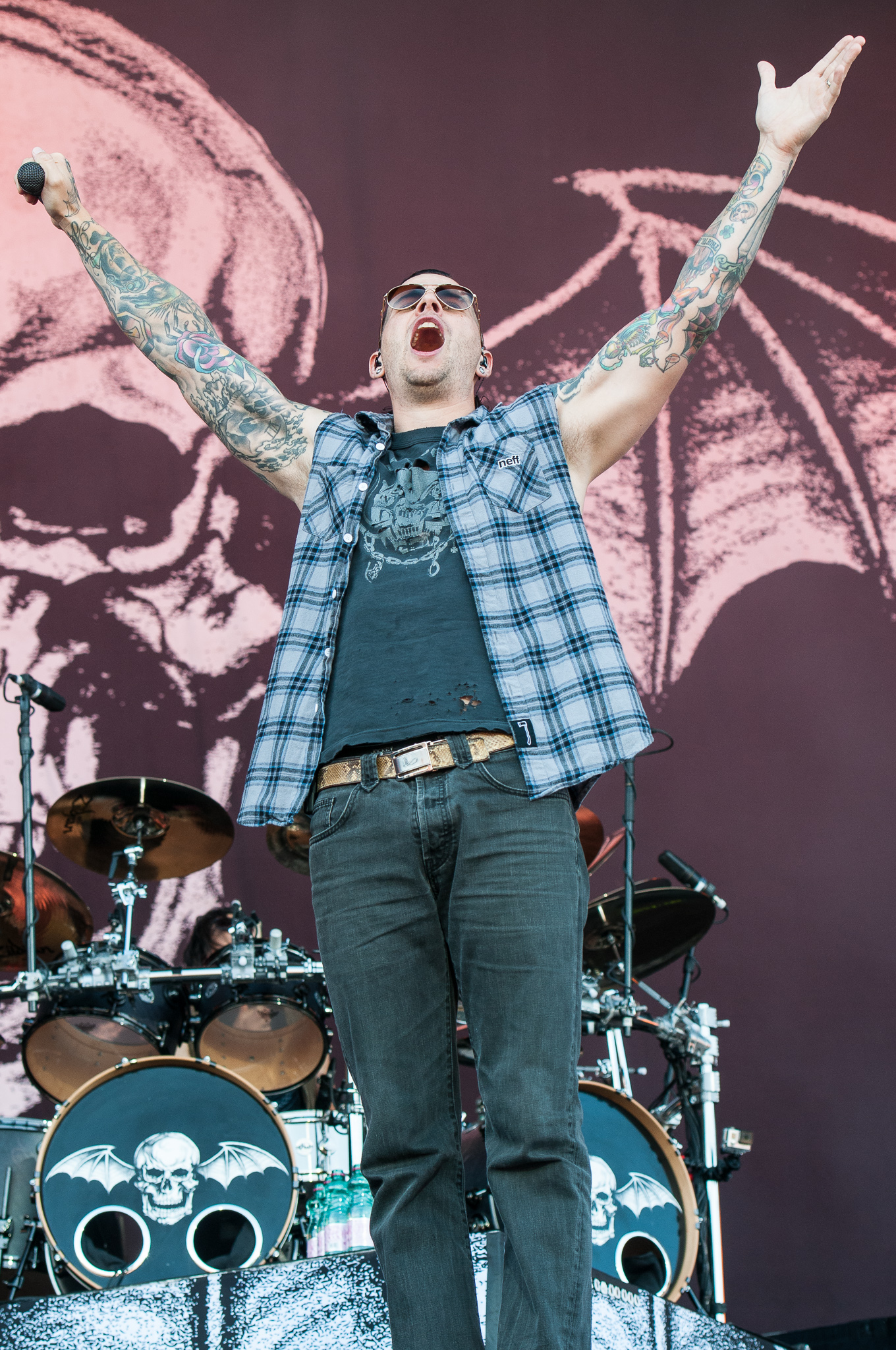
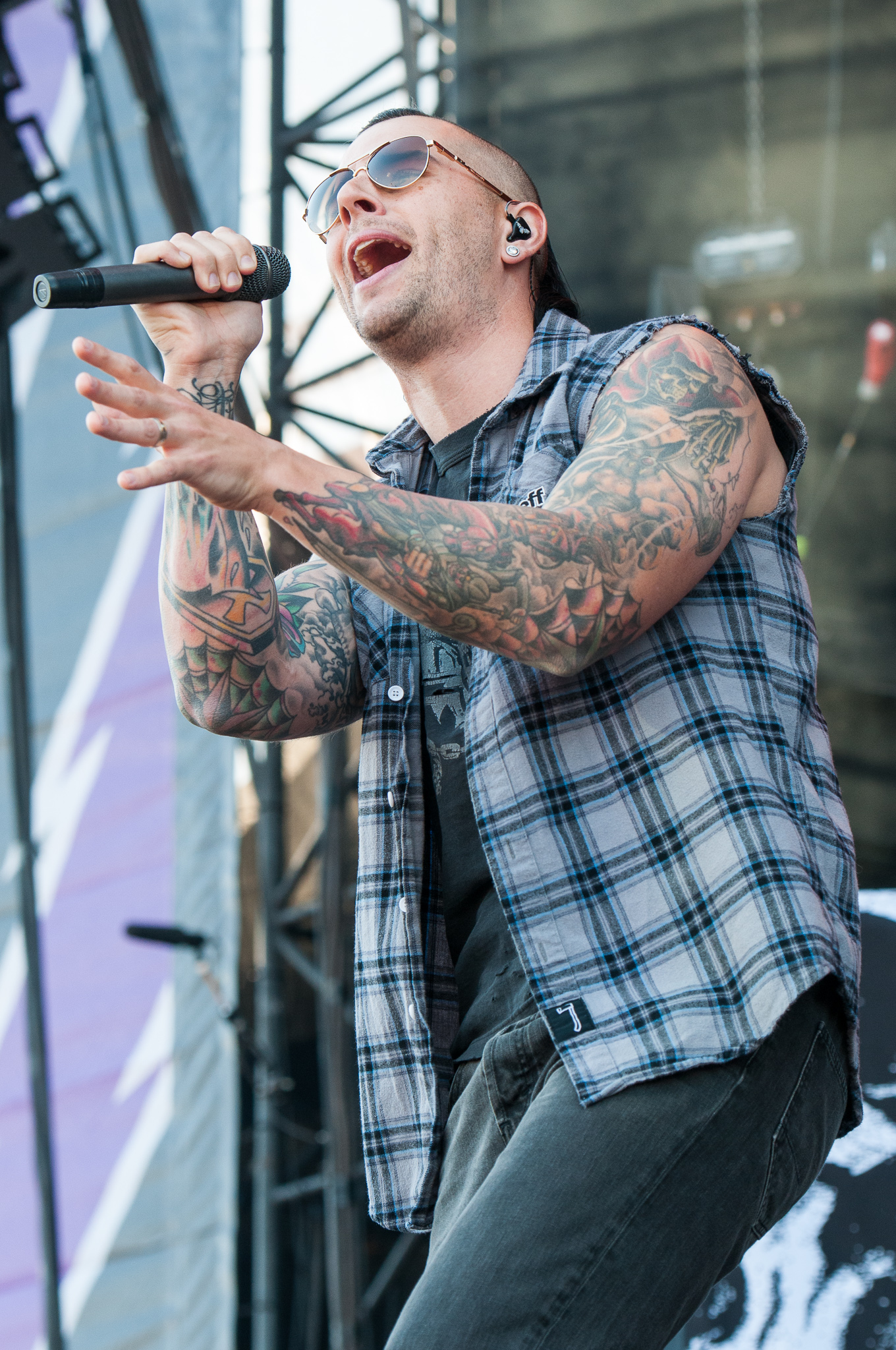
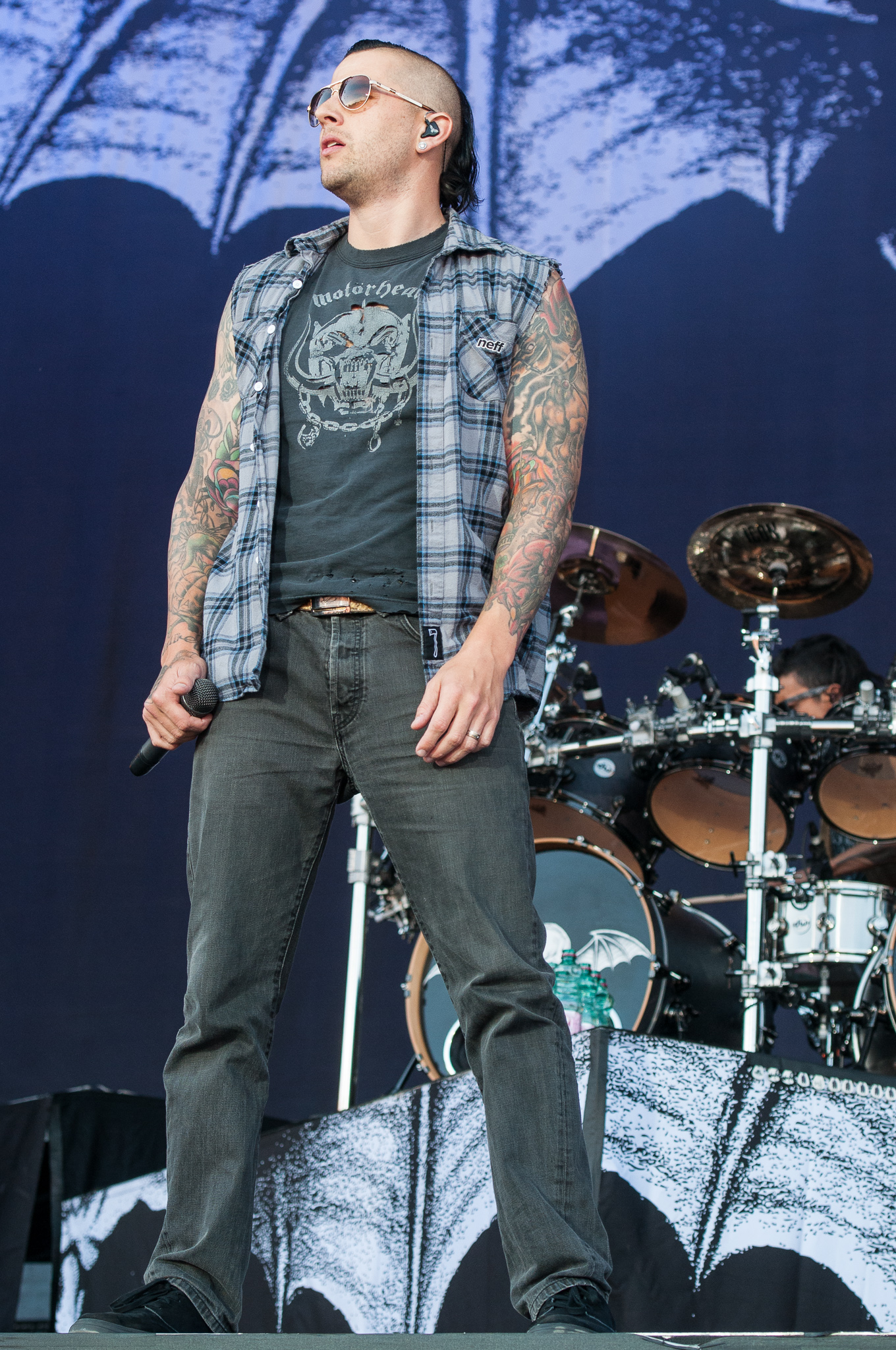
M. Shadows has added tattoos since he was a teenager, alongside Avenged Sevenfold’s rise. The photos show dense sleeves, Deathbat artwork, large chest pieces, color and black-and-grey shading. The details look different across years and camera angles, but the collection keeps growing.

M. Shadows’ tattoos are not one clean style. Some pieces use traditional rock imagery, while others connect to the band, his faith or people he has lost. He has said he wanted to cover most of his body but leave his face alone, so the collection remains a work in progress.

Older photos and concert shots show the tattoos most clearly. Some have clear histories; other marks are easier to describe than to identify with certainty. Stage lights can also make black ink look heavier than it does in other settings.

M. Shadows’ Horsemen sleeve

M. Shadows showing his tattooed arms on stage

Older write-ups describe the large upper-arm piece as a Horsemen of the Apocalypse sleeve. The photos show why: several dark figures and shapes flow together across the arm instead of sitting as separate designs.

Faces, bones, shadows and curved lines wrap around the arm. The shading is heavy in places, with lighter areas breaking it up so the details don’t disappear into one dark block.

The imagery is dramatic and a little grim, but it reads as a tattoo design rather than a band logo. In older photos, the sleeve is one of the collection’s largest pieces and appears to set the tone for the work that followed.

The Deathbat and Avenged Sevenfold pieces

M. Shadows with colorful tattoo sleeves visible

The Deathbat ties M. Shadows’ tattoos to Avenged Sevenfold and the years he spent making music with the band.

Album-related artwork also appears among the sleeves. It ties some tattoos to particular records and periods in the band’s history, so the collection reads partly as a timeline.

If you want another example of tattoos connected to a musician’s work, compare the ink of Kerry King. The styles differ, but both artists bring parts of their music and stage identity into their tattoos.

Color work across both arms

Close view of M. Shadows' colorful arm tattoos

Clearer concert photos show color tucked into the sleeves: red, green, blue and warm skin tones beneath the dark outlines. From a distance, the arms can look almost black and grey. Up close, brighter sections appear inside the larger designs.

Those color breaks separate one piece from the next. Some areas use old-school shapes; others look more illustrative. The mix makes the arms feel layered, like work added over time rather than a sleeve planned in one sitting.

Hand and wrist tattoos are harder to see when he’s holding a microphone or moving onstage. The close photos show that the ink continues past the forearms, and the smaller marks carry the larger sleeve work onto his hands.

The chest lettering, stars, and figures

M. Shadows with chest and arm tattoos visible

The chest is another large part of the collection. Lettering runs across the upper chest, surrounded by stars, figures and bold traditional-style shapes. Posture, lighting and necklaces often cross the center, so the piece looks different from photo to photo.

The stars give the chest piece a clear outline, while figures and darker shading fill the space toward the shoulders. That keeps the lettering connected to the rest of the design instead of leaving it on its own.

The chest and sleeves share black outlines and old-school colors, which ties pieces from different periods together. Repeating a few colors or shapes can make work added over several appointments feel connected.
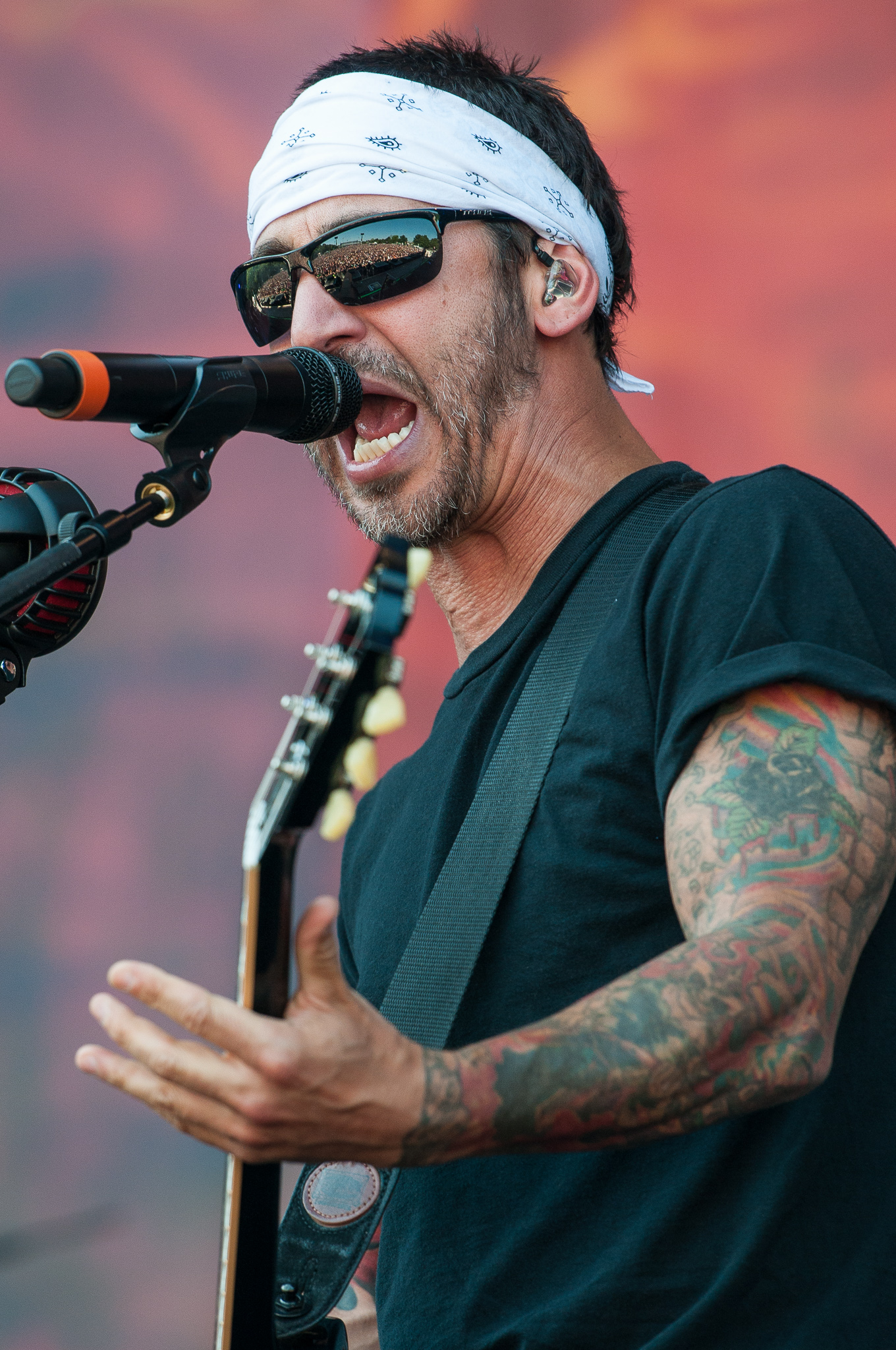
The Rev tribute and hand ink

M. Shadows with hand and forearm tattoos visible while performing

Jimmy “The Rev” Sullivan remains part of the story. After Sullivan died in 2009, M. Shadows continued to refer to him through Avenged Sevenfold’s music and the tattoos on his body. The hand and forearm photos show smaller pieces beside the larger sleeve, including imagery linked to the Deathbat and the band.

The hand pieces finish the line of ink down the arm. They frame his hand around the microphone or guitar pick, while the forearm designs draw the eye back toward the shoulder. The area is small, but it helps the sleeve read as a whole.

Older online photos don’t always show enough detail to name every small symbol. Lists that claim to identify every mark may be guessing. The larger pieces are clearer; the tiny hand details are better described as shapes unless M. Shadows has explained them himself.

How the older photos fit with the newer ink

M. Shadows standing on stage with both tattoo sleeves visible

Photos from different years show the sleeves filling out, the chest work becoming clearer and the wrist and hand pieces extending the coverage. That fits his earlier statement that he planned to cover most of his body while leaving his face alone.

One photo can’t serve as a final map. A bare patch in a concert shot may have been filled later; a vest can hide details visible in a sleeveless shoot. Red stage lights also change how the colors read compared with daylight.

For another rock singer whose tattoos became part of his stage identity, see Jonathan Davis. M. Shadows’ collection leans more toward sleeves, band history and dark imagery, while both sets of tattoos remain closely tied to the music.

What M. Shadows’ tattoos say about his style

No single theme covers every tattoo. The collection mixes stars and hearts, religious images, skulls, band symbols, portraits and memorial pieces. The shared mood is heavy rock, even where the colors are brighter.

The tattoos don’t all have the same finish. Some are crisp and colorful; others have softened with age or only show up at a certain angle. The difference fits a collection added over many years.

M. Shadows’ tattoos combine band history, memorials, dark sleeve work and old-school color. The collection grew with him over time instead of following one fixed plan.

Watch an Avenged Sevenfold tattoo tour

Aaron Lewis Tattoos: Tibetan Monk Skull Hands and Sleeves

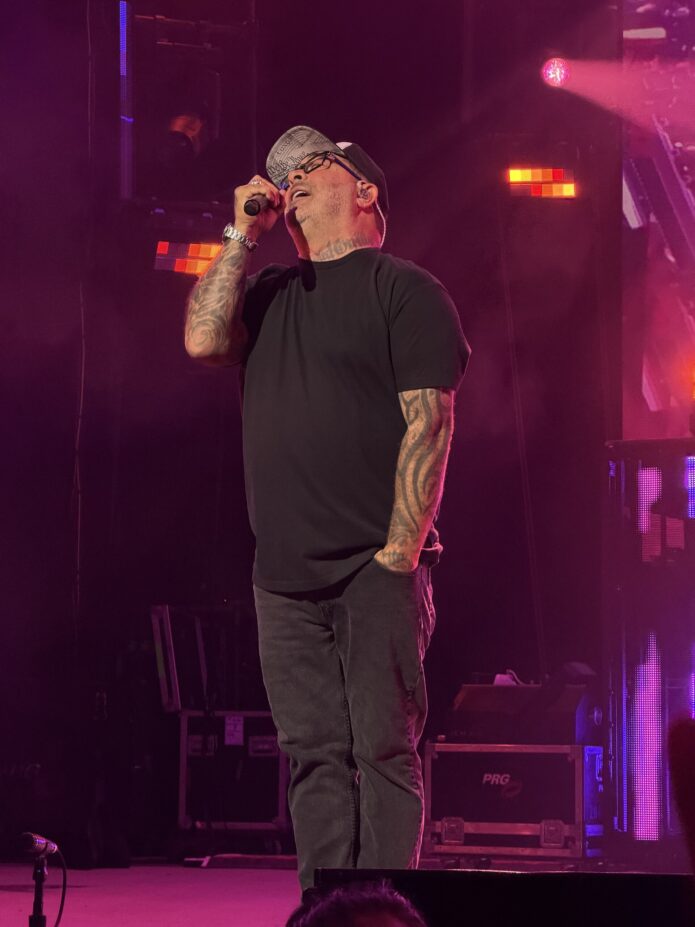
It can be hard to see Aaron Lewis’s tattoos behind a microphone, guitar and baseball cap. Clear views of his arms, hands and neck show dark, heavily shaded work across both arms. The ink looks worn in, not like a fresh sheet of matching designs.

Lewis has discussed his tattoo choices with Tattoo Life. He said the tattoos on his hands form an ornate Tibetan monk skull when he brings his fists together. He prefers black and grey and likes how it ages; small areas of color stand out against it. Concert photos show how those choices look under different lights.
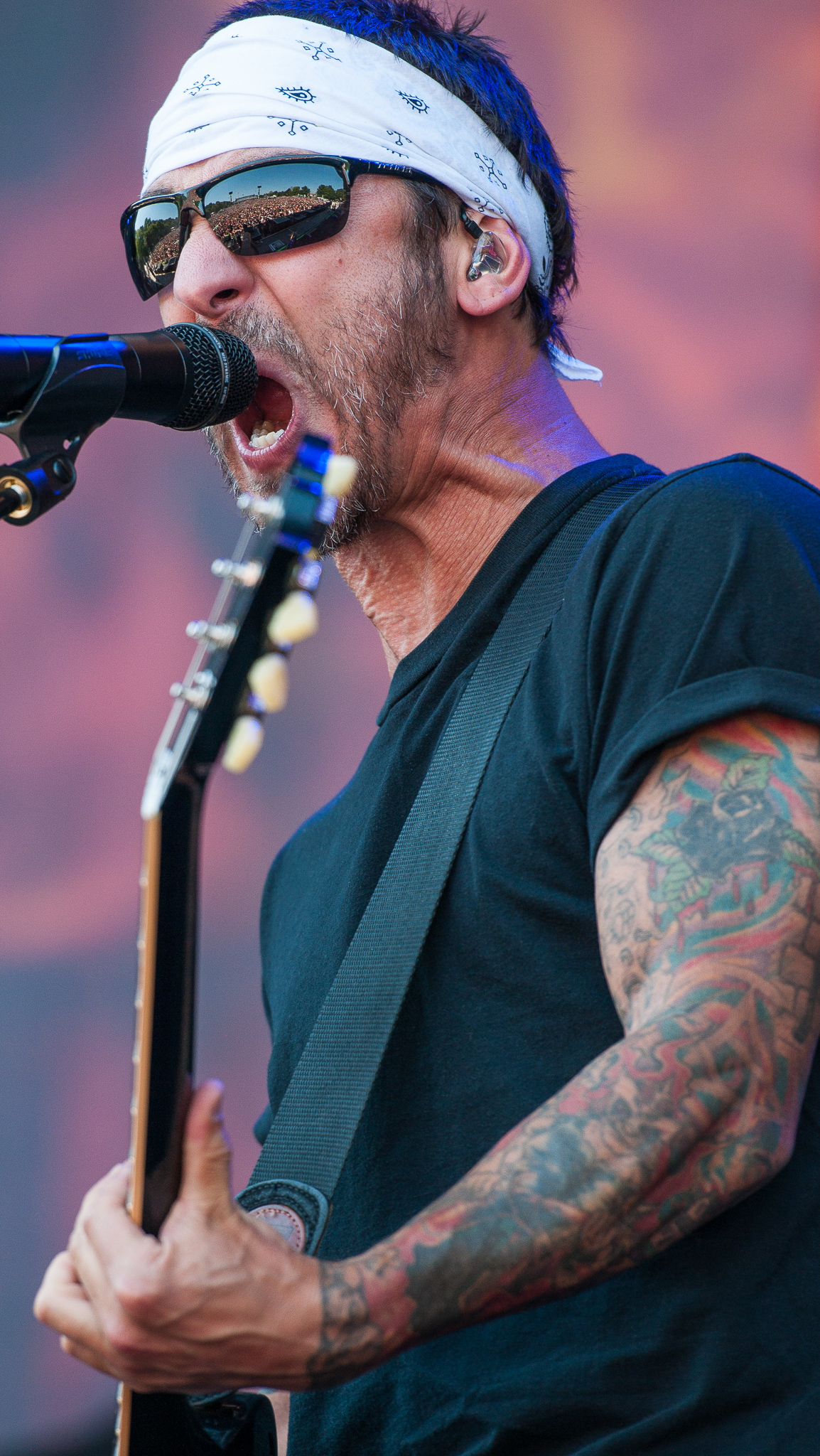
Aaron Lewis has a full, lived-in sleeve look

There isn’t one logo or repeated symbol that defines Lewis’s collection. Both arms are covered from the hands and wrists through the forearms and upper arms. From a distance, most of it reads as dark shading; close-ups show faces, lettering, curves and small areas of color.

Aaron Lewis full arm tattoos on stage

This concert shot shows both arms. His left forearm angles toward the camera, and his other arm crosses the guitar. Red and muted green come through under the stage lights, while dark outlines hold the design together. A shirt sleeve or the guitar can hide parts of the ink, so the same arm looks different in other photos.
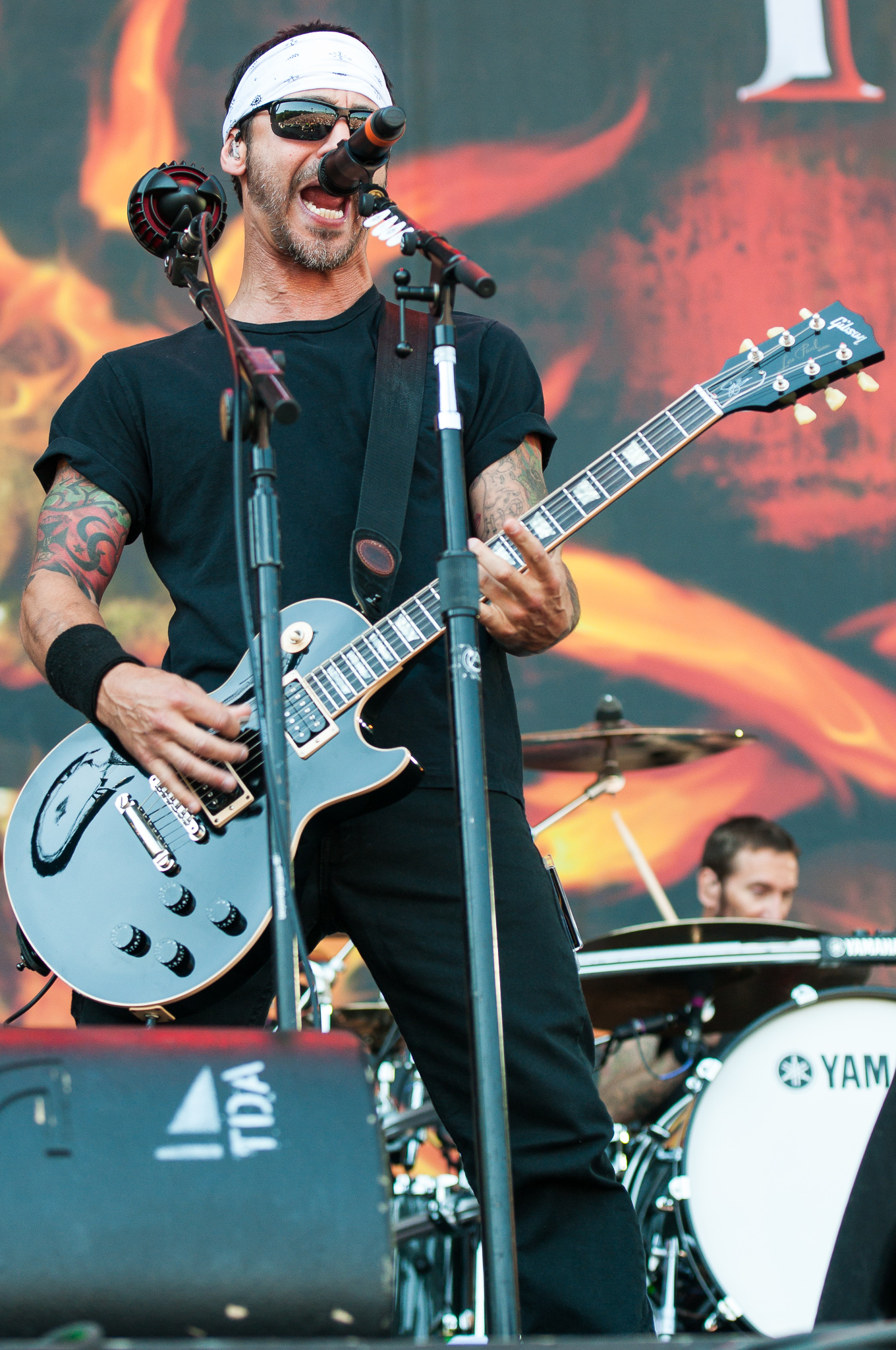
The collection looks as if it grew over time, with different pieces beside older work. Lewis has said he likes black ink that weathers over time; the photos show that worn look across both arms.

The black and grey work does most of the heavy lifting

Side light makes Lewis’s preference for black and grey easy to see. The shading gives the arms a smoky look and keeps the designs visible against a busy stage. Color appears in smaller areas, breaking up the darker work.

Aaron Lewis colorful forearm tattoos

In this close stage shot, the forearms show two different arrangements. The nearer arm has broad dark shapes and areas of open skin; the other uses a different mix of lines and shading. They don’t repeat the same pattern.

Red and blue stand out because most of the surrounding ink is dark. That contrast is the part of Lewis’s color approach he described to Tattoo Life.

His hand tattoo has a story behind it

Lewis told Tattoo Life that the tattoos on his hands form an ornate Tibetan monk skull when he closes his fists. He described the eyes as metal-looking and the carving as intricate. It’s the clearest explanation he has given for a particular design.

Aaron Lewis arm tattoo sleeves

From this side, the microphone, guitar and movement break up the hand design. The ink crosses several fingers, so the skull comes together when he joins his fists. It isn’t a single image sitting on one flat patch of skin.

The hand work shares the collection’s texture and deep shading. Some symbols are hard to identify in photos, but the overall look is closer to worn black ink than to bright, sticker-like designs.

The neck lettering gives the collection a harder edge

Lewis has prominent lettering high on his neck. Its exact reading isn’t clear in every photo; light and camera angle change what shows. It sits above a T-shirt collar and is visible in many public photos.

Aaron Lewis neck and arm tattoos

This older photo gives a clear view of the neck lettering and the arm beside it. The lettering is bold, while the nearby arm designs have softer shapes and heavier shading. They look quite different in the same frame.

Onstage, the tattoos move with Lewis’s playing. He grips a microphone or guitar and shifts his arms, so designs that sit close together can appear in separate sections as he performs.

Different stage photos reveal different parts of the sleeves

Photos from different years and angles fill in more of the layout. One shows the outside of an arm, another the inner forearm or hand. Together, they show where the ink sits without explaining what every mark means to him.

Aaron Lewis tattooed arms on stage

In this front view, both arms are easier to compare, while the guitar covers part of his torso. The warmer light brings out greens, reds and browns that are less visible in the red-lit shot. The same tattoo can look almost black in one photo and more colorful in another.
The sleeves aren’t identical. They appear to have grown over time around the way Lewis wears and uses his arms. Perspective matters too: one side can look busier because it’s closer to the lens, while the light makes the other look smoother.
What Aaron Lewis has actually confirmed

Lewis has explained the hand design and his preference for black and grey in Tattoo Life. He also discussed a full backpiece and plans for more work on his back. Those points are on record; the meaning of every arm tattoo isn’t.

He hasn’t published an explanation for every piece. The photos show tattoos on both arms, his hands and neck, mostly in black and grey with some color. A fan’s interpretation may be interesting, but it shouldn’t be presented as Lewis’s own account without a source.

The worn shading and stage photos have some overlap with other heavily tattooed rock musicians. Compare Lewis’s work with our James Hetfield tattoos feature; Lewis’s ink is spread across both arms and hands.

Why the ink works so well onstage

The sleeves stay visible under bright stage lights, and the neck lettering shows above his collar. The hand tattoo changes shape when he closes his fists, including when he grips a microphone or guitar.

His tattoos are part of his everyday look too. Photos of Lewis with an acoustic guitar show the same worn shading; red or purple concert lights make the dark ink stand out more.

The quick version

Lewis has tattoos across both arms, his hands and neck. He told Tattoo Life that his hand tattoos come together as a Tibetan monk skull and said he favors black and grey because of how it ages. Photos show dark sleeves with some color, though he hasn’t confirmed a meaning for every design.

The interview below has Lewis talking about his tattoos. The close-ups help show how the hand design and sleeves look from different angles.

Danny Worsnop Tattoos: Knuckle Ink, Sleeves and the Stories Behind It

Danny Worsnop’s tattoos are easiest to see in performance photos. Ink covers both arms, his hands and knuckles, and his neck. A microphone, raised arm or turn toward the crowd can hide part of it, so each photo gives only one view.

One photo shows the hand work, another opens up the forearm, and a third catches the neck and the side of his head. Together they give a fuller view than any single close-up.

Danny Worsnop’s arms are the headline

Both arms carry the densest work. Dark outlines and shading sit beside open skin and small areas of color, from the hands and wrists up to the upper arms. The pieces look as though they were added over time, rather than planned as one sleeve in a single sitting.

Danny Worsnop full arm tattoos on stage

This Rock am Ring photo gives a wide view of both arms. The arm on the left side of the frame faces the camera; the other turns away as he sings. The ink wraps around his arm, with open skin breaking up the darker areas.

The photo catches him mid-performance. His hand curls around the microphone, his forearm twists, and the stage light falls differently across each arm. Those angles change how dark or soft the designs look from one shot to the next.

The sleeves mix dark shading and bright color

Most of the work is black and grey, but some photos show red and green inside the larger pieces. The color sits among the darker outlines instead of covering them, and comes through when the concert lights hit.

Danny Worsnop colorful arm tattoos

Side light brings out broad shaded sections, curved lines and smaller details close together. The arm looks dense, but patches of open skin separate the darker parts.

In his early Asking Alexandria years, his hair, beard, clothes and movement all contributed to a loud stage look. The tattoos sit alongside that image rather than apart from it. Some colors also appear faded in the photos, giving the ink a worn look.

The hand and knuckle ink is impossible to miss

The hand and finger tattoos are among the most visible parts of the collection. Close-ups show lettering and small designs across the knuckles, backs of the hands and wrists. They change shape whenever he grips a microphone.

Danny Worsnop hand and forearm tattoos

This photo catches the hand nearest the microphone. Small marks sit on the fingers, while larger shapes begin across the forearm. The two sizes of work meet without a sharp boundary.

Worsnop has discussed the baby-with-a-bottle tattoo on his left foot in interviews. The design would be hard to make out in a distant concert photo; his comments give it context.

Neck and face-side details make the look instantly recognizable

The marks on his neck and behind his ear are smaller than the sleeves, but they sit in a visible spot. When he turns toward the crowd, they become part of his profile, even if a shirt or microphone hides the arm tattoos.

Danny Worsnop neck and arm tattoos

This angle shows the smaller neck design beside the denser work on his arm. The mark near his neck is clear enough to pick out; the arm below it is made of softer, closer-set shapes.

Color and camera angle can change how a tattoo looks. Purple or green light, or a hard flash, may make the same mark appear different. It’s safer to describe what the photo shows—placement, lines, visible lettering—than to name a blurry design.

One stage photo never tells the whole tattoo story

Different outfits and venues reveal different parts of the collection. A rolled sleeve shows more of the upper arm, a raised hand exposes the knuckles, and a side view catches the neck. Across several photos, the tattoos look more extensive than they do in a headshot.

Danny Worsnop tattoo sleeves on stage

This photo shows the hand, wrist and forearm together. Darker work near the wrist leads into larger shapes farther up the arm. His watch and microphone cover parts of the view, as they often do when he’s performing.

The tattoos are shown while Worsnop is singing, turning and reaching across the stage. Their appearance changes with his movement; several performance photos show more of the collection than one posed shot can.

What the interviews add

Worsnop has discussed individual pieces, including the baby with a bottle on his foot and tattoos tied to life on the road. Those interviews give context for the pieces he has named. They don’t explain every visible shape.

Photos show extensive work across his arms, hands, knuckles and neck, mixing small lettering with larger shaded designs. Interviews add personal details to some pieces, but the two sources don’t do the same job.

The hand ink and sleeves can be compared with the work in our Frank Iero tattoos feature. The collections have different moods, though both extend beyond the arms to the hands.

Why the stage look works with Asking Alexandria

In stage photos, the larger arm pieces remain visible under bright lights. Small hand tattoos show when he grips the microphone, and the neck marks sit above his collar. Each area reads differently in the same performance.

The tattoos appear across different stages of his career. Older photos show an earlier view of the sleeves; later ones catch changes in his hair, clothes and presentation around the same core ink. The images don’t establish a story for every piece.

The short version

Danny Worsnop has tattoos across both arms, his hands, knuckles and neck. The collection includes dense shading and smaller lettering, plus a few pieces he has discussed in interviews. Photos show different angles, since movement, light and a microphone can hide parts of it.

The interview below has Worsnop talking about one of his tattoos. The photos offer different views of the rest; his comments provide context that isn’t visible in the images.