
Tim Lambesis’ sleeves are easy to spot when As I Lay Dying play. Both arms are covered from the shoulders toward the wrists, with bold outlines, bright color and enough shading to separate the designs. The photos show dense sleeves, not just a few isolated tattoos.
There’s an interview to go with the photos: Lambesis discussed his tattoos in a Behind The Ink segment for PitCam TV, later covered by Blabbermouth. It offers more context than an event photo, though it doesn’t identify every design. This guide sticks to what the photos show and leaves uncertain meanings open.
Tim Lambesis’ full-sleeve tattoo look

This wide festival shot gives a sense of how much of each arm is covered. His left arm is raised as he sings, but the sleeve is still visible; the right has the same dense, colorful look. Separate shapes sit close together, with dark outlines holding the colors in place.
Warm reds, yellow and orange details, blue-green sections and black linework make up the palette. From the audience, the sleeves read as a single block; up close, the color separates into individual motifs. Even a standard stage photo gives a good sense of the layout.
“Full sleeve” can mean an arm with extensive coverage; it doesn’t guarantee every inch is inked. The photos show both arms heavily tattooed, but they aren’t detailed enough to count every bare patch. It’s more accurate to call them full-looking sleeves than to give an exact coverage figure.
The forearm color and heavy shading

This closer shot shows the forearm in more detail. Color takes up more of the design than plain black and grey, with soft shading around brighter shapes. Strong outlines keep the sections distinct while he moves and the stage lights shift.
Some shapes look floral or rounded, with darker graphic work nearby. Without a direct explanation, it’s hard to say what a particular shape means; its appearance can change with the angle. The photos show a mix of illustrative forms and bold background color.
Color wraps around the side and back of the forearm, rather than stopping on the panel facing the camera. You can follow more of the sleeve as he turns, which keeps the coverage visible in a moving stage shot.
Both arms in sharp close-up
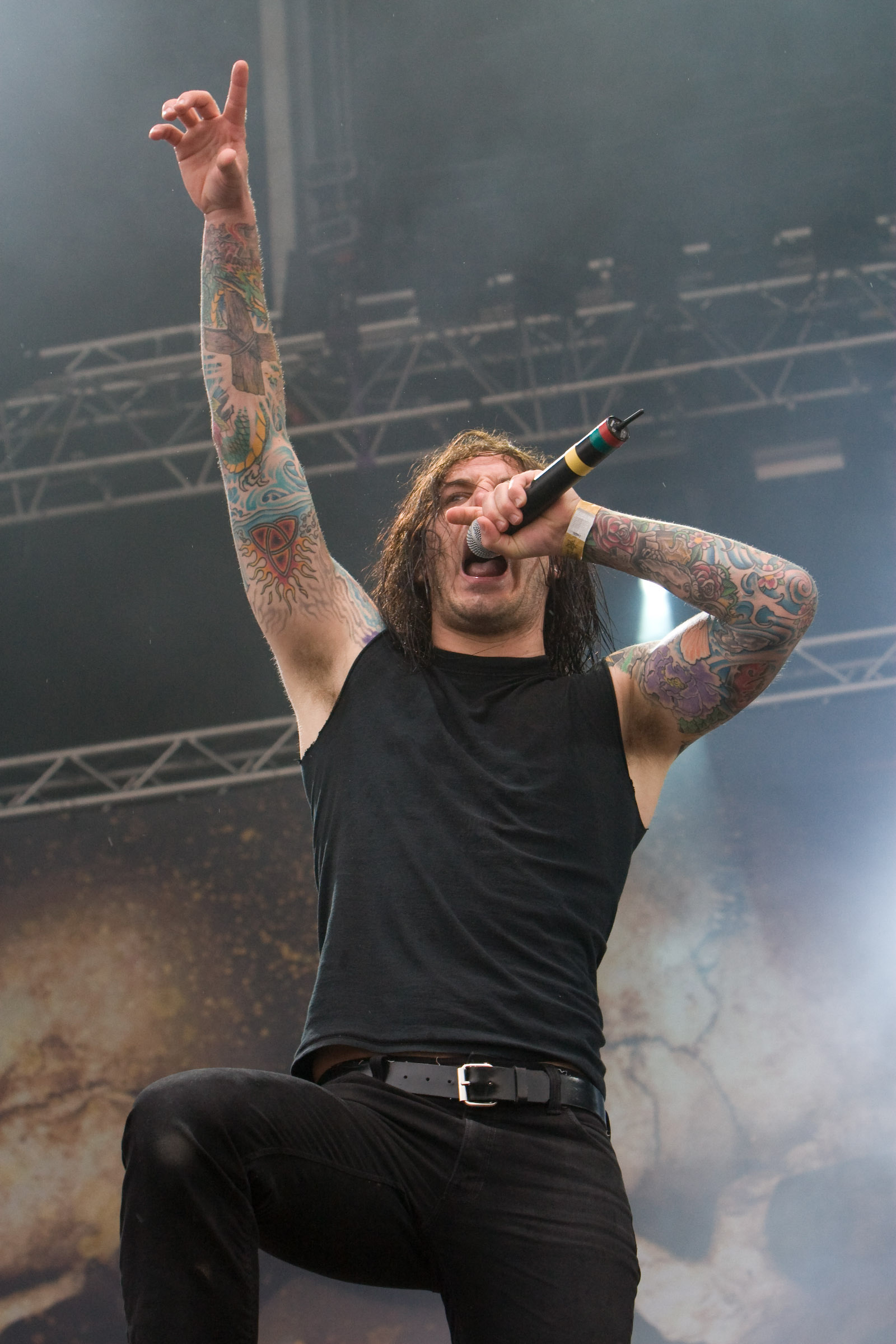
This is the clearest side-by-side view. The sleeves use similar saturated color, thick outlines and dark shading, but the layouts are different. The arms don’t mirror each other; they share a palette and overall weight.
The upper arms are packed with large rounded and floral-looking shapes, while longer designs run down the other arm toward the elbow. Black lines frame some of the color. These details are easier to pick out because the arms fill the frame.
The lighting in performance photos isn’t always even, but the sleeves can be clearer there than in a posed portrait. Here, both arms are exposed against a black shirt, and you can see where one piece meets another. The symbols are still hard to identify.
How the sleeve reads on stage

The tattoos stay visible while he sings, leans forward and moves across the stage. Larger blocks of color catch the light first; the outlines and smaller shapes show up when you look closer.
On the arm at the left of the image, a dark shape sits high near the shoulder, with colorful details running down the forearm. The other arm also looks densely covered in warm colors and shading. Because the camera is low, this image shows scale and contrast better than exact placement.
The color helps separate his arms from a black stage shirt. Reds, yellows, blues and greenish tones still show under blue lights, and the heavy outlines keep the sleeves from flattening into a dark patch. It fits the high-contrast look of a metal show.
The large arm pieces from a wider view
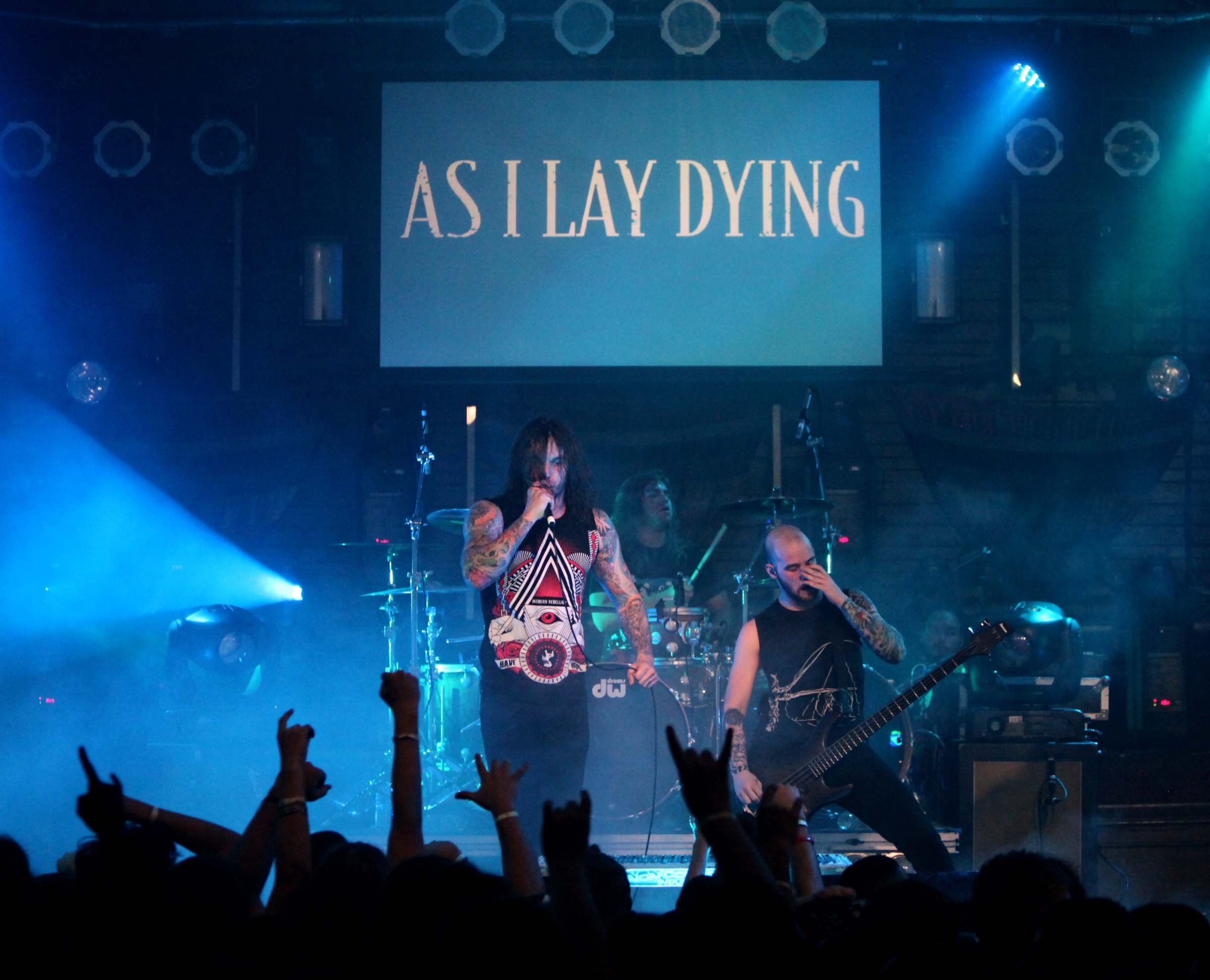
From this distance, small details disappear, but you can see the coverage on both arms. Lambesis stands at the center of the frame; the sleeves read as large, colorful pieces rather than scattered marks.
A raised arm, microphone or blue wash can hide one part of a sleeve and bring another into view. The close-ups are better for individual details; this wide frame shows how the whole look reads onstage.
If you’re comparing him with another heavily tattooed metal singer, Tom Araya’s tattoo coverage has a different visual rhythm. Lambesis’ arms use bright, packed color. The comparison shows how layout and palette change the overall impression, not just the number of tattoos.
What the public record confirms
A dedicated Behind The Ink segment from PitCam TV confirms that Lambesis has discussed his tattoos. Blabbermouth later covered the interview, giving fans a more direct source than captions repeated across fan pages. Start there for meanings the photos don’t make clear.
Even with the interview, not every design has a widely documented meaning. Photos alone can’t confirm the labels some posts give individual motifs. Unless Lambesis has explained a design in an interview or another reliable source, it’s better to leave the guess out. What is clear is that both arms are heavily covered, the work uses vivid color, and these tattoos have long been part of his public image.
Why the collection stands out
Coverage and color are what stand out most. Both sleeves create a large field of ink, and the bright illustrative sections keep it readable from the audience. The work is dense, but its outlines and lighter spaces stop it from turning into a blur.
Different sections have their own shapes, tones and levels of detail, while shared outlines and shading give both arms a similar visual weight. That’s easier to support than naming every shape as a symbol.
The short version
Tim Lambesis has extensive, colorful tattoos on both arms. The photos show floral and graphic-looking shapes, reds, blues, greenish shading and thick outlines. His PitCam TV interview is the place to look for his own explanations; the images here show how the collection looks.
The Behind The Ink segment is below. Compare the close-ups with the wide stage shot: the lighting makes small details harder to see, but the overall shape of his sleeves stays clear. They’re a visible part of his stage look.
Watch Tim Lambesis talk about his tattoos in the Behind The Ink segment: