Athletes

Tattoo guides for athletes across football, basketball, boxing, professional wrestling, combat sports, motorsport and other sports, with photographs and documented meanings.

Tyler Conklin Tattoos: The Ink Behind His NFL Journey

Tyler Conklin’s tattoos are easy to see in game-day photos, where the ink runs from his shoulders to his wrists. Jets, Chargers and Lions pictures show black-and-grey shading, block lettering, straight lines and smaller script. He has spoken about his love for tattoos, and reporting puts the collection at roughly 150 hours. The photos show plenty of detail, but not enough to assign a story to every blurred mark.

The uniforms and camera angles change what stands out. White fabric makes pale shading easier to see; black jerseys bring the darker sections together. Close shots show lettering and small symbols, while wider frames show how the ink wraps around both arms.

The full arm coverage visible in game-day photos

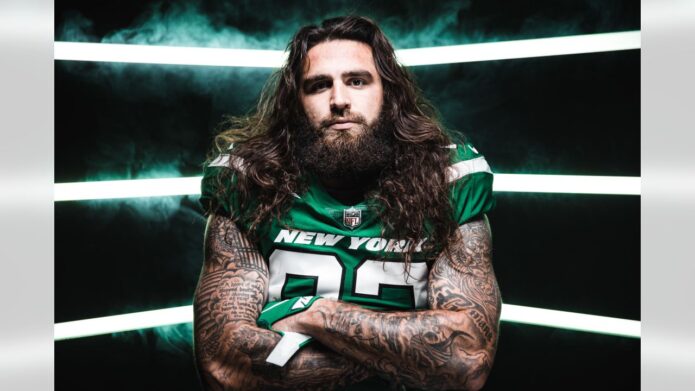
A high-resolution Jets postgame photo shows both arms from the sleeve openings down. The left is marked by tall lines, shaded blocks and script. The right has denser illustrative work around the upper arm and elbow. Open strips of skin keep the two sides from reading as one solid panel.

In a second Jets action shot, Conklin is carrying the ball, and his bent arms show more of the sides and undersides. The tattoos continue around the forearms instead of stopping at the front. The details shift as he moves, but the full coverage is clear.
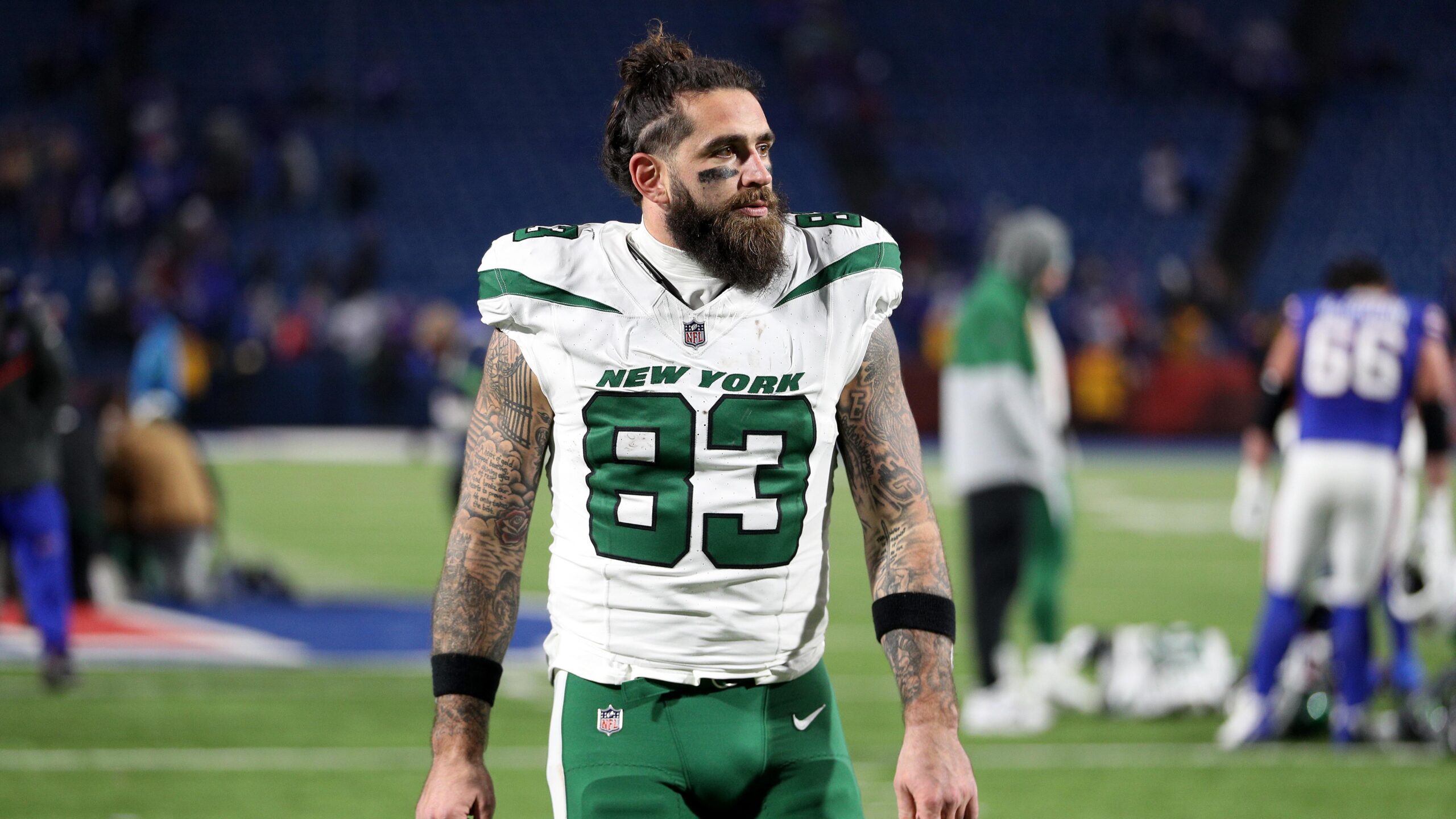
Tyler Conklin tattoos: Full arm coverage, script and black-and-grey sleeve structure in a high-resolution Jets postgame photograph

The left arm lettering and layered symbols

A block of small script runs along Conklin’s left arm, but the words aren’t sharp enough in the photographs to transcribe. Around it, narrow black lines form a bar-like pattern above softer shading. Farther down, compact shapes crowd toward the wrist. The straight marks and writing break up the darker sections.

The postgame view shows the arm’s full length; a closer Jets tunnel shot makes the stacked lines of text and changes in scale easier to see. Both images show a mix of larger structures and smaller pieces without revealing a confirmed meaning for each one.
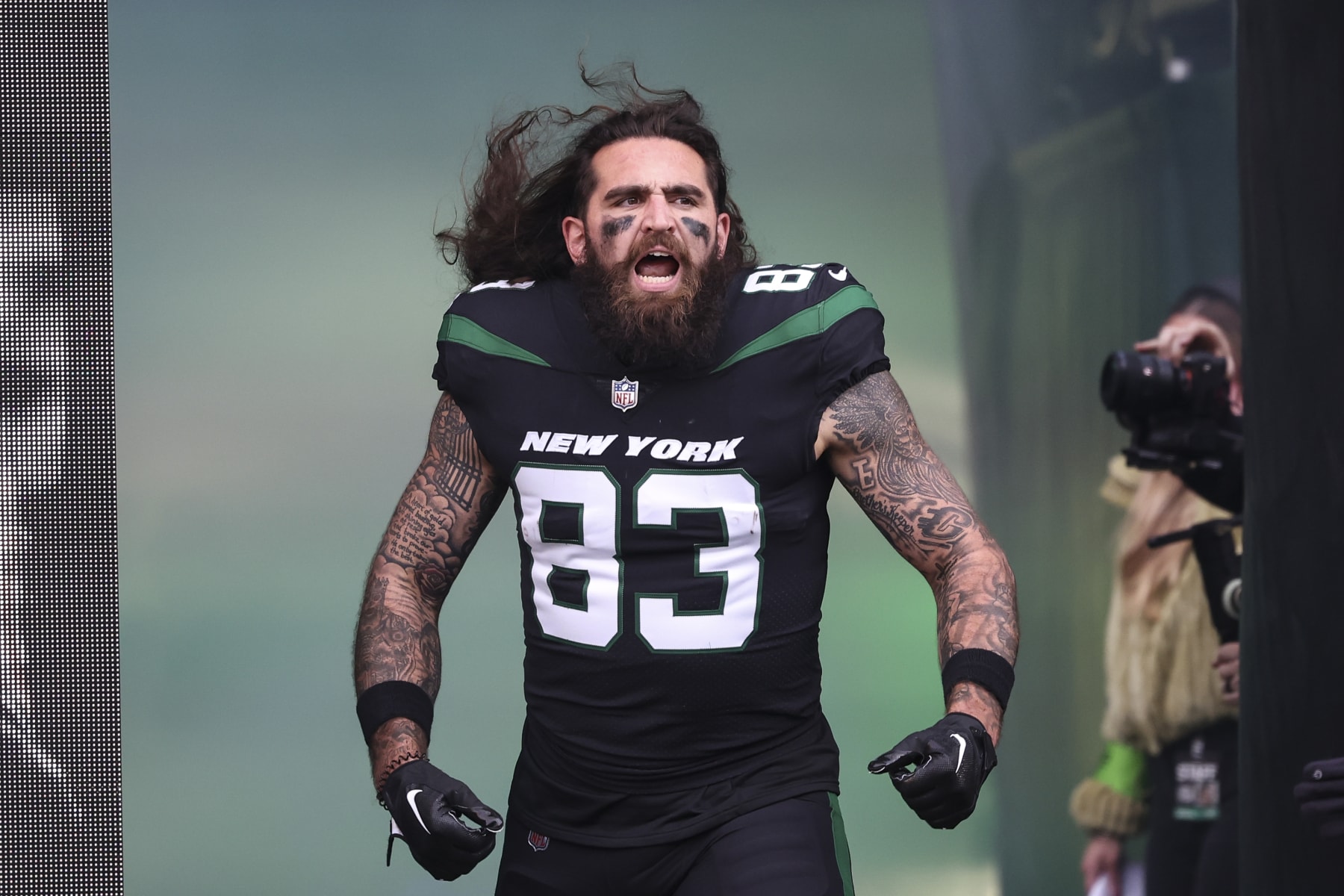
Tyler Conklin tattoos: Left arm lettering and layered symbols in a separate high-resolution Jets tunnel photograph

The right sleeve’s flowers and portrait shading

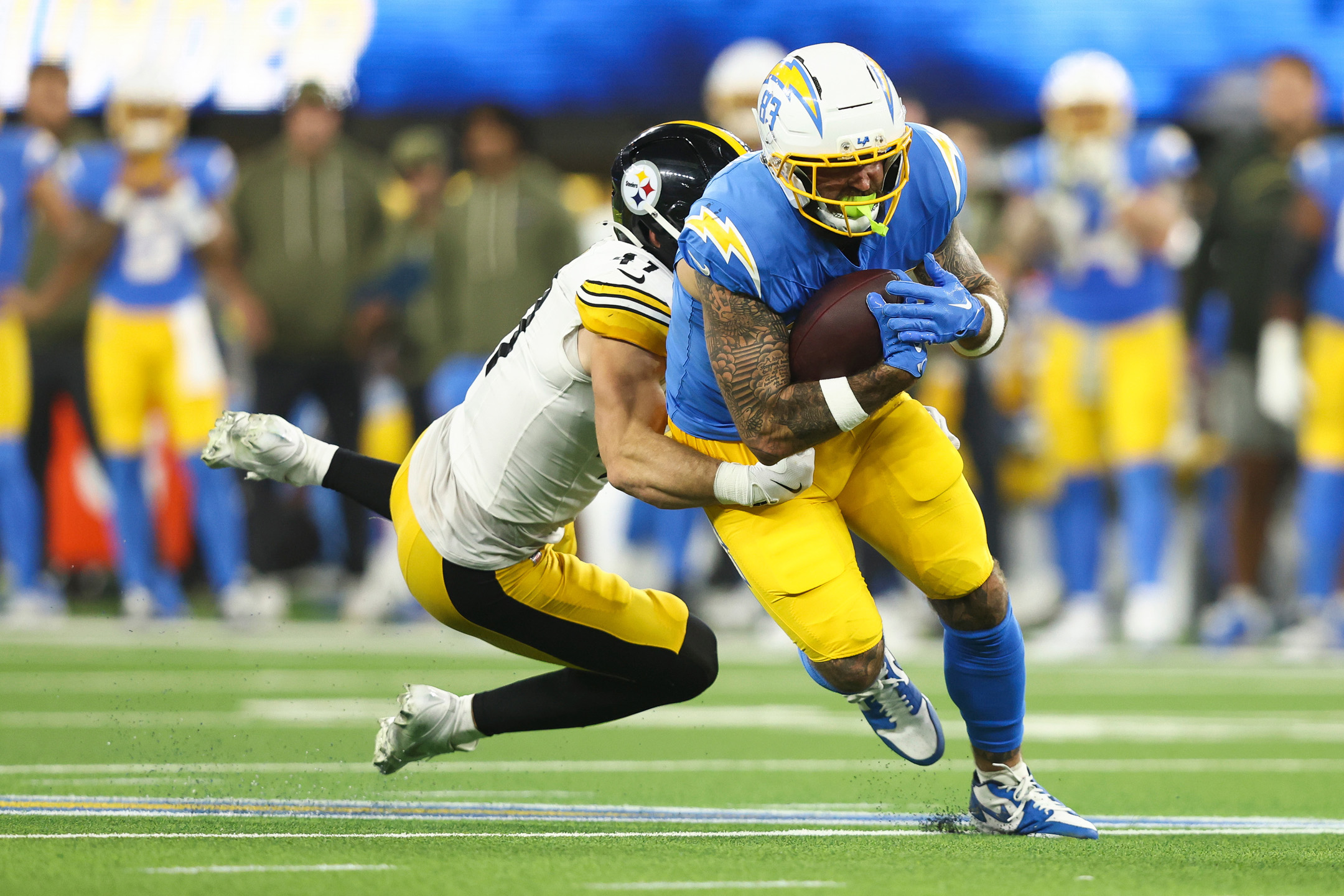
Rounded, petal-like shading sits near the upper right arm, with darker illustrative forms extending toward the elbow. Fine lines and pale highlights give the area more range than a solid black fill. In one Chargers action photo, Conklin’s arm is angled forward as he carries the ball, showing the outer arm and part of the forearm. A more frontal frame makes the rounded shapes easier to distinguish.

The larger shaded figure can look portrait-like, but the photos don’t identify a person or character. The visible details are the changes in tone, the strong outlines and the smaller marks between the larger forms.
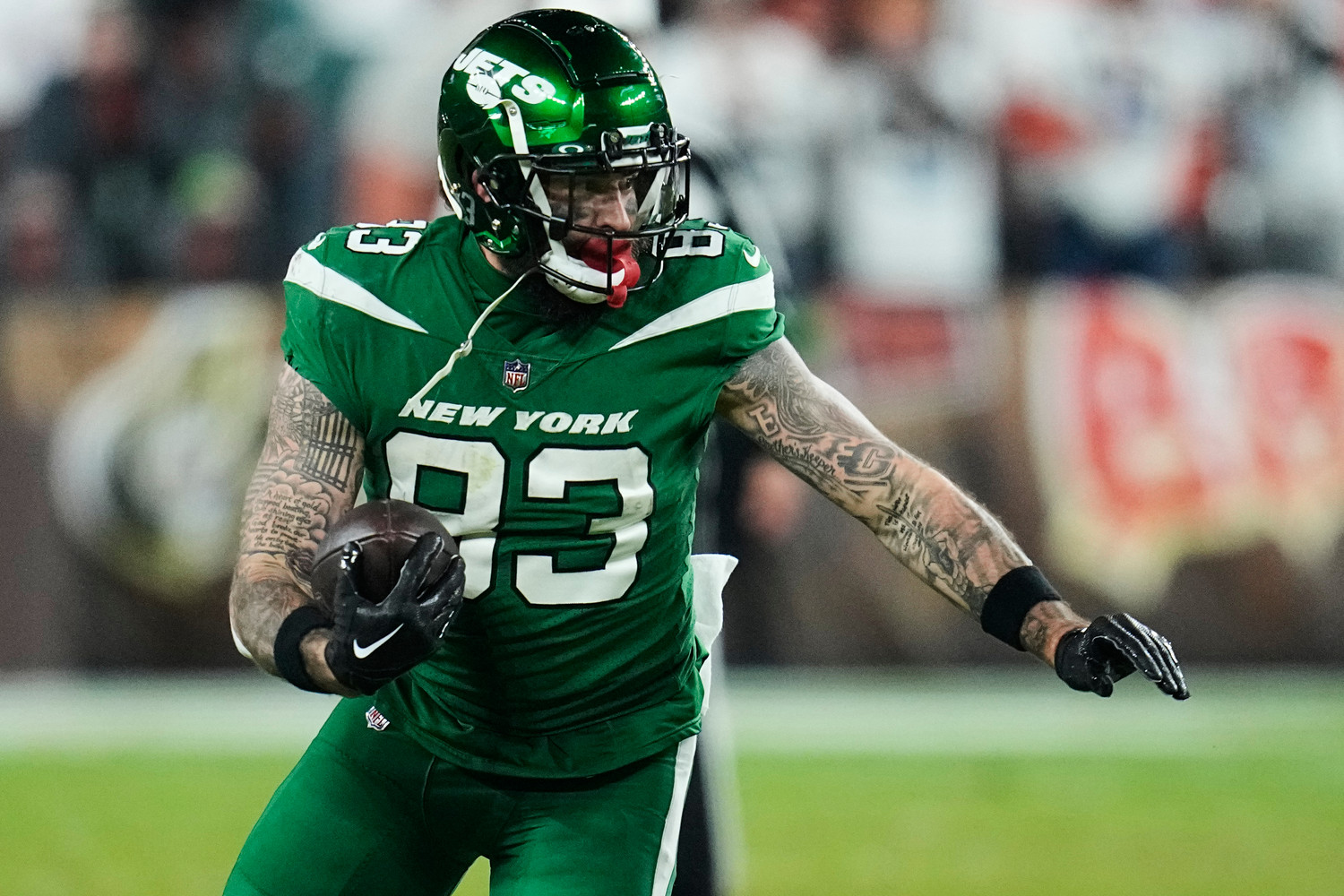
Tyler Conklin tattoos: Right sleeve shading, rounded forms and forearm coverage in a separate game-action photograph

The lower-arm script and small blackwork details

Below the elbows, the photos show narrow script, small symbols and tightly packed blackwork continuing toward the wrists. The left forearm has horizontal lines of writing; the right shows darker blocks separated by lighter gaps. These smaller marks fill spaces between the larger upper-arm designs.

The angles vary from one image to another. A forearm turned toward the camera shows more lettering, while a rotated arm brings the side and underside into view. The designs haven’t changed; posture and light make different parts easier to see. Conklin has said his tattoos carry different meanings, though these close shots don’t attach a specific story to each small mark.
Tyler Conklin tattoos: Lower-arm script and blackwork details in a native-resolution official Detroit Lions photograph

The photographic view of the whole tattooed silhouette

A full-body Chargers action photo shows the tattooed arms against the bright uniform, alongside Conklin’s long hair, beard and eye black. At that distance, the ink reads as two dark shapes; the smaller script and linework appear only when you look closer.

A Jets tunnel image has a different feel. Green light and a white uniform flatten some of the grey shading, but the arm coverage remains visible. The closer photographs supply the details that these full-body views leave out.
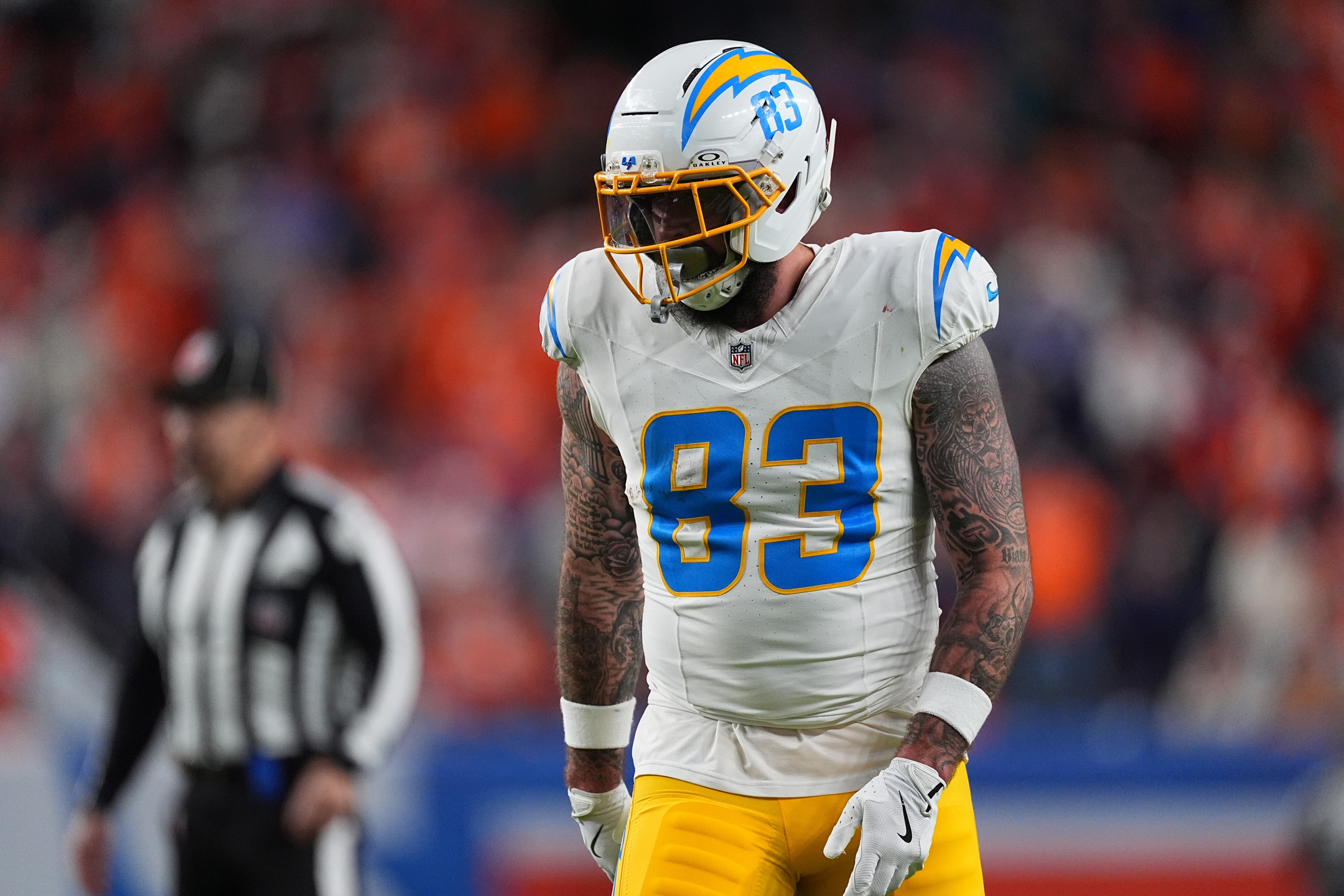
Tyler Conklin tattoos: Whole tattooed silhouette and bilateral arm coverage in a second native-resolution official Lions photograph

How the collection reads in different settings

White jerseys set off the lighter grey shading and script. Black jerseys make the arms look more continuous, while the Chargers’ blue and yellow uniform puts the black-and-grey work against brighter colours. Lighting and clothing change the contrast, not the tattoos.

Close photographs show lettering, shading and linework; wider ones make the placement and shoulder-to-wrist coverage easier to understand. Both views help distinguish the individual designs from the larger dark areas.

The story carried by the photographs

A Vikings video shows Conklin discussing his route to the NFL and his love for tattoos. Earlier Vikings coverage records him saying that his tattoos have different meanings. Fox Sports puts the collection at about 150 hours and connects it to his path to professional football. Those reports give context, while the photos show the ink itself.

Across the images, the recurring details are full arm coverage, script set among darker panels, rounded shaded forms and straight linework. The five views show how those pieces sit on the arms from close range and at game-day distance; they don’t provide a complete inventory of every tattoo.

The Audible: Tyler Conklin Discusses His Journey, NFL’s Best Tight Ends and More | Episode 11
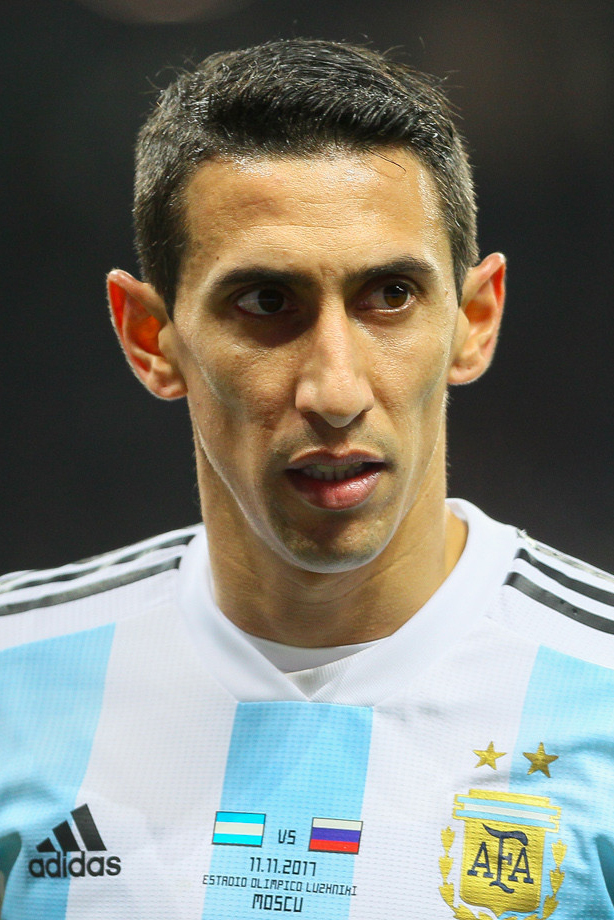
Ángel Di María Tattoos: Rosario, Trophies and the Story Behind His Ink

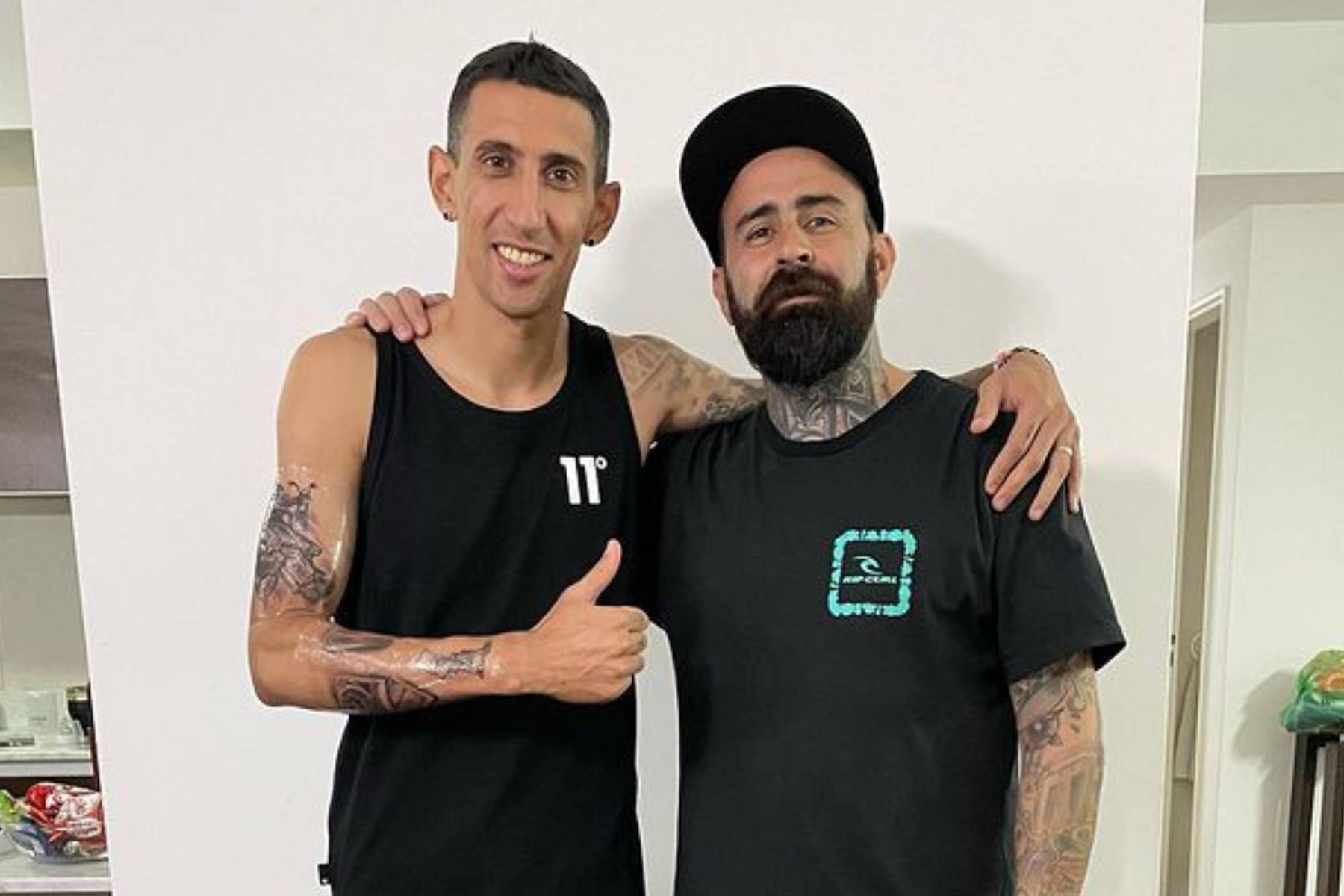
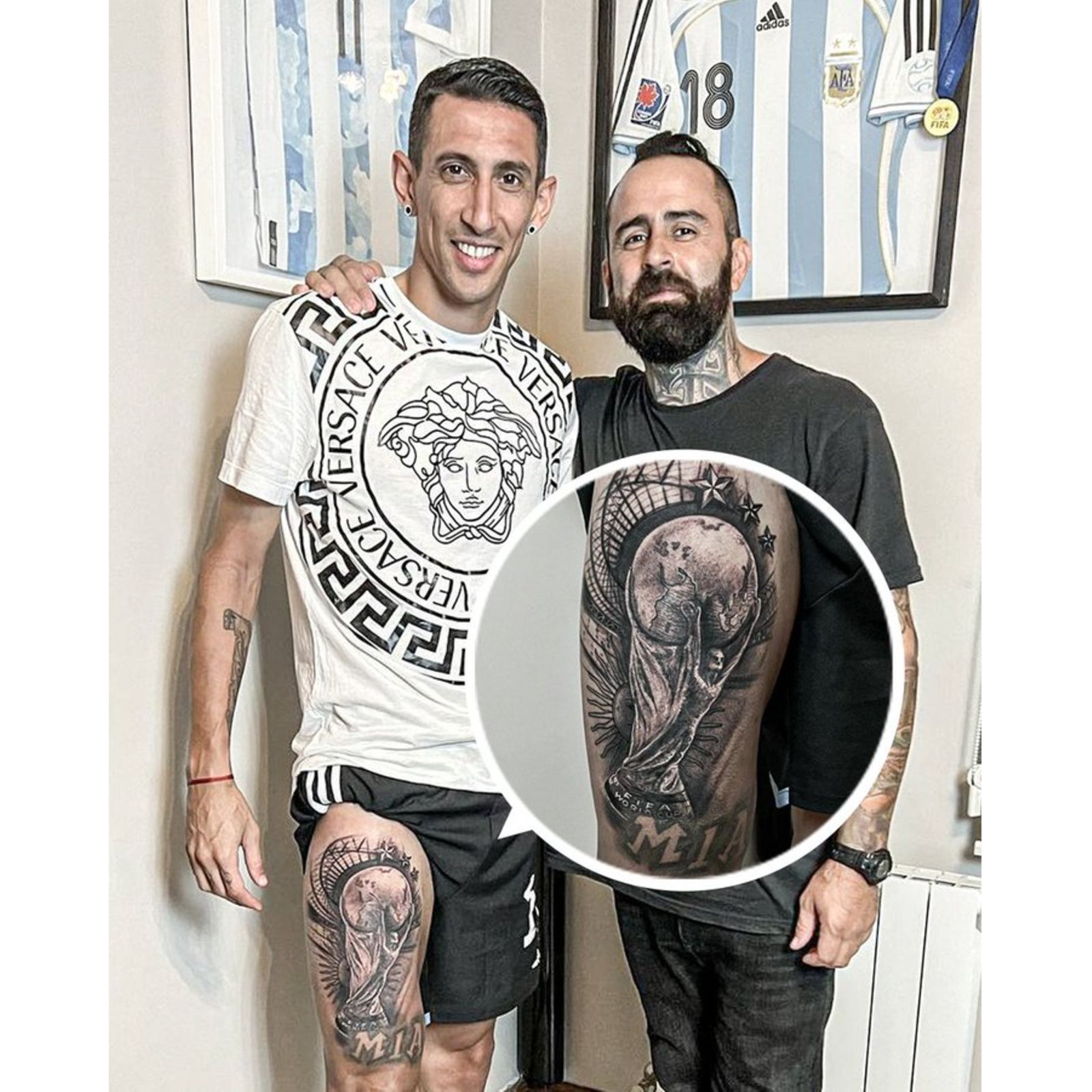
Ángel Di María’s tattoos connect Rosario, his football career and his family. Photos show a collection built over time: a childhood street quote on his forearm, trophies on both thighs and smaller designs on his right arm. Reports credit tattooist Ezequiel Viapiano for some of the work, including the Copa América and World Cup pieces.

The right arm collection: Rosario, Madrid and early career symbols

Photos from a 2023 session in Rosario show two sticker-like designs linked to Di María’s early achievements: the 2007 Under-20 World Cup in Canada and the 2008 Olympic Games in Beijing. Lettering below them names Madrid and Rosario, placing two parts of his life side by side.

The arm also has lighter motifs. A Spanish playing card, identified in reports as the six of wands, is linked to a card game during Argentina’s 2021 Copa América campaign. Nearby, Bart Simpson sticks out his tongue and holds a catapult; a bicycle, car and motorcycle fill the surrounding space. These designs sit alongside the football references without needing a larger meaning assigned to them.
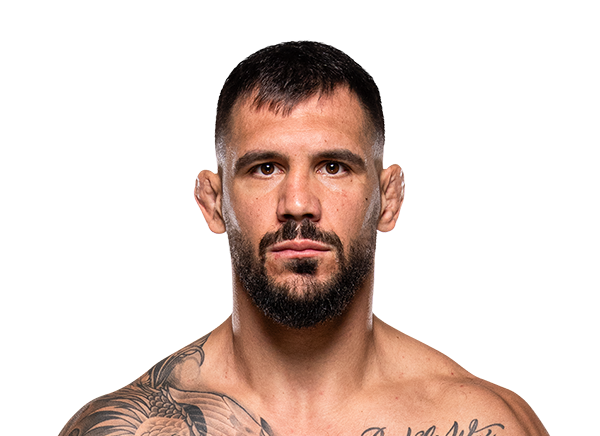
Ángel Di María tattoos: right-arm stickers, Rosario and Madrid lettering, Bart Simpson

The Rosario Central imagery in his leg tattoos

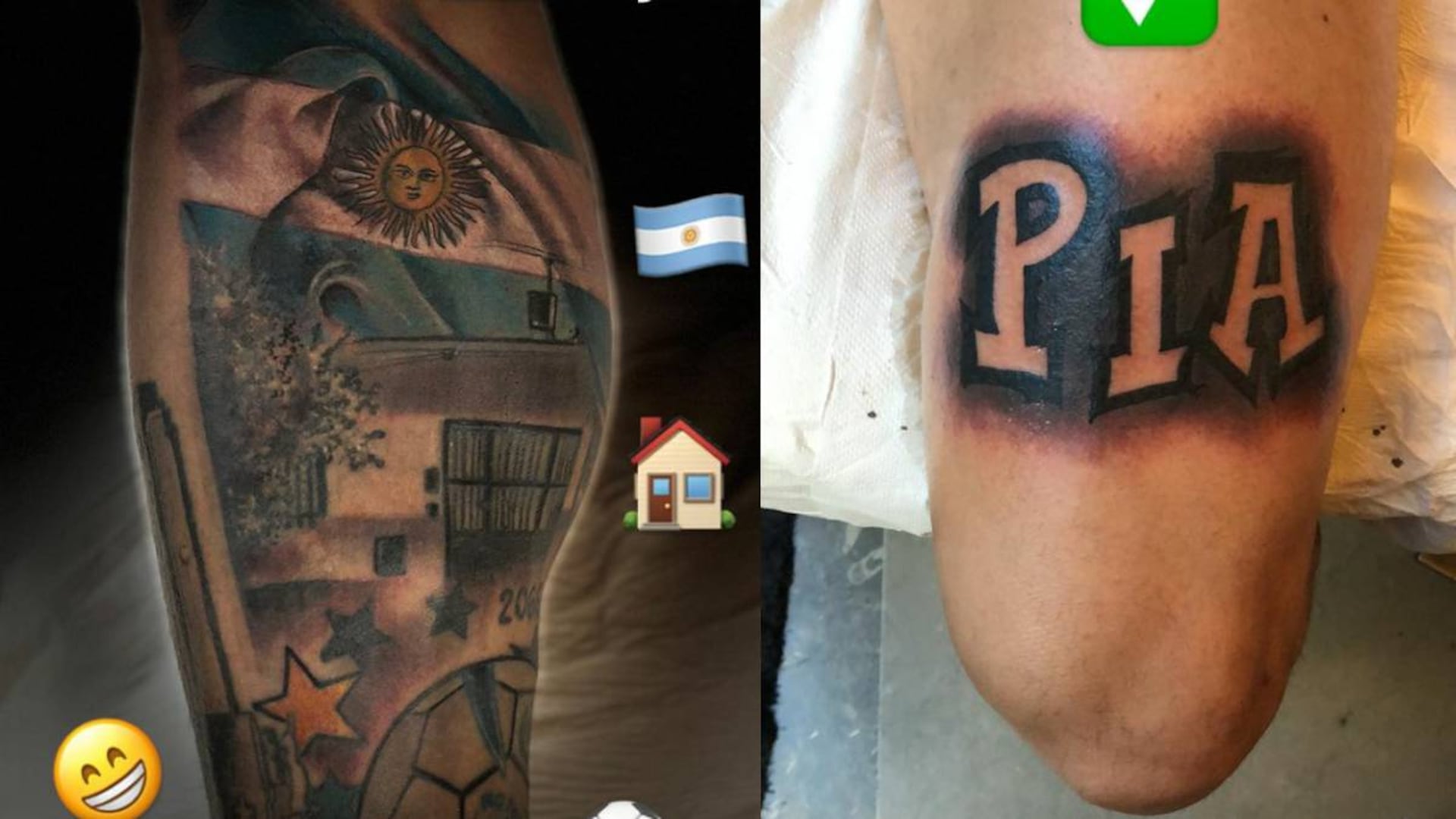
Earlier coverage connects Di María’s leg tattoos with Rosario Central through the club’s initials and hometown imagery. Later photos show dense black-and-grey work across his lower leg and thigh, alongside stars, architectural shapes and other football references. The club-related designs sit within a broader composition, rather than as a single badge.

Ángel Di María tattoos: lower-leg and thigh tattoo composition

The Perdriel quote across his forearm

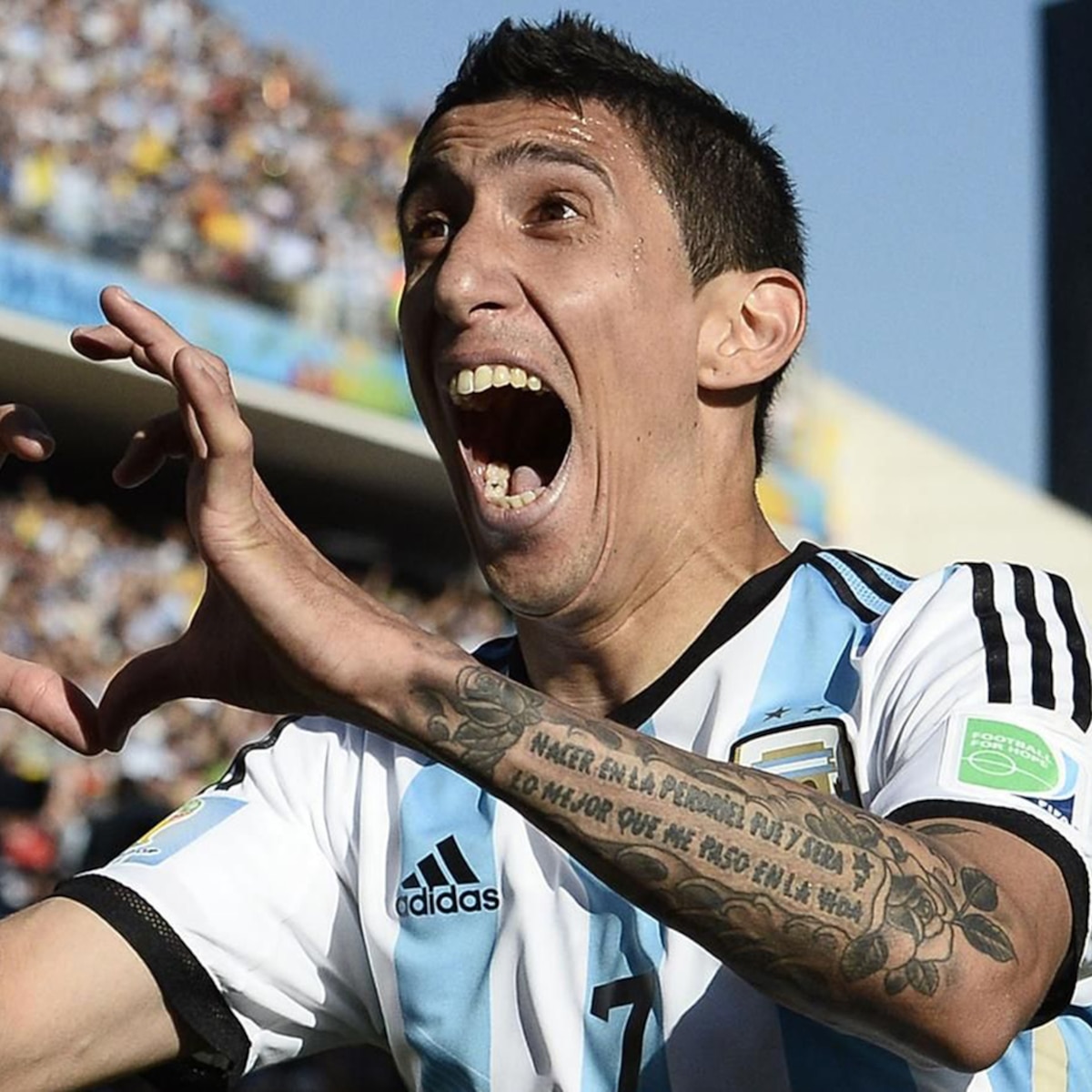
A long Spanish sentence runs across Di María’s forearm: “Nacer en la Perdriel fue y será lo mejor que me pasó en la vida.” It means, “Being born on Perdriel was and will be the best thing that happened to me.” Scroll-like lines, waves and floral details frame the lettering.

Perdriel is a street in Rosario associated with his childhood. Here, the words give a clear connection; the smaller motifs around them are less certain. The quote remains the most readable part of the forearm piece.

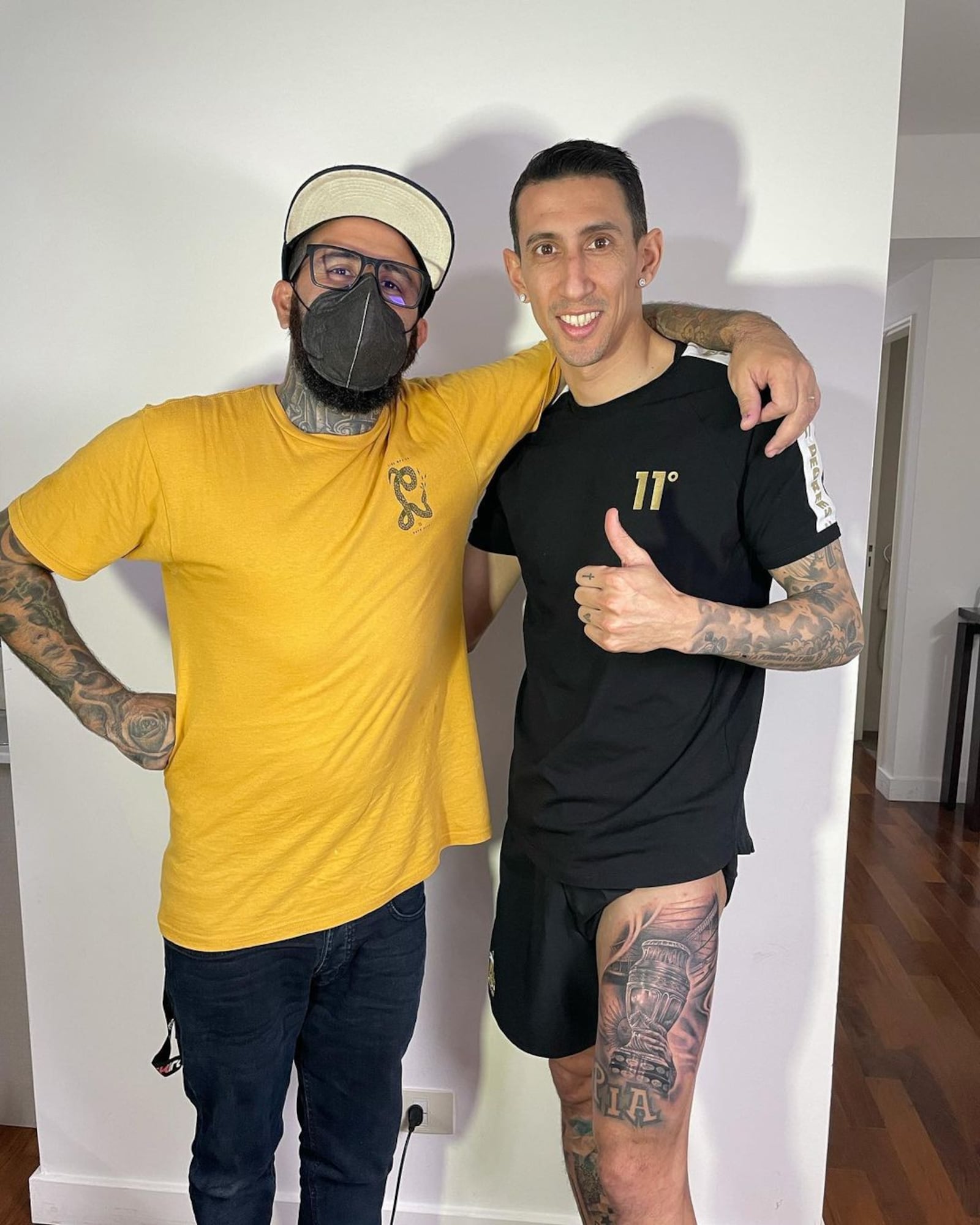
Ángel Di María tattoos: Copa América trophy, PIA lettering and thigh composition

The Copa América trophy tattoo on the left thigh

After Argentina won the 2021 Copa América, Di María had a large trophy design tattooed on his left thigh. Reports describe a broad cup with detailed handles and a radiating sun behind it; the letters PIA appear beneath. The finished piece follows the thigh in a tall, vertical shape.

Di María scored the winning goal in the final against Brazil. The trophy marks that victory, while the initials and surrounding imagery remain part of the same design.

Ángel Di María tattoos: Perdriel quote and ornamental forearm lettering

The World Cup trophy tattoo on the opposite thigh

After Argentina won in Qatar in 2022, Di María added a World Cup trophy to his right thigh. Photos show a shaded cup with a globe and rays, with the letters MIA at its base. The large design takes up much of the visible thigh.

In the final against France, Di María won a penalty and scored Argentina’s second goal before the match went to a shootout. The two thigh tattoos mark separate tournament wins, one on each leg.

Ángel Di María tattoos: World Cup trophy and MIA lettering

Family references within the collection

Reports connect the MIA lettering on the World Cup design with Di María’s daughter, Mía. The letters PIA are visible beneath the Copa América trophy, though the photographs alone do not explain every initial. Family lettering sits alongside the football images on both thighs, bringing private references into the same compositions as Argentina’s wins.

Career chronology and the changing collection

The dates in the reports place the Perdriel quote earlier, the Copa América trophy in 2021, the World Cup piece in 2022 and the newer arm designs in a 2023 session. The collection shifts from the forearm’s long line of text to large, vertical trophies on the thighs and then smaller, more playful arm images.

The scale changes with the subject. The trophies take up broad areas of each thigh, while the quote uses lettering and ornamental framing. The right arm gathers smaller references to competitions, cities and everyday imagery.

What the documented photographs reveal

Some Copa América photos were taken mid-session and show purple guide lines and unfinished shading. Later images show the darker, completed tattoo.

The photos document how the piece changed as it was finished; they don’t explain every mark around it. Less clear motifs are best described by what can be seen, without assigning them a private meaning.

Pierre-Emerick Aubameyang Tattoos: Africa, Dragon Ball and Family Ink

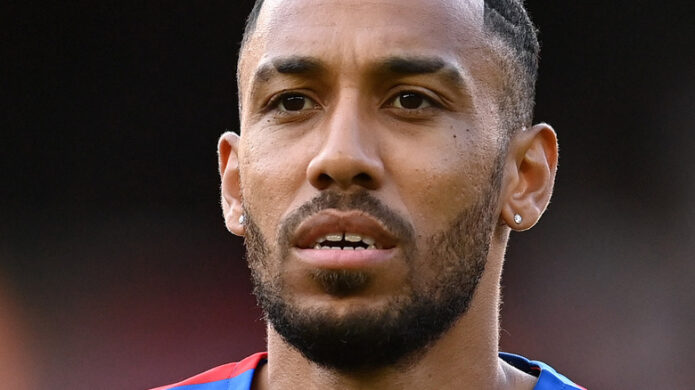
Pierre-Emerick Aubameyang’s tattoos span his back, chest, right thigh and forearms. Photos show an Africa-and-eagle design, Dragon Ball characters, names and short phrases. Reports explain some details; several lines of script remain difficult to read.

The Africa-and-eagle back tattoo

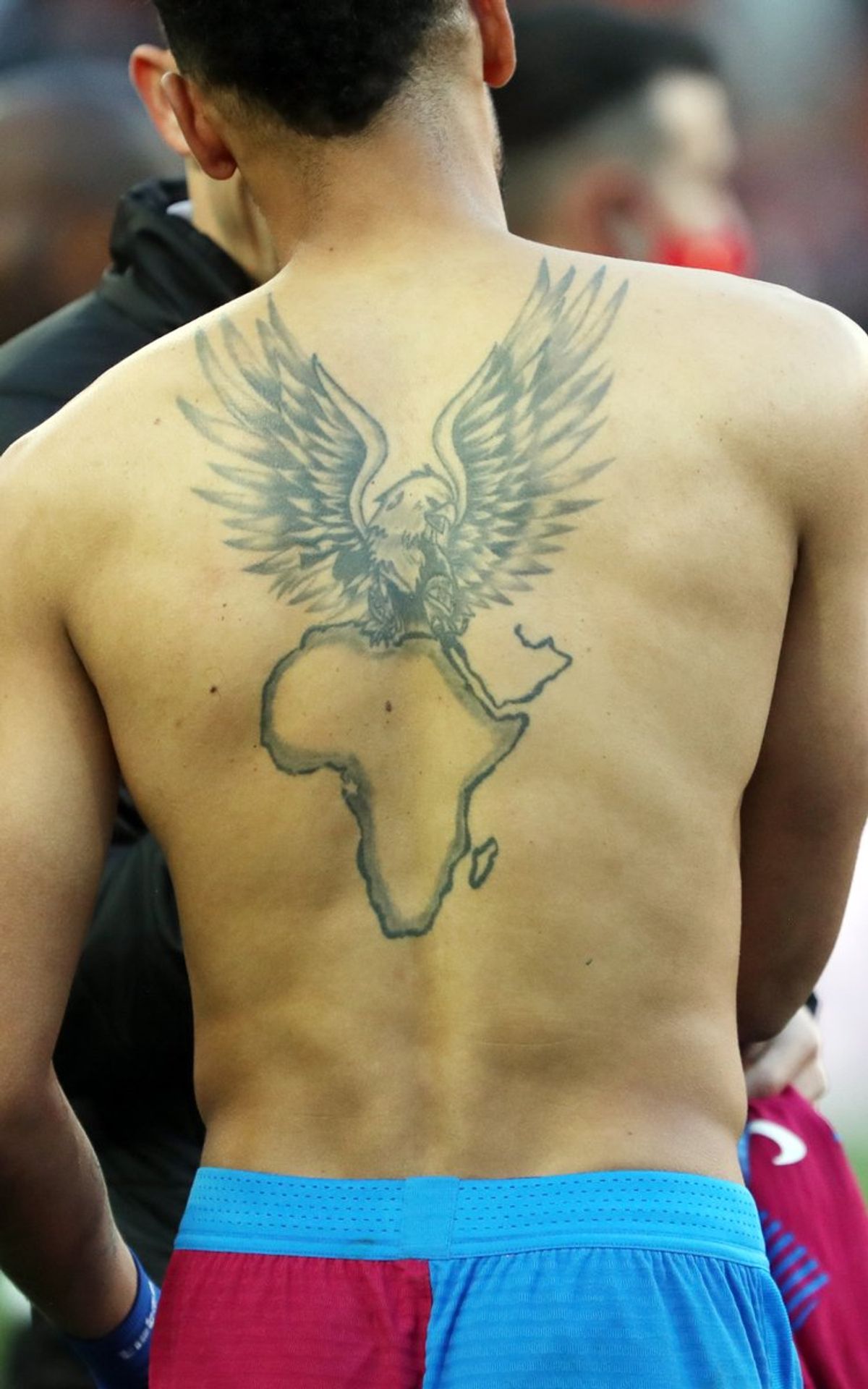
Pierre-Emerick Aubameyang tattoos: The Africa-and-eagle back tattoo

A large eagle spreads its wings across Aubameyang’s upper back, above the outline of Africa. Dark shading defines the feathers and map; the design sits between the shoulder blades and extends toward the middle of his back.

Goku and Gohan Dragon Ball tattoo on the right thigh

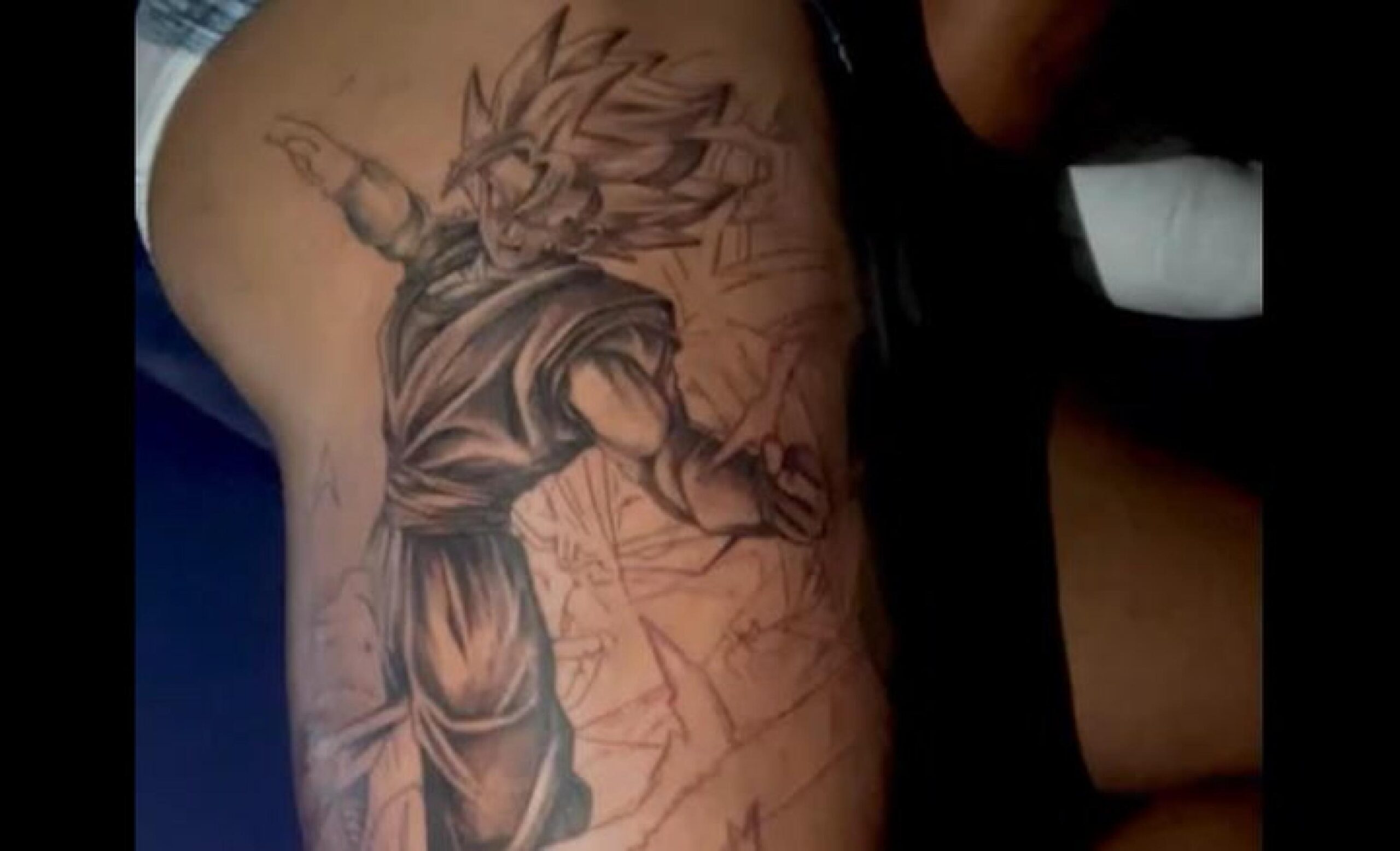
Pierre-Emerick Aubameyang tattoos: Goku and Gohan on the right thigh

Aubameyang’s right thigh carries a shaded Dragon Ball Z scene showing Goku and Gohan. Mundo Deportivo published a close photo that shows the design spreading across the thigh. L’Équipe identified the characters and linked them to his long-running interest in the series. Reports say he displayed the tattoo after Arsenal’s 2019 derby win over Chelsea and credit tattoo artist Alejandro Nicolas Bernal for the work.

The winged chest design

Pierre-Emerick Aubameyang tattoos: The winged chest design

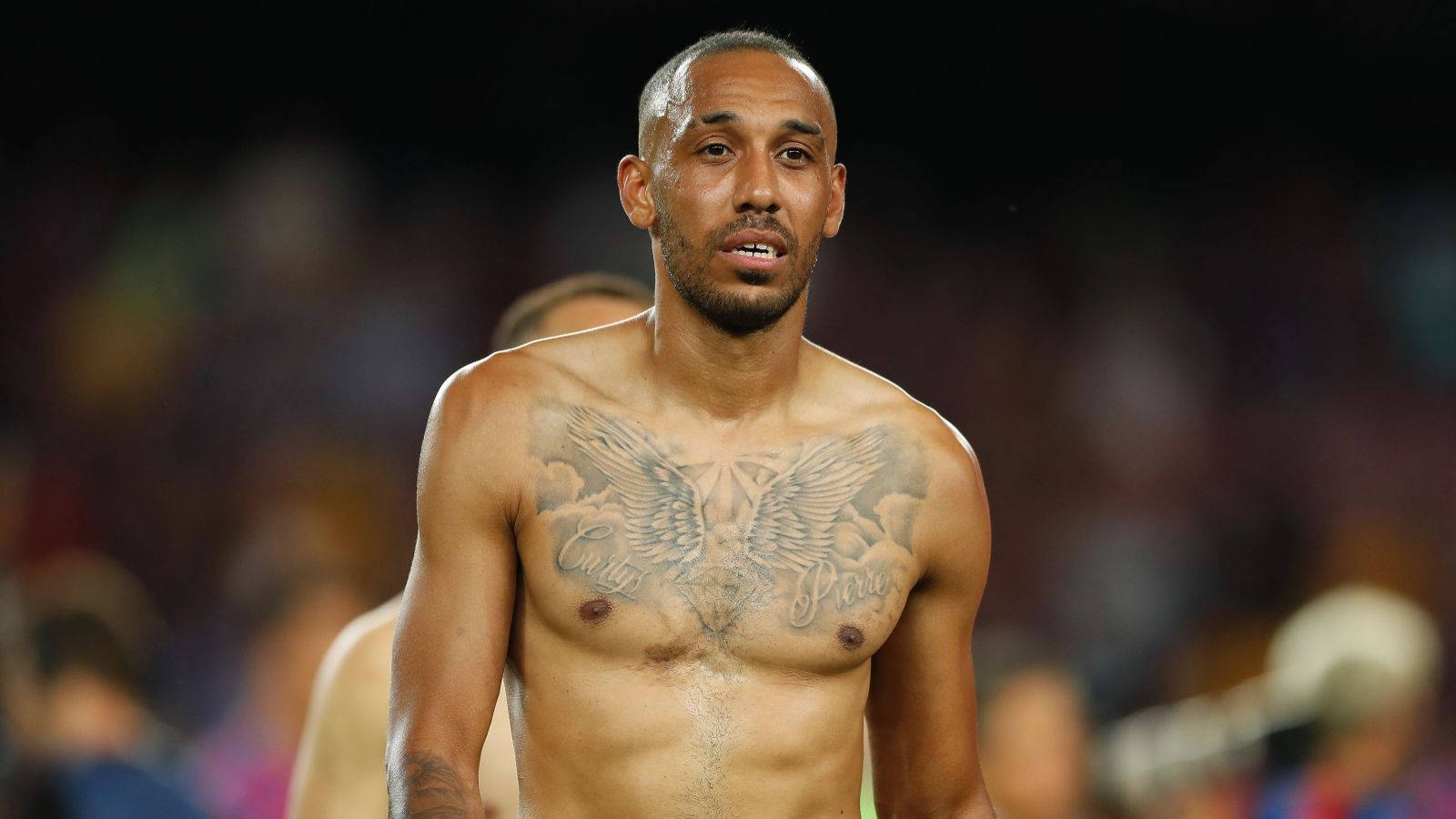
Across his chest, black-and-grey wings extend from a central diamond-like shape toward both shoulders. Cursive lettering, including “Curly” and “Pierre”, follows the curve of his chest beneath the wings. TattooFilter lists the piece as Bernal’s work and describes the visible design, but gives no broader explanation for the names.

In match photos the grey shading can look lighter than it does in close-up portraits. The angle of Aubameyang’s torso and the lighting change how much of the feather detail is visible.

Names and script across the torso

Pierre-Emerick Aubameyang tattoos: Names and script across the torso

Aubameyang has more lettering along his forearms. One phrase reported in accounts of his 2019 additions is “Crespo for life.” Some coverage links it to Hernán Crespo; other reports raise a family connection, so its dedication isn’t settled by the phrase alone.

Other marks are too blurred in available photos to transcribe confidently. From a distance, separate inscriptions can look like one continuous sleeve, so the visible placement is clearer than every word or date.

The Arsenal and forearm references

Pierre-Emerick Aubameyang tattoos: The Arsenal and forearm references

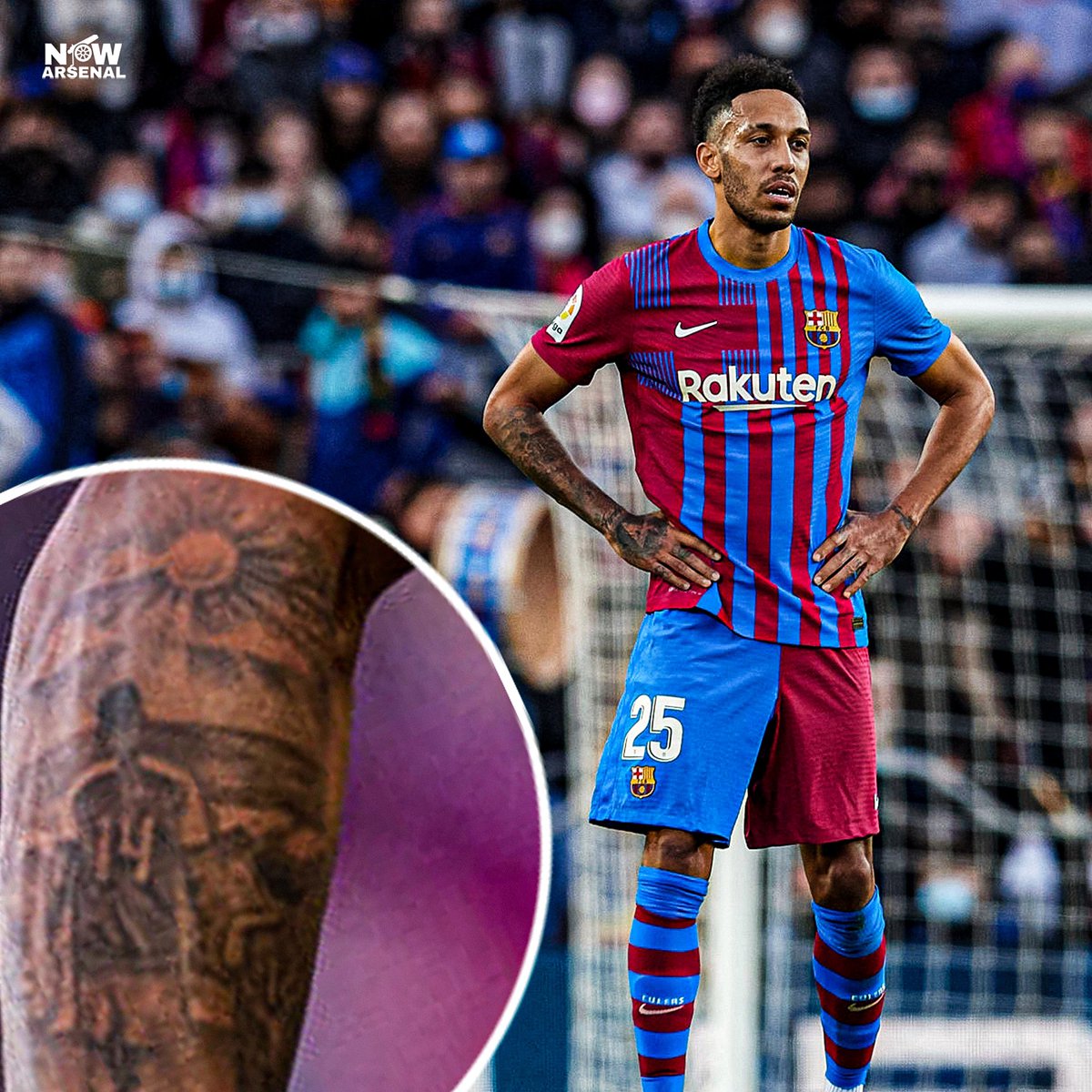
An Arsenal-focused account shared a photo of Aubameyang in a Barcelona kit with an inset close-up of a forearm tattoo. Other coverage has reported an Arsenal-related design on his arm. The collection also appears in later Barcelona, Chelsea, Marseille and Gabon photos; a club shirt places a tattoo in context without explaining its full design.

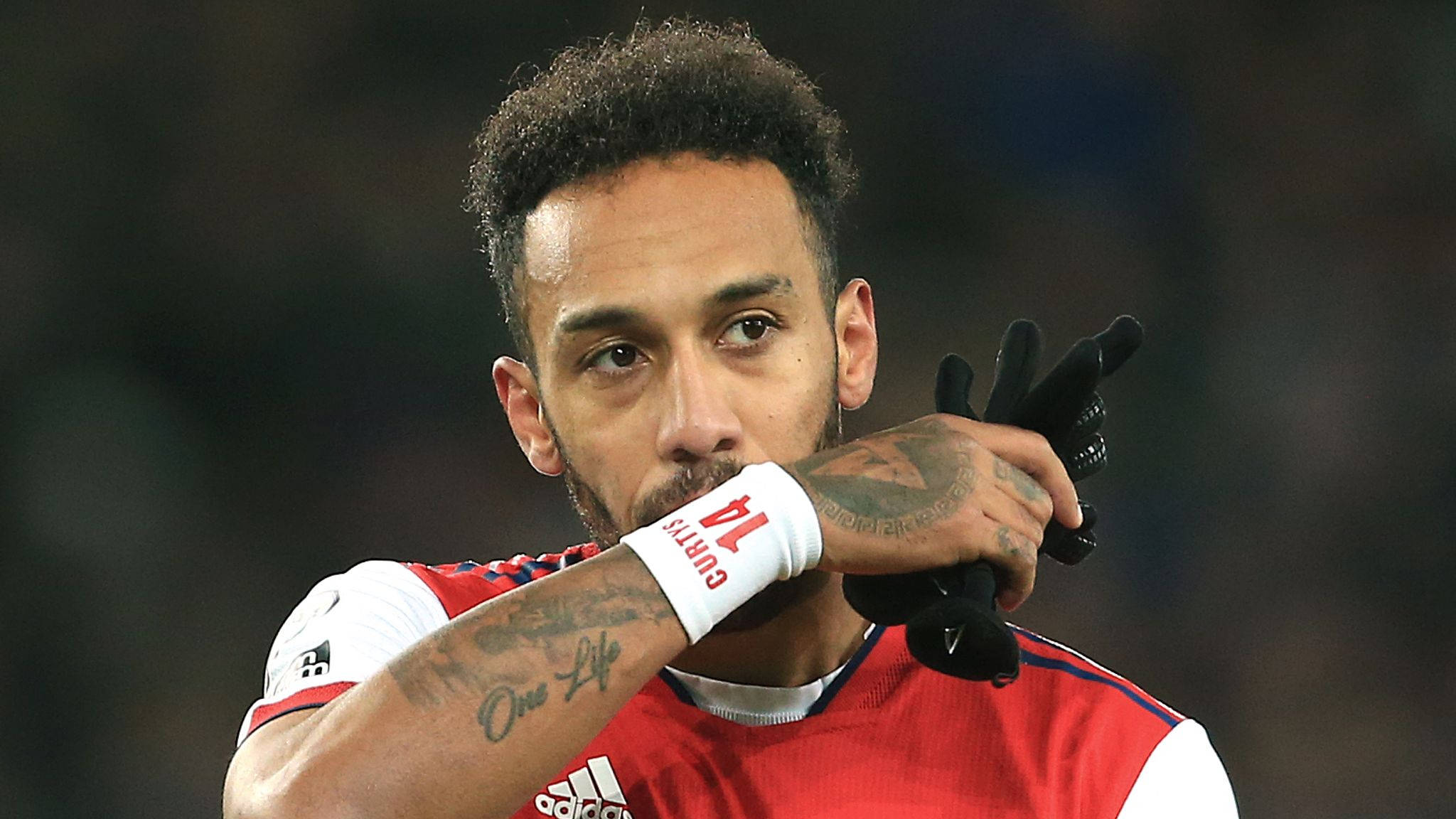
A separate match photo shows the short phrase “One Life” on his forearm. Gloves, wristbands and sleeves can cover some of the surrounding marks, so a match image may confirm where a tattoo sits without showing the full design.

A collection built around family and identity

The family references are clearest in the reports about Goku and Gohan, a father-and-son pair. Coverage has also described a son’s name among Aubameyang’s chest lettering, though photographs alone don’t explain every inscription. In 2022, after scoring twice for Barcelona against Real Madrid, he used a gesture associated with Goku and spoke about a Dragon Ball wish connected to his grandparents.

Gabon Review reported his father’s reading of the eagle above Africa: it represents lifting the continent. That explanation applies to this piece; it doesn’t establish meanings for his other tattoos.

What the photographs document most clearly

Photos establish what is visible and where; reporting supplies names or explanations that aren’t apparent from an image alone. A caption may identify a dedication even when the photograph shows only a line of script, so those are different kinds of evidence.

How Aubameyang’s body art reads in motion

Match photos show Aubameyang’s tattoos during turns, celebrations and changes of kit. A turn can expose his back; raised arms bring the forearms into view; shorts may show the thigh. Each frame catches one angle and moment, so the collection doesn’t appear all at once.

Gianluca Scamacca Tattoos: Neck, Chest and Arm Ink Documented

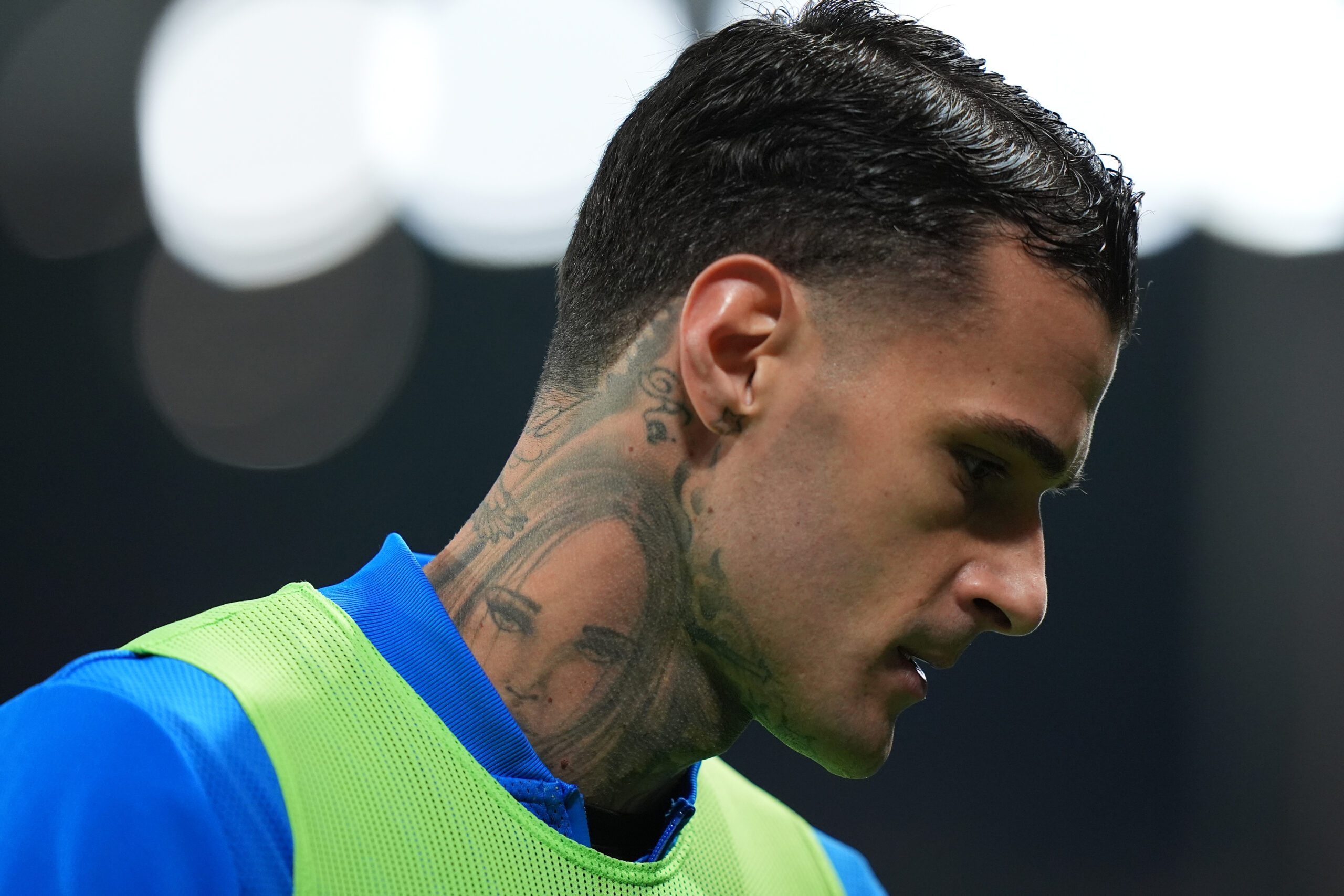
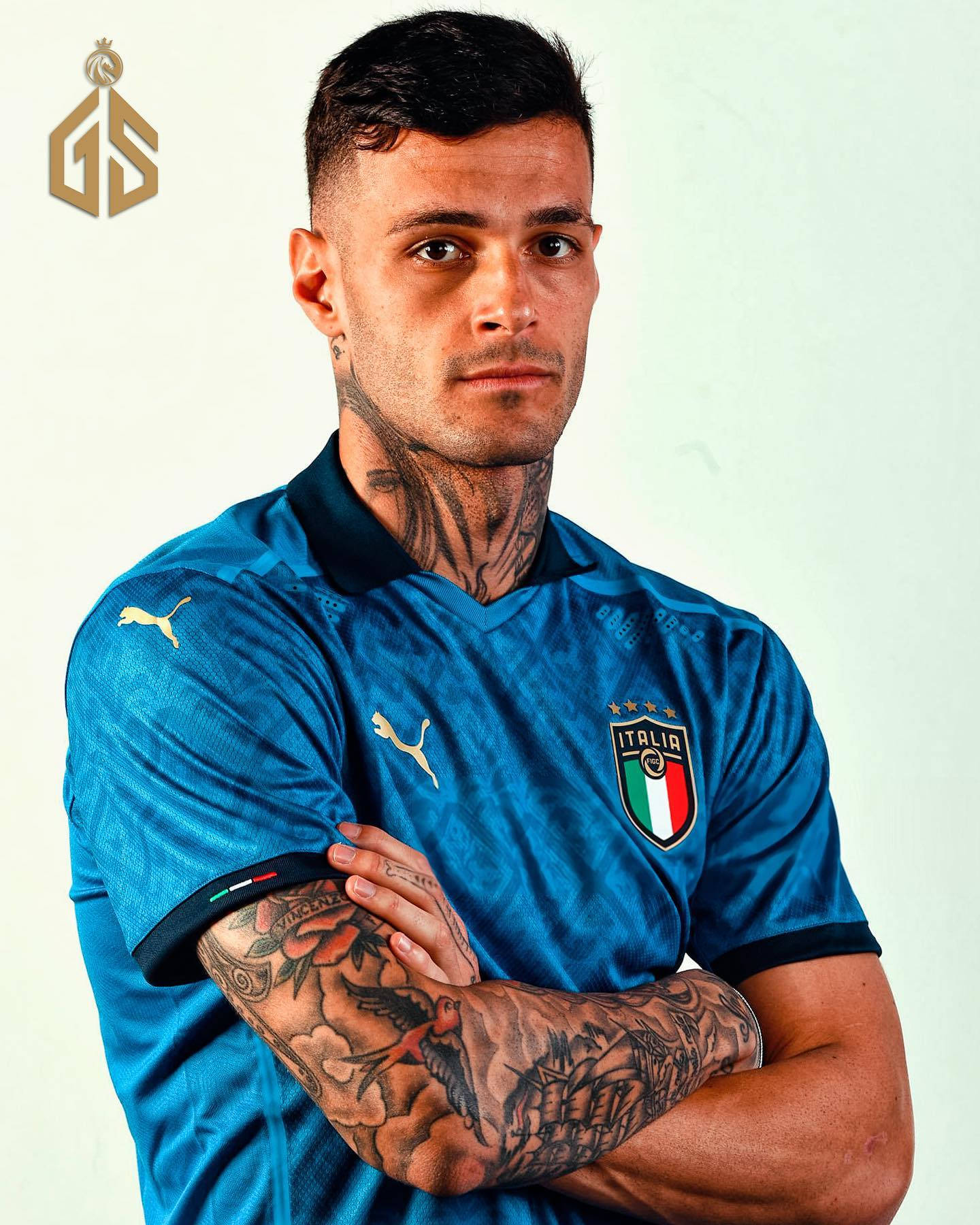
Photos show Gianluca Scamacca’s tattoos across his neck, chest, arms and hands. The largest pieces use black-and-grey shading; smaller marks sit on his fingers.

Gianluca Scamacca’s neck tattoos create the strongest visual signature

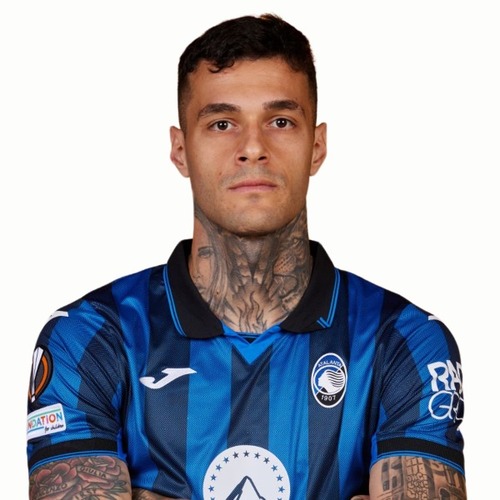
The black-and-grey work climbs from his upper chest around the side and back of his neck, reaching behind the ear. A face-like form sits near the jaw; dark shading gathers around the hairline and opens into larger shapes toward the collar. Diretta’s close profile shows the fine lines beside the ear and where the neck design meets the chest.

Gianluca Scamacca tattoos: Neck composition and behind-ear shading

The chest lettering sits beneath a wide ornamental spread

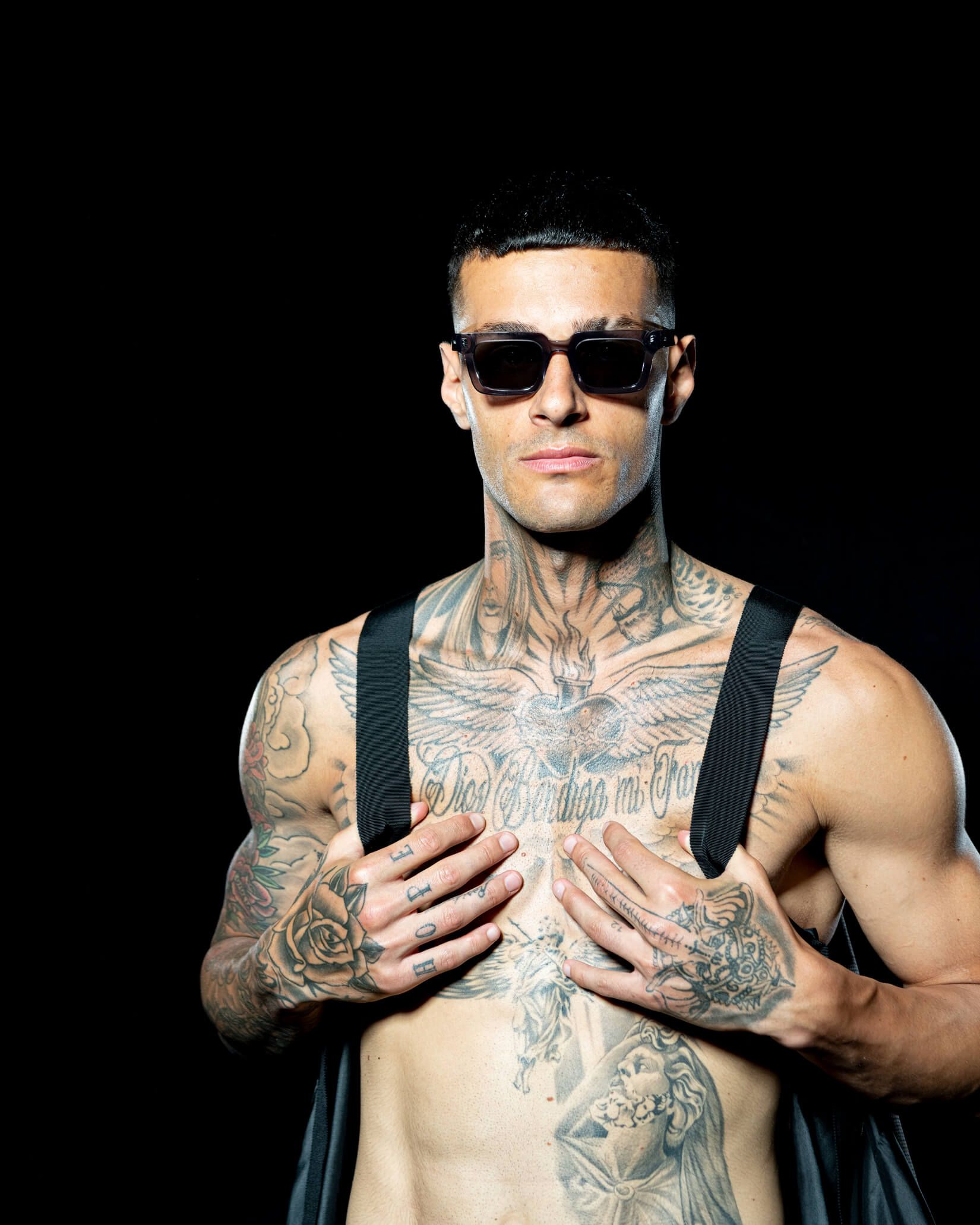
When Scamacca is shirtless, wide script crosses his upper chest beneath the neck work. Dark shading and ornamental lines spread toward the shoulders, making the lettering part of a larger panel rather than a line on its own.

An Atalanta stadium photo makes the letters easier to separate from the shading; a Gazzetta pool shot also shows how the design reaches across his chest and shoulders. The available coverage does not give a verified explanation for each word or motif.

Gianluca Scamacca tattoos: Chest lettering and ornamental upper-body work

His arms carry dense sleeves of portraits, flowers, and blackwork

The two arms have different combinations of shaded faces, flowers, fine lettering and dark bands. Larger images sit on the upper arms; the marks get smaller and overlap toward the forearms and wrists.

In So Foot’s shirtless stadium photo, he holds both arms away from his body, making that change in scale easier to see. Some designs contain portrait-like faces, but reliable coverage does not identify who they represent.

Documented visual pattern: larger shaded images on the upper arms, with smaller marks and layered linework extending toward the wrists.

Gianluca Scamacca tattoos: Layered arm and forearm coverage in a controlled portrait

Hand and finger tattoos add small, high-contrast details

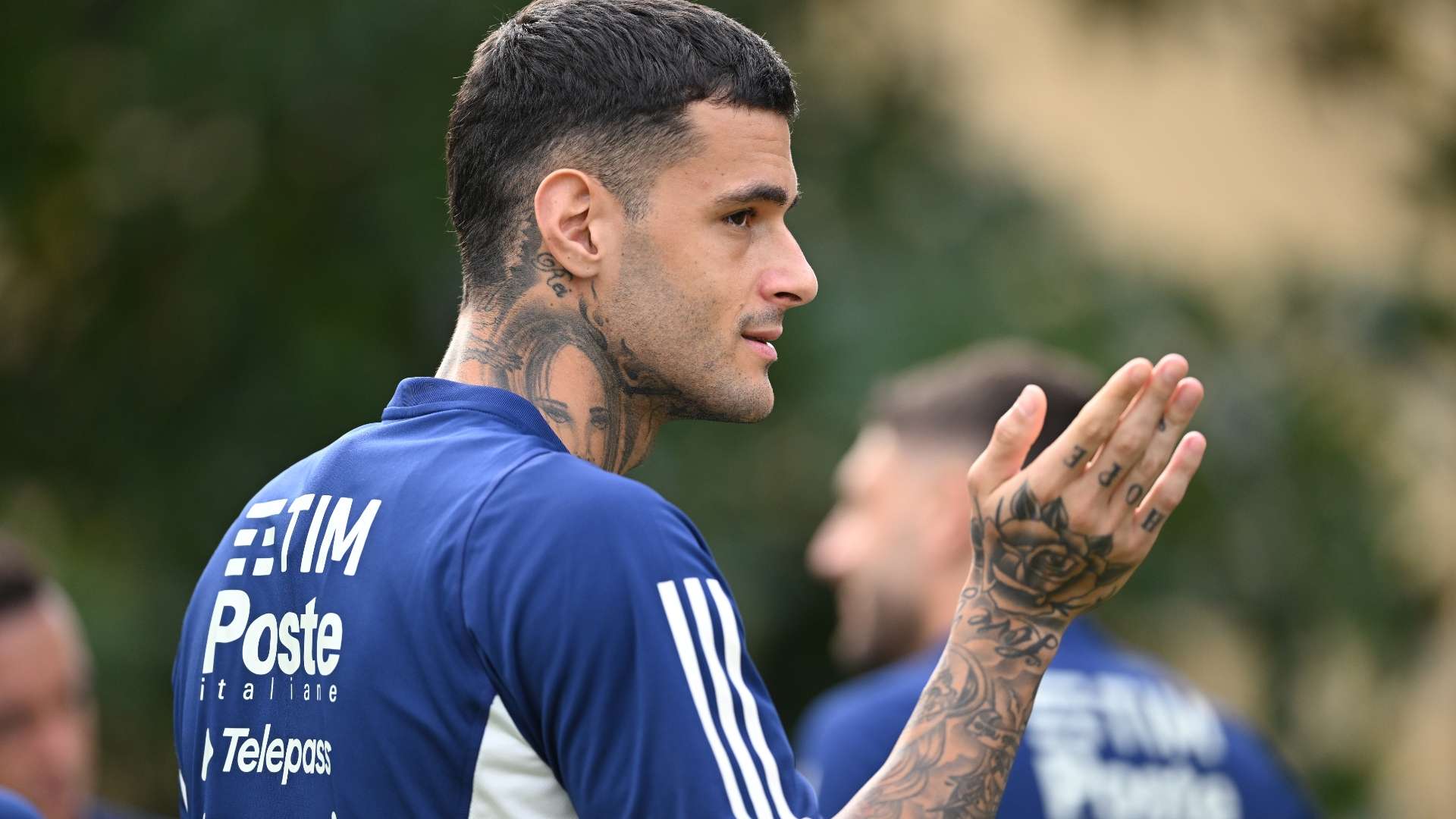
A Goal training photo shows lettering and symbols across Scamacca’s fingers and the back of his hand. The marks are separate, not one continuous design, and a change in finger position or crop can hide part of them.

The photographs establish where the marks sit, but do not explain every character. His hands and wrists can remain visible in a club shirt even when most of his torso is covered.

Gianluca Scamacca tattoos: Hand lettering and finger marks in a training photograph

Scamacca’s upper-body tattoo composition changes with pose and clothing

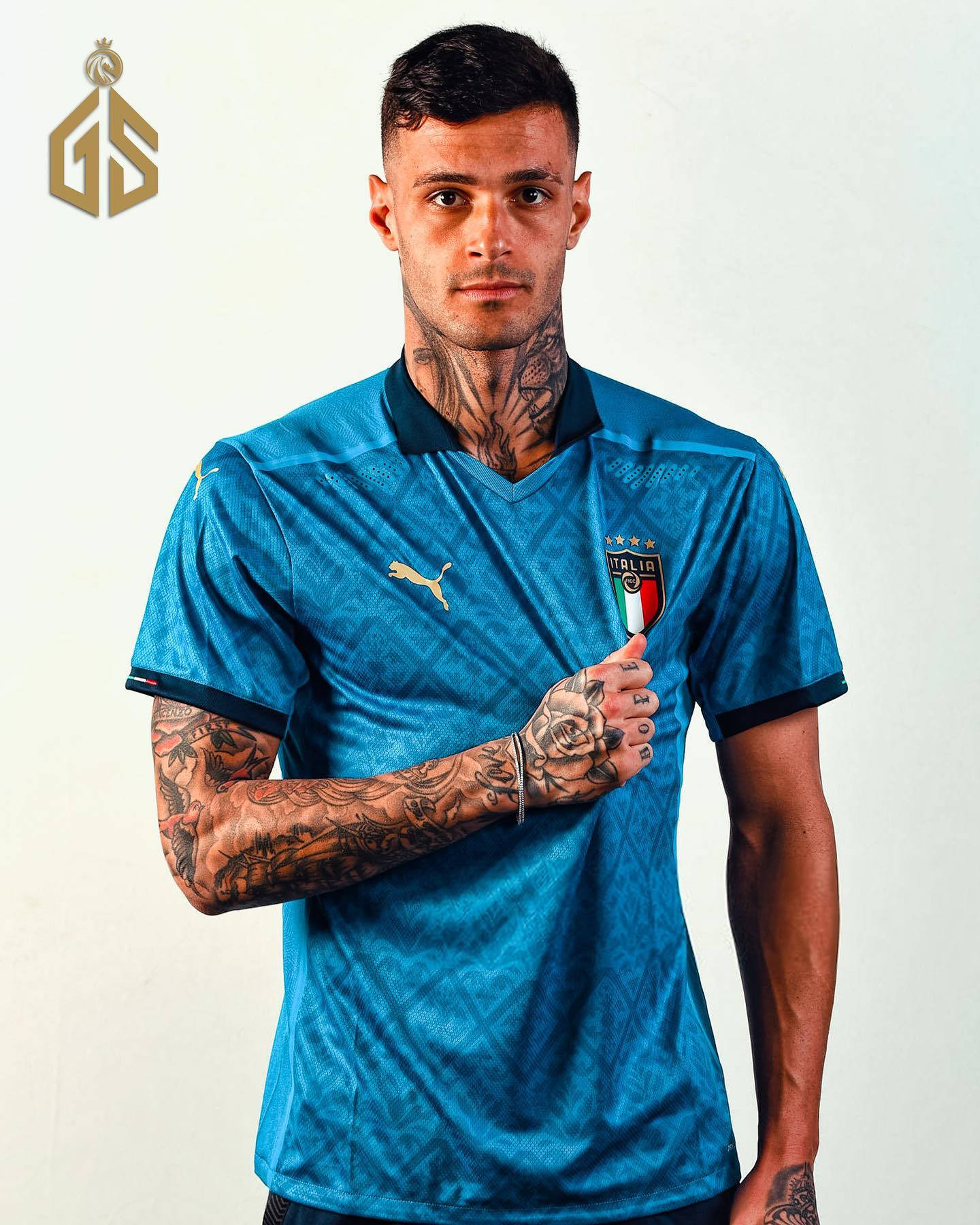
An Italy training top or Atalanta shirt leaves the neck in view but covers much of the chest and arms. Shirtless photos show how those areas connect; a high-resolution studio portrait gives a still view of his face, neck and crossed forearms.

The photographs differ in angle, clothing and light. Each shows a different portion of the same collection.

Gianluca Scamacca tattoos: Upper-body view of the arm and neck composition

What the published coverage confirms about Scamacca’s collection

Corriere della Sera has covered Scamacca’s interest in tattoo culture, and Gazzetta describes it as “a long-running interest” alongside photos of his chest and arms. The reporting documents that interest and the visible work, but does not provide a complete account of the designs’ personal meanings.

How the photographs build the record

The same placements recur in match, training and portrait photos, giving a more dependable record than an isolated social-media crop. No one frame shows the full collection, so the strongest picture comes from comparing images across settings.

The collection in one view

The neck and chest make up the main field, and the arms carry the work lower toward his wrists and hands. The shifting scale—from broad shaded pieces to small finger marks—is easier to see when the photos are compared together.

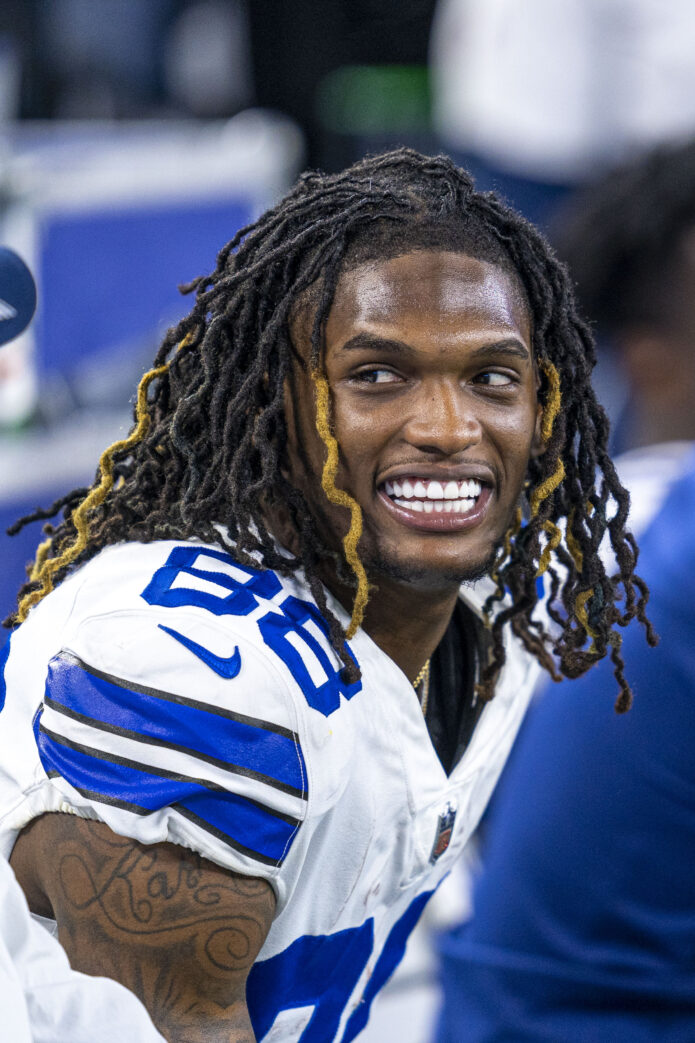
CeeDee Lamb Tattoos: His Full-Back Kobe Bryant Tribute and Inked Story

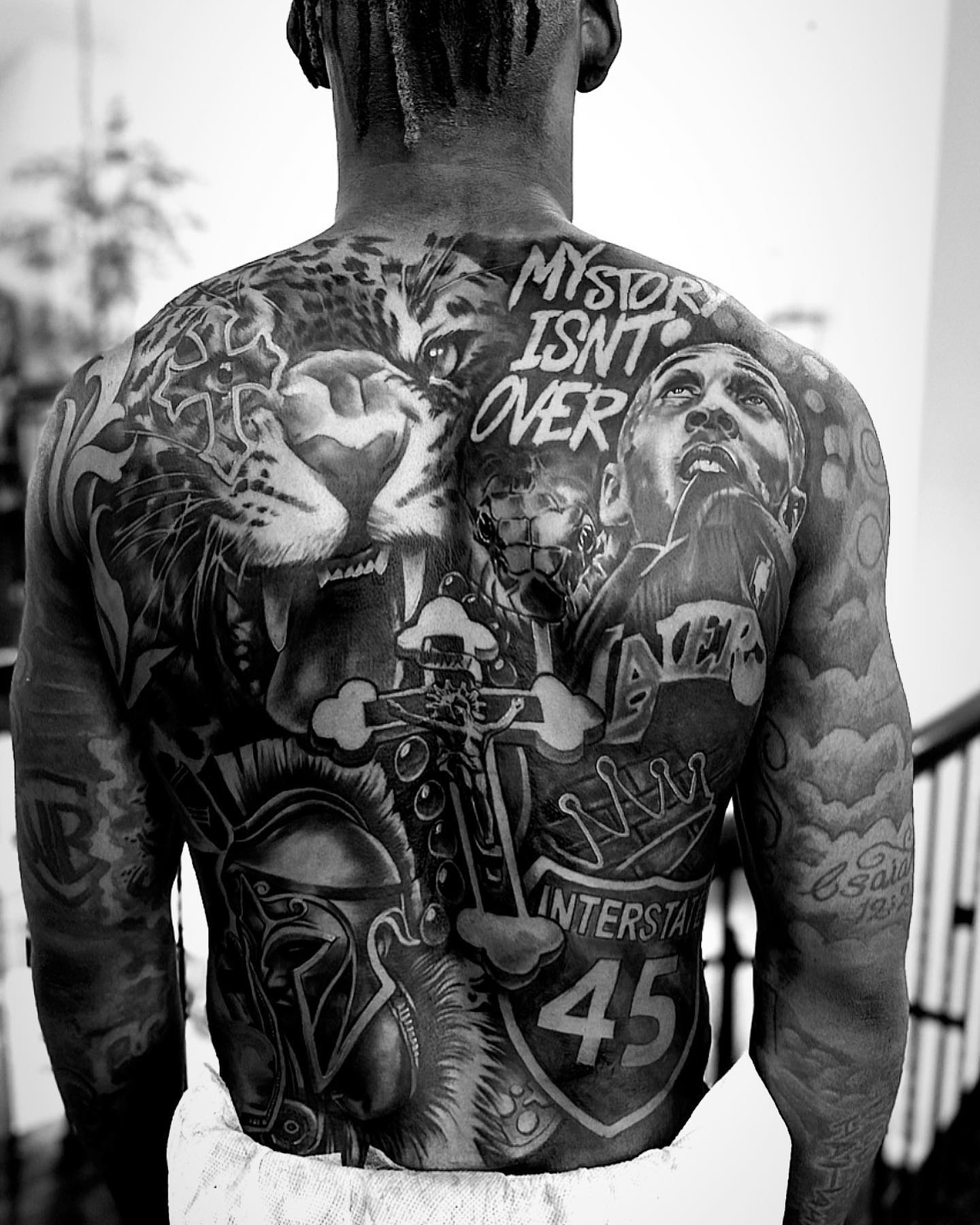
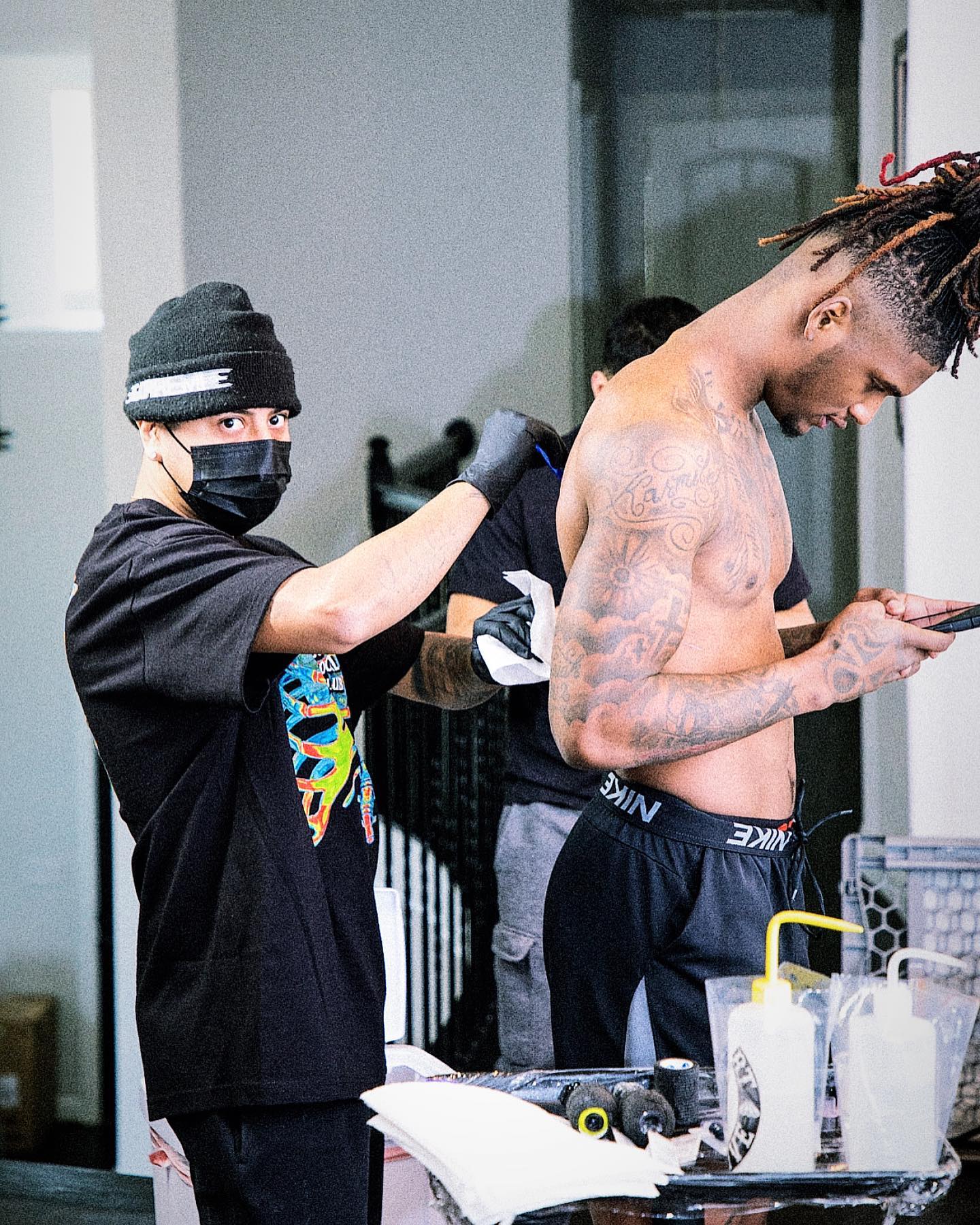
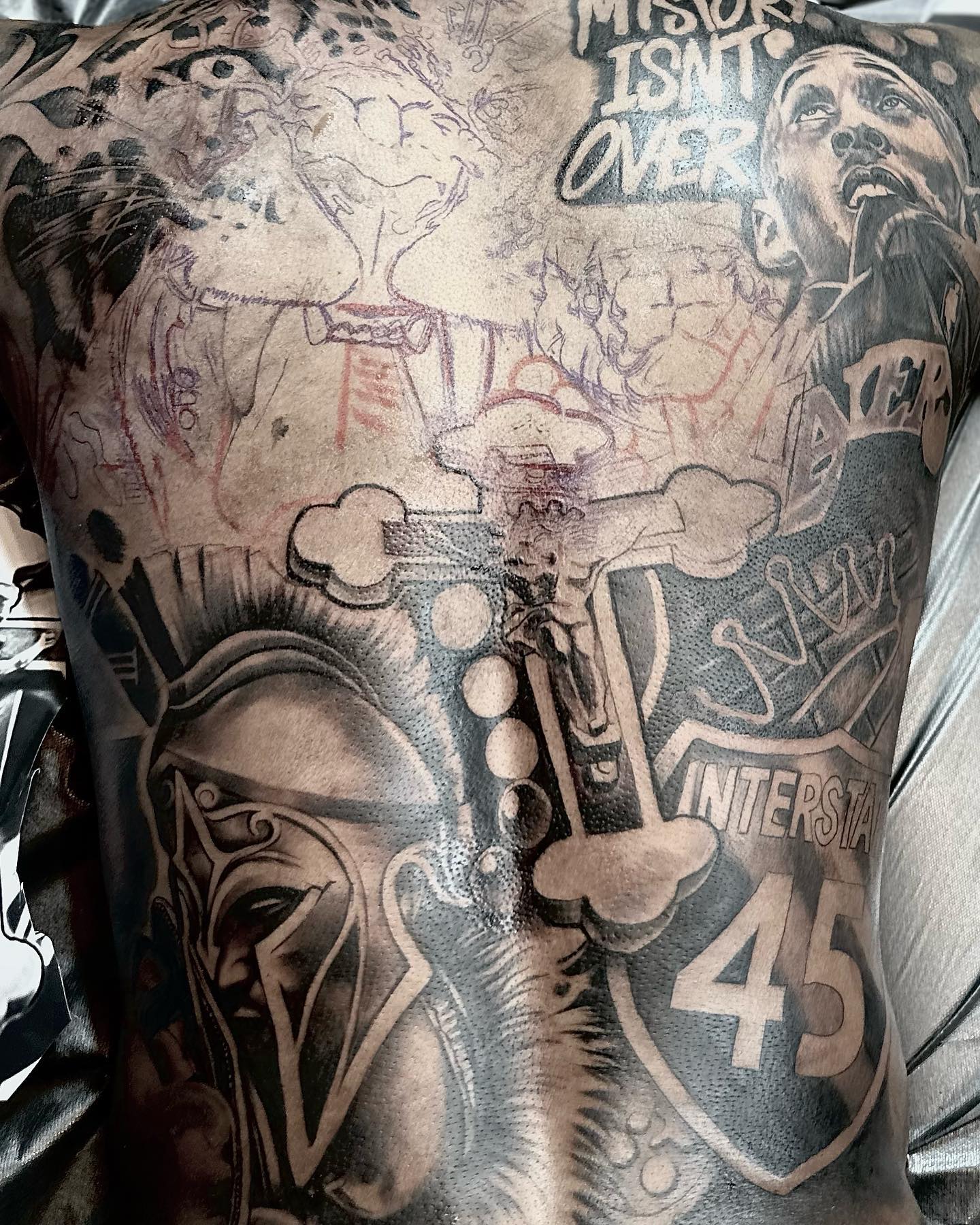
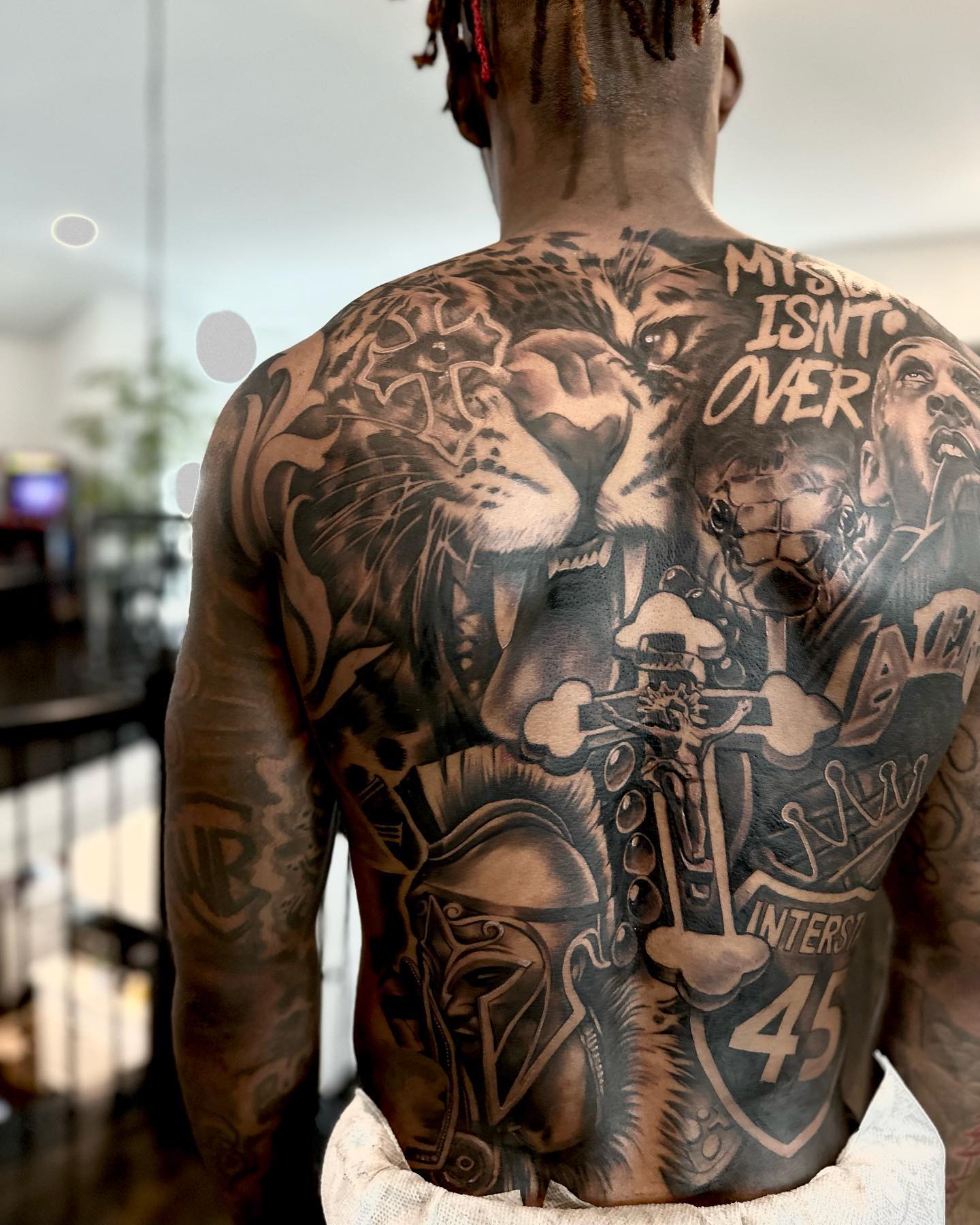
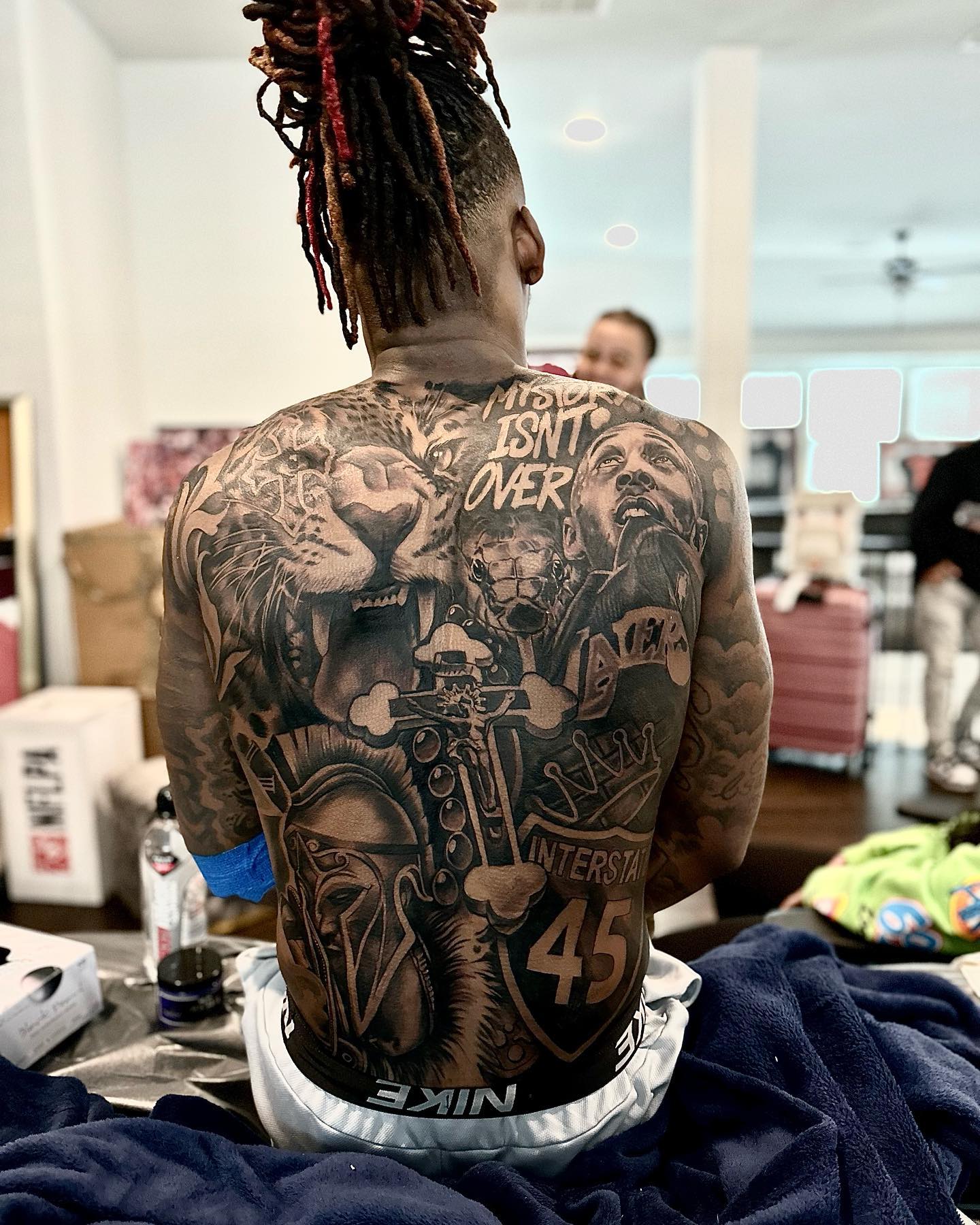
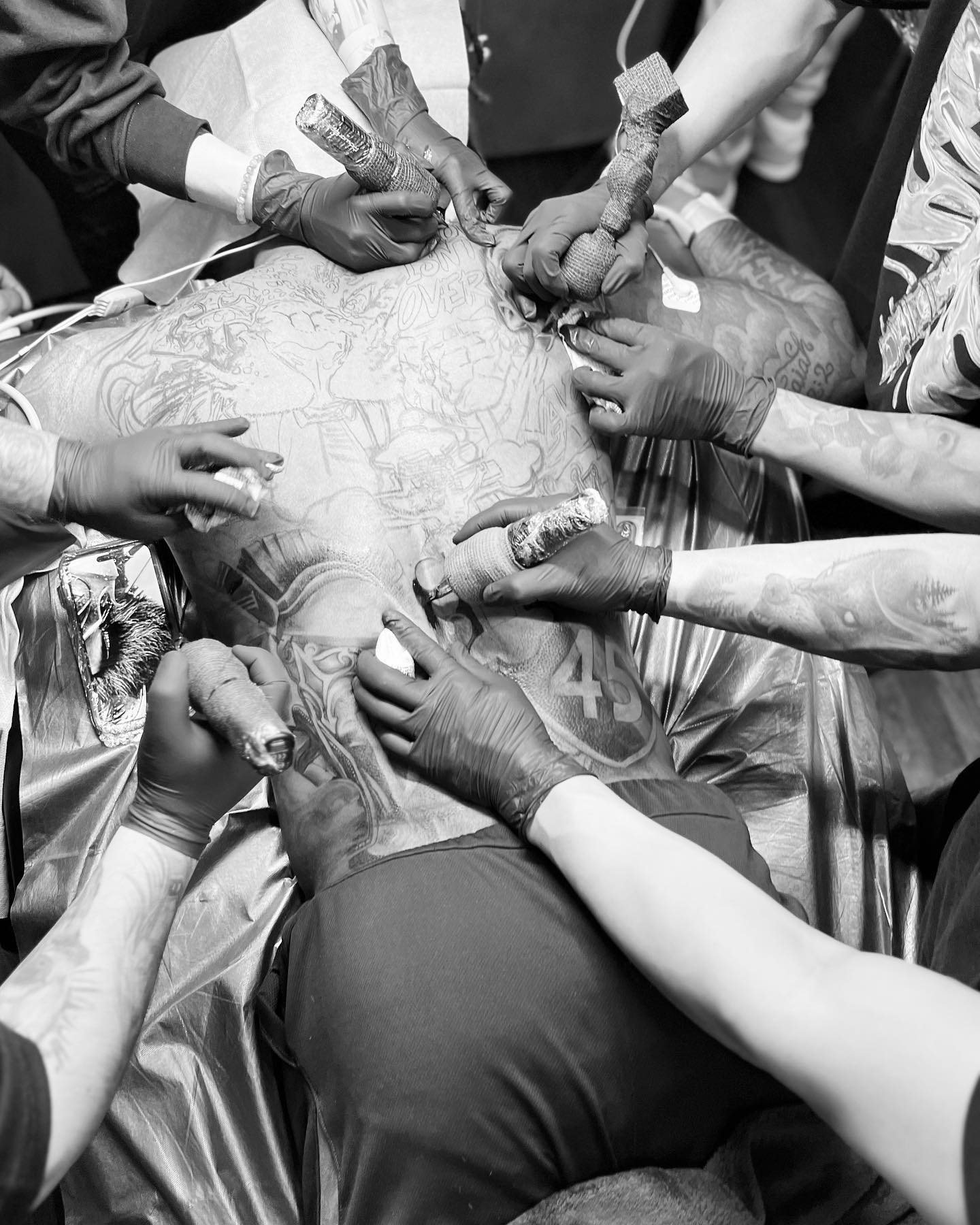
CeeDee Lamb’s most documented tattoo is a large black-and-grey piece that covers his back, from the base of his neck toward his waist. ESPN reported that the 2023 offseason project took about eight hours and involved several artists, led by Phoenix-based Andres Ortega.

ESPN described a spotted big cat, a Spartan-style warrior, a crucifix and a Kobe Bryant tribute. On3 and TMZ Sports also identified a black mamba, a crown, an Interstate 45 sign and the phrase “My Story Isn’t Over.” Photos show separate arm and leg tattoos as well, though those designs are less fully described.

CeeDee Lamb’s full-back tattoo

CeeDee Lamb tattoos: CeeDee Lamb tattoo article inline image

The backpiece links the shoulders and lower back as one composition. A big-cat portrait fills the upper left, while Bryant’s portrait appears on the opposite side. Lettering crosses the right shoulder blade; below, the warrior, cross, crown and road sign sit among heavier shading and layered forms.

The leopard and jaguar portrait

CeeDee Lamb tattoos: CeeDee Lamb tattoo article inline image

The upper-left portrait shows a spotted cat with a broad muzzle, whiskers and darkly shaded eyes. Reports differ on whether it is a leopard or jaguar; the photographs establish the big-cat image but do not settle that label. The sources don’t give a confirmed personal meaning for it.

Kobe Bryant portrait and black mamba

CeeDee Lamb tattoos: CeeDee Lamb tattoo article inline image

Bryant appears in a Lakers jersey on the upper right of Lamb’s back. On3 reported a black mamba alongside the portrait, a reference associated with Bryant’s “Black Mamba” identity. The lighter face and jersey stand out from the shaded forms around them.

“My Story Isn’t Over” lettering

CeeDee Lamb tattoos: CeeDee Lamb tattoo article inline image

“MY STORY ISN’T OVER” runs in stacked block letters across the right shoulder blade. The pale lettering sits against a dark field, keeping the phrase legible beside the portraits. It is one of the details named in reports and visible in the session photographs.

The crucifix, crown and central symbols

CeeDee Lamb tattoos: CeeDee Lamb tattoo article inline image

The lower composition includes a crucifix or cross, a crown and an Interstate-style sign marked “45.” ESPN and later reports connect the sign to Interstate 45, which runs through Dallas. The available coverage identifies these elements but does not assign a reported meaning to every small mark around them.

The lower-back warrior and athletic imagery

CeeDee Lamb tattoos: CeeDee Lamb tattoo article inline image

ESPN also identified a Spartan-style warrior among the backpiece’s central figures. Its helmet and armour read differently from the portraits above, while dark shading and overlapping forms connect it to the rest of the tattoo. Session photos show several artists working across the broad design.

Lamb’s arm and leg tattoos

CeeDee Lamb tattoos: CeeDee Lamb tattoo article inline image

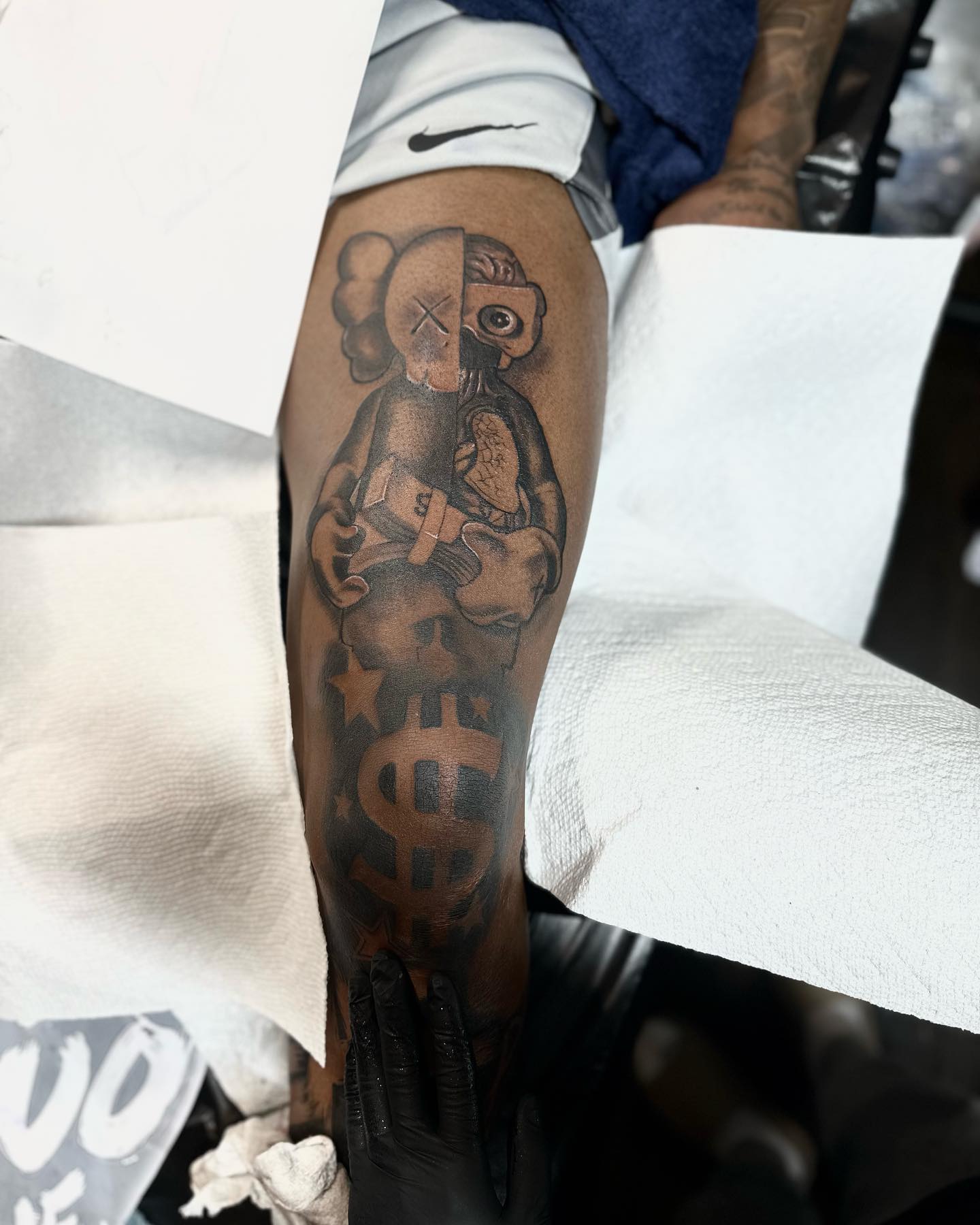
Photos of Lamb’s arms show additional lettering and shaded designs, but reports do not name or explain each one. A separate leg image shows a cartoon-like figure with contrasting halves and a large dollar sign below it. The close-up makes the split face and rounded forms easier to see than sports photos do.

A career-era statement

ESPN placed the project during the 2023 offseason, after what it described as the best season of Lamb’s career to that point. The timing is documented; it does not establish a personal meaning for each image. The named portraits, Dallas sign and phrase are the clearest reported links to his basketball influences, location and career.

Closing summary

The record is clearest around the backpiece: a Bryant tribute, spotted cat, black mamba reference, warrior, cross, crown, Interstate 45 sign and forward-looking lettering. Photographs also document separate arm and leg tattoos, though their details are less fully reported.

Rafael Leao Tattoos: His Full-Back Piece, Portrait Ink and Personal Lettering

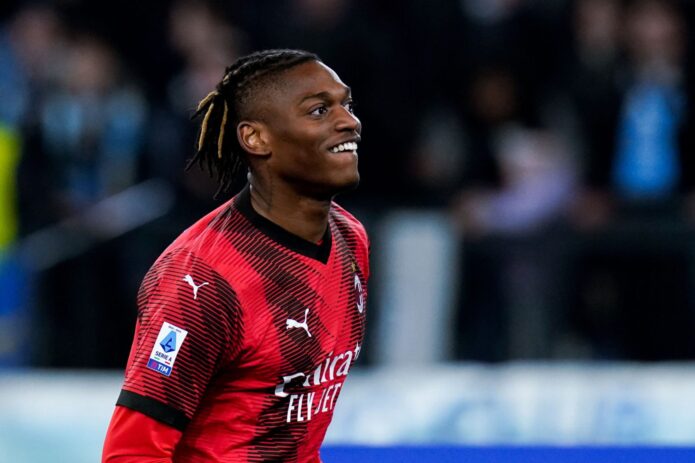
Rafael Leão, the AC Milan forward, has tattoos across his neck, arms, chest, calf and back. The documented pieces range from short inscriptions and Roman numerals to portraits and a large back scene. Reports connect some of them to family, faith and the Seixal neighborhood where he grew up.

The clearest examples come from photographs and published accounts: a Martin Luther King Jr. portrait, a reported Nelson Mandela tattoo, the neck phrase “Tudo passa,” “OTF” lettering and the full-back composition. Where a source describes a design without explaining its meaning, the account below keeps that distinction.

Rafael Leão’s Martin Luther King tattoo

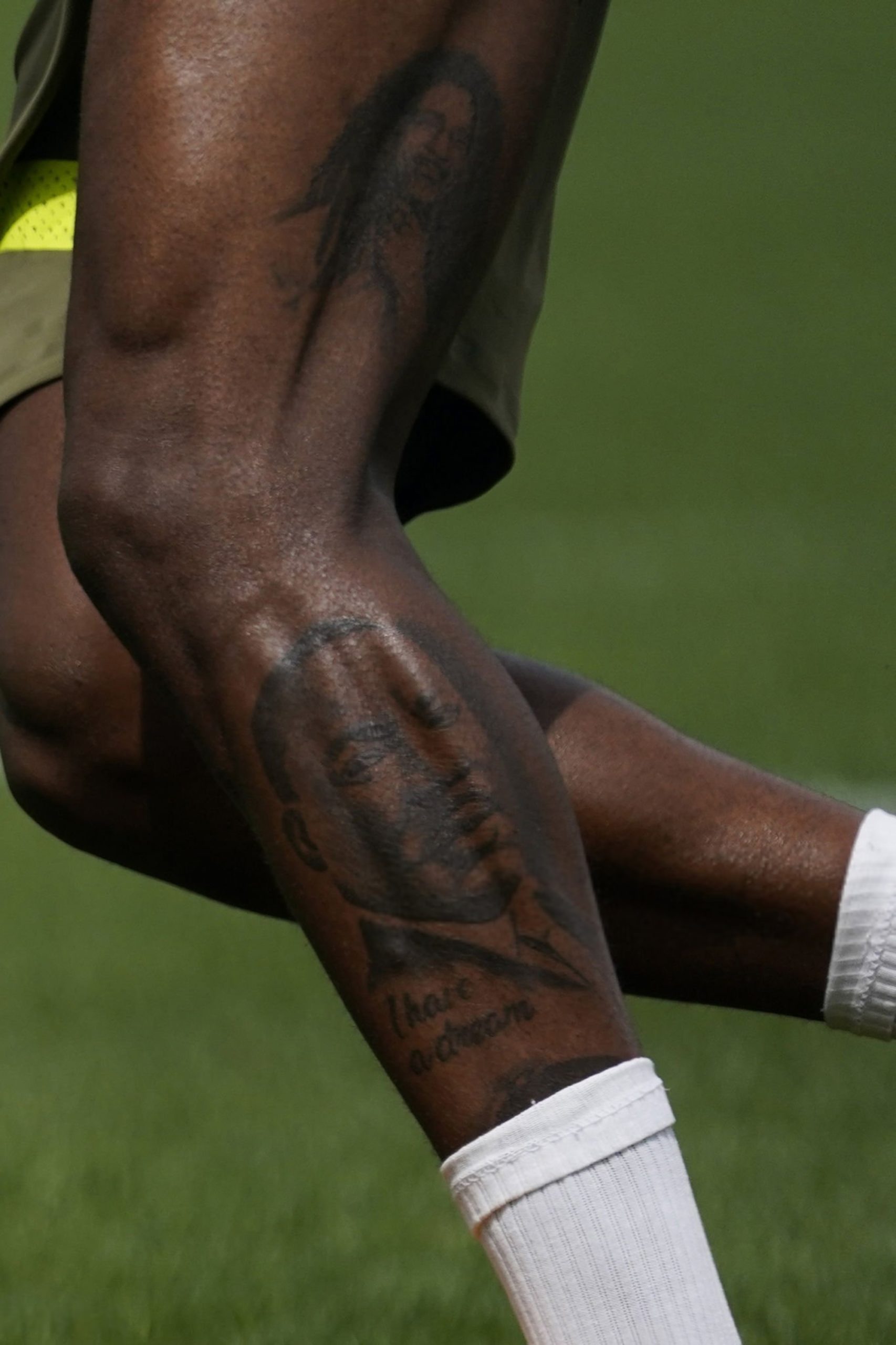
Rafael Leao tattoos: Close editorial photograph showing the Martin Luther King portrait and quotation on Leão’s calf

A black-and-grey portrait of Martin Luther King Jr. sits on Leão’s calf, with “I have a dream” beneath it. The close photograph shows the face above the quotation; darker shading frames the portrait while finer lettering follows below.

Published reports also identify a tattoo connected to Nelson Mandela. The calf photograph clearly shows King, but it does not show what the Mandela design looks like.

The full-back tattoo and “Only God Can Judge” lettering

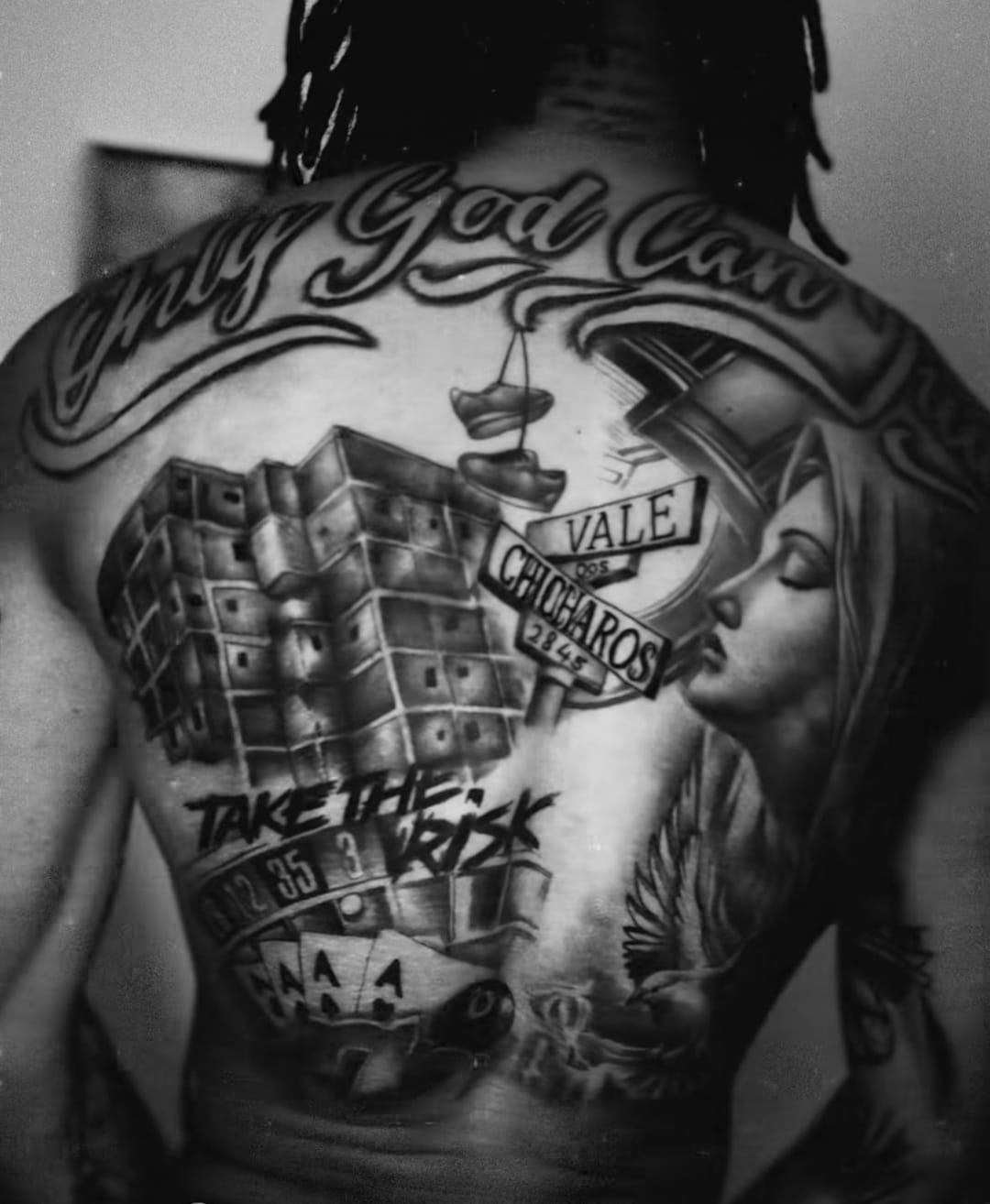
Rafael Leao tattoos: High-resolution back portrait showing the completed full-back tattoo composition

Leão’s large back piece began in February 2024 and was reported complete in 2025. “Only God can judge” runs across the upper back. Coverage connects the phrase to faith and personal judgment, and notes its resemblance to wording associated with his former Milan teammate Zlatan Ibrahimović.

The scene includes the Madonna’s face with a dove below, plus buildings and street details linked to the neighborhood where Leão grew up. A sign is reported to read “Vale Chicharos” beside postal code 2845, tying the image to Seixal.

Other reported details include shoes hanging from one of the letters, a roulette ball stopped on three, and a poker hand of aces. “Take the risk” appears near the lower left beside the gambling imagery.

The Roman-numeral tattoo across his chest

Rafael Leao tattoos: Shirtless editorial photograph showing the chest numerals and both tattooed arms

A shirtless photograph shows Roman numerals across Leão’s upper chest, arranged in a short horizontal line above the pectorals. Coverage reads the sequence as XXMMVIII and links it to his family history, though it does not specify the event. The same image shows black-and-grey tattoos extending down both arms.

Leão’s arm tattoos in match photography

Rafael Leao tattoos: Distinct post-match photograph showing the arm and torso tattoo coverage in context

A post-match photograph shows dense black-and-grey work around both shoulders and upper arms, with smaller lettering and shaded forms continuing toward the forearms. Some details are too small to identify from that frame.

One documented inscription is “OTF,” explained as “Only The Family.” Reports also link pieces on his arms and legs to family, his neighborhood and people he admires; the match photo shows the lettering among the darker designs but cannot explain each tattoo.

The side tattoo shown under his shirt

Rafael Leao tattoos: Distinct square editorial photograph showing the tattoo along Leão’s side and ribs

A square photograph shows a tattoo along Leão’s ribs and side as his shirt lifts. It follows the curve of his torso, but the published description does not identify the design or give a confirmed meaning.

Profiles have also documented “Tudo passa” on his neck, translated as “everything passes.” The short phrase sits apart from the larger back scene and portraits.

The people and places repeated in the artwork

Historical figures, family and home recur in published descriptions of Leão’s tattoos. King and Mandela are the reported portraits; the back scene points to Seixal, while “Only The Family” names a family connection. The religious imagery and “Only God can judge” phrase add the reported faith references.

The designs differ in scale and subject: a calf portrait with a quotation, compact text on the neck and chest, and a back piece that brings together religious, neighborhood and gambling imagery. Those descriptions capture the reported links without assigning a private story to every mark.

How the separate pieces are organized

The placement changes with each piece: the calf portrait runs vertically, the chest numerals sit horizontally, and the arm tattoos gather around the shoulders. “Tudo passa” is on the neck, the side tattoo follows the ribs, and the back composition uses most of the upper and central back as one scene.

Together, the photographs document a collection that moves between separate inscriptions and larger images. They show where the tattoos sit and what can be seen; interviews and reporting provide the available context for only some of their meanings.

Sergio Romo Tattoos: The Stories Behind His Script, Demons and Family Imagery

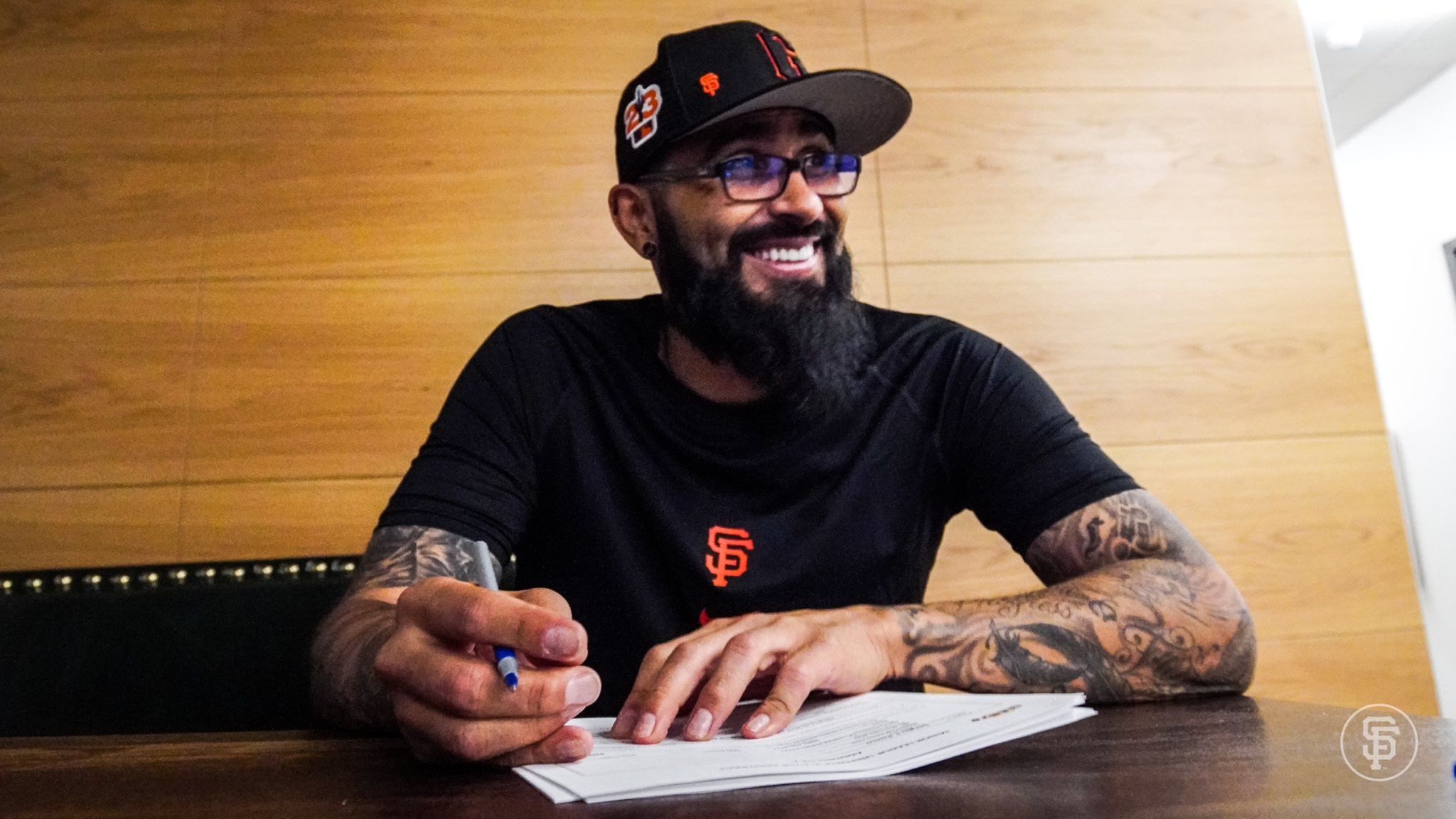
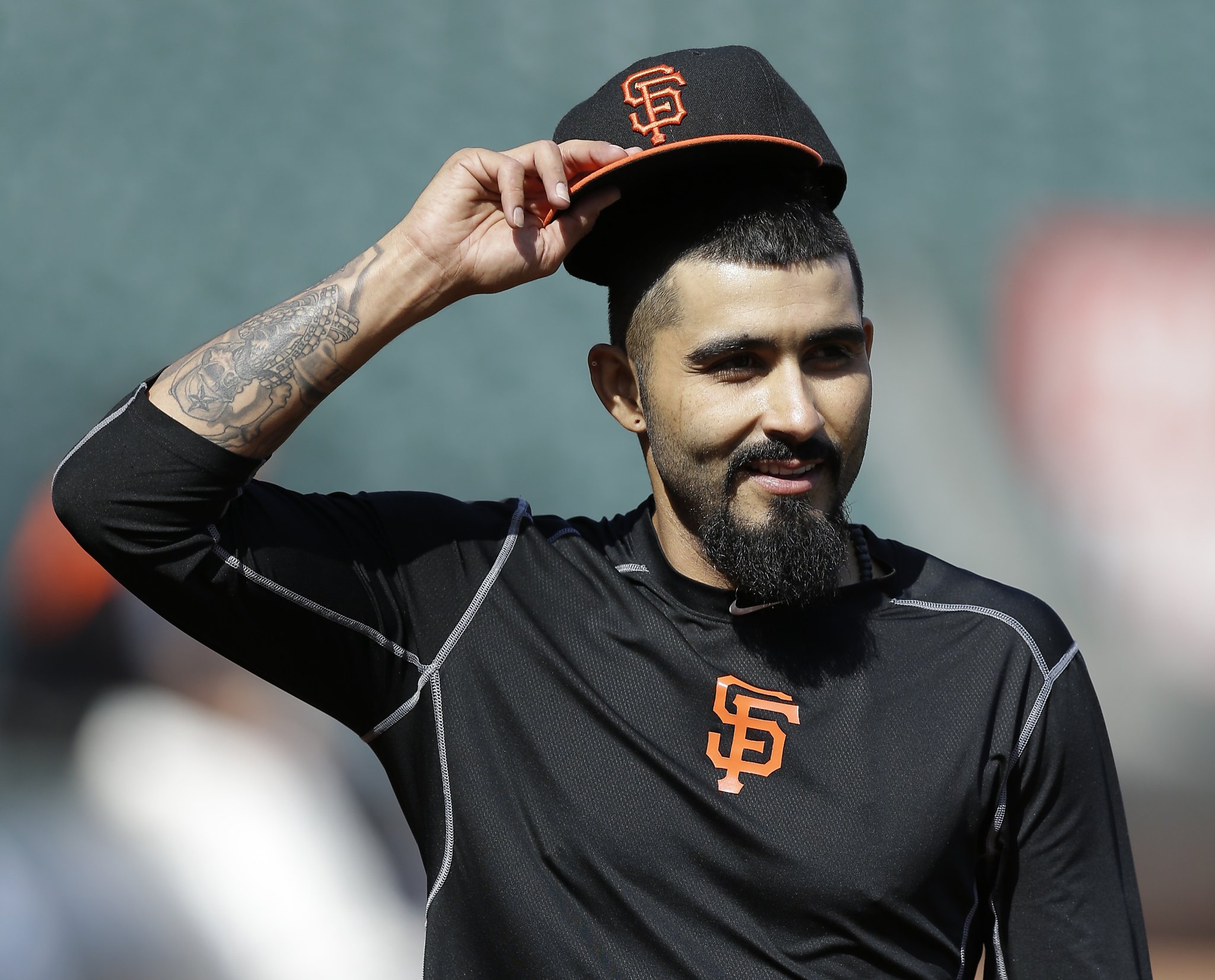
Sergio Romo has tattoos across his arms, neck, torso and back. He has explained several of them in interviews, including two short phrases, a group of demon and monster faces, joined American and Mexican flags, and a Sistine Chapel scene. The accounts below separate what Romo has said from details shown only in photographs.

Sergio Romo’s “Without struggle there is no progress” tattoo

Sergio Romo tattoos: inline tattoo evidence

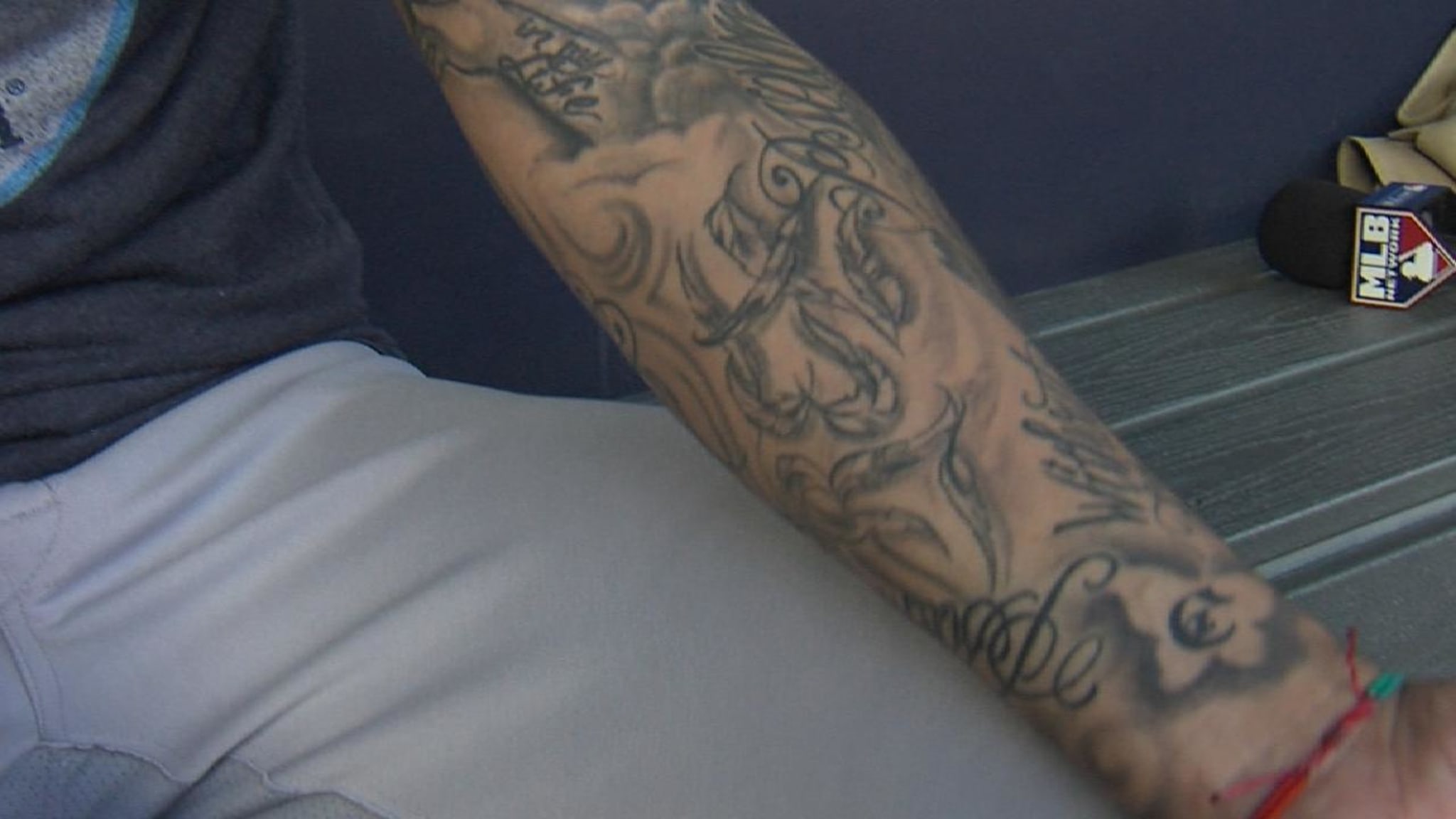
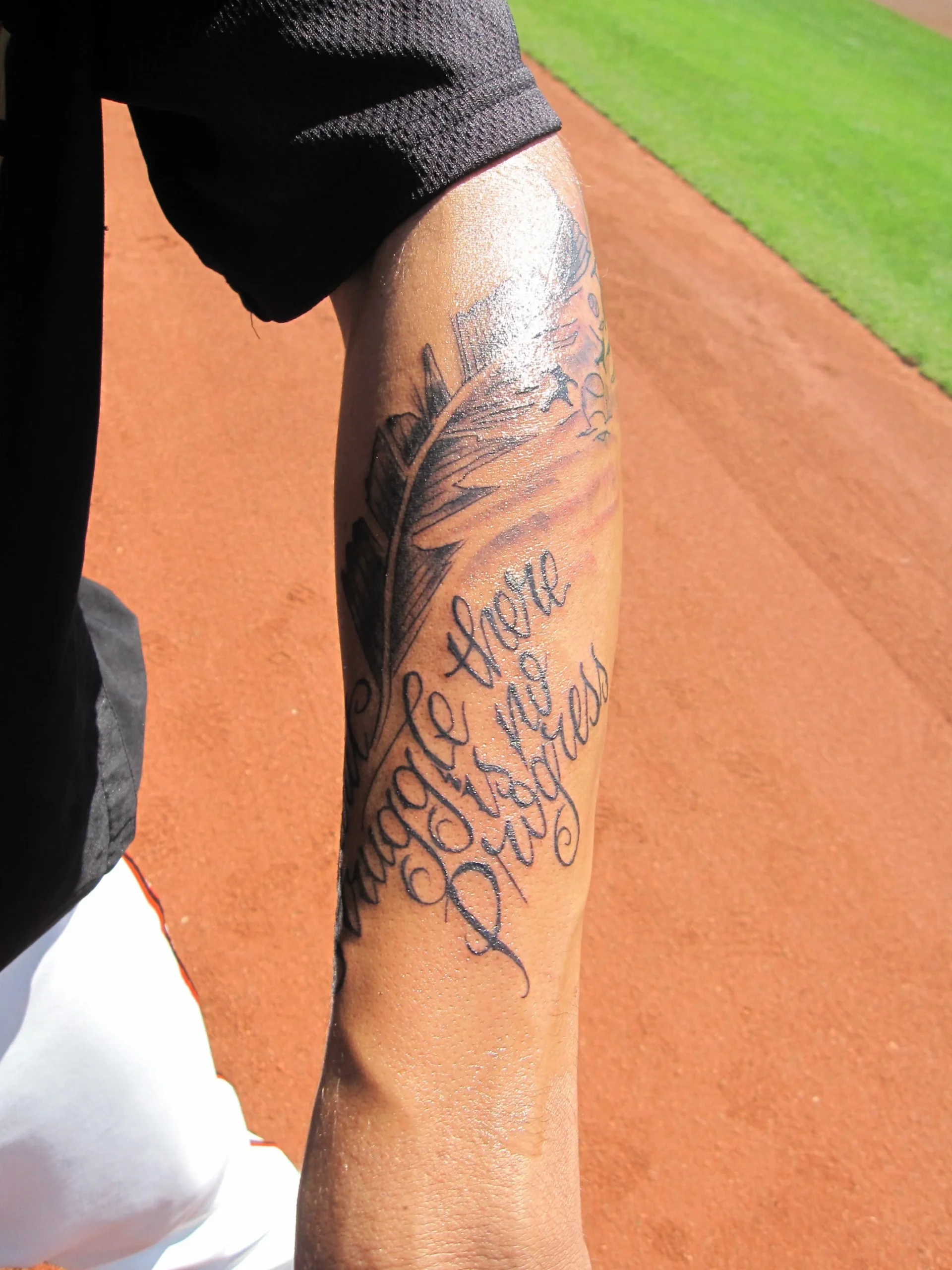
The script on Romo’s left forearm reads “Without struggle there is no progress.” Star Tribune reporting says he used it as a private reminder when a game grew tense. He described looking at the words on the mound and remembering that he had already made it through earlier struggles; fear didn’t have to decide his next pitch.

Some reports connect the phrase to Frederick Douglass, but they don’t establish that Romo chose it as a formal quotation. What he has explained is its personal use: a reminder that hardship can lead to growth. The cursive lettering runs along the forearm, where it can face him in his pitching stance.

The “Live free” lettering beneath his right ear

Sergio Romo tattoos: inline tattoo evidence

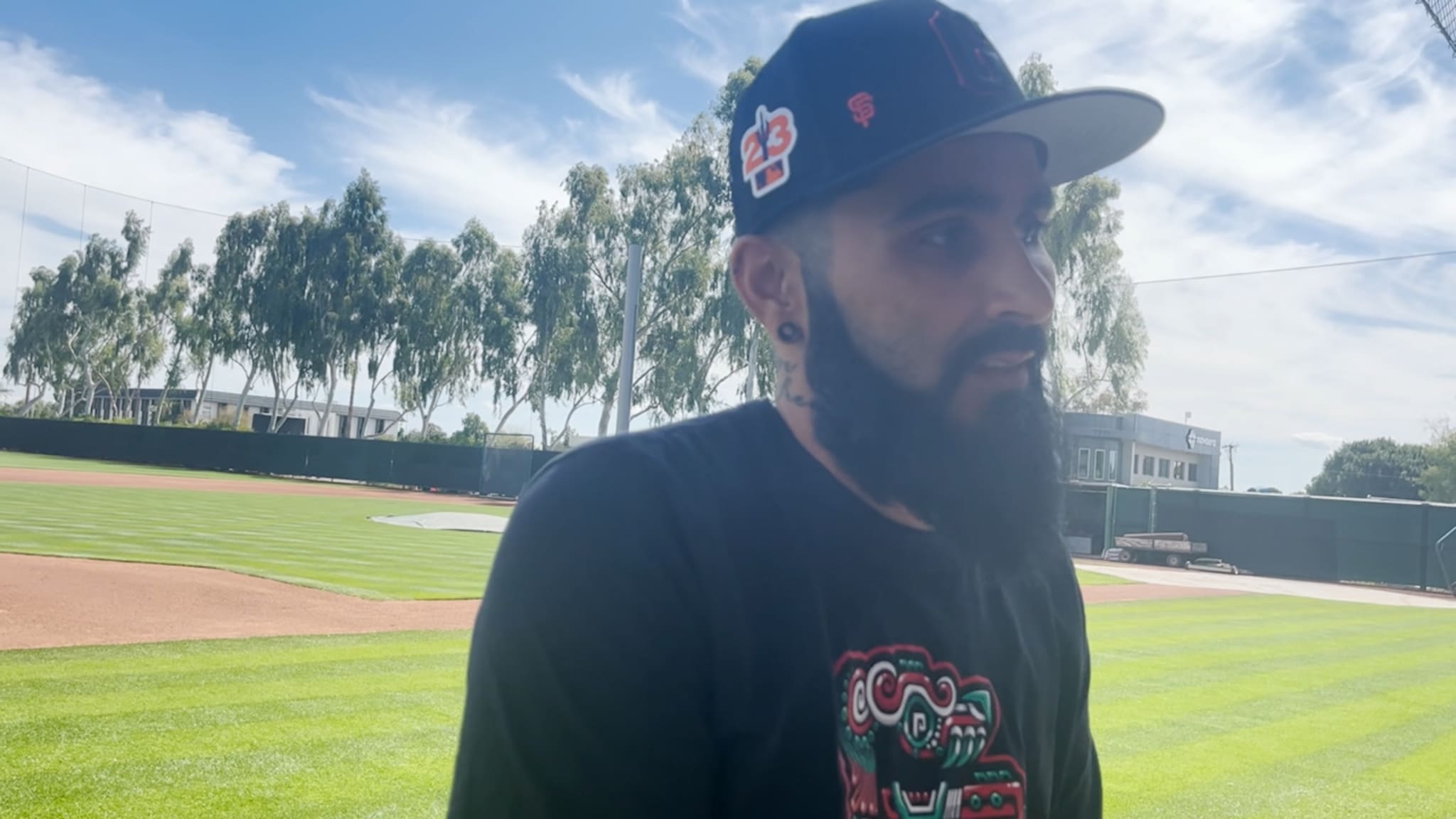
“Live free” sits on the right side of Romo’s neck, beneath his ear and partly framed by his beard. In a Star Tribune interview, he said the words reflect wanting to be himself without giving anxiety, stress or other people’s judgment too much control. The compact lettering is easy to see in close portraits, but its meaning comes from that explanation.

The demon and monster faces on the right arm

Sergio Romo tattoos: inline tattoo evidence

A Tampa Bay media guide describes the figures on Romo’s right bicep as different sides of his personality. The largest is his “inner demon”; a melting face is associated with fear and the risk of letting life pass without purpose. Romo has also linked the demon to how people described his intensity on the mound.

The black-and-grey faces sit among smaller lettering, ornamental shapes and shaded forms. The guide explains several of the central images, but it doesn’t assign a meaning to every mark. The right arm reads as a group of moods and fears, not one figure with a single story.

The tattooed arms and torso shown in Romo’s photographs

Sergio Romo tattoos: inline tattoo evidence

Romo’s back carries a large design that joins the American and Mexican flags. He has spoken about being born in the United States to Mexican parents and feeling connected to both backgrounds. He also played for Team Mexico in international competition, so the flags sit alongside a public part of his baseball history.

The joined flags cover a broad area of the back, unlike the shorter phrases on his forearm and neck. Photos don’t always show the full design, but reporting identifies the two flags as the central image. The available accounts support the heritage connection without explaining every detail in the composition.

The forearm script and layered arm work

Sergio Romo tattoos: inline tattoo evidence

Close photographs show the forearm script among dense linework, shaded figures and smaller marks. Romo has also described a Sistine Chapel image with a sunset on his torso, linking it to the thought that “love is worth fighting for.” That explanation gives the scene a meaning he has stated himself; the surrounding photographs show its placement and visual contrast with the darker arm designs.

The people and ideas repeated in the artwork

The tattoos Romo has explained return to pressure, freedom, identity and fear. The forearm phrase is a reminder during games; “Live free” reflects how he wants to handle anxiety and judgment; the right-arm faces represent parts of his personality; and the joined flags reflect his Mexican American background. He connected the chapel scene with love worth fighting for.

His collection also includes smaller work that sources describe without a confirmed meaning. Romo’s comments are the clearest guide to the pieces above, while photos establish where the ink sits and what is visible.

How the separate pieces are organized

The short phrases sit on the left forearm and beneath the right ear. The demon and monster faces cover part of the right arm; the joined flags spread across the back, and the Sistine Chapel scene uses the torso. Each location gives the lettering or image a different scale.

No single photograph shows the full collection. A close arm image reveals script and linework but leaves out the back; portraits can show the neck and arms while the torso is covered. The published record is strongest on Romo’s own explanations and the visible placement of the designs.

Tyson Pedro Tattoos: Samoan Tatau, Memorial Ink and Fighter’s Wrist Phrases

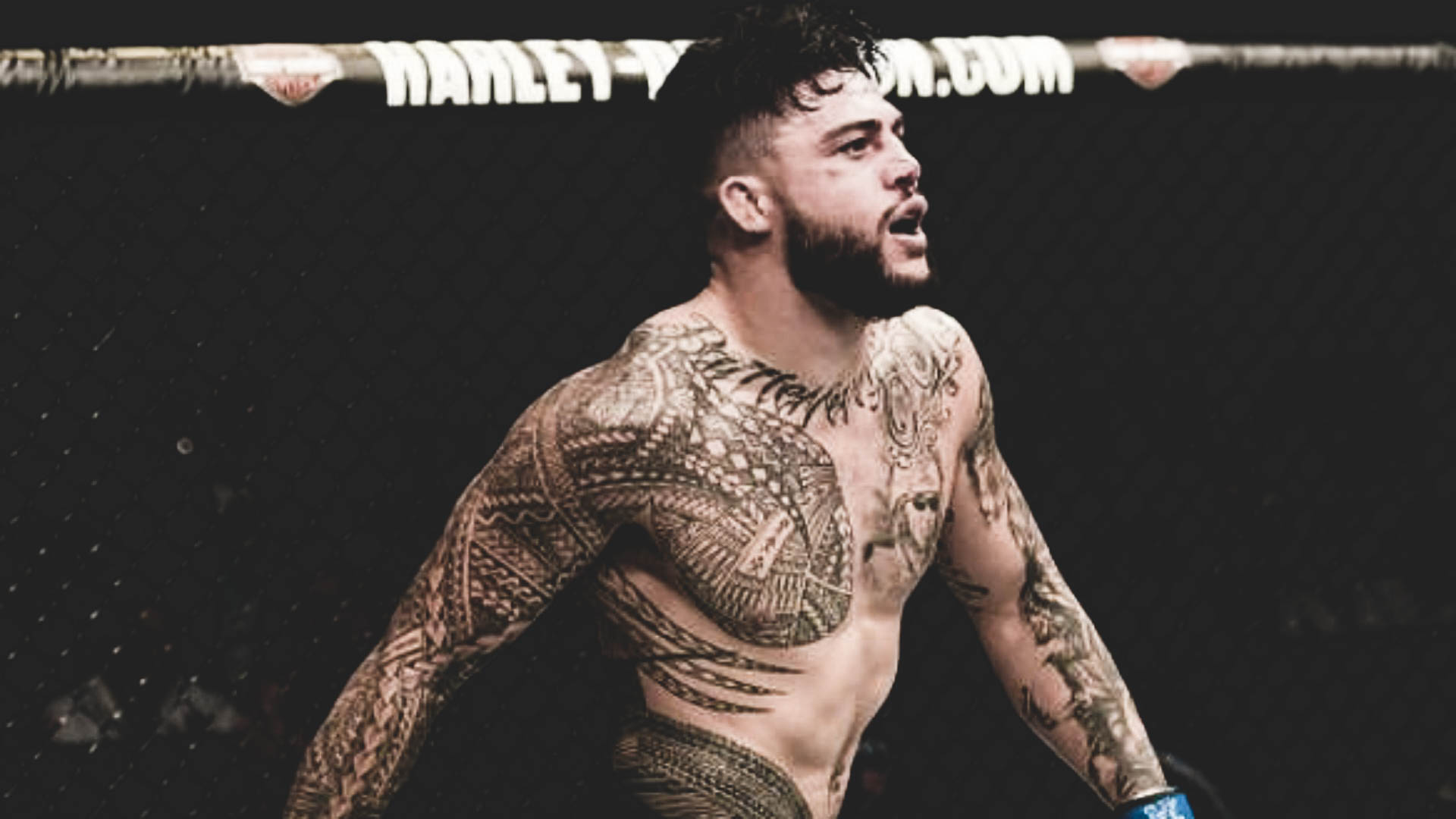
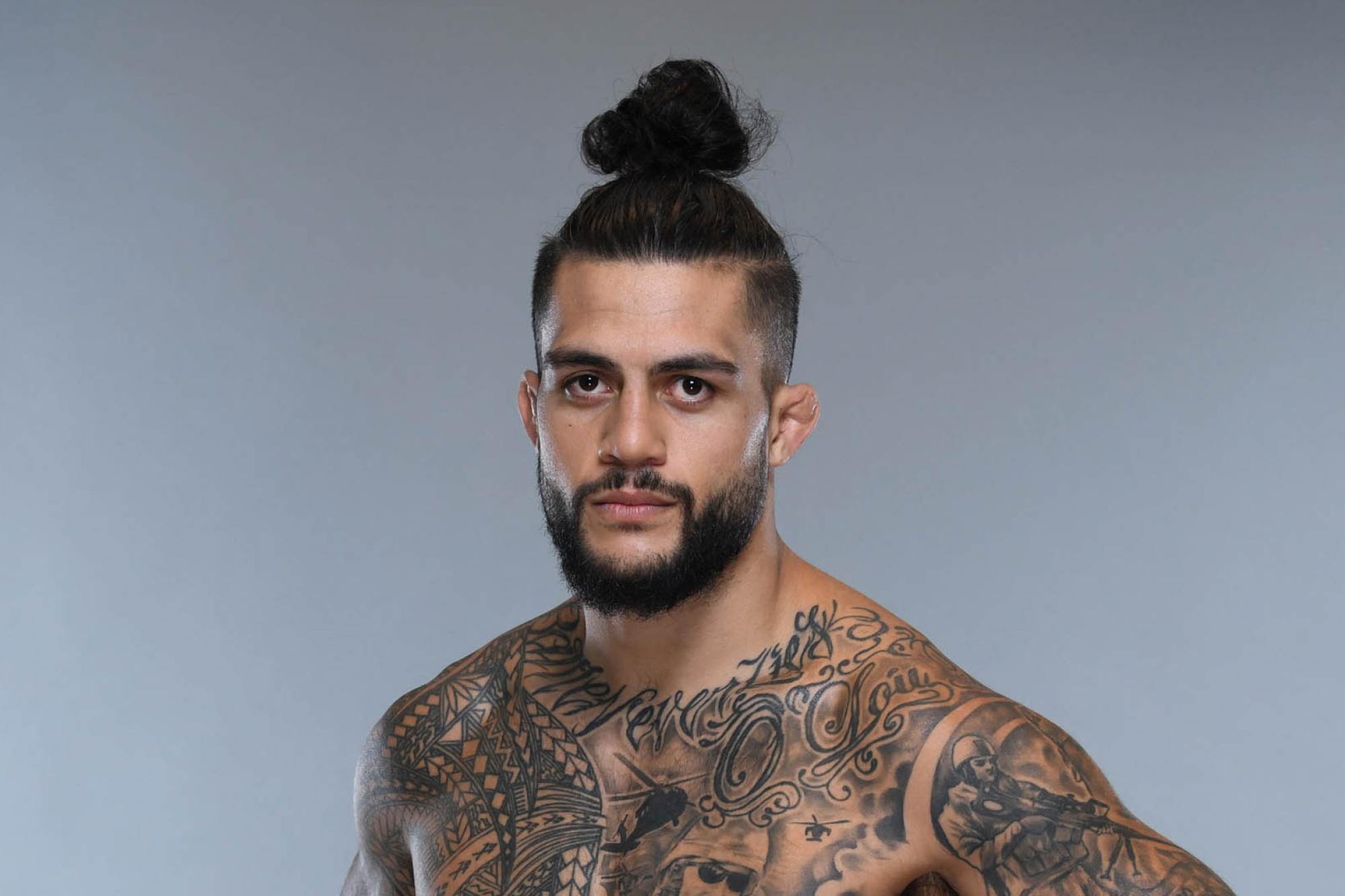
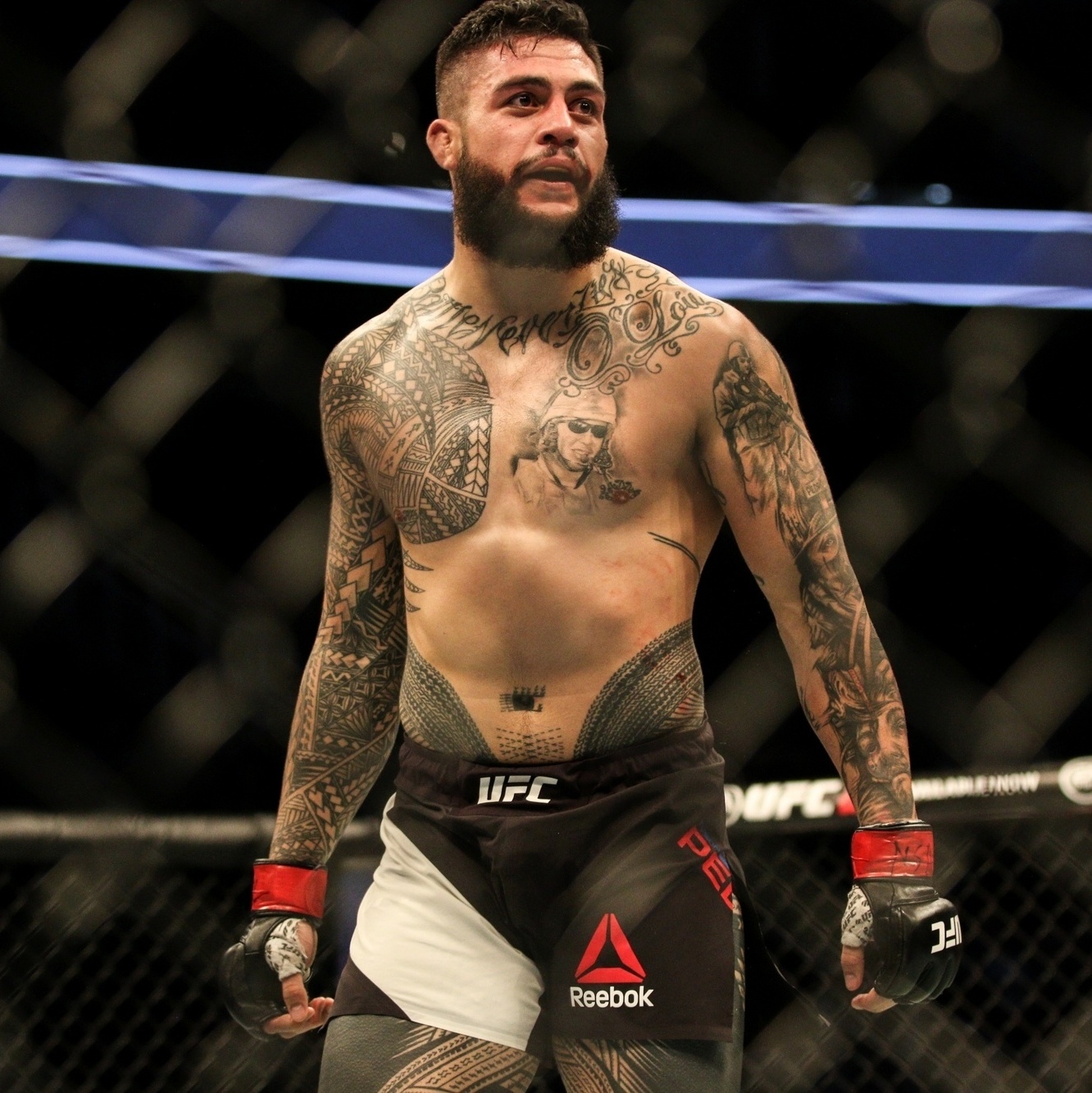
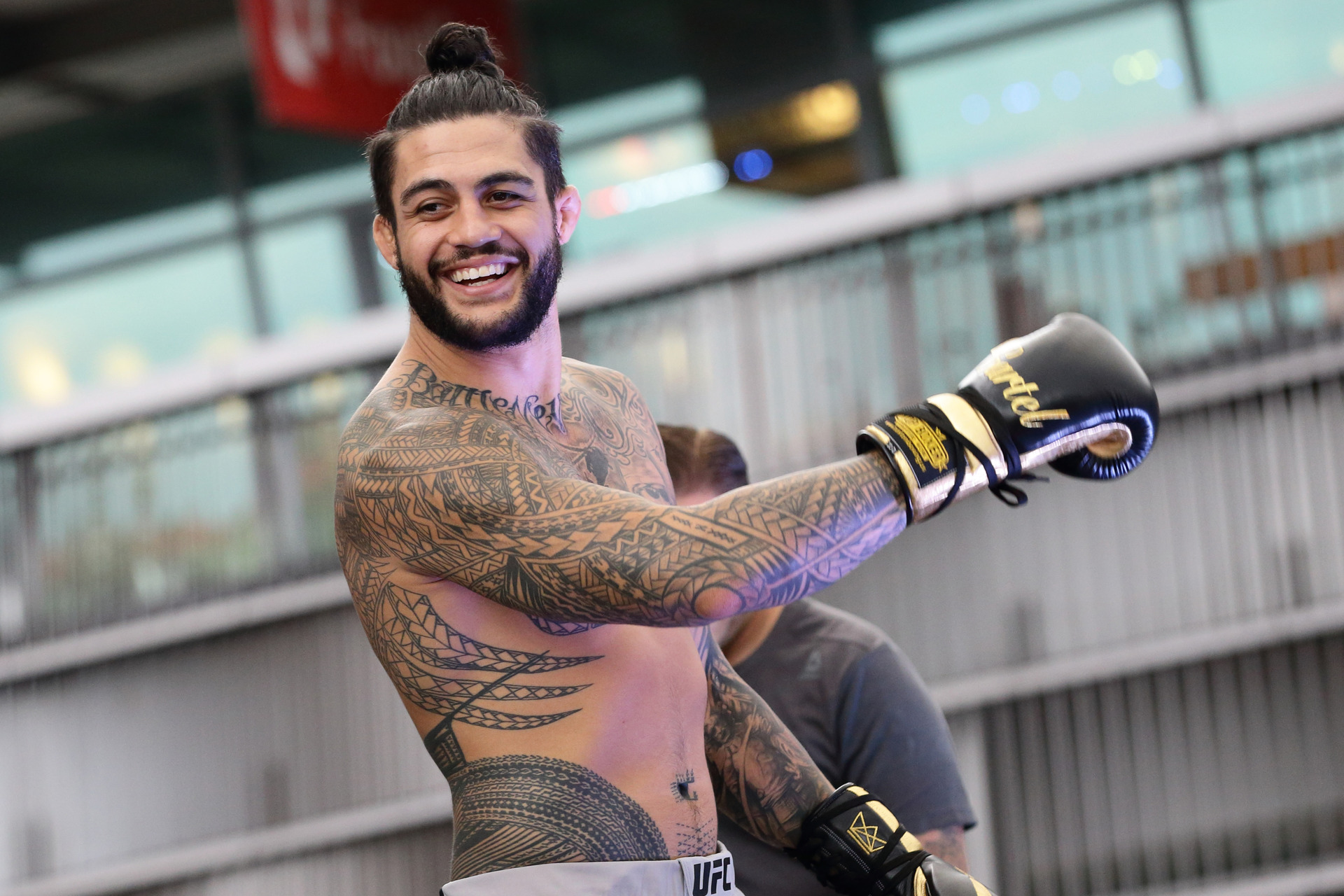
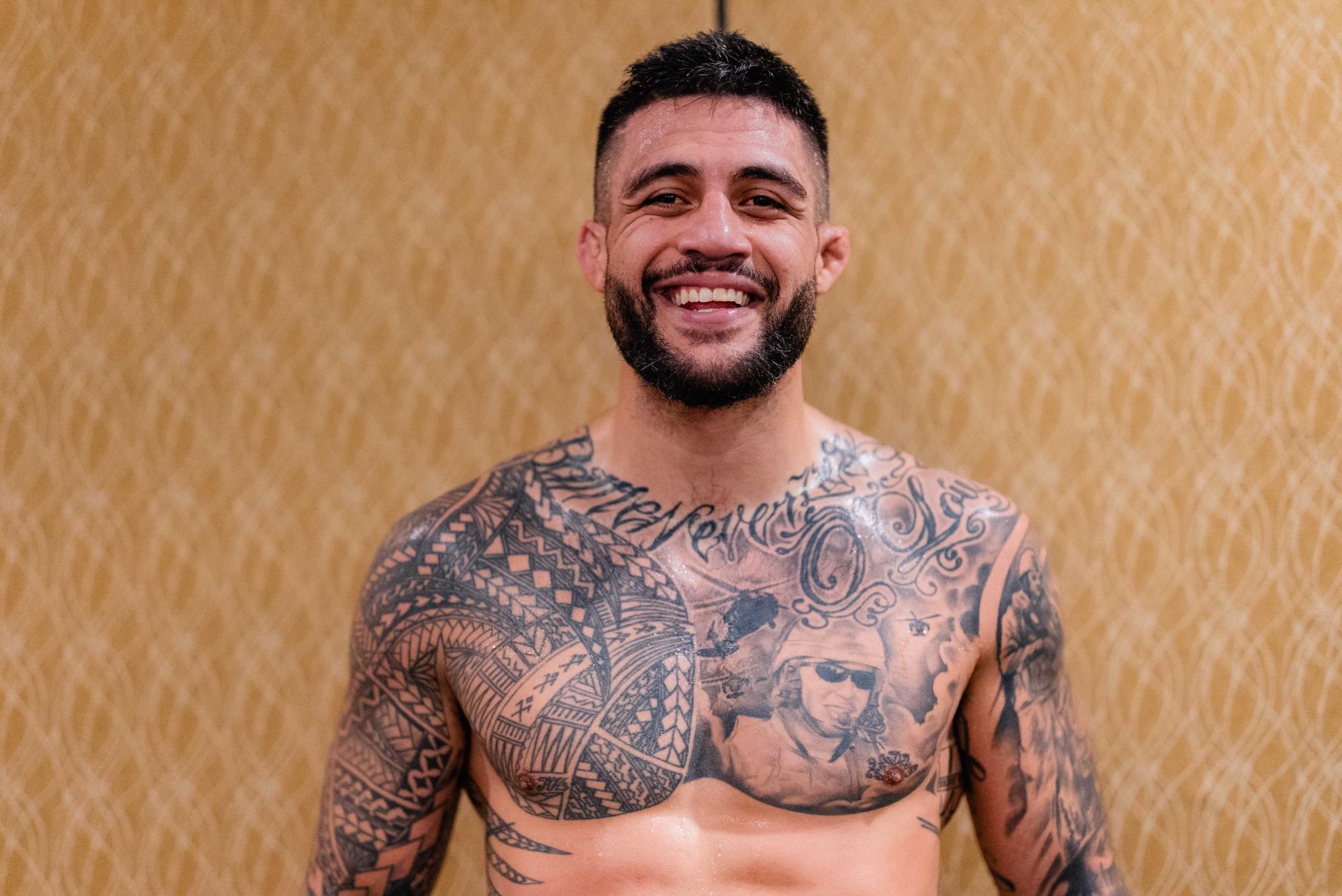
Tyson Pedro’s tattoos stretch from his chest and shoulders to his arms and legs, pairing Samoan tatau with script, portraits and smaller marks. In a Sporting News interview before UFC Singapore, he explained how several pieces connect to his father and family.

Tyson Pedro’s wrist phrases hold his training mindset

Tyson Pedro tattoos: Action photograph showing Pedro’s tattooed chest, shoulders and arms during competition.

One wrist reads “odds against me”; the other says “I can’t break me.” Pedro has described the phrases as reminders for the pressure of fighting and training. They’re short, direct lines, placed where he can see them when he works.

The shoulder lettering begins with Pedro’s father

Tyson Pedro tattoos: Official UFC portrait showing the shoulder lettering, chest script and upper-body tattoo layout.

Pedro got his first tattoo at 16: the Samoan phrase o lo’u toa tama across his shoulder. Sporting News translates it as “my father is a warrior.” The wording makes the piece a tribute to his father and an early marker of the family history that runs through the rest of his tattoos.

BHS records the beginning of his amateur fight life

Tyson Pedro tattoos: Octagon photograph showing the full chest, arms, waist and upper leg tattoo coverage.

Pedro has explained that BHS stands for Blacktown Hit Squad, a name tied to his first amateur boxing fight. The initials mark an early point in his fighting life, distinct from the family lettering and larger cultural work elsewhere on his body.

The full-arm tatau carries Samoan family history

Tyson Pedro tattoos: Training photograph showing the geometric tatau wrapping across Pedro’s arm, side and torso.

The extensive Samoan tatau across Pedro’s right arm and body was done with his father. Sporting News describes the pe’a on his legs as one of the highest honors in Samoan culture. His father was born in Samoa and later lived in Australia, and Pedro has spoken about the tattoos as part of that family heritage.

The geometric bands wrap around his arm, side and waist, so the pattern changes as he turns. A NZ Herald training photograph shows that continuation from the side; a straight-on view can make the work look flatter than it is.

The cousin tribute is built into the wider body of ink

Tyson Pedro tattoos: Training portrait showing Pedro’s central chest portrait, family-related script and surrounding geometric work.

Pedro has said that three images in his collection represent a cousin who died while serving in Afghanistan. Family names run down the right side of his back, and he has also linked some of his ink to his sisters. The central chest portrait is clearly visible, but photographs don’t establish whether it is one of those three images or identify the person shown.

Pedro also has a tattooed wedding ring, which he connects to his marriage. It sits within the wider family story of the collection, but its meaning is separate from the cousin tribute.

A layered visual rhythm runs through the collection

The chest brings portraits, script and geometric work into one space. Curved lettering crosses the upper chest, while the central portrait sits against sharper bands and patterns that extend toward the shoulders and arms. Pedro has described Japanese imagery on his left side, connected to martial arts and his father, and Samoan work on his right.

The broad black patterns create a steady rhythm around the arms and torso. Curved lettering and a portrait break up that geometry across the chest, shifting the layout from repeated lines to more personal images and text.

The parts of the collection that photographs cannot settle

Pedro’s interviews give specific meanings for the wrist phrases, the shoulder lettering, BHS and the family tributes. The upper-chest script and individual shapes inside the geometric patterns are harder to read or interpret from the available images. He hasn’t publicly assigned a meaning to every mark, so those details are best left open.

Why the pieces remain connected

Pedro’s tattoos connect family and Samoan heritage with the milestones of a fighting career. The broad tatau gives the collection its visual structure; short phrases, initials and names point to particular people and moments. His own explanations make those links clear, while the rest of the design can speak for itself.

Declan Rice Tattoos: Jude, 1241, Family Lettering and Career Numbers

Photos show a handful of Declan Rice’s tattoos: forearm lettering, a tribute to his son Jude, and numbers on his leg and near his knee. The clearest designs connect to family and football, though the available images do not show his full collection.

Declan Rice’s photographed collection

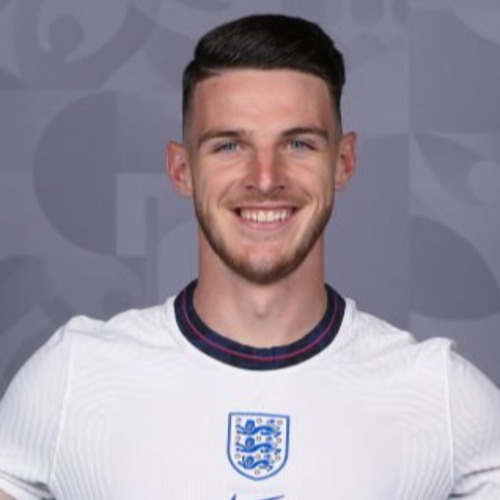
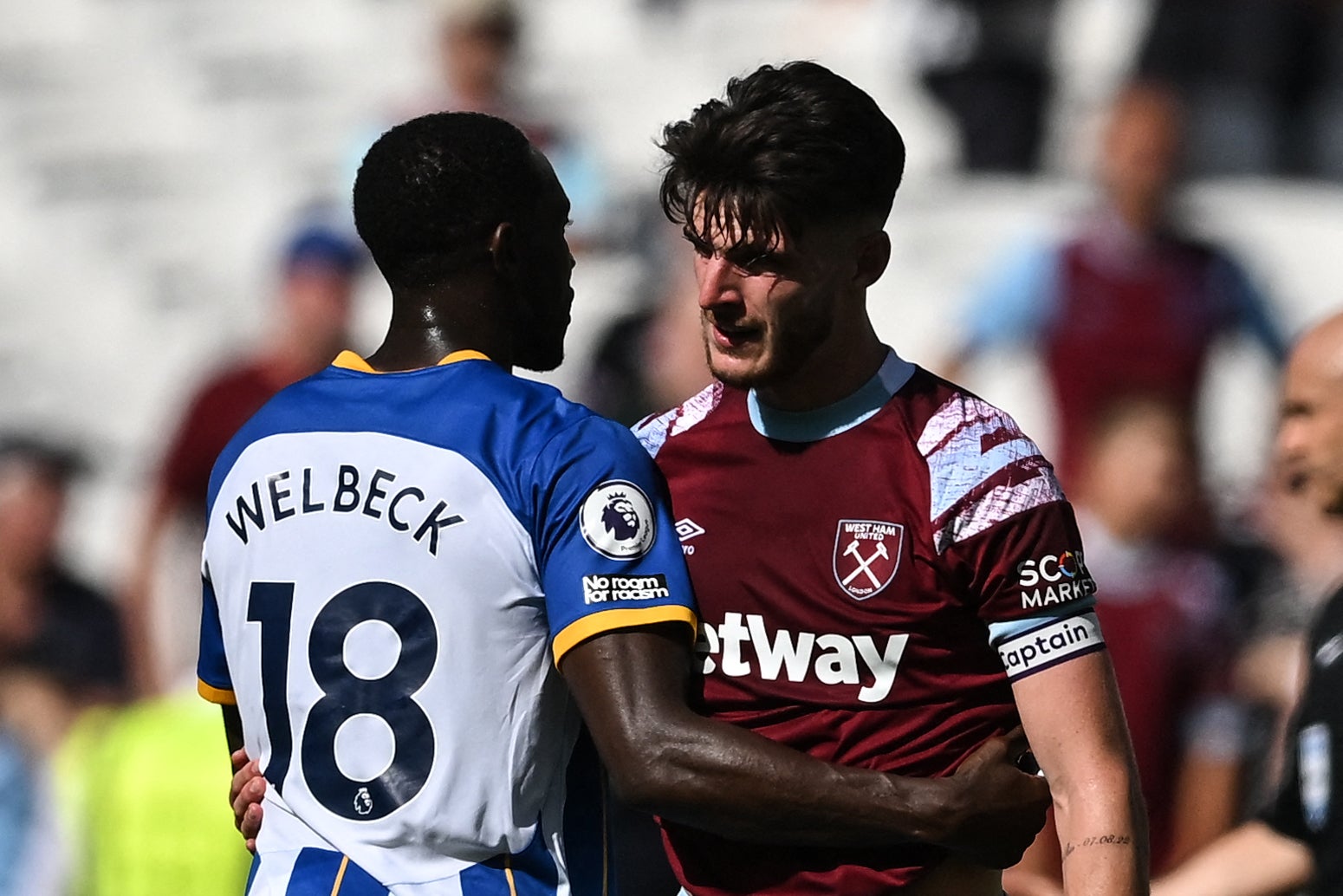
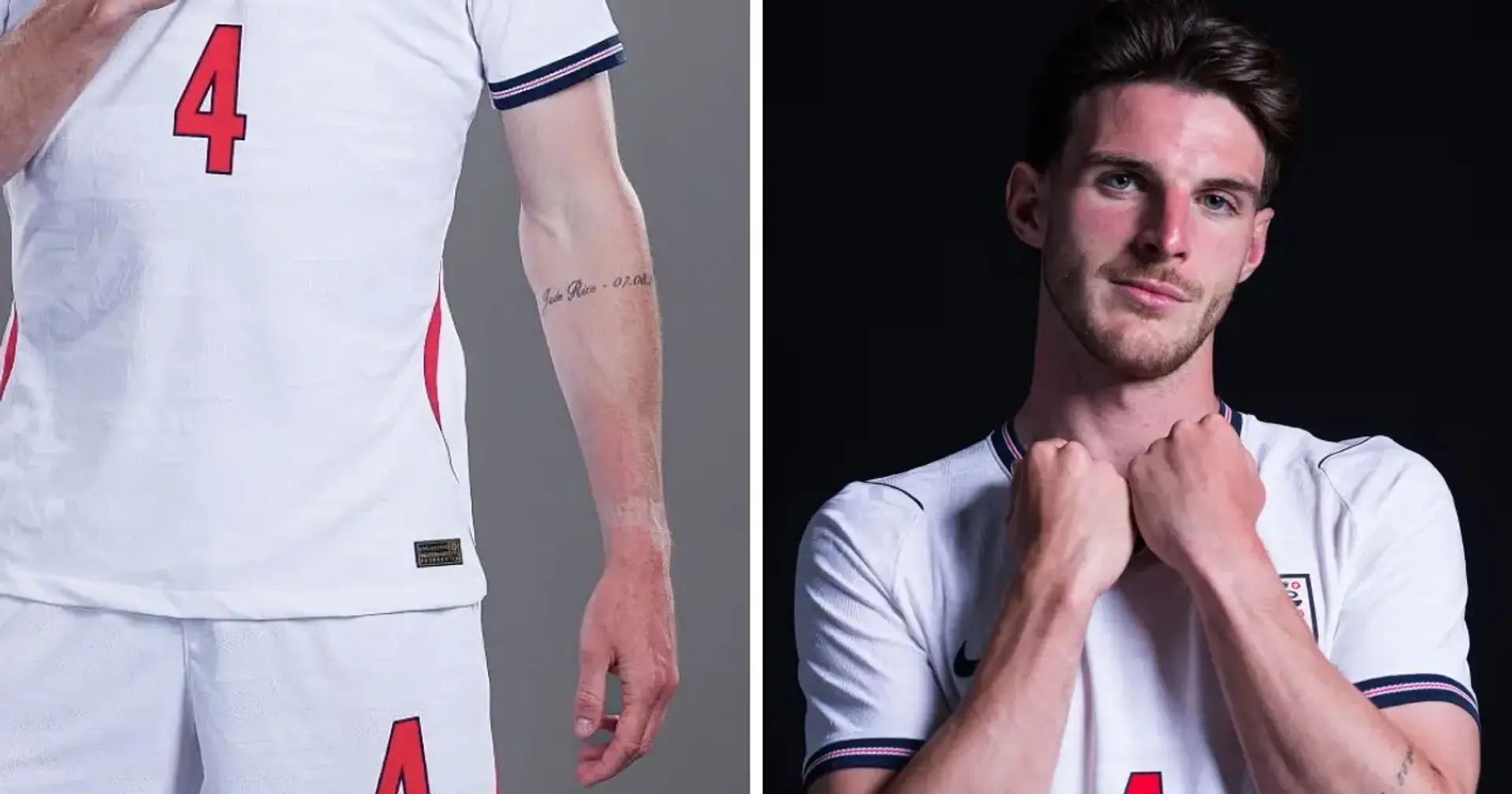
Different photos show different placements: a match shot catches the Jude tribute, an England training image enlarges the 1241 leg tattoo, and a portrait in an England shirt makes the John Rice inscription readable. Other images show “Nothing Else Matters” and Rice holding Jude. They document the visible pieces, not a full catalogue.

The Jude name and birth-date tattoo

Declan Rice tattoos: Jude name and birth-date forearm tattoo

The Independent identifies the fine script on Rice’s lower left forearm as his son Jude’s name, the date 07.08.22 and a Leo symbol for his August birth. In the match photo, the date sits left of the name with a centered dot between them, against Rice’s claret-and-blue shirt. He revealed the tattoo after Jude was born in August 2022; the report describes it as a tribute.

The Nothing Else Matters forearm script

Declan Rice tattoos: Nothing Else Matters forearm script

A close forearm photo shows “Nothing Else Matters” in dark, elongated cursive. It is separate from the Jude name-and-date piece, though both are on the arm. Available reporting does not explain why Rice chose the phrase, so a family, anniversary or musical connection would be guesswork.

The John Rice – 07.02 inscription

Declan Rice tattoos: John Rice - 07.02 forearm inscription

A portrait in a white England shirt shows “John Rice – 07.02” in smaller lettering on Rice’s forearm. Public coverage identifies John Rice as a family reference, but the image does not explain what the date-like number sequence refers to. It is a short line, separate from the longer Nothing Else Matters script.

The 1241 legacy number on his leg

Declan Rice tattoos: Legacy 1241 lower-leg tattoo

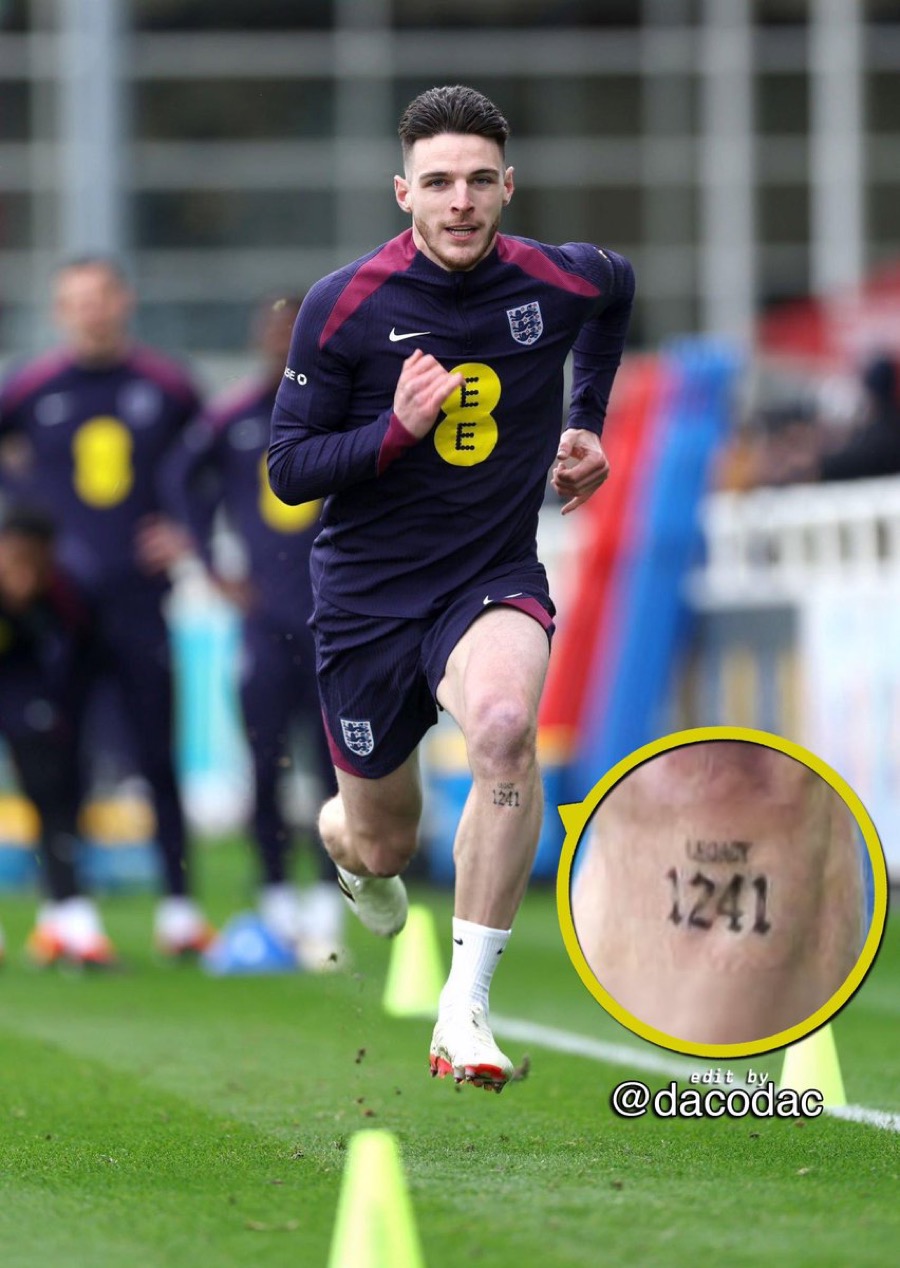
An England training photo shows “legacy” above “1241” on Rice’s lower leg; a circular inset makes the compact mark easier to read. Reports identify 1241 as his official England player legacy number. The image catches the tattoo as his leg bends during an agility drill, but does not show every design on his leg.

The forearm tattoo in public family photographs

Declan Rice tattoos: Jude tribute in a family photograph

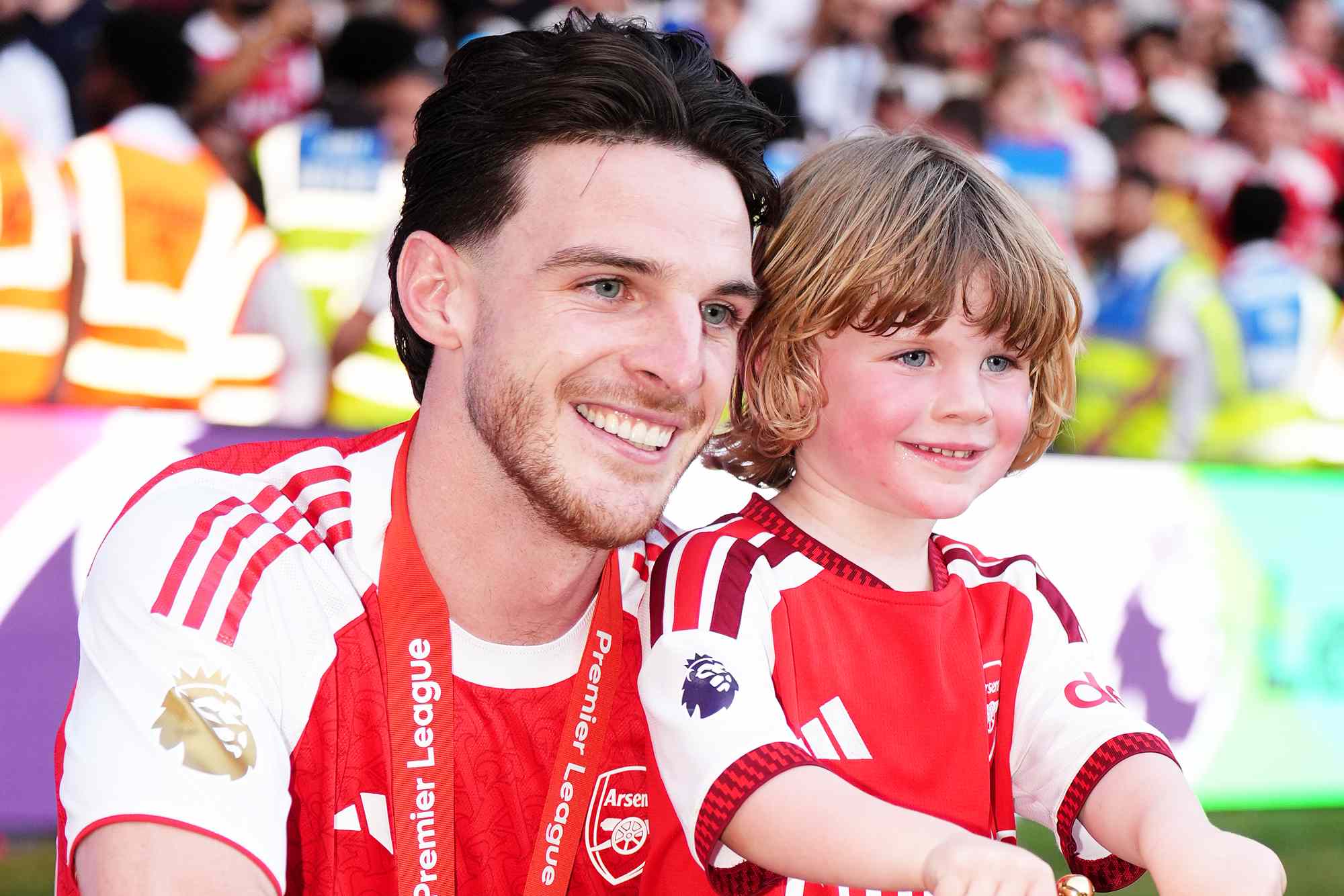
A photo of Rice holding Jude shows the tattooed forearm from another angle. His arm is bent toward the camera, so the lettering is softer than in the close match image. It shows the same tribute in a family setting, not a different tattoo.

Rice’s changing public timeline

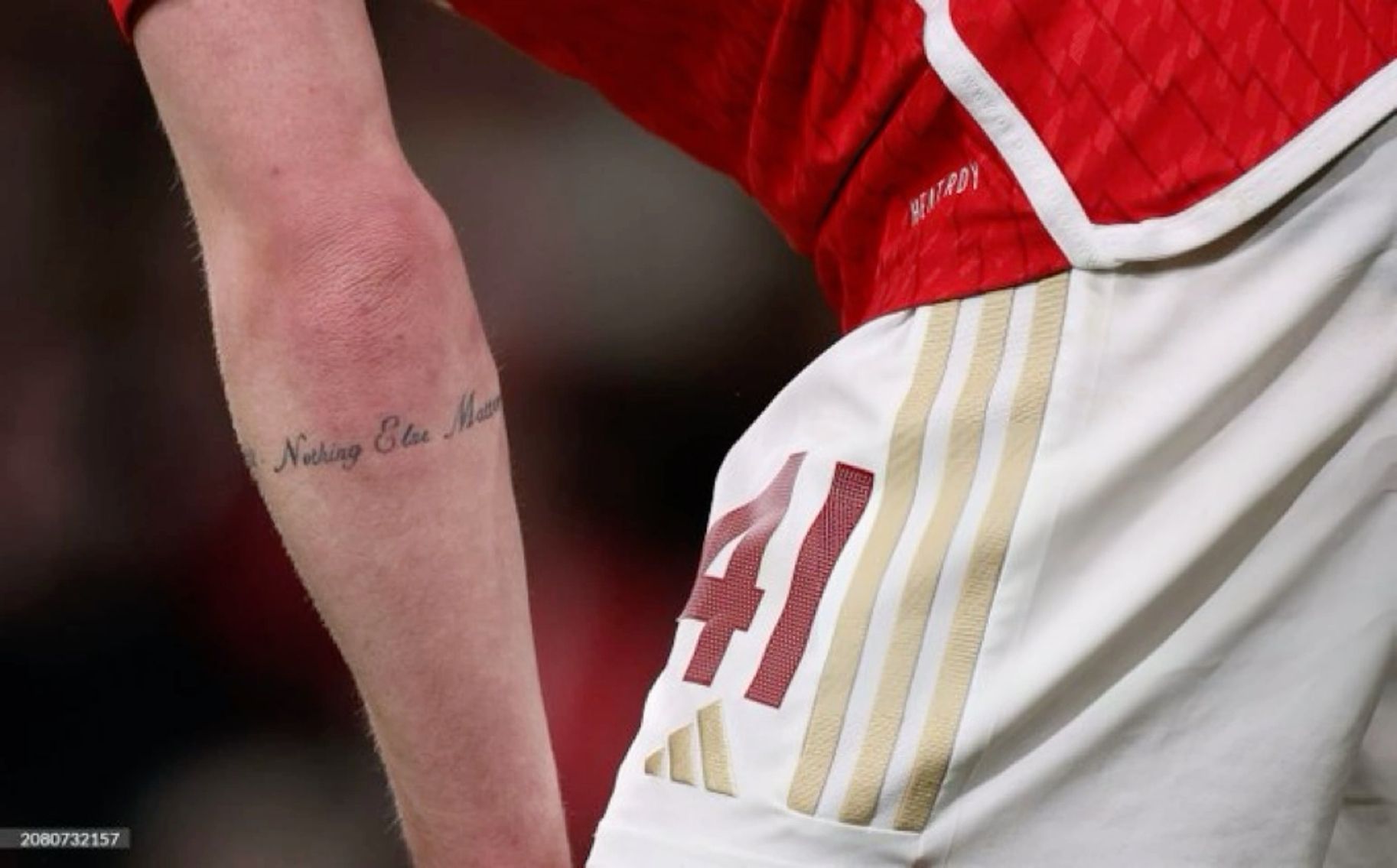
Recent football coverage reports a number 41 tattoo near Rice’s knee and links it to his squad number. That is different from 1241, which reports identify as his England legacy number. The close images here show 1241 but not the knee tattoo, so its font and surrounding details are not documented.

The report places the 41 tattoo in Rice’s Arsenal years, after earlier photos had shown family lettering and the Jude tribute. It adds a club-career mark to the public timeline, though the available evidence gives little detail about the design.

Family and football milestones

The tattoos documented here sit between family reminders and football markers. Names and a birth date make some pieces personal; 1241 and 41 tie others to Rice’s England and club careers. “Nothing Else Matters” stands apart because the sources do not explain what the phrase means to him.

What the public images show

The images provide direct views of the forearm lettering and 1241 on the lower leg; the photo with Jude gives a second angle on the tribute. The 41 knee tattoo is described in football coverage, not shown in these close-ups. Nothing here confirms what may be covered by clothing.

George Kittle Tattoos: Sauron, Joker, Venom, and His Good-Guy Arm

George Kittle’s tattoos span both arms and his hands, mixing characters from comics, films and games with smaller personal references. Interviews, 49ers coverage and photographs document several designs as the collection has grown.

George Kittle’s Sauron shoulder tattoo

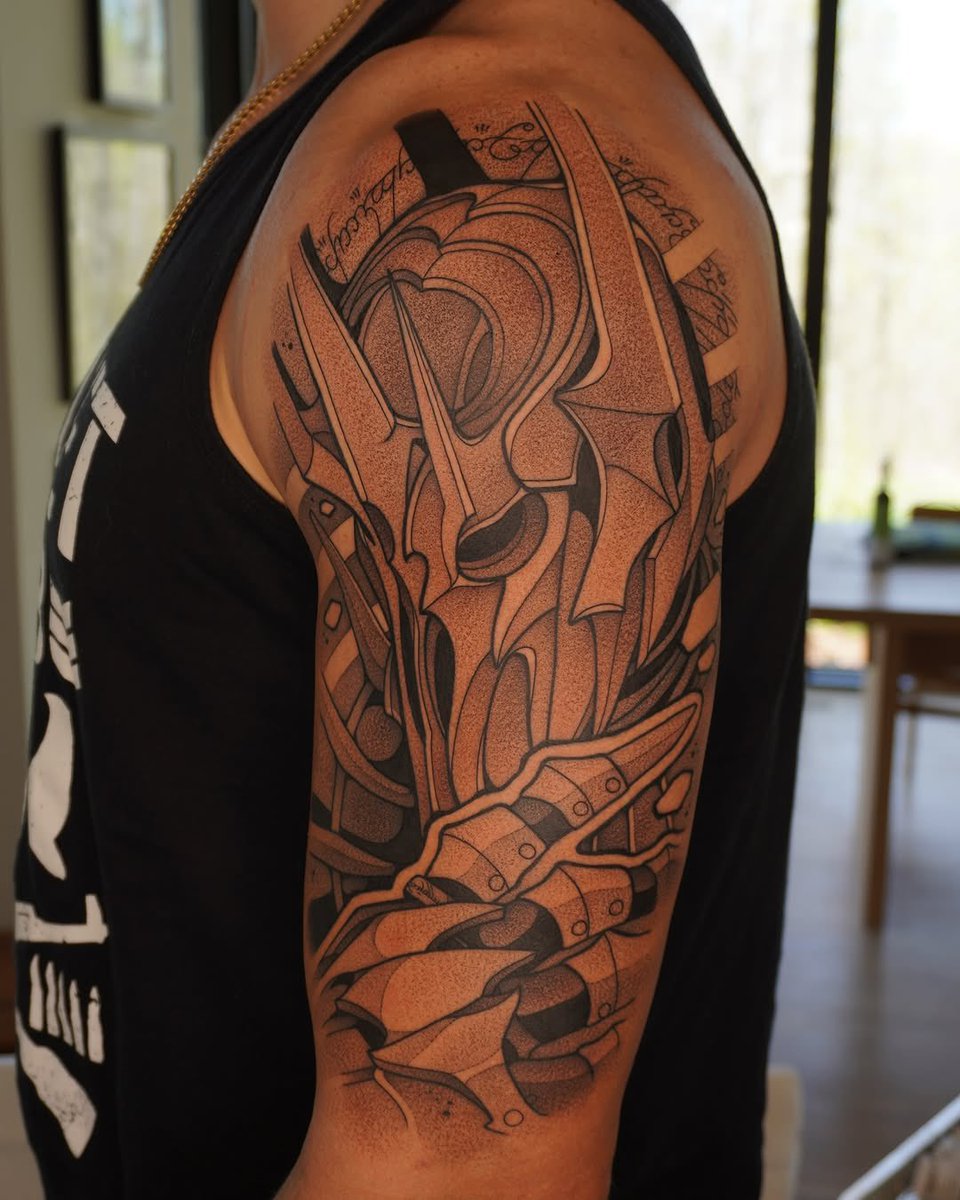
Little Village credited Kodi Ellis with the large Sauron piece on Kittle’s outer shoulder and upper arm. Its photograph shows dense black-and-gray work built around the character’s helmet and armor.

Little Village places Sauron on Kittle’s “bad-guy arm,” alongside other villain references. The image covers a broad area of the shoulder and continues down the upper arm.

George Kittle tattoos: close photograph of the Sauron figure and shoulder composition

The Joker on George Kittle’s left forearm

Sporting News reported that Kittle’s left-forearm Joker tattoo was inspired by Heath Ledger’s version of the character in The Dark Knight. It is one of the earliest and most often documented pieces in the collection.

Yahoo Sports has also noted a reset-button tattoo on Kittle’s forearm. The report identifies the design but gives no further explanation of its meaning.

George Kittle tattoos: training photograph showing the visible forearm tattoo collection

Venom and the Matrix rain on the forearm

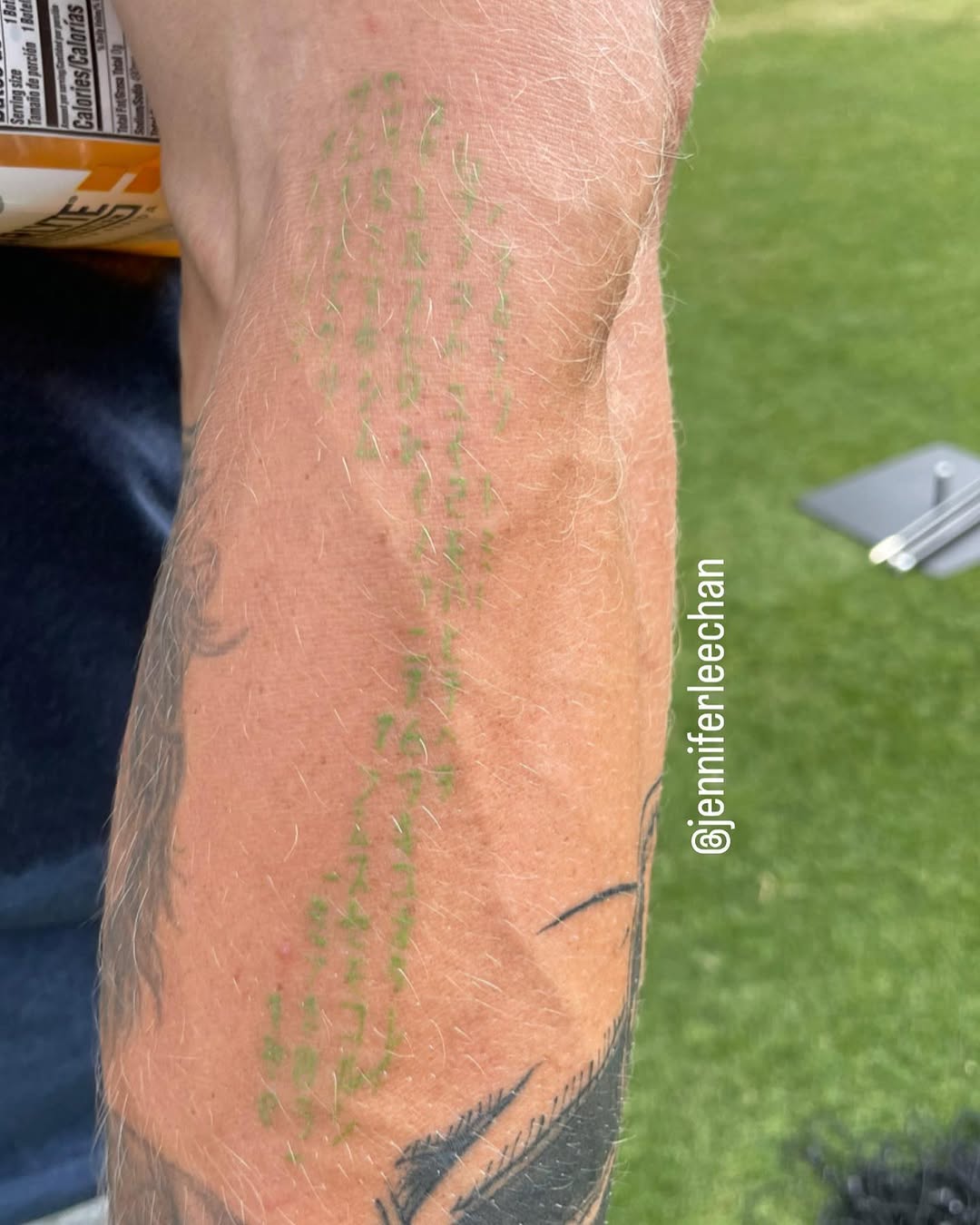
Venom appears among the villain designs Kittle has discussed. A nearby Matrix reference uses narrow green, code-like marks running down the forearm.

The photograph shows the contrast between the character image and the repeated lines. Both are part of a layered arm design that has been added to over time.

George Kittle tattoos: close forearm photograph showing the green digital-rain marks

Master Chief and the good-guy arm

Kittle has described the arm with Master Chief from Halo as his good-guy side. The tattoo draws on the game character’s helmet and armor, and Kittle has included it when talking about his gaming interests and favorite designs.

Photos show Master Chief among other pieces on the arm, rather than as a separate full-limb image.

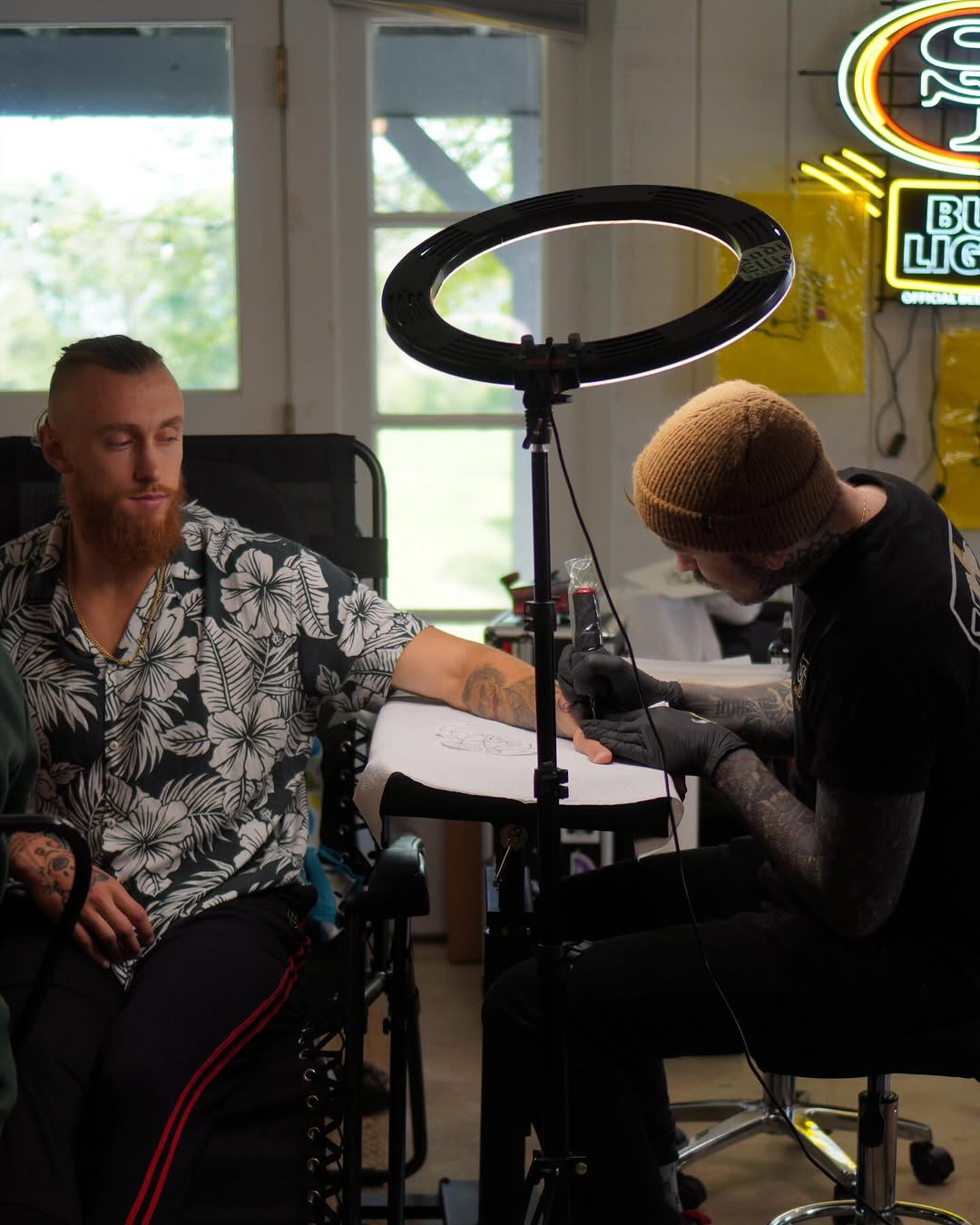
George Kittle tattoos: tattoo session photograph showing the arm work around the hero references

Hobbes, Blue-Eyes, and the hand tattoos

Little Village identified Hobbes from Calvin and Hobbes on Kittle’s right hand and Blue-Eyes Toon Dragon from Yu-Gi-Oh! on his left. The hand placement brings both designs into view in photos of Kittle holding a football.

Godzilla is also named in the reported inventory, though the article’s sources do not specify its placement.

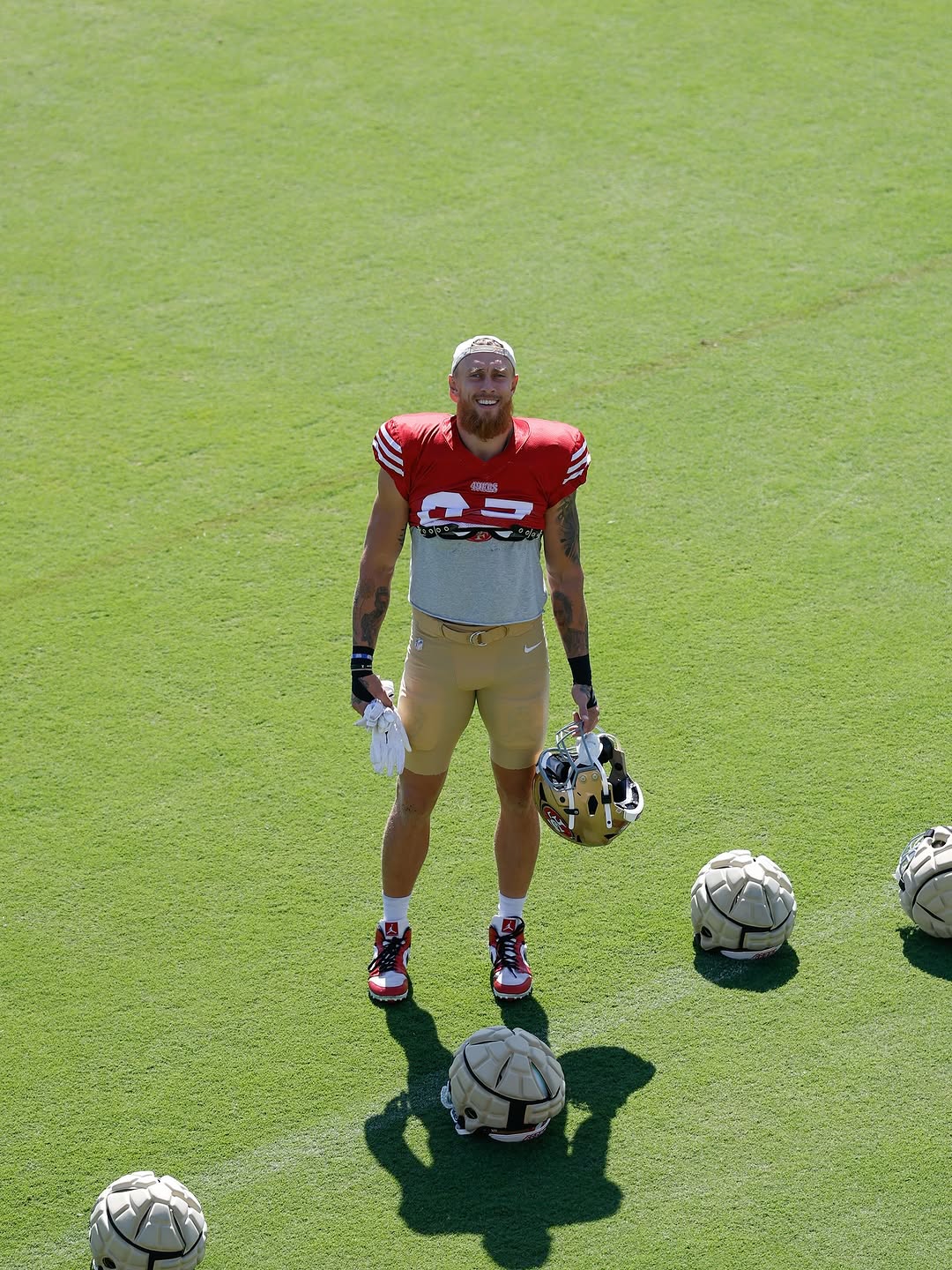
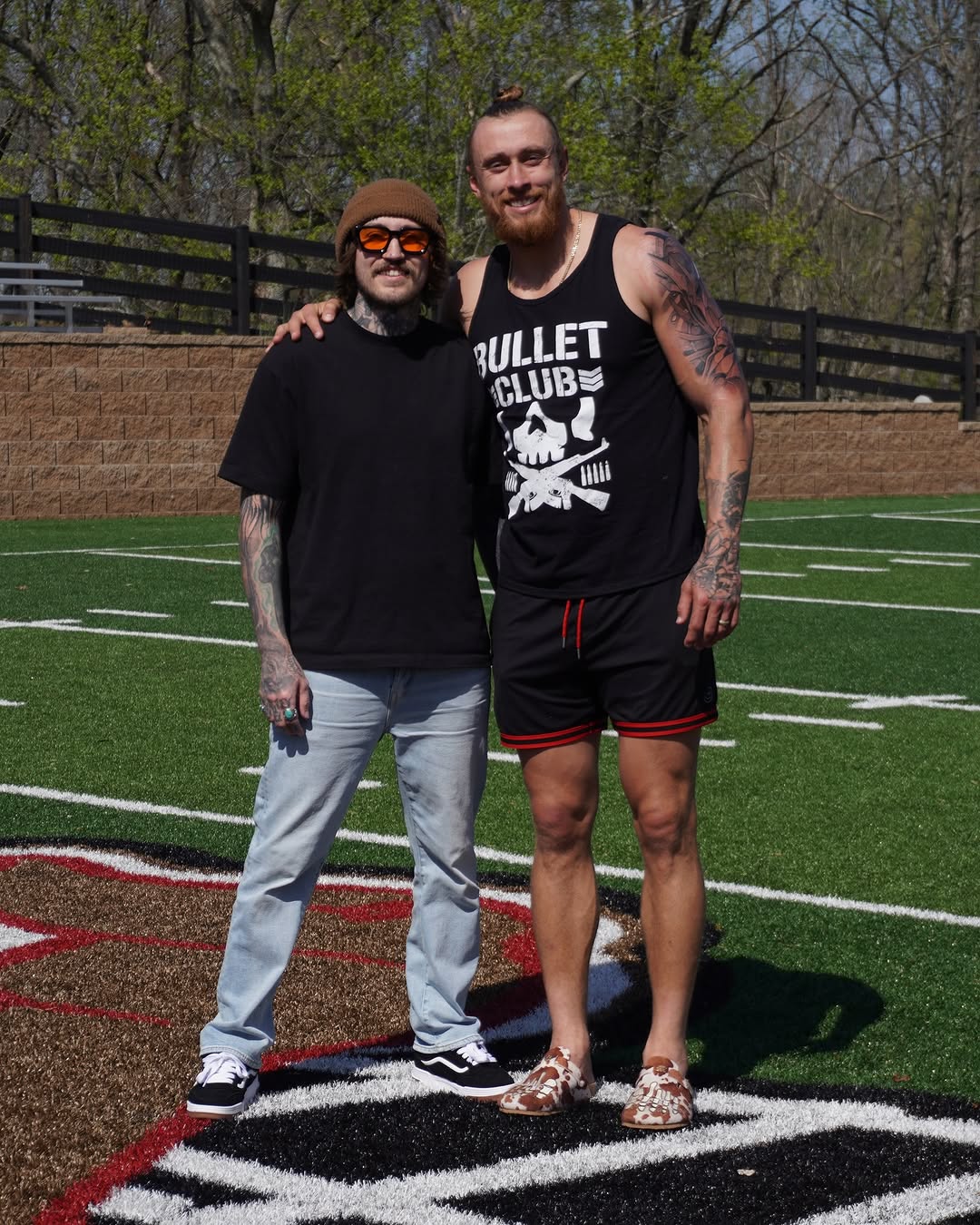
George Kittle tattoos: field photograph showing the arm and hand tattoo coverage

A collection built from games, films, and family

The 49ers video and Kittle’s interviews provide the clearest context for his good-guy and bad-guy arm descriptions. Family and personal history also appear in the wider discussion, though the reports focus mainly on specific designs and placements.

The details that remain visible in public photographs

Practice, game and tattoo-session photos show different parts of Kittle’s arms and hands. Wider shots reveal the overall coverage; close views make details such as the green Matrix marks easier to see.

The featured headshot serves a different purpose from the tattoo photos: it shows Kittle’s face, while the inline images document the ink.

George Kittle discusses his favorite tattoos in the official San Francisco 49ers video below.