George Kittle’s tattoos form a visual record of the stories, games, characters, and people that matter to him. The San Francisco 49ers tight end has described the collection in interviews and in the team’s own video coverage, while later photographs show how much the artwork has expanded across both arms and his hands. The designs are not a single matching sleeve. They are a changing set of black-and-grey and color references that Kittle has grouped around a playful divide between heroes and villains.
That division is one of the clearest ways to understand the collection. The arm carrying villain imagery has included the Joker, Venom, Sauron, and a digital-rain design associated with The Matrix. The other arm has been described as the good-guy side, with Master Chief from Halo among its best-known subjects. Photographs also show Godzilla, Hobbes, Blue-Eyes Toon Dragon, lettering, and smaller pieces that connect the larger characters. Each tattoo is visually distinct, but together they make Kittle’s arms read like a personal archive of pop-culture obsessions.
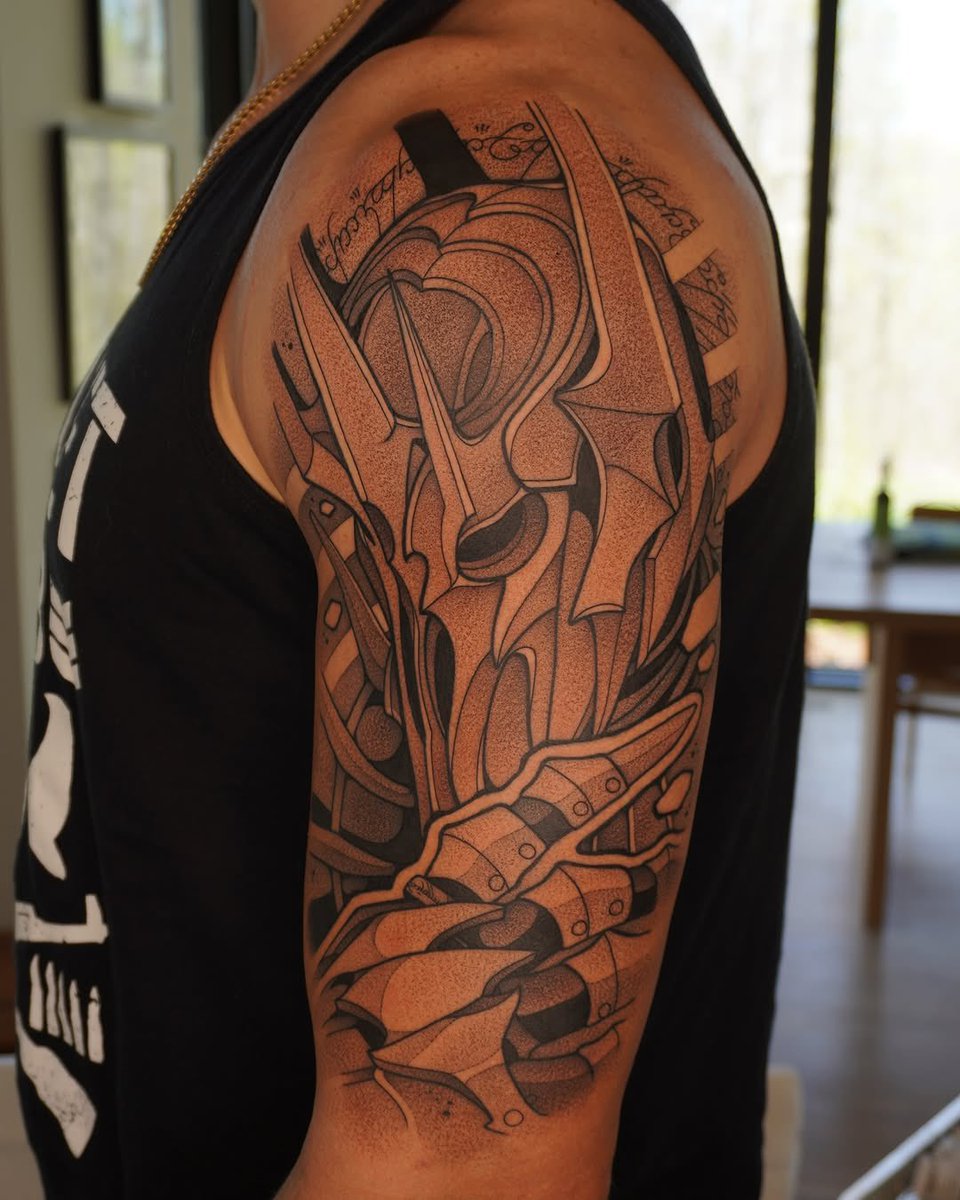
George Kittle’s Sauron shoulder tattoo
The most dramatic recent addition is the large Sauron tattoo on Kittle’s upper arm and shoulder. Little Village identified the piece as a work by Kodi Ellis, and its published photograph shows a dense black-and-grey composition covering the outer shoulder and continuing down the upper arm. The central figure is immediately recognizable as Sauron, with the armor, helmet, and angular silhouette built from heavy outlines, layered shading, and sharp ornamental shapes.
The photograph makes the scale of the piece clear. It is not a small emblem placed by itself on open skin. The design uses the shoulder’s rounded surface as a large field for the character, then carries the image into a connected section of armor and weapon-like forms lower on the arm. Fine lettering and small marks appear around the upper edge, while the darker outlines give the figure a graphic, almost engraved appearance. The shoulder placement also lets the tattoo remain visible when Kittle wears a sleeveless shirt, which is how it appears in several public images.
Little Village described Sauron as part of Kittle’s “bad-guy arm,” a phrase that gives the placement a clear place within the wider collection. The subject sits alongside other antagonists rather than being treated as an isolated fantasy portrait. Its design language is also consistent with the surrounding work: strong black contours, dense interior detail, and a large character silhouette that can be read from a distance before the smaller lines become visible up close.
The Joker on George Kittle’s left forearm
Kittle’s Joker tattoo is one of the earliest and most frequently documented pieces in the collection. Sporting News reported that the image was inspired by Heath Ledger’s version of the character in The Dark Knight. The tattoo sits on the left forearm and has been photographed in football and training settings, where the placement is easy to see between the wrist and elbow.
The Joker matters to Kittle because it represents a character rather than a generic comic-book logo. The reference is specifically tied to Ledger’s performance, so the tattoo carries the visual identity of that film: the disordered hair, theatrical expression, and unsettling presence associated with the 2008 movie. In photographs, the piece reads as part of a larger arm composition instead of a lone flash-style symbol. Other work frames it with additional lines and images, giving the forearm the crowded, collected quality visible throughout Kittle’s tattooed arms.
Yahoo Sports also described a reset-button tattoo on Kittle’s forearm while discussing the way he uses humor and personal references in his artwork. That detail helps explain why the collection mixes famous fictional villains with smaller concepts that have a direct connection to Kittle’s own language. The Joker is instantly legible to anyone familiar with the film, while the neighboring symbols require a closer look at the photographs and interviews.
Venom and the Matrix rain on the forearm
Venom is another major villain reference in Kittle’s collection. The character has been associated with Kittle’s public tattoo story since the 49ers period when he described his favorite pieces and the way his designs were divided between heroes and villains. The Venom work is placed on the arm that carries the darker character references, and later photographs show it as part of a densely layered forearm and lower-arm arrangement.
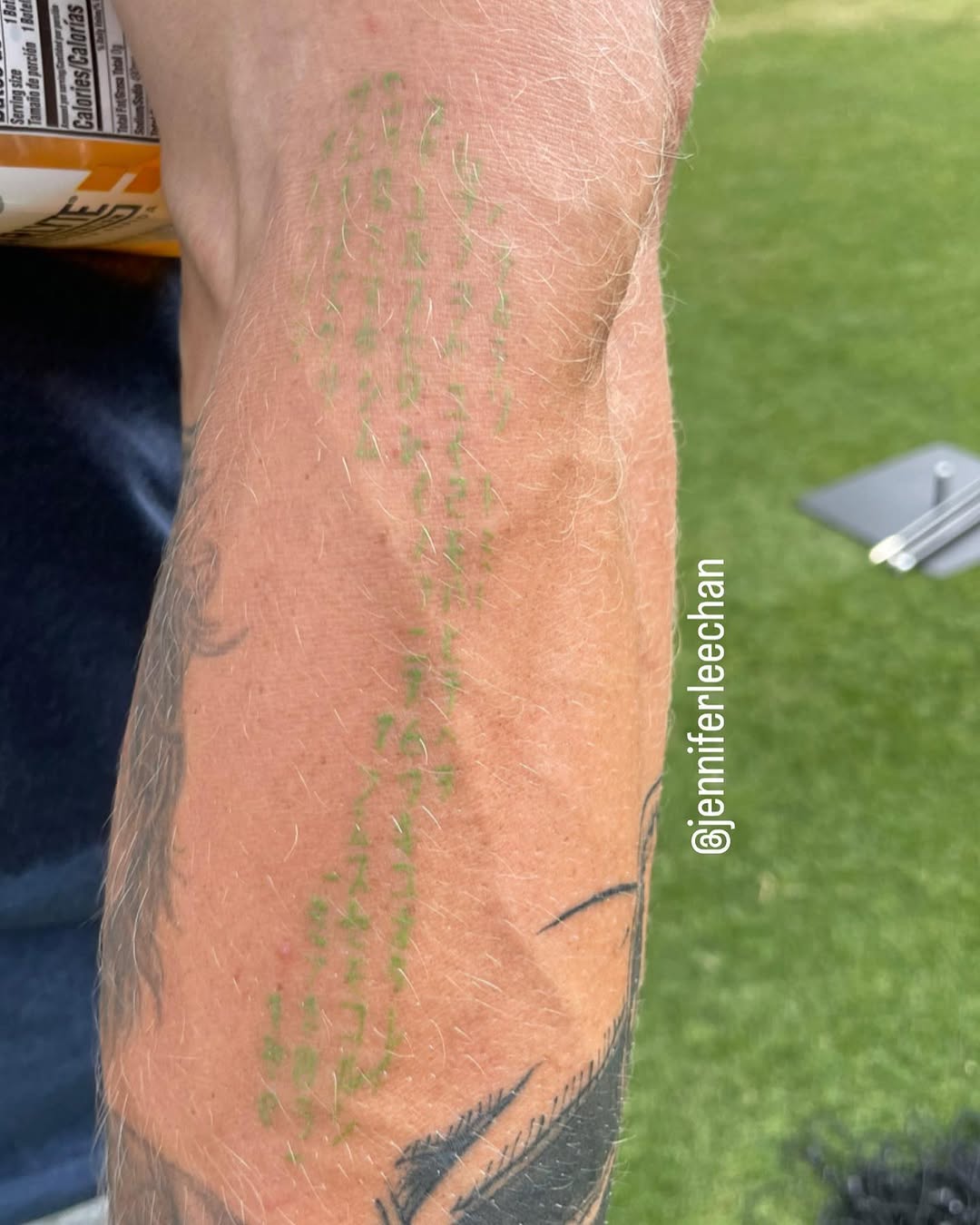
Next to the Venom imagery is a field of green digital rain associated with The Matrix. The close photograph of the forearm shows the vertical code-like marks running in narrow columns across the skin. The green color contrasts with the surrounding black outlines and gives the piece a different visual rhythm from the large comic and movie characters. Instead of a single outlined figure, the Matrix reference relies on repeated lines and the sense of information falling down the arm.
That contrast is important to the way Kittle’s tattoo collection reads. Venom supplies a recognizable body and face, while the digital rain supplies atmosphere and texture. The two references can be identified separately, but their proximity makes the forearm feel like a continuous pop-culture panel. The tattoo photograph also shows how Kittle’s artwork has been added over time. Some areas carry bold, fully shaded forms, while other areas remain open enough for narrow lettering, code, and small symbols to remain readable.
Master Chief and the good-guy arm
Master Chief from Halo is the central reference on the arm Kittle has described as his good-guy side. The character connects the tattoo collection to one of Kittle’s long-running gaming interests, and the design appears in accounts that discuss the contrast between his hero and villain imagery. The piece is part of the same broad arm story as the other character tattoos, but its identity comes from the unmistakable helmet and armored silhouette of the video-game protagonist.
Kittle’s choice of Master Chief is more specific than a general military or science-fiction image. The character is associated with the Halo games and with the visual language of green armor, a dark visor, and a compact futuristic helmet. Those features make the tattoo recognizable even when photographs only show part of the arm. In wider images, the Master Chief reference sits among other pieces rather than dominating the entire limb, which supports Kittle’s description of the arm as a collection of favorite heroes.
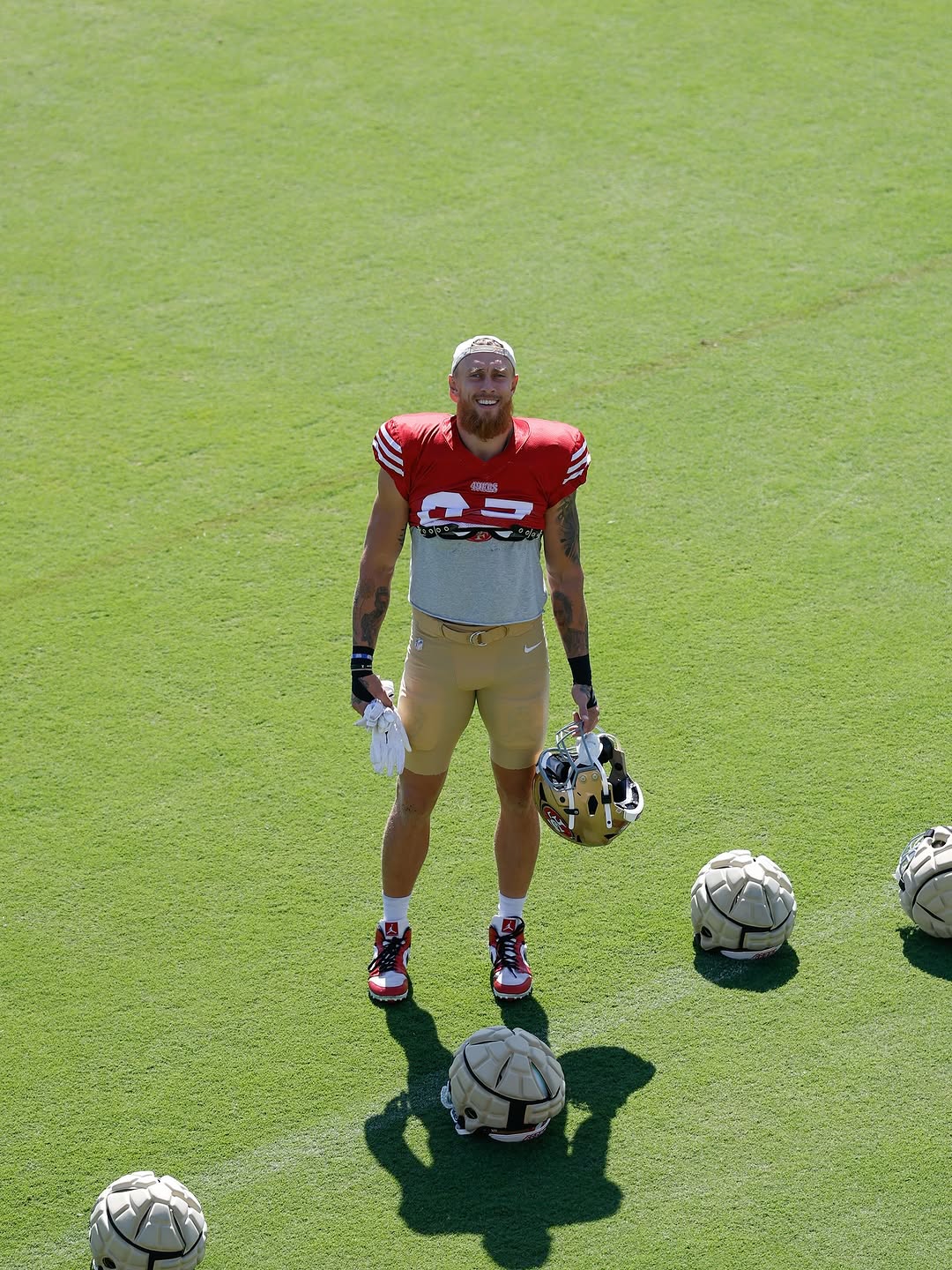
Public photographs from training and football settings show why the arm division is useful when looking at the collection. Kittle’s tattoos are often visible at the same time as the jersey, gloves, and equipment that identify him as a player. The contrast between the sports setting and the fantasy and gaming subjects is part of the image’s appeal. The tattoos remain personal references, but they are also immediately visible evidence of the characters and stories Kittle has carried with him into his professional life.

Hobbes, Blue-Eyes, and the hand tattoos
The collection extends beyond the arms to Kittle’s hands. Little Village identified Hobbes on the right hand and Blue-Eyes Toon Dragon on the left hand. Those choices place two very different kinds of pop-culture memory beside the larger character work. Hobbes recalls the comic strip Calvin and Hobbes, while Blue-Eyes Toon Dragon belongs to the Yu-Gi-Oh! world. Both references are compact enough to fit the hand, yet distinctive enough to be recognized when Kittle is photographed holding a football or standing with his arms at his sides.
The hand placements also change the way the larger tattoo map is seen. A shoulder or forearm can carry a wide composition, but the hand makes the image part of nearly every visible gesture. The Blue-Eyes and Hobbes pieces therefore function as small identity markers within the broader sleeve-like arrangement. They are not described as abstract symbols. The published accounts name the characters directly, and the photographs show them as part of the same continuing collection.
Godzilla is another named reference in the reported inventory. Its presence adds a monster subject to a lineup already populated by comic-book villains, video-game heroes, and film characters. Together with the hand tattoos, the Godzilla work shows that Kittle’s ink is not restricted to one franchise or one visual mood. The common thread is the subject matter: characters with a strong silhouette, a recognizable history, and a clear connection to the entertainment that Kittle has publicly enjoyed.

A collection built from games, films, and family
Kittle’s tattoos are often discussed through their entertainment references, but the collection is not only a list of characters. The 49ers video about his favorite tattoos presents the designs in the context of his own stories, while the published reports connect individual pieces to the way he groups heroes and villains. The result is a visual vocabulary that can be read in layers. A viewer may first see the Joker, Venom, or Sauron, then notice the Matrix code, the lettering, the smaller hand images, and the work that fills the spaces between the headline figures.
That layered quality also explains why photographs from different years can look different without contradicting one another. The collection has grown. A forearm that once showed one principal reference can later carry extra shading, code, lettering, or a neighboring character. Kittle’s tattoos are therefore best understood as an evolving map rather than a finished single illustration. The published sources document several named designs, while the images show how those designs sit together on his body.
Family and personal history appear in the wider story as well. The reset-button reference, the playful character choices, and the repeated interviews about favorite tattoos give the collection a voice that is recognizably Kittle’s. Even when the image comes from a movie or game, the arrangement is personal because it follows his own division of the arms and his own explanations of the subjects. The tattoos do not need a speculative meaning added to them. Their documented subjects and placements already provide the clearest account of what the collection represents.
The details that remain visible in public photographs
Photographs of Kittle at practices, games, interviews, and tattoo sessions show the collection in different conditions. A full-body training image makes the overall spread across both arms visible. A close-up of the forearm reveals the narrow green Matrix marks and the contrast between fine lines and heavy black shading. A tattoo-session photograph shows the work being extended while the surrounding pieces remain visible on the arm and hand.
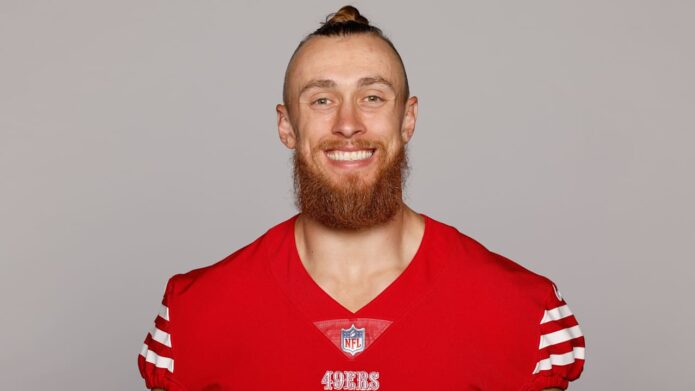
Those images also establish the difference between Kittle’s actual tattoo evidence and a generic celebrity portrait. The tattoo photographs show skin, placement, and identifiable designs. The official headshot used for the article’s featured image serves a separate role: it keeps Kittle’s face clear at the top of the post while the inline photographs carry the tattoo detail. This division mirrors the collection itself, with a recognizable public portrait supported by close views of the specific ink that defines the subject.
Across the documented photographs and interviews, George Kittle’s tattoos form a coherent record of favorite characters and recurring ideas. Sauron, Joker, Venom, Matrix rain, Master Chief, Godzilla, Hobbes, and Blue-Eyes Toon Dragon are not interchangeable decoration. Each brings a different silhouette, color contrast, or visual texture to the arms and hands. Seen together, they explain why Kittle’s tattoo collection remains one of the most distinctive visual signatures among NFL players.
George Kittle discusses his favorite tattoos in the official San Francisco 49ers video below.