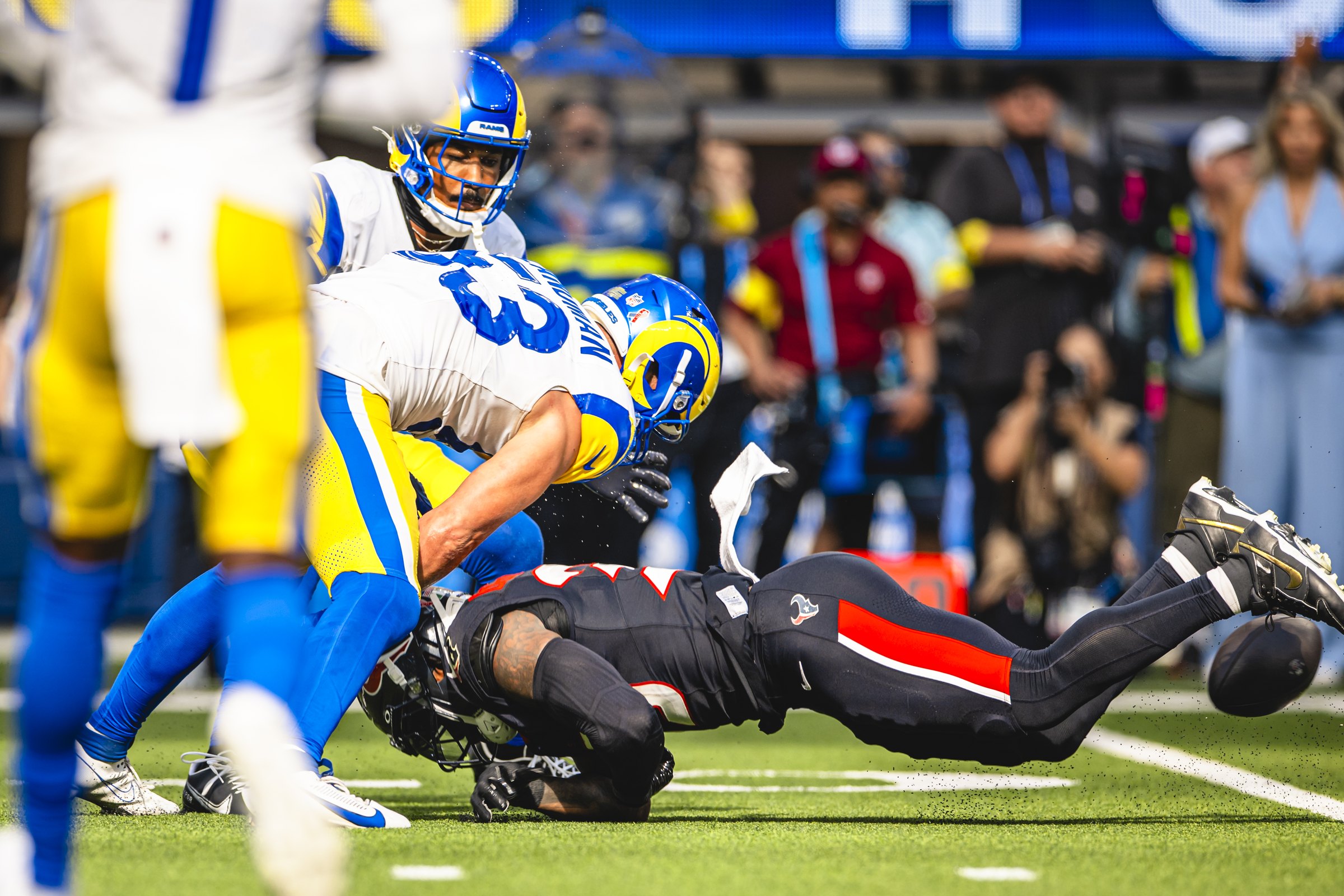
Nate Landman’s tattoos form a visual record of Zimbabwe carried into an NFL career. The Los Angeles Rams linebacker was born in Harare, moved to California as a young child, and has described his ink as a way of keeping that history visible. Recent reporting shows a collection built around African animals, a map of the continent, and a Zimbabwe outline placed close to his heart. The designs are not generic football decoration. They are a connected set of images tied to family, migration, citizenship and the place Landman still calls home.
The clearest photographs document a sleeve on the left arm and a larger composition that rises toward the chest. A lion, zebra and giraffe are the most identifiable animals in the published images, while the chest work supplies the geographic centre: an outline of Africa with Zimbabwe marked inside it. Landman has also spoken about the tattoos in relation to relatives who remain in Africa and to the Zimbabwe flag he wears on his Rams helmet.
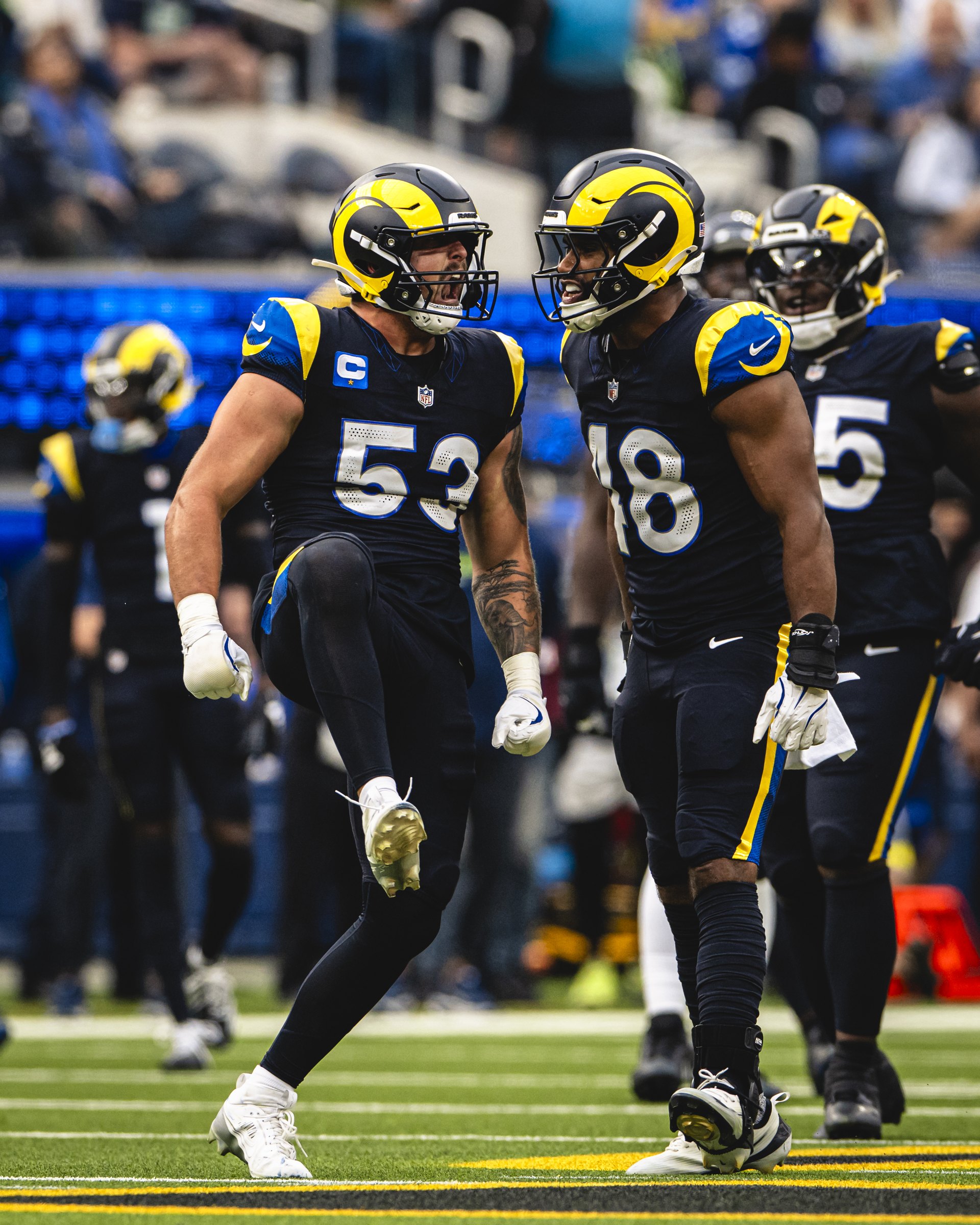
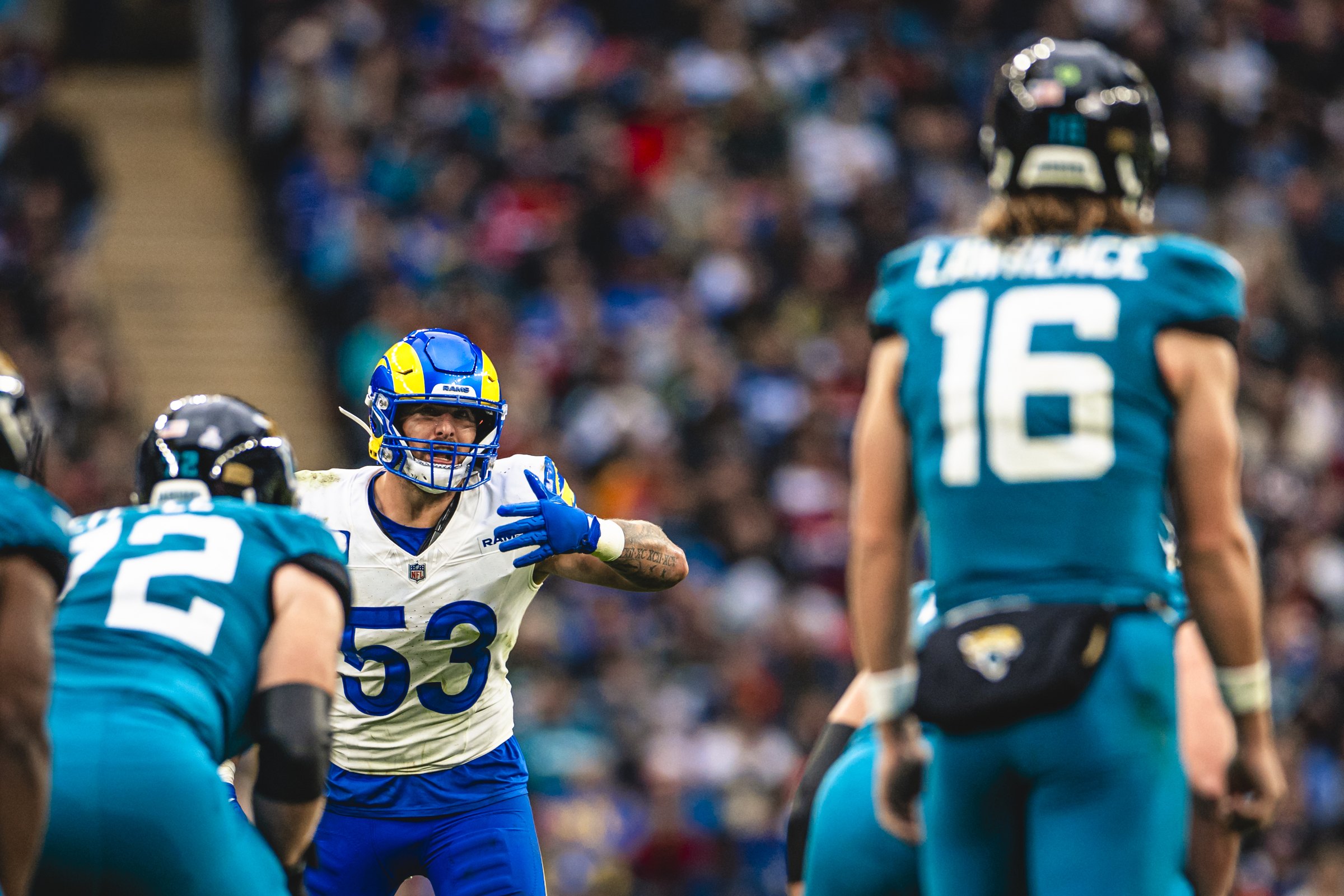
The visual record is unusually direct because the reporting came from conversations about Landman’s background rather than from a general celebrity tattoo gallery. The photographs show the ink at different distances: a close crop isolates the lion, an action portrait catches the arm sleeve beneath a jersey, and a wider football photograph shows how the work moves from the bicep toward the chest.
The reporting separates fact from interpretation
The strongest account of Landman’s ink comes from photographs paired with his own public explanation of Zimbabwe, citizenship and family. That combination identifies the designs without turning private symbolism into an unsupported story. The animals, map and country outline can be described from the images, while the larger connection to home comes from the reporting.
The photographs preserve the collection over time
Landman appears in close portraits, locker-room scenes and live-game frames, giving the tattoo record several different views. The images do not show every line in every setting, but taken together they establish a consistent collection on the arm and chest rather than a single repeated graphic.
Nate Landman’s Zimbabwe animal sleeve
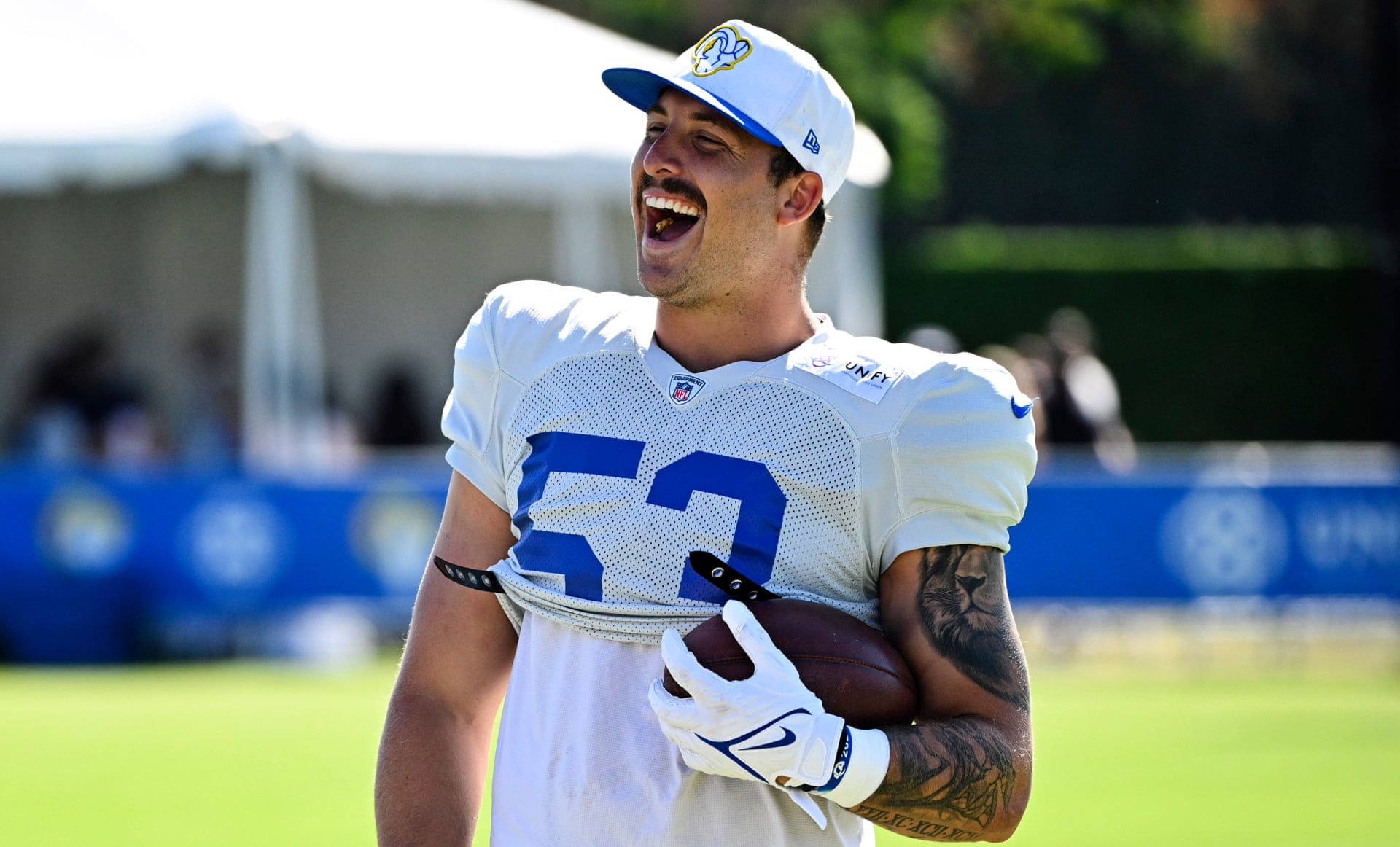
The dominant tattoo image is a wildlife scene on Landman’s left arm. The Los Angeles Times identifies a lion on the bicep, a zebra above the wrist and a giraffe positioned behind the other animals. Together, those figures create a vertical African landscape rather than a row of unrelated symbols. The lion’s head occupies the strongest visual position, with the animal facing forward and the mane spreading across the rounded muscle of the upper arm.
The zebra is smaller and lower on the arm. In the close photograph, its body bends into the available space near the wrist, giving the lower section a different rhythm from the lion’s broad face. The giraffe sits between the two visual zones, its long neck and spotted pattern creating a narrow bridge through the middle of the composition. That arrangement makes the sleeve read from top to bottom as a scene: large predator, tall browsing animal, then the striped figure near the forearm.
Landman has called the work a representation of Zimbabwe. The published descriptions do not assign a separate private story to every animal, so the strongest reading stays with what the sources establish: the animals are African imagery, they are placed on the arm, and they participate in a larger portrait of his birthplace. The ink’s meaning comes from the group and its geography, not from an invented explanation for individual details.

The lion tattoo anchors the upper arm
The lion is the most immediately recognisable piece in the collection. Its eyes and muzzle sit on the upper arm in a realistic, shaded treatment. The image has enough contrast for the gaze to remain visible even when the arm is photographed beneath football equipment. Around the face, the mane expands into dark, textured shapes that soften the boundary between the animal and the surrounding sleeve.
In the close-up published by the Los Angeles Times, the lion looks outward from the bicep instead of following the arm’s length. That orientation gives the tattoo a portrait-like quality. The viewer meets the eyes first, then notices the mane and the adjacent animals. It also explains why the design remains readable in game-day photographs: the upper-arm focal point is large, dark and positioned where a short sleeve often leaves the skin exposed.
The lion has also become a visual echo of Landman’s playing identity. Sports coverage has used the animal as a metaphor for his defensive style, but the tattoo predates those descriptions as a piece of personal imagery. The more reliable connection is the one Landman himself supplies: the arm is part of his African tattoo work, and the wildlife references preserve a relationship to Zimbabwe that remains central to his public story.
Zebra and giraffe details complete the arm composition
The zebra and giraffe give the sleeve its sense of place. The zebra’s stripes introduce a sharp pattern against the softer shading of the lion. Its body is drawn at an angle, so the stripes curve with the lower arm rather than sitting as a flat emblem. That direction keeps the piece moving toward the wrist and helps the sleeve look like a continuous landscape.
The giraffe occupies the middle ground. Its neck rises behind the lower edge of the lion’s mane, and its spotted markings add a lighter, more broken texture. In the Los Angeles Times photograph, the three animals are close enough to feel connected, but they remain individually legible. There is no single border enclosing them. The background is built through shading and the natural shapes of the animals, which lets the work follow the contours of the arm.
These details matter because the sleeve is often partially hidden. A jersey can cover the upper portion, while gloves and movement obscure the forearm. When the arm turns toward the camera, the animal arrangement appears in fragments: the lion first, then a glimpse of the giraffe, then the zebra. The close tattoo photograph restores the full relationship between those sections and makes clear that the work is designed as a connected African scene.
The Africa map and Zimbabwe chest tattoo
The second major anchor sits on Landman’s chest. The Los Angeles Times describes an outline of Africa with Zimbabwe shaded inside it, and the Guardian places the continent tattoo on the right side of his chest. The map extends the arm sleeve’s wildlife theme into geography. The animals show what the landscape contains; the map names the wider place that gives the landscape its meaning.
Landman has explained that he received the Zimbabwe outline in the same year he officially became a United States citizen, when he was a sophomore at Colorado. That timing gives the chest tattoo a documented milestone without requiring speculation. It marks two parts of his identity at once: the country where he was born and the citizenship he later earned. The placement close to the heart reinforces the personal emphasis described in the reporting.
In photographs where the shirt or shoulder line is open, the chest map sits behind the arm work as a larger field. The sleeve climbs upward and frames it, which makes the body read as one composition rather than as a collection of isolated images. The map is also less immediately visible than the lion. It often appears as a dark outline under fabric or in the gap between the shoulder and neckline, so the tattoo is best understood through the close reporting and the photographs that expose the upper chest.

How the tattoos appear in Rams photographs
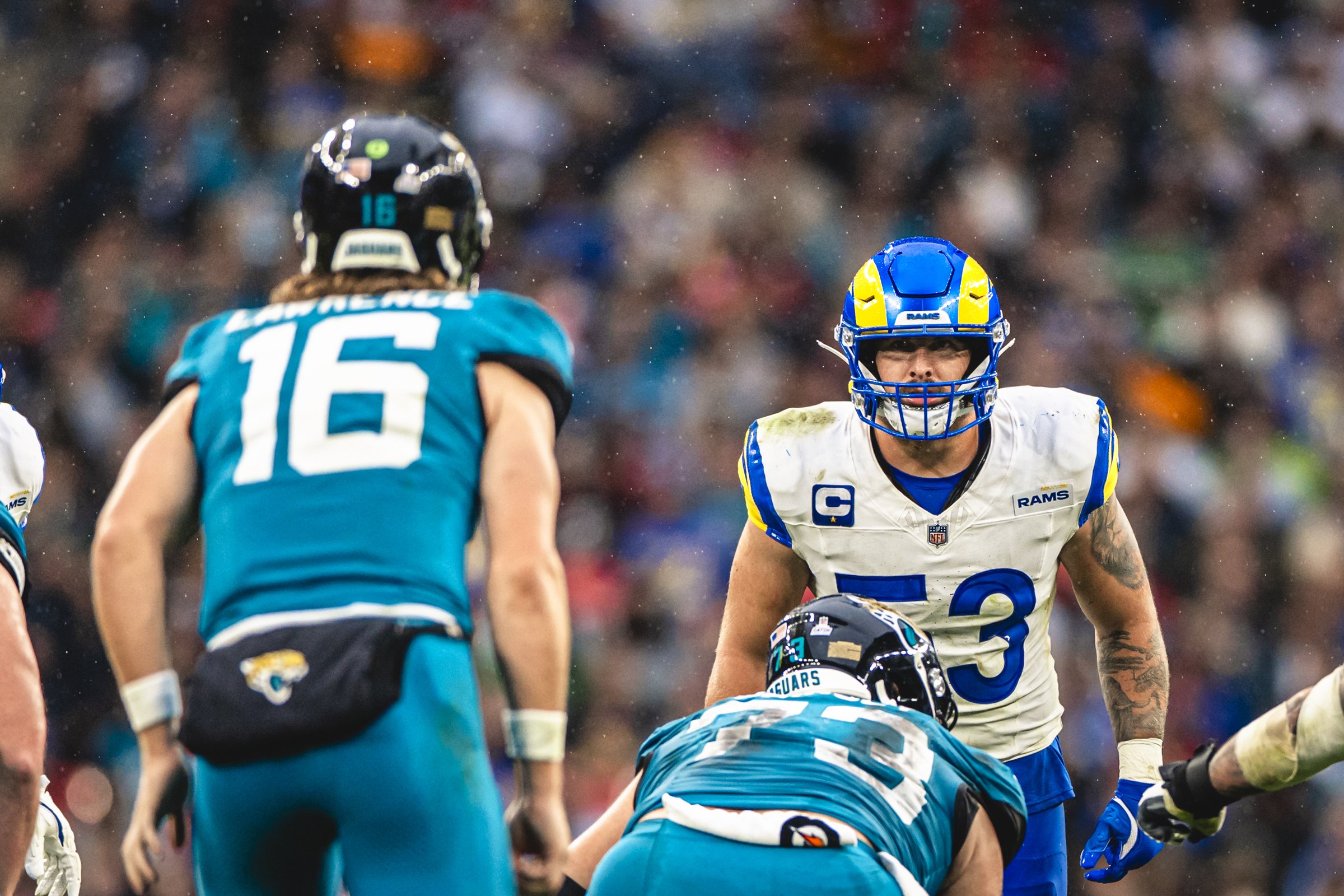
Football photographs show the ink at several scales. A close portrait of Landman holding a football exposes the lion and the lower arm work beneath a rolled jersey. An action frame catches the tattooed arm as he moves, while a locker-room photograph shows the sleeve in a more relaxed position. These images are useful together because none of them presents the collection in exactly the same way.
The arm work changes with posture. When Landman’s elbow is bent, the lion sits on the outside of the upper arm and the forearm designs turn toward the camera. When the arm extends during a play, the sleeve becomes a long vertical band under the short sleeve. The composition is therefore not a flat panel: the animal faces and stripes wrap around a moving limb, and different photographs reveal different portions.
The published sports images also confirm that the tattoo is genuine body art rather than a temporary graphic or uniform detail. The ink appears on uncovered skin in unrelated football settings, including training and game photographs. Its colour and shading remain consistent across the sources, while the close-up image supplies the clearest evidence of the lion, giraffe and zebra forms.
Landman’s tattoos and the Zimbabwe flag
Landman’s public presentation of the tattoos is closely connected to the Zimbabwe flag on his helmet. The Guardian reports that he considers both the ink and the flag important ways of representing relatives who still live in Africa. The two forms of identity appear in different places: the flag is part of his football equipment, while the wildlife and map imagery remain on his body away from the field.
That pairing gives the tattoo collection a clear visual logic. The lion, giraffe and zebra are not presented as a random wildlife set. They are the images that sports and news reporting use to explain the Zimbabwean side of Landman’s story. The map then narrows the connection from the continent to the country, while the chest placement makes the design intimate rather than merely decorative.
The sources also show why the collection is best described as a record of belonging. Landman grew up in California after moving from Zimbabwe at three, yet he has spoken about a home decorated with Zimbabwean culture and food that kept the connection alive. The tattoos make that history visible in a way that travels with him through college, Atlanta and Los Angeles.
The documented visual record of Nate Landman’s ink
Nate Landman’s tattoos are most clearly understood as one African composition spread across the arm and chest. The left-arm sleeve supplies the wildlife detail: a lion on the bicep, a giraffe through the middle and a zebra near the wrist. The chest supplies the map, with Zimbabwe marked inside the outline of Africa. Together, the pieces describe a birthplace, a family history and a continuing public connection to Zimbabwe.
The photographs reinforce that reading without needing extra interpretation. A close tattoo image shows the animal forms in detail. The Guardian portrait exposes the sleeve in a football setting. Rams photographs reveal how the ink sits on the moving arm, while the official player portrait keeps Landman’s face visible as a separate record of the person carrying the work. The result is a documented collection whose designs are specific, identifiable and tied to the story Landman has repeatedly told about home.