Actors

Tattoo guides for actors, with photographs of their real tattoos and clear distinctions between personal ink and designs created for screen roles.

Alex Pettyfer Tattoos: The Cross, Little Lamb, Arabic Script and More

Alex Pettyfer has several visible tattoos, but the public record is uneven. Some designs have explanations attributed to him; others appear in older photo galleries and tattoo-reference lists. This guide sticks to the best-documented parts of Alex Pettyfer’s tattoos: the chest cross and shoulder quote, Arabic script, linked hearts, Little Lamb and arm artwork.

The chest cross and the date beneath it
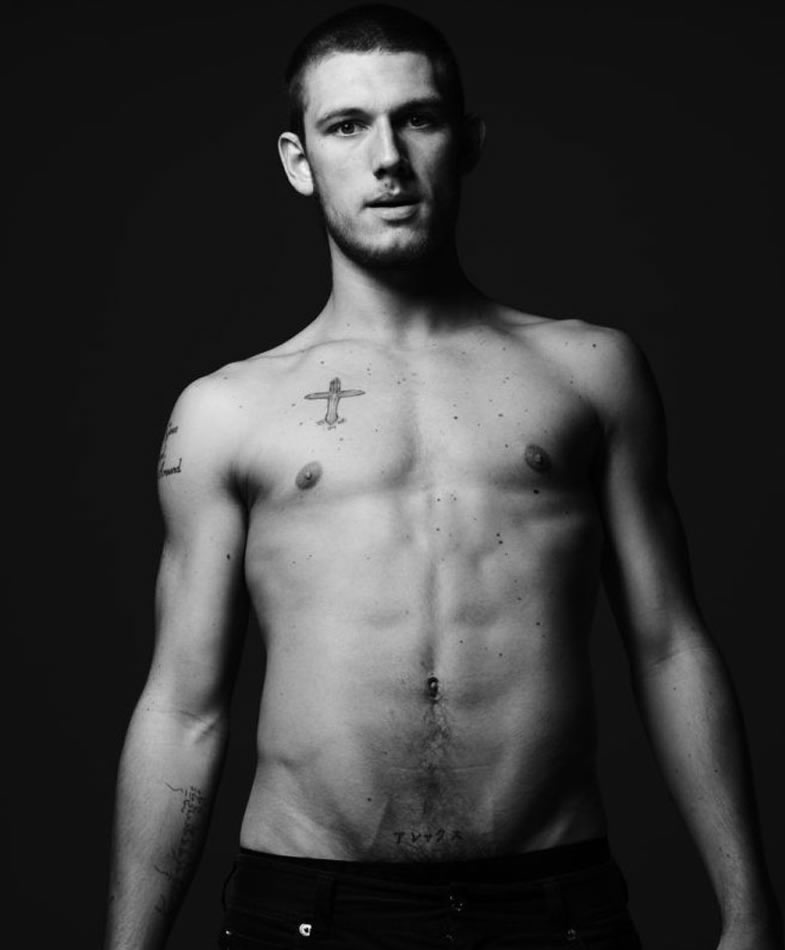
Alex Pettyfer chest cross and Japanese tattoo
The chest cross and Japanese script are both visible in an older portrait.

The cross in the centre of Pettyfer’s chest is one of the tattoos most often noticed in photos. Older reference pages describe it as Celtic, though the visible design is fairly simple. Those same sources say the date beneath it is April 10, 1990, Pettyfer’s date of birth. The date is repeated in tattoo coverage, but he has not publicly explained the cross in detail. The safest account stays with what is visible: a cross and a date beneath it. Older references also say Japanese characters below his waist spell his name. They are difficult to read in public photos, so that translation should remain attributed rather than treated as a fresh reading of the image.

“What Goes Around Comes Around” on his shoulder
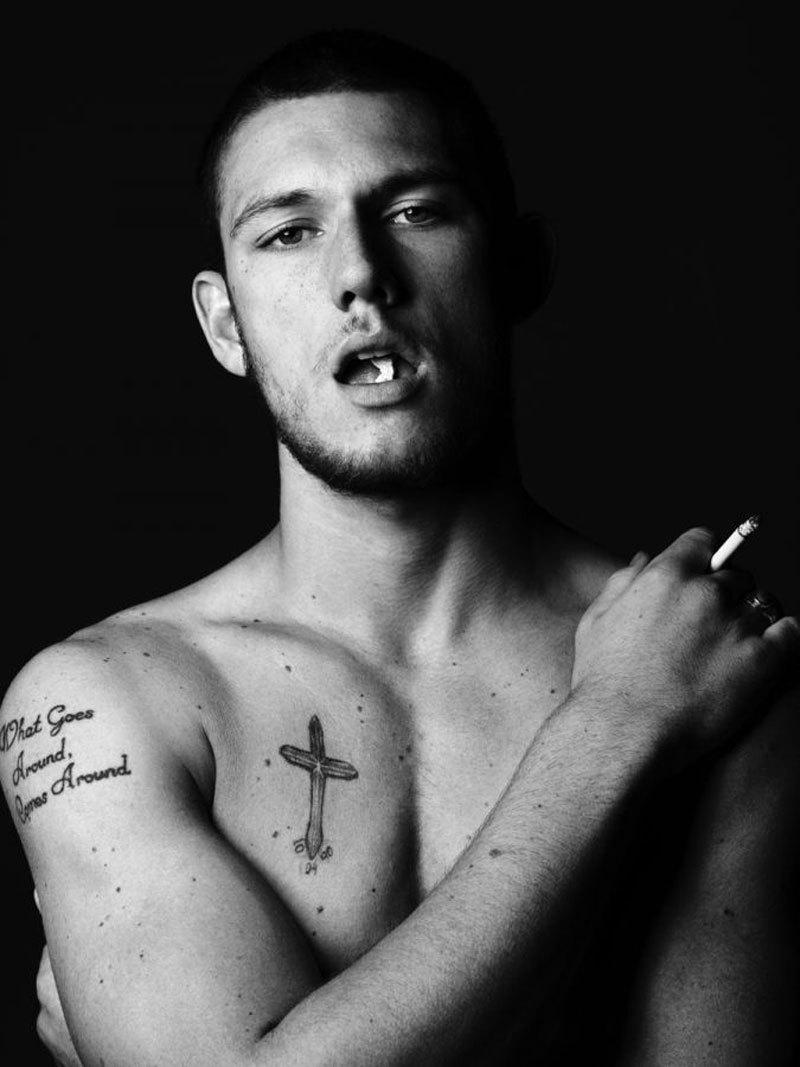
Alex Pettyfer What Goes Around Comes Around tattoo
The shoulder lettering reads “What Goes Around Comes Around.”

The shoulder quote is one of Pettyfer’s clearest tattoos. It reads “What Goes Around Comes Around” in stacked lines near the top of his arm. Older interview coverage reports that he said he is not Buddhist but believes in some ideas associated with Buddhism. He described the phrase as his way of expressing that what a person puts out can come back to them. The lettering is clear; no more elaborate meaning needs to be added. Alex Pettyfer’s cross chest tattoo in a black-and-white portrait Us Weekly included the quote in a 2011 roundup of his tattoos, which makes it one of the better-documented pieces in the collection.

The Arabic script on his inner forearm
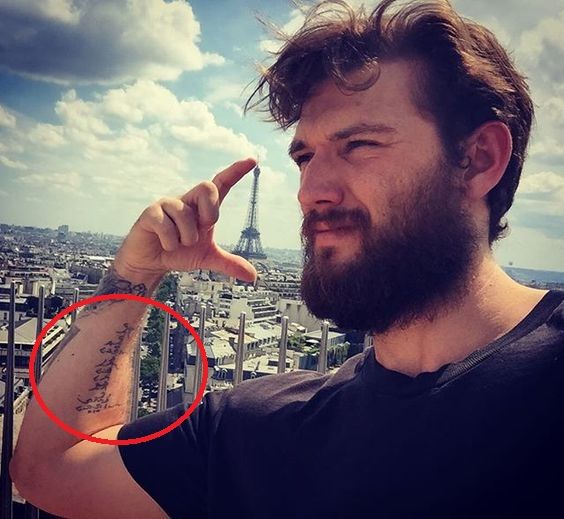
Alex Pettyfer Arabic forearm script tattoo
The Arabic script runs along Pettyfer’s inner forearm.

Arabic writing runs along the inside of Pettyfer’s forearm. It is commonly translated as “Your mind is stronger than your body.” A photo from his time in Paris shows the length of the script more clearly than many later images. The translation is widely reported, but the letters can be hard to make out from some angles, so it should be treated as the published reading rather than a new translation from the photo. The long line follows the shape of the forearm rather than sitting like a small symbol.

The linked hearts marked “E R”
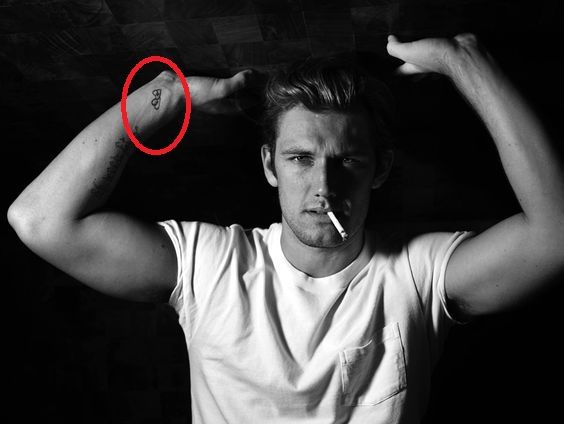
Alex Pettyfer linked hearts ER tattoo
The linked hearts contain the letters E and R.

Near one wrist, Pettyfer has two linked hearts with the letters E and R inside. Some coverage linked them to Emma Roberts, whom he dated; older tattoo notes attribute a different explanation to him. Alex Pettyfer shirtless, showing his chest cross and arm tattoos In those accounts, Elizabeth Royal refers to Queen Elizabeth II. Pettyfer reportedly said he wanted a reminder of home after moving to California. That explanation comes from older celebrity-tattoo references, not a recent interview. The hearts and letters are visible; the story behind them should stay attributed to those reports.

“Little Lamb” on his forearm
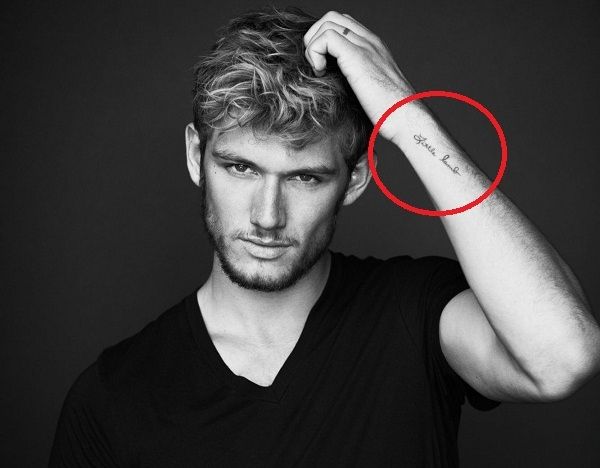
Alex Pettyfer Little Lamb forearm tattoo
The small “Little Lamb” script sits on Pettyfer’s forearm.

The lettering on Pettyfer’s forearm reads “Little Lamb.” A raised-arm photo shows it clearly, though it is easy to miss when his arm is down. Older coverage connects the tattoo to the period when he was dating Dianna Agron. The photo confirms the words more clearly than it confirms the reason he chose them, so that explanation is best kept as a reported link. The thin script is much less prominent than the larger shaded pieces on his arms.

The portrait and other artwork on his arms
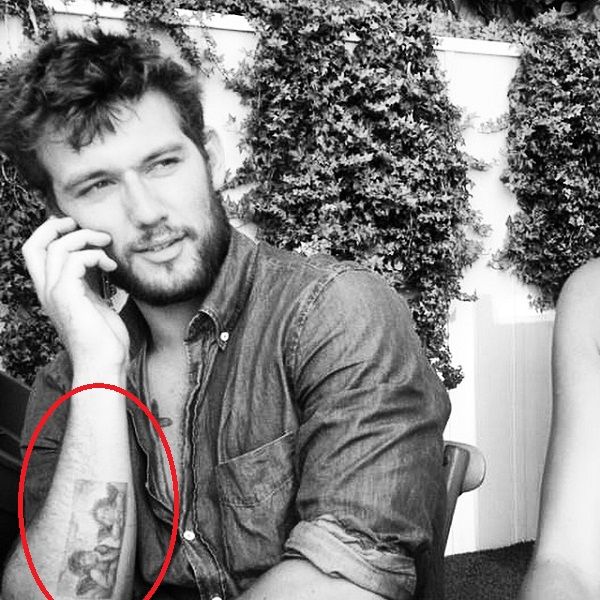
Alex Pettyfer arm portrait tattoo
A close view of the shaded artwork on Pettyfer’s arm.

Photos show larger shaded work running down Pettyfer’s forearm. Older lists describe portrait-style pieces, cherubs and other figures, but they do not establish the meaning of each design. The available images show sections of the artwork from different angles; they do not provide a complete inventory. It is safest to describe the work as shaded illustration and leave individual figures unnamed when the photo is unclear.

The other arm tattoos and smaller symbols
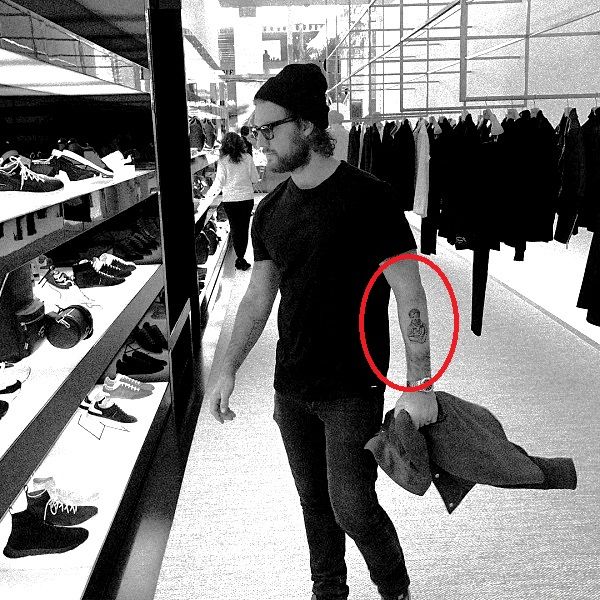
Alex Pettyfer arm tattoo detail
Another angle shows smaller details on Pettyfer’s arm.

Lighting changes how the arm tattoos look. Ink can appear soft and grey in a studio portrait, then much darker in a flash photo. Older references repeatedly list “33” near Pettyfer’s elbow and say it was the number on his car when he won a race, making it a lucky number for him. The number is not clear in every public image, so both the reading and the story should stay qualified. Other small marks on his arms and hands are difficult to separate from shadows or jewellery; there is little value in naming them without a clearer photo.

The “Thank You” tattoo and the pieces below the waist
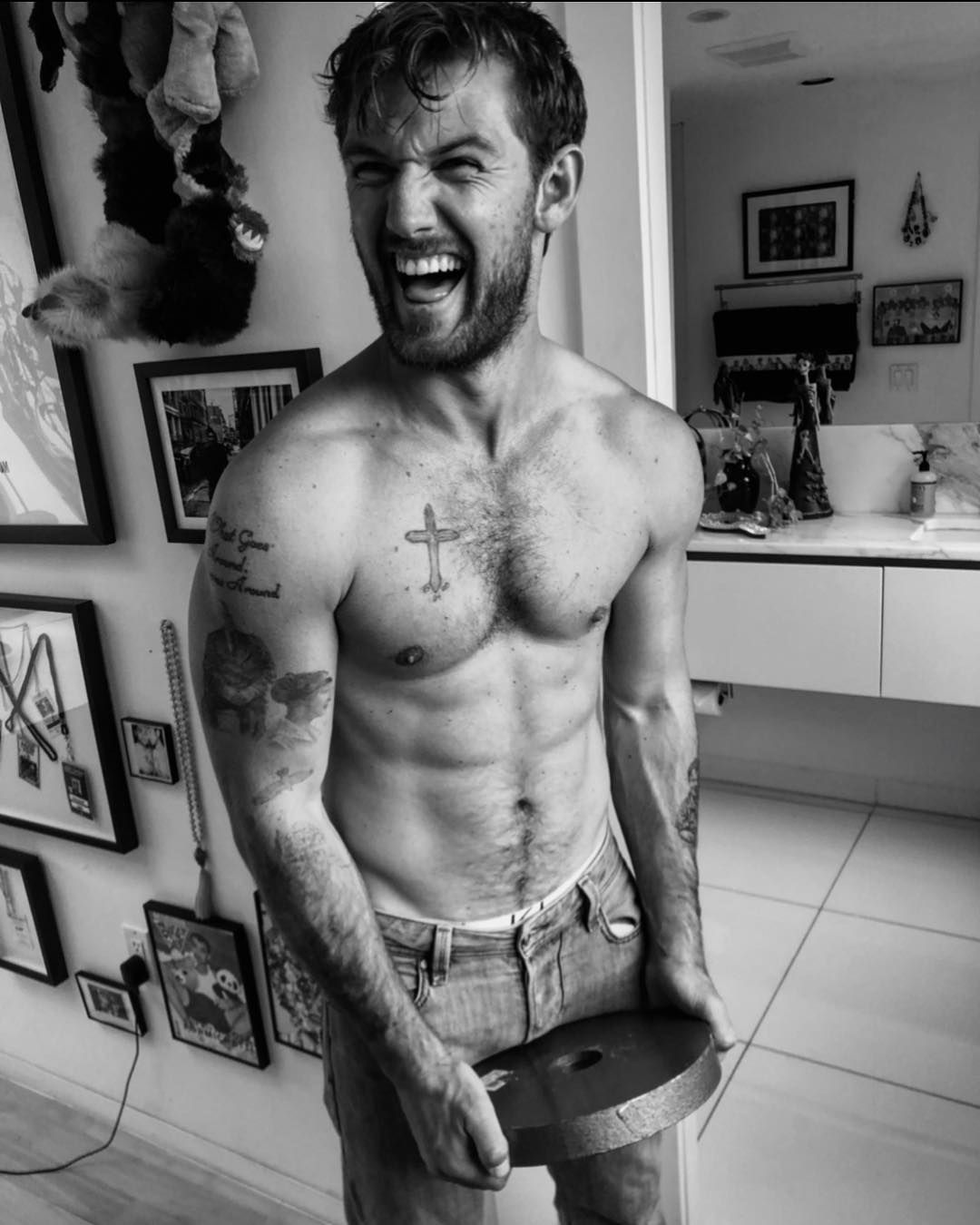
Alex Pettyfer multiple tattoos torso and arms
A wider photo shows how Pettyfer’s chest and arm tattoos sit together.

Us Weekly reported a small “Thank You” tattoo above Pettyfer’s crotch and quoted his explanation: it was there “in case I forget to say it.” The joke has a different tone from the chest cross and shoulder quote. Older photos also show ink across his torso and below the waist, including the Japanese name described earlier, though there is not enough detail to identify every mark. The visible collection moves between a cross, quotes, relationship-linked lettering, a lucky-number story and a small joke. It does not follow one single theme.

Putting the collection in context
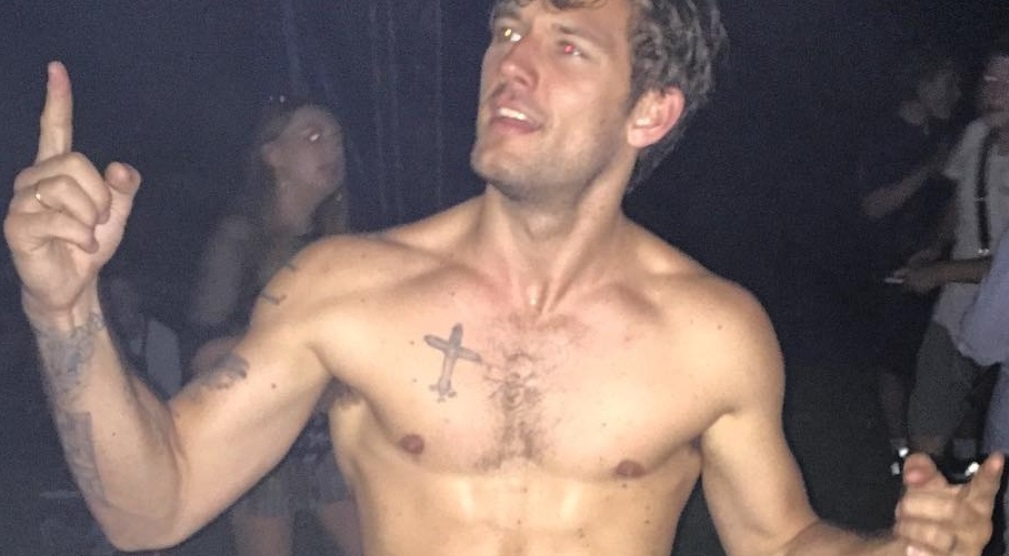
Alex Pettyfer tattoo collection overview
A wider view brings several of Pettyfer’s visible tattoos together.

The better-documented stories include the shoulder phrase, the reported Arabic translation, the “Thank You” comment and Pettyfer’s reported explanation of the linked-heart initials. Older tattoo references also list the chest cross and date, “Little Lamb,” the Japanese name and “33,” though their meanings are not all equally well supported. Photos show what is on someone’s skin; they do not automatically explain why it is there. For a direct look at Pettyfer talking about his ink, the older KiddNation tattoo interview is a useful source. It is dated, but it gives some context beyond a gallery of photos.
More actor tattoo guides

Daniel Day-Lewis Tattoos: Handprints, Mermaid and Tribal Bands

Daniel Day-Lewis has never been an actor who gives much away, and he’s similarly quiet about his tattoos. They tend to show up in passing street photos, rolled sleeves, or the rare shoot where the camera gets close. As a result, the clearest picture of his ink comes from a handful of photographs rather than a long run of interviews.

Those photos reveal a striking collection: bold bands, a compass rose, a mermaid, and handprints linked to his sons. These are real tattoos on Day-Lewis himself, not designs added for a film role. Some small details are still difficult to identify, so this guide sticks to what can be seen or supported by published coverage.

Daniel Day-Lewis has a serious collection of tattoos

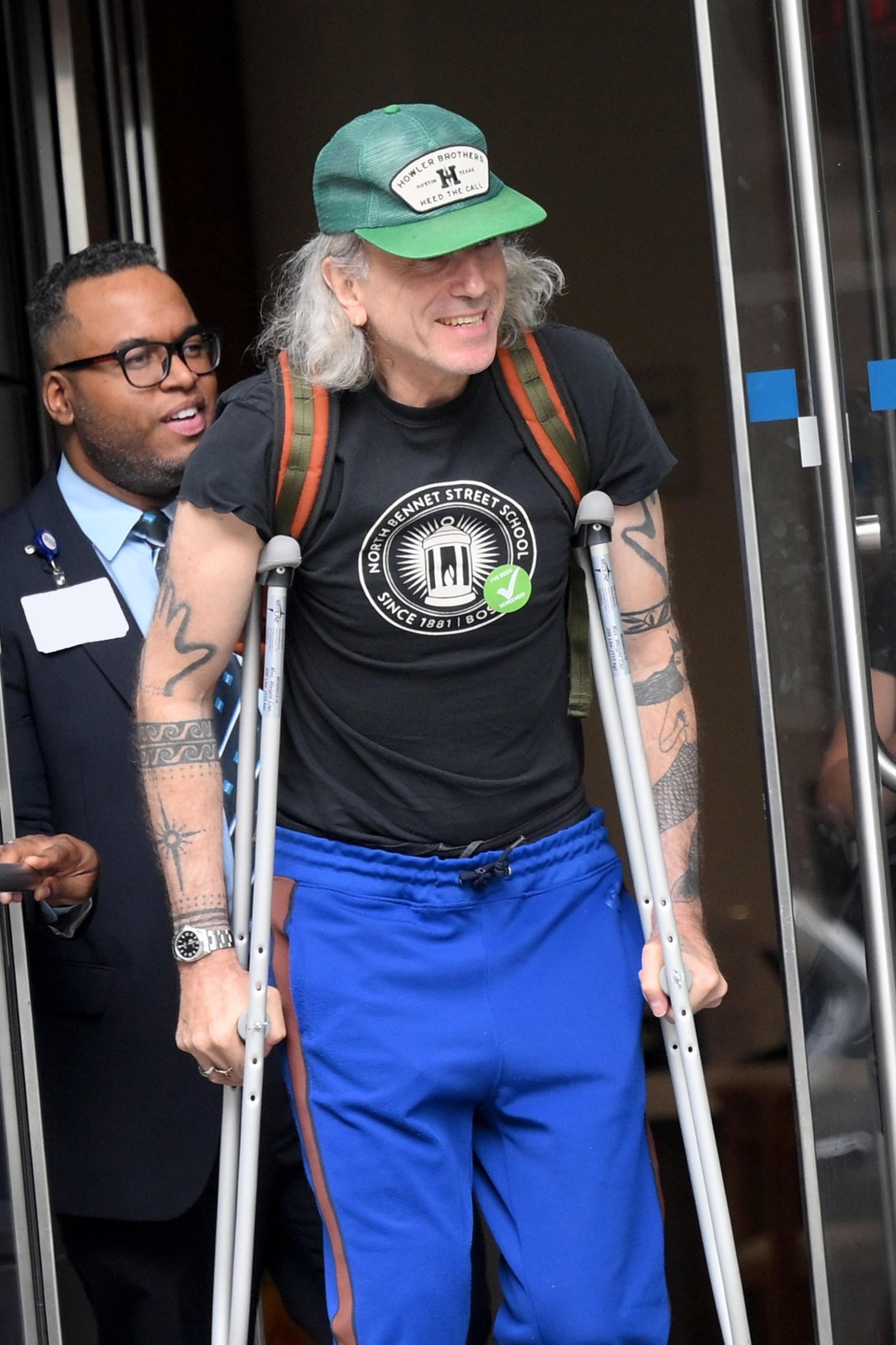
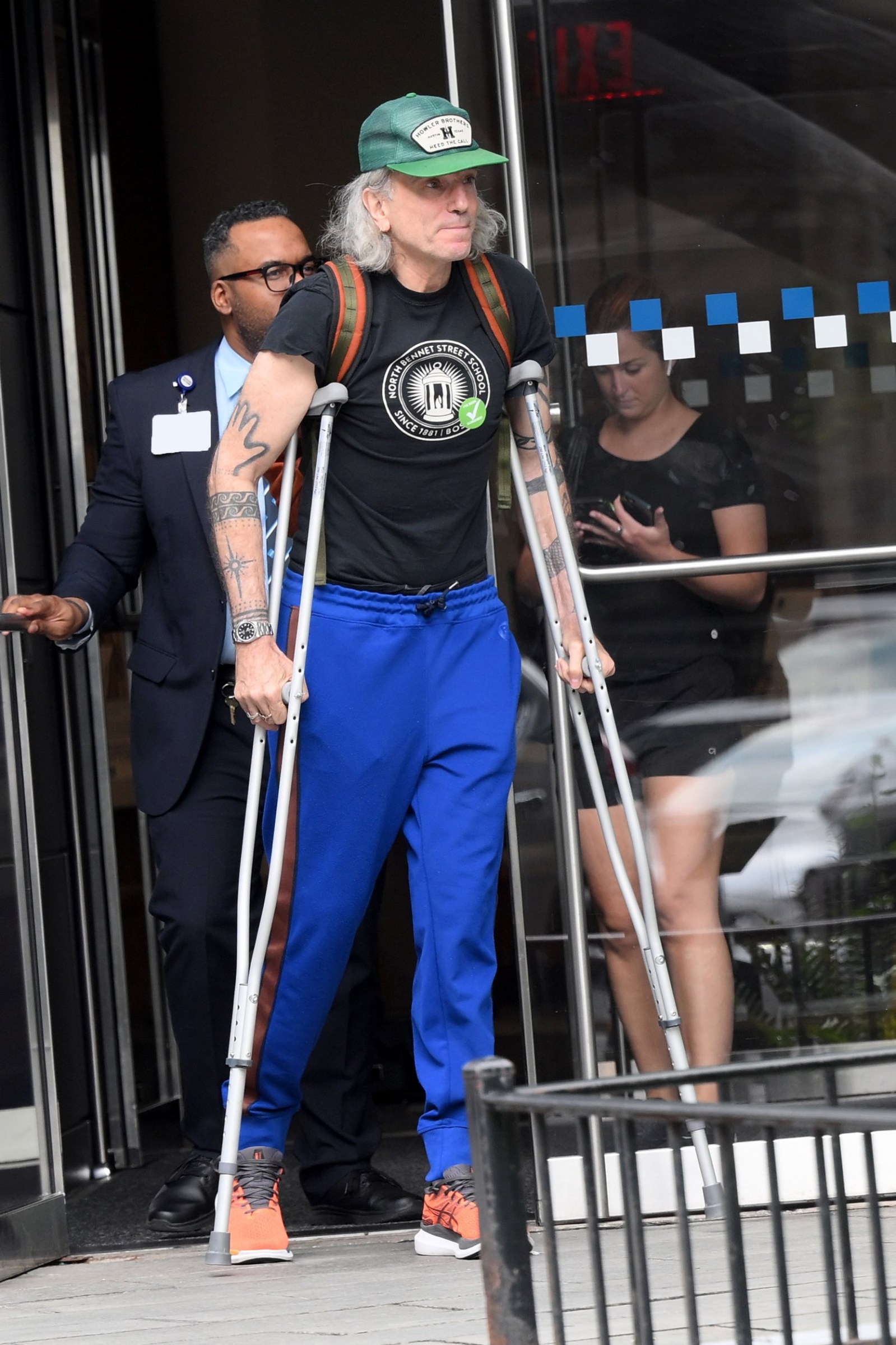
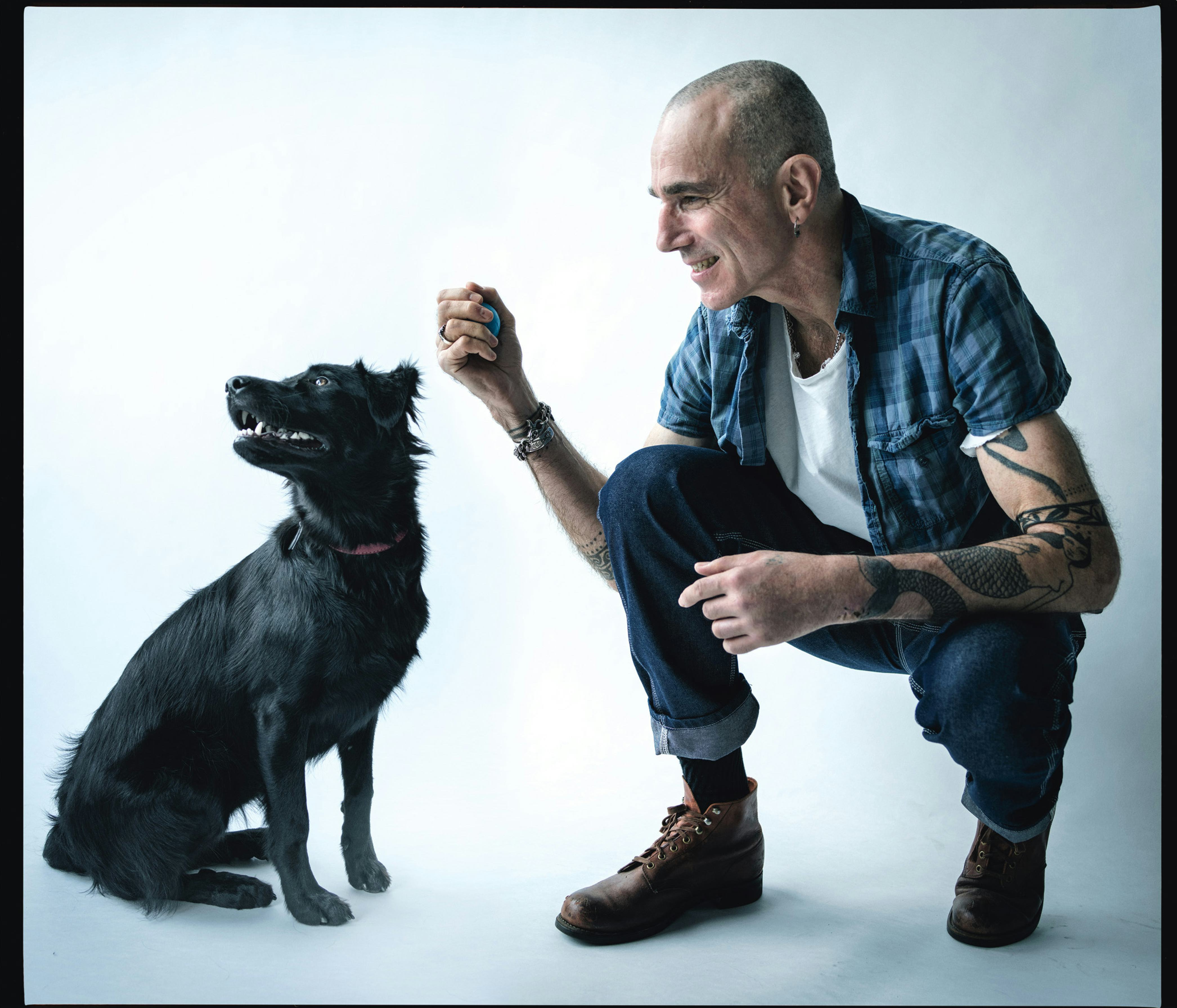
A useful place to start is a set of New York street photos from 2015. Day-Lewis wore a short-sleeved polo, leaving both forearms and much of his upper arms visible. The pictures show stacked bands, larger dark shapes, and designs extending well above his elbows.

Reports identified a mermaid, two handprints, a compass, and several tribal bands. The Daily Mail used similar photos and noted the tattooed sleeves on display during the walk. So this isn’t just one small design hidden under a cuff. Day-Lewis has a substantial collection, even if he rarely discusses the individual pieces.

The handprints are the most personal Daniel Day-Lewis tattoos

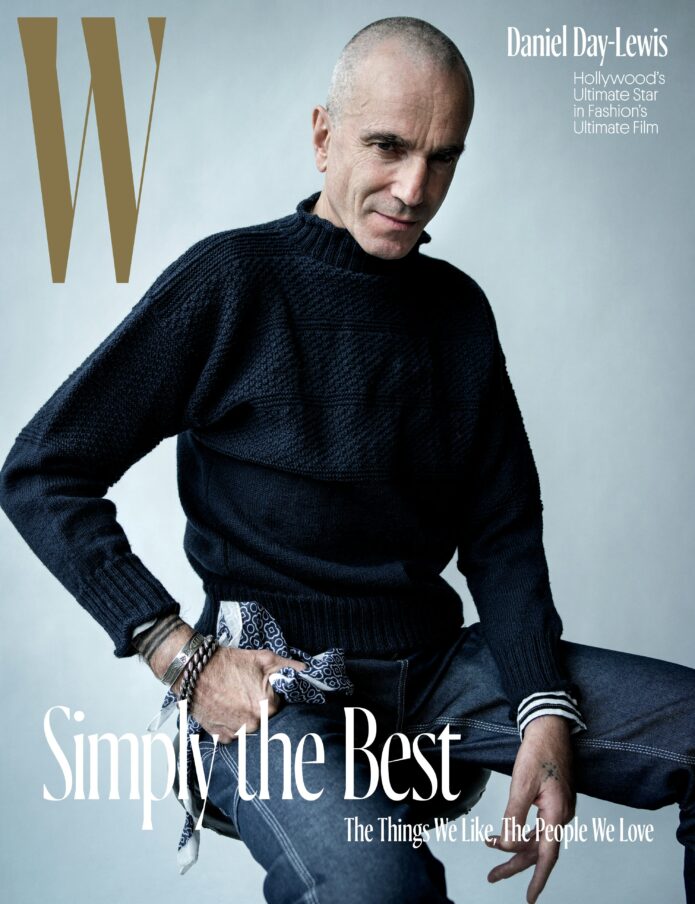
The handprints on his back and shoulders appear to be the most personal designs. W Magazine reported that they climb from his back toward his shoulders, with one marking each of his three sons. That gives them a different feeling from the bold bands on his arms.

A handprint tattoo may look simple, but the idea is clear: it’s a permanent family marker, tied to the people closest to him rather than a role or passing fashion. The photos don’t explain every part of the placement, and Day-Lewis hasn’t shared a full map of his tattoos. Still, the family connection is one of the few details that has been clearly reported.

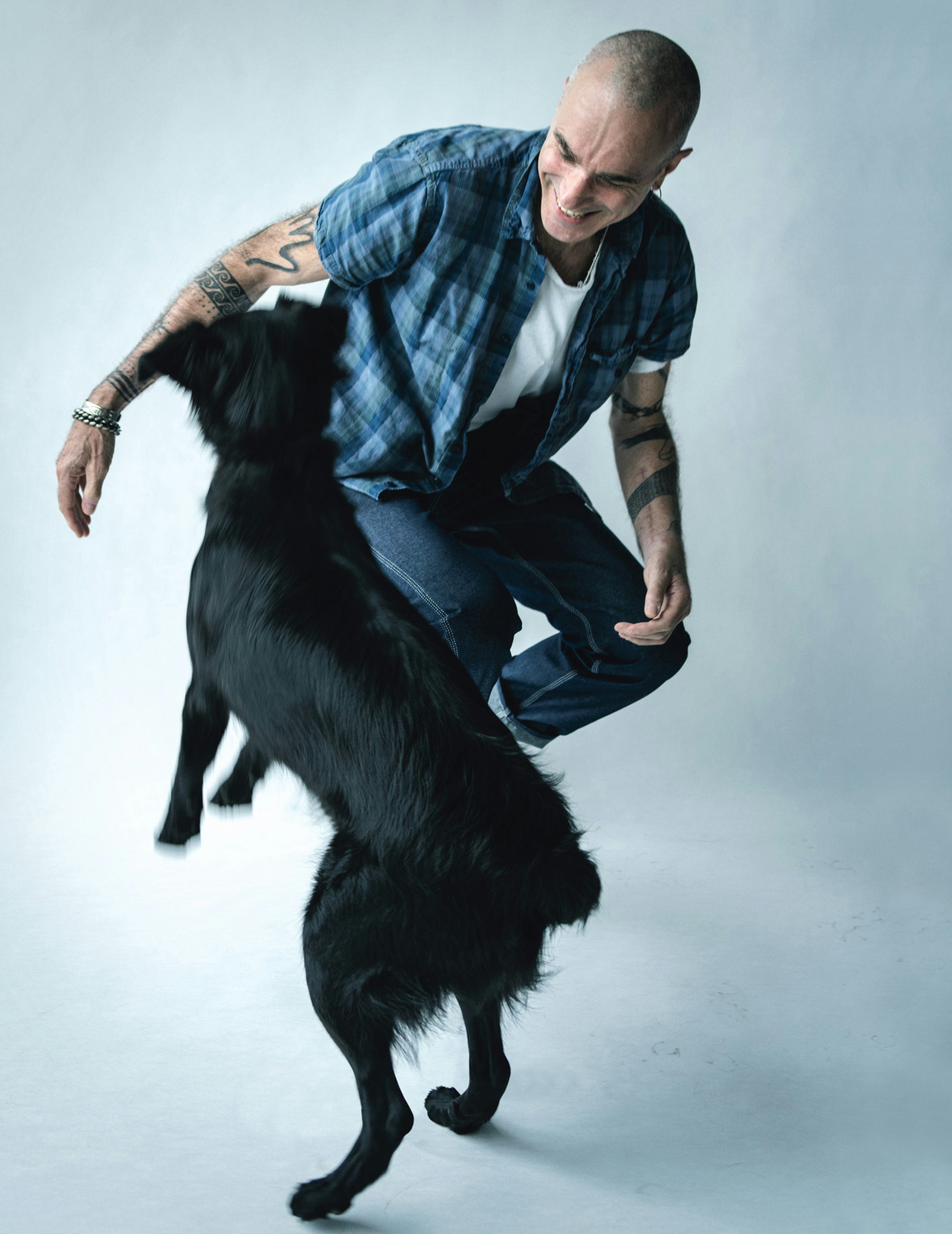
W Magazine also wrote that photographer Tim Walker saw the many tattoos across Day-Lewis’s torso. He agreed to the shoot but reportedly asked that its most revealing, tattoo-covered torso image remain private. Even that well-known photo session had a firm boundary.

Daniel Day-Lewis with visible arm tattoos from a W Magazine photo shoot

There is a mermaid, a compass, and a lot of band work

The mermaid and compass are among the designs named in published coverage. They’re easier to discuss than to identify in tiny online crops, since the photos show Day-Lewis walking around New York rather than posing for a tattoo catalogue.

The compass rose is one of the clearest motifs in the collection. It may suggest direction or travel, but Day-Lewis hasn’t confirmed what it means to him. The mermaid is another standout, bringing an old-school feel beside the darker bands and geometric shapes.

Several tribal-style bands wrap around his forearms and lower arms, with heavier black designs filling the spaces between them. They make the tattoos look connected from a distance, even though the collection seems to have come together over time.

Daniel Day-Lewis compass and band tattoos

His forearm tattoos are the ones people spot first

When Day-Lewis wears short sleeves, the forearms draw the eye. The bands are broad and dark, easy to pick out even in ordinary street photos. One Daily Mail image gives a particularly clear view of the layered designs on both arms and how they sit beside the larger linework.
Search results also often mention a star on his right forearm and a cross associated with The Crucible. Those details are repeated online, but major photo features don’t document them as clearly as the mermaid, compass, handprints, and bands. It’s safer to treat them as reported possibilities than confirmed facts.

That distinction matters with celebrity tattoos. A blurry crop can make one shape look like another, and fan pages sometimes repeat guesses until they sound official. The clearest evidence remains the photographs and the descriptions published alongside them.

Daniel Day-Lewis seated, with tattoos visible on both forearms

Why Daniel Day-Lewis tattoos are easy to miss

Day-Lewis usually wears clothes that cover his tattoos and doesn’t post posed gym shots or regular ink updates. He also keeps his private life private, so there’s no official gallery showing each design from every angle.

That makes the 2015 street photos useful: they capture the tattoos in everyday life, without costumes or character makeup complicating the view. The W Magazine shoot gives another angle, revealing how much of his upper body is covered even though the most revealing image wasn’t published.

The photos also suggest the designs weren’t planned as one matching sleeve. Heavy bands, softer lines, family marks, and individual images sit beside one another. The collection feels more like a personal scrapbook than one unified design.

Daniel Day-Lewis with visible shoulder tattoos

What we can confirm, and what is still guesswork

The reliable picture is simple. Published photos show tattoos on both of Day-Lewis’s arms. The Daily Mail and other outlets identified a mermaid, compass rose, two handprints, and several tribal bands. W Magazine added that the handprints across his back and shoulders represent his three sons, and reported tattoos extending across his torso.

Daniel Day-Lewis showing the compass and band tattoos on both arms

Other shapes, including a star and a cross, are often identified by fans and search results. They may be part of the collection, but the available photos don’t provide a sharp close-up of every small mark. Treat any post claiming to list all his tattoos and their exact meanings with some caution.

What’s clear is that the actor has more ink than his quiet public image might suggest. The collection combines family memories with bold traditional and tribal-style work, most visible when he rolls up his sleeves. For more stories about actors’ ink, visit the actors tattoos section.

Watch Daniel Day-Lewis talk about acting

There isn’t a reliable long-form interview where Day-Lewis explains all of his tattoos. This GQ conversation with his son Ronan offers a look at the actor beyond the usual red-carpet clips and complements what the photographs show.

More actor tattoo guides

Ed O’Neill Tattoos: Does the Actor Have Any Real Ink?

Ed O’Neill’s tattoos are a deceptively simple search topic. Look through the pictures and you’ll find a mix of the actor, fan-made designs, characters he played, and unrelated tattoo pages. That makes it easy for an image to be mistaken for proof.

Short answer: there’s no reliable public record showing that Ed O’Neill has permanent tattoos. The clearest direct profile I found says he doesn’t, and image searches haven’t turned up a trustworthy photo of real ink on his body. That doesn’t prove nobody could ever find one; it means the claim isn’t documented well enough to state as fact.

The short version

O’Neill is best known for playing Al Bundy on Married… with Children and Jay Pritchett on Modern Family. He’s spent decades in front of cameras, at premieres, on talk shows, and in cast interviews. If he had a large, recognisable tattoo collection, you’d expect to see the same designs showing up in photos over the years.

That consistent trail isn’t there. The images associated with his name are publicity portraits, red-carpet photos, cast shots, and television stills. They don’t show a confirmed tattoo collection. Shadows, shirt seams, microphones, or background artwork can look like tattoos once a picture is cropped or reposted.

The fairest description is that Ed O’Neill is not a documented tattooed celebrity. Search results may keep asking the question, but the available evidence doesn’t support a list of real designs, meanings, or tattoo artists.

Portrait tattoo of Ed O’Neill on a fan’s arm

Where the claim comes from

Celebrity image searches can pull in anything that shares a keyword. Type an actor’s name with “tattoos,” and results may include fan art inspired by a character, a tattoo shop post about a TV show, or a photo of someone else with a similar name.

That’s what seems to have happened here. Search results included an Al Bundy fan tattoo, tattoo studio pages, and other O’Neill references that don’t show ink on the actor. A fan with Al Bundy on their arm is a story about the fan, not a photograph of O’Neill’s body.

There are also many older photos of O’Neill in short sleeves, suits, and casual shirts. None of the clear images I found showed the same design across different years and settings. A real tattoo usually leaves that kind of repeatable evidence.

What the public record actually says

The most direct answer I found comes from a celebrity body-facts profile that asks whether O’Neill has tattoos and answers “No.” That isn’t the same as an interview with the actor, so it shouldn’t be treated as a dramatic revelation. It does, however, fit the wider visual record.

His biographies and standard interviews discuss acting, football, family, and the roles that made him famous. They don’t describe a permanent tattoo story. There’s no widely reported design, known tattoo artist, or before-and-after photo showing ink being added or removed.

That’s why this article doesn’t invent a meaning for a tattoo that can’t be verified. The answer may be less exciting than a celebrity ink gallery, but sometimes the useful finding is that there’s no confirmed collection to catalogue.

How to read the images

When you see a photo labelled “Ed O’Neill tattoos,” look at the full image before trusting its caption. Is the person definitely O’Neill? Is the mark on his skin, or on a shirt, prop, poster, or someone beside him? Does it appear again in later photos? Has a reputable interview or profile identified it?

Repeat appearances matter. A design seen only in one badly cropped repost is weak evidence. If the same mark shows up on O’Neill in different years, in different light, and in casual and professional photos, the claim becomes stronger. None of the material I found met that standard.

Fan art adds to the confusion. Al Bundy is recognisable enough that artists have made tattoos of the character for years. Those designs are easy to find and can be mistaken for coverage of O’Neill, especially when the original social media caption is missing.

Why the search results stay messy

Celebrity tattoo pages often repeat one another. A vague claim gets copied, an image loses its original caption, and the copy starts to look like a source. When search engines see the same statement in several places, it can seem more certain than it really is.

O’Neill’s long career adds to the clutter. There are decades of photos from sitcom sets, award shows, sports events, and interviews. Add fan art, lookalikes, and unrelated tattoo pages, and the results become a pile of near-matches. More results don’t automatically mean stronger evidence.

If you browse our actors tattoo archive, the same rule applies throughout: separate confirmed tattoos from character looks, fan tributes, and unrelated pictures that happen to share a celebrity’s name.

What a careful answer should say

A careful answer doesn’t claim that Ed O’Neill has a secret tattoo collection. It says that the public material checked for this article doesn’t reliably document permanent tattoos. That leaves room for new evidence without turning a guess into a fact.

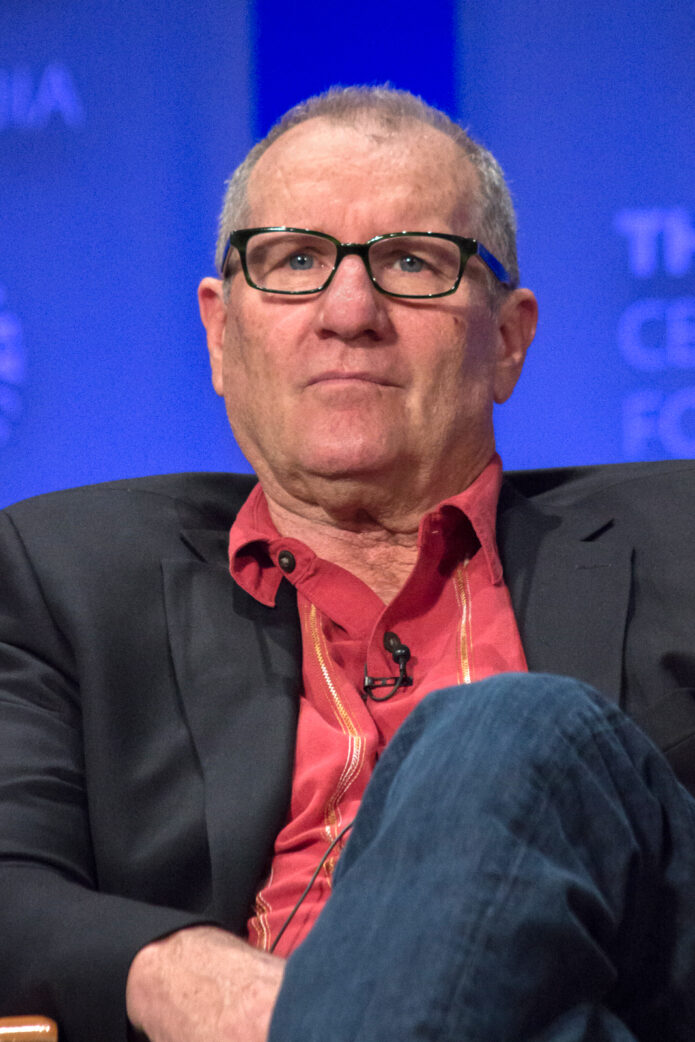
It also avoids adding random tattoo images just to fill the page. The image search didn’t turn up dependable tattoo photos of O’Neill, so there are no images of his tattoos here. The single image is a separate portrait that clearly shows his face. That’s a real gap in the available coverage, not a reason to fill the article with someone else’s ink.

For now, the honest takeaway is that O’Neill’s most recognisable marks are the characters he played, not confirmed designs on his skin. Al Bundy and Jay Pritchett are easy to identify. A verified Ed O’Neill tattoo isn’t.

Watch Ed O’Neill talk about his career

This interview is a better use of a few minutes than another recycled tattoo gallery. It offers background on O’Neill’s career and public persona, which is what the available evidence can support.

More actor tattoo guides

Edward Norton Tattoos: The American History X Ink Was Makeup

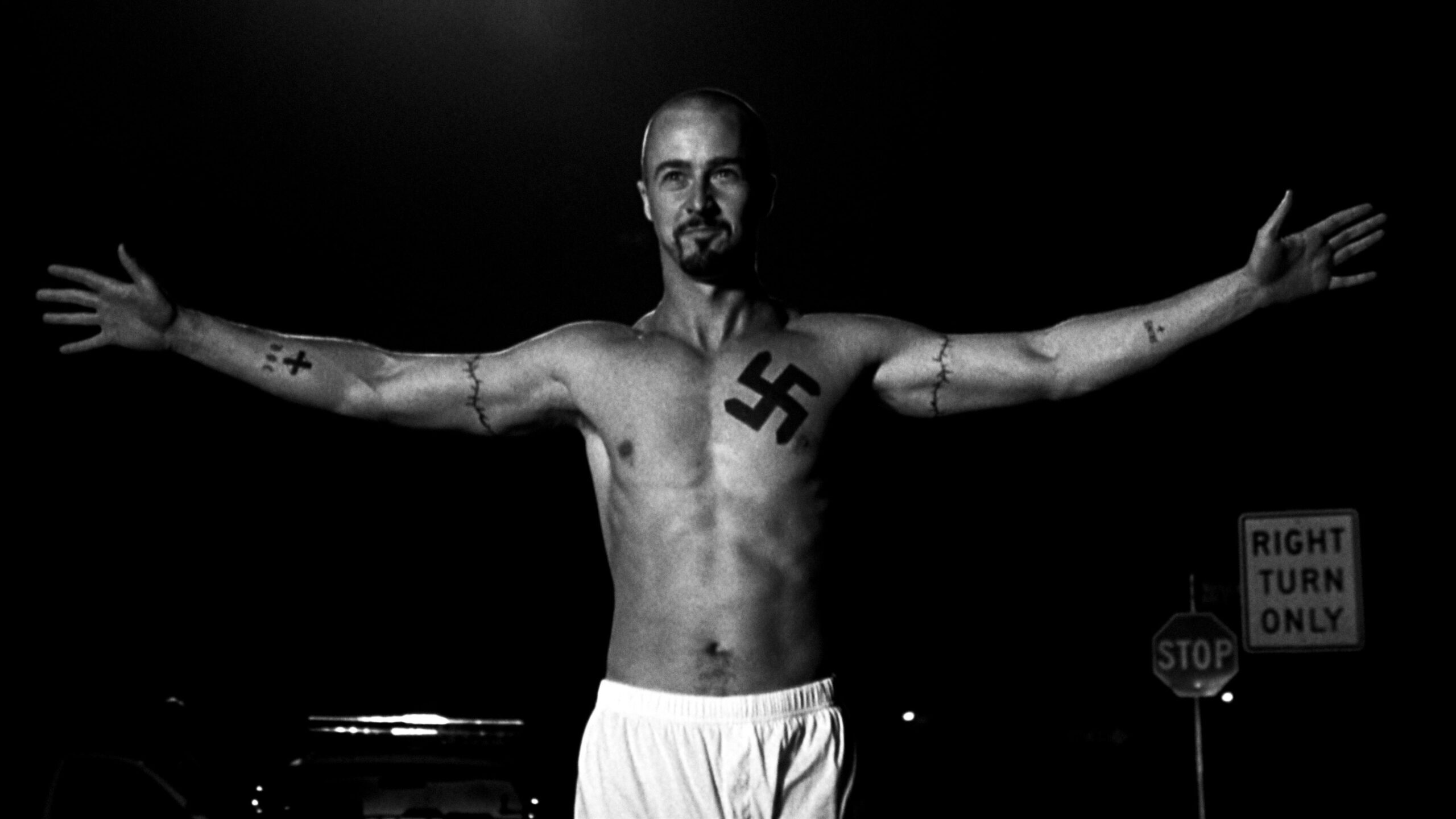
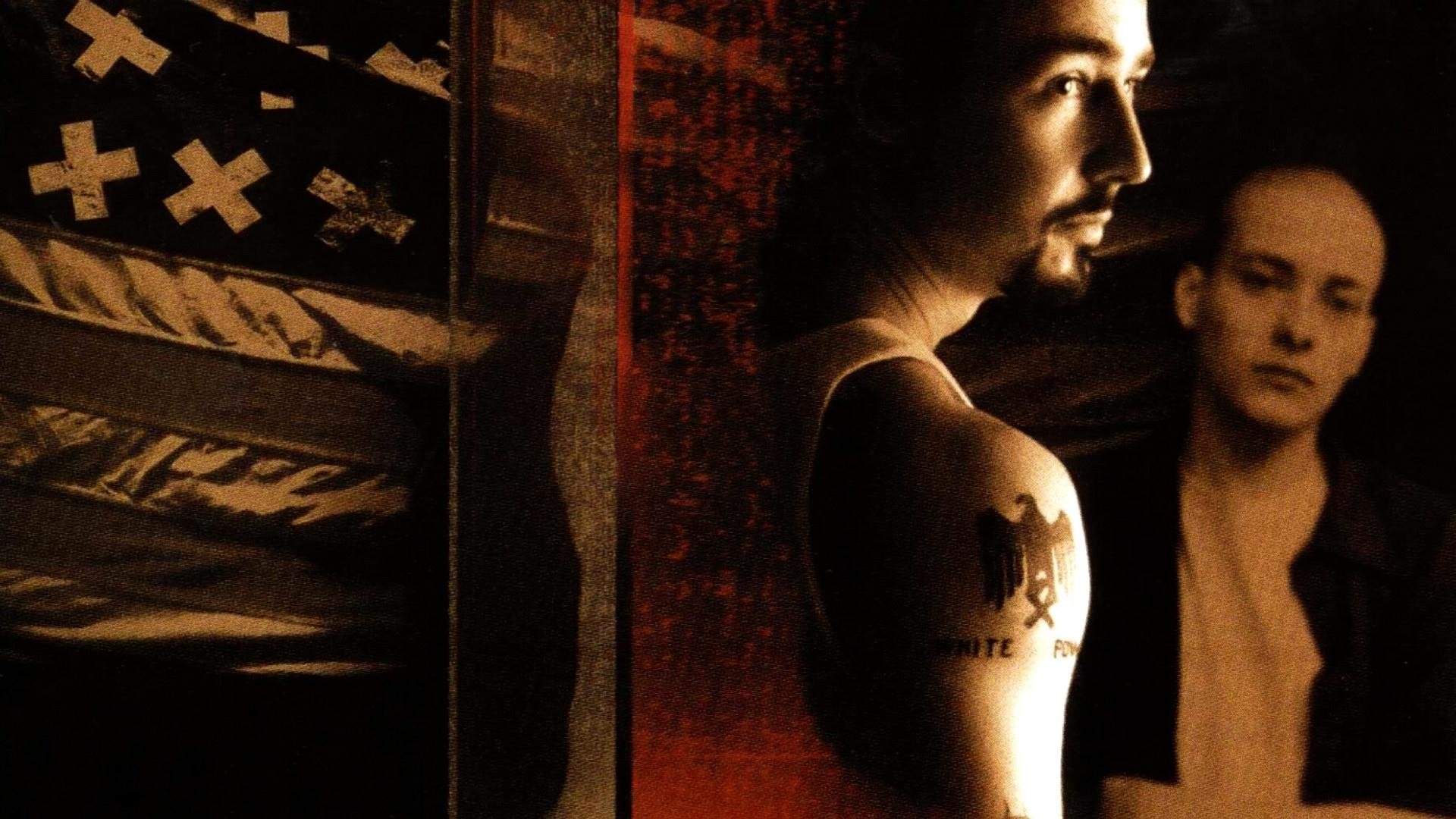
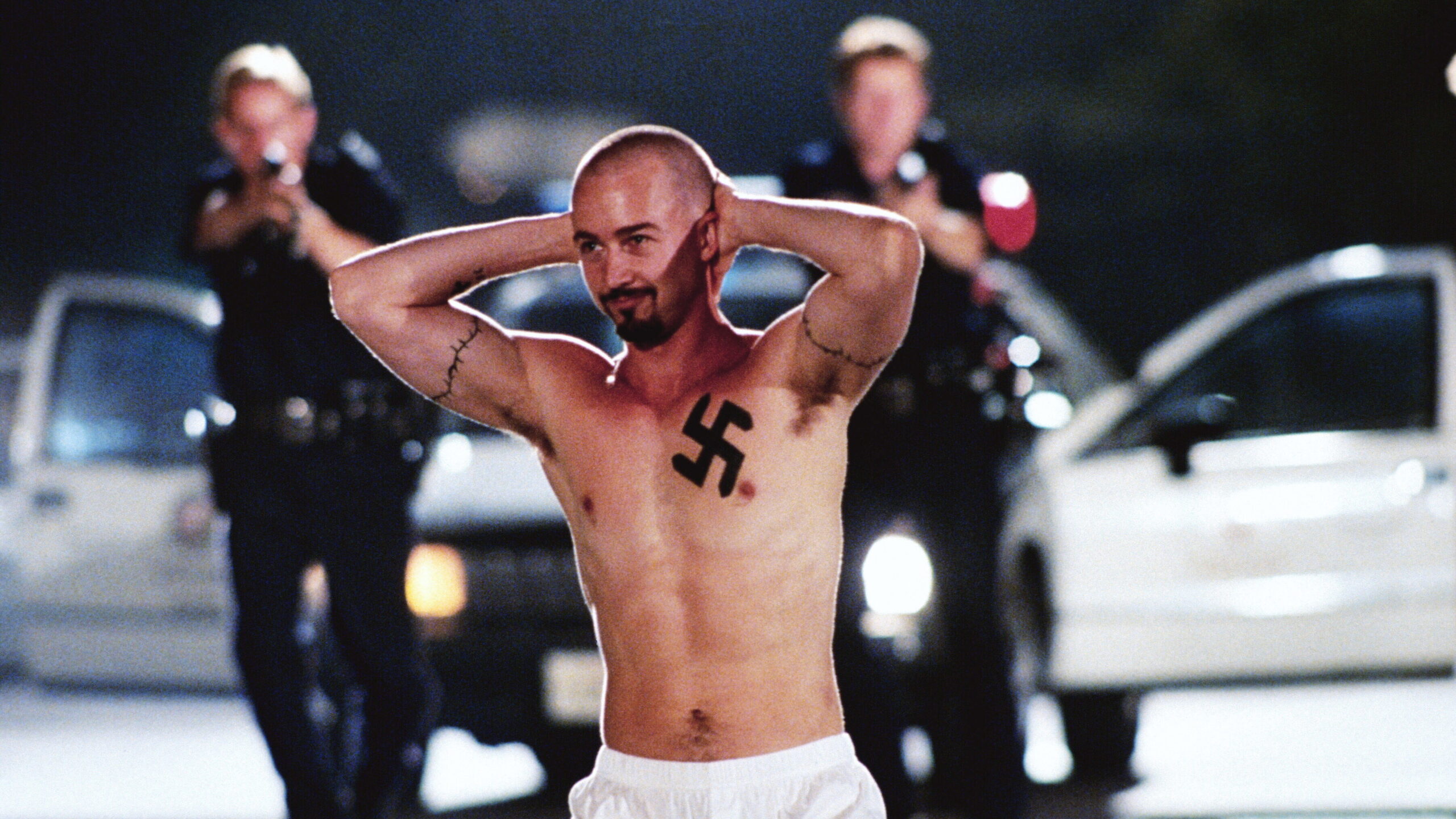
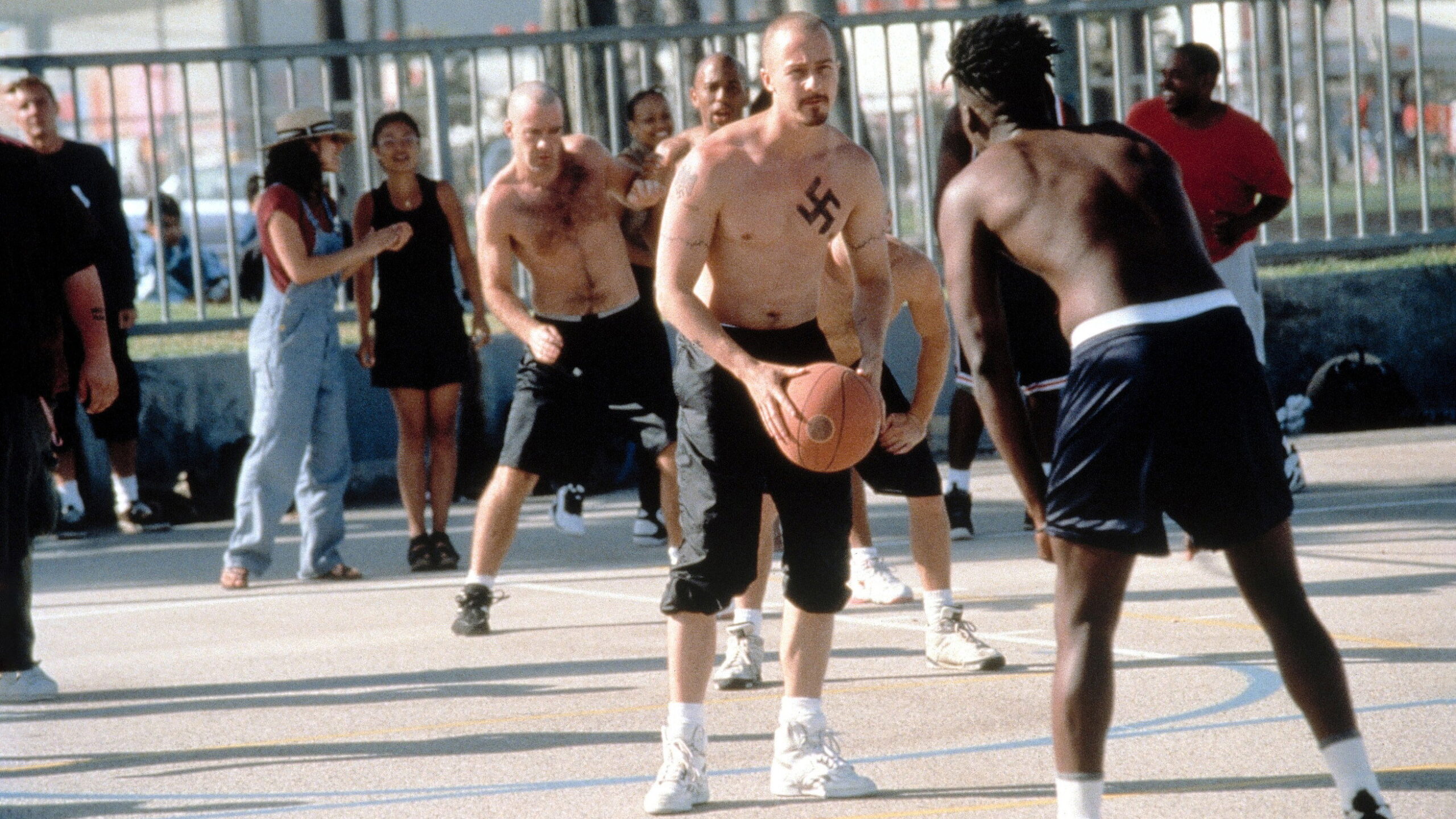
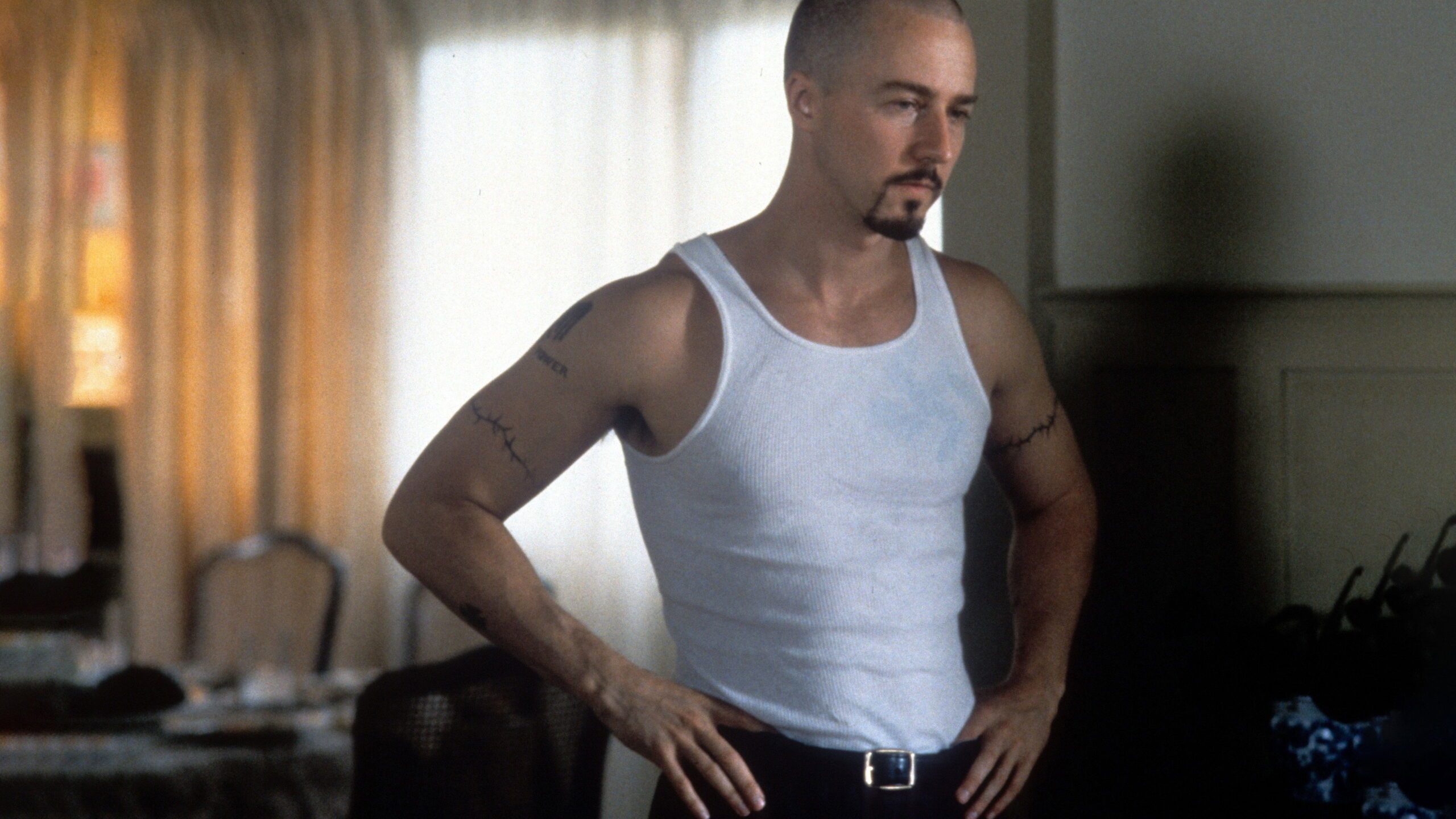
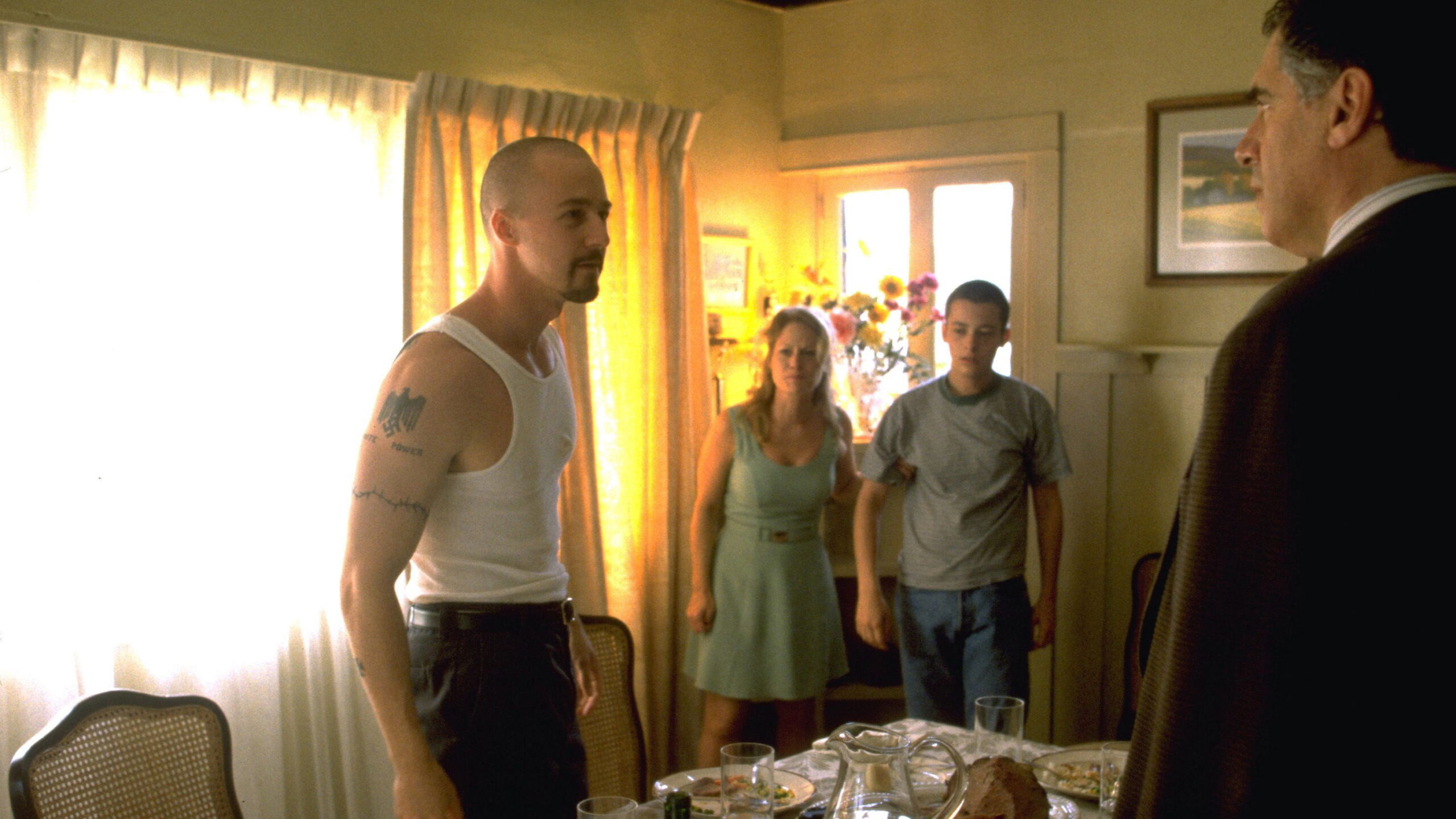
Edward Norton tattoos are easy to mistake for the real thing if you remember American History X. Online, plenty of stills show him with a large chest symbol, marks on both arms, and smaller designs near his wrists. But those images show Derek Vinyard, the character Norton played in the 1998 film, not the actor with permanent ink.

The short answer: Norton has no well-documented permanent tattoos. The designs from the film were applied as character makeup for the role and removed after filming.

Does Edward Norton have tattoos?

Public photos and reporting don’t show Norton with a confirmed set of real tattoos. Red carpet appearances, interviews, and everyday photos across the years don’t reveal a consistent collection. The designs people associate with him show up when he is playing Derek, which is a key difference from permanent ink that would appear in photos over time.

It’s easy to see how the mix-up started. Norton changed his hair, physique, and overall appearance for the role, and the makeup team gave Derek a striking set of tattoos. In the still below, the chest symbol and smaller arm marks are part of the character’s look, not evidence that Norton had them inked.

Edward Norton as Derek Vinyard showing the American History X chest and arm tattoos

The American History X tattoos belong to Derek Vinyard

Derek’s tattoos tell you a lot about him before he says much at all. The largest design sits at the center of his chest, where the camera can’t miss it. Rougher marks cover parts of his upper arms, with smaller symbols lower down. The look is deliberately blunt and aggressive, more like a statement than something chosen from a tattoo artist’s flash book.

That’s why searches for “Edward Norton tattoos” tend to turn up the same movie stills. Norton’s face is in the pictures, but the tattoos belong to Derek’s story. Calling them Edward Norton’s real tattoos changes what the image shows and gets the basic fact wrong.

Edward Norton in American History X with Derek Vinyard's temporary shoulder and chest tattoos visible

Edward Norton as Derek Vinyard with the movie tattoos visible across his chest and arms

What the fake tattoos were meant to show

The makeup wasn’t meant to create a realistic tattoo history for Norton. It helps make Derek’s identity clear at a glance: he is a skinhead who has embraced an extremist ideology and wants people around him to see it. The chest design works almost like a warning sign.

The arm designs carry the same message in wider shots. They’re visible when Derek is outside, playing basketball, or moving through a room. They aren’t always neat, and that roughness suits a character who has made hate part of his public identity.

Edward Norton as Derek Vinyard playing basketball with the American History X chest tattoo makeup visible

Edward Norton in a tank top with Derek Vinyard's temporary upper arm tattoos visible

Why the pictures keep getting labeled as Edward Norton tattoos

Image searches often identify a face without preserving the context around it. A still tagged with Norton’s name can be reposted on Pinterest, fan pages, image boards, and social media after the film title has been lost. Eventually, it can look like proof that the actor has tattoos, even though it came from a movie scene.

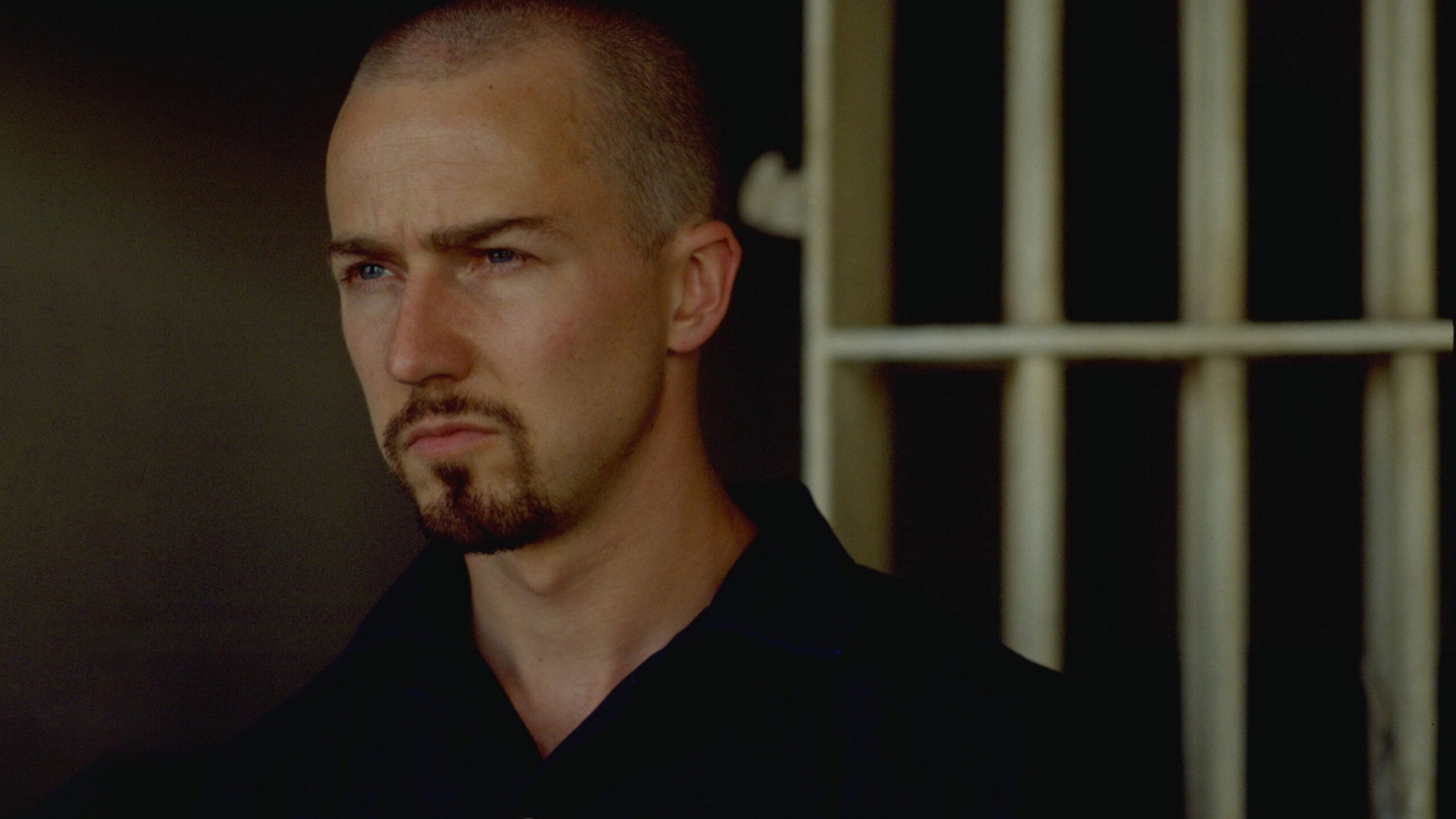
The smaller marks on Derek’s forearms get mistaken for real body art, too. A close-up can make them look like separate tattoos, but they’re part of the same temporary character design. In one prison scene, the forearm details are visible briefly before the shot moves on.

Edward Norton in an American History X prison scene with temporary forearm tattoo makeup visible

So, are there any confirmed Edward Norton tattoos?

There are none confirmed in the public images and reporting reviewed for this article. That doesn’t rule out new information coming to light, but there isn’t a reliable collection of permanent tattoos to document. The careful answer is that Norton has no documented tattoo collection, while Derek Vinyard has one of modern cinema’s most recognizable tattoo looks.

The distinction matters because these designs belong to a disturbing character and a particular story. If you’re looking to the film for inspiration, think of them as character makeup references, not tattoos Norton chose for himself. For more fact-checked stories about actors’ ink, browse the actors tattoo archive.

The mix-up also sticks around because the film shows the tattoos in so many settings: in stark black and white, under bright outdoor light, and in ordinary rooms against a white tank top. Seeing the same designs in different lighting can make them seem like a regular part of the actor’s appearance.

Look at the placement and scale, though, and the designs read as costume work. The chest symbol is oversized and positioned for the camera, while the arm marks stay visible as Norton moves. Those choices help the audience understand Derek before he explains himself.

That’s what makes the images useful on a tattoo website, even though they don’t document Norton’s personal ink. They show how placement, scale, and repetition can shape a character: the central chest design draws attention, and the arm pieces complete the silhouette in wider shots. The goal is instant recognition, not subtlety.

The caption makes a difference. “Edward Norton in American History X with tattoo makeup” is accurate; “Edward Norton’s chest tattoo” isn’t. Clear wording helps separate an actor’s real-life choices from a role designed to look extreme.

If you’re comparing movie makeup with a celebrity’s real tattoos, consistency is a useful check. Look at photos away from set, from later years, and in different settings. Norton’s famous designs disappear outside Derek’s scenes, which is a strong sign that “Edward Norton tattoos” is really a story about the character.

Edward Norton as Derek Vinyard with temporary forearm tattoo makeup in American History X

Watch Edward Norton talk about American History X

This interview offers useful background on the film and the character behind the tattoo images.

More actor tattoo guides

Mads Mikkelsen’s Tattoos: H.J. Initials and Pusher Ink

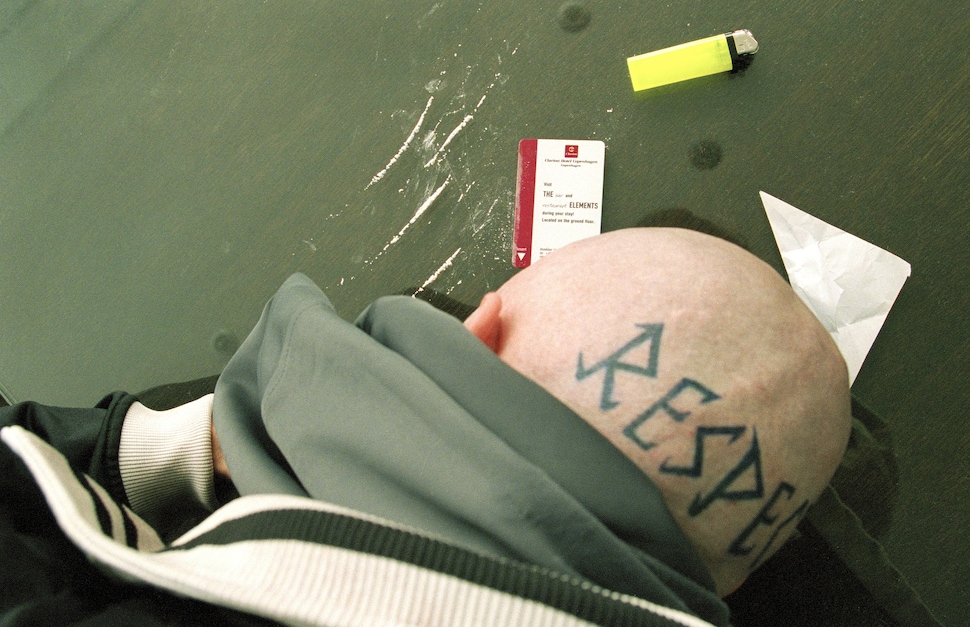
Mads Mikkelsen’s tattoo story is easy to mix up because the images most people recognize belong to a character. The actor is reported to have a small real tattoo of the initials H.J., associated with his wife, Hanne Jacobsen. The bolder images come from Pusher II, where Mikkelsen played Tonny, a troubled Copenhagen criminal with a shaved head, an elaborate back piece and ink running down his arms.

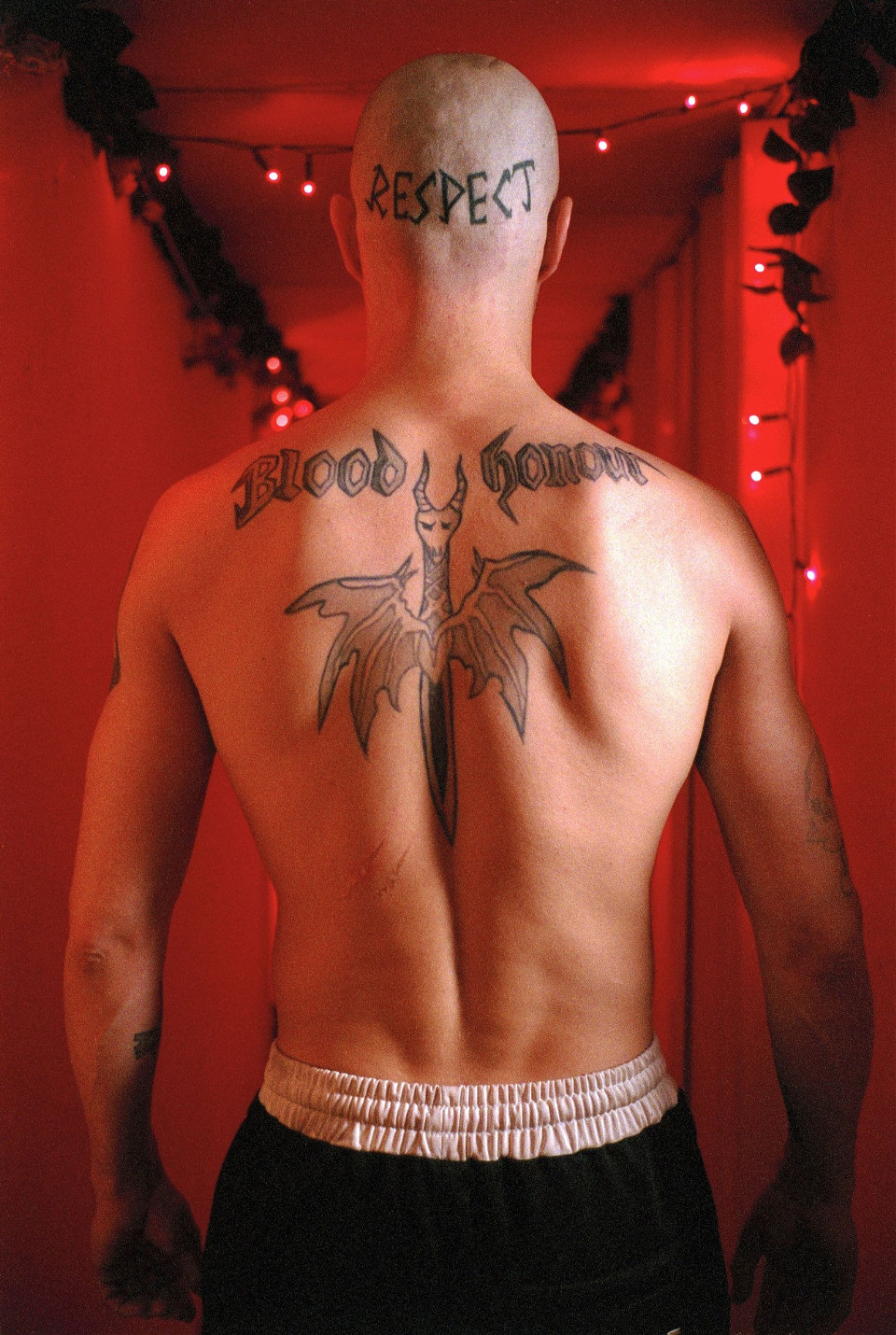
That distinction is important. A tattoo can look completely real on screen and still be part of a character’s costume. The RESPECT lettering, “Blood & Honour” and the winged design were made for Tonny’s look. They help tell the story of a fictional man searching for status, approval and control.

The small H.J. tattoo has a different feel: personal, quiet and easy to miss. Reports place it on Mikkelsen’s wrist and connect it to Hanne. Tattoo-focused sources have also credited a Danish artist and called it his first tattoo. The documentation is limited, so it’s best to treat it as a reported personal design rather than infer a large permanent collection from film stills.

The screen tattoos can be described clearly; the H.J. initials should stay separate. This keeps the actor’s tattoos distinct from makeup and costume work.

The RESPECT tattoo on Tonny’s scalp

Mads Mikkelsen as Tonny showing the RESPECT tattoo across the back of his shaved scalp

The word RESPECT across the back of Tonny’s shaved head is the detail many viewers remember first. Its large, angular lettering is hard to miss when the camera moves behind him. The placement carries its own irony: someone who truly has respect wouldn’t need to announce it in block letters, and Tonny keeps chasing approval from people who withhold it.

Mikkelsen later described the idea as ironic and tied to Tonny’s need for approval. That gives the design more depth than a standard gangster look. The scalp placement adds to the idea: everyone behind Tonny can read the word, while he can’t see it himself. He has to trust other people to take in the message.

“Blood & Honour” across the upper back

Mads Mikkelsen as Tonny with RESPECT, Blood and Honour lettering and a winged back tattoo

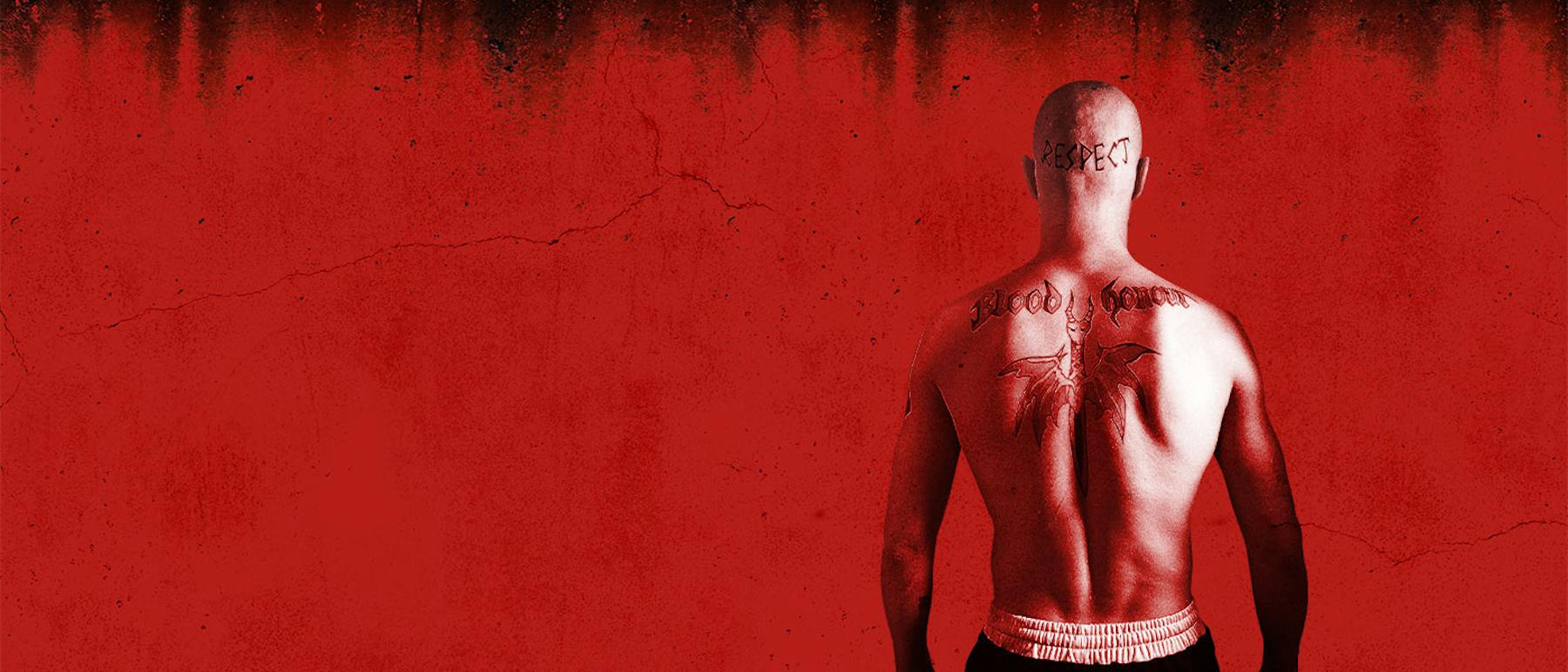
Below the scalp lettering, “Blood & Honour” curves across Tonny’s shoulders. A dark winged figure and long central blade sit between the shoulder blades. In the wider promotional image, the ink reads as one composition rather than a collection of unrelated designs.

The scale gives the character a presence before he speaks. The tattoo makes Tonny look like he belongs to a violent world, while the story reveals his insecurity and confusion. The design is blunt because Tonny wants to seem dangerous; the film keeps showing the fear beneath that performance.

The forearm tattoos in the dockside scene

Mads Mikkelsen as Tonny extending his tattooed forearm during a Pusher II scene

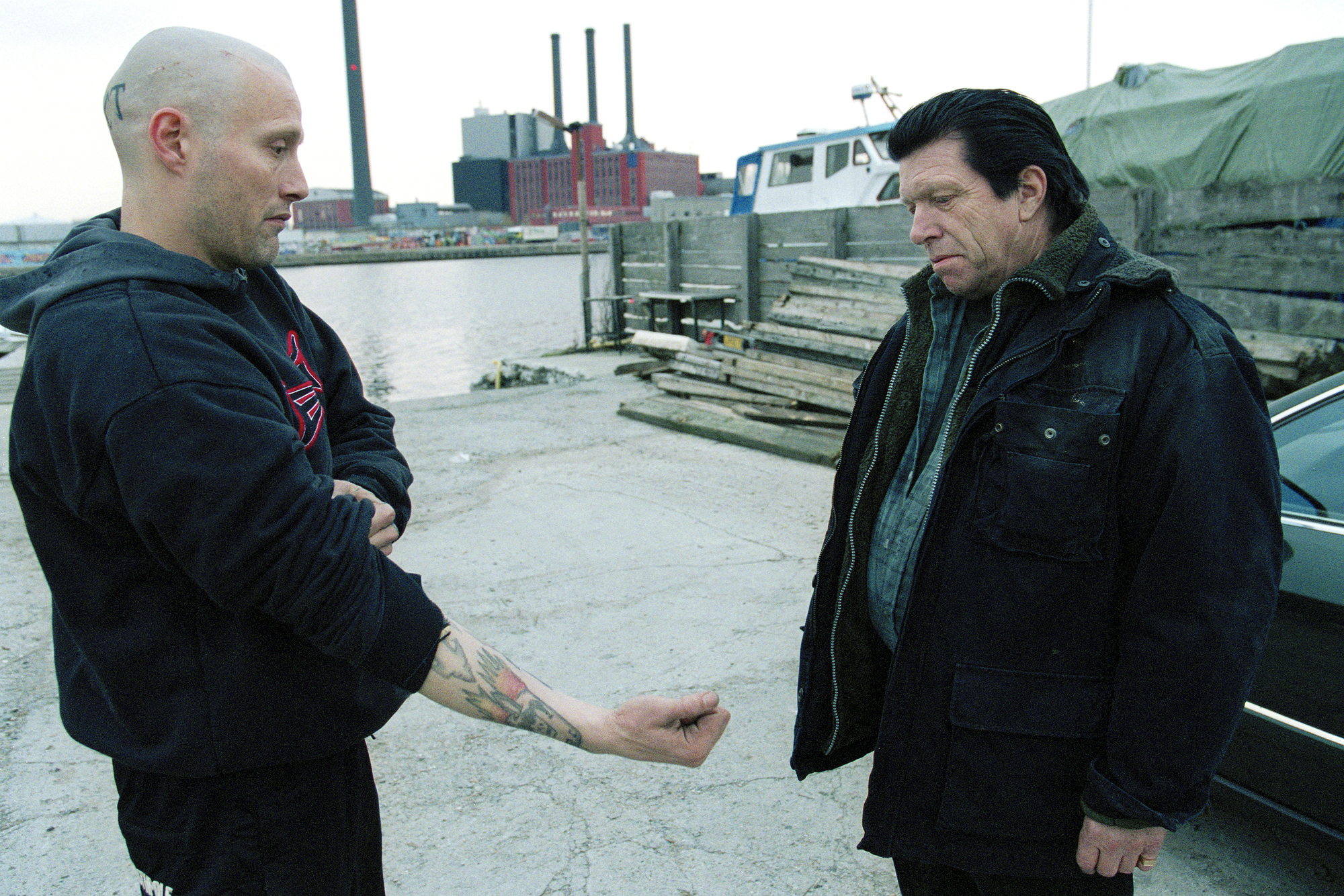
A useful still shows Tonny extending his forearm toward his father at the waterfront. It isn’t a clean catalogue photo, but it shows the character’s ink continuing beyond his head and back. The forearm tattoos appear during a tense family exchange, giving the placement more weight than a simple close-up.

Tonny is trying to prove himself. His body becomes part of the argument, and the ink reinforces the street-hardened image he wants to project. Yet his posture and the exchange with his father show how little power he has there. He looks tough, but still wants to be taken seriously by his dad.

A close view of the RESPECT lettering

Close view of Mads Mikkelsen as Tonny with the RESPECT tattoo visible on his shaved head

The close-up over the table shows how rough the lettering is meant to look. The lines are uneven and jagged, in keeping with the film’s low-level criminal world. It has none of the polish of luxury tattooing; the mark is built for speed, attitude and instant recognition.

That rough finish suits Tonny. He’s impulsive, bruised and desperate to be noticed, and the tattoo reduces that feeling to one word. The camera catches it for a moment, then returns to the table, the drugs and the decisions that keep worsening his life.

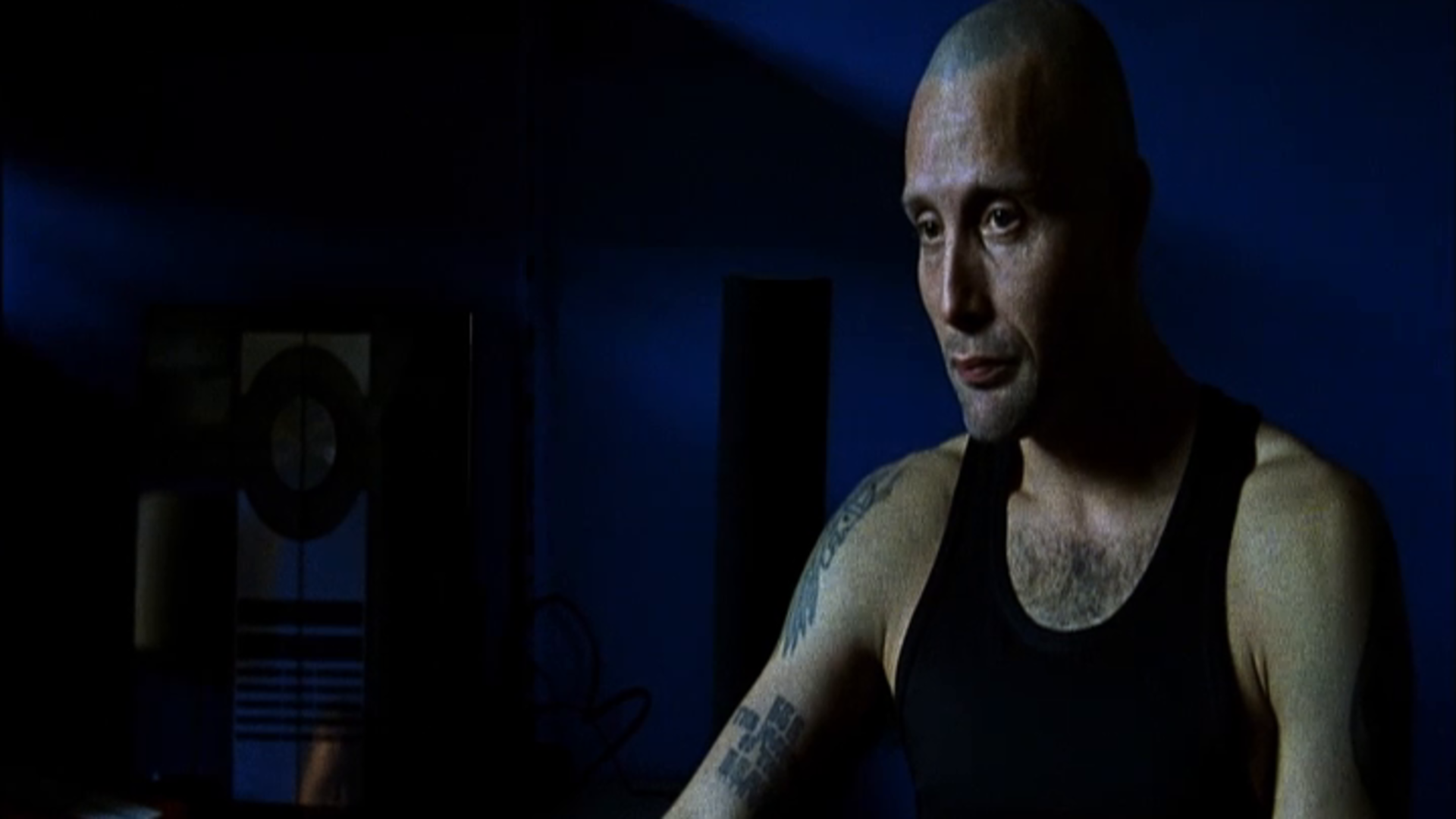
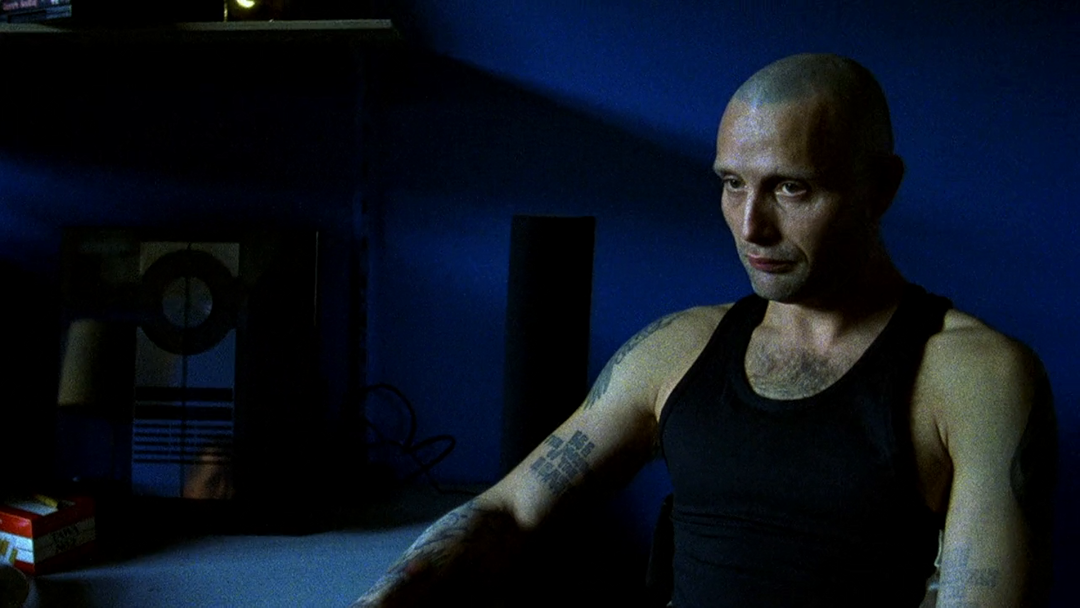
The arm ink in the blue-lit room

Mads Mikkelsen as Tonny seated in blue light with visible shoulder and arm tattoos

Another still from the darker interior scenes shows Tonny seated in a blue-lit room, with tattoos across his shoulders and forearms. The mood differs from the red-lit back shot. There’s no dramatic pose or broad display of the lettering; the ink is simply part of his everyday silhouette, visible because his vest leaves his arms bare.

That’s why the tattoo work in Pusher II stays memorable. The designs return as part of Tonny’s physical presence, not only for one reveal. The red room makes the back piece confrontational; the blue room makes the arm ink feel lived in. Both images belong to one fictional collection, but they show different sides of him.

How the film tattoos differ from Mads Mikkelsen’s real ink

Mads Mikkelsen as Tonny in a close portrait with visible shoulder and arm tattoos

The RESPECT lettering, “Blood & Honour,” winged back design and arm tattoos shown here belong to Tonny, Mikkelsen’s character in the Pusher films. They were created for the role. Mikkelsen’s reported H.J. wrist initials are a separate, much quieter detail; public evidence doesn’t establish a full catalogue of dramatic permanent tattoos.

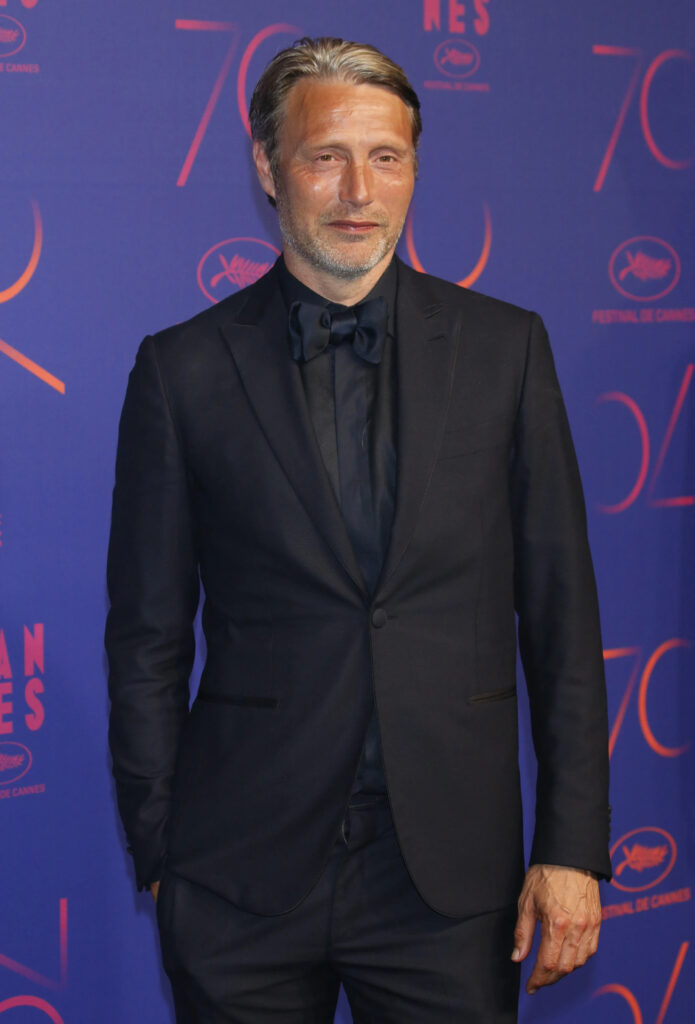
That difference should be clear in headlines, captions and the article itself. A generic Cannes portrait doesn’t prove an actor has a tattoo, and a film still doesn’t show what he wears off camera. Good tattoo research follows the image instead of bending it to fit a rumor. The pictures are most useful when labeled honestly: Mads Mikkelsen as Tonny, with the character’s ink doing much of the storytelling.

What’s confirmed: Mikkelsen’s real tattoo record appears limited, with the H.J. wrist initials the clearest reported personal design. His more famous tattoo images come from Tonny, whose scalp, back and arms were marked to show insecurity hidden beneath toughness. That’s why searches for Mads Mikkelsen tattoos return such striking pictures, even though many show a role.

Watch a relevant Mads Mikkelsen interview: The video below accompanies the article with a look at the actor’s public persona and intense character work.

More actor tattoo guides

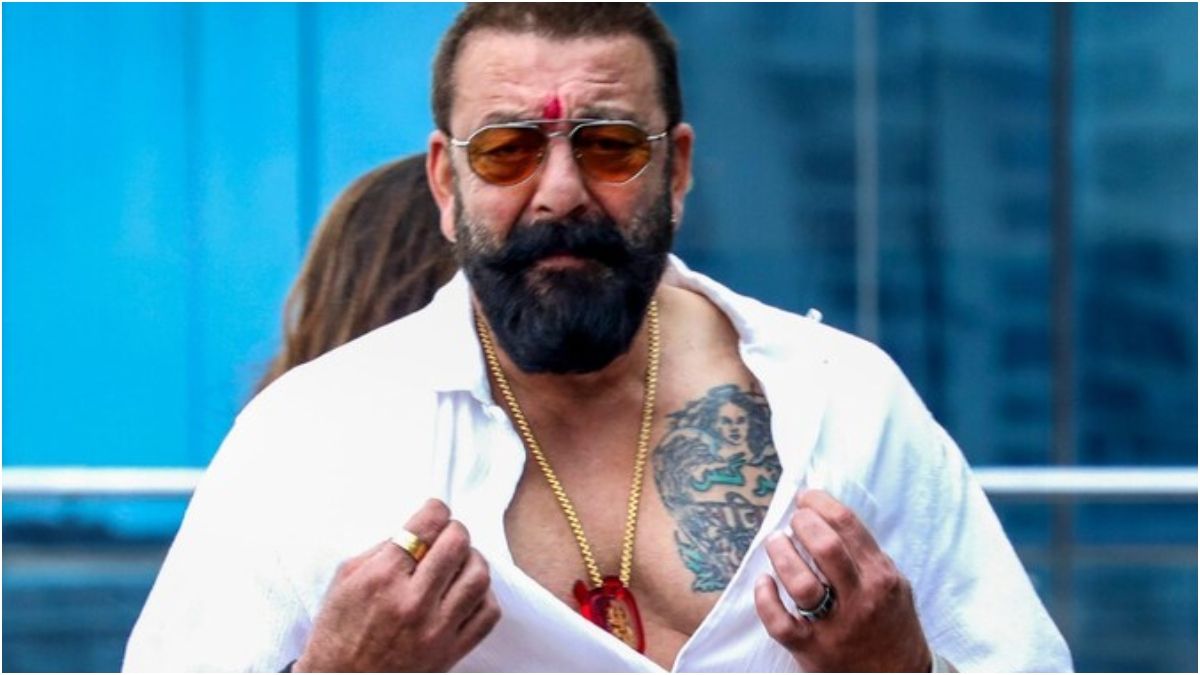
Sanjay Dutt’s Ink Tells the Story in Names, Gods and Family

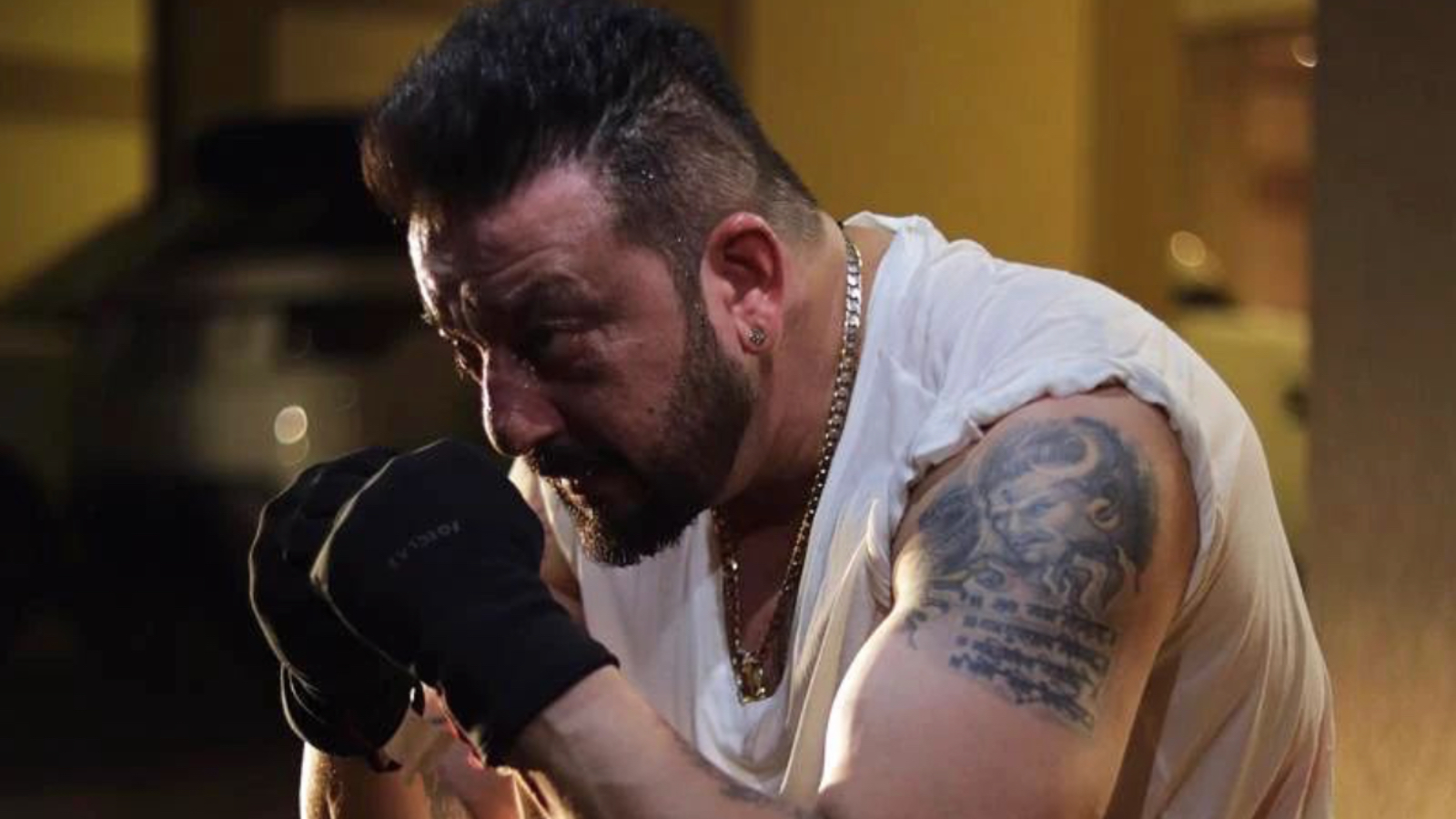
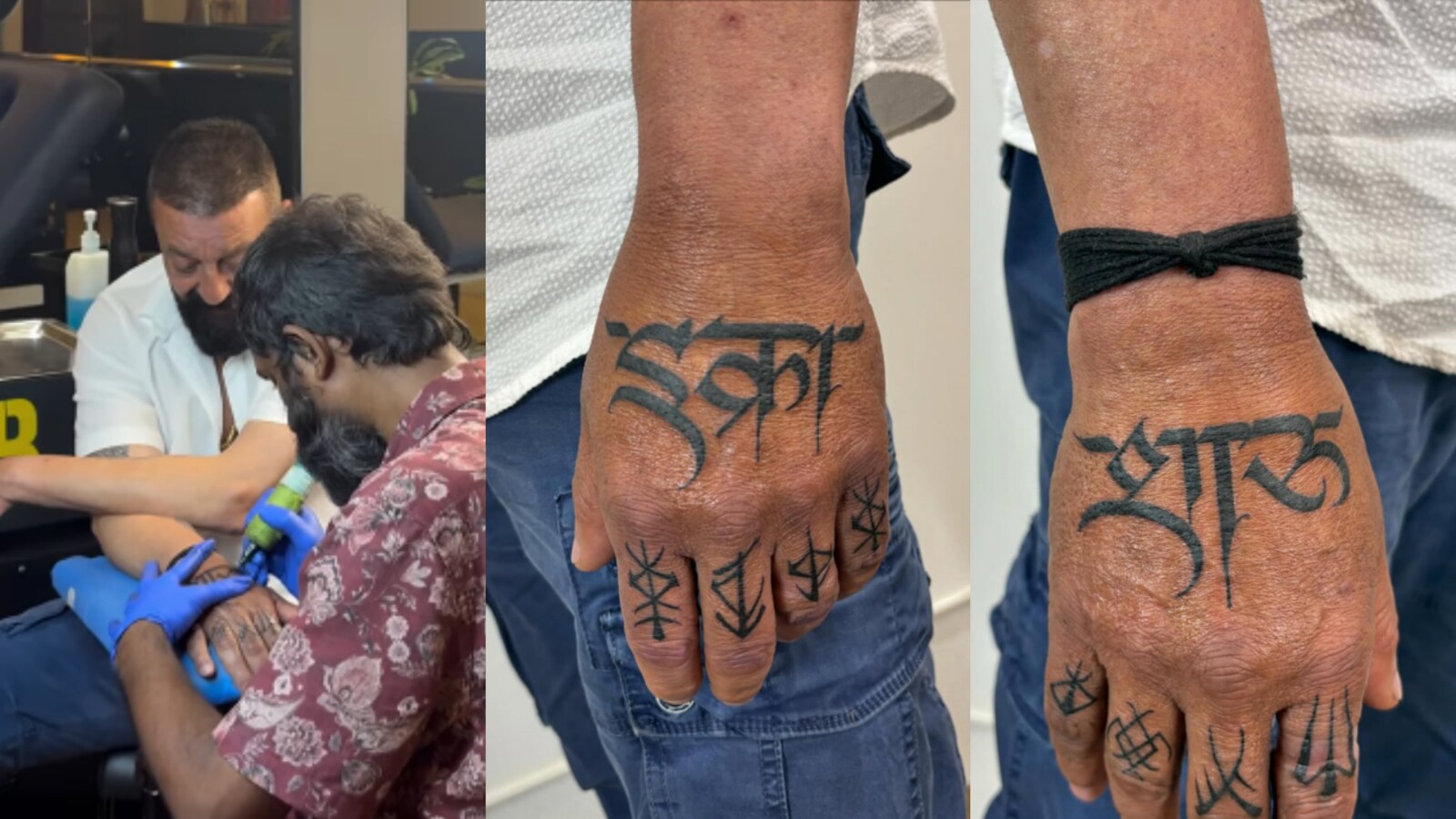
Sanjay Dutt’s tattoos reflect several parts of his life: family, spiritual imagery, films and symbols that have appeared in tattoo features over the years. The newest widely reported additions are his twins’ names, Shahraan and Iqra, tattooed in bold letters on the backs of his hands. Older coverage also identifies a Shiva design, family references, Simba and samurai imagery.

The collection has been described in interviews, photographs and tattoo features, though the details are not always consistent. This guide focuses on what has been shown or discussed in identifiable coverage and flags the parts that remain uncertain.

The first tattoo came from a 2003 Goa plan

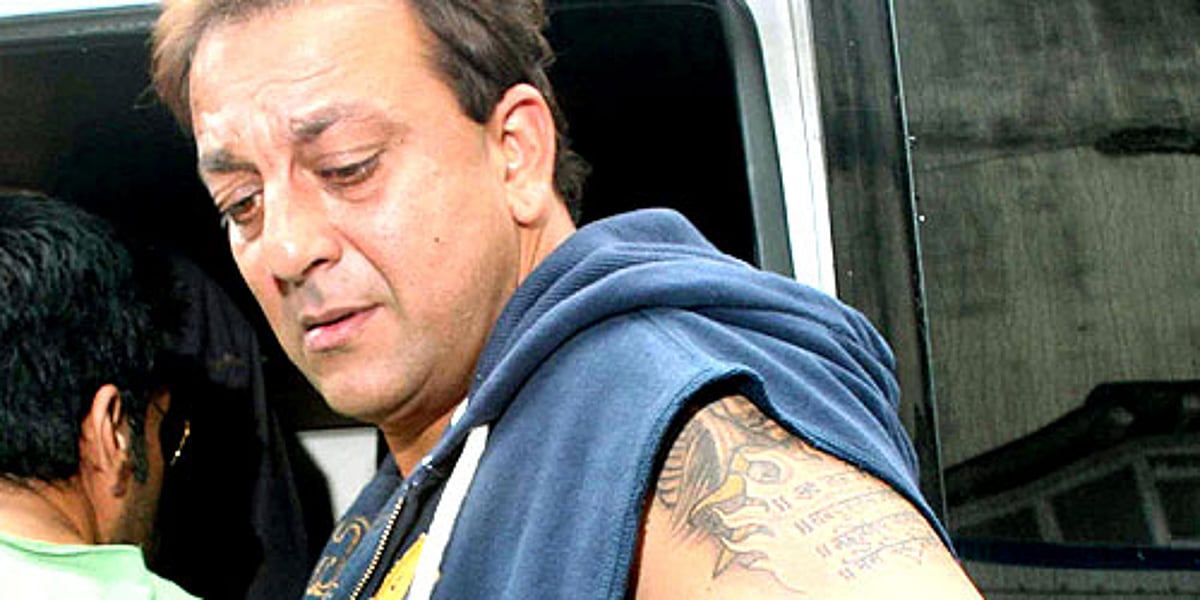
Sanjay Dutt arm tattoo

Dutt’s first tattoo is generally dated to 2003, around the time he was working on Musafir. Tattoo artist Deepak Vetal has described meeting him through the film. The early plan was reportedly to build a sleeve, which may explain why the tattoos look more connected than a set of unrelated pieces.

The tattoo predates the current celebrity tattoo-tour era. Dutt was drawn to the look, got the work done in Goa and added to the collection over time. The early pieces set a tone that continued through later work: bold black lines, clear symbols and designs that remained visible in public appearances.

Photos from different years can make the tattoos appear sharper or less defined. Lighting, camera angle and the age of the ink all affect how the work looks, so a difference between two pictures does not necessarily mean a new tattoo.

Shiva gives the collection its spiritual centre

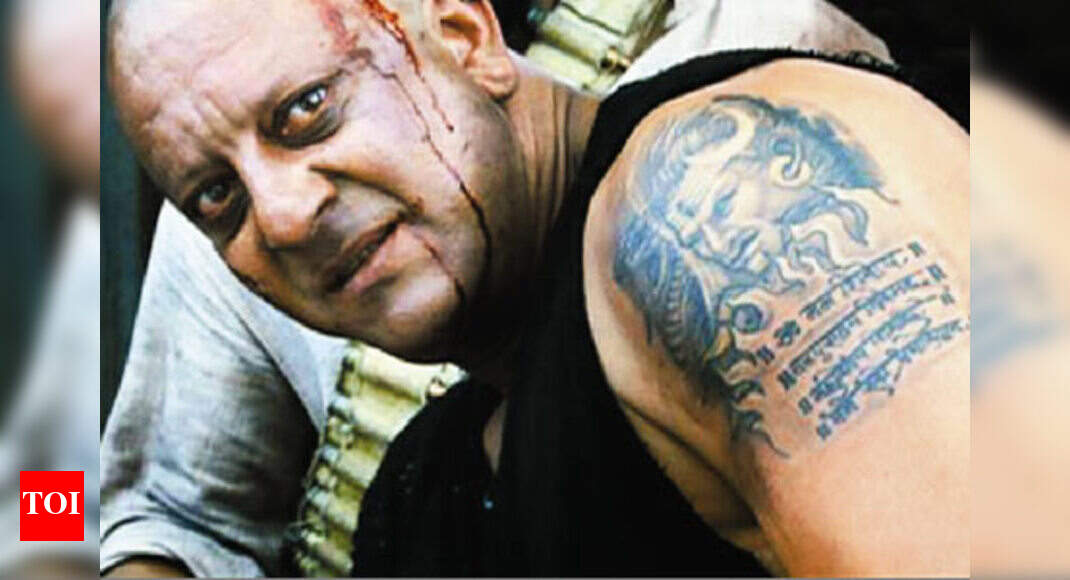
Sanjay Dutt Shiva tattoo

The design most often associated with Dutt’s collection is a Shiva tattoo. Video coverage and Bollywood tattoo features connect it with his devotion and the importance of Shiva imagery in Indian culture. Some sources also mention Sanskrit or other devotional details, but descriptions of the exact wording and placement vary.

The image is large and visually prominent, giving the collection a clear focal point. Dutt’s public image has often been tough, and the tattoo fits that presence while also carrying a spiritual association.

It is safer to stick with the meaning sources identify than to guess at every line in a blurry photograph. Shiva is consistently named; finer claims about nearby marks are less certain.

His family names are the most direct tattoos

Sanjay Dutt Shahraan and Iqra hand tattoos

The newest clearly documented pieces are the names of Dutt’s twins, Shahraan and Iqra. Reports in 2026 showed the names in bold black lettering across the backs of his hands. The placement is easy to see in photos and public appearances, making the tribute part of his everyday look.

The timing gives the tattoos another layer: reports described them as a New Year addition, years after his first tattoo session. Even after building a substantial collection, Dutt chose to add something direct and personal.

Older articles also mention tattoos connected with his parents. Those details are repeated in some coverage, but without a clear image or direct quote they are harder to confirm precisely. The names on his hands, by comparison, are visible and clearly identified.

Simba and samurai references add a different mood

Sanjay Dutt samurai tattoos

Tattoo features and video explainers have also described designs in Dutt’s collection as references to Simba and samurai warriors. These motifs bring a different feel from the family lettering and Shiva imagery. Simba is associated with courage and royalty in The Lion King, while samurai designs often draw on ideas of discipline and loyalty.

The sources do not always provide close-ups or explain who designed each piece. It is best to describe these as motifs linked to Dutt in tattoo coverage, rather than present every interpretation as something he has personally confirmed.

Together, the reported designs span religious imagery, family, popular culture and warrior symbolism. They do not all need to share one style to feel like part of the same collection.

The older pieces still carry much of the collection’s character.

Sanjay Dutt chest tattoo

Dutt’s older tattoos have remained visible through different stages of his career. They read clearly in photographs, whether he is on set, at an event or in a casual interview. The exact combination on view changes depending on what the picture shows.

One photo might include most of an arm while another crops it at the elbow. Images may also be mirrored or filtered. That does not automatically mean the tattoo has changed. The year, angle, lighting and aging ink can all affect how it appears.

Because several designs sit close together, headlines sometimes label a photo as a single “Shiva tattoo” even when it shows more of the collection. It helps to separate what is visible from what a caption claims.

Recent additions show that the collection is still growing.

The names on Dutt’s hands are a clear example of a new, visible tribute to his family. They sit alongside much older work and bring his current life into the collection. For another look at a celebrity collection with its own well-documented stories, see our Halsey tattoo guide.

Recent videos also bring the older tattoos back into view. A clip focused on one new design can show how it sits beside the Shiva imagery and other symbols, giving a sense of how the collection has changed over time.

The collection is still a work in progress. Some choices date back years, some have been added recently, and a few details are best left unconfirmed.

The bigger picture

The documented picture brings together Shiva imagery, family references, motifs described as Simba and samurai, and the newer hand tattoos for Shahraan and Iqra. Dutt’s first tattoo is generally dated to the early 2000s; the collection has grown well beyond the original reported plan for a sleeve.

The tattoos span family and belief as well as imagery that suits Dutt’s larger-than-life film roles. There is no need to assign a hidden meaning to every mark to see those threads.

For design inspiration, the most noticeable features are the bold lettering on the hands, the scale of the Shiva piece and the mix of recognizable symbols across different eras. For exact meanings, it is best to rely on details Dutt or a reliable tattoo feature has identified.

Video companion

This tattoo-focused video gives a closer look at Dutt discussing his ink and at how the older pieces sit across his body.

Chris Evans’ tattoos: the stories behind his hidden ink

Chris Evans has spent much of his career in shirts and costumes that cover his tattoos, so a glimpse of his chest ink can feel like a small reveal. He has several pieces, each tied to a different part of his life: his mother and siblings, a friend he lost, his dog Dodger, a spiritual idea and the Marvel role that changed his career.

Evans has explained why he likes keeping his tattoos easy to cover. In an older interview, he said they can mean extra time in the makeup chair while filming. That helps explain the placements: his upper arms, ribs, chest and ankle, with most of the ink hidden under a T-shirt. When he does go shirtless, the designs read like pieces of a personal scrapbook.

The details below follow what interviews and photographs support, with uncertain stories left open.

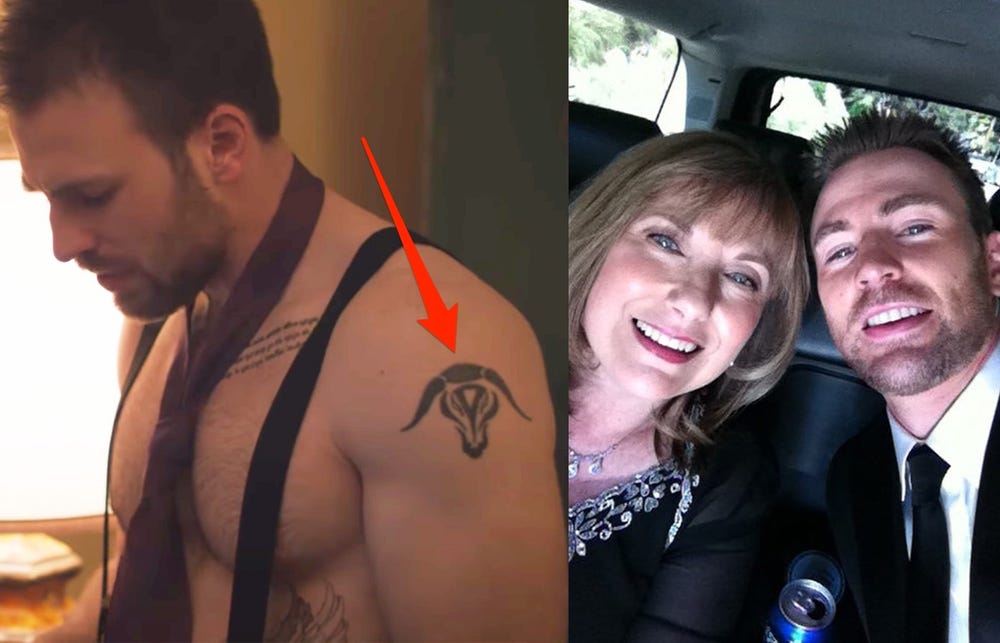
The Taurus tattoo is a quiet nod to his mother

Chris Evans Taurus tattoo

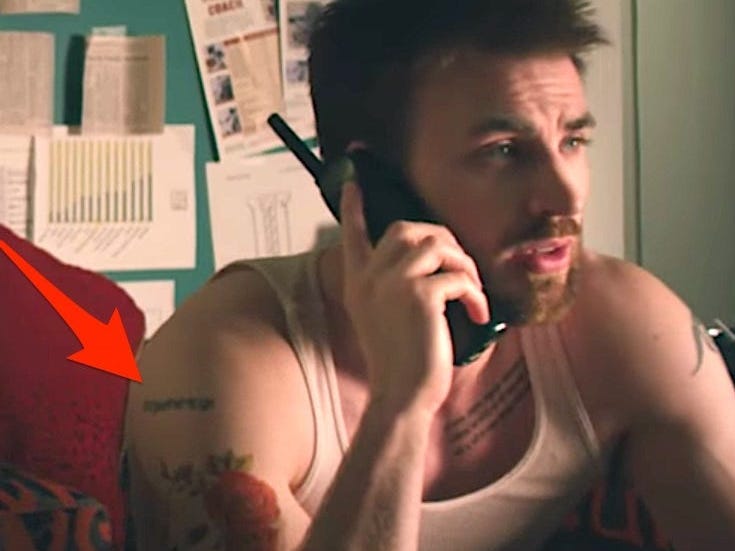
One of Evans’ oldest visible tattoos is a Taurus symbol on his left upper arm. It’s easy to miss in a red-carpet photo, but it stands out in pictures collected by Business Insider. The bull-shaped design is usually described as a tribute to his mother, Lisa Evans, who is a Taurus.

That reading fits with the family connections in several of Evans’ tattoos. The designs are often small, placed where he can keep them private, and connected to people close to him. The Taurus isn’t a large name or a loud statement; it’s a simple symbol with a family reference behind it.

The exact date he got the tattoo hasn’t been documented. Older photos suggest it has been there for a long time, perhaps since early in his career, but they don’t tell us when he sat for it. The careful description is a long-standing Taurus tattoo associated with his mother, rather than a detailed origin story Evans hasn’t confirmed.

Its placement also suits his approach to tattoos. It shows in a tank top and disappears under most shirts and costumes. He can keep something meaningful without making it part of every public appearance.

“Loyalty” is an older upper-arm tattoo with a clear message

Chris Evans loyalty tattoo

The word “loyalty” is written in dark script on Evans’ right upper arm. It’s one of his easier tattoos to identify: the lettering shows in stills from Puncture and in a Gucci Guilty Intense campaign image. Unlike the Taurus symbol, it needs no explanation. The word is right there.

In a 2014 interview while promoting Captain America: The Winter Soldier, Evans talked about the practical side of having tattoos. If a costume leaves his arms exposed, the makeup team has to spend extra time covering the ink. He prefers placements that can stay hidden when a role calls for it.

“Loyalty” fits that choice. The word can be seen, but it sits close to the upper arm and disappears under a sleeve. It expresses a broad value, so there’s no reason to assign it to one particular relationship without evidence.

Some early photos show a Chinese character near his arm tattoos. Page Six and Business Insider identify it as 氏, or “shì,” which Evans apparently thought meant family. He later had it removed. So an older photo may show a tattoo that is no longer part of his collection.

The Bardsley tattoo remembers a friend

Chris Evans Bardsley memorial tattoo

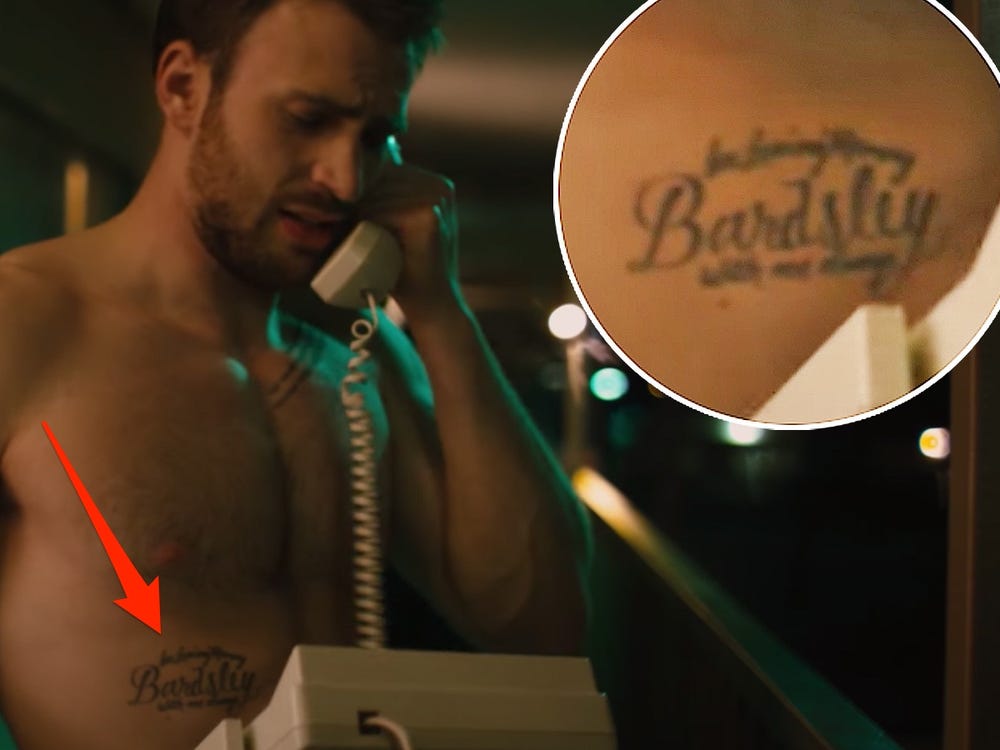
One of Evans’ most personal tattoos is a memorial to his friend Matt Bardsley. It reads “In loving memory” and “with me always,” with Bardsley’s name between the lines. The tattoo appears on the right side of Evans’ stomach in images from Puncture.

Bardsley, a childhood friend of Evans, died at 22 in 2003 after an all-terrain vehicle accident in Massachusetts. That history gives the tattoo a different weight from the designs connected to movies or public projects. It marks a private loss, even though it can be seen on screen.

The lettering has a soft, handwritten look. It feels more like a note kept close than a graphic meant to fill space. Its position on Evans’ torso also means it stays covered most of the time.

Evans hasn’t offered a long public explanation, and one isn’t needed to understand the basic meaning: the tattoo honors a friend who died young. Its quiet placement lets him carry Bardsley’s name without inviting strangers to interpret it.

The Eckhart Tolle quote is his most readable chest tattoo

Chris Evans Eckhart Tolle quote tattoo

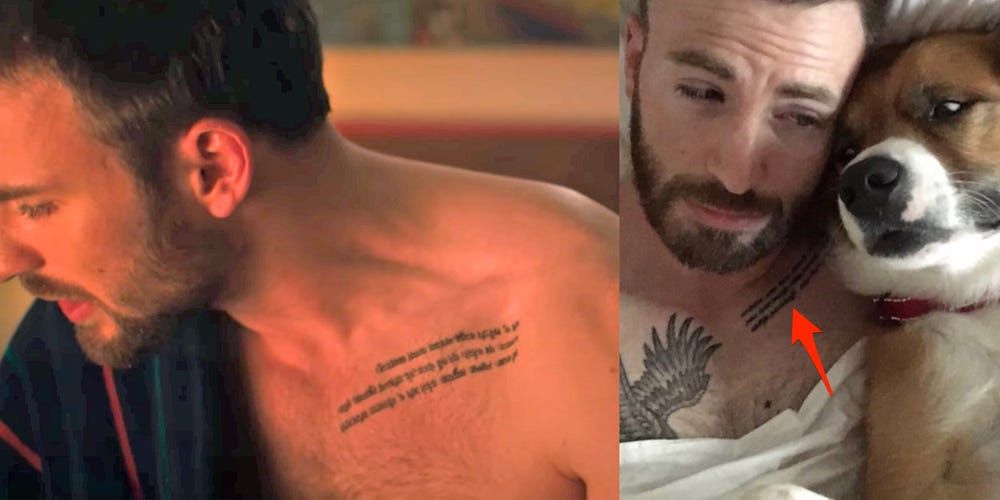
A long quote associated with spiritual teacher Eckhart Tolle runs across the upper left side of Evans’ chest: “When you lose touch with inner stillness, you lose touch with yourself. When you lose touch with yourself, you lose yourself in the world.” The passage takes up enough space to read more like a block of text than a small symbol.

The words connect with Evans’ comments about Eastern philosophies, being present and not letting the ego take over. Beyond the quote itself, he hasn’t given the tattoo one official explanation. It does show that his collection isn’t limited to names, symbols and movie memories.

The Taurus symbol and “loyalty” can be read in a moment; this piece asks you to stop and read. That gives it a more inward feel, even though it sits on his chest.

It’s also why his chest tattoos can look more extensive than expected. A shirt collar may reveal only a few lines, while a full view shows how much room the quote takes up. Alongside the eagle and other chest pieces, it gives the area a personal point of view.

The eagle gave his chest a bold new shape

Chris Evans eagle chest tattoo

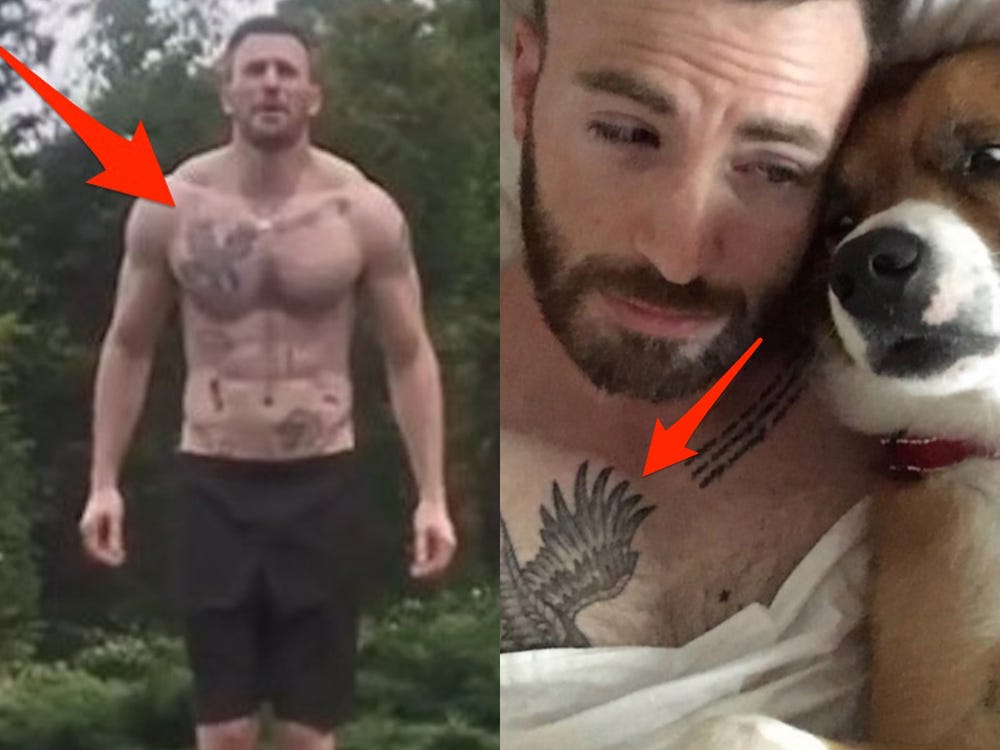
The eagle changed the look of Evans’ chest in newer photos. It stretches across his upper chest and is much bolder than the Taurus symbol or “loyalty” lettering. Clear images show a large eagle over his pecs, its wings forming a strong shape around the older text.
It’s tempting to connect the eagle to Captain America, but Evans hasn’t confirmed that meaning. It could be personal, represent freedom, or simply be an image he liked. It shouldn’t be called a Captain America tattoo just because the association is easy to make.

The eagle also changes the balance of his collection. Earlier pieces are mostly words and small symbols; this is a broad black-and-grey design visible from across a room. It makes the chest tattoos look more connected, even if Evans got them at different times.

The size helps explain why his tattoos are usually covered for film work. A shirt can hide the chest piece, but a deep neckline or action scene may mean extra time in makeup. The eagle is striking, while still fitting Evans’ preference for keeping his ink out of the way on set.

Dodger’s name makes a dog story permanent

Chris Evans Dodger tattoo

Evans has the name “DODGER” tattooed across his lower chest or upper abdomen. He has shown it in photos and videos with his rescue dog. The name is self-explanatory, but the story behind it says more than the words alone.

He adopted Dodger after meeting him while filming Gifted, and has described their bond as one of the purest relationships in his life. In a conversation reported by Entertainment Tonight, Evans said he’d never regret that tattoo, though he admitted regretting some others.

That comment puts the Dodger tattoo in a special place. The Taurus symbol points to his mother, the Bardsley piece remembers a friend and the Avengers design marks a defining career chapter. Dodger’s name is about an everyday relationship Evans wanted to keep close.

The placement sits like a signature beneath the larger chest work. It shows in shirtless photos without taking over the image. It’s a small word with a direct meaning: Dodger is family.

Evans also has “SCS” on his ankle for his siblings Scott, Carly and Shanna. That tattoo appears less often in current coverage, and the clearest photos tend to show the chest pieces instead. It still fits a pattern in his collection: the most reliable stories are about family, friendship and people he wants close.

What about the Avengers tattoo? Five of the original six Avengers cast members got matching tattoos after Avengers: Infinity War. Evans joined Robert Downey Jr., Scarlett Johansson, Chris Hemsworth and Jeremy Renner. Mark Ruffalo opted out. The design is said to sit over Evans’ ribs, though clear photos of his version are limited. Our guide to Robert Downey Jr.’s tattoos has more on the group tattoo.

A tattoo can be supported by a reliable interview even when photos don’t show it clearly. Evans’ Taurus, loyalty, Bardsley, quote, eagle and Dodger designs have stronger visual documentation. The Avengers tattoo is well reported, but it shouldn’t be illustrated with a generic Marvel group photo or someone else’s ink.

Taken together, his tattoos feel less like one planned sleeve and more like bookmarks. Some remember people, one holds a belief, and another points to the role that changed his career. The collection has grown over time, but the stories behind it stay close to everyday life.

That may be why the tattoos draw attention whenever he wears a tank top. It’s not just a surprise to see Captain America with plenty of ink. The designs point to the parts of Evans’ life that don’t fit inside a superhero costume: his mother, siblings, friend, dog and the ideas he carries with him.

Watch Chris Evans explain the original Avengers matching cast tattoos

Charlie Sheen’s tattoos were always meant to be a little ridiculous

Charlie Sheen’s tattoos have often played out as a side story to his public life. They appear in old red-carpet photos, onstage during the Violent Torpedo of Truth tour and in close-ups where a word on his wrist takes over the frame. The designs are loud, personal and sometimes hard to treat seriously. That was likely part of their appeal when he got them.

Sheen talks about the ink differently now. In a recent interview, he called getting tattoos a terrible, stupid decision and said he has not added any in more than a decade. He has also said some tattoos covered scars from drug use. That changes how the collection reads, though it does not erase what the designs said about the period in which he chose them.

Online lists do not agree on every detail. The pieces seen most often are the Death From Above chest banner, Winning on his wrist, the Cincinnati Reds cover-up, the Charlie Brown design, the cigarette and ashtray, the zipper and eyeball, and a number of smaller jokes and symbols. Here is the clearest account of those tattoos.

Death From Above and the apple drop set the tone

Charlie Sheen Death From Above chest tattoo

One of Sheen’s most recognisable pieces is the Death From Above banner across his upper chest. The words sit beside an image described as an apple and a falling drop, blending a threat with cartoon logic. It is not minimalist or neatly polished. The design brings together a phrase, a strange image and a little swagger.

Sheen knows how a short phrase can become part of a public character. “Winning” became his catchphrase, while Death From Above feels more like a private slogan that made its way into view. It has the same oversized energy as his stage persona, fixed across his chest.

The placement is hard to miss in shirtless photos. During the 2011 tour, the banner appeared alongside several other tattoos, part of a busy collage rather than a single emblem. It captures the way the collection works: a bold line, an odd image and a punchline that mattered more than visual harmony.
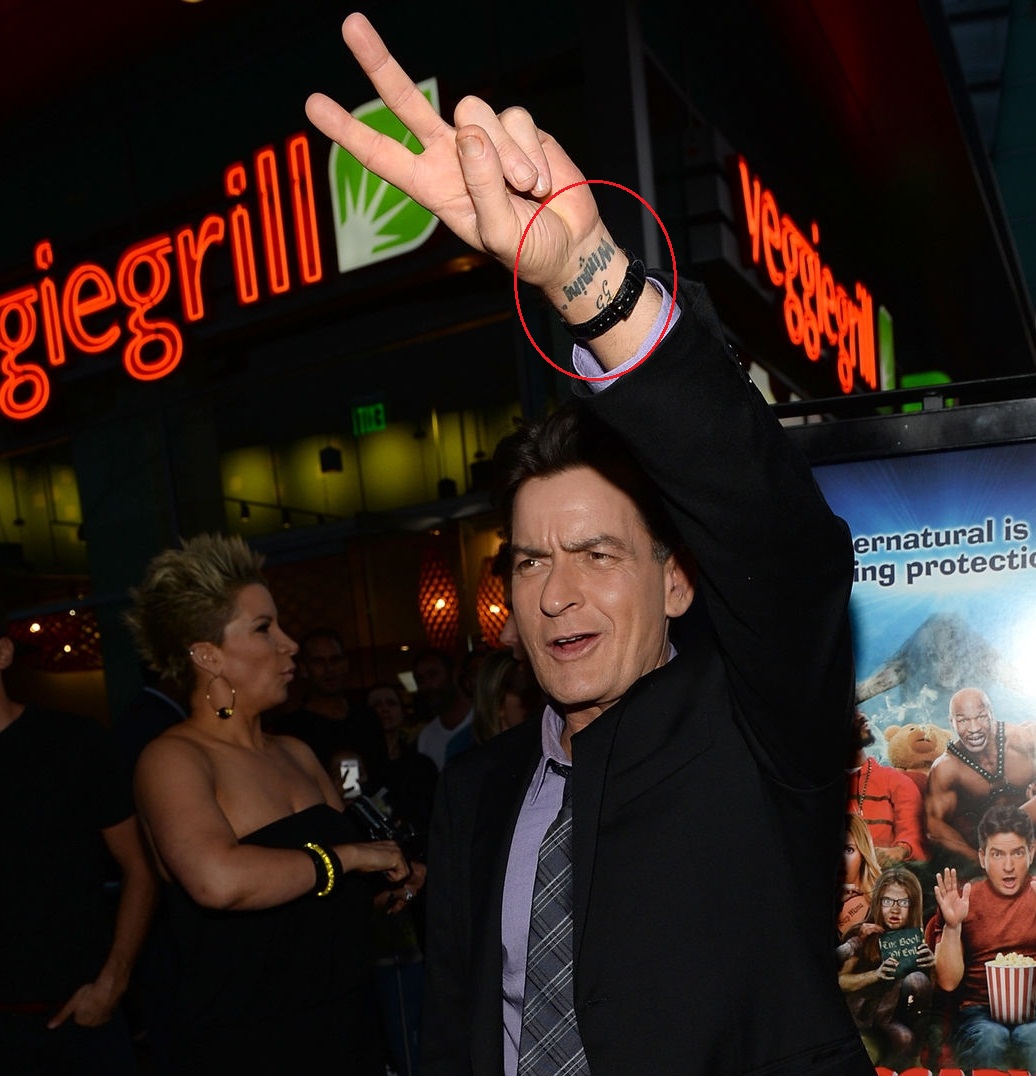
Winning replaced Denise on the wrist

Charlie Sheen Winning wrist tattoo

The wrist tattoo most associated with Sheen’s public image is Winning. It used to say “Denise,” referring to Denise Richards; older coverage shows that name was covered or replaced after their relationship ended. The change is a small piece of tattoo history, but it tracks a much bigger public shift.

By 2011, “winning” was everywhere. Sheen said it in interviews, put it on merchandise and built a stage show around the attitude. The word on his wrist made it feel less like a campaign slogan and more like something he could see whenever he looked down.

The lettering is simple, which is why it reads so clearly in photos. The more complicated story is underneath: a relationship reference became a marker of a very public new chapter. Sheen turned a personal change into part of his mythology.
The cigarette and ashtray joke sits on his forearm

Charlie Sheen cigarette forearm tattoo

The cigarette and ashtray tattoo is tied to Sheen’s hard-living image. Instead of hiding the habit, the design turns it into a visual joke on his arm, something that could only belong to a particular period of his life.

In photos of Sheen smoking, the real cigarette in his hand and the tattoo sit in the same frame. There is a deliberate absurdity to making a habit permanent, as if the image asks whether the joke will still seem funny years later.

His later comments about sobriety and regret give the piece a different weight. What once read as a punchline is now connected to a chapter he was trying to leave behind. That does not make it meaningless; it makes it a clear record of a mood that did not last forever.

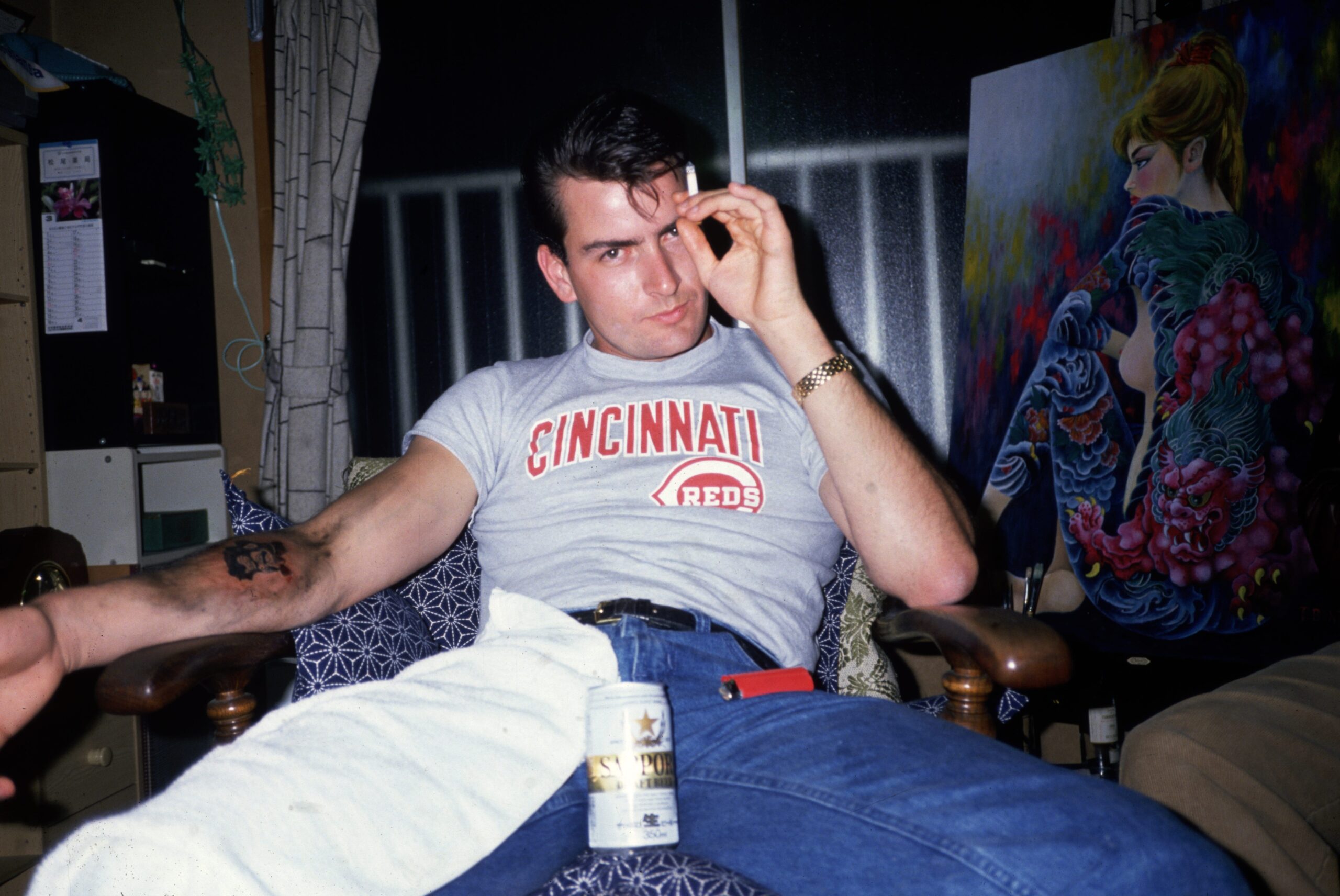
The Cincinnati Reds logo covers an older tattoo

Charlie Sheen left wrist cover-up tattoo

The Cincinnati Reds tattoo has one of the stranger histories in Sheen’s collection. Coverage describes it as a cover-up of an earlier design connected to a Japanese god. The baseball logo is more than a team mark; it also shows that he chose to cover something he no longer wanted.

Cover-ups make the past visible in a different way. People change their minds, a relationship ends, or a symbol stops feeling right. In Sheen’s case, a baseball logo replaced the earlier image, making the change feel both personal and deliberately plain.

The Reds design carries the collection’s mix of sincerity and comedy. A sports logo is straightforward; putting it over a Japanese-inspired design is not an expected choice. It feels like Sheen replacing an image that no longer fit with something familiar to him.

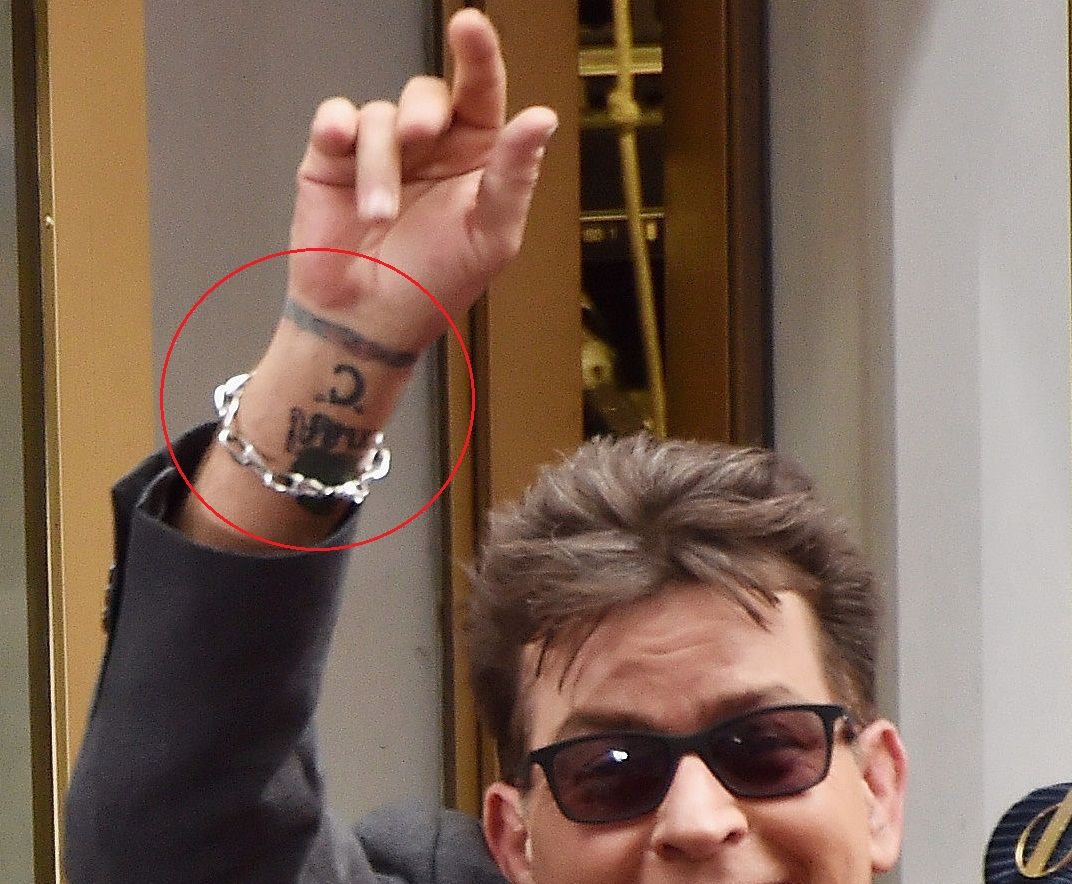
The small C on his wrist is easy to miss

Charlie Sheen C wrist tattoo

Tattoo galleries often show a bold C followed by a colourful ring on Sheen’s wrist. It does not have the instant recognition of “Winning,” but it gives a glimpse of how varied the collection is. Some designs are not headlines; they sit beside a watch or bracelet and wait for a clear photograph.

The letter has been linked to Charlie, though reports are less consistent about its story than they are for “Winning” or the Reds cover-up. It is safest to describe what is visible without assigning it a grand meaning.

That pattern runs through the collection. Some tattoos come with an obvious story; others only became notable after the person wearing them became famous. The wrist C is recognisable, but still a little mysterious.

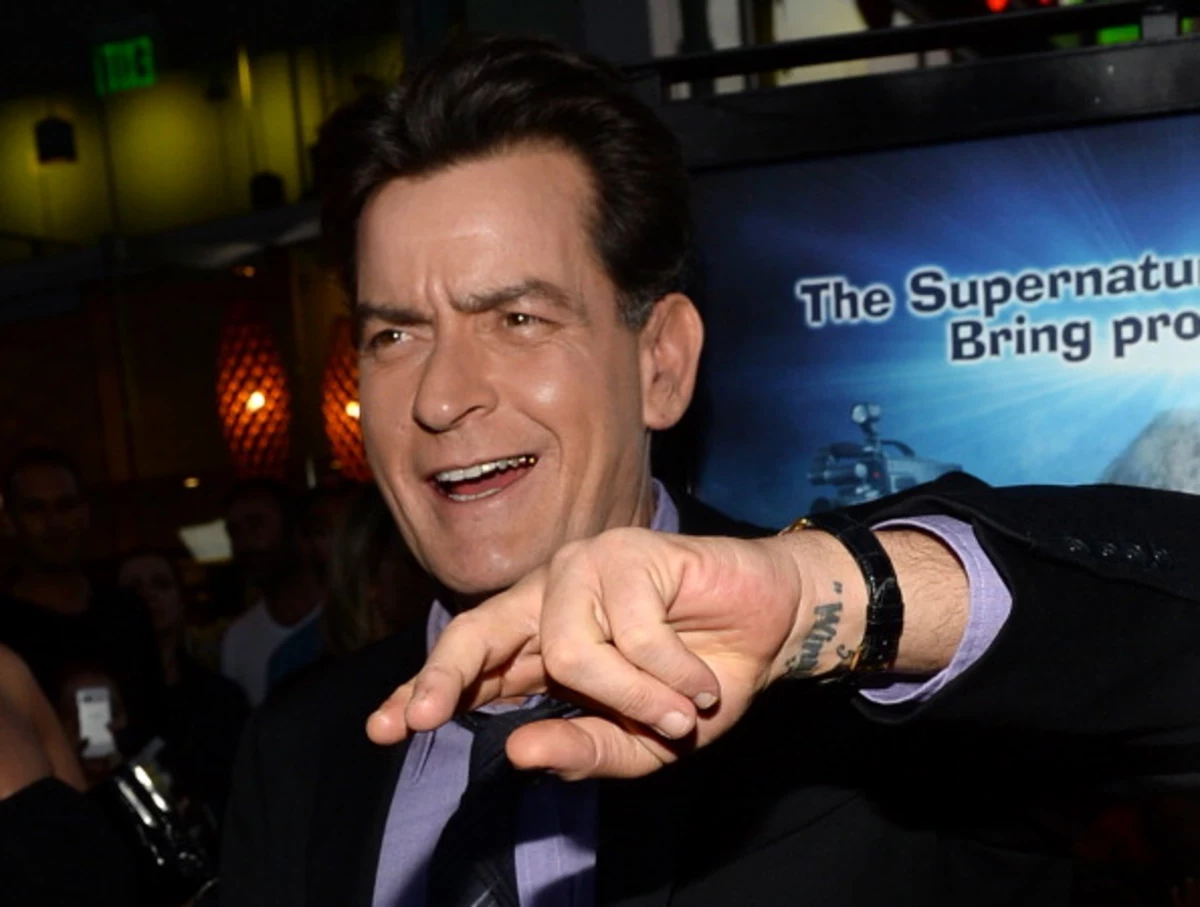
Other wrist ink adds to the running joke

Charlie Sheen public wrist tattoo

Photos show several more designs around Sheen’s wrists, including words and small symbols beside the larger tattoos. Reported pieces include a 22/55 marking, a shield-like design with the letters “MLBCES,” and other lettering that can be hard to read in every image. Some lists also mention a diaper pin with an S and a small stingray.

Those details are best kept separate from the tattoos that can be identified clearly. A blurry picture can make a shape look like something else, especially when Sheen’s wrist is turned away from the camera. The stronger approach is to name the confirmed words and visible symbols, then mark other details as reported.

What is clear is that Sheen liked tattoos that started a conversation. Wrist designs show when he reaches for a drink, gestures in an interview or waves to a crowd. His ink did not grow into one polished sleeve; it accumulated in separate choices, each adding to the running joke.

The chest and torso hold some of the more surreal pieces. Coverage describes a Charlie Brown figure with a speech bubble saying “MOM,” a zipper opening around an eyeball and a sign that reads Back in 15 minutes. Other descriptions mention a dragon head, a stingray, a burning cigarette and a Snoopy or Peanuts-related image.

The cartoon references keep the collection from looking like a standard tough-guy set of skulls, flames and military symbols. Even when the subject is dark, Sheen often undercuts it with something silly. A cartoon or visual gag lets a tattoo carry meaning without becoming a solemn monument.

Some of these designs are hard to inspect individually because the clearest photos show several tattoos at once. A broad torso shot helps show where the pieces sit, but it cannot confirm every small detail. The overall collection is documented; the exact wording or placement of every minor tattoo is not always clear.

There is a more serious story underneath the jokes. Sheen now describes the tattoos as a permanent record of a time when he was dealing with pain, projecting confidence and trying to control the public story. That can make the collection seem funny and sad at once. The designs belonged to a version of him who has since changed.

His tattoos are not a neat success story, and they were never meant to be. They make a messy timeline of relationships, catchphrases, sports, cigarettes, cartoons and choices that once felt right. “Winning” may be the most famous word, but his regret is now part of the story too. Permanent ink can outlast the version of yourself that chose it.

Watch Charlie Sheen talk about regretting his tattoos

Sheen has spoken directly about his tattoos and why he would not make the same choices today. The video below focuses on the ink and the regret he has attached to it.

Nico Tortorella’s ink keeps the old stories and the strange ones

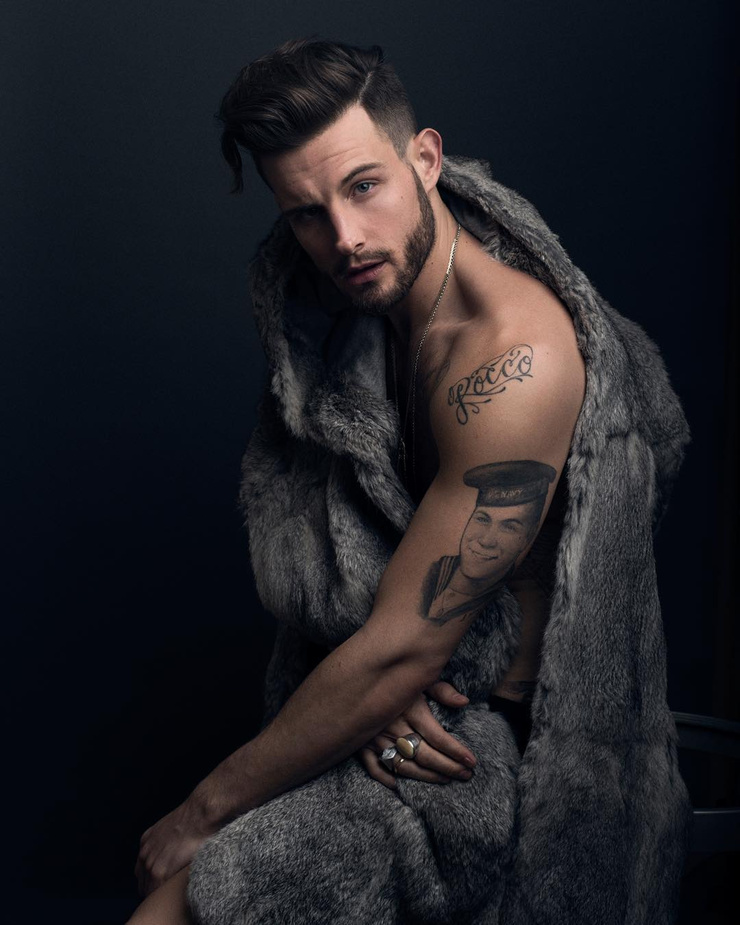
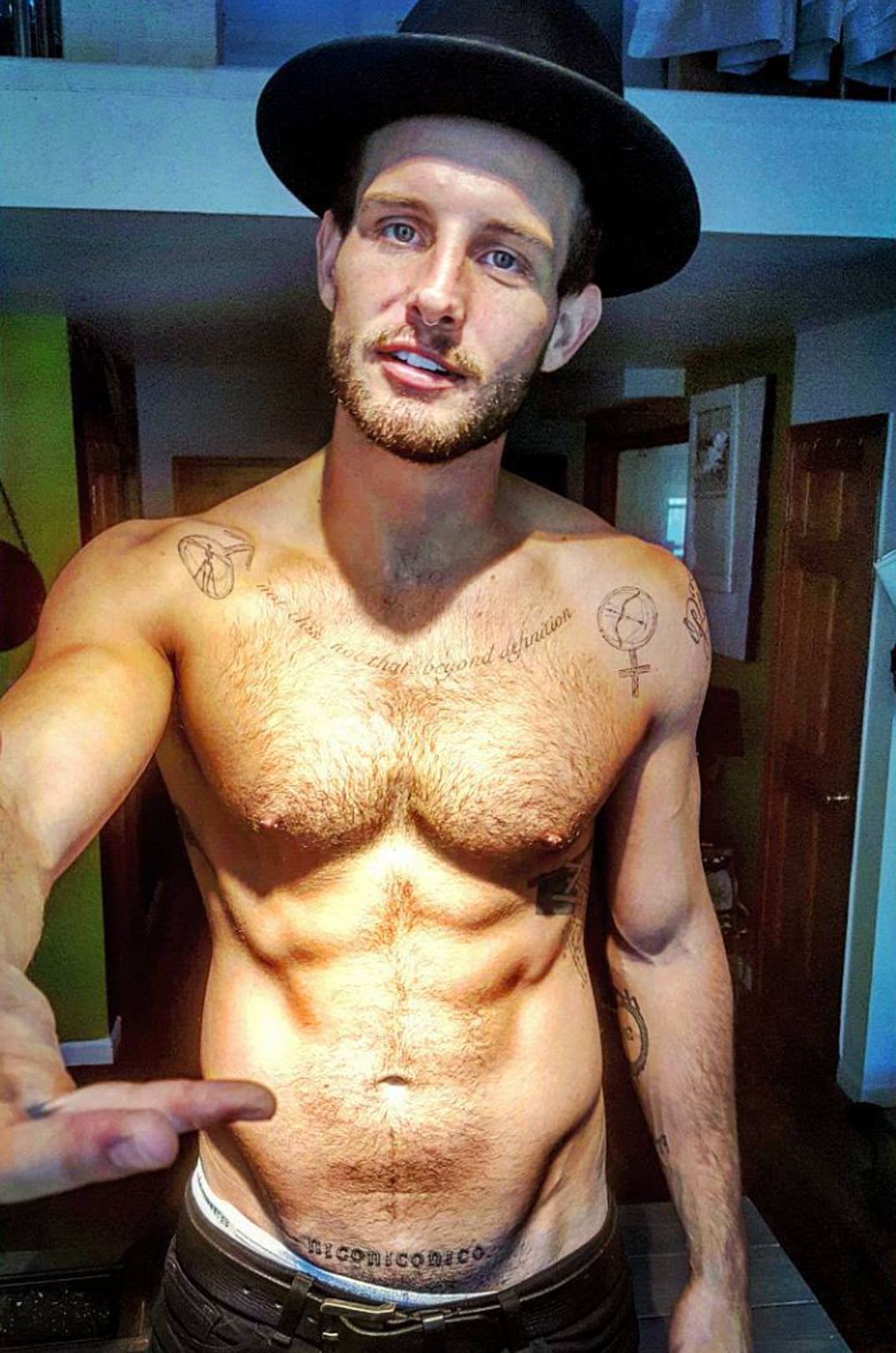
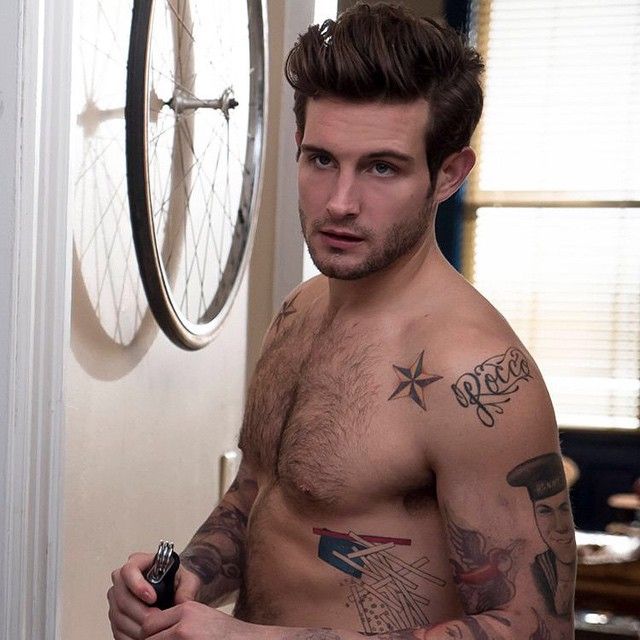
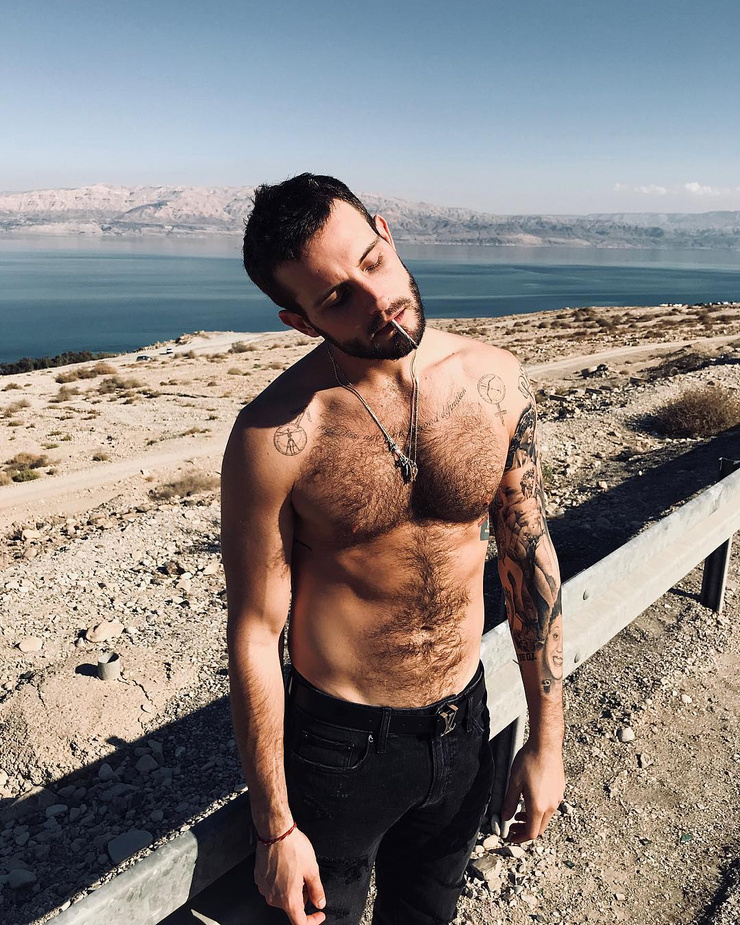
Nico Tortorella’s tattoos have never been a matching set. Their collection mixes old-school symbols, family jokes, big ideas and pieces chosen because the moment felt right. Some are easy to spot in a shirtless photo; others sit partly hidden by clothes, hair or the busy overlap of designs.

They’ve talked about getting their first tattoo with their mother at 15, and about how a tattoo’s meaning can shift over time. A piece might begin as a family tradition, turn into an awkward story and then stay because that story became the point. Not every tattoo needs a grand explanation. Sometimes the funny one is the honest one.

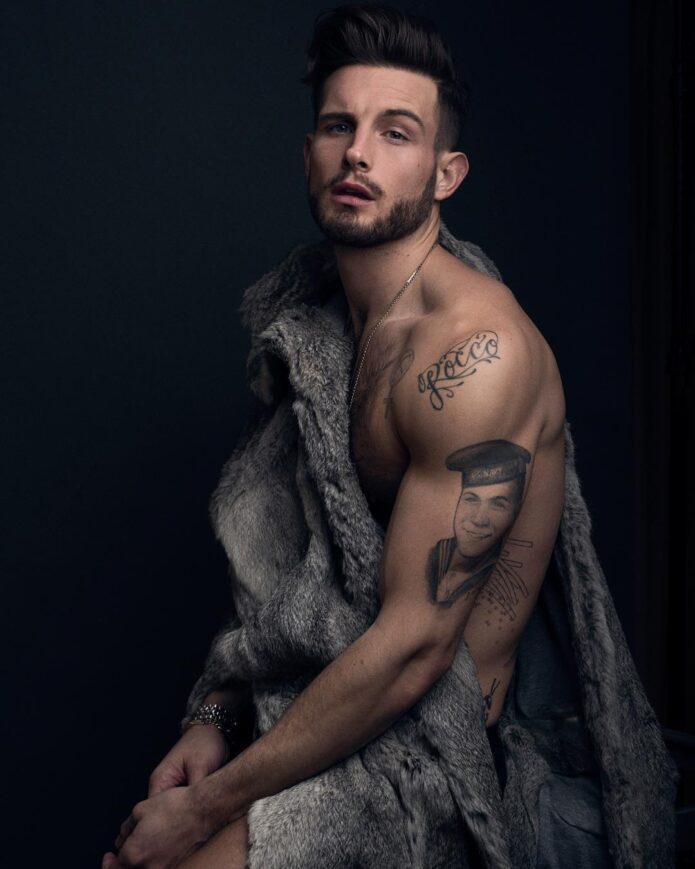
Here’s a look at the best-documented parts of Nico’s collection, from the Chinese lettering that didn’t mean quite what they thought it did to the sailor portrait, shoulder stars, chest symbols and large geometric work that makes the whole thing feel like a sketchbook in progress.

The first tattoo started with Chinese lettering

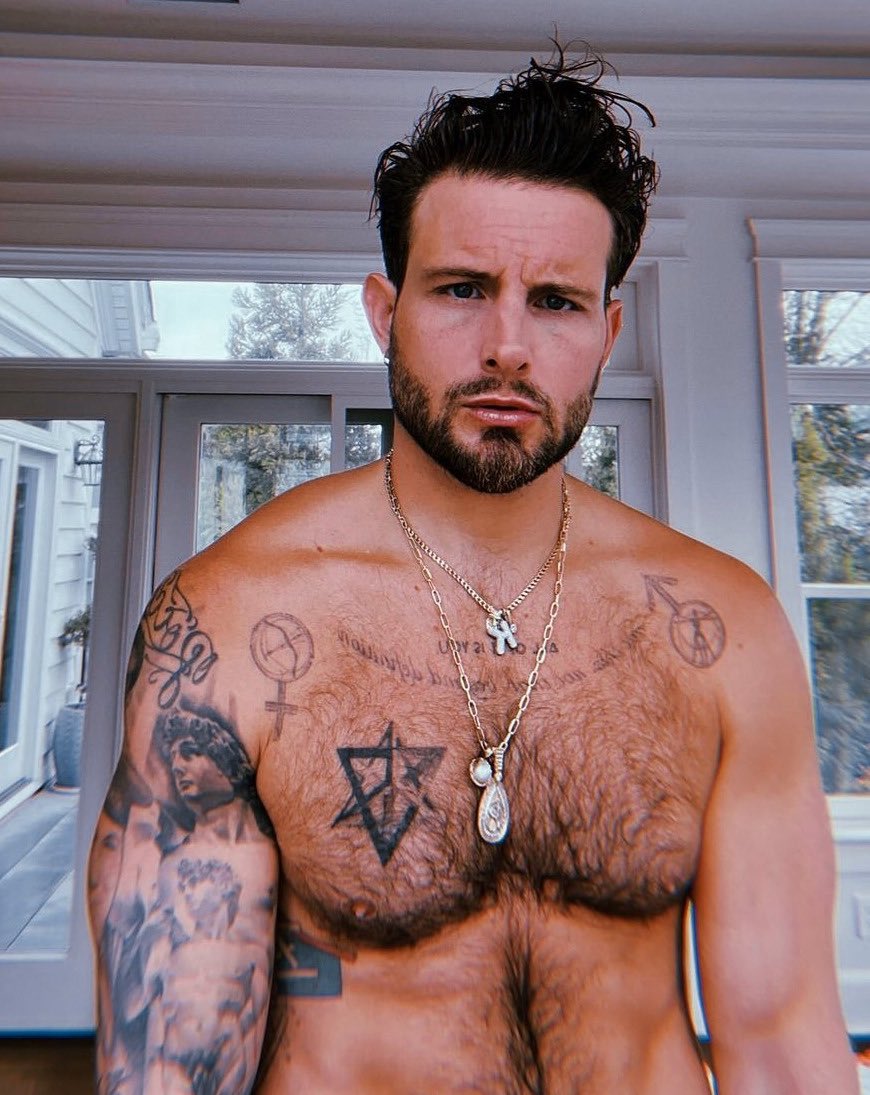
Nico Tortorella chest geometric tattoos

Nico got their first tattoo at 15: Chinese lettering meant to say “health, wealth and happiness.” The story took a turn when a relative explained that the character they understood as “wealth” had a sexual meaning they hadn’t expected. In Nico’s retelling, the phrase went from a teenage blessing to an unexpectedly direct comment about their sex life.

The tattoo stayed. Nico is open about how it began with incomplete information, but that’s not necessarily a reason to remove it. The misunderstanding is now part of its story, along with a family tradition of getting tattoos and motorcycles at certain ages. The lettering matters to them as a memory before it does as decoration.

The Vitruvian Man sits at the centre of the chest

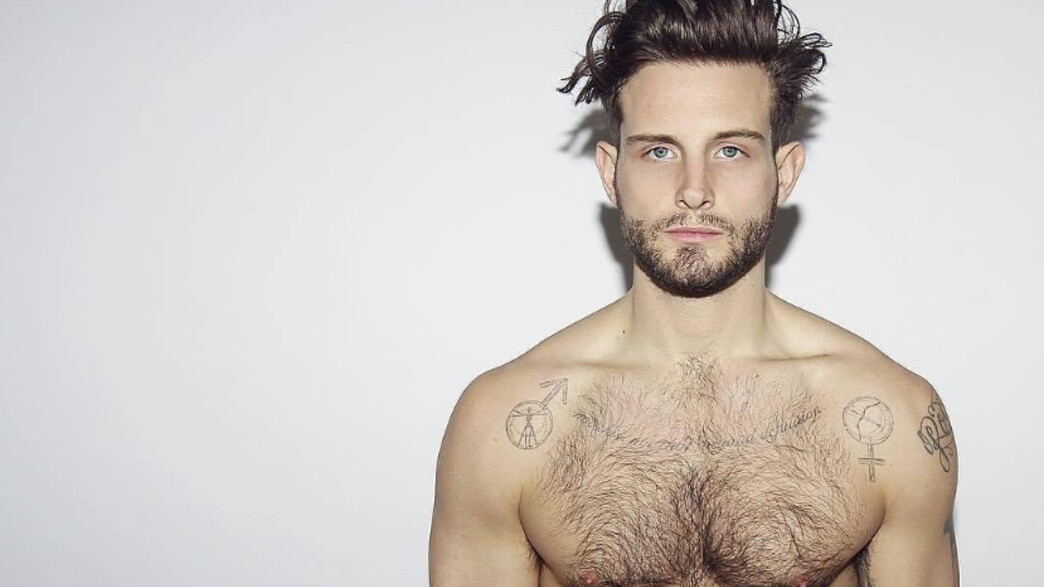
Nico Tortorella Vitruvian Man chest tattoo

One of the clearest chest pieces is the Vitruvian Man. The familiar figure gives the tattoo a visual centre, but Nico’s version isn’t simply a copy of a museum drawing. It opens up a broader conversation about bodies, identity and the limits of trying to draw neat lines around something more fluid.

That idea connects with Nico’s public conversations about gender fluidity. A chest tattoo is hard to miss, so this one reads as a confident statement even as other pieces bring a more playful tone. The classical outline sits among symbols that make it feel personal rather than like a direct reproduction. The old image is doing new work on Nico’s body.

Lighting and posture can change how the design looks in a photo. A straight-on portrait shows the central figure most clearly; an angled view shows how it sits among the other marks across Nico’s chest and shoulders. No single image captures all of it.

Gender symbols turn the chest into a conversation

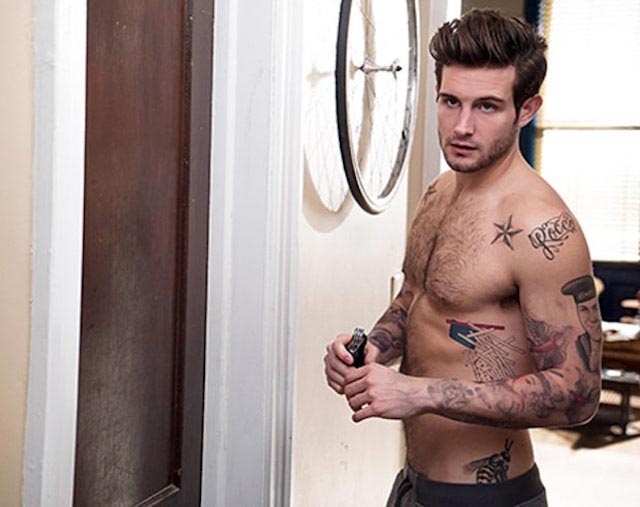
Nico Tortorella shoulder star tattoos

Gender symbols beside the Vitruvian figure give the chest an open-ended feel. Nico has described their tattoos as part of a wider exploration of gender, rather than a way of settling on one simple label. The symbols are recognisable, but they don’t claim to be a final answer. They can sit beside each other and let the body hold several ideas at once.

The five-pointed stars across Nico’s shoulders add another layer. They also cover older tattoos, making the current design one chapter in a longer timeline. A cover-up doesn’t always erase what came before; the newer stars are visible, but they sit on skin that has already been tattooed.

These pieces shape the upper body rather than hiding in small spots. They show when Nico wears an open shirt or goes shirtless, forming a loose frame around the chest.

The sailor portrait became one of the signature arm pieces

Nico Tortorella sailor portrait arm tattoo

The sailor portrait on Nico’s upper arm is one of the designs people notice first. It has the feel of an old flash image, with a sailor’s face and cap in a classic, slightly rough-edged style. Even when other parts of the arm are covered, the portrait remains easy to pick out.

A face gives the arm a natural anchor. Smaller symbols can blend into a sleeve, but the sailor draws the eye and gives the other pieces somewhere to gather. The image also echoes traditional tattoo themes of travel, luck, work and memory.

Nico has said tattoos should mean something, though they’ve also joked about pieces chosen on impulse. The sailor sits somewhere between those ideas. It’s bold, but the interviews don’t give a neat explanation for every detail. The visible design is clear; the rest can belong to Nico.

Script and small symbols fill the spaces around the big work

Nico Tortorella script and symbol tattoos

Nico’s arms and torso include the smaller work that makes a collection feel lived in. There’s script across the chest and shoulder area, along with symbols tucked near the larger portraits and geometric shapes. Some lettering connects to Nico’s writing and poetry; other marks are easier to see than to identify from a single photograph.

With a collection this busy, a tattoo can stand out in one shoot and disappear in the next because of a jacket, a different angle or a new stage of the work. Photos from different years show the collection changing: old designs are covered, new ones appear, and the gaps between them get smaller.

The smaller pieces are also where Nico’s humour comes through. They don’t all look like parts of one grand plan; they feel more like souvenirs from different versions of the same person. The body becomes the notebook, and the margins keep getting filled.

Geometric work gives the collection a darker edge

Nico Tortorella geometric and sailor tattoo work

The geometric pieces bring a sharper, darker edge to the older sailor and script tattoos. Strong shapes and dense black areas can read like abstract pattern from a distance; closer up, the individual lines come into view. That contrast keeps the collection from feeling entirely traditional.

The tattoos are hard to catalogue from a single photo. One image might show the chest symbols, another the shoulder cover-up, and a third the side or lower torso. Calling every visible patch a separate tattoo would be guesswork. It’s more accurate to describe connected designs added and revised over time.

Nico’s work as an actor may make that shifting visual language feel familiar. They’re comfortable changing their appearance for a role, a shoot or a new phase of life. The tattoos remain, but how they’re shown keeps changing.

A full-body piece pushed the collection into a new phase

Nico Tortorella seaside chest tattoos

Nico has shared photos of a much larger piece running down their body. It’s hard to understand from a cropped arm portrait; a wider view is needed, and even then other designs break up the lines. The scale turns the collection from a handful of separate marks into something closer to a full-body composition.

This large tattoo also helps explain why Nico’s collection keeps attracting attention: the designs move across the body instead of sitting as isolated symbols. There’s a loose sense of movement from the chest toward the stomach, with smaller pieces at the edges. The unfinished feeling is part of the style.

Because intimate photos can be intrusive, it’s better to stick to what Nico has shared publicly and avoid guessing at details that aren’t clear. There’s enough information about the major themes without turning every private area into a puzzle.

The meaning keeps changing as the tattoos stay put

Nico Tortorella’s tattoos don’t carry one fixed message. The first lettering holds a family story; the chest symbols explore gender; the sailor portrait brings in old-school character; and humour and impulse have their place too. The collection can be thoughtful without taking itself too seriously.

That’s part of why the cover-ups matter. A star placed over an older tattoo isn’t only a new image; it shows that Nico changed their mind, their body or simply what they wanted to see there. The collection reads like a timeline, but not a perfectly organised one: new marks sit over old ones, with plenty of edits along the way.

The clearest way to read the tattoos is to focus on the pieces and stories Nico has actually shared: the sailor, Vitruvian Man, Chinese lettering, stars, gender symbols and geometric work. The rest can stay a little mysterious. That feels more honest than forcing every mark into a tidy meaning.

The interview clip

Nico has talked about tattoos in interviews about Younger, gender, sobriety and their work on How Far Is Tattoo Far?. The clip below adds their own voice to the conversation about tattoo meanings and the way a design can become part of someone’s story.

More actor tattoo guides

Brad Pitt keeps a whole life in the margins of his tattoos

Brad Pitt’s tattoos feel less like a matching set than a notebook he has kept over the years. They mix family history, lines from writers he admires, private jokes and designs that only come into focus in the right photo. Some have been discussed in interviews or repeatedly identified by tattoo coverage; others are visible without a confirmed story behind them.

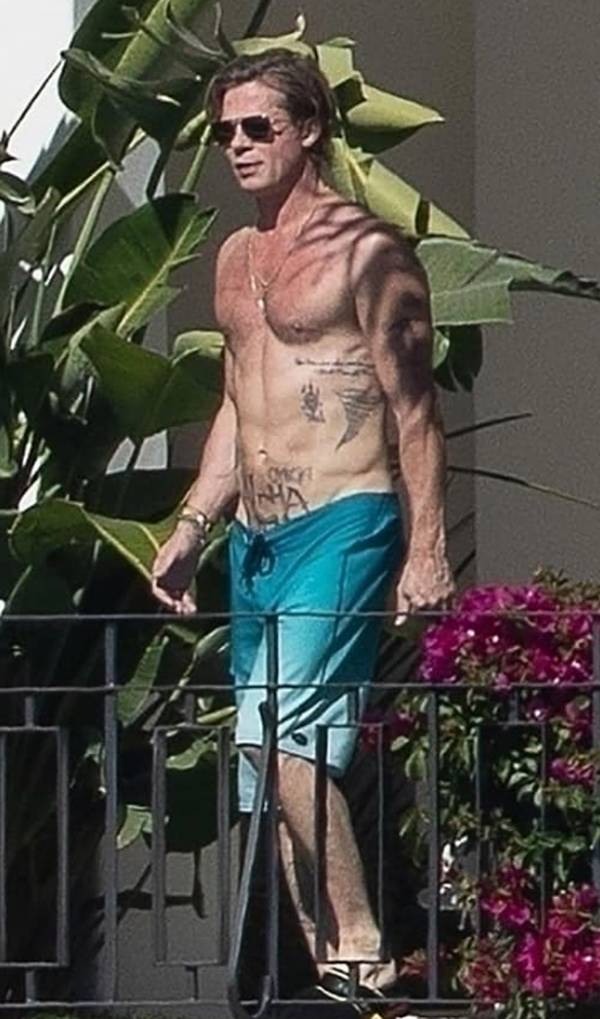
That mix makes the collection interesting. Pitt can appear in a suit with almost no ink on show, then turn up shirtless in a beach photo or film teaser with designs across his arms, ribs, back and stomach. It makes sense to take the tattoos one at a time and keep documented details separate from guesses based on distant pictures.

The torso and Khmer script keep the family-era ink visible

Brad Pitt Khmer script and torso tattoos

One of the clearest parts of Pitt’s collection is the Khmer script low on his torso. It has often been reported as Angelina Jolie’s birth date, written in the Cambodian script associated with the country where she was born. The placement keeps it mostly out of sight unless Pitt is shirtless or wearing low-rise clothing.

That location matters. It is not a design meant to be read from the red carpet; it sits near the centre of his body and belongs to a particular family chapter. Pitt and Jolie were known for sharing tattoos and choosing designs connected to their children, so older photos often show several pieces together.

Nearby marks have also been described as family symbols, including a cross-like arrangement connected with the couple’s children. Public photos do not always show the lettering or layout clearly enough to identify every detail. The careful takeaway is that this torso work belongs to Pitt’s family-era ink, even if online roundups sometimes claim more precise translations than the pictures support.

The tribal forearm design is easy to spot in candid photos

Brad Pitt tribal forearm tattoo

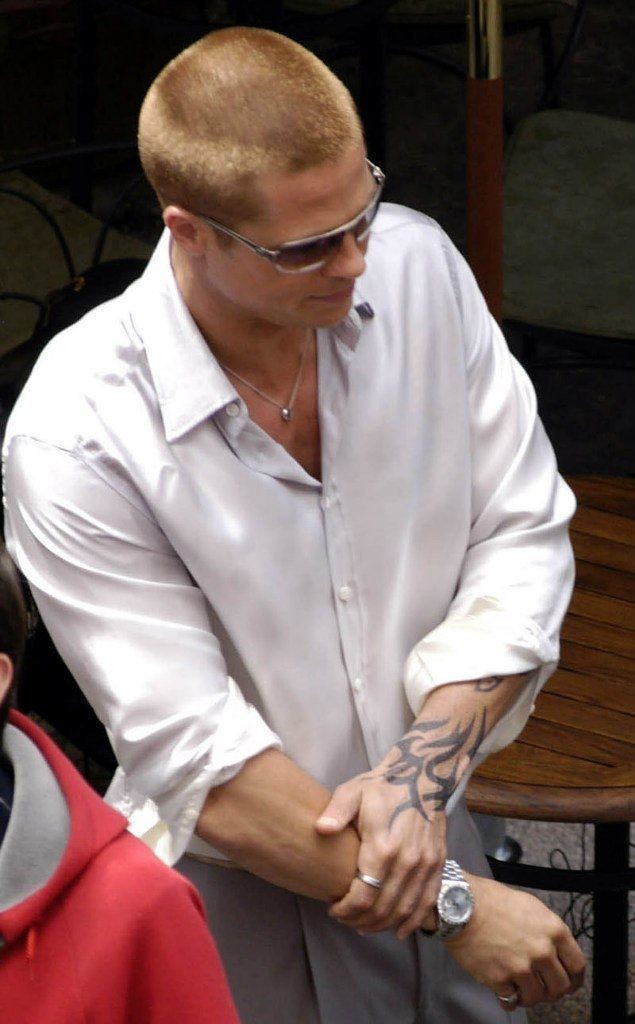
Pitt has a dark, graphic design on his forearm, often described as tribal or geometric. Its heavy black shapes make it easier to recognise than the smaller writing elsewhere. In a quick photograph it can look like part of a sleeve, but closer shots show it as a bold design on its own.

Pitt has not offered a reliable public explanation of its symbolism. Tattoo roundups sometimes assign a sweeping meaning to abstract blackwork, but there is no need to invent one here. Whatever its personal significance, visually the darker shapes balance the more literary pieces on his arms.

The forearm placement also brings it into view in everyday photos, from rolled-up cuffs to film publicity. It is a good example of how the collection reads as a group: the smaller writing can disappear, while this design remains easy to see.

Invictus turns a poem into a forearm statement

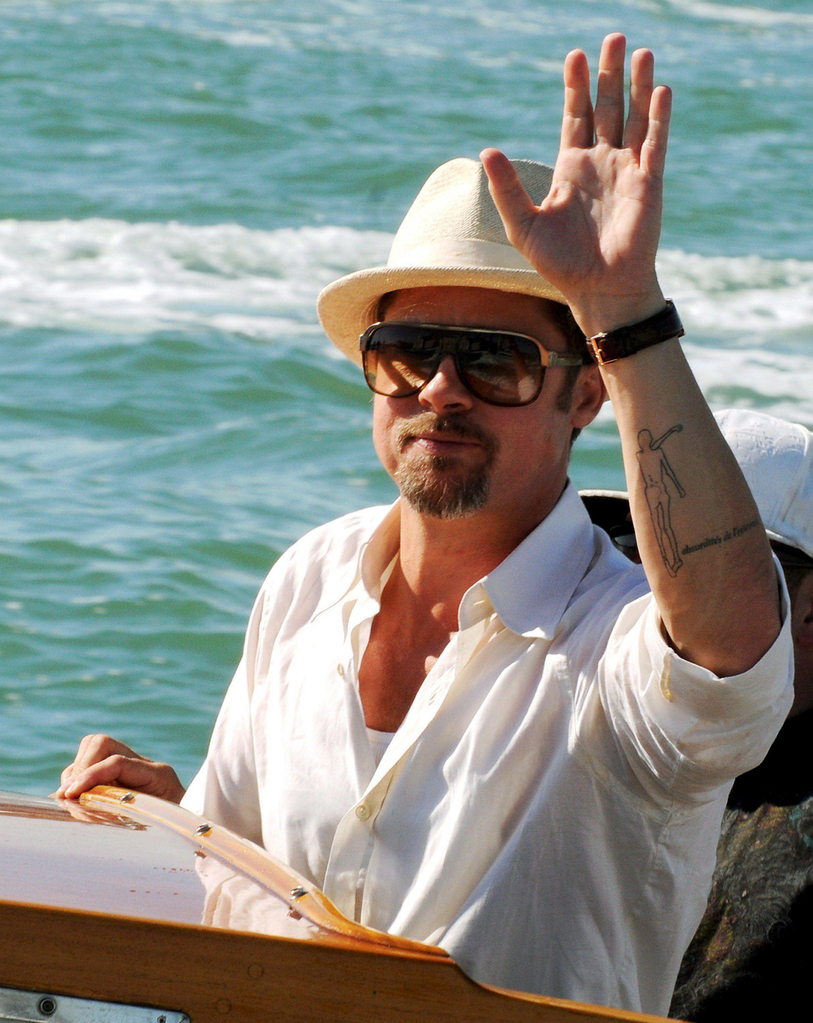
Brad Pitt Invictus forearm tattoo

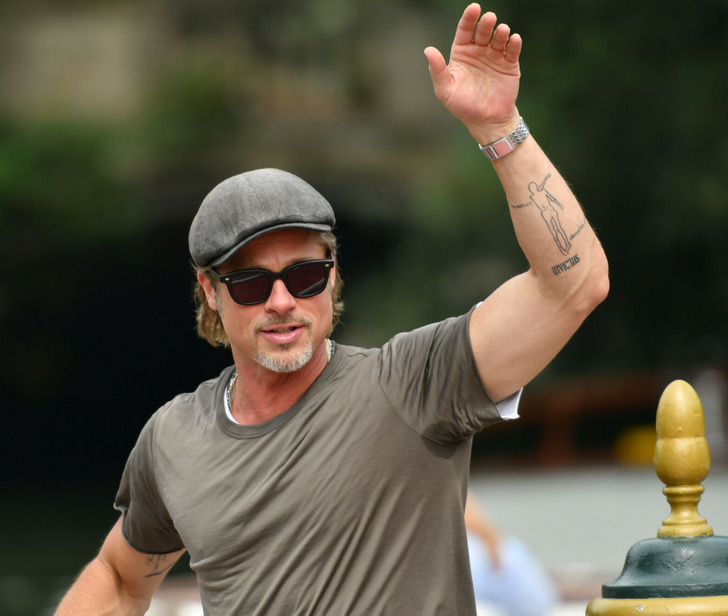
One of Pitt’s best-known tattoos is Invictus, written on his forearm. The word points to William Ernest Henley’s poem of the same name, which is often read as a statement about resilience and keeping control of one’s inner life in hard circumstances.

The design is spare: a single word, without a banner or a larger scene around it. It works like a reminder that is usually personal but can be glimpsed when his sleeve shifts. Among the more mysterious designs, this is one of the references that is easiest to trace.

It is sometimes reduced to a message about toughness, but the poem is more nuanced than that. “Invictus” is not simply about being invulnerable; it is about holding on to your sense of direction when life is difficult. That gives the tattoo the feel of a literary marker, not just a slogan.

Ötzi the Iceman is one of the clearest documented pieces

Brad Pitt Otzi the Iceman forearm tattoo

Another distinctive design in Pitt’s collection is the small figure commonly identified as Ötzi the Iceman. Ötzi is the Copper Age mummy found in the Alps; the tattoo appears as a fine, standing figure on Pitt’s arm. Once you recognise it, the unusual image is surprisingly easy to pick out.

Tattoo coverage has connected it to Pitt’s interest in history and the idea of someone preserved across thousands of years. That reading is plausible, but Pitt has not given a detailed public account of his personal reason for choosing it. The figure is widely identified as Ötzi; what it means to him remains less clear.

Its delicate, almost sketch-like lines offer a pause beside the heavier blackwork. It is also an unexpected historical reference, far from the more familiar symbols often seen in celebrity tattoo galleries.

The Rumi tattoo is about a meeting place beyond arguments

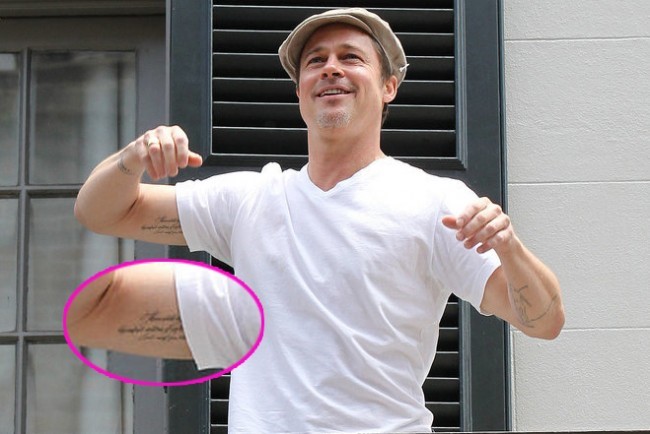
Brad Pitt Rumi quote tattoo on inner arm

On the inside of Pitt’s arm is a line attributed to the Persian poet Rumi: “There exists a field, beyond all notions of right and wrong. I will meet you there.” It is a longer, more reflective choice than a typical one-word tattoo, imagining a place beyond the urge to win an argument.

The quote has often been discussed as part of Pitt and Jolie’s shared tattoo history. Still, Rumi’s words do not belong only to that relationship. The idea of meeting beyond conflict can also speak to family, friendship or personal change.

The inner-arm placement gives the line a quieter feel than lettering across the chest. Pitt can see it easily, while others may only catch it when he turns his arm. It seems like a phrase carried for himself, even though photos brought it into public view.

The older shirtless photos show how much the collection has changed

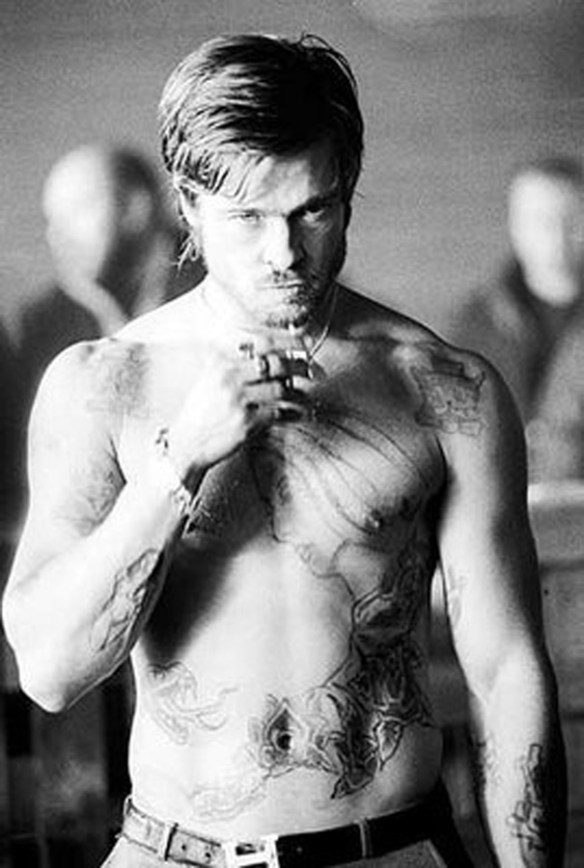
Brad Pitt shirtless chest and arm tattoos

Older shirtless photos help show how Pitt’s tattoos built up over time rather than arriving as one planned sleeve. They reveal the Khmer script, lines on his back, family-related marks and larger designs that usually sit under clothing. More recent film and beach images offer glimpses of additions and of how he presents the ink now.

Tattoo coverage has also described a submarine on his left arm, a tornado on his side, a horse-like image on his back, and smaller geometric marks across his torso. Some reports mention a rhino outline on one leg and a skull outline on the other. These designs have been photographed, but their meanings are less firmly established than the Rumi quote or Invictus.

A little caution helps with older photos. Film roles can involve temporary tattoos or makeup, and shadows in a distant paparazzi shot can resemble ink. It is safer to focus on designs that recur across appearances and label one-off details as reported rather than confirmed. Pitt’s collection is large enough without counting every uncertain mark.
The rib lines and smaller marks are harder to pin down

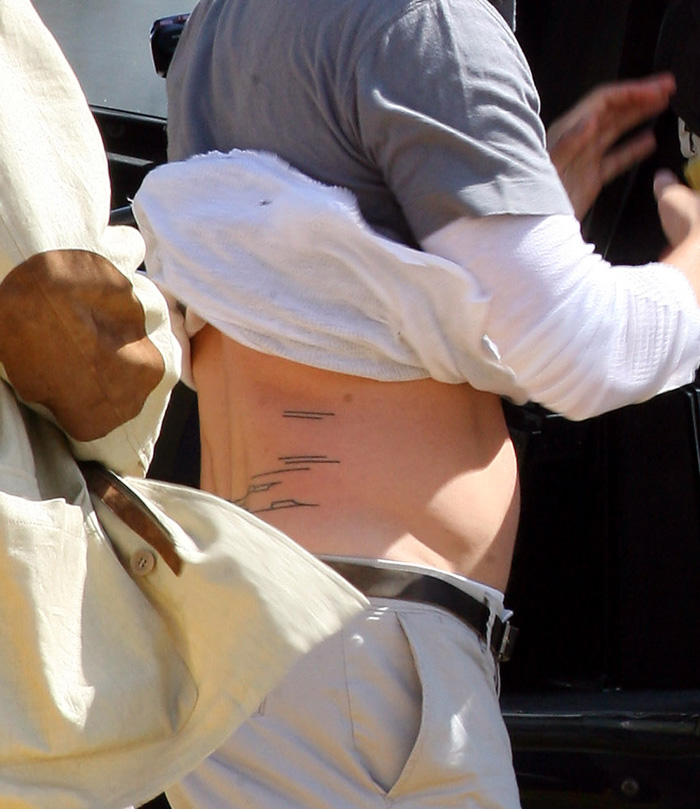
Brad Pitt minimalist rib line tattoo

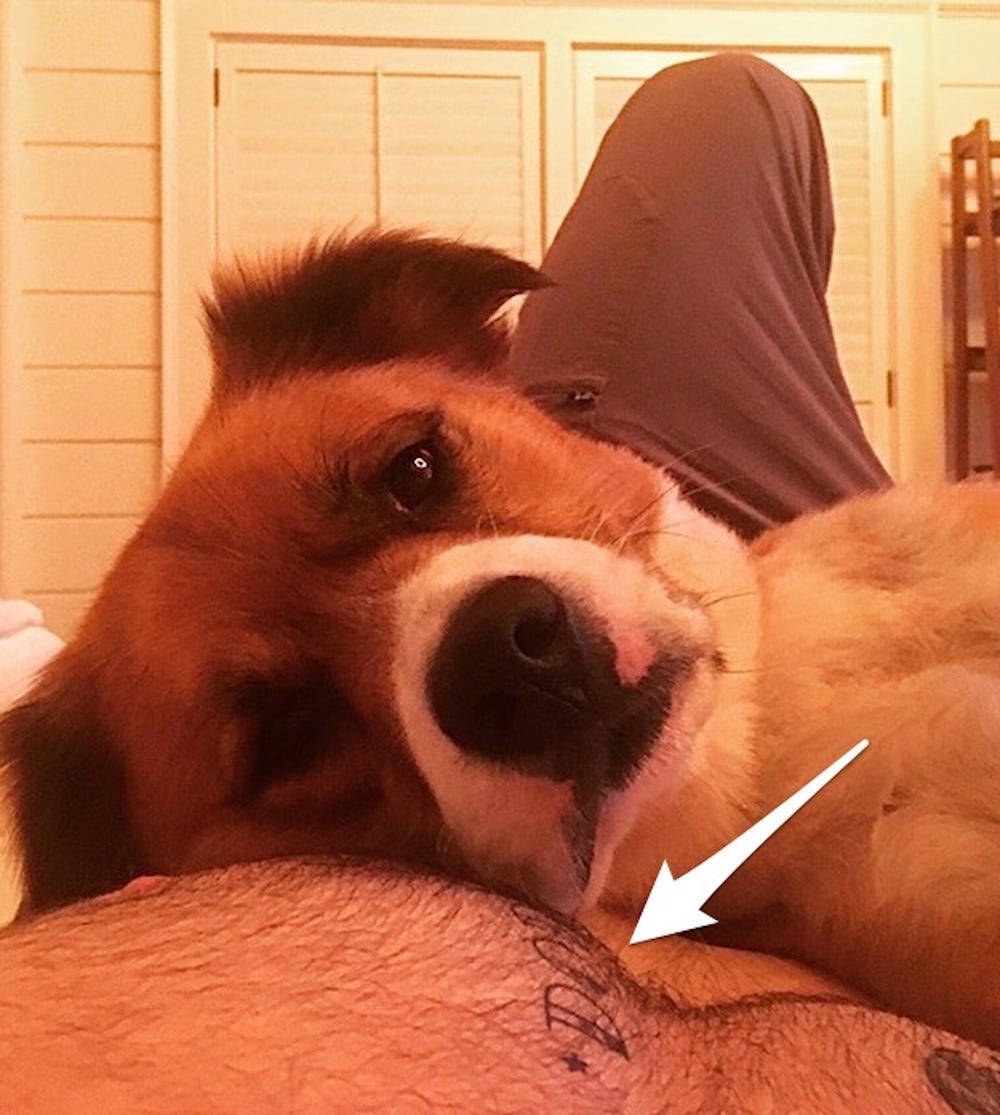
Thin lines and small marks around Pitt’s ribs and back are among the hardest parts of his collection to catalogue. They show up in older photos and have been described as minimalist symbols or lines drawn by someone close to him. The shapes look deliberate, but the images do not always make each one easy to identify.

That uncertainty is part of the story. Pitt has never treated his skin like an official catalogue, and the rib placement keeps these tattoos mostly private. They come into view as glimpses, rather than declarations.
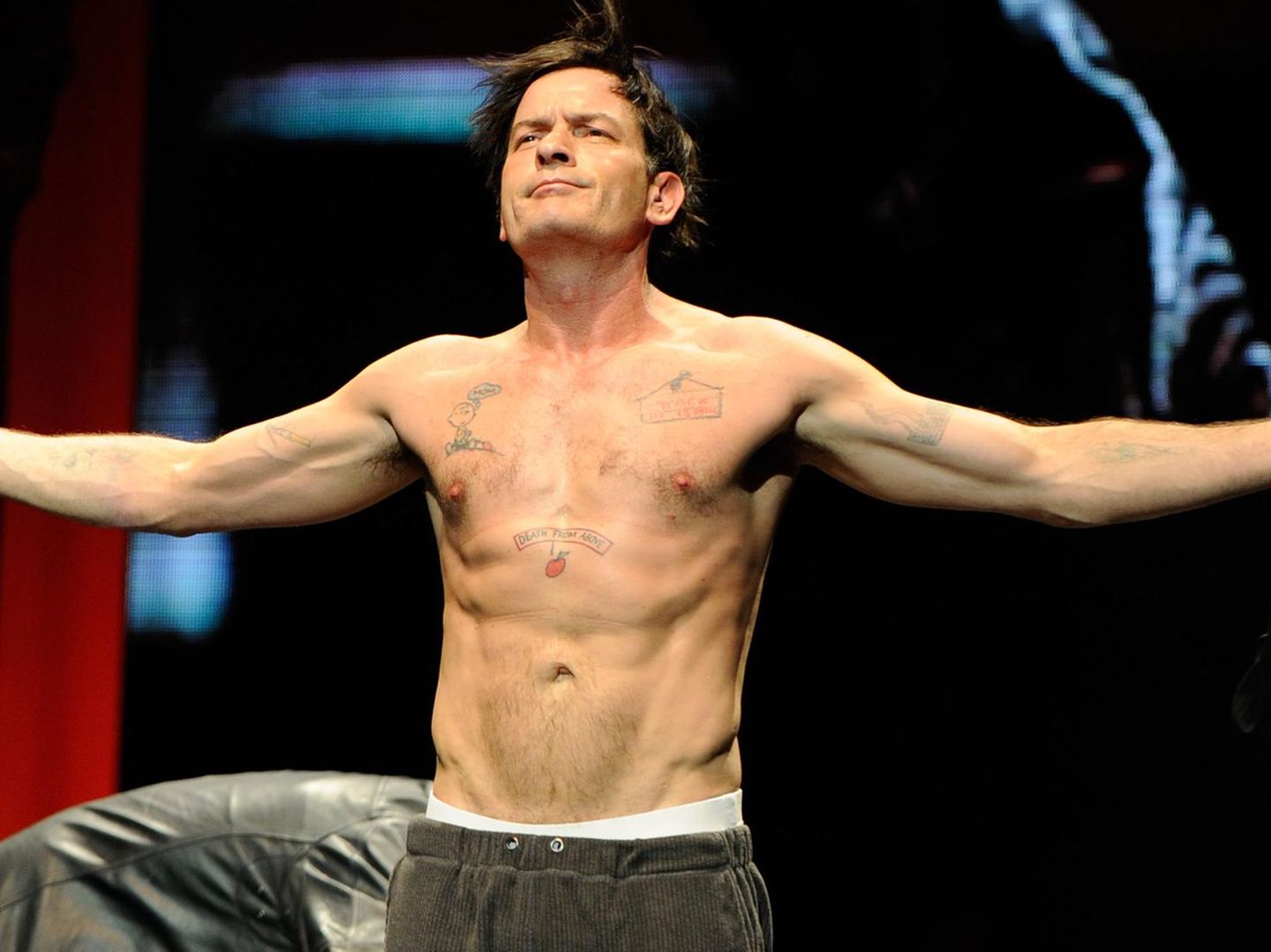
Taken together, the collection has a loose rhythm: literary references, family memories, history, dark graphic work and a few designs that may simply have appealed to him. It does not follow one clean aesthetic, which helps it feel lived in.
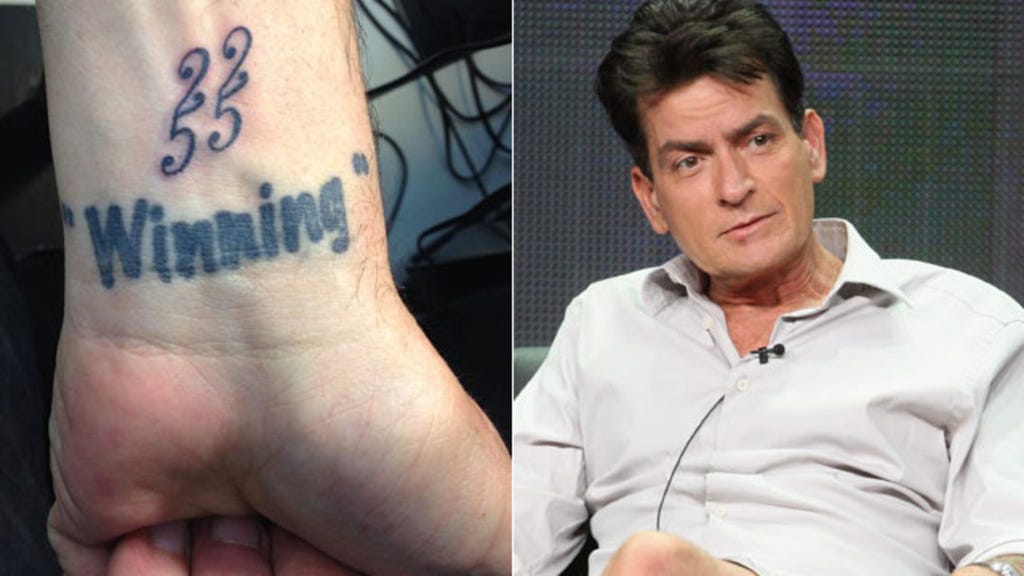
Pitt’s tattoos make more sense as a work in progress than as one finished sleeve. The well-documented pieces already tell a story, and the less certain ones leave room for privacy. Invictus, Ötzi, the Rumi line, Khmer script and the bold forearm design each occupy a different part of it; none needs a louder explanation than the ink itself.

Watch Brad Pitt talk about his work

For a glimpse of Pitt away from tattoo photos, this interview looks at his acting career and recent work.