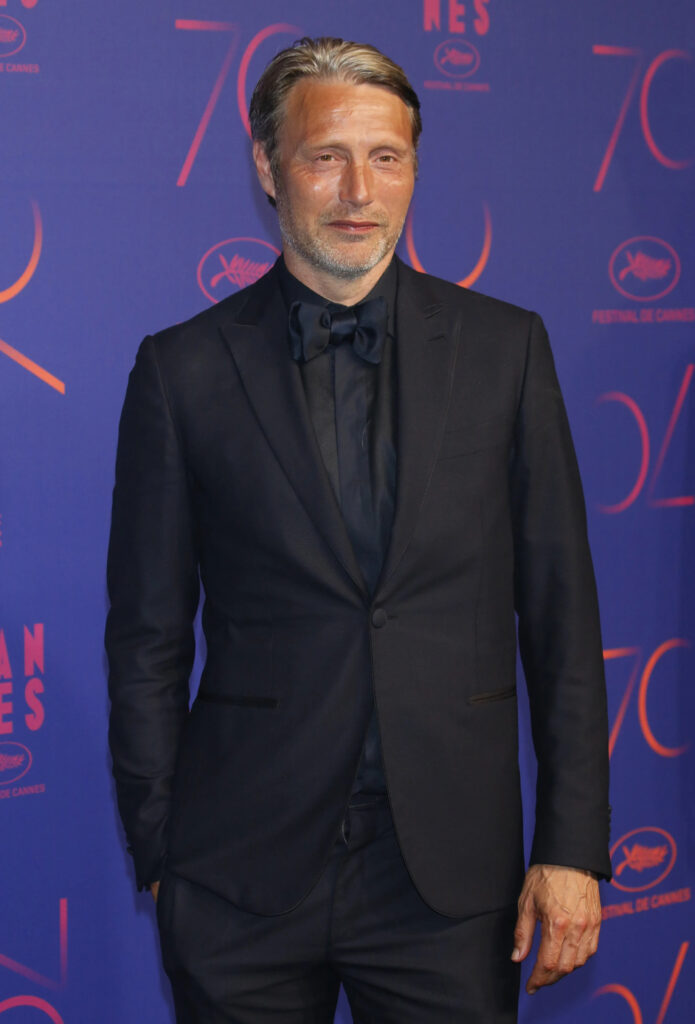
Mads Mikkelsen’s tattoo story is easy to mix up because the images most people recognize belong to a character. The actor is reported to have a small real tattoo of the initials H.J., associated with his wife, Hanne Jacobsen. The bolder images come from Pusher II, where Mikkelsen played Tonny, a troubled Copenhagen criminal with a shaved head, an elaborate back piece and ink running down his arms.
That distinction is important. A tattoo can look completely real on screen and still be part of a character’s costume. The RESPECT lettering, “Blood & Honour” and the winged design were made for Tonny’s look. They help tell the story of a fictional man searching for status, approval and control.
The small H.J. tattoo has a different feel: personal, quiet and easy to miss. Reports place it on Mikkelsen’s wrist and connect it to Hanne. Tattoo-focused sources have also credited a Danish artist and called it his first tattoo. The documentation is limited, so it’s best to treat it as a reported personal design rather than infer a large permanent collection from film stills.
The screen tattoos can be described clearly; the H.J. initials should stay separate. This keeps the actor’s tattoos distinct from makeup and costume work.
The RESPECT tattoo on Tonny’s scalp
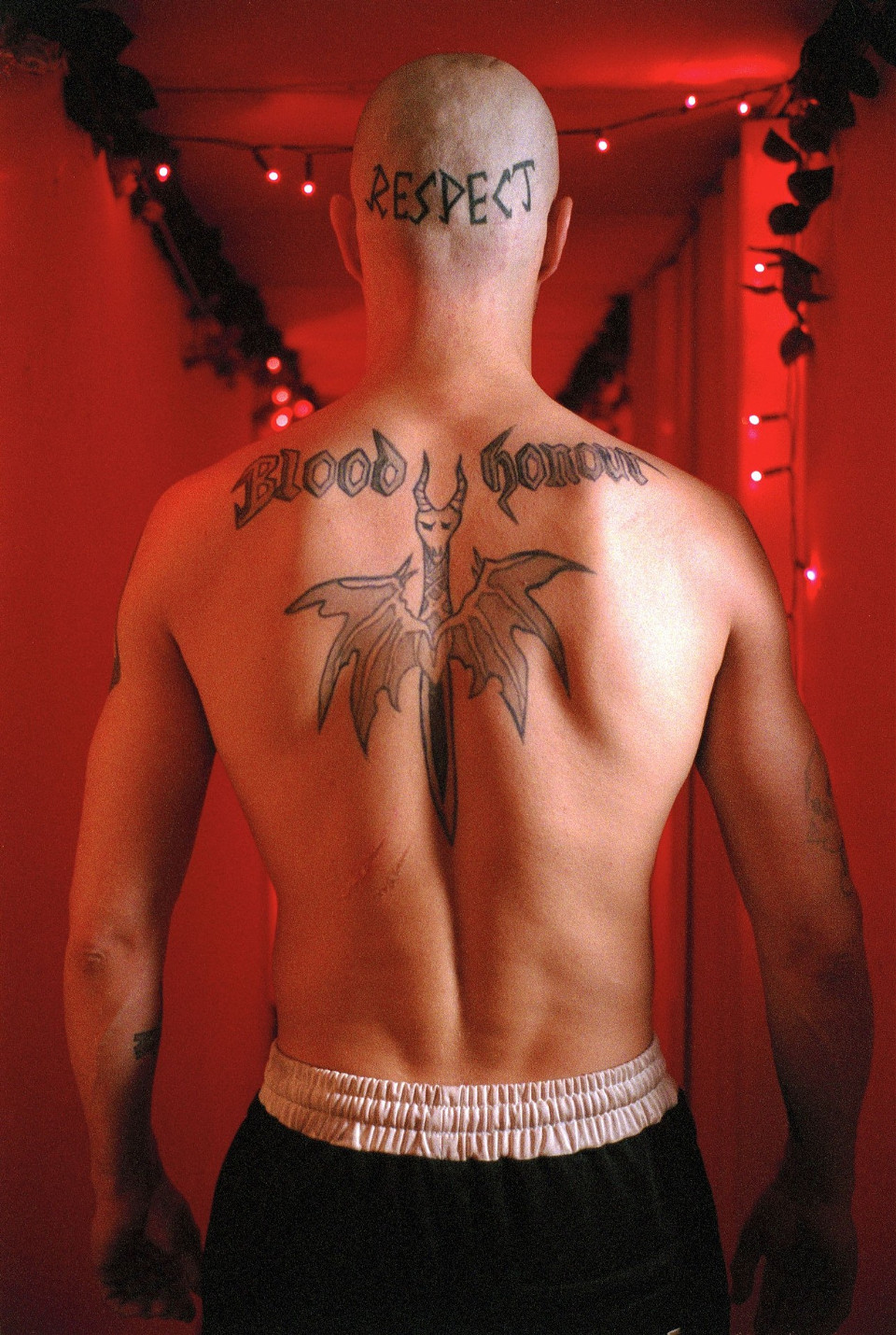
The word RESPECT across the back of Tonny’s shaved head is the detail many viewers remember first. Its large, angular lettering is hard to miss when the camera moves behind him. The placement carries its own irony: someone who truly has respect wouldn’t need to announce it in block letters, and Tonny keeps chasing approval from people who withhold it.
Mikkelsen later described the idea as ironic and tied to Tonny’s need for approval. That gives the design more depth than a standard gangster look. The scalp placement adds to the idea: everyone behind Tonny can read the word, while he can’t see it himself. He has to trust other people to take in the message.
“Blood & Honour” across the upper back
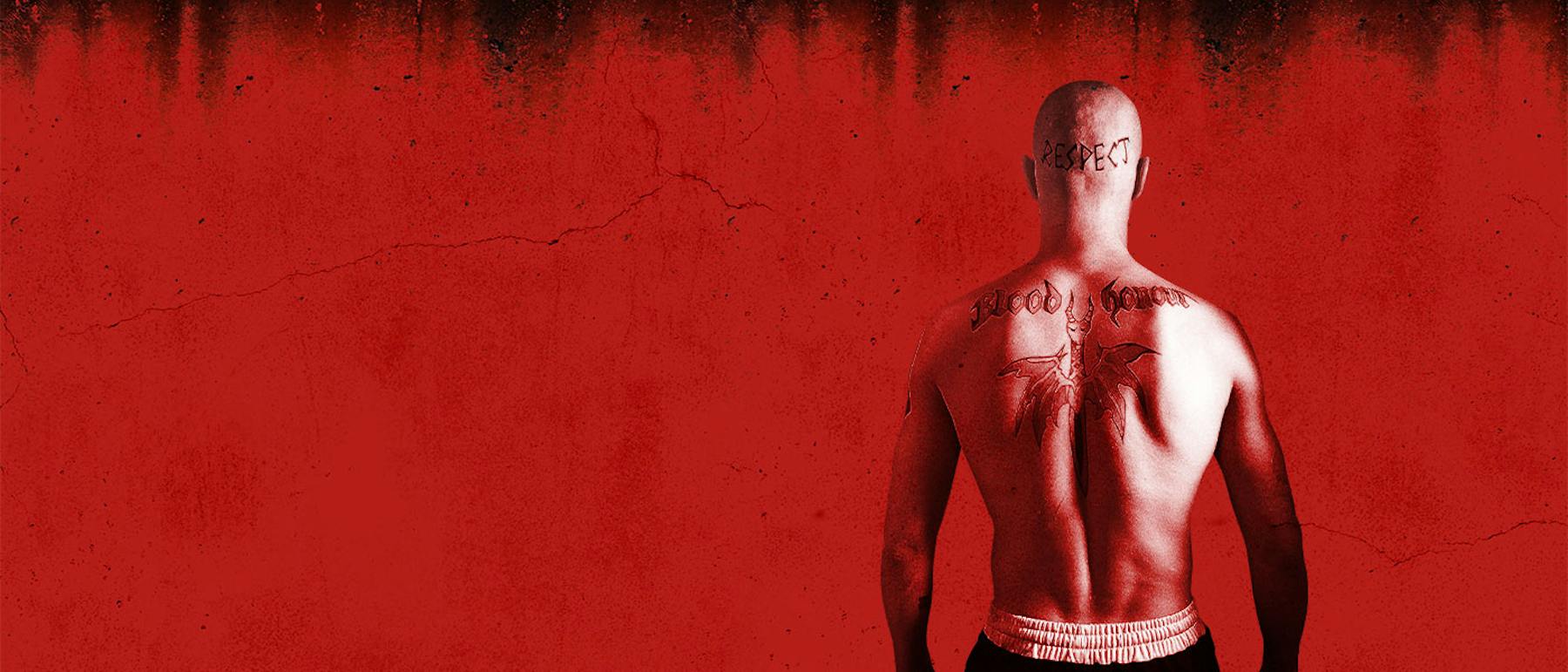
Below the scalp lettering, “Blood & Honour” curves across Tonny’s shoulders. A dark winged figure and long central blade sit between the shoulder blades. In the wider promotional image, the ink reads as one composition rather than a collection of unrelated designs.
The scale gives the character a presence before he speaks. The tattoo makes Tonny look like he belongs to a violent world, while the story reveals his insecurity and confusion. The design is blunt because Tonny wants to seem dangerous; the film keeps showing the fear beneath that performance.
The forearm tattoos in the dockside scene
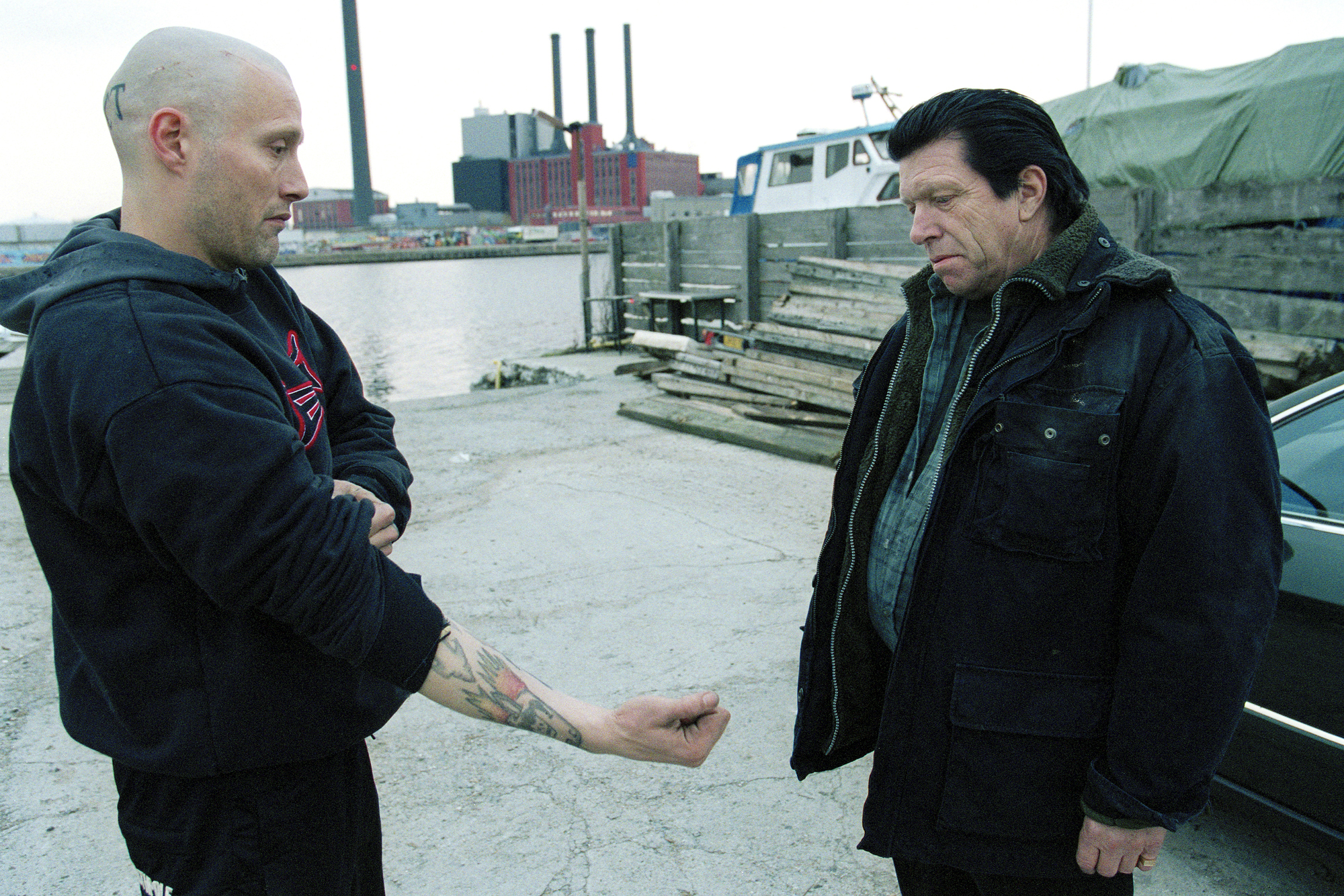
A useful still shows Tonny extending his forearm toward his father at the waterfront. It isn’t a clean catalogue photo, but it shows the character’s ink continuing beyond his head and back. The forearm tattoos appear during a tense family exchange, giving the placement more weight than a simple close-up.
Tonny is trying to prove himself. His body becomes part of the argument, and the ink reinforces the street-hardened image he wants to project. Yet his posture and the exchange with his father show how little power he has there. He looks tough, but still wants to be taken seriously by his dad.
A close view of the RESPECT lettering
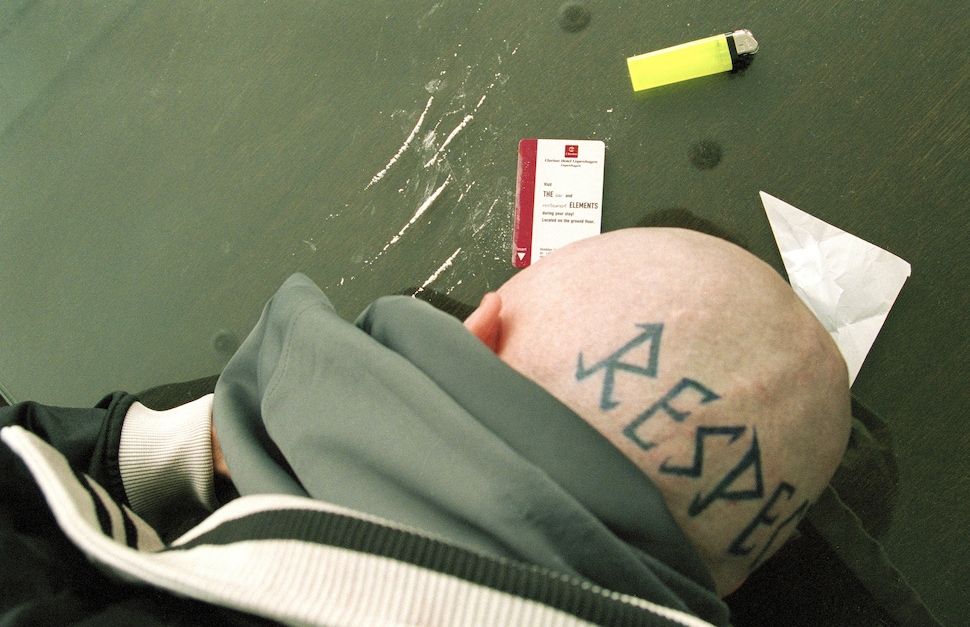
The close-up over the table shows how rough the lettering is meant to look. The lines are uneven and jagged, in keeping with the film’s low-level criminal world. It has none of the polish of luxury tattooing; the mark is built for speed, attitude and instant recognition.
That rough finish suits Tonny. He’s impulsive, bruised and desperate to be noticed, and the tattoo reduces that feeling to one word. The camera catches it for a moment, then returns to the table, the drugs and the decisions that keep worsening his life.
The arm ink in the blue-lit room
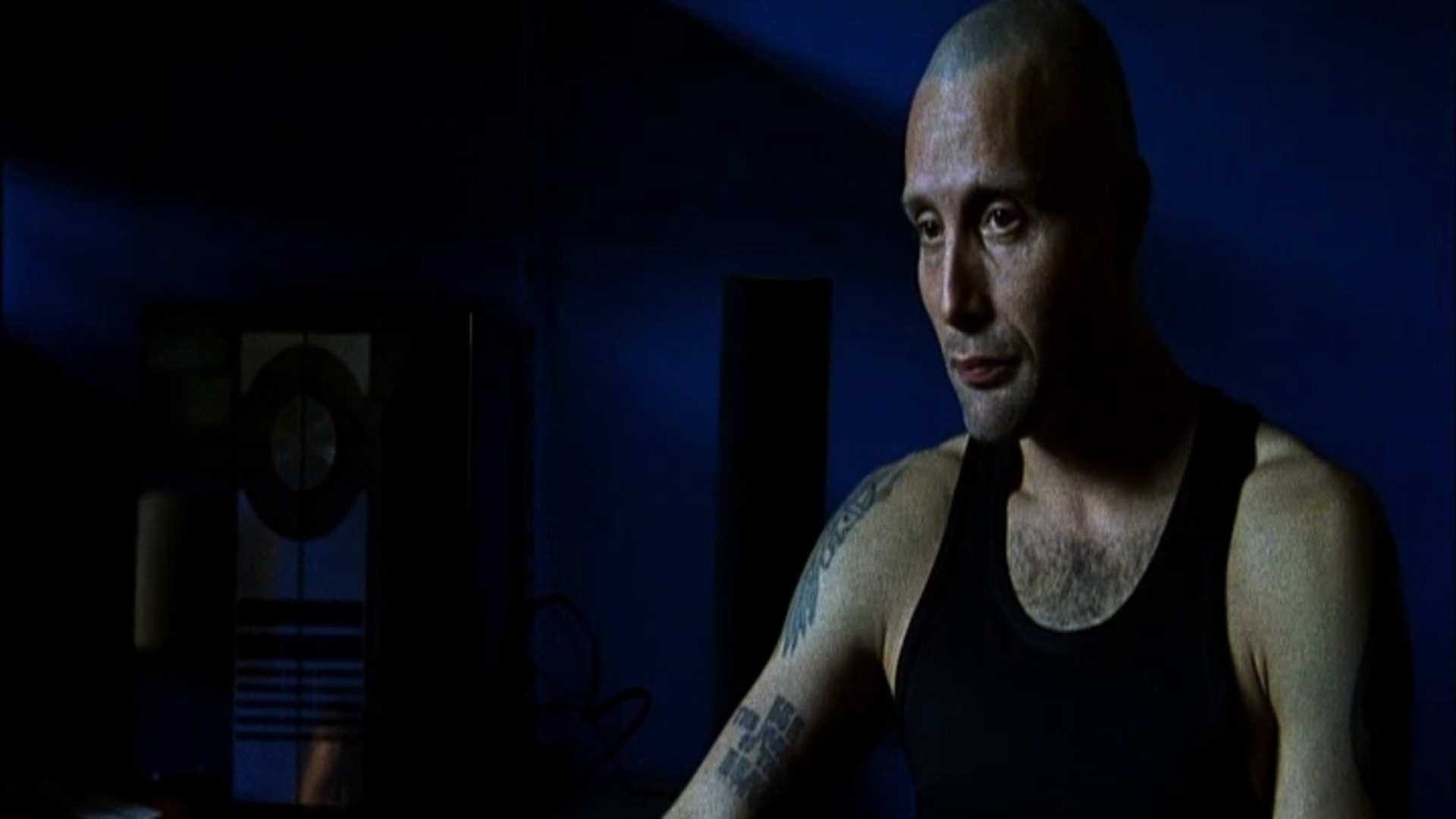
Another still from the darker interior scenes shows Tonny seated in a blue-lit room, with tattoos across his shoulders and forearms. The mood differs from the red-lit back shot. There’s no dramatic pose or broad display of the lettering; the ink is simply part of his everyday silhouette, visible because his vest leaves his arms bare.
That’s why the tattoo work in Pusher II stays memorable. The designs return as part of Tonny’s physical presence, not only for one reveal. The red room makes the back piece confrontational; the blue room makes the arm ink feel lived in. Both images belong to one fictional collection, but they show different sides of him.
How the film tattoos differ from Mads Mikkelsen’s real ink
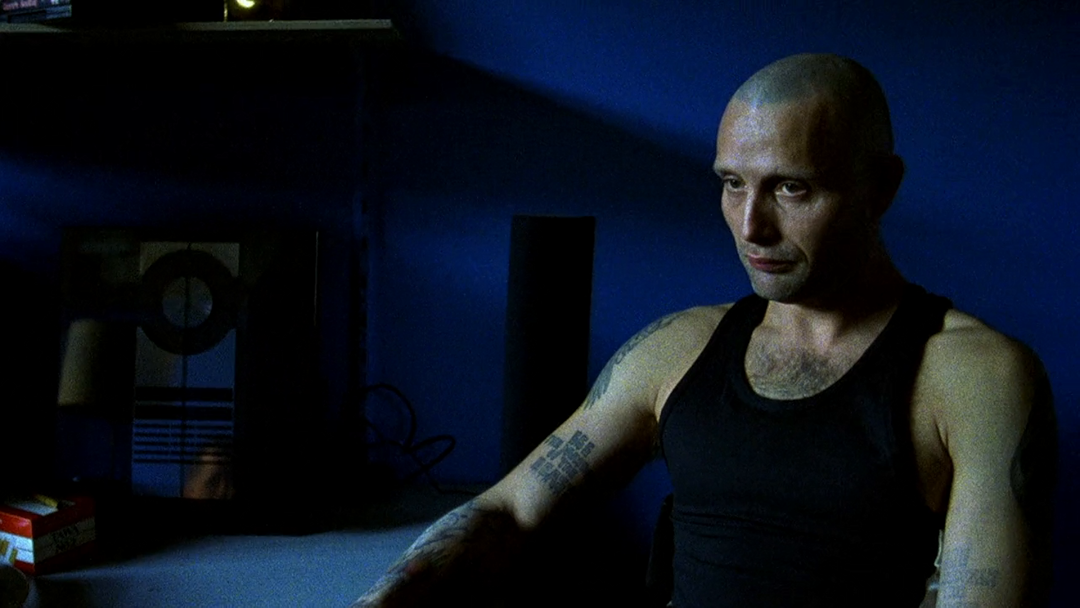
The RESPECT lettering, “Blood & Honour,” winged back design and arm tattoos shown here belong to Tonny, Mikkelsen’s character in the Pusher films. They were created for the role. Mikkelsen’s reported H.J. wrist initials are a separate, much quieter detail; public evidence doesn’t establish a full catalogue of dramatic permanent tattoos.
That difference should be clear in headlines, captions and the article itself. A generic Cannes portrait doesn’t prove an actor has a tattoo, and a film still doesn’t show what he wears off camera. Good tattoo research follows the image instead of bending it to fit a rumor. The pictures are most useful when labeled honestly: Mads Mikkelsen as Tonny, with the character’s ink doing much of the storytelling.
What’s confirmed: Mikkelsen’s real tattoo record appears limited, with the H.J. wrist initials the clearest reported personal design. His more famous tattoo images come from Tonny, whose scalp, back and arms were marked to show insecurity hidden beneath toughness. That’s why searches for Mads Mikkelsen tattoos return such striking pictures, even though many show a role.
Watch a relevant Mads Mikkelsen interview: The video below accompanies the article with a look at the actor’s public persona and intense character work.