Actors

Jason Momoa’s Shark Tooth and On the Roam Tattoos

Jason Momoa is often recognized by the black triangular pattern running along the side of his head, but that is only one part of his collection. His tattoos also touch on family, Hawaiian heritage, protection, his creative projects and people he has lost. Some are easy to spot; others come into view when he turns an arm or explains the mark.

Momoa’s tattoos span different chapters of his life. His first large piece came before his daughter was born, while later designs connect to On the Roam and Pride of Gypsies, projects he built with friends and family. The shark-tooth patterns link those personal themes to his Hawaiian aumakua, a guardian spirit he has described as a shark.

The clearest picture comes from the designs Momoa has explained and the details photographs can show. Some marks have a personal story behind them; others are visible without a confirmed explanation.

The shark-tooth head tattoo is tied to Momoa’s Hawaiian roots
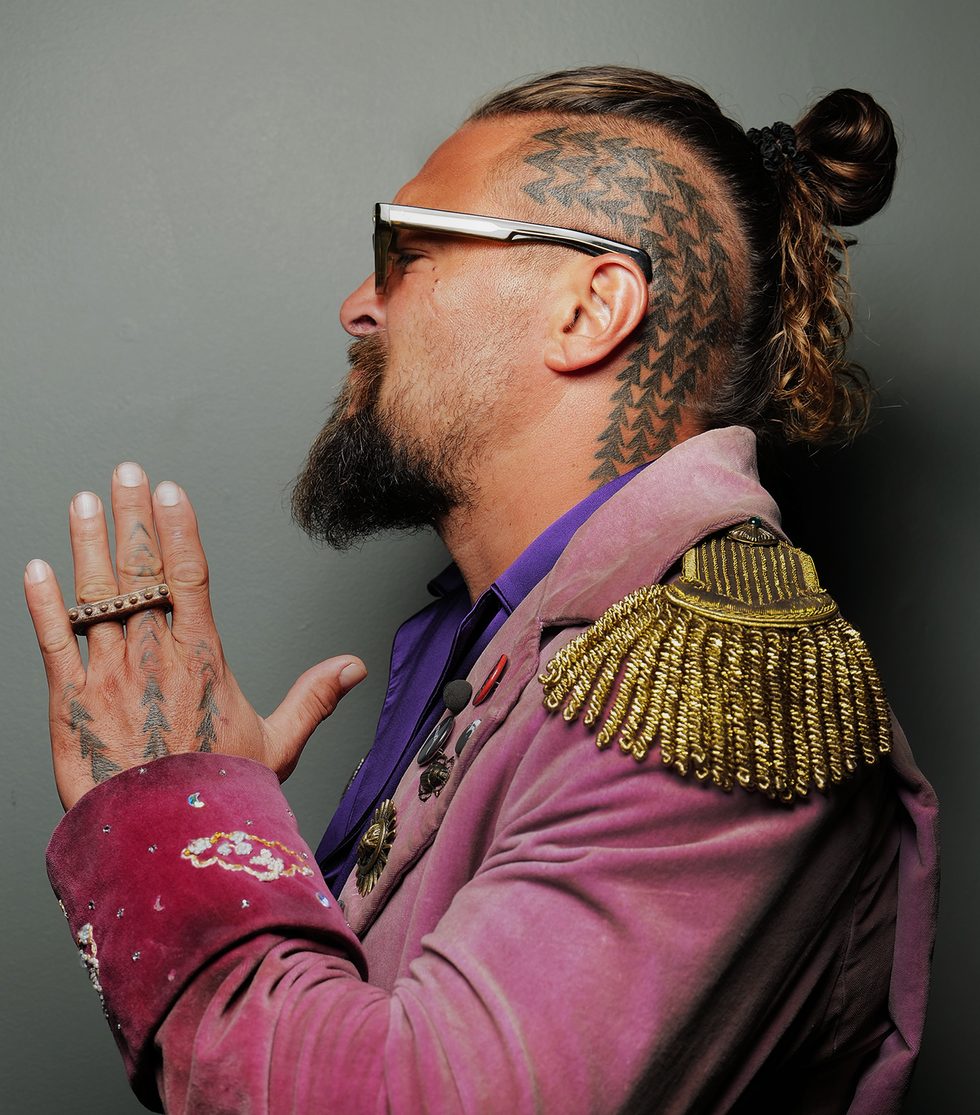
Jason Momoa shark tooth tattoo on the side of his head

The head tattoo is the most dramatic addition to Momoa’s collection. Rows of solid black, arrow-like shapes run from the shaved side of his scalp toward his ear and neck. They echo the triangular shark-tooth pattern on his forearm, but the higher placement makes them much more noticeable. With his hair tied back, the design stands out in profile.

Momoa revealed the head piece in 2022 while talking about “Chief of War” and his Hawaiian heritage. He said it was a design he had wanted for years, and later called it a favorite.

Momoa connects the pattern to his family’s aumakua, which he describes as a guardian spirit in the form of a shark. The shark-tooth shapes are tied to protection, family and his Hawaiian identity, rather than chosen only for their bold look.

Momoa has explained his own connection to the design, but a photograph cannot tell us what each individual triangle means. What it does show is the repeated tooth shape, the heavy black ink and the way the pattern follows his scalp toward his neck.

The forearm shark teeth were Momoa’s first major tattoo
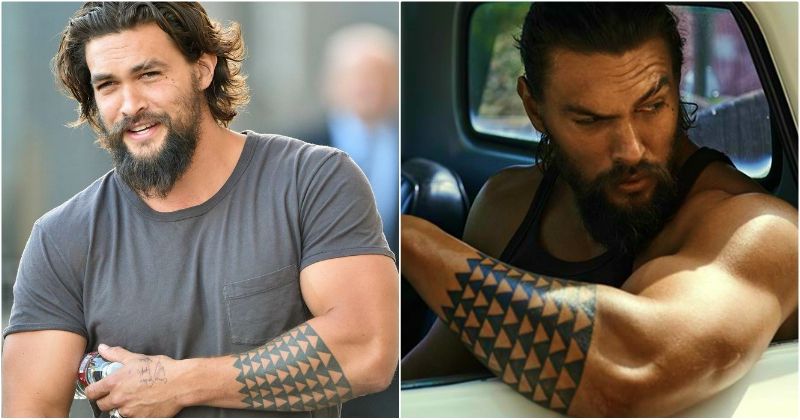
Jason Momoa shark tooth aumakua forearm tattoo

Momoa’s forearm tattoo came much earlier and remains the foundation of the collection. He has said it was his first tattoo, took about eight hours and was done when he was 26, shortly before his daughter was born. Its size is why it still dominates photos of his arm.

Rows of black triangles create the shark-tooth pattern, which wraps around Momoa’s forearm instead of sitting flat on the front. As he moves his arm, the design shifts: from the wrist it can look like a band, while the side view shows the rows climbing toward a half sleeve.

Momoa connects the design to his family guardian, the shark aumakua. He has said the tattoo represents protection and a way of carrying that family connection with him. He has also talked about sharks recognizing him when he is in the water.

Momoa later added to the arm tattoo for a character he played. He said the extension suited the role and that, at the time, he wore that part only as the character. The original forearm piece and the later addition belong to different points in his career.

The arm tattoo often appears in photos because a sleeveless shirt or raised arm reveals it, while a jacket or costume can hide most of the pattern. A wide shot shows its scale; a close side view makes the rows of teeth and the wrap around the arm easier to see.

Momoa’s chest carries his children’s names and family lettering
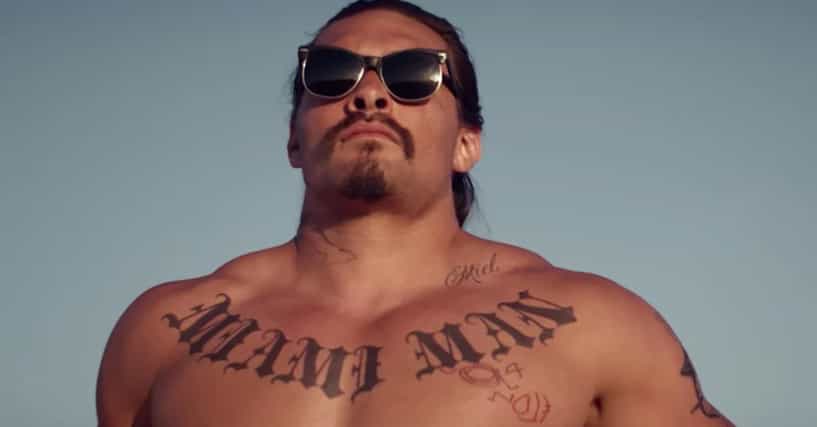
Jason Momoa MAMA DAD chest tattoo

The chest tattoos are more closely tied to family than to Momoa’s public warrior image. Photos show lettering across the upper chest, including “MAMA DAD”, and reports identify his children’s names in their own handwriting. These are personal family marks, distinct from the shark-tooth design.

The handwritten names keep the tattoos close to the children who wrote them; they are not polished display lettering. Shadows and body position can obscure parts of the chest, so the words and their placement are easier to confirm than the meaning of every line nearby.

Momoa has discussed family in connection with several tattoos, from the protective shark designs to the names linked with his children. That does not make every mark on his chest a family tattoo. Some are identified in reports; others are visible only in a particular photograph.

A shirtless photo can still hide the chest lettering under hair, necklaces or shadow. A closer image is needed to read the words and distinguish a name from a decorative line.

On the Roam, Pride of Gypsies and the smaller pieces
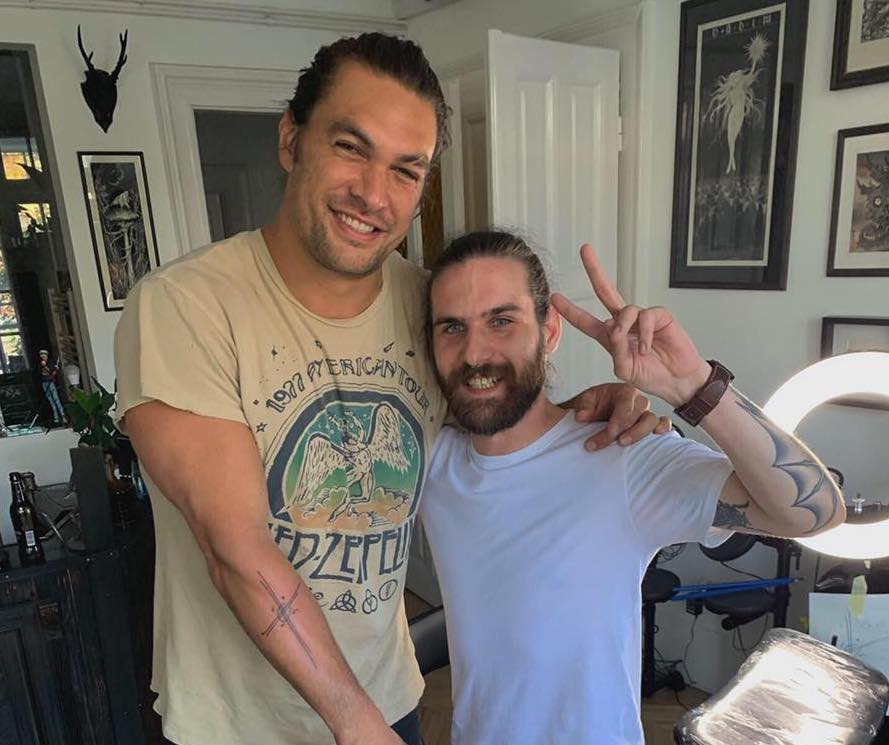
Jason Momoa On the Roam tattoo and arm lettering

Not all of Momoa’s tattoos are ancient family symbols. Some mark the projects and companies he has built. The On the Roam design is linked to the travel and making project he created with his team. Momoa has said he got it with people around him, giving it a group meaning as well as a connection to the project.

Pride of Gypsies is the name of Momoa’s production company and is commonly reported on his inner right forearm. It sits near the larger tribal work, but the two designs speak to different parts of his life: the triangles connect to ancestry and protection, while the lettering points to his company and creative community.

Momoa has smaller tattoos too, including a simple line and designs linked to people he has loved and lost. Some are hard to identify consistently; a bracelet can cover a mark, and an arm turned toward the camera may change how it looks. Those smaller pieces need a clear photo or Momoa’s own explanation before their details can be pinned down.

Some of Momoa’s tattoos have been covered or changed for acting roles. Costumes can hide his real forearm ink, and temporary designs may be added for a character. A tattoo seen in a film is not automatically part of his permanent collection; interviews and clear off-set photos help tell the difference.

Why Jason Momoa’s tattoos work as a timeline
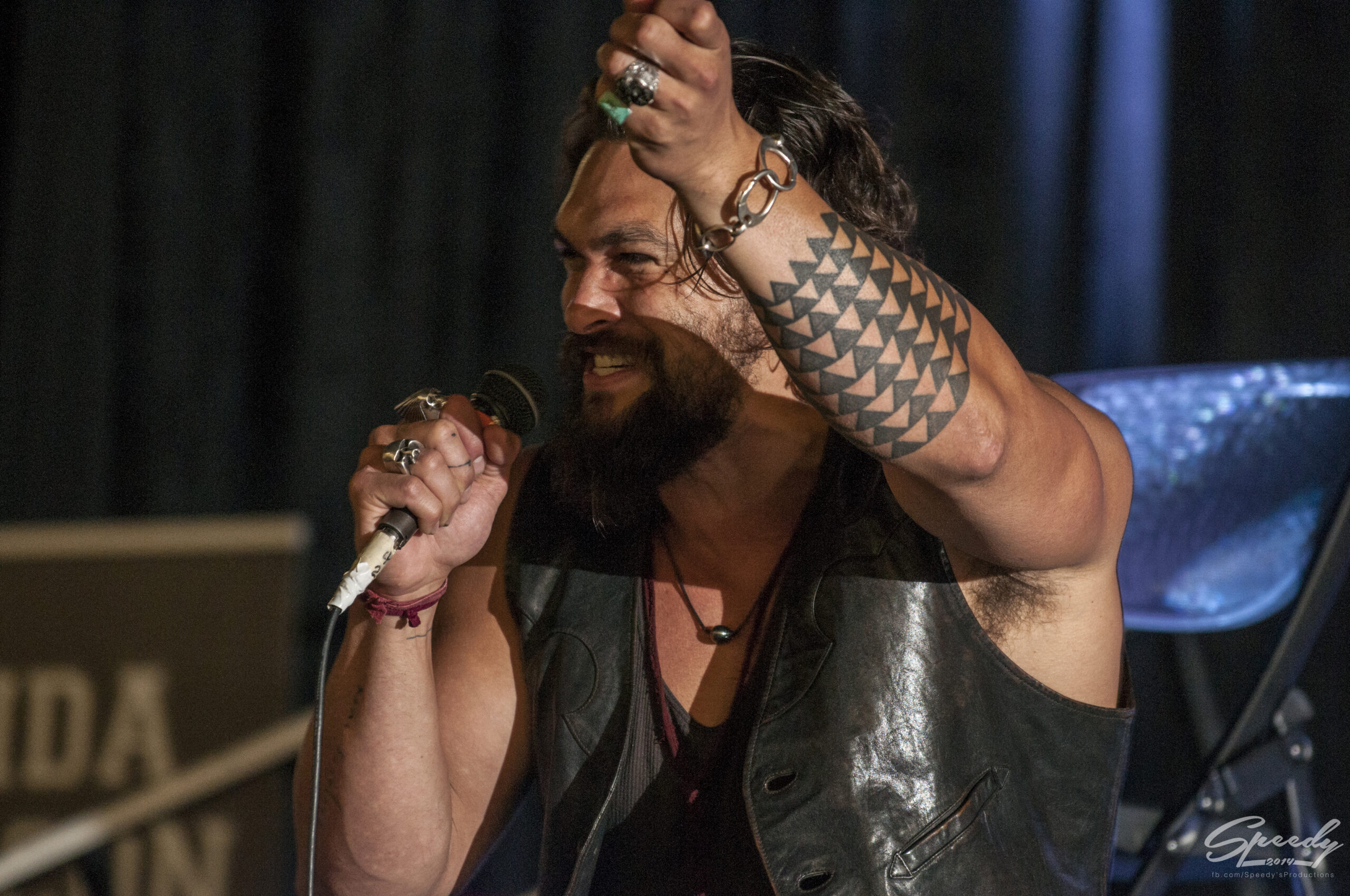
Jason Momoa forearm tattoo timeline

Dates help put Momoa’s tattoos in order. The shark-tooth forearm piece came first and connects to his family and aumakua. Years later, the head tattoo carried the pattern up toward his scalp and neck. The chest lettering keeps family close, while the company designs record the people and projects around his work.

The collection moves between Hawaiian heritage, family, work, grief and smaller ideas that may be personal to Momoa alone. It is not one matching sleeve made for a photo shoot. Some designs have a clear explanation from him; others can be seen in photographs without a confirmed meaning.

Momoa has explained the forearm teeth as a link to his aumakua, and described the head tattoo as a later extension of that pattern. The chest words and company names can be read where photos show them. For the less visible marks, it is better to wait for a clearer image or his own account than to turn a dark shape into a story.

What makes Momoa’s tattoos interesting is how they bring different parts of his life together. The shark-tooth pattern connects family with Hawaiian heritage; the chest lettering keeps family close; and the company marks follow the people and projects around him. The collection spans from his twenties to newer roles and creative work, and no single photo shows all of it.
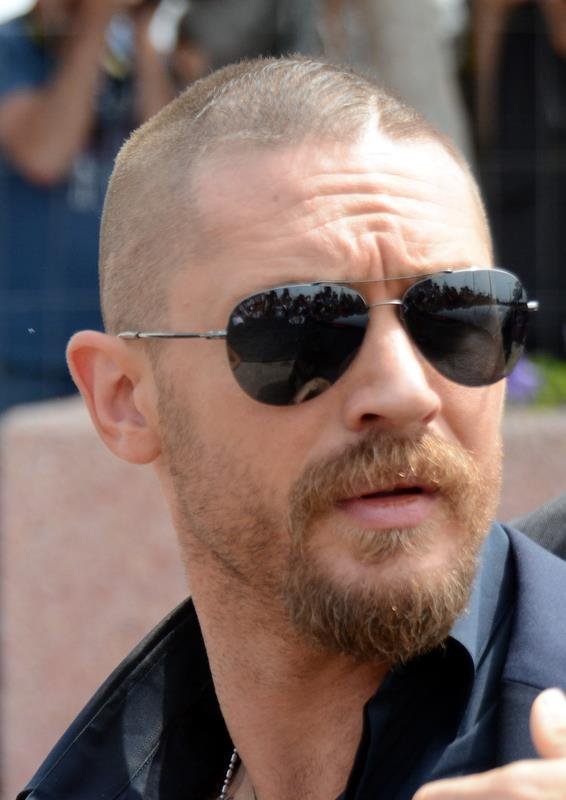
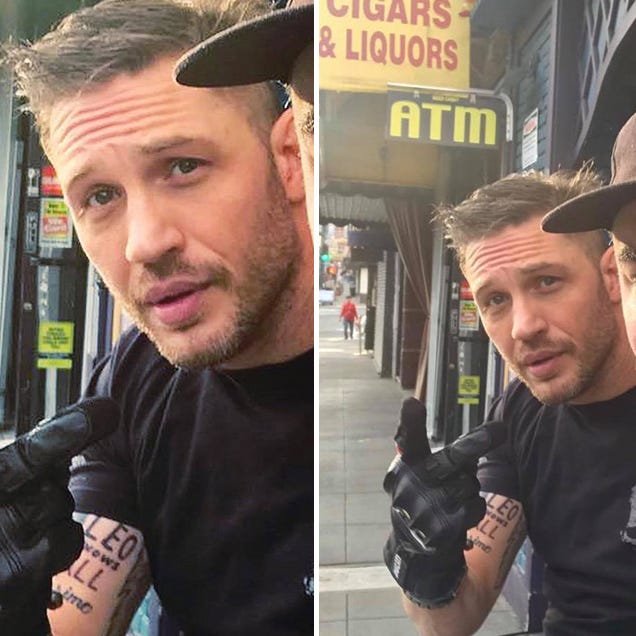
Tom Hardy Tattoos: Leo Knows All and the Stories Behind His Ink

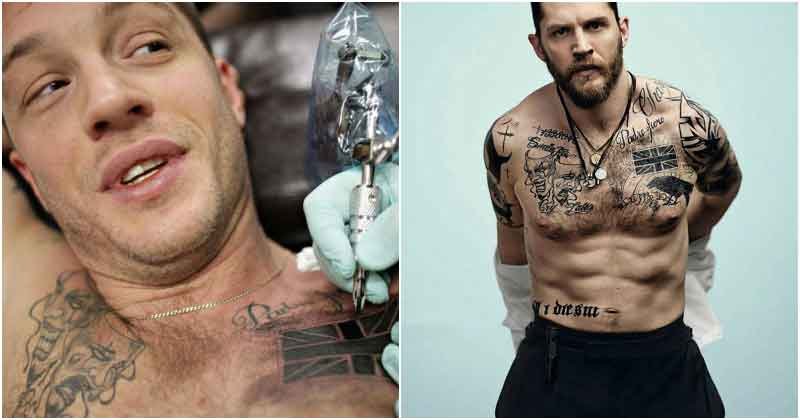
Tom Hardy’s tattoos range from easy-to-read lettering to a much larger collection visible in shirtless film stills. A red-carpet photo might catch the famous Leo Knows All on his arm; the rest includes numbers, animals, family references, script and older traditional designs. Hardy has explained some pieces, publications have reported on others, and some details are only visible in photos.

This guide stays with the tattoos identified in close images: the DiCaprio wager, Padre Fiero, 1338046, the raven and Union Jack, the wolf, Till I die SW, the Fighting Irishman, the feather and Scribe, the sacred heart, tribal shoulder work, and the pit bull tribute and family lettering linked to his son.

Leo Knows All is the wager that became Hardy’s best-known tattoo

Tom Hardy Leo Knows All tattoo on his right bicep
The words on Hardy’s right bicep read Leo Knows All. They began as a bet with Leonardo DiCaprio while the two were working together. DiCaprio predicted Hardy would be nominated for an Academy Award for The Revenant; Hardy wasn’t convinced. They agreed that the loser would get a tattoo chosen by the winner. After Hardy received the nomination, DiCaprio picked the phrase.

The origin is straightforward: an in-joke between two actors that became permanent. The lettering is plain and heavy, and close photos show it running across the upper arm instead of disappearing into the sleeve. The story has been repeated in interviews and entertainment coverage, making it one of Hardy’s best-documented tattoos.

The words are the whole design. It records the prediction, the friendship and DiCaprio winning the bet. There’s no need to treat each letter as a separate symbol or make it stand for Hardy’s entire career.

Padre Fiero puts fatherhood across the chest

Tom Hardy Padre Fiero chest tattoo
Across Hardy’s upper chest, Padre Fiero means “proud father” in Italian. The phrase is large enough to read in a wide torso photo, though older or distant shots can blur the exact lettering. Coverage often discusses it alongside his family-related tattoos.

This is a fatherhood tattoo, not a Latin motto. The large lettering reads like a personal statement and stands out among the numbers, faces, script and traditional motifs around it.
The Padre Fiero phrase doesn’t explain every tattoo on Hardy’s torso. It sits beside film references, an old friendship tribute and other designs whose meaning he hasn’t explained publicly.

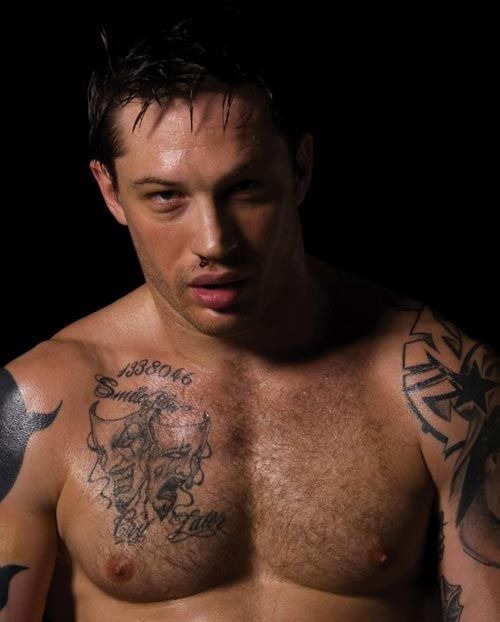
The 1338046 number sits beside skull and face work

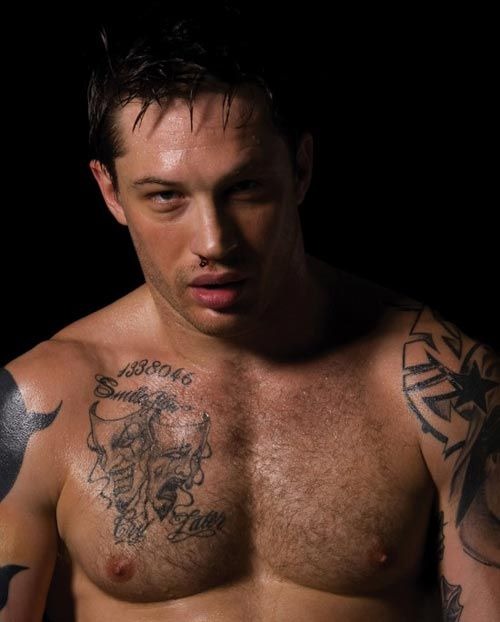
Tom Hardy 1338046 chest number tattoo with skull and face work
The number 1338046 appears clearly in Hardy’s chest photos. Tattoo publications commonly identify it as the Marine Corps service number of the father of one of Hardy’s close friends. It is reported as a memorial tribute, not a number chosen just for how it looks.

The digits sit among a skull, face-like images, script and dark lines. In compressed photos the shapes can run together; in a close crop the number separates from the surrounding art. The reported memorial story belongs to 1338046, not automatically to the nearby skull or faces.

Hardy’s chest also has theatrical faces and mask-like shapes. Photos show them, but there isn’t a reliable public explanation for each one. Describe their appearance and placement without assigning them to a specific film, character or period in his life.

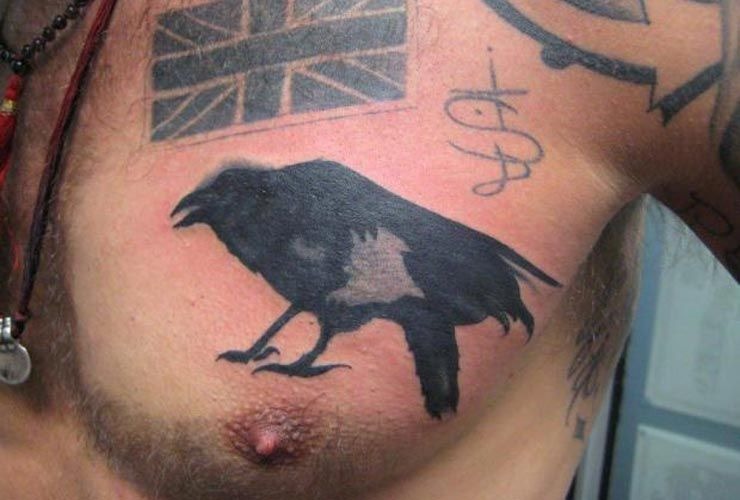
A raven, Union Jack and bat shape connect the chest to his film years

Tom Hardy raven and Union Jack chest tattoos
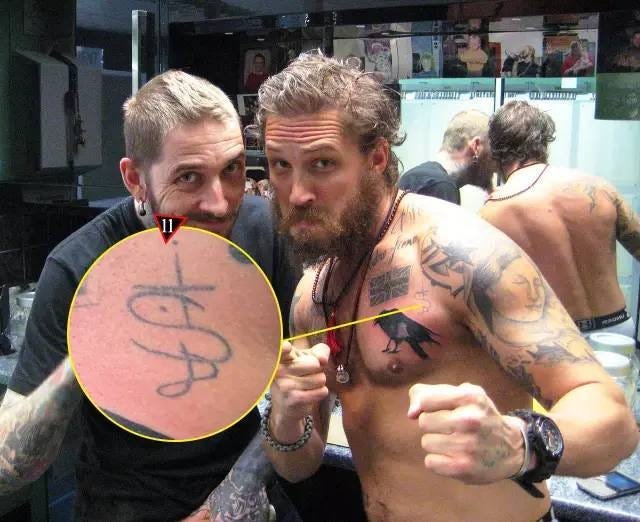
The raven on Hardy’s chest is one of the more distinctive pieces: close photos show a dark bird with spread wings and a Union Jack above it. The script and shading around the bird make the whole area look larger than a single tattoo.
Coverage links the raven and bat-like silhouette to Hardy’s screen work, especially around The Dark Knight Rises and Mad Max: Fury Road. That is a reported connection, not a design note from Hardy. Photos show the raven and flag; the film explanation comes from the coverage.

The Union Jack stands out in a tight crop, but the bird can disappear among the chest lettering in a full-torso photo. Up close, its beak, wings and dark body are easy to pick out.
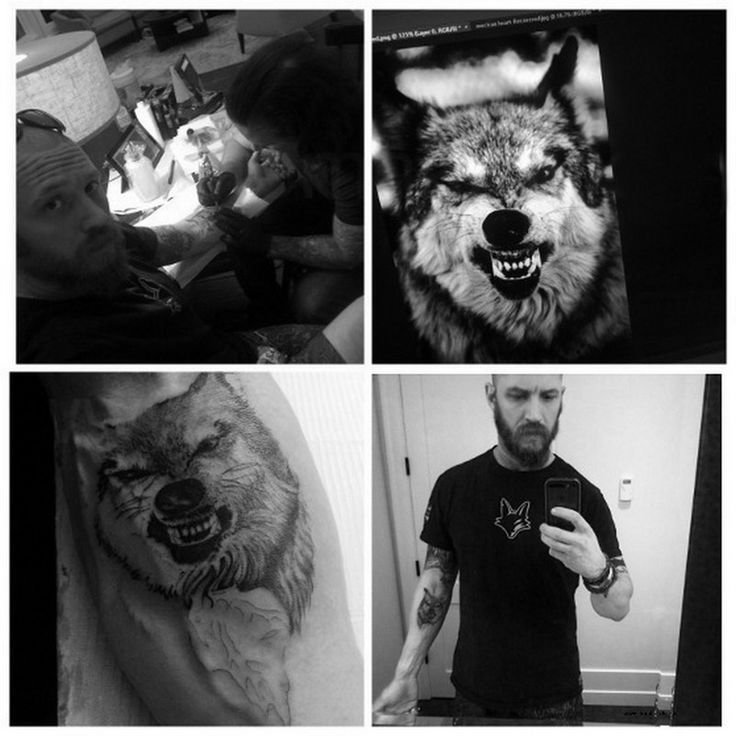
The wolf is a separate image, not just another piece of the chest

Tom Hardy wolf tattoo close-up
The wolf shows up clearly in close photos as a separate animal portrait. Coverage associates it with Hardy’s work on The Revenant and other physically demanding roles, but doesn’t give a precise reason he chose it.
People often associate wolves with strength, loyalty or independence, but there’s no evidence Hardy chose this one for those reasons. In photos it has a shaded face and strong outline among the older tattoos on his upper body. It belongs in its own section, separate from the raven.

The wolf breaks up the lettering with an image that takes a closer look. Leo Knows All and Padre Fiero are legible right away; the wolf’s eyes, muzzle, fur and shading resolve more slowly.

Older arm lettering includes Till I die SW, the Fighting Irishman and Scribe

Tom Hardy torso showing arm lettering, feather and older tattoos
Several older tattoos on Hardy’s arms are easier to list individually than to force into one story. Till I die SW is commonly linked to Sarah Ward, his former wife. Reports read the letters as her initials and a phrase. The photos show the placement and lettering; coverage of their relationship supplies the context.

A Fighting Irishman is another recurring entry, described as a nod to Hardy’s mother’s Irish heritage. The traditional-style figure has a bold outline and compact shape, distinct from the fatherhood wording across his chest.

A feather with Scribe appears on his right arm. The long feather and script form a narrow vertical design. Hardy is an actor and writer, but that doesn’t justify turning the tattoo into a full biography; the word and image are enough to identify it.

An older tattoo map also records tribal work around the upper arm or shoulder, a sacred heart with a cross on the upper chest, and angel on the upper back. Their locations are reported, though sources don’t consistently explain what each one means.

Family lettering, the pit bull and tattoos that photographs only partly reveal

Tom Hardy tattoo collection visible in a torso photograph
Some tattoos are hard to document because clothing hides them or they only show in certain poses. Tattoo coverage identifies a pit bull muzzle on the left side of Hardy’s back, described as a tribute to his dog. It rarely appears in front-facing photos, so a chest image can’t confirm its shape.

Reports also mention family-related Italian script reading ALL Bellissimo, linked to Hardy’s son. The spelling and crop aren’t equally clear in every photo, so treat it as a reported identification rather than a definitive reading from one image. Tattoo galleries also show phrases such as Smile? and Cry later, but Hardy hasn’t given a first-person explanation for them.

A photo can show a word, animal, number or location. An interview may add a family connection or tribute. When neither provides a backstory, leave it open instead of filling in the blanks.

What the record shows, and what it leaves unanswered

Hardy’s tattoos combine readable statements with dense imagery. The wager behind Leo Knows All is documented; Padre Fiero refers to fatherhood; 1338046 is reported as a memorial. The Fighting Irishman points to family heritage, and the pit bull is described as a tribute to his dog. These specific stories have firmer support than broad claims that all his ink means rebellion or toughness.

Other pieces—the raven, Union Jack, wolf, feather, sacred heart, tribal work, masks, faces and small lettering—can be described by what the photos show. Without a public explanation, avoid assigning each one a meaning. The images establish what is visible; interviews add context where Hardy has given it.

The tattoos don’t form one unified sleeve built around a single theme. They record friendships, family, acting jobs, past relationships and personal tributes, alongside designs Hardy may simply have liked. Giving each tattoo its own space, image and strongest supporting source makes the collection easier to understand.

Chris Farley Lives On in These Fan Tattoo Tributes

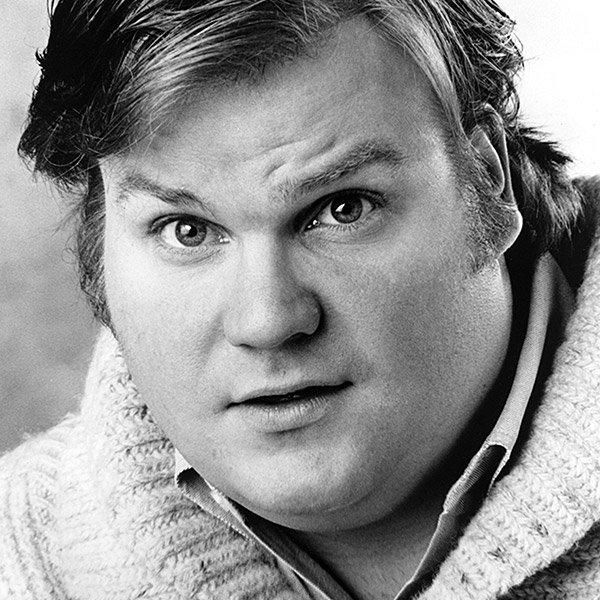
Chris Farley died in 1997, but fans still get tattoos of his portraits, characters and familiar lines. The designs celebrate his work; they aren’t tattoos Farley was known to wear himself. Many draw on the physical comedy and warmth that made even a short scene memorable.

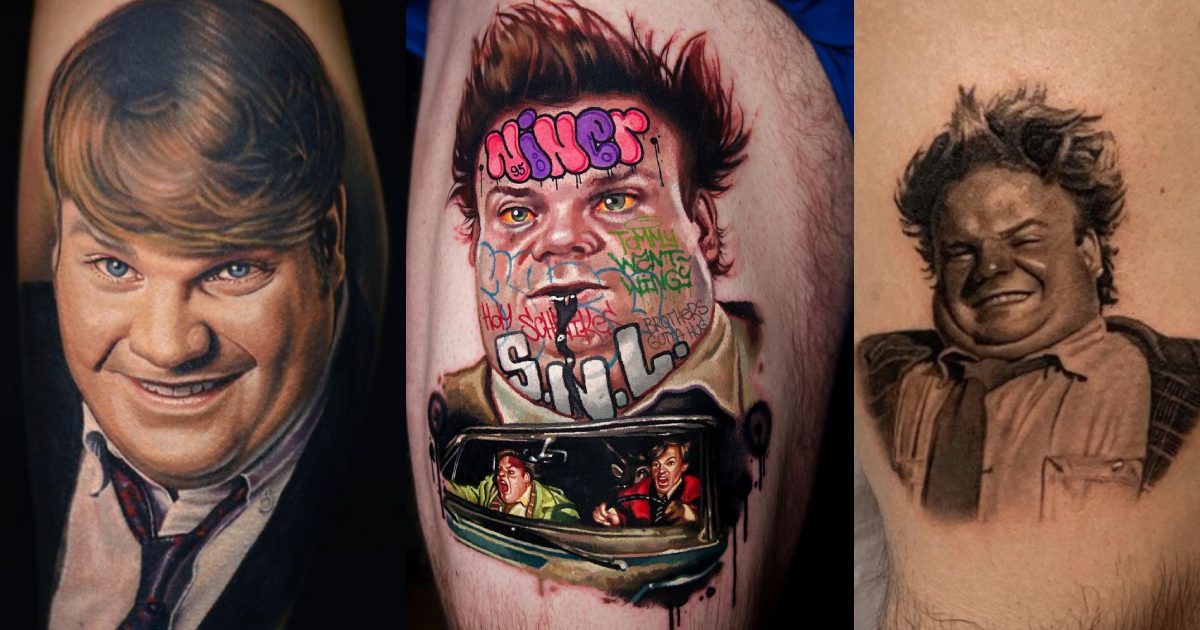
Examples in tattoo galleries and memorial features tend to fall into three groups. Some fans choose realistic portraits of Farley in black and grey or colour. Others choose characters such as Tommy Callahan from Tommy Boy or Todd O’Connor from Saturday Night Live. Still others use comic lettering, props or a scene that points to a film without spelling out Farley’s name. The styles vary, but each points back to the same performer.

Realistic portraits keep Chris Farley’s face at the centre

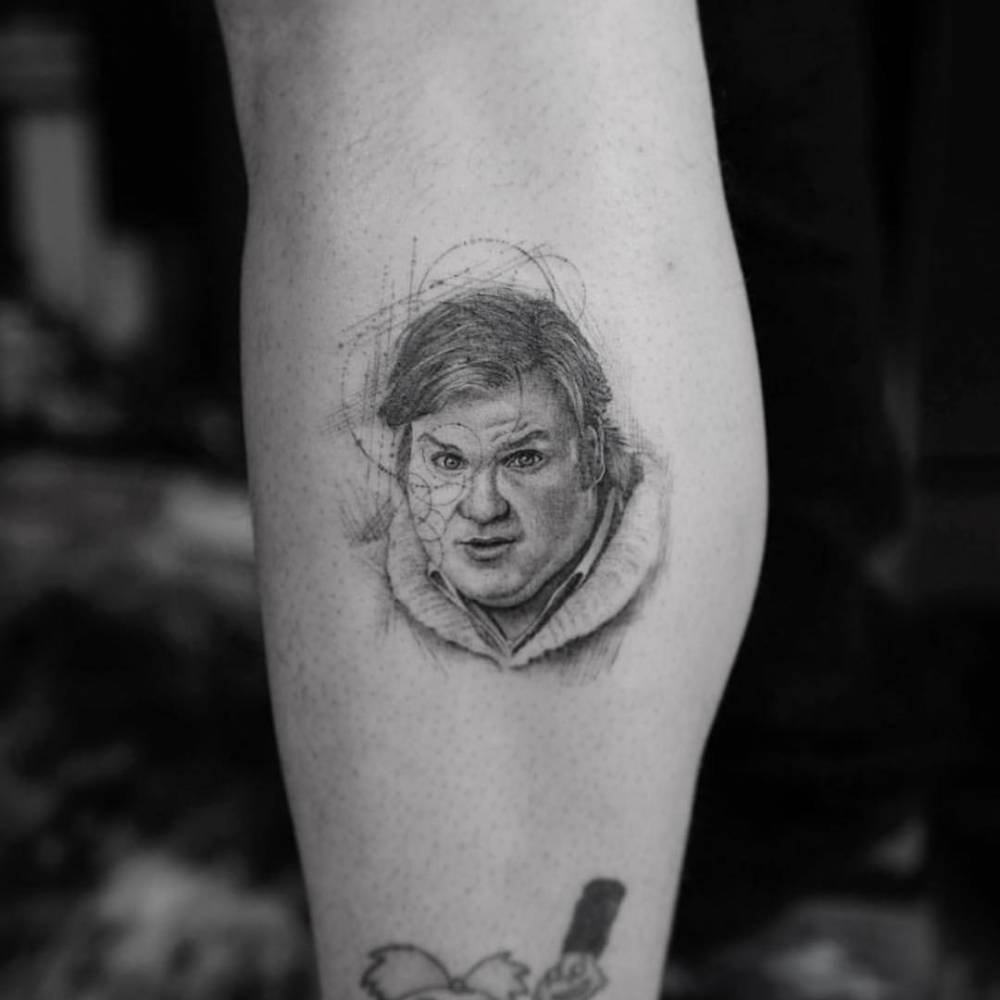
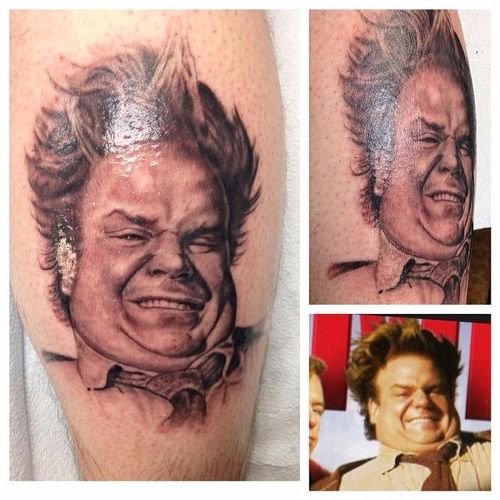
Realistic Chris Farley portrait tattoo on a fan's calf

Portrait tattoos of Chris Farley are the most direct tributes in these examples. Tattoo Filter features a fine black-and-grey micro-realism portrait credited to Dr. Woo; the Mike DeVries gallery shows another realistic fan portrait. The likeness rests on the details: his eyes, cheeks and open grin. If those don’t read clearly, the tattoo could be a generic face.

Size makes a difference. A calf or forearm gives the artist room to shape the jaw, hair and expression; a small design has to simplify them. The Tattoo Filter portrait keeps the face in focus without much competing detail around it. Fans who know Farley’s screen presence may recognise him from the expression alone.

The source pages identify Farley and sometimes the artist or gallery, but rarely say why a particular person chose the portrait. The tattoo shows admiration for Farley and his performances. Without more from the wearer, there’s no reason to tie every portrait to grief, a particular film or a private event.

Tommy Boy turns a favourite character into a calf tattoo

Chris Farley as Tommy Callahan from Tommy Boy in a fan tattoo

Tommy Callahan gives fans another way to remember Farley. Tattoodo’s gallery includes a black-and-grey tattoo of him as the central character in Tommy Boy, credited to Jay Cunliffe. It points to a role rather than a generic celebrity portrait; the film’s scenes, wardrobe and comic personality make the reference clear.

A character piece asks for more than a likeness. Clothing, posture and props help identify the role, while the expression carries Tommy’s frantic optimism. A calf gives a vertical figure room; on a wrist, the same design might have to lose detail to stay readable.

Tommy Callahan has a recognizable stance and a particular kind of panic. A fan might choose him as shorthand for the whole film, or for a scene where Farley loses control and wins the audience back.

Tattoodo identifies this as a Tommy Boy tribute by Jay Cunliffe. It doesn’t give the fan’s reason for choosing it, so that part is best left open.

Comic lettering and scenes preserve Farley’s loudest jokes

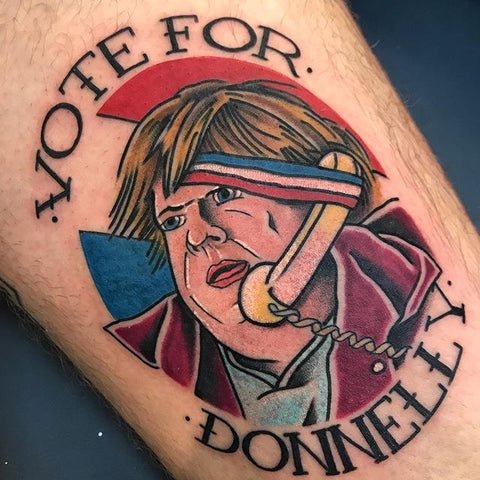
Colourful Chris Farley Vote for Donnelly fan tattoo

Some fans tattoo the joke instead of Farley’s likeness. Ultimate Tattoo Supply’s memorial feature shows colourful designs and familiar comic references, including a Vote for Donnelly parody tied to his political sketches. Inked Magazine’s roundup includes several more, with Farley alongside fellow performers, graffiti-style lettering and scenes built around a line or character.

A line of dialogue can bring back a sketch’s rhythm; a costume or prop can point straight to a film. Colour can keep the tattoo as playful as the performance. These are still memorials: they remember the comedy that made people laugh.

The sources name some words and subjects, but the photos don’t always reveal which scene the wearer had in mind. They show the tattoo itself, not necessarily the reason the fan chose it.

Some designs combine several references: Farley’s face with SNL lettering, a character beside a prop or a film line under a portrait. When one image holds the focus, the extra details can read as a memory board instead of clutter.

SNL characters make the tribute about performance as well as identity

Some fans choose Farley as Todd O’Connor from the Bill Swerski’s Superfans sketches on Saturday Night Live. Tattoodo tags the tattoo with Farley and the Da Bears reference, tying it to one of his SNL characters.

A portrait depends on getting Farley’s face right; this piece also relies on the pose and costume that identify Todd O’Connor. The sketch’s exaggerated sports-fan world supplies the rest of the context.

The choice can reflect when a fan first got to know Farley. Someone who remembers the Superfans sketches may choose Todd; another might pick Tommy Boy, Billy Madison or Beverly Hills Ninja. Each design marks a different way into his work.

The public image shows the costume and pose; Tattoodo’s page confirms the Todd O’Connor reference. That makes it possible to describe the tattoo clearly without attaching a private meaning the fan hasn’t shared.

What Chris Farley fan tattoos have in common

The tributes share a recognizable detail—a smile, a character or a joke—that leads back to Farley’s work. A Tommy Boy or SNL tattoo can name the role; a phrase or prop can bring back a particular scene.

The galleries identify subjects, artists and characters, but rarely explain why someone commissioned a design. The fan tattoos are tributes to performances and jokes viewers want to remember, not a record of Farley’s own ink.

If you’re planning a tribute, choose the memory before the style. Use a clear reference photo for a portrait, a pose that reads as the character, or enough space for a quote and its scene. The result should point to a specific performance, line or expression that matters to you.

Norman Reedus’s Tattoos Keep Family, Music and Mystery Close

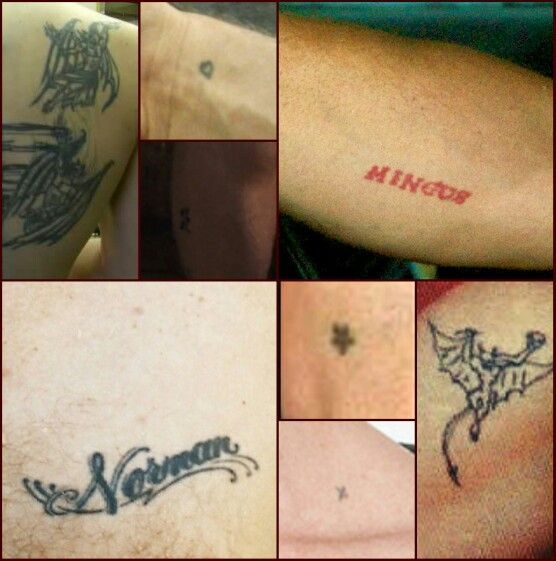
Norman Reedus has several tattoos that are easy to identify but few public explanations for what they mean. The clearest are the name Norman on his chest, Mingus in red on his forearm, dark demon figures on his back and a small Lemmy tribute he got during a motorcycle-and-music shoot. Photos also show smaller pieces on his hand, wrist and leg.

His role as Daryl Dixon on The Walking Dead can make the back designs look like character references. Reedus has described the tattoos as his own, separate from Daryl. He has explained the Lemmy piece, while leaving many of the other images without a public story.

Norman on his chest is a tribute to his father

Norman Reedus Norman chest tattoo and surrounding ink

The script tattoo reading Norman appears on Reedus’s left chest in widely circulated photographs. Tattoo references connect the name to his father, Norman Reedus Sr. The lettering and placement are clear; Reedus has not shared a longer story about it.

A name tattoo on the chest stays close to the heart without needing a large composition. A shirt, leather vest or shoulder angle can partly hide it; over-the-shoulder and mirror photos show the lettering better than distant event shots.

It stays understated in size, but the family connection is plain when the lettering comes into view.

Mingus in red on Reedus’s forearm

Norman Reedus showing the red Mingus forearm tattoo

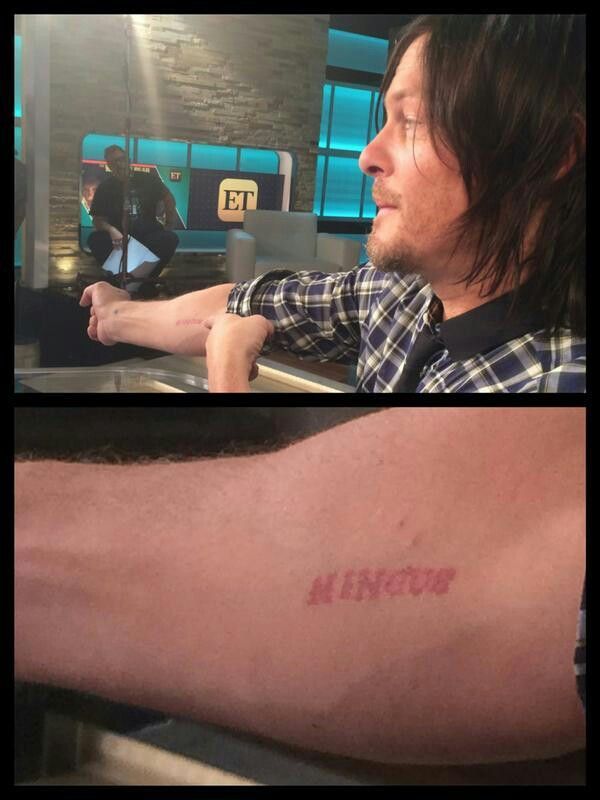
The red script Mingus on Reedus’s forearm refers to his son. Interview footage shows him rolling up his sleeve to reveal the lettering, and reference coverage places it in the same spot. Its red ink stands out against the darker line work elsewhere.

Reedus has told the story of showing the tattoo to Mingus and his son recognizing his own name on his father’s arm. It is a rare glimpse of the family connection behind one of the designs.

The lettering is easy to spot in short sleeves or motorcycle photos and just as easy to cover with a jacket. Its color and repeated appearance in photos make it one of his more recognizable tattoos.

The demon figures across Reedus’s back

Norman Reedus showing a demon back tattoo

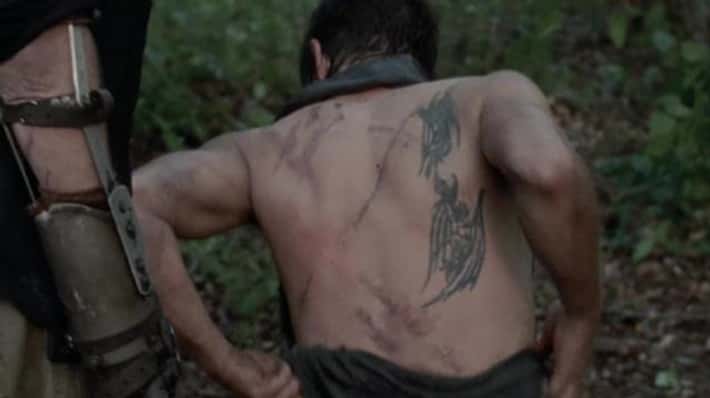
Photographs show dark, demon-like figures across Reedus’s back and shoulder blades. Inked Magazine and fan archives list them among his tattoos, and many viewers first noticed them in Walking Dead-era photos. The figures have wings or horns, depending on the view.

Reedus has tended to keep their meaning private. The tattoos’ symbolism is not established in the available interviews, and the designs are separate from Daryl Dixon’s story.

A front-facing portrait may hide the back ink completely. Shirtless mirror photos show where the figures sit, though the angle can flatten their detail.

A quick Lemmy tattoo became a music tribute

Norman Reedus showing the small Lemmy tribute tattoo

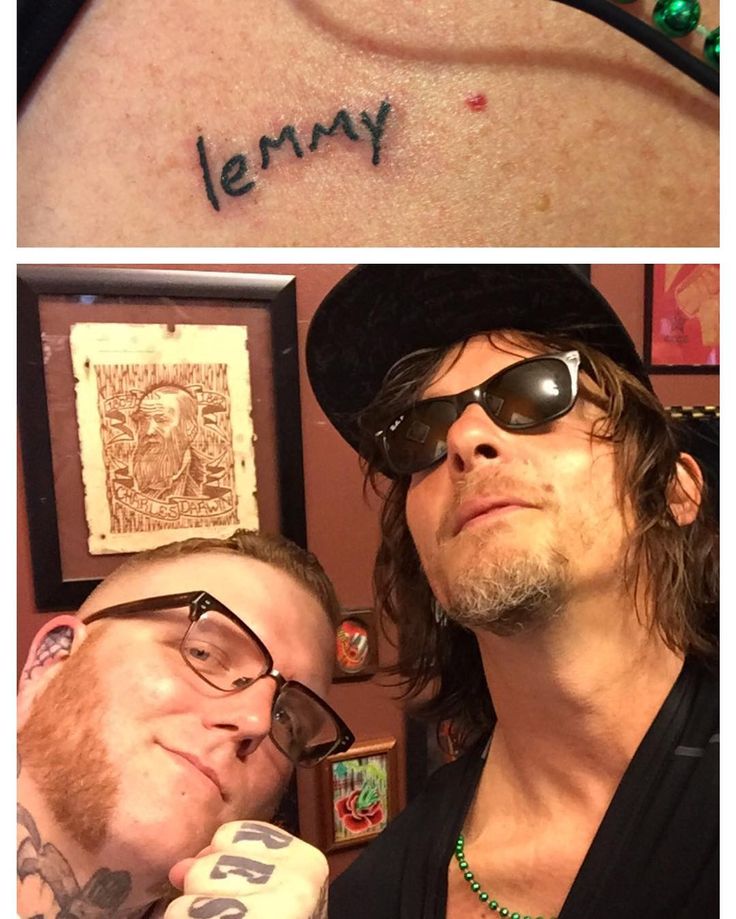
The Lemmy tattoo is one of the few pieces Reedus has explained in detail. While filming Ride with Norman Reedus in New Orleans with Mastodon’s Brent Hinds, he heard that Motörhead frontman Lemmy Kilmister had died. Reedus recalled that they had only a few minutes, ran into a tattoo shop and asked for a tribute. Blabbermouth and Men’s Journal preserve his account.

The story behind the design is part of its meaning. It was a quick response to the news, their friendship and the music; Reedus described the mark as small. That sets it apart from the larger demon figures on his back.

The tribute tattoo is small, but Reedus’s account pins it to a particular day in New Orleans. The short window in which he got it is part of the story.

Small tattoos on his hand, wrist and leg

Norman Reedus showing hand wrist and smaller tattoos

Reference coverage lists a small star on Reedus’s hand and a snake on his left thigh, along with other marks around the wrist and arms. They are easy to miss and seldom come with a public explanation.

The star and snake can be described by their shape and placement. Reedus has not publicly explained these smaller pieces, so their personal meanings remain unknown.

They tend to appear in gestures, motorcycle photos and close-up interviews. A sleeve, pose or camera angle can hide one tattoo while revealing another.

Why Reedus’s tattoos don’t share a single story

The collection spans family names, a music tribute, dark figures and small symbols. The clearest stories belong to the chest name for his father, Mingus on his forearm and the Lemmy tribute. Reedus has left the back figures and smaller marks unexplained.

A name can stay small and close to the body; red lettering sets a family tribute apart from darker work. The Lemmy tattoo carries the story of a particular day, while the back designs keep their mystery. Reedus’s collection is most revealing in the few places where he has chosen to speak.

Billy Bob Thornton’s Tattoos Tell Stories in Hearts, Ink and Memory

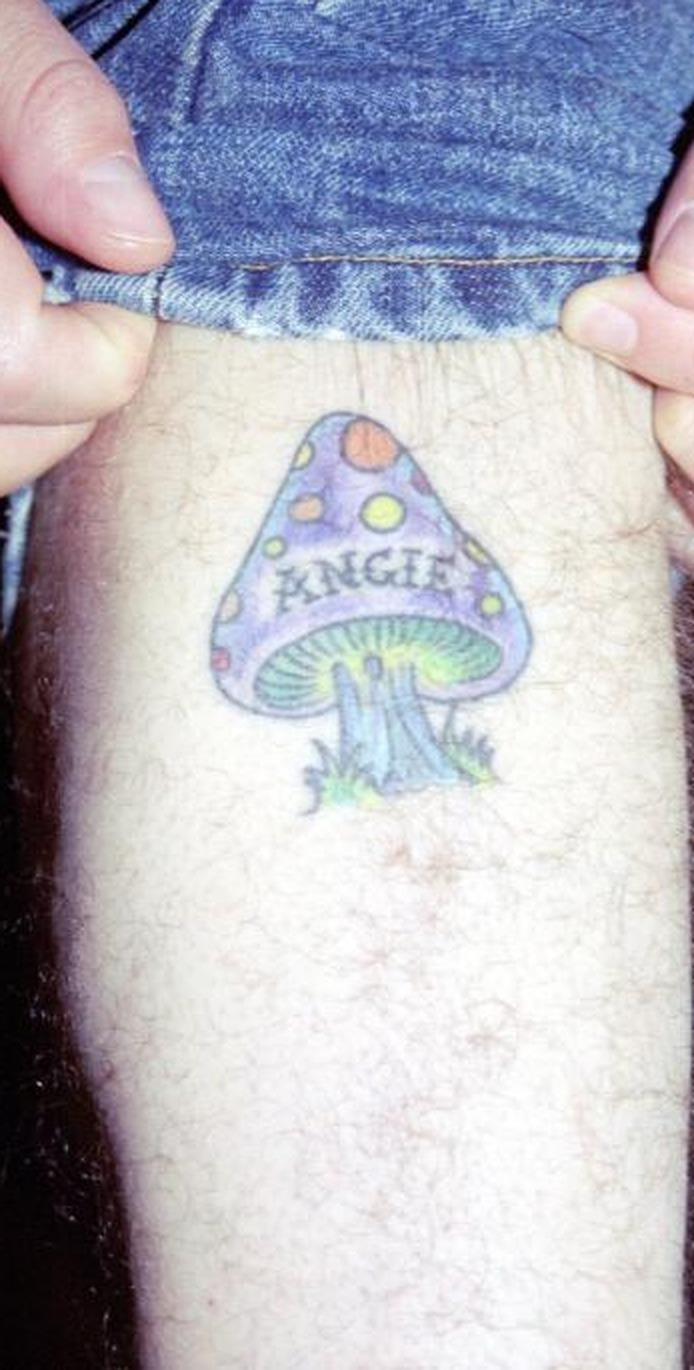
Thornton’s tattoos span several decades. His first piece, a small heart and arrow, dates to 1973; later work includes a cross, an Om, family names, a mushroom linked to the Allman Brothers and an Alamo tattoo tied to a film. Thornton has explained some designs himself. Others appear in photographs and references where the design is visible but its meaning is unclear.

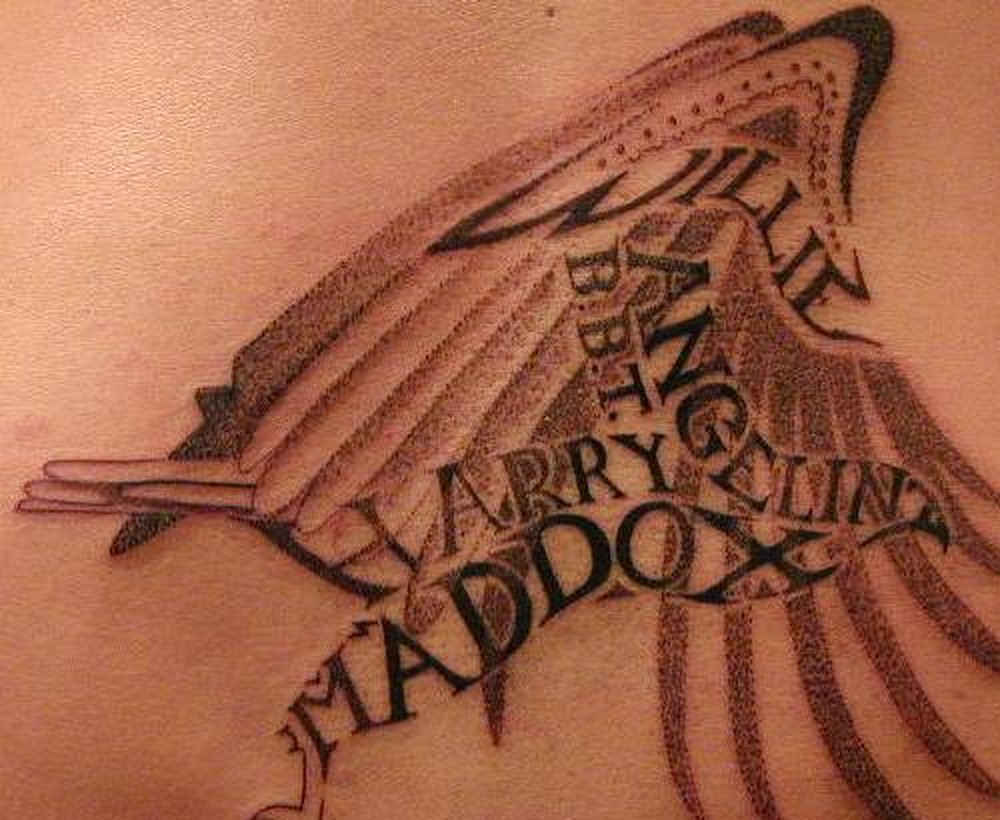
Jolie’s name tattoo is often mentioned alongside Thornton’s, but they were on different bodies: she wore his name on her arm; he had a separate tattoo connected with her, which he later covered. The cover-up changed what his later photographs showed.

The heart and arrow was Thornton’s first tattoo

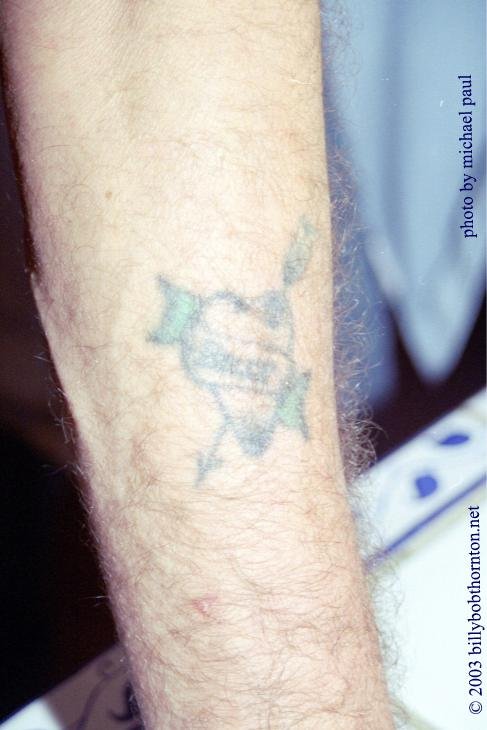
Billy Bob Thornton heart and arrow first tattoo on forearm

Thornton’s first tattoo was a heart and arrow on the outer right forearm, chosen from flash in 1973. Vanishing Tattoo records it as the starting point and preserves an image of the design. The lines have softened with age; it is a piece he has worn for decades.

The heart is sometimes read as a clue to Thornton’s later relationship tattoos, but its documented story is simpler: it was his first. Its forearm placement also makes it easy to see in short sleeves and in photographs of his arms.

Cross, Om and family names appear on his arms

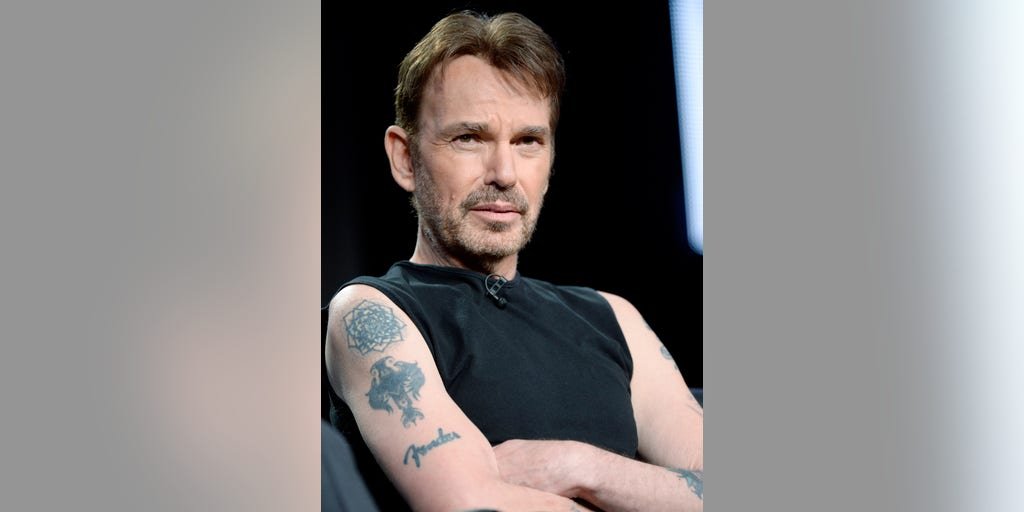
Billy Bob Thornton showing visible arm tattoos

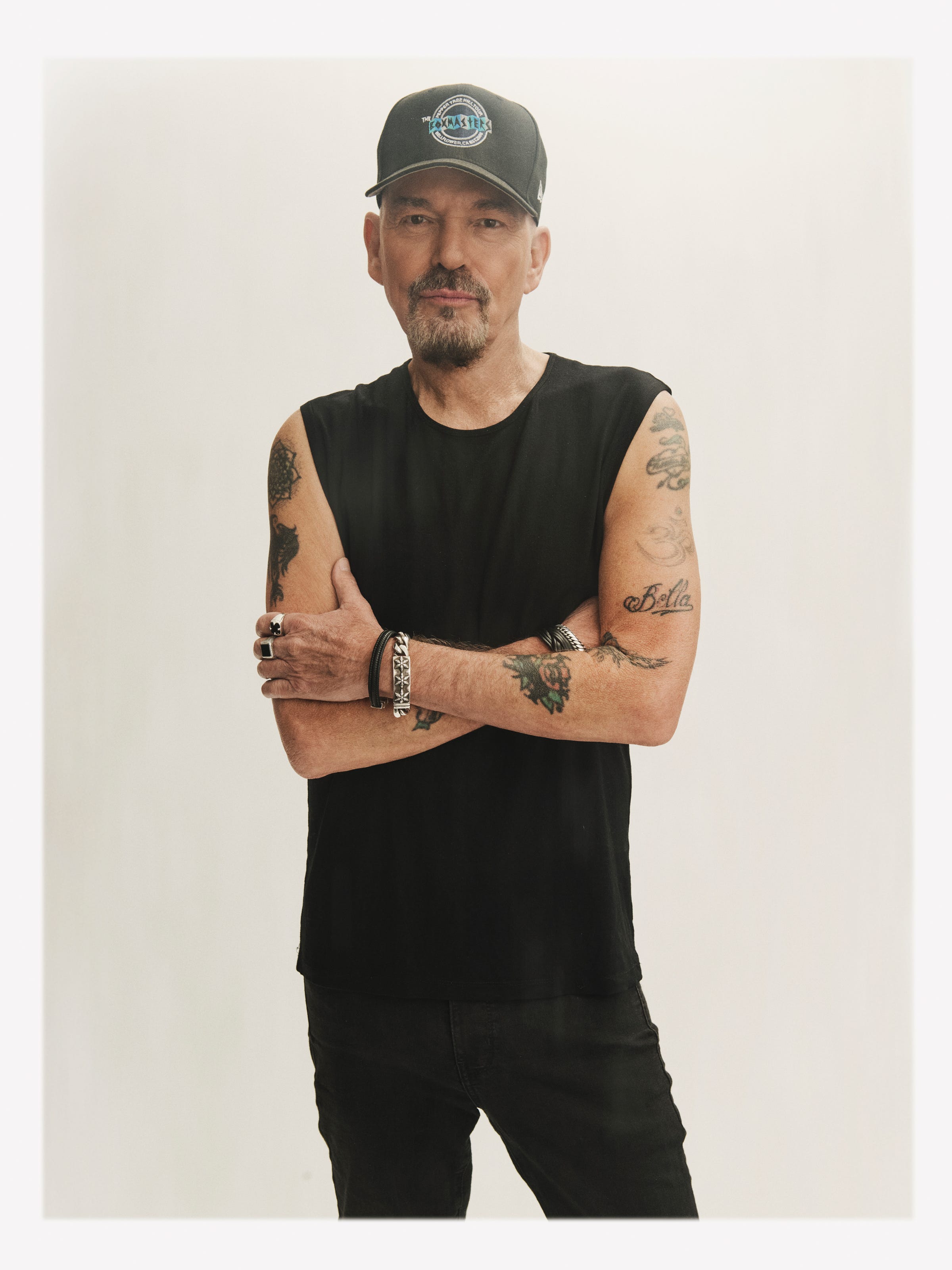
Tattoo references place a winged cross on Thornton’s right arm and an Om on his left, dated to 1999 in some published lists. A separate Bella tattoo refers to his daughter, Connie Angland. The cross and Om are recognizable symbols; Bella is a family name.

Photographs do not always show every line clearly. Sleeveless portraits can reveal the arm placement while hiding the lower edge, and close views can distort scale. The cross is on one arm, the Om on the other, with family lettering among the smaller designs.

The names add a quieter note to the collection. They sit alongside larger images without competing with them, and remain legible even in older, lower-contrast photographs.

The Allman Brothers connection behind the mushroom tattoo

Billy Bob Thornton's magic mushroom tattoo on his calf

Thornton has described a magic mushroom tattoo on his calf and connected it to the Allman Brothers, noting that the musicians had similar mushroom tattoos. Music Recall Magazine preserves his first-person account, giving this design a clearer story than its shape alone could.

Leg tattoos are easy to miss in interviews, when trousers cover them and photos show only the upper body. Thornton calls it a calf tattoo; if a particular photo does not show the side clearly, the placement is best described as lower leg.

A personal reference can stay private until an interview gives it context. Thornton’s Allman Brothers connection is one of the meanings he has shared directly.

The back lettering and Alamo tattoo connect family and film

Billy Bob Thornton's family lettering tattoo on his back

Thornton’s back has been described as carrying family names and other work by tattoo artist Daemon Rowanchilde. UPI reported that Thornton and his Alamo co-stars got tattoos in Texas after filming. Thornton also discussed a Texas flag on his back with the words Remember the Alamo. Together, the reports connect the back work with family and a film memory.

The available photos do not make every line of back lettering clear enough to transcribe. The Alamo story is supported by reporting, but a distant image cannot confirm every word.

Jolie and the arm tattoo Thornton later covered

Billy Bob Thornton's visible arm tattoos after his earlier cover-up

In 2003, the Irish Examiner reported that Thornton covered an arm tattoo connected with Angelina Jolie. Jolie’s own former Billy Bob tattoo was on her body. The two tattoos are separate: his was a cover-up, while hers was his name on her arm.

What the photographs can show

Thornton’s tattoo collection includes an early heart, arm symbols, family lettering, an Allman Brothers mushroom, back work and an Alamo connection. Interviews and contemporary reports provide the clearest meanings; photographs show placement and appearance, but not every date or private reason.

The stories do not all have the same shape. The heart goes back to 1973, the mushroom has a music connection Thornton shared himself, and the Angelina-related tattoo is known through its cover-up. Family, music and film all appear in the collection, without one symbol explaining the rest.

Robert Downey Jr.’s Tattoos Carry Family, America and an Avengers Reunion

Downey’s tattoos mark three parts of his life: family, America and the Avengers cast. In 2018 he got matching Avengers ink with four other members of the original six. Older photos show Indio for his son, Susie Q for his wife, and a chest tattoo with the USA letters and an American flag.

The Avengers piece is well documented: Downey has spoken about the session, outlets published photographs, and the artist’s work was filmed. The family names have less public context, so their lettering and placement tell most of the story.

The Avengers tattoo marks a reunion of the original cast

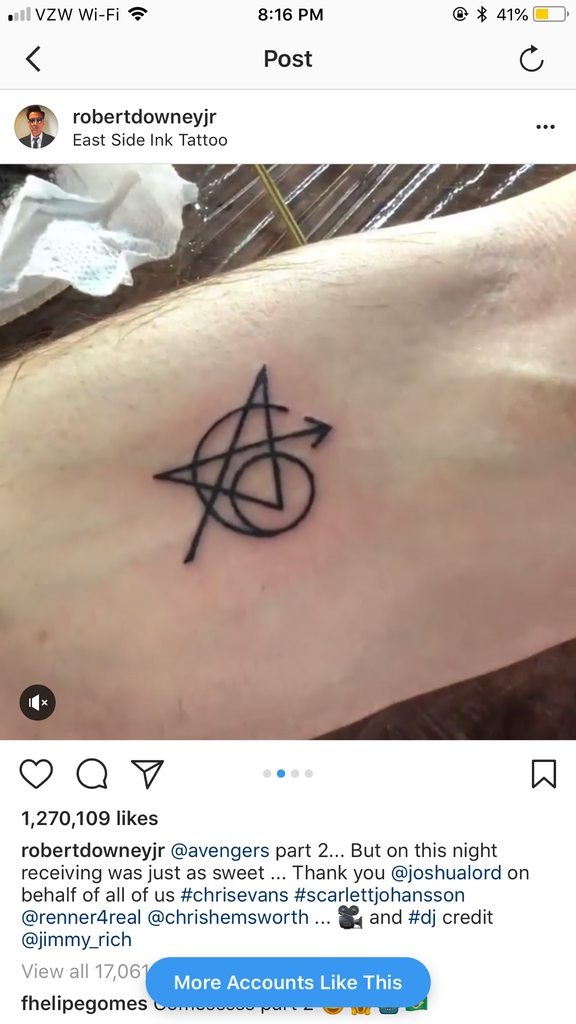
In 2018, Downey joined Scarlett Johansson, Chris Evans, Chris Hemsworth and Jeremy Renner for a shared Avengers tattoo. Mark Ruffalo was the only member of the original six who did not get one. The design combines the Avengers A with an arrow and a number associated with the team, making a compact emblem rather than a portrait of any one character.

Joshua Lord worked on the design. A forearm photo from the session shows the tattoo being made and Downey’s reaction as the new ink is revealed. It marks both the first Avengers films and the bond among the actors who made them.

The shared tattoo is small and readable. The design has lasted as a public image because fans can connect its details to the original team. It belongs to Downey’s career, but it is not part of the Iron Man costume; the group, rather than Tony Stark alone, is the point.

Indio and Susie Q, family names on his body

Robert Downey Jr. pointing to the Indio family tattoo on his shoulder

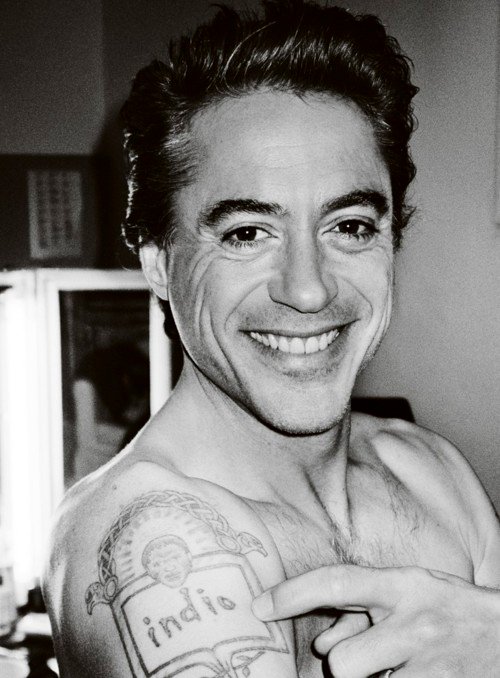
Older reference photos show Downey pointing to Indio, his son’s name, on his shoulder. The same sources identify Susie Q as a tattoo connected with his wife, Susan Downey. Both are family names placed on the body.

A shoulder angle can hide a letter, and older black-and-white photos soften the edges. In these images, the published labels match the visible words, though they do not establish exactly when each tattoo was added.

The family tattoos sit apart from the Avengers emblem in scale and purpose. That mark recalls a cast and career; Indio and Susie Q point to home life.

A small USA and flag tattoo on the chest

Robert Downey Jr. showing the USA and American flag tattoo on his chest

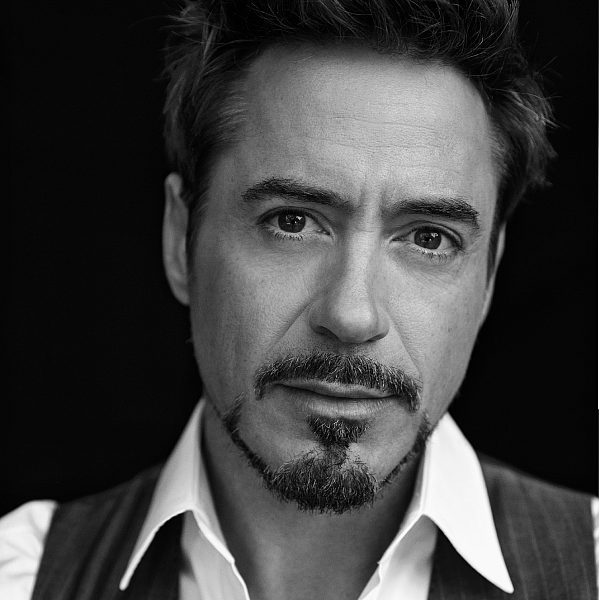
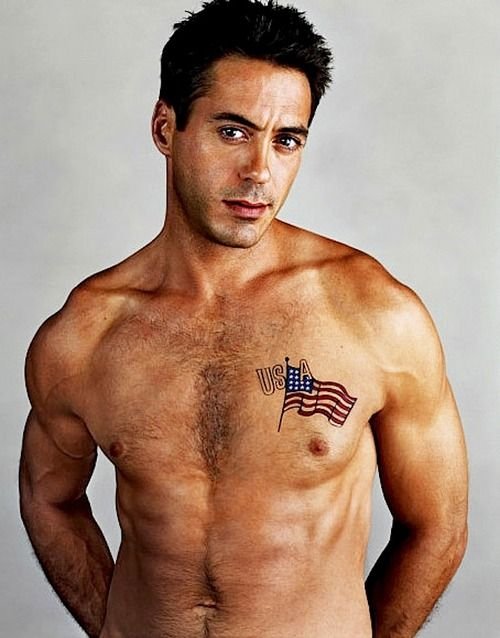
A Details magazine portrait shows Downey shirtless with an American flag and USA lettering on the left side of his chest. The photograph establishes the words, flag and placement, but not a political statement or the private event behind the design.

The chest tattoo is visible in a deliberate portrait and hidden under ordinary clothes. Compared with the Avengers emblem, the design is plain: a flag and three letters.

The portrait gives a clear record of the tattoo, but not Downey’s reason for choosing it.

What is known about the smaller marks

Robert Downey Jr. small forearm Avengers monogram tattoo

Other photos show small marks around Downey’s arms and torso, but not every shape is clear. Online galleries sometimes repeat labels without naming a source, and jewelry, clothing folds or shadows can look like ink in a distant photograph.

The clearest record remains the Avengers cast tattoo, the Susie Q lettering and the USA chest piece. A closer photo or interview may identify the smaller marks later; for now, they are best left unnamed.

Downey’s tattoos reflect people as much as roles

The Avengers tattoo honours the actors who made the films together, not Iron Man alone. Downey’s family names point to home life, while the flag and USA lettering add another part of his public image. The pieces do not need a single theme to sit together.

A cast reunion, two family names and a flag are different kinds of tattoos. The flag design carries no complicated backstory in the sources; its image is plain enough on its own.

The Avengers session gives a close view of fresh ink; the older family and flag images came from portraits made for other reasons. Age, lighting and pose change what those photos reveal, especially around the shoulder and chest.

Ryan Gosling’s Tattoos Are Funny, Family-Focused and Slightly Homemade

Gosling’s tattoos are a handful of rough, personal designs rather than a planned sleeve: a drawing he tattooed on his own forearm, an image from a childhood book, a woman and skeleton on his inner arm, and Esme across his fingers in a 2015 photograph. The finger lettering was later described as temporary. His stories about the homemade ink are part of the record; he has never claimed every piece was carefully planned.

The monster hand was meant to drop a bleeding heart

Close crop of Ryan Gosling’s homemade forearm tattoo, intended as a monster hand dropping a heart

The forearm design is often mistaken for a cactus. Gosling told The Guardian that he meant to draw a monster’s hand dropping a bloody heart, then tattooed the drawing himself with a kit. The result is a loose, spiky shape; once you know the idea, the dangling heart is easier to spot.

The finished tattoo looks as homemade as its origin. Gosling has joked that people see different things in it, and he laughs at the rough result instead of pretending it came out as planned. The gap between the drawing and the tattoo is what gives the story its charm.

Some tattoo inventories identify the letters W.H.R. beside it as Werewolf Heart Records, a reference to Gosling’s band, Dead Man’s Bones. That expansion comes from secondary coverage, not from the Guardian interview. The photo shows the placement and shape, but does not explain the initials.

A barcode-like mark on Gosling’s left wrist is often hidden by his watch, and there is no dependable first-person explanation for it. Theories about identity or commerce are just guesses, so its meaning remains open.

The Giving Tree tattoo recalls childhood and a book he argues with

Ryan Gosling’s upper-arm tattoo inspired by the cover of The Giving Tree

Gosling has an image of The Giving Tree on his upper left arm. His mother read Shel Silverstein’s book to him and his sister when they were young. In a 2010 conversation with Vulture, he pushed back on the story’s familiar lesson: he did not like that the tree gave everything away, and said, “I don’t want to be the tree.”

The tattoo holds both the childhood memory and his later disagreement with the book. Gosling has not presented it as a solemn statement about the story; the image and his comment leave room for both affection and criticism.

The artwork sits high on his arm, easiest to see in a tank top or short sleeves. A close photograph shows the book-cover image better than the distant red-carpet shots where clothing often hides the shoulder.

The woman and skeleton tattoo remains unidentified

Ryan Gosling’s inner-arm tattoo of a woman beside a skeleton

A separate tattoo on Gosling’s inner left upper arm shows a woman beside a skeleton. Tattoo articles often identify the woman as silent-film actor Theda Bara, but Gosling has not confirmed that name or explained why he chose the image. HOLA has also noted how difficult it is to see clearly in ordinary photos.

The piece is less legible than the forearm drawing. It sits on the inside of the arm, turned away from the camera in many photos, and distant shots soften the details. There is no reliable account tying it to a particular film, relationship or loss.

It is easy to confuse the real tattoo with the larger ink Gosling wore as Luke Glanton in The Place Beyond the Pines. The character’s chest, neck and arm designs were largely costume work. The woman-and-skeleton tattoo belongs to Gosling; the rest of the screen sleeve does not.

“Esme” appeared on Gosling’s fingers, but its permanence is unclear

Ryan Gosling’s hand with the letters Esme written across his fingers in 2015

In February 2015, photographers caught Gosling with Esme written across the fingers of his left hand. The name refers to his daughter, Esmeralda. E! News could not tell whether it was tattoo ink or pen; HOLA later described it as temporary.

The photograph documents a tribute, but not a permanent tattoo. A dark mark in one street photo cannot show how long it stayed, and the family has kept the details private.

The image travelled because the name is personal and unusually visible. Gosling had recently become a father, but the mark’s permanence remained uncertain even as the family connection was widely reported.

Gosling’s screen tattoos add another possible mix-up. Sierra Six’s Sisyphus design in The Gray Man belongs to the character, as does Luke’s extensive ink in The Place Beyond the Pines. The real collection is smaller: a rough forearm drawing, a book image, a shadowy figure, a barcode often hidden by his watch, and the photographed name whose permanence was never established.

Steve-O’s Tattoos Are Built Around One Unmissable Backpiece

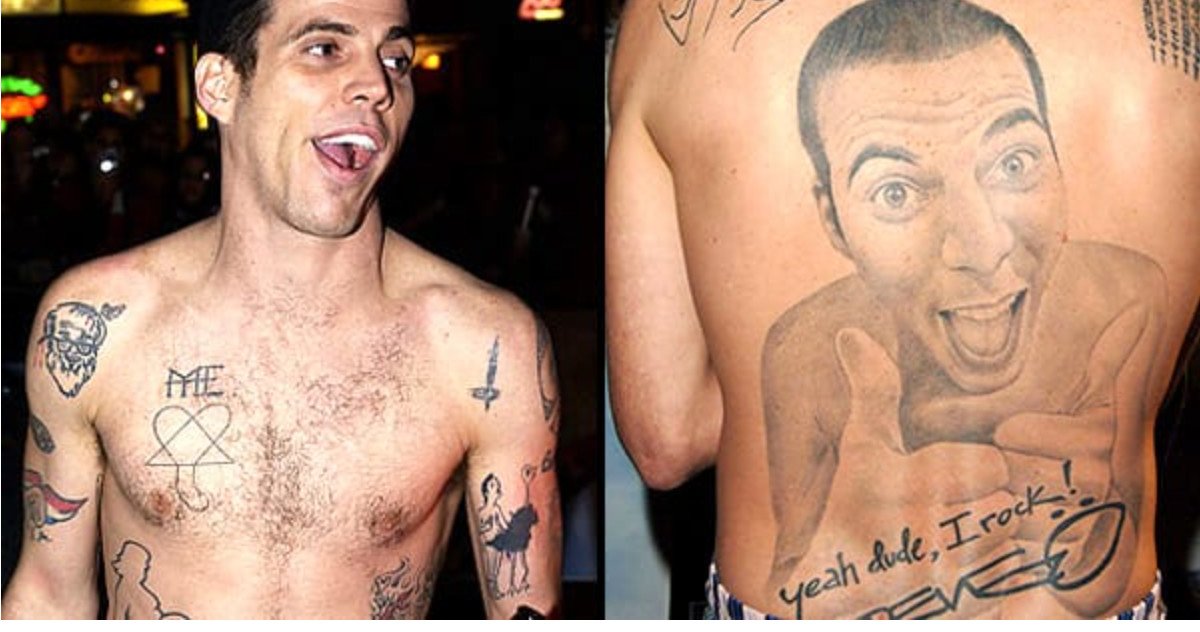
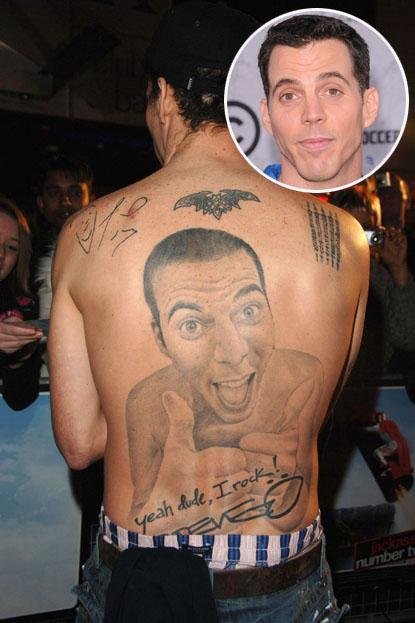
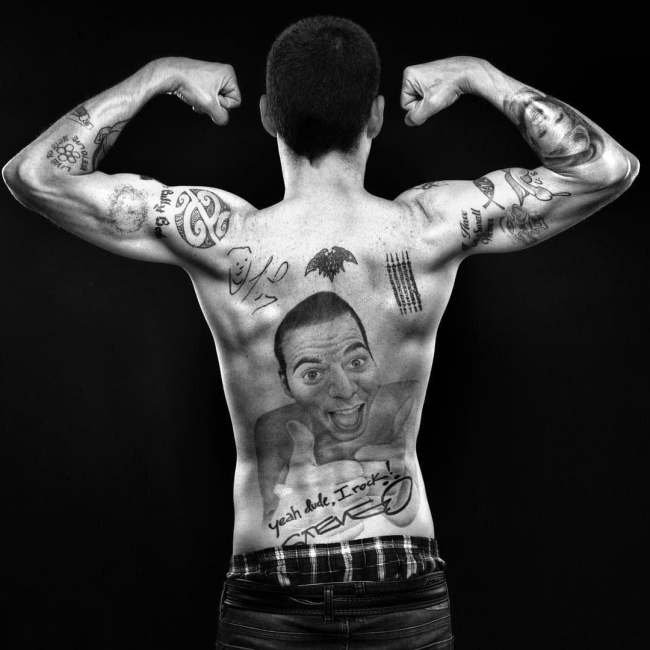
Steve-O has never been one for subtle tattoos. The largest is a huge portrait of himself across his back, smiling and giving a thumbs-up. Lettering, smaller symbols and the phrase yeah dude, I rock! fill the space around it. It looks like a joke made for an audience, which fits a performer who has often used body modification to get a reaction. In interviews, he has talked about making his body part of his comic persona.

There is plenty of ink beyond that portrait, across Steve-O’s hands, face, chest and shoulders. Photos make the scale easy to see, while interviews fill in some of the words and choices. The smaller marks are harder to read, so their meaning is best left open.

The full-back self-portrait is Steve-O’s defining tattoo

Steve-O showing his full-back self-portrait tattoo

His back tattoo is a photorealistic portrait of Steve-O giving a thumbs-up. It covers most of his back, putting the performer’s own face at the center. The expression is broad, the gesture is easy to read and the surrounding lettering frames the image. The Daily Beast called it a magnificent tattoo of himself, while an earlier BME interview discusses the piece as part of his wider interest in body modification.

At first glance it could look like vanity, but the exaggeration is what makes it funny. Steve-O has always taken things to extremes; putting his own face across his back turns that impulse into the joke. The image needs no decoding: it is simply Steve-O, smiling back at the viewer.

The size changes how the tattoo reads. This is not a small portrait tucked below one shoulder blade; it is a full backpiece with room for shading, expression and handwritten details. The face catches the eye first, while the lettering makes the design feel more like a personal poster than a conventional portrait.

“Yeah dude, I rock!” finishes the backpiece with a punchline

Steve-O back tattoo with yeah dude I rock lettering

The phrase yeah dude, I rock! sits below the self-portrait beside Steve-O’s signature. It is part of the same composition, not a separate tattoo that happens to be nearby. The thumbs-up is boastful, but the exaggerated wording makes the boast a joke.

That line is the punchline, and its casual wording and punctuation are part of the voice. A tattoo guide should keep it as written; polishing the wording would flatten the joke. The script and signature tie the words to Steve-O’s persona and the portrait.

The lettering does a different job from the portrait: the face supplies the expression, and the words supply the voice. Even without knowing the rest of Steve-O’s body-art history, the tattoo is easy to read. Its subject and tone are clear, which helps explain why profiles keep coming back to it.

Face and knuckle tattoos carry the smaller jokes closer to the camera

Steve-O showing face and hand tattoos

Steve-O’s face and hand tattoos are hard to pin down in photos; small lettering blurs and can be misread. In BME interview material, he talks about choosing words for the reaction they’d get. Later coverage also describes added face ink as part of his public look. A single blurred photo can’t tell the full story.

His hands are on show whenever he gestures, and a face tattoo appears in interview close-ups. It suits a performer who often makes his body part of the bit. Still, visibility does not mean every mark comes with a story.

Photos also vary with the years and the lighting. A microphone can hide part of his hand, stage makeup can obscure face ink, and tattoos can be changed or covered. When a word is too blurred to read, it is better to describe where the tattoo is than to guess what it says.

Smaller chest and shoulder ink fills out the larger body-art map

Steve-O chest and shoulder tattoos

The other tattoos put the back portrait in context. Photos show more symbols and smaller pieces across Steve-O’s shoulders, chest and arms. Some are hard to identify and have no clear published story. Together, though, they make the point: the famous portrait sits among a lot of other work.

This is not one coordinated sleeve. The tattoos vary in size and mood; some are jokes, while others seem more personal. They look like a mix of decisions made for different reasons.

How to read Steve-O’s tattoos without losing the joke

The back portrait draws the eye, and the lettering gives it a voice. Smaller work on Steve-O’s face and hands brings the humor right up close, while the other marks fill out the collection. The sources explain some of his choices, but not every symbol needs decoding to see the through-line: he uses tattoos as part of the performance.

A huge portrait has room for expression, and the lettering is large enough to read. A small face tattoo comes with different limits. Steve-O embraces the contrast and uses it as part of the act. The result is funny, excessive and unmistakably his.