admin

The Undertaker’s Tattoos Carry the Marks of a Life in Wrestling

Mark Calaway’s tattoos span his arms, chest, neck, and knees. Photos from different years show the collection changing as he moved from young wrestler to veteran performer and, later, retirement.

Some pieces are familiar; others are often covered by ring gear, a beard, or a collar. This guide focuses on designs shown in close-up photos and tattoo-history coverage. Calaway’s tattoos are old-school and connected to people and periods in his life.

The long-running arm sleeves
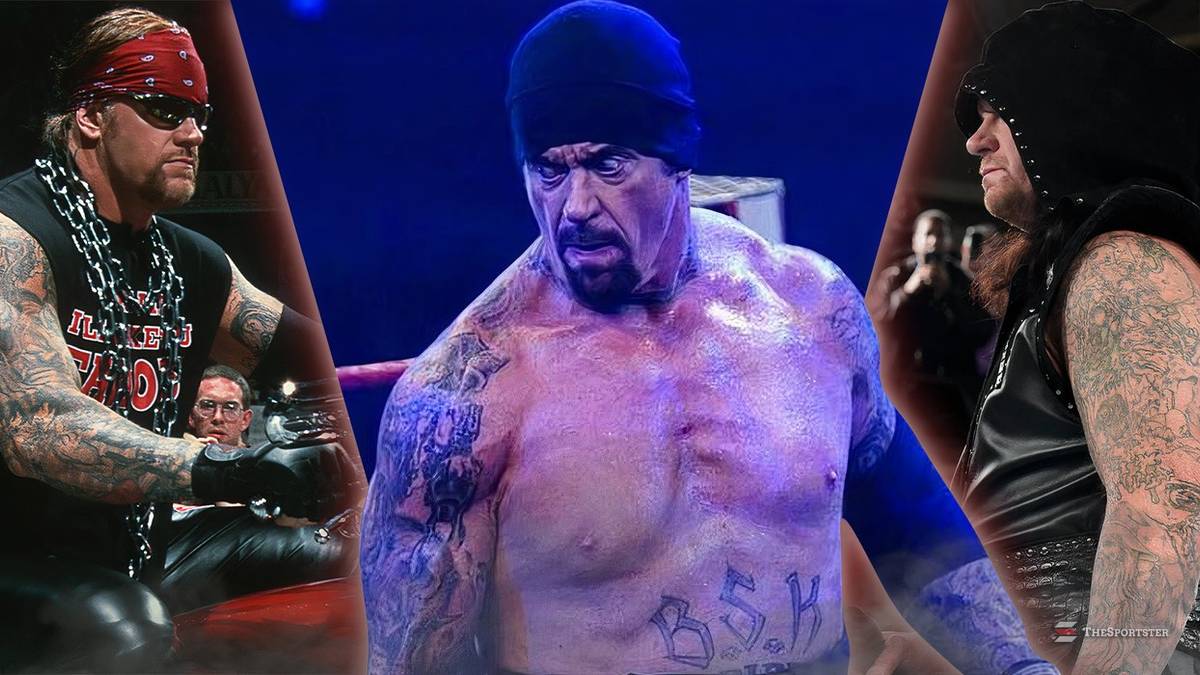
The Undertaker chest and arm tattoos

The dense tattoos on both arms are hard to miss. The sleeves combine traditional images rather than one blackout design: skulls, lettering, shaded forms, and larger figures. They’re easiest to see when he’s shirtless or in a sleeveless vest.

The dark imagery fits The Undertaker character, but the tattoos don’t look like a costume. Different line weights and shading suggest pieces added at different times.

Later photos show the arm work as a familiar part of Calaway’s appearance, from WrestleMania entrances to interviews and backstage footage. The tattoos accumulated across his career.

The dragon on the upper chest
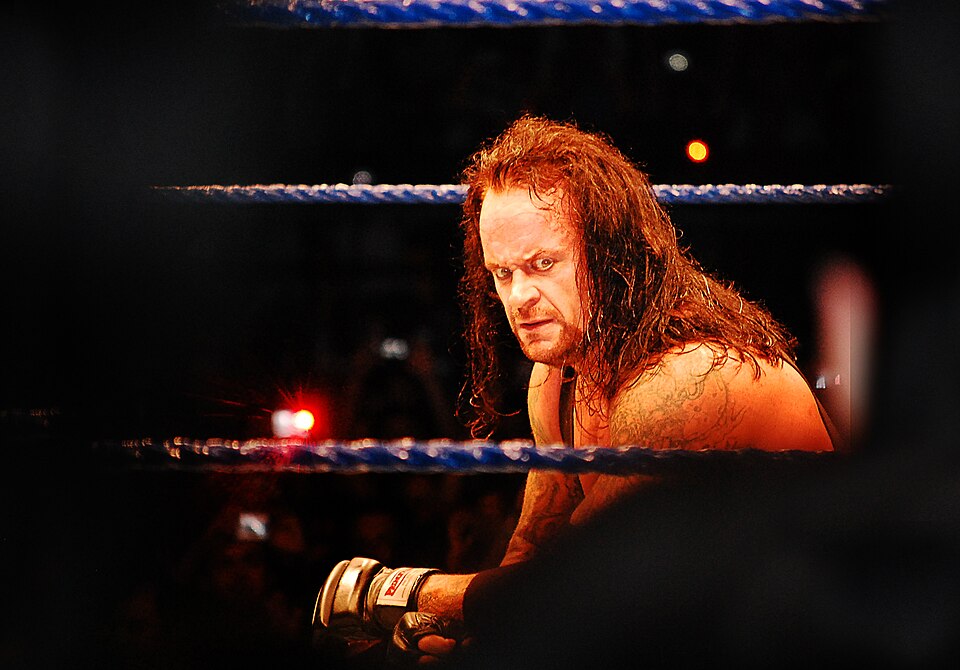
The Undertaker shoulder tattoo

One well-documented piece is a large dragon on the upper-right chest. Tattoo-history coverage describes it as blue and flame-like. Older ringside photos show it extending across the upper chest toward the shoulder, with curled lines that remain visible from a distance.

The dragon appears above his ring gear when he wrestles without a shirt. That made it part of the character’s look in some of his best-known years.

Calaway hasn’t given a widely accepted explanation for every detail of the dragon. Its design and placement are clear. The upper-right chest piece is one of the most recognizable tattoos in the collection.

The chest portraits and darker figures
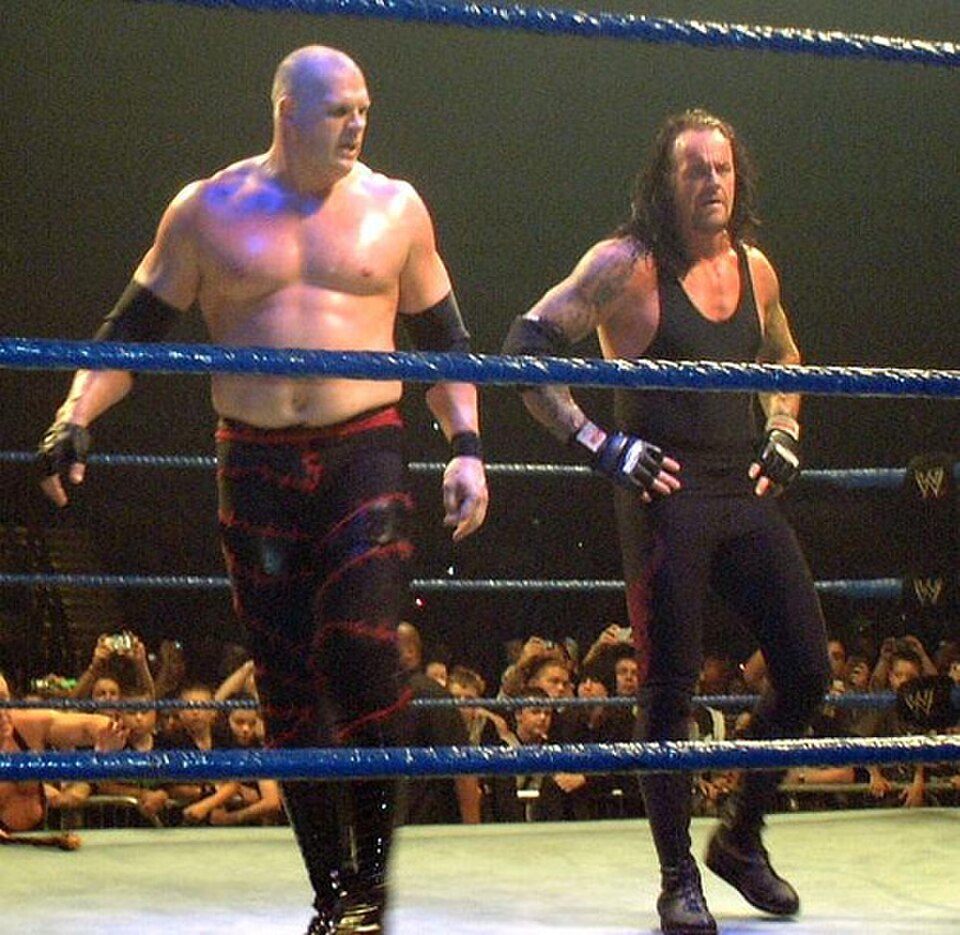
The Undertaker arm sleeve

Other chest tattoos have been described as a hooded skull or dark portrait. Lighting, angle, and image quality make them hard to identify consistently, but photos show dark designs on both sides of the upper torso.

Skulls and shadowed faces fit the character’s funeral imagery, gothic entrances, and association with mortality. The tattoos connect visually with the persona, even when Calaway is speaking out of character.

Low-quality or cropped photos make these designs harder to identify. The supported description is broad: a dragon, skull-like and hooded imagery, and heavy traditional shading. More specific names for each figure remain uncertain.

The Sara tattoo on his neck
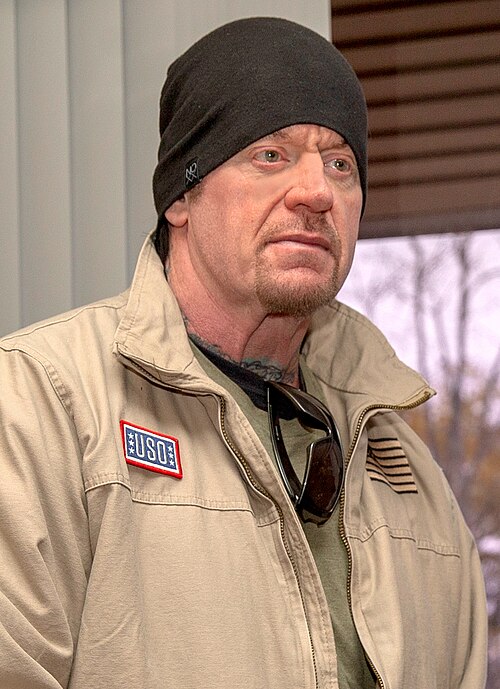
The Undertaker face and neck tattoos

The neck lettering reads “Sara” and refers to his former wife, Sara Chirie Frank. It sits low on his neck, visible in close portraits when his collar is open. It’s smaller than the sleeves and chest work, but names a specific person in his life.

The tattoo was later covered or altered after the relationship ended. Older photos show the name clearly; later ones show a darker, less legible design. The appearance changed over time.

The placement and original dedication are documented. The lettering ties a familiar ring persona to a personal relationship.

The BSK lettering and the wrestling circle around him
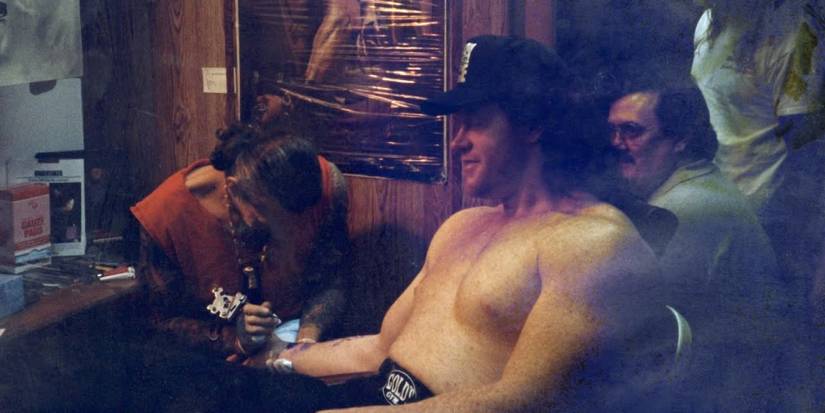
The Undertaker first tattoo

The initials BSK are associated with the backstage wrestling group known as the Bone Street Krew. The tattoo links Calaway to friends and fellow performers from that period.

A photo from his first tattoo session and older interviews help place the lettering in his timeline, though the photo isn’t a close-up. The initials mark a group connection, not a social-media label.

The collection includes names and group initials alongside dragons and skulls. BSK points to the people behind the character.

The happy faces on his knees
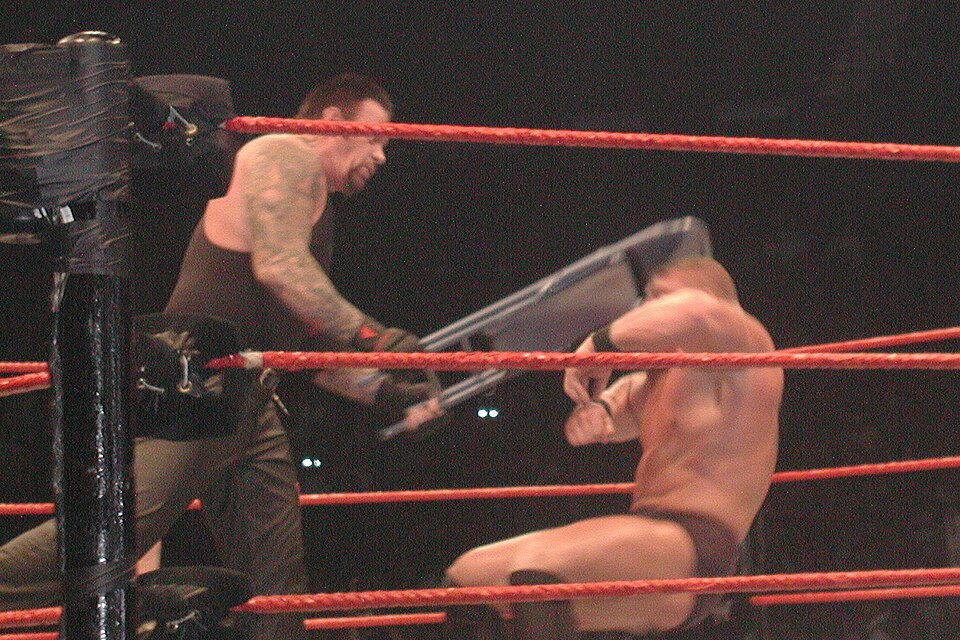
The Undertaker forearm tattoo

The documented list also includes happy-face tattoos on both knees. The simple, playful designs contrast with The Deadman’s grim image and funeral-bell entrances.

Trunks and kneepads often hide the designs. When they show, they’re a reminder that not every tattoo needs a dark meaning; a collection can include jokes alongside names and memorials.

The reliable details are their placement and the smiley-face design. Sometimes a smiley face is just a smiley face, even on The Undertaker’s knees.

How the pieces changed across his career
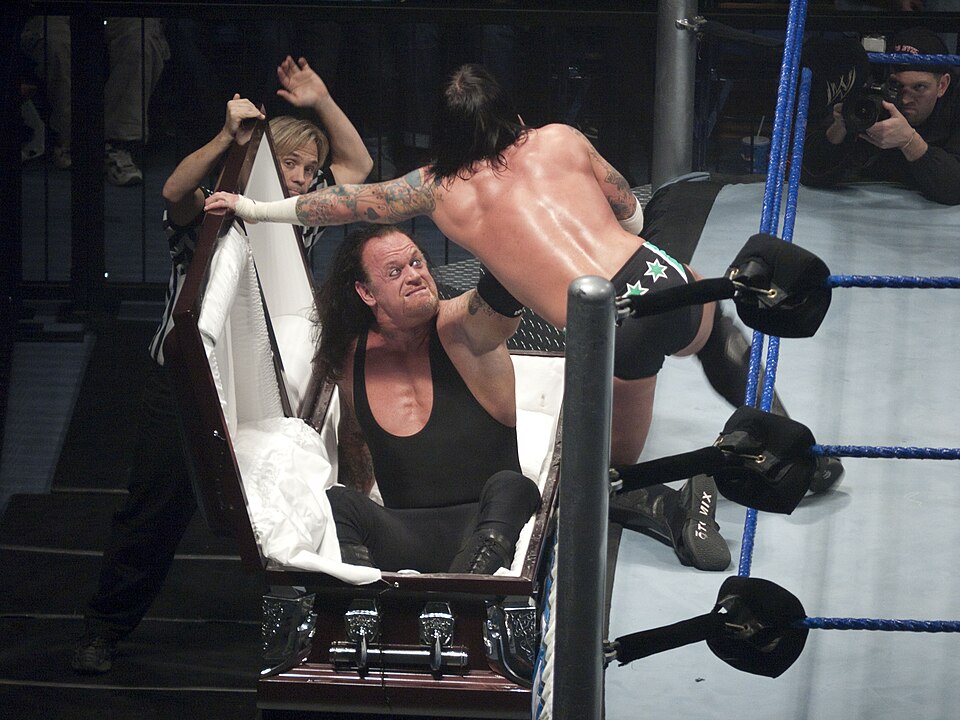
The Undertaker shoulder and arm ink

Photos from different years show the tattoos at different stages. Early images show more open skin and separate designs; later ones show denser shading on the arms and changes around the neck. Ring gear can also reveal or hide pieces, making old tattoos look new in a particular photo.

Lettering appears alongside the traditional imagery, while the arms become more densely covered in later photos. The collection looks like work added over decades, not one coordinated session.

The collection grew as Calaway’s wrestling character changed. The tattoos were added over time, rather than designed all at once.

What is confirmed and what remains guesswork
The Undertaker full arm ink

The best-supported details are the arm sleeves, upper-right chest dragon, darker chest imagery, the earlier “Sara” neck tattoo, BSK initials, and happy faces on the knees. Close photos and tattoo-history coverage show these pieces.

The exact chest figures, dates, and meanings of smaller symbols are less certain. Articles sometimes give different names to the same shaded design. Placement is easier to verify than an interpretation.

Together, the tattoos include dark imagery, relationship lettering, and smaller playful details. They reflect different parts of Calaway’s life in wrestling.

Watch The Undertaker’s tattoo story

In this Last Rites video, Paul Booth discusses tattooing The Undertaker with a demonic portrait.
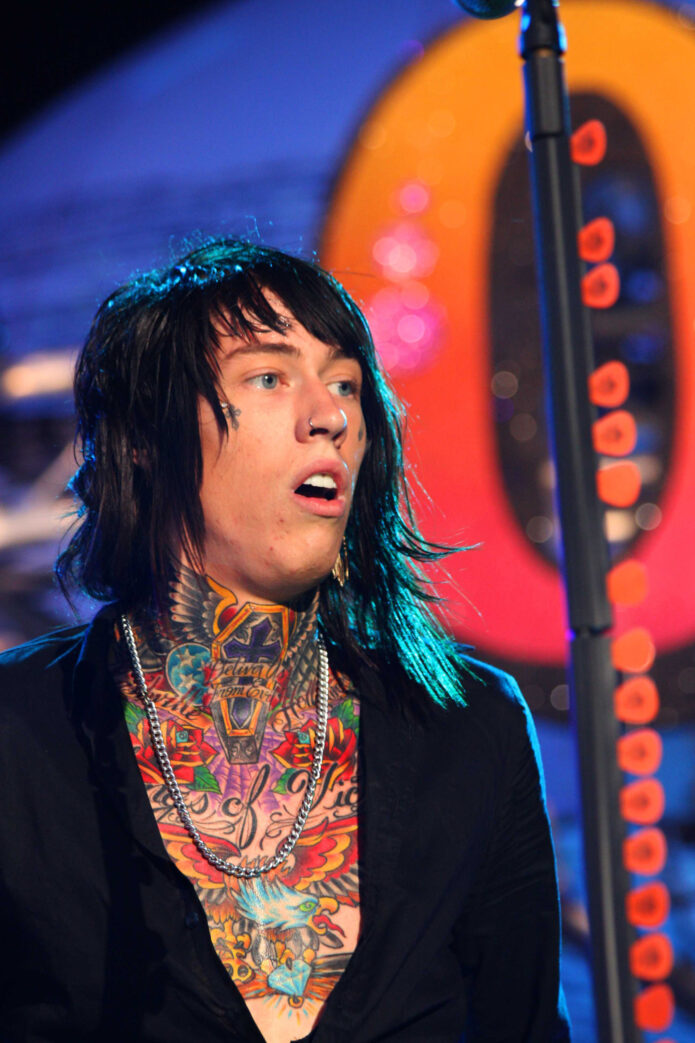
More wrestler tattoo guides

Trace Cyrus Tattoos: A Look at His Full-Body Ink

Trace Cyrus’s tattoos cover his chest, arms, neck, and head. Photos show designs tied to family, music, and people he has admired, alongside imagery whose meaning is less clear. The heavy blackwork often runs from one piece into the next.

Tattoo interviews and photo sessions document some pieces; other stories are repeated without much support. This guide sticks to designs visible in photos or discussed in coverage, and leaves uncertain details open.

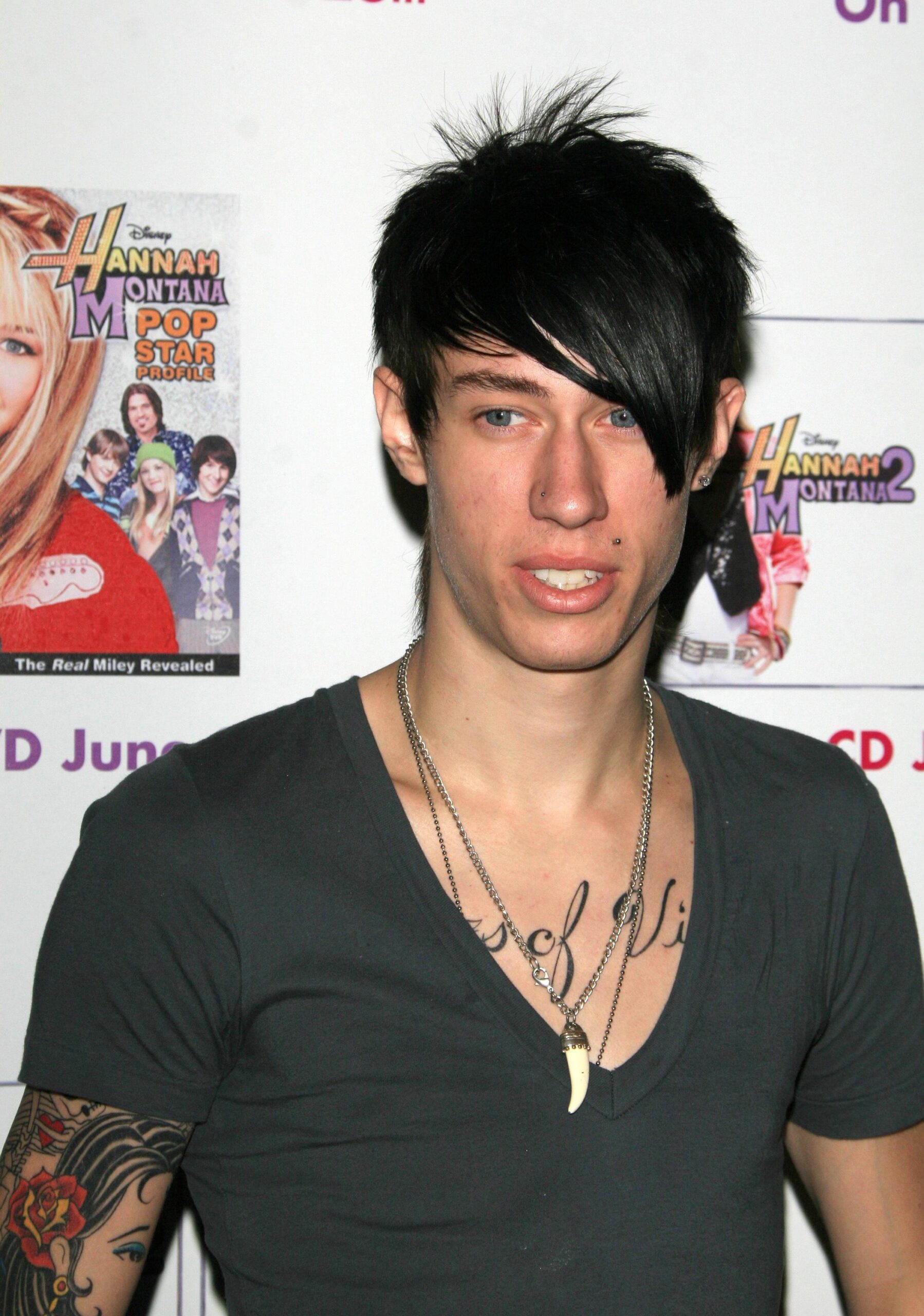
Trace Cyrus started with Songs of Victory across his chest

Trace Cyrus Songs of Victory chest tattoos
Trace Cyrus shows the large Songs of Victory lettering across his chest.

The large “Songs of Victory” chest tattoo is one of the easiest pieces to identify. It was described as an early tattoo, placed across his chest before later work filled in the area around it. Older photos show bold lettering and shading, almost like a banner.

The chest also shows how the collection has grown around older tattoos. Lighting, angle, and later work can change how the lettering appears in photos, but “Songs of Victory” remains recognizable.

A family portrait sits among Trace Cyrus’s most personal tattoos

Trace Cyrus back tattoo
Trace Cyrus shows the large portrait and lettering across his back.

Photos show a portrait of Trace’s grandmother among the larger designs. It brings a family subject into a collection otherwise known for music references and dramatic imagery.

A concert photo can flatten a portrait and hide its shading. Session photos show the face more clearly and how it sits beside the other tattoos. Shared shading and dark areas connect designs with different subjects.

The dreamcatcher and Native American imagery add a strong visual thread

Trace Cyrus dreamcatcher and arm sleeve tattoos
Trace Cyrus shows his dense arm sleeves and dreamcatcher tattoo.

Coverage also documents a dreamcatcher tattoo and other Native American imagery. The chief portrait on the side of his head, reported around 2012, is especially visible in profile photos and became closely associated with his look at the time.

The dreamcatcher and portrait are often mentioned together, but photos don’t establish one meaning for every Native-inspired design. The subjects and placement are visible; Trace hasn’t explained the symbolism of every piece in detail.

The arm sleeves combine large shaded areas with smaller details. Live photos may show only part of them; studio or full-body views reveal the amount of coverage.

Trace Cyrus has used tattoos to mark music, friends and identity

Trace Cyrus head and neck tattoos
Trace Cyrus shows the tattoo work across his head, neck, and upper body.

Music also appears in a Willie Nelson tribute tattoo. Trace has publicly admired Nelson, and the tattoo links his own work with an artist he respects.

Trace has said he came close to covering his whole body, and later discussed removal and changing his approach. The collection has grown and shifted. A tattoo’s appearance can change even when its history remains.

The head portrait can dominate a close photo, but it’s one part of the larger layout across his head, neck, shoulders, arms, and chest. Photos from different years show different stages, not one finished version.

What can be said with confidence about the full collection

The best-documented pieces are chest lettering, a family portrait, a dreamcatcher, Native American imagery, a Willie Nelson tribute, and extensive arm coverage. Other shapes are visible, but their names and meanings aren’t reliably documented.

The collection is large and layered. Later pieces sit close to older ones, and different photo sessions show different stages. A studio portrait or tattoo tour reveals more than a single concert photo.

The documented designs point to music, family, and artists Trace admires: “Songs of Victory,” his grandmother’s portrait, the chief image and dreamcatcher, and the Willie Nelson tribute. They read as separate parts of his history, not a matching sleeve plan.

Trace Cyrus tattoos in context

Trace’s tattoos remain a work in progress. Photos show a collection that has changed over the years, but not every design has an official name. The identifiable pieces are clear enough without filling in the gaps.

In photos, compare placement and how the pieces meet. The chest lettering, family portrait, dreamcatcher, head portrait, and sleeves are easiest to recognize across different lighting, hairstyles, and years.

Trace’s collection is large and dark, with designs tied to music, family, and personal influences. The pieces overlap rather than falling into neat chapters.

How the tattoos changed over time

Older photos show more open skin around the chest lettering and arm tattoos; later sessions show darker areas and portraits meeting one another. The collection changed as more work was added, so dates or visual time markers help compare images.

A close profile makes the head portrait the main focus. In a wider image, it sits among tattoos on the shoulder, neck, and arms. Each view shows a different part of the collection.

The Willie Nelson tattoo points to a musical influence; the “Songs of Victory” lettering and grandmother portrait connect the collection to Trace’s own work and family. The heavy blackwork links the designs, even though their subjects differ.

A heavily tattooed subject needs more than one repeated close-up. Photos of the chest, head, sleeves, and back each show different details.

Less familiar marks can still be described by placement, size, and style without guessing at their meaning. The photos show plenty without explaining everything.

Watch Trace Cyrus discuss his tattoos

His collection is bigger than the headline pieces

The chest lettering, head tattoo, sleeves, and back portrait are the easiest pieces to recognize. Older photos also show extensive arm and chest coverage, with large designs close together.

Trace Cyrus early arm tattoos portrait
An early portrait shows the tattoo work on Trace Cyrus’s arm and chest.

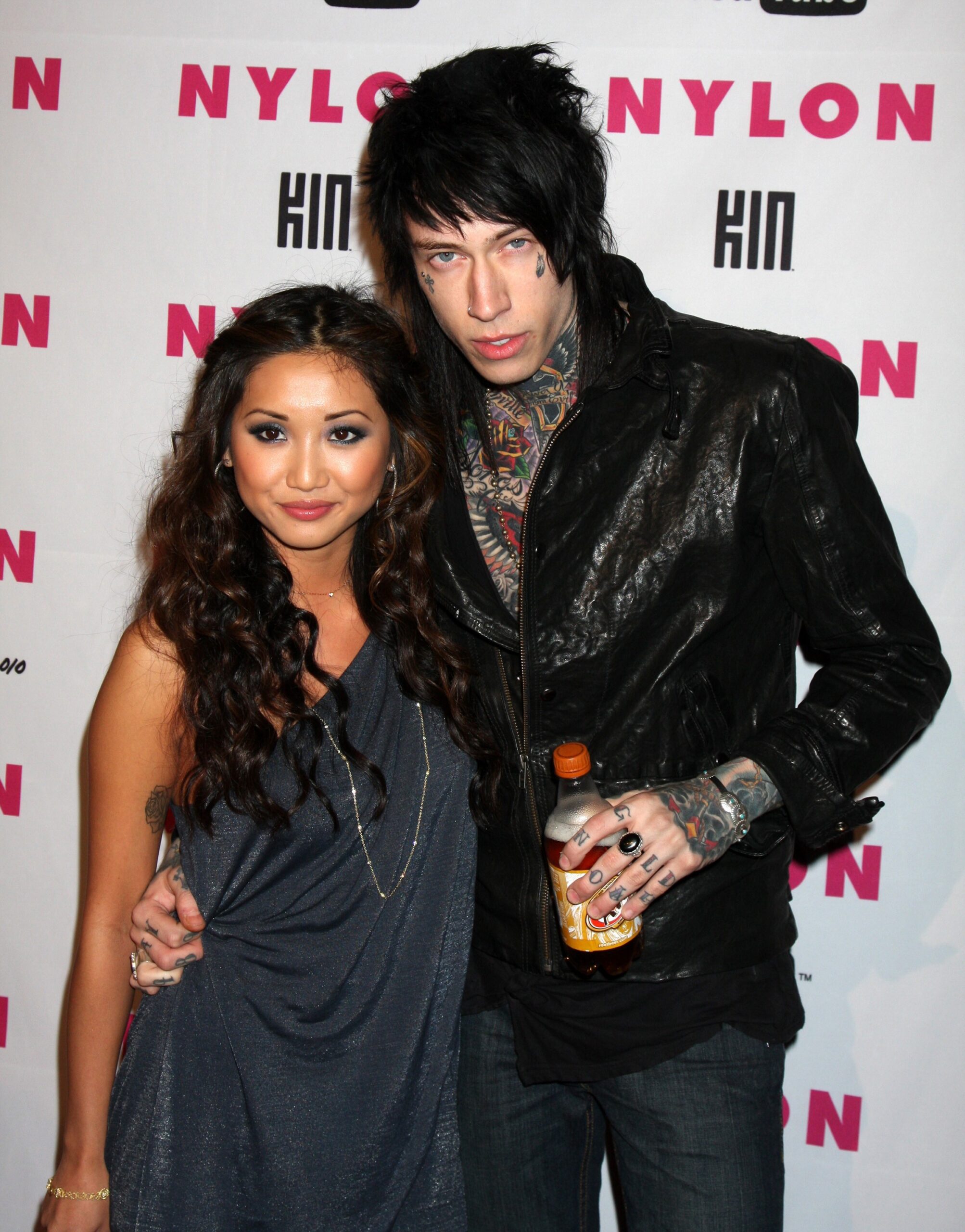
Event photos show the face and neck tattoos, along with ink on his hands and upper body. Portraits, lettering, traditional designs, and smaller marks make the collection too broad for one image to show all at once.

Trace Cyrus face neck and hand tattoos at an event
Trace Cyrus shows his face, neck, and hand tattoos at an event.

More musician tattoo guides

Andrew W.K. Tattoos: The Six Arm Lines That Mean Nothing

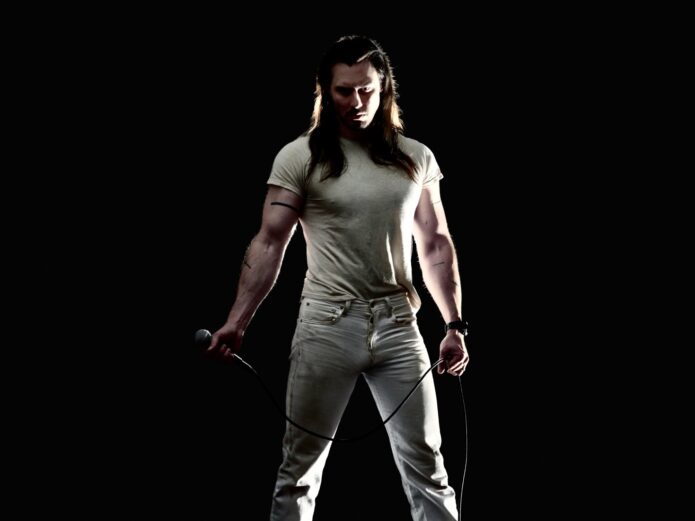
Andrew W.K.’s tattoos are six plain black lines on his arms. He has no full sleeve or collection of tiny symbols. The marks are easy to miss at first, which is part of why people remember them.

Andrew has said the lines don’t mark a band reference or major life event. He describes their meaning as close to “nothing.” Here’s how the six are placed and what he has said about them.

What Andrew W.K.’s tattoos actually are

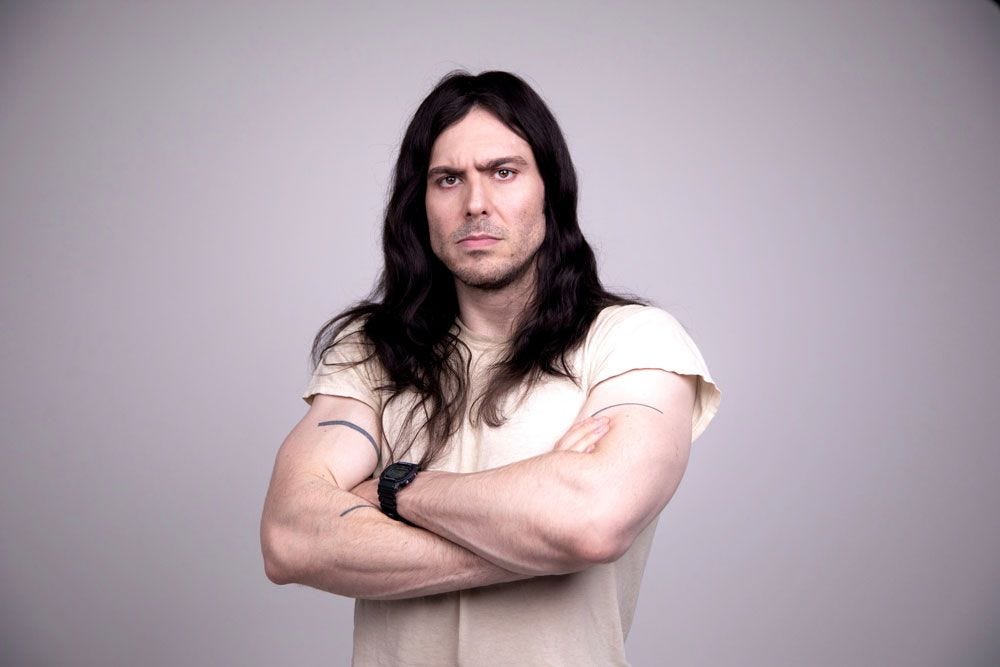
Andrew has six straight-line tattoos: four on one arm and two on the other. They’re black and unshaded, with no connecting sleeve design.

In an interview with Interview Magazine, Andrew said these are his only tattoos and that they don’t have a fixed symbolic meaning. They’re simply a few marks on his arms.

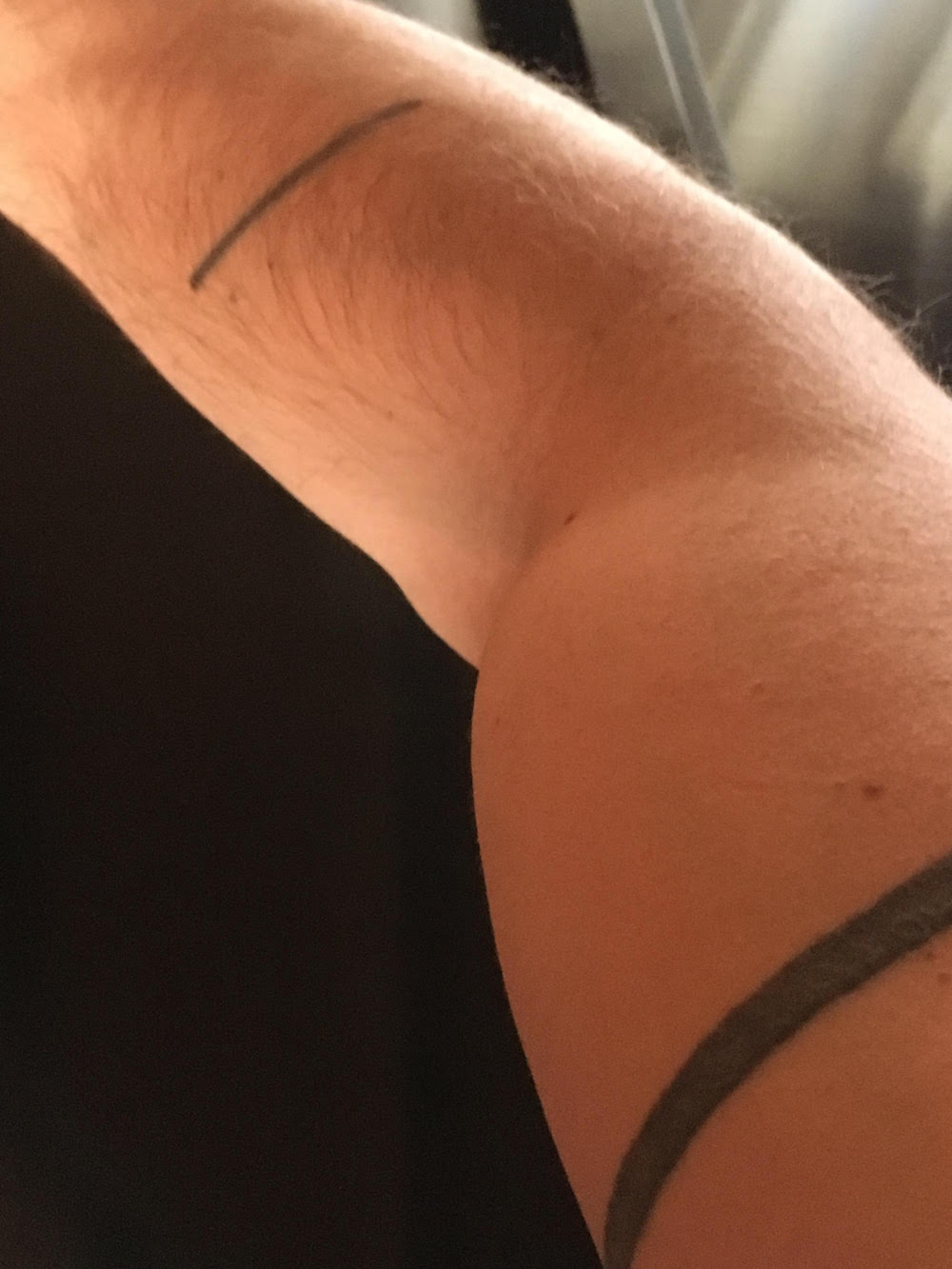
Andrew W.K. arm line tattoo close-up
A close-up view of one of Andrew W.K.’s simple black arm-line tattoos.

The close-up shows a single black line with open skin around it. The contrast, not detail or color, makes it stand out.

Why the simple lines stand out

These lines have open skin around them, so they don’t disappear beside larger work. The spacing and their placement on the arm are easy to see.

Close-ups, mirror photos, and candid portraits all show the same basic pattern. The lines remain recognizable when his arm is relaxed, bent, or raised.

Andrew W.K. arm line tattoos in a mirror portrait
Andrew W.K. shows the simple line tattoos on both arms in a mirror portrait.
The mirror photo shows the scale: the marks are visible without taking over the arm.

Six lines, not a sleeve

There are four lines on one arm and two on the other. The uneven layout keeps them from looking like a matching logo.

He hasn’t connected them with filler or added decorative details. Each line has room around it.

Andrew W.K. arm line tattoos while serving burgers
Andrew W.K.’s arm-line tattoos are visible while he serves burgers.

The lines are visible in this casual photo as he serves burgers. They don’t rely on a stage outfit or pose to be recognizable.

The strange Kesha tattoo story

Andrew told Salon that he and Kesha continued one line with a safety pin. The tattoo later became infected and needed medical attention.

That story isn’t a reason to copy the method. A professional artist can do the work in a clean setting; the safety-pin detail is part of the anecdote, not advice.

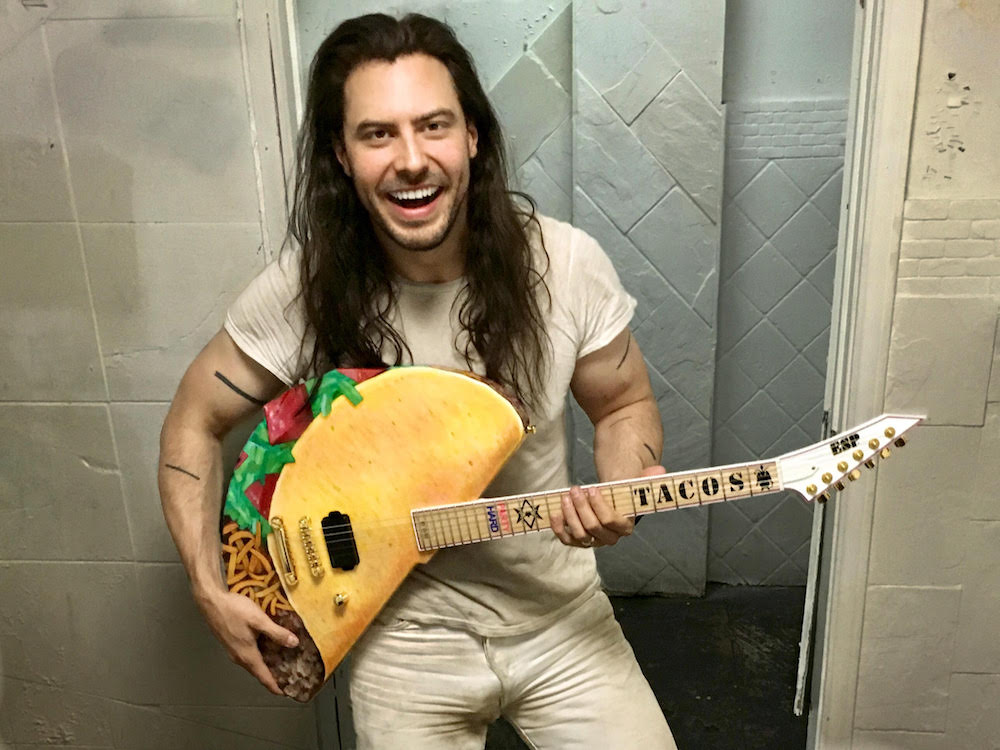
Andrew W.K. arm line tattoos with his taco guitar
Andrew W.K.’s arm-line tattoos are visible in a portrait with his taco guitar.

The black lines remain visible beside the busy outfit and taco guitar. A minimal tattoo doesn’t need to dominate the frame to read clearly.

What do Andrew W.K.’s tattoos mean?

Andrew has described the lines as representing “nothing,” while joking that nothing can still be something. He hasn’t tied them to a date, person, or major event.
The lines can be read as repetition, an unfinished drawing, or simply a design he liked. Andrew hasn’t assigned them a fixed meaning.
Andrew W.K. forearm line tattoos in a portrait
A portrait showing the clean black lines on Andrew W.K.’s forearms.

This portrait shows the placement clearly. The lines shift as his forearms turn, even though the design itself is simple.

How to borrow the idea without copying it

If you like the idea, think about placement and how the line sits on your arm rather than copying Andrew’s exact arrangement.

  • Choose the placement first. A line on the forearm reads differently from one near the elbow or wrist. Ask your artist to test the position while your arm is relaxed and moving.
  • Leave breathing room. Minimal work needs open skin around it. Crowding several lines together can make them blur into one heavy patch.
  • Check the direction. A horizontal line, a vertical line, and a slightly angled line create different movement on the body. The cleanest option is not always the best one for your anatomy.
  • Let the artist set the weight. Fine lines can soften over time, while lines that are too heavy may look harsher than you intended. A good tattooer can balance clarity with the size of the design.

Don’t copy the six lines just because they look simple. A small design of your own will fit you better than a direct imitation.

The appeal of Andrew W.K.’s tattoos

Andrew W.K.’s six black lines stand out for their plain design, uneven placement, and lack of a fixed meaning.

For a minimalist tattoo, start with one clear mark and leave space around it. A design doesn’t need a sleeve of detail to be noticed.

Joel Madden’s Tattoos: Full Sleeves, Chest Ink and Hand Details

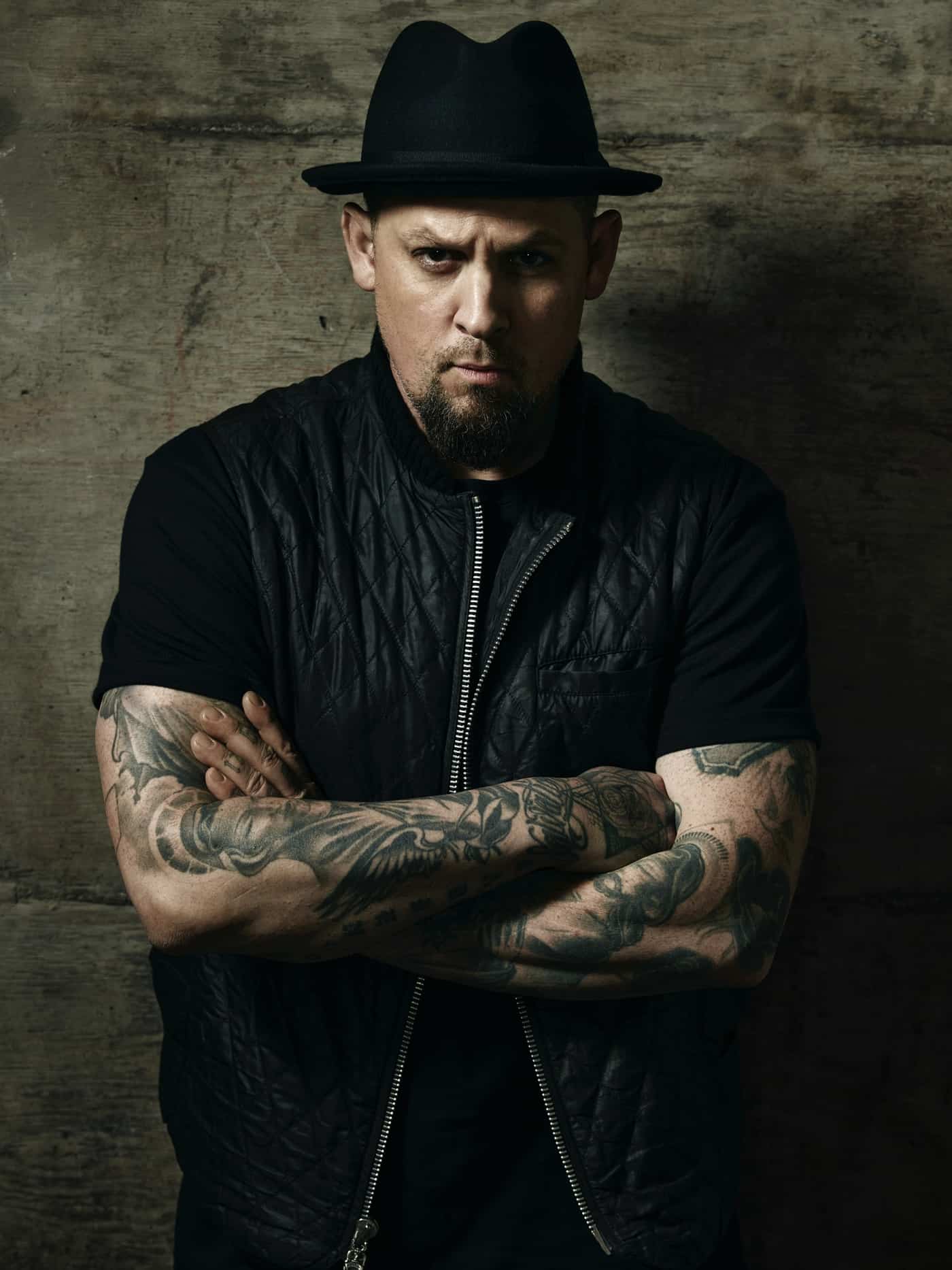
Joel Madden’s tattoos have built up over the years he has played with Good Charlotte. His arms carry the most ink, with more across his hands, neck, chest, and shoulders.

Joel Madden’s tattoos combine bold traditional shapes with softer black-and-grey shading. Stars, crosses, roses, lettering, portraits, and religious imagery sit close together in sleeves added over time.

His full sleeves do most of the talking

Both arms are densely tattooed and often visible in Good Charlotte performances, red-carpet photos, and Ink Master appearances. Faces, leaves, stars, and lettering break up the dark coverage.

Joel Madden tattoos shown across both arms in a portrait
A clear portrait view of Joel Madden’s tattooed arms, with the sleeves covering both upper arms and forearms.

Large images sit on the upper arms, with lettering and smaller symbols around the elbows and forearms. If you’re planning a sleeve, leave space around the main pieces and use smaller designs to fill gaps over time.

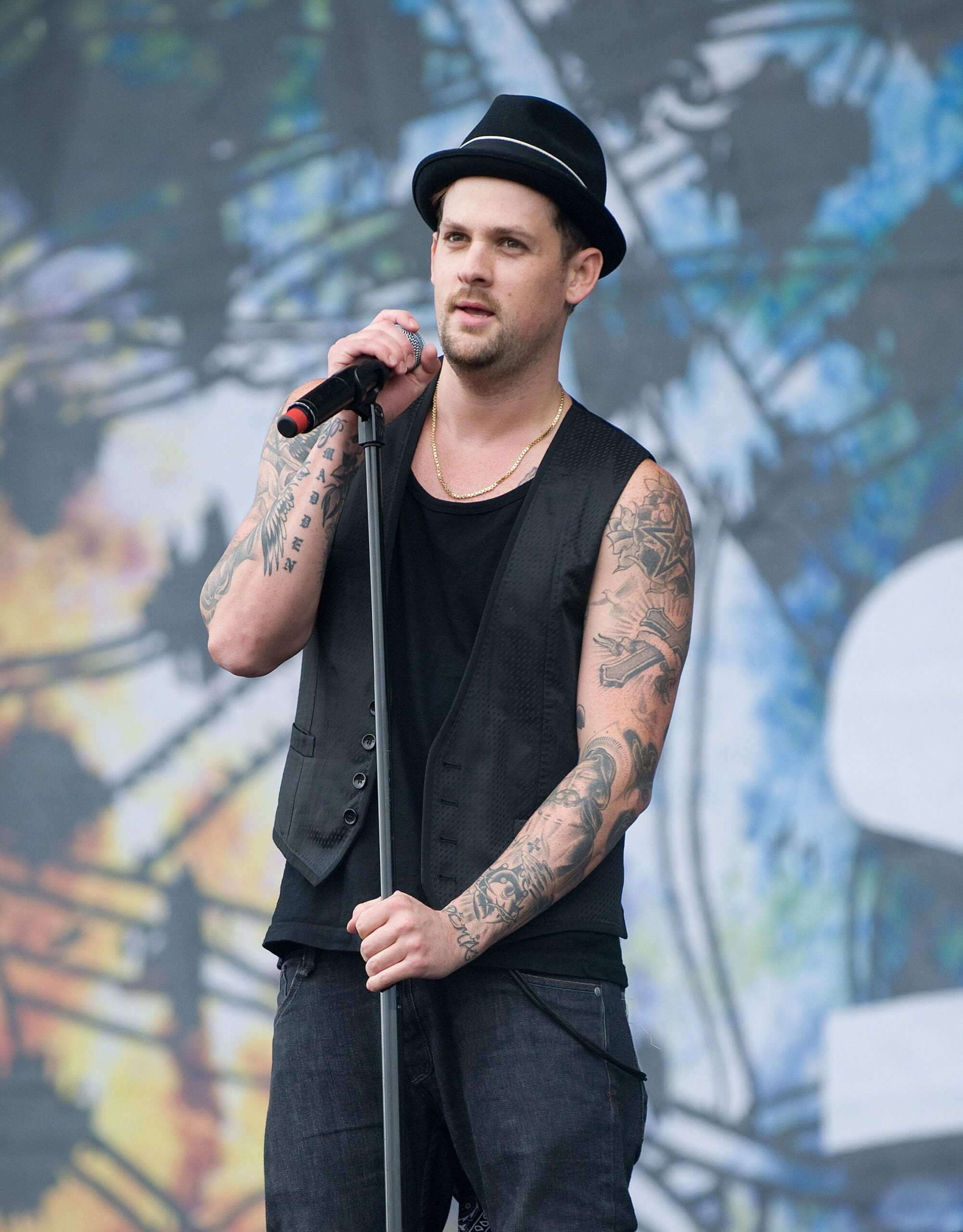
The Good Charlotte tattoo gallery shows the stars, roses, religious figures, and vertical Madden lettering clearly enough to distinguish each motif.

Stars, crosses and religious imagery

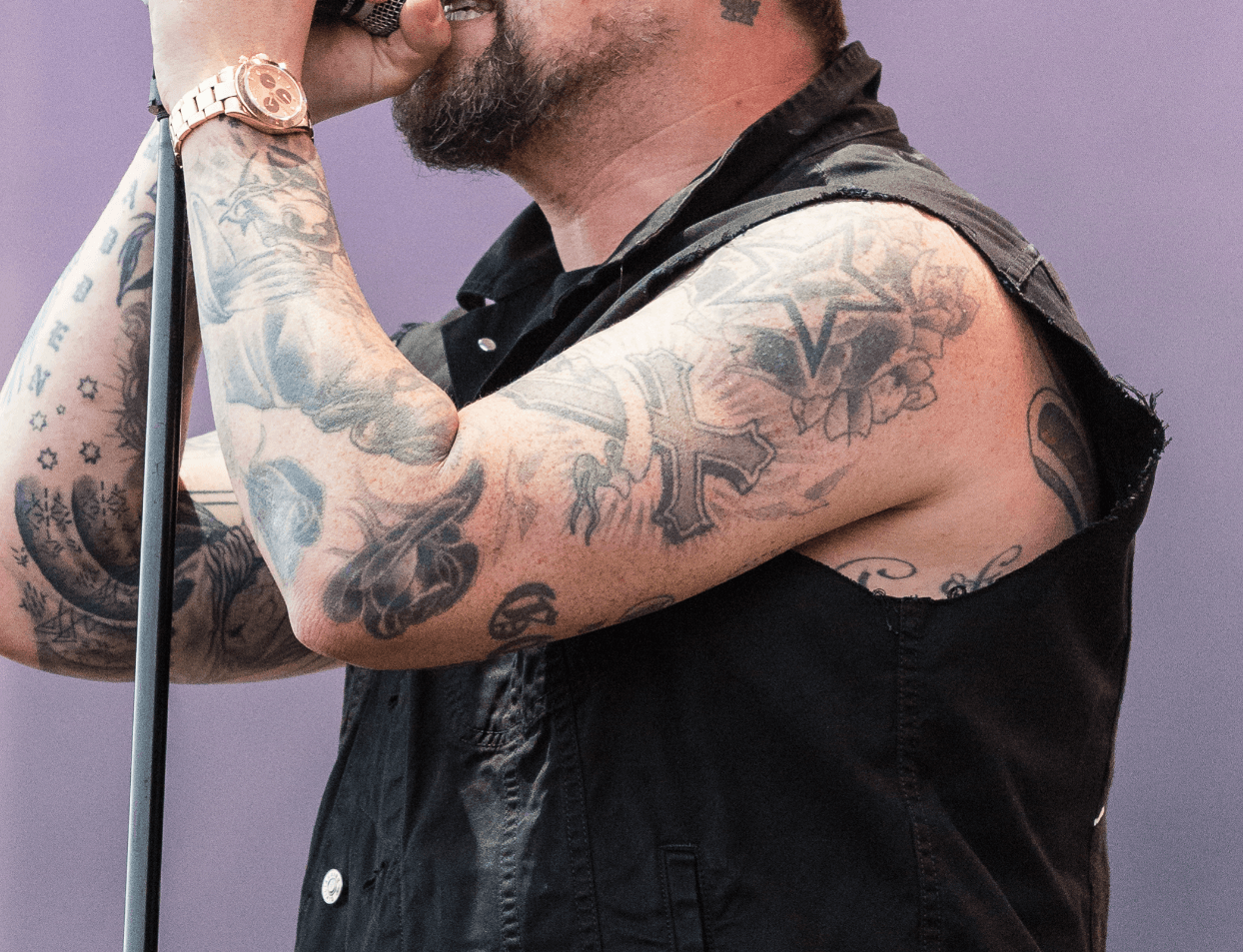
Crosses, praying hands, angels, and portrait-like figures recur beside stars and traditional filler. Some show from the stage; others appear when Madden turns his arm or rolls up a sleeve.

Joel Madden forearm tattoos, including lettering and black and grey work
Joel Madden in a tattooed-arms portrait, with religious and illustrative black-and-grey work visible across both sleeves.

The sleeves have a traditional look: strong outlines, familiar subjects, and shading that has settled over time. Dark contours and lighter backgrounds help separate the images.

The shoulder and bicep pieces add the boldest shapes

Stars and larger black-and-grey designs sit high on the shoulders, visible in a vest or sleeveless shirt. The open space there separates them from the denser work around the elbows.

Joel Madden shoulder and bicep tattoos seen during a live performance
A live-performance view showing Joel Madden’s star and cross tattoos around the shoulder, bicep and forearm.

A shoulder design can anchor a sleeve while leaving room to add more below it later. A bold star, cross, or portrait reads from a distance; smaller details can fill in the rest.

Photos from different angles reveal details that disappear from the front, especially around the shoulder and inner bicep.

Forearm lettering and hand tattoos

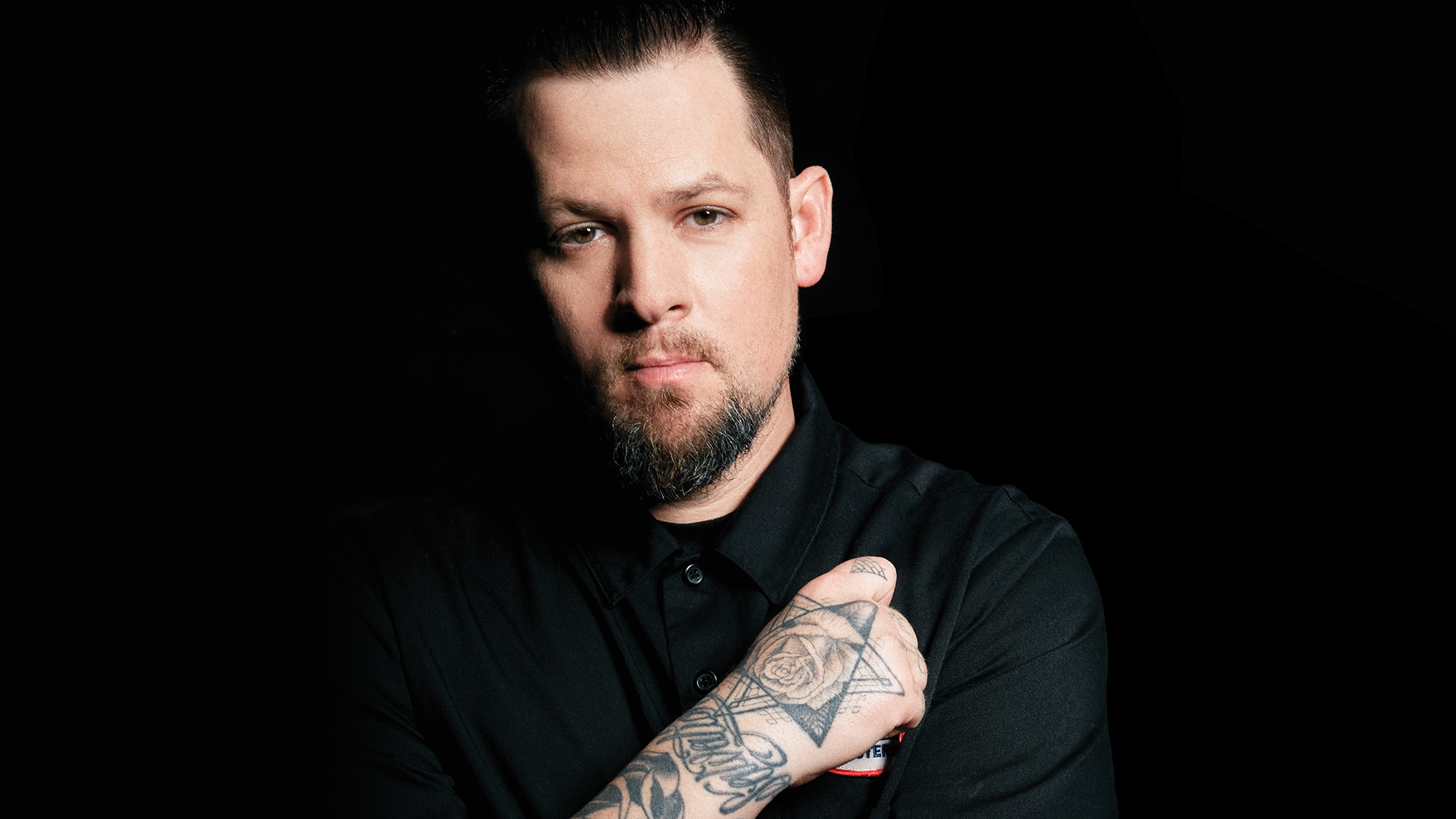
Lettering runs along Madden’s forearms, with smaller geometric and illustrative designs on his hands. These pieces are harder to cover than the tattoos higher on his arms.

Joel Madden tattoos on his forearm and hand in a close portrait
A close portrait of Joel Madden with visible forearm, hand and finger tattoos.

The “Madden” lettering is one of his most recognizable pieces. It follows the length of the forearm and remains easy to read when his arm hangs at his side or he holds a microphone.

Small geometric lines and dark accents link the hand tattoos to the sleeves. Hand ink can fade faster than tattoos in other places, so ask an artist about line size and possible touch-ups.

Floral and geometric details keep the sleeves moving

Flowers, leaves, curved shading, and geometric shapes fill the gaps between larger images. They connect the sleeve from shoulder to wrist without repeating one motif.

Joel Madden crossed arms tattoos showing floral and geometric ink
Joel Madden with his arms crossed, showing floral, geometric and illustrative tattoos across the sleeves and hands.

The crossed-arm photo shows the designs from the outside to the inside. Lighter flowers break up the dark areas, while geometric marks sharpen the look around the hands and wrists.

Chest, neck and future tattoo ideas

Madden also has tattoos on his neck, chest, and hands. The neck ink is easy to see when his collar is open and links visually with the sleeves.

Madden has said he has spent more than 100 hours getting tattooed. In a 2024 interview with Us Weekly, he mentioned possible future tattoos on the sides of his head, a portrait of his late dog, and a design on his butt.

What to take from Joel Madden’s style

If you’re planning a sleeve, decide where the main image will go before choosing smaller pieces. Madden’s use of black, grey, soft shading, and occasional lettering helps different subjects sit together.

Check how the design looks when your arm moves. Forearm lettering should follow the arm, and shoulder or hand tattoos need to be viewed from several angles. Bring references, then let the artist adapt them to your body.

Madden’s sleeves are bold, with smaller hand and neck tattoos around them. If you’re planning your own work, choose designs you’ll want to keep and leave the artist room to make them fit together.

More musician tattoo guides

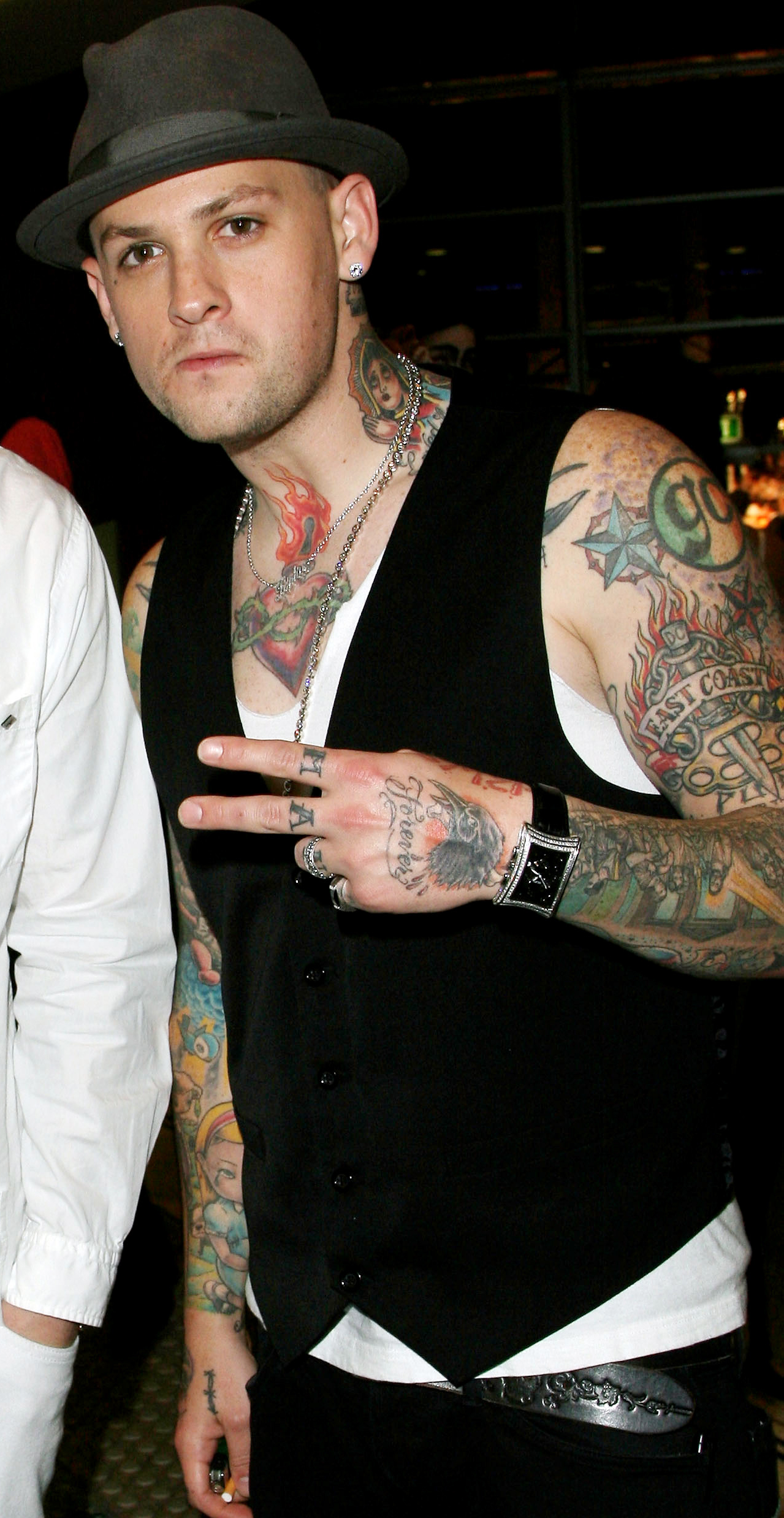
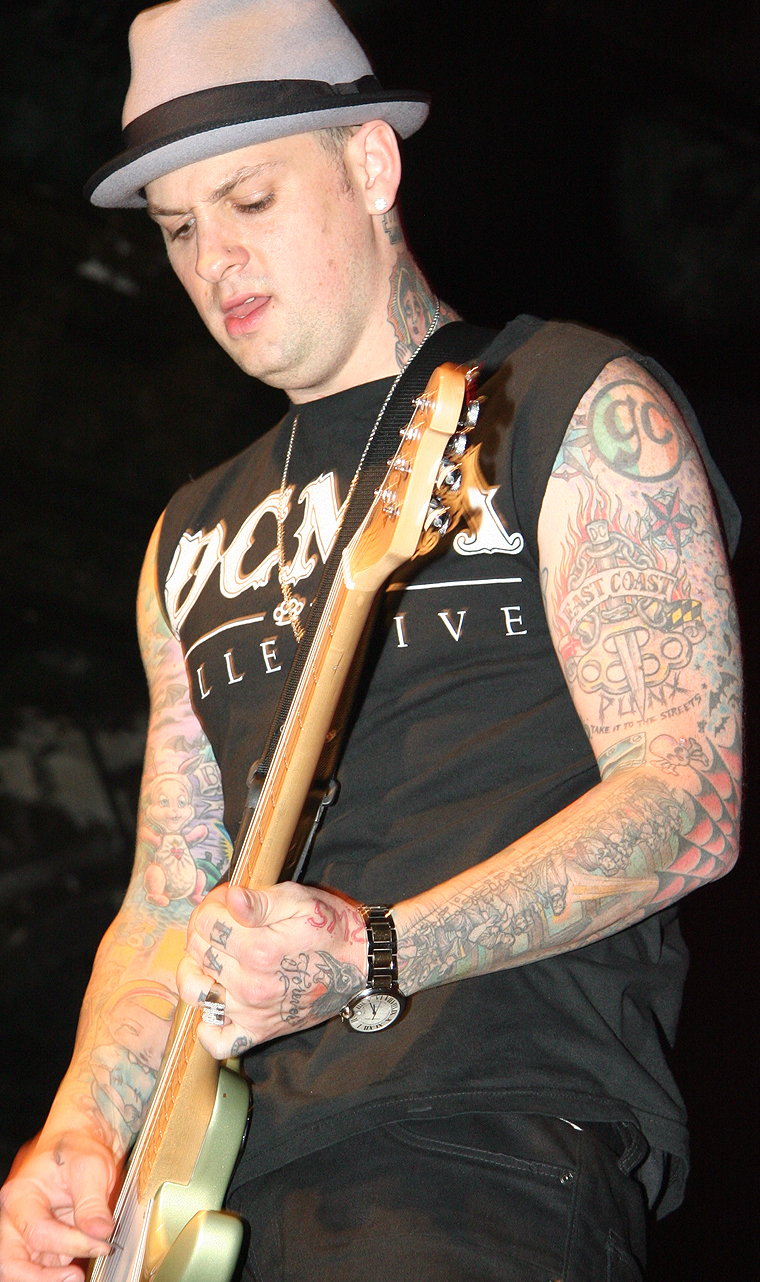
Benji Madden Tattoos: Colorful Sleeves, Chest Ink and Neck Details

Benji Madden’s tattoos use plenty of color. The Good Charlotte guitarist has sleeves, hand ink, chest lettering, and neck pieces. They can crowd the frame, but photos show separate designs added over time.

The photos below show the colors, placements, and details that can be hard to see when Benji wears a jacket or plays guitar.

Benji Madden’s colorful sleeves

Benji’s sleeves run from the upper arms toward the wrists. Cartoon-like figures, traditional shapes, lettering, and shading sit beside one another under bold outlines. The color helps distinguish the designs where they overlap.

The sleeves have been added to over time. Larger images stand out at a distance, while smaller pieces fill the gaps. Photos from different angles reveal different parts of the same work.

Benji Madden colorful sleeve tattoos with arms crossed
Benji Madden shows the dense color and layered imagery running across both tattooed arms.

Close-up views show the color and linework

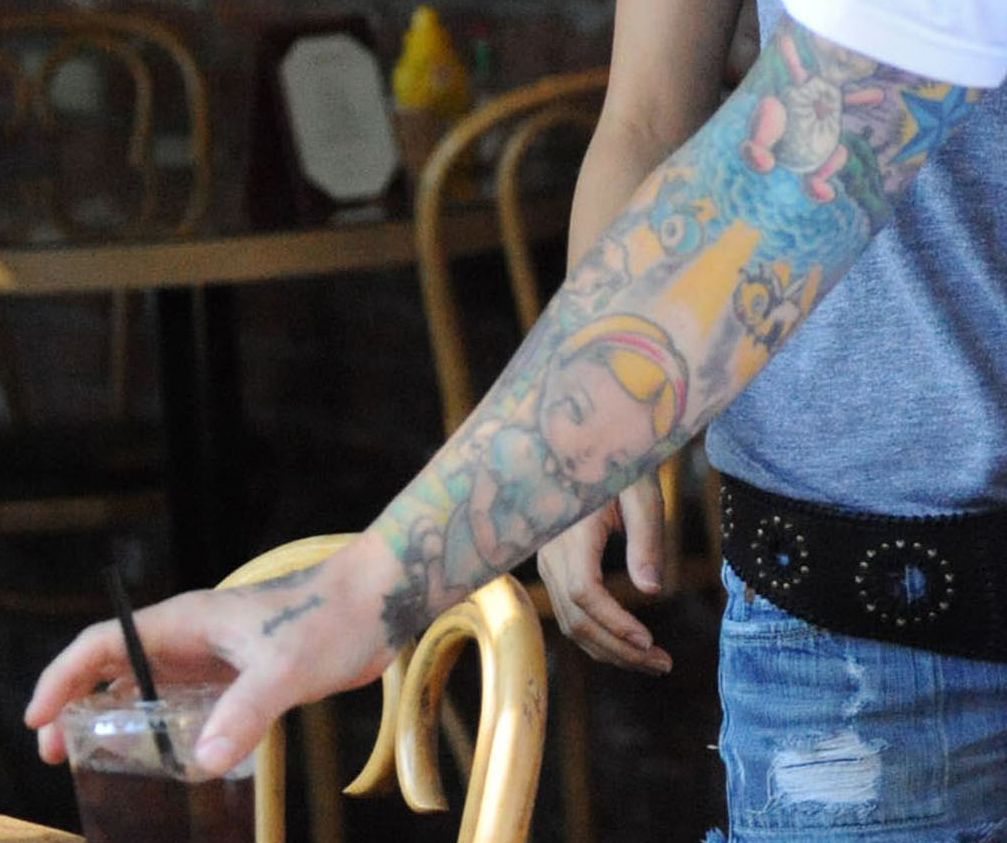
A close arm photo shows the soft color changes, black outlines, and small details more clearly than a stage shot. Playful faces and rounded shapes sit among darker areas, with little bare skin between them.

The collection mixes punk-influenced designs with cartoon imagery, religious references, and traditional shapes. The pieces don’t all follow one theme or style.

Benji Madden colorful right arm sleeve tattoos
A close view of Benji Madden’s right sleeve shows the saturated color and fine linework between the larger pieces.

Chest lettering and the Cameron tattoo

In 2015, Benji showed a large Cameron tattoo across his upper chest. Us Weekly reported that he got it for his wife, Cameron Diaz, and quoted the caption he posted with it.

The word spans his chest and is easy to read when the sleeves are covered. Other designs sit below and around it.

The Cameron tattoo has a clear public explanation. Other sleeve designs are visible, but their meanings aren’t documented well enough to name each one.

Hand and finger tattoos

The hand tattoos show when Benji plays guitar, raises a hand, or adjusts his clothes. Finger lettering and small marks sit beside larger designs on the back of the hand, extending the sleeve past the wrist.

A jacket can cover most of the arm while leaving the finger tattoos visible. The close portrait below shows how the hand work meets the colored forearm sleeve.

Benji Madden hand and arm tattoos
This portrait shows how Benji Madden’s hand tattoos connect with the colorful work on his forearm and upper arm.

Neck tattoos and the face area

The neck tattoos sit near the jaw and throat, so they show in headshots even when the sleeves don’t. Lettering and dark outlines appear beside larger colored work at the front of the neck.

A portrait shows the neck placement more clearly than a distant stage photo. Hair, a cap, or a collar may hide some of the ink.

Benji Madden tattooed arm while playing guitar
Benji Madden’s sleeve, hand ink and neck tattoo are visible together while he plays guitar.

Older designs and the back tattoo

Older photos show bright religious and traditional imagery, as well as reports of a Benjamin Franklin tattoo on Benji’s back. Front-facing photos don’t show the back piece clearly, but his tattoos extend beyond his arms and chest.

The sleeves use several colors, with open skin, black outlines, and small details separating one design from another.

Benji Madden forearm tattoo close-up
A close-up of Benji Madden’s forearm shows the cartoon-inspired figures and bright color packed into the sleeve.

What makes Benji Madden’s tattoos stand out

The sleeves catch the eye first, followed by the chest lettering, neck, and hands. The collection isn’t built around one logo or band name.

The Cameron tattoo has a public explanation, and the sleeves and neck work are visible. The smaller faces and symbols can be described from photos, but their meaning is Benji’s to explain.

Watch Benji Madden talk about getting tattooed

In the interview below, Benji talks about tattoos and the culture around them.

More musician tattoo guides

Frank Bello Tattoos: Anthony Memorial Ink and the Arm Pieces He Shows Onstage

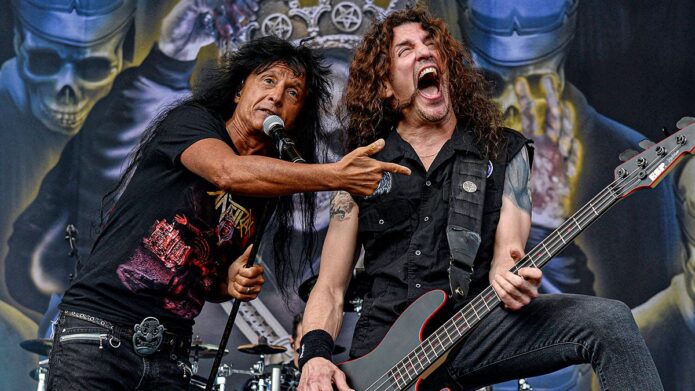
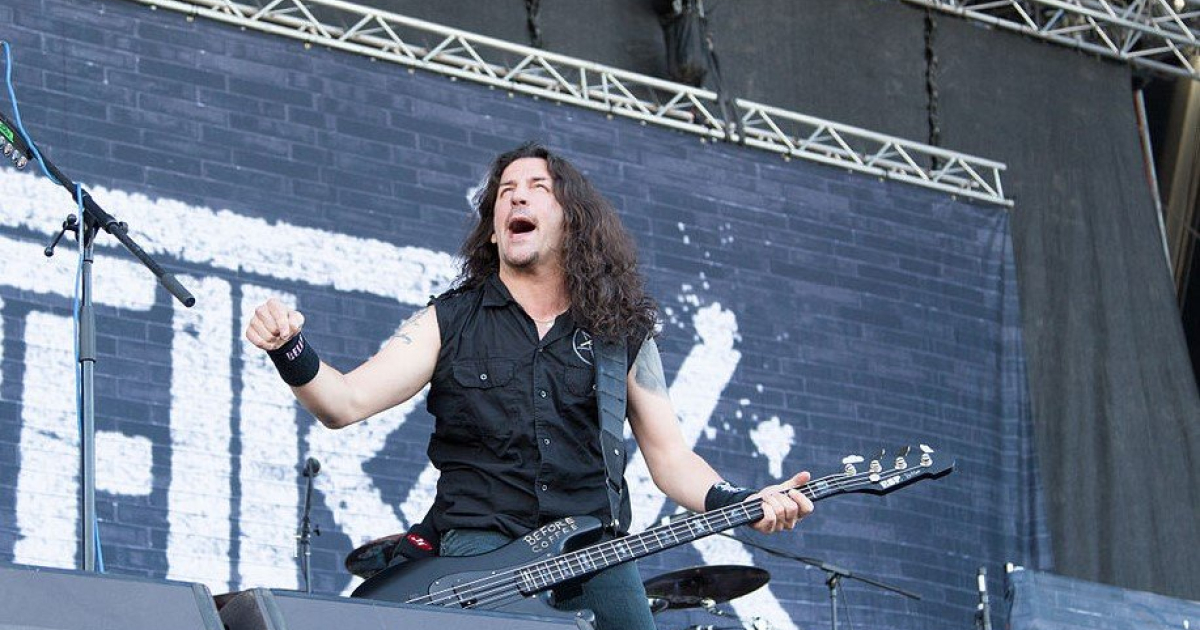
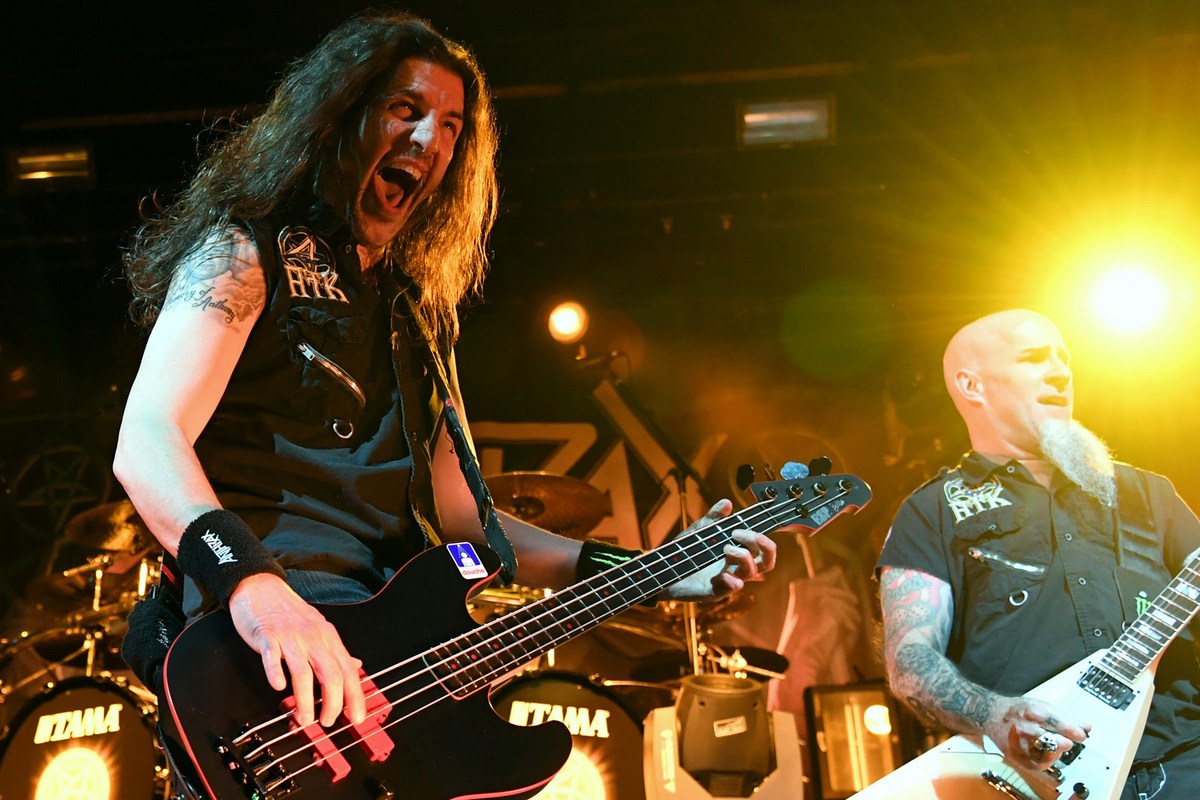
Frank Bello’s tattoos include two pieces he has explained publicly. One honors his younger brother Anthony; another, by Paul Booth, represents his inner rage and the calm he associates with his son. Concert photos show both designs on his arms, though lighting and movement can make them hard to see.

Frank Bello’s confirmed tattoos

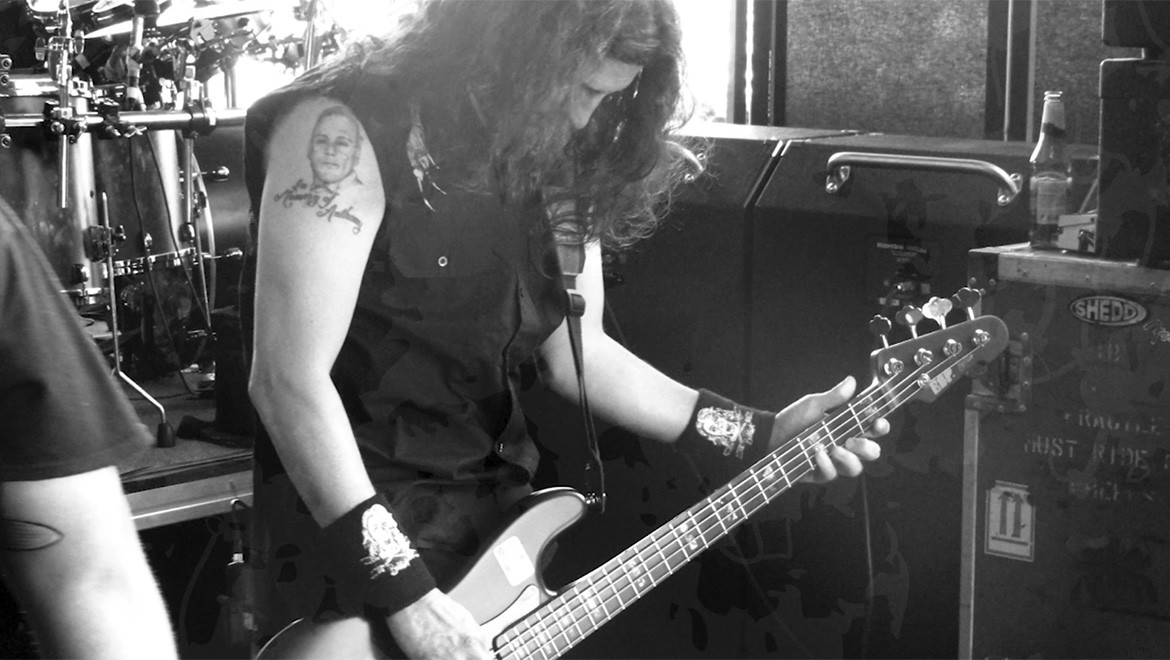
The clearest documented tattoo is a portrait of Frank’s brother Anthony on his right upper arm, with In Memory of Anthony beneath it. Anthony was murdered in the Bronx in 1996. The tattoo is a direct memorial, not band branding.

Frank described another Paul Booth tattoo in an interview with Glide Magazine. He said it represents his inner rage, while a glowing figure represents what calms him; he connected that figure to his son.

Frank Bello Anthony memorial tattoo on upper arm
Frank Bello performs with the portrait tattoo honoring his brother Anthony visible on his upper arm.

The Anthony memorial portrait

The Anthony portrait sits high on Frank’s arm. It appears when he wears a cut-off shirt or lifts his bass. Lettering beneath the portrait keeps the memorial legible when stage lights soften the image.

From a distance, the arm or lettering can disappear into the shadows. Closer photos show the face and script more clearly.

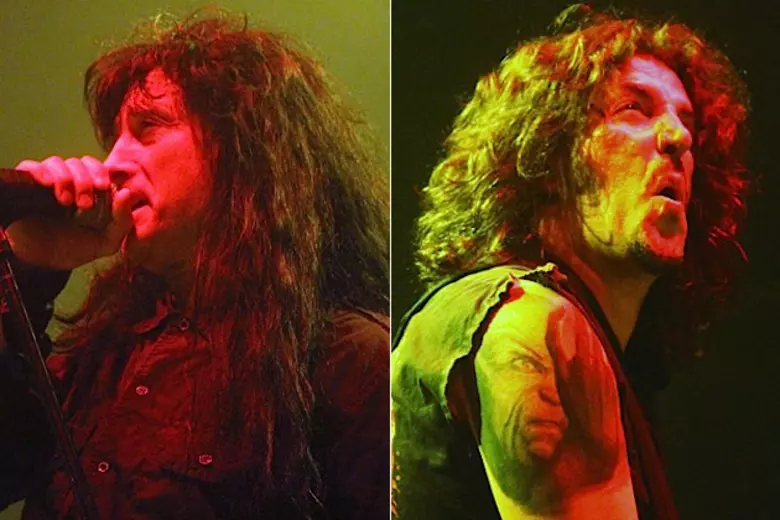
Frank Bello tattooed arm during Anthrax performance
A closer live angle catches the tattoo on Frank Bello’s upper arm beneath the stage lights.
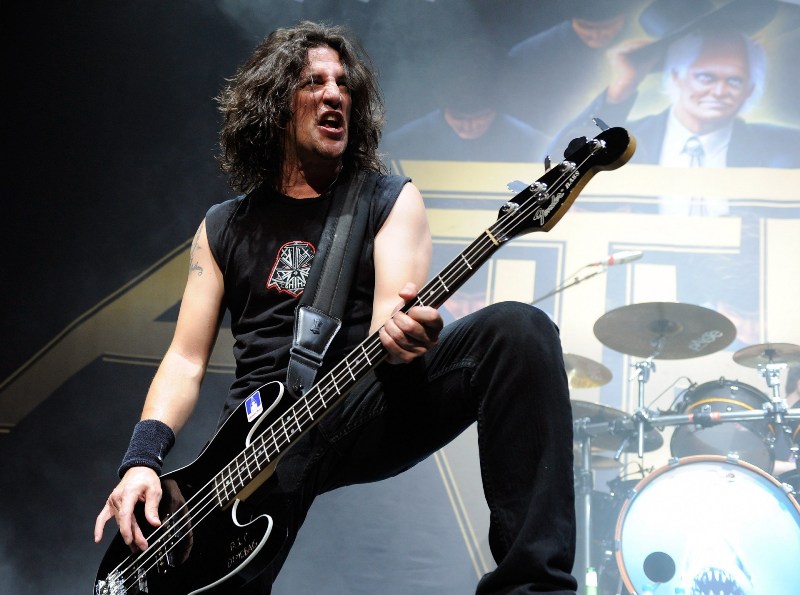
Frank Bello tattoo on arm during live performance
Frank Bello plays bass with the tattooed upper arm exposed.

The Paul Booth piece and its meaning

Frank hasn’t named every figure in the Paul Booth tattoo. He has explained the main idea: the darker side stands for his inner rage, and a glowing figure represents what calms him. He said Booth understood the concept and designed it accordingly.

The design can be described as dark and surreal, as Frank has done. The blurry photos don’t support naming each shape as a demon, skull, or Anthrax symbol.

Frank Bello Anthrax tattoo stage photo
Frank Bello performs beside Scott Ian with his upper-arm tattoo visible in the wider stage view.

How the tattoos look onstage

Concert photos vary with red light, smoke, straps, and clothing. One may show the memorial clearly; another catches only an outline, the lettering, or part of the other design.

The designs fit his dark stage look, but their meanings are personal. The portrait honors family; the Paul Booth tattoo relates to anger and what helps him find calm.

Frank Bello tattooed arm under red stage lights
Red stage lighting changes the look of the ink, but the tattooed arm is still visible as Frank plays bass.
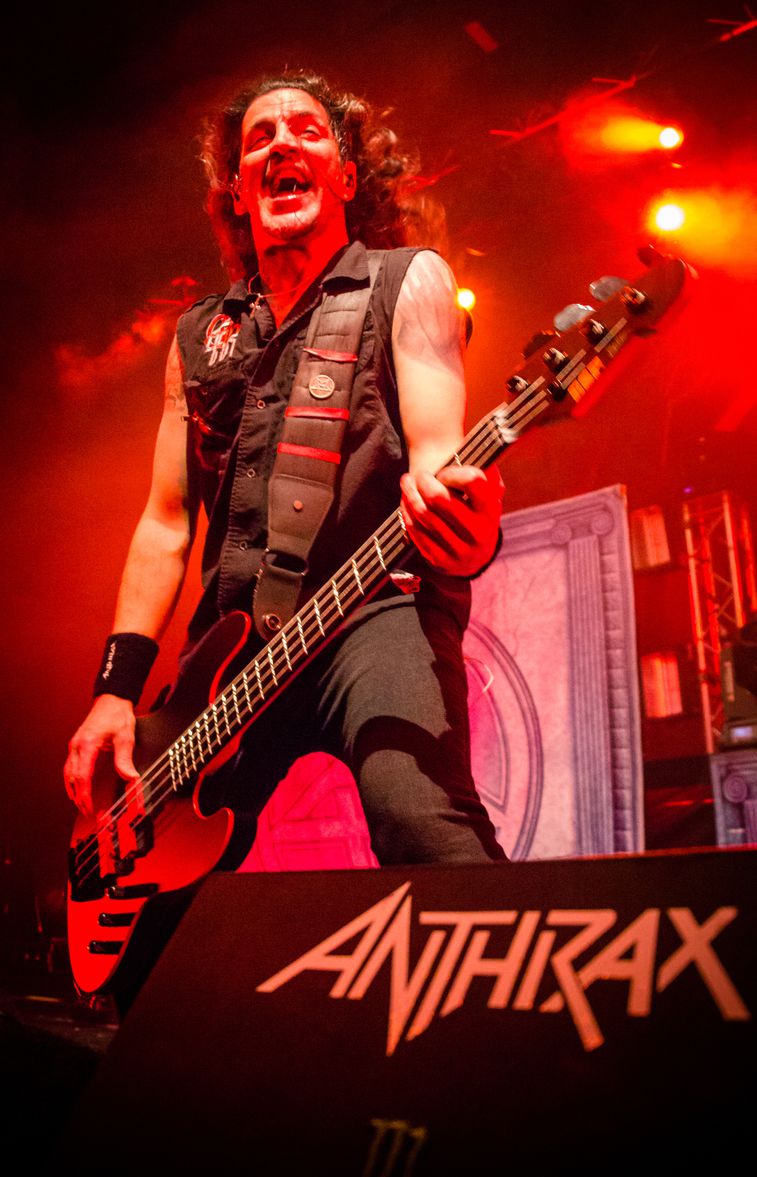
Frank Bello upper-arm tattoo during Anthrax festival performance
A festival shot shows the upper-arm tattoo as Frank leans into a live Anthrax set.

The right upper arm is the clearest place to study. The portrait can hide under a regular sleeve and reappear when Frank reaches across his bass or lifts an arm. The lettering below it completes the memorial.

Wider photos show the arm tattoos alongside Frank’s vest, bass strap, and wristbands. The black-and-white ESP image and warmer festival shots show the same placement under different lighting, which can make the ink appear lighter or darker.

What Frank Bello does not have tattooed

Frank has said he wouldn’t tattoo Anthrax lyrics or the band name on himself. His documented pieces relate to family and personal feelings rather than the band’s logo.

The documented tattoos are personal: the right-arm portrait honors Anthony, and the Paul Booth design represents rage and calm. Frank’s comments explain their meaning; the stage photos show where they sit.

Watch Frank Bello talk about his tattoos and life in Anthrax

In the interview below, Frank talks about his life in Anthrax and the stories behind his tattoos.

More musician tattoo guides

Alissa White-Gluz Tattoos: Colorful Arm and Shoulder Ink

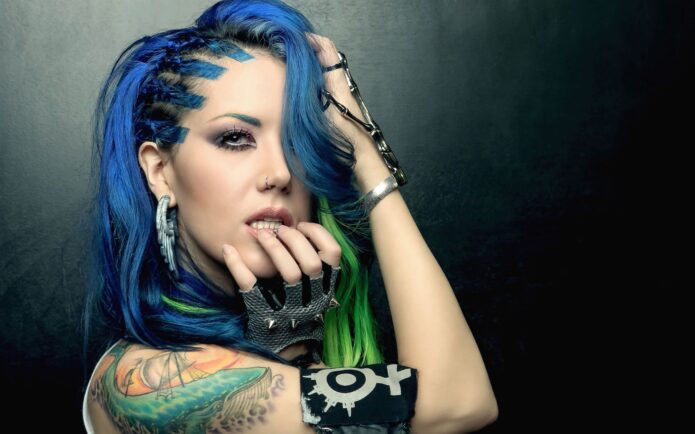
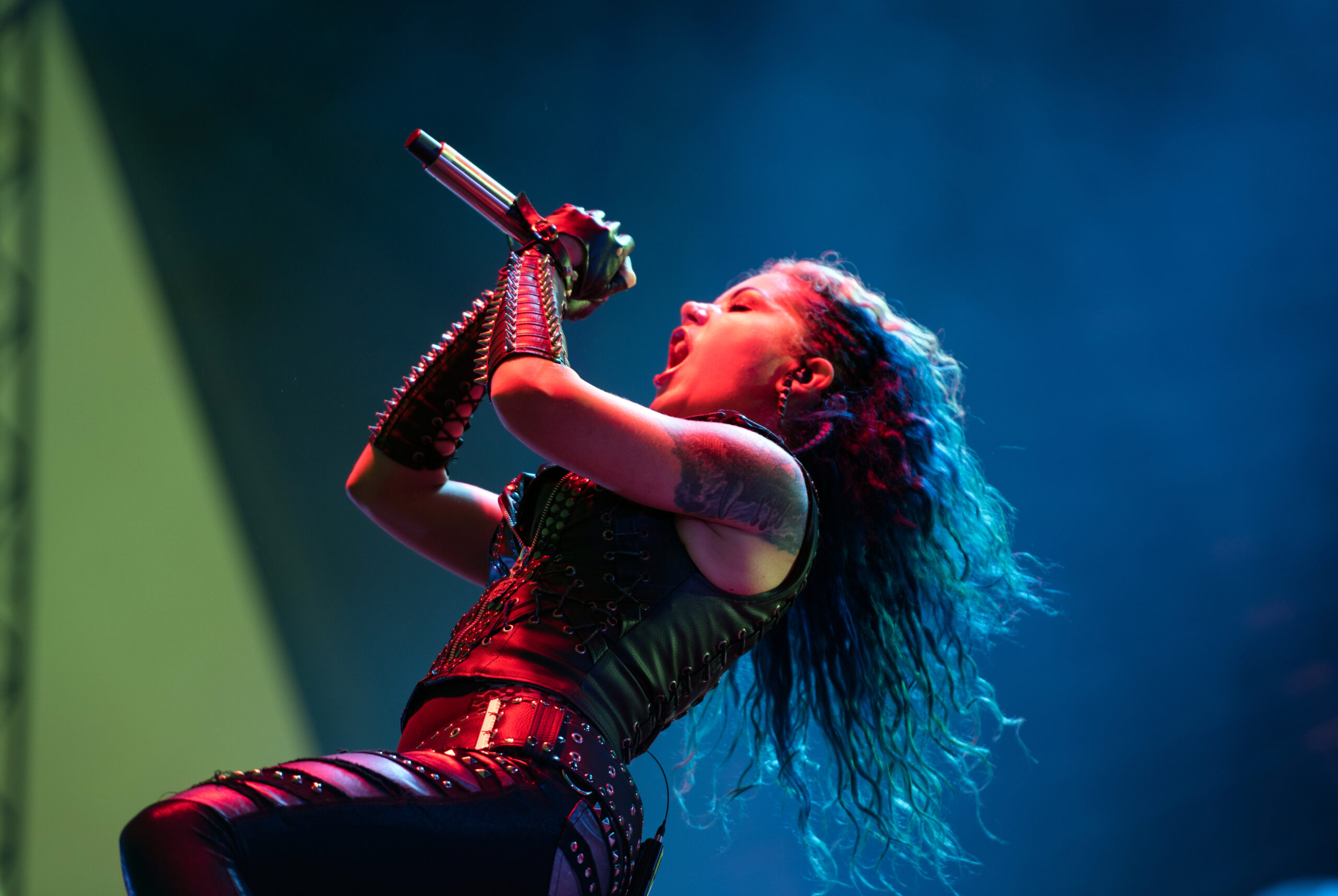
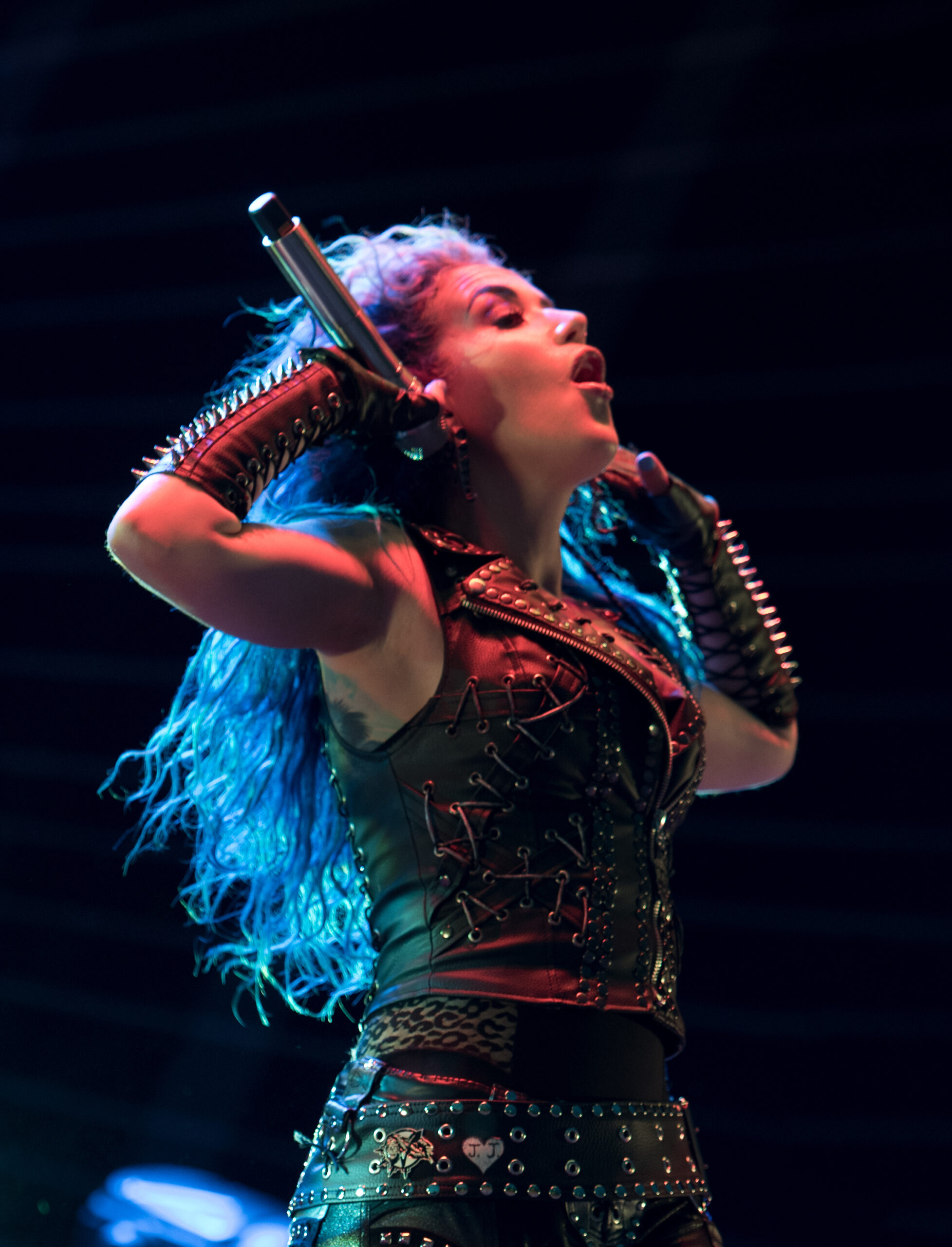
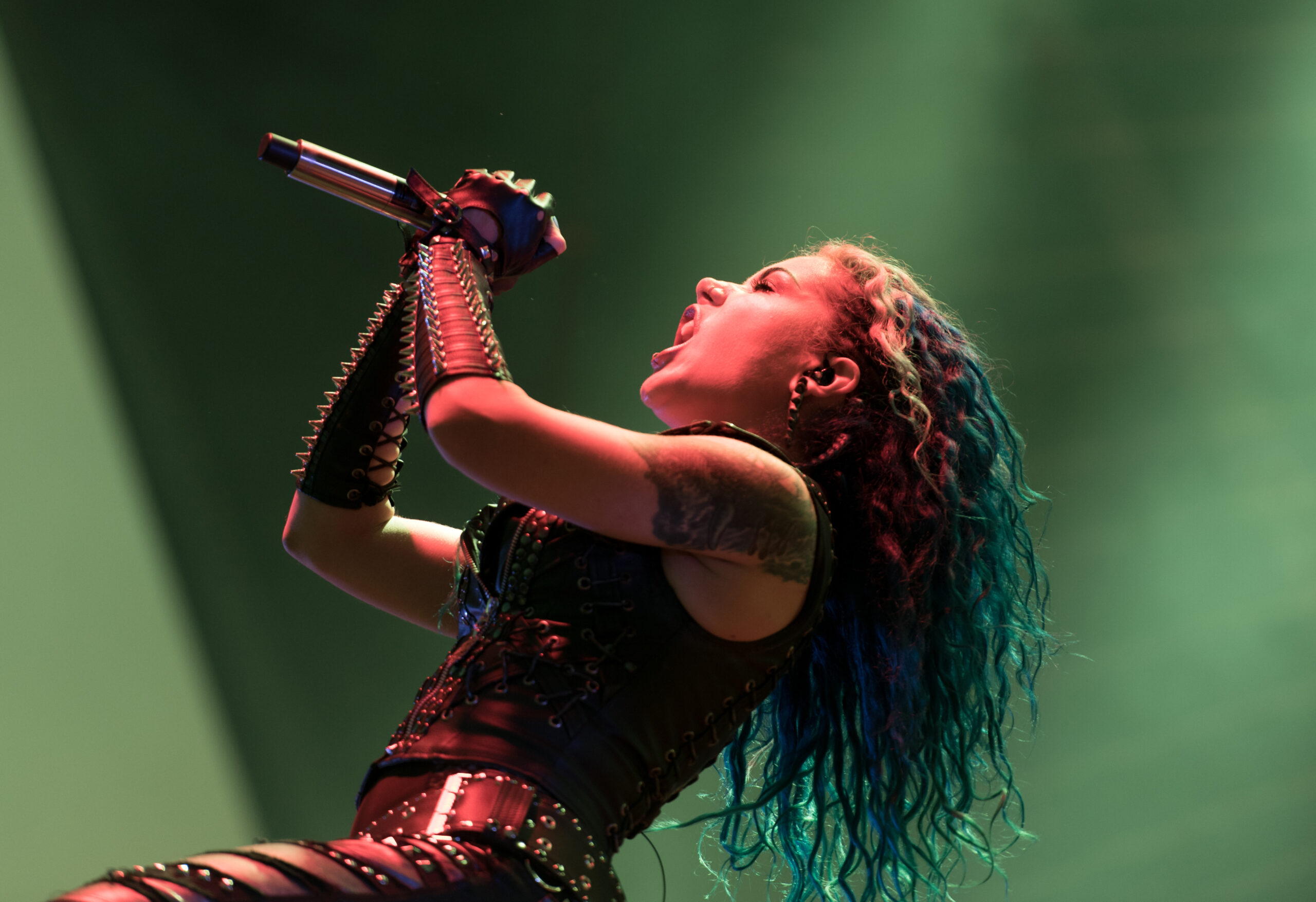
Alissa White-Gluz’s tattoos fit the way she presents herself. The bright colors show clearly under stage lights. The Arch Enemy and The Agonist vocalist has ink across her shoulders and arms, where it sits alongside her hair, makeup and clothes.

The collection mixes saturated color with darker linework. One photo may bring out the shoulder piece; another shows muted designs under stage lighting. This guide sticks to what is visible in clear photos, looking at placement, color and the style of Alissa White-Gluz tattoos.

A colorful shoulder tattoo that grabs attention

The largest, easiest-to-spot piece covers Alissa’s shoulder and upper arm. Its rounded shapes and color stay clear even when she’s moving onstage. Set high on the arm, it shows with sleeveless clothes and changes the outline of the shoulder.

Alissa White-Gluz colorful shoulder tattoo at Elbriot 2018
Alissa White-Gluz’s colorful shoulder tattoo is clearly visible in this Elbriot 2018 photo.

Color gives the tattoo its first impact. It covers a broad area instead of sitting as a small wrist mark, and its details make the upper arm feel almost illustrated. If you want a design that can be read from across a room, study how this one uses the shoulder and upper arm.

Arm tattoos with a darker edge

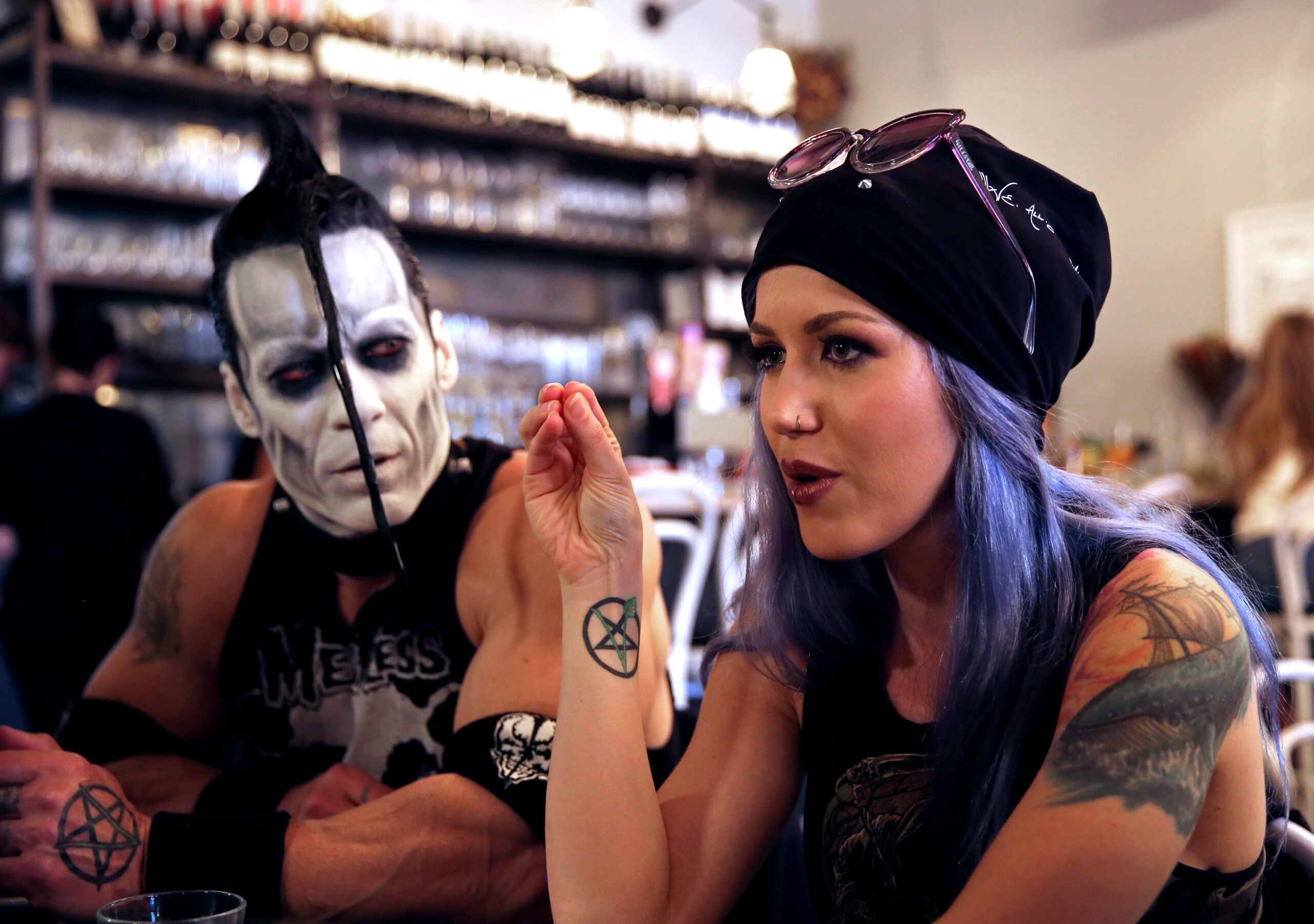
Other pieces on her arms look darker. In interview and close-up photos, the tattoos sit beside black clothes, gloves and stage makeup, but they remain distinct. The designs have layers and texture without making the arm hard to read.

Alissa White-Gluz tattooed arms during a Kerrang interview
A clear interview photo shows the tattoo work across Alissa White-Gluz’s arms.

Lighting changes how clearly tattoos show. Soft indoor light separates the shapes and shading better than a fast concert shot. Alissa’s arm work has enough contrast to stay visible without taking over the whole arm.

Alissa White-Gluz upper arm tattoo at Elbriot 2018
A close stage angle shows the upper arm tattoo against Alissa’s black performance outfit.

Here the tattoo reads as part of the arm, not a separate addition. That’s useful when planning a sleeve or upper-arm piece. The surrounding skin leaves space around the design, while the dark clothing makes its edges easier to see.

Different angles reveal different details

The way the upper arm bends and turns can make Alissa’s tattoos look different from one photo to another. Clothing may cover part of the design, too. A side view catches areas a front-facing portrait hides, and a low stage angle can show the underside of the arm.

Alissa White-Gluz upper arm tattoo from a side view
The side angle makes the upper arm tattoo easier to separate from the stage outfit.
Alissa White-Gluz side arm tattoo at Elbriot 2018
A different Elbriot angle shows more of the side arm tattoo as she performs.

These photos show different views of the same area, rather than repeating one image. That makes it easier to see how the tattoo follows the arm. If you’re comparing placements, check how the design curves around the body instead of sitting flat like a sticker.

The forearm and upper arm work together

A wider performance photo shows the forearm and upper-arm pieces together with the rest of Alissa’s styling. The ink leaves some skin uncovered, but still creates movement when she raises her arms to sing.

Alissa White-Gluz forearm and upper arm tattoo at Elbriot 2018
The forearm and upper arm ink are both visible in this high-resolution performance photo.

The tattoos have color, dark shading and areas of open skin, and they move with her arm. Together, those details give them a less polished, more lived-in look that fits her stage style.

What Alissa has said about her look

In a 2015 interview, Alissa discussed blue hair, tattoos and piercings as parts of her visual identity. She also talked about how her appearance fits the atmosphere of an Arch Enemy show. Her tattoos sit alongside her hair, makeup and clothes, rather than apart from them.

A later Kerrang interview shows the arm ink in a more relaxed setting. Away from the stage, the colors and linework are easier to see.

Why Alissa White-Gluz tattoos stand out

The tattoos work through contrast and placement. The shoulder brings color, while the arm pieces add darker tones. Parts of the collection show or disappear as she moves, so the look changes with the angle.

For inspiration, look at how the designs share the arm. A clear outline and some open skin help a large piece stay readable; darker ink can stand out without covering everything. A tattoo can still feel personal when a photo doesn’t show it.

If you’re planning a similar arm piece, decide first whether the shoulder will be the focal point. Then choose smaller designs that sit well beside it. Alissa’s tattoos show how color and placement can work together with a person’s existing style.

Watch Alissa talk about her tattoos

More musician tattoo guides

Kobra Paige Tattoos: Dreamcatcher, Script and Arm Ink

Paige has described tattoos as another form of art. Photos show the pieces she wears across her arm, including a dreamcatcher, feathers and lettering in two scripts. As the Kobra and the Lotus singer performs, the designs appear and disappear with her sleeves and movement.

Here’s what the photographs show and what Paige has explained about the tattoos. Where her account doesn’t give a meaning, I’ll leave it open.

The dreamcatcher is the centrepiece of Kobra Paige’s arm tattoos

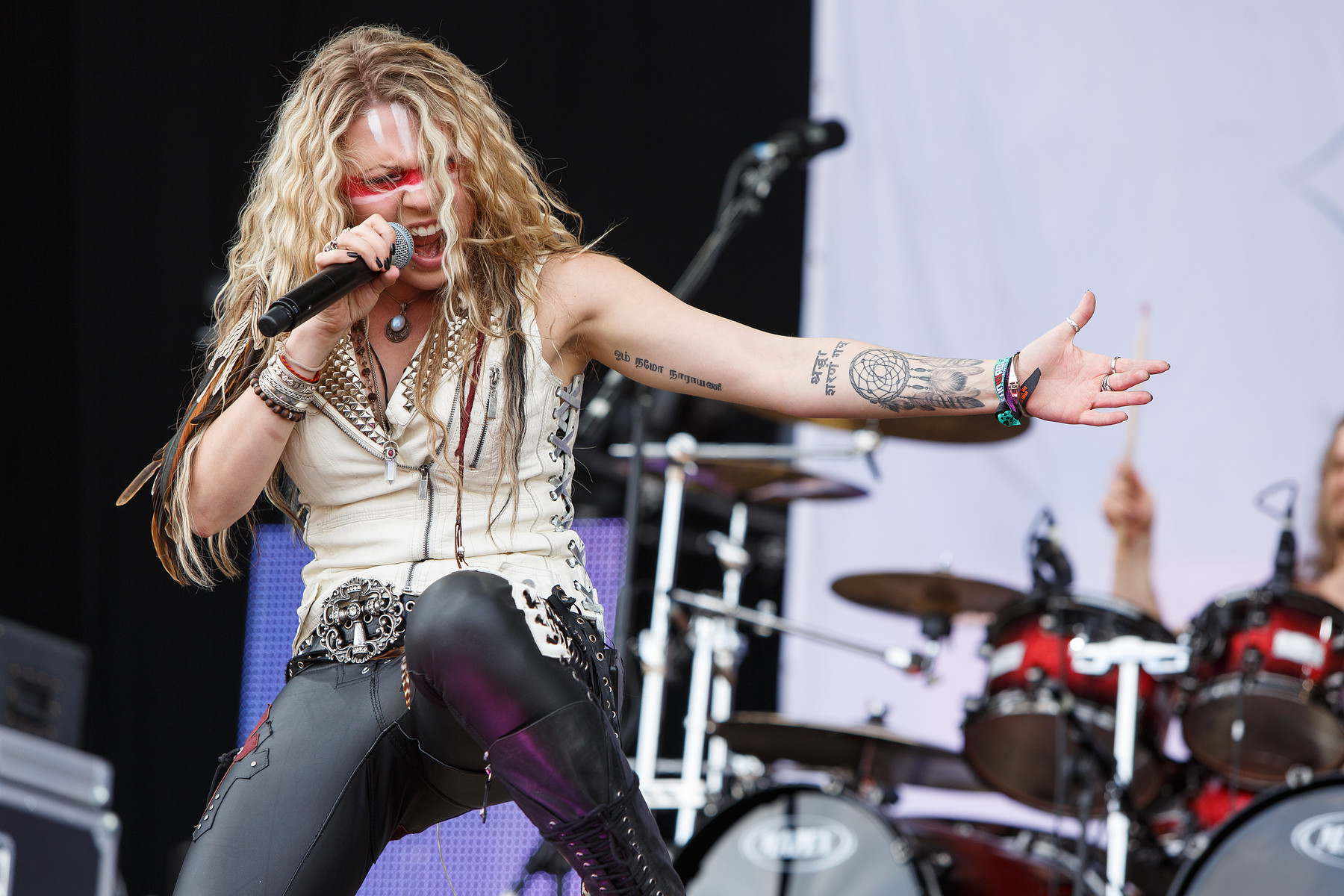
The dreamcatcher on Paige’s arm is the piece that stands out most in performance photos, especially when she reaches toward the crowd. She has linked it to her childhood: her mother took her to sun dances, and she grew up around strong First Nations influences. Paige has also said recurring nightmares stopped after her parents put a dreamcatcher above her bed when she was thirteen.

That history gives the tattoo a clear personal connection. It recalls something from home and a time when the dreamcatcher helped her feel safe.

Kobra Paige dreamcatcher and script forearm tattoos

Script tattoos run along the same forearm

The dreamcatcher shares Paige’s forearm with script in two different writing systems. One section is in Sanskrit and another in Tamil. In an interview, she said both express the idea of “surrender” and described the tattoos as a source of serenity.

The lettering is compact beside the round dreamcatcher and its feathers. The different shapes leave space around each piece, so the arm doesn’t look filled just for the sake of it.

Kobra Paige arm tattoos in a band portrait

The tattoos are easy to miss when Paige is onstage

Paige often performs in fitted jackets, leather tops or long sleeves, so photos don’t always show her whole arm. When a sleeve shifts, the lettering near the middle of her forearm and the dreamcatcher lower down become easier to see; the feathers reach toward her wrist.

That’s why one image can make the collection look smaller than another. A close-up isolates the main designs, while a stage photo shows how they sit with her jewelry and performance clothes.

Kobra Paige forearm tattoos in a band photo

There is more ink beyond the main arm piece

Most of the photos draw attention to Paige’s arm, but one older portrait shows a small tattoo low on her torso. Its design and story aren’t documented clearly, so it’s best to describe what the picture shows without assigning a meaning.

A tattoo can be visible even when its story isn’t public. Paige has explained the dreamcatcher and “surrender” script; the other marks shouldn’t be given meanings based on guesswork.

Kobra Paige lower torso tattoo visible in portrait

Paige sees tattoos as part of her artwork

Paige has described tattoos as a form of artistic expression, much like music. She said she spent more than ten years getting the ink on her body and loves the tattoos, though criticism from others made her self-conscious about them.

She has also talked about covering her arms. The tattoos matter to her, but people have sometimes judged what they mean before getting to know her. They’re part of her creative identity, not just something she wears for a metal audience.

Kobra Paige tattoo interview portrait

What makes Kobra Paige’s tattoo style stand out

Paige’s arm brings together a round dreamcatcher, soft feather shapes, short script and darker linework. The open skin between them keeps the different designs clear. It’s a mix of ideas, rather than one continuous sleeve.

The pieces don’t need a single plan to make sense together. Some have stories Paige has shared; the rest are part of a life spent making music, drawing, performing and choosing how she presents herself. The collection has grown over time.

The arm placement makes the whole collection readable

The designs follow the length of Paige’s arm. The script becomes readable when she turns her forearm toward the camera; the round dreamcatcher anchors the lower section, and the feathers reach toward her wrist. The arrangement changes as she sings or reaches across the stage.

This can work if you want several small tattoos without covering the whole arm. Space keeps the lettering clear and gives the dreamcatcher room. Depending on the angle, a photo may show only part of the design.

The meaning is personal, but the look is still carefully balanced

Paige’s arm balances round shapes, feathers and compact lettering instead of repeating one heavy pattern. That variation keeps the designs separate and readable.

There’s a difference between what Paige has explained and what a viewer can see. She has connected the dreamcatcher to childhood and said “surrender” has a spiritual meaning. Smaller marks appear in older photos, but their stories haven’t been clearly shared. A tattoo guide should keep that distinction.

Watch Kobra Paige talk and perform

Here’s a Kobra and the Lotus performance video from the same period, with Paige at the front of the stage.

More musician tattoo guides

Dani Filth Tattoos: Matching Horns, Paul Booth and Dark Art

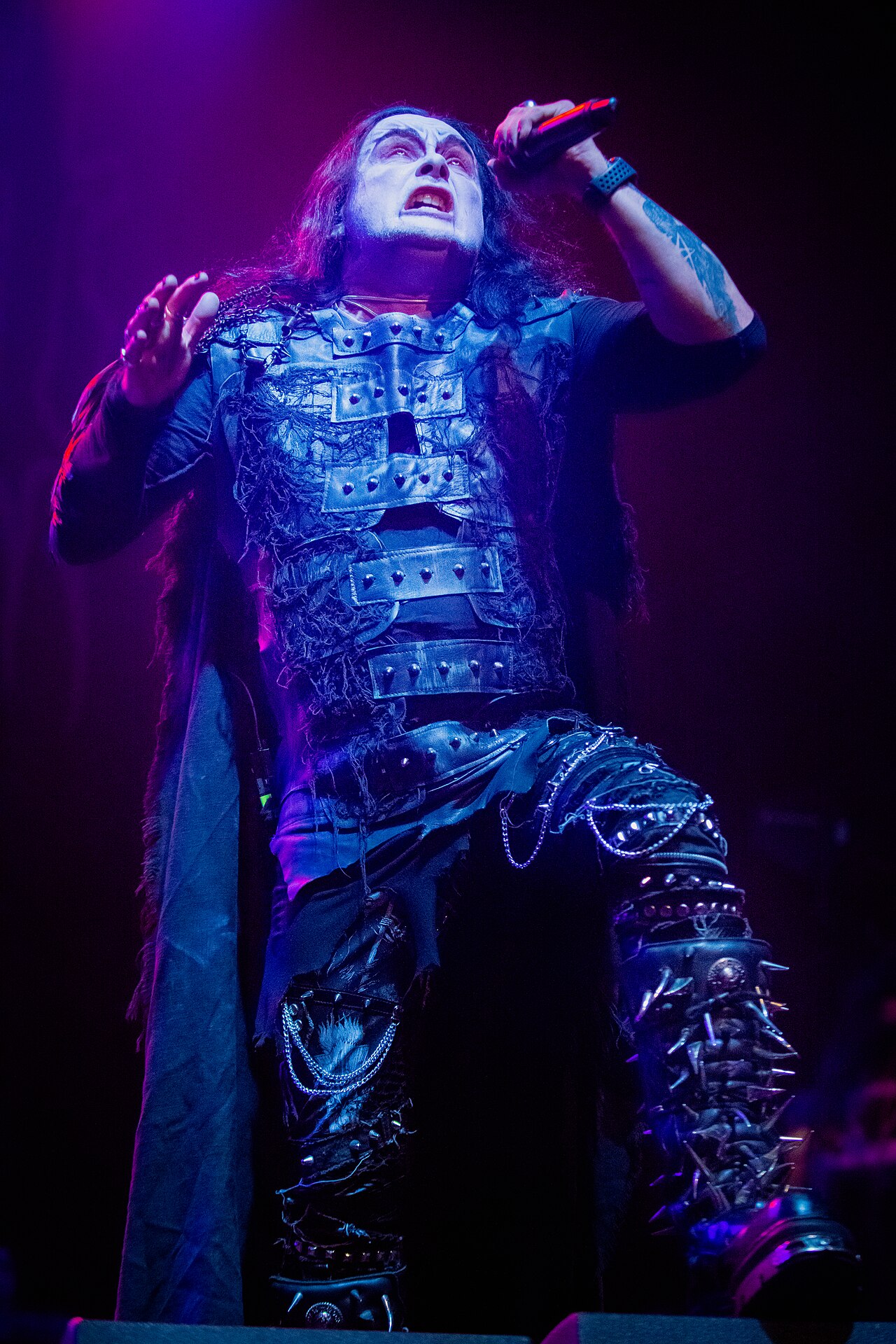
Dani Filth tattoos can be hard to pick out among Cradle of Filth’s corpse paint, leather, spikes and horror imagery. A blurred concert photo makes dark shapes look like costume. Clearer photographs show matching horn-like tattoos on his forearms, other arm ink and a tattoo session with artist Paul Booth.

This isn’t a full inventory of every tattoo Dani has had. It sticks to the pieces that can be seen or traced to a source. Close portraits and performance photos show the ink; Loudwire documented the Booth session. Dani has also discussed tattoo culture, including a visit to the UK Tattoo Convention with his partner, tattoo artist Sofiya Belousova.

Those sources help separate tattoos from makeup, costumes, band art and fan tattoos. The photos show what’s on his skin, and the interviews add context where Dani or the source has provided it.

The matching horn tattoos are the clearest starting point

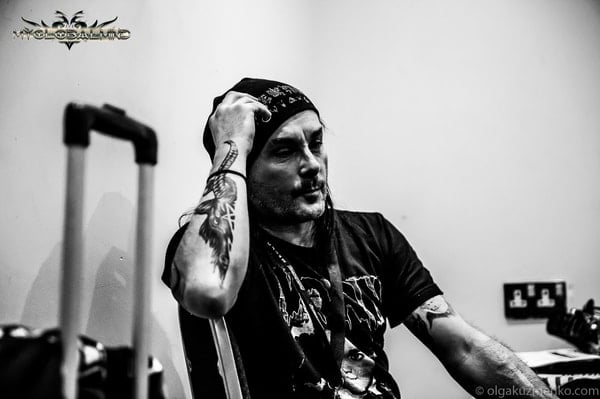
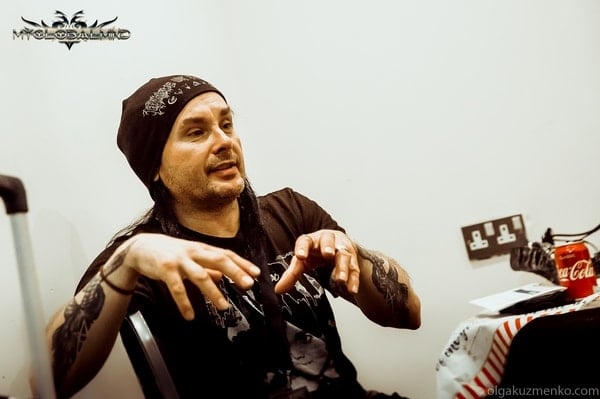
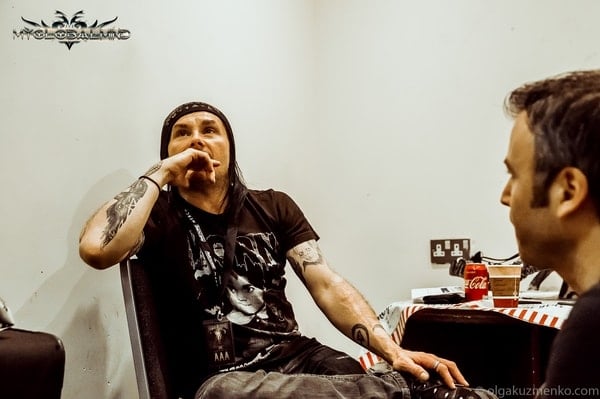
The clearest close-ups show a pair of horn-like tattoos on Dani’s forearms. They curve up from the wrists toward the lower arms, with a similar shape on each side. They fit the dark stage look he’s known for, but they are also visible in a relaxed interview setting.

Dani Filth matching horn forearm tattoos
Dani Filth matching horn forearm tattoos.

The close-up separates the linework from the rest of Dani’s look. The tattoos sit below short sleeves; the bandana, rings and black clothes are part of the interview styling. The forearm designs have a clear silhouette even without corpse paint or stage props.

The two placements balance each other. They share a shape and direction, but they aren’t identical copies or part of one full sleeve. That kind of pairing can give a dark design a sense of balance without filling both arms.

A second view shows how the ink sits on both arms

Another performance photo makes it easier to compare the coverage on both arms. The forearm tattoos show beneath Dani’s costume, and the paired placement remains clear under different lighting.

Dani Filth both arm tattoos
Dani Filth both arm tattoos.

These photos show his skin from a normal viewing distance, without the heavy editing of a press image. The tattoos still look dark and stylised, but they aren’t hidden by red lighting or confused with printed costume details. The ink continues above the forearms.

The public sources don’t explain what these specific horn-like tattoos mean. It’s safest to describe what the photos show and leave the interpretation there.

The rest of the arm work is more varied

The close-ups show more tattoos and lines above the horn shapes. The detail isn’t clear enough to identify every design, which is common in older photos: the skin moves, the light shifts, and some lines disappear into shadow.

Dani Filth forearm tattoos close-up 1
Dani Filth forearm tattoo close-up.

It’s more accurate to describe where the tattoos sit than to guess at a complete inventory. Dani has visible ink on both arms, and the horn-like pieces are the clearest point of reference. These photos don’t show whether all the dark lines form one sleeve, and they don’t explain the private meaning of each symbol.

For a similar look, the visible choices are paired forearm placement, dark outlines and a narrow vertical flow. The shapes also have room around them, which helps keep them readable. There’s no need to name an unclear patch as a creature, logo or lyric.

The Paul Booth session gives the tattoo story a firm anchor

The best-documented session in Dani’s tattoo history is his appointment with Paul Booth. Loudwire filmed Booth tattooing him at Last Rites. The new design was a Pushead-inspired Hand of Fear on the left side of Dani’s back. Dani said he already had the original on the right and wanted the new piece to match it.

That account names the artist, identifies the inspiration and explains the placement. Dani had a specific artist and design in mind, then sat for a 75-minute session while they talked about horror films, music and tattoo aftercare.

Dani Filth forearm tattoos close-up 2
Dani Filth forearm tattoos close-up.

Booth’s reputation can invite dramatic guesses, but the documented story is specific enough: Dani chose a dark art specialist for a design inspired by an artist he admired. The account doesn’t require a hidden meaning, or support the claim that Booth created all of Dani’s tattoos.

The forearm tattoos are separate from the back pieces

It’s easy to blend Dani Filth’s dark tattoos into one large design, but the available sources show separate areas. The matching horn-like shapes are visible on his forearms in 2017 interview photos. The Paul Booth session was for the left side of his back. Keep those pieces separate unless a source connects them.

That distinction matters when following the timeline. Arm tattoos show up in interviews and everyday photos; back pieces are more likely to appear in a dedicated session or selected image. A distant concert shot can show that Dani has extensive ink, but it can’t tell us how the back design meets the arms or when nearby pieces were done.

Dani Filth forearm tattoo in San Diego 2021
Dani Filth forearm tattoo in San Diego 2021.

This later performance photo gives a clear view of the tattooed forearm without a microphone or stage prop in front of it. It shows the coverage, though the full costume and stage setting may look more familiar to Cradle of Filth fans.

Dani Filth arm tattoos interview view
Dani Filth arm tattoos interview view.

Why Dani’s makeup and tattoos get confused online

Dani’s stage look makes tattoo research tricky. His face paint changes from show to show; costumes use leather panels and printed details; and the band’s visual style includes horns, crosses, skulls and gothic lettering. Search results also mix photos of Dani with pictures of fans.

A dark shape in a concert photo isn’t automatically a tattoo. Gloves, sleeves, straps and painted designs can create similar outlines. Fan tattoos are another common mix-up: artwork of Dani or the Cradle of Filth logo may be inspired by him, but it tells us nothing about his own ink.

The photos here include a named portrait session and performance images where the tattoos show on bare forearms. The Paul Booth video documents a tattoo session rather than a fan gallery. For other sourced musician tattoo stories, see the site’s musicians section.

What the public record confirms

The public record supports a few clear points:

  • Interview photos show matching horn-like tattoos on both forearms.
  • Other ink extends above the forearms, though the photos don’t show every design clearly enough to identify it.
  • Paul Booth tattooed a Pushead-inspired Hand of Fear on the left side of Dani’s back.
  • Dani said he wanted the new back piece to match the original on the right.
  • The photographs don’t provide a complete inventory or explain the personal meaning of every tattoo.

That’s enough to describe the visible work without naming every shadow. The forearm photographs and the Paul Booth session give readers two solid reference points; other details can remain uncertain until clearer evidence appears.

Watch Dani Filth get tattooed by Paul Booth

The Loudwire video shows Dani in the chair while Booth works on the back tattoo. It adds context to that session; the interview photos above are still the clearest view of the matching forearm pieces.

More musician tattoo guides

Pete Wentz Tattoos: Nightmare Before Christmas, Keyholes and More

Pete Wentz’s tattoos go well beyond the usual stage-photo glimpse of a Fall Out Boy sleeve. Across the collection are punk references, Japanese-inspired waves, film characters, family pieces, and smaller symbols he has explained himself. His GQ tattoo tour is a useful place to start: Wentz walks through several designs in his own words.

With so much ink, a concert photo can make separate pieces look like one sleeve, and old galleries sometimes reuse the same image. The clearest account is Wentz’s GQ tattoo breakdown. Other photos help show the designs from different angles and at different points in his career.

Pete Wentz’s tattoos at a glance

Wentz has tattoos across both arms, his chest, back, hands, and lower stomach. There’s black-and-grey shading alongside traditional colour, lettering, symbols, and character art. The collection looks as if it came together over time, rather than as one matching sleeve.

  • Right arm: a large unfinished Nightmare Before Christmas sleeve with Jack, Zero, Sally, pumpkins, the Mayor, and other characters.
  • Left arm: layered linework, shaded figures, flowers, and a keyhole design that appears in several older photos.
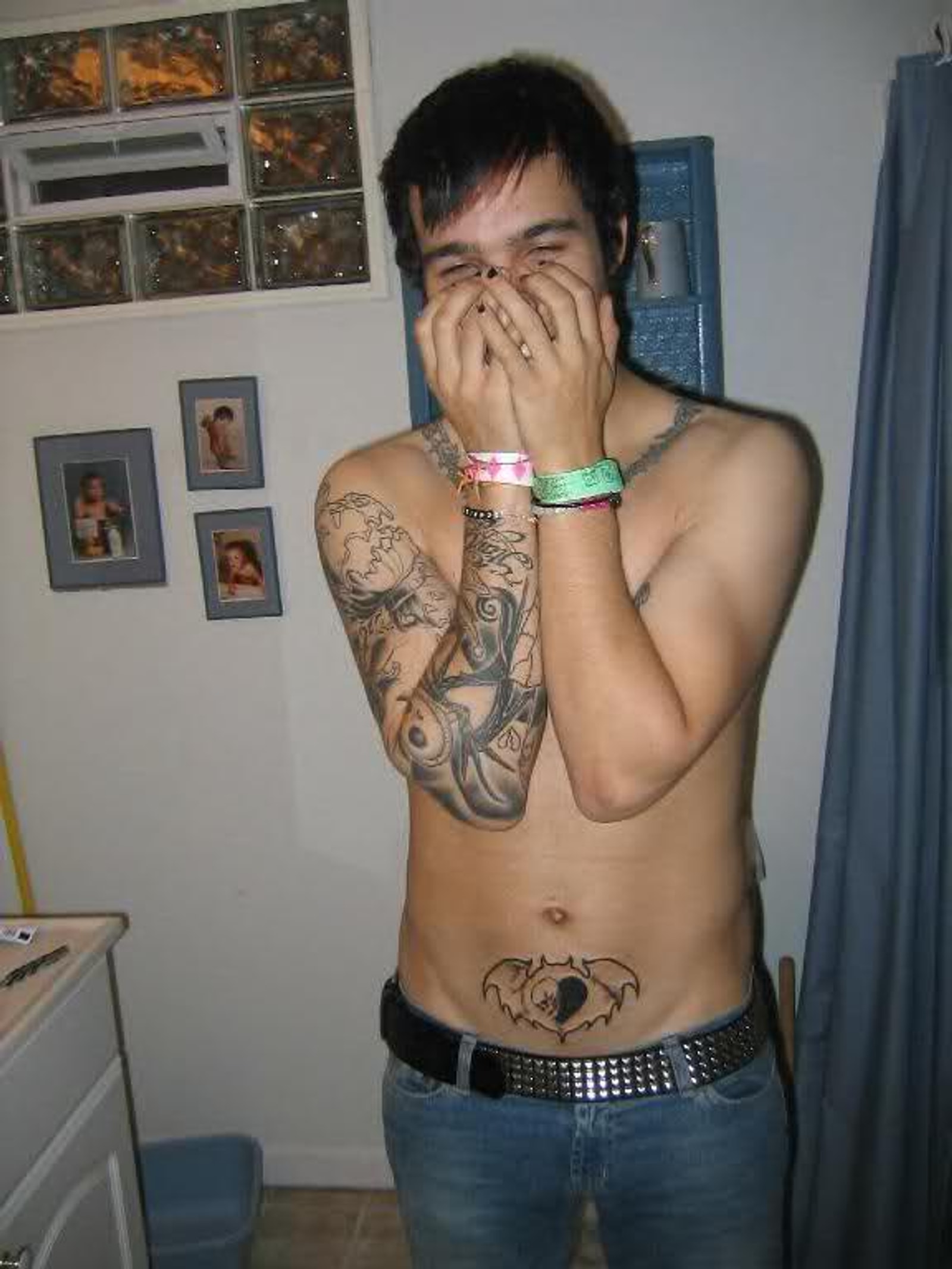
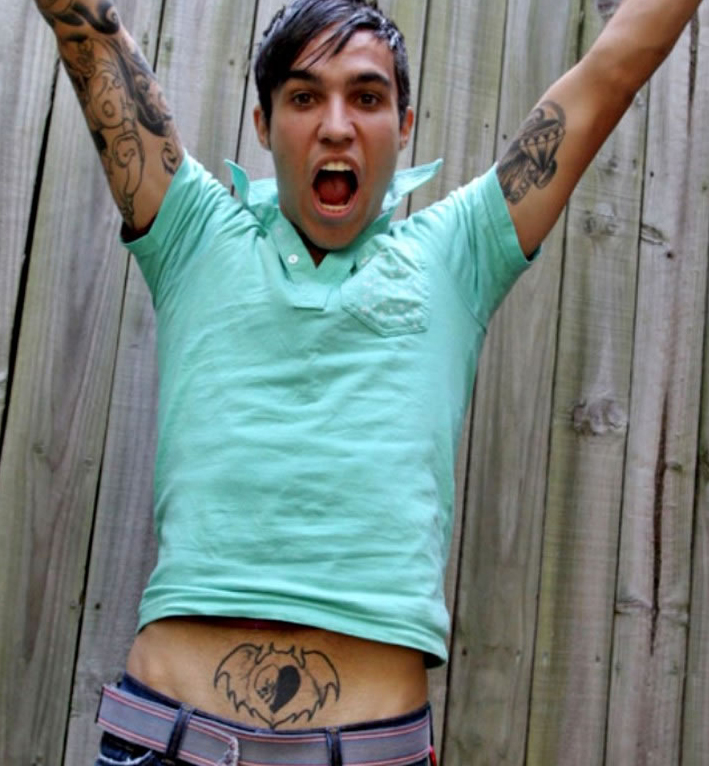
  • Lower stomach: the bat-and-heart design connected with his Clandestine Industries imagery.
  • Hand and wrist: small lettering and symbol tattoos, including the keyhole and “Be Free” work shown in close-up photos.
  • Chest and upper back: waves, a crown of thorns, and other pieces that Wentz discusses as part of his longer tattoo history.
Pete Wentz keyhole and wings tattoo
Pete Wentz’s keyhole and wing tattoo on his arm. Source: Ranker’s Pete Wentz tattoo gallery.

The keyhole tattoo has a Fall Out Boy-era backstory

The keyhole is one of the clearest recurring designs in photos of Wentz’s arms. In the GQ tour, he places it around the time Fall Out Boy broke through with From Under the Cork Tree. He also says the precise story has grown hazy over the years.

The keyhole is simple enough to read from across the room. Around it, swirling lines, shaded shapes, and traditional motifs make the arm busier; a closer look separates the outline from the surrounding work.

Wentz remembers when the tattoo appeared, even if he no longer recalls every detail. That gives it a place in his story without forcing a neat explanation onto the design.

The bat and heart tattoo connects ink with his visual world

The bat-and-heart tattoo above Wentz’s waistband is one of his most recognisable pieces. It became associated with the Clandestine Industries look he helped develop alongside his music career. The playful shape also fits the darker, collage-like imagery often linked with Fall Out Boy.

Because it sits below the shirt line, the design shows up less often in everyday press photos than his arm tattoos. In pictures where Wentz lifts his shirt, the bat shape is easy to pick out on its own.

Pete Wentz bat and heart tattoo
The bat-and-heart tattoo on Pete Wentz’s lower stomach. Source: Ranker’s Pete Wentz tattoo gallery.

The Nightmare Before Christmas sleeve is his biggest talking point

Wentz gives the most detail about his Nightmare Before Christmas sleeve. It includes Jack Skellington, Zero, Sally, a broken heart, pumpkins, the Mayor, ghosts, and vampires. He describes the film as strange and subversive, which helps explain why those characters appealed to him; he doesn’t frame the tattoo as a gloomy tribute.

The sleeve is unfinished, Wentz says, because he hates getting tattooed and never completed the plan. The lack of colour wasn’t a deliberate black-and-grey choice.

The photo below is a closer view of the bat-and-heart design and the arm ink around it. It shows how the body piece sits alongside the other work, which can be hard to make out in a wide concert shot.

Pete Wentz bat and heart body tattoo photo
A separate view of Pete Wentz’s bat-and-heart body tattoo and surrounding arm ink. Source: The Vanishing Tattoo’s Pete Wentz gallery.

Howl, tigers, and the tattoos tied to family

One of Wentz’s favourite pieces is Howl from Howl’s Moving Castle. He relates to the character’s mix of bravery and drama, along with the way Howl can get overwhelmed by his own appearance and feelings. Wentz’s explanation makes the tattoo personal without tying it to Fall Out Boy.

Wentz also has a tiger tattoo shared with his brother. His explanation is straightforward: it’s a design they have in common. Its meaning comes from that relationship, without needing a larger story attached to it.

Another small tattoo uses a lyric from a lullaby Wentz wrote for one of his children. It sits alongside older pieces connected to bands, films, and touring, showing how family entered a collection that had grown around other parts of his life.

Waves, crowns, and the parts he doesn’t over-explain

Wentz says he was thinking about becoming a parent when he planned a large wave design. He wanted one side wild and the other calmer, but the artist carried the waves across the whole piece. The final tattoo keeps the idea without turning it into a literal map.

He says he likes his crown-of-thorns tattoo mostly for its appearance, not as a religious statement. The distinction is useful: a tattoo’s shape can be the reason for choosing it, even when viewers might read more into it.

Pete Wentz barbed wire and body tattoos
A separate tattoo view showing the upper-body and arm work in Pete Wentz’s collection. Source: Ranker’s Pete Wentz tattoo gallery.

Close-up views show more than concert photos

Concert shots make it clear Wentz is heavily tattooed, but stage lights flatten the shading and clothing hides the edges. Close-ups show the outlines and overlaps more clearly.

The arm photo below shows several pieces together. You can see the flowing black lines beside heavier shaded areas, and how the designs sit at different scales. They don’t all look as if they were made in the same session.

Pete Wentz forearm tattoo photo
A closer look at the layered linework across Pete Wentz’s forearm. Source: The Vanishing Tattoo’s Pete Wentz gallery.

The “Be Free” piece is small but easy to recognise

The keyhole and “Be Free” lettering on Wentz’s arm are quieter than the film sleeve, but easy to recognise in close-up. The keyhole gives the phrase a visual centre, and the banner keeps the words legible against the surrounding linework.

In a red-carpet photo, these smaller details can be easy to miss. A closer image shows the lettering and outline clearly; another view is useful for seeing how the full sleeve comes together.

Pete Wentz GQ tattoo tour arm tattoos
A frame from GQ’s tattoo tour showing Wentz’s face alongside close views of his arm tattoos. Source: GQ’s Pete Wentz tattoo tour.

Why Pete Wentz’s tattoo collection still stands out

Wentz’s collection brings together character art, symbols, lettering, a tattoo shared with his brother, and pieces from different parts of Fall Out Boy’s career. He has a story for some designs and simply liked the image behind others. That range gives the collection its own character.

The unfinished sleeve is a good example. It has gaps, faded areas, heavy outlines, and characters that were meant to get more work. You can still see the plan, along with the fact that it was never finished.

For tattoo inspiration, it may be more useful to look at how Wentz lets different ideas sit together than to copy a particular design. A keyhole can share an arm with film characters; family ink can sit near a band-era symbol. The pieces don’t have to match to belong to the same collection.

For more musician tattoo stories, browse our musician tattoo guides. Wentz’s own explanations and the photos offer two useful kinds of context: what he remembers, and what the ink looks like.

Watch Pete Wentz break down his tattoos

In GQ’s Pete Wentz Breaks Down His Tattoos, he talks about his first tattoo, the Japanese-inspired waves, the unfinished film sleeve, Howl, the tiger he shares with his brother, the lullaby lyric, the crown of thorns, and the keyhole. The video is below if you’d like to hear those stories from Wentz himself.

Wentz explains some pieces and leaves others without a fixed story. The photos show the designs; the GQ tour adds context where he remembers it.

More musician tattoo guides