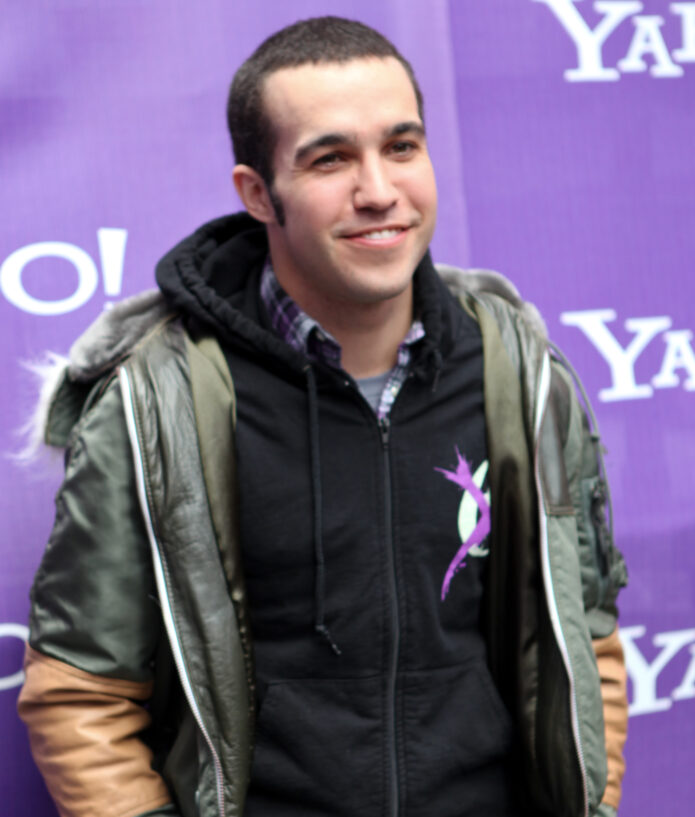
Pete Wentz’s tattoos go well beyond the usual stage-photo glimpse of a Fall Out Boy sleeve. Across the collection are punk references, Japanese-inspired waves, film characters, family pieces, and smaller symbols he has explained himself. His GQ tattoo tour is a useful place to start: Wentz walks through several designs in his own words.
With so much ink, a concert photo can make separate pieces look like one sleeve, and old galleries sometimes reuse the same image. The clearest account is Wentz’s GQ tattoo breakdown. Other photos help show the designs from different angles and at different points in his career.
Pete Wentz’s tattoos at a glance
Wentz has tattoos across both arms, his chest, back, hands, and lower stomach. There’s black-and-grey shading alongside traditional colour, lettering, symbols, and character art. The collection looks as if it came together over time, rather than as one matching sleeve.
- Right arm: a large unfinished Nightmare Before Christmas sleeve with Jack, Zero, Sally, pumpkins, the Mayor, and other characters.
- Left arm: layered linework, shaded figures, flowers, and a keyhole design that appears in several older photos.
- Lower stomach: the bat-and-heart design connected with his Clandestine Industries imagery.
- Hand and wrist: small lettering and symbol tattoos, including the keyhole and “Be Free” work shown in close-up photos.
- Chest and upper back: waves, a crown of thorns, and other pieces that Wentz discusses as part of his longer tattoo history.
The keyhole tattoo has a Fall Out Boy-era backstory
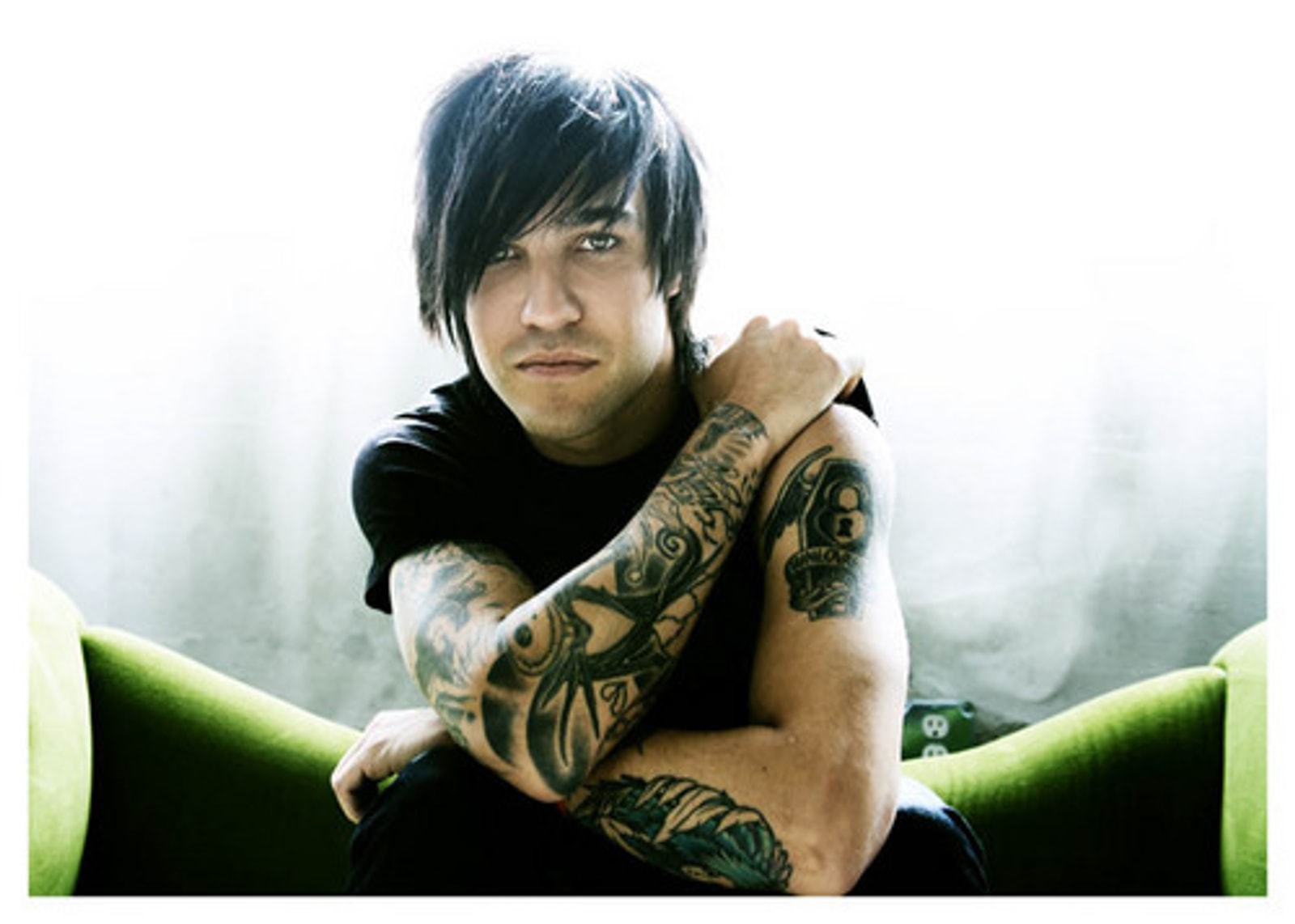
The keyhole is one of the clearest recurring designs in photos of Wentz’s arms. In the GQ tour, he places it around the time Fall Out Boy broke through with From Under the Cork Tree. He also says the precise story has grown hazy over the years.
The keyhole is simple enough to read from across the room. Around it, swirling lines, shaded shapes, and traditional motifs make the arm busier; a closer look separates the outline from the surrounding work.
Wentz remembers when the tattoo appeared, even if he no longer recalls every detail. That gives it a place in his story without forcing a neat explanation onto the design.
The bat and heart tattoo connects ink with his visual world
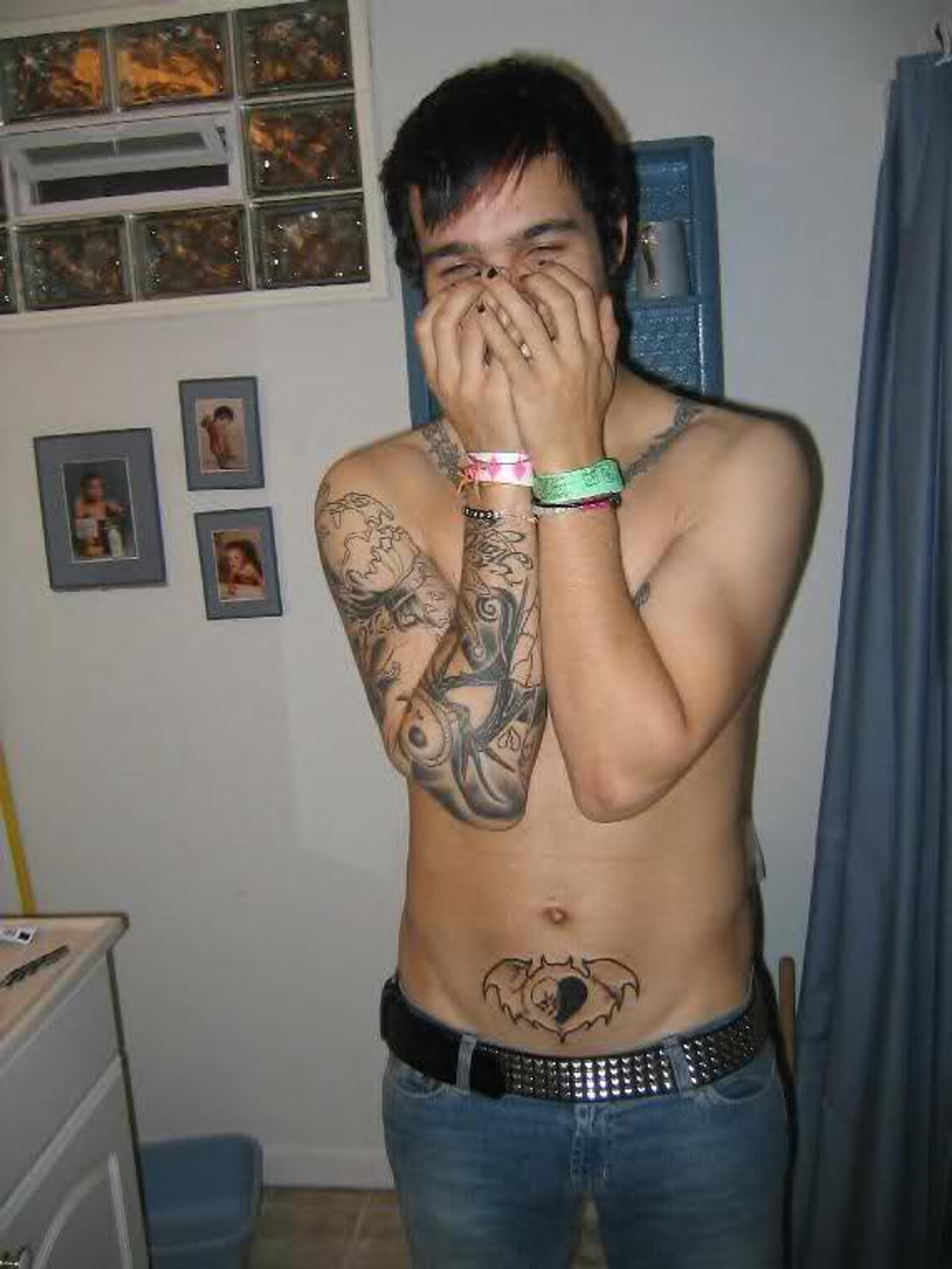
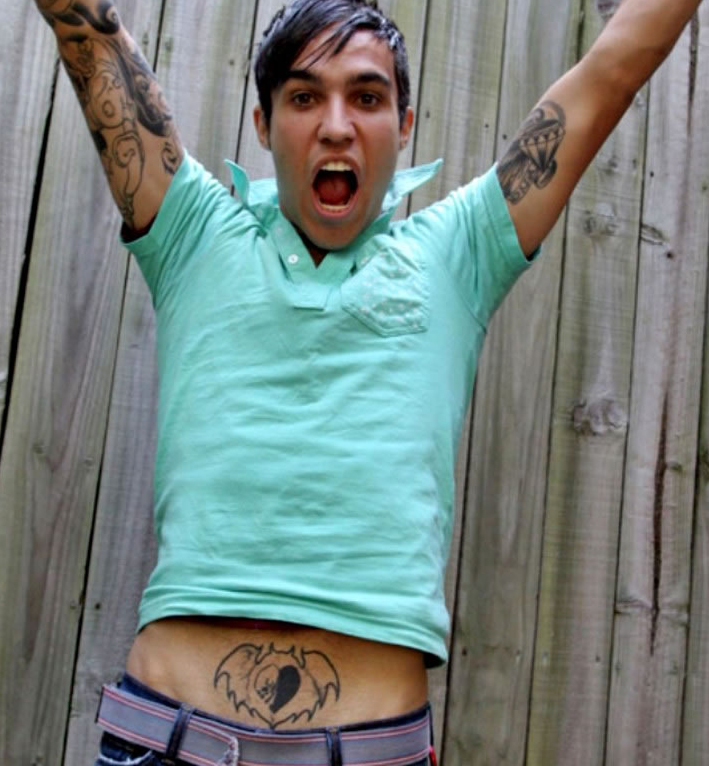
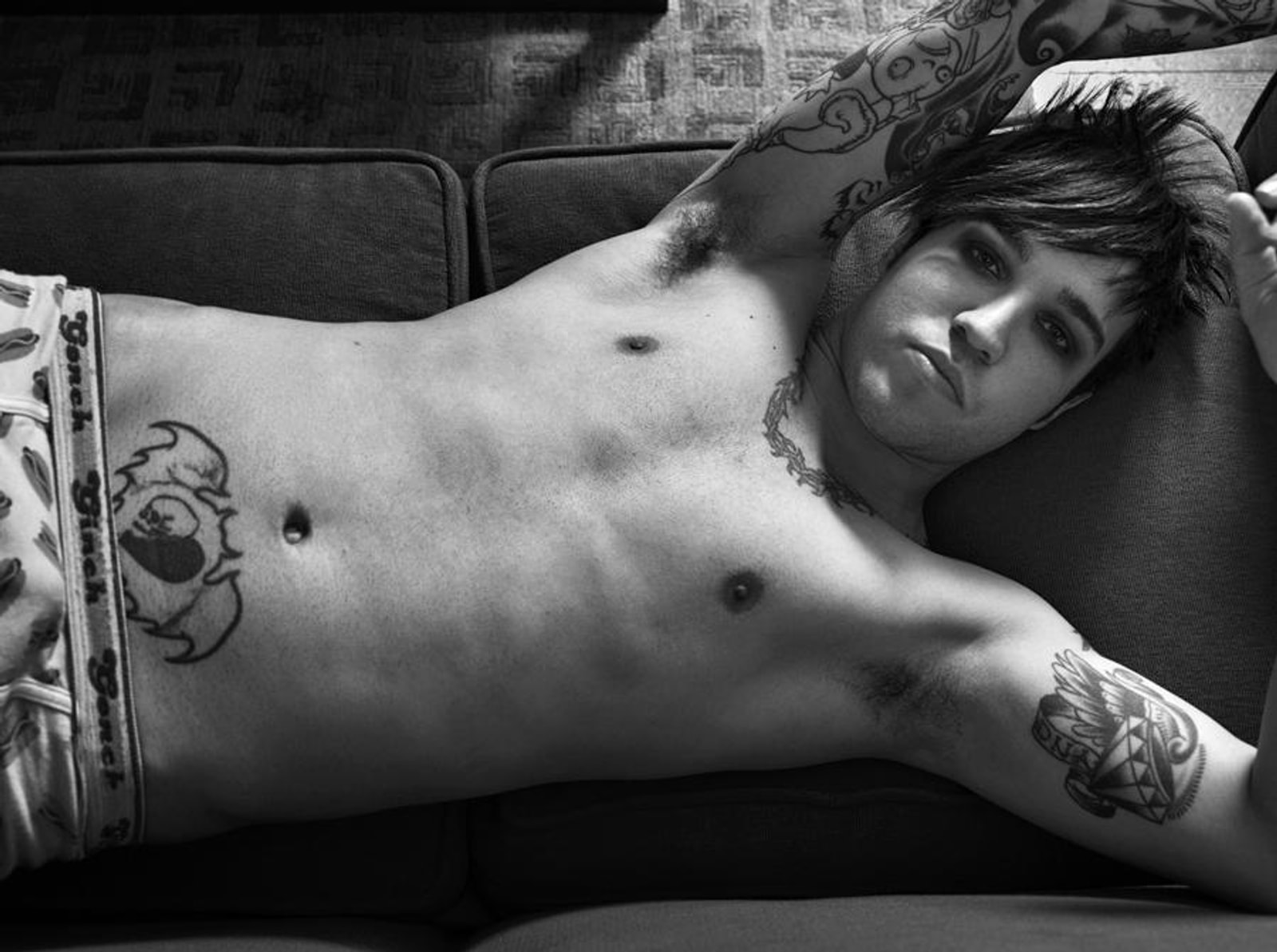
The bat-and-heart tattoo above Wentz’s waistband is one of his most recognisable pieces. It became associated with the Clandestine Industries look he helped develop alongside his music career. The playful shape also fits the darker, collage-like imagery often linked with Fall Out Boy.
Because it sits below the shirt line, the design shows up less often in everyday press photos than his arm tattoos. In pictures where Wentz lifts his shirt, the bat shape is easy to pick out on its own.
The Nightmare Before Christmas sleeve is his biggest talking point
Wentz gives the most detail about his Nightmare Before Christmas sleeve. It includes Jack Skellington, Zero, Sally, a broken heart, pumpkins, the Mayor, ghosts, and vampires. He describes the film as strange and subversive, which helps explain why those characters appealed to him; he doesn’t frame the tattoo as a gloomy tribute.
The sleeve is unfinished, Wentz says, because he hates getting tattooed and never completed the plan. The lack of colour wasn’t a deliberate black-and-grey choice.
The photo below is a closer view of the bat-and-heart design and the arm ink around it. It shows how the body piece sits alongside the other work, which can be hard to make out in a wide concert shot.
Howl, tigers, and the tattoos tied to family
One of Wentz’s favourite pieces is Howl from Howl’s Moving Castle. He relates to the character’s mix of bravery and drama, along with the way Howl can get overwhelmed by his own appearance and feelings. Wentz’s explanation makes the tattoo personal without tying it to Fall Out Boy.
Wentz also has a tiger tattoo shared with his brother. His explanation is straightforward: it’s a design they have in common. Its meaning comes from that relationship, without needing a larger story attached to it.
Another small tattoo uses a lyric from a lullaby Wentz wrote for one of his children. It sits alongside older pieces connected to bands, films, and touring, showing how family entered a collection that had grown around other parts of his life.
Waves, crowns, and the parts he doesn’t over-explain
Wentz says he was thinking about becoming a parent when he planned a large wave design. He wanted one side wild and the other calmer, but the artist carried the waves across the whole piece. The final tattoo keeps the idea without turning it into a literal map.
He says he likes his crown-of-thorns tattoo mostly for its appearance, not as a religious statement. The distinction is useful: a tattoo’s shape can be the reason for choosing it, even when viewers might read more into it.
Close-up views show more than concert photos
Concert shots make it clear Wentz is heavily tattooed, but stage lights flatten the shading and clothing hides the edges. Close-ups show the outlines and overlaps more clearly.
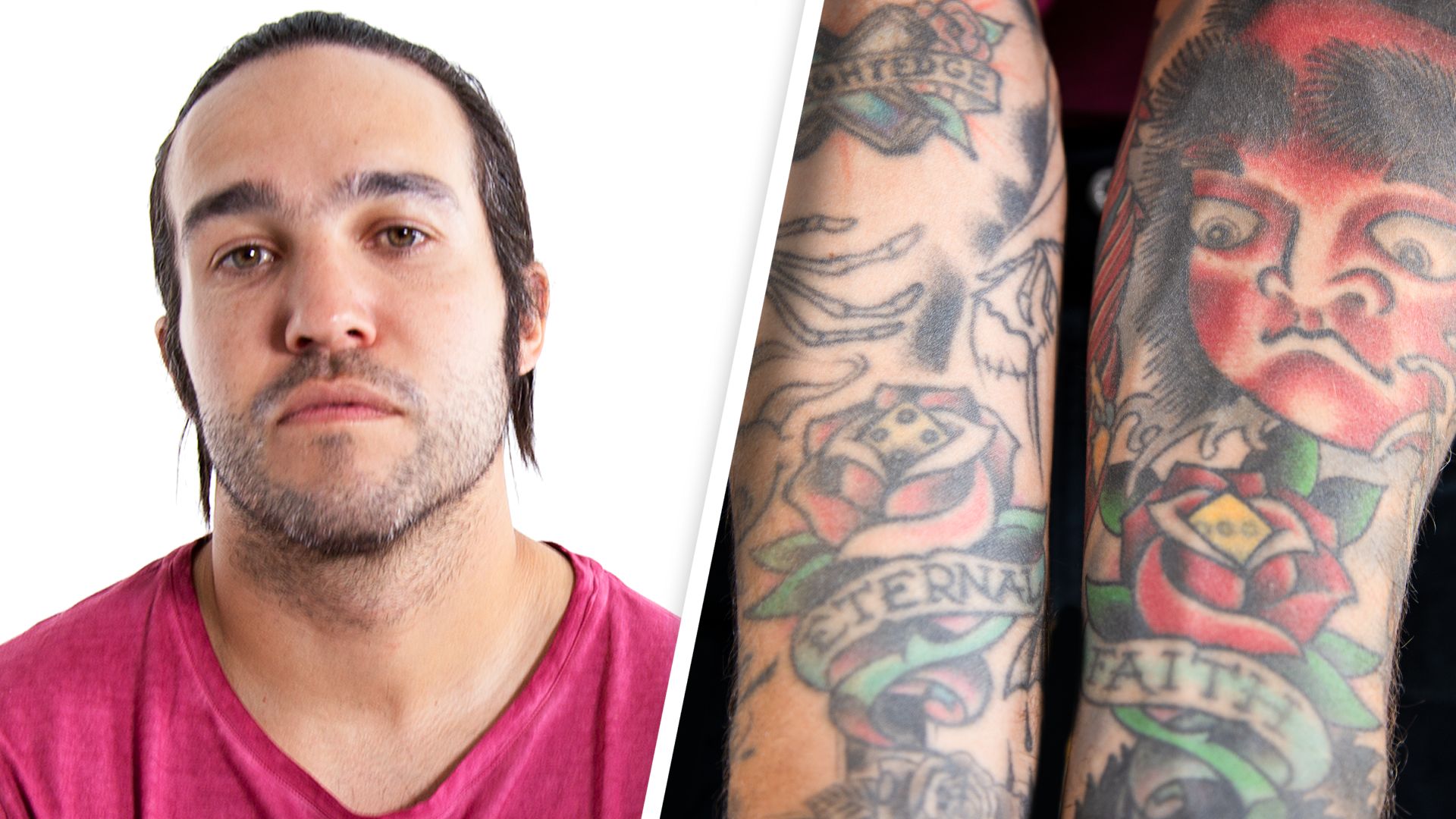
The arm photo below shows several pieces together. You can see the flowing black lines beside heavier shaded areas, and how the designs sit at different scales. They don’t all look as if they were made in the same session.
The “Be Free” piece is small but easy to recognise
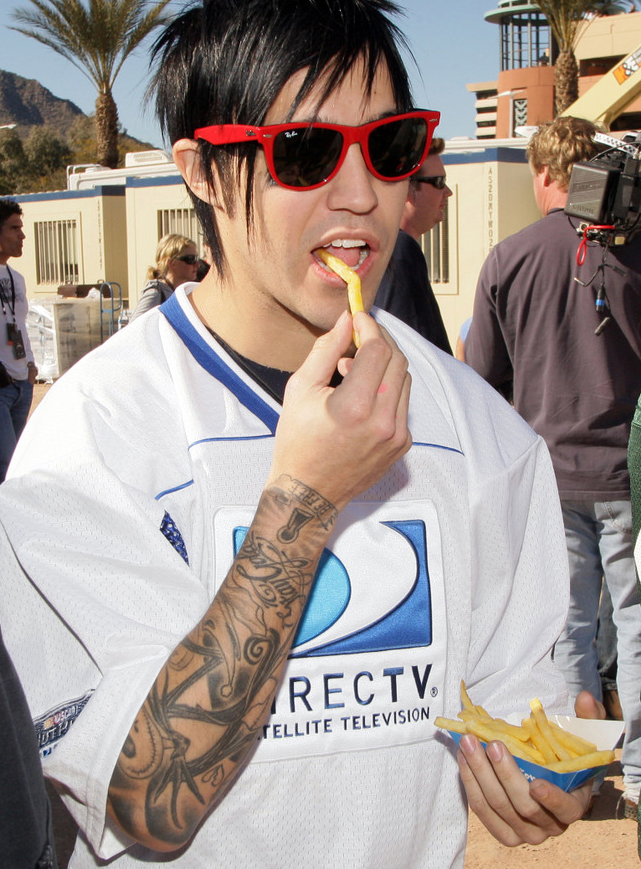
The keyhole and “Be Free” lettering on Wentz’s arm are quieter than the film sleeve, but easy to recognise in close-up. The keyhole gives the phrase a visual centre, and the banner keeps the words legible against the surrounding linework.
In a red-carpet photo, these smaller details can be easy to miss. A closer image shows the lettering and outline clearly; another view is useful for seeing how the full sleeve comes together.
Why Pete Wentz’s tattoo collection still stands out
Wentz’s collection brings together character art, symbols, lettering, a tattoo shared with his brother, and pieces from different parts of Fall Out Boy’s career. He has a story for some designs and simply liked the image behind others. That range gives the collection its own character.
The unfinished sleeve is a good example. It has gaps, faded areas, heavy outlines, and characters that were meant to get more work. You can still see the plan, along with the fact that it was never finished.
For tattoo inspiration, it may be more useful to look at how Wentz lets different ideas sit together than to copy a particular design. A keyhole can share an arm with film characters; family ink can sit near a band-era symbol. The pieces don’t have to match to belong to the same collection.
For more musician tattoo stories, browse our musician tattoo guides. Wentz’s own explanations and the photos offer two useful kinds of context: what he remembers, and what the ink looks like.
Watch Pete Wentz break down his tattoos
In GQ’s Pete Wentz Breaks Down His Tattoos, he talks about his first tattoo, the Japanese-inspired waves, the unfinished film sleeve, Howl, the tiger he shares with his brother, the lullaby lyric, the crown of thorns, and the keyhole. The video is below if you’d like to hear those stories from Wentz himself.
Wentz explains some pieces and leaves others without a fixed story. The photos show the designs; the GQ tour adds context where he remembers it.