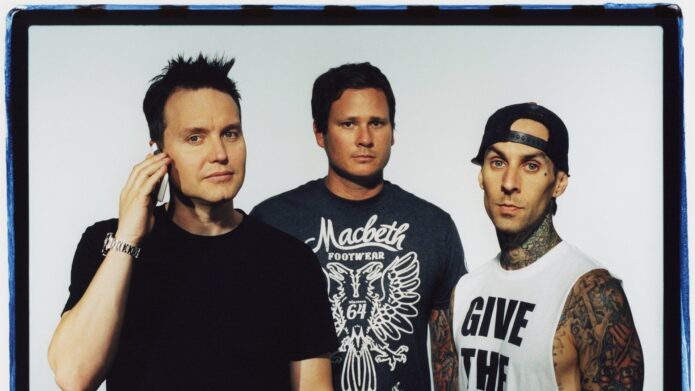
Blink-182’s members have very different amounts of visible ink, and some tattoos are easier to identify than others. Mark Hoppus has a few well-known pieces; Tom DeLonge has a colorful right-arm sleeve; Travis Barker is tattooed from head to toe. Matt Skiba’s hand and neck ink shows in photos, but the individual designs are hard to make out. For Scott Raynor, the band’s original drummer, there is no reliable public list of tattoos.
Matt Skiba’s visible tattoos resist a precise inventory
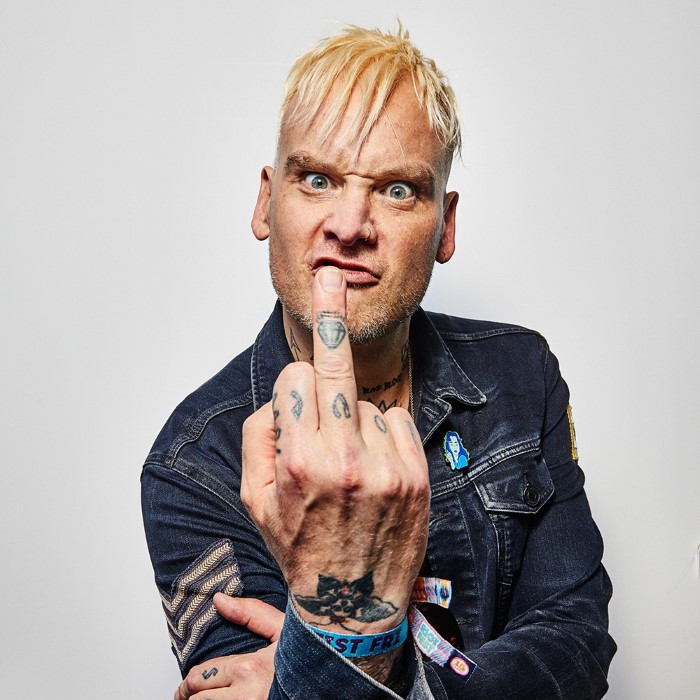
Matt Skiba joined in 2015, recorded California and Nine with the band, then left when Tom DeLonge returned. TheAudioDB’s artist photo shows ink on his hands and neck, but not enough detail to identify individual designs. Scott Raynor’s tattoos are similarly hard to confirm from photos; there is no tattoo design that can be confidently attributed to him.
Mark Hoppus kept his tattoos close to family
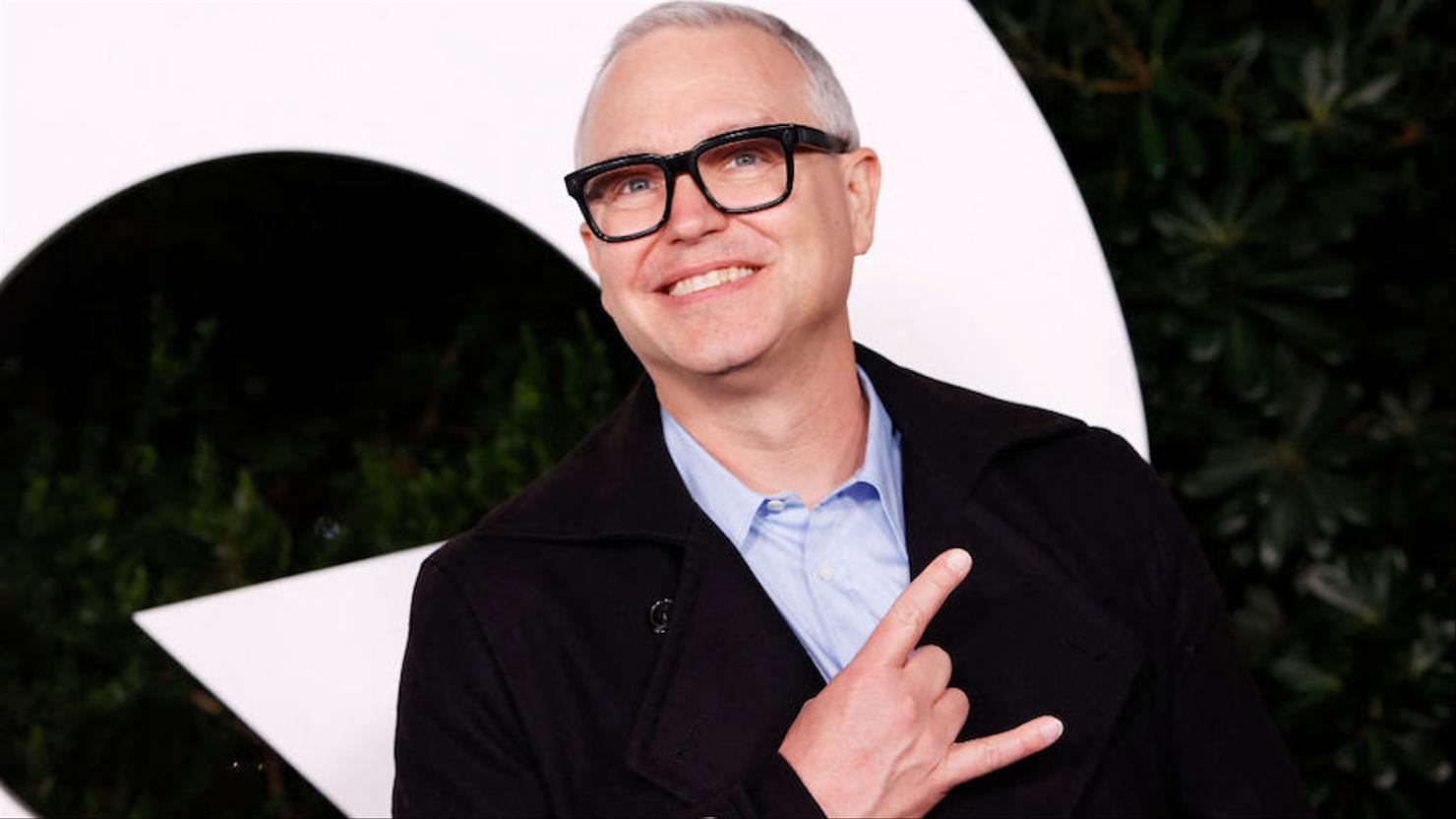
Hoppus has fewer tattoos than his bandmates. The names “Skye” and “Jack” sit on his wrists for his wife and son. iHeart revisited the older “Skye” tattoo when covering his later ink, and photos show the matching pair. They are small family tributes, separate from the much larger work of his bandmates.
In 2022, Hoppus added a larger forearm piece: a big-eyed Grim Reaper with a scythe. Artists Dabs Myla created the character, and Dan Smith tattooed it. Dabs Myla called it “DEATHY” on Instagram, captioning one post, “Not this time DEATHY!” The tattoo came after Hoppus announced he was cancer-free. That context gives it extra weight, even though he has not publicly explained every detail. It is a playful Grim Reaper tattoo made after a frightening year, with the artists and timing documented.
Put together, Hoppus’s tattoos are a pair of family names at his wrists and one striking forearm character. It is a small collection beside his bandmates’ sleeves, and the designs are personal rather than Blink branding.
Tom DeLonge’s right arm became a colorful sleeve
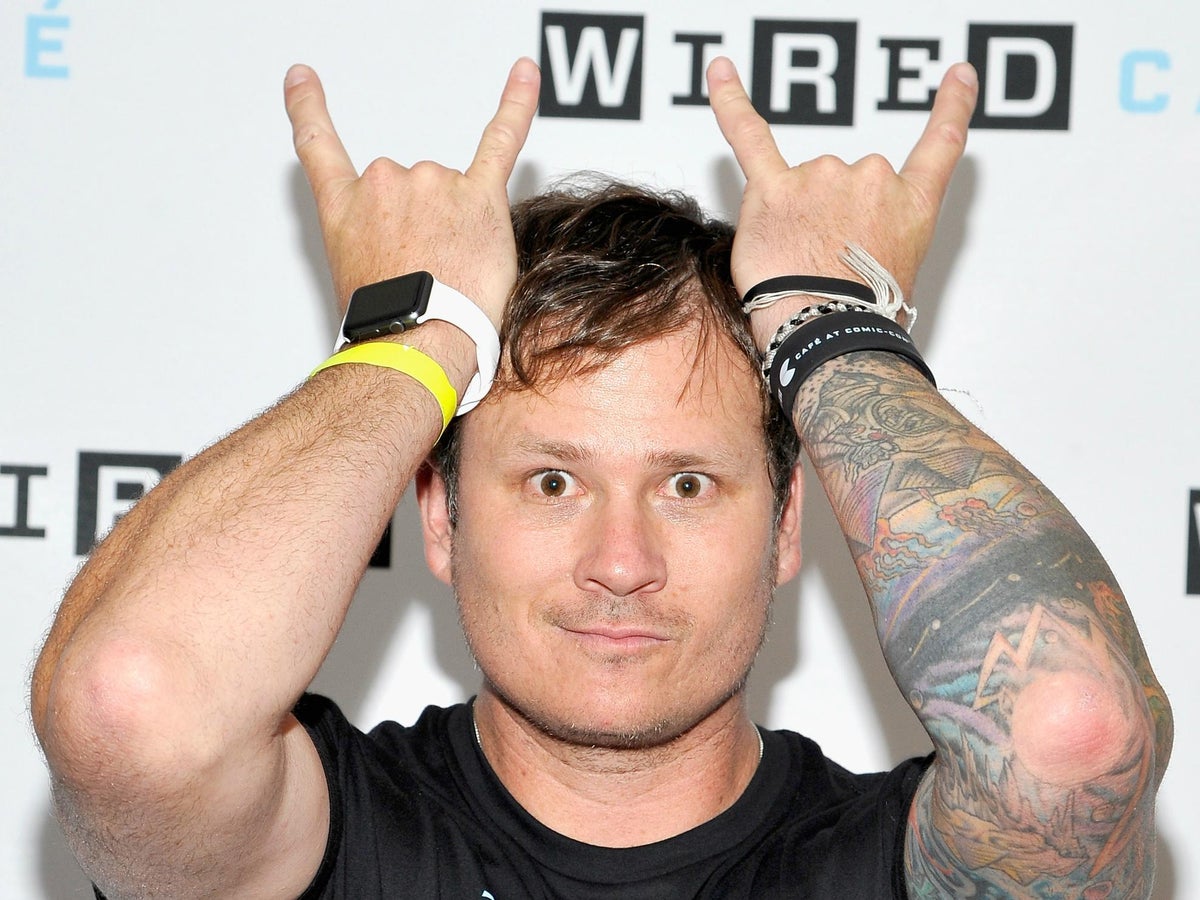
DeLonge’s most distinctive tattoo is the right-arm sleeve. Early-2000s photos show it taking shape; later portraits show a filled-in mix of outlines, color and small filler designs. It reads as one large piece today, though it was built up over time rather than done in one sitting. Individual shapes are hard to name from photos, so the overall design is the clearest story.
One clear symbol is a large “V” associated with Angels & Airwaves, the band DeLonge formed after an earlier Blink-182 split. Tattoodo identifies it as the band’s logo, making it a career reference within the sleeve.

DeLonge’s interest in UFOs can make blurry shapes tempting to call aliens, but the photo itself does not support that. It shows a colorful sleeve; coverage identifies the V logo. The other designs are visible, but there is no reliable key to what each one means.
That one-arm focus sets DeLonge apart from Hoppus’s small wrist tattoos and Barker’s extensive coverage. Dated photos also show the sleeve changing over the years rather than appearing fully formed all at once.
Travis Barker began with punk references and lettering
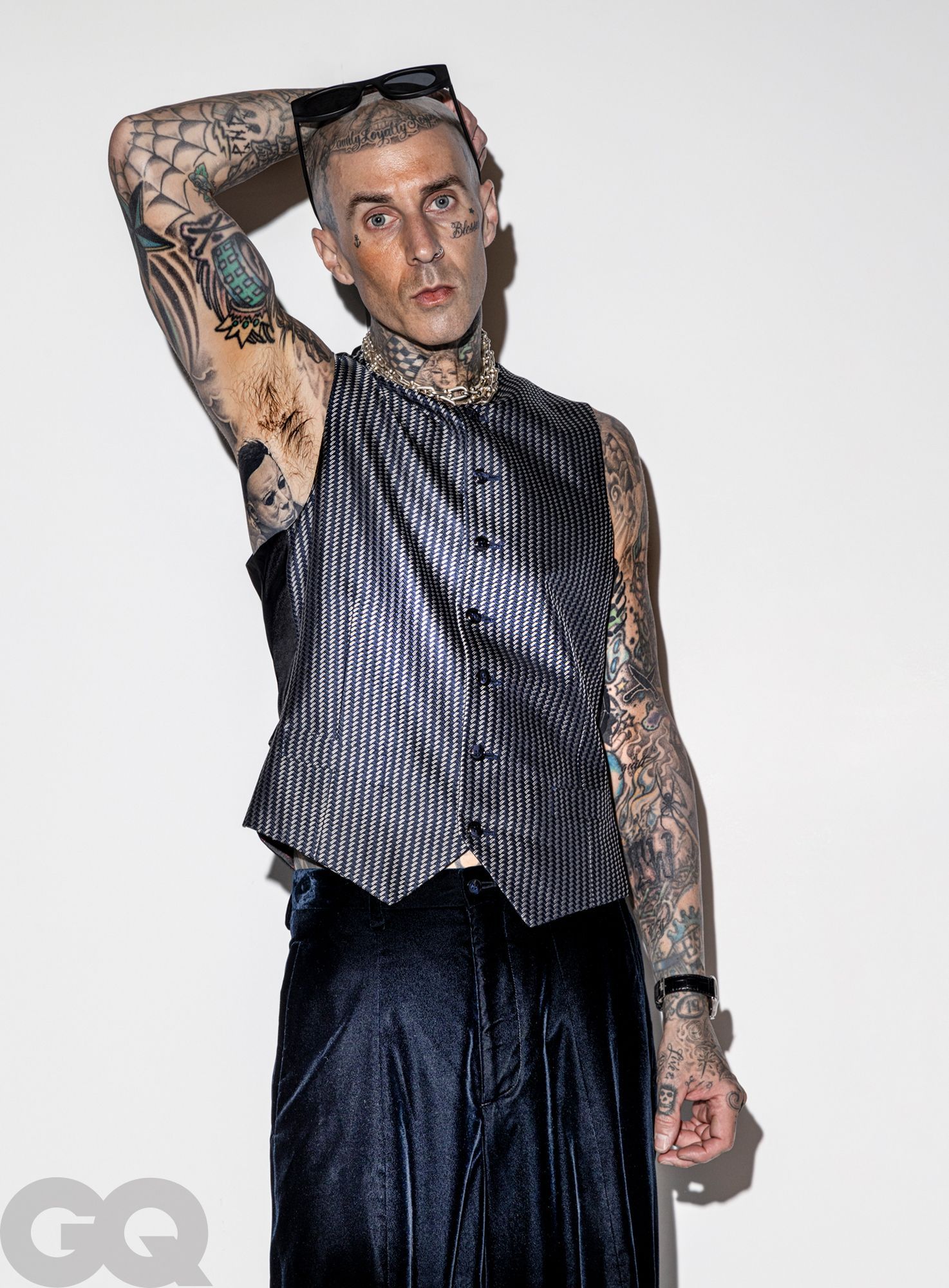
Barker has given far more first-person detail than either bandmate. He told GQ his first tattoos came at 15: a Bones design and a flame linked to Dag Nasty, the hardcore band he loved as a teenager. He described hanging around tattoo shops, waiting for an open chair. Those early choices belong to his skate and punk years, long before Blink-182 made him famous.
At 18, before joining Blink-182, Barker had “self-made” tattooed across his knuckles. He told VICE he chose the phrase as a promise to earn a living through music without a fallback plan. That meaning belongs to the knuckle lettering; it does not explain every skull, flame or portrait elsewhere on him.
Barker’s music references include other bands and projects. He identified a Transplants gas mask on the back of his head and described an “Can I Say” tattoo linked to Dag Nasty’s album. Those are specific references in a much larger collection. A blurry stage photo is not enough to attach one story to every hard-to-read patch of ink.
The head and neck combine script, religious images and a band mark
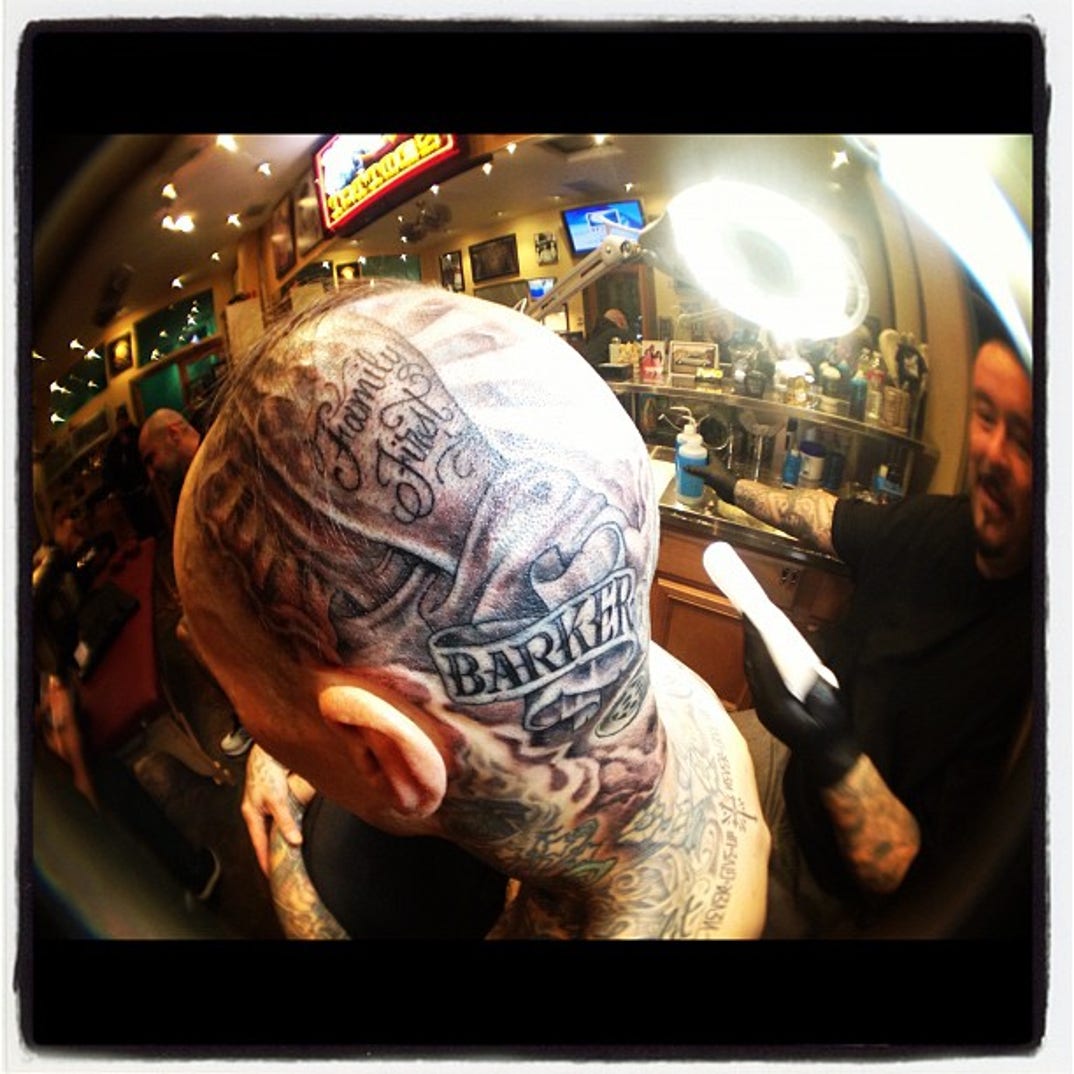
In his VICE interview, Barker named several tattoos on his head: a Transplants gas mask at the back, the script “one life, one chance”, praying hands by Mr. Cartoon, a rose and a Virgin Mary. He also said he was raised Catholic and that prayer is part of his life. That background helps explain the religious imagery, though not every tattoo is a statement of faith.
Placement helps make sense of the group. The gas mask sits at the back of his head; the script, hands, rose and religious figure are elsewhere. A side-profile photo shows how much ink covers his head and neck, though it cannot reveal everything at once. Barker’s interviews help identify the individual pieces.
Barker has worked with many artists over the years. In GQ, he named Jon Sanchez, Mike Dewey, Larry Garcia, Mr. Cartoon, Franco Vescovi, Chuey Quintanar, Mike Giant and Mark Mahoney as favorites. The list covers collaborators he admires; it does not assign an artist to every tattoo in a photograph.
The back piece turns family portraits into a single composition
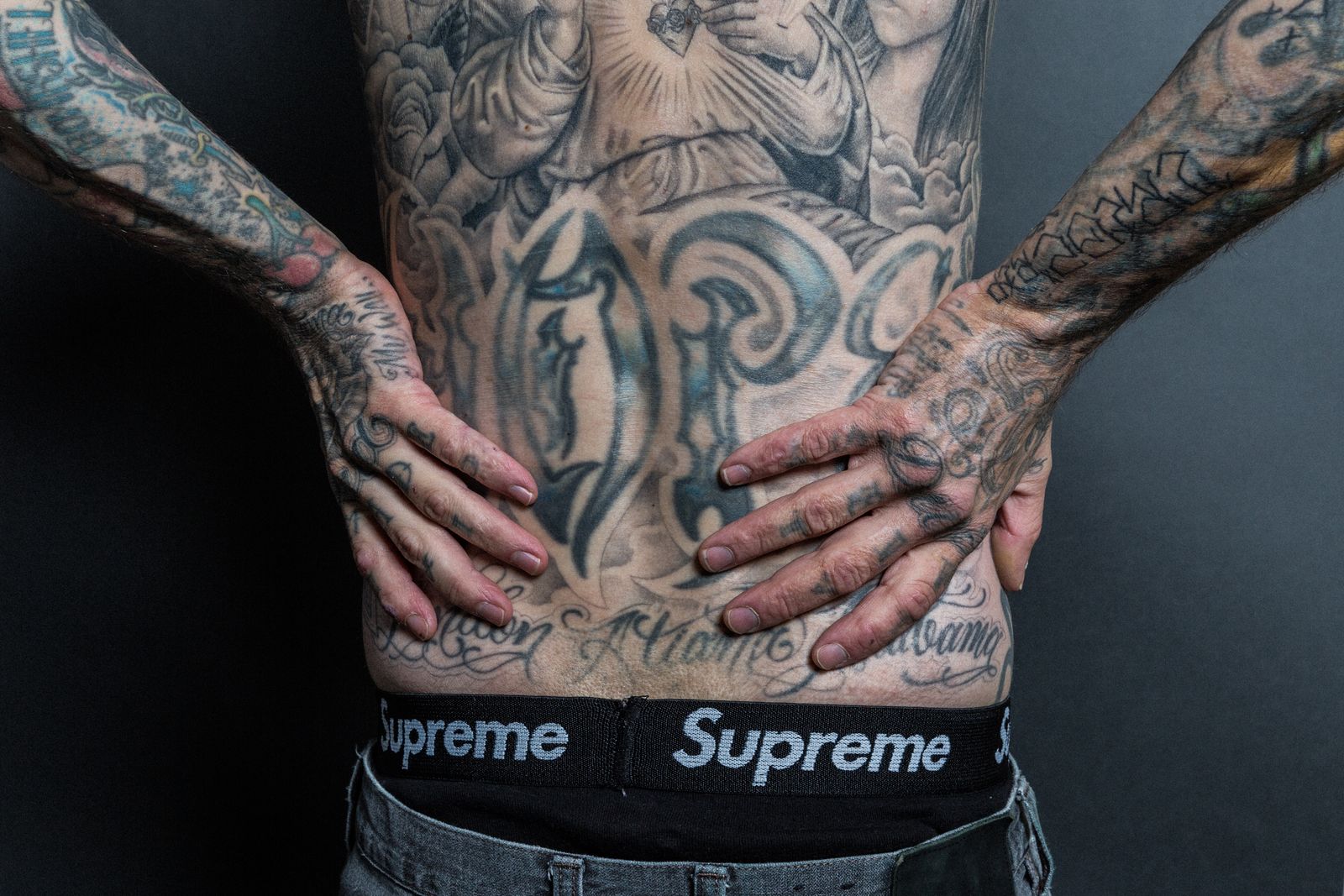
After the 2008 plane crash, GQ reported that skin from Barker’s back and thighs was used for grafts on his legs and feet. He later wanted to tattoo his back again and put his family there. The finished piece brings portraits of his parents and children into a larger design with religious figures, ornamental shapes and lettering. Barker described long sessions with Franco Vescovi and Chuey Quintanar.
VICE names Barker’s father, mother, son Landon and daughter Alabama among the family members represented. In the photograph, the portraits sit together inside one composition rather than as separate headshots. Barker said he was not ashamed of the crash scars; they are part of his life. The grafts and the later family portrait work remain distinct parts of the story.
Barker described the back piece as a tribute to his family. That meaning belongs to this design; it need not be extended to every tattoo nearby.
Torso script and the tattoos his children added
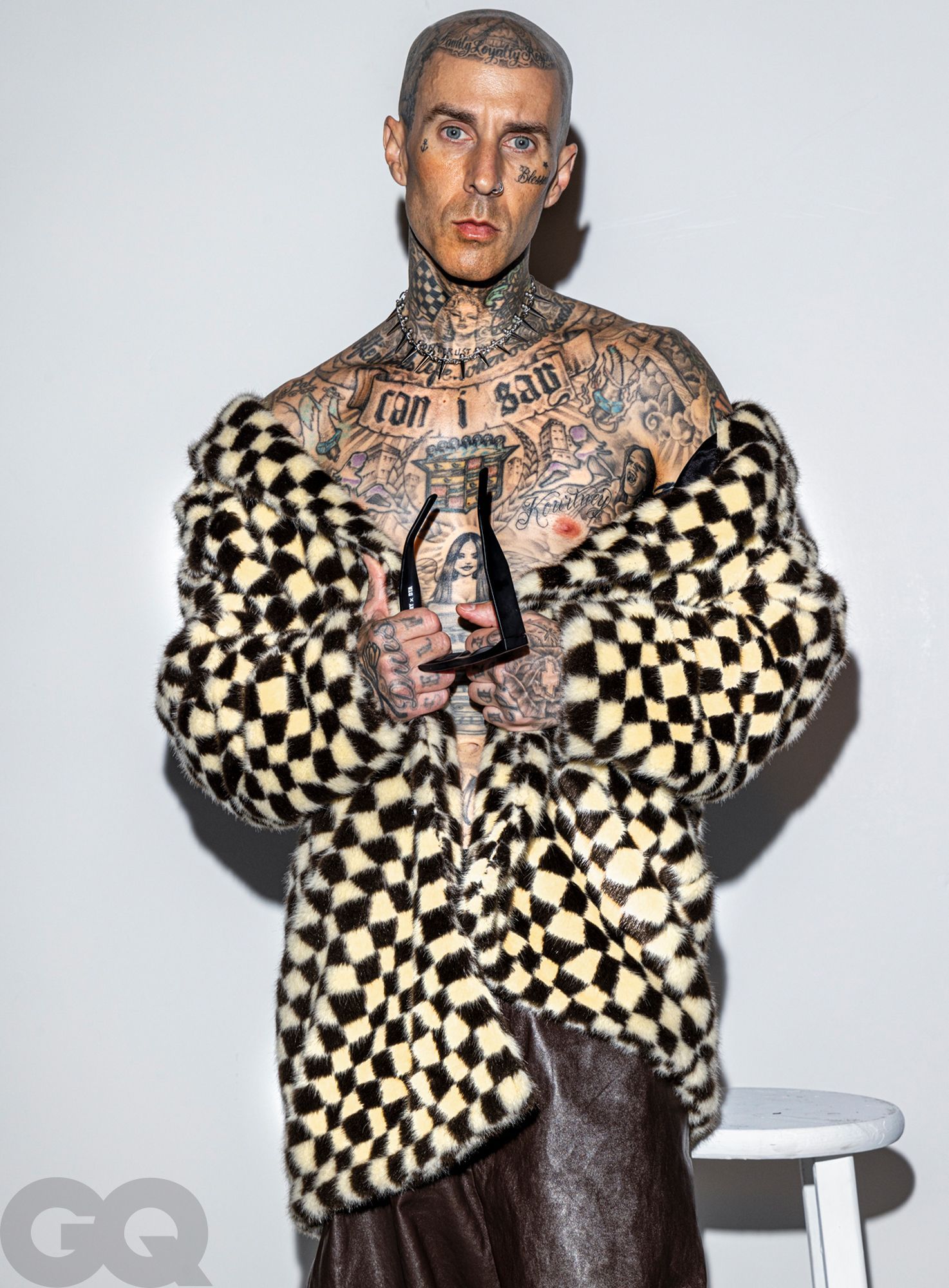
Barker said the large Cadillac script down his ribcage took 12 hours to complete. He also identified “Can I Say” on his chest as a reference to Dag Nasty’s album. The photos show where the tattoos sit; his interviews explain their connections and what it took to get them.
His children have added their own tattoos. Barker told VICE each child had a place on his thigh where they could draw: Landon made a cross with his name and the initials L and A, while Alabama added a heart. Barker called the patch a kind of sketchbook. GQ described how it began when Landon asked for a tattoo and Barker let him draw on his father instead.
Some of Barker’s older leg tattoos are gone. He said the crash burns destroyed much of the ink on his legs; tributes to friends Lil Chris, Che and DJ AM were among the pieces he said remained. A concert photo from years ago does not show exactly what is still there today.
Across the band, the contrast is striking: Hoppus has family names and one forearm character, DeLonge has a colorful sleeve, and Barker has punk lettering, band references, head tattoos, portraits, religious images and designs made by his children. There is no single Blink-182 tattoo style; each member’s collection looks different.
2 thoughts on “Blink-182’s tattoos, member by member”