Tommy Fury spent years making it pretty clear that tattoos weren’t really his thing. That’s why his first piece got more attention than you might expect. It wasn’t a giant sleeve or a loud chest piece. It was a small, sharp black design on his upper back, and he got it while talking about boxing, family life and his fight with KSI.
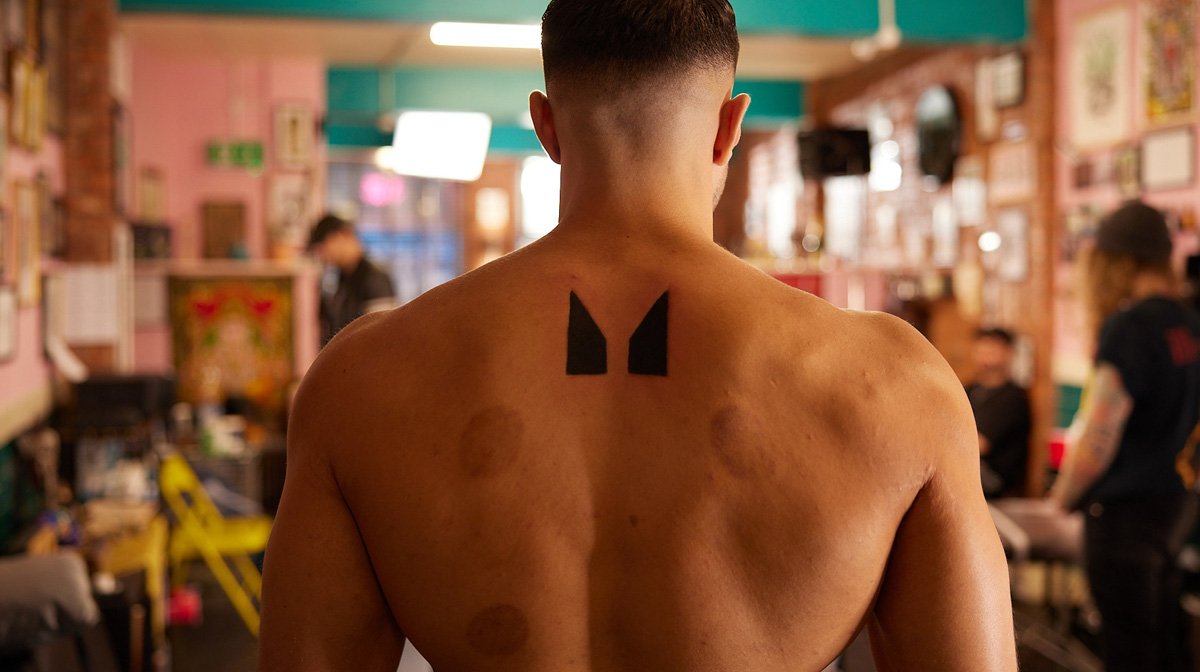
The cleanest look at it comes from a Myprotein interview filmed in a tattoo shop. Fury is shown from behind with his shoulders and upper back visible. The tattoo sits high on the back, directly below the neck. It’s made up of two solid black shapes with pointed tops, separated by a narrow gap down the middle. There’s no need to overcomplicate what the photo shows: it’s a compact geometric design with a very bold fill.
What does Tommy Fury’s tattoo look like?
The tattoo is easy to miss in ordinary boxing photos because it sits on a part of his back that is usually covered by a robe, shirt or training gear. In the close image from the tattoo interview, though, the placement is obvious. The design is centred high on his upper back. Each side looks like a black, tapered block, almost like a pair of short points or stylised arrows facing upward.
The edges are simple and heavy rather than delicate. There’s no visible script, shading, portrait or fine decorative detail in the image. The two halves are balanced, but they aren’t joined into one large solid shape. That little gap gives the piece some breathing room and keeps it from looking like a single black bar. It also means the tattoo reads clearly from a distance, which suits the placement.
The important detail is that this is the confirmed image, not a guess based on a shirtless photo. A lot of celebrity tattoo pages use unrelated gym pictures and then describe whatever might be visible. Here, the source is different: the image comes from the feature specifically about Fury getting his first tattoo, and the camera is positioned to show the work on his back.
Why was the first piece a surprise?
Fury’s tattoo story is interesting mostly because he had spent so long saying he wasn’t into tattoos. The Myprotein piece describes him as someone who had made his dislike of tattoos public. That included the idea of getting a matching tattoo with Molly-Mae Hague to mark their daughter Bambi. He wasn’t rushing to the tattoo shop, and there was no sense that a full collection was part of his image.
That makes the first piece feel like a one-off decision rather than the start of a carefully planned sleeve. He agreed to get tattooed while the interview was happening, which gives the whole thing a slightly spontaneous feel. The setting is casual, too. He’s in a tattoo studio, talking through the process, instead of presenting a finished piece at a press event months later.
There’s also a practical side to the choice. A high-back design can stay private when he wants it to. It isn’t constantly on show in a normal outfit, but it appears when he takes his shirt off for training, a photo shoot or a fight-week interview. That gives him control over when people see it. For someone who has never built his public look around tattoos, that kind of placement makes sense.
A fighter outside the chair
There isn’t a reliable public explanation for a deeper meaning behind the black design. The source confirms that it was his first tattoo and shows the finished work, but it doesn’t establish a symbolic story for the shape. That’s worth saying plainly because tattoo articles often turn a simple design into a dramatic piece of mythology.
Maybe the shape means something personal to Fury. Maybe he liked the look, chose it with the artist, or wanted a design that would work well on the upper back. Unless he explains it himself, those are possibilities rather than facts. The safest description is the visual one: two bold, pointed black forms placed high on the back. That’s enough to discuss the tattoo without filling in a story that hasn’t been reported.
Not every tattoo needs a speech attached to it. Some people get ink because they like a symbol, a shape or the way a design sits on the body. A simple piece can still be personal without having a meaning that the wearer wants to share publicly. Fury’s tattoo may end up being one of those designs.
The timing around his boxing career
Although the tattoo itself is small, the interview happened at a busy point in Fury’s career. He was preparing for the crossover fight with KSI and talking about the demands of training, fatherhood and the Fury family name. The tattoo was one part of a wider conversation, not a replacement for the boxing story.
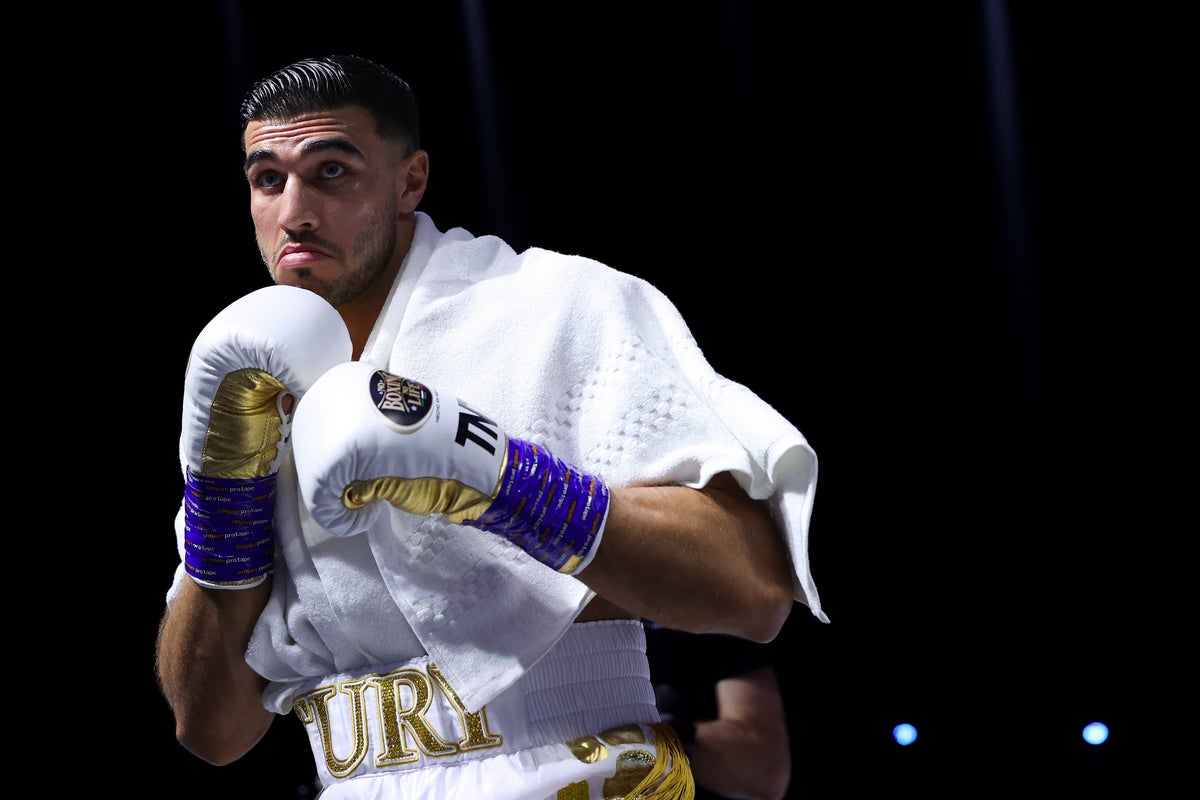
That context matters when looking at photos of him. A ring-walk image or a training portrait can show his build, posture and public image, but it doesn’t automatically show the tattoo. Boxing photos are usually taken from the front, and gloves, robes and lighting can hide the upper back completely. They’re useful for understanding Fury as a fighter, not for confirming the exact design.
His first tattoo also sits slightly outside the hard-edged sports persona he usually presents. Fury’s public photos tend to focus on preparation, physical condition and competition. The tattoo interview is more relaxed. He’s allowing the camera into a process that is normally private, and that makes the image feel different from a standard promotional portrait.
What the surrounding photos prove
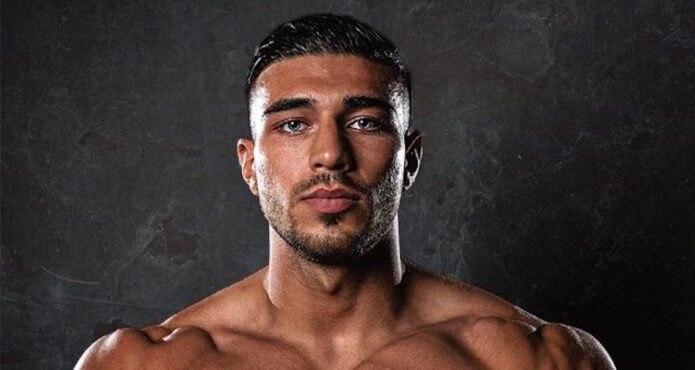
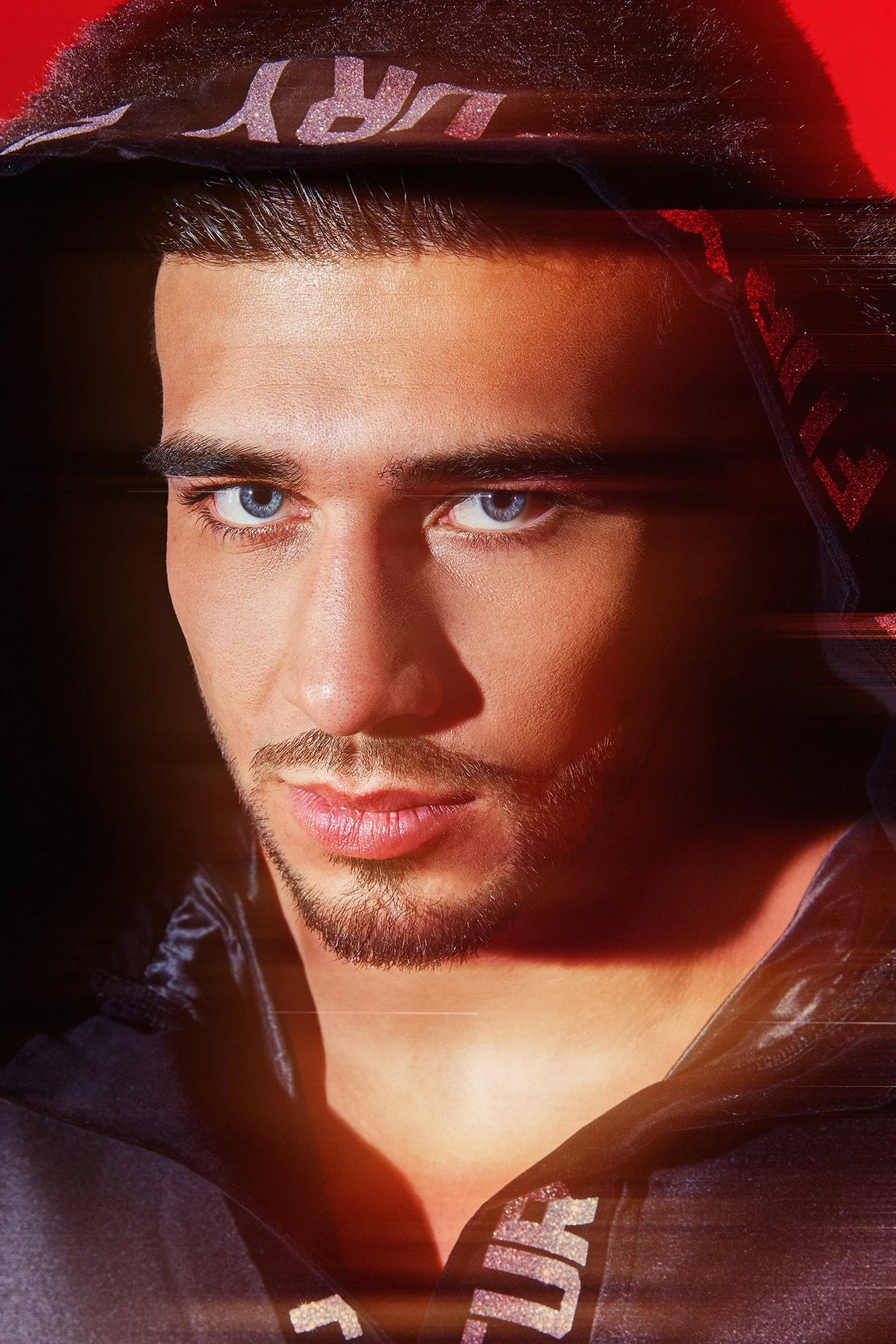
There are plenty of strong photos of Fury in the ring and at photo shoots. They’re worth including for context, but they shouldn’t be labelled as tattoo evidence. One studio portrait shows him shirtless and facing the camera. It’s a useful face-visible image, but the tattoo is on the back of his neck and upper back, so the front-facing pose doesn’t confirm the piece.
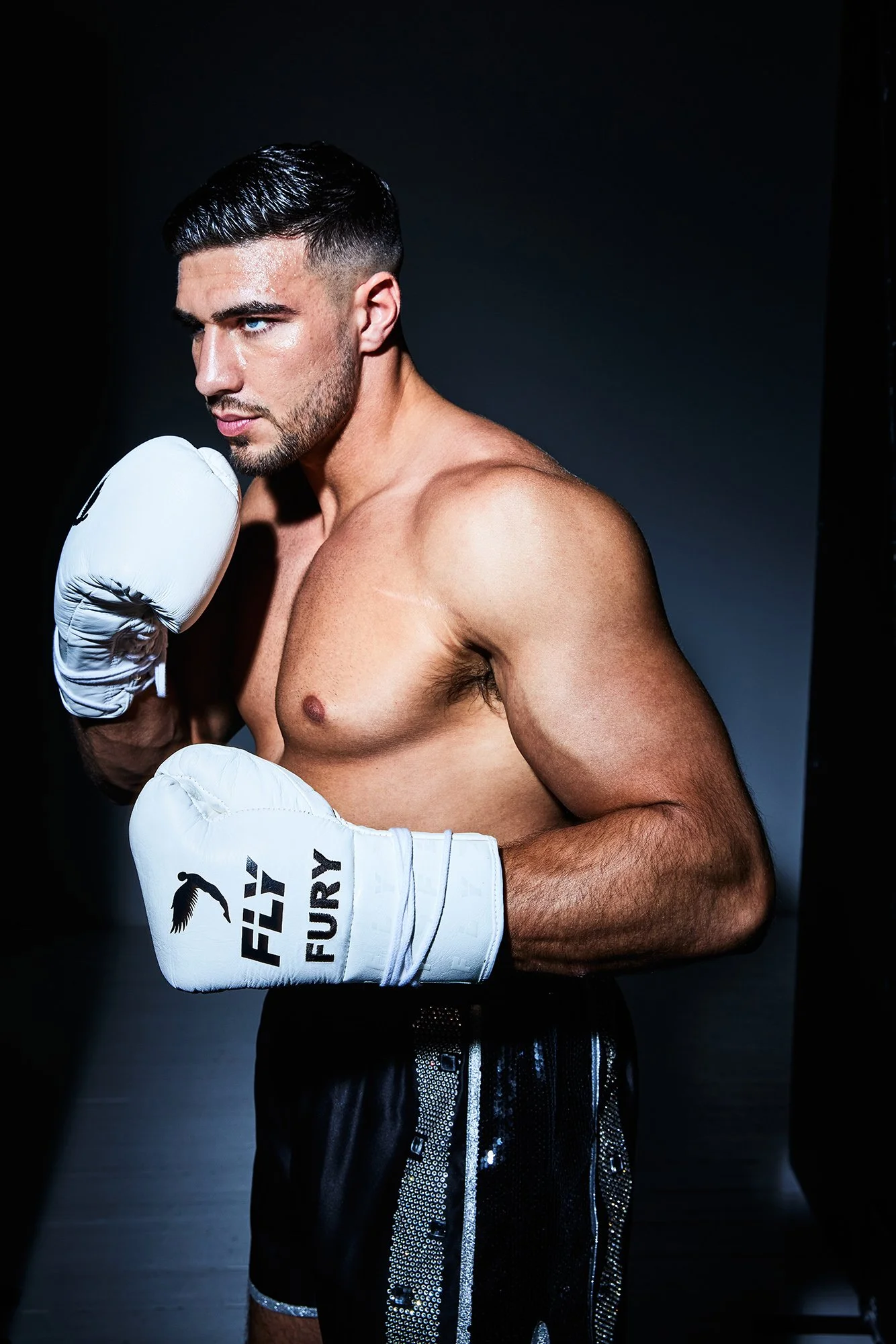
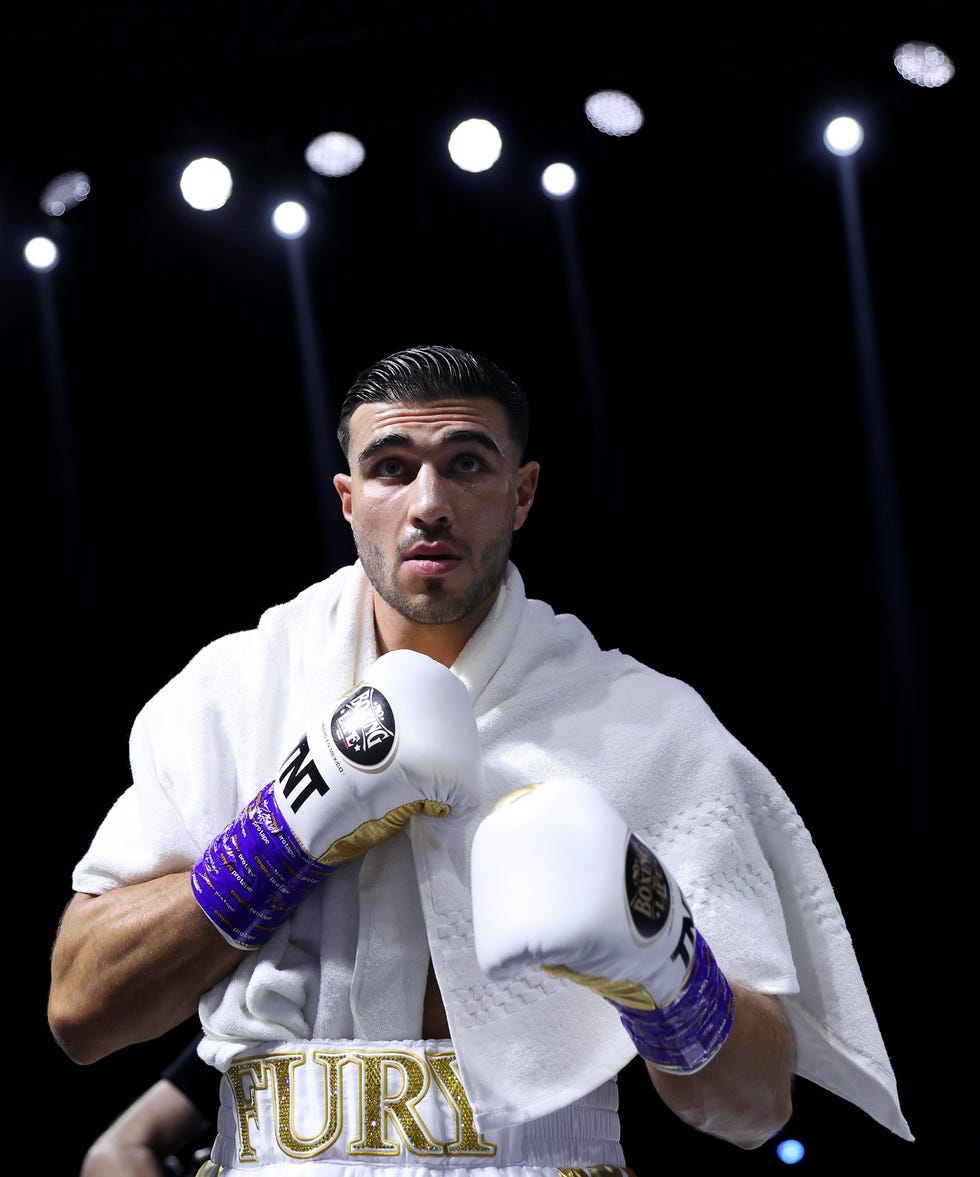
Another image shows Fury with boxing gloves and a dark background. It captures the look of his fight-promotion work and gives the article some visual variety. Again, it’s contextual only. The photo helps explain the world around the tattoo , the training, the image-making and the boxing career , without pretending to show ink that isn’t visible.
That distinction is especially important with a small tattoo. When a design is only a few inches wide, a distant picture can create false details. A shadow can look like ink. A fold in clothing can look like a line. The dedicated Myprotein photograph is stronger evidence because the subject is positioned specifically to show the tattoo.
The next chapter
It’s possible, but there’s no reason to assume it. Fury’s first tattoo was notable precisely because he had not been known as someone who wanted lots of ink. One piece doesn’t automatically turn into a sleeve, and his public comments suggest that he has been selective about tattoos rather than treating them as part of his everyday style.
If he does add more later, the upper-back design could become part of a larger composition. The pointed shapes are simple enough to sit beside lettering, a larger back piece or more geometric work. They could also remain completely separate as a small standalone mark. Both options would work. The current photo doesn’t tell us which direction he’ll take.
For now, the best way to read the tattoo is as a small first step. It’s clean, dark and placed where Fury can show it when he chooses. That feels more useful than forcing a prediction about a future collection.
A simple takeaway
The main lesson is pretty simple: you don’t need a huge design to make a tattoo feel like a change. Fury went from openly disliking tattoos to getting one on camera. The piece is compact, but it marks a decision to do something he had previously avoided.
If you like the look, pay attention to the things that make it work. The solid black fill gives the design instant contrast. The central placement makes it feel deliberate. The gap between the two shapes stops it from becoming a flat block of ink. Those are useful design ideas even if you don’t copy the actual shape.
It’s also a good reminder to be honest about what you want from a tattoo. Maybe you want a personal symbol that stays mostly hidden. Maybe you want a small design that only shows in certain photos. Or maybe you want something much more visible. None of those choices is more meaningful than the others. The right placement depends on your work, your clothes and how often you want the tattoo to be part of the conversation.
Fury’s tattoo is still new enough to feel like a small detail rather than a complete visual identity. That may be why it stands out. It’s a clear piece of ink on someone who never seemed particularly interested in having ink at all.
Tommy Fury talks while getting his first piece
This is the Myprotein interview that documents the tattoo and the conversation around Fury’s first time getting inked.