codex

Charlotte Flair Tattoos: Her Reider Memorial Cross and Its Meaning

Charlotte Flair’s best-documented tattoo is a cross on her right side bearing her brother Reid’s nickname and dates. She has described how family members chose related crosses in his memory after he died in 2013.

The Reider memorial cross tattoo
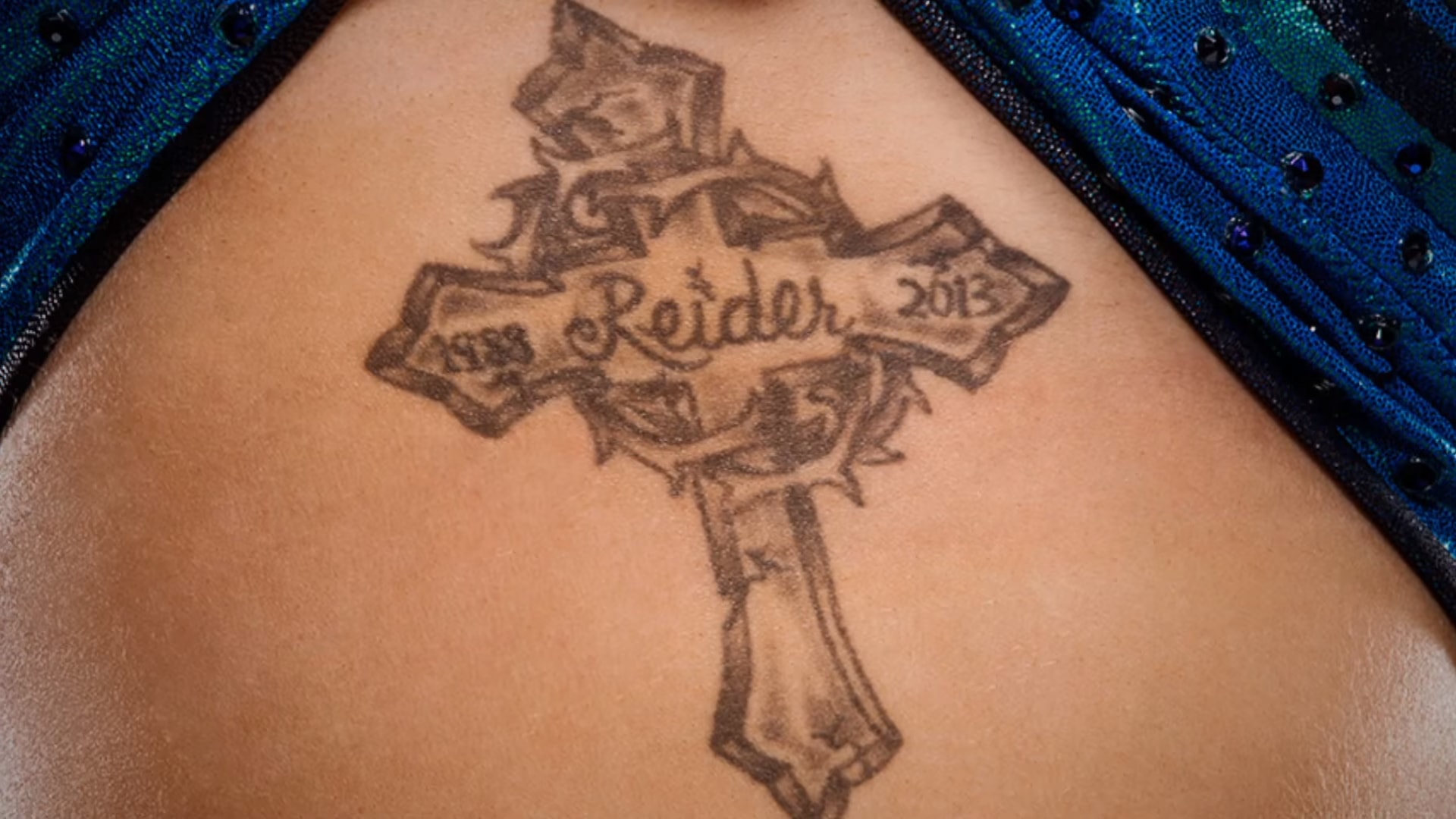
Charlotte Flair tattoos: The Reider memorial cross tattoo

The cross sits on Flair’s right side. “Reider” curls across its center, with 1988 and 2013 beside it. Heavy outlines and shaded sections frame the lettering, and a thorn-like circle wraps around the middle. The compact design has pointed ends and a lower stem that extends below the name. On WWE’s Superstar Ink, Flair said Reid had worn a cross on his back; after his death, family members and people close to him got versions of it. She recalled that he had wanted a Guns N’ Roses cross, but ended up with a more generic design the family once teased him about.

Remembering Reid in her own way

Reid was Flair’s younger brother, and he died in 2013. The nickname makes the memorial specific: it points to him, not to a general symbol of loss. Flair said the family chose related crosses based on the one Reid wore. She also shared the small family joke behind its less-than-perfect Guns N’ Roses reference. That detail gives the tattoo its own history without needing a broader claim about what it means to grieve.

The presence she brings to a photograph
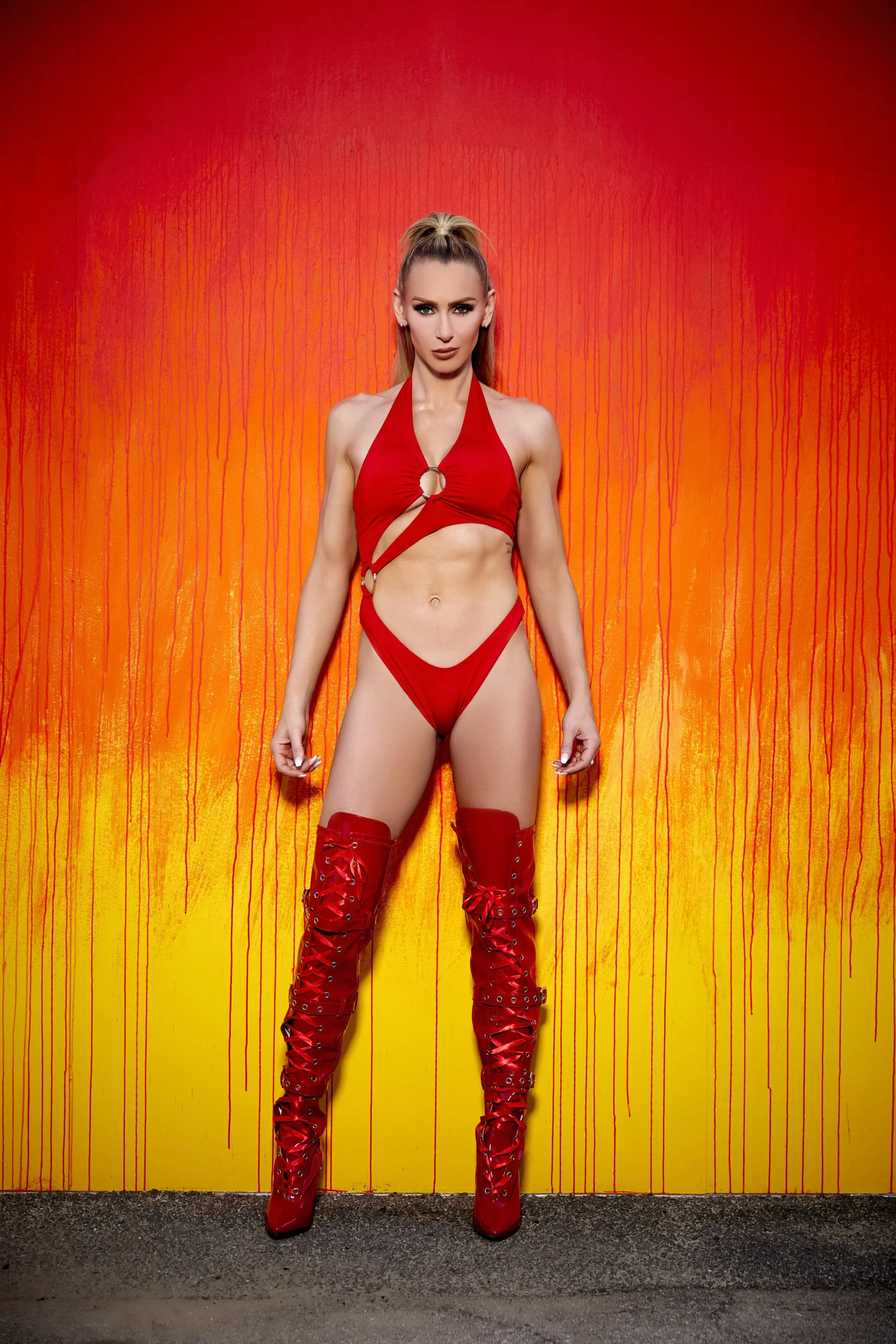
Charlotte Flair in a contextual photograph: The presence she brings to a photograph; not tattoo evidence

This red Flaunt editorial portrait is about styling and presence, not a close view of the cross. The red outfit and backdrop make a strong, controlled composition, but the photograph can’t confirm details of a side tattoo. Its absence from this frame doesn’t show that the tattoo has changed.

A quieter look in white

Charlotte Flair in a contextual photograph: A quieter look in white; not tattoo evidence

A second image from the editorial shows Flair reclining in a white outfit, with pale surroundings and printed boots. It has a different look from the standing red portrait. The image is useful for the shoot’s styling, but it doesn’t add evidence about her tattoos.

The athlete beneath the performance
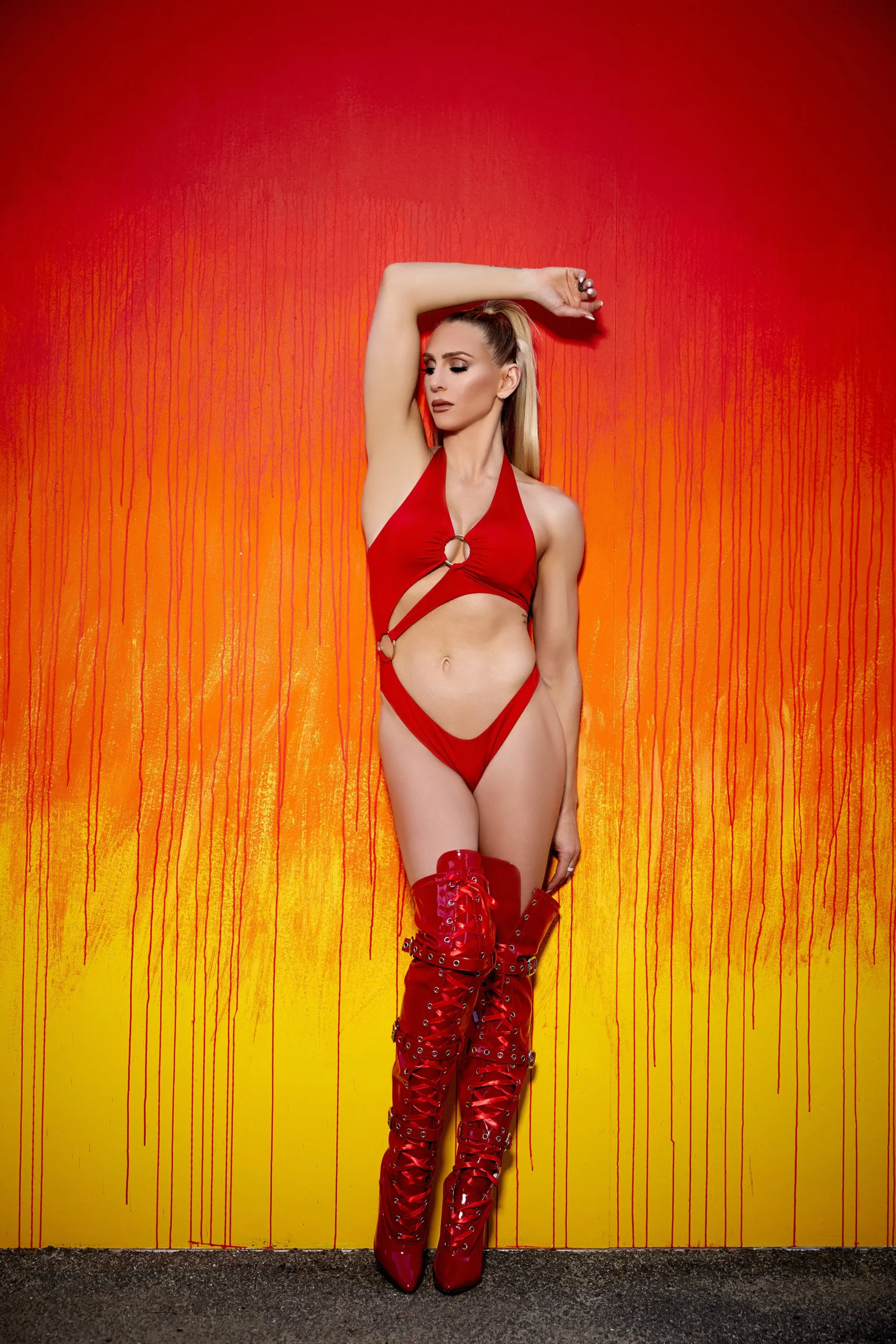
Charlotte Flair in a contextual photograph: The athlete beneath the performance; not tattoo evidence

In another editorial pose, Flair raises an elbow and shifts her stance. In her Flaunt interview, she said she played several sports growing up, including volleyball, and dedicated her wrestling career to Reid after his death. The pose is part of the shoot; the interview supplies the personal context.

Charlotte and Ashley
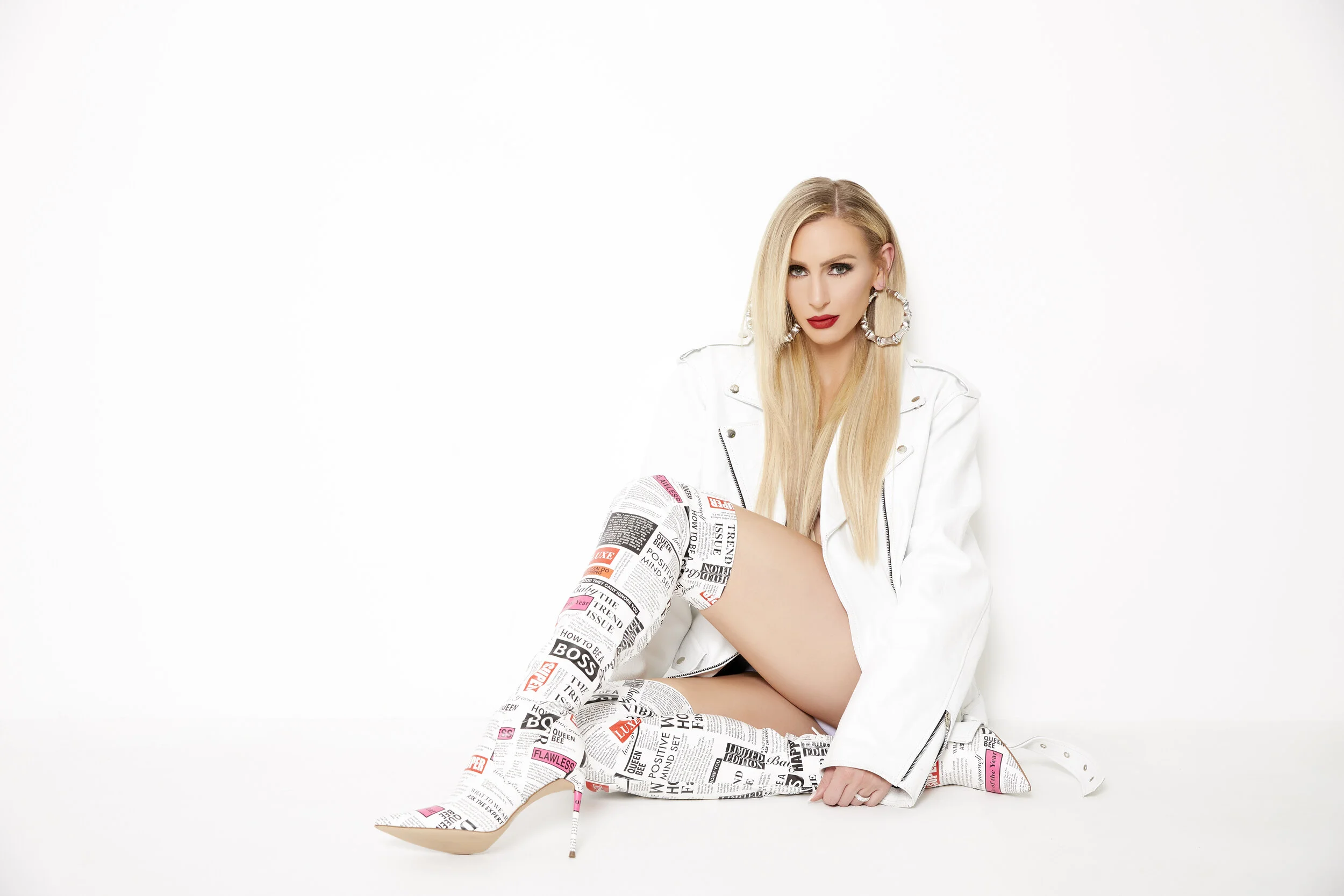
Charlotte Flair in a contextual photograph: Charlotte and Ashley; not tattoo evidence

The seated white-look portrait is another editorial image. Separately, in a 2022 TV Source interview, Flair spoke about separating criticism of her wrestling character, Charlotte, from herself, Ashley. She said the word “Worthy” on her forearm reminds her of her value and of staying true to herself. That is her explanation of the inscription, not a meaning inferred from the photograph.

What makes the memorial feel personal

The name and dates make the cross easy to identify as a memorial to Reid, while its design echoes the cross he wore. Flair’s account gives that choice a family history. It doesn’t mean the tattoo explains every career decision or captures everything about grief. The related crosses, nickname, and family joke are the details she has shared; they are enough to understand why this one is personal.
Beéle Tattoos: Moon Phases, Personal Details and the Shaki Addition

Beéle’s right forearm carries a vertical row of moon shapes. He has also described sea and personal imagery elsewhere, and Shakira added “Shaki” to his right arm in 2026. His interviews explain some pieces; others are only clear in photographs.

The moon phases on Beéle’s right forearm

Beéle tattoos: The moon phases on Beéle’s right forearm

A clear studio photo shows a vertical row of round and crescent moon shapes along the inside of Beéle’s right forearm. Larger shaded tattoos sit nearby, but the moon sequence remains distinct. In a 2023 Caracol TV interview, he mentioned a moon among the tattoos on that arm and described its imagery as personal. He also said he was still looking for a sun design. He didn’t explain the meaning of each phase or identify the artist or date.
How the collection changed

In that same 2023 interview, Beéle described sea imagery on his left arm, including Poseidon, a seahorse, a lobster and fish; he linked the seahorse to San Andrés. He also discussed an anatomical heart combined with a brain on his hand and a yellow smiley face, which recalled school reward stickers and reminded him to check in with himself. In February 2026, Shakira tattooed “Shaki” on his right arm in Barranquilla. El Heraldo reported the finished lettering, and LOS40 showed footage of the process. There’s no reliable total for the full collection.

Barranquilla comes first

Beéle in a contextual photograph: Barranquilla comes first; not tattoo evidence

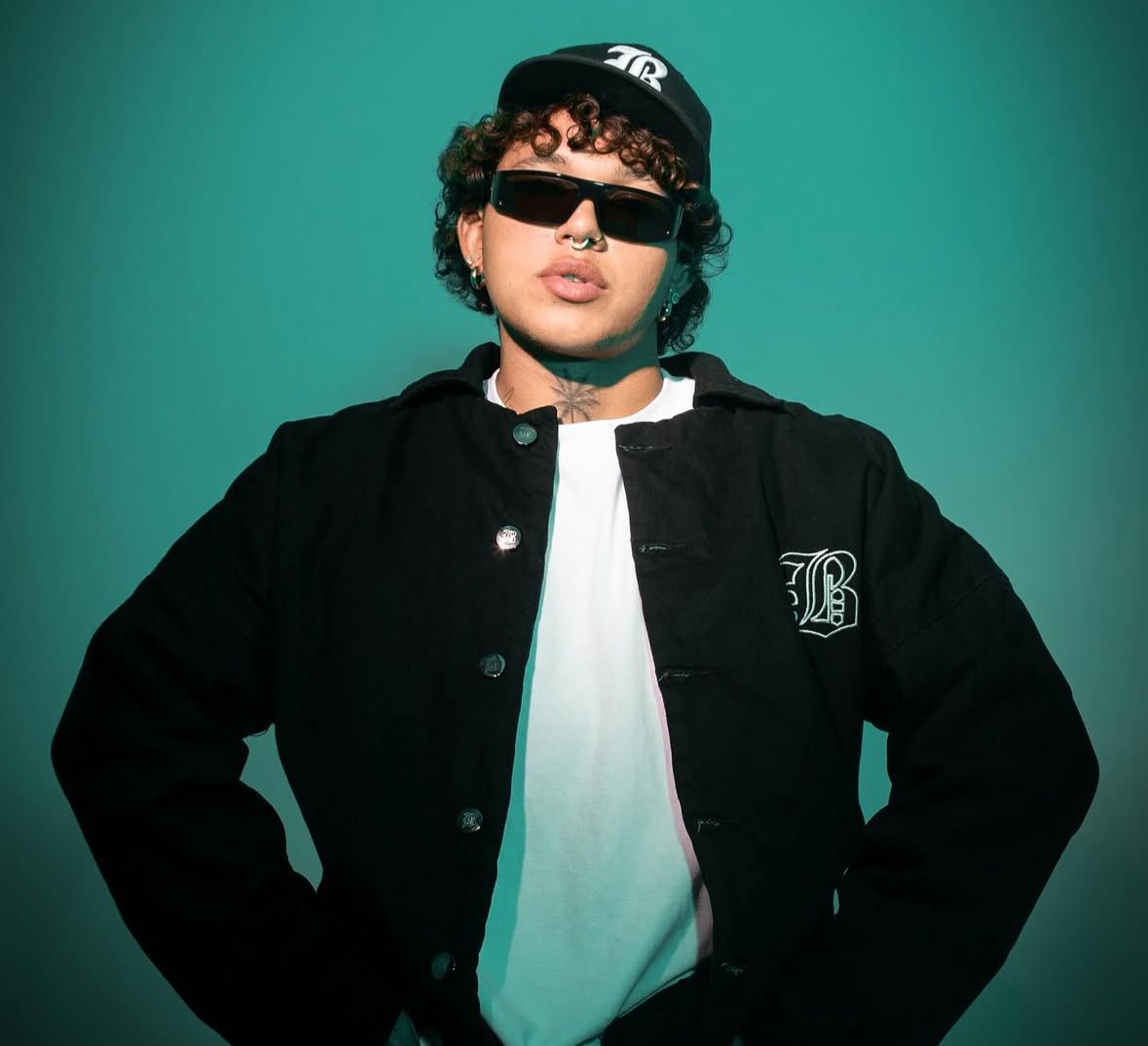
Beéle, whose full name is Brandon de Jesús López Orozco, has described Barranquilla as central to his background. In a Billboard Colombia conversation about Borondo, he spoke about growing up with salsa and African music as part of his culture. The dark-jacket studio photo gives a separate look at his public style; it doesn’t document a tattoo.

A sound built for moving

Beéle in a contextual photograph: A sound built for moving; not tattoo evidence

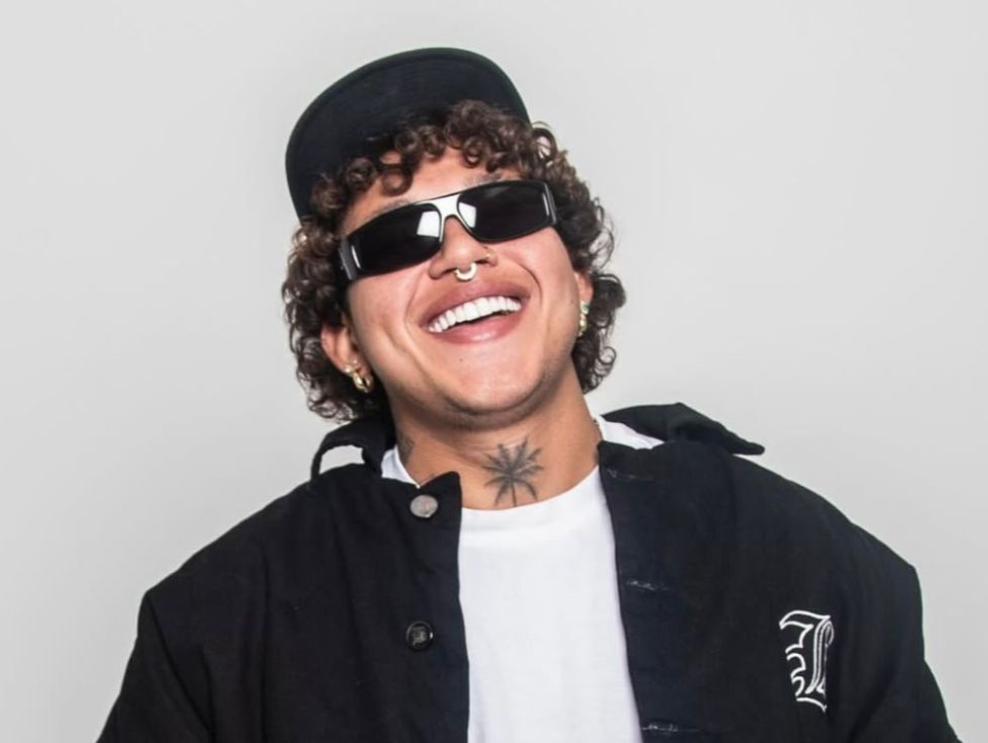
Sony Music describes Beéle’s music as drawing on urban and Afro-Caribbean sounds, including reggae and dancehall. His breakout song “Loco” arrived in 2019. The smiling photo here is another studio portrait, not evidence about his tattoos.

Talking through the songs

Beéle in a contextual photograph: Talking through the songs; not tattoo evidence

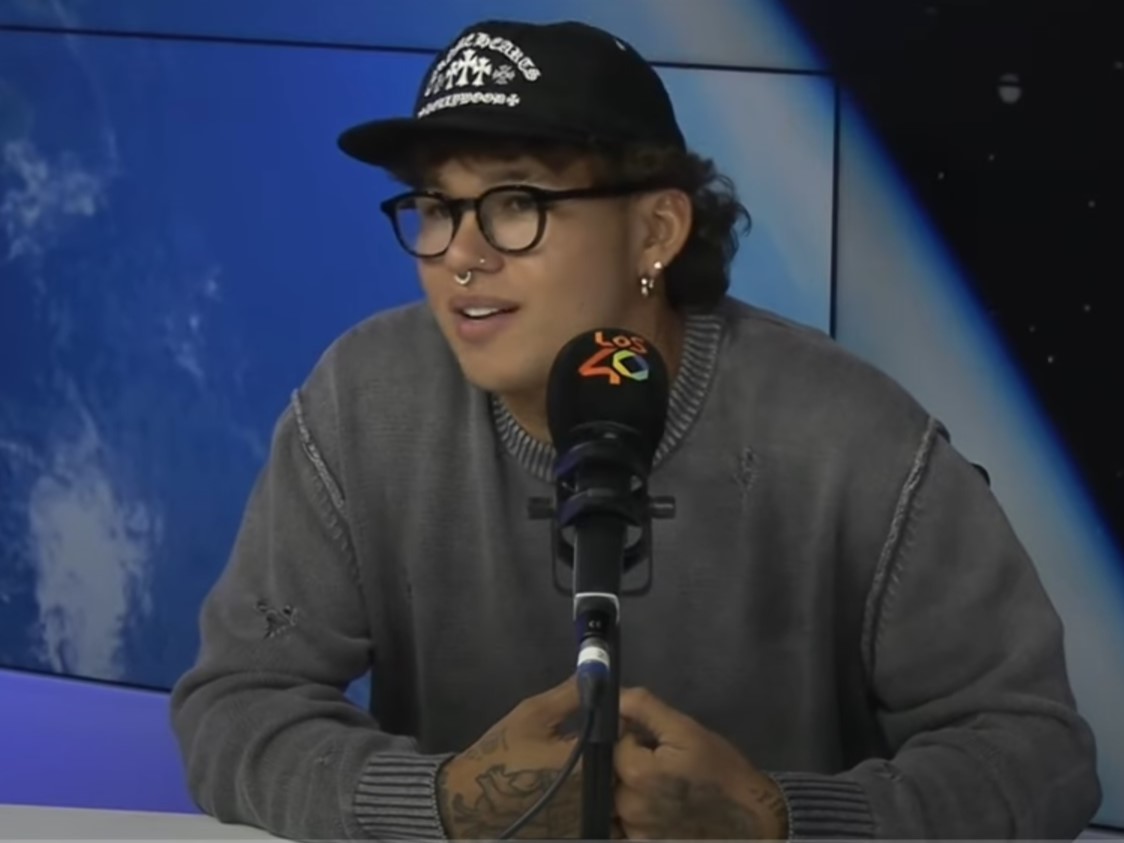
On the LOS40 Global Show with Tony Aguilar in April 2025, Beéle discussed “Sobelove,” his musical relationships and the response to his songs. He described Ovy on the Drums as both a friend and collaborator, and spoke about sessions built around spending time together and making music. The radio photo shows him at a microphone during an interview.

The scale of a live performance

Beéle in a contextual photograph: The scale of a live performance; not tattoo evidence

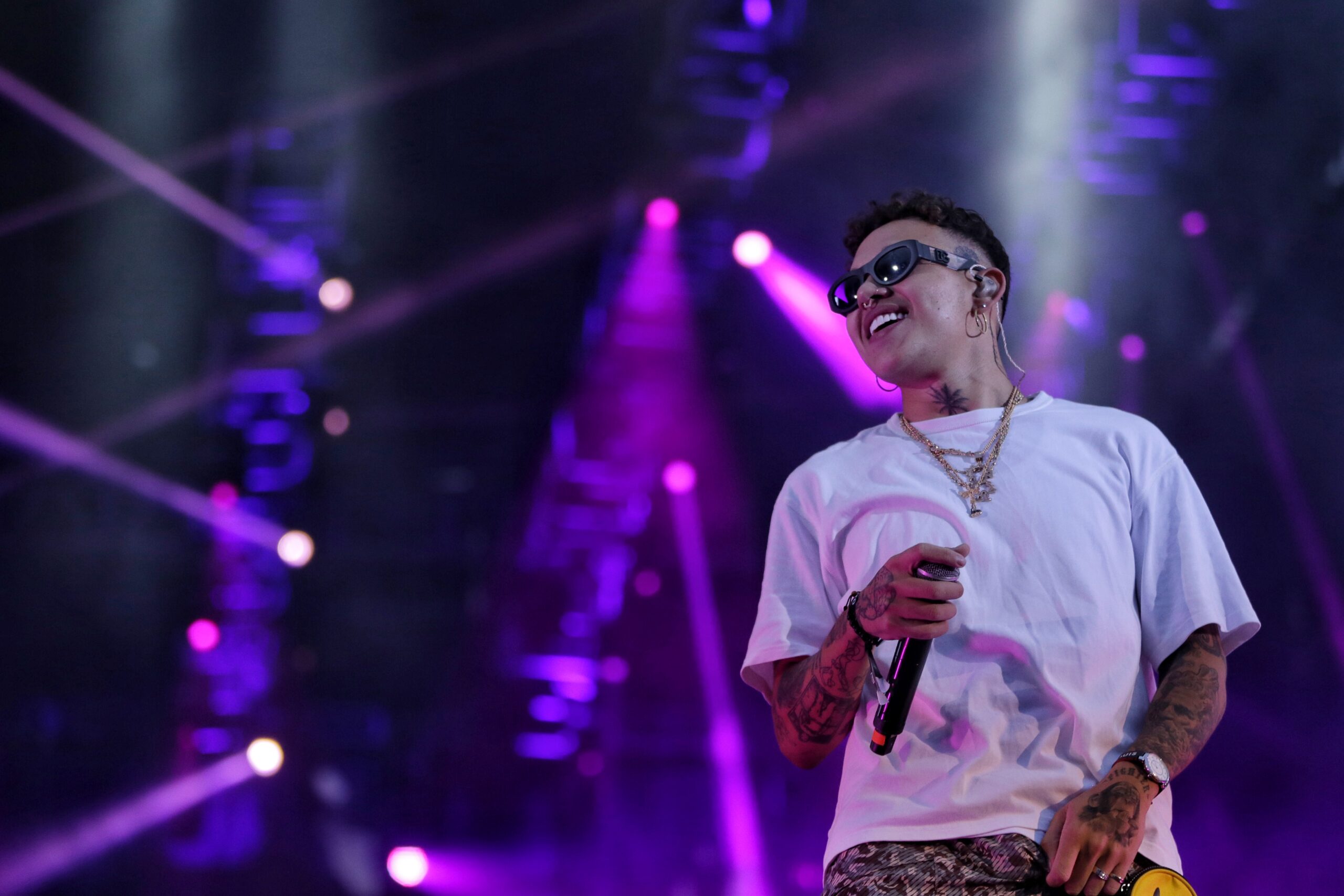
This concert photo, used by Vanguardia in coverage of the Borondo Tour, shows Beéle in a white T-shirt and sunglasses, holding a microphone under purple stage lights. It documents a live performance, not the fine details of his tattoos.

Borondo gave the music more room

Borondo, Beéle’s first studio album, came out in May 2025. Rolling Stone described it as a 26-song release featuring Marc Anthony and Carla Morrison. In Billboard, Beéle said the project grew from years of experience and listening; the recording period wasn’t the whole story behind the music.

Hear him explain it himself

The tattoos he has discussed carry different associations: personal imagery on the right arm, sea references on the left, and the “Shaki” lettering Shakira added in 2026. The video below is a LOS40 conversation about his music, friendships and creative interests rather than a tattoo interview.

Sharlene Mawdsley Tattoos: Olympic Rings on Her Left Forearm

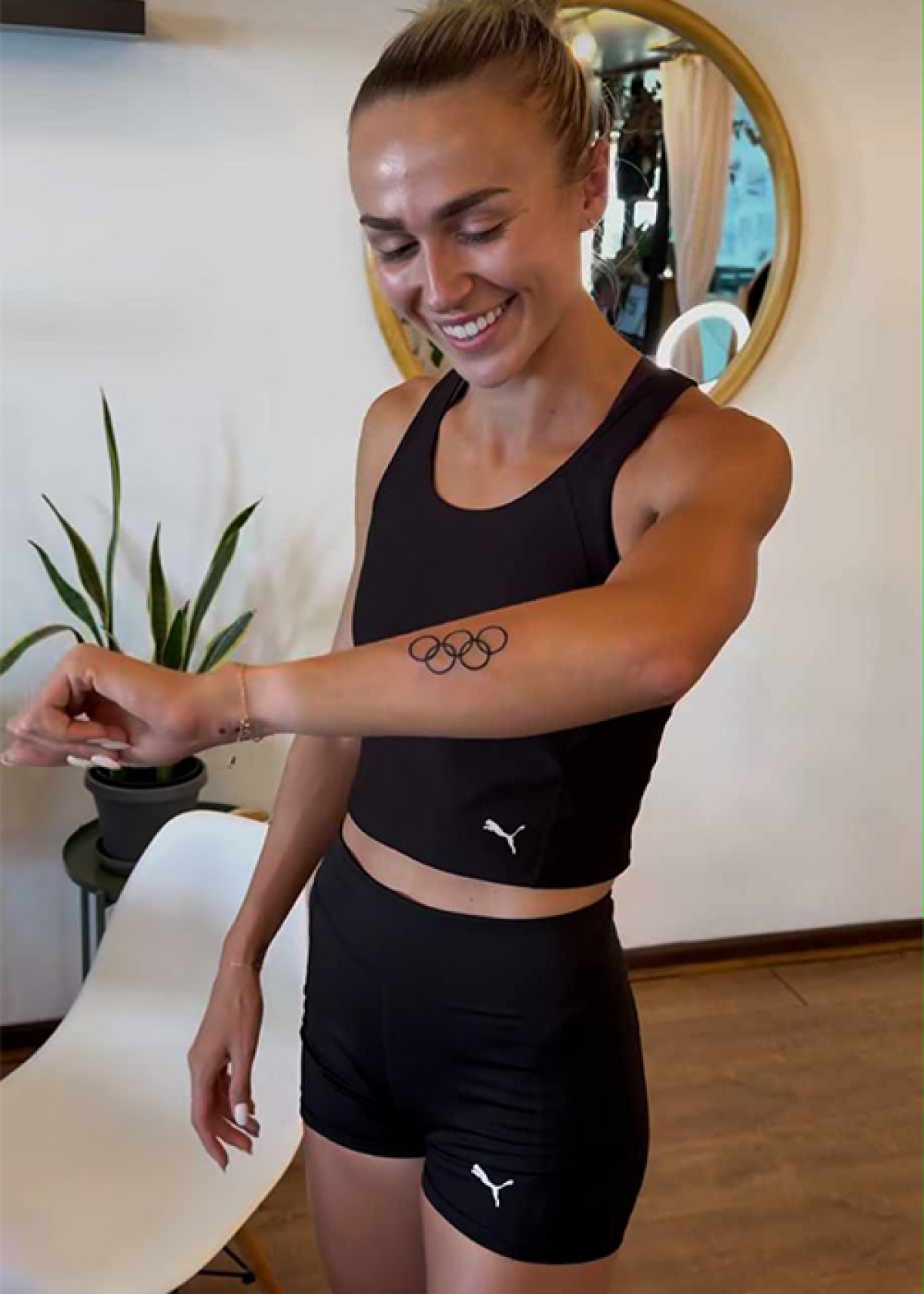
Sharlene Mawdsley got five Olympic rings tattooed on her left forearm after Paris 2024. Irish coverage records the tattoo’s timing and placement; the rings mark the Games, not a medal finish.

The Olympic rings on Sharlene Mawdsley’s left forearm

Sharlene Mawdsley tattoos: documented Olympic rings tattoo on the left forearm

A close photograph shows five black Olympic rings on the outside of Mawdsley’s left forearm. The circles are unfilled and arranged in the familiar horizontal pattern. Irish coverage reported that she shared the tattoo after visiting Folk Tattoo Observatory in Cape Town, with the caption “Did a thing.” The image documents the design; no source here names the artist or gives an exact appointment date.

A wider view from Paris

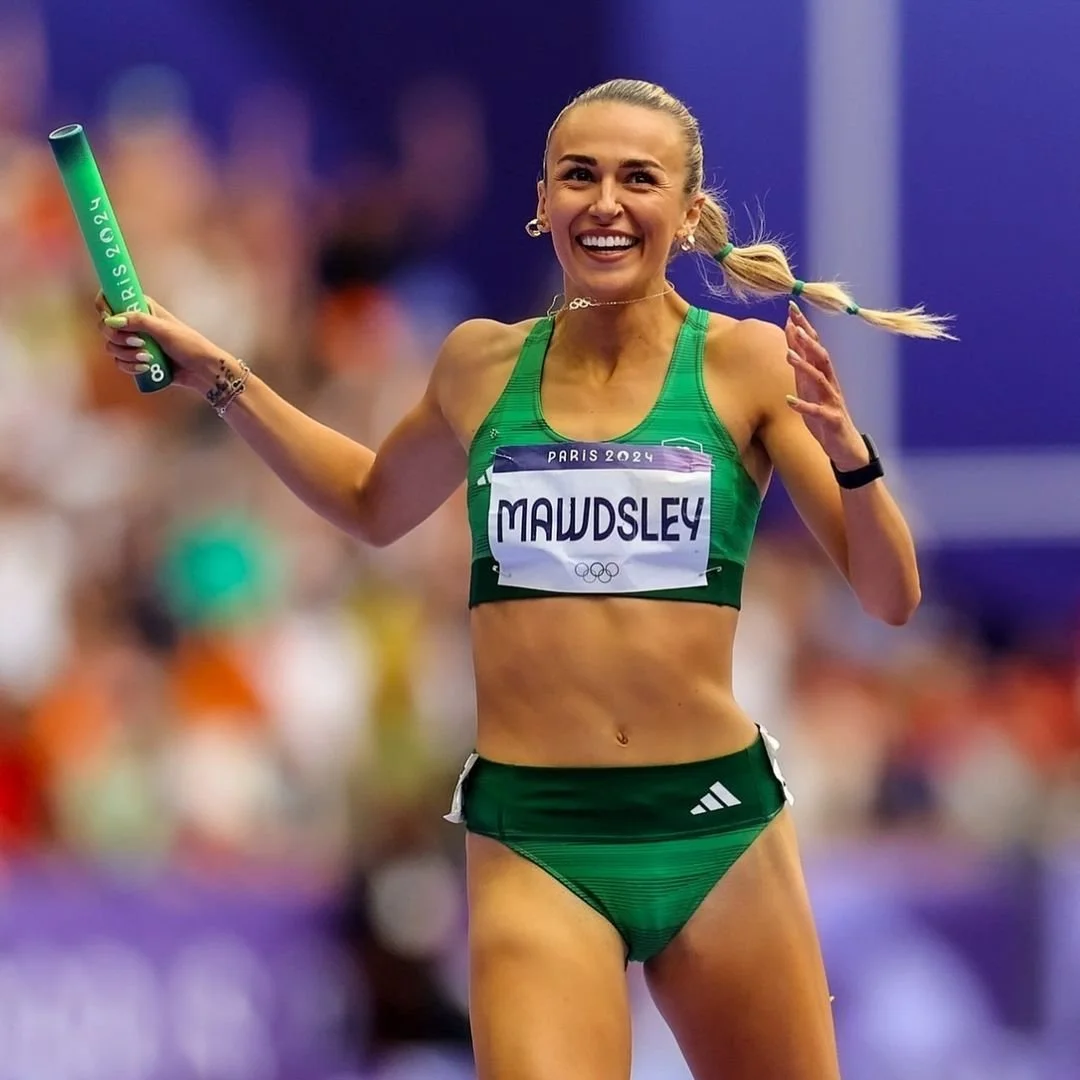
Sharlene Mawdsley in a contextual photograph: Sharlene Mawdsley at Paris 2024; contextual photograph, not tattoo evidence; not tattoo evidence

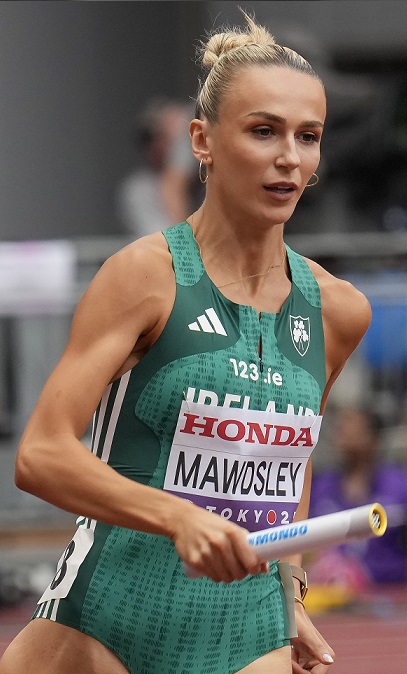
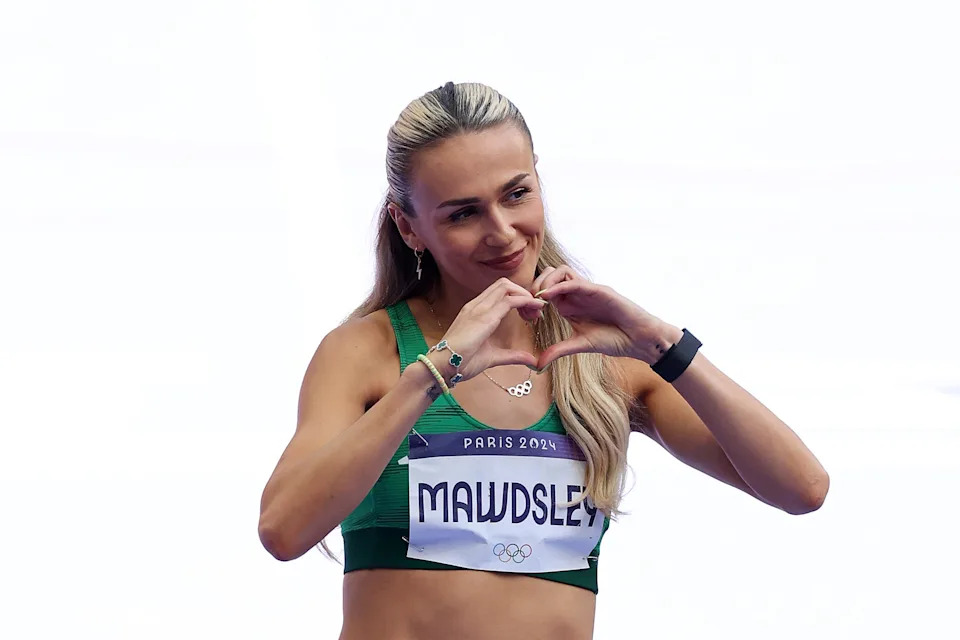
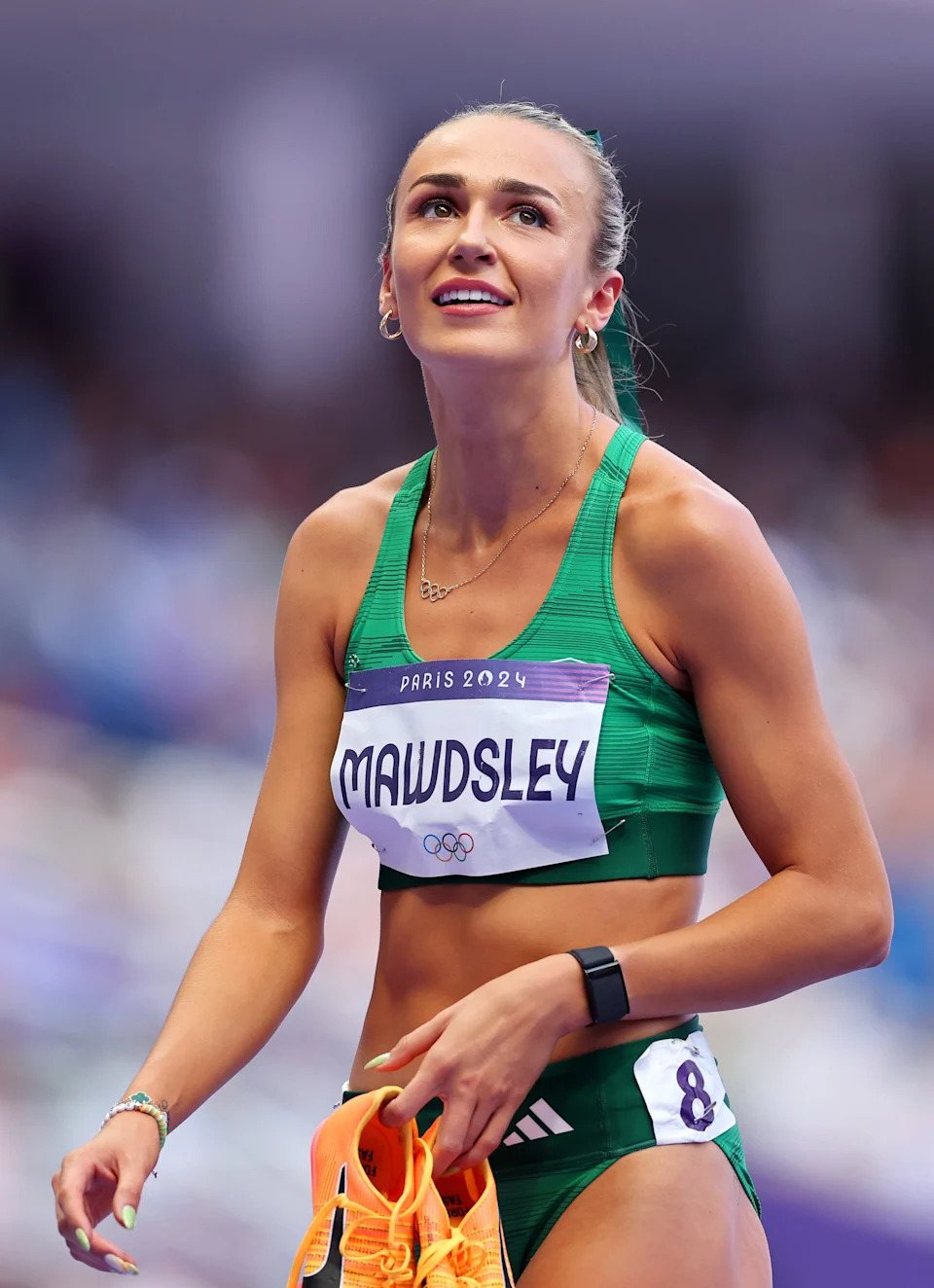
In the Paris competition photos, the small black tattoo appears beside her green Team Ireland kit, race bib and jewellery. These are event images, not close-ups of the ink. Mawdsley competed in Ireland’s mixed and women’s 4x400m relay campaigns; the rings refer to the Olympic Games, not to a single race or medal.
The image from the home stretch

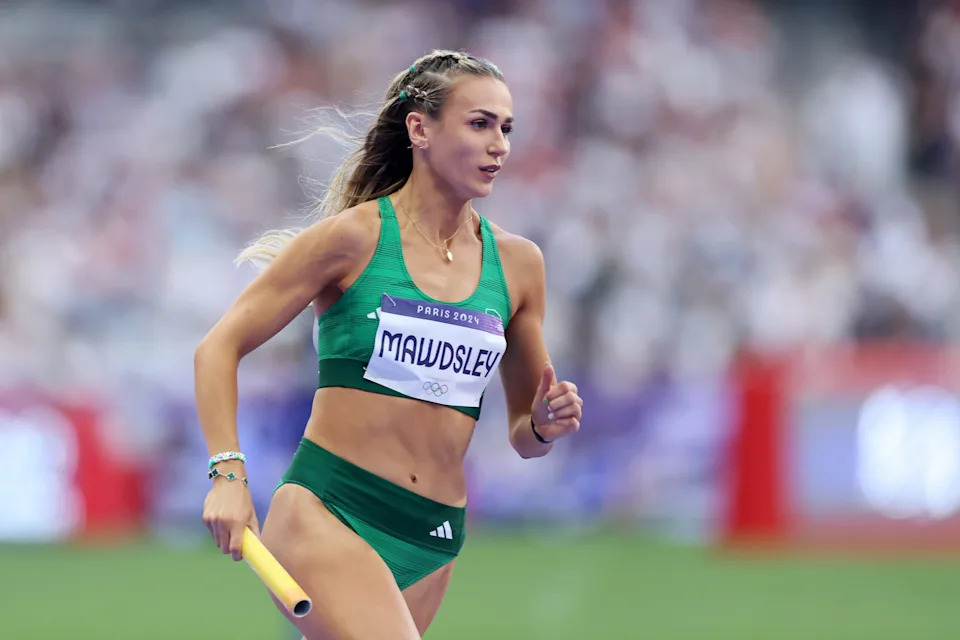
Sharlene Mawdsley in a contextual photograph: Sharlene Mawdsley preparing for Paris 2024; contextual photograph, not tattoo evidence; not tattoo evidence

Most race photos show Mawdsley in motion, carrying a baton or running with teammates. This image records the competition, but it doesn’t reveal the ring tattoo clearly. The Cape Town close-up is the source for its shape and placement.

The moment behind the photograph

Sharlene Mawdsley in a contextual photograph: Sharlene Mawdsley celebrating a relay leg; contextual photograph, not tattoo evidence; not tattoo evidence

At Paris 2024, Ireland’s women’s 4x400m relay team finished fourth while setting a national record. Earlier that season, Mawdsley helped Ireland win mixed-relay gold at the European Championships. The rings mark her Olympic experience, including the pride and disappointment around a result just outside the medals; they don’t suggest Ireland won a medal in Paris.

The runner behind the photograph

Sharlene Mawdsley in a contextual photograph: Sharlene Mawdsley racing at Paris 2024; contextual photograph, not tattoo evidence; not tattoo evidence

Mawdsley is a 400-metre runner from Newport, County Tipperary. In 2021, she missed the Tokyo Olympics despite helping Ireland qualify in the mixed relay. By Paris, she was part of Ireland’s women’s 4x400m team. She has spoken about the gap between the public’s excitement at a national record and the athletes’ disappointment at finishing fourth.

A medal story without a medal

The five rings identify the Olympic experience, not a podium finish. That distinction leaves room for Mawdsley’s pride in the record and the relay, alongside the disappointment of missing the medals. The tattoo carries that complicated memory without a date, time or result written around it.

What the pictures actually show

The confirmed design is five fine-line black rings on the outside of her left forearm. The close-up shows their unfilled outlines; the race and celebration photos add context but don’t establish other tattoos. The available record supports this one piece, not a larger collection.

Sharlene Mawdsley’s Olympic snapshot

The tattoo followed Paris 2024, a Games that brought Mawdsley wider attention and a fourth-place, national-record relay finish. Its simple outline is easy to recognize, while the memory attached to it is hers. The video below adds event context; the photos remain the clearest evidence for the ink.

Léo Santana Tattoos: The Family Meaning Behind His Neck Kiss

Léo Santana’s tattoos range from large dark pieces to smaller marks. The one he has explained most clearly is a lipstick kiss on the side of his neck, based on his sister Naiara’s lips.

The kiss tattoo on Léo Santana’s neck

Léo Santana tattoos: Neck kiss tribute to sister Naiara

In a 2015 Gshow interview, Santana said the kiss came from his sister Naiara’s lips, after people assumed it was a girlfriend’s mark. A Bahia Notícias report from March 2013 had already linked the new tattoo to Naiara, citing his Instagram dedication.

The reddish lip print sits below his ear, just above the shirt collar. It’s small, but easy to spot in profile.

A public style built around contrast

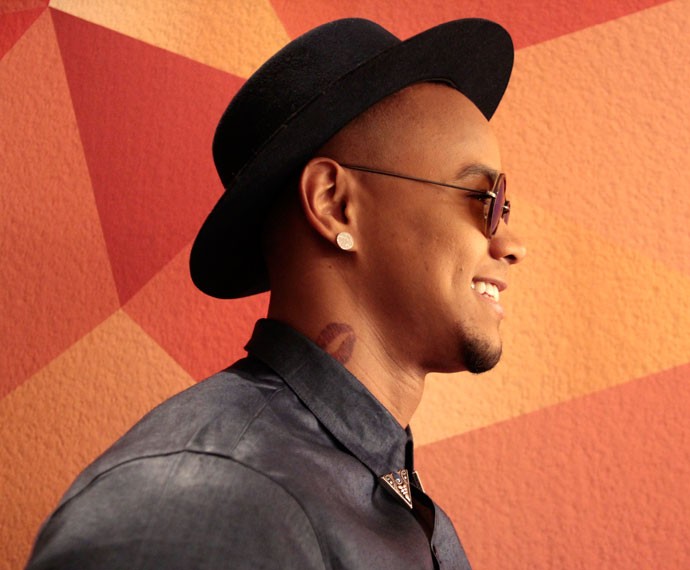
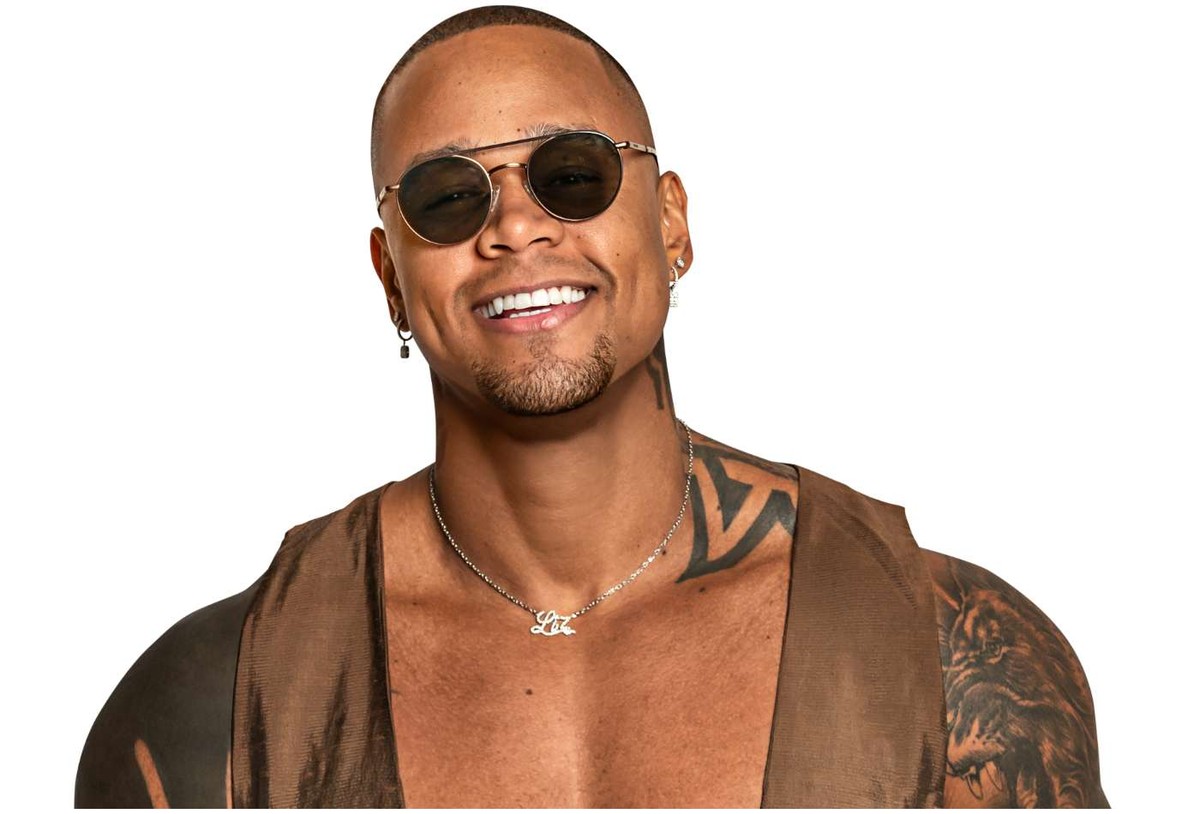
Léo Santana in a contextual photograph: Contextual celebrity photograph for A public style built around contrast; not tattoo evidence

In this portrait, a brown vest and round sunglasses keep the styling simple. The open neckline and relatively delicate jewelry leave room for his tattoos to show. It’s a posed publicity shot, though; concert lighting and movement reveal different things. Neither kind of photo gives a complete view of his body.

Family references and room for privacy

Santana’s explanation makes the neck kiss a family tribute, not the romantic gesture viewers first assumed. In a 2014 iBahia interview, he talked about fans tattooing his name and likeness and described Usher as an influence on his own choices. Those are separate details: one names a specific dedication, the other a broader influence.

Santana hasn’t shared a conversation with Naiara or how she chose the design, so there’s no need to fill in those gaps. His account gives the tattoo a clear reference without adding a story he hasn’t told.

Leaving Parangolé and keeping his audience

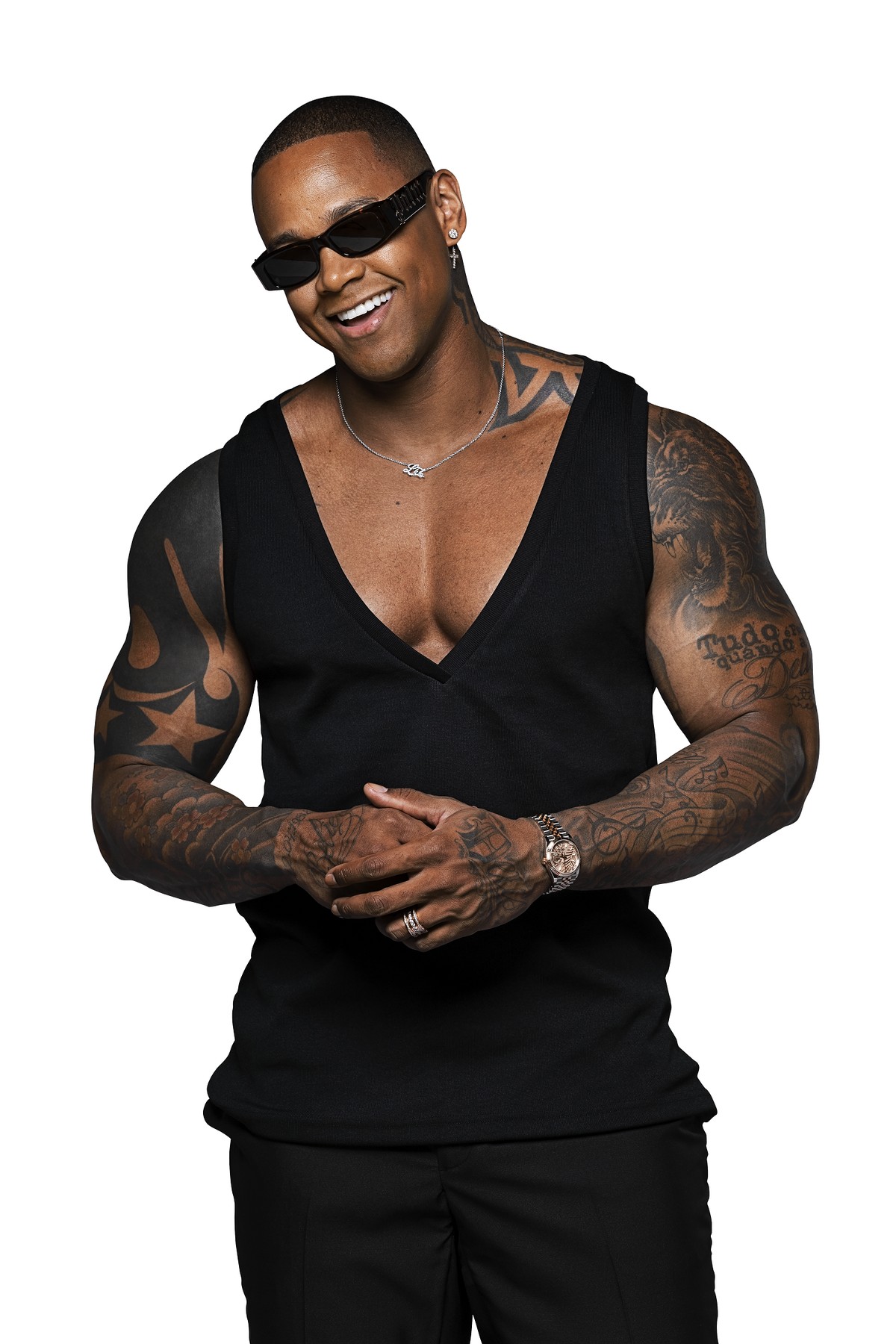
Léo Santana in a contextual photograph: Contextual celebrity photograph for Leaving Parangolé and keeping his audience; not tattoo evidence

In a 2014 iBahia interview, Santana described leaving Parangolé as a negotiated change. He said the band and management would remain with him as he moved into a solo project. He also wondered whether listeners would follow him under his own name or stay attached to the group.

The photo shows him in a black sleeveless top, standing with his hands together against a white background. It’s a quiet portrait, a different view from the close-up of his neck.

What the fans bring to the picture

In that same iBahia conversation, Santana said fans had tattooed his image on their bodies. Some tributes surprised him; he said he felt grateful but found them a lot to take in.

A tattoo can mark what a song or performer meant to a fan at a particular time. Santana sees the finished image from the other side, often without knowing the person’s story.

Salvador energy in a solo setting

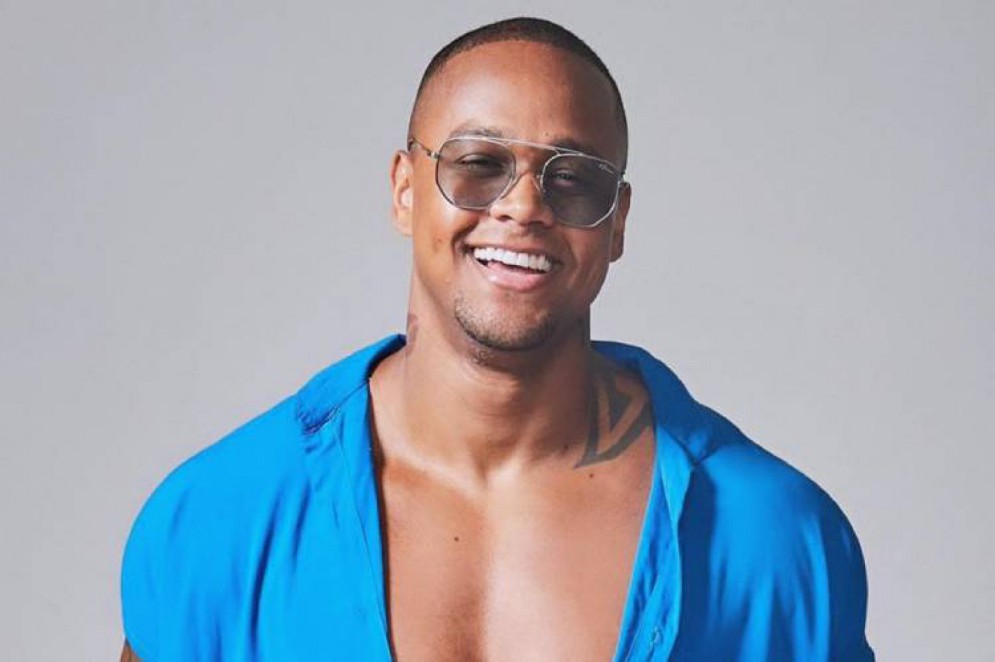
Léo Santana in a contextual photograph: Contextual celebrity photograph for Salvador energy in a solo setting; not tattoo evidence

This bright blue shirt gives the portrait a more relaxed feel than the darker looks elsewhere in the article. Santana’s Carnival appearances offer another setting for his public style: O POVO reported his 2022 booking for Aracati’s Carnival, and Quem covered his first São Paulo street bloc in 2025.

Those are two specific events, not a claim that every performance looks the same. They show his clothes and movement in the kind of crowd where a clear look has to register from a distance.

The music gives the look somewhere to go

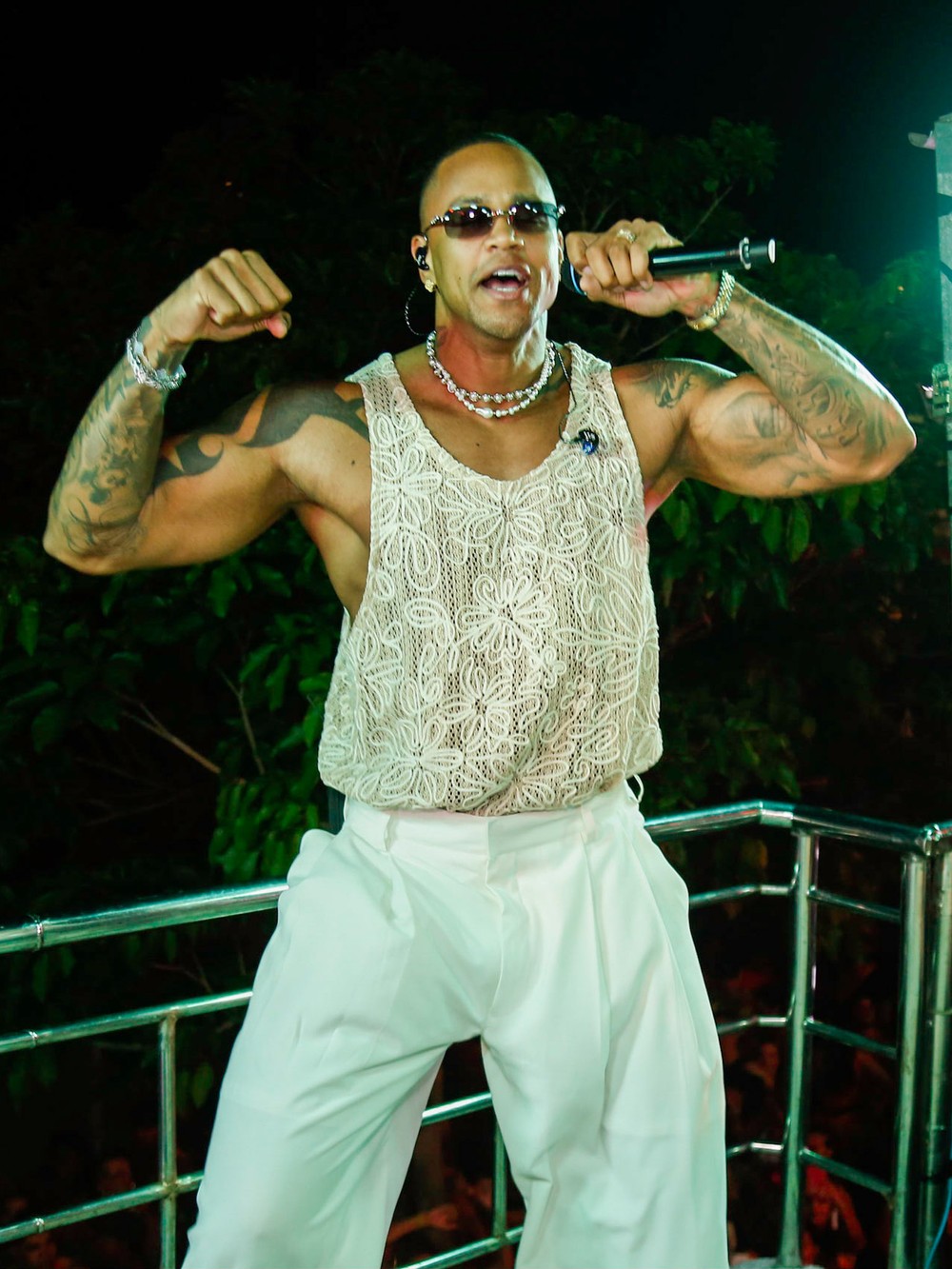
Léo Santana in a contextual photograph: Contextual celebrity photograph for The music gives the look somewhere to go; not tattoo evidence

At Carnatal, Santana sings into a microphone with both arms raised, wearing a white lace vest and trousers against a dark stage. This is a performance image, not a posed portrait.

Universal Music Brasil reported in February 2023 that Zona de Perigo reached number one on Spotify’s Brazilian chart and entered the global top 30. Those are 2023 chart results, not current rankings. The official video gives readers a direct sample of his music.

Take the personal idea with you

The neck kiss pairs a familiar image with a specific family reference. If you’re considering a personal design, start with what you want it to connect to and where you’re comfortable placing it. Size and placement affect how visible a tattoo is and how often you may explain it; a singer’s styling can offer ideas, but it doesn’t set rules for someone else.

Tiago PZK Tattoos: The Crescent on His Face and Why He Chose It

Tiago PZK has a small crescent beside his eye, with short dark marks extending below it. He has said the moon reminds him of his younger sister Ambar; he also chose a face tattoo as a way to commit himself to music. Those are two parts of his own explanation.

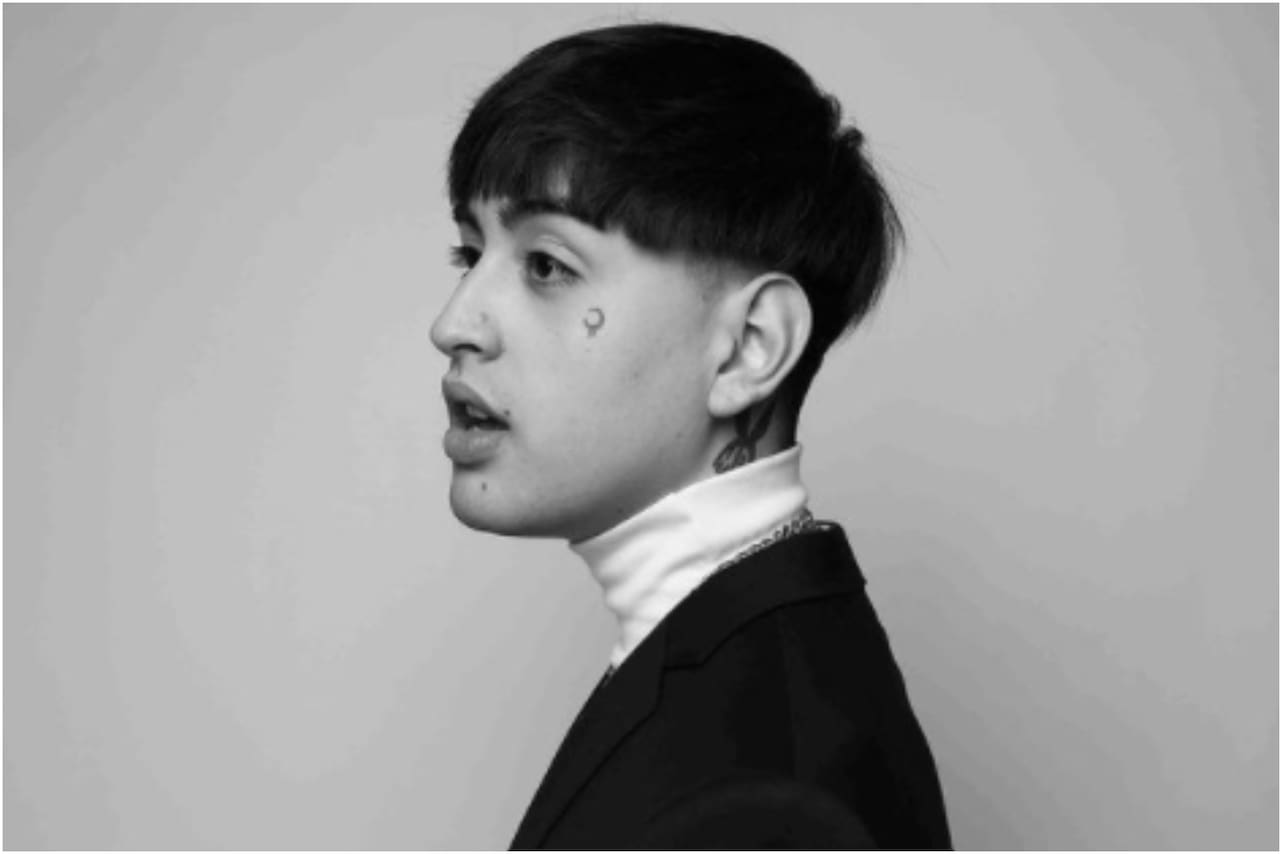
The crescent tattoo beside Tiago PZK’s eye

Tiago PZK tattoos: Crescent face design and confirmed family meaning

The crescent sits on his cheek near the outer corner of his eye, with short marks beneath it. In the black-and-white profile photo, the open skin around it keeps the drawing clear. In a Tu Música Hoy interview, later reported by Vía País in January 2022, Tiago said the moon reminds him of his sister Ambar. He described music as exciting but with a darker side, and said thinking of her helped him stay connected to light. That’s his meaning; the shape alone doesn’t establish astrology, religion or a relationship.

Why he put the moon on his face

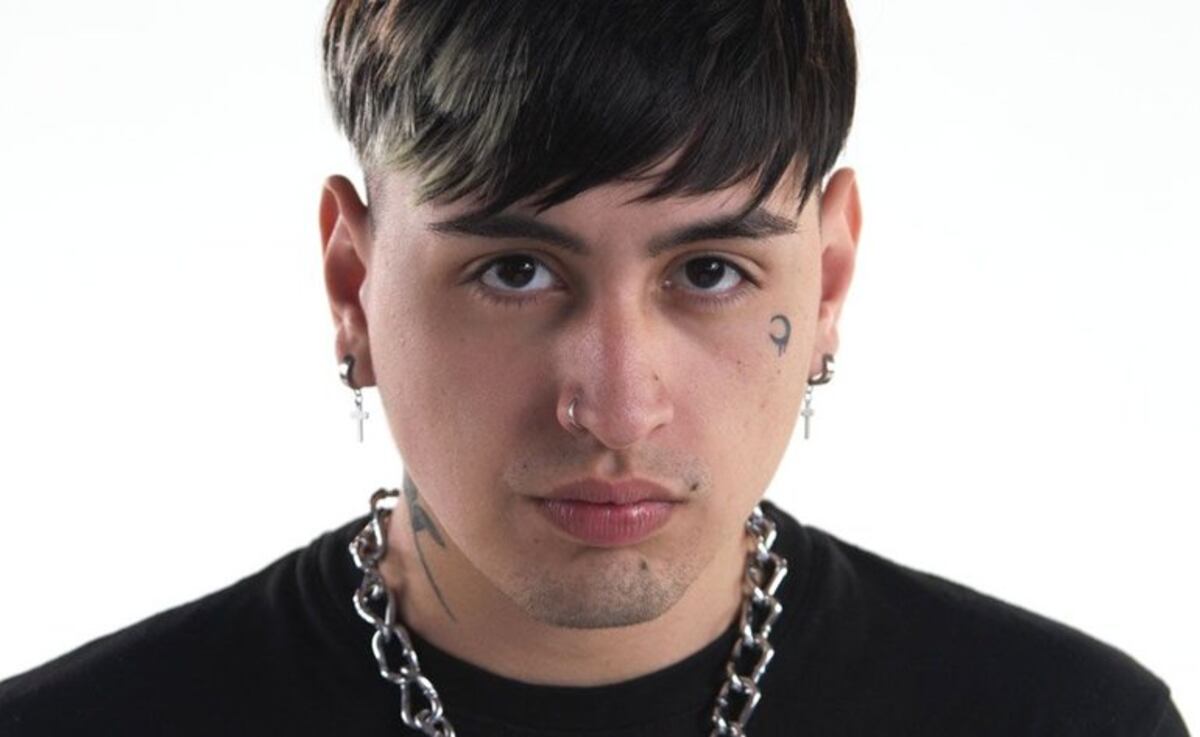
Tiago PZK tattoos: Crescent placement and commitment to music

On Los Mammones in October 2021, Tiago recalled telling his mother he wanted to go all in on music. She worried a face tattoo could make other work harder to find. He said music was the work he wanted. The placement made that choice visible to him and other people. In the front-facing photograph, the crescent stays compact; its location is what draws attention.

The conversation behind the public image

Tiago PZK in a contextual photograph: Contextual view for The conversation behind the public image; not tattoo evidence

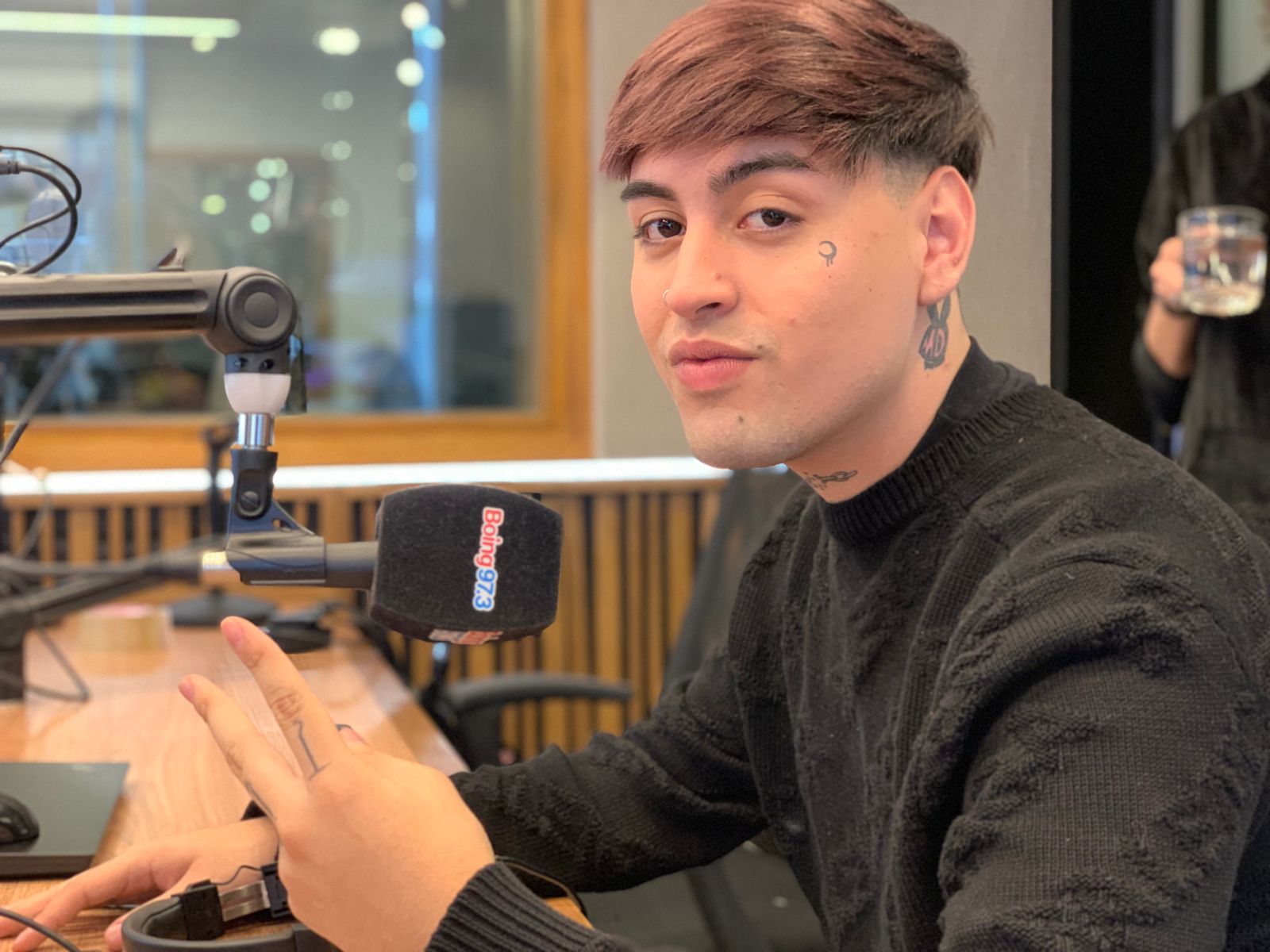
During a July 2022 visit to Radio Boing in Rosario, Tiago described the face tattoo as a way to pressure himself to keep pursuing music. He also discussed going from a few shows to a much busier tour schedule and the value of his parents supporting young musicians. The radio-studio photo shows him beside a microphone in a dark sweater, away from the stage lights. He was making that commitment while trying to build a career, not after its outcome was certain.

Monte Grande and the music he wanted to make

Tiago PZK in a contextual photograph: Contextual view for Monte Grande and the music he wanted to make; not tattoo evidence

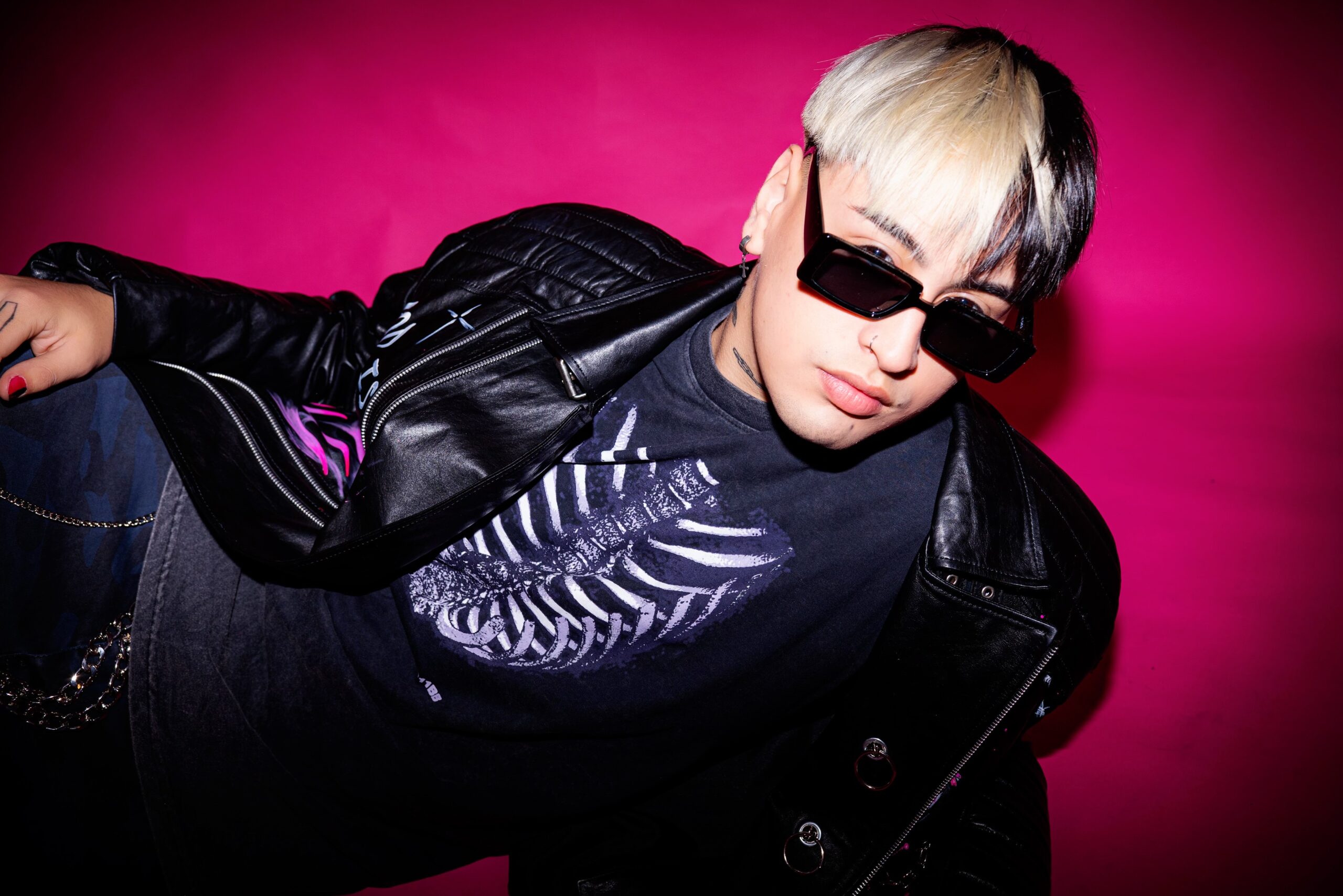
In a July 2022 interview with Paraguay’s La Nación, Tiago talked about returning to the country after taking part in a freestyle competition there when he was younger. He was promoting his debut album, Portales. He said freestyle could help him find rhymes or melodies in the studio, while writing a finished song took a different process. The reclining photograph presents a more styled look: leather jacket, dark glasses, two-tone hair and a bright pink backdrop.

A public style that leaves room to change

Tiago PZK in a contextual photograph: Contextual view for A public style that leaves room to change; not tattoo evidence

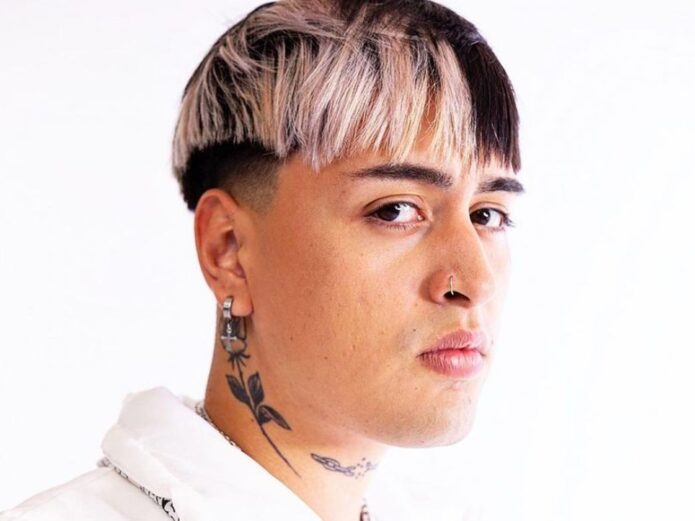
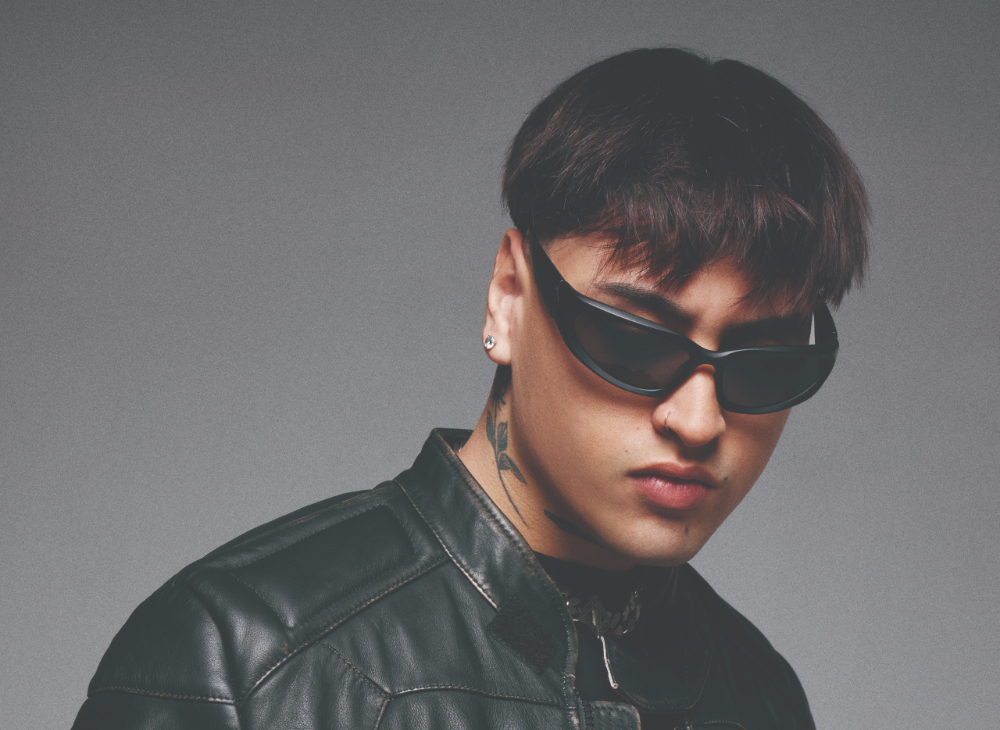
The photos show different looks: a pale fringe with white clothes, dark hair with a leather jacket, and pink-tinted hair at the radio desk. The grey-background portrait is quieter. Hair, clothes and lighting shift from one image to another, so a single frame can’t show the whole collection. Sunglasses or a turned head can also hide the area beside his eye; a detail missing from a photo hasn’t necessarily changed.

A wider audience in 2022

In May 2022, El Planeta Urbano reported that Amazon Music Latin had selected Tiago for its Rompe programme, which supports emerging Latin American artists.

What the stage photographs add

Tiago PZK in a contextual photograph: Contextual view for What the stage photographs add; not tattoo evidence

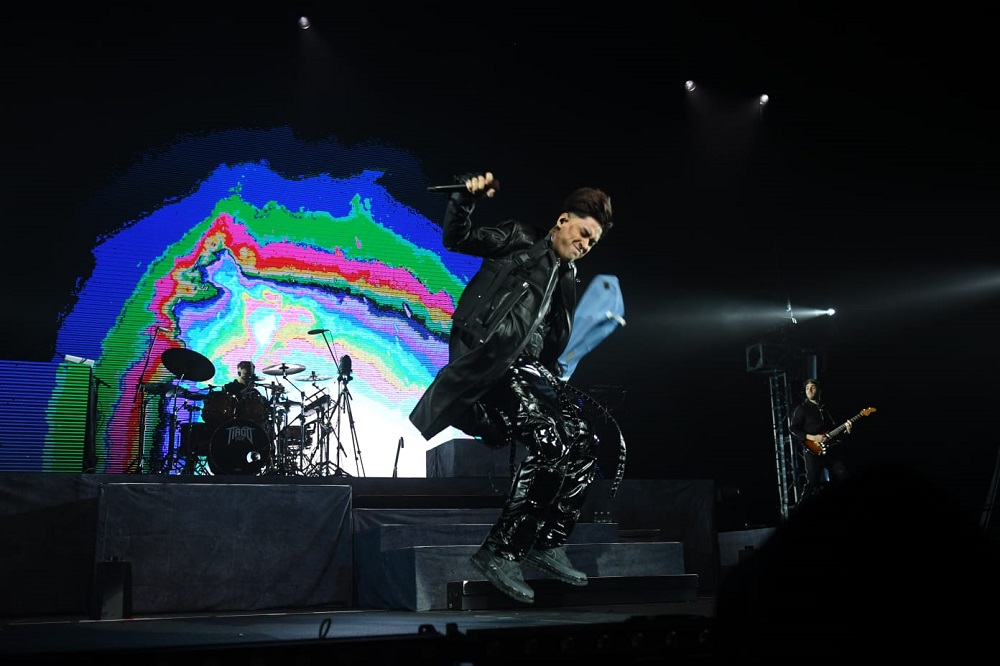
The stage photo catches Tiago jumping with his microphone raised; musicians and a colourful screen fill the background. It gives a sense of the performance, but not a close view of his face. In a January 2023 interview with Uruguay’s El País, he spoke about playing Montevideo’s Antel Arena and feeling far from loved ones. He also said larger shows could start to feel routine, while a much smaller London performance brought back the surprise of his early gigs. A growing crowd didn’t erase the adjustment of living on tour.

The long-coat studio look

Tiago PZK in a contextual photograph: Contextual full-length styling in a tan long coat; not tattoo evidence

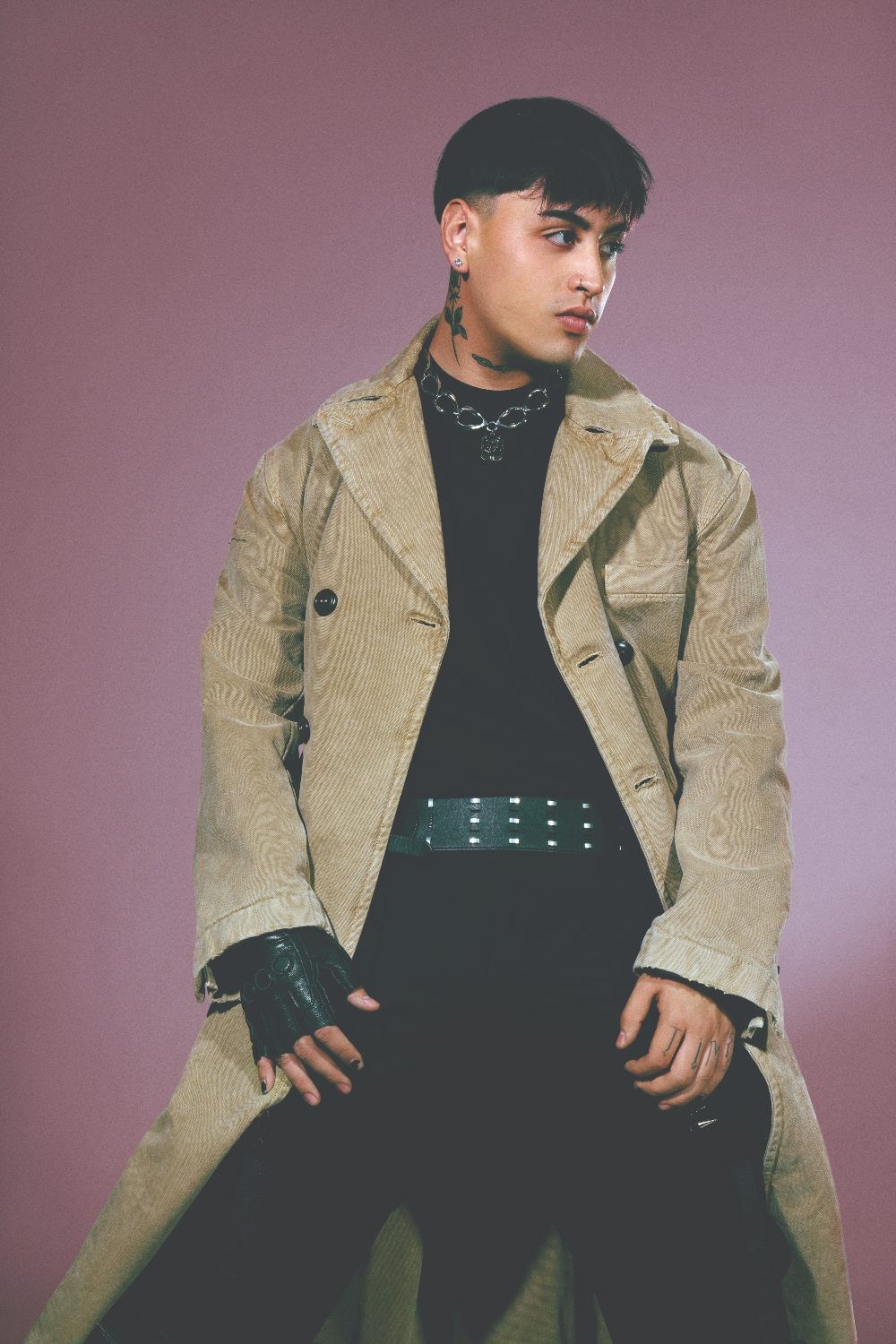
In this full-length portrait, Tiago wears a long tan coat over black clothes, held by a heavy belt. The outfit sets the silhouette before the smaller details; the image is useful for the styling, not for confirming new tattoo details.

Hear Tiago explain it himself

The embedded interview lets Tiago explain the moon’s family reference and why he chose to put the tattoo on his face.

Mike Bahía Tattoos: Whale, Tigers, ARENA and the Sea

Mike Bahía’s collection includes large animal portraits, small lettering and a whale he says was his first tattoo. He has talked about the sea, family and the words ARENA and VERDAD; close-up photos show how different the pieces are.

The whale tattoo that started his collection

Mike Bahía tattoos: The whale tattoo that started his collection

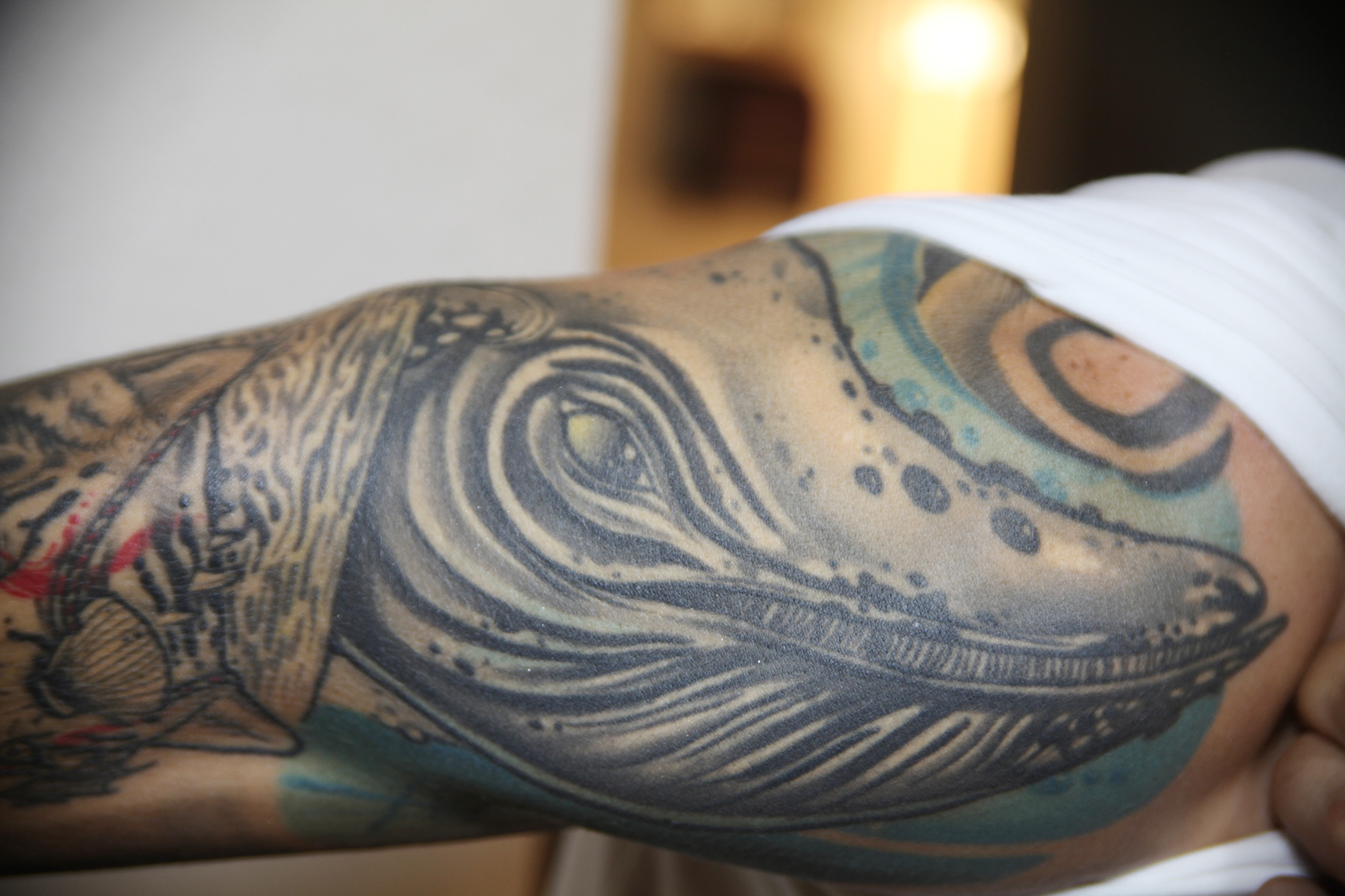
Radio Moda reported that the whale was Mike’s first tattoo. He chose it because he loves marine animals and hopes to spend his later years near the sea. In the photo, long pale lines sweep under the jaw, a small eye sits inside the curve, and blue shading frames the lower edge. It’s a close view of part of his arm, not the full piece.

The tiger tattoo beside the whale

Mike Bahía tattoos: The tiger tattoo beside the whale

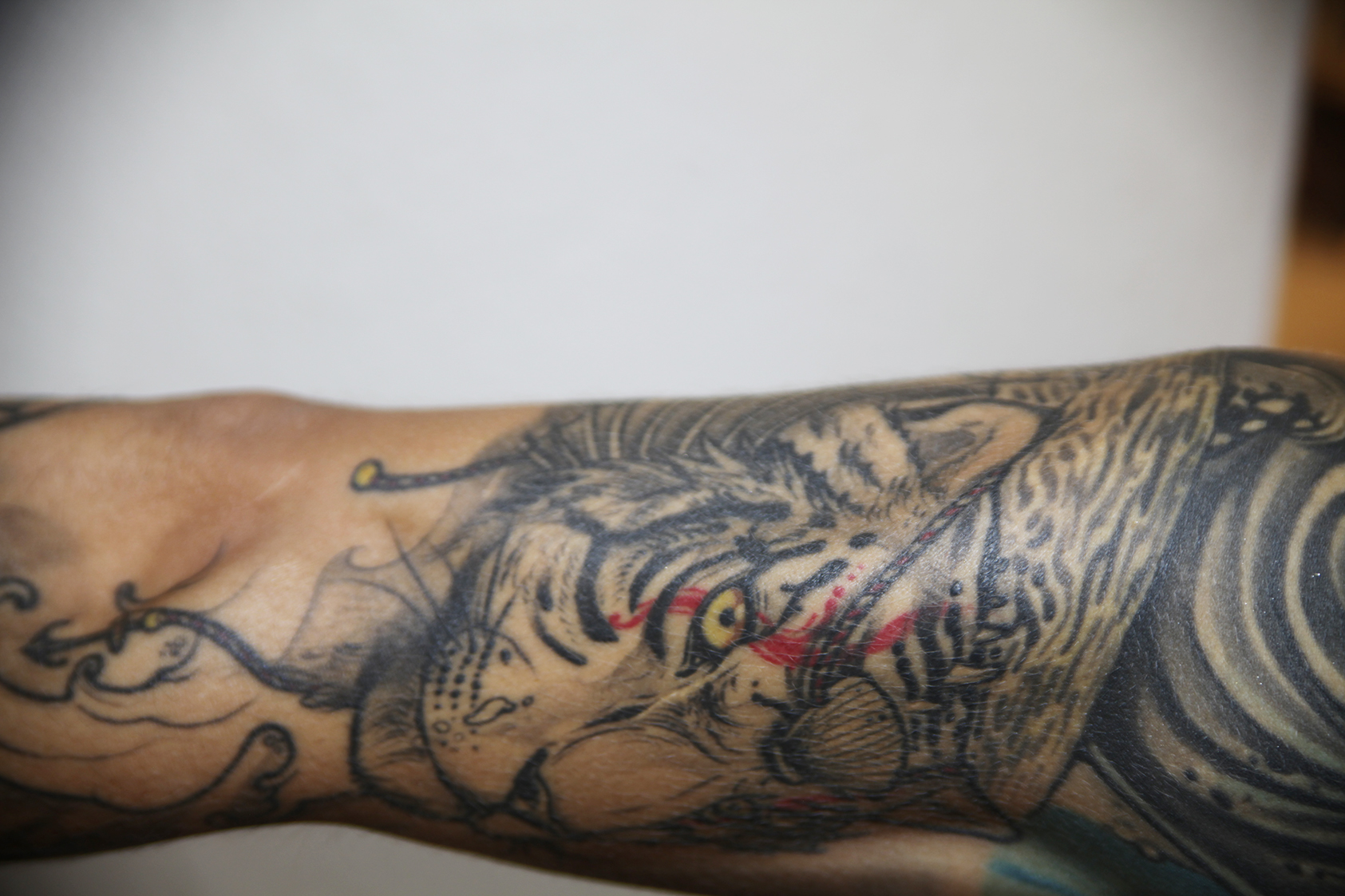
A striped tiger face sits beside the whale. Its yellow eye and a red accent break up the surrounding black and grey, while the muzzle points along the arm. In a 2018 Univision dressing-room interview, Mike said he added sea-related details around this tiger. The two pieces sit close together, linking the animal portraits without blending them into one design.

The owl stretched along his forearm

Mike Bahía tattoos: The owl stretched along his forearm

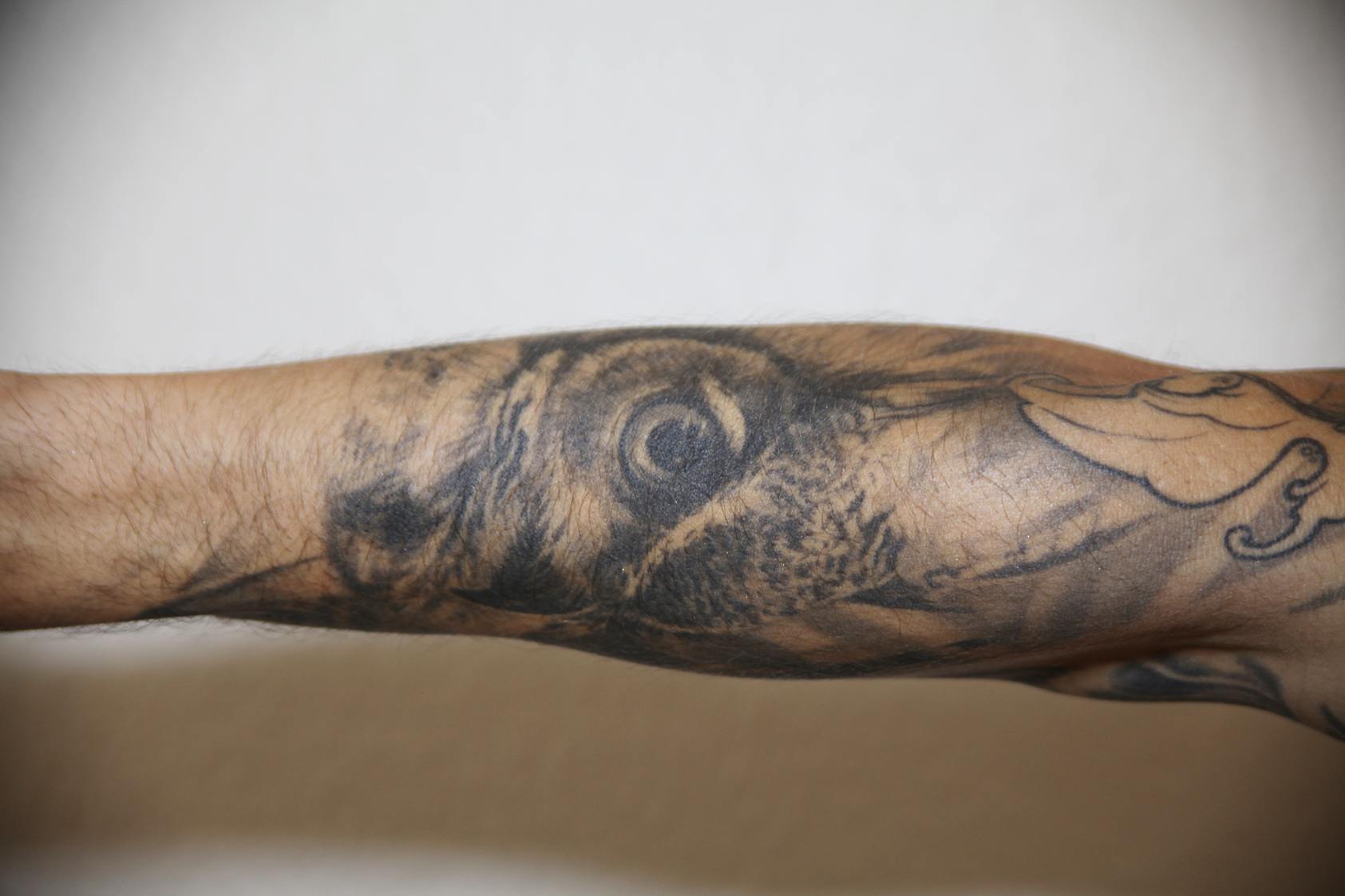
The owl has a broad, round eye surrounded by rings of shading that soften into feather texture. Mike linked his interest in animals to his family’s circus background during the 2018 Univision interview; the owl was one of the animals he showed. He didn’t assign it a standard symbolic meaning.

The lion on his inner forearm

Mike Bahía tattoos: The lion on his inner forearm

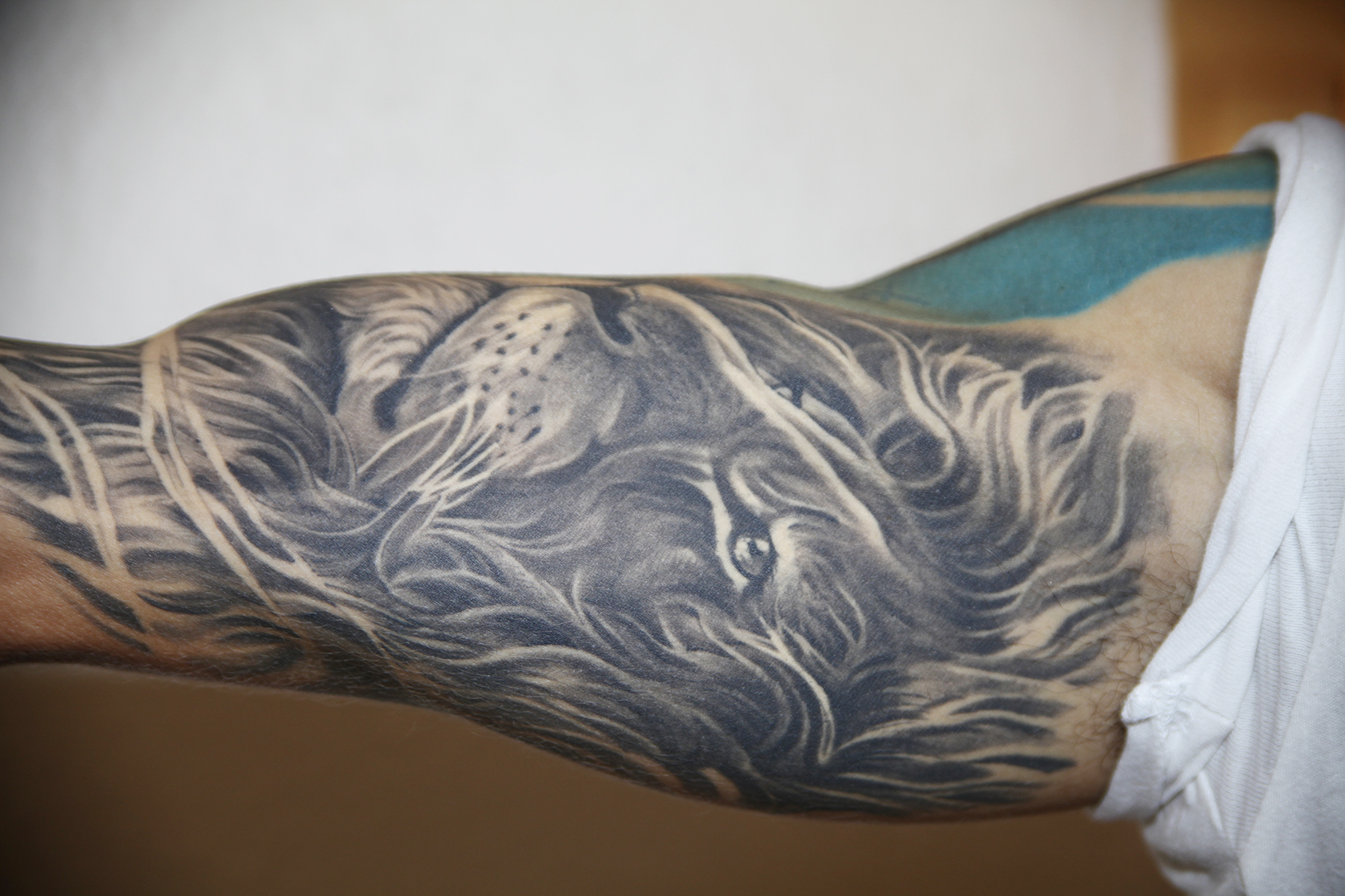
The lion covers a large area of Mike’s inner forearm. Its pale muzzle and long whiskers stand out against the dark face, while open skin breaks up the mane. Univision identified the artist as being from Pereira but didn’t name them. The image shows the lion turned sideways, with the mane following the length of his arm.

A second tiger tattoo with a green eye

Mike Bahía tattoos: A second tiger tattoo with a green eye

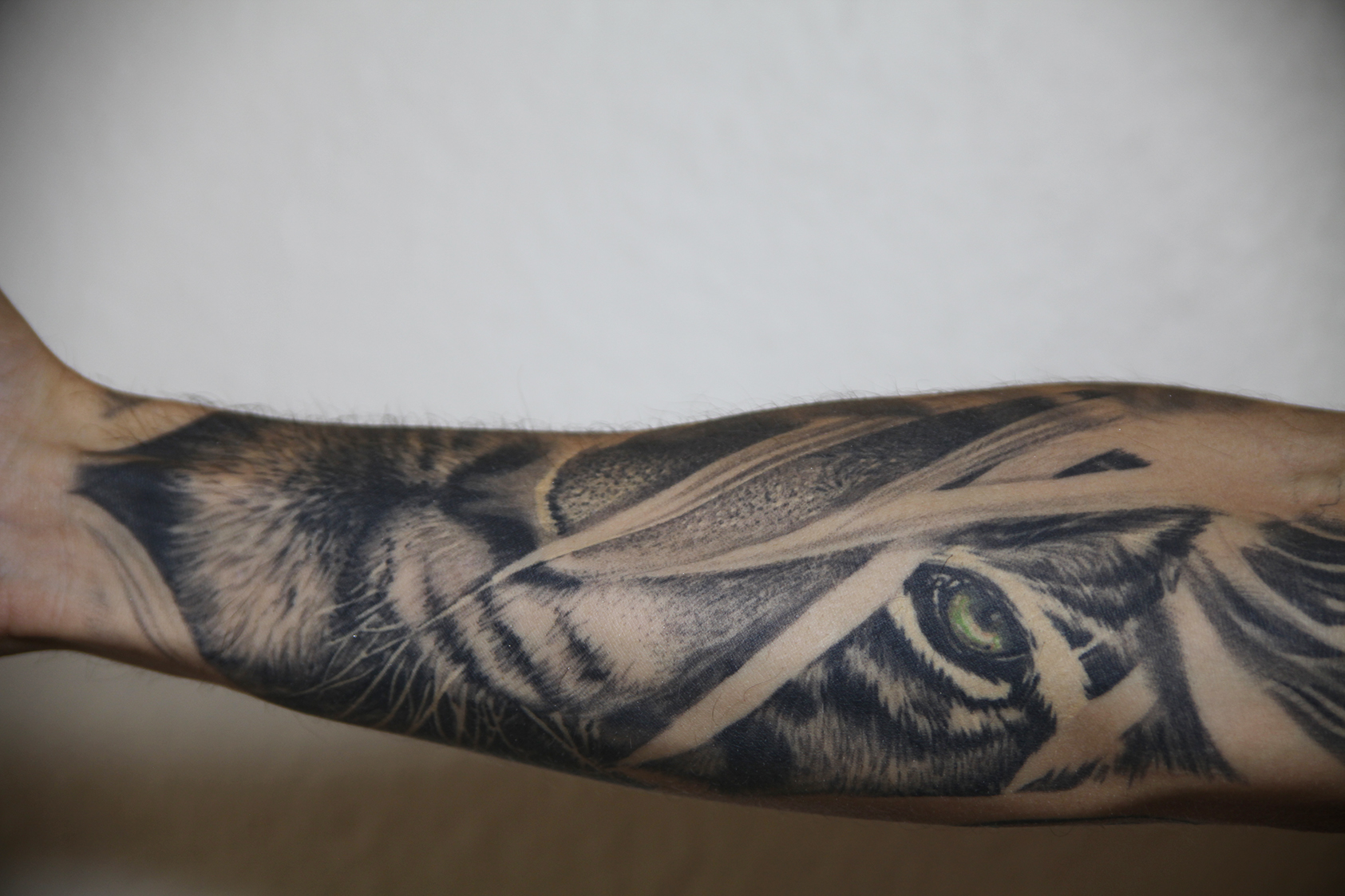
This is a second tiger, with a green eye between pale diagonal shapes and broad black stripes around the face. Mike told Univision he returned to the Pereira artist for another tiger because he liked the artist’s work on big cats. The green eye and broken-up background make this portrait easy to tell apart from the yellow-eyed tiger beside the whale.

The small palm tree on his hand

Mike Bahía tattoos: The small palm tree on his hand

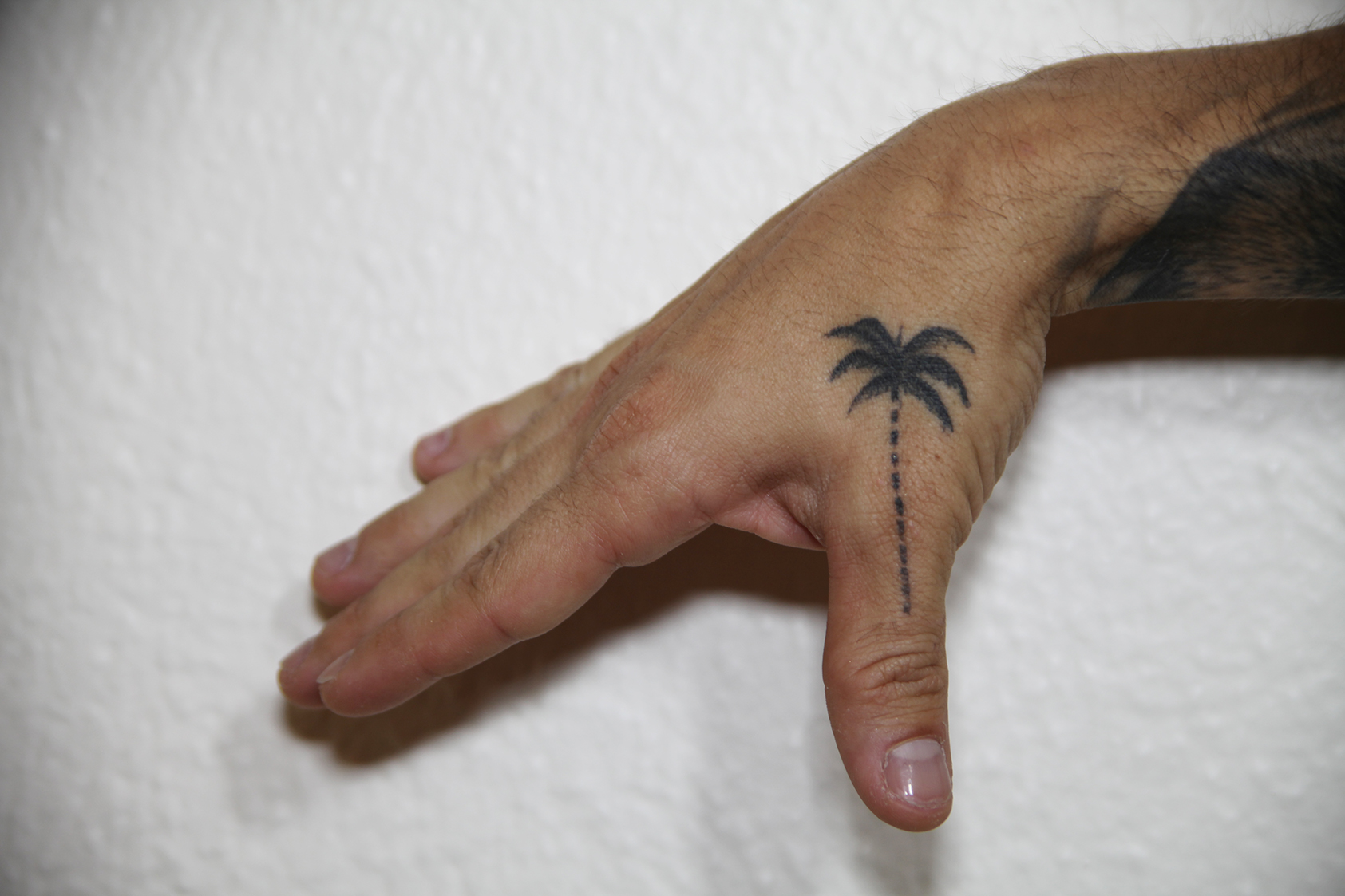
The small palm tree sits on the side of Mike’s hand near his thumb. Dark fronds spread out above a narrow trunk, with bare skin around the design. In a 2017 Radio Moda interview, he connected the palm with Los Angeles and plans around Amantes, his collaboration with Greeicy. Later coverage also described the couple’s matching palms as a reference to their wish to live near the beach.

What ARENA on Mike Bahía’s neck means

Mike Bahía tattoos: What ARENA on Mike Bahía's neck means

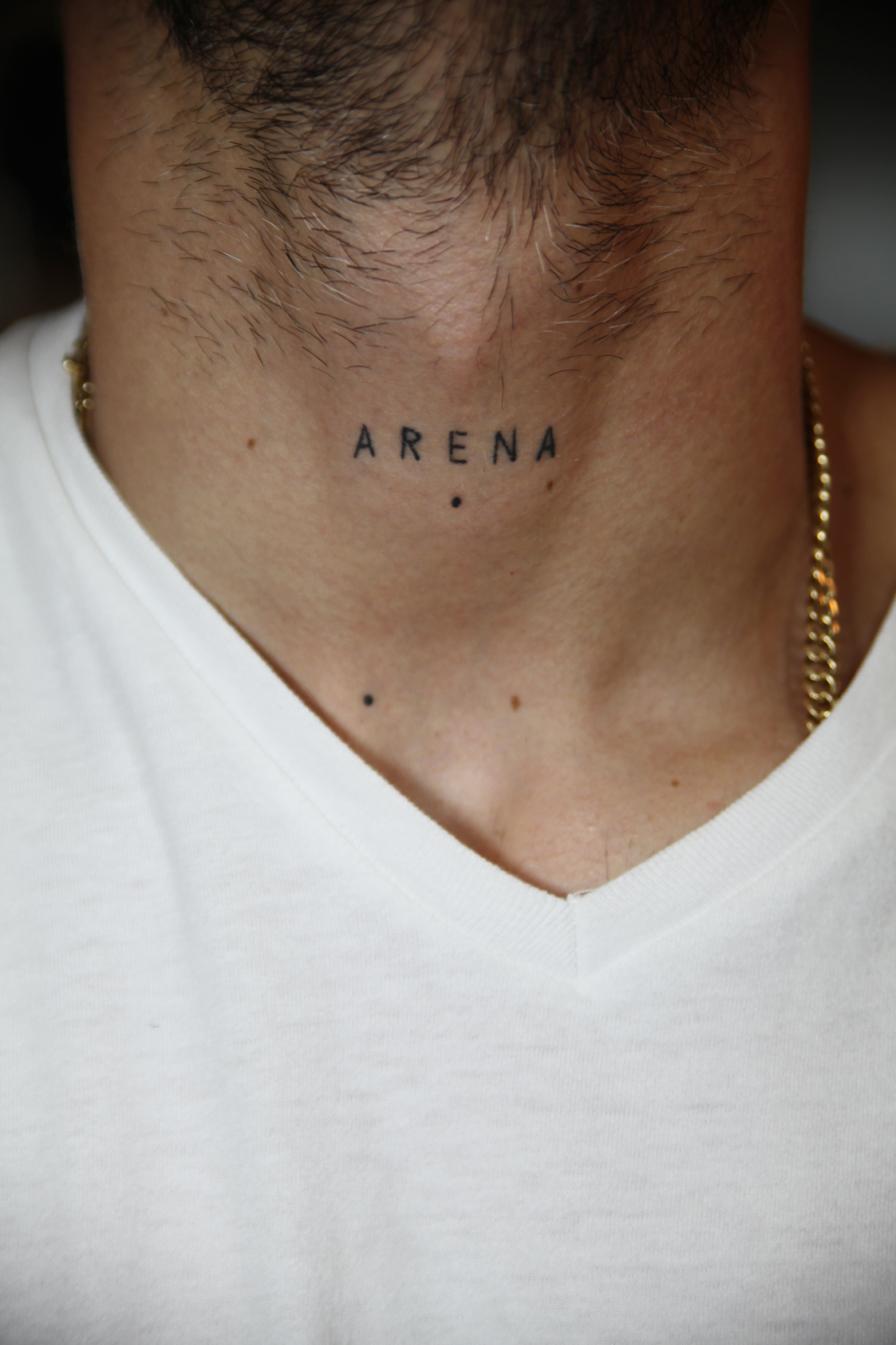
Five spaced capitals spell ARENA across the front of Mike’s neck. He told Radio Moda in 2017 that it was the name he wanted for a future daughter, and said he chose the throat because she might one day hear what he sang or said. That interview records what he was thinking then; it doesn’t establish that he later had a daughter named Arena. Infobae reported that Mike and Greeicy became parents to their son Kai in April 2022.

The Stevens memorial tattoos behind his ear

Mike Bahía tattoos: The Stevens memorial tattoos behind his ear

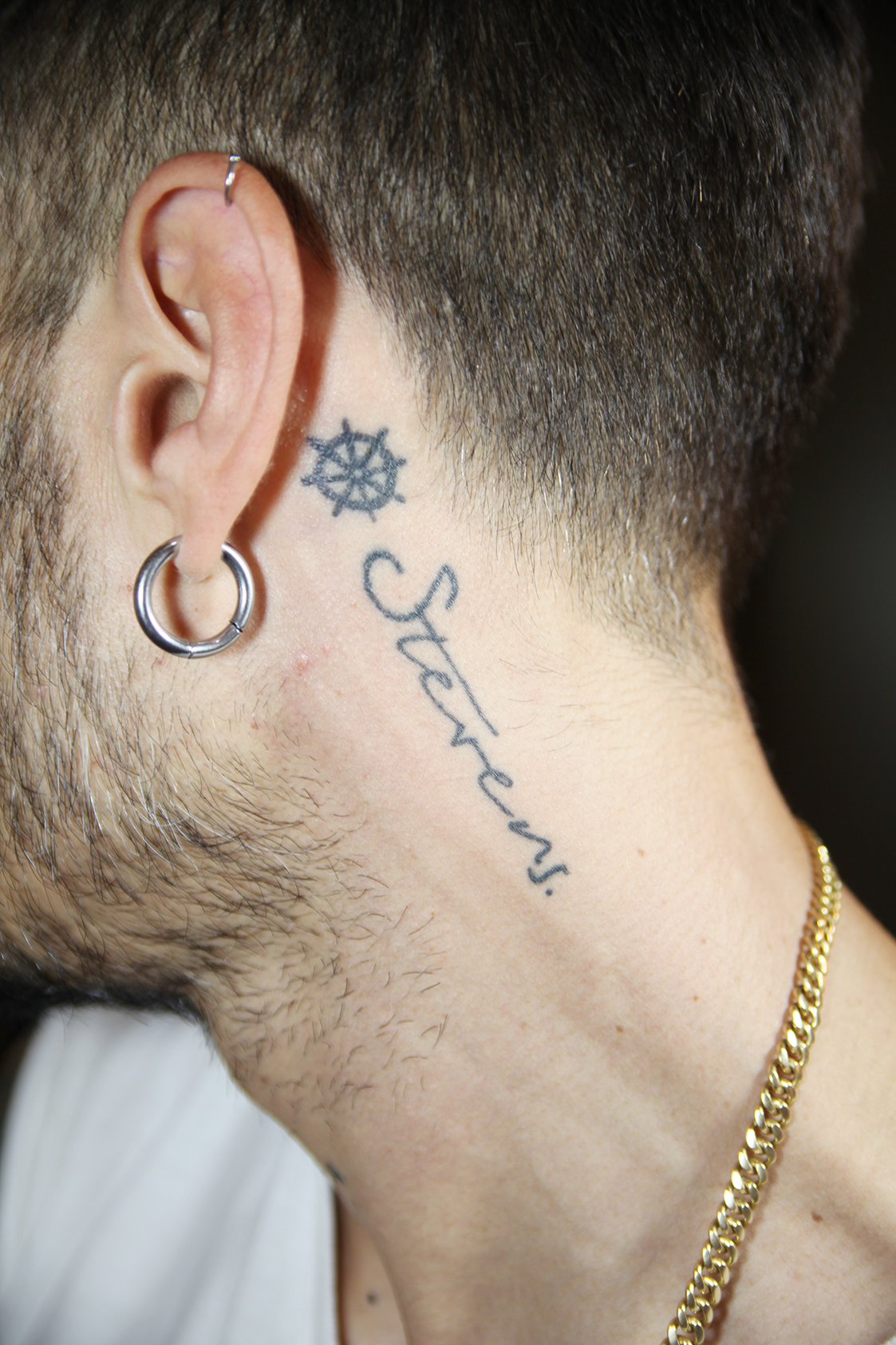
Behind Mike’s ear, a small ship’s wheel sits above the handwritten name Stevens. In his Univision interview, he said Stevens was his brother, who died at birth, and connected the name and the sea with protective figures in his life. The wheel and the lighter script sit close together, but remain distinct tattoos.

VERDAD repeated across his stomach

Mike Bahía tattoos: VERDAD repeated across his stomach

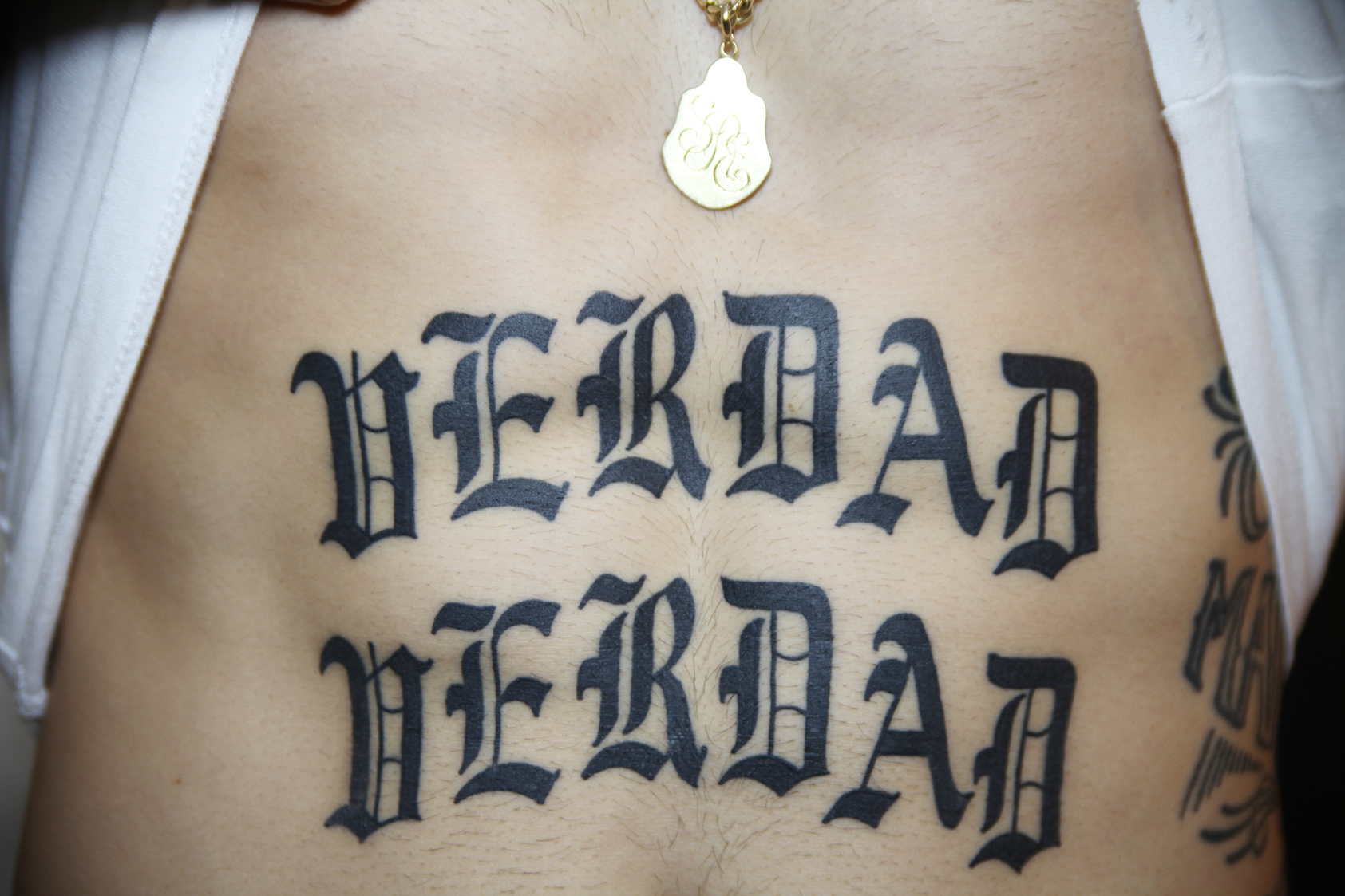
VERDAD, Spanish for “truth,” appears twice across Mike’s stomach in heavy blackletter-style capitals. In a 2018 gallery interview, he connected the word with honesty, including being honest with yourself. The repeated lettering is visible in the photograph; he didn’t give the second line a separate meaning.

The sailor phrase tattoo covering his ribs

Mike Bahía tattoos: The sailor phrase tattoo covering his ribs

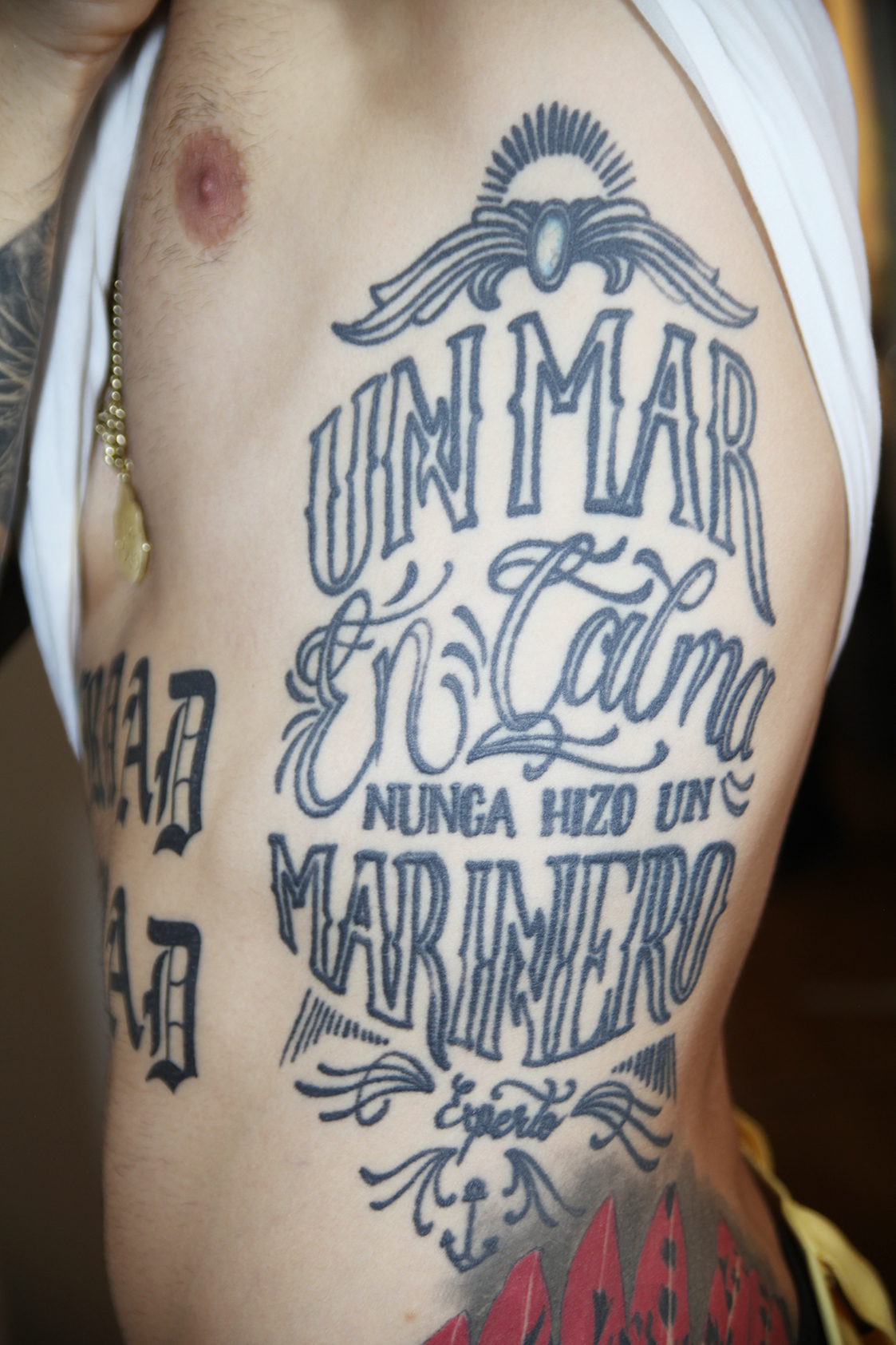
The rib tattoo reads “Un mar en calma nunca hizo un marinero experto” (“A calm sea never made an expert sailor”). In the photo, the final word, experto, sits beneath the much larger marinero. Outlined capitals, flowing script, smaller words and curved ornaments break the long phrase into a composition. It continues the sea imagery elsewhere in his collection.

Watch Mike’s Telemundo conversation

The close-ups show the designs; Telemundo’s tattoo interview gives Mike space to talk through them himself.

Daniela Darcourt Tattoos: The French Promise She Shares With Her Sisters

Daniela Darcourt shares one tattoo with her five sisters: the French phrase “Ensemble quoi qu’il arrive” across her upper back. She has also described pieces tied to her grandfather, mother and sister; only some designs and meanings are clear in her public interviews.

The matching back lettering she shares with her sisters

Daniela Darcourt tattoos: The matching back lettering she shares with her sisters

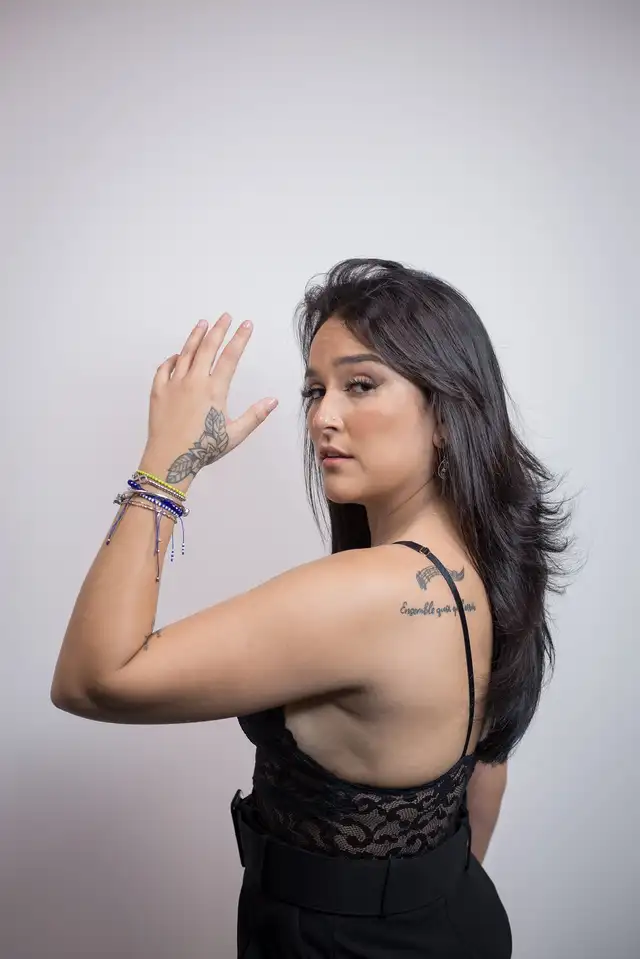
In a December 2021 interview with La República, Daniela said all six sisters got the phrase together at her apartment. It means “Together, whatever happens.” She said she likes French and connected that interest to her family name. The lettering runs in a small line across her upper back near the shoulder blade. A clothing strap crosses part of it in the photo, so the image shows the placement but isn’t a reliable spelling reference.

A collection built around people she knows

Daniela Darcourt in a contextual photograph: A collection built around people she knows; not tattoo evidence

In a 2020 interview with El Comercio, Daniela described a tattoo made from her grandfather’s signature and three stars for her mother, her sister and herself. She also mentioned a tattoo on her left arm that she felt summed up her life, without explaining the design in detail. The studio portrait here shows her overall look, not a close view of those family pieces.
Small details beside bigger pieces

Daniela Darcourt in a contextual photograph: Small details beside bigger pieces; not tattoo evidence

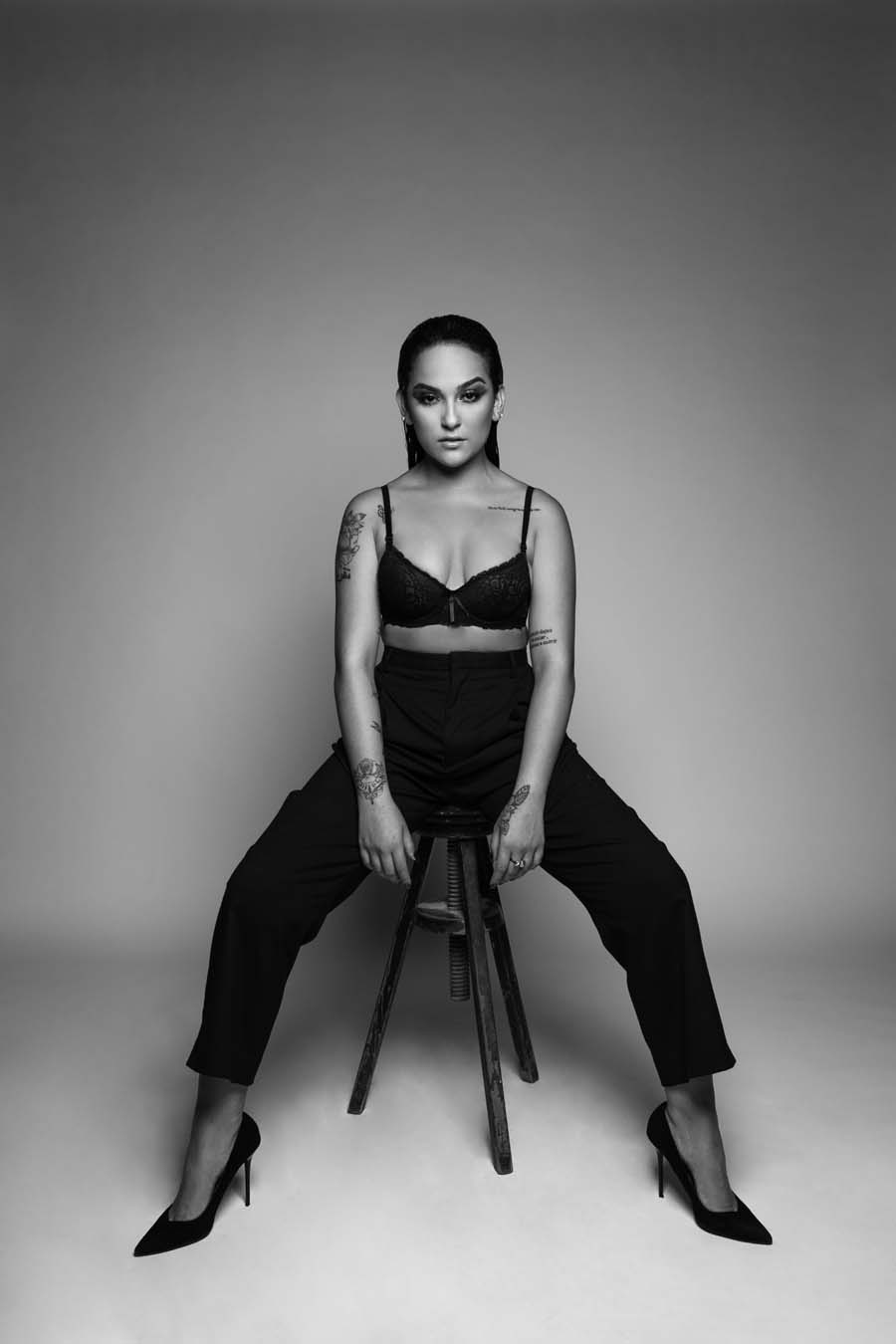
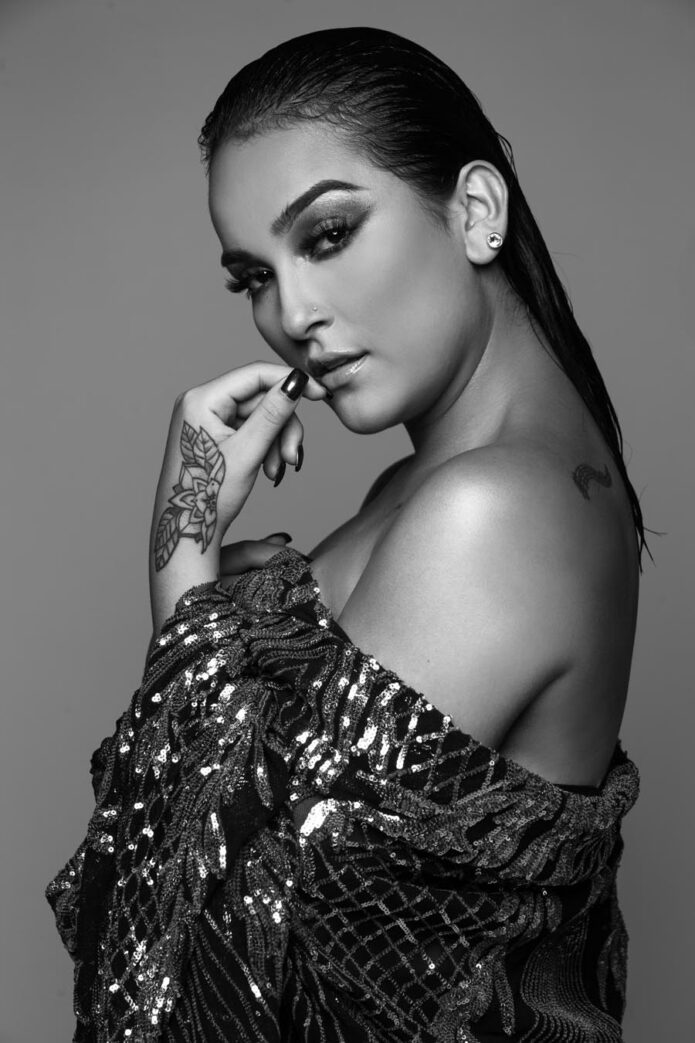
The full-length studio image shows darker work around the upper arm and smaller marks near the wrists and chest. Clothes cover some areas and leave others visible; the gaps between designs remain easy to see. The photograph gives a sense of where the tattoos sit, but not a dependable count.

How she looks on camera

Daniela Darcourt in a contextual photograph: How she looks on camera; not tattoo evidence

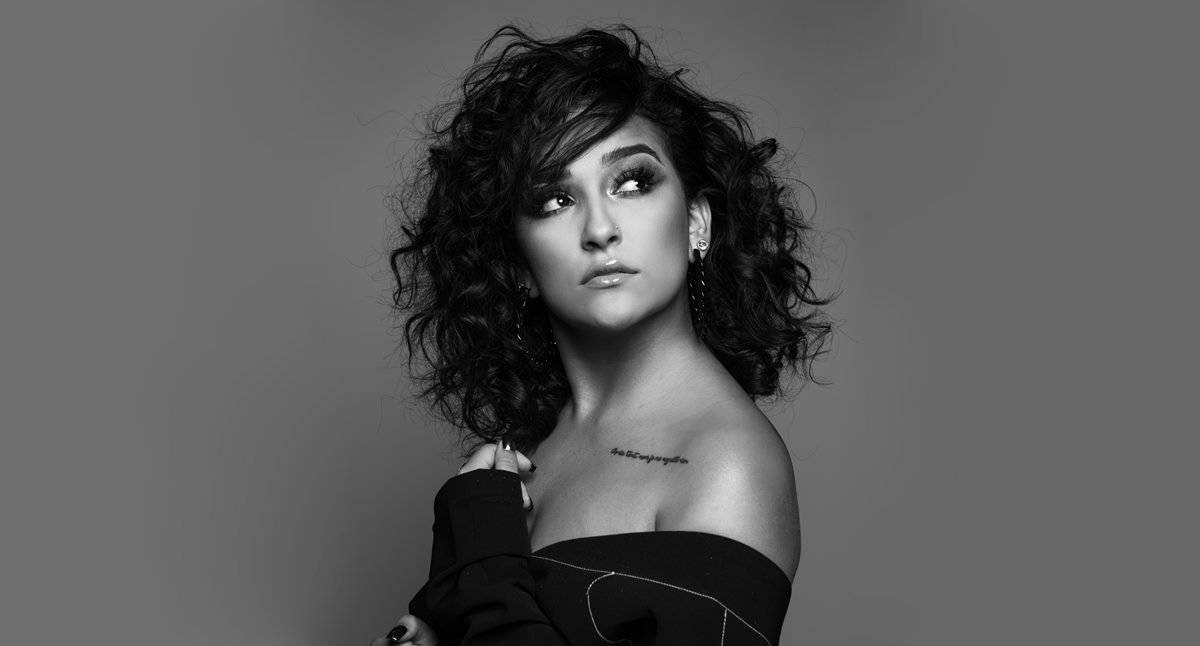
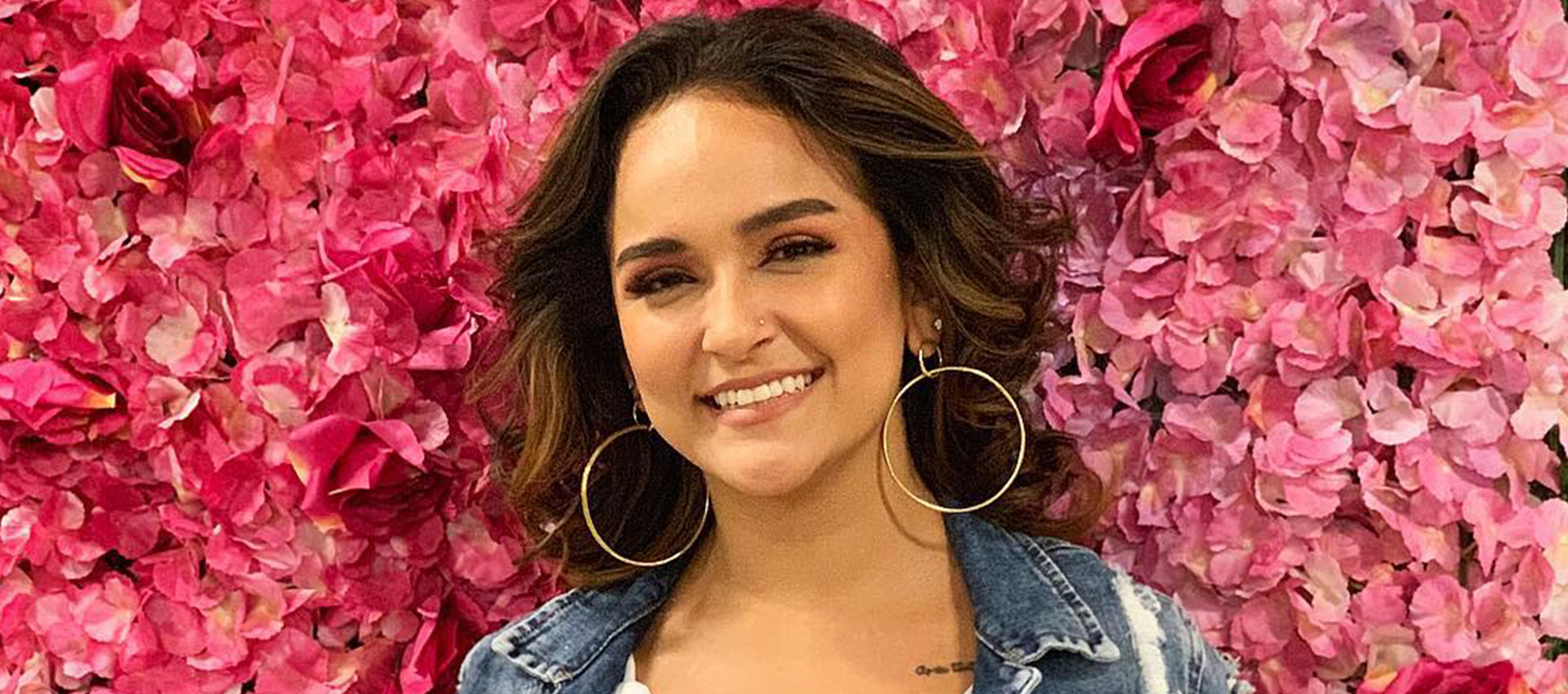
The flower-wall portrait shows Daniela in a denim jacket, smiling, while the black-and-white studio images have a more formal feel. These photos document different styling and lighting; they don’t show that a tattoo was added or changed. The jacket also covers much of her ink, making this a contextual portrait rather than tattoo evidence.

El Porvenir and the wider picture

Daniela Darcourt in a contextual photograph: El Porvenir and the wider picture; not tattoo evidence

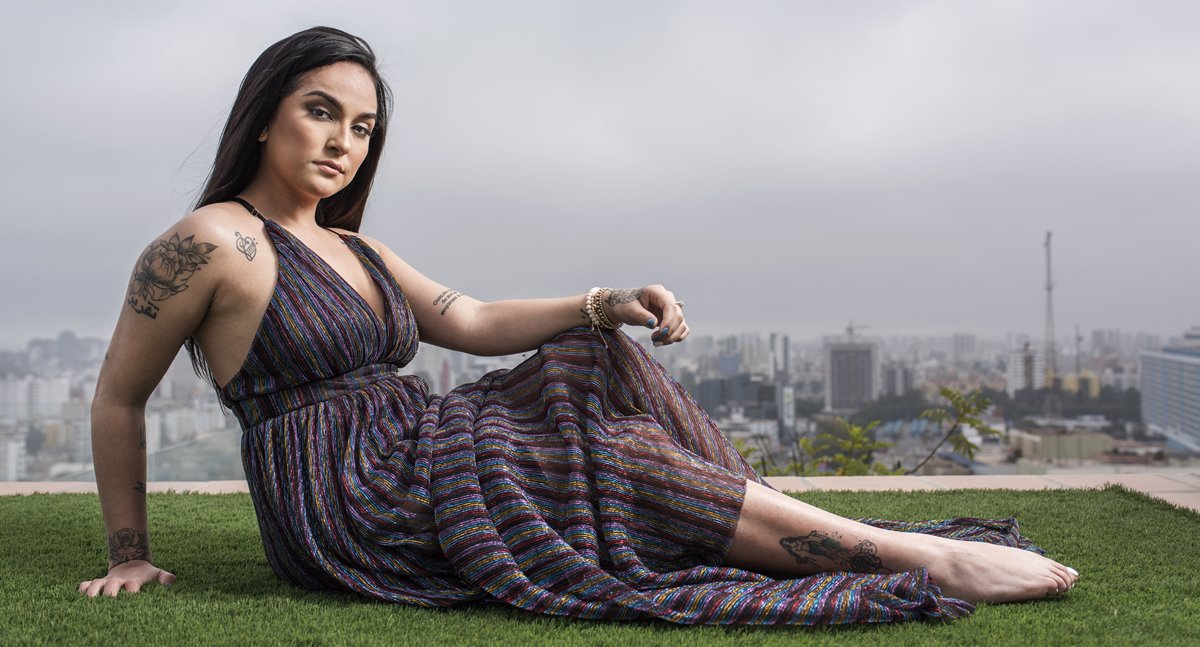
In a 2020 Somos interview, Daniela spoke about El Porvenir, the Lima neighborhood where she grew up, and remembered going out for food with her mother and sisters. The home portrait shows her seated outdoors in a long patterned dress, with the city behind her and several tattoos visible. The interview gives family context, but Daniela hasn’t said that every design refers to her childhood or neighborhood.

Keeping the count in perspective

Daniela told El Comercio in 2020 that she had 19 tattoos; La República described 24 in December 2021. Those are counts from two dated interviews, not a current total. She also said her interest in tattoos began at 15, which doesn’t establish when she got her first one.

Taking inspiration without repeating her promise

The matching phrase has meaning because Daniela and her sisters chose it together. If you’re considering a shared tattoo, agree on wording that matters to everyone and check the spelling before it goes on skin. Matching designs don’t have to use the same placement. Daniela’s photo shows the phrase partly covered by a strap, so it shouldn’t be copied as a text reference.

Hear Daniela in her own setting

The embedded performance of “Si Tu Te Atreves” in Lima brings the focus back to Daniela’s voice and stage presence. It’s a chance to hear her perform, not a reason to search the video for tiny tattoo details.

Fameye Tattoos: The Meaning Behind His Hand Ink

Fameye’s documented tattoos include a portrait of his son and pieces he has linked to strength, music and travel. The photos show ink across his hands and arms, but they don’t identify every mark.

The tattoo of his son’s face

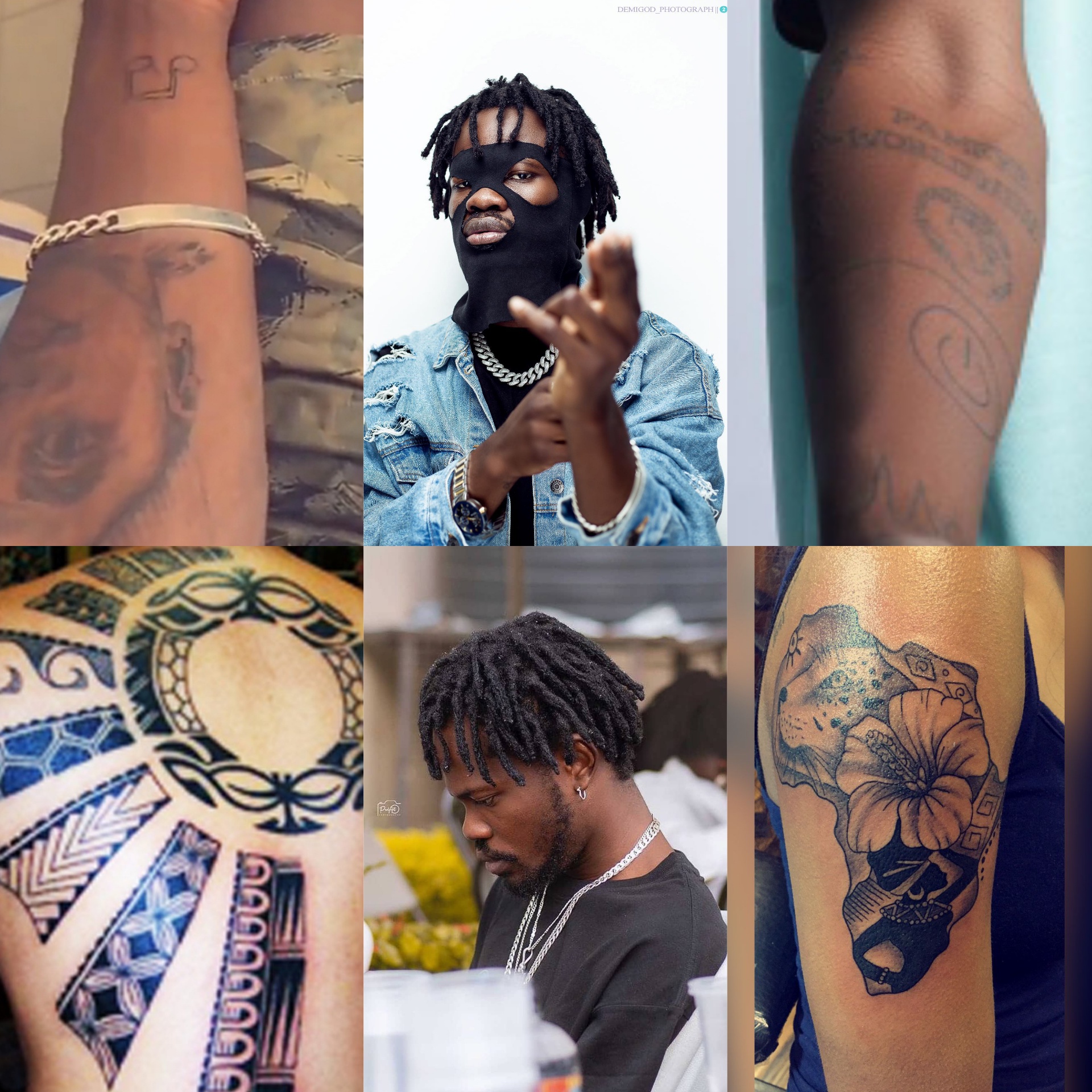
Fameye tattoos: Genuine tattoo reference for Fameye's documented family portrait

In 2020, Fameye showed a hand tattoo reported as a portrait of his son. Modern Ghana covered the reveal after a video from OdarteyGH TV showed Fameye with his child and the design. Reports described it as his first tattoo. He said the image reminded him of his son and the care he wanted to give him.

Why that moment matters

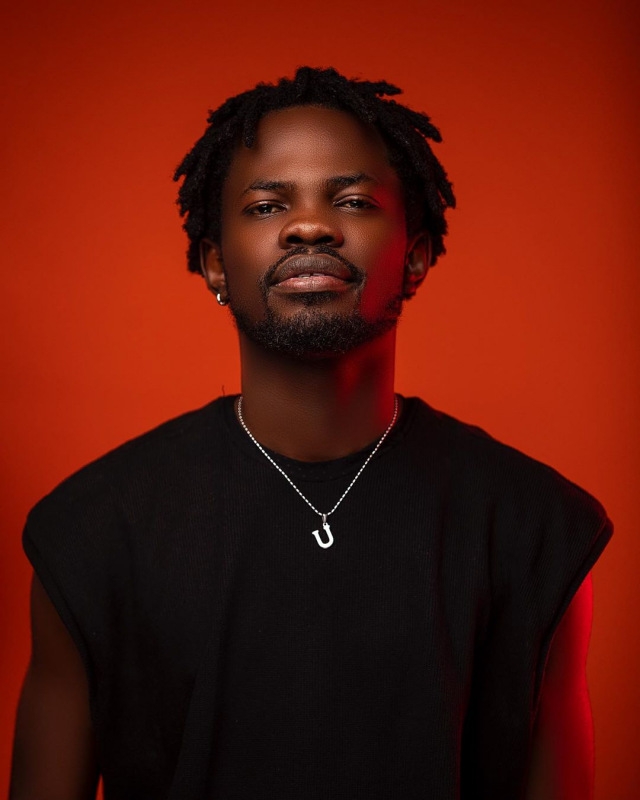
Fameye in a contextual photograph: Fameye family and performance context; not tattoo evidence

Fameye has said he lost both parents when he was very young and was raised by his grandmother. When he discussed the portrait, he connected it with the care he missed and the support he wants his son to feel. The tattoo reflects his hope to be the kind of parent he wanted for himself.

The energy he brings to a room

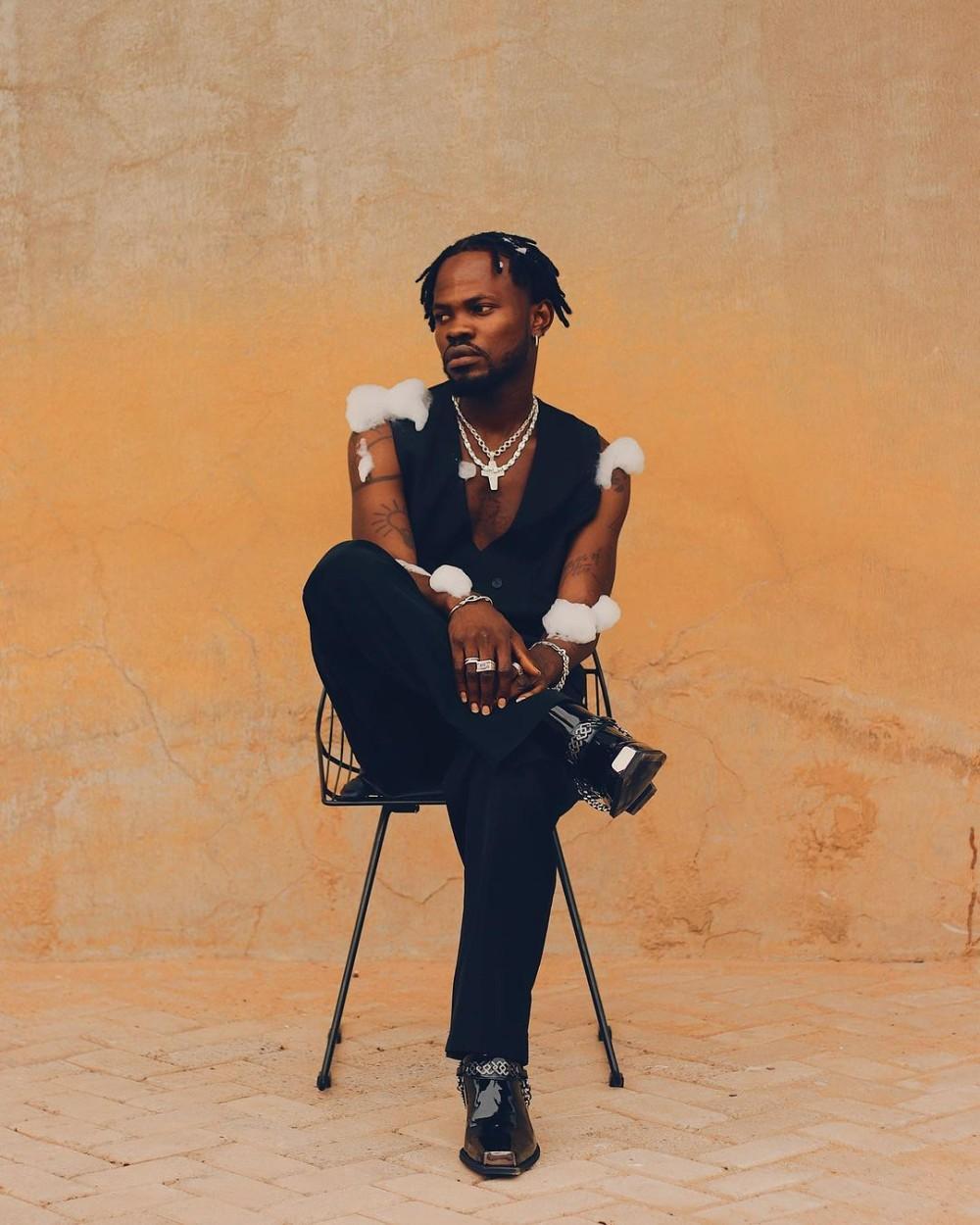
Fameye in a contextual photograph: Fameye music-scene context; not tattoo evidence

A 2021 interview published by Goldennewsgh quotes Fameye describing a tattoo on the right side of his hand as a sign of power. He said it made him feel strong and reminded him of the energy he needed on stage. He also mentioned a drawing linked to music and melody. The available photos don’t show its shape clearly enough to identify it, so the connection he described is the limit of what we can say.

A visual language from Ghana

Fameye in a contextual photograph: Fameye live-performance context; not tattoo evidence

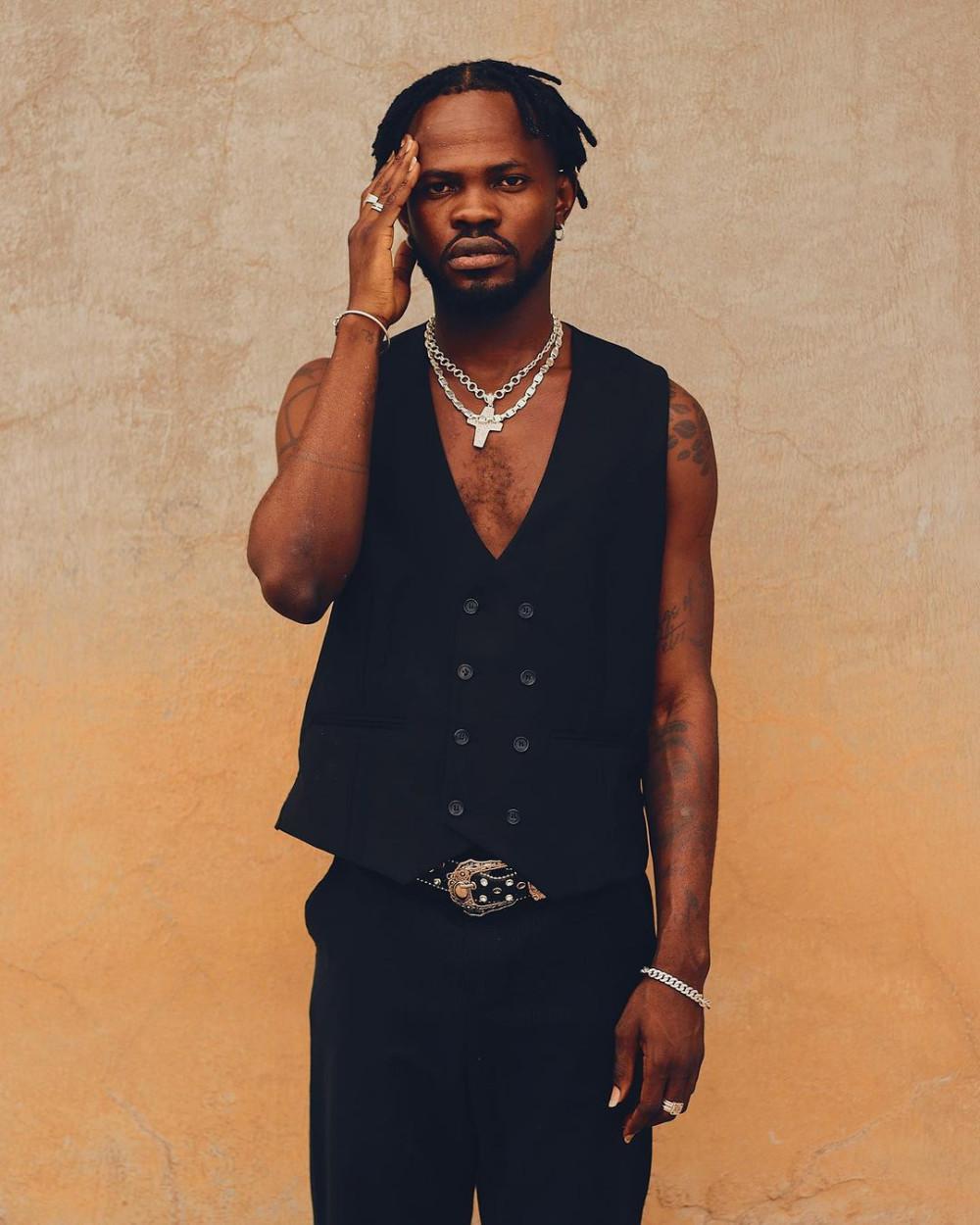
Fameye’s comments center on details he has named himself: fatherhood, music and the strength he wants for a performance. Photos from interviews, videos and shows show the tattoos in different settings, but they are not a complete inventory of his body art.

When a performance gets close

Fameye in a contextual photograph: Fameye interview context; not tattoo evidence

Fameye uses his hands while performing—holding a microphone, keeping time or gesturing to the crowd—so ink there appears as part of the movement without needing to be large. Hand placement stays visible in everyday life and takes more wear than a covered area. That practical side may matter to someone considering the spot, but it doesn’t replace Fameye’s own reason for the portrait.

The interview that filled in the gaps

An Entertainment Wahala interview on Atinka Television, cited by Goldennewsgh, fills in more of the story. Fameye said he hadn’t counted his tattoos because he didn’t have many, but he knew what each meant. He also mentioned designs connected to countries he had visited and said he didn’t intend to add many more.

Asked about the designs, he said, “My son’s own stands for something different.” He explained that the portrait connects to his child and the love he wants to give him.

What we can confirm and what we should leave alone

His accounts document a portrait of his son, a tattoo he connects to power, another linked to music and melody, and marks associated with places he has visited. Photos show some of the placement, but do not establish a full count or every design’s meaning.

How to take the idea without copying it

If Fameye’s approach gives you an idea, start with the person or experience you want to remember; the design doesn’t have to be a portrait. For portrait work, bring clear reference photos and discuss scale with the artist so the features remain readable.

A hand or wrist stays visible and gets plenty of movement and wear. Ask how the tattoo may age, then choose a placement you’ll be comfortable seeing in ordinary life, not only in a stage photo.

The short version

The portrait is the clearest story Fameye has shared about his tattoos: he wants to keep his son close and give him the care he missed growing up. His other public explanations point to music, strength and travel.

Frank Turner Tattoos: The Stories Behind His Folk-Punk Ink

Frank Turner’s tattoos trace the music, people and miles in his life. His arms and hands carry hardcore references and lettering; a number on his chest marks a touring milestone. He has also spoken about impulsive tattoos and fans who have made his songs part of their own tattoo stories.

The first tattoos came from the hardcore scene

Turner has said he got his first tattoo at 16, while immersed in hardcore music and still hiding new ink from his parents. It was a UKHC logo on his arm, done by London tattooer Bugs. He described the mark as a sign of the scene he belonged to.

That beginning helps place the rest of the collection. The tattoos sit alongside his music history, as souvenirs from different chapters rather than a single design planned all at once.

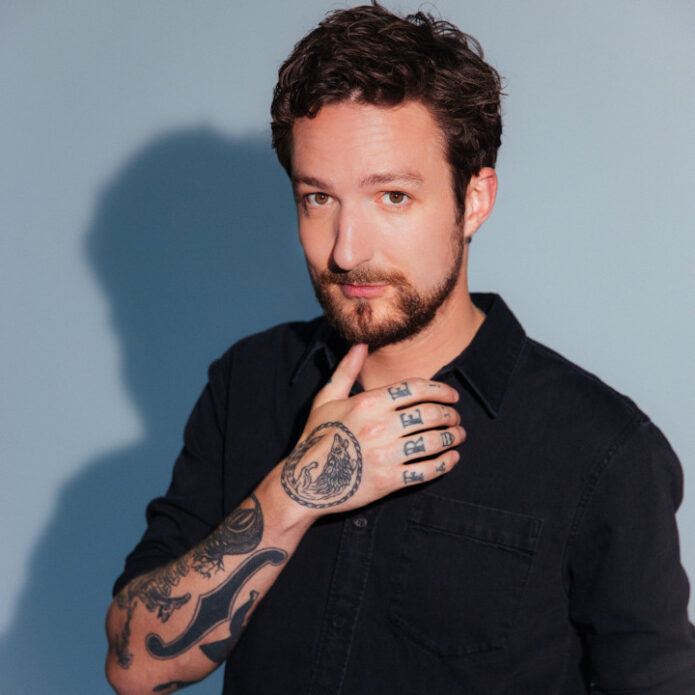
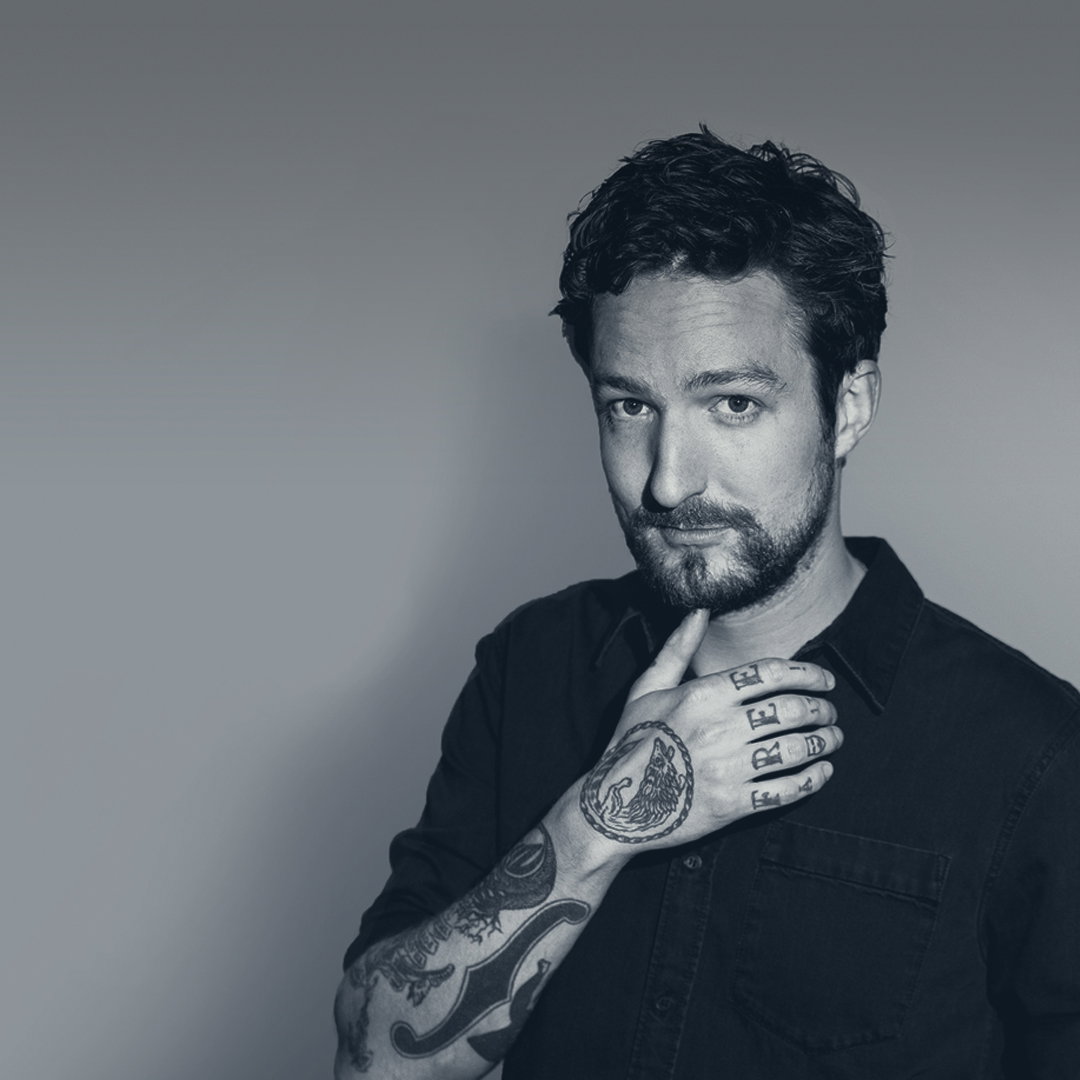
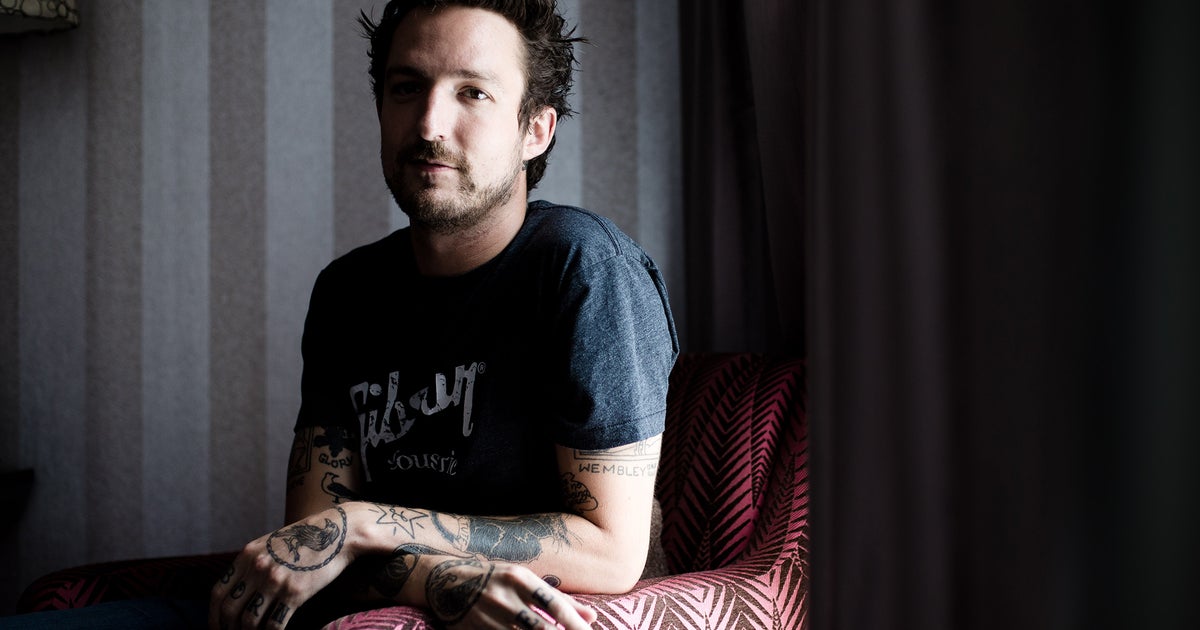
Frank Turner tattoos: Genuine tattoo photograph showing Frank Turner’s face and raised forearm sleeve.

The UKHC logo records a specific part of his life. It does not need an elaborate explanation to show what mattered to him then.

A collection that keeps its rough edges

The story can stay imperfect and still belong in the collection. Turner has talked about impulsive pieces as well as tattoos with clear ties to music and touring; they do not share one polished theme.

Music lettering and the number that marks the miles

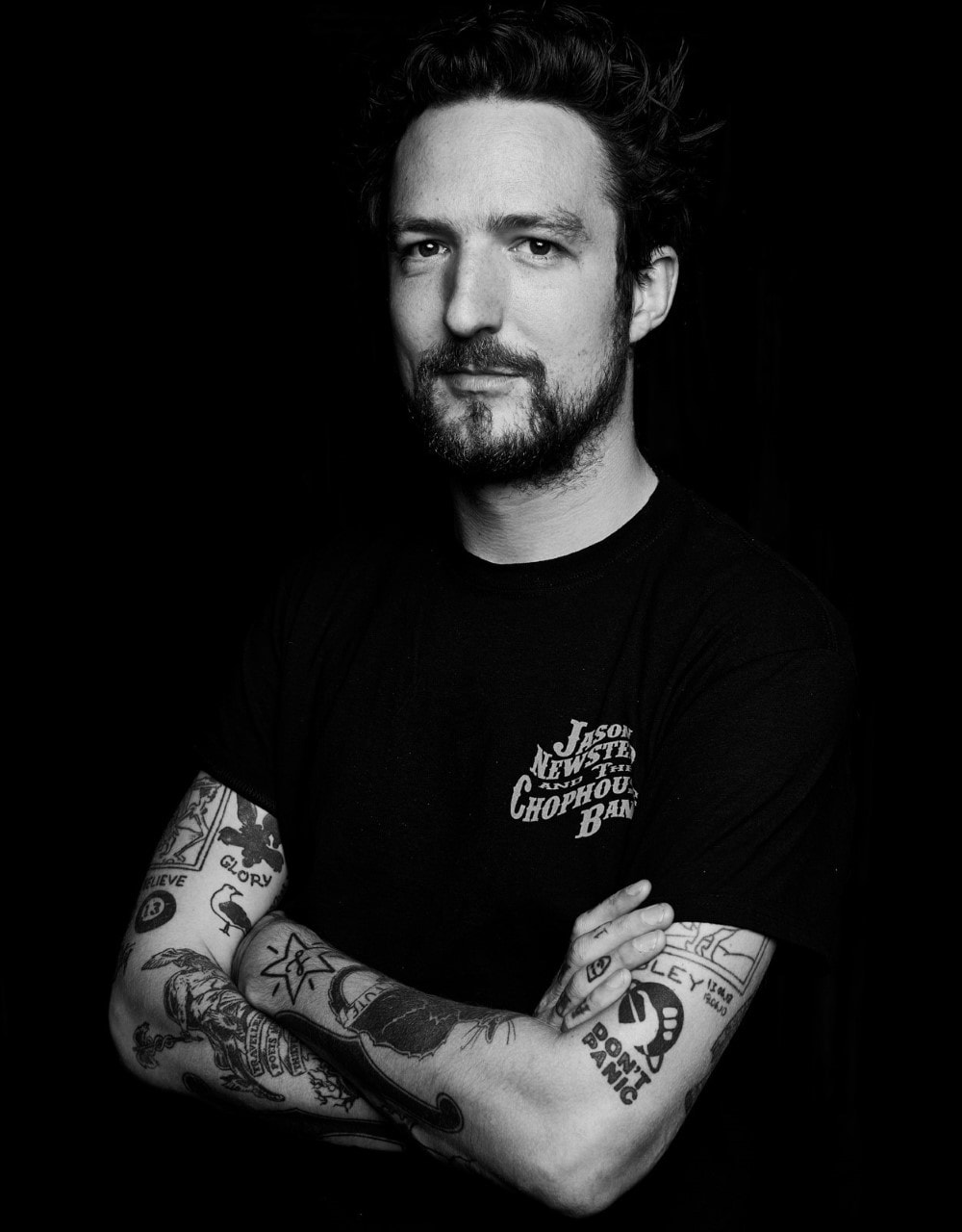
The “I Still Believe” tattoo on Turner’s arm comes from one of his best-known songs. A Guardian interview connected the lettering to the song’s faith in rock and roll’s redemptive power. The phrase can read as a lyric or a line he wanted to keep close. Other arm lettering includes “Believe,” “Glory” and “Don’t Panic.”

Frank Turner tattoos: Genuine tattoo photograph showing readable arm, wrist and hand designs.

The number 1,001 on his chest marks a major point in his live career: a show in Toronto. It turns a touring count into a record of how far the road had taken him.

Turner has also explained the black 13 on his finger as a lucky number for outsiders, drawing on circus and tattoo culture’s reversal of the usual superstition. He mentioned the custom of getting a black 13 on Friday the 13th.

Reading the arms, hands and chest as one collection

Photos show black shapes, lettering, stars, symbols and patches of open skin across Turner’s arms. The angle changes what stands out: a close-up may isolate one design, while a stage shot catches his arm in motion.

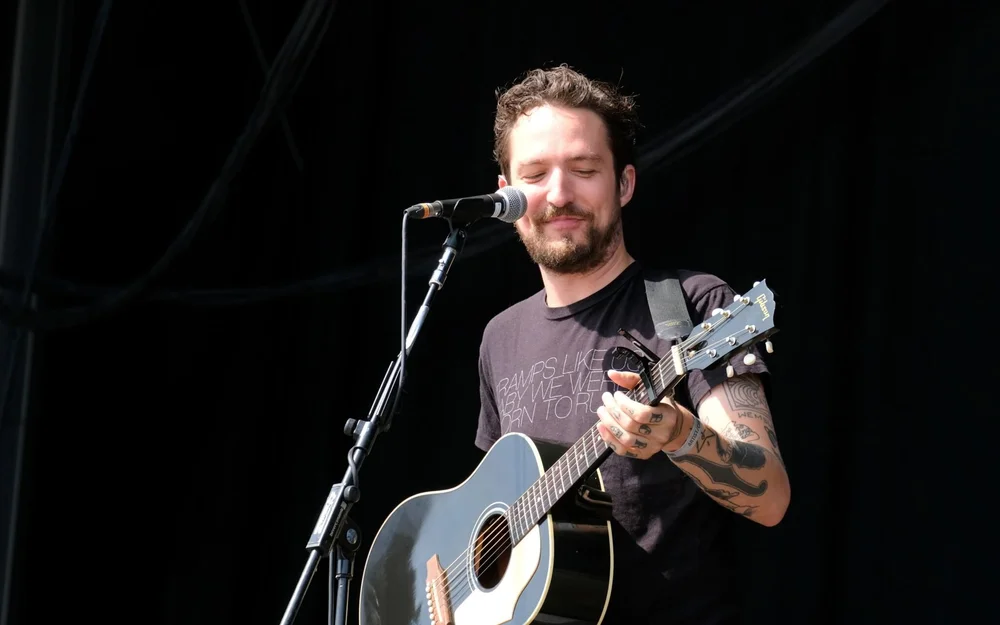
Frank Turner tattoos: Genuine tattoo photograph showing Frank Turner performing with visible arm and hand ink.

His hand and finger tattoos include knuckle lettering and small designs near the joints. They appear while he plays, holds a microphone or reaches for a guitar pick. As the hand bends, the lettering breaks across creases, so the same design can look different in each position.

The photos support descriptions of visible shapes and placement, but they do not establish a private meaning for every mark.

Road stories, fan tattoos and the folk-punk contrast

Turner has told a story about drunken tattoos with friends. One design meant as a Townes Van Zandt reference ended up reading “Buddies.” He has spoken about those questionable choices alongside the more deliberate music-related pieces; both are part of the collection’s history.

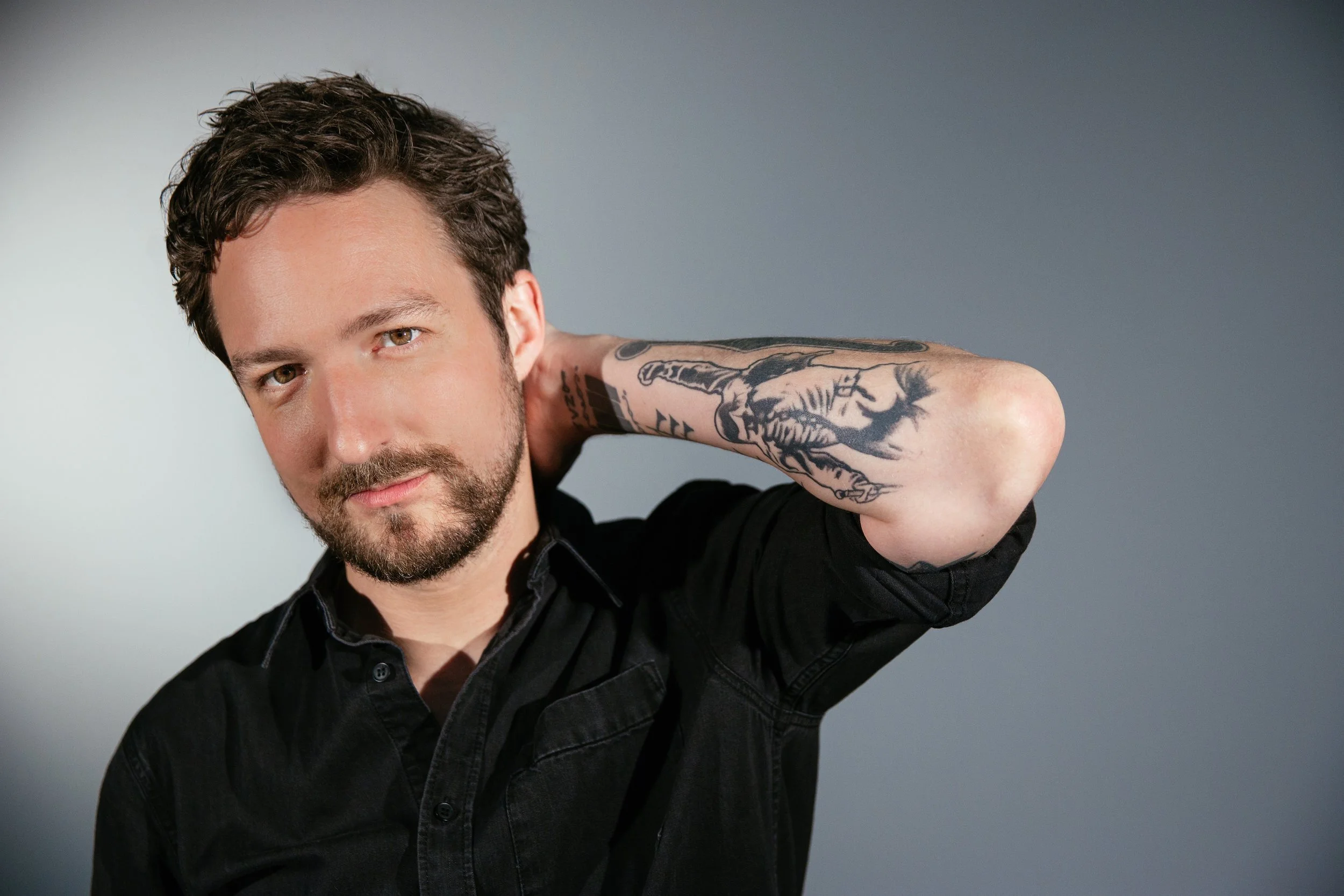
Frank Turner tattoos: Genuine tattoo photograph showing Frank Turner’s raised forearm and sleeve work.

Turner’s public image can shift from thoughtful interview guest to loud, guitar-playing performer. His tattoos keep the hardcore background visible in both settings.

He has said hundreds of fans have shown him tattoos inspired by his songs, symbols and lyrics. His reaction moved between surprise and appreciation at seeing his music become permanent on someone else’s body.

The video for “Losing Days” featured people sharing their own tattoos. Turner’s account of those designs shows how listeners connect a song to a place, a friendship, a recovery or a difficult stretch of life.

What to borrow from Frank Turner’s tattoo style

The useful starting point is the connection, not copying one of Turner’s designs: a show count, a lyric, a scene that mattered or a phrase you expect to live with after the moment passes. His bold lettering and black-and-grey work are one visual direction, but the design can be your own.

Give words enough space to stay readable, and ask an artist to adapt the layout to the body part. Hand and finger tattoos get constant movement and wear; placement and detail need to account for that.

Frank Turner tattoos: Genuine tattoo photograph showing Frank Turner’s tattooed arms in an interview setting.

Turner has explained some pieces, while others are visible without a public account of their meaning. It is fine to appreciate the designs without filling in that gap.

Choose the memory before the image. It might be a person, place, song or milestone; it does not have to become a portrait. Ask the artist how the design may age and whether small details need simplifying.

The story matters as much as the line

A tattoo can stay meaningful years later without a grand explanation. It might be a number, a lyric or a small symbol that still feels right.

“I still believe” is one clear thread through Turner’s collection, while each tattoo keeps its own story.

Barry Johnson Tattoos: Joyce Manor’s Heart, Ink and Blackwork

Barry Johnson’s tattoos range from a solid black forearm cover-up to neck and hand designs. He has tied some to music, a breakup and choices he made because he liked the look. He hasn’t given a public meaning for every mark.

The blackwork forearm is the clearest statement

Johnson’s most documented piece is broad blackwork running from below his left elbow toward his wrist. In an Inked interview, he said he wanted to cover older tattoos, including a crow he disliked because it looked more like a “trash monster” than a bird. He also recalled seeing blackwork on a friend who had been tattooed in Brazil and liking the effect.

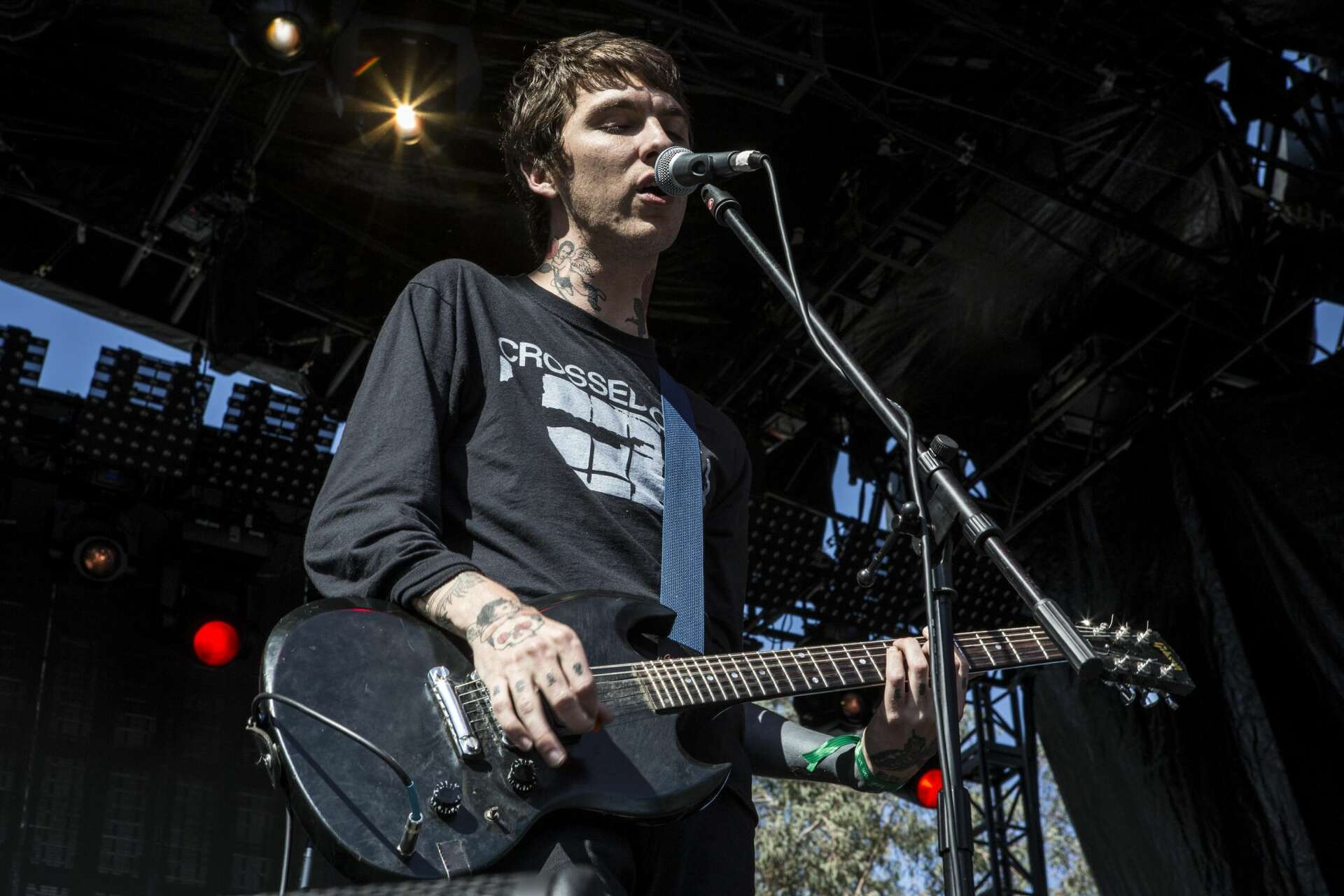
Barry Johnson tattoos: Genuine tattoo photograph showing Barry Johnson's solid black forearm cover-up, neck ink and hand tattoos.

Johnson described the blackout as an aesthetic choice. It covered designs he no longer liked, and the bold shape appealed to him on its own.

The boldest choice here is the lack of apology. Johnson has said some people react as if they can put the tattoo on trial. He got it because it looked good to him, not to win their approval.

The first tattoo came with a breakup story

Before the blackout, Johnson’s first tattoo was a Morton Salt Girl design inspired by Jawbreaker. He said he got it after his first girlfriend broke up with him. He joked that he hoped tattoos might make girls like him more, and also connected the choice to grieving.

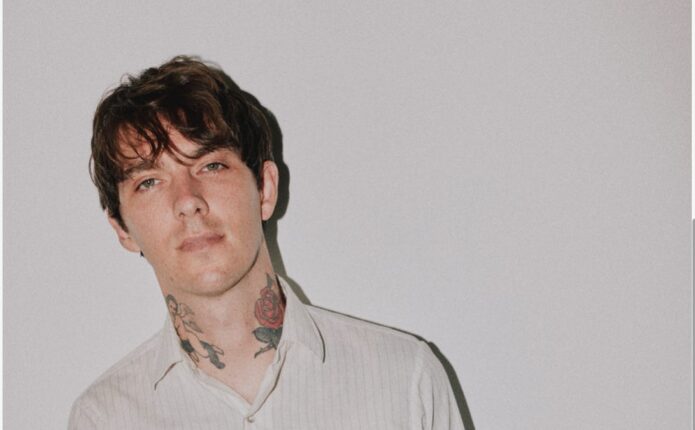
Barry Johnson tattoos: Genuine tattoo photograph showing Barry Johnson's neck and arm ink in a distinct band portrait.

Those reasons sit together in his account: a band he liked, a relationship ending and the urge to make a permanent decision while young. Johnson has described tattooing as cathartic, though he doesn’t suggest that every tattoo fixes a difficult feeling or needs to carry a grand message.

Neck tattoos keep the collection visible

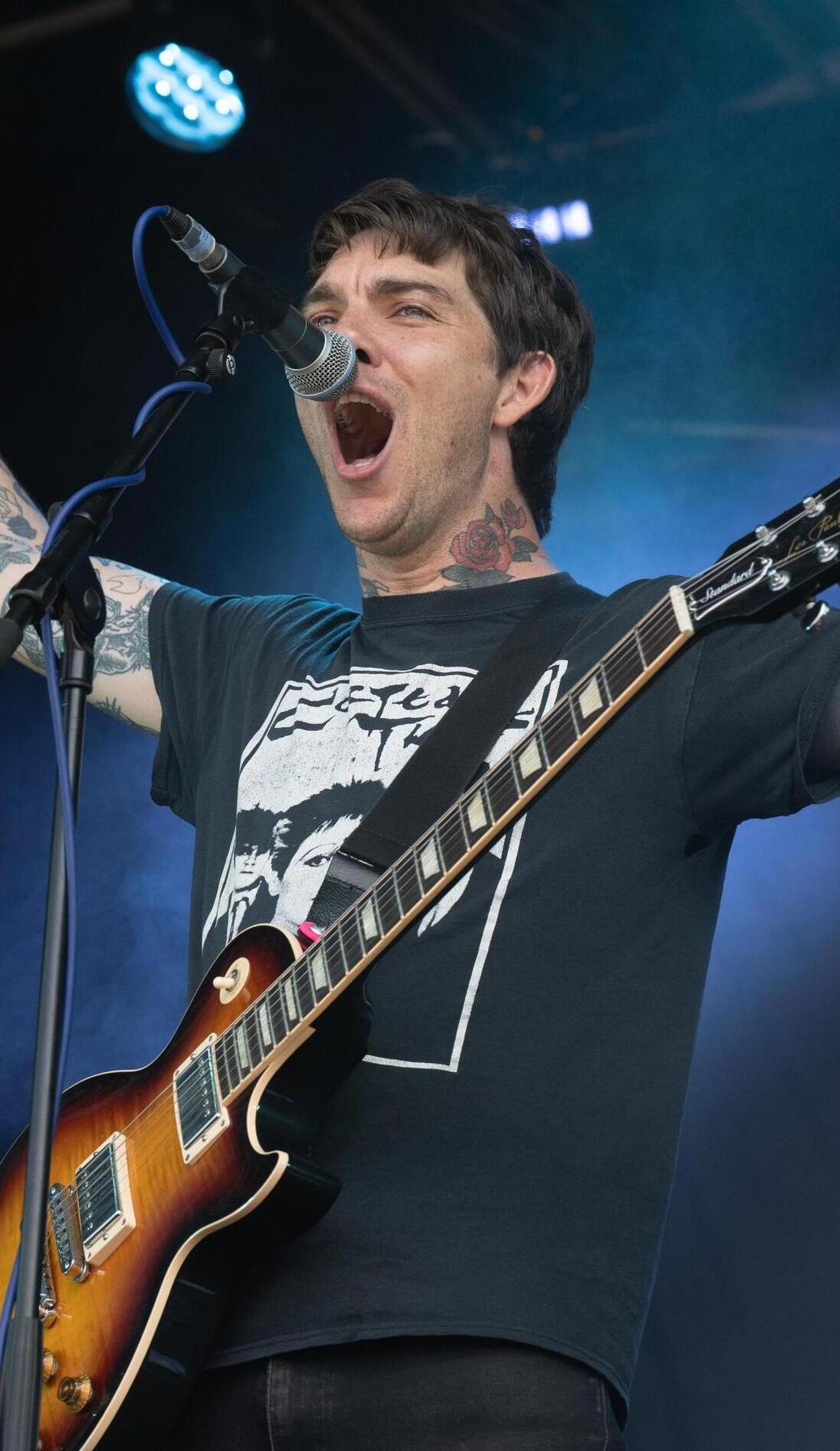
Later portraits and live photos show tattoos rising above Johnson’s collar. Some frames catch floral or illustrative shapes; others show only part of the design, so their meaning is best left open. Neck ink remains visible when sleeves cover the arms and moves with the face and shoulders.

Barry Johnson tattoos: Genuine tattoo photograph from a live performance showing Barry Johnson's neck and hand ink.

Johnson often appears in simple shirts or denim, leaving the ink as a strong part of the overall look. Softer neck imagery sits alongside the heavier blackwork on his forearm, reflecting separate choices made at different times.

Arm and hand ink looks different onstage

Joyce Manor photos show Johnson playing guitar, reaching for the microphone or lifting an arm toward the crowd. The hand tattoos appear and disappear as he grips the instrument, while arm designs shift with his posture.

Barry Johnson tattoos: Genuine tattoo photograph showing Barry Johnson performing with neck and arm tattoos clearly visible.

A tattoo that looks like a compact patch in a portrait can stretch across the frame during a performance. Sleeves cover some areas; bent joints change the lines and shapes. The images show how the collection moves with him, not a complete map of every tattoo.

Heart Tattoo is about the impulse to commit

Johnson has described his song “Heart Tattoo” as coming from a young person’s point of view: getting a stupid, meaningless tattoo just to have one. The song acknowledges the risk without claiming that every tattoo is foolish. People can understand the consequences and still want the experience.

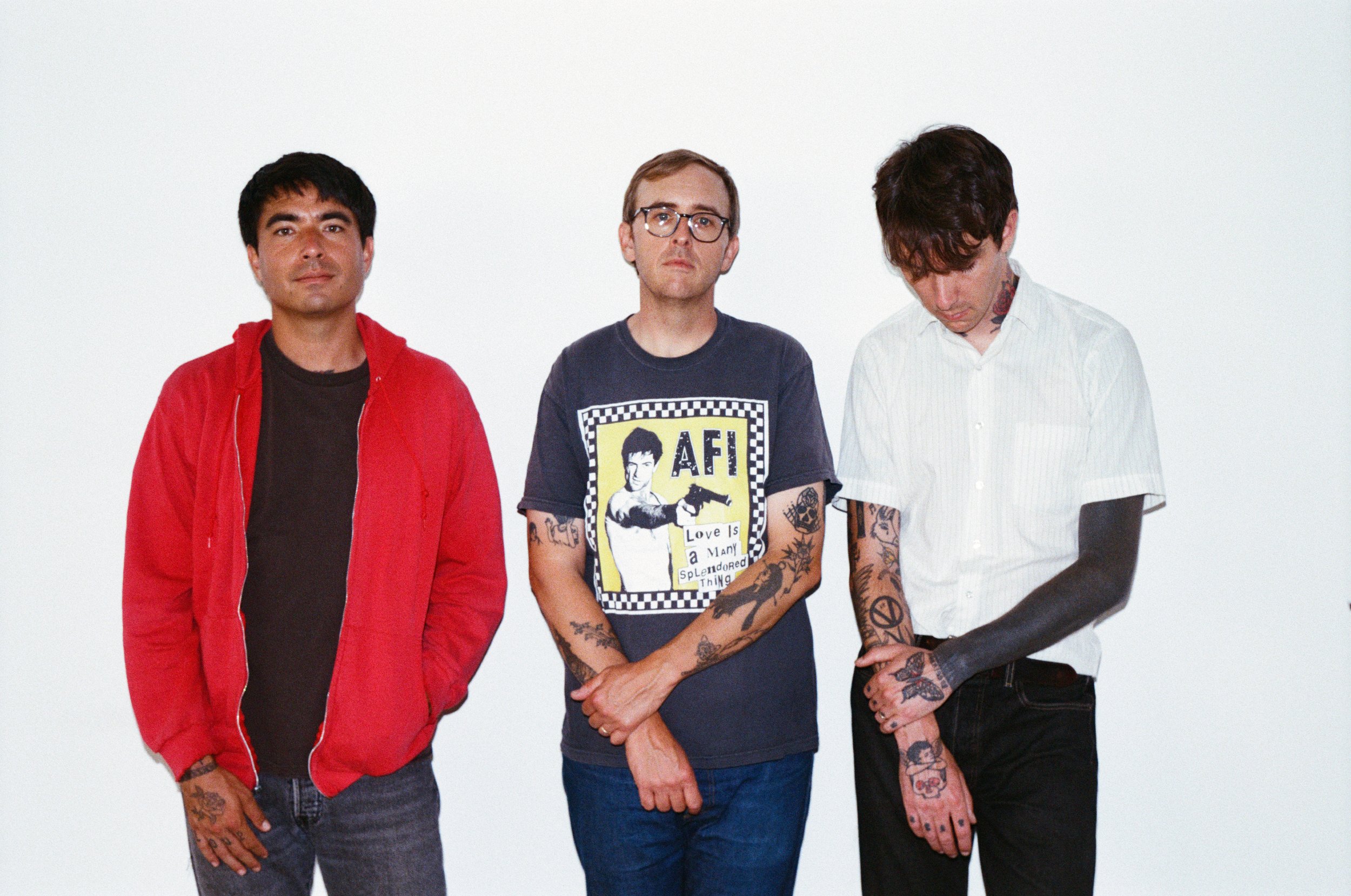
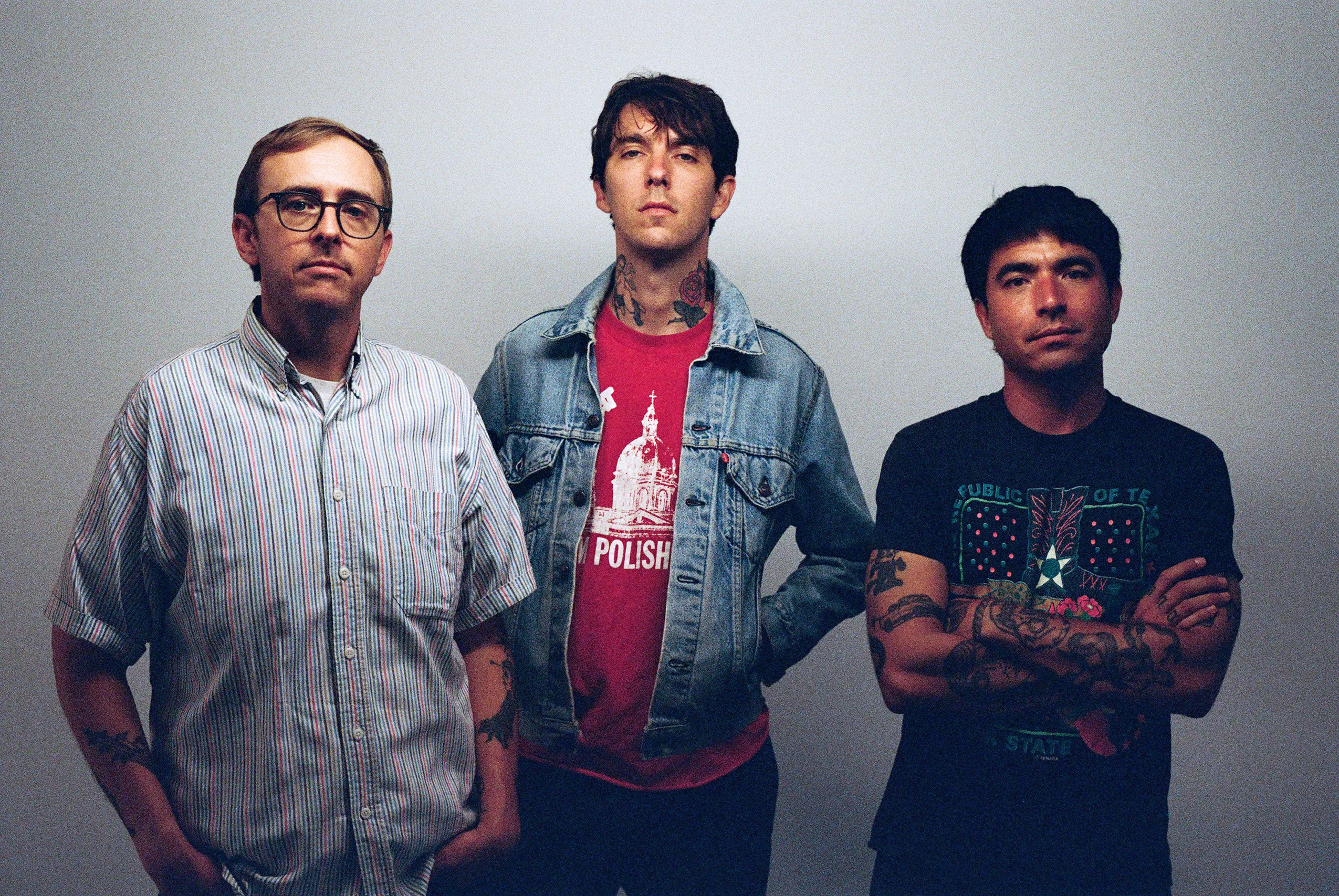
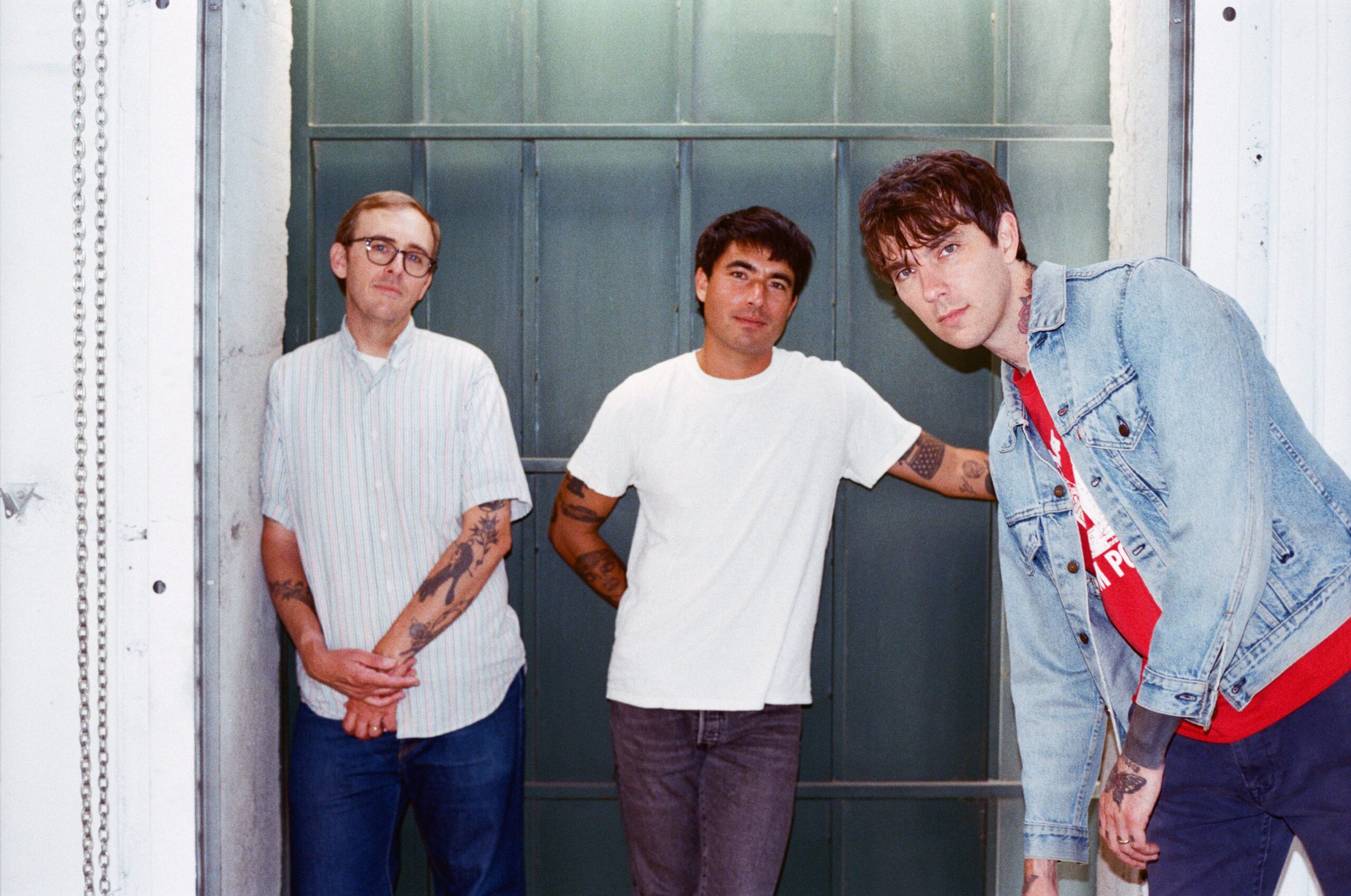
Barry Johnson tattoos: Genuine tattoo photograph showing Barry Johnson at right with visible neck and arm ink in an official band portrait.

That idea fits the stories Johnson has shared: an early tattoo tied to a breakup and a cover-up chosen partly for its look. The choices are personal and permanent, even when the reasons are ordinary.

Why the collection feels punk without looking forced

Joyce Manor’s music is short, direct and emotionally open. Johnson’s tattoos make a similarly immediate impression in photos: solid blackwork, visible neck ink and arm and hand designs. The collection doesn’t look planned as one matching sleeve.

Johnson has also said fans’ Joyce Manor tattoos are flattering and a little insane. A mark inspired by the band can start as a private reference and become a connection shared with other listeners.

The point isn’t to copy Barry Johnson’s arm. The useful part is seeing that a small, awkward, funny or visually severe idea can fit when it belongs to the person wearing it.

How to borrow the mood without copying it

Start with a song, friend, place or moment that has stayed with you. A band reference can be more personal than a logo; it might be an object from an album, a line of handwriting or a symbol connected to an experience you shared.

If you’re considering blackout work, ask an experienced tattooer whether the old design can be covered cleanly, how much solid ink the area needs and how it may age. It is a major commitment that can limit future options, so make sure you like the shape itself as well as the idea of covering what came before.

For a first tattoo, be honest about why you want it. Sadness, anger or wanting to impress someone don’t automatically make it a bad decision, but it can help to give yourself time to see if the design still feels like yours once the rush passes.

Neck and hand tattoos stay visible. An upper arm or thigh offers more privacy and room. The right location depends on your work and routine, your comfort with pain and how often you want to see the design.

Compare the proportions in the photos: broad blackwork, outlined illustrations and smaller hand marks create different visual weight. They don’t need to match, but each piece needs enough space to remain clear.

The short version

First tattoo: a Morton Salt Girl design inspired by Jawbreaker, which Johnson connected to a breakup and grieving.

Best-known cover-up: a blackwork piece from below the left elbow toward the wrist, covering older tattoos including a poorly done crow.

Other visible areas: neck, arm and hand tattoos seen in band portraits and live photos; not every design has a public explanation.

Overall style: bold blackwork and illustrative designs, collected over time rather than planned as a single sleeve.

“I thought that it would look really good.” That is Johnson’s explanation for the blackout, and it sums up the collection’s plain-spoken confidence: he liked the look and chose it for himself.