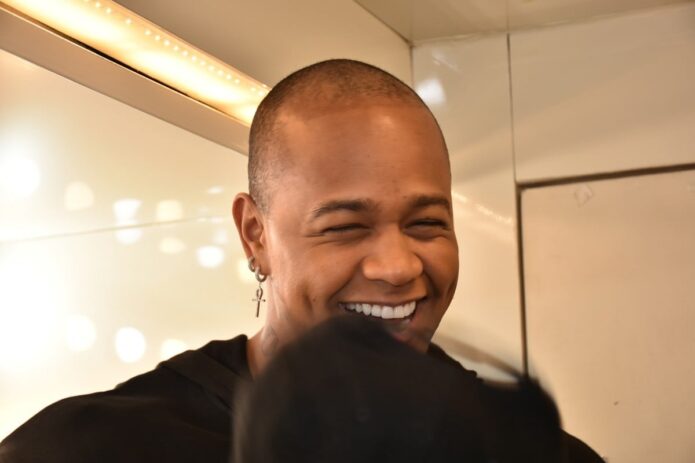
Léo Santana has the sort of tattoos you notice before you’ve worked out what any of them mean. Big dark shapes sit beside smaller details, and a sleeveless top leaves plenty to look at. But one of his most memorable pieces is much simpler: a kiss on the side of his neck. It’s a familiar image with a surprisingly specific person behind it.
The Brazilian singer has explained that kiss himself, which makes it a good place to begin. You don’t have to guess at a girlfriend, invent a breakup, or attach a grand spiritual meaning to a set of lips. The personal reference matters more than the stock meaning of the symbol. Around that small detail sits a much bigger public image: bold clothes, an easy grin, a microphone, and the unmistakable energy of a performer who looks comfortable being noticed.
The kiss tattoo on Léo Santana’s neck
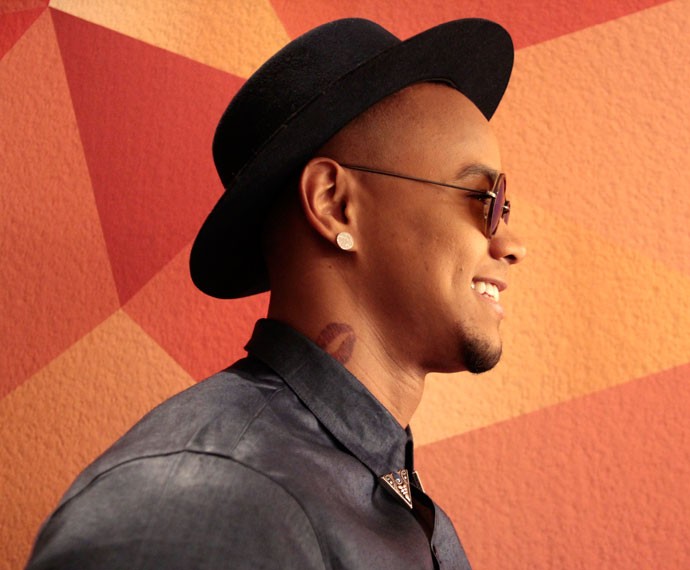
In his 2015 interview with Gshow, Santana said the kiss was based on the lips of his sister Naiara. He also addressed the obvious misunderstanding: people had assumed the mark belonged to a girlfriend. His explanation makes it a family tribute instead. An earlier Bahia Notícias report, published in March 2013, had already connected the new piece with Naiara through his own Instagram dedication.
The photograph shows why the motif attracts attention. The lip impression sits below his ear, just above the line of his shirt collar. Its dark reddish tone separates it from the surrounding skin without needing a large outline or a complicated background. In profile, it becomes a little punctuation mark between his face and his clothes. It’s small enough to miss in a distant stage shot, but easy to pick out when he turns sideways.
A kiss doesn’t automatically mean romance. That’s the useful detail here. The shape gives a viewer one immediate association; the wearer supplies a different, more personal one. Santana’s account is clear enough that there’s no reason to replace it with gossip. The appeal is partly that contrast between a widely recognizable image and a meaning that belongs to his family.
A public style built around contrast
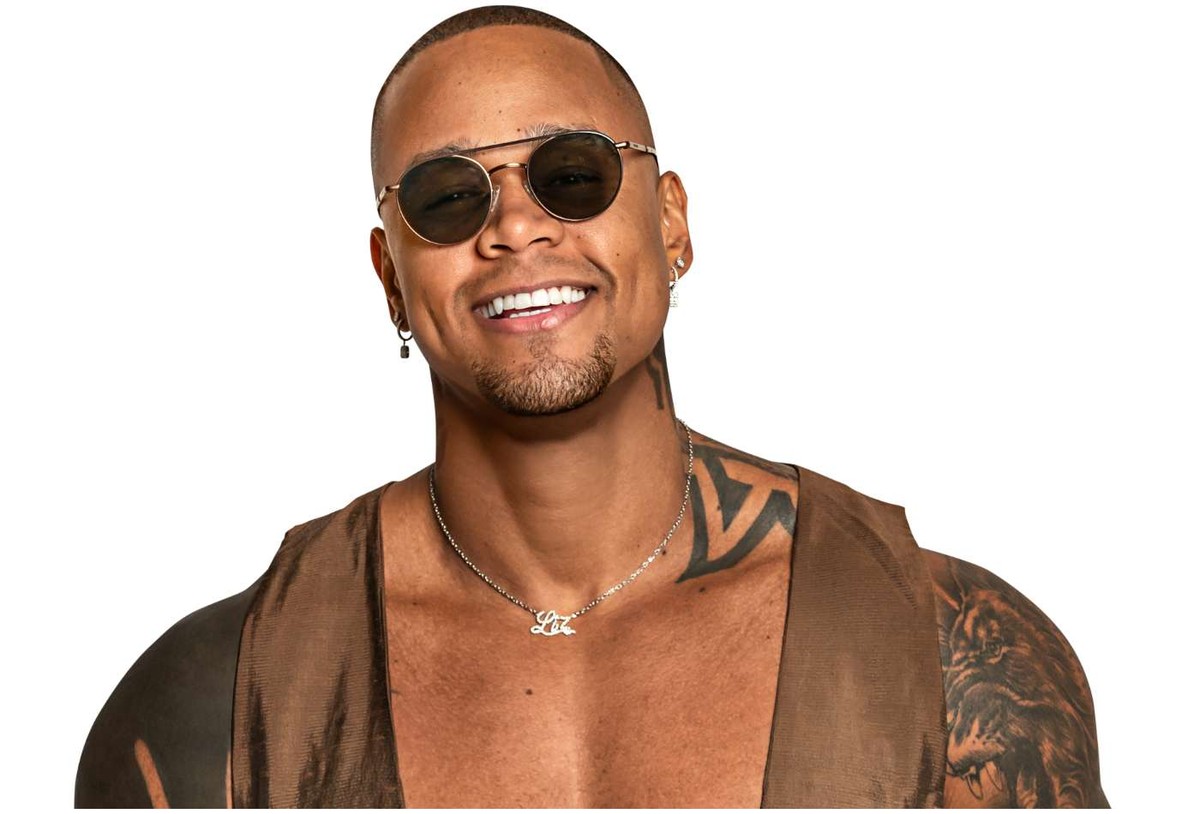
Look at Santana in a brown vest and round sunglasses and the first thing you notice is how little the outfit competes with him. The neckline is open, the background is plain, and the jewelry is relatively delicate beside his frame. There are several strong visual elements, but they don’t all ask for attention in the same way. His smile does most of the work.
That gives his overall appearance a useful balance. A very detailed outfit would make the same photograph feel busy. Here, solid fabric and open space let the darker marks on his skin read as part of his silhouette. You can appreciate the look without trying to decipher every tiny shape. The effect comes through even when the photograph isn’t close enough to explain individual pieces.
It’s also a reminder that a celebrity’s look changes with the occasion. A publicity portrait gives you a controlled view: clean lighting, a chosen pose, a carefully selected outfit. A concert photograph gives you movement and changing light. Neither is a complete map of someone’s body. Enjoying Santana’s styling doesn’t require treating every photograph as a catalogue, or assuming that whatever catches the light has a meaning he has publicly explained.
Family references and room for privacy
There’s something refreshingly ordinary about a sibling being behind a conspicuous piece of body art. Santana’s public persona is huge, but the explanation for the kiss is close to home. It’s a useful correction to the idea that everything a famous performer wears must be aimed at an audience. Something can be very visible and still have a private starting point.
In a separate 2014 iBahia interview, he discussed admiration in both directions. Fans were having his name and likeness tattooed, while he described Usher as an influence on his own choices. Those comments concern a broader inspiration; they don’t cancel out his later, more specific explanation about Naiara’s lip impression. An influence on a style and the person a particular piece honors can be different parts of the same decision.
His own explanation is the best place to stop guessing. We don’t need the exact conversation between siblings, a claim about who chose the placement, or a dramatic account of the appointment. None of those details makes the visible piece more interesting than it already is. The family connection gives it weight without turning a small personal reference into an elaborate biography he hasn’t offered.
Leaving Parangolé and keeping his audience
Santana’s image is inseparable from being a frontman, but his move into a solo career wasn’t presented as a clean break with everyone around him. Speaking to iBahia in 2014, he described a negotiated transition out of Parangolé. He said the band and management would remain with him, even as the name on the project changed. That makes the transition feel less like starting over and more like stepping forward under his own name.
The uncertainty he described was practical and personal: would people follow the performer or remain attached to the group’s name? It’s a recognizable concern beneath a very confident stage presence. Someone can look entirely at ease in a publicity photograph and still have had to wait for an audience to show that it was coming along.
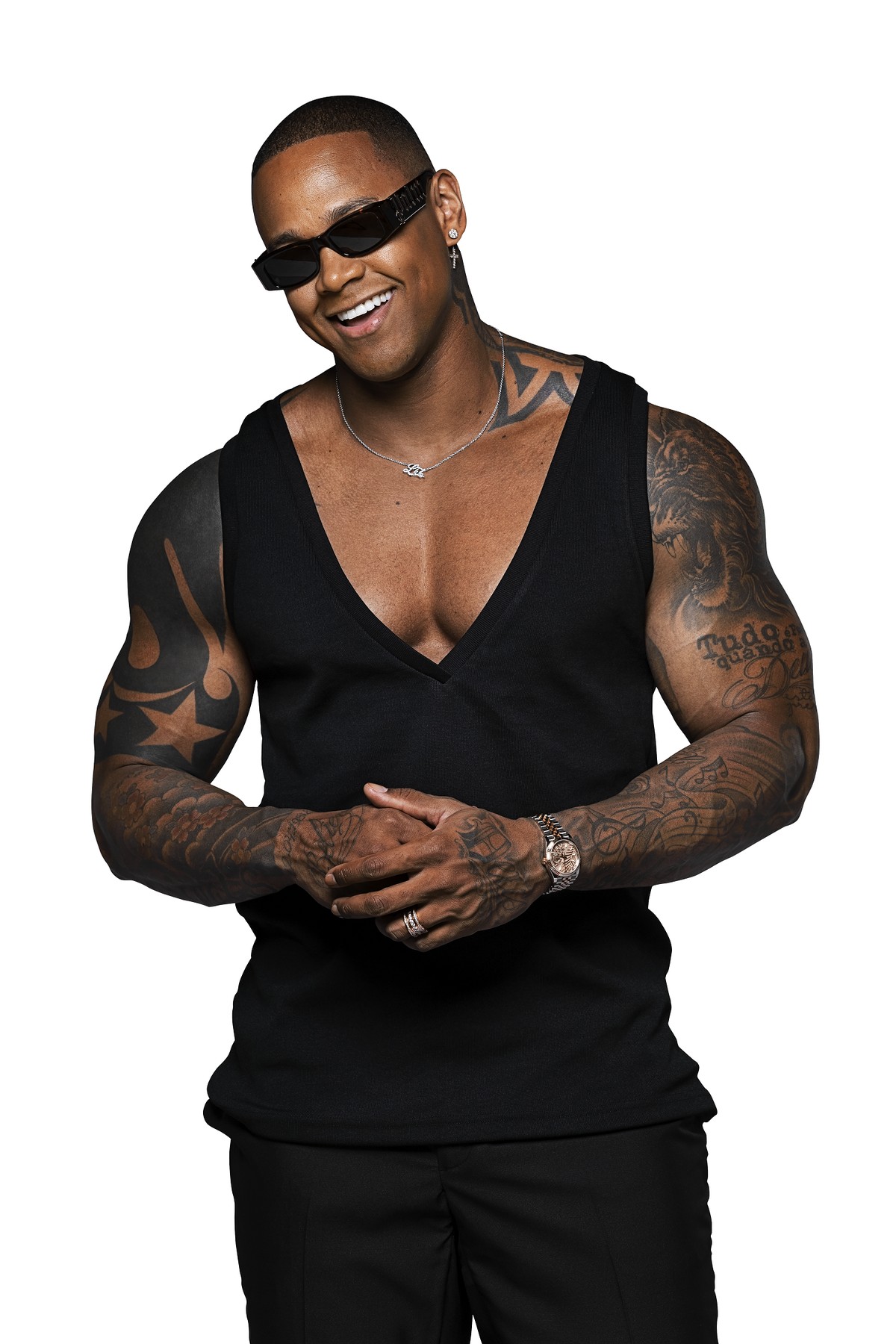
The black sleeveless look fits that frontman role neatly. There’s no elaborate costume to explain. His posture is relaxed, his hands are together, and the plain white background leaves his expression and outline in focus. It’s a different mood from the sideways photograph of the neck kiss. One gives you a small detail; the other gives you the whole public presence. Both can belong to the same person without needing the same explanation.
What the fans bring to the picture
Santana has also been on the receiving end of the commitment that tattoos can represent. In that iBahia conversation, he talked about fans putting his image on their bodies and admitted that the scale of some tributes startled him. He described being grateful while also finding the experience a lot to take in. That combination feels more believable than pretending permanent admiration is an entirely casual thing.
It’s a strange position for any musician. A song can become part of somebody’s daily routine without the singer ever meeting them. A permanent tribute takes that attachment somewhere much more visible. The fan knows what a song or an artist meant during a particular stretch of life; the performer usually sees only the finished result. There’s a gap between those two experiences, even when the affection is mutual.
Admiration can be powerful without needing an exact copy. If Santana’s appearance is what draws you in, the most interesting question isn’t how to reproduce all of it. It’s what you actually like: the confidence, the contrast, the personal references, or the ease with which he wears a recognizable look. Those are different things, and understanding the difference gives you a better starting point for your own choices.
Salvador energy in a solo setting
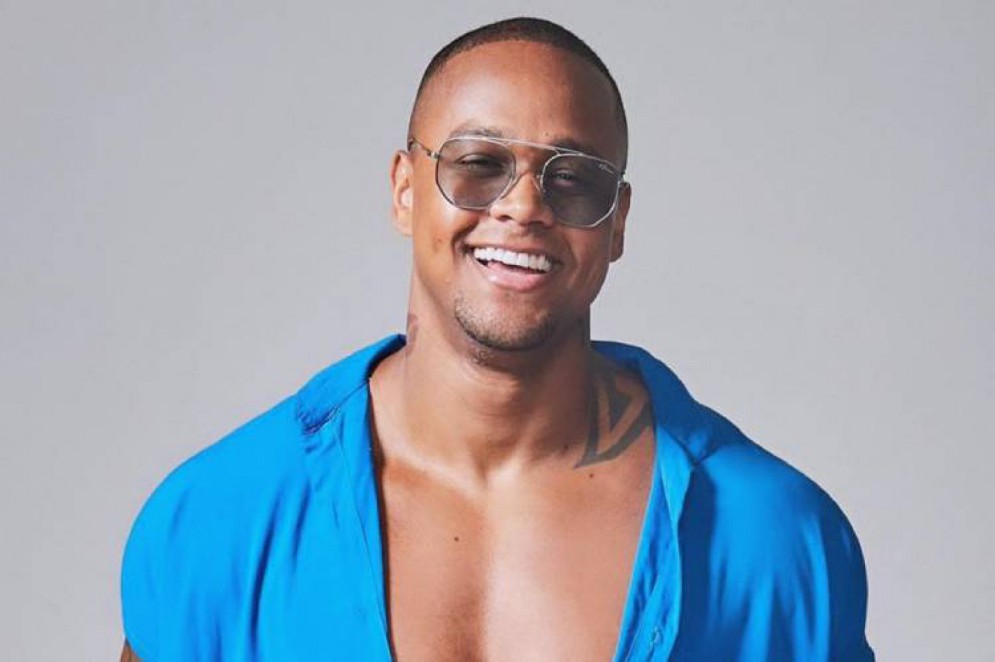
A bright blue shirt changes the mood immediately. In this photograph, Santana looks relaxed rather than dressed for a formal event. The open collar, light background, and broad smile give the picture a warm, uncomplicated feel. It’s a useful change of pace after the darker clothing, and it shows how much a single color can alter the impression of the same performer.
His connection with Carnival audiences also gives that visual confidence a setting. O POVO reported his booking for Aracati’s 2022 Carnival, while Quem later covered his first São Paulo street bloc in 2025. These are specific moments rather than a claim that every year or every performance looks the same. They place him in the kind of public celebration where clothes, movement, and a recognizable stage presence all have a job to do.
A studio image lets you slow down and notice those choices. At a parade or a show, a look has to register much faster. A clear color, a strong outline, a gesture, a smile: those are things a crowd can read at a distance. That’s part of why Santana’s style works as a whole, even when the finer details disappear. You don’t need a close-up to recognize the person carrying it.
The music gives the look somewhere to go
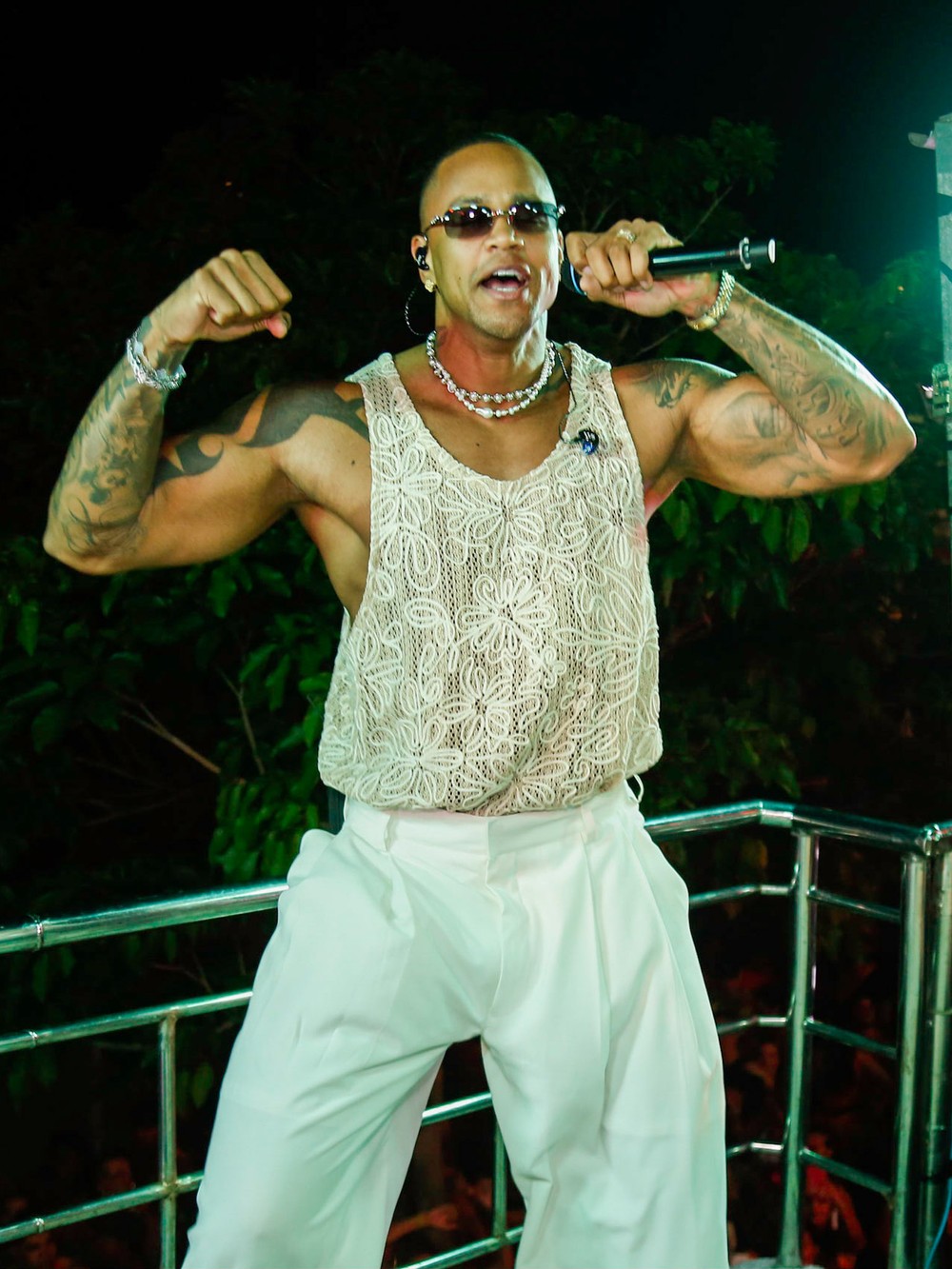
The Carnatal performance photograph offers the other half of the picture. Santana has a microphone in one hand and both arms lifted, wearing a white lace vest and white trousers. The background is dark, so the pale outfit stands out immediately. It isn’t the still, carefully arranged mood of a studio session. He’s in the middle of doing the thing the photographs are meant to support.
That distinction matters when you’re looking at a musician’s appearance. Styling is part of the performance, but it isn’t a substitute for it. The same sleeves, jewelry, and clothes read differently once there’s a song and a moving crowd involved. In this shot, the gesture is what holds your attention first. The details are there if you want to look longer.
For a clear musical reference, there’s Zona de Perigo. Universal Music Brasil reported in February 2023 that the track had reached number one on Spotify’s Brazilian chart and entered the global top 30. Those are dated achievements, rather than a claim about where the song ranks today. The official video is an easy way to put a sound to the face if you’ve arrived here through photographs rather than his music.
Take the personal idea with you
The most useful thing about Santana’s neck kiss isn’t that it’s a rare image. Lips are familiar, and that familiarity is exactly what makes his explanation stick. A viewer thinks they understand the shape straight away, then learns that it refers to his sister. The meaning doesn’t have to be visually complicated to be specific.
If you’re drawn to that approach, spend time on the reference before worrying about how impressive the finished piece will look in a photograph. A small detail can carry a strong association. Placement and scale then change how often other people see it, how it sits beside clothing, and how much explanation you’re likely to give. Those are personal decisions, not rules you can borrow from a singer’s publicity shot.
Santana’s appeal is that the quieter reference and the big public presence sit comfortably together. You can notice the confident clothes, enjoy the performance, and still find the family detail more memorable than everything around it. Put on the music, then look again. The small kiss is still there, doing its own thing.