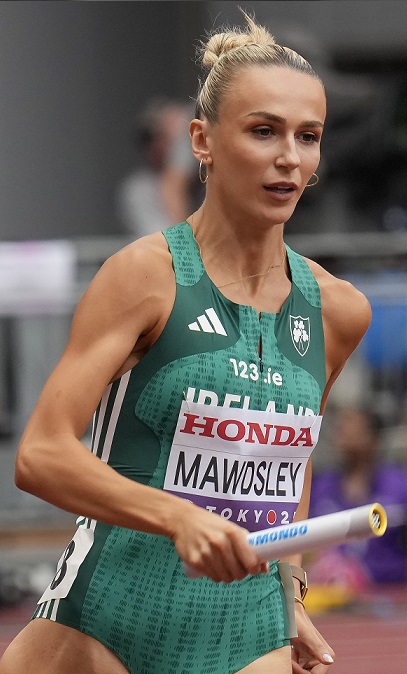
Sharlene Mawdsley’s Olympic rings tattoo is small, simple and much more personal than a random piece of sports branding. The Irish sprinter had the five rings placed on the outside of her left forearm after the Paris 2024 Games, giving her a permanent reminder of the meet that changed how the wider public saw her.
The design is easy to recognise in photographs: five interlocking rings in a clean black outline, set horizontally along the forearm. There is no heavy shading, extra lettering or decorative frame around it. That restraint suits the subject. Mawdsley’s biggest Olympic memory is tied to a team, a relay, a national record and a fourth-place finish that felt both historic and frustrating. The tattoo keeps all of that in one compact symbol.
What makes the piece especially interesting is how clearly the surrounding reporting pins down the timing and placement. It is not a fan guessing at a mark in a race photograph. Irish coverage reported that Mawdsley shared the new tattoo after visiting Folk Tattoo Observatory in Cape Town, with the simple caption “Did a thing”, and that the image was connected directly to her experience at the Paris Olympics. The photograph below gives the clearest view of the actual design.
The Olympic rings on Sharlene Mawdsley’s left forearm
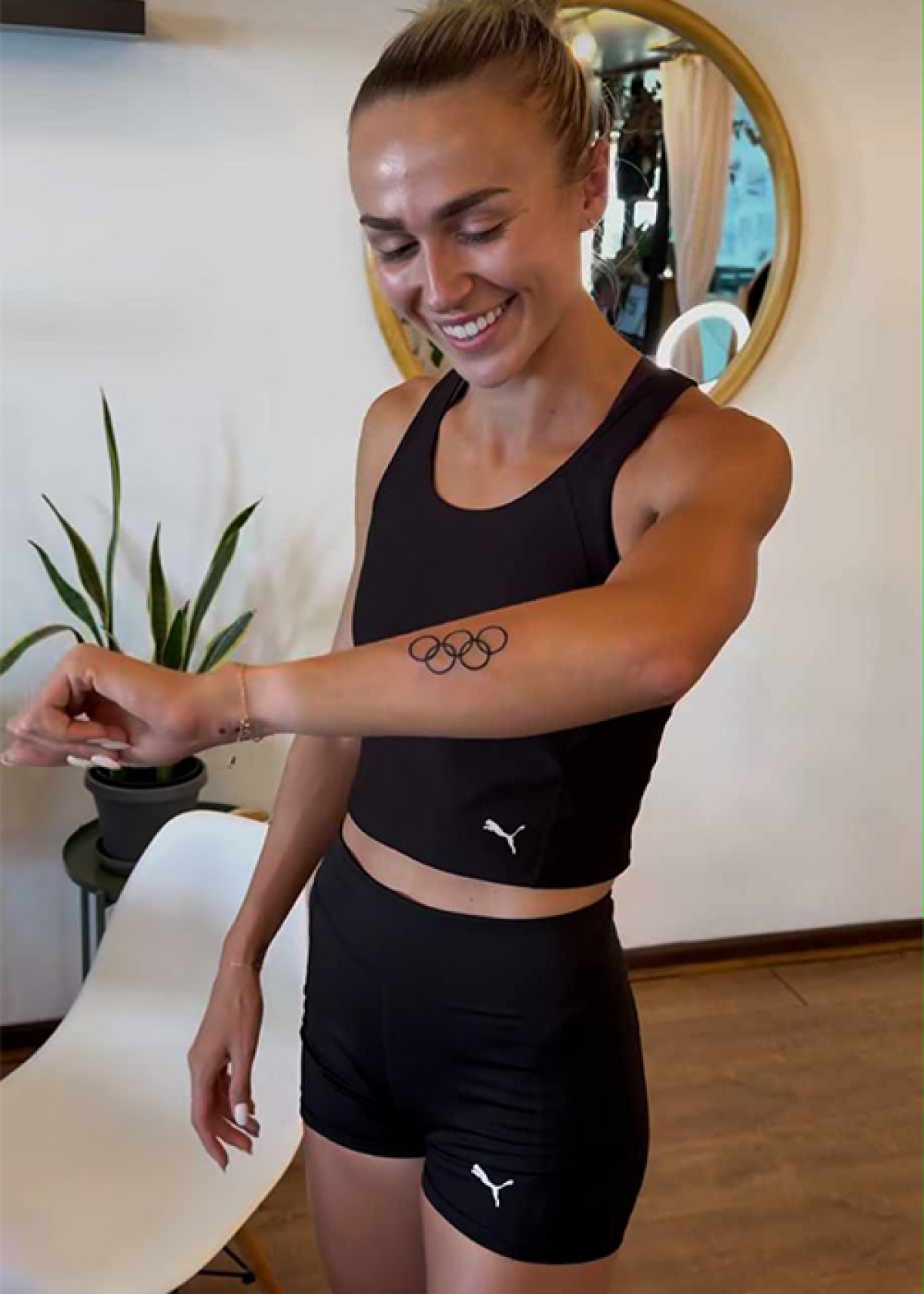
The rings sit on the outer side of Mawdsley’s left forearm, a position that keeps the design visible when her arm is extended but does not dominate the rest of the picture. In the close photograph, the lines are dark and even, with the five circles overlapping in the familiar Olympic arrangement. The tattoo is large enough to read without zooming, yet still compact compared with the scale of her athletic career.
The image also shows how deliberately the piece was placed. Mawdsley angles the forearm toward the camera while looking down at it, so the mark becomes the focal detail rather than something accidentally caught between a vest and a race bib. The clean outline is the whole visual idea. There is no attempt to turn the rings into a sleeve, add a laurel wreath or surround them with a date.
A wider view from Paris
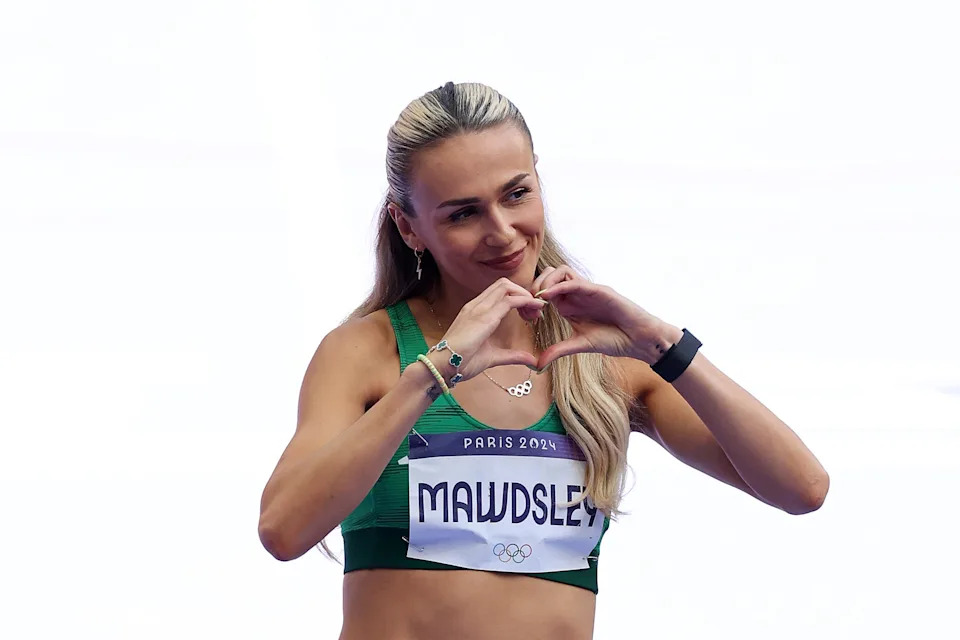
In wider competition photographs, the tattoo is much easier to understand as part of Mawdsley’s everyday appearance. Her green Team Ireland kit, race bib and jewellery all create more visual noise than the small black symbol. That contrast helps explain why the forearm was a smart location for this particular design: the tattoo can sit quietly during a race and still become obvious when she chooses to show it.
The rings are also a good match for the way Olympic athletes often use the symbol. They do not identify a single medal or one specific race. They point to participation in the Games as a whole. For Mawdsley, that includes the mixed and women’s 4x400m relay teams, the record-setting Paris campaign and the emotional weight of competing on the sport’s biggest stage.
The image from the home stretch
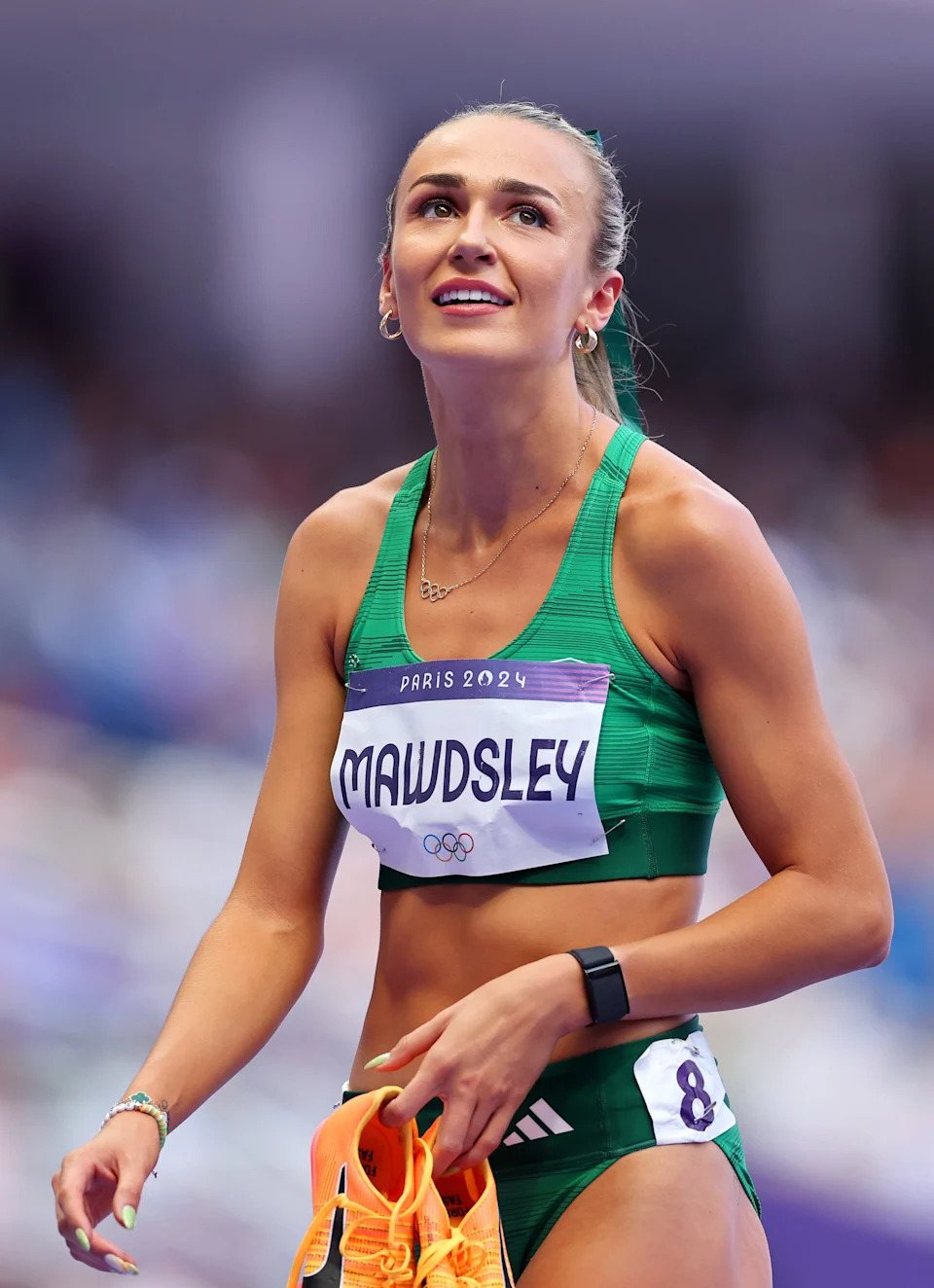
The close-up matters because most photographs of Mawdsley are built around motion. She is usually running, carrying a baton or celebrating with teammates. Those images are useful for understanding her public sporting identity, but they are not the same as a tattoo photograph. The Cape Town image is different: she turns the arm outward, looks directly at the mark and gives the rings enough space to be studied.
That distinction keeps the visual record honest. The available reporting documents one specific tattoo clearly. It does not justify a longer list of supposed hidden designs or a claim that every bracelet, necklace or mark visible in a race photograph is permanent ink. The rings are the confirmed piece, and the photographs support that description without needing extra guesses.
The moment behind the photograph
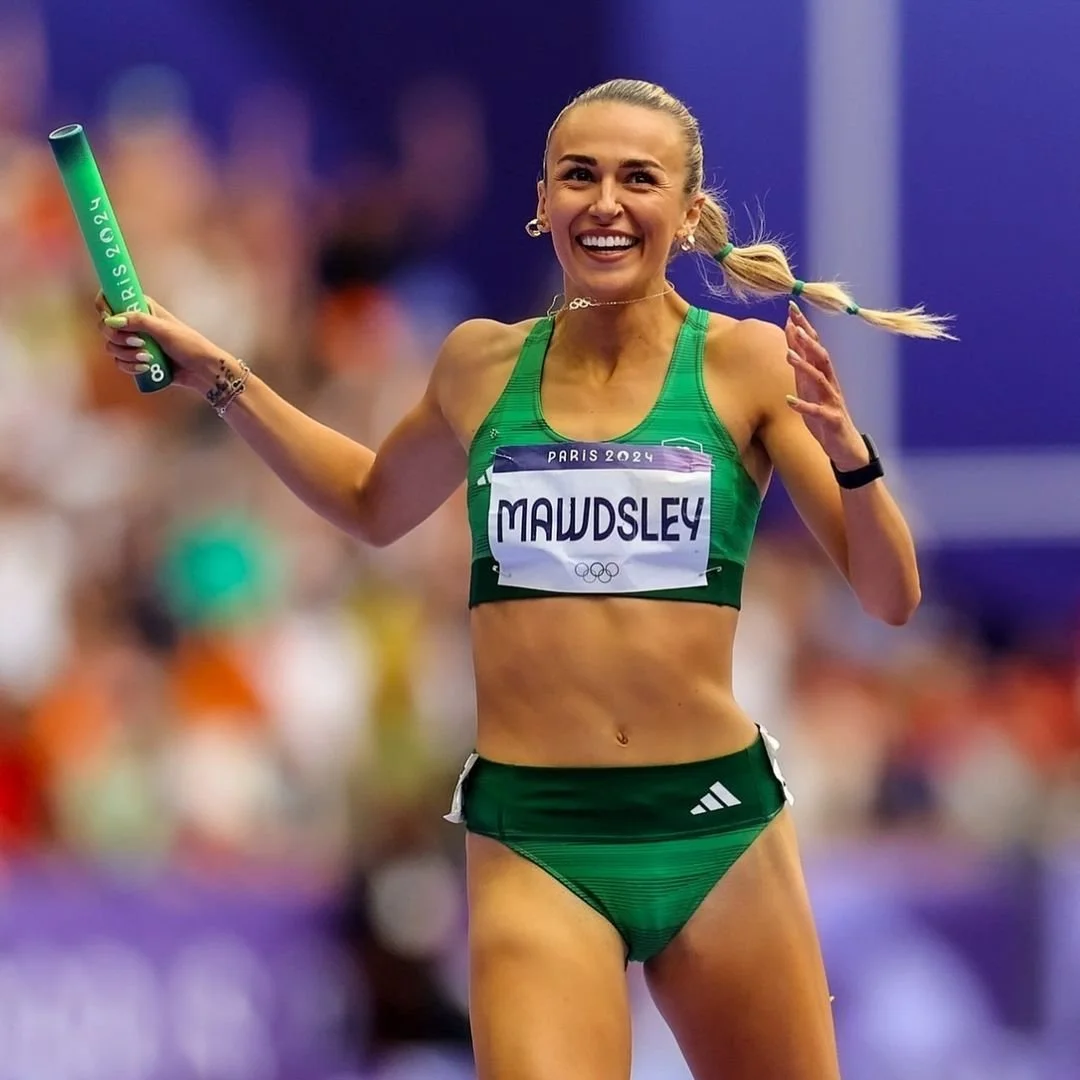
Mawdsley’s Paris story had an unusual emotional shape. The women’s relay team finished fourth while setting an Irish national record, so the result was both a major achievement and a near miss. Earlier in the season, she had helped Ireland win mixed-relay gold at the European Championships and had become one of the most recognisable names in Irish athletics.
That context gives the rings more meaning than a generic Olympic souvenir. They mark the period when Mawdsley moved from being known mainly within athletics to becoming a familiar face to people who had followed the Paris coverage. The tattoo does not pretend the result was a medal. It marks the experience itself: the qualification, the travel, the relay, the record and the feeling of being close to the podium.
The choice also echoes a tradition among Olympians. Athletes from different countries have used the five-ring design to record their participation, usually after an Olympic cycle has finished. Mawdsley’s version follows that visual language but keeps the scale and placement personal. It is recognisable to other athletes without looking like a large commemorative emblem.
The runner behind the photograph
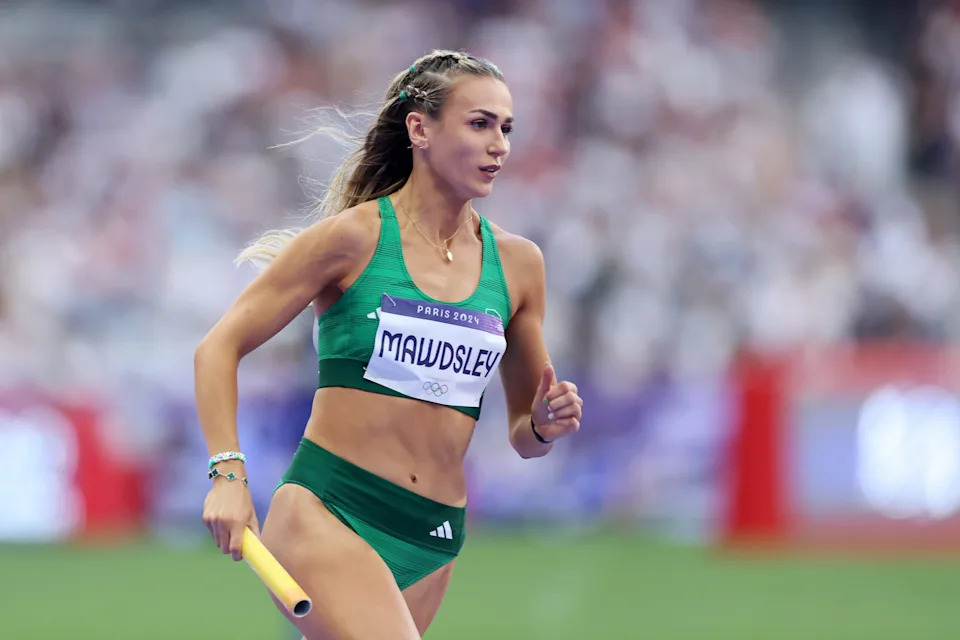
Mawdsley is a 400-metre specialist from Newport in County Tipperary. Her path to Paris included the kind of setbacks that make a simple symbol feel less decorative. She missed the Tokyo Olympics after the mixed relay was removed from the programme because of the pandemic, then worked her way back into contention for Paris. By 2024, she was anchoring Ireland’s women’s 4x400m relay and carrying serious expectations into the final.
Her interviews after Paris often returned to the difference between public excitement and the athlete’s own immediate reaction. A fourth-place finish can look extraordinary from the outside and still feel painful when the team has run a national record but missed the medals. The tattoo sits in that complicated space. It celebrates the Olympic experience without rewriting the result.
A medal story without a medal
The five rings work because they leave room for both sides of Mawdsley’s Paris memory. They can represent the pride of becoming an Olympian, the atmosphere around the relay and the national attention that followed. They can also sit beside the disappointment of finishing fourth. Nothing in the design forces the story into a simple victory narrative.
That is why the tattoo reads more like a personal timestamp than a trophy. The mark does not display a time, place or podium finish. It compresses a whole competition into five connected circles. The simplicity makes the piece flexible: it can be read as an Olympic symbol by anyone who sees it, while the exact reason for getting it remains grounded in Mawdsley’s own experience.
What the pictures actually show
Visually, the tattoo is fine-line blackwork with a familiar geometric structure. The circles are crisp, evenly spaced and left unfilled. Because the image is close enough to show the line quality, the design does not need an elaborate caption to explain what it is. Its strength is in its clarity.
The surrounding photographs show a consistent placement on the left forearm, but they should not be treated as extra tattoo evidence. In race and celebration images, the jewellery, lighting and movement make small details harder to identify. The safest description remains the one supported by the close-up: five black Olympic rings on the outside of the left forearm.
That narrow description is useful in its own right. Celebrity tattoo coverage gets weaker when a confirmed design is padded with uncertain claims. Mawdsley’s rings do not need invented companions. The design is tied to a major chapter in her career, the placement is visible, and the source photograph gives readers a real look at the ink. The result is one documented tattoo with unusually clear visual evidence.
Sharlene Mawdsley’s Olympic snapshot
Sharlene Mawdsley’s tattoo collection is not presented as a catalogue of dozens of pieces. The documented record here is focused: one Olympic-rings tattoo, placed on the left forearm after Paris 2024, and a clear explanation of why that symbol belongs on her skin. The design’s minimal look matches its meaning. It holds a complicated, proud, slightly painful memory in a form that can be seen at a glance.
For anyone following Mawdsley’s career, the tattoo is a neat visual marker of the athlete who helped Ireland reach a national-record relay final and came away from Paris with a story bigger than the result alone. The five rings are small, but the chapter they represent is not.
There is a nice visual contrast between the mark and the photographs that surround it. In the close-up, the rings are still and carefully framed. In the race images, Mawdsley is all movement: shoulders driving forward, arms working, baton in hand and the green kit cutting across the track. The tattoo becomes a pause in that larger story, a quiet piece of evidence that the athlete carried Paris home with her.
The choice of black linework keeps the design readable in both settings. It does not depend on colour that might disappear against a race vest, and it does not need a large amount of space to communicate its subject. Even when the forearm appears briefly in a wider shot, the five-circle shape remains familiar. That is part of the appeal of the Olympic rings as a personal symbol: the design has a universal outline, but the memory attached to it belongs to the athlete wearing it.
Mawdsley’s own public comments make the timing feel important too. The months after Paris were not only about celebrating the attention that came with the Games. They were also about processing a fourth-place finish, adjusting to a new level of public recognition and looking ahead to the next stage of her running career. The tattoo records that whole transition without needing a date or a caption written across the skin.