codex

Scott Jorgensen Tattoos: His Shoulder Sun, Sleeves and Robot

Scott Jorgensen’s collection mixes vivid color with darker outlines: a sun-like design on his left shoulder, varied imagery on his right arm, and an octopus across his left side. In a 2013 Fighters Only interview, he said he began with small Japanese symbols in college, then added a leg dragon and a wrist piece. At the time, he estimated more than 45 hours on each arm, about nine on his chest and six and a half on his ribs.

The sun design on his left shoulder
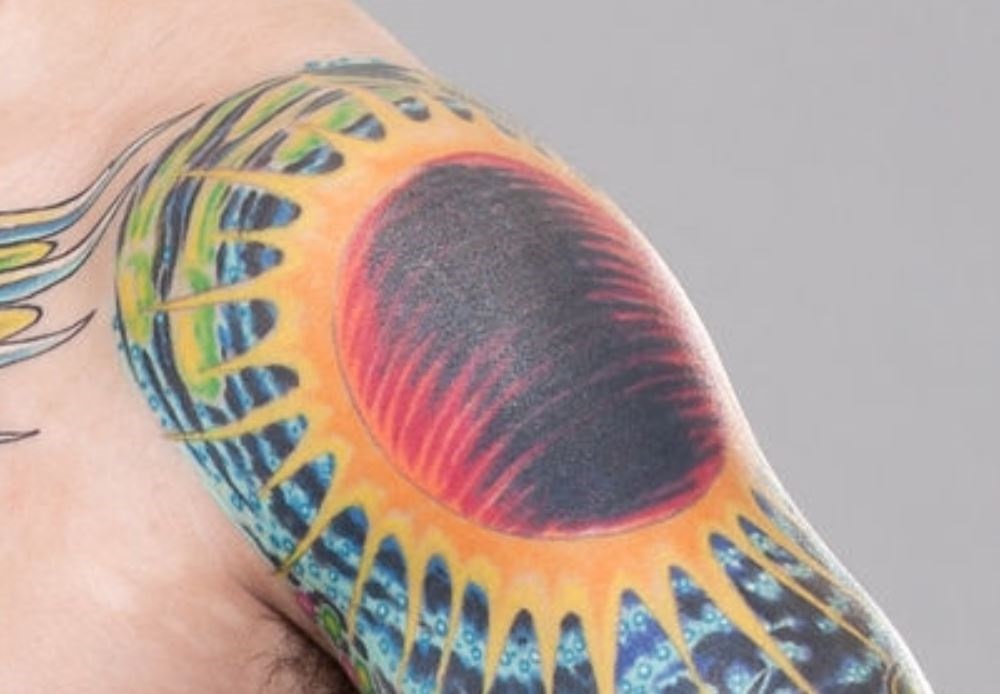
Scott Jorgensen tattoos: The sun design on his left shoulder

The close-up shows a dark center on Jorgensen’s left shoulder, edged in red and surrounded by yellow-orange rays. Blue and green areas continue into the sleeve. Body Art Guru identifies it as a sun within his space-themed arm work.

The circular center and bright rays remain easy to pick out against the surrounding colors. The image shows the design’s placement and palette; it doesn’t establish what those colors mean to Jorgensen.

The colorful work along his right arm
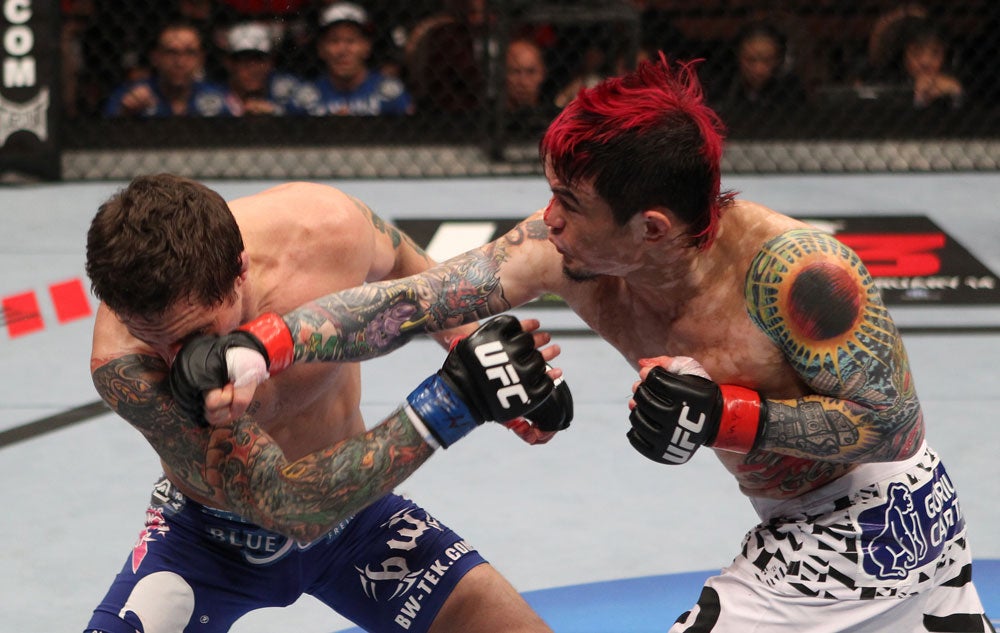
Scott Jorgensen tattoos: The colorful work along his right arm

In this UFC photo, Jorgensen is on the right, extending his right arm toward Jeff Curran on the left. Green, red, purple and darker shaded forms run along the arm. A purple face-like shape is visible near the forearm, but the photo doesn’t show enough to identify every figure.

The dark outlines separate the colored sections, even as the arm stretches through an exchange. The glove and wrist wrap hide the lower edge, so this is a useful view of the sleeve’s layout, not a complete close-up.

The robot on his left forearm
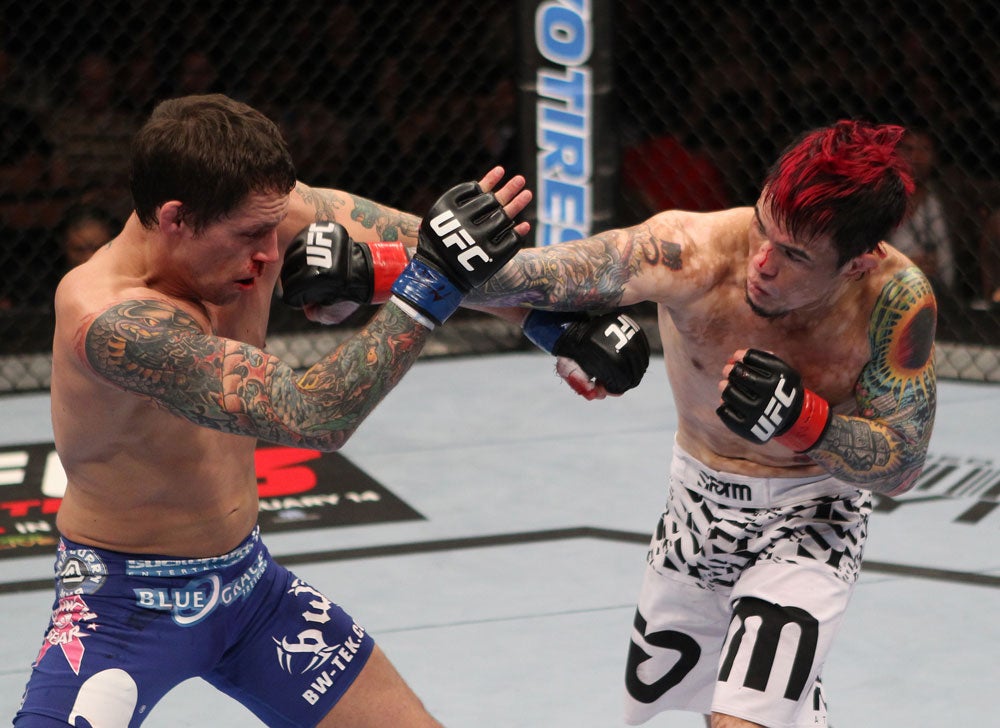
Scott Jorgensen tattoos: The robot on his left forearm

Another view shows a boxy robot on Jorgensen’s left forearm, above his left glove. Body Art Guru also identifies it as a robot. Its squared head, round facial details and rectangular body contrast with the circular sun higher on the arm; yellow and purple areas frame the figure.

The wrist tape and glove cover the lower edge, but the robot’s position is clear: it runs lengthwise with its head toward the elbow. Jorgensen described the broader time he had spent on the arms in the Fighters Only interview, though that doesn’t provide a session-by-session timeline. For a different fighter’s coverage, see Alessio Sakara’s tattoos.

An exchange with Jeff Curran
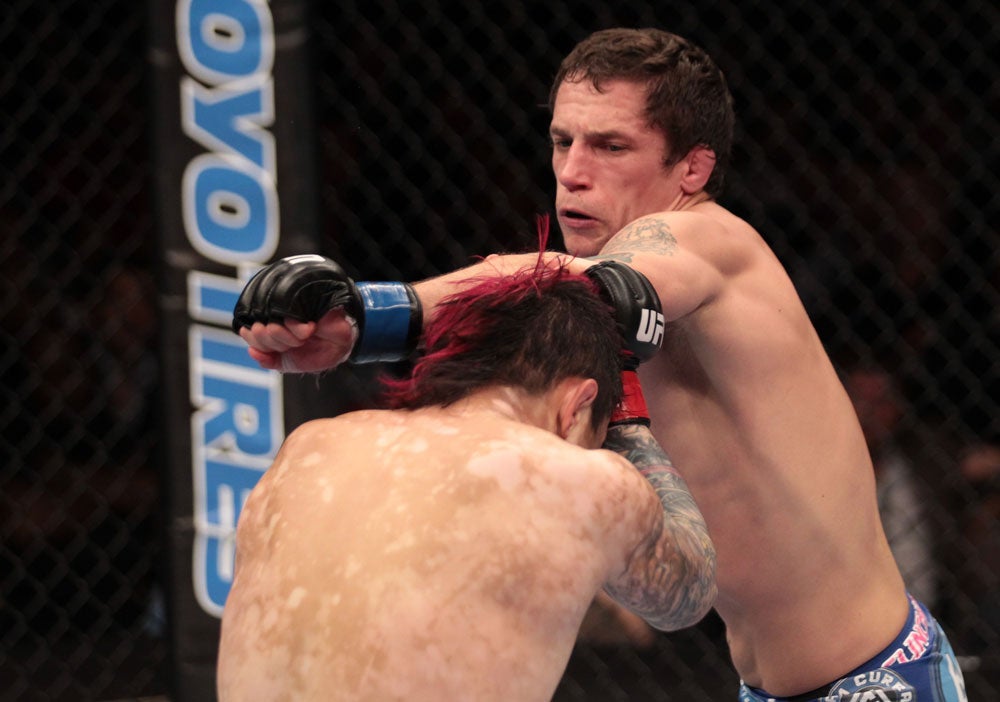
Scott Jorgensen in a contextual photograph: An exchange with Jeff Curran; not tattoo evidence

Jorgensen bends forward in this exchange, with his red-and-black hair visible. Curran is beyond him in blue shorts, and a gloved arm crosses the upper frame. The angle and movement make the shot more useful for the bout context than for tracing the sleeve.

Jorgensen is the nearer fighter with red tape; Curran is farther back with blue tape. Keeping the full frame helps identify whose arm is whose.

The result photograph at UFC 137
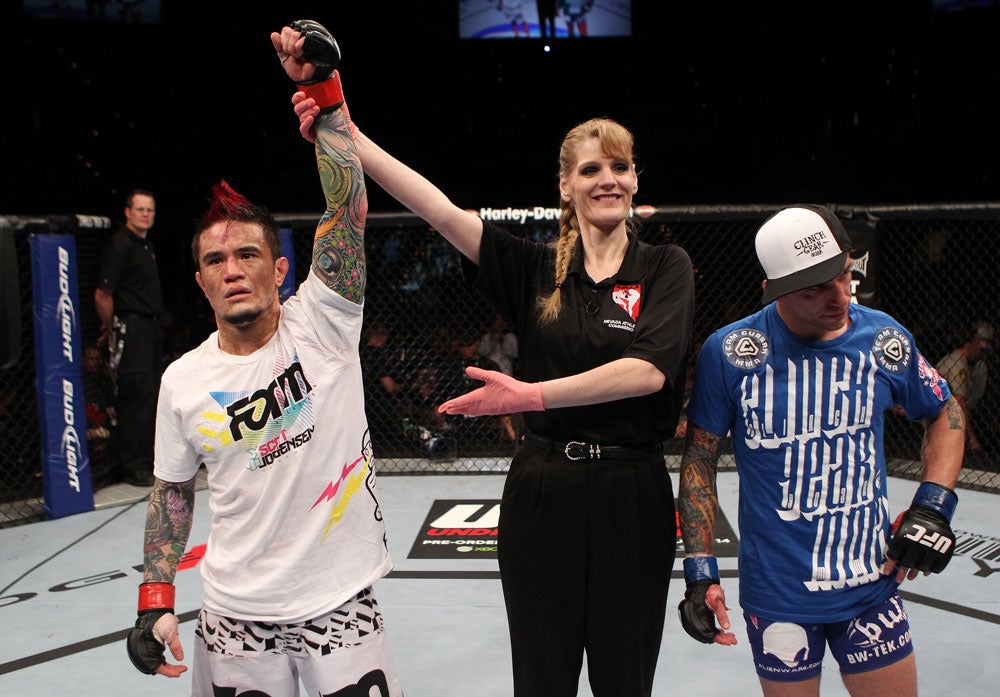
Scott Jorgensen in a contextual photograph: The result photograph at UFC 137; not tattoo evidence

In the UFC 137 result photo, Jorgensen stands on the left in a white shirt, the referee raises his arm in the middle, and Curran is on the right in a blue shirt and cap. The clothing hides most of Jorgensen’s torso, leaving the arms more visible.

The MMA Junkie pre-fight interview below is from ahead of UFC on FOX 9. It adds another view of Jorgensen, but it isn’t a tattoo tour or an explanation of the designs.
Damacio Page Tattoos: Chest Portraits, Suns and Colorful Arm Work

Damacio Page’s collection ranges from portraits and script across his chest to an outlined sun on one shoulder, colored work on the other arm and a smaller sun high on his back. The designs vary in size and style, with open skin between them. Some meanings are documented in his words and reporting; others are only visible shapes.

The religious portraits across his chest

Damacio Page tattoos: The religious portraits across his chest

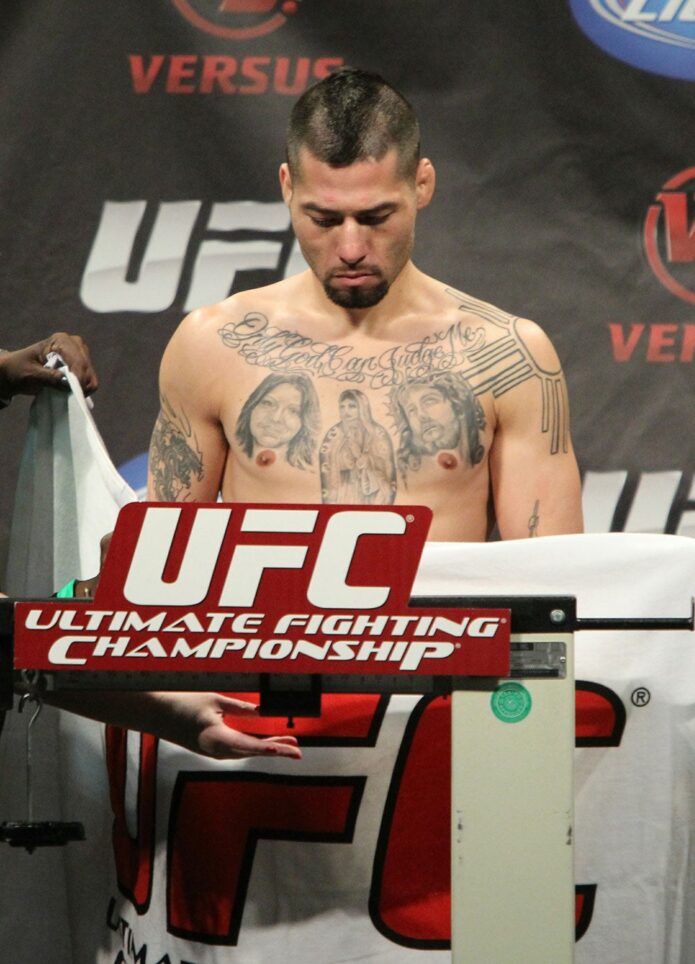
Across Page’s chest are portraits of a central robed figure and faces on either side, with “Only God Can Judge Me” in flowing script above. Fighters Only’s September 2010 feature identified the religious imagery as the Virgin Mary and Christ. UFC reporting that November also described the portraits and said Page had added an image of his mother.

UFC writer Frank Curreri reported that Page’s mother, Deborah Ann Casaus, died in October 2009 and that Page later added her portrait. In the competition photo, Page is underneath Brian Bowles, so the angle and Bowles’s arm partly obscure the arrangement. The lettering and portraits are visible, but the source reports are what establish the family connection.

The outlined sun on his left shoulder

Damacio Page tattoos: The outlined sun on his left shoulder

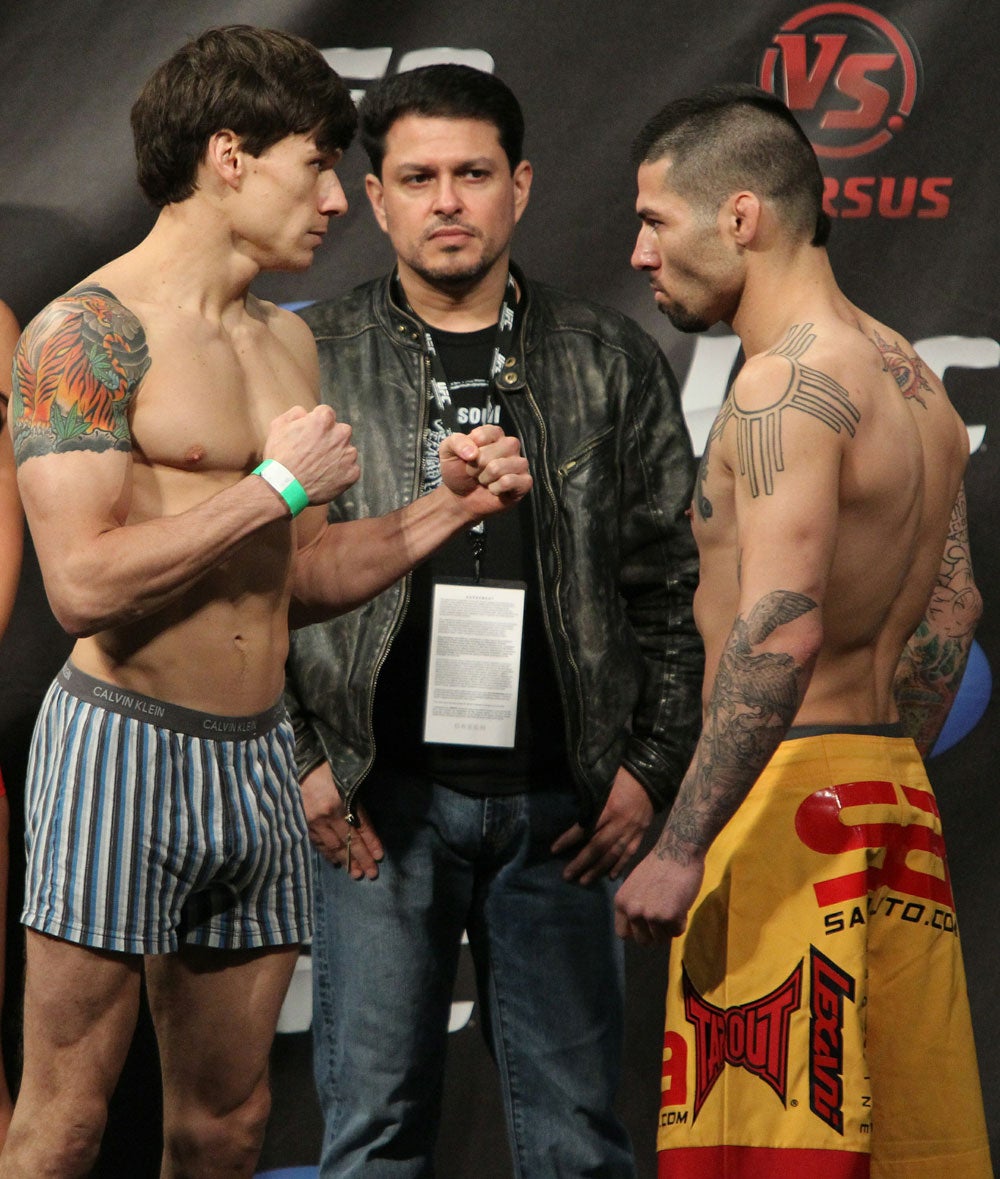
An outlined sun sits on Page’s left shoulder. Its open center and groups of straight rays make a graphic shape, with bare skin between the lines. In the face-off photo Page is on the right, his left shoulder turned toward the camera; Bowles is on the other side.

The shoulder symbol is clear in the photo, but the interviews cited here don’t provide Page’s explanation of it. Its appearance can be described without assigning a spiritual or personal meaning.

The color and lettering on his right arm

Damacio Page tattoos: The color and lettering on his right arm

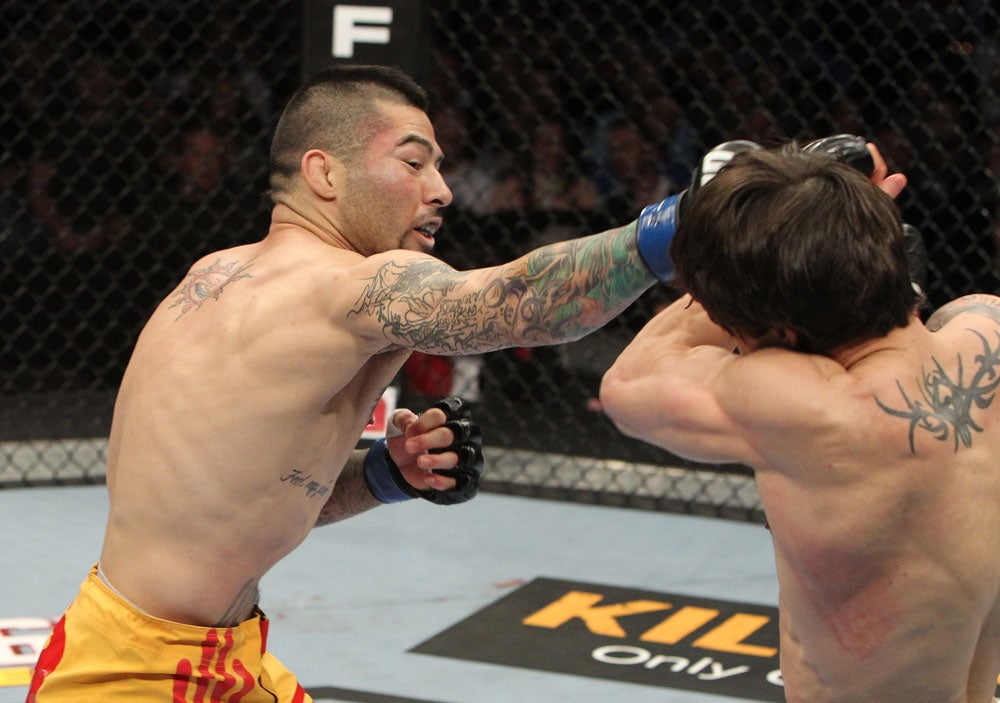
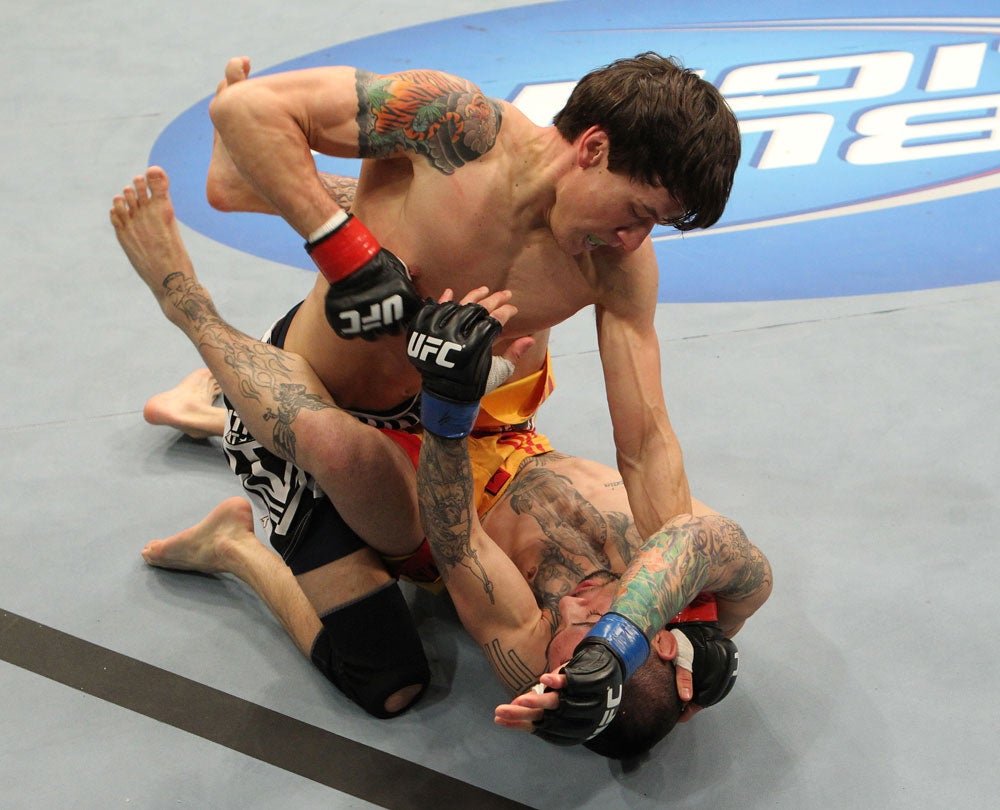
Page’s right arm has denser, shaded imagery on the upper arm, with lettering and colored areas continuing toward the forearm. In the punching photo, his extended arm makes the change in texture visible: dark shapes above, with green and warmer color lower down. The lettering curls through the design, but the angle doesn’t allow a full transcription.

In a 2012 MMA Mania interview, Page said he enjoyed getting tattooed and found the sessions therapeutic. He recalled sitting for about five and a half hours for a blue sleeve. That’s his account of one session, not a complete timeline of the work shown here. For another fighter’s collection, see Alessio Sakara’s tattoos.

The small colored sun on his upper back

Damacio Page tattoos: The small colored sun on his upper back

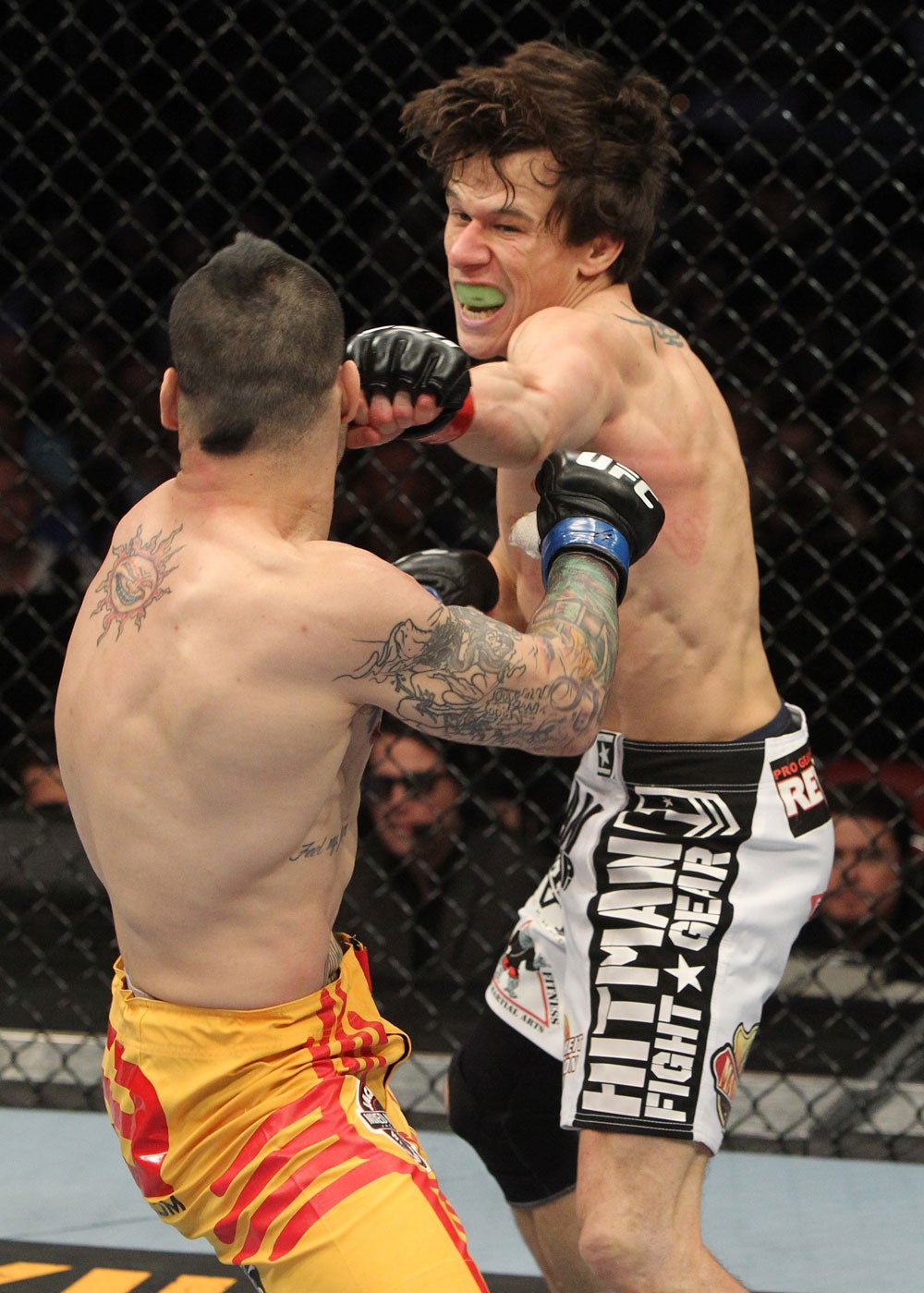
A small colored sun-like design sits high on Page’s back, near the upper spine. It has a face in the center, orange and reddish color, and pointed rays. The photo shows Page in yellow shorts with his back toward the camera; the surrounding skin is mostly open.

The back motif and the outlined shoulder sun share a round center and rays, but the photos don’t establish that Page intended them as a pair. They can be compared by shape without assuming a shared story.

Seeing the collection in competition

Damacio Page in a contextual photograph: Seeing the collection in competition; not tattoo evidence

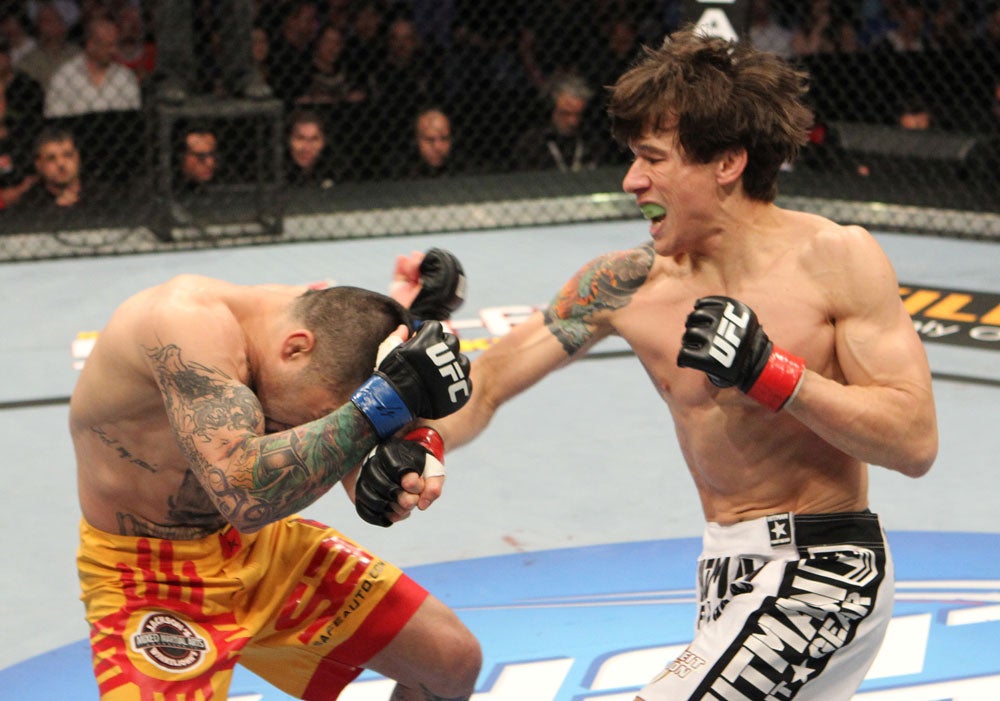
In the fight photo, Page ducks behind his gloves as Bowles reaches toward him. The moving bodies and changing angle make this a competition view, not a close tattoo reference.

Page also told MMA Mania he had a Bruce Lee tattoo on his left thigh. UFC reporting described flames on his feet and quoted his explanation that they represented enduring hardship to get what he wanted. The shorts and angle here don’t show those pieces clearly. The UFC profile below gives a little more context about Page, though it isn’t a tattoo walkthrough.

Chris Camozzi Tattoos: Skulls, a Grenade and His Arm Work

Chris Camozzi’s chest piece combines two skulls, wings and a grenade, while his arms carry a tiger and denser shaded work with red accents. He has explained part of the chest design’s meaning; the photos show the other pieces, but don’t establish a story for each one.

The skulls, wings and grenade across his chest

Chris Camozzi tattoos: The skulls, wings and grenade across his chest

The chest tattoo spreads across both pectorals. Two skulls sit to either side, feathered wings reach toward the shoulders, and a grenade sits lower in the middle with a red heart-shaped detail above it. Camozzi is on the right in this victory photo, separate from the other fighter’s chest tattoos.

UFC reporting in 2011 described those elements. Camozzi said people had often told him he had a lot of heart, and he agreed; he connected the grenade with pushing through obstacles as a fighter. That’s his stated explanation, not a generic meaning for every grenade tattoo.

The tiger and shaded work on his right arm

Chris Camozzi tattoos: The tiger and shaded work on his right arm

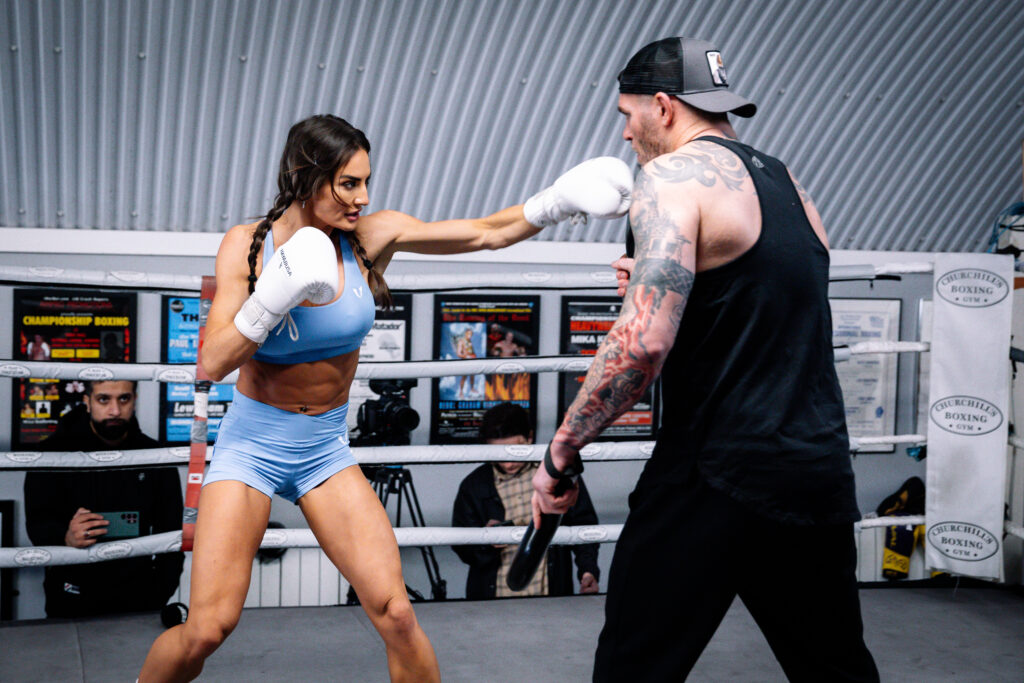
A large tiger’s face covers Camozzi’s right shoulder and upper arm. In this gym photo he’s on the left, wearing a black tank top while helping Whitney Johns with her gloves. Dark stripes and shading define the tiger; other forms continue below it along the arm.

The image shows the tiger clearly but doesn’t identify every shape farther down the sleeve. Camozzi hasn’t given a specific meaning for the tiger in the reporting cited here.

The black and red work on his left arm

Chris Camozzi tattoos: The black and red work on his left arm

The left arm has a different mix: darker shapes higher up, with red appearing farther down. This photo is taken from behind and to Camozzi’s left as Johns punches toward the equipment he’s holding. His tank top covers much of his torso, but the exposed sleeve remains visible.

The angle and light hide some of the boundaries, so the colors and placement are clearer than individual motifs. For another fighter’s illustrated work, see Alessio Sakara’s tattoos.

Life around the gym

Chris Camozzi in a contextual photograph: Life around the gym; not tattoo evidence

In the raised-fists photo, Camozzi wears a white shirt and Johns is in boxing gear. It’s a posed gym moment; only some forearm work is visible. Cherry Creek Magazine’s September 2023 profile described their shared training routine. Camozzi spoke about training Johns, who brought her own experience as a personal trainer, and the article also covered his marketing work and podcast.

The shirt hides the chest design, leaving the forearms as the main visible ink. The photo gives a glimpse of life around training, not a close study of the tattoos.

A different look away from competition

Chris Camozzi in a contextual photograph: A different look away from competition; not tattoo evidence

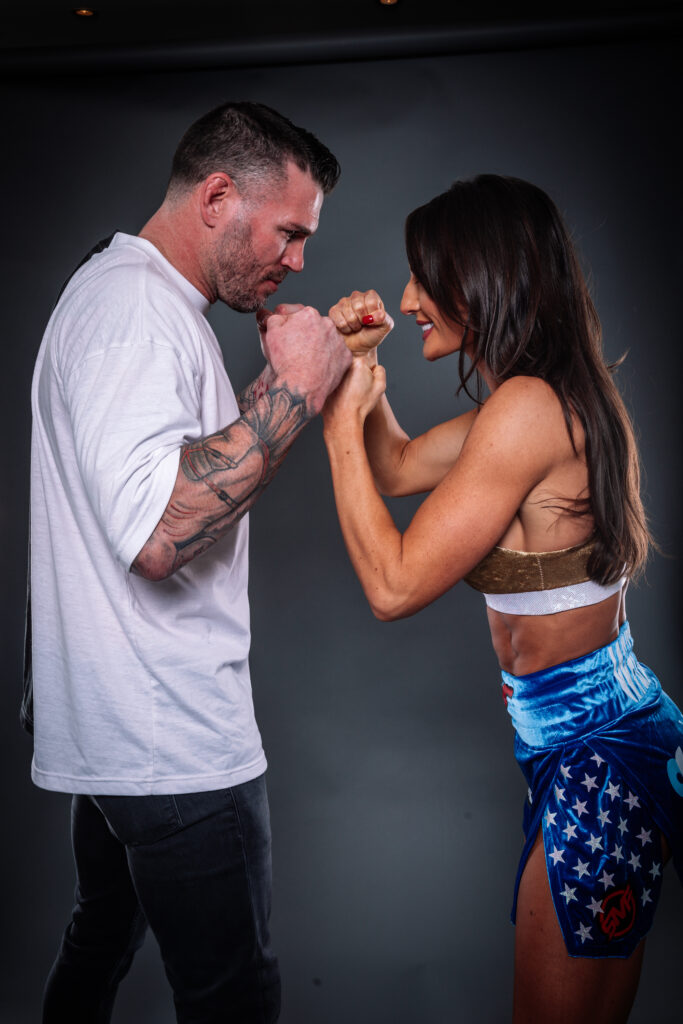
The doorway portrait shows Camozzi in a checked dark suit and white shirt beside Johns in a gold dress. With the chest and arms covered, it offers no new tattoo detail; it’s a view of the pair away from the gym and fight setting.

The interview below gives Camozzi room to speak beyond these still photos. It isn’t a guide to every tattoo. His chest explanation is specific, while the tiger and the shaded work on his arms are best described by what the images show.

Chris Leben Tattoos: Samurai, Phoenix, Lotus and Buddha Designs

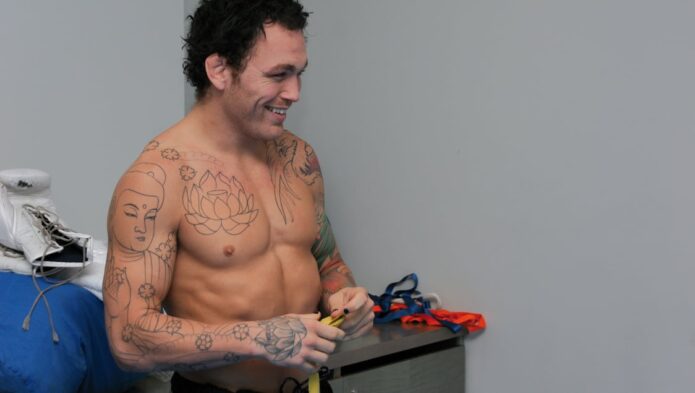
Chris Leben’s collection combines a samurai on his back, a green mask-like face on his forearm, a phoenix along his left arm, a lotus on his right chest and a Buddha with flowers on his right arm. Leben has said he likes Japanese-style tattooing. Fighters Only covered several pieces in April 2009; later UFC photos show some of them at weigh-ins. The images are snapshots from different years, not a current inventory.
The samurai and red lettering on his back

Chris Leben tattoos: The samurai and red lettering on his back

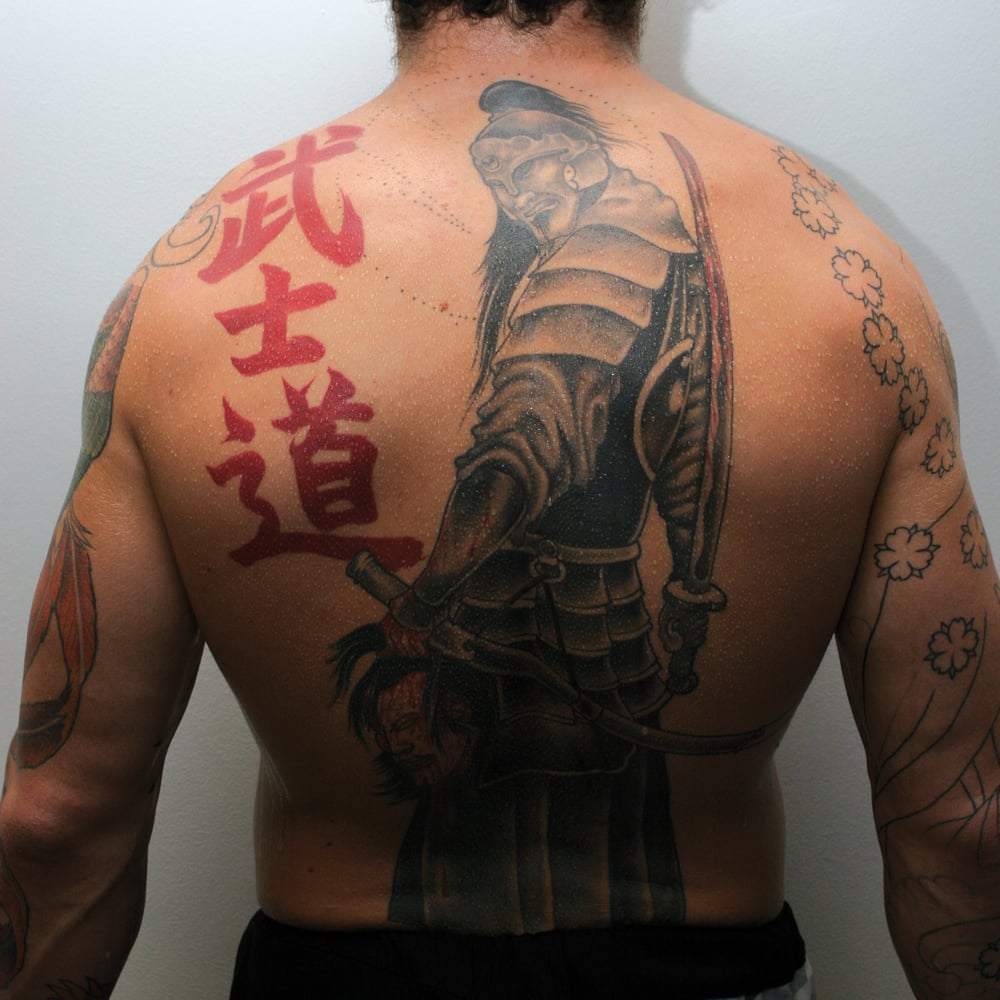
An armored Japanese warrior fills a large central area of Leben’s back. The figure holds a sword upright in one hand and a severed head in the other. Red Japanese lettering runs vertically near his left shoulder blade; Fighters Only identified it as “bushido,” the warrior’s code of honor. Canadian Press reporting carried by Sportsnet also described the image as a samurai holding a severed head.

The studio photo shows the placement clearly: shaded armor and the figure take up one side, while the red lettering stands apart on the other. Those are reported identifications; the photographs don’t add a personal explanation from Leben.

The green mask-like face on his forearm

Chris Leben tattoos: The green mask-like face on his forearm

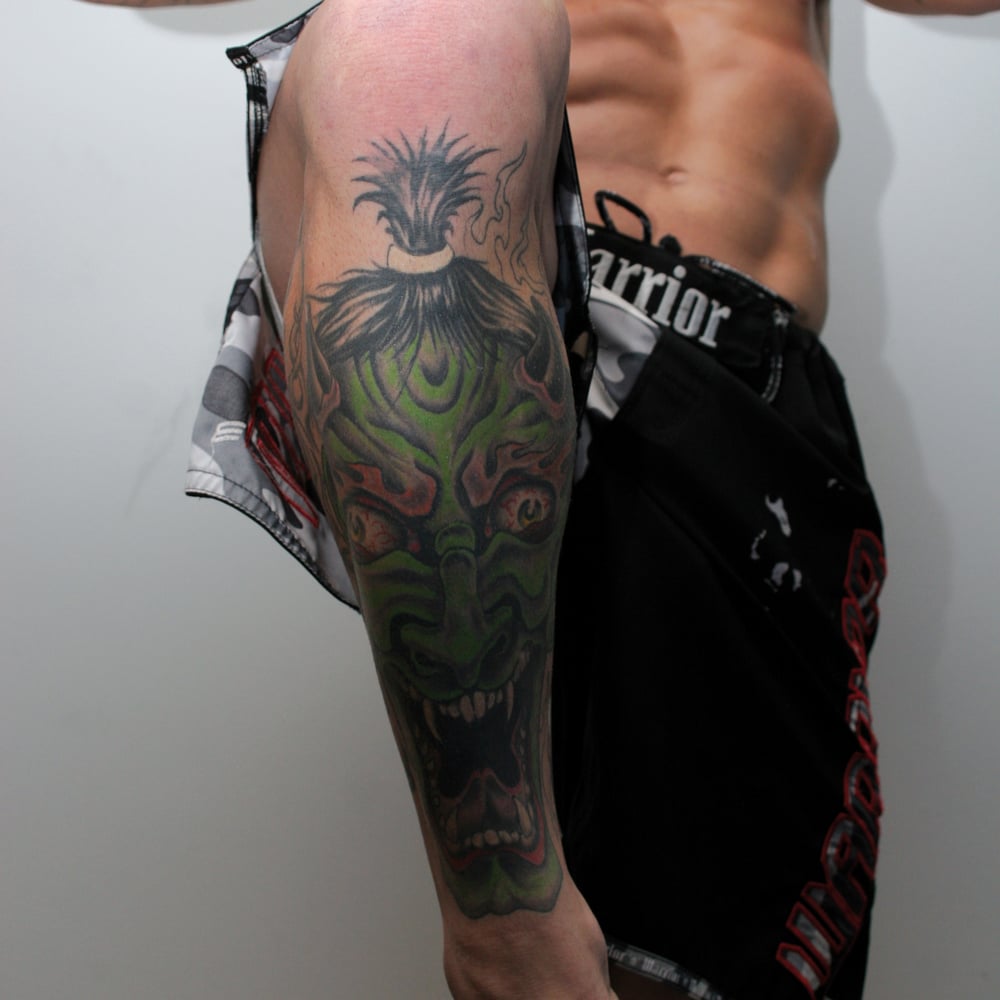
A large green face runs lengthwise along Leben’s forearm, with bulging eyes, a pointed nose and an open mouth showing teeth. Dark forms sit above the face, while red and black accents break up the green. “Mask-like” describes its appearance; the reporting here doesn’t name a specific character.

The close-up brings out more detail than a wide event photo, though the shorts and torso behind the arm make the forearm’s placement easier to see than its full outline.

The phoenix flowing down his left arm

Chris Leben tattoos: The phoenix flowing down his left arm

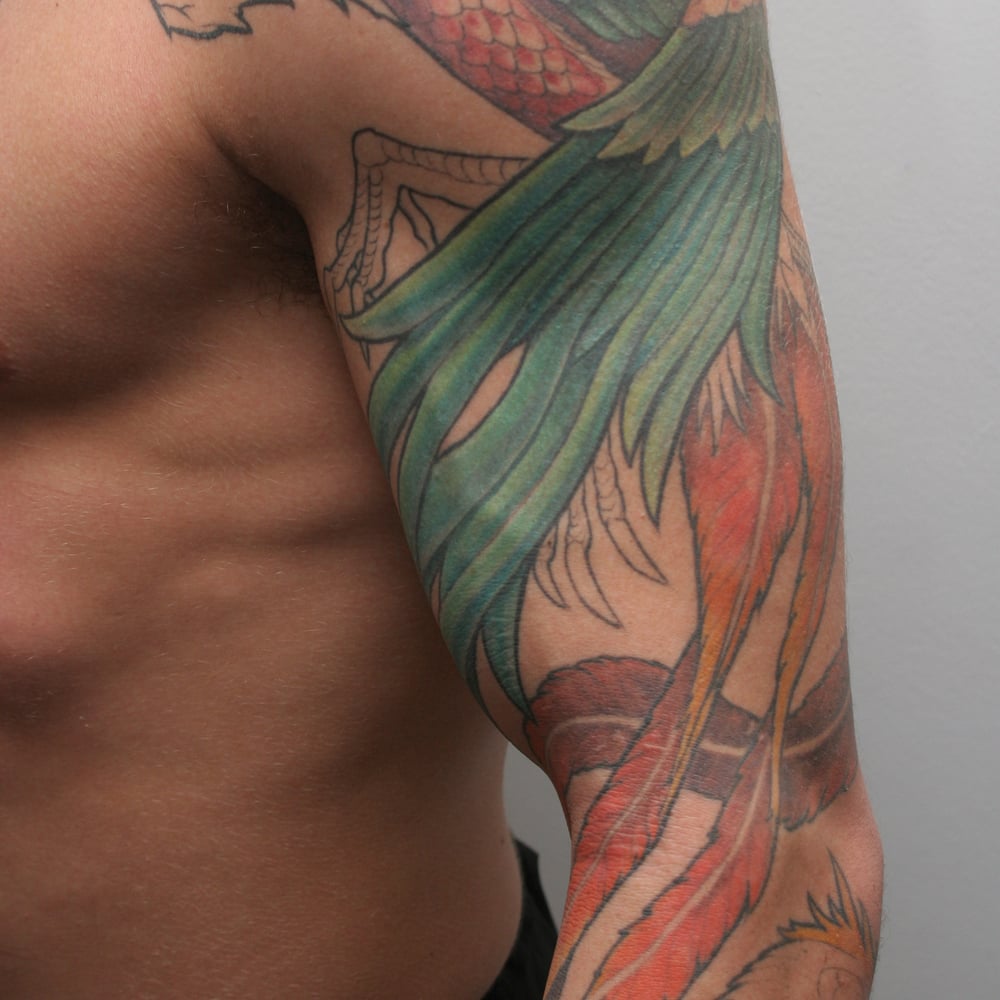
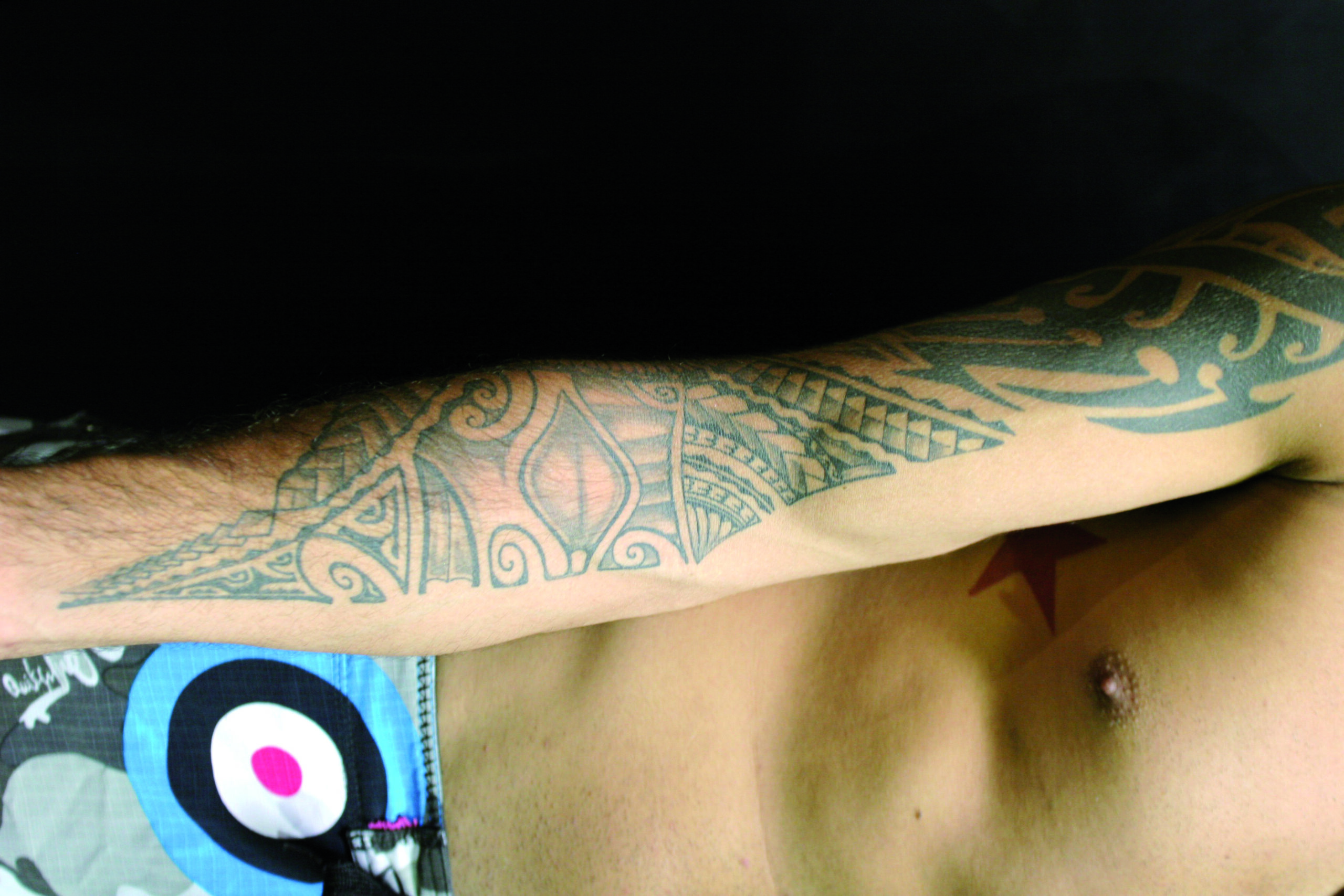
Fighters Only described the phoenix as running from Leben’s chest and shoulder toward his forearm. In this close view, green feathers overlap orange and red sections, with dark outlines separating the shapes. The curves follow the arm rather than forming a straight panel.
This older studio photo captures unfilled outlines between some colored areas. It shows the tattoo at that moment, not necessarily its present appearance. The bird is identified in the reporting, but Leben’s reason for choosing it isn’t established here.

The lotus on his right chest

Chris Leben tattoos: The lotus on his right chest

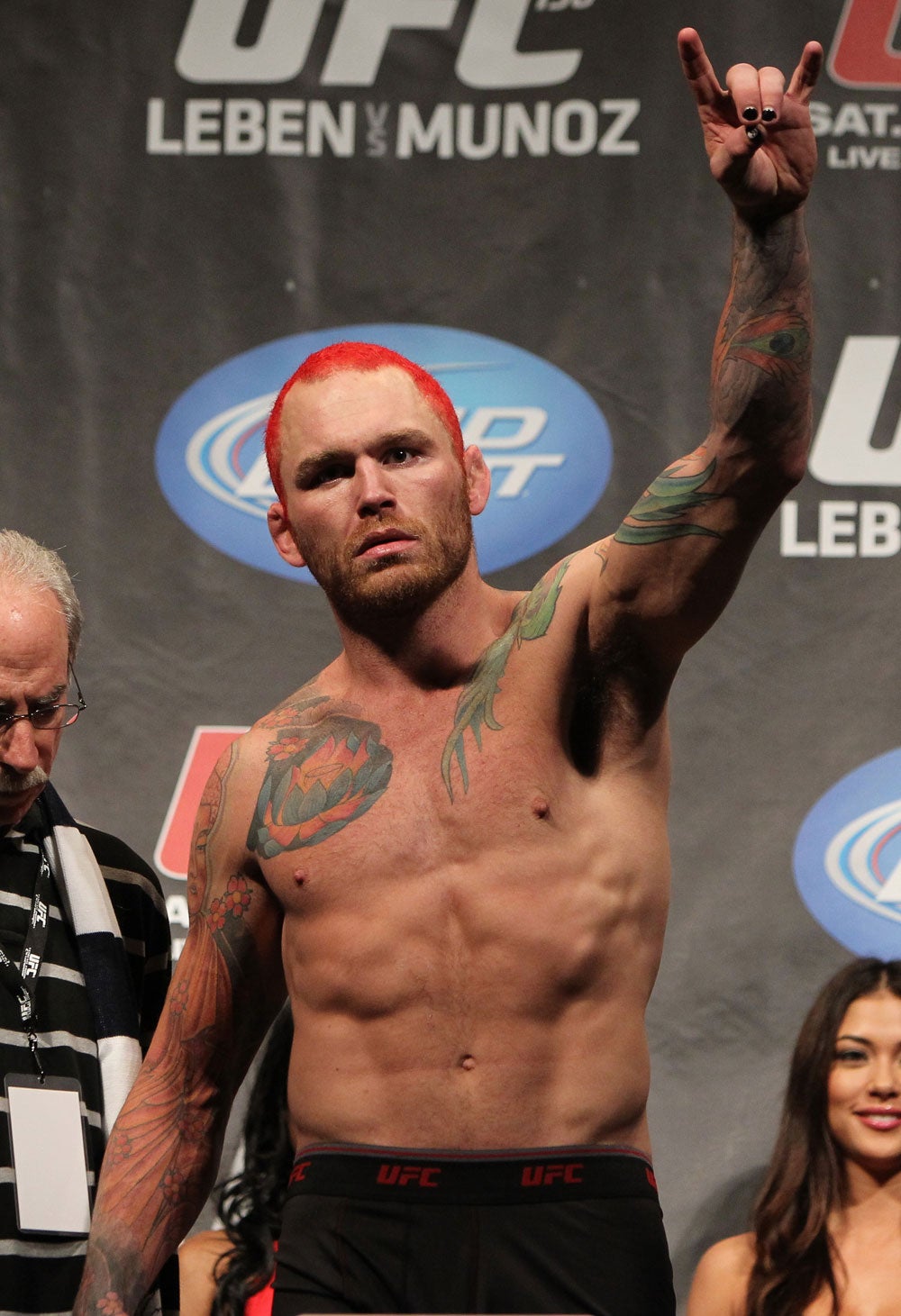
A lotus covers Leben’s right chest, opposite the phoenix on his left. The UFC 138 weigh-in photo shows layered orange-red petals with darker green areas around them. The flower has a rounded outline, but the overlapping petals keep it from looking like a plain circle.

A studio portrait shows the lotus as an outline, while the later weigh-in image shows color. The photos establish different appearances at different times, but not when the color was added or who made the tattoo. Leben hasn’t given a specific explanation for the lotus in the reporting cited here.

The Buddha and flowers on his right arm

Chris Leben tattoos: The Buddha and flowers on his right arm

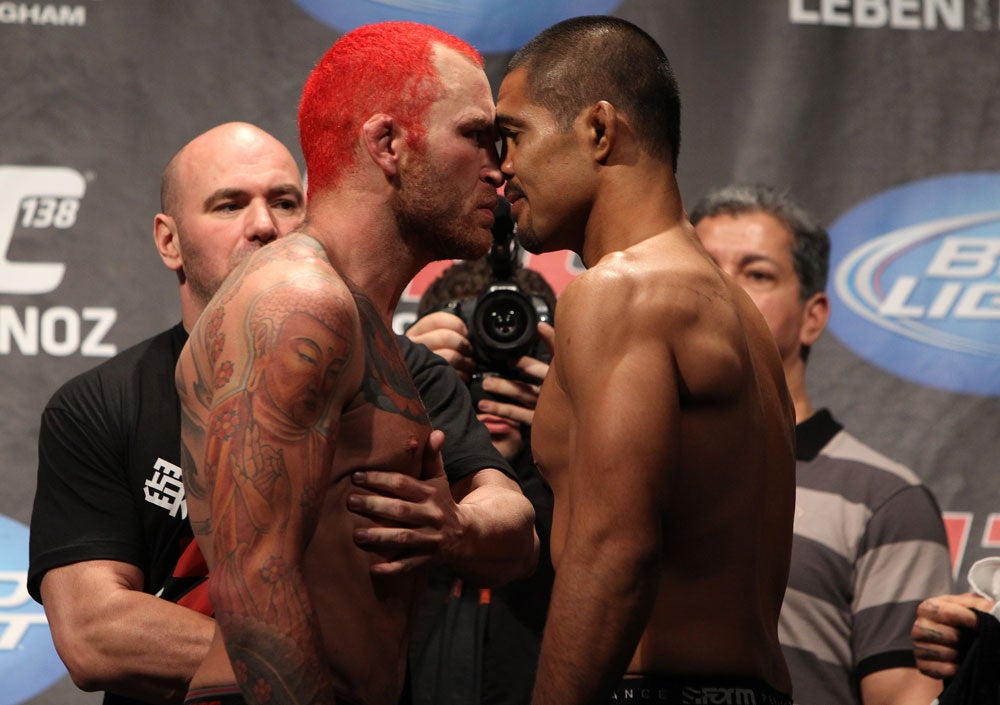
The right-arm design is visible in the face-off with Mark Munoz. A Buddha figure sits high on Leben’s upper arm, with flowers and flowing lines continuing down the limb. Fighters Only described the work in April 2009 as being at the outline stage, naming a Buddha, wind and flowers, plus a lotus on the back of the hand. A later UFC photo shows more color and shading.

The Buddha’s calm face contrasts with the back warrior and the exaggerated green forearm figure. He has contrasted the pain and dedication of getting tattooed with simply changing his hair color. The Chats & Tatts conversation below gives more of his voice; it isn’t a complete tour of every design. For another large illustrated back piece, see Alessio Sakara’s tattoos.

Dan Hardy Tattoos: Japanese Sleeve and Abdominal Ink

Dan Hardy has spoken about his preference for traditional tattooing, especially Japanese sleeves. His photos show floral work and dark shading on the arms, plus lettering and a red flower across his abdomen. They come from different points in his career, so each is a dated view rather than a complete inventory.

Traditional Japanese sleeve and mixed arm artwork

Dan Hardy tattoos: Traditional Japanese sleeve and mixed arm artwork

In the front-facing weigh-in photo, flowers sit among sweeping dark lines on Hardy’s right arm. The shading wraps around the limb, while the other arm has its own mix of imagery, including a large flower-like shape and a visible cross.

In a 2013 Fighters Only interview, Hardy said he liked traditional tattooing and praised traditional Japanese sleeves. That describes his taste; he didn’t use the interview to explain every flower or symbol in his own collection. For another fighter’s tattoos, see Alessio Sakara’s tattoos.

Abdominal lettering and the red flower

Dan Hardy tattoos: Abdominal lettering and the red flower

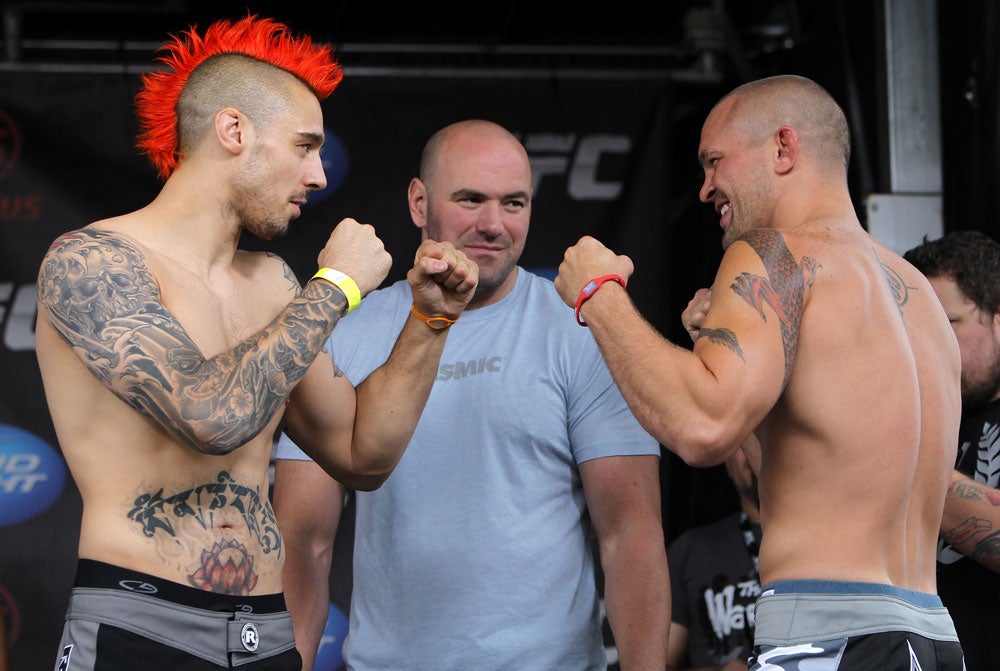
The face-off with Chris Lytle shows broad, stylized lettering across Hardy’s abdomen and a red flower near the waistband. The flower is compact beneath the horizontal script. The scale photo covers much of this area, while the face-off angle leaves it exposed.

Hardy said in a March 2010 MMA Mania interview that he was told the UFC had airbrushed his abdominal tattoos from a promotional image because they drew attention away from event information. He described the explanation he received; he didn’t give the lettering a political meaning. Promotional photos can be retouched, so they aren’t always a faithful record of visible ink.

The Outlaw look at weigh-ins

Dan Hardy in a contextual photograph: The Outlaw look at weigh-ins; not tattoo evidence

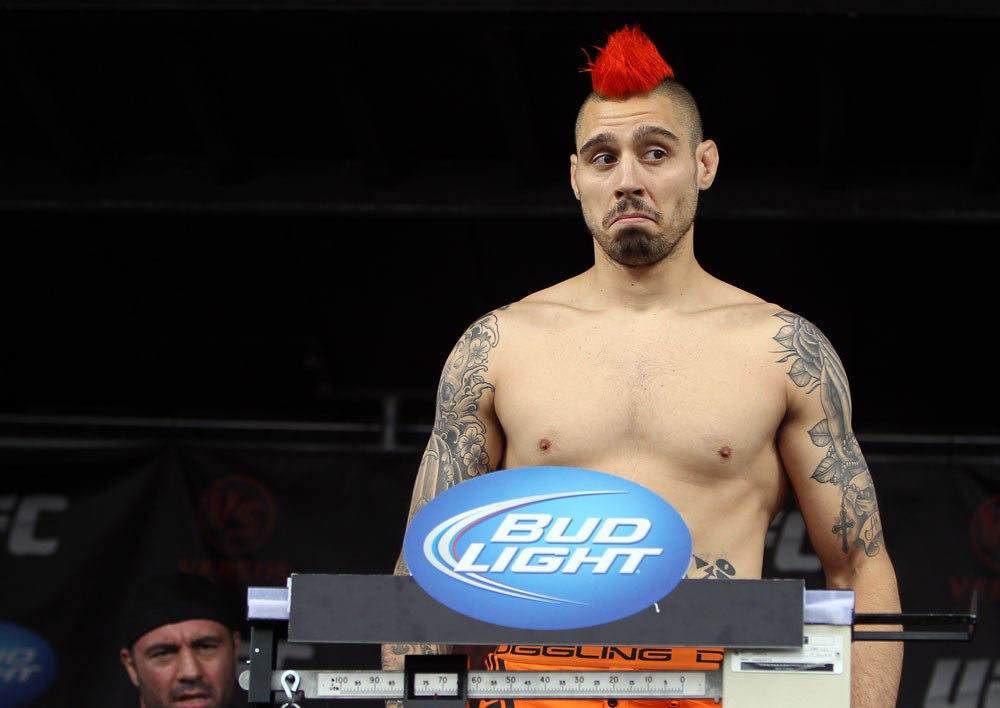
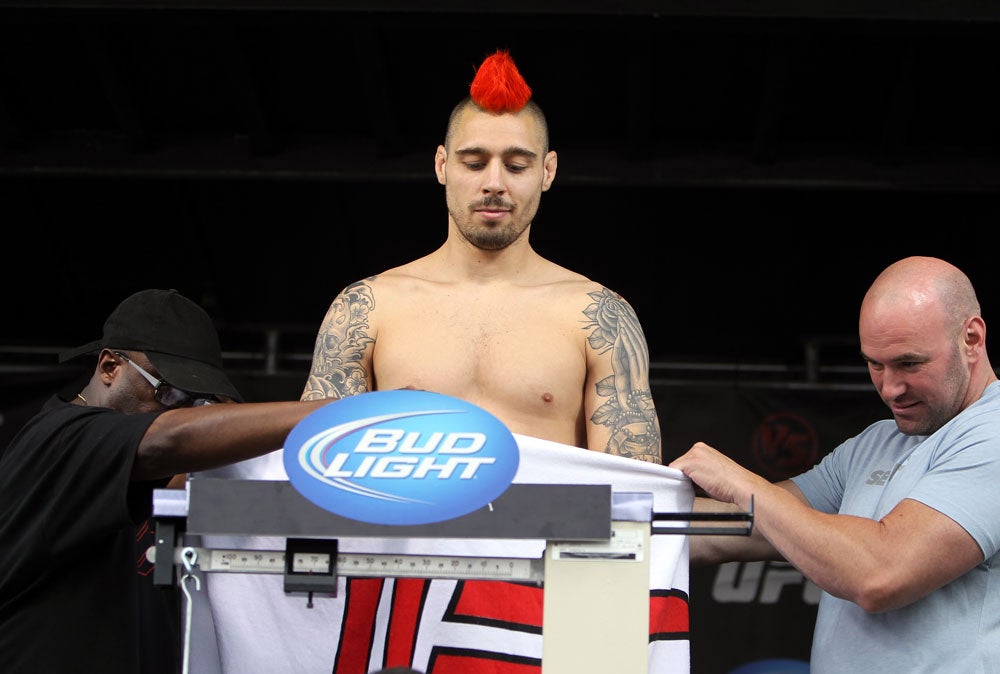
The red mohawk is the first thing many people notice in this weigh-in image. Officials hold a towel while Hardy looks toward the scale; the scene records the event rather than presenting a tattoo close-up. The towel and scale also hide parts of his body.

In the same 2010 interview, Hardy said a promotional photo had been taken before his fight with Marcus Davis, before a later change to his haircut and color. The photo can be genuine and still show an earlier version of his look.

How fight photography changes the view

Dan Hardy in a contextual photograph: How fight photography changes the view; not tattoo evidence

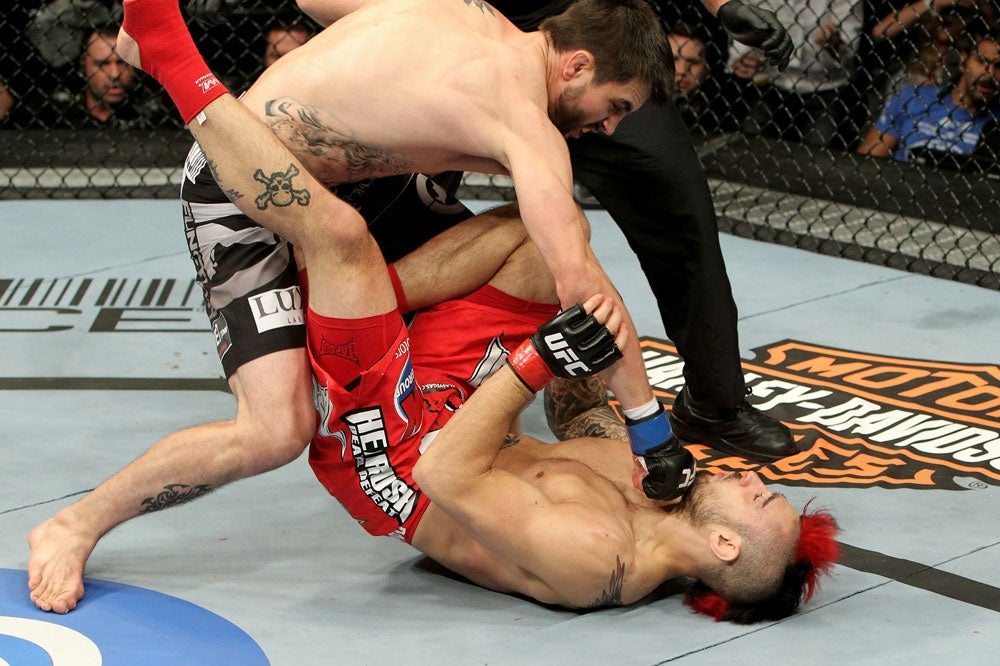
The fight photo with Carlos Condit shows Hardy on the canvas, Condit above him and the referee nearby. The bodies overlap, and some of the most visible leg ink belongs to Condit. It’s a record of the action, not a clear reference for Hardy’s tattoos.

In a 2016 UFC interview, Hardy mentioned a Hunter S. Thompson tattoo on his leg and connected Thompson’s gonzo journalism with his approach to describing an event’s atmosphere. This image doesn’t show that tattoo; the connection comes from Hardy’s own account.

Personal taste beyond the cage

Dan Hardy in a contextual photograph: Personal taste beyond the cage; not tattoo evidence

A Fighters Only archive photo shows Hardy with short hair and less visible arm coverage. It doesn’t establish when his later pieces were added. In a 2013 lifestyle interview, he said his music choices varied with his mood: heavy music for training and slower listening at other times. He estimated he owned 3,000 to 4,000 vinyl records then and liked choosing and playing them.

He also described wearing plain shirts, jeans and Converse away from sponsor gear. The Full Reptile FIGHTINK episode below follows a Las Vegas visit to Last Chance Tattoo. It offers the shop and tattoo process as context, rather than a guessed meaning for each design.

Alan Belcher Tattoos: Johnny Cash Portrait and Its Meaning

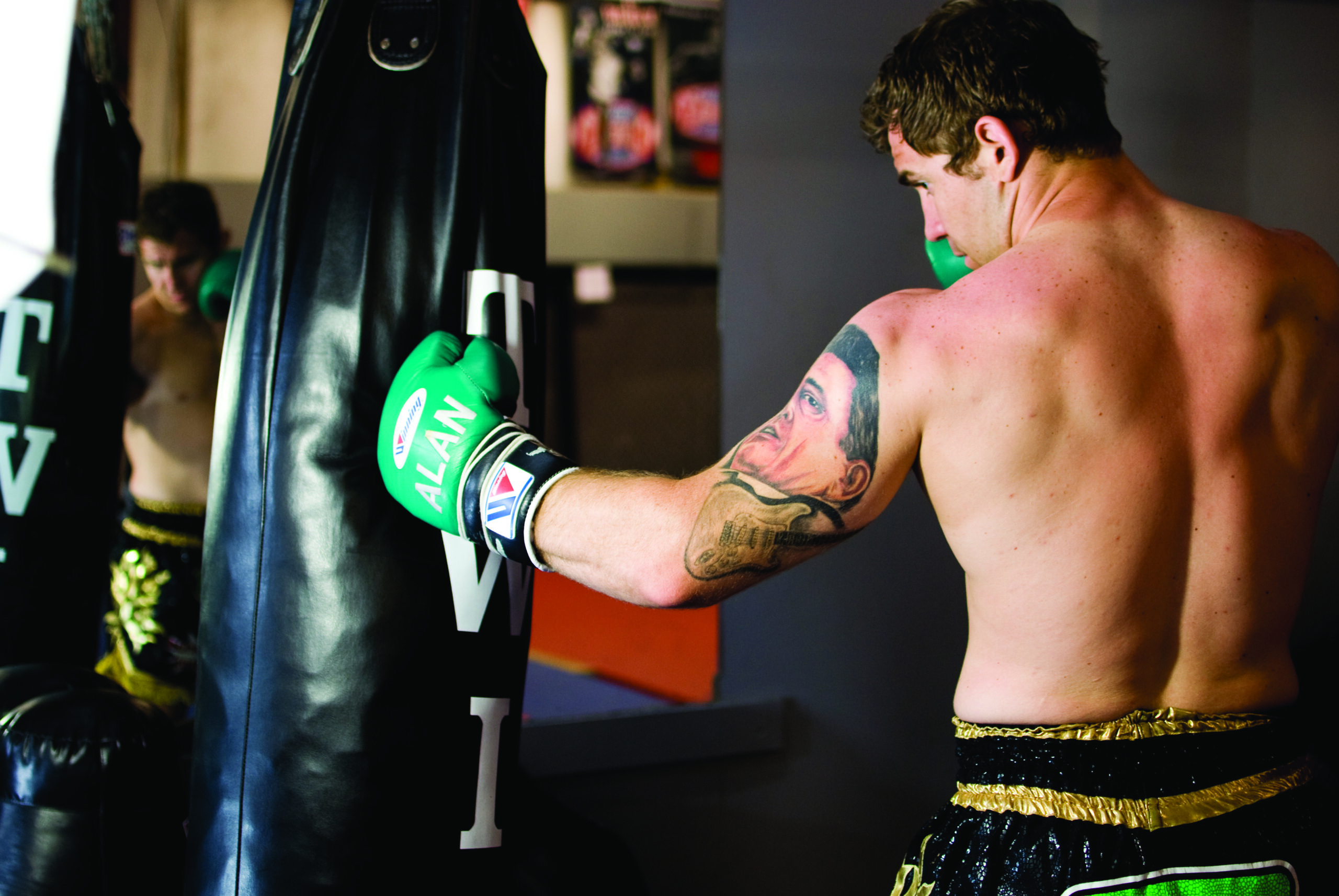
Alan Belcher’s best-known tattoo is a large Johnny Cash portrait on his left upper arm, with a guitar below it. Belcher has tied the design to the country music he grew up hearing, his family and his Arkansas background. Other photos show the tattoo during a fight and in editorial portraits, but the clearest explanation comes from Belcher himself.

Johnny Cash portrait on his left arm

Alan Belcher tattoos: Johnny Cash portrait on his left arm

The heavy-bag photo gives a clear view: Cash’s face fills the upper arm, with the guitar below near the elbow. Belcher said in a MyMMANews interview with Tony Reid that his father and grandparents shaped his interest in country music, especially records from the 1950s through the 1970s. He connected Cash with Arkansas and the background he understood. That’s the reason he gave for choosing the singer.

The face is easy to see against open skin, and the guitar gives the portrait a clear lower edge. The interview doesn’t name the tattoo artist or appointment date.

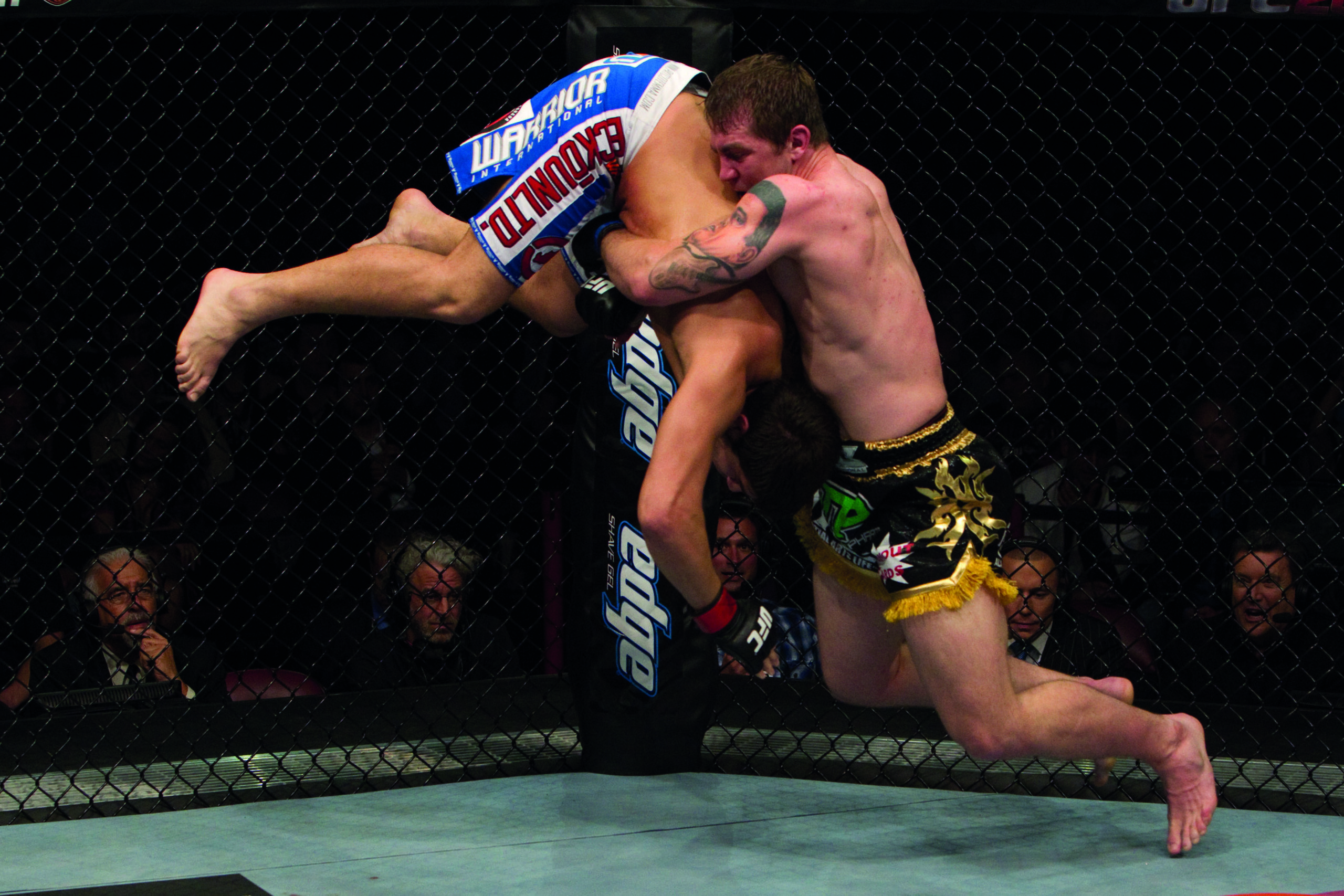
How the Cash tattoo looks during a fight

Alan Belcher tattoos: How the Cash tattoo looks during a fight

In the photo of Belcher lifting Patrick Cote near the fence, the portrait bends with his arm and is partly turned away. MMA Fighting identified it as Johnny Cash in coverage around UFC 100 in 2009, and discussed theories about muscle growth changing how it looked. That was speculation in the article, not a confirmed account from Belcher or the artist.

A second angle can make the face look wider or narrower without showing that the tattoo changed. The guitar below it remains another recognizable part of the design. For a different approach to fighter tattoos, see Alessio Sakara’s tattoos.

Country music away from the gym

Alan Belcher in a contextual photograph: Country music away from the gym; not tattoo evidence

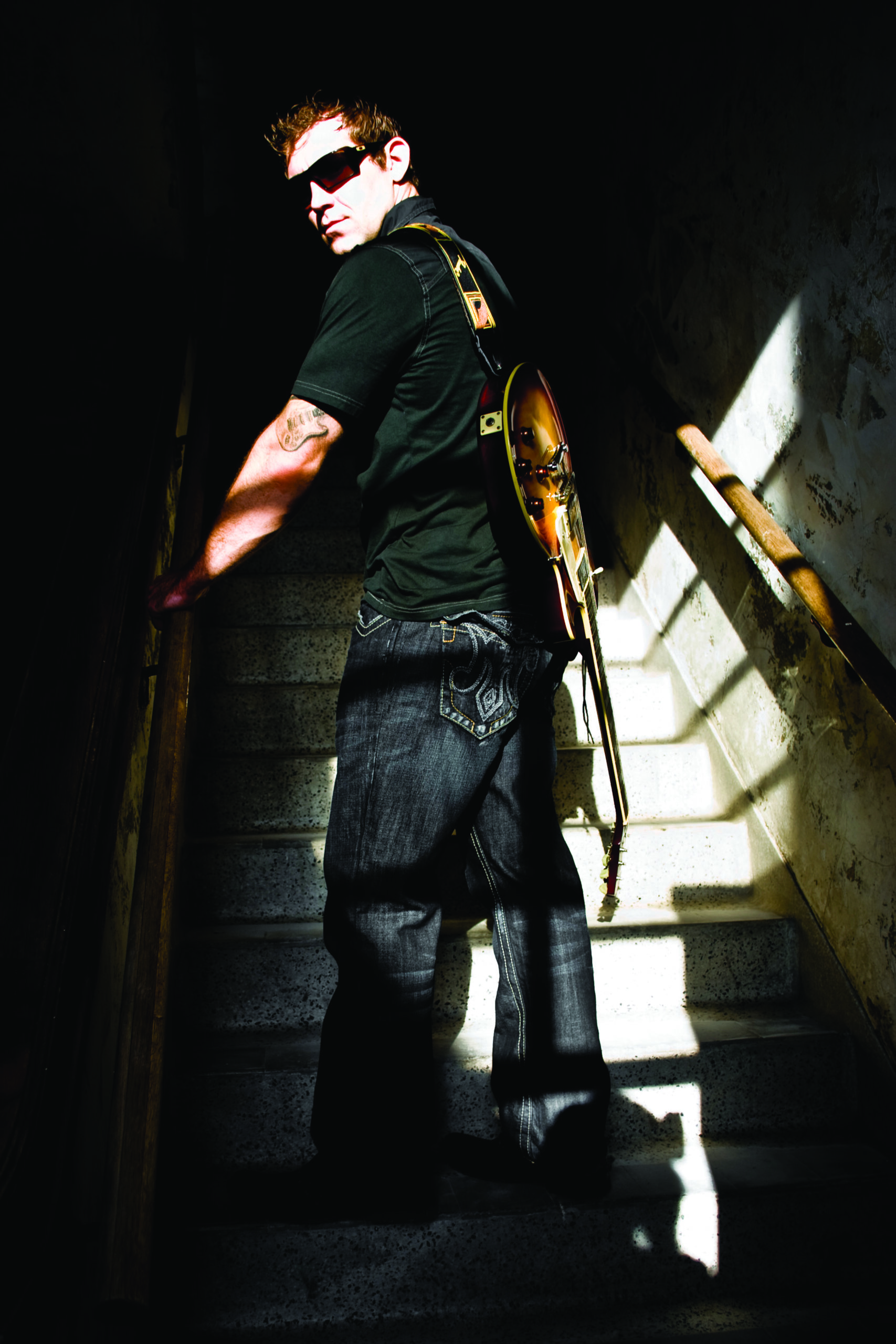
In the staircase portrait, Belcher wears sunglasses, a black shirt and jeans, with a guitar over his shoulder. A small amount of ink peeks out below the sleeve, but the photo is mainly a portrait of him away from the cage. The instrument he’s carrying is separate from the guitar in the tattoo.

The photo gives a visual echo of his music connection, but it doesn’t identify a song or an instrument model. Belcher’s own account—his family’s country records and his Arkansas background—is the firmer context.

The fighter behind the familiar image

Alan Belcher in a contextual photograph: The fighter behind the familiar image; not tattoo evidence

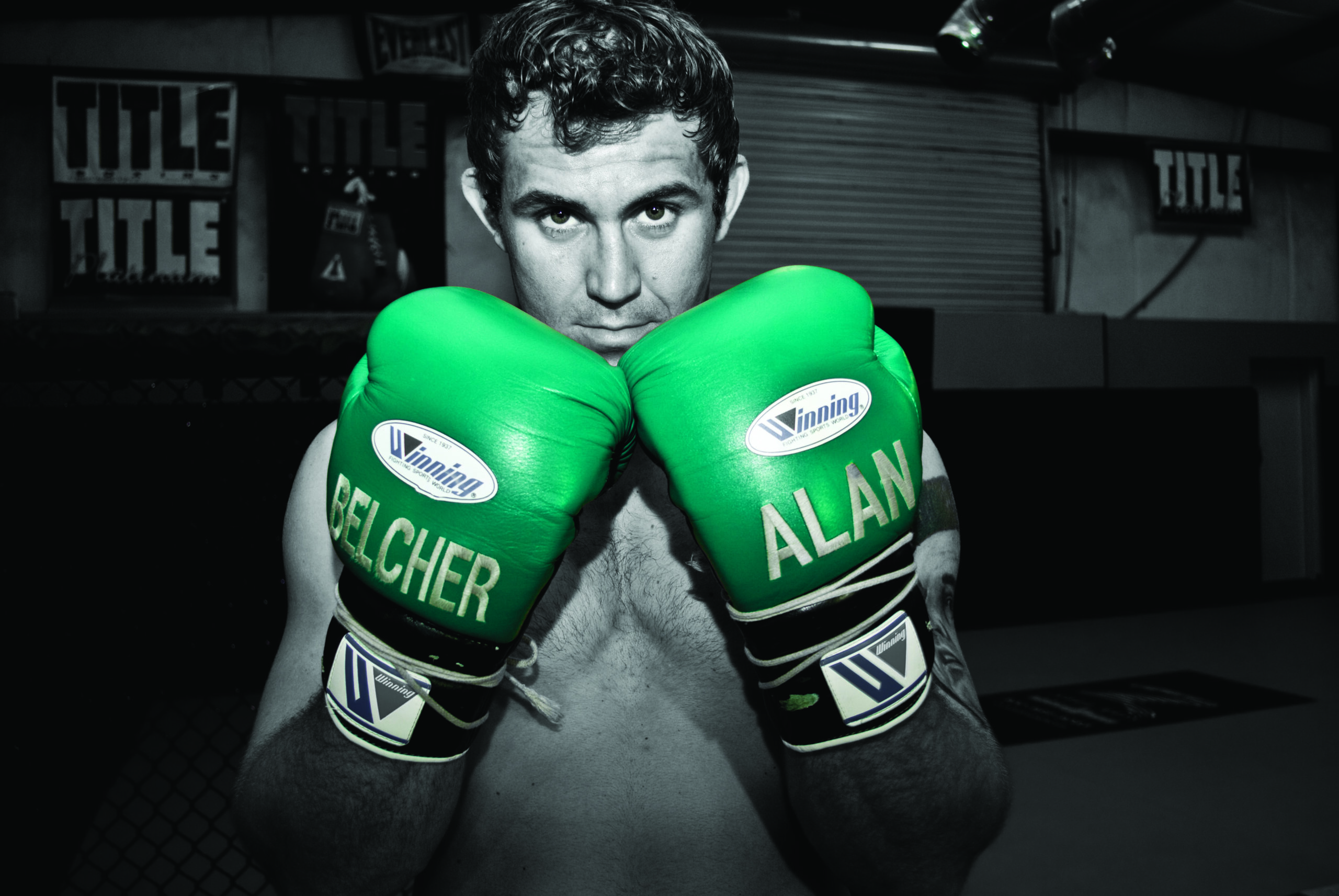
The gym portrait shows Belcher looking toward the camera with bright green gloves, while most of the image is monochrome. The selective color draws attention to the gloves and face; it isn’t a reliable guide to the tattoo’s actual color.

A 2010 magazine profile covered Belcher’s training and career, including his work with Duke Roufus. The portrait shows a fighter at work, while the Cash tattoo is one part of that larger life.

Fight strategy in magazine photography

Alan Belcher in a contextual photograph: Fight strategy in magazine photography; not tattoo evidence

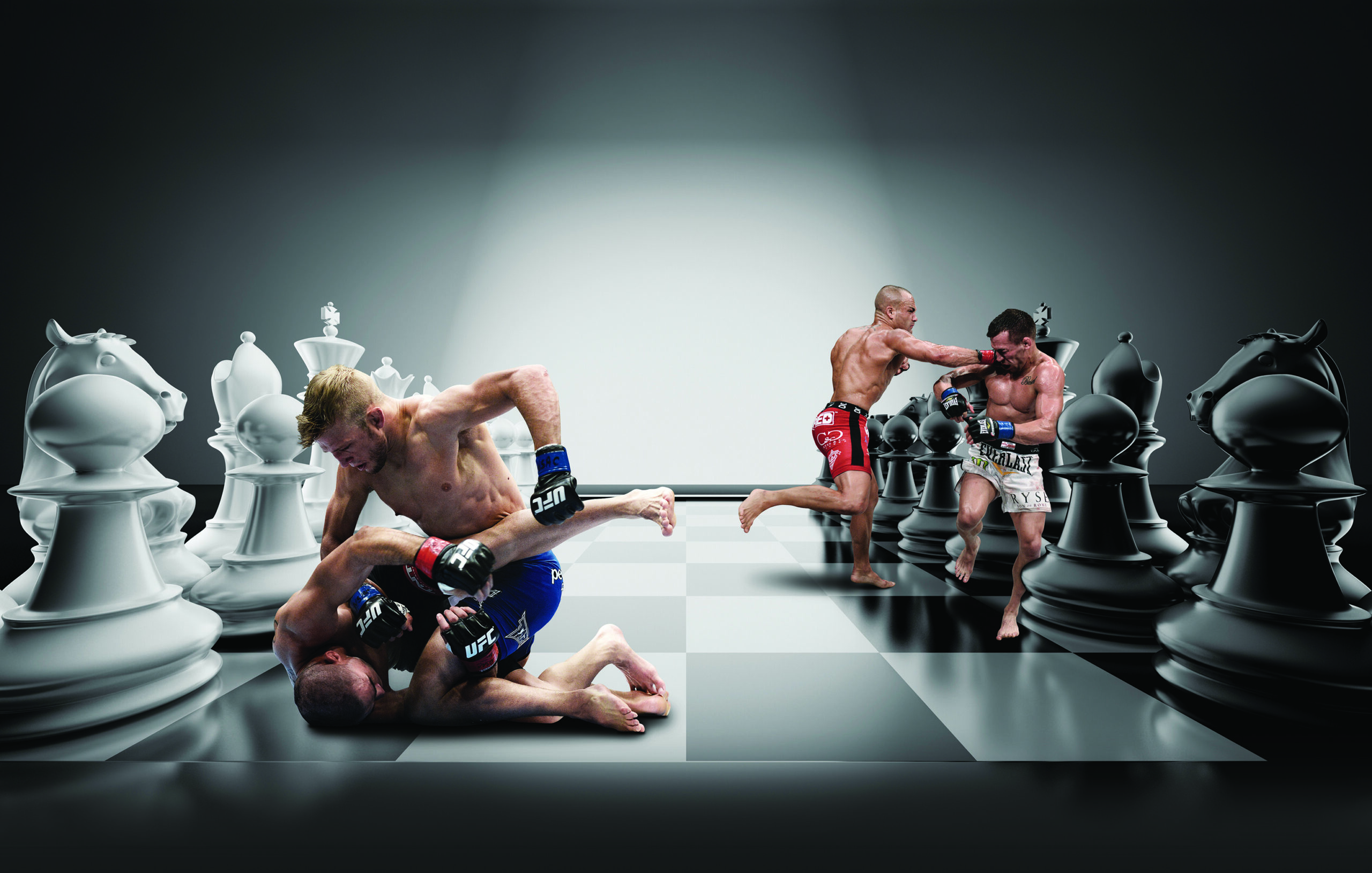
This editorial composite places Belcher on the left in blue shorts, grappling with Rousimar Palhares among oversized chess pieces. The chessboard represents fight strategy; it isn’t the actual cage floor. The image provides career context rather than a close look at the tattoo.

GQ’s tattoo-identification video with Dana White also discussed the Cash portrait. White recognized it and gave his own blunt reaction. That opinion is separate from Belcher’s explanation of the family and music connection. The GQ clip is embedded below.

Kendall Grove Tattoos: Hawaiian Ink, Family Patterns and More

Kendall Grove’s tattoos mix lettering, geometric patterns and larger figures. His 2007 Fighters Only interview explains several of them: the chest phrase, a Hawaiian-color flag, a Maui dream catcher and a family-tree pattern on his hand. The photos are historical views from that feature, not a current inventory.

Hawaiian chest lettering

Kendall Grove tattoos: Hawaiian chest lettering

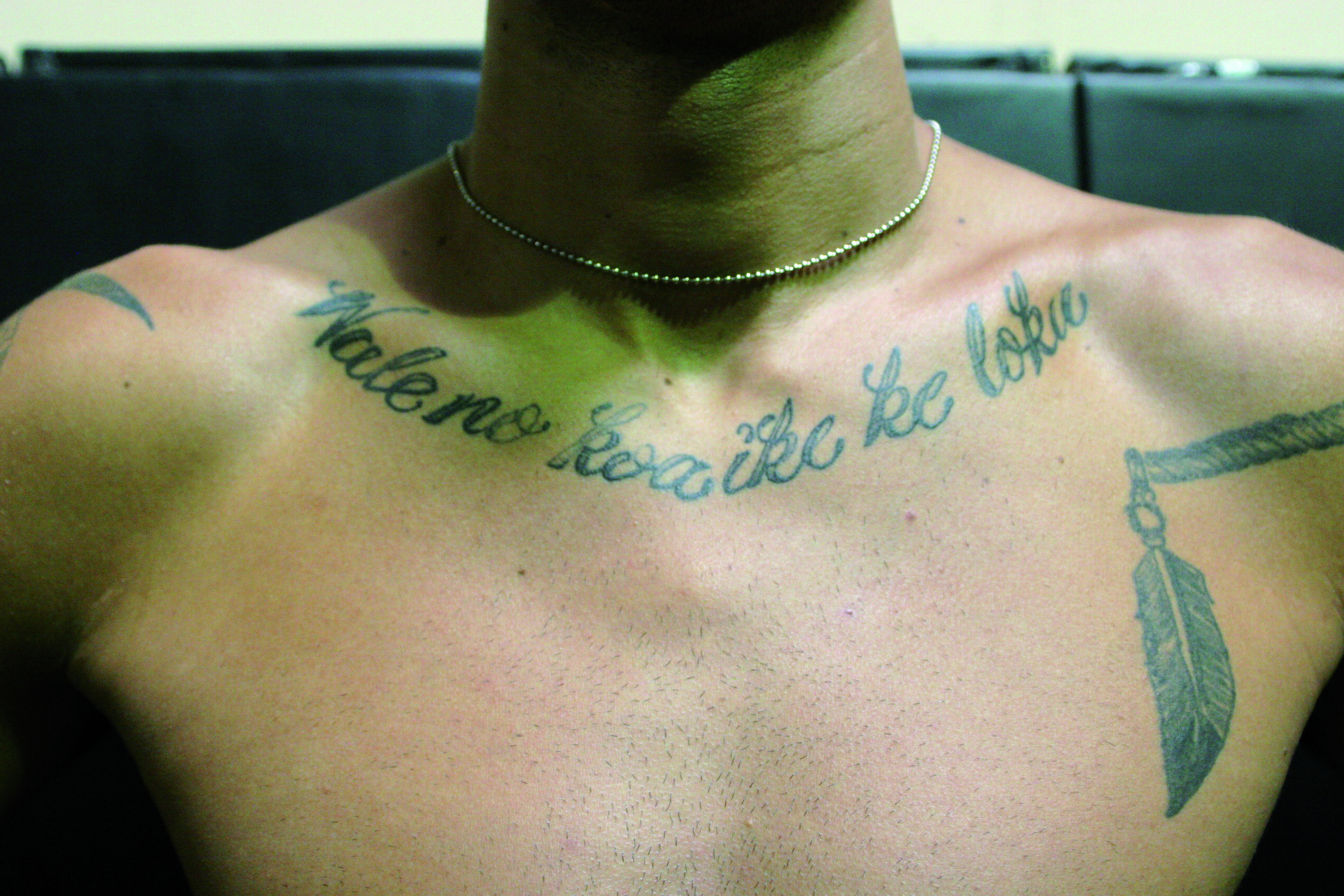
A line of cursive text curves beneath Grove’s collarbones. Fighters Only gave its approximate meaning as “only a warrior understands” and reported that Grove connected it with how difficult it is to explain fighting to people who haven’t experienced it. That is his explanation of the phrase, not an independently checked translation.

The lettering sits above the larger arm designs with open skin below it. A necklace crosses the area in the close photo but leaves most of the words visible.

The red, gold and green forearm flag

Kendall Grove tattoos: The red, gold and green forearm flag

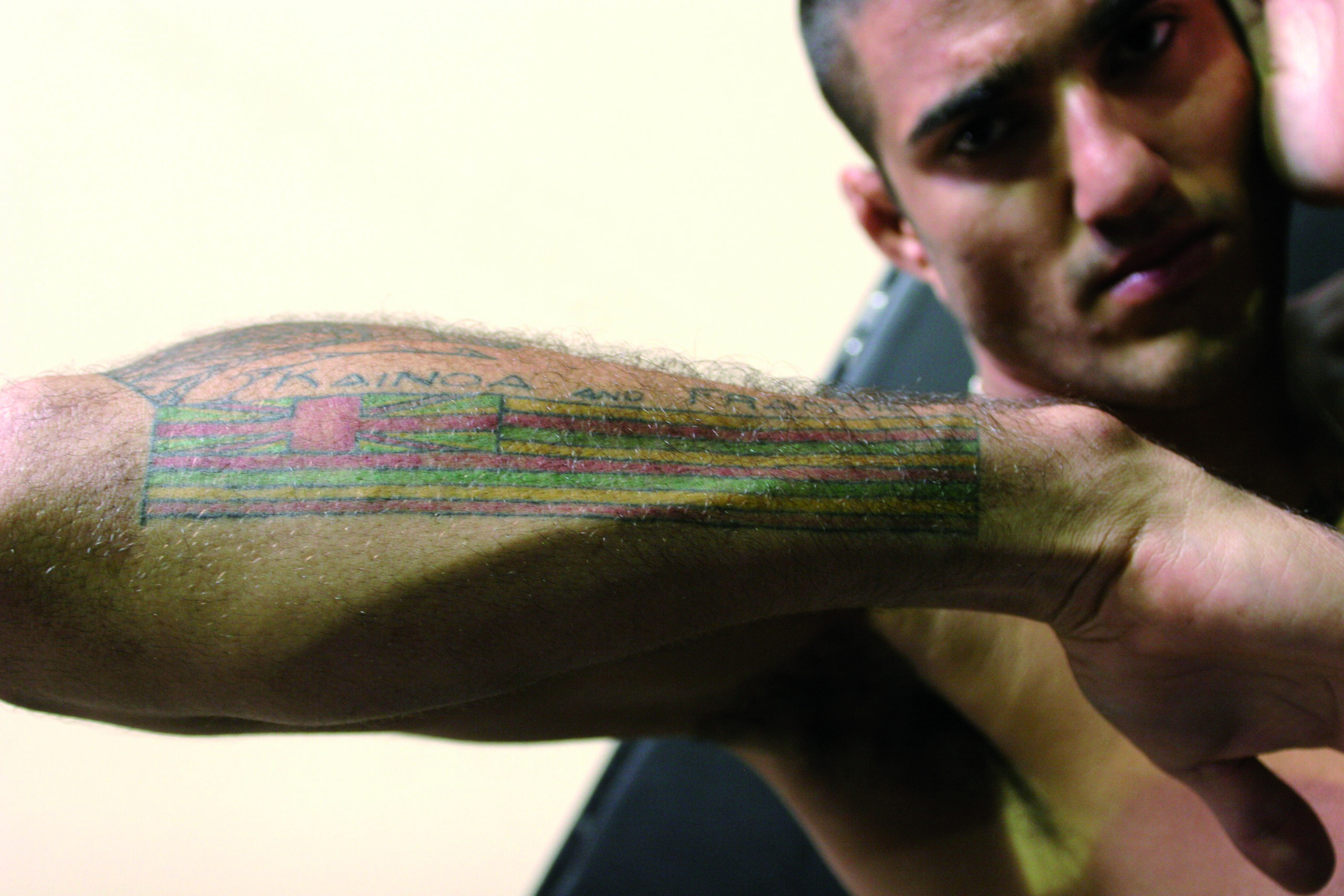
Grove holds his right forearm toward the camera. A red, gold and green Hawaiian flag runs along it, with a crossed motif in one corner. Lettering above the flag gives the names of his godchildren, though the photo doesn’t make every name easy to read.

In the 2007 interview, Grove connected the flag’s colors with his Rasta identity. The long, striped design follows the forearm, while the names occupy a separate line.

Welcome to Hatersville sign tattoo

Kendall Grove tattoos: Welcome to Hatersville sign tattoo

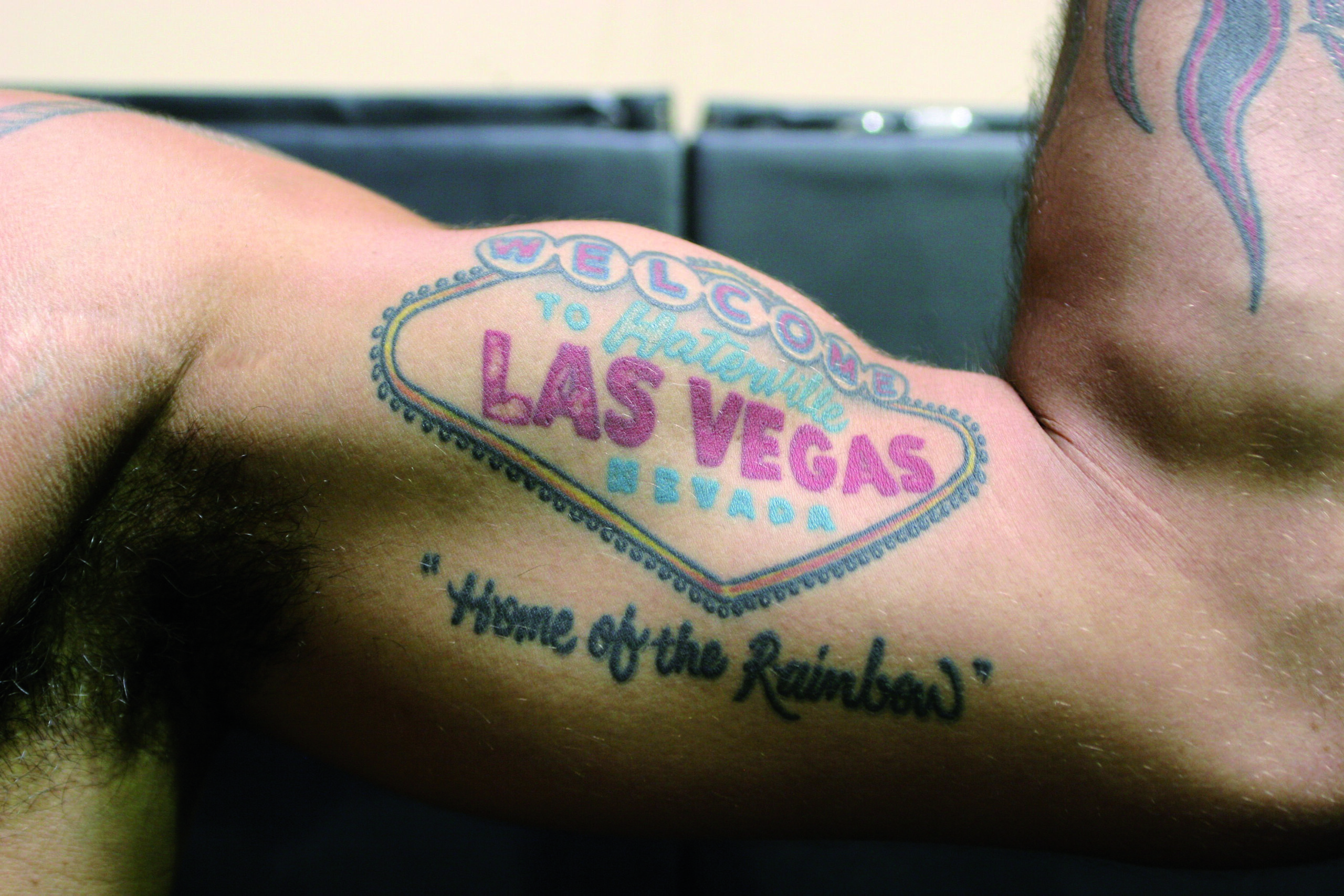
The left bicep tattoo adapts the Las Vegas welcome sign. It keeps the sign’s round panels and colored layout, but reads “Welcome to Hatersville,” with Las Vegas and Nevada still included. A darker line of text sits below.

The wording is visible in the close-up, but it doesn’t identify a particular rival or opponent. It reads as a joke without needing an added backstory.

Dream catcher tattoo with Maui inside

Kendall Grove tattoos: Dream catcher tattoo with Maui inside

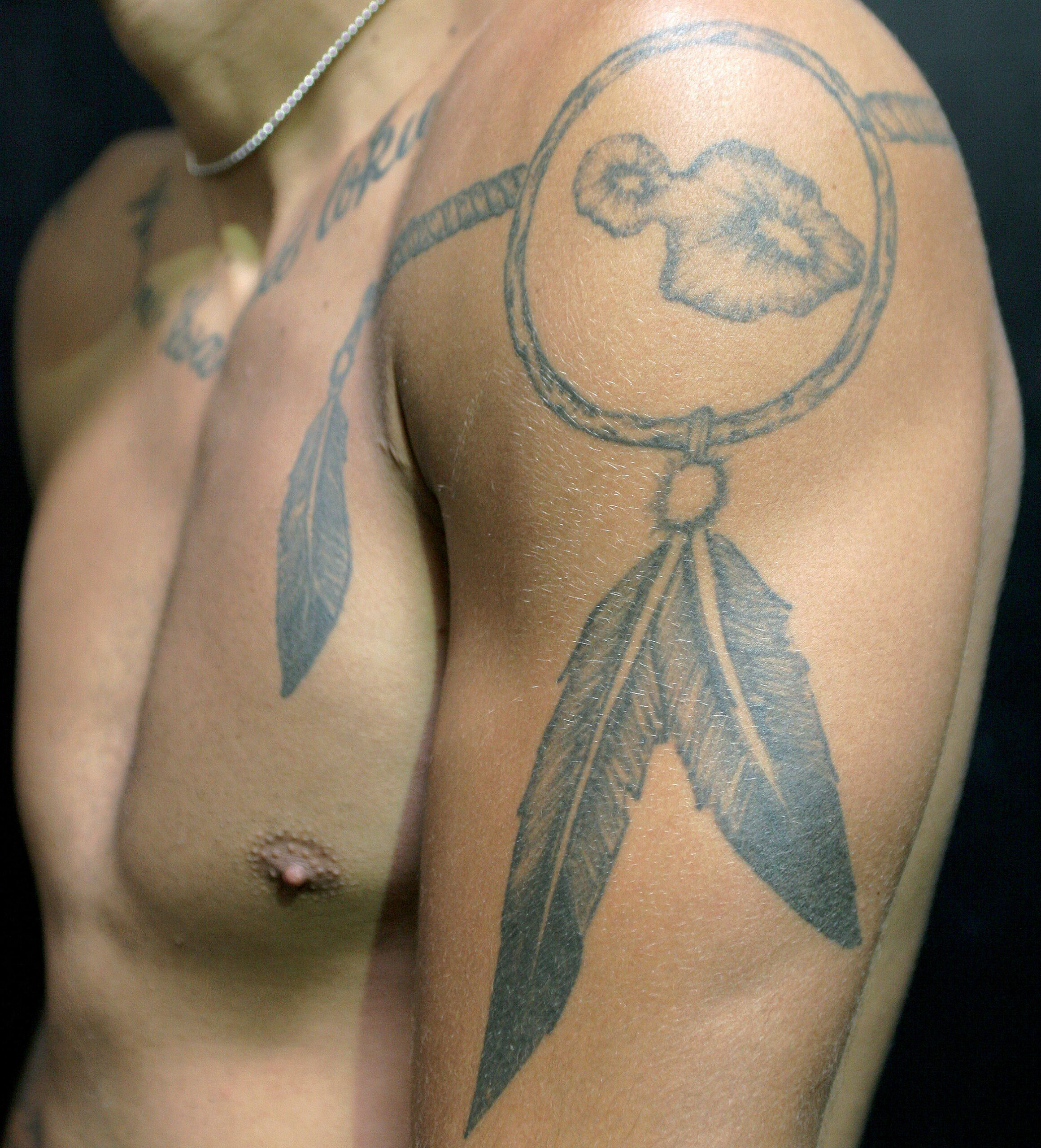
A dream catcher on Grove’s upper left arm contains an island shape, with long feathers hanging below the hoop and a strand continuing toward the chest. In his interview, Grove identified the island as Maui and connected the tattoo to his Native American heritage through his father’s side.

The island is a distinct shape inside the circle; the longer feathers carry the design down the arm. The photo makes those details easier to see than a fight image would. For a different fighter’s collection, see Alessio Sakara’s tattoos.

Family-tree pattern on his left hand

Kendall Grove tattoos: Family-tree pattern on his left hand

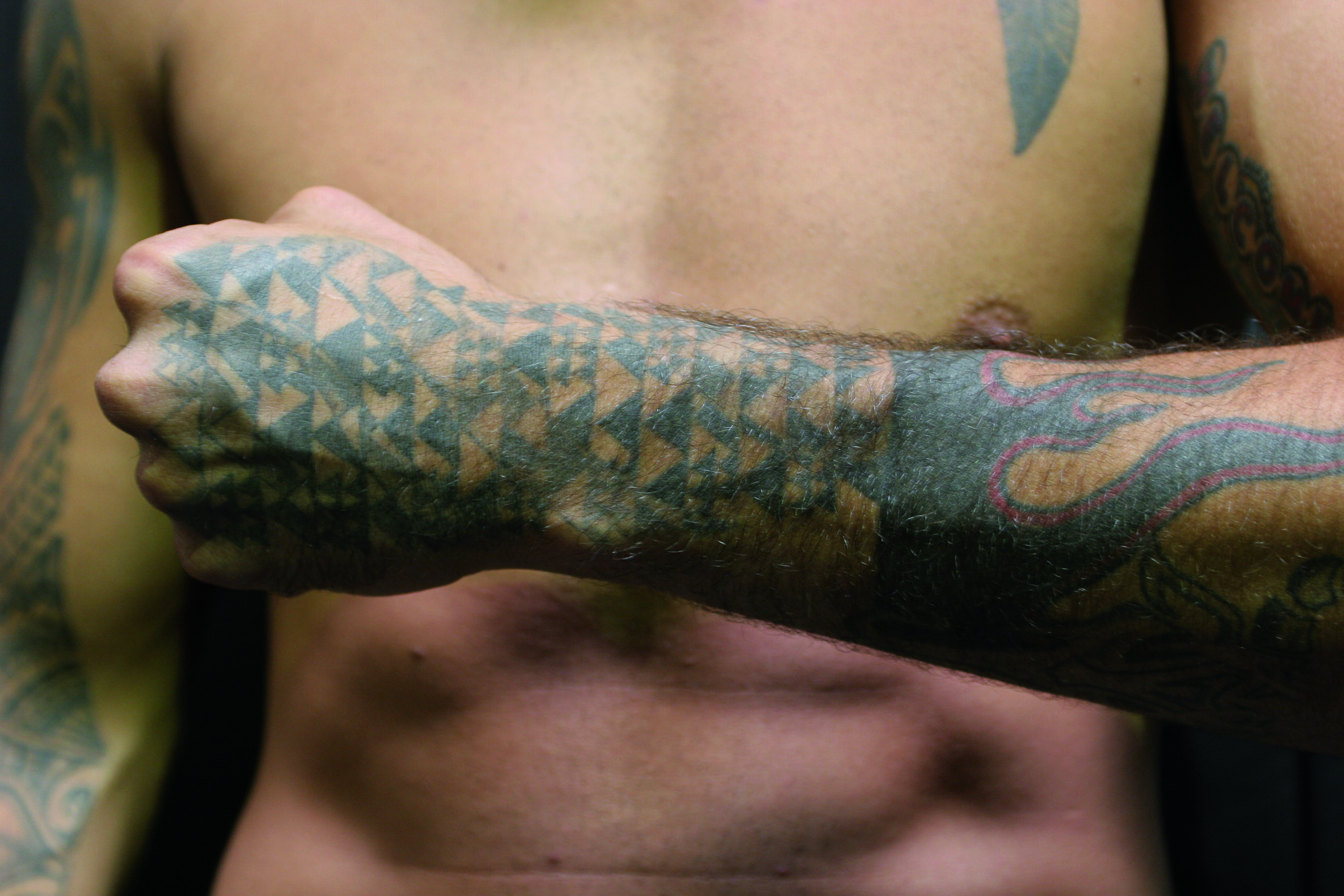
Triangles cover Grove’s left hand and continue over the knuckles and wrist, alternating between dark fill and open skin. Fighters Only described the pattern as a family tree representing Grove, his mother, siblings and grandparents. The feature also reported that a Samoan priest performed it.

The interview supplies the family meaning; the triangles alone wouldn’t identify those relationships. The pattern crosses the knuckles, so its lines shift as the hand closes.

Tiki face and bold right-arm patterns

Kendall Grove tattoos: Tiki face and bold right-arm patterns

On the right arm, heavier curved shapes sit above finer lines and a face-like section. Fighters Only described tribal work on the upper arm and a partial Tiki face below, with more work planned at the time of the 2007 feature. That old plan doesn’t establish how the later sleeve was completed.

The photo shows the broad dark areas and the face-like detail, but doesn’t identify a separate meaning for each curve or block.

Hawaiian king and Kekoa back tattoo

Kendall Grove tattoos: Hawaiian king and Kekoa back tattoo

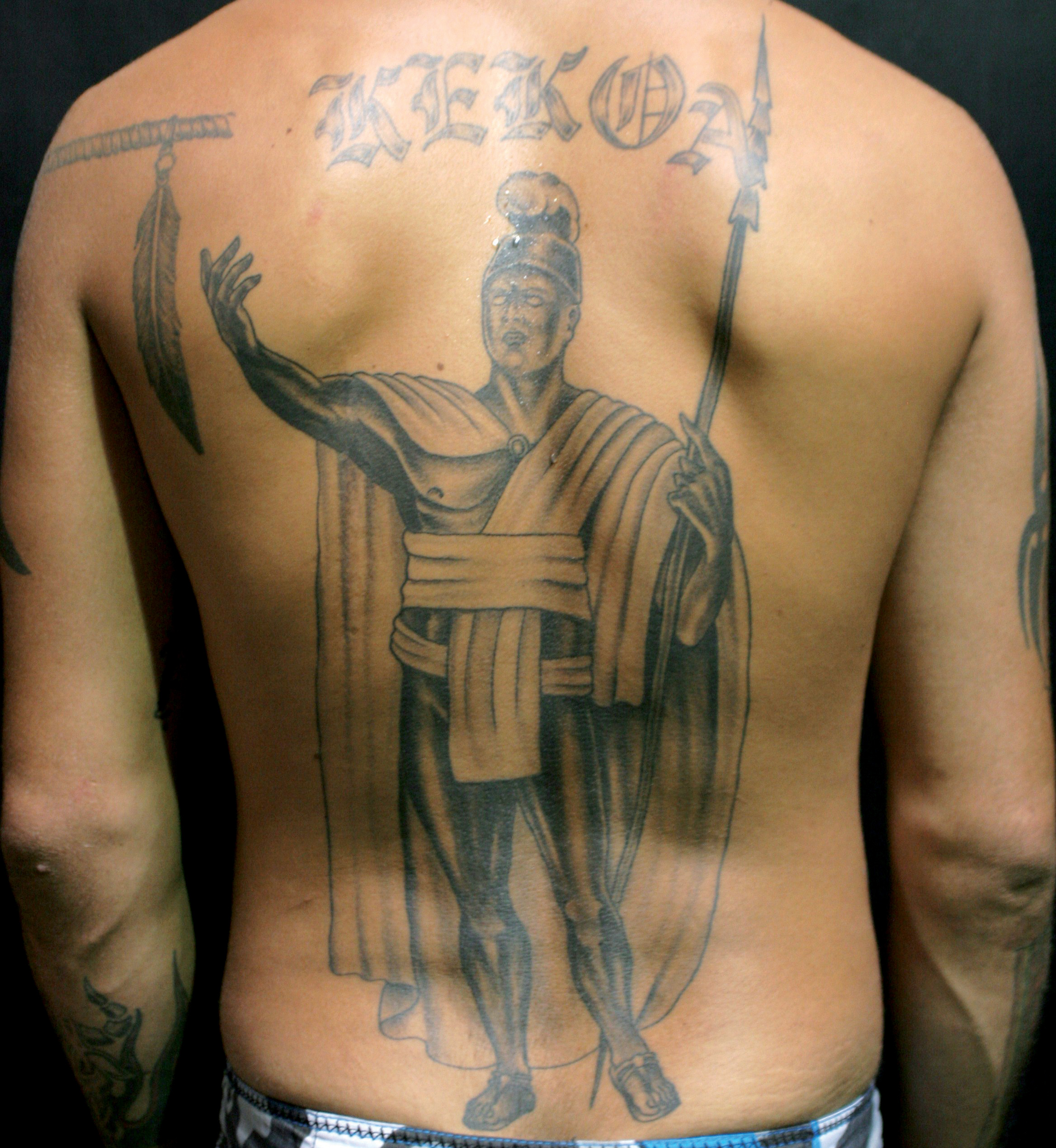
A robed figure stands beneath bold “Kekoa” lettering on Grove’s back. The figure holds a spear and raises one hand. Fighters Only described him as a former Hawaiian king and identified Kekoa as Grove’s Hawaiian name, with a warrior connection. The article doesn’t name the monarch, so the figure shouldn’t be identified more specifically from this account.

The spear gives the composition a strong vertical line, while the lettering forms a separate band above it. Open skin around the figure keeps its outline visible in the full-back photo.

A look at Grove in the gym

Kendall Grove in a contextual photograph: A look at Grove in the gym; not tattoo evidence

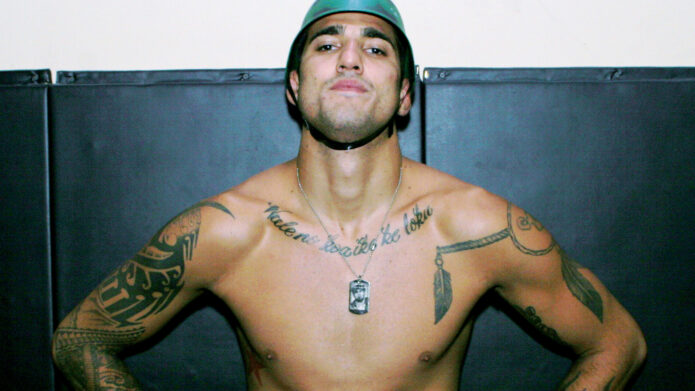
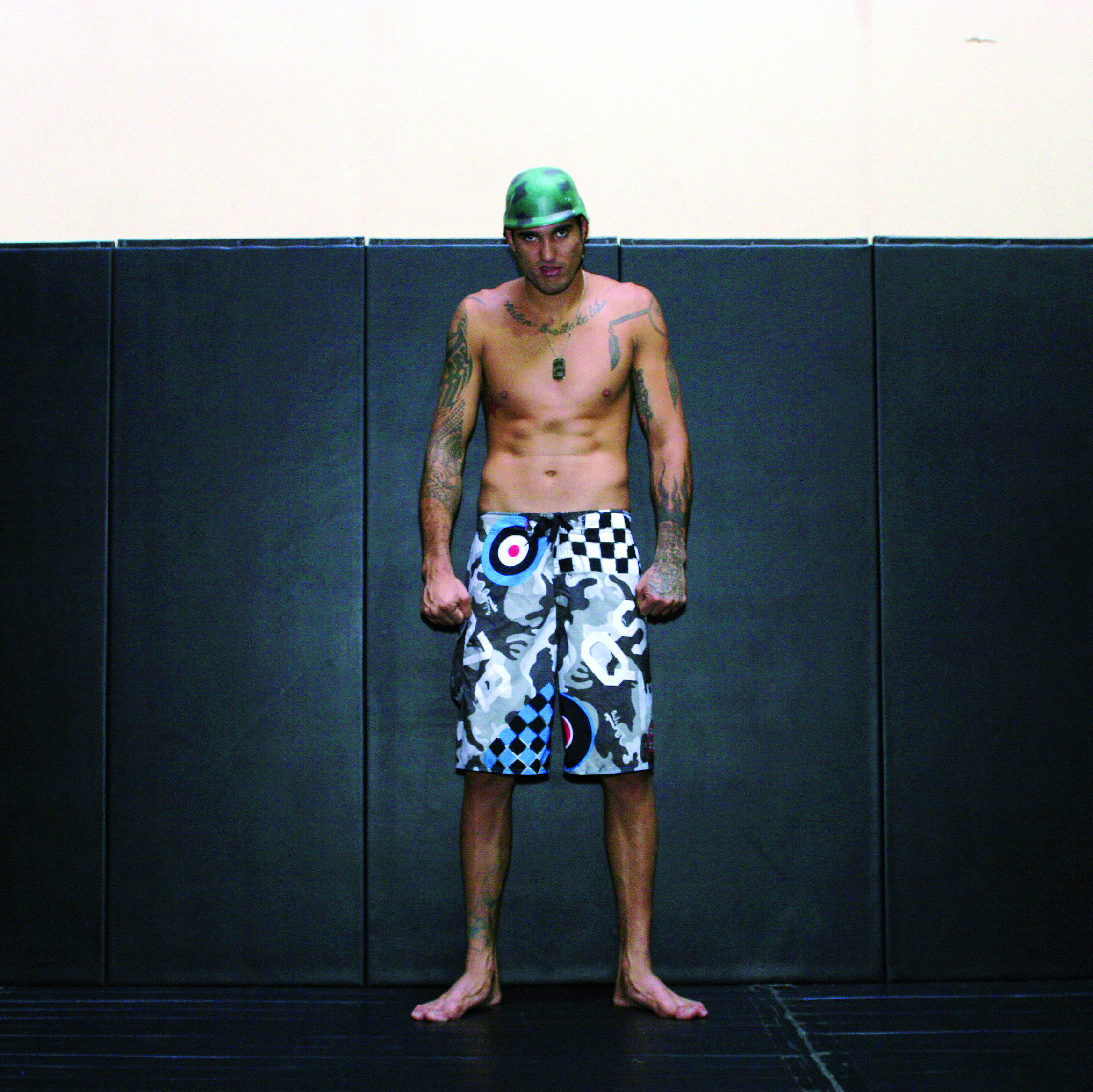
In the wider gym photo, Grove stands against blue mats in patterned shorts and a green helmet. The tattoos appear smaller in this frame, which shows the setting and his stance rather than fine detail.

The official Bellator profile below is a short career clip, not a tattoo tour. It adds another view of Grove alongside the older tattoo photographs.

Phil Baroni Tattoos: NYBA, Bushido and His Dragon Ink

Phil Baroni’s collection pairs bold lettering with a detailed dragon, a cross and smaller symbols. A September 2008 Fighters Only feature documented eight designs, with photographs credited to Hywel Teague. Its reported meanings are historical accounts from that feature, not a current inventory or an update on Baroni’s life.

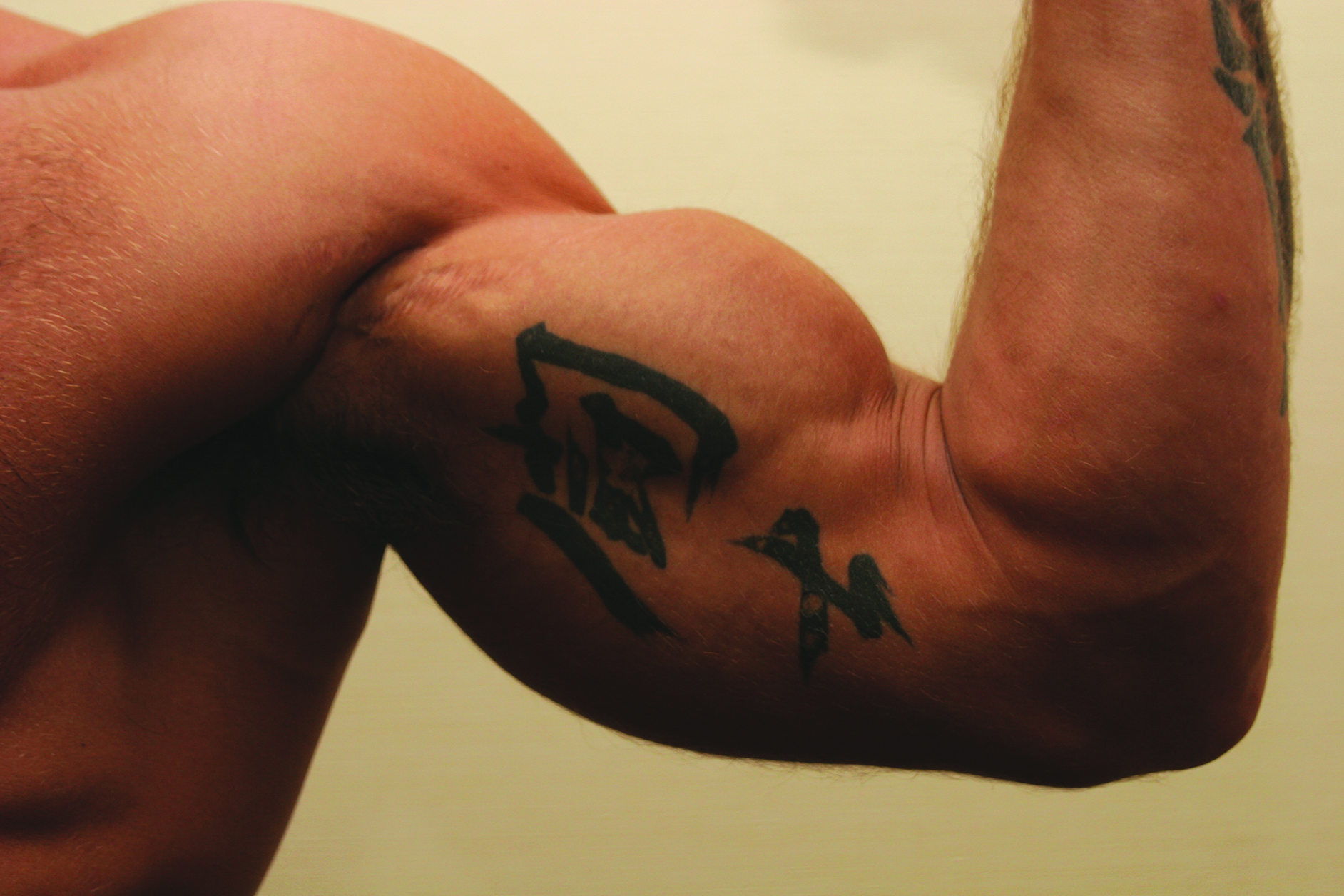
Born soldier kanji tattoo on his left bicep

Phil Baroni tattoos: Born soldier kanji tattoo on his left bicep

Two dark kanji characters sit on the inside of Baroni’s left bicep, with space between them. Fighters Only gave their intended meaning as “born soldier.” That’s the magazine’s reported translation; the photo alone can’t verify it.

The close view shows solid black strokes with tapered ends. Baroni bends his arm to turn the inner bicep toward the camera.

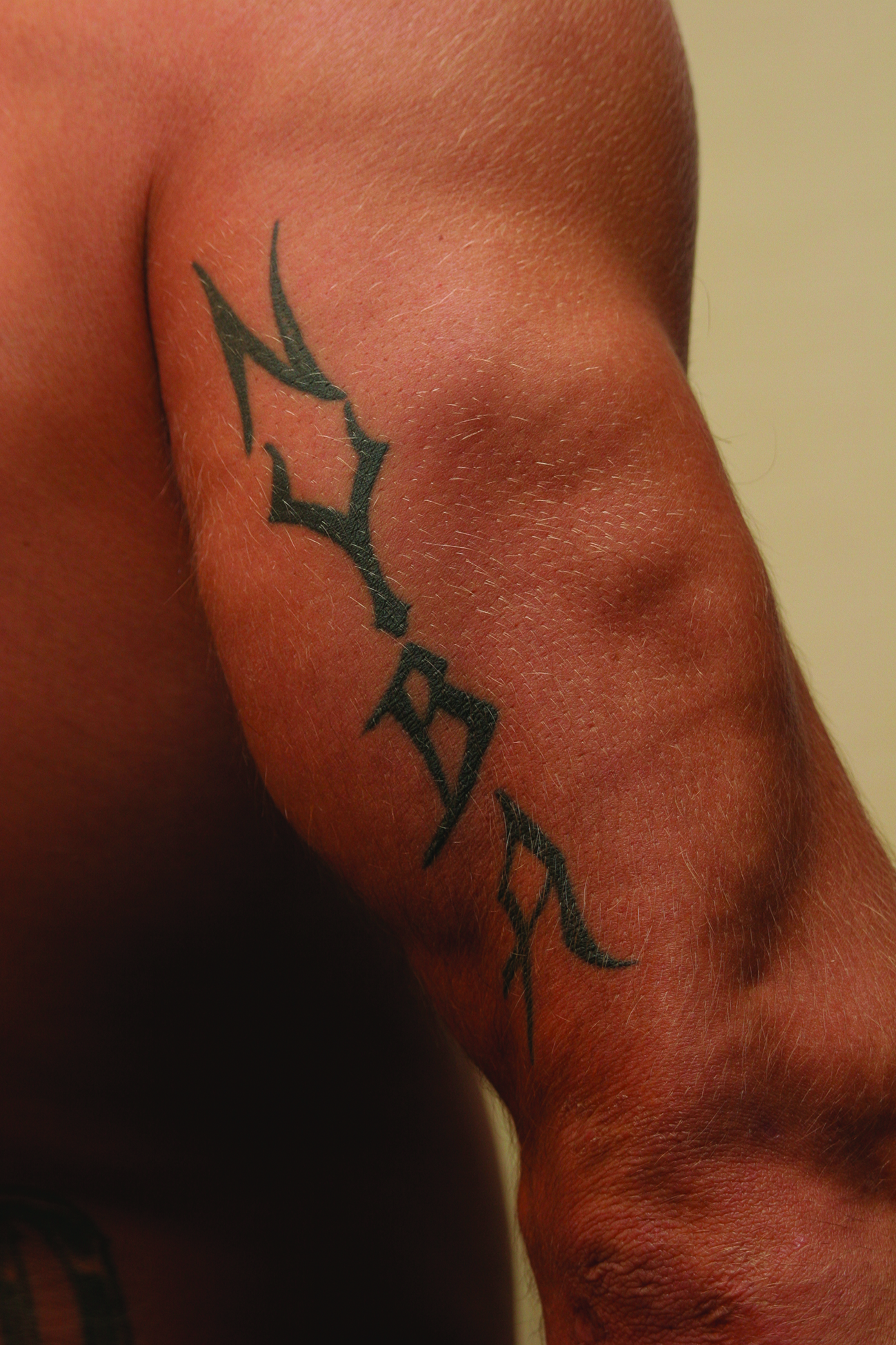
NYBA tattoo on his right arm

Phil Baroni tattoos: NYBA tattoo on his right arm

“NYBA” runs down Baroni’s right upper arm in a narrow column of angular letters. The initials stand for his nickname, New York Bad Ass. Long pointed strokes give the abbreviation a sharper look than ordinary block lettering.

The photo shows the gaps and separate letter shapes more clearly than a distant fight image would.

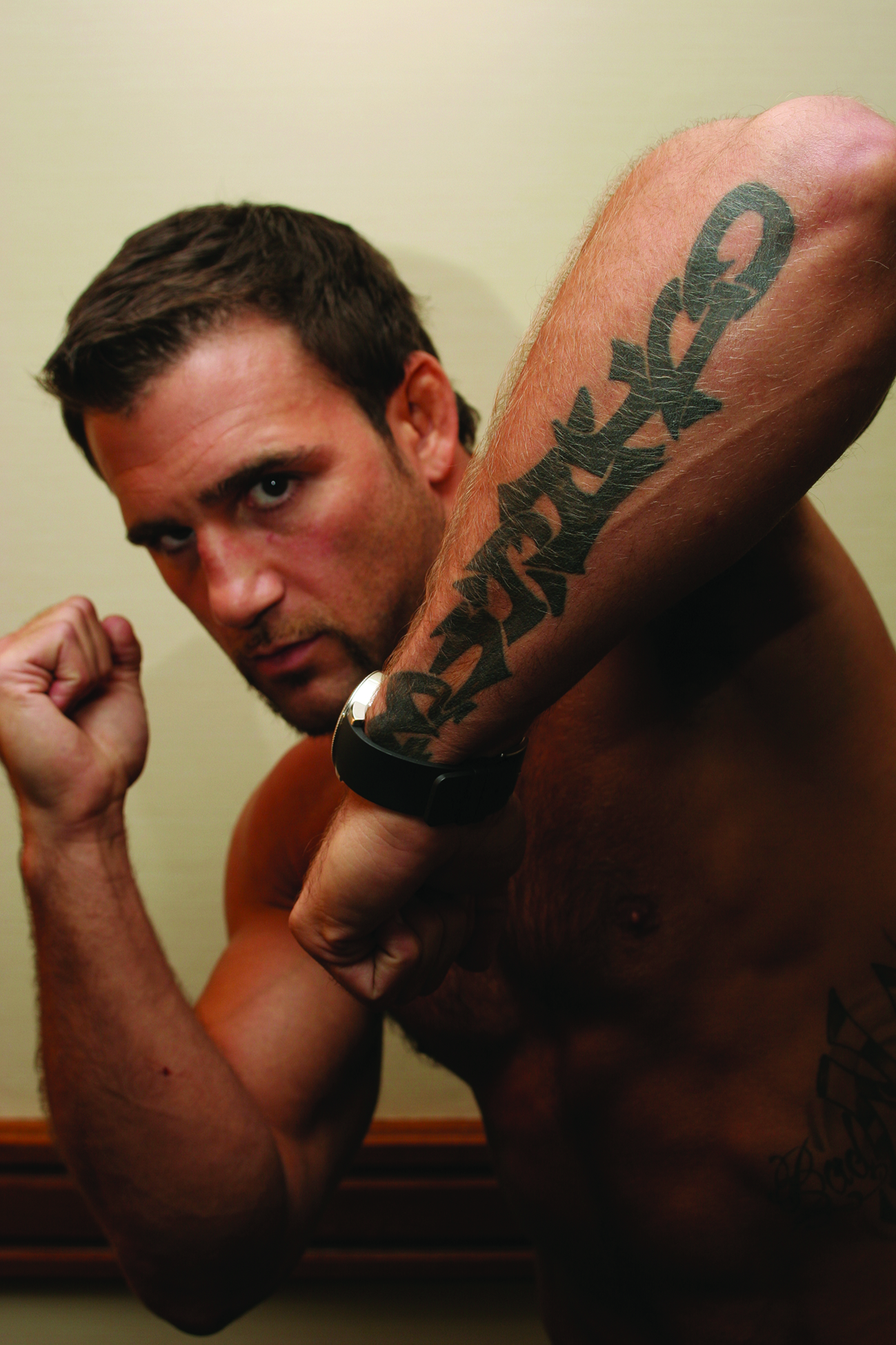
Bushido lettering on his left forearm

Phil Baroni tattoos: Bushido lettering on his left forearm

“Bushido” stretches along Baroni’s left forearm, with bold, pointed strokes. Fighters Only identified the word and gave its meaning as “the way of the warrior.” It’s lettering rather than a separate picture of a warrior.

His forearm is angled toward the lens, which makes the near end look larger. A watch sits close to the tattoo at the wrist in this photo.

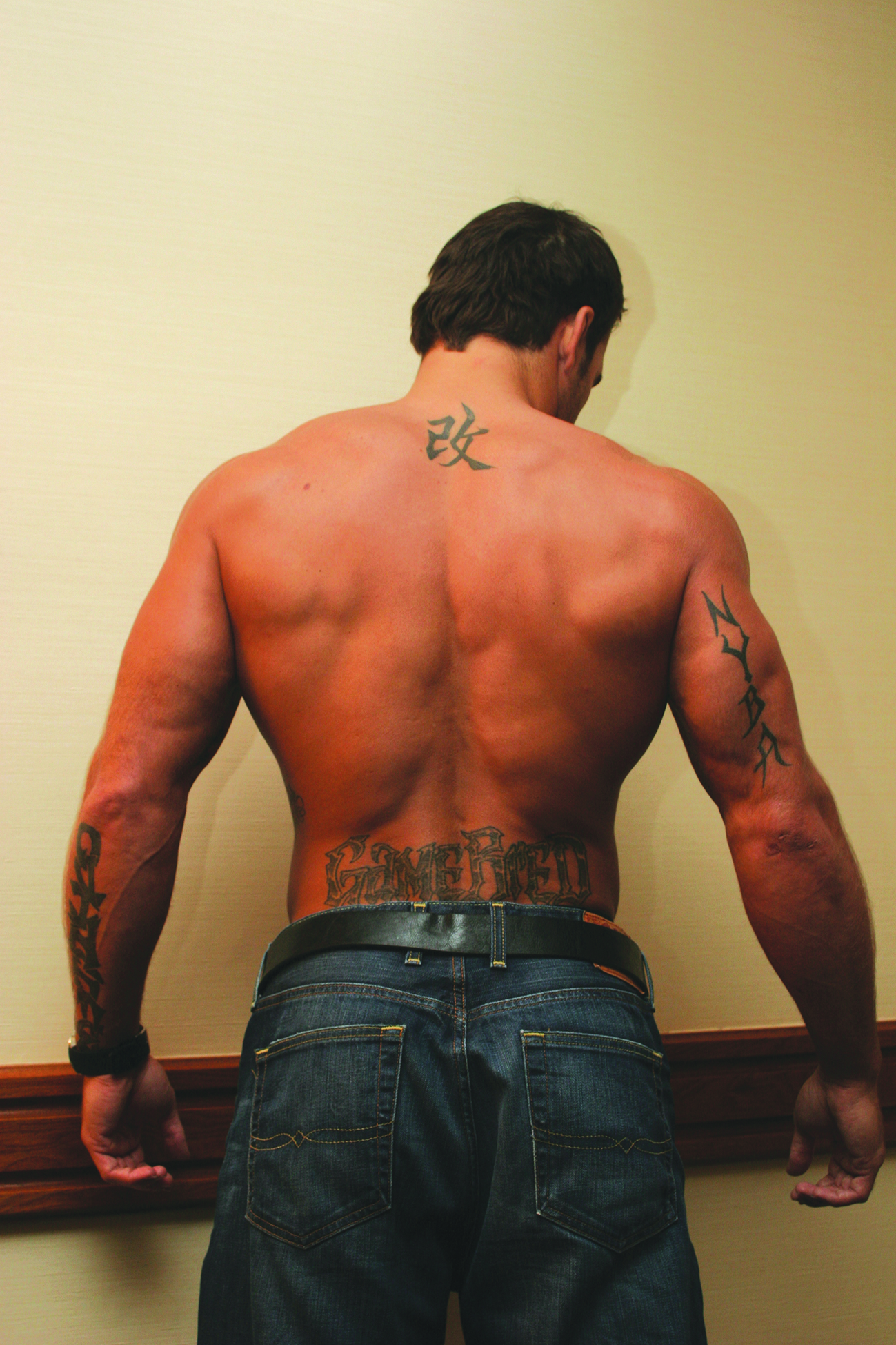
Change symbol tattoo on his upper back

Phil Baroni tattoos: Change symbol tattoo on his upper back

A small character sits just below the base of Baroni’s neck, between his shoulders. Fighters Only described its meaning as “change” and reported that Baroni linked it to a reminder not to repeat an earlier period in his life. That explanation belongs to the 2008 feature; it doesn’t describe his later life.

The upper mark is much smaller than the broad “Gamebred” lettering lower on his back, and the two designs remain separate.

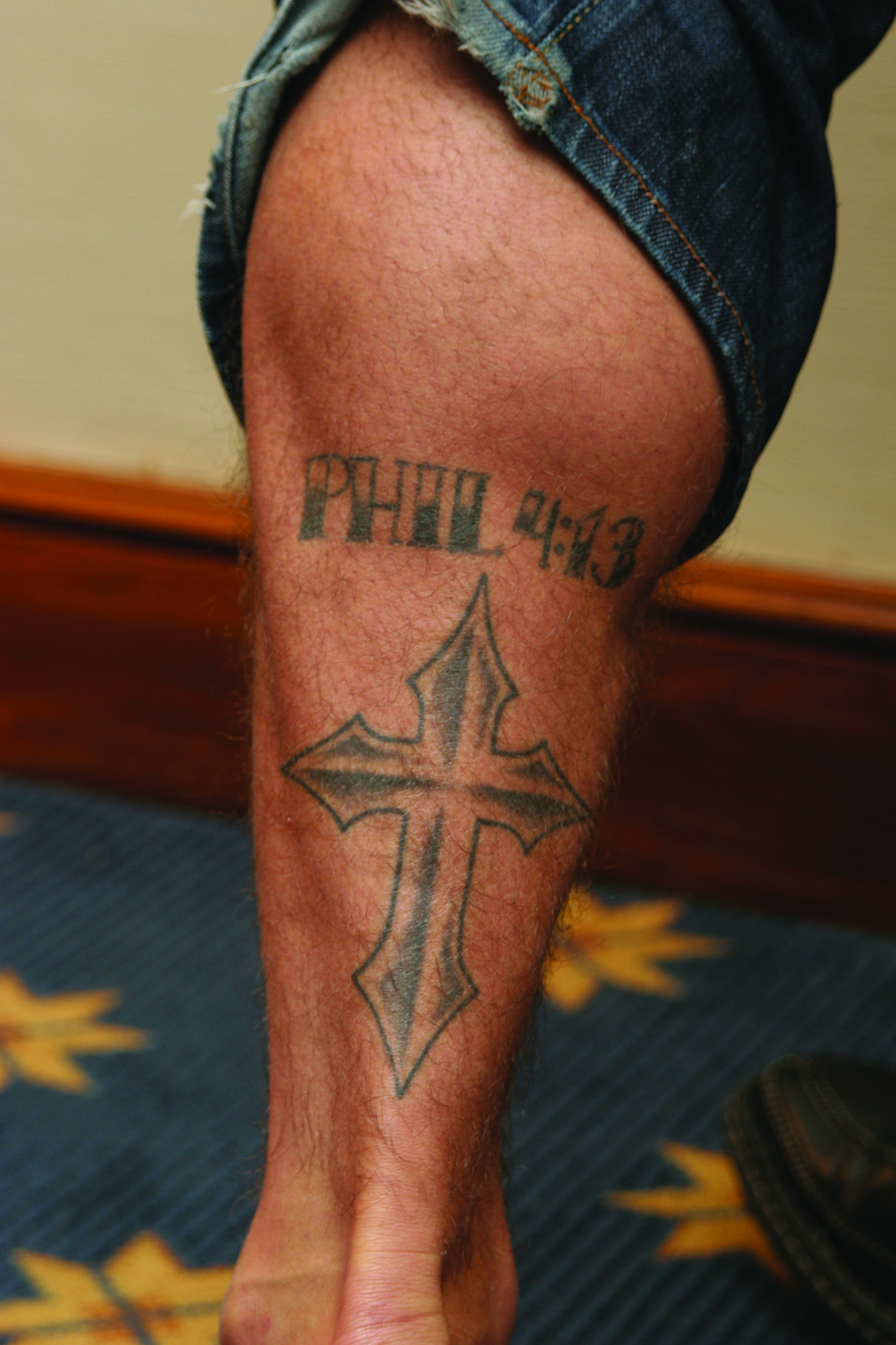
Cross and Philippians tattoo on his left calf

Phil Baroni tattoos: Cross and Philippians tattoo on his left calf

On Baroni’s left calf, “PHIL 4:13” sits above a large cross with flared ends and shaded sections. Fighters Only connected the cross and Philippians reference with Baroni’s Christian beliefs. The photo shows the reference, not the full verse written around the cross.

The design runs down much of the lower leg. Its dark outline and lighter central strip give the cross more depth than a solid black shape.

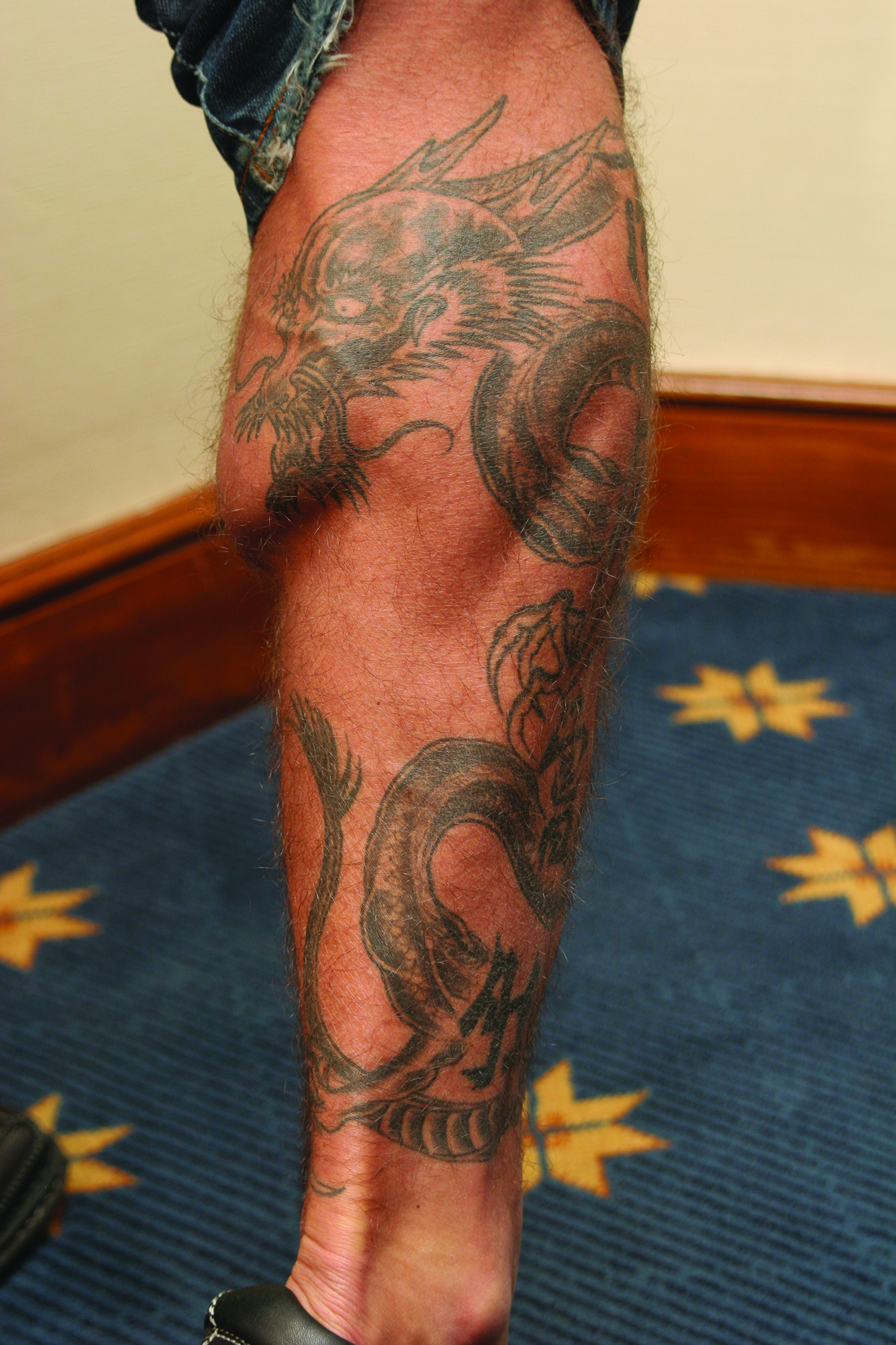
Dragon tattoo on his right calf

Phil Baroni tattoos: Dragon tattoo on his right calf

A dragon curves down Baroni’s right calf. Its head sits high on the leg, with an open mouth and long whisker-like lines; the body loops below in shaded sections. Fighters Only reported that a female tattooist in Japan made it but didn’t name her.

The head and coiling body follow the calf’s long, rounded surface, so the full outline isn’t visible from one flat angle.

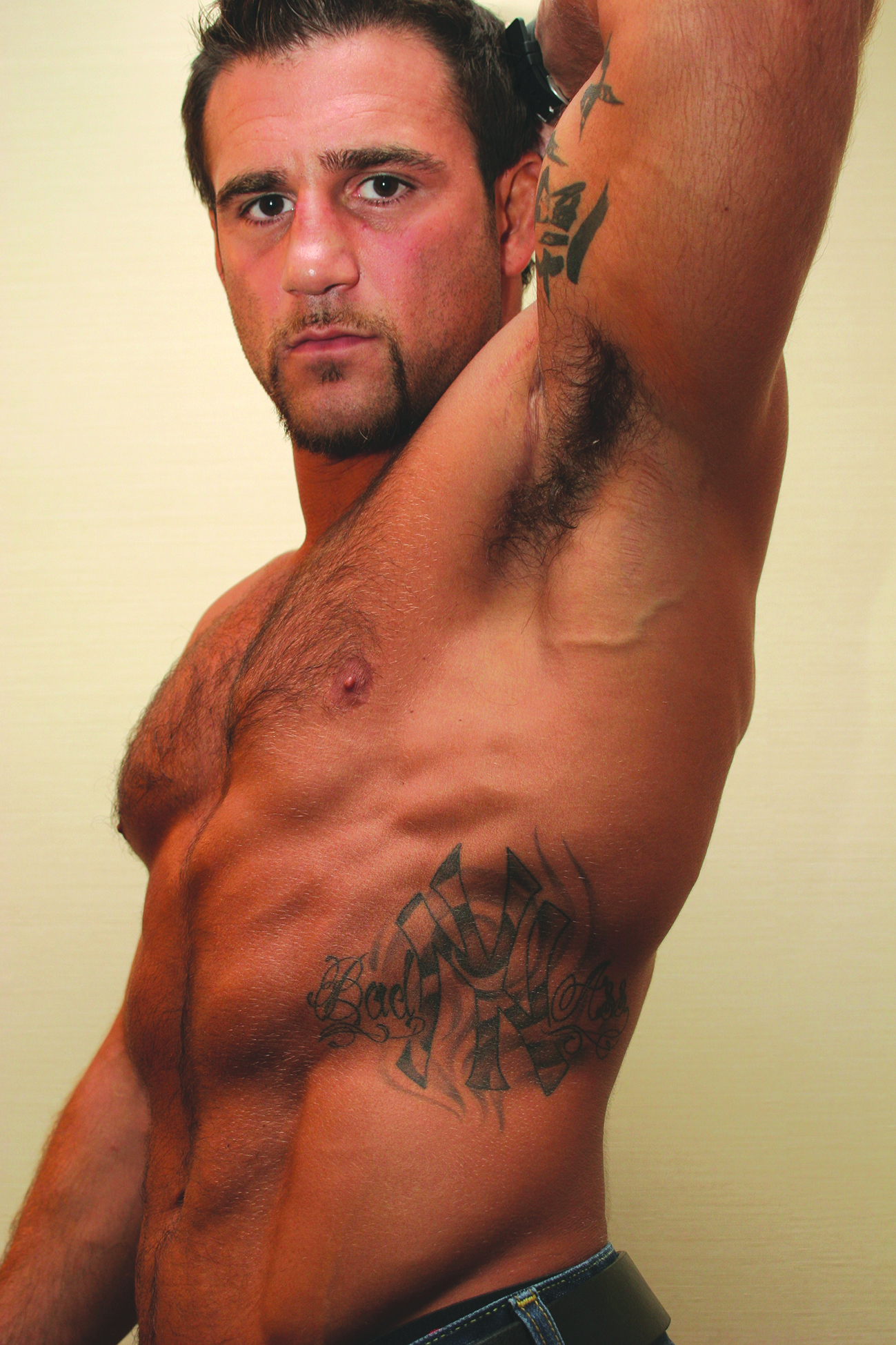
New York and Bad Ass rib tattoo

Phil Baroni tattoos: New York and Bad Ass rib tattoo

Baroni raises his left arm to show the rib piece: a large interlocking New York-style letter form at the center, with “Bad” to the left and “Ass” to the right. Long pointed strokes extend above and below the central design. Fighters Only credited the work to Eric Pele.

The central letters are thick and angular; the surrounding script is finer. Raising the arm exposes the side of the torso, where the tattoo would be harder to see in an arms-down pose.

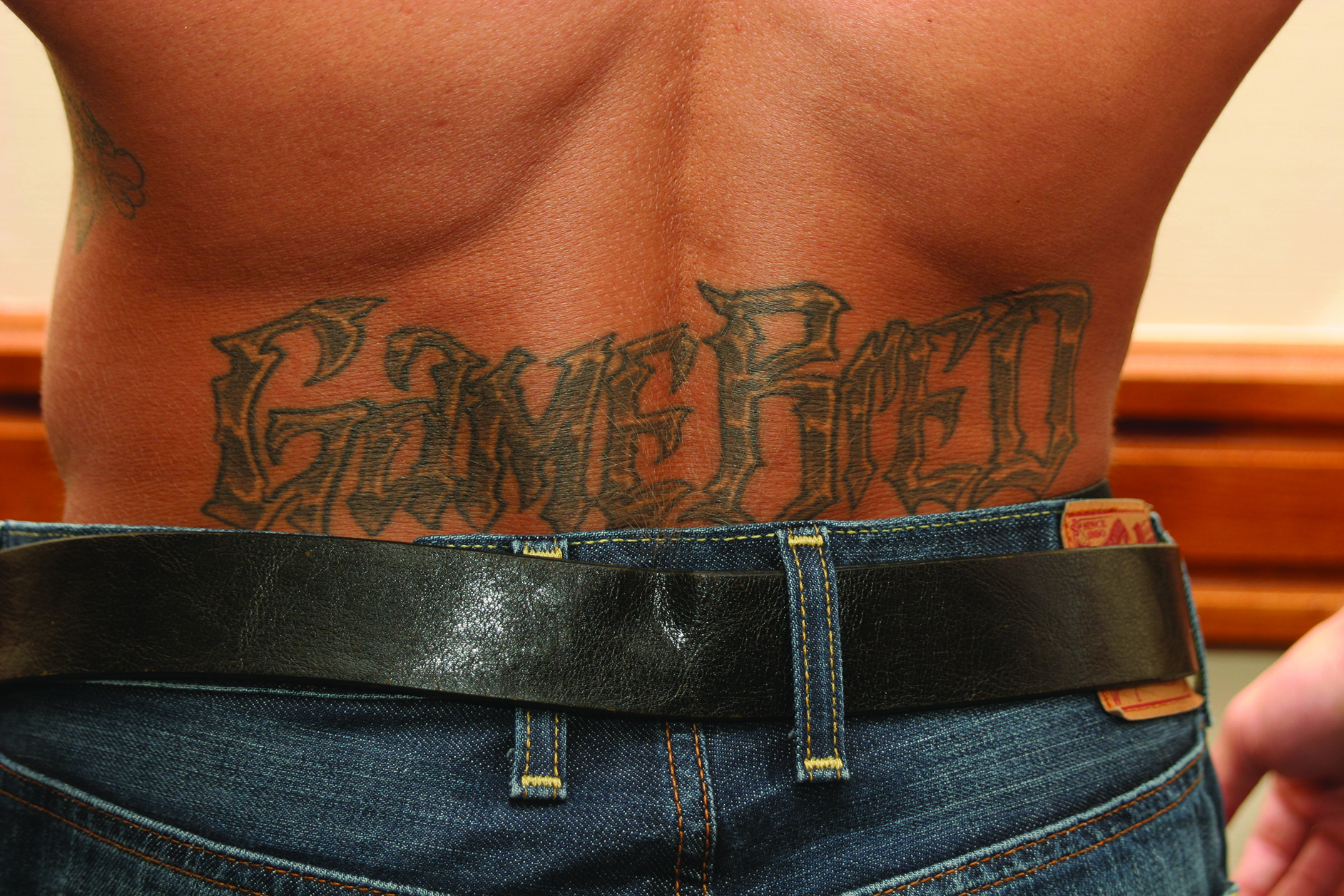
Gamebred lettering across his lower back

Phil Baroni tattoos: Gamebred lettering across his lower back

“Gamebred” spans Baroni’s lower back just above the jeans. The large outlined letters have shaded interiors and extended corners. The 2008 feature presented the word as Baroni’s description of his fighting spirit.

The interview below covers Baroni’s UFC return, not a tour or update on the tattoos. For another fighter’s collection, see Alessio Sakara’s tattoos.

Damon Jackson Tattoos: His Daughter’s Name and Rib-Side Script

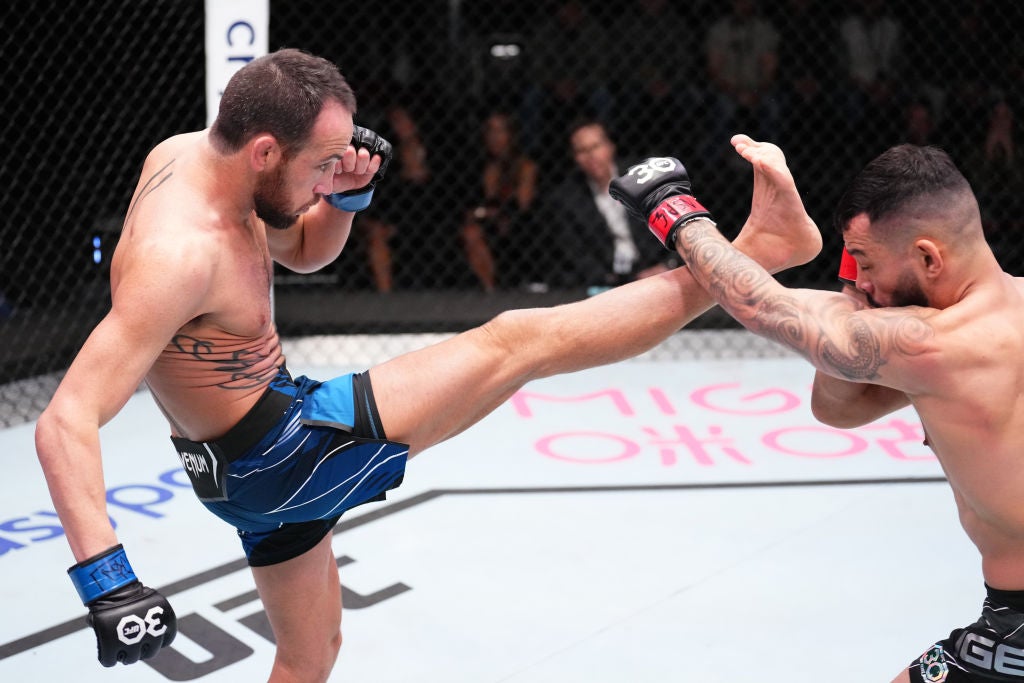
Damon Jackson’s clearest tattoo in these photos is a large script name along his right ribs, running toward the waistband. The long, dark loops are easier to make out in a standing portrait than during an exchange.

In a March 2022 UFC interview, Jackson said it’s his daughter’s name. He made the remark while joking that tattooed fighters seemed to get good fights and that he wanted something more hardcore. The comment confirms the family connection; it doesn’t explain the design or when he got it.

The standing portrait and a kicking photo show the ribs. The other images put Jackson in the middle of a fight but don’t add detail about the script.

The Name Script on His Right Side

Damon Jackson tattoos: inline

The official standing portrait shows the script on Jackson’s right ribs, curving down toward the side of his abdomen. The first large loop begins higher on the torso, and the rest runs toward the waistband. The center of his stomach stays mostly clear.

The lettering is connected cursive, with broad loops and strokes that shift from thin to heavy. There’s no illustrated background in this view, just dark ink against open skin.

The letters aren’t clear enough to transcribe exactly. His arm or shorts can hide parts of the name in other pictures, so this portrait gives the fullest view of its path.

The Rib Tattoo During Movement

Damon Jackson tattoos: inline

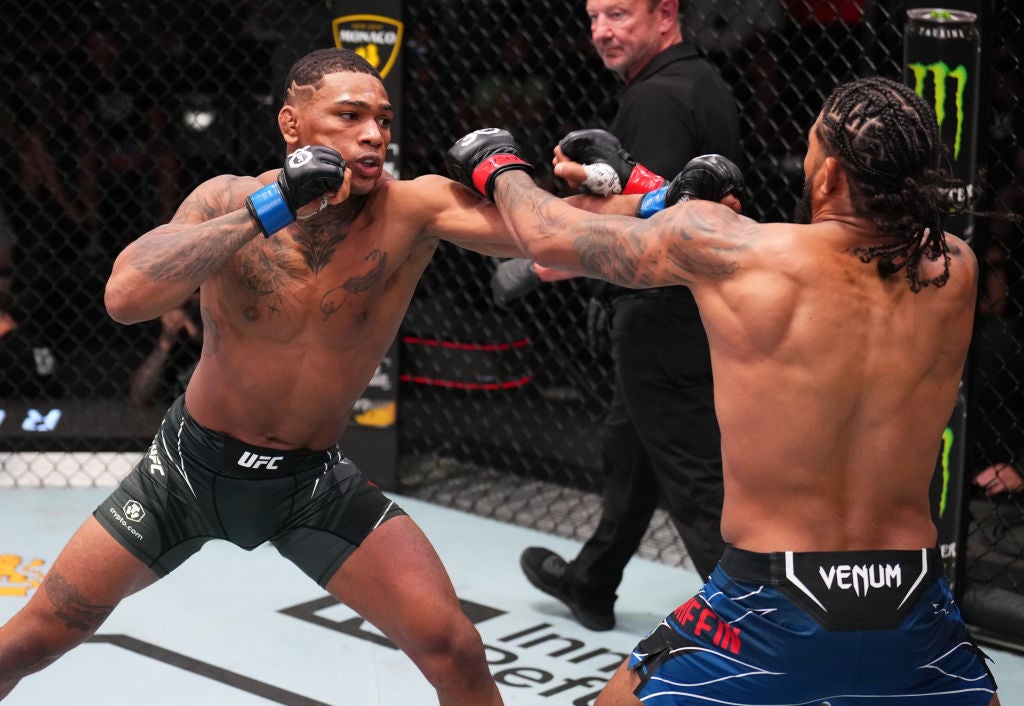
In the kicking photo, Jackson is at left in blue shorts and Dan Ige is at right. Jackson’s torso bends as he extends his leg, leaving the script visible at a diagonal across his side.

The tattoo follows a curved rib cage, so its angle changes as Jackson turns or leans. That’s a difference in pose, not evidence that the design changed. His arm is clear of the ribs here, and the darker strokes stand out.

A few marks near his upper back appear in this angle, but it isn’t a straight-on view and doesn’t show enough to describe a larger back piece. Ige’s heavier arm tattoos belong to Ige. These photos show the rib placement, but neither identifies the artist, date or session length.

After the Bell

Damon Jackson in a contextual photograph: inline; not tattoo evidence

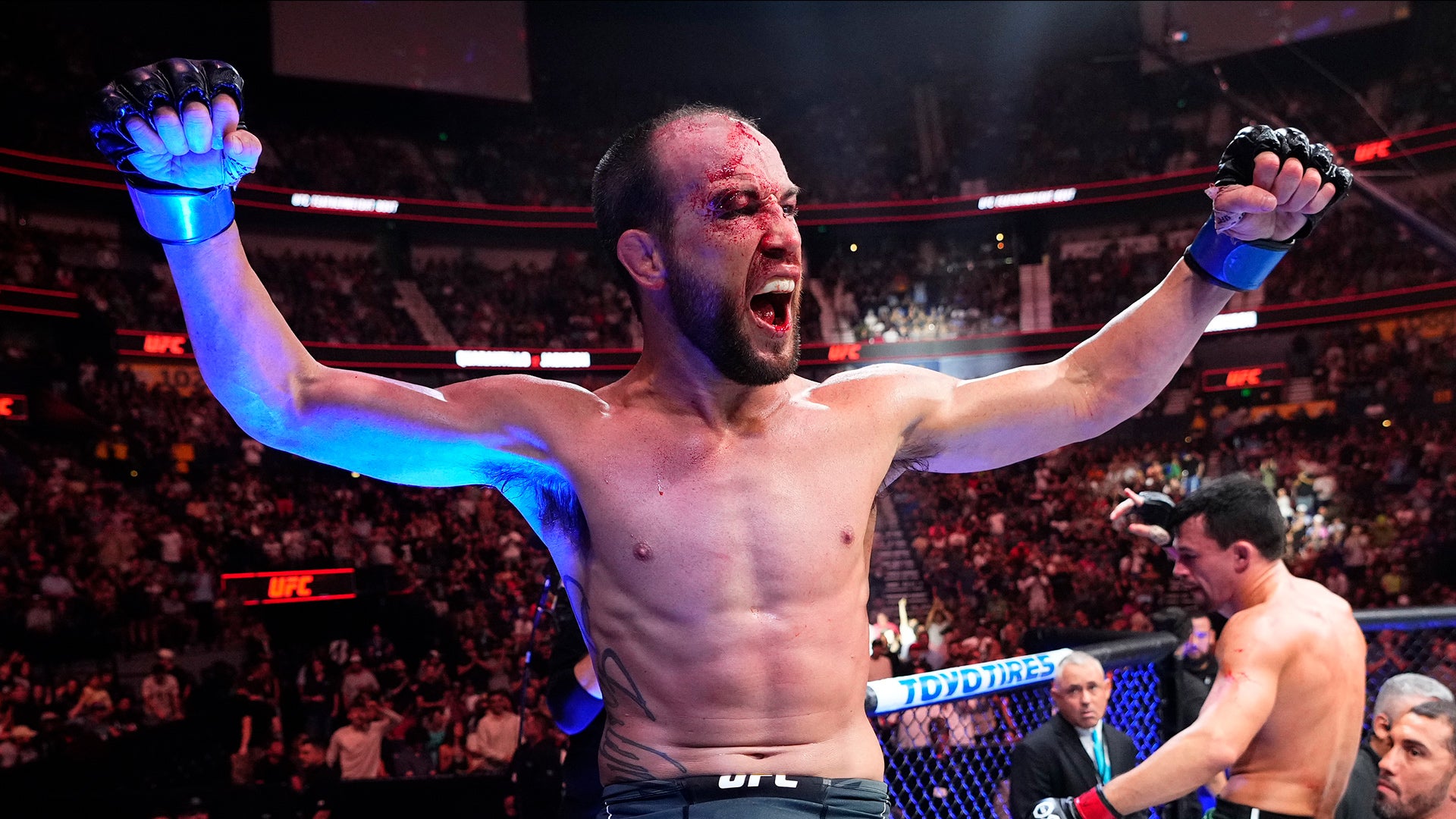
Jackson raises both arms as the crowd and another fighter stand behind him. Part of the script appears near the edge of his torso, but the photo isn’t close enough to show the letters. Blood on his forehead and face places the image in the middle of a fight; it says nothing about the tattoo’s history.

The standing portrait gives a clearer view of the lettering, while this shot shows the moment around Jackson.

Exchanges at Distance

Damon Jackson in a contextual photograph: inline; not tattoo evidence

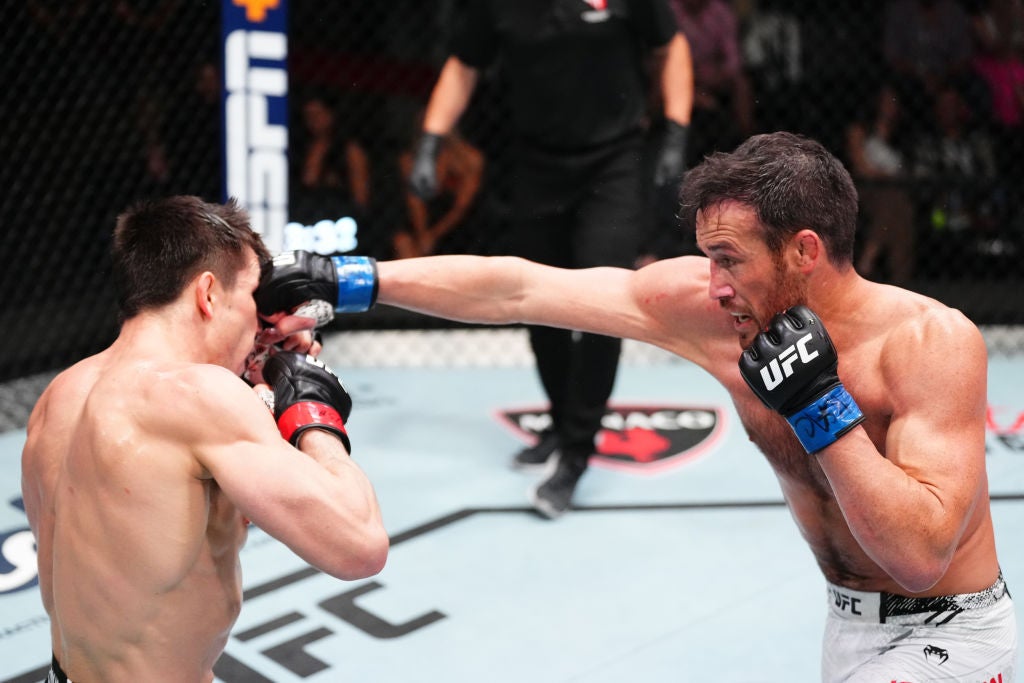
Here, Jackson is on the right in white shorts, punching toward Alexander Hernandez with his other glove near his face. His ribs are turned away, so the script can’t be read in this frame.

A raised elbow or turning torso can hide a side tattoo during an exchange. A design covered by a guard hasn’t disappeared, just as ink visible on an opponent doesn’t belong to Jackson.

His chest and arms look mostly open in the front-facing images used here. That describes these photographs; it doesn’t prove he has no other tattoos.

The Fighter Beyond the Photographs

Damon Jackson in a contextual photograph: inline; not tattoo evidence

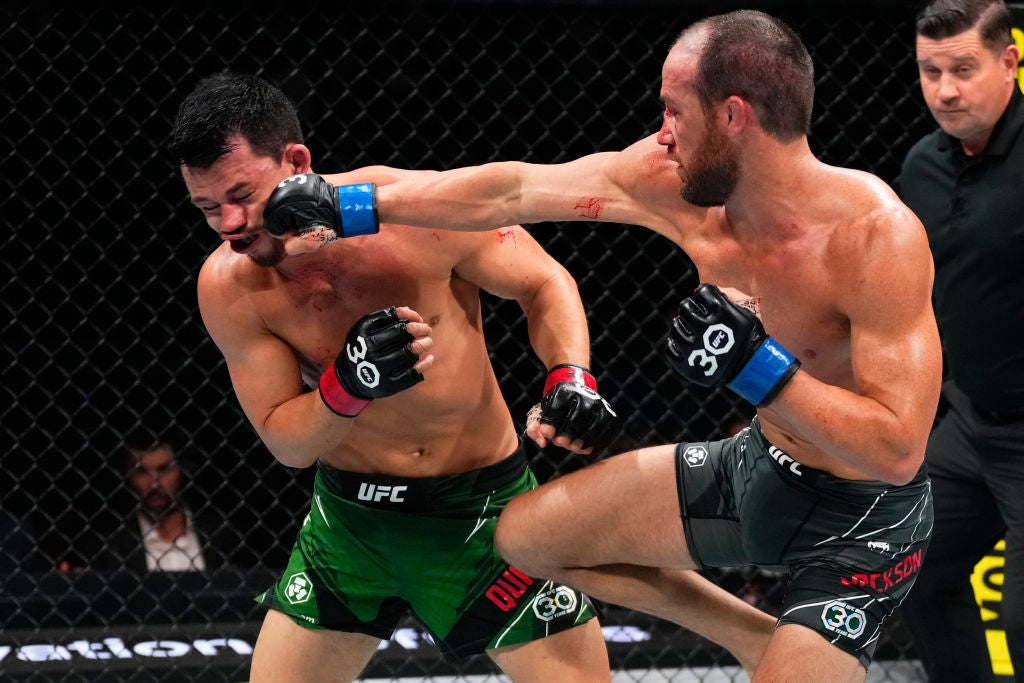
The last image shows Jackson on the right in gray shorts against Billy Quarantillo, throwing a punch. His surname appears on his shorts, but the right side of his torso faces away from the camera. This is fight context, not a clear view of the script.

In a Sherdog interview about coaching, Jackson said he began helping with a middle-school wrestling team because his daughter wanted to wrestle. He enjoyed sharing what he had learned and watching the kids grow. That’s a separate family story, not an explanation of the tattoo’s font or placement.

Jackson discusses his gym and coaching in the interview below.

Michael Morales Tattoos: Eye Chest Piece, Sleeves and Back Ink

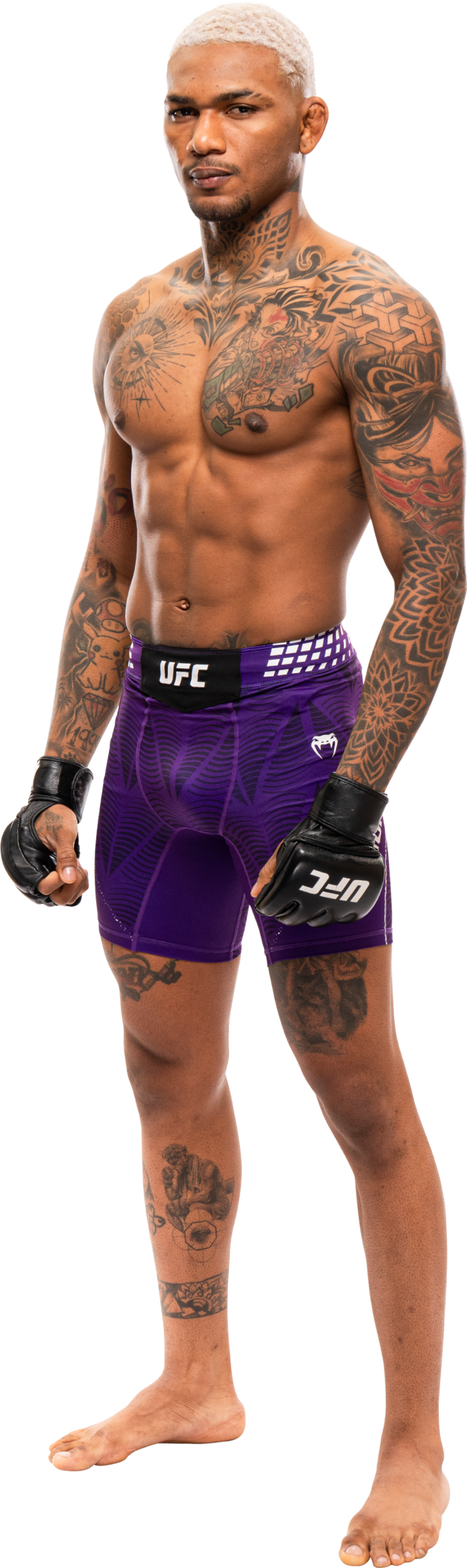
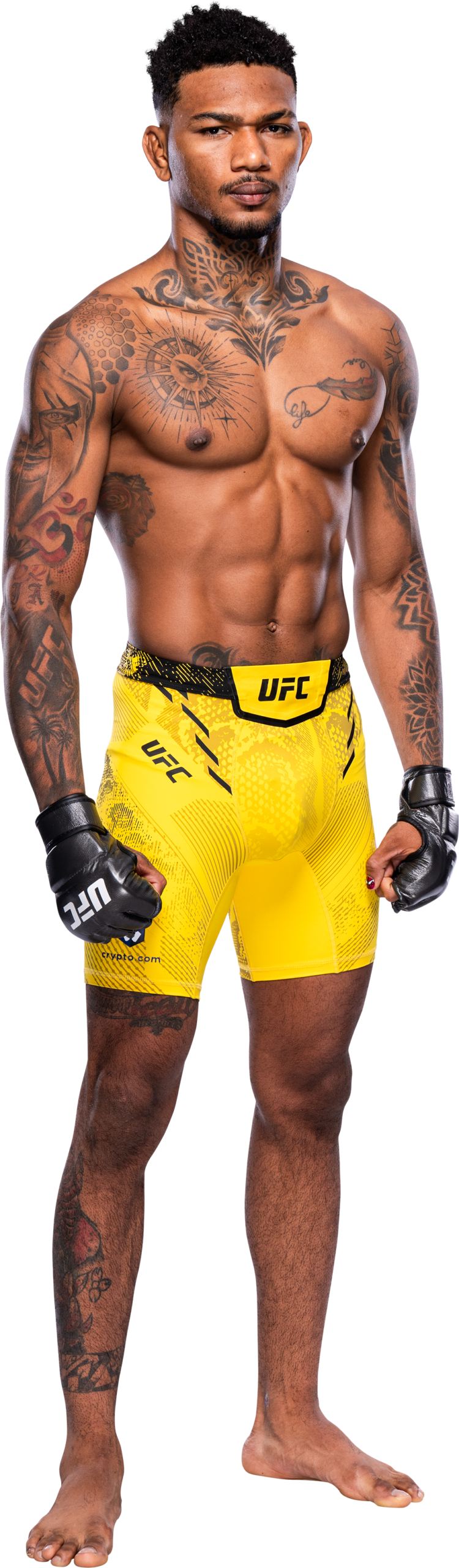
Michael Morales’s tattoos cover much of his upper body: an eye with fine rays on his right chest, black work across his neck, red accents among the arm pieces and a large back composition. Newer photos show an anime figure on his left chest; earlier ones show a feather there.

His collection has changed across the photos. Official portraits, fight shots and a work-in-progress image show different angles and stages, so no single photo gives the full picture.

Morales is an Ecuadorian welterweight from Pasaje in El Oro. UFC’s career account traces his route through regional competition to a September 2021 Contender Series win. The designs are visible, but he hasn’t publicly explained the meaning of every piece.

The Eye Chest Tattoo and Neck Pattern

Michael Morales tattoos: inline

The eye sits on Morales’s right chest inside a circle of pointed shapes and fine rays. Its shaded pupil and eyelids look more realistic than the sharp lines around them; the rays leave open skin between each mark, so the design stays clear even from an angle.

Above it, heavier black work rises from beneath his jaw toward both collarbones. Curved sections flank a point that drops toward the sternum, and the number 22 is worked into the front of the design.

The neck pattern is symmetrical; the chest pieces aren’t. At the right shoulder, small hexagons lead into the sleeve. Their straight edges, the neck’s dark curves and the eye’s fine lines give each area its own texture.

Red Roses and Inner-Arm Lettering

Michael Morales tattoos: inline

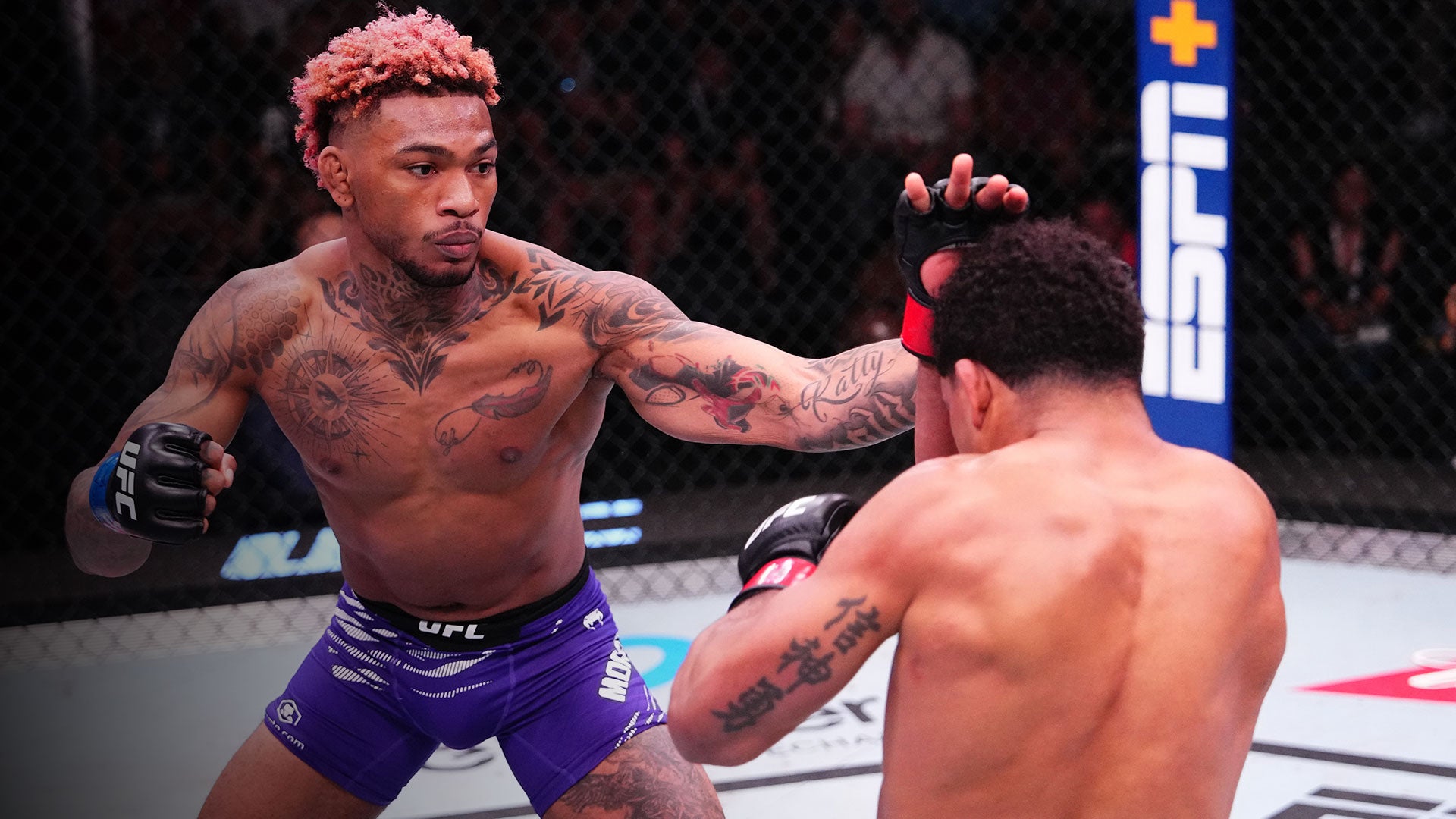
A fight photo with Morales’s left arm extended shows the inside of the sleeve. A red rose sits near the elbow bend, while the name Katty runs in broad script along the inner upper arm toward the wrist. The lettering follows the curve of his arm, and the petals mix red and black shading.

Other red work appears in an older portrait: roses along the right side of his torso beneath the chest tattoo, plus a bold red mark near the right elbow. These accents sit among black-and-gray pieces rather than forming one continuous colored sleeve.

The view changes with the pose. When his arms are down, the outer-arm designs are more prominent; with his left arm stretched out, the rose and name come into view. The photos show different sides of the same collection.

The Mask and Geometric Sleeve

Michael Morales tattoos: inline

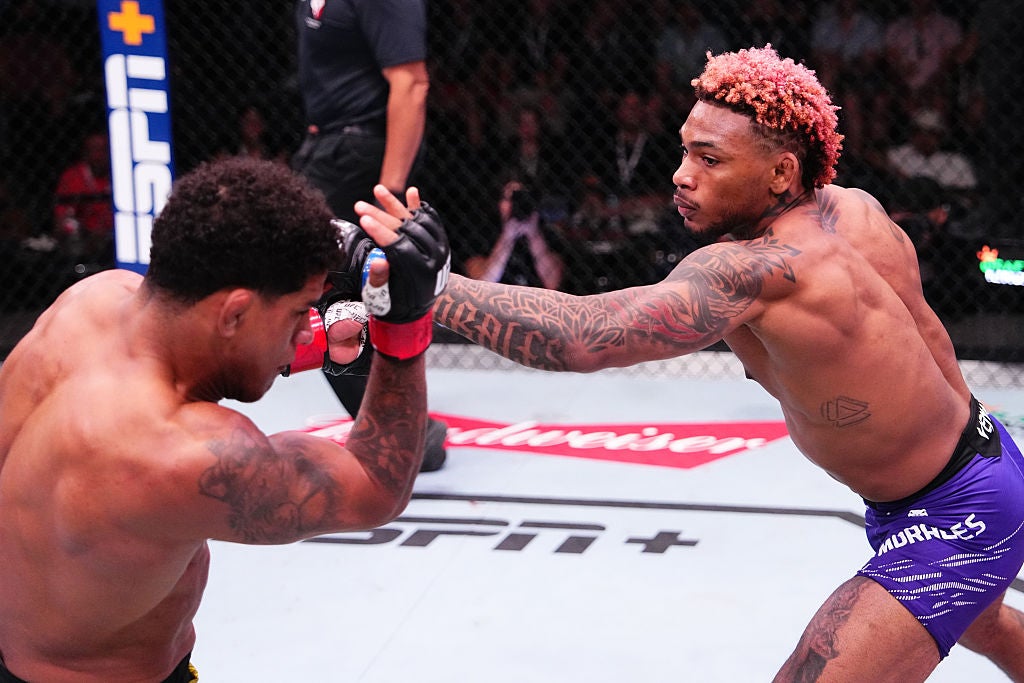
The side-on fight photo shows the outside of Morales’s left arm: repeated block-like shapes over the shoulder, a dark face or mask with red accents, a pointed geometric rosette on the forearm and the surname Morales in bold lettering.

The sleeve moves between straight edges, shaded curves and radiating petal shapes. Small gaps of skin separate parts of the forearm pattern, while the red around the mask makes it stand apart from the darker work.

The surname wraps around the arm, so some letters are clearer than others as his wrist turns; the glove hides the lower end. The photo shows placement and detail, but not the sleeve as a flat, complete image. It also doesn’t establish a cultural or personal meaning for the geometric forms.

How the Chest Collection Changed

Michael Morales tattoos: inline

In an older fight photo, Morales has the eye on his right chest and a long, curved feather on his left. Red shading sits inside the feather’s dark outline, above the nipple; the neck design runs between the two chest pieces.

A newer official portrait shows an anime character with flowing hair and green details in that left-chest area. Metro Ecuador identified him as Tanjiro Kamado from Demon Slayer in September 2025.

The pictures show that the visible design changed, but they don’t explain how the newer tattoo was planned around the feather or whether it covers earlier ink. The older action shot also shows the eye’s rays remain easy to pick out while Morales is moving and turned away from the camera.

The Full Back Tattoo

Michael Morales tattoos: inline

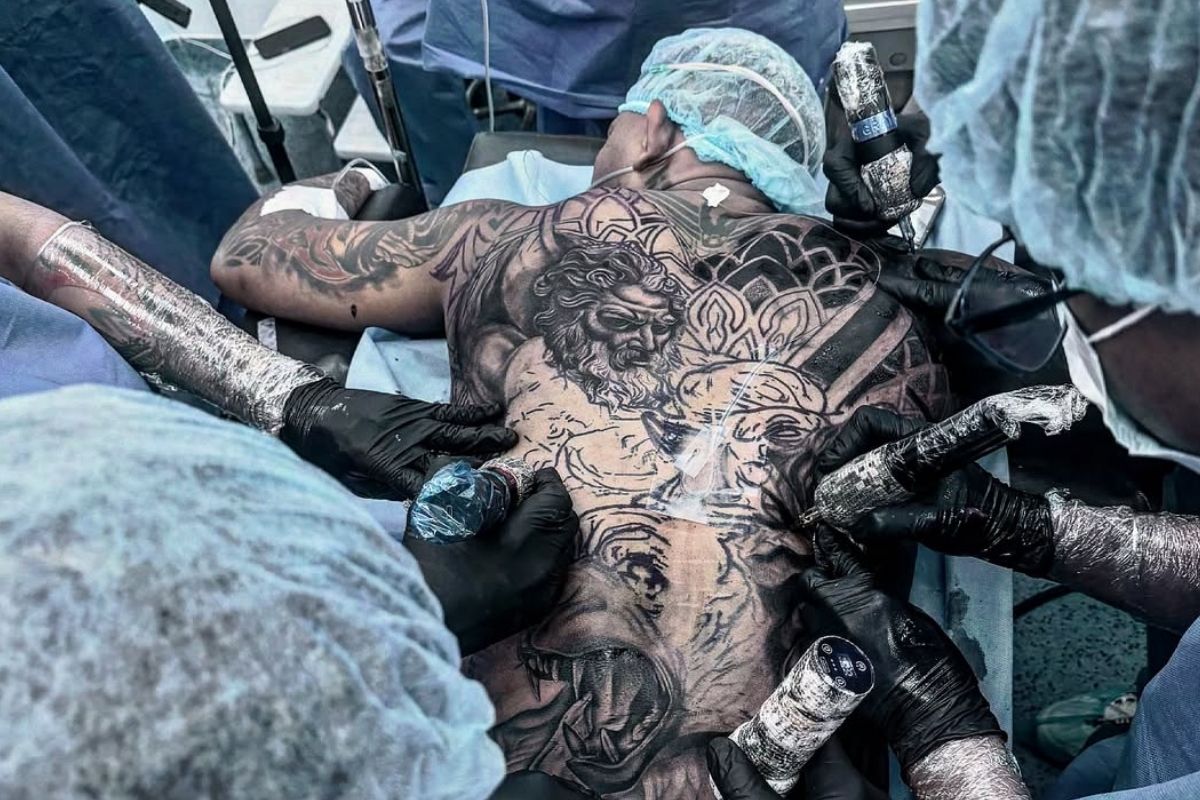
The back photo records a session in progress: Morales is face down as several artists work, with dark shading in some areas and open outlines in others. It isn’t a healed view, so unfinished sections shouldn’t be read as blank spaces in the final design.

A large bearded figure with muscular arms fills the center, with a canine below and broad ornamental and geometric forms near the shoulders. El Comercio linked the imagery to Heracles, also known as Hercules, and the two-headed dog Orthrus. That is the newspaper’s interpretation, not a personal explanation from Morales.

Shading gives the figures depth while heavier outlines frame the larger composition. The process photo captures the work being built; it can’t show exactly how every section looks when finished.

The UFC interview below shows Morales speaking after his UFC 322 bout.

More athlete tattoo guides