
Kali Uchis has a compact tattoo collection with unusually personal stories behind it. Public coverage identifies a rose on the back of her hand, an Om symbol on a knuckle, initials on her side, writing on her wrist, her father’s passport signature on her bicep and a tiger on her hip. The designs touch on family, spirituality and simple appreciation for an image.
Newer photos also show tattoos connected with her music and album artwork. It helps to separate what Kali has explained from what viewers are guessing from a picture. The confirmed pieces already suggest an artist drawn to ink that can be intimate, symbolic and quietly decorative.
The hand rose is one of Kali Uchis’s clearest tattoos
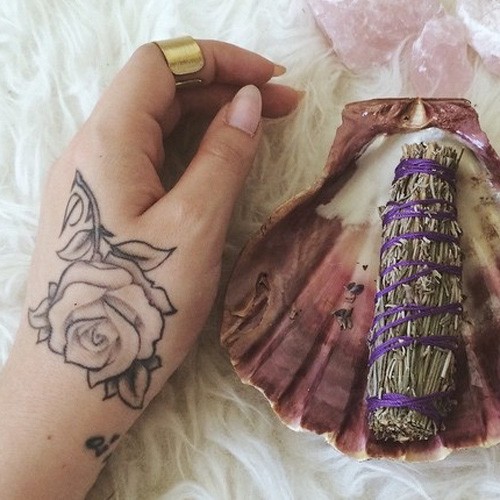
Kali has a simple outline rose on the back of her hand. The placement makes it easy to spot in photos, on stage and in everyday gestures, so the small black design has a bigger presence than its size suggests.
Rose tattoos can carry many meanings, but there’s no direct quote from Kali giving this one a specific private story. The outline is light and graphic, in keeping with the softer, vintage-leaning side of her image.
A hand is a natural place for an artist who uses her hands constantly. The rose moves with her, appearing alongside rings and nail designs when she reaches for a microphone or poses for a photograph.
The Om symbol sits on her knuckle

Another hand tattoo is the Om, or Aum, on the knuckle of her left middle finger. The symbol has associations with mantra and spirituality in Hinduism, Buddhism and Jainism. Public descriptions connect it with the soul and spirit, but Kali hasn’t shared a detailed personal explanation for choosing it.
The small mark suits a knuckle: it stays readable without taking over the hand. It sits close to the rose, forming a loose group of fine black designs rather than a heavily shaded composition.
The two tattoos use different visual languages. The rose is a familiar image from nature; the Om is a compact spiritual symbol. Her hands don’t follow one single theme, and not every deeper meaning needs to be made public.
Her side initials keep a private detail close
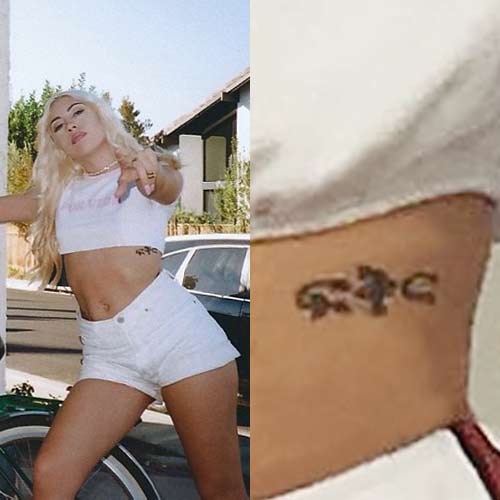
Kali has initials on her left side, a placement that can stay under everyday clothes. It can be shown deliberately, but it doesn’t have to appear in every public photo.
Public descriptions identify the mark as initials or a symbol, but don’t establish what each letter means. It could refer to family, a relationship or a private phrase; without an explanation, guessing would turn it into a story that may not be hers.
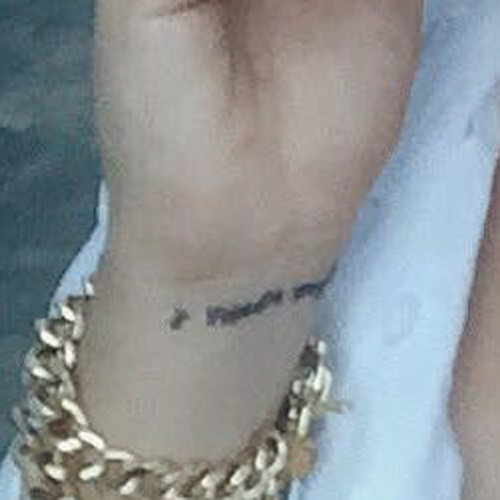
She also has writing on her right wrist. The side mark stays more concealed, while the wrist lettering is easier to notice. Together they show that Kali is comfortable with words and symbols without needing each tattoo to function as a public statement.
Her father’s passport signature is a family tattoo

One of Kali’s most specific tattoos is her father’s name on her left bicep, copied from the signature in his passport when he came to America. It preserves more than a name: it keeps the movement of his own handwriting, including the small irregularities that make it recognisable.
The story connects the design to immigration and family history without needing a portrait or a long quote. It turns an everyday document into a lasting piece of body art.
The bicep gives the signature room to stay legible. It can be covered easily, but it also shows when Kali wears sleeveless clothes, leaving her free to choose when the family reference is visible.
Among the documented tattoos, this is the clearest example of her carrying a real piece of family history with her. It feels less like a label than a personal keepsake.
The tiger on her hip brings in a bolder image
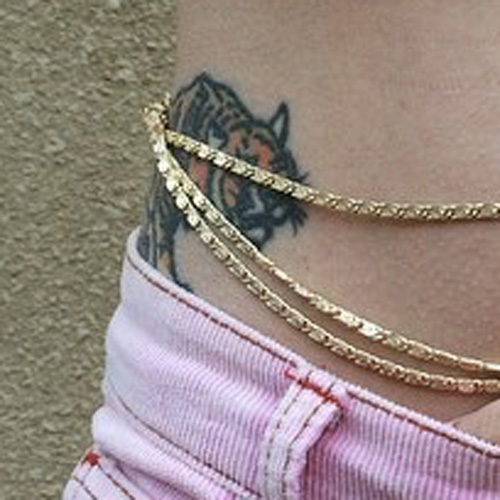
Kali also has a tiger tattoo on her right hip. It brings a more forceful image to the collection than the hand rose or tiny Om, while the placement keeps it relatively private.
Tigers are often associated with strength, independence or protection, but there’s no confirmed quote settling what this one means to Kali. It’s safer to stick to what’s visible: a bold animal design away from the more public hand and wrist pieces.
The tiger changes the collection’s visual rhythm. Most of the other documented designs are words, symbols or compact linework; the animal is more illustrative and gives her tattoo map a stronger anchor.
Newer music-related images add another layer
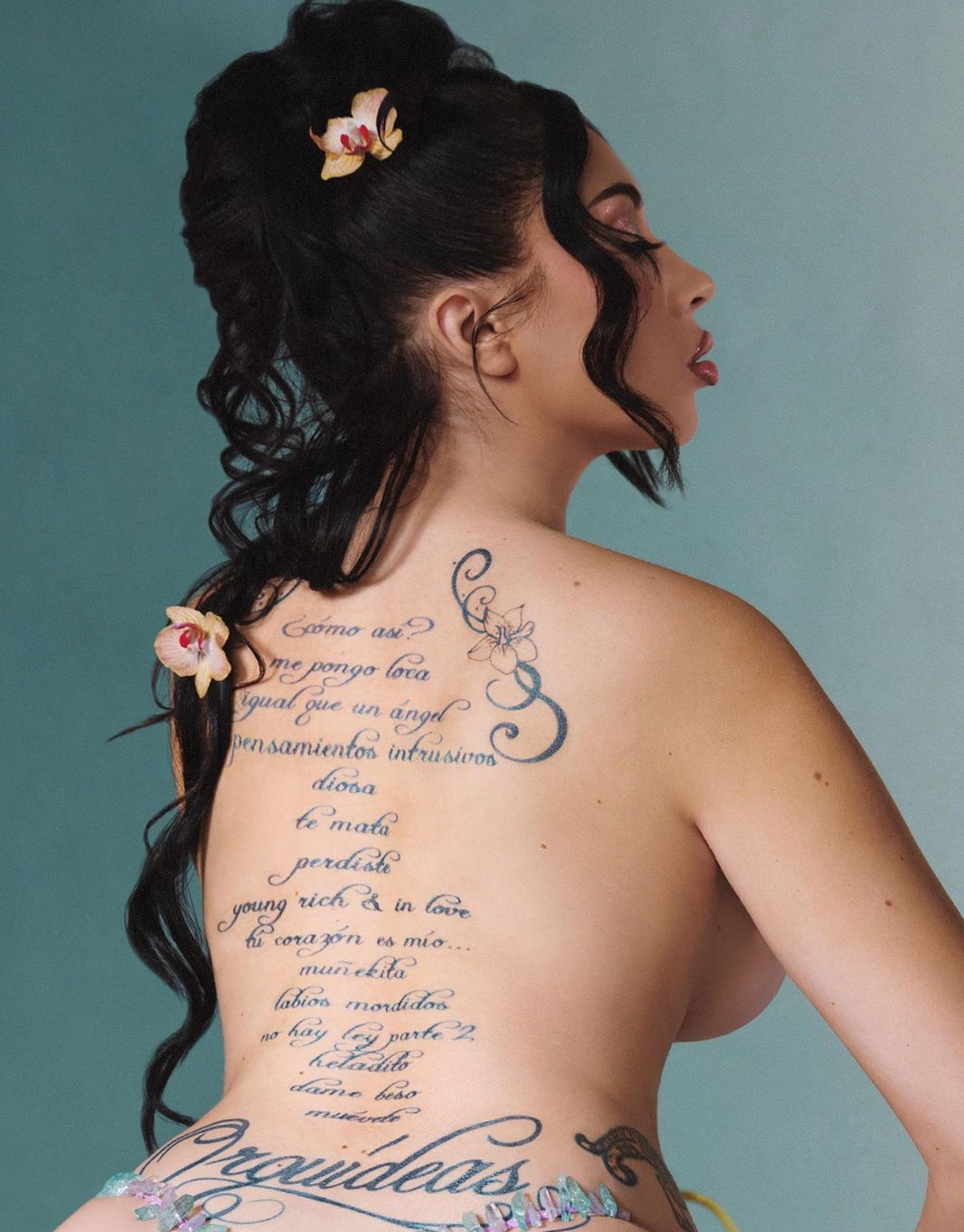
More recent photos show tattoo imagery connected with Kali’s music and album world, including a tracklist-style design from an album era. The reporting is based mostly on images rather than a detailed interview, so the connection is clear while the meaning of each line remains open.
Tattoos and music visuals can overlap. Kali builds strong visual worlds around her records, and an album-linked design can carry that era with her. It doesn’t necessarily mean each title has a separate private story; sometimes the point is to keep the period itself.
The design has a different origin from her father’s signature, but both turn something temporary into something she can keep: one preserves family handwriting, the other carries a public creative project.
Taken together, the documented pieces make a collection of close details: the hand rose, Om on her knuckle, initials on her side, wrist writing, her father’s signature and the tiger on her hip. Music-related imagery adds another layer tied to the world around her records.
They don’t need one shared meaning. Some are spiritual, some family-related, some visual choices, and some remain private. That variety is part of the collection’s character; a tattoo doesn’t need a public explanation to matter.
The family signature is the most specific story in the group, while the hand rose is likely to make the quickest impression. The tiger adds a bolder contrast, and the small Om and initials show how much a compact design can hold.
Her ink feels personal first. Even when a tattoo appears in a music photo, it can still have been chosen for her own reasons. That balance makes the collection worth a closer look.
Some designs read at a glance; others need context. A rose or tiger is easy to recognise, even when its private meaning is unknown. The passport signature becomes more moving once you know whose handwriting it preserves. The Om carries a long cultural history, while Kali’s personal reason may remain hers alone.
There’s no need to turn the collection into a forced biography. The documented themes already cover family, spirituality, music, handwriting and natural imagery. Her hand tattoos are the easiest to see, while the side and bicep pieces stay more private.
For more on Kali’s creative world and the stories behind her records, watch this interview: