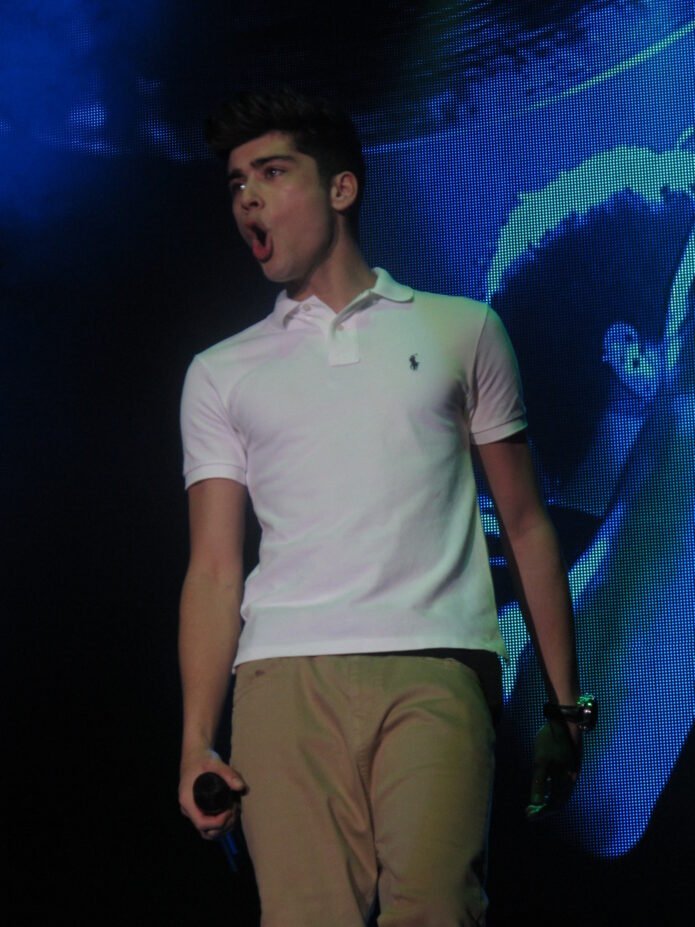
Zayn Malik’s tattoos make more sense as snapshots from different years than as one fixed inventory. His collection grew quickly during One Direction and his solo career, while photos tend to show only part of it. A microphone and the slim Star Wars lightsaber are easy to identify; other designs appear in photos without a confirmed story. Some are visible but their meaning is not confirmed.
Malik’s earliest public tattoos were small or tied to family and music. Later work grew larger and more graphic across his chest, arms and head. Dates help explain how the collection changed, while many designs still have no publicly confirmed story.
The microphone tattoo anchors his early forearm work
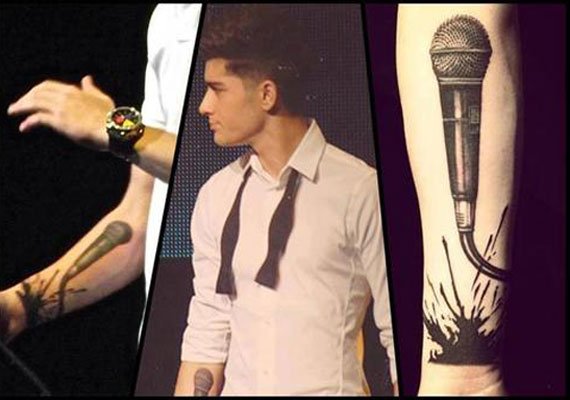
The microphone on Malik’s inner forearm is a direct nod to his work as a singer. It appeared in reports during One Direction’s early years, when he was talking about adding more tattoos. Photos show a realistic microphone, dark shading and an ink-splash effect near the base.
The design works as a music reference on its own. Contemporary coverage linked it to Malik’s ambitions and the way he was filling his arm, but not to a particular song or event. He has not given it a longer explanation.
The comic-style ZAP! tattoo records a different side of the collection
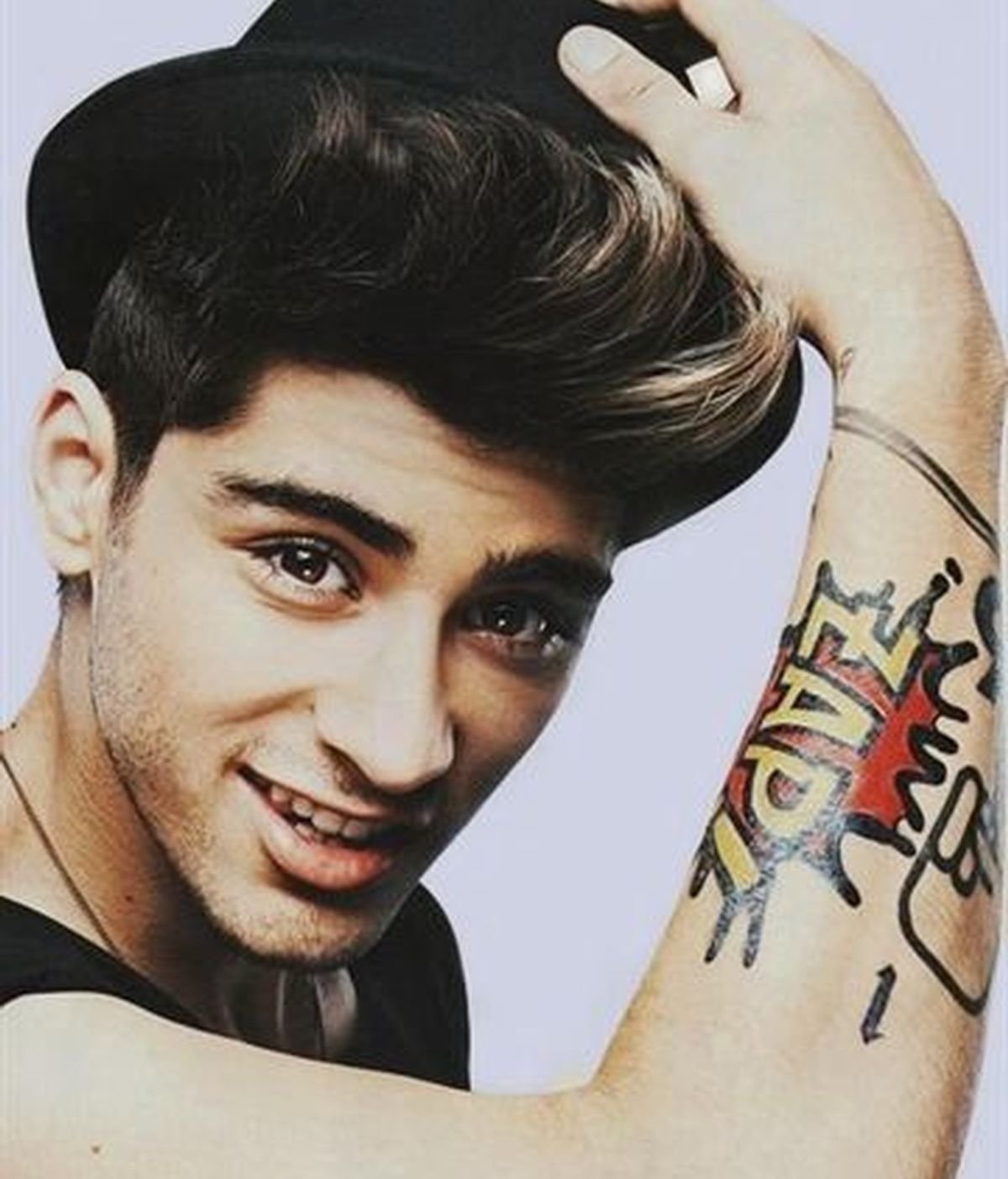
The yellow ZAP! lettering stands apart from Malik’s other forearm tattoos. Its comic-book burst gives the early collection a playful, graphic look. Telecinco reported it as a new addition and published a photo where the letters are easy to see. It is sometimes listed alongside numbers and initials from his early career, though those are separate designs.
ZAP! invites a symbolic reading, but Malik has not said why he chose the word. Its style fits the colourful forearm work of the time; the personal meaning remains unknown.
Arabic Walter chest script and the ram skull show how the record changed
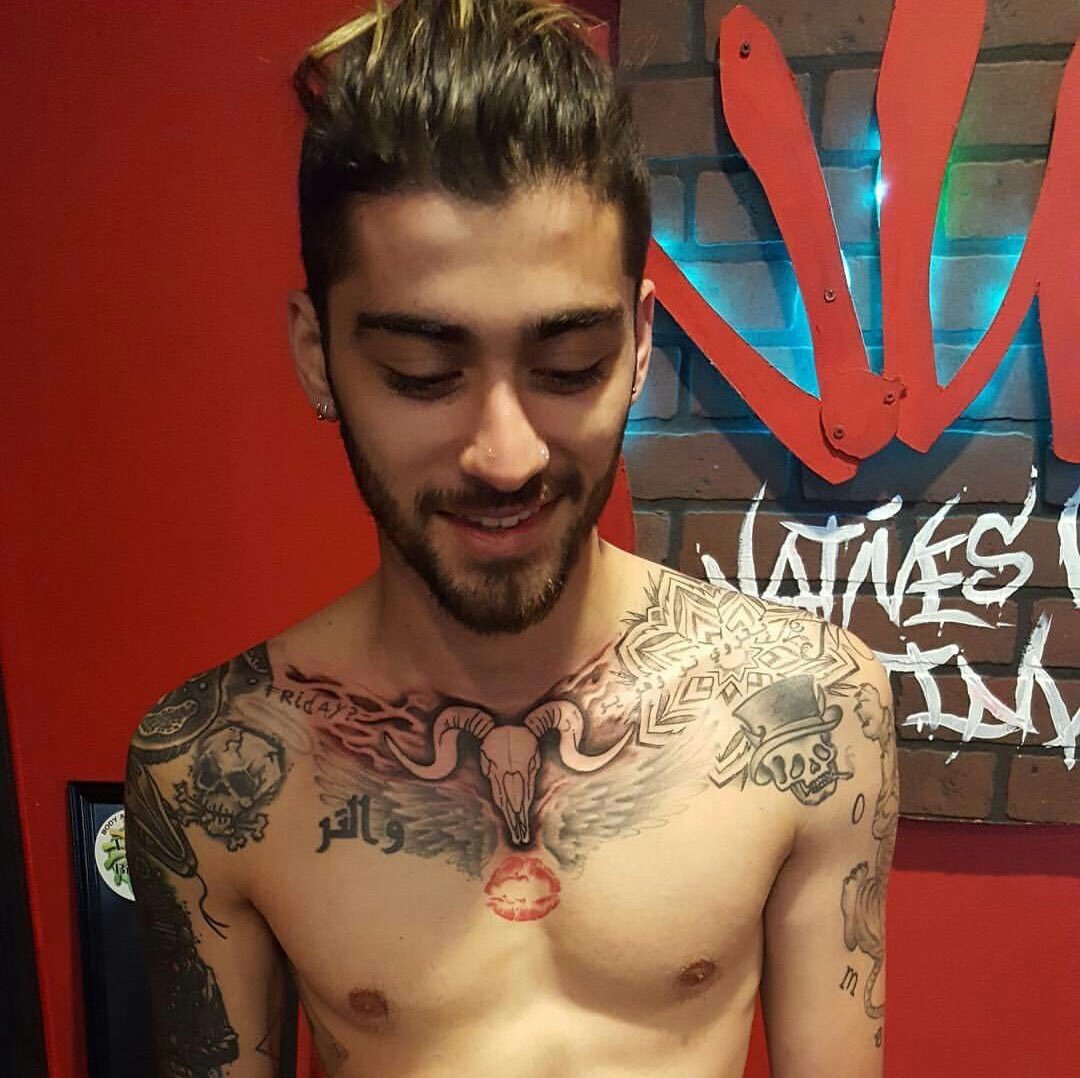
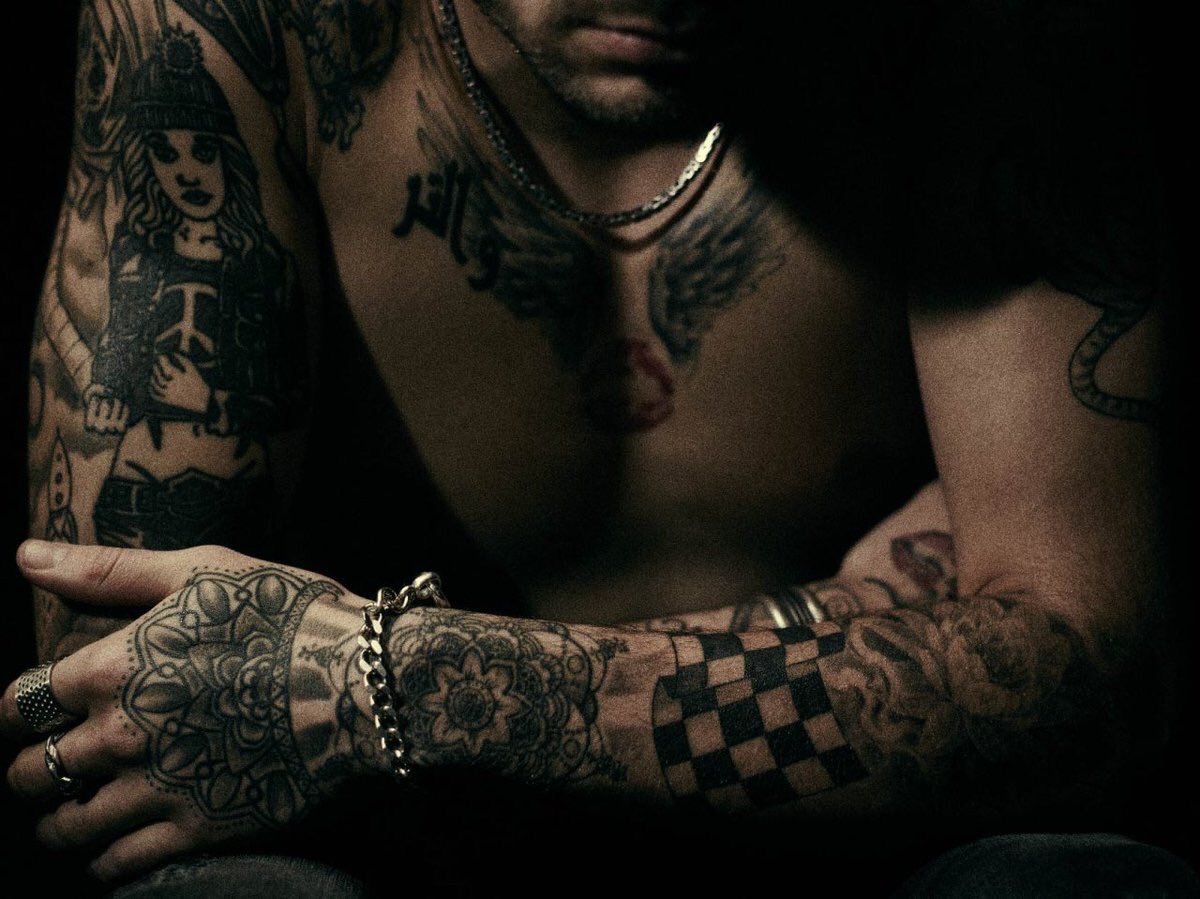
Arabic script on the upper right side of Malik’s chest is one of his earliest reported tattoos. Specialist references translate it as “Walter,” his maternal grandfather’s name. That makes it a family tribute. The original script is the surest guide, since transliterations and calligraphy can vary.
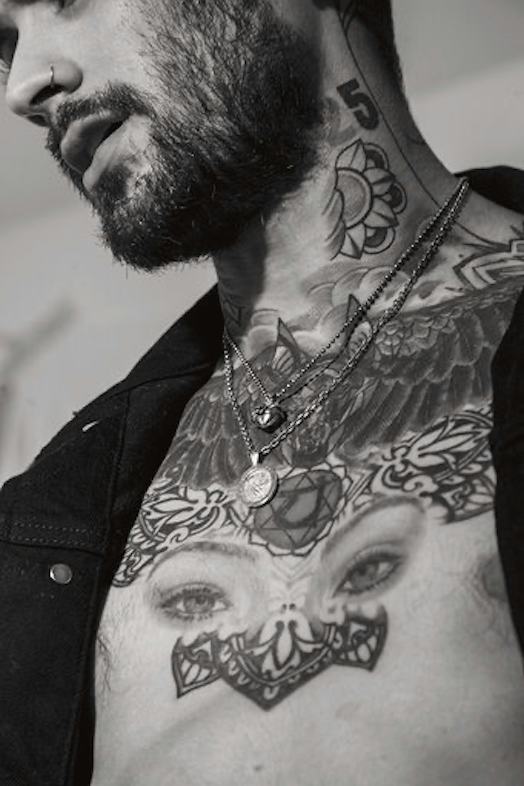
A larger piece later appeared in the same area. Photos from a tattoo studio show a ram skull with wings and additional lettering, and coverage dates a major chest addition to 2017. The images show the composition clearly, but leave its precise meaning open. The newer design also changes how the earlier script appears in photos.
Malik’s chest includes other tattoos that entertainment coverage has linked to relationships or particular periods in his life. A photo can show a design; a tabloid caption may only guess at its meaning. The family name and ram skull can be described from the record without presenting those theories as fact.
The UV lightsaber is his most distinctive small tattoo
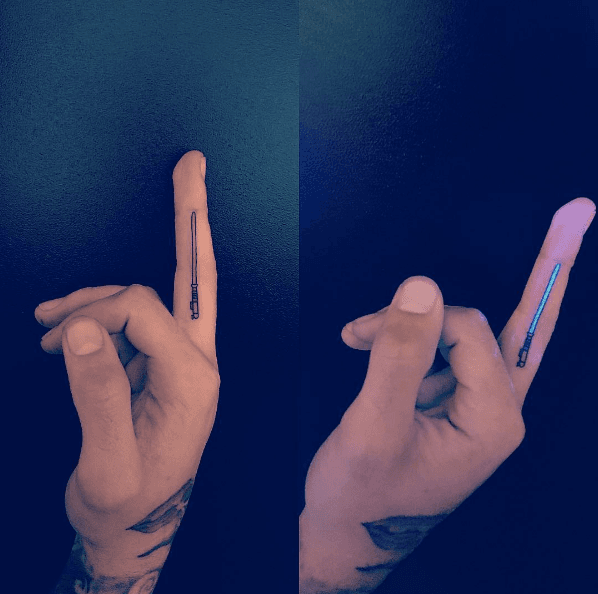
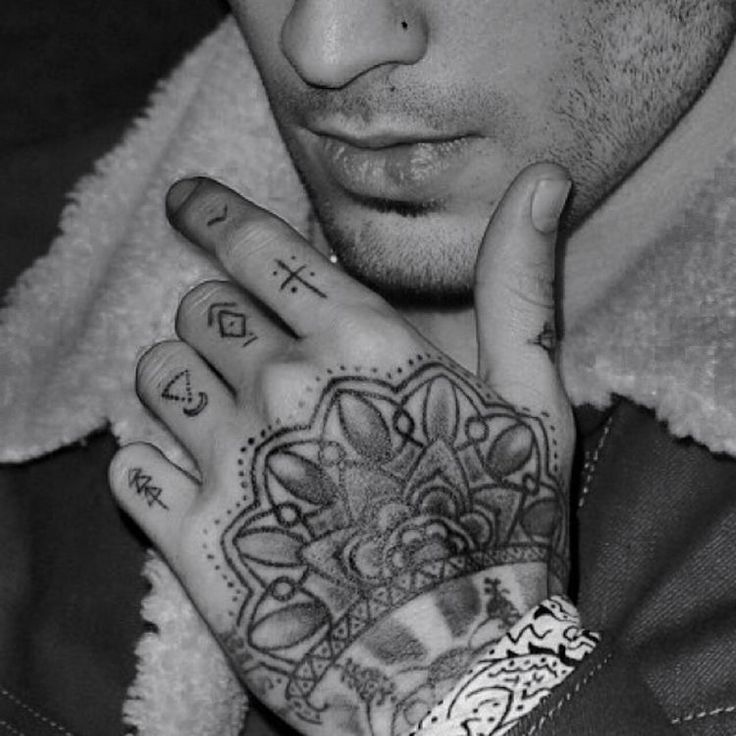
In July 2016, tattoo artist JonBoy posted a slim lightsaber on the inside of Malik’s middle finger. TIME, GQ, E! and Teen Vogue called it a Star Wars reference; JonBoy’s post said he used UV ink. The tattoo is subtle in ordinary light and glows blue under ultraviolet light, rather than looking neon in everyday photos.
The photo made the tattoo’s size and placement clear, and contemporary reports identify JonBoy as its artist. The phrase often repeated alongside it about the Force comes from JonBoy’s caption, not a statement from Malik about his own beliefs.
The lightsaber sits alongside family names, musical imagery and abstract symbols, though the pieces do not share one meaning. The grounded description is simple: a slim UV tattoo with a Star Wars design on his middle finger.
The mandala head tattoo moved the collection beyond the usual placements
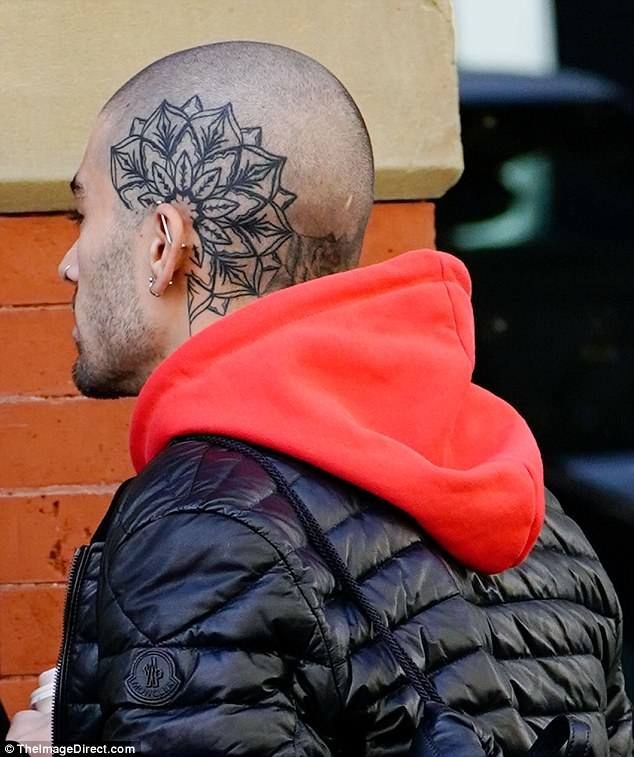
Photos from 2018 show a large mandala-style tattoo across the side of Malik’s shaved head. References credit the work to artist Janice Danger. The pattern sits above and behind his ear, spreading across the scalp with enough floral and geometric detail to stand as a major piece on its own.
A head tattoo can look different as Malik’s hair grows: a shaved head exposes the mandala, while longer hair can hide most of it. Available reports place the design in 2018 but do not explain its personal meaning. The shape, location and reported date are the clearest details.
Reading the record without overcounting
Photos, artist posts and contemporary coverage offer the clearest record, but they come from different years and show different parts of Malik’s body. That makes a definitive count hard to give. Where a source reports a meaning, it can be included; other interpretations remain unconfirmed.
Temporary artwork, album imagery and old photos can all get mixed into online tattoo lists. A design visible in 2012 may look different today after new work, cover-ups or changes in visibility. Meanings found only on fan pages should be treated as unconfirmed.
Frequently asked questions
Who tattooed the lightsaber?
Contemporary reports identify New York tattoo artist JonBoy as the creator of Malik’s UV lightsaber.
What does the Arabic chest tattoo say?
Specialist references translate the Arabic script as Walter, Malik’s maternal grandfather’s name. The same sources distinguish it from designs whose meanings they cannot confirm.
Does every listed design still look the same?
No. His tattoos changed over time, and photos vary in angle, lighting, hair length and how much skin they show.
3 thoughts on “Zayn Malik’s Tattoos: The Designs Behind the Music”
Comments are closed.