Zach Myers’s tattoos are shown in five very different settings: a warm-lit stage close-up, two MusicRadar performance frames, a Guitar World photo with a red guitar and a studio portrait with a green one. Together they show a colourful sleeve wrapping around his arm. The views differ because of pose, clothing, camera angle and light; no single image gives a complete map.
Myers is the guitarist associated with Shinedown. MusicRadar’s interviews and performance photographs appeared around the Dance, Kid, Dance tour and his PRS work. Guitar World published a separate stage view, and Revv’s artist material gives another look at the sleeve. A Guitar Interactive interview provides a face-visible reference, kept separate from the tattoo photos. The published sources don’t give a full account of every design’s meaning or date, so the descriptions below focus on what the images show.
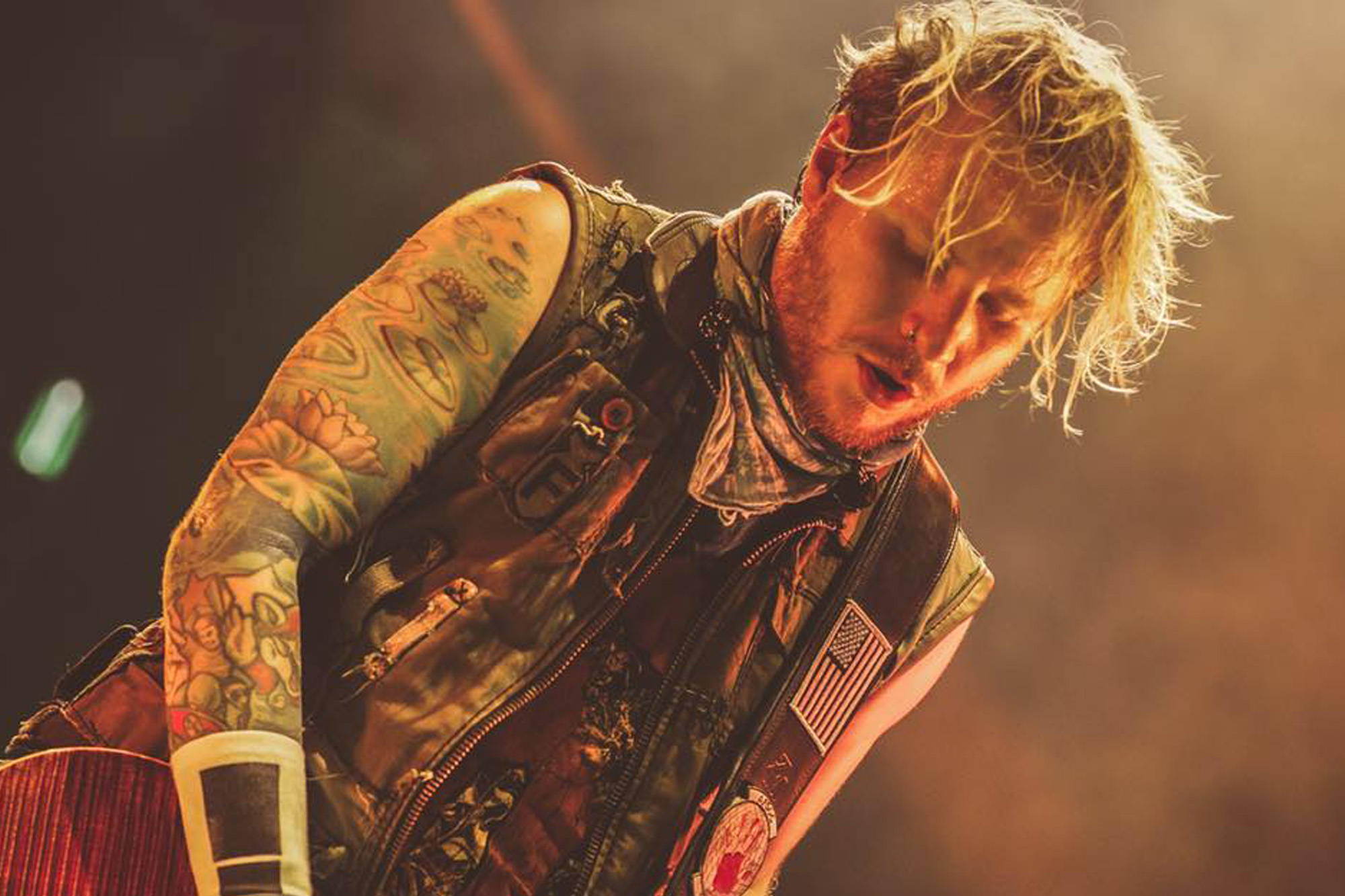
Zach Myers’s forearm sleeve under warm stage light
The Revv photograph is the clearest close view. Myers leans into a performance under amber light, his left arm running diagonally across the frame. Colour and black linework fill the exposed skin, with rounded forms, shaded panels and smaller marks overlapping toward the wrist. His face, sleeveless vest, guitar and stage posture all identify him, while the arm remains the centre of the image.
The amber lighting warms the colours but doesn’t hide how densely the sleeve is packed. Several motifs remain visible around the forearm, though the picture doesn’t name them. The design reads as a connected field that continues around the arm rather than a row of separate stickers. His bent elbow shows how the pattern shifts when the skin turns away from the camera.
This is a working guitarist’s view of the sleeve, not a posed tattoo session. The vest, instrument and movement are part of the scene. A guitar strap or body can cover the same section in another frame, so a photograph of only the exposed portion shouldn’t be read as the entire design.
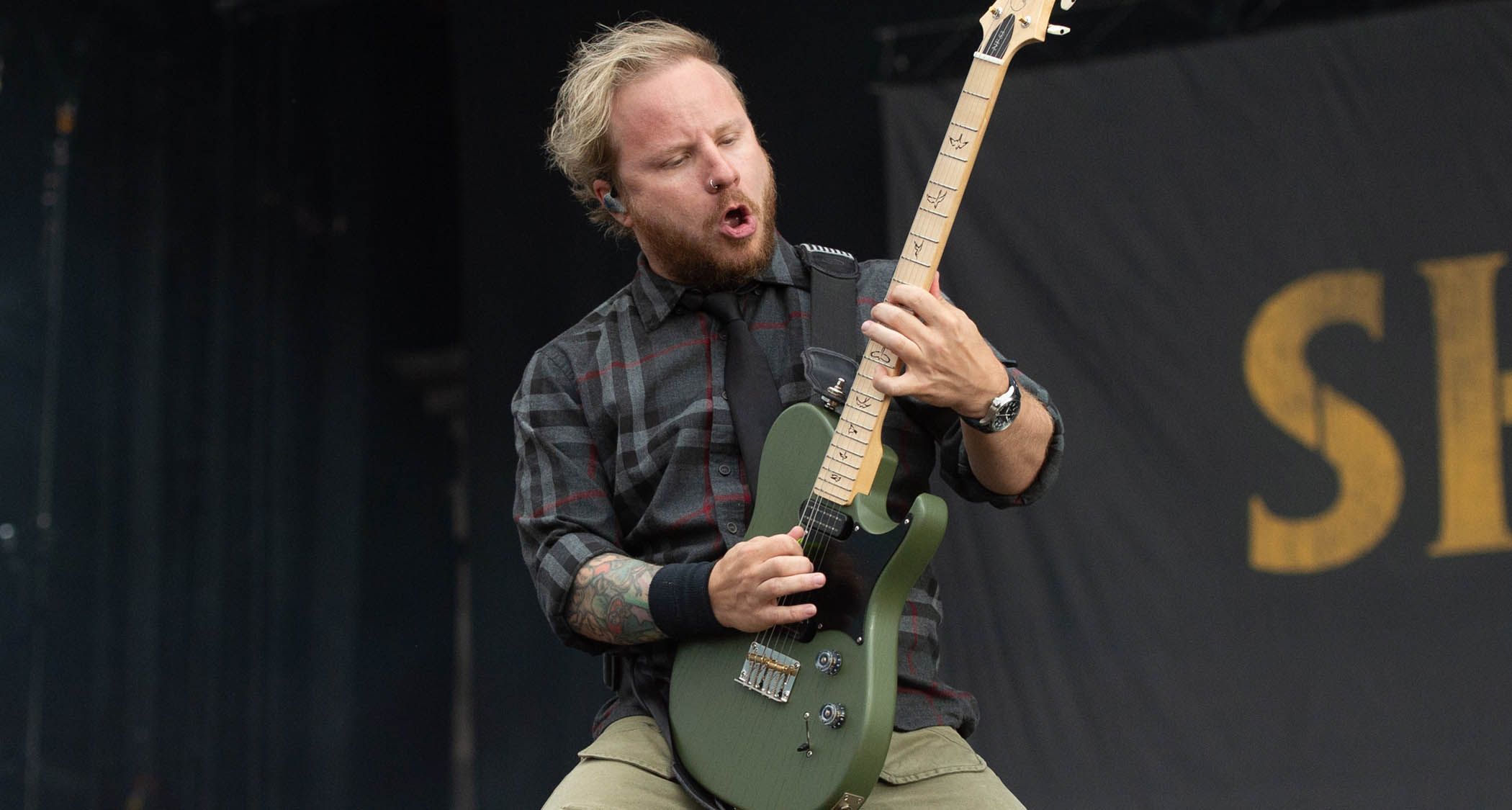
The MusicRadar performance frame and lower-arm coverage
MusicRadar’s Dance, Kid, Dance tour photograph is wider and cooler in tone. Myers crouches beside a green guitar, with a tattooed forearm visible below a rolled sleeve and wristband. The image catches him in a playing position rather than a pose for the camera. It shows how the lower-arm colour sits beside the guitar and how the wristband interrupts the line of the visible sleeve.
That detail complements the Revv close-up. Clothing covers some of the arm while the forearm remains exposed; distance makes the smaller marks harder to read, but the general coverage is clear. The face, hair, nose ring, guitar and stage role identify Myers in the frame. It doesn’t show every tattoo, and it doesn’t need to: it gives a different view of the same arm.
Changes between photographs don’t necessarily mean the ink itself changed. The arm may turn, the sleeve may cover more skin, or the guitar may block the wrist. Here the music setting explains the crop. This is a view of the tattoo while he plays, not a complete inventory of the sleeve.
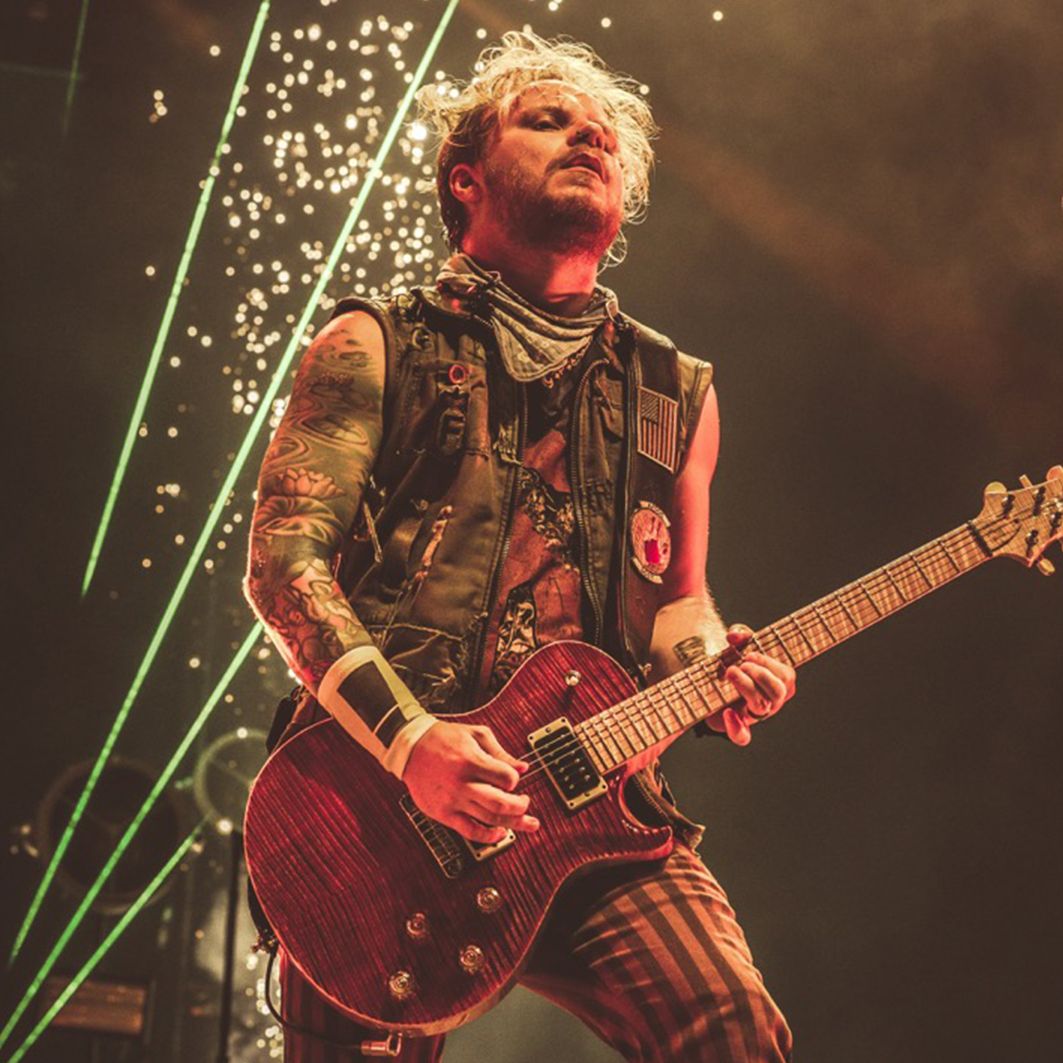
Guitar World’s red-guitar photograph and upper-arm panel
In Guitar World’s portrait-oriented stage photo, Myers holds a red guitar under green lines of light. The camera sits farther back than in the Revv close-up, showing the bare upper arm and forearm together beside his vest and guitar strap. Larger, darker shapes sit higher on the arm; the lower section breaks into more varied marks and colour.
The angle makes the sleeve feel broad across the upper arm, while the concert lighting falls unevenly over the skin. Some details stand out and others fade into shadow. The photo is useful for the overall layout, but the cropped, changing light doesn’t support a confident name or meaning for every mark.
This is a separate scene from the Revv and MusicRadar images: the red guitar, low viewpoint, green lighting and vertical crop give it a different composition. It adds a wider look at how the upper arm connects with the forearm, rather than repeating a close-up.
Blue-light PRS performance view of both tattooed arms
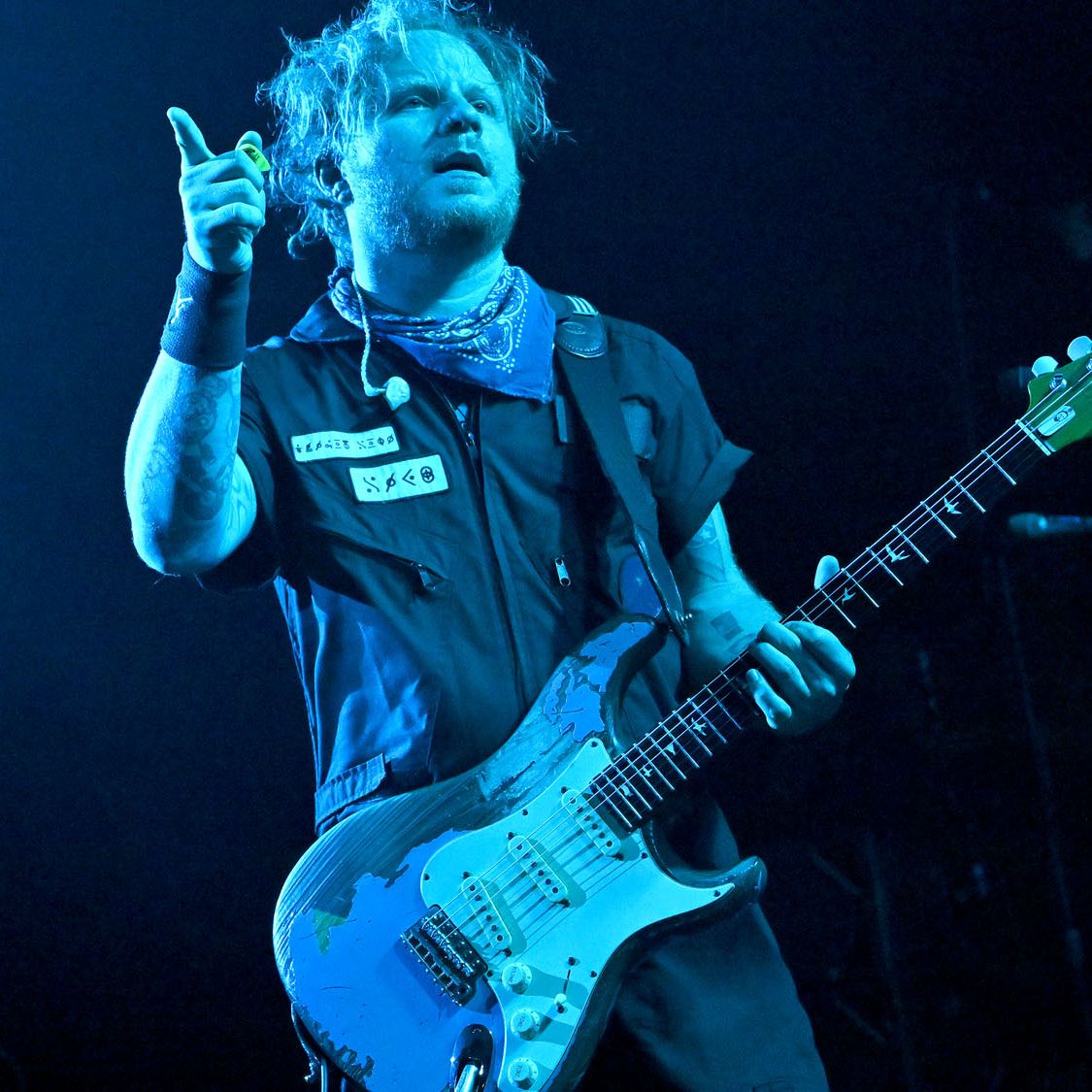
A blue MusicRadar performance photo shifts the colours again. Myers stands with a pale guitar under a strong blue wash, one arm raised and the other near the strings. The light makes the forearm lines look almost monochrome. The pose turns one arm toward the camera while the guitar creates a diagonal across the lower frame.
Blue stage light can flatten the sleeve’s original colour, but it still shows the density and the way the design runs around the arm. The raised pose exposes a section that the guitar hides in other photographs. The frame gives a useful placement view even though it isn’t sharp enough to identify every motif.
His face, hairstyle and guitar connect the photograph to Myers as a musician; the tattoo itself is best described by its placement and broad appearance. The published sources don’t assign a meaning to each line, and the coloured stage wash doesn’t reveal the original pigment exactly.
Studio sleeve photograph with a green guitar
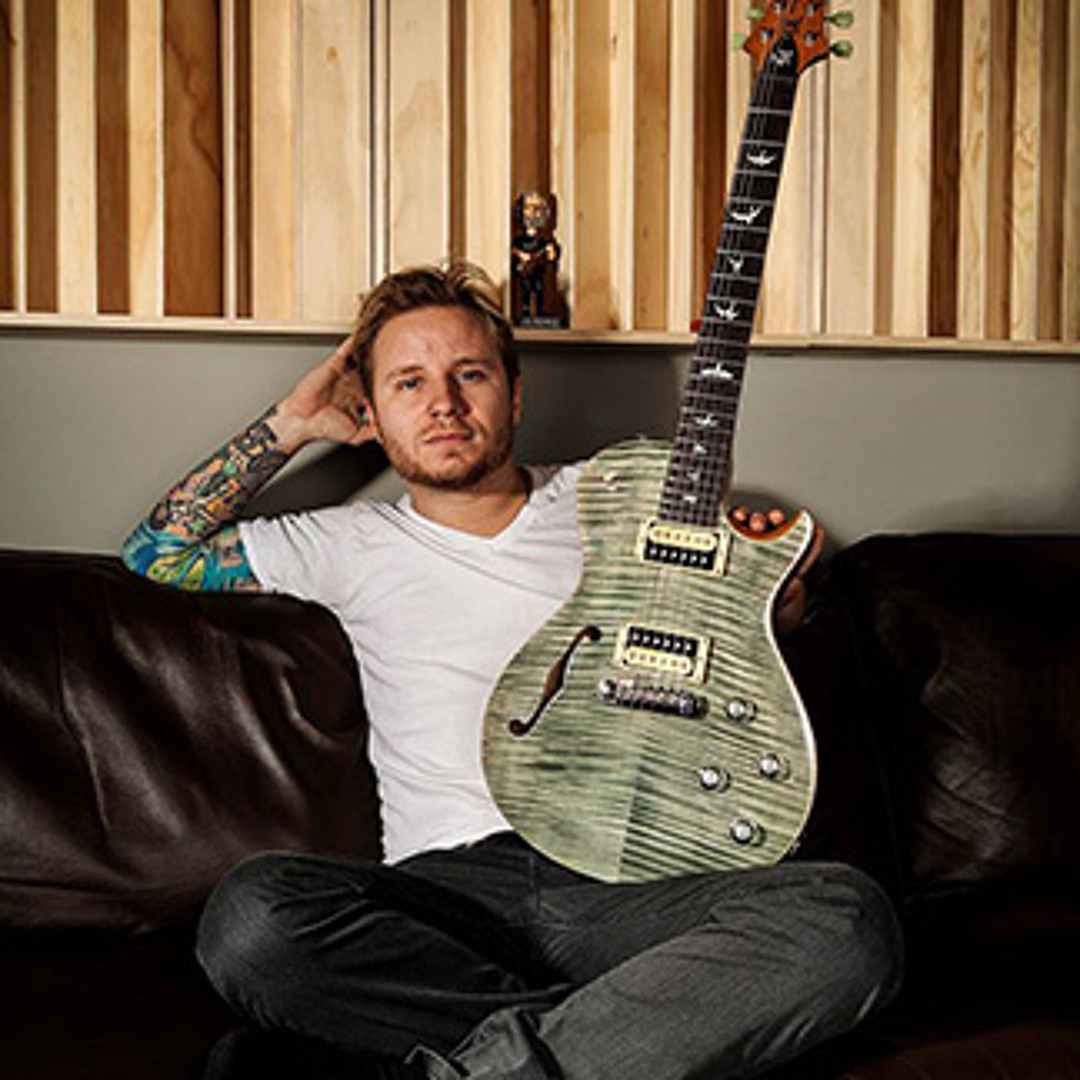
The studio photograph is quieter than the concert frames. Myers sits in a wood-panelled room with a large green guitar across his lap and one tattooed arm resting behind his head. The sleeve is exposed against more even lighting, so its colour and linework are easier to distinguish without stage glare or motion.
The arm rests at a different angle from the live images. The design wraps toward the outer edge and disappears partly near the elbow, while the guitar no longer covers the forearm. That makes this a useful comparison with the stage photos: the coverage is consistent, but pose and lighting change how it reads.
This is a tattoo-bearing original, unlike the separate face-visible featured portrait. The studio setting gives another view of the arm and shows how the ink looks away from a concert stage.
What the published interviews establish
MusicRadar’s interviews connect the performance pictures with Myers’s guitar work and touring. Guitar World gives a separate live view, while Revv’s artist material offers another angle on the sleeve. The Guitar Interactive video below adds a face-visible conversation with the musician.
These sources don’t provide a verified inventory of every tattoo or a full explanation of each motif. The photographs establish substantial coverage on his arms and show how the sleeve appears in different settings. They can’t prove exactly when each part was completed or attach a private story to an abstract shape. The article sticks to visible design and placement where the interviews don’t add more.
That distinction matters when a concert photo is tinted, distant or partly blocked by a guitar. A shape may look recognisable, but the image might not be clear enough to support a label. What can be said with confidence is that the sleeve uses colour and dark linework, continues from upper arm toward wrist and changes appearance as Myers moves and plays.
Why the photographs look different from frame to frame
Myers plays with a guitar held close to his body, so the instrument sometimes blocks the lower arm. Wristbands and rolled sleeves create other breaks in the view. A studio portrait opens the forearm, while a concert image can press it against the guitar. Amber, blue and green lighting also affect how the colours appear.
Camera position changes the proportions. Guitar World’s low viewpoint makes the upper arm look broad beside the red guitar. MusicRadar’s wider shot places the forearm below the instrument’s neck. Revv moves closer and follows the arm diagonally, giving the sleeve more of the frame. None of those differences means the tattoos themselves have changed.
The photographs span different tours and editorial settings, but they don’t form a dated sequence of every tattoo. Without a report that dates a particular piece, it’s better to describe where it appears than to invent when it was added. The five views give a grounded comparison of colour, coverage and placement.
A visual map of the stage and studio archive
The warm Revv close-up shows the sleeve’s density and colour. MusicRadar’s tour frame catches the lower arm as Myers plays. Guitar World maps the upper arm beside the red guitar; the blue PRS photo shows how concert lighting changes the appearance; and the studio portrait gives a calmer comparison without the stage wash.
These are five different photographs, not five separate tattoos. Some overlap in the arm area, which helps show how the sleeve looks across different poses and light. Each image adds another view, while the featured portrait stays outside the count because it identifies Myers rather than documenting his ink.
For design research, the photographs show how larger forms and smaller details follow the curve of the arm, how light changes the apparent colour, and how an instrument or rolled sleeve can conceal a section. Those observations are more useful than guessing at a motif from an unclear frame. The pictures are references for composition and placement, not a stencil or a source for private meanings.
How the sleeve follows the arm
Across the photos, the forearm and upper arm read as parts of one colourful composition. Larger forms hold their shape higher on the arm, while smaller details continue toward the wrist. The elbow acts as a hinge: the design can look continuous from one angle and divided from another. A musician’s movement and guitar position become part of the way that tattoo is seen.
A single close-up can make the sleeve seem fully mapped, but the wider performance photos show what it leaves out. A distant frame has the opposite limit: it shows a patch of colour without enough detail to see the edges. Comparing them gives a fuller and more honest picture than relying on either one alone.
The clearest view of Zach Myers’s tattoos
The published photos consistently show substantial tattoo coverage on Myers’s arms and a colourful sleeve that wraps around the upper arm and forearm. The stage pictures make that coverage part of his performance silhouette; the studio image shows the same arm in more even light. Guitar position, clothing, camera angle and coloured lights explain why the sleeve looks different from one frame to the next.
The five inline photos are kept distinct and placed through the article, with the face-visible featured portrait reserved for identification. The sources support observations about placement, density, colour and movement. They don’t supply meanings for every mark, so the article leaves those open instead of turning a distant shape into a fact.
Below, Myers talks with Guitar Interactive about his work as a guitarist.