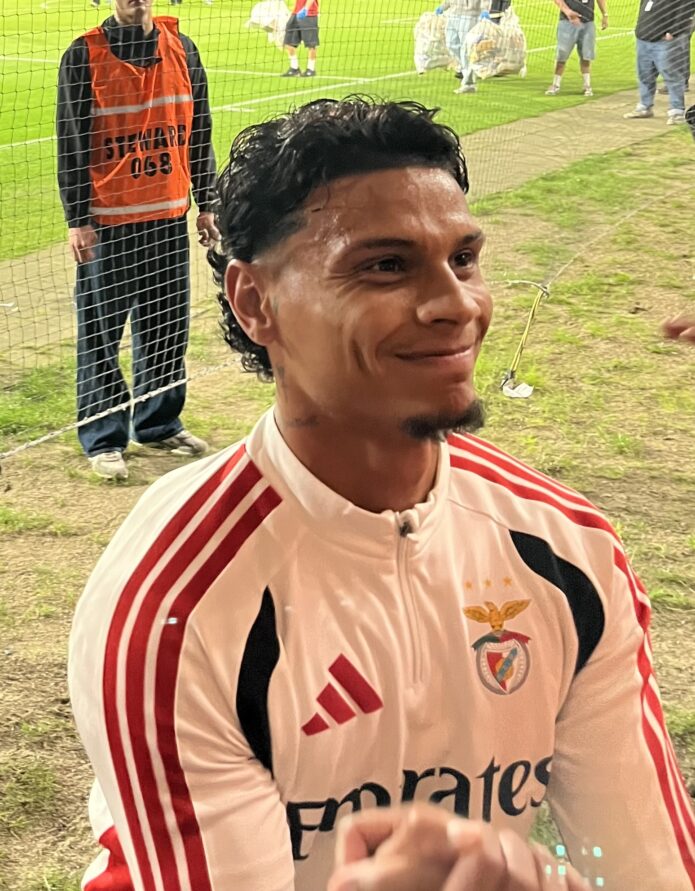
Richard Ríos’s tattoos cover his chest, both arms, his neck and part of his right leg. Match and editorial photographs show script, portraits, religious imagery, lions, dates and smaller symbols. Infobae Colombia, Revista Vea and Televicentro explain several of the designs, including the long prayer on his upper arm and references to faith, family and Palmeiras.
Getty, EFE and Wikimedia Commons photos show the chest, back, arms and leg in separate frames. Reports explain some designs; other marks are visible without a confirmed story.
A collection built from several kinds of memory
The chest is the most crowded area in the front-facing photos. A large lion sits among curved lettering, birds, a cross, a dove, stars, a game controller and other small marks. Long script covers much of one upper arm, with further shaded work running toward the wrist. A separate photograph shows a larger design across the back, and match images catch tattoos on the thigh and lower leg.
These pieces vary in scale and finish. The arm writing is compact and tightly arranged; the chest mixes a large animal portrait with smaller icons and words. On the back, portraits and shading form a broader composition. Reporting links some of the ink to faith, family and football, but the designs cover different subjects, and not every image or inscription has a documented explanation.
The Lord’s Prayer runs through the upper-arm tattoo
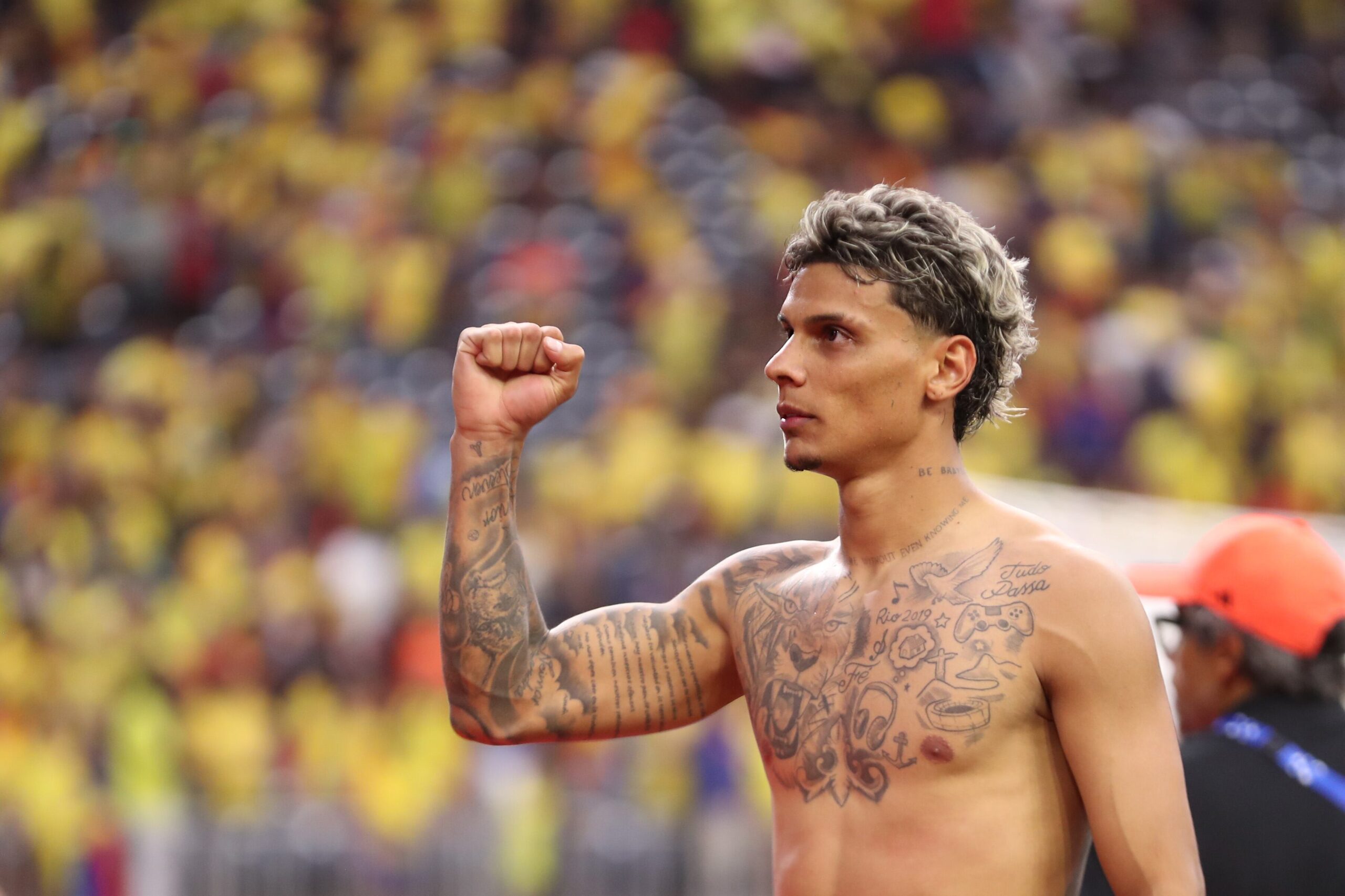
Infobae Colombia and Televicentro identify the long lines on Ríos’s biceps as the Lord’s Prayer, or Padre Nuestro. The writing had been mistaken online for song lyrics before the prayer was identified. Televicentro also points to the nearby word “Neimar”, which appears beside the dense script. In match photos, the lines run down the upper arm and become easier to see when his sleeve shifts.
Revista Vea connects parts of the collection with Ríos’s faith and says the tattoos carry personal meaning. The prayer is the clearest religious text that the reporting identifies. A cross and a dove are also visible among the chest designs, though the available coverage doesn’t assign a separate story to each one.
Reports also mention an apparent spelling or accent issue in the lettering. They don’t explain the detail further, and it doesn’t change their identification of the long lines as the prayer.
The chest lion anchors the front-facing collection
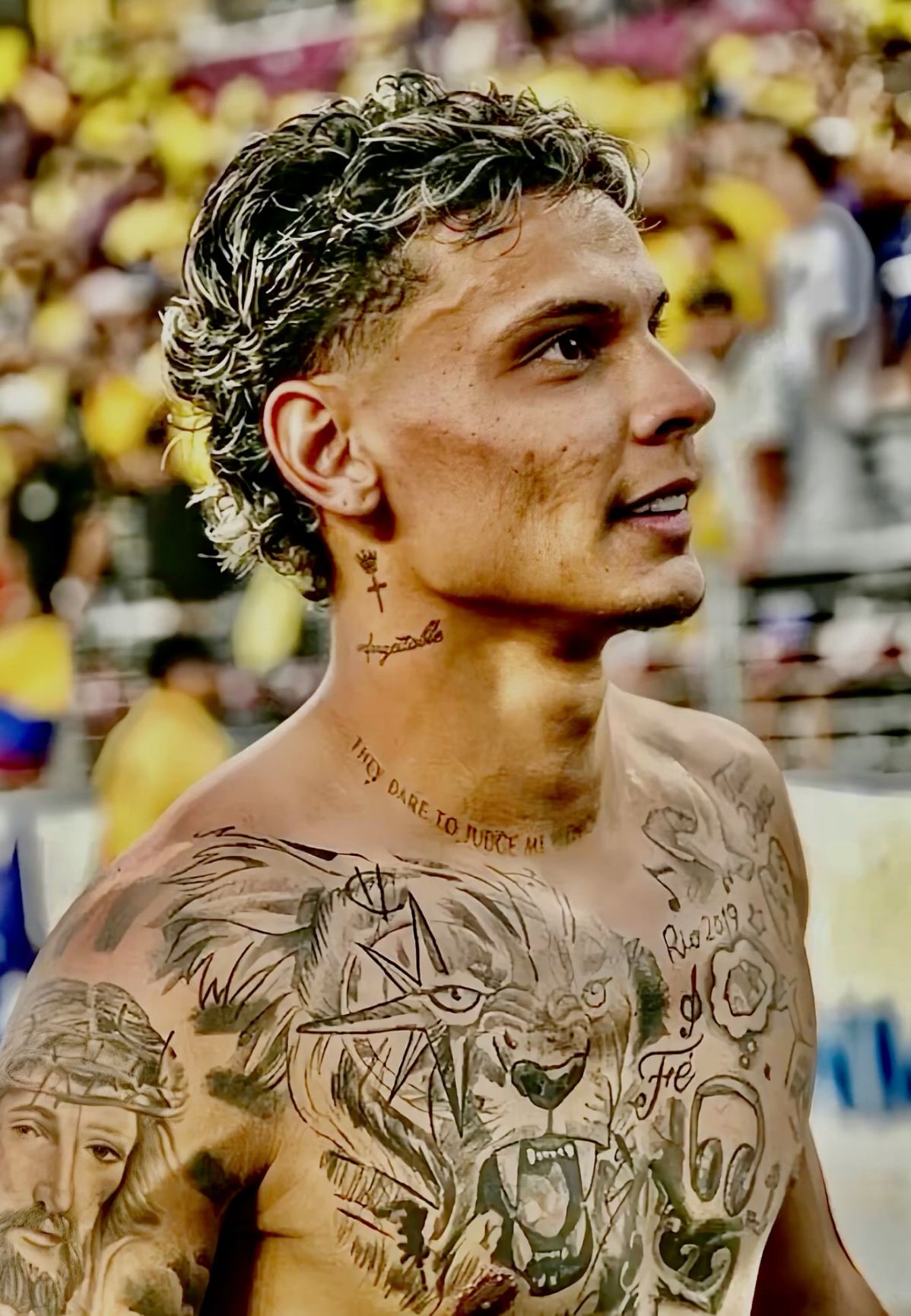
A large lion’s head takes up much of the chest and is the clearest image in the front-facing portrait. Dark outlines and shading define the face, which remains easy to pick out when the whole chest is in view. Around it are smaller designs: a dove, a cross, stars, curved lettering and a game controller. The neck lettering sits just above the lion.
The photographs also show “Río 2019” high on the chest and “Júlia Dassa” near the opposite shoulder. The reports don’t say what the words or the date refer to. Their placement adds names and a date alongside the larger portrait.
From a distance, the lion draws the eye first. Closer views make the smaller symbols and curved script easier to separate from the shaded face. In different match and editorial photographs, the angle changes how much of the chest appears at once, which is why some marks can be missed in a single image.
A larger rear composition expands the collection
A separate rear photograph shows a large black-and-grey piece spreading from Ríos’s shoulders toward his waist. Another lion leads the design, surrounded by portraits, ornamental shading and smaller framed figures. Large lettering crosses the upper back. The composition takes up far more space than the compact icons on the chest, and the difference in scale is clear when the photographs are viewed together.
On the chest, the lion shares space with small symbols and lettering. The back image gives the second lion a broader setting, with portraits, borders and text across the surrounding skin.
Some coverage calls the back lettering motivational. The photo shows text across the upper back, but the lines are hard to read, so the exact words remain unclear.
Arm tattoos combine scripture, names and dense shading
The upper arm carries the prayer and the nearby “Neimar” lettering. Televicentro identifies Neimar as the name of Ríos’s father and one of his brothers. Other photographs show more writing and shaded imagery continuing toward the wrists.
The photographs show the arm from different angles. In one chest view, the prayer forms a narrow block beside the torso. An action frame exposes more of the forearm and the change from script to darker shapes. The work continues across a moving area of skin, so a sleeve or arm position can hide one section while revealing another.
Some lettering is too blurred in the match photos to read with confidence. The prayer and “Neimar” are the identifiable text here; the other marks are best described by their placement and shading.
Football tattoos preserve career memories
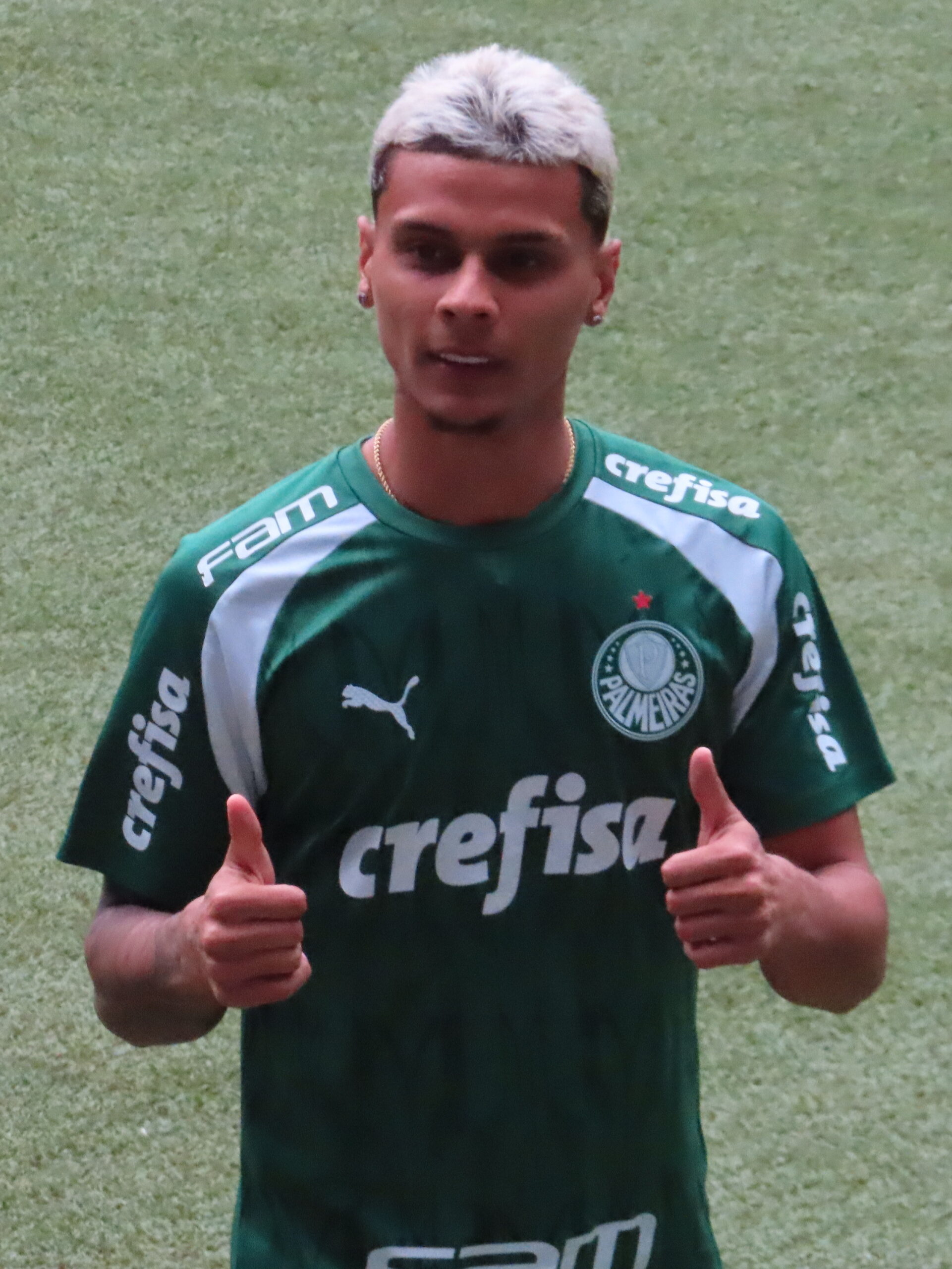
Revista Vea reports that Ríos has a tattoo marking his first Palmeiras title. That is the clearest documented link between the ink and a club milestone. It appears among religious, family and figurative designs.
The words “Río 2019” are also visible on the chest, but the available reporting doesn’t confirm their meaning. The photographs show how dates and lettering share space with the lion and smaller symbols. Ríos’s path from futsal into professional football provides career context for the Palmeiras reference, though the reporting doesn’t connect every visible date or phrase to a particular match or season.
Different views reveal different parts of the record. A shirt can cover the chest or arms, and shorts hide much of the thigh. Images from matches and training fill in some of those gaps, but no one photograph shows the full collection or establishes the story behind every piece.
The leg tattoo gives the collection a lower-body anchor
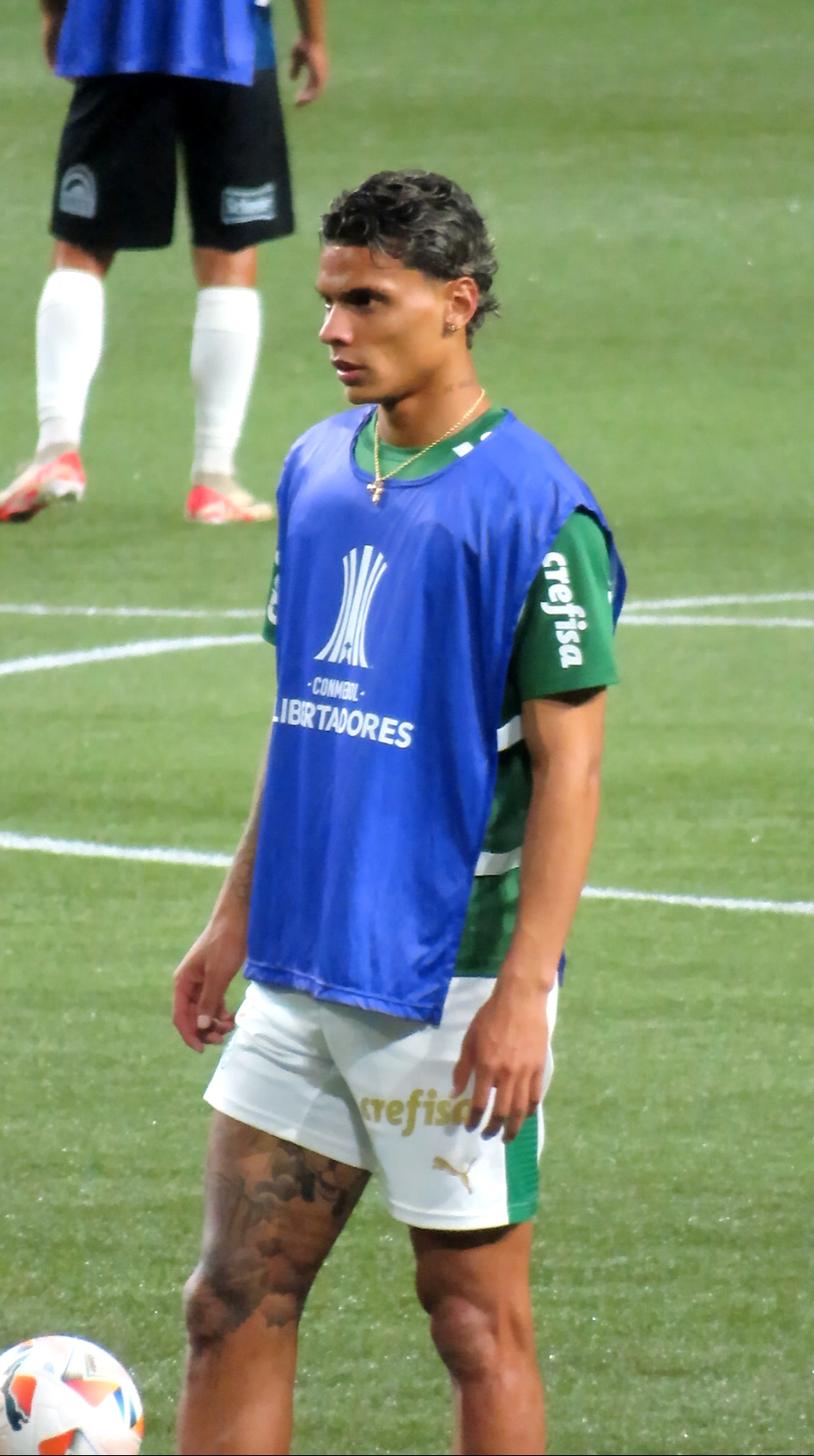
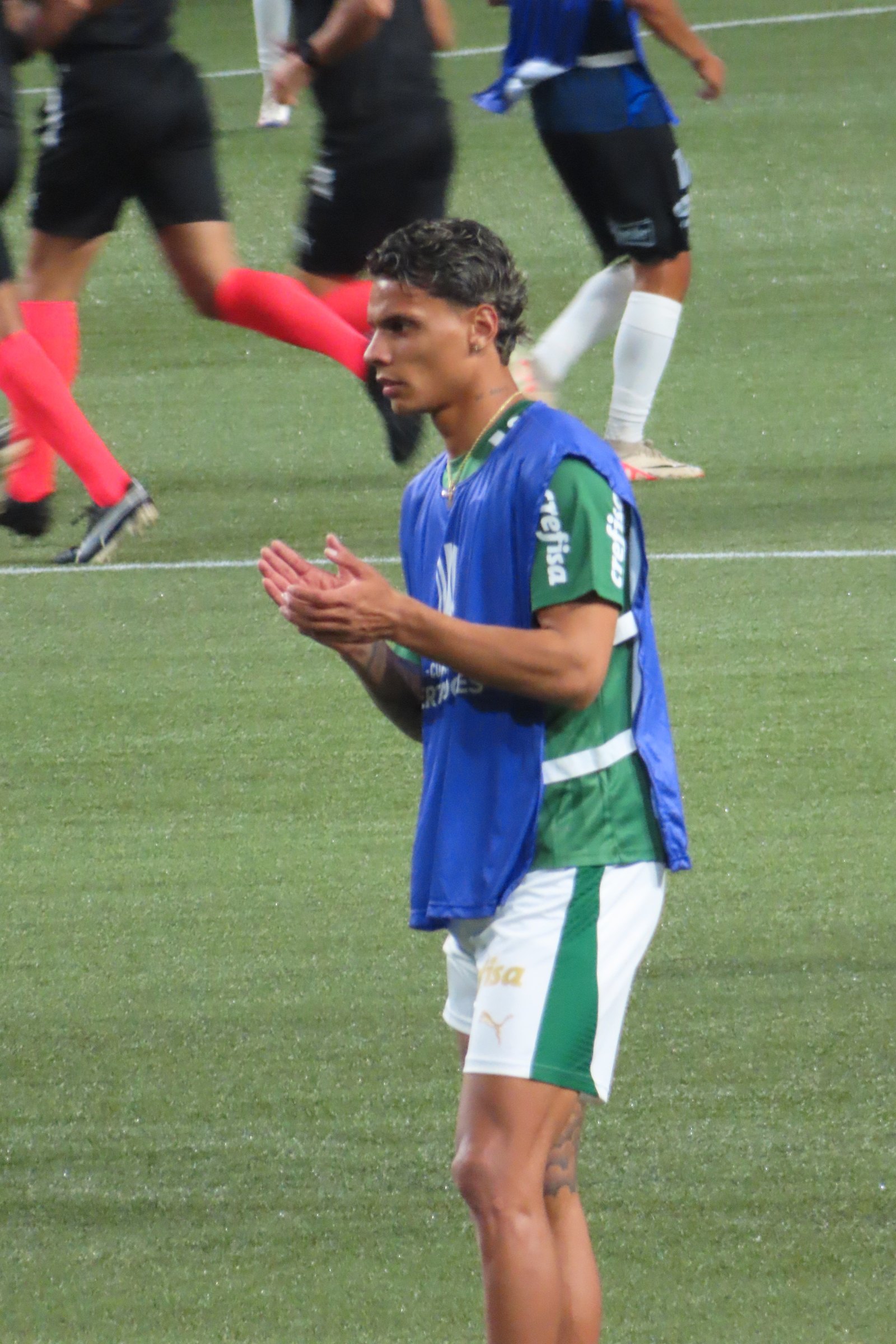
Match photographs show a large shaded tattoo on Ríos’s right thigh, with ink continuing down the lower leg. The image is dark and broad, but the forms are difficult to identify from a distance. The photos make the size and placement clear; they don’t give enough detail to name every figure in the design.
The thigh is usually covered by his shorts, so this work appears only in frames where enough of the leg is exposed. It adds a large lower-body piece to the chest and arm coverage. Depending on the photo, the tattoos can look like close-set script on an arm or a broader field of shading across the leg.
A visual record built from changing match-day views
The reports each identify different details. Infobae Colombia and Televicentro identify the prayer and nearby name; Revista Vea covers faith, family and the Palmeiras title reference; Superlike discusses the back piece. Getty, EFE and Wikimedia Commons photos show separate angles of the chest, arms, back and leg.
Ríos has answered criticism about showing his tattoos online by saying he is a footballer rather than an influencer and that his values come from home. The statement is one of the few direct comments in the coverage about why he shares the tattoos.