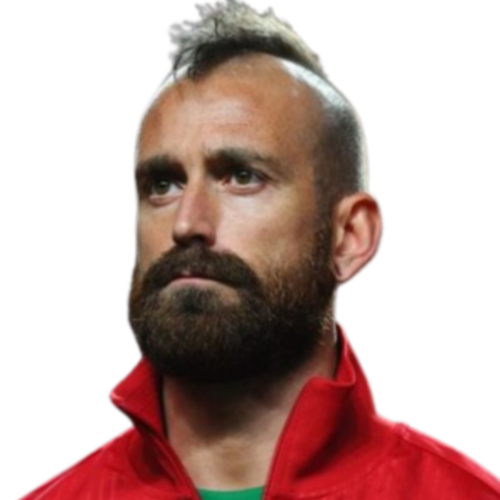
Raúl Meireles’s tattoos cover his legs, arms, chest and back, but no single photograph shows the whole collection. One training image is a composite of his leg and face; a Portugal portrait opens the forearm sleeve; a Record photograph documents a new chest design; and a charity feature shows the back from two angles. Read together, the images trace a collection that grew through his football career and personal life.
Globo Esporte reported a new tattoo before the 2014 World Cup, while TN called Meireles one of the tournament’s most tattooed players. Record published photographs of his chest and back, and Rediff described landmarks represented in the leg design. The photos show shape, placement and colour; the reporting supplies the specific personal references.
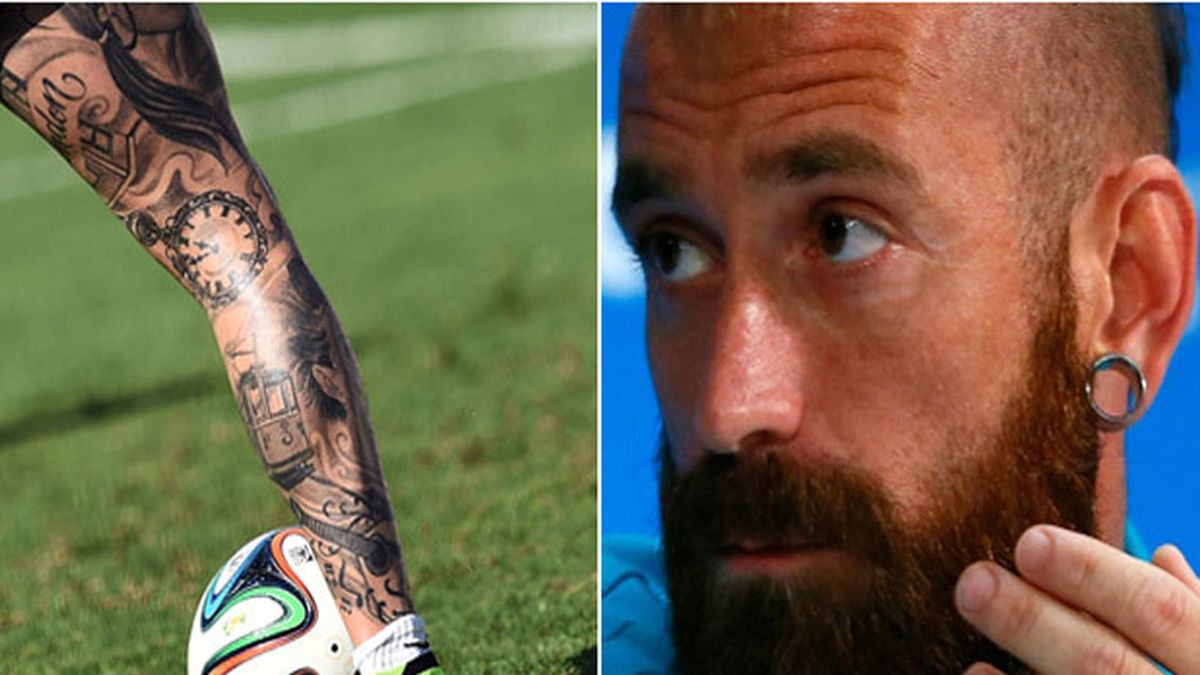
Raúl Meireles’s leg tattoo collage in training
The first image combines two views: a close look at Meireles’s lower leg as he trains and a separate portrait that identifies him. His shin and calf carry a dense collage rather than one isolated symbol. Architectural outlines, a portrait-like face, looping dark forms and smaller geometric details sit close together around the leg. The football and boot place the photograph at training, though the ink is the focus.
Rediff’s contemporary account connected elements of the leg design with people and places important to him, including a portrait of his wife, Istanbul’s Blue Mosque and a Lisbon cable car. Those identifications come from the reporting, not from guessing at the silhouettes. The image shows a crowded personal composition; the article supplies the names that can be supported.
The composite also preserves more detail than a distant full-body match photograph. Small shapes can disappear when the leg is reduced to a thumbnail, while this view keeps the architectural and portrait-like elements easier to compare. It still doesn’t make every curve identifiable, so the design is best described through the confirmed landmarks and its overall layout.
The forearm sleeve and Portuguese training portrait
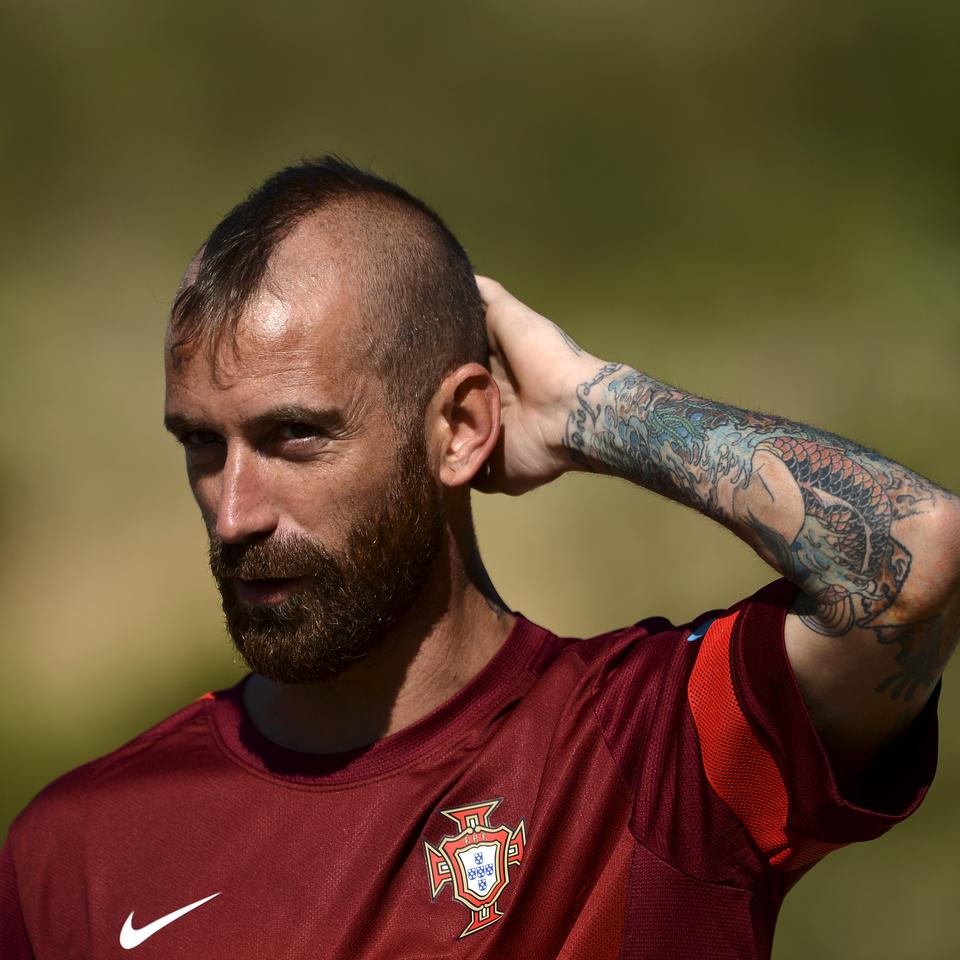
A ZEITmagazin photograph shifts attention to Meireles’s right forearm. He raises one hand behind his head, bending the arm and exposing a colourful sleeve from wrist toward elbow. Scales, looping lines and shaded forms overlap along the skin. His red Portugal training shirt and the blurred outdoor setting establish the football context; the open elbow lets the sleeve’s shape read more clearly than it does in most match photos.
The bend matters because the ink wraps around the arm rather than sitting flat. Colour and linework change as the forearm turns toward the elbow, and some shapes disappear at the outer edge. Two photographs can therefore look different without showing that the tattoos changed. They may simply catch a different side of the same work.
The National also described Meireles as heavily tattooed and recorded his affection for body art, including a shared tattoo culture he associated with teammates. That comment gives context to the scale of the sleeve, but it doesn’t name every motif. The training portrait shows what the sleeve looks like; the interview gives the personal context he shared.
The chest tattoo with paired skulls
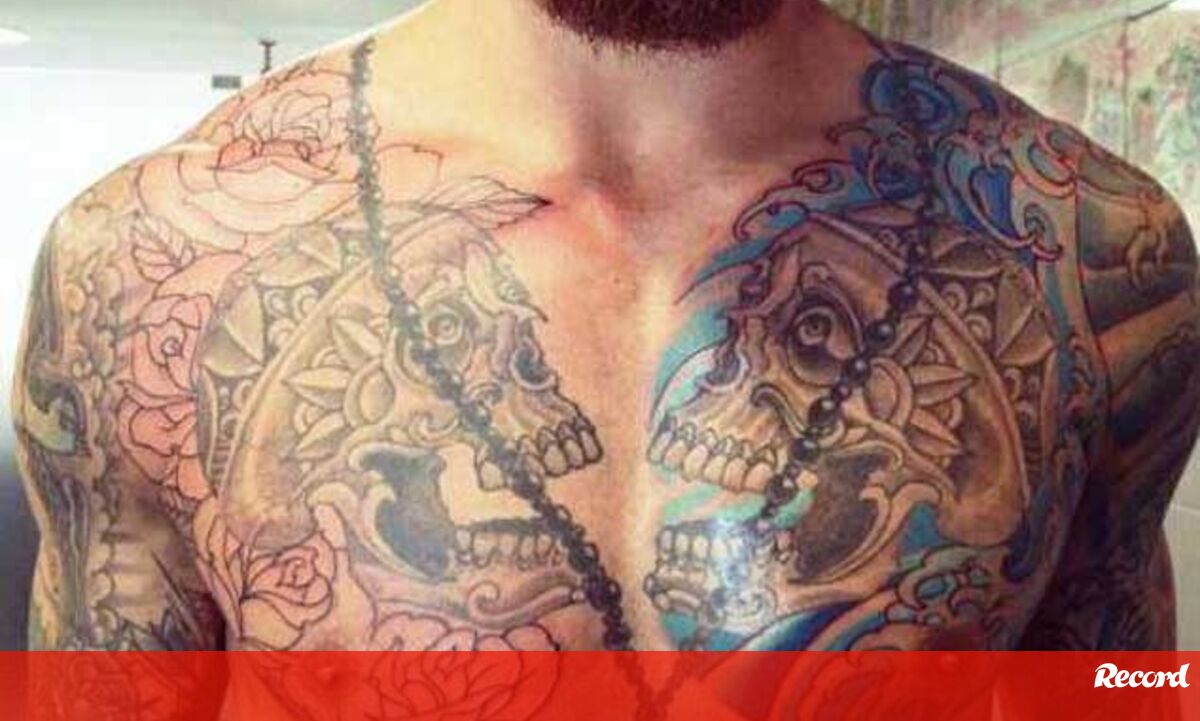
Record’s June 2014 photograph shows two skulls facing inward across Meireles’s upper chest, with a rosary-like strand falling between them. Floral lines and blue ornamental shapes extend toward the shoulders. The composition has a clear centre and a more symmetrical feel than the sleeve, whose forms curve around the arm.
The image accompanied reporting about a new chest tattoo. It documents the paired skulls and the central strand, but it doesn’t establish when every surrounding mark was added or whether all the chest work was done in one sitting. The blue details and floral edges soften the skull outlines; the photograph gives a direct view of this specific addition without turning it into a full-body inventory.
That change in scale is part of the collection’s character. The forearm reads as a band that moves with the arm; the chest reads as a front-facing panel. Meireles’s tattoos don’t form one continuous image across the body. They use different compositions on each area.
A shirtless match image and full-arm coverage
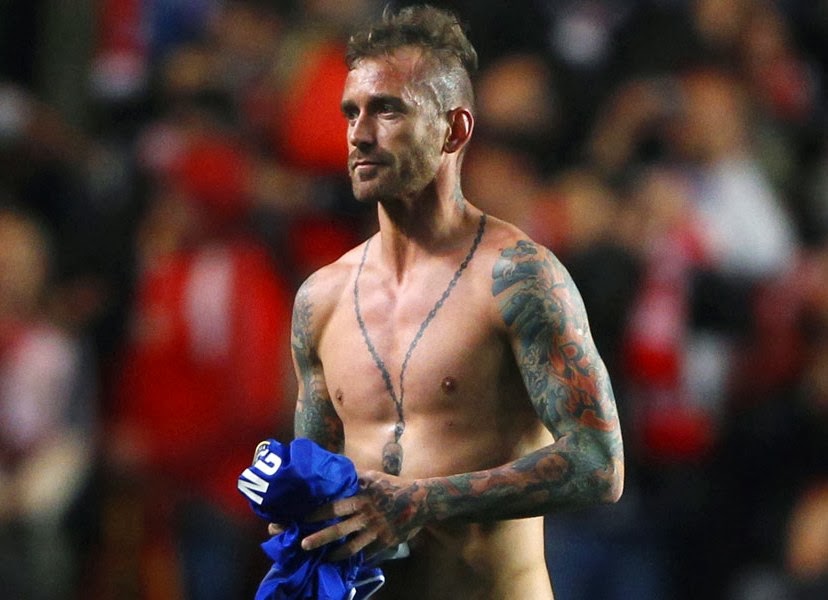
In a separate stadium photograph, Meireles walks across the pitch shirtless, holding a blue shirt in one hand. Both arms are tattooed, and a chain-like chest design runs down his torso. His beard and mohawk make him easy to identify. This wider view shows how the shoulder and forearm pieces sit beside the chest work while his body is moving between plays.
The image can’t name every shape: stadium light and movement soften the smaller marks, and the shirt in his hand partly interrupts the view. It does add something the close leg, sleeve and chest photographs can’t: a broader sense of coverage across the upper body. It’s a separate original, with a different pose and setting from the Record close-up.
Back tattoo study from a charity showcase
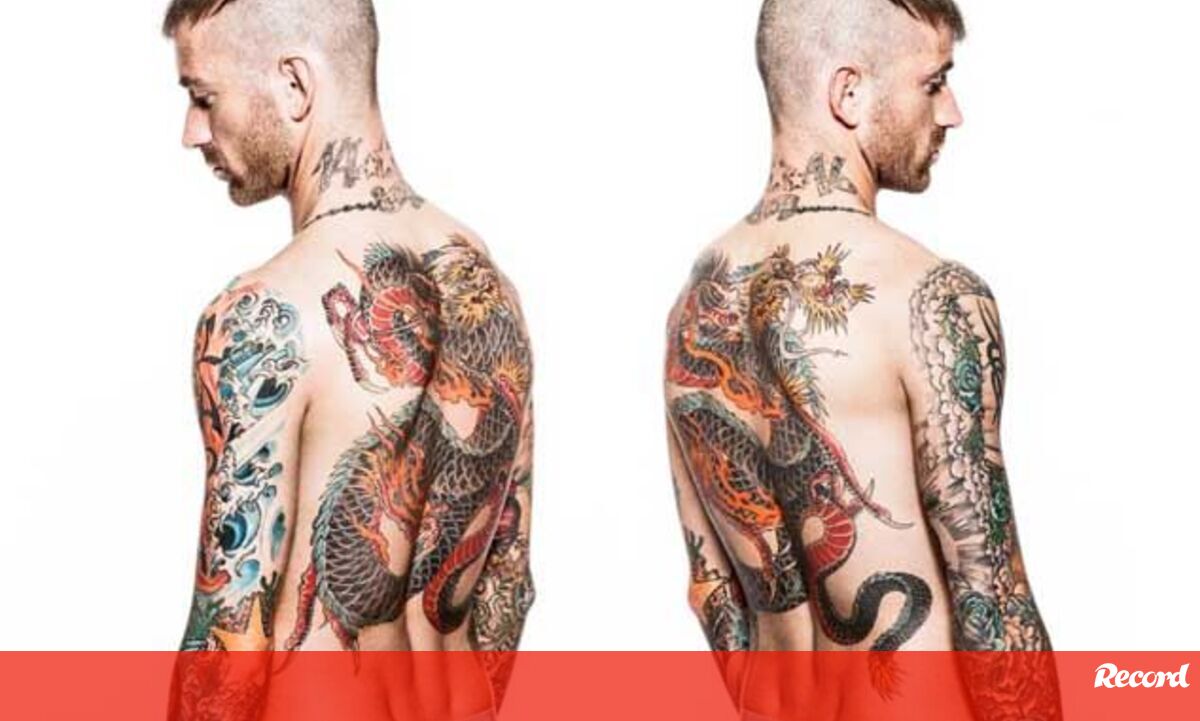
A Record charity feature shows Meireles’s back from two angles against a plain background. One view follows the shoulder and side of his torso; the other opens to a large dragon-like design across his back. Colour and linework continue onto the arms, and tattoos at the neck meet the upper edge of the composition. This is a different arrangement from the paired skulls on his chest.
The two angles help show how a design wraps. From the side, some of the shoulder work can look like a separate panel; from the back, its connection to the larger image becomes clearer. The feature’s charity setting explains why Meireles posed for the camera, while the photos themselves establish the visible shapes and their placement.
The back view fills out the body map. The available images don’t show one uninterrupted mural from every side, but the front, side and back frames together reveal large pieces meeting around the shoulders, arms and neck.
What the reporting documents about meaning
Meireles’s tattoos are often described through the people and places attached to his life. Rediff’s World Cup feature connected the leg collage with his wife and locations linked to Portugal, Turkey and England. Globo Esporte reported his announcement of another tattoo before the tournament. These reports give the photographs context, while the designs’ visible forms remain the basis for describing their appearance.
The sources don’t offer a complete catalogue for every tattoo on the legs, chest, arms, neck and back. A sports desk may publish a match image, a newspaper may report a new tattoo, and a charity feature may show a posed back view. Each purpose produces a different crop and level of detail. That’s why a phrase or meaning should stay attached to the source that reported it rather than be inferred from a dark shape.
Terms such as “paired skulls,” “dragon-like back design” and “architectural leg collage” describe what the photographs make visible. The personal references supplied by Rediff and Globo Esporte add specific context. Everything else remains open unless another source identifies it.
Why the photographs show different versions of the collection
Clothing, time and camera angle account for much of the variation. In a Portugal training shirt, Meireles can bend an elbow and expose the sleeve. A match image may hide the same arm beneath a jersey. Shirtless photos reveal his chest and shoulders, while a back portrait turns the front out of view. The ink is unchanged, but the camera sees a different surface.
Meireles also continued adding tattoos, and 2014 reports describe new work. An earlier club photo can’t prove that a later chest piece was already there. Where the date is known, it helps to include it; where it isn’t, the article sticks to placement and appearance instead of inventing a full timeline.
Each photograph still has a distinct use. The leg composite shows the autobiographical collage; ZEITmagazin gives a closer look at the sleeve; Record documents the chest; the stadium image shows broad upper-body coverage; and the charity feature opens the back. Together they give several views without repeating one crop.
How to read Raúl Meireles’s tattoos without flattening the design
Start with the leg to see its architectural and portrait-like motifs, then follow the right forearm sleeve for colour and linework around the elbow. The chest image gives a front-facing composition, while the shirtless match frame places the chest and arms together. The two back angles complete the turn and show how the shoulder work meets the larger design.
These five photos don’t represent five separate tattoos. Some show different parts of the same broader coverage; others document distinct body areas. Their value lies in the comparison between close detail, front composition, match context and back placement. Keeping the original images distinct makes that difference easier to see.
For tattoo inspiration, the photographs offer ideas about composition: architecture beside portraiture, mirrored chest imagery, and a large design that curves over the back and shoulders. They aren’t templates for copying. A reader can use them to discuss scale and placement with an artist and develop a design that fits their own reasons and body.
A source-led archive of the collection
Raúl Meireles’s tattoos include a leg collage connected by reporting to personal landmarks, a colourful forearm sleeve, paired skulls on the chest, broad arm coverage during football and a large dragon-like back design. The sources support those details, but they don’t explain every mark or supply a private key for the entire collection.
The five original tattoo photos remain separate within the article, while the face-visible featured portrait serves as identification. That keeps a portrait from being presented as tattoo evidence and lets each image carry the view it actually shows. The result is a more complete account of his placement and style than one dramatic close-up could provide.
Across these views, the collection reads as a layered record of football, family, travel and visual taste. The photographs establish its shape and coverage; the reporting supplies the personal connections it has documented. Together they make a useful reference without reducing Meireles’s tattoos to guesses.
In the video below, Meireles speaks after joining Chelsea.