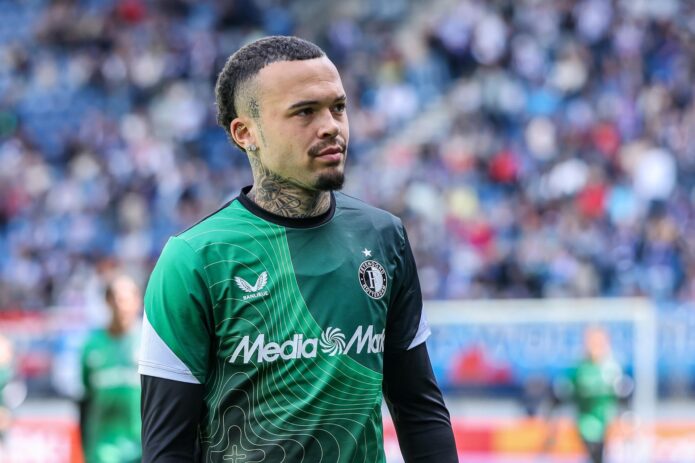
Quilindschy Hartman has said he uses tattoos to remember childhood, people close to him and big moments in football. In a 2026 AS interview, he estimated he had about 50 and said he still had room on his legs. He told AS he asked for a tattoo when he was ten, but his mother made him wait. In a Helden interview, he said his first was a small piece behind his ear at 16. The photos here show the championship tattoo, neck lettering and the darker work across his arms and hands.
The childhood collection is built from memories rather than one style
Hartman’s tattoos don’t follow one matching style. The photos show script, shaded figures and small details across his neck, forearms and hands. Most look black and gray, with darker patches next to thinner lines. The pictures show only parts of the collection, so they can’t give a full count or every design.
Hartman has named the things that inspired many of the pieces: Super Mario, Harry Potter, Rick and Morty, Family Guy, Spider-Man, Fortnite and Ratatouille. He said he wanted reminders of the good moments from childhood. That makes the collection feel more like a set of personal keepsakes than a planned sleeve with one look.
His recent comments also correct an older claim that he planned to stop getting tattooed. Asked if there was room for more, Hartman said he might add something to his legs. He has lost count, but put the total at roughly 50.
The championship tattoo turns a team season into a permanent marker
Feyenoord’s 2023 story about the title tattoo places the championship-scale design on Hartman’s lower leg. He said the scale had to have a place on his body because the 2022–23 title was the first tangible achievement of his professional career. He also tied it to the difficult period around his knee injury and the people who helped him through rehab.
The close photo shows lettering, a round emblem and the date 14-05-2023. Hartman said May 14 was a day he would never forget. That date and the scale give the design its link to Feyenoord’s title; the rest of the image shows the tattoo in the context of the club celebration.
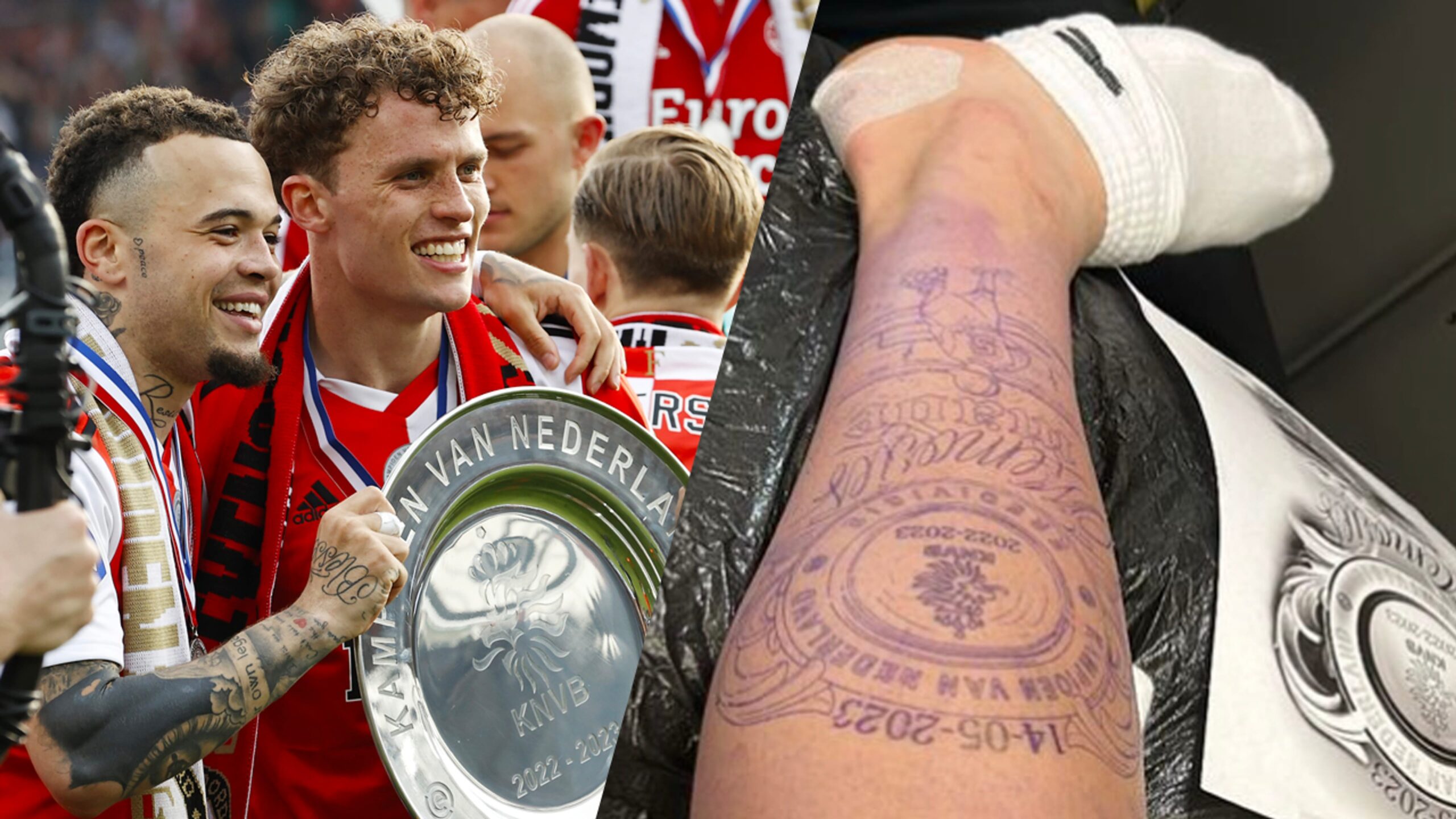
The close-up is the best place to see the design. The other championship photo shows Hartman celebrating, so it tells more about the day than the tattoo’s small details. Feyenoord’s account gives the personal story in his own words.
The neck and forearm tattoos stay visible in everyday football images
A Voetbal International match-day photo shows Hartman applauding in Feyenoord’s away kit. Script runs across the front of his neck, and dense dark ink covers much of the forearm. It’s a view from a match setting, not a posed close-up.
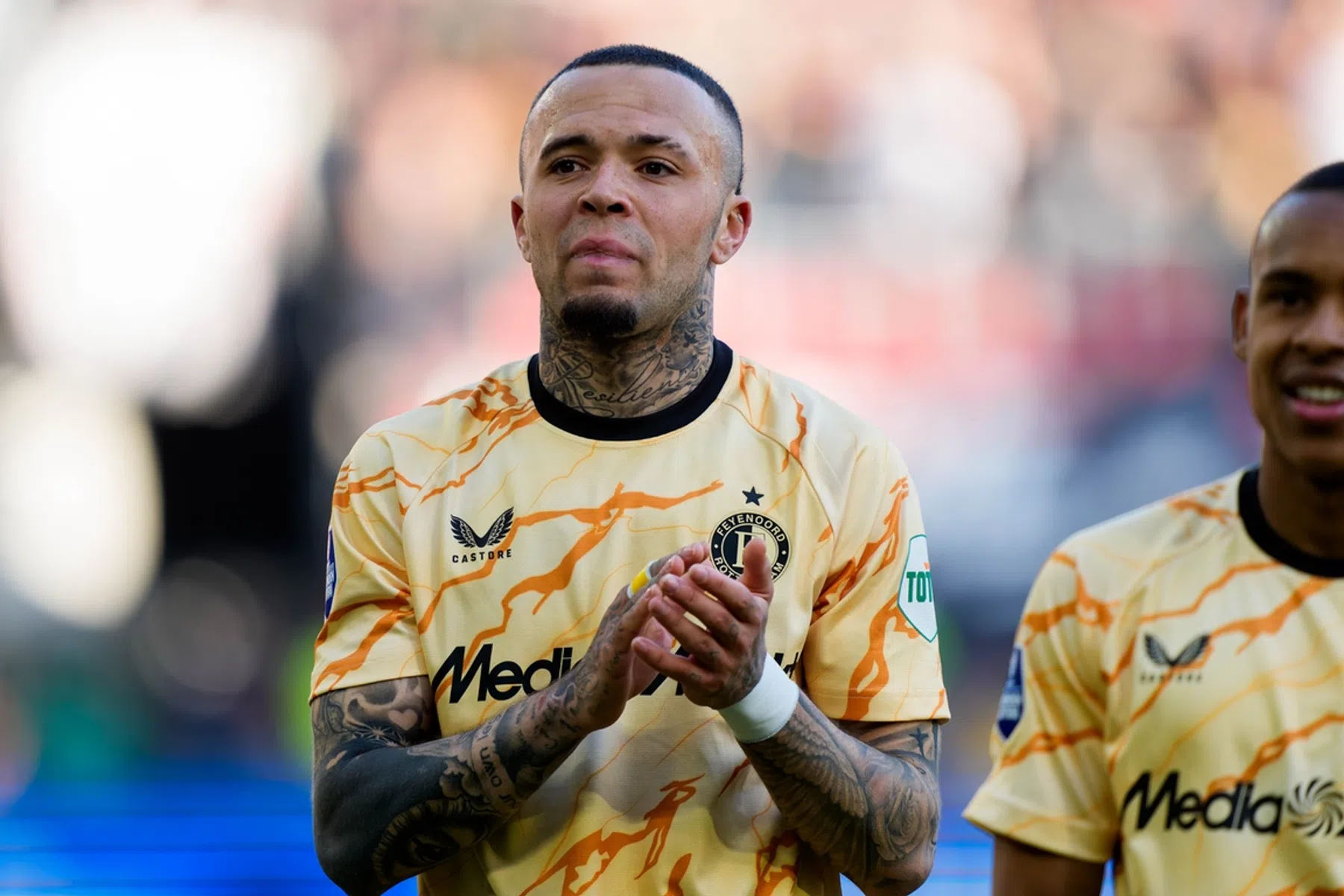
The lettering is easier to read than the smaller arm pieces. Several designs sit close together on the forearm, though this distance makes their details hard to separate. The picture shows how much of the arm is covered; it doesn’t explain what each tattoo means.
The training return shows how much of the arm is covered
A VoetbalPrimeur photo from Hartman’s return to Feyenoord training shows both arms and his neck. His red-and-white shirt leaves the ink exposed, and the wider frame gives a fuller look at how the tattoos spread across the arms.
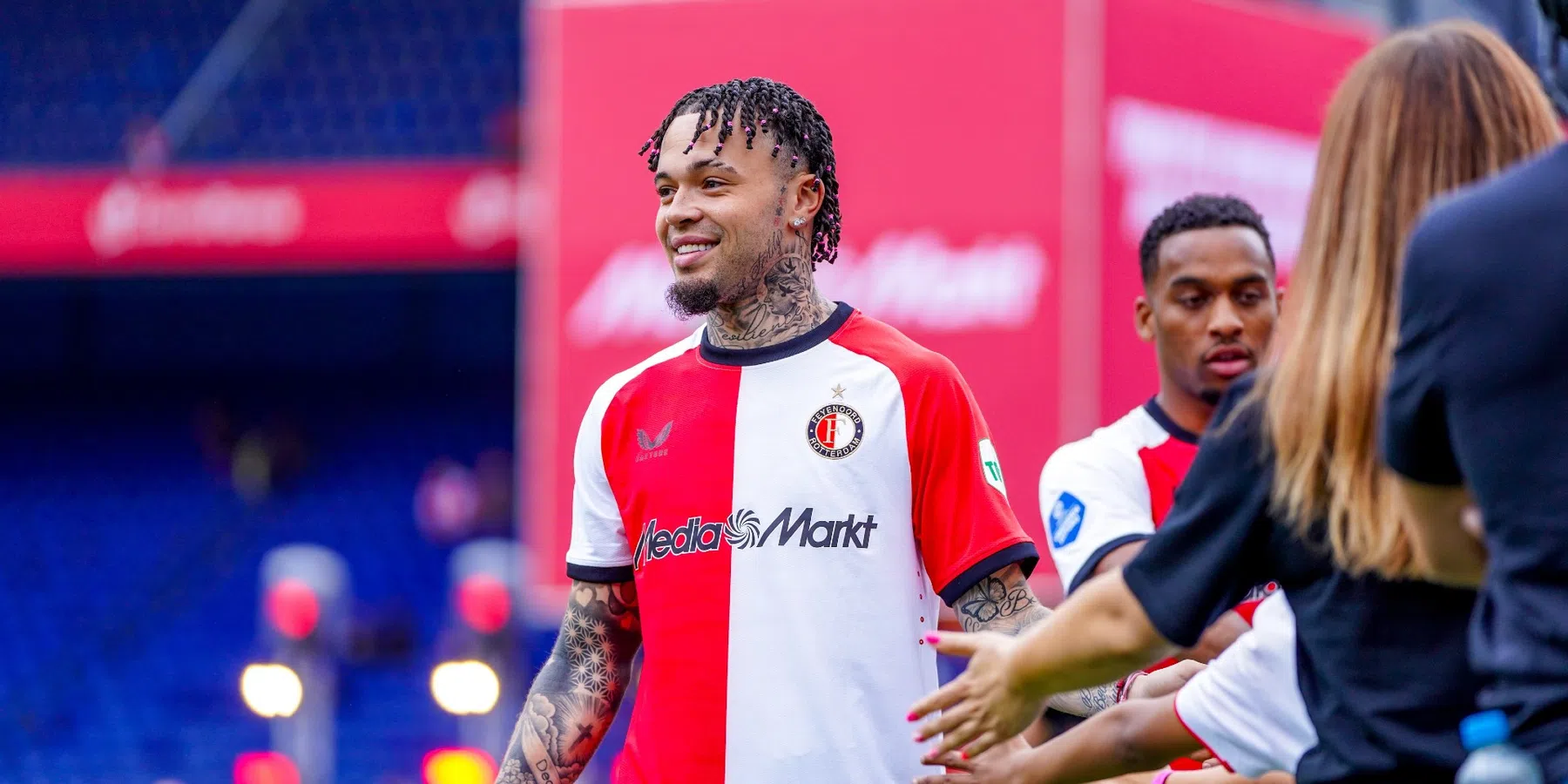
The darker areas stand out beside finer lines and script, though the smaller marks blend together at this distance. This is a photo from his return after a knee injury; it doesn’t date the tattoos or show when any one piece was added.
The championship celebration shows the tattoos in motion
In a Sportnieuws photo from Feyenoord’s title celebration, Hartman raises his arms near the supporters behind the goal. Fans, banners and netting fill the frame. Lettering on his hand and ink on his forearms remain visible as he moves toward the crowd.
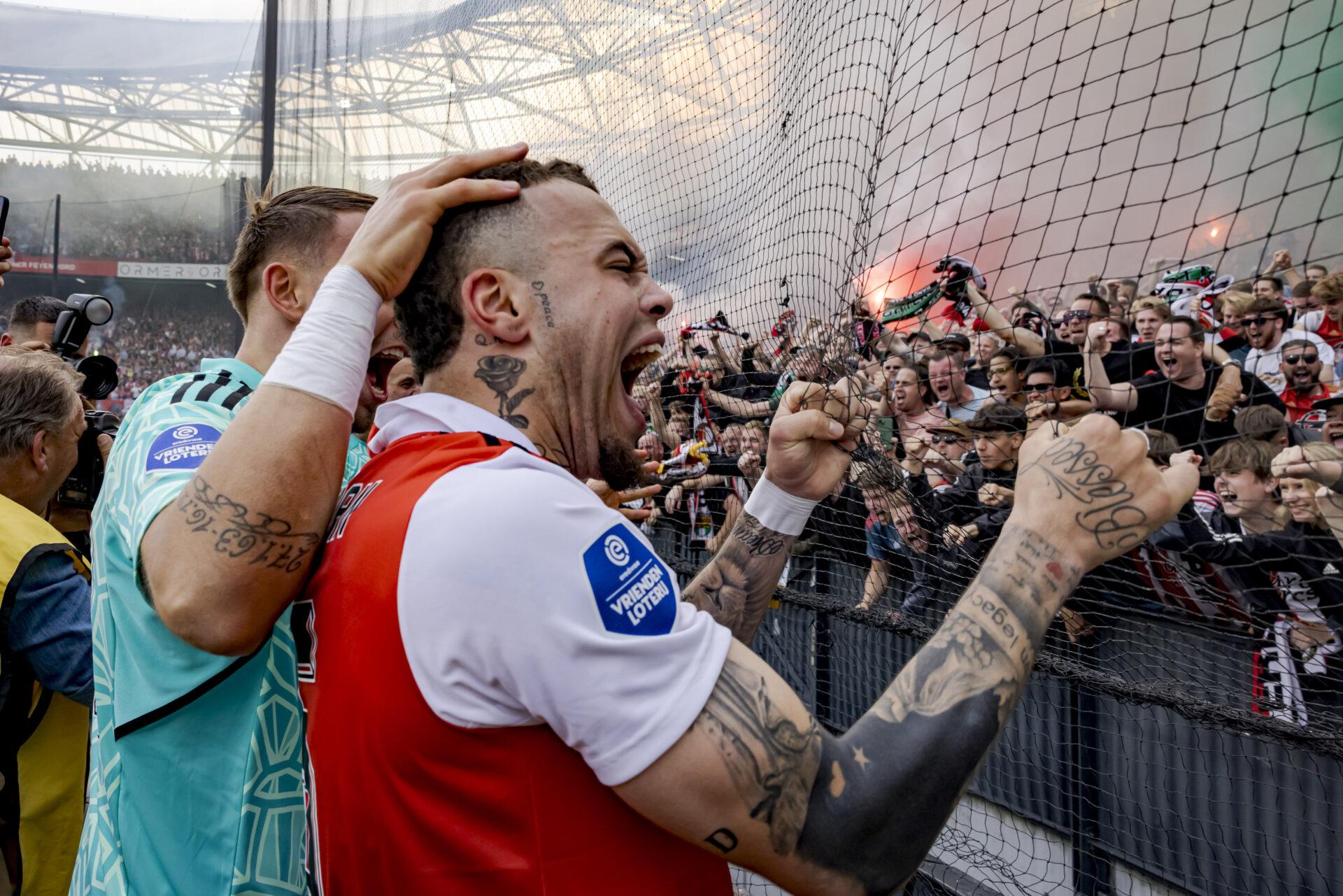
The pose shows the hand and forearm tattoos from a different angle than the match-day shot. It also puts them in the middle of the celebration, rather than on a blank background. The image doesn’t identify each mark as part of the title tattoo; the close-up in the previous section is the one that shows the championship design.
The documentary still brings the collection back to the face and neck
A still from Feyenoord’s documentary shows Hartman smiling on a sofa with his arms folded under his chin. “Blessed” is readable on his arm, with more lettering and shaded ink around it. Tattoos on his neck sit close to his face in this crop.
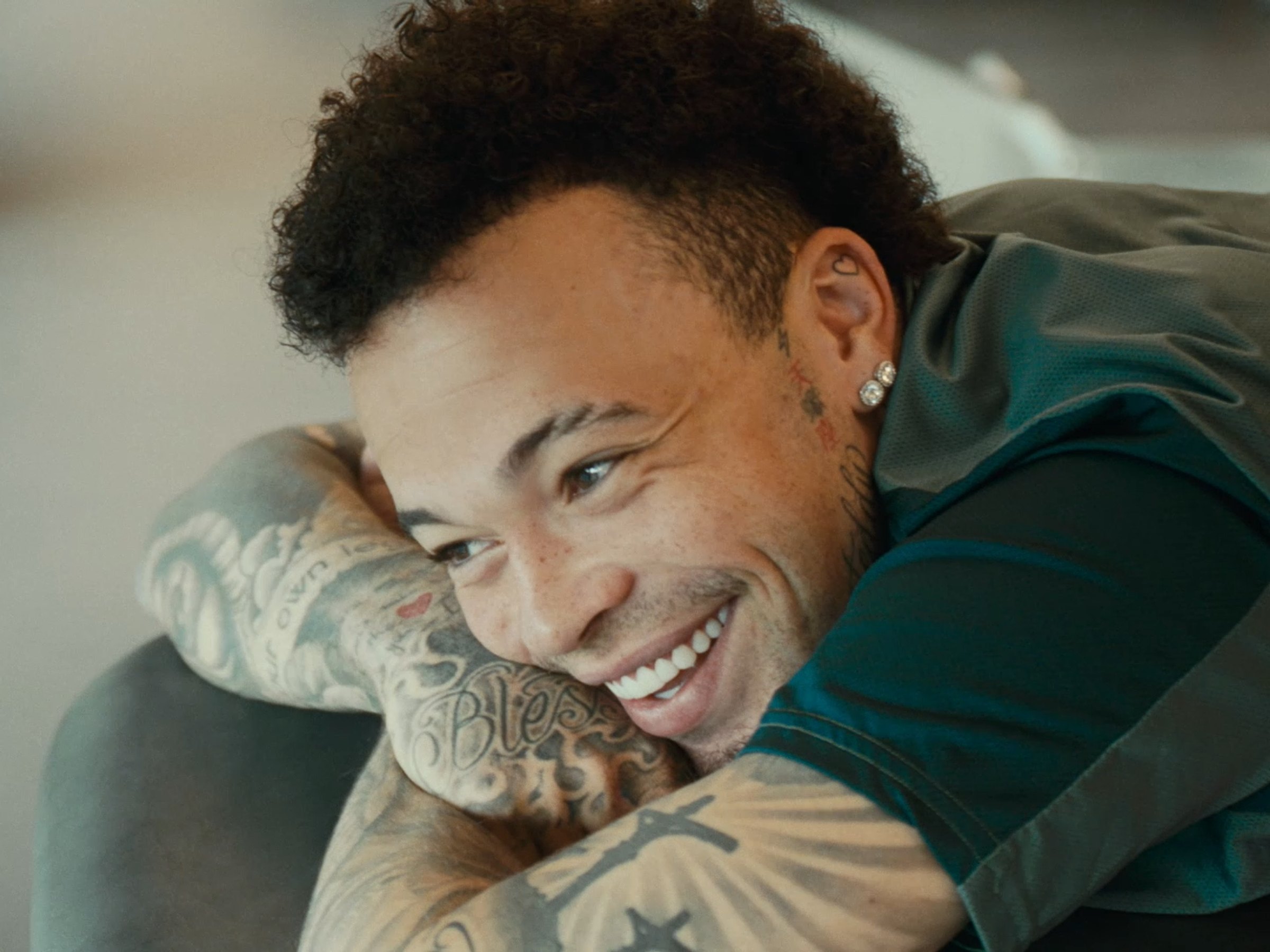
The documentary follows his rehabilitation and return to football. Hartman hasn’t explained the word “Blessed” in the material cited here, so it’s best to leave the meaning open. The relaxed pose also makes the lettering easier to notice than in the match and celebration photos.
Identity context for the article
The featured portrait shows Hartman in a Feyenoord shirt, with his face and some neck ink visible. It’s there to identify him; the five inline images show the championship tattoo and the visible work on his neck, arms and hands.
These photos belong to his time at Feyenoord. He has since moved from Burnley to Espanyol on loan, as AS reported. That update gives the club photos a time and place; it doesn’t change what they show about the tattoos.
Closing context for the published images
These photos come from different parts of Hartman’s time at Feyenoord: the 2022–23 title, match day, a training return and the rehabilitation documentary. The title tattoo has a story from Hartman; the other frames show his neck, arms and hands in those settings.
“Blessed” is readable in the documentary still, but no source here explains the word. The photo set doesn’t cover every tattoo; clothing, distance and camera angle hide parts of his body.
The official Feyenoord video below shows the title tattoo session and Hartman talking about the championship.
More athlete tattoo guides
For other football tattoo profiles, see Nico O’Reilly, Lucas Torreira, Matteo Politano and Álvaro Morata. The site also has a separate tattoo profile for musician Cody Frost.