
Omah Lay’s tattoos are documented through portraits, interviews and live appearances rather than one complete catalogue. The clearest marks are the words GOD IS REAL on his neck and BOY ALONE on his forearm, alongside a small sun and darker work across his upper body.
The photos show separate designs across his neck, chest, shoulders, arms and head. Some are easy to identify; others are only partly visible. Where a source doesn’t name a design or explain its meaning, it’s better to describe what can be seen than guess.
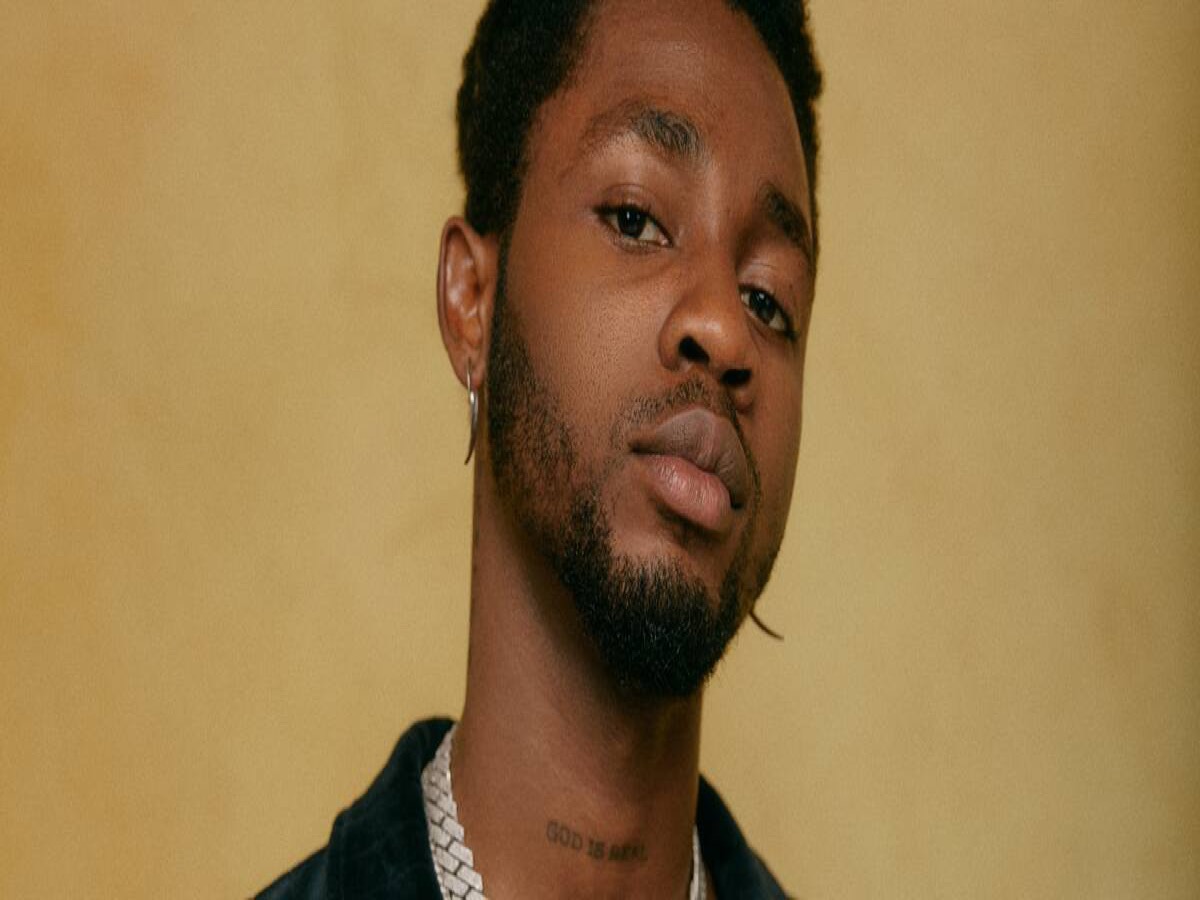
Omah Lay’s “GOD IS REAL” neck tattoo
The short phrase GOD IS REAL runs across the front of Omah Lay’s neck, just above the collar line. Portraits from The Glass Magazine, Los40 and concert-promotion coverage show the compact, dark lettering. A chain or open shirt can frame it, while shadow under the jaw sometimes makes it harder to read.
The placement makes the words visible in many portraits, but the available coverage identifies the tattoo without giving a longer explanation from Omah Lay. What stands out is the plain statement and its contrast with the jewellery and clothing around it.
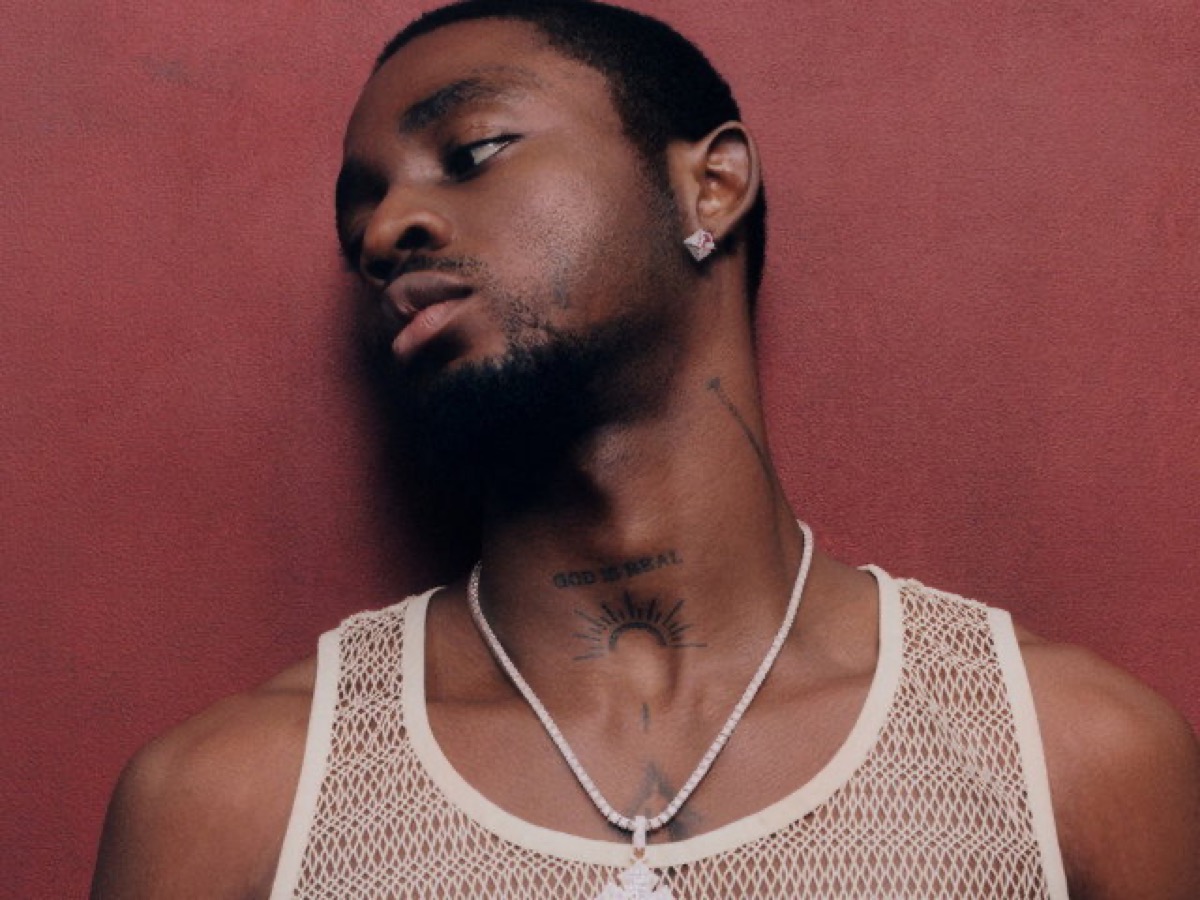
The small sun below the lettering
A small, radiating sun sits below the neck lettering, centred above the necklace line. Its circular centre and short rays make it a compact graphic mark rather than a larger scene. The words sit horizontally above it, so the two designs form a vertical arrangement while remaining distinct.
Lighting changes how clearly both pieces show. The sun is easiest to see against bare skin, while the words can fall into shadow beneath the jaw. In the red-background portrait, the open collar and chain leave the tattoos unobstructed.
The “BOY ALONE” lettering on Omah Lay’s forearm
BOY ALONE is written along Omah Lay’s forearm in a photograph accompanying a profile of his rise and personal story. The phrase refers to the title of his debut album, a connection reflected in the source coverage and his public biography.
The same image shows darker shading and other forms around the words, so the lettering sits within broader arm work. Omah Lay is seated in a white vest, his forearm crossing the frame and paintings behind him; it’s a candid view rather than a formal tattoo portrait.

The chest and shoulder work around the neck pieces
Portraits show darker tattoo work extending from Omah Lay’s neck toward his upper chest and shoulders. A close image from The Glass Magazine puts GOD IS REAL in sharp focus, framed by clothing and a zipper. Colour portraits show the same area with a chain and skin tones that make the lettering look less stark.
The photographs confirm there’s more ink than the neck phrase and forearm text, but they don’t identify each shape. The visible work varies in scale, from small lettering and symbols to denser areas on the arms and upper body.

Hand, arm and shoulder ink in monochrome portraits
In one monochrome portrait, Omah Lay raises a hand near his face, leaving parts of his arm and shoulder in view. A darker shape is visible at the shoulder, while rings, a watch and the angle of his pose obscure details around the hand and lower arm.
The image shows layered body art, but it isn’t clear enough to identify every mark. The neck phrases and sun can be read in other photographs; here, placement and density are the details the image supports.

The Capital Xtra interview and Omah Lay’s shaved-head era
In a Capital XTRA interview about his Grammy experience and Clarity of Mind era, Omah Lay discusses a head tattoo after shaving his head. The video description flags that part of the conversation, placing the mark in a more recent chapter of his public image.
Unlike the neck lettering, the head tattoo’s visibility depends on his hairstyle. A shaved or close cut reveals more of it, while longer hair can cover it. The interview is the source for his discussion; the available transcript and imagery don’t support adding symbolism beyond what he says there.
Faith, solitude and the language of Boy Alone
The words GOD IS REAL state a belief in direct terms, while BOY ALONE echoes the title of Omah Lay’s debut album. Those are clear links between the tattoos and themes in his public work. The sun below the neck lettering is visible, but the cited coverage doesn’t assign it a specific meaning.
That distinction matters: the phrases can be read in photographs, and the album title can be checked against his music. It doesn’t follow that every tattoo has one fixed interpretation. The sources support a few connections, not a complete account of what each piece means to him.
A changing public visual record
The clearest documented designs are the neck lettering, the small sun and the BOY ALONE forearm tattoo. Interview coverage adds the head tattoo, and other portraits show arm and shoulder work whose individual designs aren’t identified.
Different photographs reveal different parts of the collection: a neckline makes the words legible, a seated pose brings the forearm forward, and a shaved head exposes newer ink. Together, the images and interviews show how Omah Lay’s tattoos appear across different stages of his public life, while leaving uncertain details open.
Sources: EE72; The NATIVE; ValidUpdates; The Glass Magazine; Los40; The Nigerian Voice; Capital XTRA; Warner Records. Descriptions remain limited to tattoos and placements directly shown or identified by those sources.