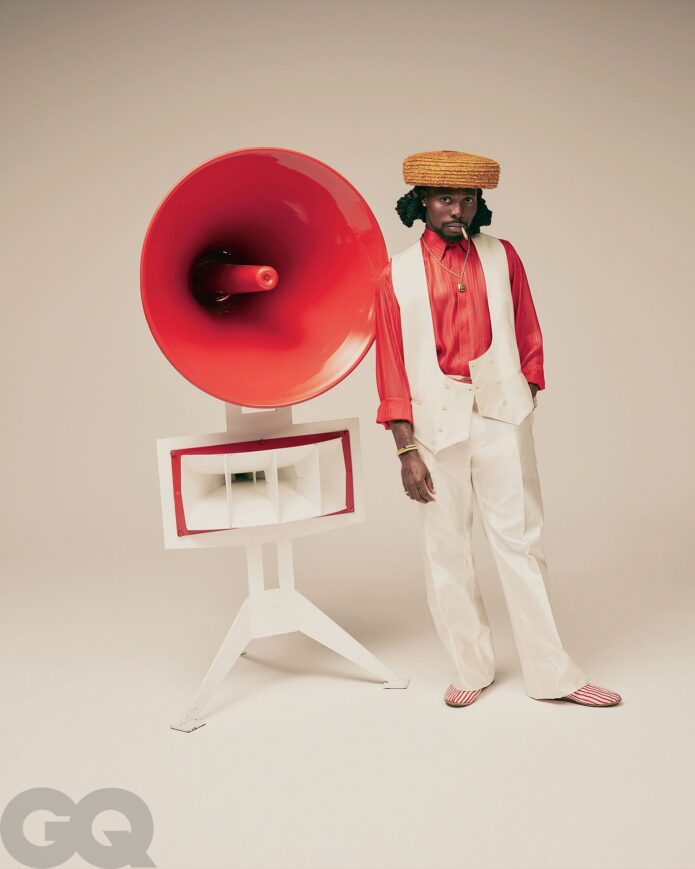
Asake’s tattoos are hard to miss because they sit right where most people look first. The Nigerian singer has his stage name written across his neck in large lettering, and the phrase “Stay real” runs across both hands. Those are the two designs that can be tied to his own comments and to the close-up photographs from his GQ profile. They aren’t random pieces added for decoration. Both are connected to the way he talks about identity, ambition and the pressure that comes with becoming famous.
The neck tattoo is the louder one. It spells out ASAKE in big ink, making the artist’s public name part of his appearance before he even says a word. His first tattoo came earlier and is more direct in its message: “Stay real” across both hands. In the GQ interview that documented both pieces, Asake linked the hand lettering to staying original and not forgetting himself, especially while working between Lagos and Los Angeles.
That gives Asake’s tattoo history a clear starting point, but the documented picture has grown. Later 2025 photos show additional face, neck, chest, arm and hand ink, including the Believe forehead lettering and a dollar-sign mark near the eye. The newer images make the collection look much bigger than the two pieces discussed in the GQ interview, while still leaving some symbols unidentified. The useful rule is simple: describe what the photographs actually show and don’t invent meanings for marks Asake hasn’t explained.
A close look at Asake’s tattoos
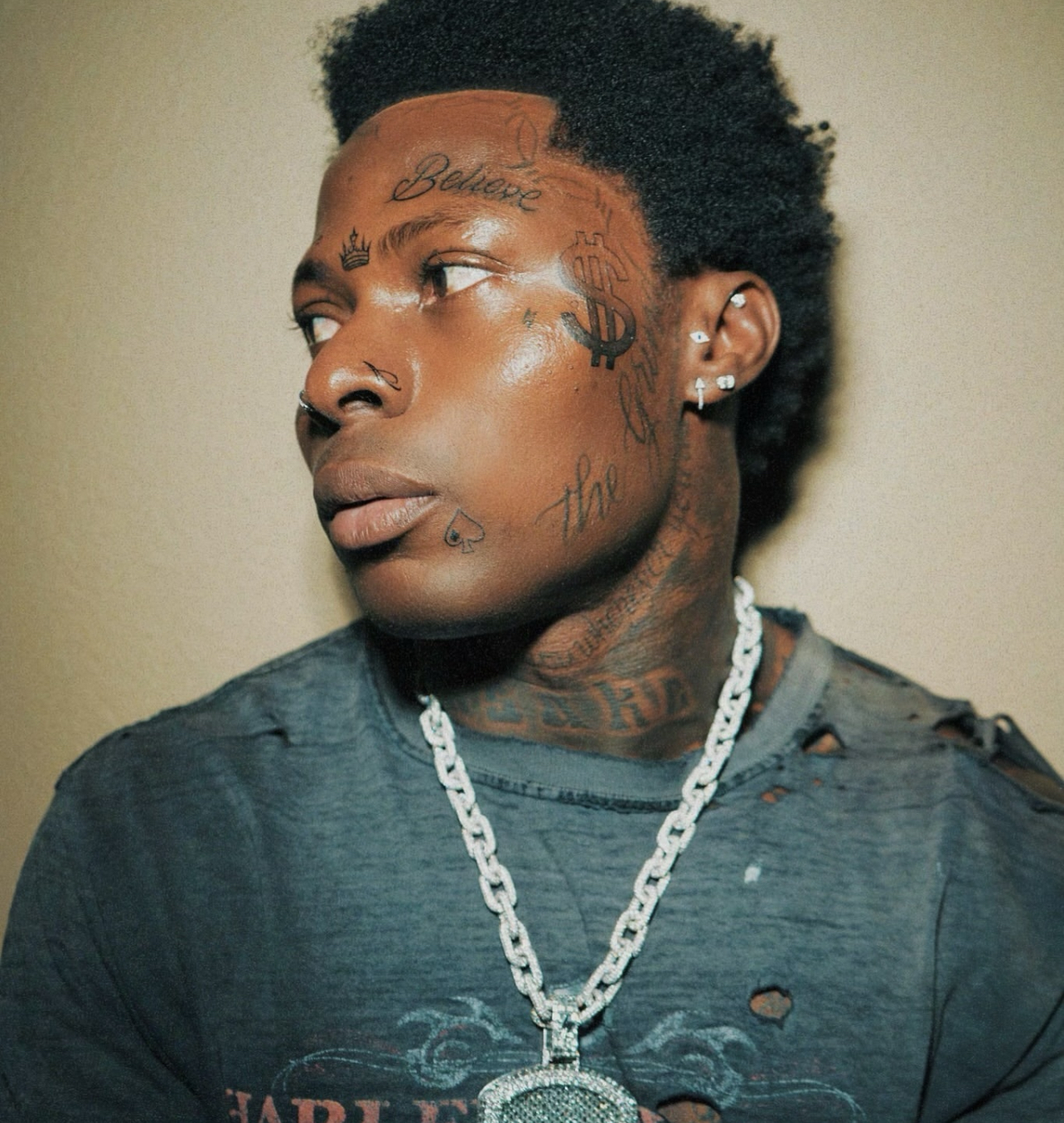
The short version has two layers. Asake has ASAKE tattooed across his neck and “Stay real” written across both hands, the pieces he explained to GQ. Later close portraits show a much more extensive set of face and body tattoos, including forehead, cheek, chest, shoulder and arm work. The neck piece is still the easiest to recognise, but it’s no longer the whole visible record.
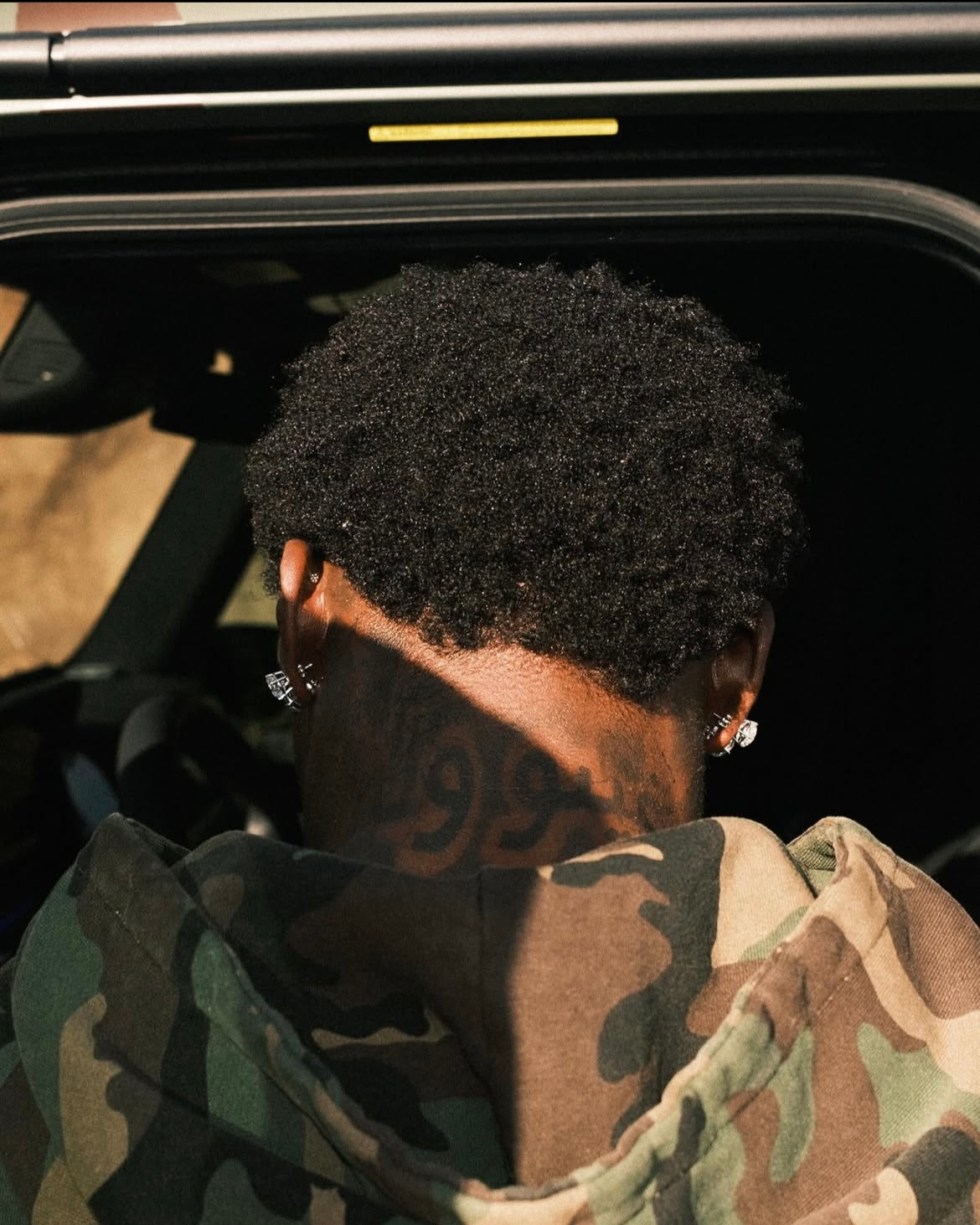
GQ described the neck tattoo as all five letters of his stage moniker in large, unmistakable ink. That detail matters because the tattoo is not just a small name mark tucked behind an ear or along a wrist. It is a broad front-of-neck design that becomes part of his silhouette. In the GQ photographs, the lettering reads as bold black text and sits high enough to remain visible above an open shirt collar.
The hand tattoo has a different feel. “Stay real” is still plainly written, but the placement makes it more intimate and more connected to movement. The words appear when Asake lifts a hand, points, holds a microphone or moves through a conversation. Together, the two designs create a simple visual contrast: his public name across the neck, and a private-sounding instruction carried on both hands.
The ASAKE neck tattoo
The most recognisable piece in Asake’s collection is the ASAKE neck tattoo. The letters stretch across the front of his neck in large capitals. In a close view, the design is unmistakably his stage name rather than a logo or an abstract pattern. The tattoo is placed where it cannot easily disappear, which is exactly what makes it such a strong part of his look.
Asake told GQ that he got the tattoo during a period when he felt discouraged, beaten down and uncertain about music. He also explained that, in Nigeria, having a tattoo on the neck can make ordinary employment difficult. His point was unusually blunt: putting his name there was a way of making a decision about the path he wanted to follow. The placement carried a practical consequence as well as a visual one.
That context gives the design more weight than the usual celebrity-name tattoo. It wasn’t described as a souvenir of success after the records had already taken off. Asake said it came while he was still unsure and tired of trying. The ink made the stage identity visible at a moment when the future was not secure, so the name across his neck reads as a commitment to the artist he was trying to become.
Why Asake’s neck tattoo uses his own name
Putting his own stage name on his neck could look like pure branding, but Asake’s explanation is more complicated. He connected the tattoo to determination and to the decision to keep pushing with music even when a normal route looked safer. The name is visible everywhere, yet the story behind it begins with uncertainty rather than confidence.
The wording also fits the way Asake talks about success. In the GQ interview, he returned to the idea that an artist should not forget who they are while trying to grow. He described wanting more money, power and recognition without losing the ability to be comfortable around ordinary people. The neck tattoo does not spell out that whole philosophy, but it puts his chosen identity at the center of his appearance.
There is a useful difference between a tattoo that records a person’s birth name and one that uses a stage name. ASAKE is the name attached to his music, his performances and the public character people recognise. By putting it on the neck, he made the working identity physically inseparable from the person seen onstage. The later face and torso pieces change the scale of the collection, but they don’t erase the original reason he gave for the name tattoo.
The first “Stay real” hand tattoos
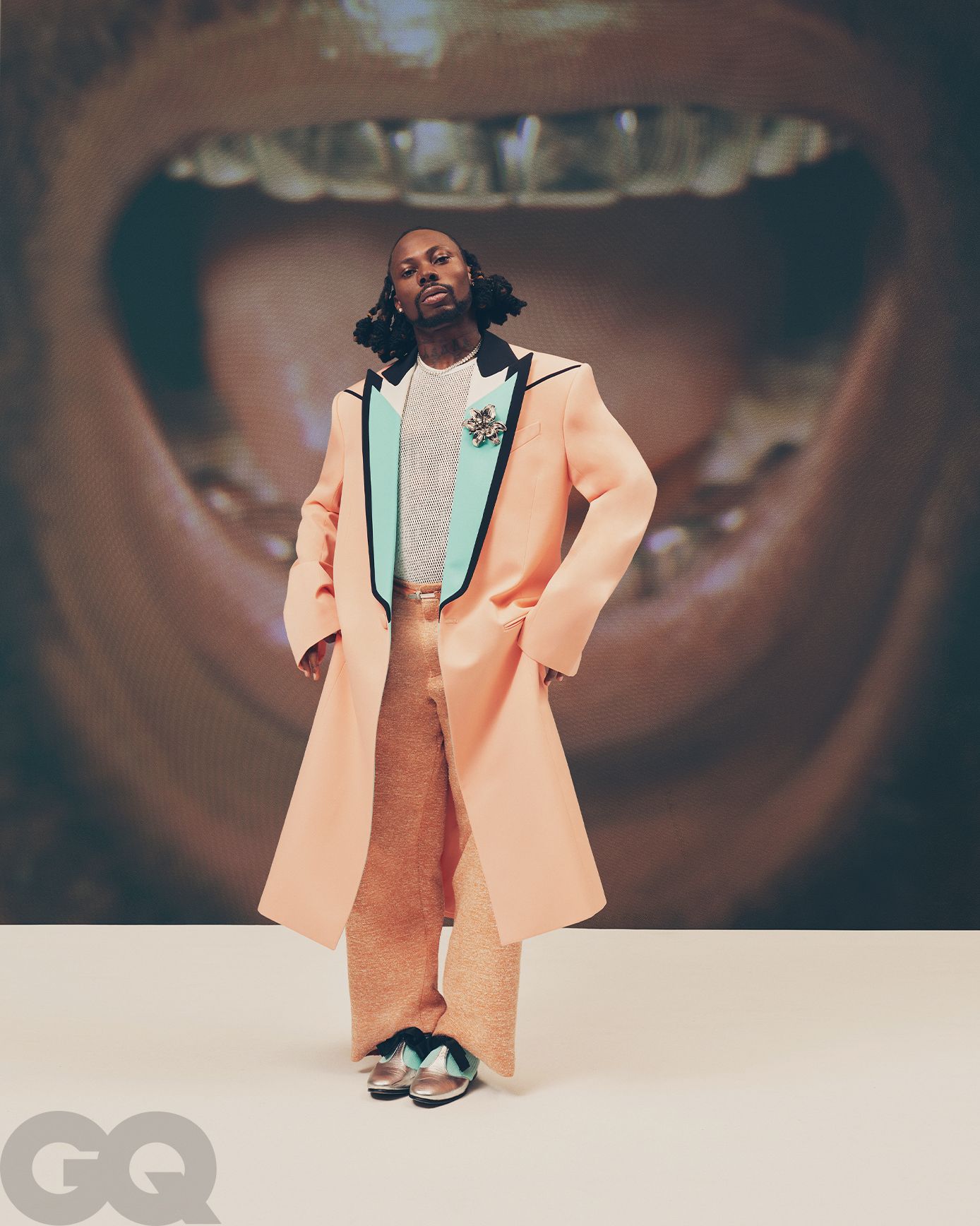
Before the neck tattoo, Asake’s first documented tattoo was the phrase “Stay real” written across both hands. GQ reported the wording and the placement directly, making this one of the clearest details in his tattoo history. The phrase is short, easy to read and deliberately plain. It does not need an elaborate image around it to make the message clear.
The two-hand placement changes how the words work. A single phrase on one wrist can disappear when the arm turns, but lettering across both hands travels with nearly every gesture. It becomes visible while he performs, talks or reaches for something. In close-up photographs, the writing gives his hands a marked, graphic quality without covering them in a large illustration.
Asake connected the words to originality. He spoke about Los Angeles as a place that can push people to become more than what they are, and said it can be difficult to stay normal or original there. “Stay real” is therefore not just a general motivational phrase in the interview. It is tied to his concern that attention, money and a rapidly changing career could pull him away from the person he was before the breakthrough.
What the hand lettering says about Asake
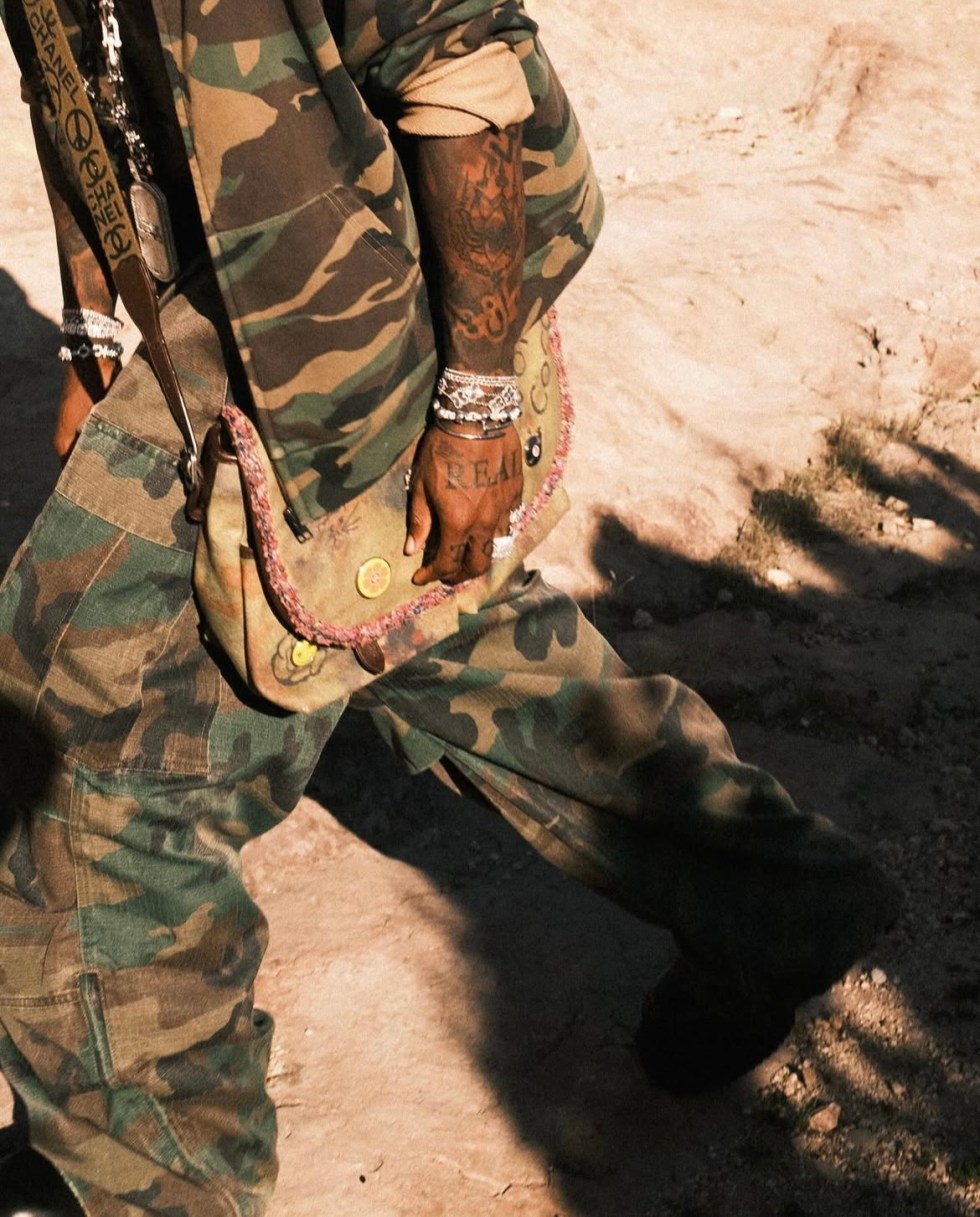
The hand tattoos are easy to overlook when the neck piece is doing most of the visual work, but they explain the collection better than the size of the lettering might suggest. “Stay real” is a reminder written in the place where the artist’s work happens. His hands hold microphones, move with the rhythm of a performance and make the gestures that audiences remember. The phrase is always close to those movements.
Asake’s own comments give the lettering a specific meaning. He was not talking about being humble in a vague, promotional way. He was describing the tension between becoming globally successful and keeping a common touch. His hope was to become rich, powerful and famous without losing the ability to be around people comfortably. The tattoo condenses that tension into three words.
The available photographs show that the hand pieces are lettering tattoos, not a collection of unrelated symbols. The lines are visible in the close GQ images when his fingers and palms face the camera. Because the phrase was documented before the neck tattoo, it also works as the beginning of the timeline: first came the reminder to stay real, then came the much more public declaration of the name ASAKE.
Before the breakthrough: Asake’s tattoo timeline
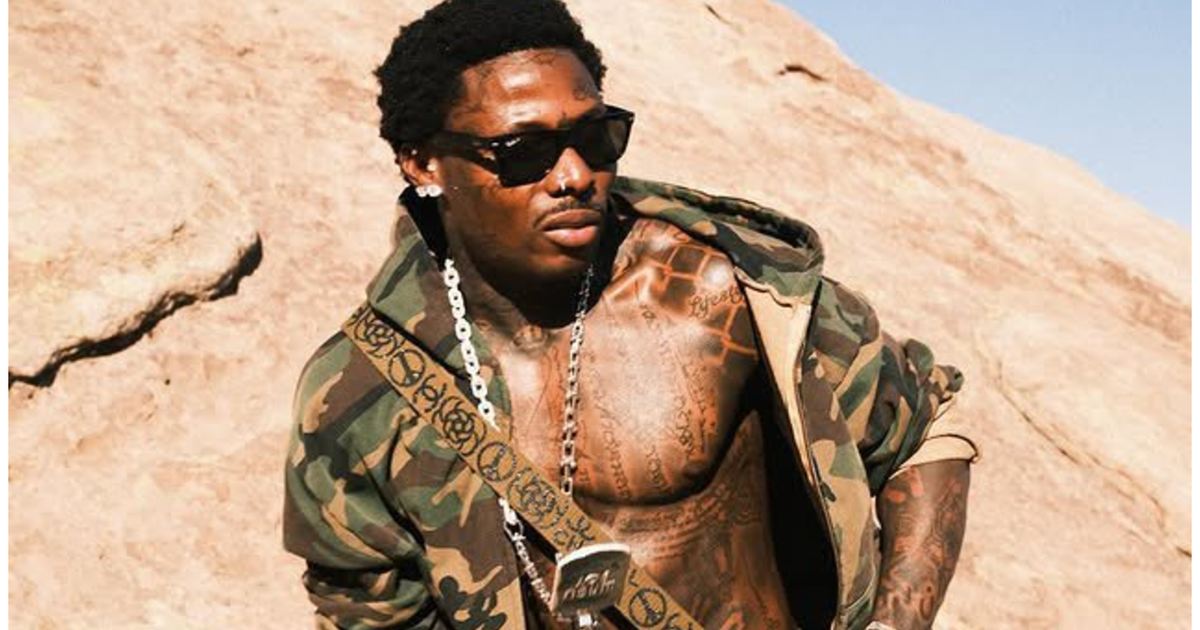
The timing is one of the most interesting parts of Asake’s tattoo story. The hand tattoo came first, and the neck tattoo followed during a period when he felt unsure whether music would work out. That order matters. It shows that the two pieces were not presented as a matching set designed after fame. They belong to different points in the same struggle to build an identity as an artist.
“Stay real” sounds like a rule for preserving the self. ASAKE sounds like a decision to make the artistic identity impossible to hide. Seen together, the designs describe two sides of the same period: stay connected to the person underneath the ambition, but commit fully to the name and career being built.
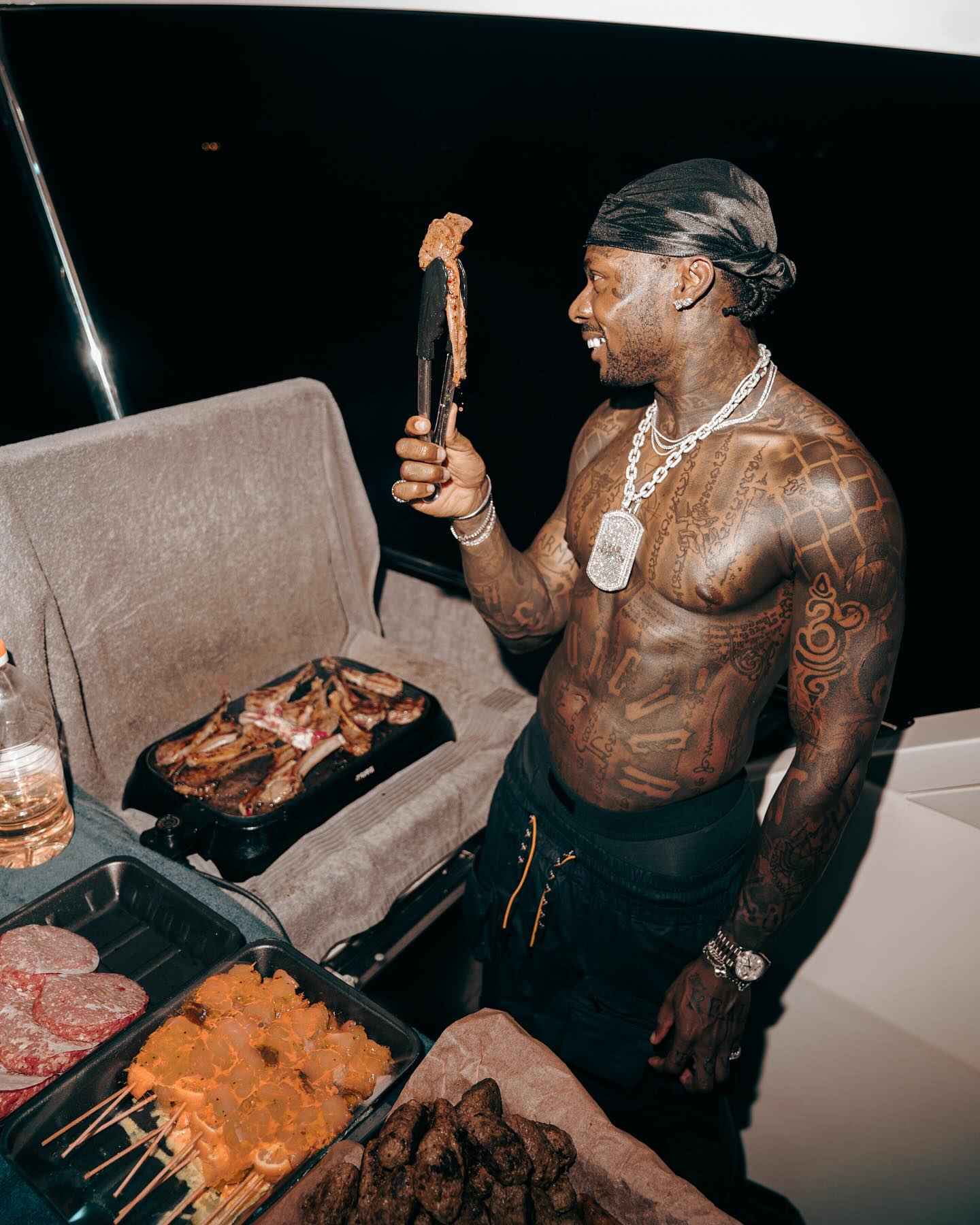
The later photographs do add a larger catalogue, just not a complete key to every symbol. They clearly show ink across Asake’s face, chest, shoulders, arms and hands, while reports also describe a large back piece in the newer full-body reveal. The exact lettering and meaning of several marks remain unconfirmed, so the strongest descriptions stay close to the visible evidence instead of turning every shape into a named design.
Asake’s newer chest and arm tattoos
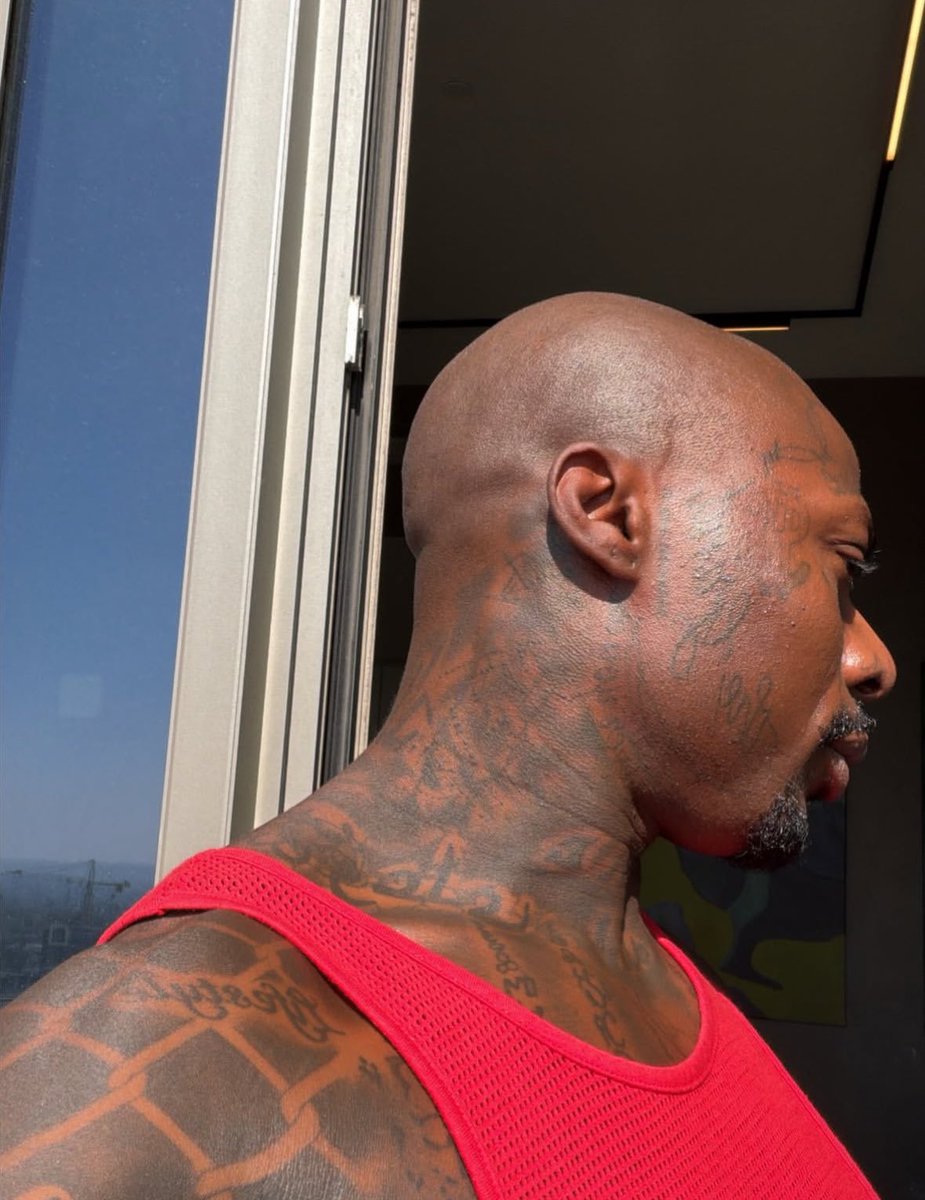
The GQ portrait series shows the earlier neck and hand pieces, while later tattoo photographs reveal how much more ink appeared across Asake’s chest, shoulders and arms. In the newer shirtless images, the lettering and larger dark shapes run across the torso and upper arms rather than sitting in one isolated spot. The collection now reads as full-body work, not just a name tattoo with a small hand phrase beside it.
The styling changes from image to image, but the ink stays visible. Open collars leave the name exposed, while shirtless portraits reveal chest and shoulder lettering that the older fashion shots keep covered. The tattoos don’t depend on a particular outfit to make sense; they have become part of the fixed outline of Asake’s appearance.
The hand lettering is more dependent on the camera angle. When his hands are relaxed or turned away, the phrase is harder to read. When he raises them toward the lens, the words become much more obvious. That difference between the two placements is useful visually: the neck tattoo announces itself, while the hand tattoos reveal themselves through movement.
Asake’s face tattoos and changing record
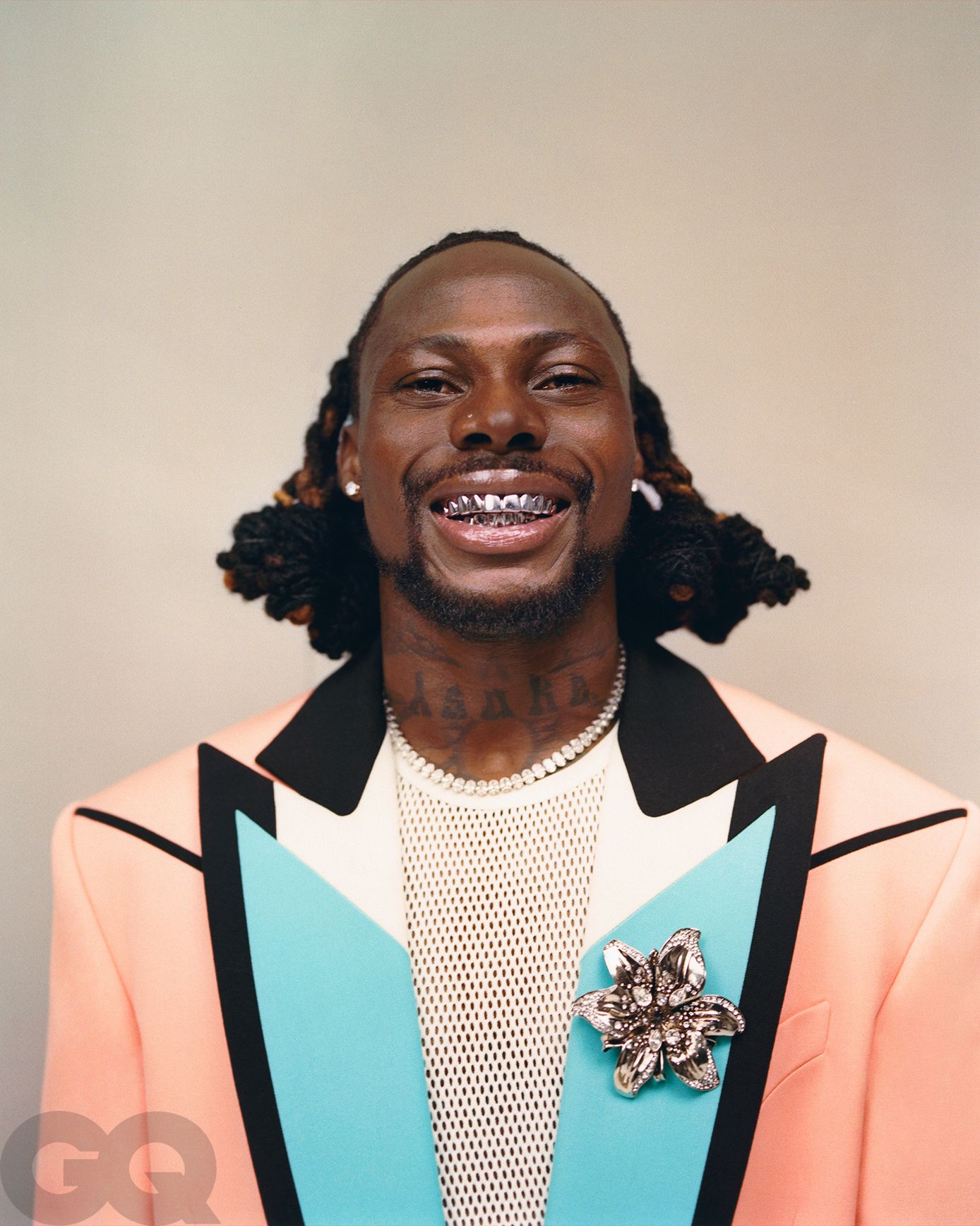
Asake’s tattoos now sit across almost every part of the public image he built through Afrobeats. The neck name is direct, the hand phrase is a reminder not to lose the person underneath the performance, and the newer face tattoos add another layer of text and symbols. The Believe forehead lettering and dollar-sign cheek mark are clearly visible in close portraits, even though their personal meanings haven’t been explained in the sources used here.
That choice makes sense for an artist whose identity is carried through language, sound and repetition. The name ASAKE works like a visual hook, just as a chorus works in a song. “Stay real” is quieter but just as memorable because it turns a familiar phrase into something physically attached to his daily gestures. The newer face, chest and arm work makes the collection more crowded, but the readable lettering still gives it a clear visual thread.
It is also why generic photographs do not tell the whole story. A wide red-carpet or performance image can show Asake’s clothes and posture, but only a closer view gives the tattoo lettering enough definition to discuss. The strongest visual evidence comes from images where the neck and hands are clearly visible, while the wider portraits provide context for how the pieces sit inside his overall style.
Keeping the message close
Asake’s documented tattoos have a clear through-line: identity is not treated as something disposable. The hand phrase says to stay real, and the neck tattoo puts the chosen name on display even when that decision could make conventional work harder. Both pieces were described in connection with the person Asake wanted to remain while his career changed around him.
The neck tattoo carries the boldest visual statement, but the hand tattoos may be the more revealing pieces. “Stay real” explains what Asake wanted the name to mean. It keeps the stage identity from becoming an empty brand by tying it to originality, memory and the fear of forgetting where he came from.
The reliable tattoo record is now broader than the original GQ profile. Asake has the large ASAKE lettering across his neck, the words “Stay real” across both hands, and later visible ink across his face, chest, shoulders, arms and back. The documented meanings belong mainly to the first two designs; the newer marks can be described visually without pretending their stories are known.
A clear line through the collection
Read in order, the designs form a record that keeps expanding. The hand phrase establishes the principle, and the neck name turns that principle into a public identity. Later face and body photographs show the collection moving into much denser territory, while Asake’s interview still explains why the first two pieces mattered before and after his rise.
That is the useful detail in Asake’s tattoo history: the designs are visible, documented and connected by the same concern with staying himself while becoming a much bigger artist.