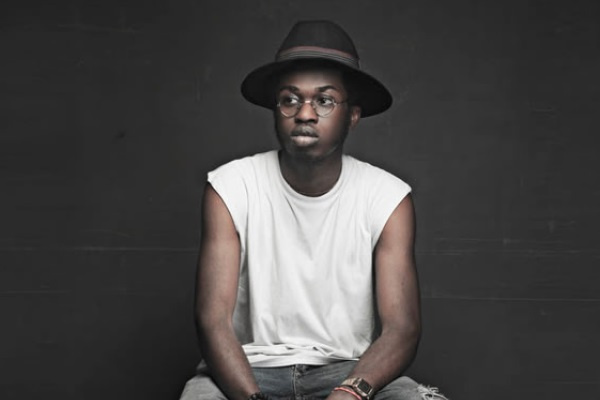
BOJ, born Bolaji Odojukan, is a UK-born Nigerian singer, songwriter and producer associated with DRB LasGidi and the alté movement. Accounts of his tattoos are spread across interviews, music profiles and fashion editorials. Some designs have names and meanings BOJ has discussed himself; others appear in photographs without being identified by the source.
In a Tirade World interview, he described “93” on his left shoulder, Africa on his right and a heart over Nigeria. He linked the designs to where he was born and where he is from, and said 93 is his birth year. F Word Magazine later recorded him saying he has an eagle tattoo.
The photos add long forearm script and several other upper-arm marks. They come from different sources and use different crops, clothing and light, so they show different parts of the collection. The featured portrait identifies BOJ; the five tattoo-bearing photos show placement. Where a source does not transcribe lettering or match a shape to a name, the description stays with what can be seen.
BOJ’s shoulder map carries the clearest documented meaning
Tirade World gives the clearest account of BOJ’s named tattoos. The interviewer points to “93” on his left shoulder, an Africa design on the right and a heart over Nigeria. BOJ says the marks connect to where he was born and where he is from. He also identifies 93 as his birth year. Those details come from his own explanation rather than a guess based on a photograph.
The Tirade portrait is a wide, face-visible image, with the shoulder work shown as part of an editorial look. It gives a sense of how the designs sit across both shoulders and beside the arm. The distance makes smaller marks hard to distinguish. BOJ’s interview supplies the names and the heart’s connection to Nigeria; the photo shows scale and placement.
BOJ’s forearm script turns the arm into a readable surface
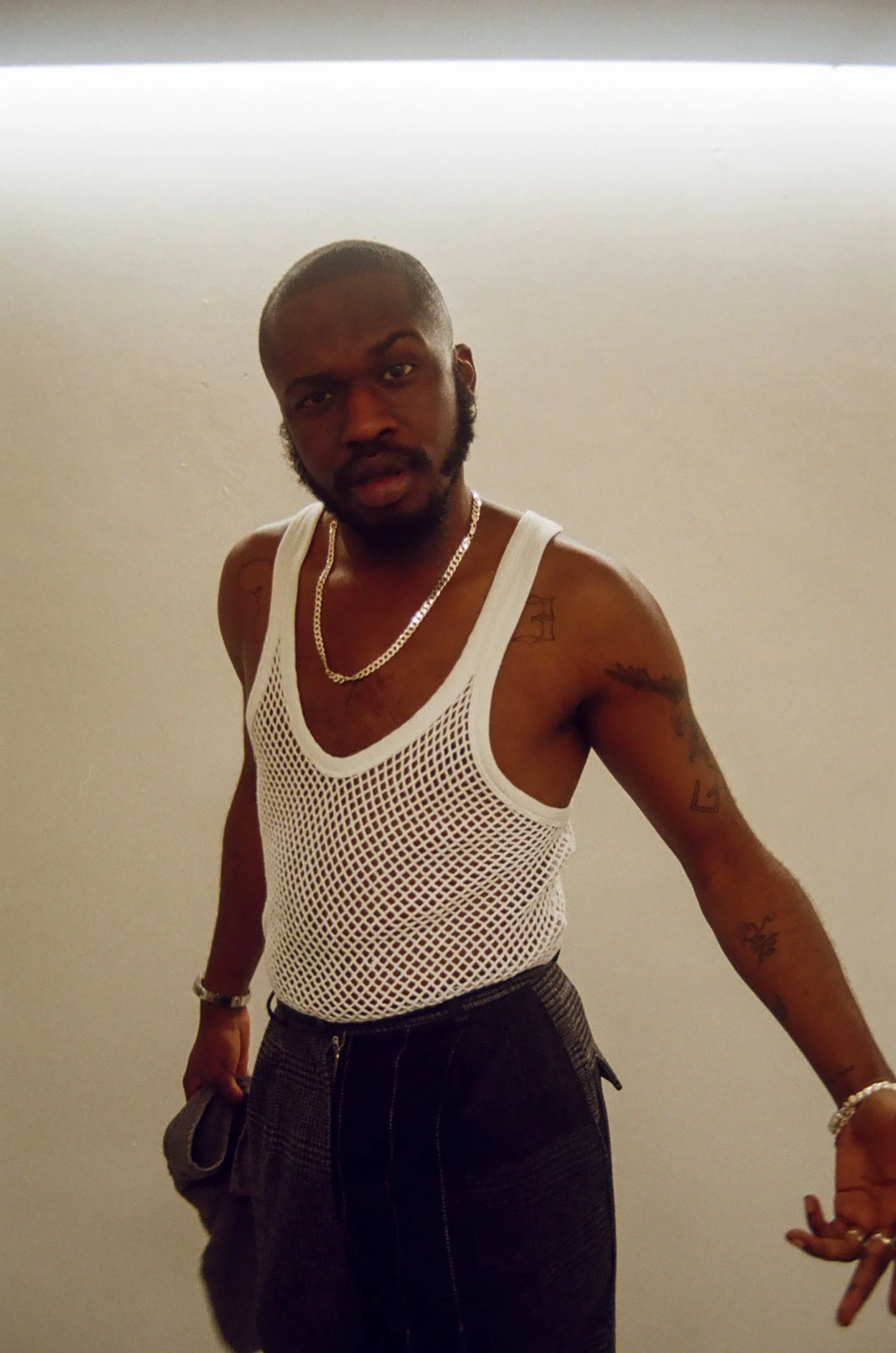
F Word Magazine’s portrait gives a closer view of BOJ’s arm. In a sleeveless mesh top, he has a long script design along his exposed forearm. The article does not transcribe the lettering, so its words and meaning cannot be quoted from this source.

The script follows the forearm in a narrow vertical line, and the closer crop makes its strokes easier to see than in the shoulder portrait. The mesh top and pose expose the outer forearm but leave the inner surface hidden. The photo shows the lettering’s direction and scale from one angle, without showing the whole arm.
A second arm angle reveals more of the lettering and placement
A second F Word photograph comes from the same editorial. BOJ leans toward the camera with his arm bent. It is a separate original image, not a crop of the first portrait.

In the straighter F Word portrait, the script runs as one longer line; the bent-arm frame brings it together with nearby upper-arm marks, making the placement easier to compare.
Both photographs were published as part of the same F Word editorial. They offer alternate views of the collection from one sitting, but do not date when BOJ added any individual mark.
The eagle reference meets the upper-arm portrait
F Word’s interview supplies one more named design. Asked about the “Nigerian Eagle” nickname, BOJ says he has an eagle tattoo. A Nataal editorial shows several upper-arm marks through white mesh, but does not identify which, if any, is the eagle.
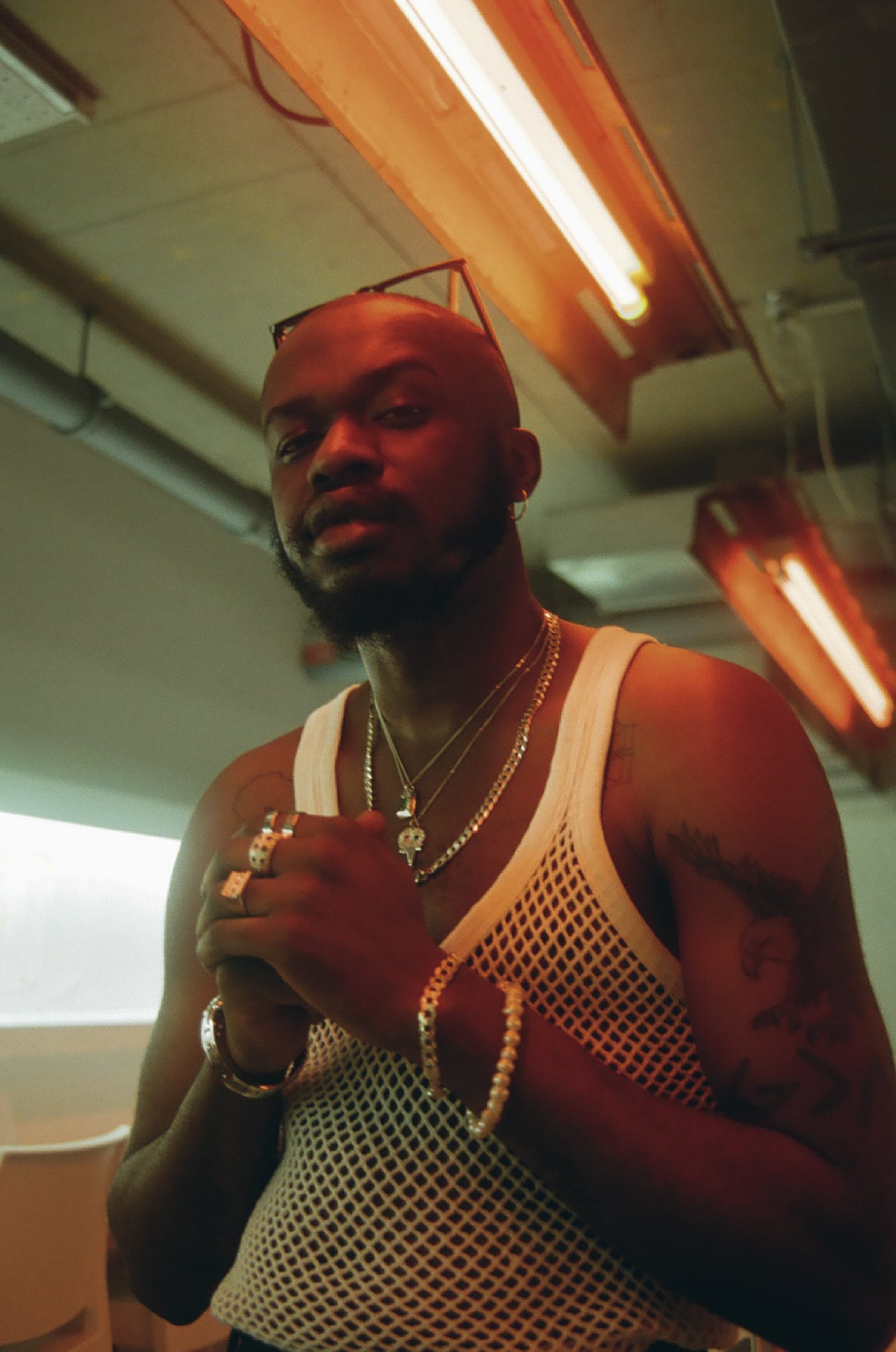
Nataal’s image comes from a fashion shoot, not a close tattoo report. White mesh lets the upper-arm work show through; chains and warm indoor light remain part of the frame. BOJ has described alté as freedom beyond music, and the portrait places the ink beside fashion without explaining a particular mark.
The mesh pattern and warm light soften some outlines, making individual marks harder to separate. The frame still shows how much of the upper arm carries ink and how the tattoos sit alongside the styling.
The blue-background portrait exposes the upper-arm work
OkayAfrica’s profile of the album “Gbagada Express” includes a portrait of BOJ in a tank top, bucket hat and sunglasses. He crosses his arms, leaving an upper-arm tattoo visible against a bright blue background. The simple backdrop gives the portrait a cleaner, more graphic look than the warm Nataal editorial.

The crossed-arm pose shows the upper-arm tattoo in relation to the shoulder and torso. That gives a useful sense of placement, while the wider portrait leaves less detail visible than the close F Word forearm images.
Because this photograph accompanies “Gbagada Express,” it belongs to music coverage rather than tattoo-specific reporting. The album profile adds career context; it does not name the visible upper-arm mark.
What the interviews establish about his collection
The named designs supported by direct interviews are 93 on the left shoulder, Africa and a heart over Nigeria on the right, and an eagle tattoo. Tirade World records BOJ estimating about 12 tattoos; F Word later gives his estimate as 13 or 14. These are casual counts from separate interviews, not an official inventory.
OkayAfrica discusses alté as a movement that reaches beyond sound into fashion and lifestyle. That background places these photographs in the same public world as BOJ’s music, while leaving the personal reasons for each design to his own statements.
How the different photographs work together
The five originals move from the shoulder map to two F Word arm views, then to Nataal’s upper-arm portrait and OkayAfrica’s blue-background image. The Tirade photograph gives the widest view of the shoulder story. The first F Word frame moves closer to the forearm script; the second changes the angle at the elbow. Nataal and OkayAfrica widen the view again, each with a different kind of editorial setting.
The shoulder, forearm and upper arm curve in different directions. Turning or bending brings separate marks closer together in a frame, while wider portraits show how the ink sits against clothing and the rest of the body. A close crop makes lettering easier to follow, but it cannot supply meaning the source does not give.
Nataal uses warmer indoor light and mesh clothing; OkayAfrica places the arm against blue, and F Word stays close to the script. The change in light, crop and styling affects how the ink reads in each photograph.
A careful visual reading order for readers
Start with BOJ’s interviews for the names and meanings he has stated himself, then use the portraits to check placement. A turned arm, a sleeve or soft light can hide part of a design, so each image shows only the surface presented to the camera.
Photo scale sets a limit on what can be read. The wider portraits show where the ink sits across the body, while the closer F Word view makes the script easier to follow. Even there, the source does not transcribe the words or identify every mark nearby.
The documented story in brief
Nataal and OkayAfrica show the tattoos in fashion and music-profile settings, where clothing and styling sit alongside the ink. BOJ has spoken about freedom in alté, but neither photograph suggests that each tattoo represents the movement.
The clearest personal meanings belong to the shoulder designs, which BOJ explained directly. He named the eagle in a later interview; the remaining arm marks enter the public record through photographs rather than descriptions from him.
Final takeaways from the collection
Across the photographs, the collection reads through placement: shoulder designs, a long forearm line and smaller marks across the upper arm. Editorial clothing and camera distance affect how much of each surface is visible.
The reproduced images show the ink mostly as dark marks and script, though lighting and image treatment limit what can be said about color. The interviews establish the named designs; the photographs show how the other visible work sits on his body.