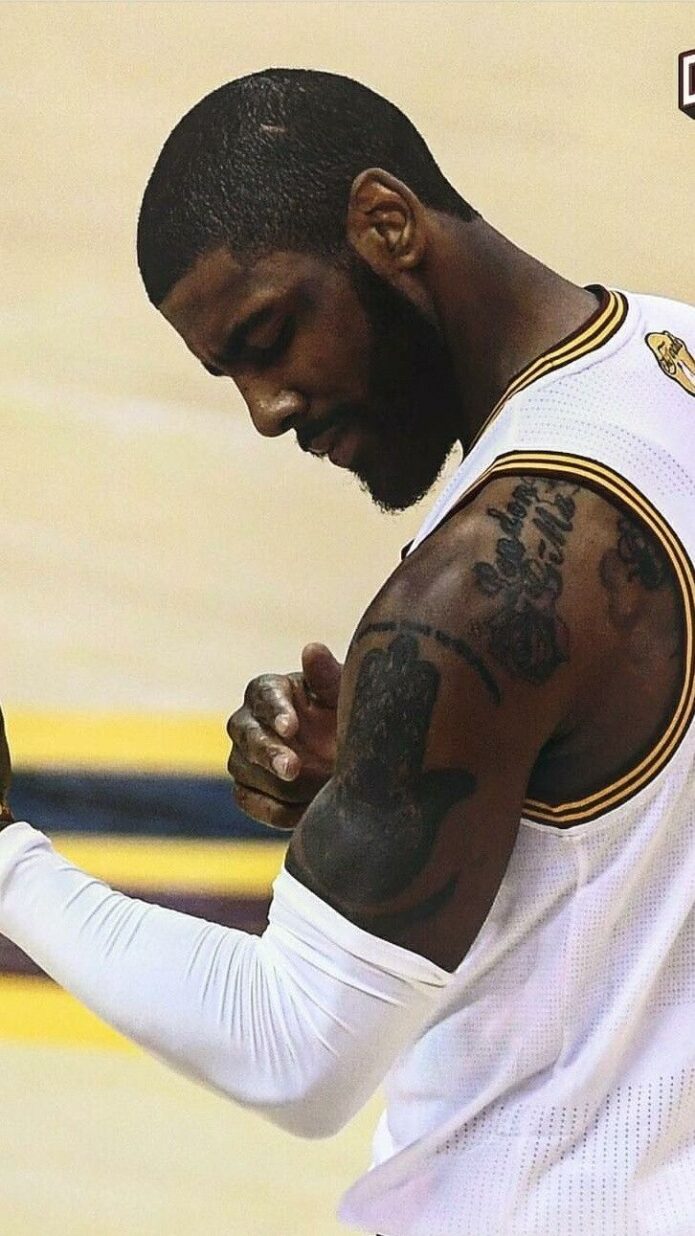
Kyrie Irving’s tattoos mix family names, spiritual symbols, basketball-era lettering and one very recognisable sitcom logo. The Hamsa hand on his upper arm is the biggest visual statement, while H&H, Elizabeth Irving, angel wings and Friends give the collection its more personal details. This guide keeps the main pieces separate so the photographs can show what is actually on the skin.
His ink is also easy to miss in basketball photographs. Jerseys, sleeves and camera angles cover a lot of the work, and the same arm can look almost bare in one game image and heavily tattooed in another. The sections below use different photographs and stick with the designs that have been clearly reported or shown.
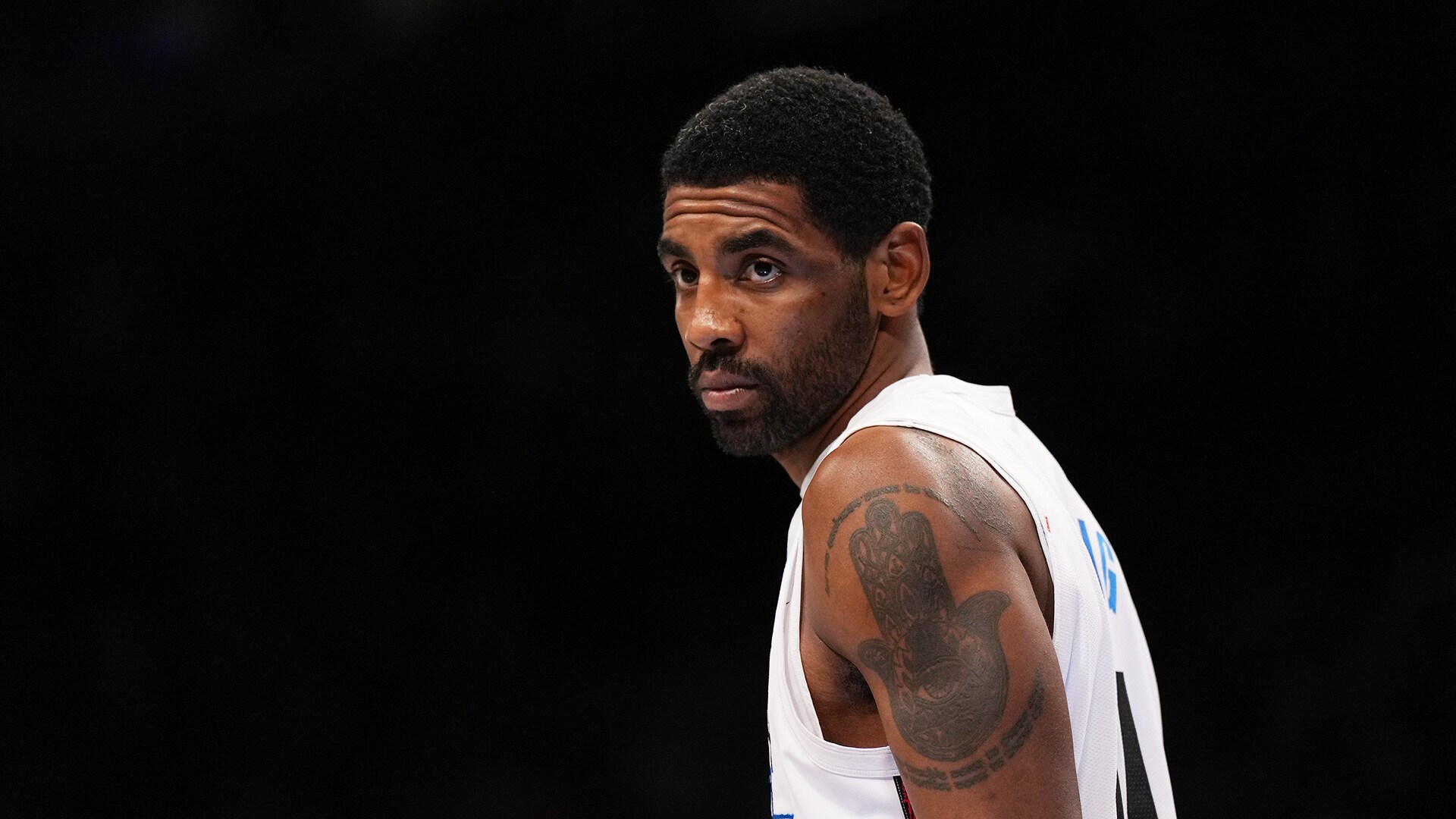
The Hamsa hand is Kyrie’s clearest statement piece
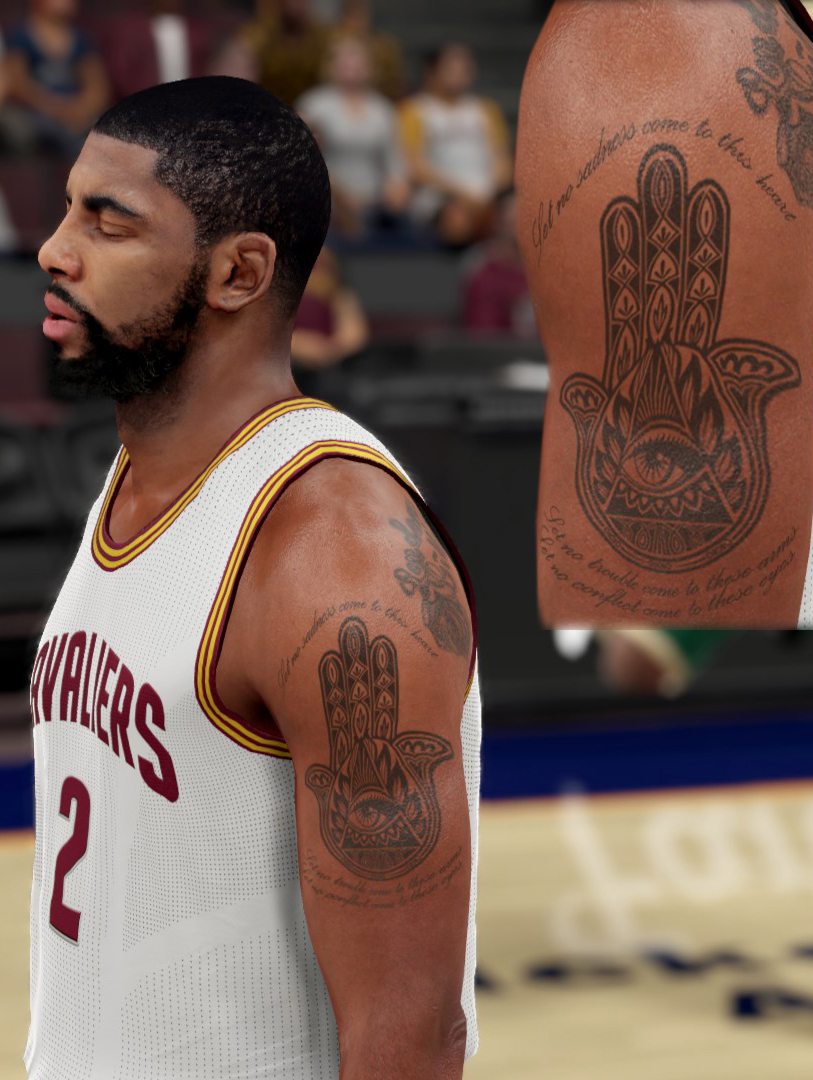
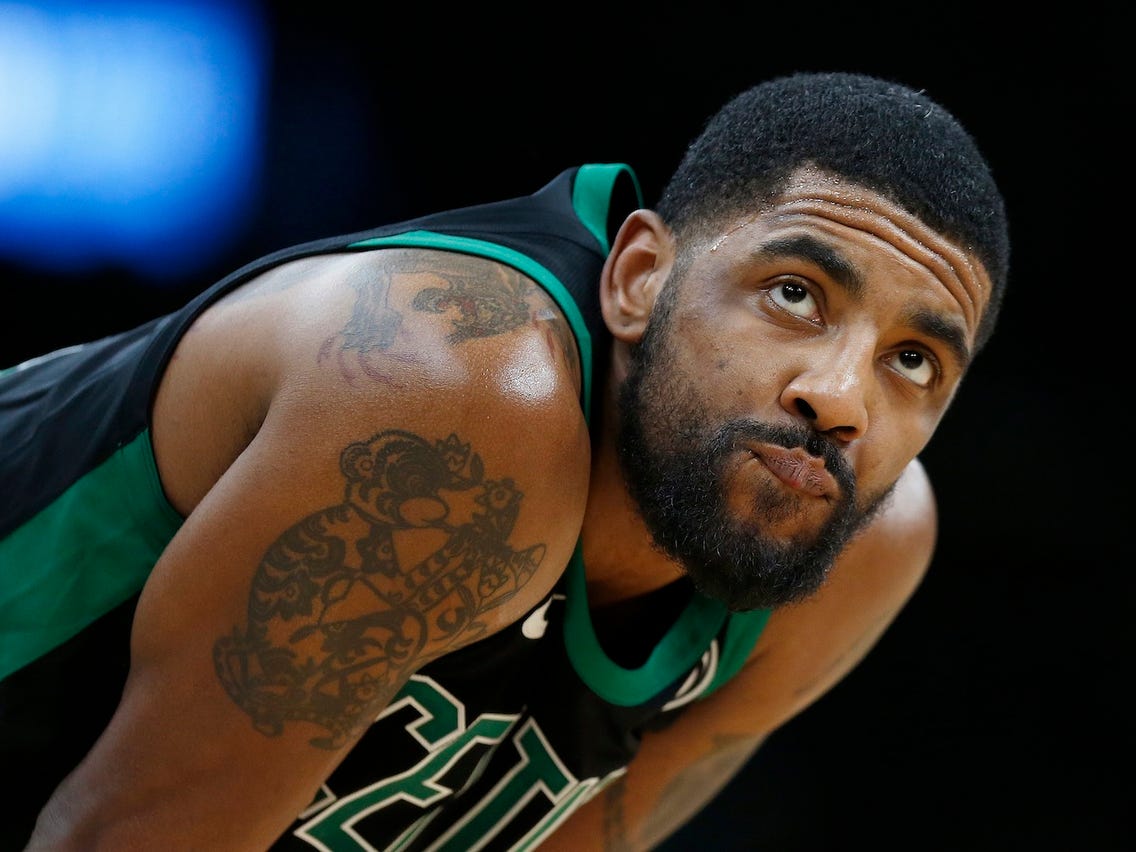
Kyrie Irving’s Hamsa hand tattoo is one of the easiest pieces to identify because it takes up a good part of his upper arm. The hand has an eye in the centre and a line-heavy border around it, so it reads clearly even when he is wearing a jersey. Beneath it are three lines of text about sadness, trouble and conflict. The words make the design feel personal rather than like a random decorative symbol.
The Hamsa, also called a Khamsah, is often used as a protective symbol. Irving has spoken about the tattoo through the way it was connected with his Nike shoe, which gives the design a public link to his basketball career. The shoe artwork was not a replacement for the tattoo. It borrowed the main image and turned it into a graphic that fans could recognise.
The lettering deserves its own look because it is easy to lose in a wide sports photograph. The hand is bold from a distance, while the three lines underneath become readable only in a close-up. That is why this image is doing a different job from the game shots later in the article. It shows the actual wording and the way the text follows the arm below the main symbol.
There is no need to attach a secret explanation to every line. The visible design, its protective association and the way Irving used it as inspiration for a shoe are enough. The tattoo works because the hand, eye and text are balanced together, and because the placement lets the whole thing appear whenever his sleeve is rolled up.
The Friends logo is the tattoo everyone noticed at the press conference
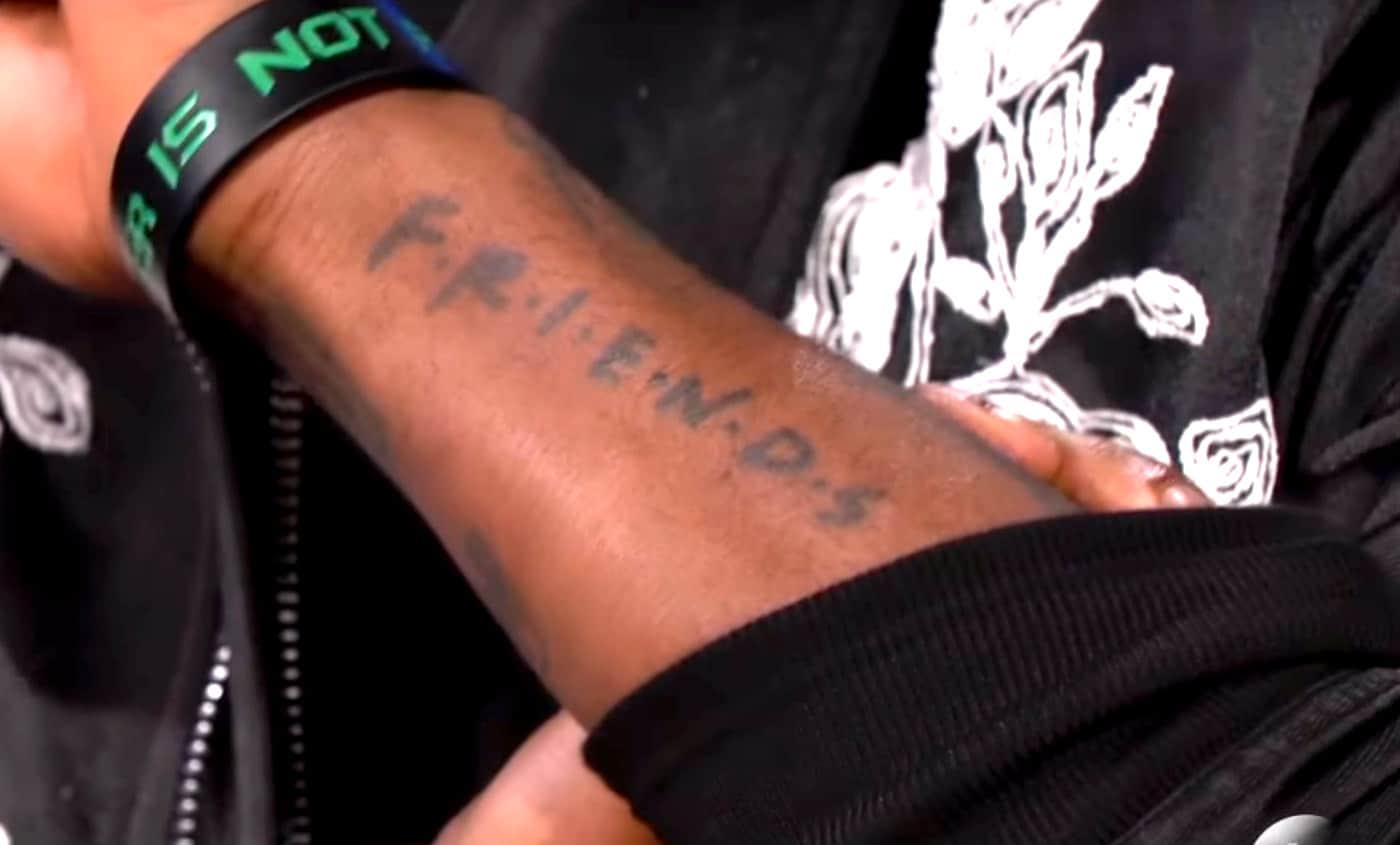
The Friends tattoo became famous because it appeared during a press conference when Kyrie’s arm was usually hidden by his playing gear. The logo uses the familiar television lettering, including the small dots between the letters. It is a very direct piece of pop-culture ink, and there is no need to squint at the photograph to work out what it says.
Irving explained the choice in a pretty relaxed way. He said he was a fan of the show, and later referred to watching marathons of it. That explanation matters because the tattoo is easy to overthink. It is not automatically a coded reference to a teammate or a hidden basketball message. Sometimes a player simply likes a programme enough to put its logo on his arm.
The placement also explains why the tattoo stayed out of sight for so long. A sleeve, jersey or warm-up top can cover the forearm, while a short-sleeved interview shirt brings it straight into view. The design became news because of that change in clothing, not because the tattoo itself had suddenly appeared overnight.
This is one of the best examples of a celebrity tattoo having a simple story. The source material gives the logo, the location and Irving’s own reason. A clear close-up shows the lettering better than a distant basketball photograph, so the article treats it as its own section instead of using one general arm picture for everything.
Angel wings and the upper-arm designs bring family and faith into the mix
Irving’s upper-arm tattoos include angel wings and larger spiritual imagery that sit differently from the Friends logo. The wings are linked in coverage with family, faith and protection, and his daughter’s name appears within a separate chest design. From the court, the upper-arm work can look like one dark patch, but photographs from outside games show that several pieces sit beside one another.
The angel-wing idea comes back in more than one place. His daughter’s name is commonly shown with wings around it, while other reports describe a halo and additional religious details near the chest. Those designs are related in mood, but they should not be flattened into one tattoo. Each has a separate placement and a different amount of visible lettering.
Irving’s arm tattoos also include symbols that are harder to name from a single frame. A game photograph can prove that the shoulder and biceps are tattooed, but it may not prove whether a soft shape is a flower, a star or part of a larger drawing. Keeping that uncertainty in the description makes the confirmed pieces stand out more clearly.
The upper arm is where his style becomes more layered. There is protection, family, faith and sports identity in the same general area, but the designs do not all share one visual style. The Hamsa is ornate, the wings are more familiar and the smaller marks act as links between larger pieces.
H&H and Elizabeth Irving sit across the chest
The chest tattoos give the collection its most openly personal wording. On one side, Irving has H&H with the words staying humble beneath it. The initials have been explained as a reminder connected with happiness and humility, and the short phrase is easy to read when he is shirtless. It is a compact design, but the placement makes it one of the first things people notice.
On the other side is Elizabeth Irving, his daughter’s name, framed by angel wings in commonly published images. A name tattoo is much less abstract than a symbol. It tells readers exactly who the piece is for, while the wings add the protective family feeling that appears elsewhere in his ink.
The two chest pieces work as a pair even though they are not matching tattoos. One is about a personal rule and the other is about family. They sit on opposite sides of the torso, so a full front photograph is useful, but a slightly angled image helps with the line work and the way the lettering follows the shape of the chest.
These designs are also a good reminder that meanings should come from what Irving has actually attached to them. The initials and his daughter’s name are documented. A reader can understand the family connection without inventing a long backstory for every surrounding mark. The photographs supply the visual detail and the statements supply the context.
The older Olympic-era photographs show how much of the arm stays hidden in games
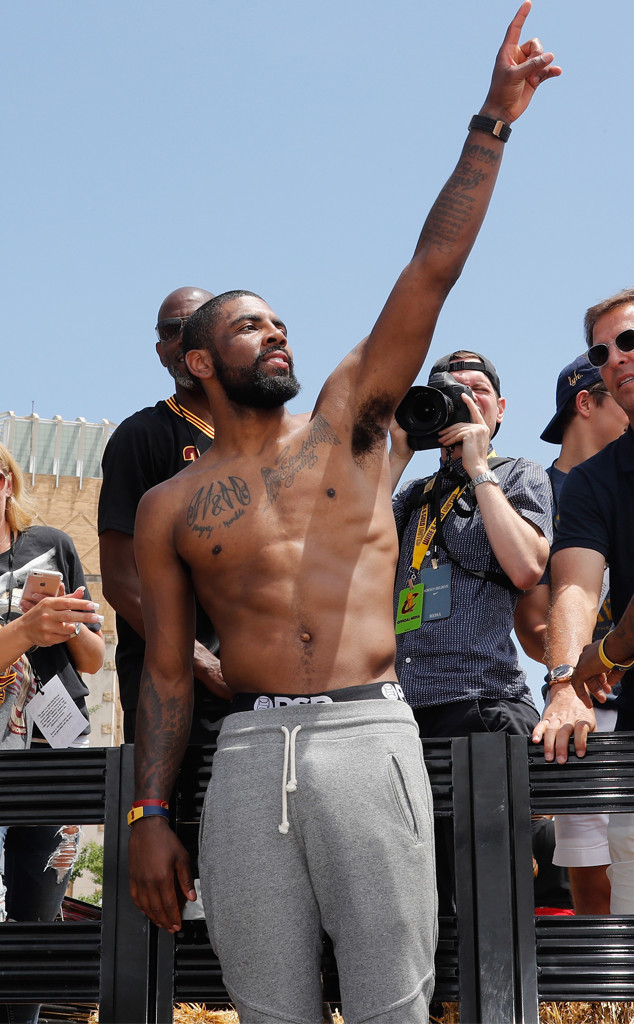
Older photographs from Irving’s Olympic period show why his tattoo collection can look smaller when he is playing. A jersey covers the chest, a compression sleeve hides the forearm and the camera usually follows the ball instead of his skin. When he is shirtless or wearing a vest, more of the arm and side-body work appears at once.
The Rio image is useful as a wide view rather than a catalogue of every symbol. You can see how the tattoos run from the upper arm toward the forearm, but small writing is not sharp enough to translate responsibly. It still adds something important: it shows the overall scale and proves that the visible pieces belong to a larger layout.
Irving has added and changed tattoos over the years, so older images need dates. The Friends logo was a newer talking point in 2015, while the chest lettering and Hamsa hand were already part of the look in other periods. A guide that mixes all photographs together without a timeline can make a tattoo seem to appear or disappear for no reason.
Put together, the five main views give a much better sense of Irving’s ink than one game portrait would. The Hamsa explains the ornate arm work, Friends gives the forearm a pop-culture detail, the chest photograph shows the names and initials, and the Olympic image fills in the wider placement. That is the useful picture of his collection: several different ideas sharing one body, not one generic sleeve repeated over and over.
There are smaller symbols around the known pieces, but not every one has a reliable name or meaning. That is normal with a collection photographed at public appearances. It is better to describe a mark as a visible symbol than to turn it into a confident translation when the image is soft or partly covered.
Read as a whole, Irving’s tattoos move between protection, family, faith and pop culture. The Hamsa carries the strongest visual detail, the chest names keep the work close to home and Friends adds a funny, straightforward reference. None of those pieces needs a grand theory to be interesting.
The dates matter too. A 2015 press conference photograph cannot be used as proof of the entire current collection, just as a recent game shot may hide older ink under a sleeve. Comparing different years helps explain why fans sometimes describe the same arm in slightly different ways.
The clearest facts are simple: the Hamsa hand is there, Friends is there, H&H and Elizabeth Irving are visible on the chest, and angel-wing imagery appears in the family designs. The remaining details should stay tied to a sharp photograph or a direct explanation. That keeps the guide useful without pretending every shadow is a confirmed tattoo.