
Kyle Walker’s tattoos are easy to spot, but their stories go beyond the quick glimpses in match photos. The England and Manchester City defender has built up a large collection across his arms, chest, stomach and legs. Some pieces honour family; others mark the clubs that shaped his career, while a few are designs he simply wanted at the time.
Walker has spoken openly about his ink. His first was his name, “K. Walker”, on his hand with a star beside it. He has also explained the eye on his forearm as a tribute to his late grandfather, who first brought him to football. More recently, he described the designs on his left leg as a visual record of his career.
There are plenty of smaller pieces among the larger work, so an exact count is difficult. The collection is easiest to follow by theme: family, remembrance, football clubs, dates and the dense sleeve work that brings it together.
His first tattoo was his own name and a star
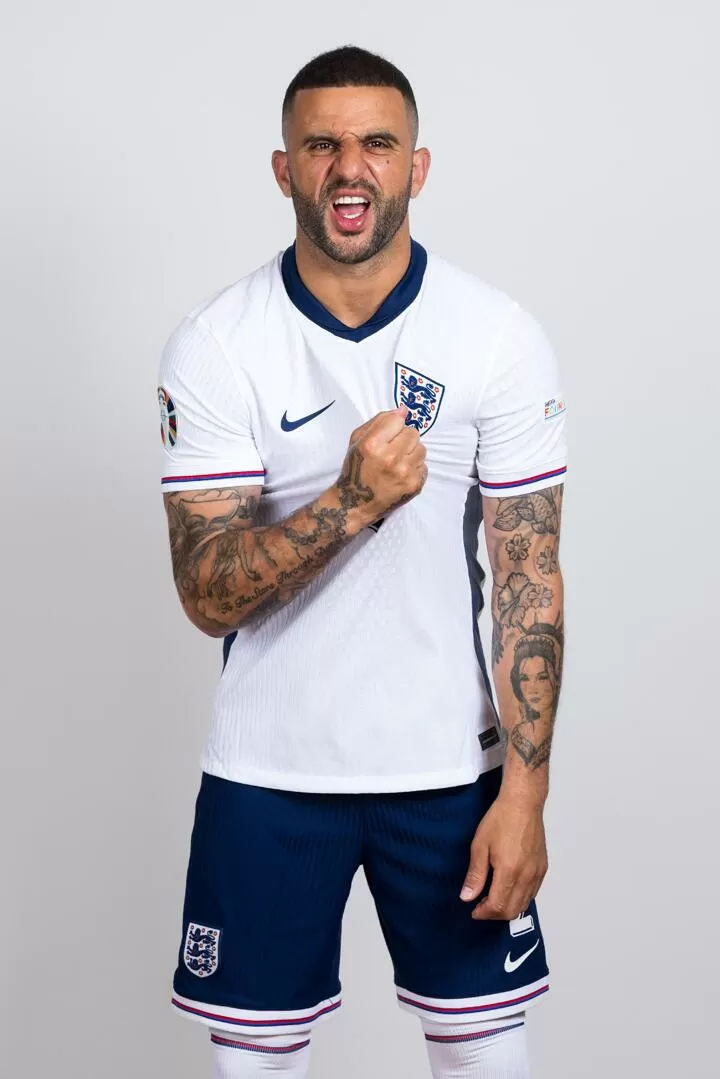
Walker has said his first tattoo was “K. Walker” on his hand, with a star beside it. He later added another star after friends teased him for what they thought was a low rating. It is a simple start, tied directly to his own identity.
That first piece helps explain why the later tattoos feel so personal. Walker began with his own name, then added images as his life changed. The second star has a playful backstory: it was not part of a larger plan. He liked the idea, his friends joked about it, and he got another one.
In wider photos, the hand lettering can get lost beside the darker work on his forearms. Flowers, faces and shaded shapes have grown around it, turning that first tattoo into one small piece of a much bigger scrapbook.
The eye tattoo is a tribute to his grandfather
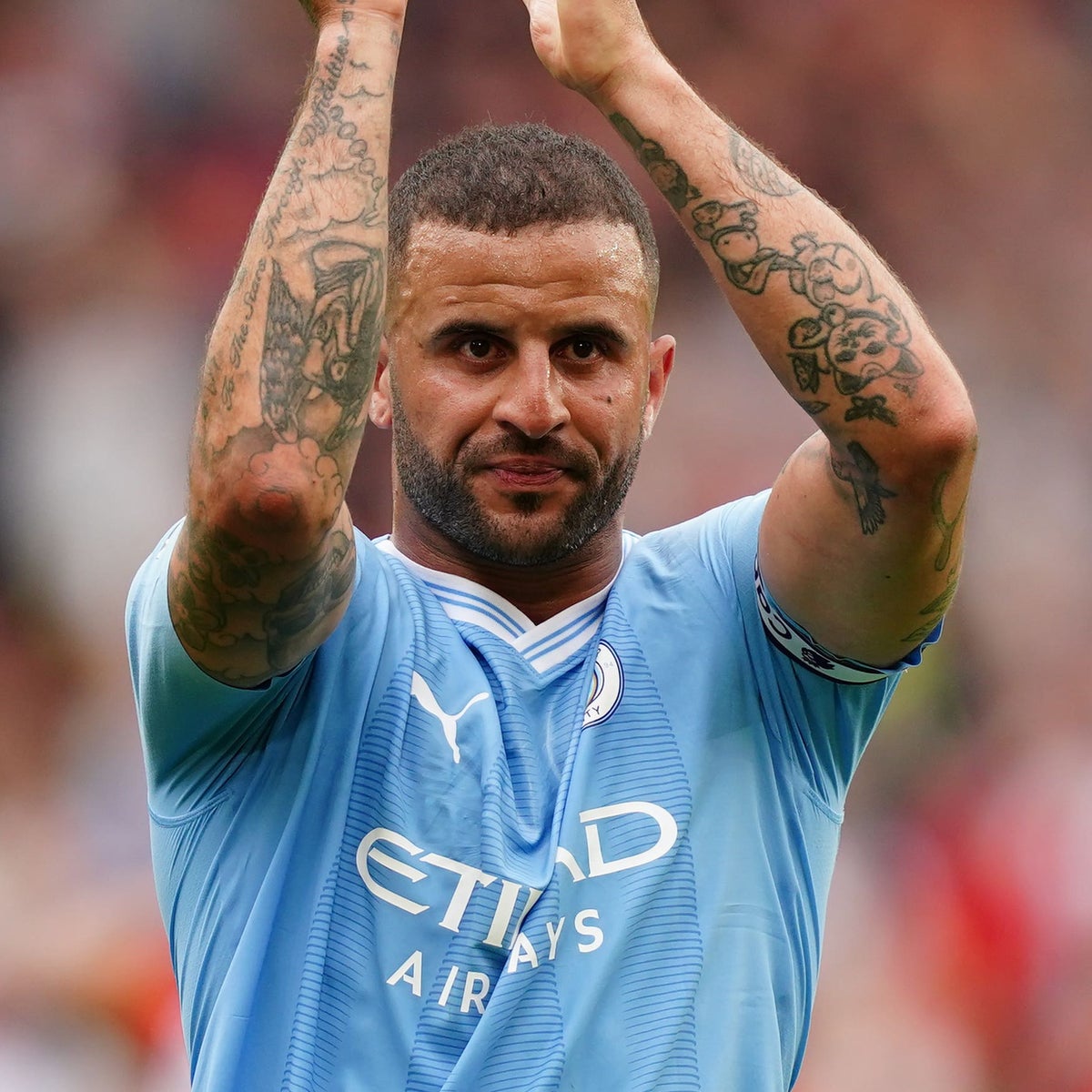
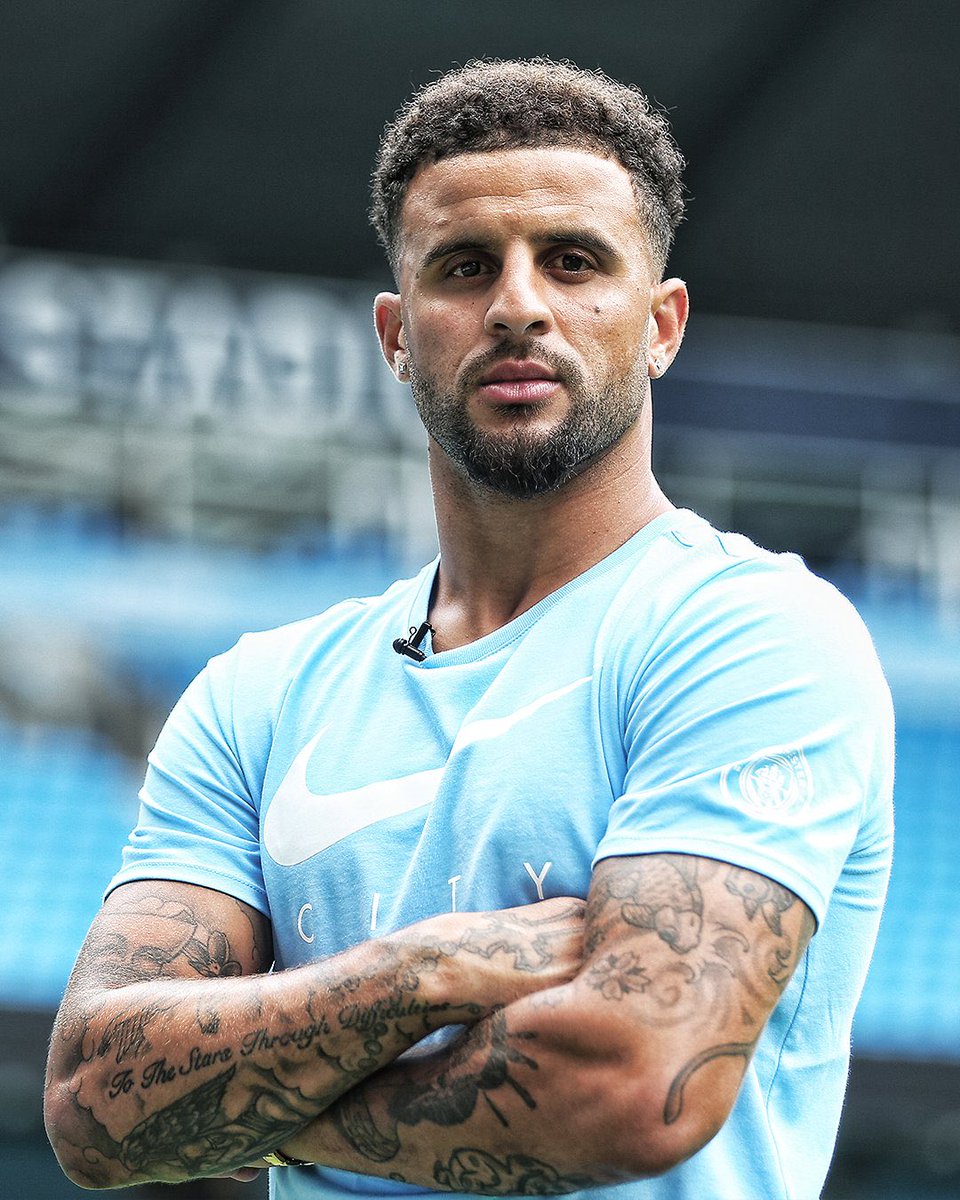
One of Walker’s most meaningful tattoos is an eye on his forearm, dedicated to his late grandfather. Walker has said his grandfather took him to Sheffield United and helped introduce him to football. He sees the eye as a way of showing that his grandfather is still looking out for and guiding him.
That gives the design more weight than its size suggests. It is not just another detail in a packed sleeve; it connects Walker’s career to the person who helped him discover the sport. The eye is a quiet reminder of where his journey began.
It sits among flowers and other arm tattoos, so it is usually seen as part of the sleeve rather than on its own. Walker often raises his arms to applaud supporters, which has made the forearm piece easy to spot in match photos.
Roman numerals across his torso mark family dates

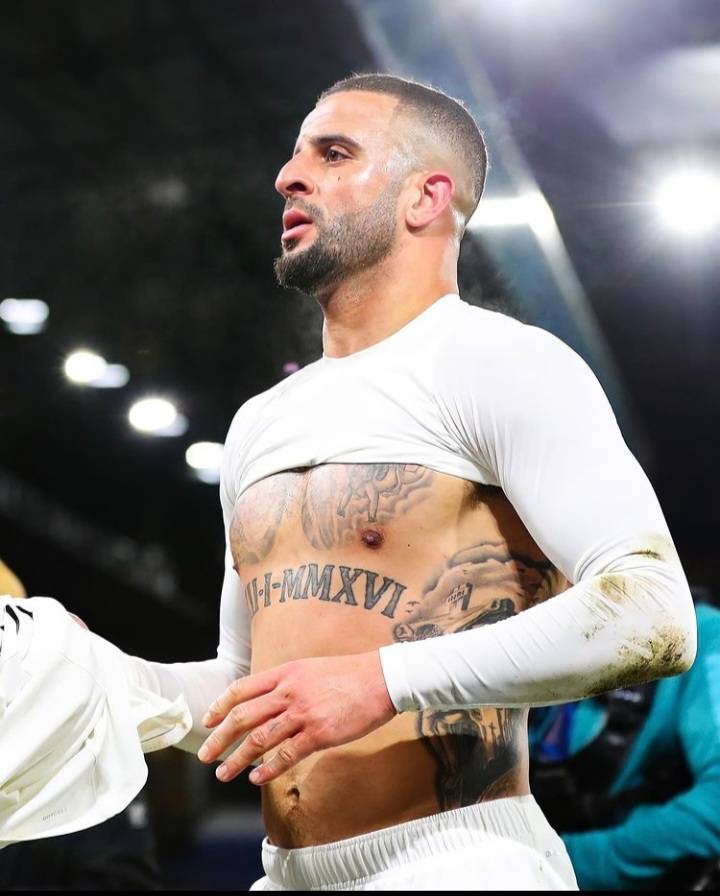
Large Roman numerals stretch across Walker’s stomach. Tattoo coverage identifies them as the birth date of his youngest son, giving the design a clear family meaning. It is one of his boldest pieces, spanning the centre of his torso like a banner.
The date is often visible when Walker lifts his shirt after a match, and it can be the first thing people notice. That placement makes it feel like a proud statement about his family rather than a private detail.
Walker uses dates as a kind of code: instead of writing out a name, the numerals mark something meaningful to those close to him. It fits a collection where moments appear through numbers, initials and images rather than one consistent style.
His chest mixes names, portraits and old-school imagery
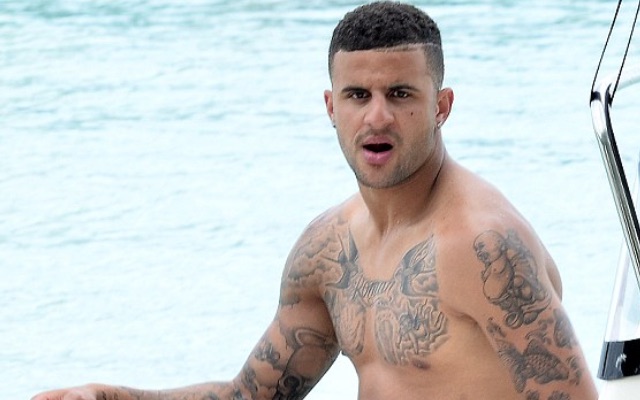
Shirtless photos show a busy chest of lettering, shaded portraits and traditional tattoo shapes. The designs overlap, so one photograph rarely captures every detail, but the overall picture is clear: this is a collection of separate pieces gathered over time, not one large image.
Faces and script sit across the upper body, with darker shapes linking the centre of the chest to his shoulders. The mix gives the tattoos a lived-in quality. Some players build a sleeve in one clean style; Walker’s ink reads more like a timeline, with newer work finding space beside older pieces.
Low-resolution match photos can be misleading. A shape that looks like one portrait from a distance may actually be several tattoos close together. Clearer photos reveal more around his chest and upper arms.
His arms carry flowers, faces and a lot of blackwork
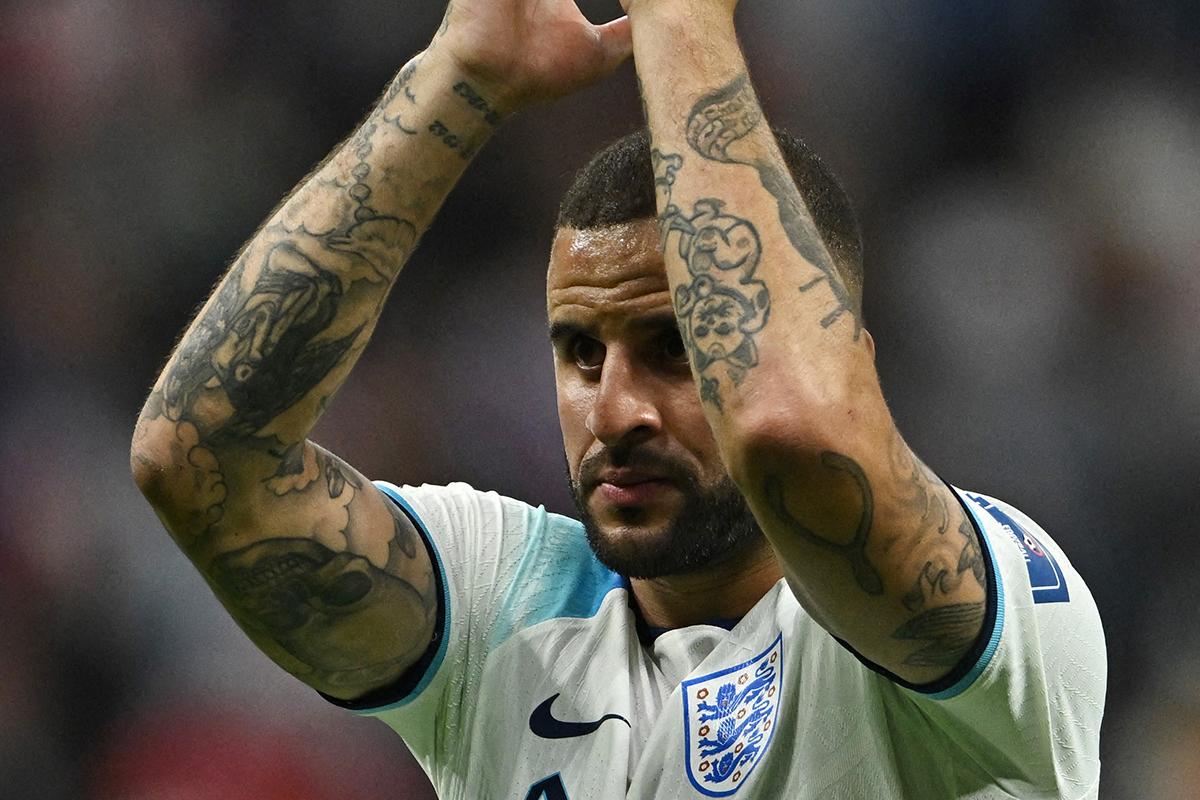
Walker’s sleeves are probably the most visible part of the collection. They combine flowers, faces, short bits of writing and heavy shading. The designs are dense but not uniform, giving each arm its own character.
Close-up photos show the eye tribute and smaller writing around it, while wider views reveal portraits and floral work higher on the arm. The ink reaches near his shoulders, so a short-sleeved England shirt often leaves plenty on show.
The sleeves also contrast with the clean Roman numerals across his stomach. The date is easy to read; the arms invite a closer look. In the same photo, you might spot a face, a flower or a line of script you missed before.
His Manchester City years sit inside the sleeve story
Walker’s football tattoos are not tied to just one club. In a 2025 interview, he said the tattoos on his left leg represent the route his career has taken. He named Sheffield United, Tottenham and Manchester City, then joked that a move to AC Milan meant he would need to add another club.
That turns the tattoos into a kind of career map. Sheffield United marks the start, Tottenham the step into top-level English football, and City the long run of trophies and big nights. The map can keep changing when the next chapter begins.
His City years are visible in match photos, too. Walker is often pictured applauding with both arms raised, putting the sleeve work on display. The shirt changes from season to season, but the ink stays, following him through each stage of his career.
The designs do not look overly polished, and that suits the story. A club tattoo belongs to a moment; when a player moves, it becomes part of a longer timeline. Walker’s leg and arm pieces mark the roads he has already taken, not just the next photo.
Club names and dates can still be read years later, even if a smaller image fades or gets covered by newer work. They keep the memory of each stop in his career, while the family tattoos connect football to his life away from the pitch.
The newest photos show how the collection keeps growing
Walker’s tattoos are still a work in progress. He has talked about new club references and extra details, while the older pieces remain in place: his name and star on his hand, the eye for his grandfather, and the family date across his stomach.
He has also said he does not regret the tattoos. His reasoning is simple: when he chose each one, he had a reason for it. That does not mean every piece carries the same weight. A name and star may have started as fun, while the eye holds a lifetime of memory. Both can belong on the same body.
That mix is what makes the collection worth a closer look. It is personal, a little chaotic and tied to Walker’s route through football, rather than polished into one theme. Family, remembrance, loyalty and the clubs that shaped his career all show up in the ink.
Sky Sports has a short video of Walker explaining the family meaning behind his tattoos. Hearing him talk through the ideas makes a useful companion to the photos.
2 thoughts on “Kyle Walker’s tattoos tell a football story”