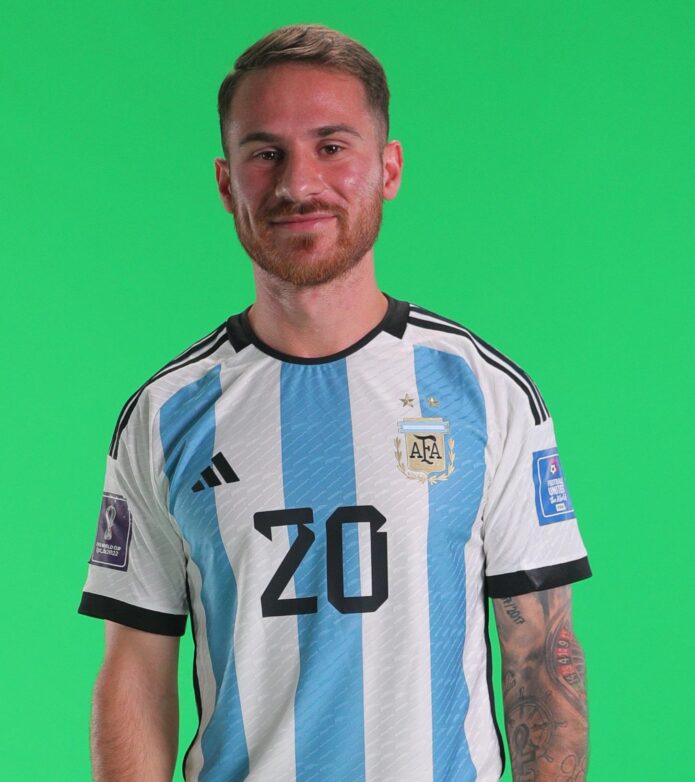
Alexis Mac Allister’s tattoos are easy to notice, but his sleeve has more to it than a wall of ink. His left arm brings together family names, football memories, religious imagery and small details that make more sense when he explains them. It has grown over time, piece by piece.
Mac Allister walked through the designs in Liverpool’s official Carlsberg Inked series, so there is a direct source for many of their stories. He discussed the number 98, a child carrying a football, his family’s names, Jesus imagery, early-career dates and a Spanish phrase about trusting yourself and your people. He also cleared up a roulette wheel tattoo that people often misread.
This guide sticks to the tattoos he described and what can be seen in the photographs from that interview. He said he hoped to add designs for the World Cup and Liverpool, so the collection may have changed since then. In the documented sleeve, the through-line is clear: Mac Allister keeps his family and football life close.
The full left-arm sleeve is built as one long story
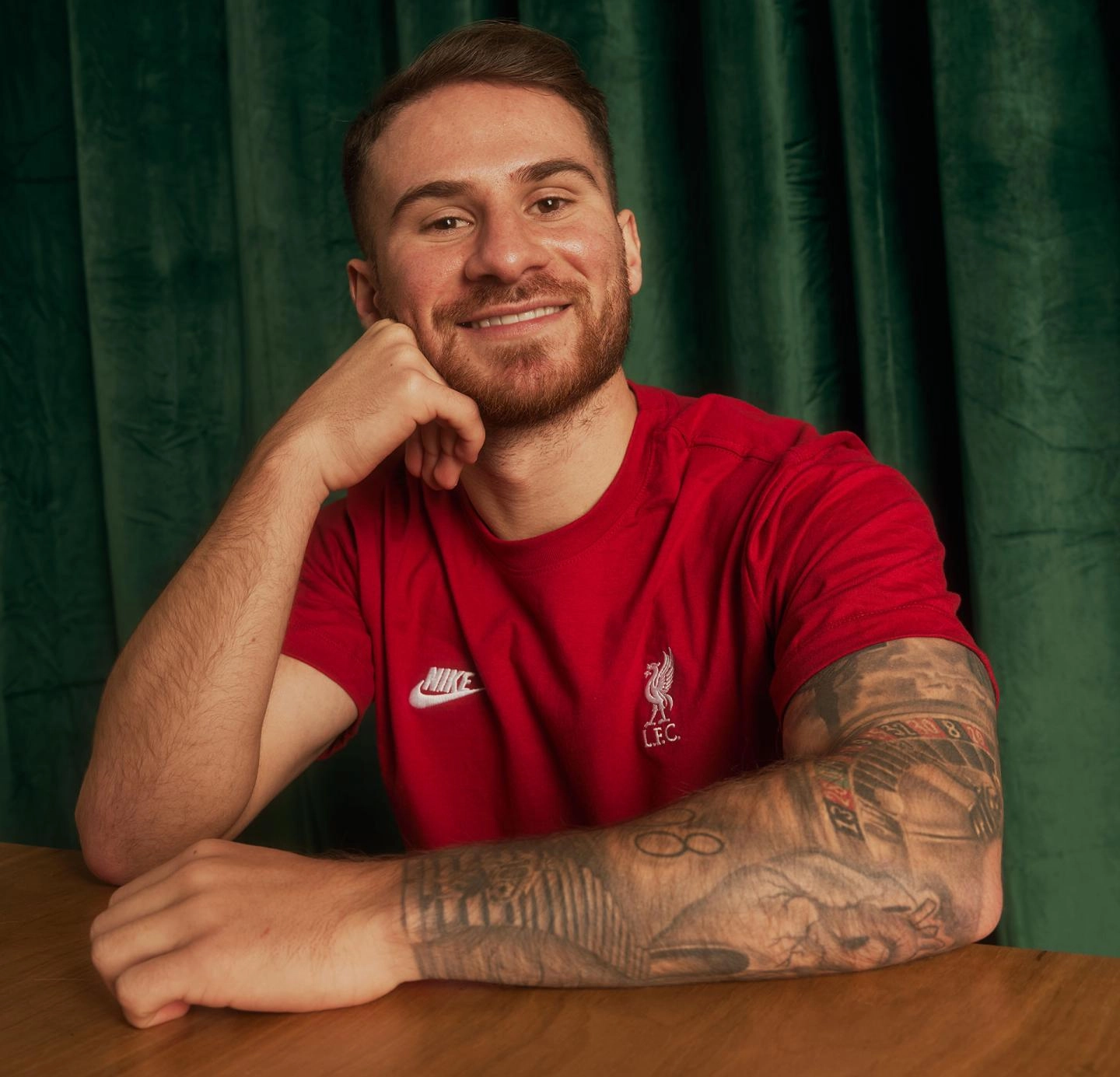
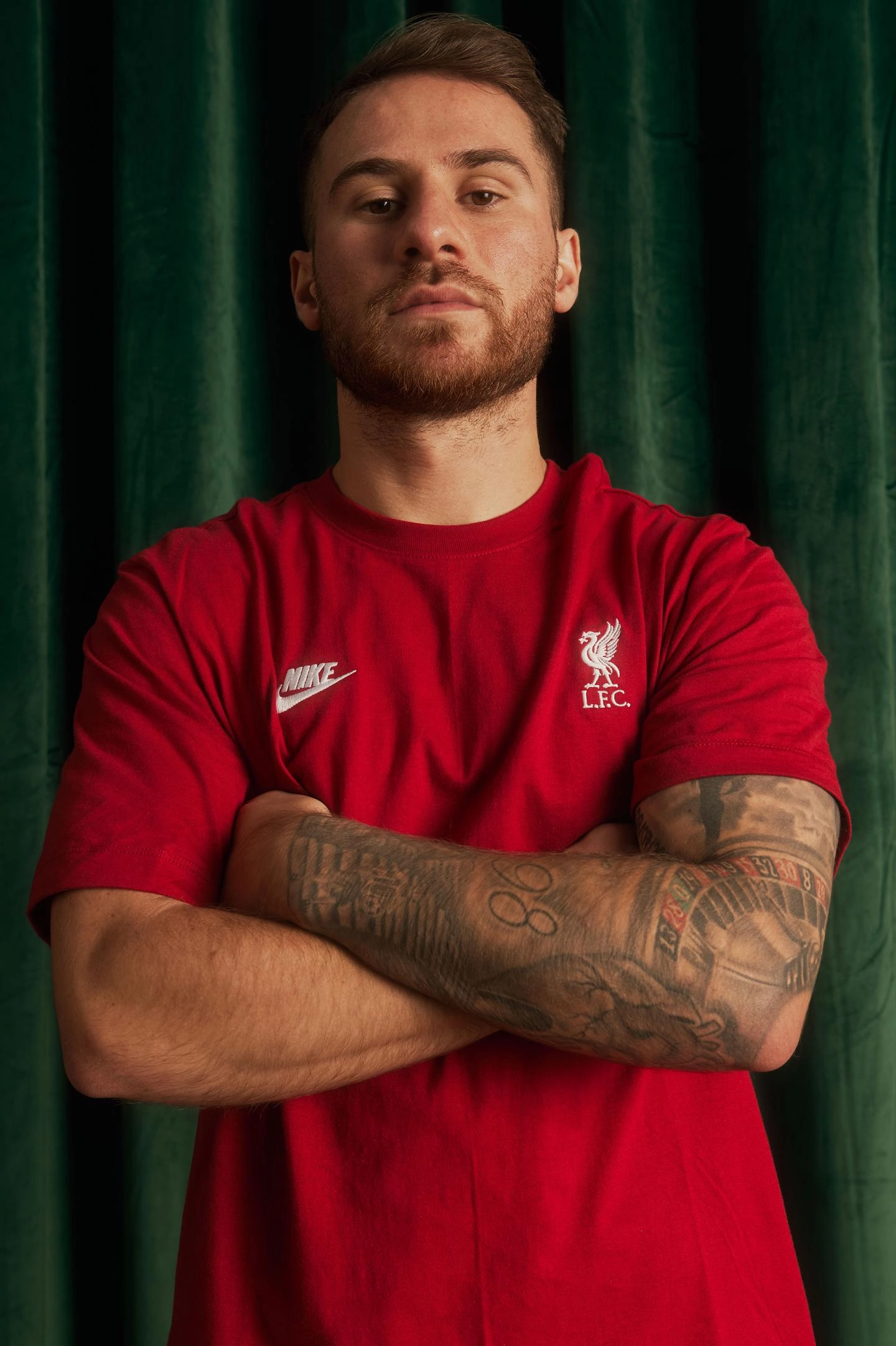
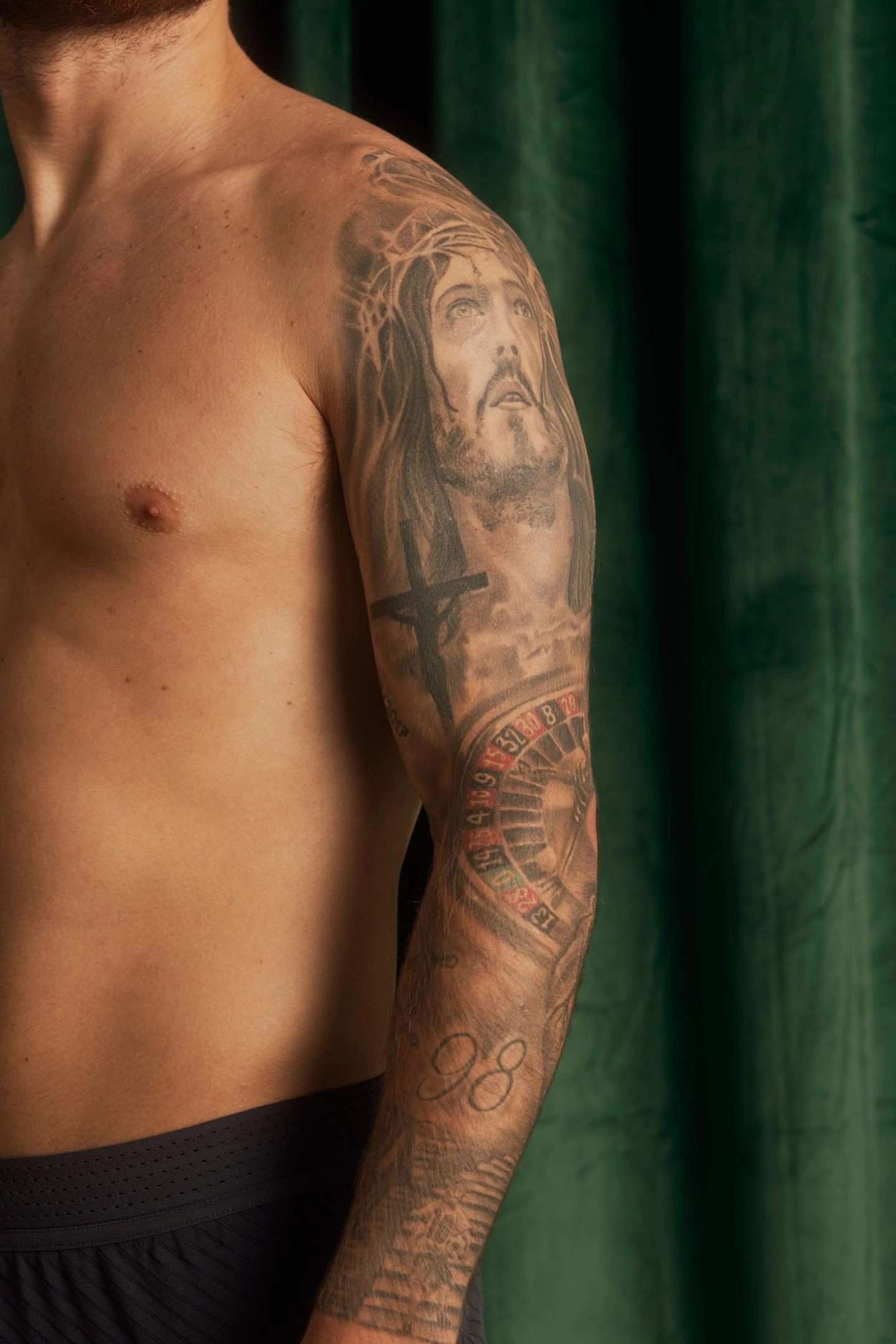
Mac Allister’s left arm is close to a full sleeve, though it does not look like one design planned in a single sitting. Script, portraits, blocks of numbers, religious images, a roulette wheel and smaller connecting details all sit together. Some parts are heavily shaded; in others, the open skin gives the lettering room to breathe.
He likes how tattoos look, but says each one needs a reason. That makes the sleeve less about matching styles and more about keeping important reminders in one place. New pieces can join the arm without erasing what was already there.
There is an easygoing side to the collection, too. Mac Allister explains the personal tattoos, laughs about the roulette wheel and talks about ideas he still has. He does not make every piece sound profound. Like any real sleeve, it feels unfinished in the best sense: it can keep growing.
The number 98 marks his birth year
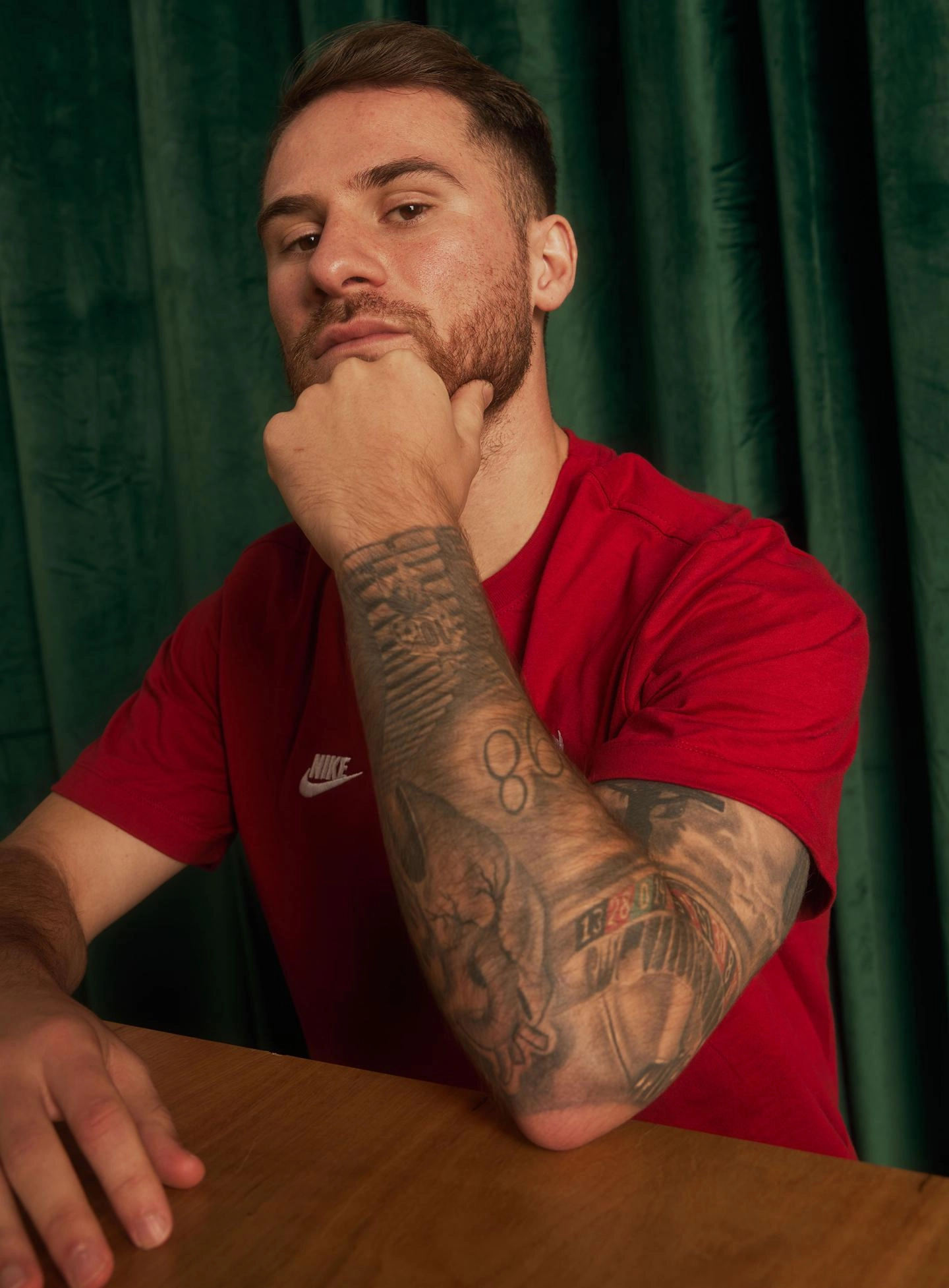
One of the clearest details is 98, the year Mac Allister was born. He explained that himself, so there is no need to read it as a shirt number, a gambling reference or a hidden score. It is simply a marker of where his story begins.
The block numerals also stand out against the softer portrait shading and the fine Spanish lettering nearby. That change in texture helps the sleeve stay legible instead of blending into one dark mass.
Birth years are a common tattoo choice, but here the number gives the rest of the timeline a starting point. Mac Allister has ink for later milestones, including his debut and a promotion with his first club. The 98 points back to the person he was before football became his profession.
A child with a football shows how much the game means to him
Mac Allister has a tattoo of a child carrying a ball beneath one arm and walking toward a heart. He said it represents how much he loves football. The image says what it needs to without a more elaborate theory: it links the boy he was to the career he built.
The heart makes it warmer than a standard football emblem. This is about affection for the game, not only competition or trophies. Football is also part of Mac Allister’s family life: his father, Carlos, played professionally, as do his brothers Francis and Kevin.
It is one of the sleeve’s most personal designs because it centres on feeling rather than achievement. A trophy can mark a win; a child with a ball suggests the love came first. That gives the other football tattoos a little more context.
His parents and brothers are written into the sleeve
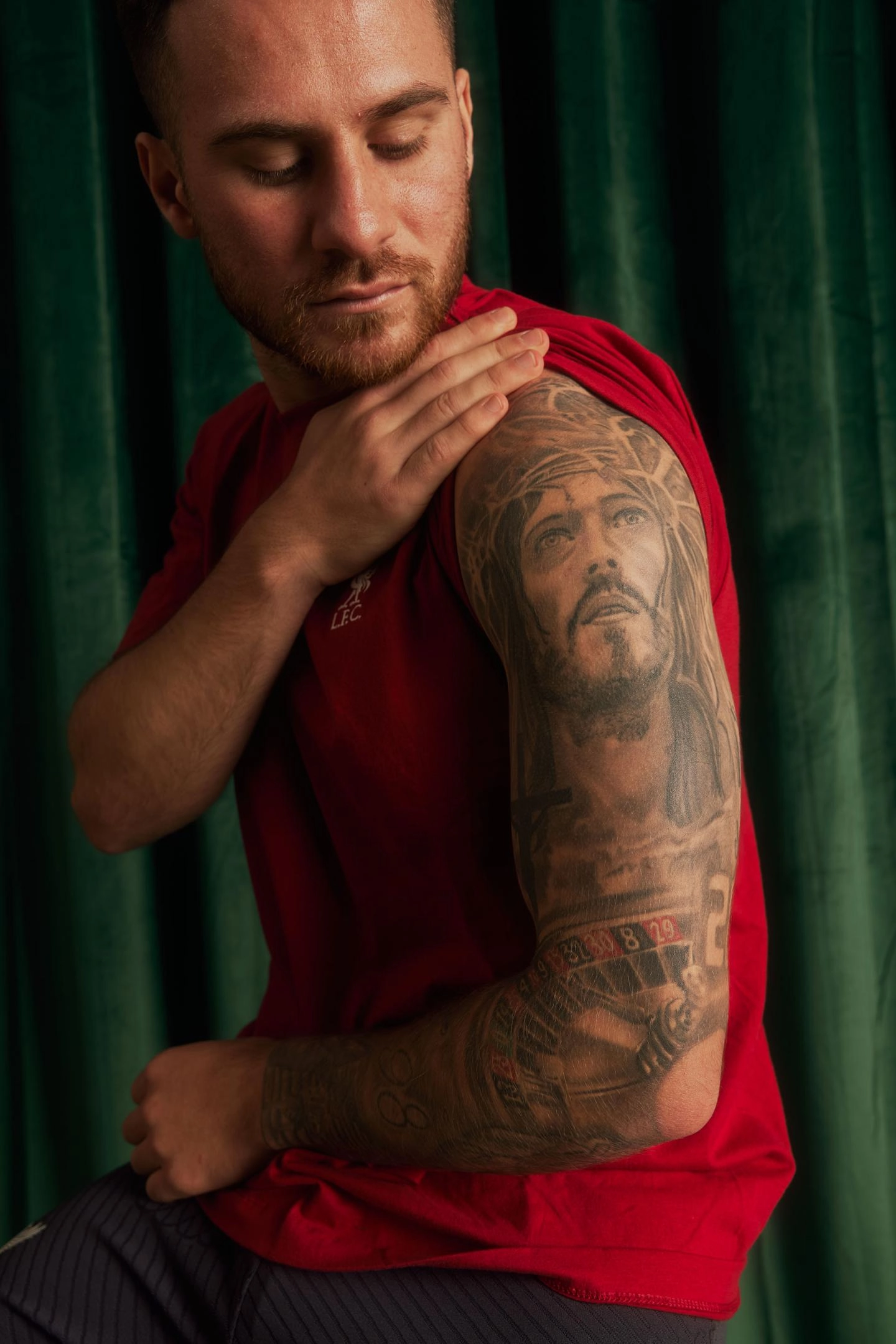
The names of Mac Allister’s parents and his two older brothers, Francis and Kevin, appear among the sleeve’s larger designs. He has described family as the people who stay beside you in good times and bad, which gives these names a meaning beyond a simple roll call.
In Liverpool’s interview, he said his sister’s name was still missing and that he wanted to add it. The family section was not finished just because the most obvious names were already there; he wanted everyone included.
His brothers are professional players too, so the sleeve carries family and football in the same frame. The names sit alongside the Mac Allister football story, without turning the family into a list of rivals or statistics.
Jesus and the cross bring faith into the design
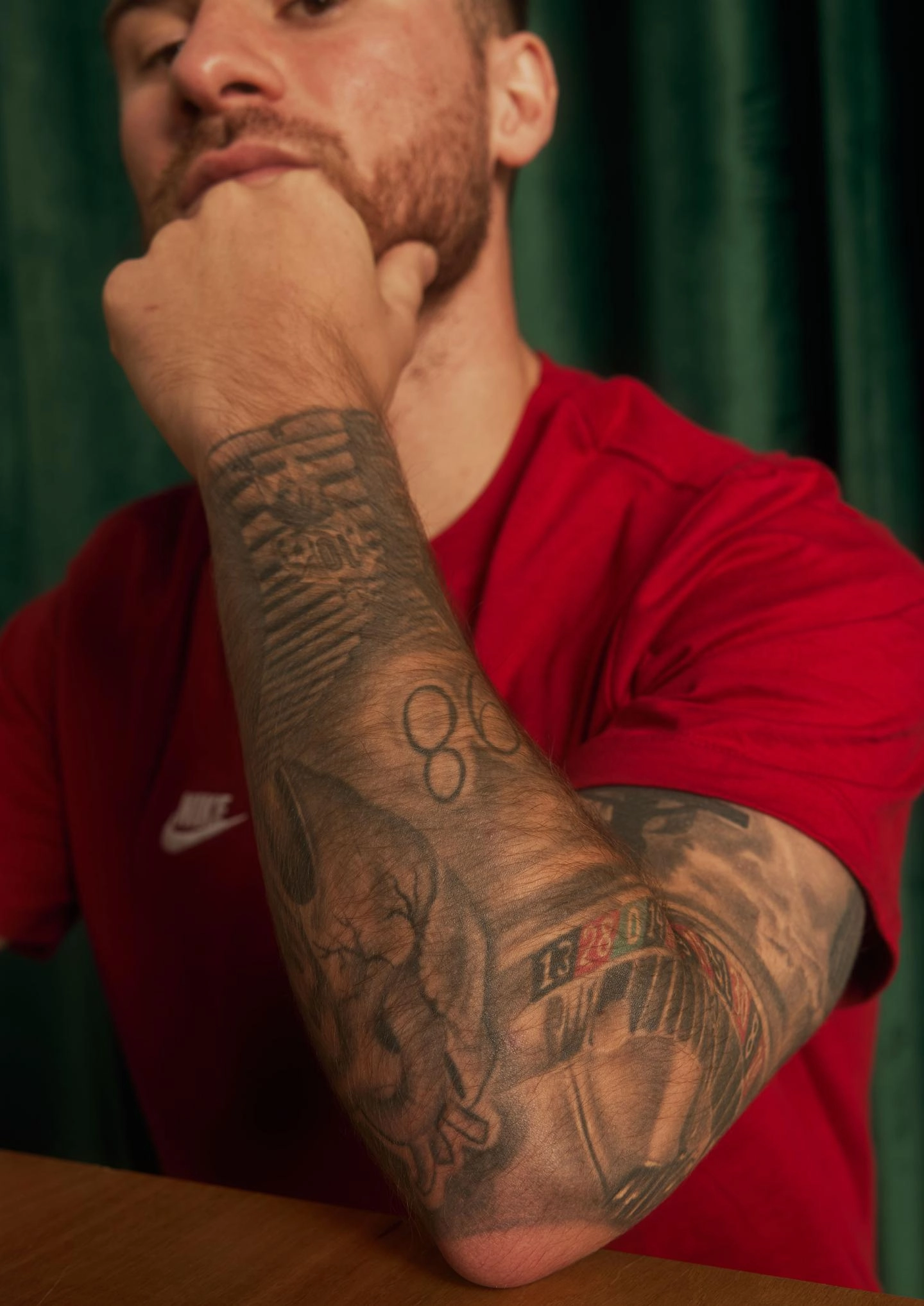
Religious imagery takes up a prominent part of Mac Allister’s collection. The official photos show a detailed Jesus Christ and crucifix design across his upper arm. It is larger and more dramatic than the number tattoos, but it fits the sleeve because it represents something he has said matters to him.
A photograph can show the figure, the cross and the shading, but the personal meaning belongs to the person wearing it. Mac Allister’s own comments let us say faith is part of the sleeve without guessing at every part of his beliefs.
The portrait gives the eye a place to land before it moves down through the lettering, dates and roulette wheel. Its detailed black-and-grey work also reflects the tattoo style he likes in this part of the arm: a realistic face rather than a small cartoon or simple outline.
The roulette wheel was meant to show shirt numbers, not gambling
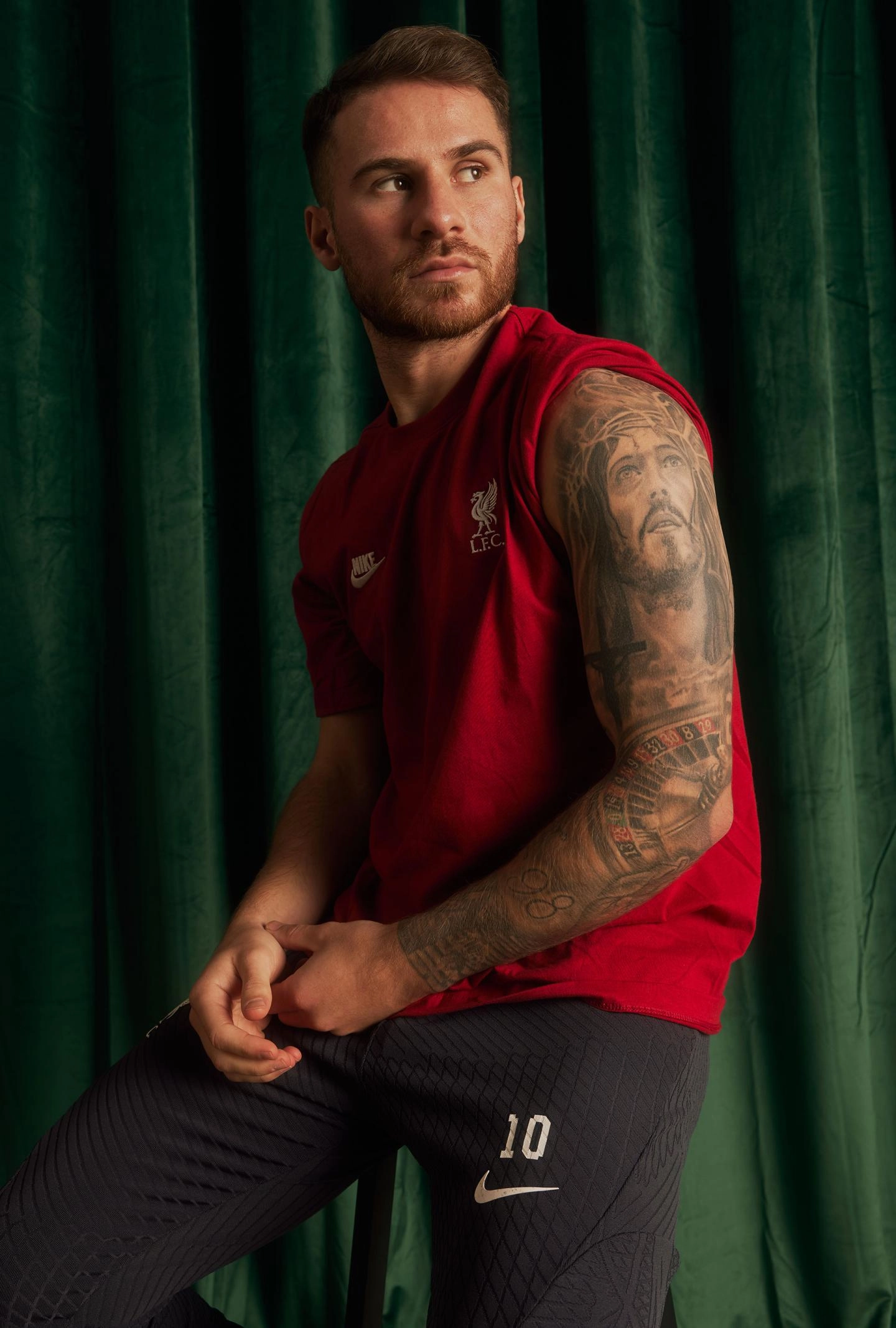
The roulette wheel may be the most misunderstood design on Mac Allister’s sleeve. He said it represents the shirt numbers worn by him and his brothers, Francis and Kevin. The circular shape also helped him fill the awkward space around his elbow and connect the surrounding tattoos.
That is why people sometimes assume he is into gambling when they see it. Mac Allister has said that is not what the tattoo means, and joked that he may regret the choice a little because of how people interpret it. It is a lighter moment in an otherwise heartfelt interview.
The wheel still has a practical role in the sleeve. Elbows are tricky to cover, and a circular design can carry the eye around the joint. Here it both connects the family football numbers and helps the upper and lower parts of the arm flow together.
Career dates keep his early football years close
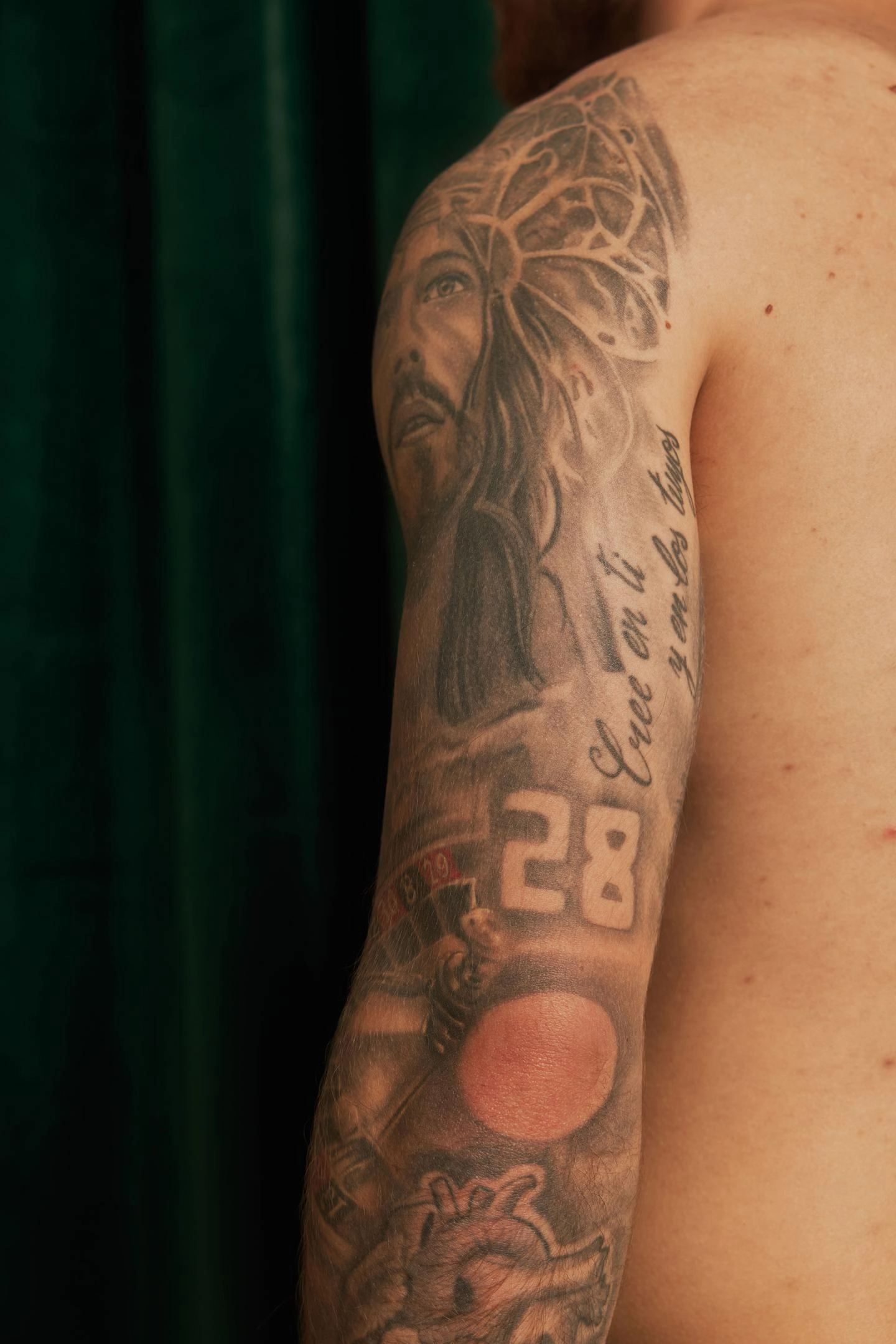
Mac Allister’s sleeve includes dates tied to his early career: his professional debut with Argentinos Juniors and the club’s promotion to the top flight. They are not just milestones picked from a list. They mark the start of his path as a professional footballer.
Date tattoos can look plain beside a portrait, but they can mean more as the years pass. Clubs change, trophies come and go, and the player trying to break through may end up a World Cup winner. These dates keep the beginning in view.
They also point to the steps before global attention. Argentina’s 2022 World Cup win is now the achievement most people associate with Mac Allister, but this part of his sleeve reaches back to the debut and promotion that came first.
The Spanish phrase is about trust and loyalty
One of the smaller details is a Spanish phrase that Mac Allister translates as “trust yourself and your people.” It links neatly with the family names around it and the football symbols tied to the path he chose.
The words also give the sleeve an emotional centre. Mac Allister does not describe success as something achieved alone; he talks about loyalty and the way family stays close when life gets difficult. The phrase puts that belief in a place he can carry with him, whether he is playing for Argentina, Liverpool or an earlier club.
Quote tattoos can feel generic without their context. Here, they sit among names, dates and images that make the message specific to him. The line reads less like a motivational slogan and more like a personal rule he chose to keep in public view.
In a January 2024 interview with Liverpool FC, Mac Allister said he wanted a tattoo for winning the World Cup and another connected to Liverpool. Argentina had won the tournament in December 2022; he was also coming off Brighton’s first qualification for European football and had moved to Anfield.
That interview gives the photos a useful timestamp. The sleeve already held family, faith and early-career memories, but its next chapters were not yet visible. He floated the idea of a large World Cup design on his back and joked that a Liverpool trophy tattoo might go on his leg. A newer photo would be needed to confirm whether he has since done either.
Together, the tattoos make a timeline. The 98 marks his birth year; the child with a ball captures his love of football; his parents’ and brothers’ names keep family close; Jesus and the cross represent faith; the debut and promotion dates remember his early career. The roulette wheel ties the brothers’ shirt numbers together, even if it is the piece he jokes about most.
There is no single style running through the whole arm. Some pieces are realistic, some are lettering, others more symbolic. They do not need to match because the stories are what hold them together.
Mac Allister’s own rule sums up the sleeve: he likes tattoos, but each needs a reason. This is no random collection of passing trends. It records family, faith, early football memories and the milestones he may still add.
For Mac Allister, the ink is not finished. It is still keeping up with the story.