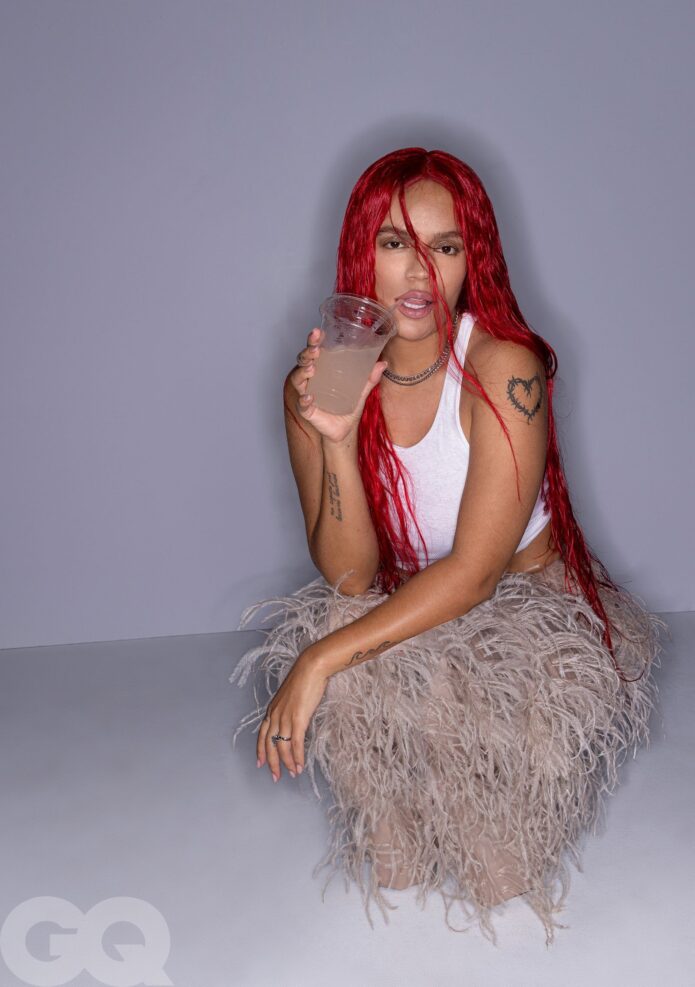
Karol G has talked about some of her tattoos in interviews; others are known only from photographs and coverage. She has explained the thorn-wrapped heart herself, and photos identify three portraits on her forearm. Older reports document lettering, roses and smaller pieces, though their meanings and current status aren’t all equally clear.
The thorn-wrapped heart came from a personal turning point
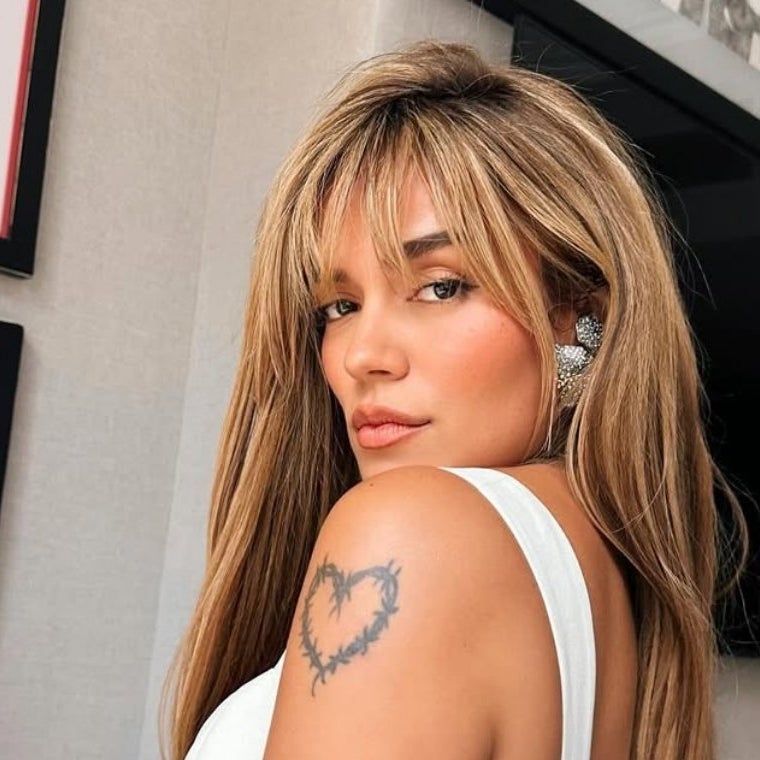
The heart crossed by thorns is one of Karol G’s most recognizable tattoos. It sits high on her arm and appears in sleeveless looks and portraits. In an interview, she connected the tattoo to a difficult period of self-questioning and personal change, and to the start of her KG0516 album era. She described it as belonging to Carolina, the person behind the stage name, rather than as a career logo.
That account gives the heart a more specific meaning than the guesses strangers might make. The thorns give the image a sharp edge, but Karol hasn’t described it simply as a breakup tattoo. Her tattoo marks a complicated stretch in her life. The image may suggest a heart under pressure; the personal history is what she has confirmed in her own words.
The tattoo appears in fashion photos and portraits from the album era, so it is easy to spot across different looks. The photos show the design; Karol’s interview explains why it mattered to her.
Three forearm portraits honor artists she admires
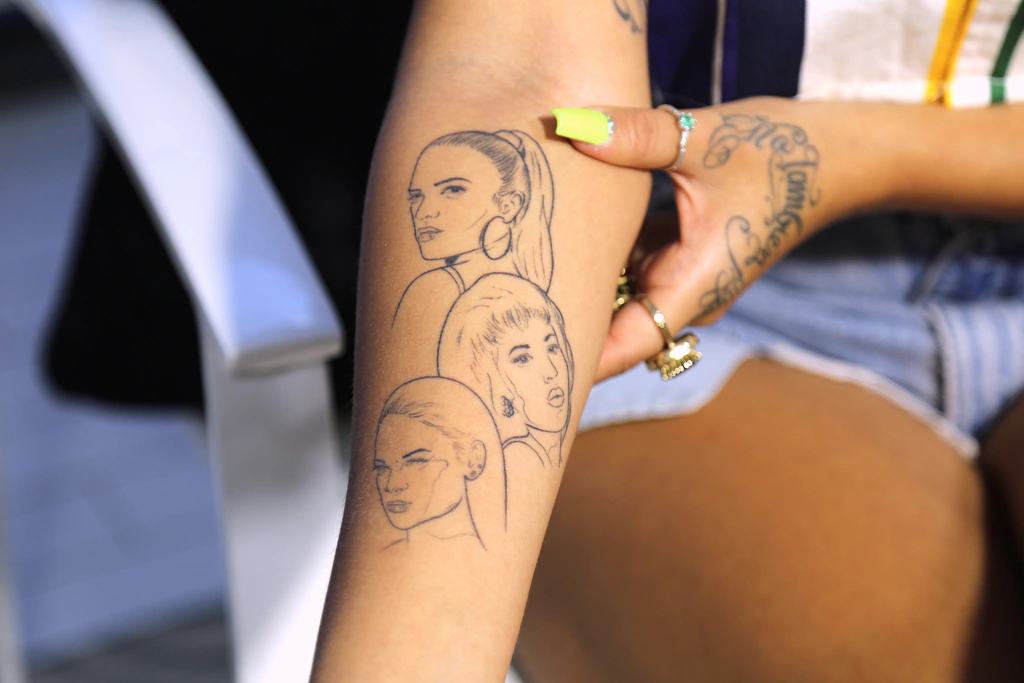
The three fine-line portraits on Karol’s forearm are Rihanna, Selena Quintanilla and Karol herself, stacked vertically. Their clean outlines keep the faces clear without the heavy shading of a photorealistic sleeve. Interviews and contemporary coverage identify all three.
Karol said she chose women she admires. Selena has a particular resonance for a Colombian singer in Latin music; Rihanna’s influence crosses genres. Karol included her own face, too, describing it as recognition of the work and difficult experiences she knows best, not a claim that she ranks above her influences.
The portraits were reported around 2018. Together, they speak to admiration and self-recognition. The sources identify who is pictured and give Karol’s broad reason for choosing them, but not a separate private story for each face.
A butterfly sits beside the dates and numbers on her hand
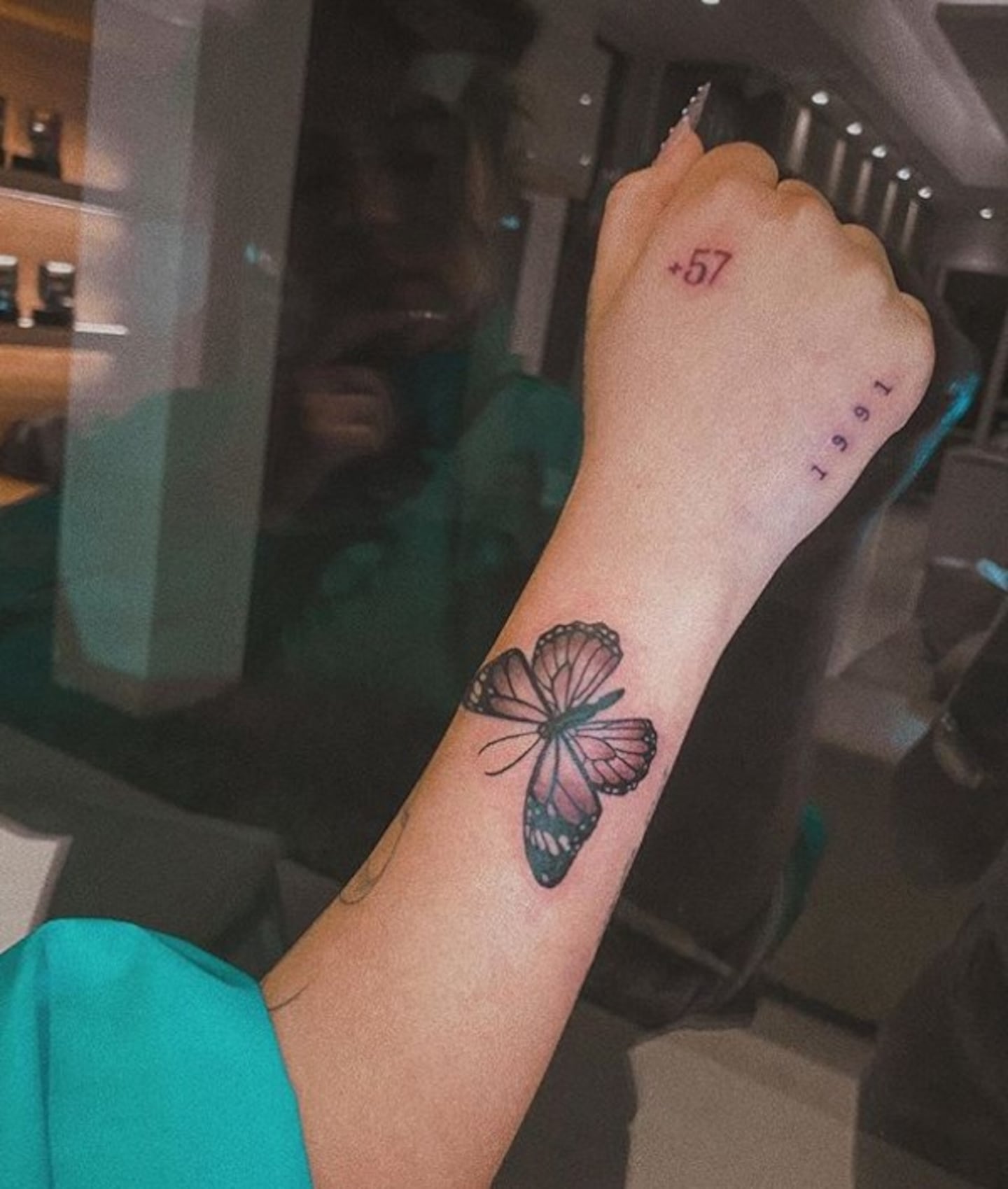
A butterfly on her forearm sits beside two small hand tattoos: 1991, her birth year, and +57, Colombia’s calling code. Both can disappear in a wide concert or red-carpet shot, which is why the close-up helps.
The butterfly is its own tattoo, not decoration around the numbers. Some coverage reads it as a symbol of change, but Karol hasn’t clearly explained it in the sources reviewed. That familiar association shouldn’t be presented as her own statement.
Taken at face value, the details give us a birth-year reference, a Colombian calling code and a butterfly whose private meaning remains unclear.
Dark roses add a different kind of detail
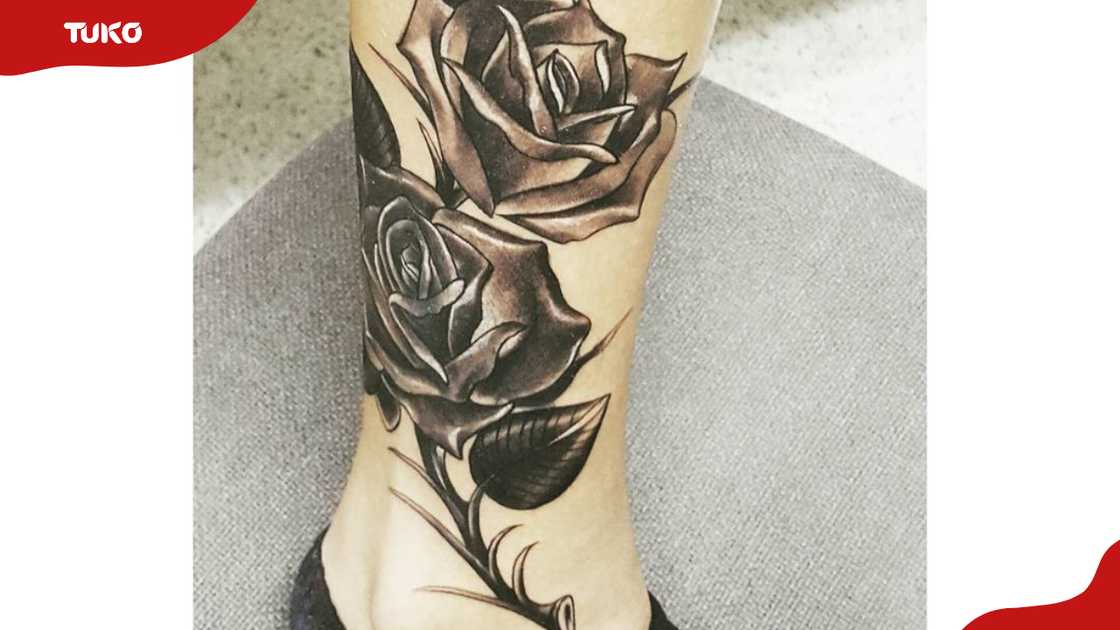
Photos also show black roses on Karol’s lower leg. Shaded petals and dark leaves give the flowers a heavier look than the fine-line portraits. They remain easy to recognize even in a wider photo.
Older roundups disagree about the exact side, while the close image supports only a lower-leg placement. There’s no reliable first-person explanation for the flowers. A rose by itself doesn’t establish heartbreak, resilience or any other stock meaning.
The dark, traditional-looking flowers add a different style beside the numbers, script and delicate portraits.
Her lettering mixes self-talk with a message of hope
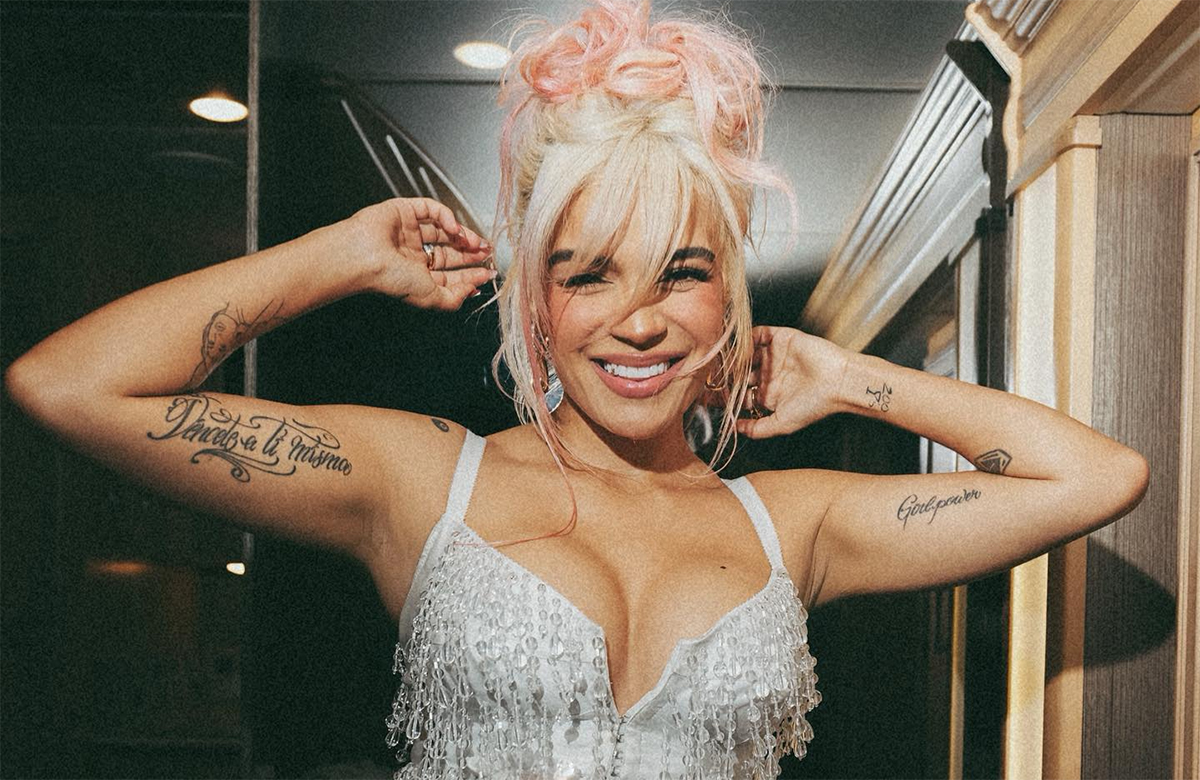
Among the word tattoos, photos and reporting identify “Girl Power” and the Spanish phrases “Esto también pasará” (“This too shall pass”), “Véncete a ti misma” (“Conquer yourself”) and “No hay remordimientos, solo lecciones aprendidas” (“No regrets, only lessons learned”). They read like messages she chose to keep close, though the sources don’t date or fully explain every phrase.
“Girl Power” is often described as a statement of confidence in a male-dominated music business. That fits Karol’s public comments about building a career in reggaetón, but one phrase can’t stand in for her whole outlook. The other lines mention change, discipline and learning without needing a hidden explanation.
Small script can be hard to read when her arm turns or a photo is compressed. This close-up makes the words easier to identify than a standard portrait. Where the letters aren’t legible, there’s no reason to guess.
“Hope” is a single word with a clear placement

The word “Hope” sits beneath Karol’s chest and appears clearly in summer and performance photos. The lettering is plain, with no frame around it, so it looks different from the thorned heart and shaded roses.
Photos establish the word and its placement, but not the private moment behind it. Unless Karol has supplied that story, the description can stay simple: “Hope” tattooed low on her chest.
A former partner’s name belongs to the history, not the current inventory
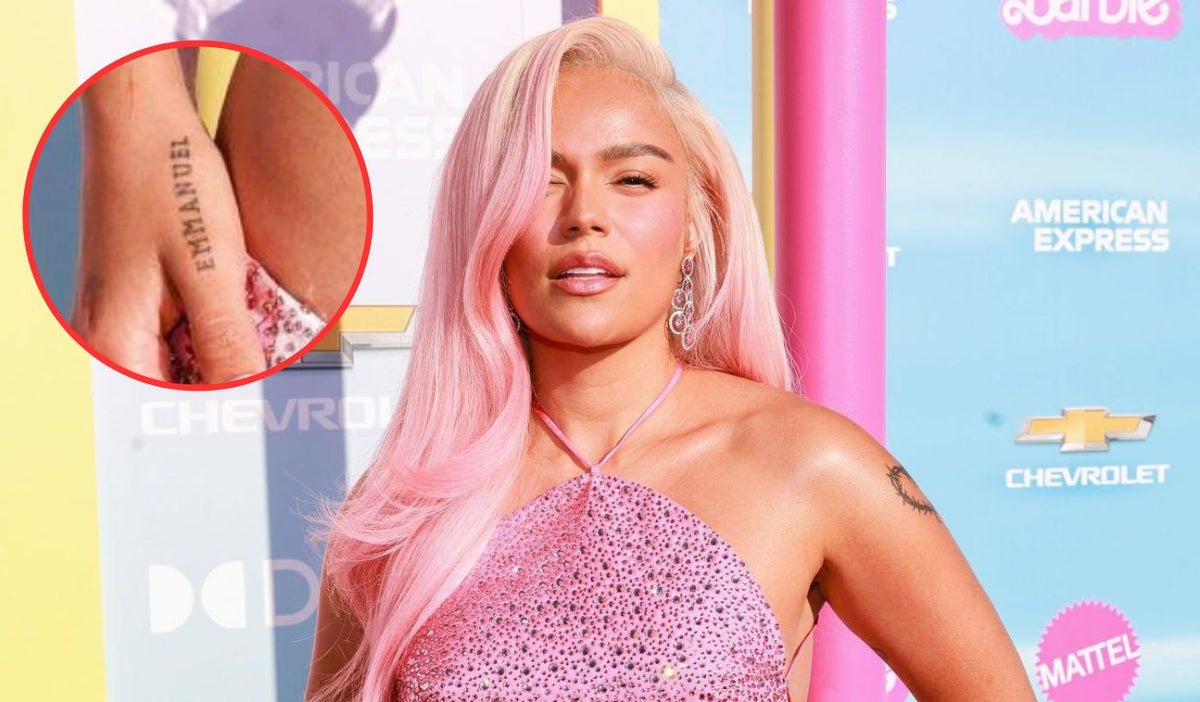
Older coverage also records the name Emmanuel. A tattoo of the name is tied to Karol’s former relationship with Anuel AA, whose given name is Emmanuel. Later reports say the lettering was removed or covered after the relationship ended. It belongs in the timeline, not among the tattoos she still wears.
Celebrity tattoo lists can outlast a design that has been changed, covered or removed. A dated photo shows it existed then, not whether it is still there. Here, older coverage connects the name to the relationship and later reports describe its changed status. The dates matter.
What can be said with confidence
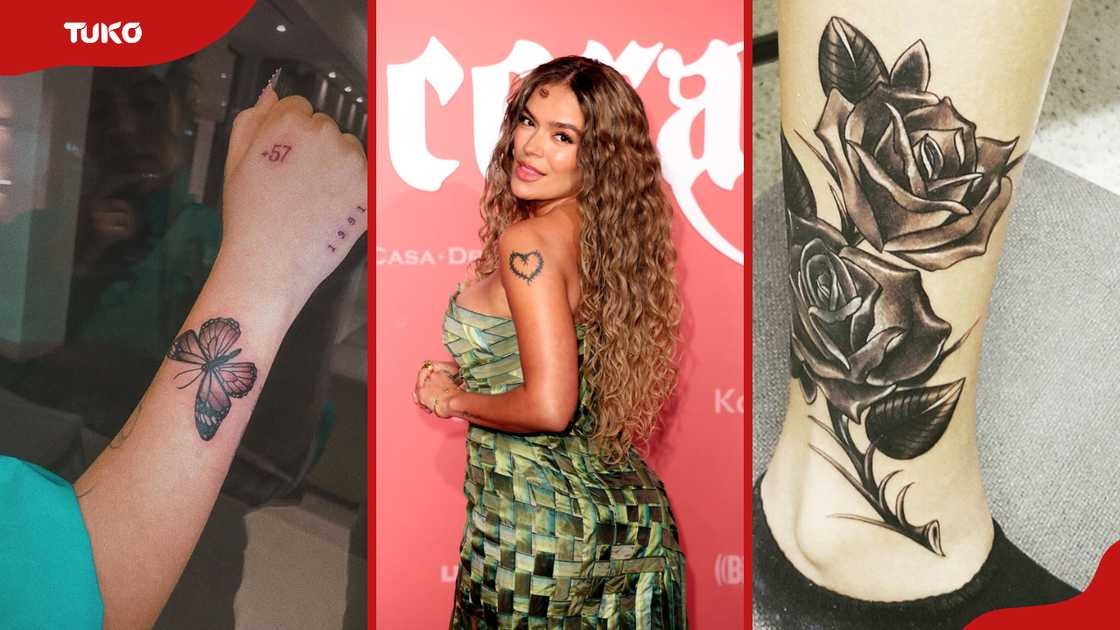
Karol G’s collection includes a heart she has explained as a turning point, portraits of artists she admires, numbers tied to Colombia and her birth year, dark roses, a butterfly and several phrases. Some meanings come from Karol; others are descriptions based on photos. Keeping those apart gives a fuller inventory without filling in the blanks.
The heart has the clearest account because Karol has described it. The portraits have known subjects and a broad explanation. The butterfly, roses and most phrases can be described without guessing at a personal confession. The Emmanuel lettering remains part of her tattoo history, even if later coverage says it was removed or covered. That history includes both the designs she wears and those she has changed.
6 thoughts on “The Tattoos Karol G Chose to Keep Close”