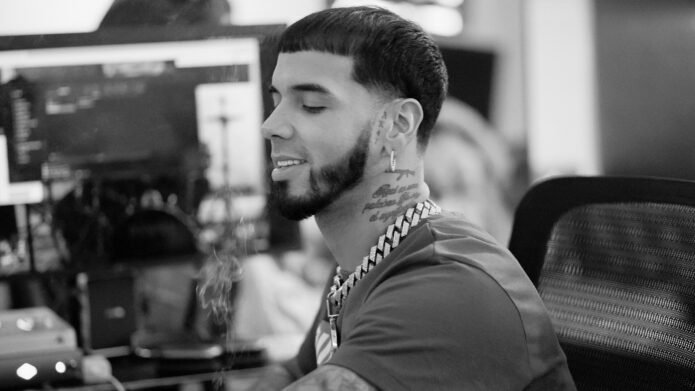
Anuel AA’s tattoos read as a series of memories: childhood anime, family, faith, career and relationships. In GQ’s Tattoo Tour, he explains much of the collection himself. It includes a Dragon Ball Z arm sleeve, an elephant, religious portraits, hand lettering and later cover-ups.
His comments explain what the elephant and many personal marks mean; photographs show where they sit. Small or blurry designs are harder to identify.
Dragon Ball Z turns Anuel’s arm into a record of his younger self
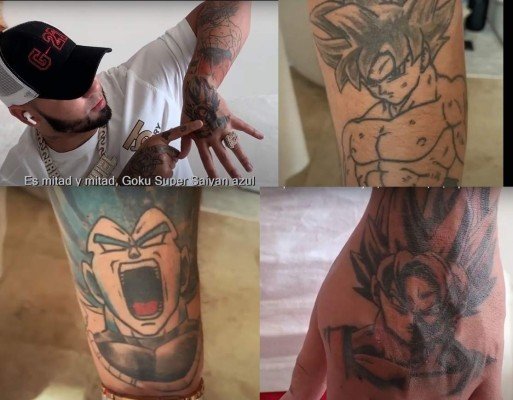
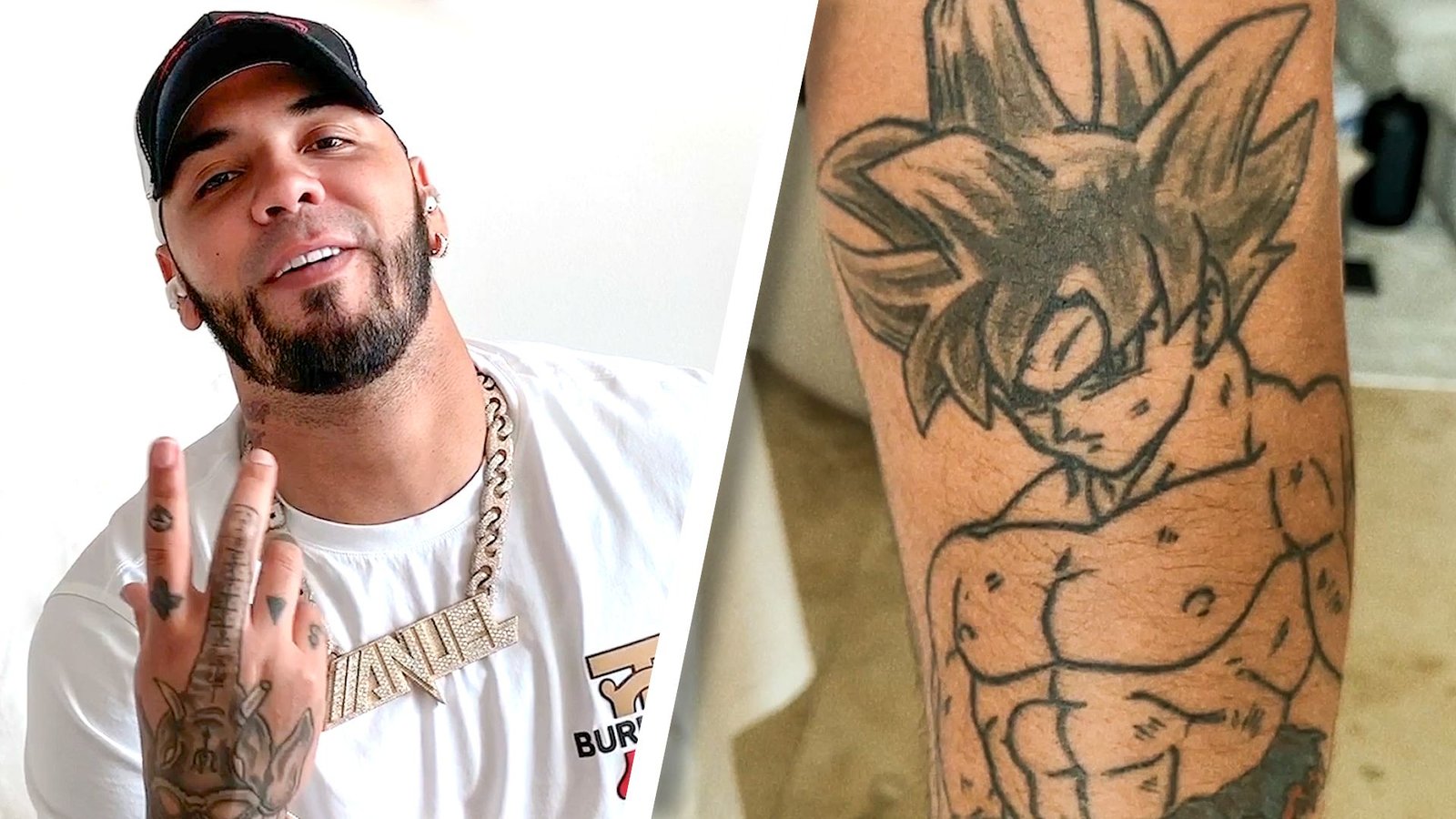
GQ’s Tattoo Tour shows Goku, Vegeta and a blue Super Saiyan across Anuel’s arm, which was still being filled in during filming. The sleeve was still developing, and the characters occupy separate sections, mixing black-and-gray line work with colour and shading.
Anuel connects the anime images to his infantil, or childlike, side and to the cartoons he watched before fame. The detailed portraits give the sleeve room to dominate the forearm without turning it into one oversized logo.
He also talked about continuing the work across his back and arm. The tattoo tour captures one stage; later photographs may show added shading or characters.
The elephant is an early symbol tied to fame and fortune
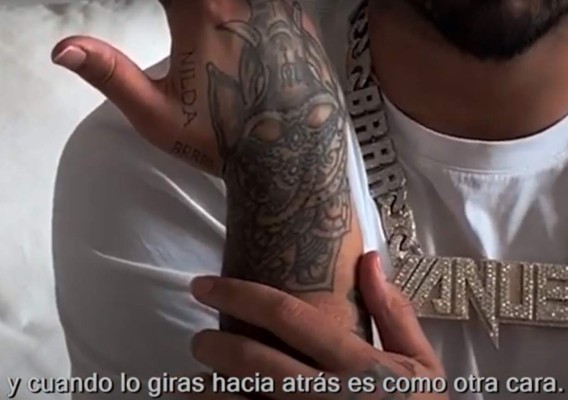
Anuel identifies an elephant among his early tattoos and connects it with fame and fortune. The elephant is more than an animal in the inventory; it marks an ambition he has described himself. His collection includes much more than animal imagery.
Its place in the timeline matters. Early designs can remain visible beneath later work, and the elephant points to a period before the Dragon Ball sleeve, faith imagery and relationship names became part of the collection.
The fame-and-fortune meaning is the one Anuel has shared. He has not assigned a separate meaning to every part of the elephant image or called it a universal symbol of ambition.
Faith, family and memory sit close to the chest
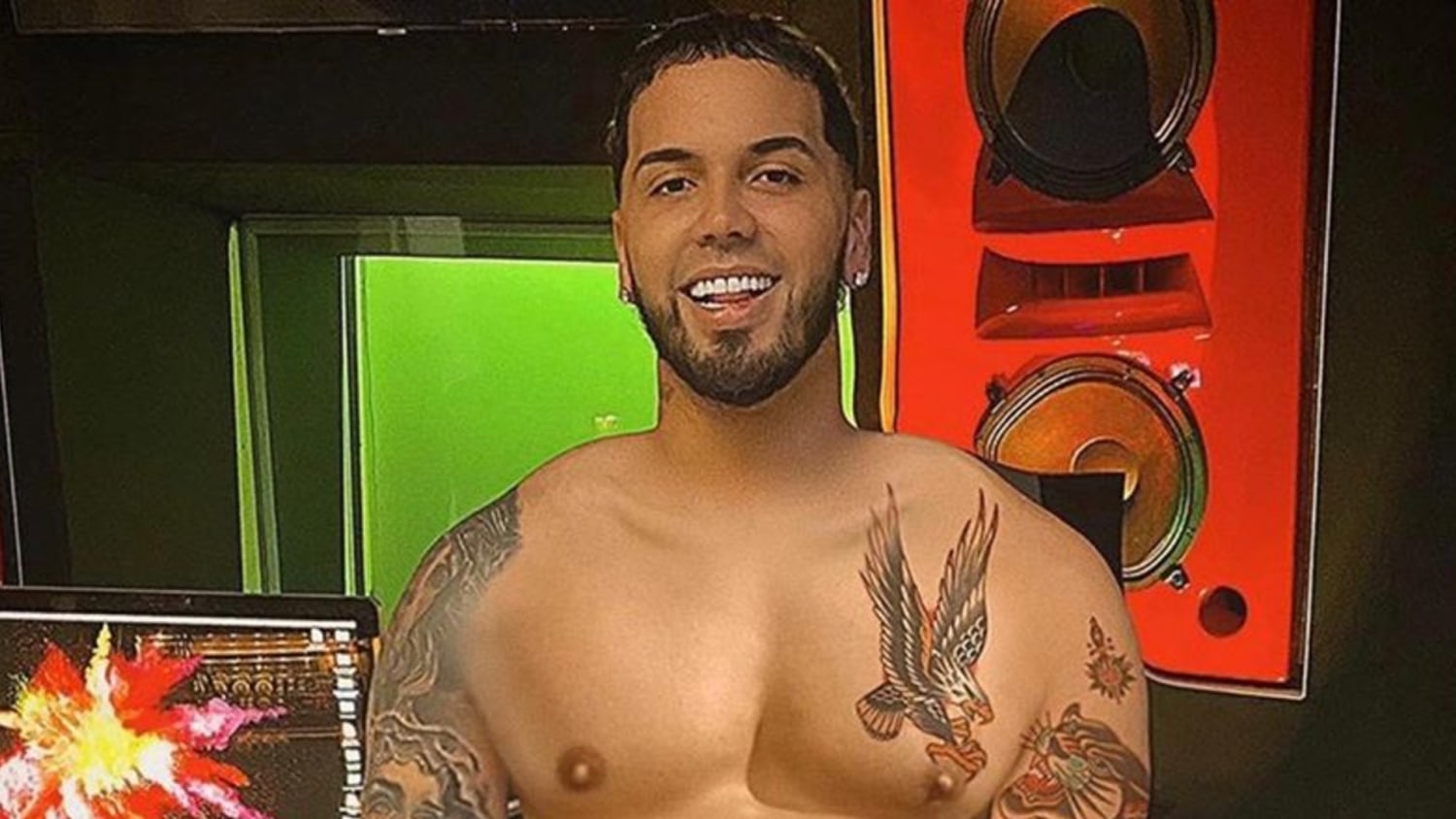
GQ’s tattoo tour shows religious imagery, portraits and symbols around Anuel’s chest and torso, including designs tied to family and memory. He connects some religious tattoos with his spiritual journey and the period he spent in prison.
A photograph can identify a face or cross; Anuel’s comments give context for why he chose it. The image and the interview fill in different parts of the story.
He also discusses tattoos honouring relatives and people close to him, including his son, his mother and a late friend. The portraits are visible, but their identities and messages depend on what he has said about them.
Hand and neck cover-ups show that the tattoo map can change
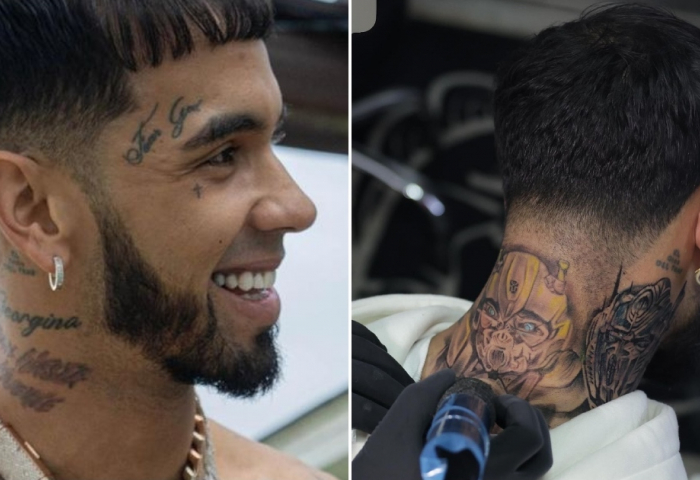
CiberCuba reported in 2024 that Anuel covered names associated with former relationships. The report shows a Batman silhouette replacing a name on his hand and a portrait covering a name on his neck, with studio photographs documenting the work.
Cover-ups have to absorb the old lettering, so the new shapes do more than add another picture. Dark contours and faces can hide the earlier design while giving the area a new look.
Dates matter here: an older photo and a photo after the cover-up can both be accurate while showing different tattoos in the same place. Anuel’s hand and neck designs changed, and the photographs show the sequence.
What Anuel has explained and what photographs show
Anuel has enough public tattoo material for a detailed record, but no single image shows all 27 at once. GQ’s tour pairs close photographs with his explanations; La Prensa offers another view of the Dragon Ball designs, and CiberCuba documents a later cover-up. Together they support an inventory without decoding every small symbol.
The collection moves between childhood fandom, ambition, faith, family and changing relationships. The anime sleeve is its visual centre; the elephant marks an early career idea, while religious and family tattoos add memories. The cover-ups show that visible ink can change.
For anyone looking at Anuel’s tattoos as design, the scale and placement matter as much as the subject. Character work needs space for facial detail; cover-ups need shapes that can hide old lettering; religious portraits rely on contrast and a clear focal point. The reported meanings help, but the designs can still be read on their own.
7 thoughts on “Inside Anuel AA’s Tattoo Map: Dragon Ball, Faith and Family Ink”