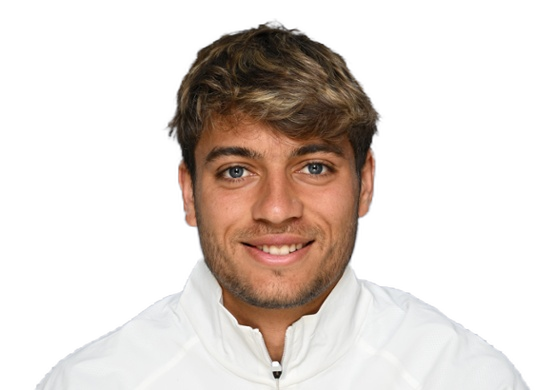
Flavio Cobolli’s tattoos make perfect sense once you know what he cares about. The Italian tennis player has ink tied to AS Roma, close friends, big matches, and the kind of ridiculous on-court emotion that makes a normal celebration look a little tame. His collection isn’t built around one neat visual theme. It’s a set of reminders, and some of them are surprisingly specific.
There’s a red-and-gold 52 on his arm for Edoardo Bove, a compact AmoR tribute linked to Daniele De Rossi, lettering across his side, and a newer Hulk tattoo connected to Italy’s Davis Cup run. The pieces don’t all look alike, but they share the same idea: Cobolli tends to tattoo moments and people he doesn’t want to lose.
The newest headline is the Hulk piece. Cobolli showed it after beating Terence Atmane at the 2026 Delray Beach Open and joked that he needed to feel like the superhero on court. The tattoo refers back to his shirt-ripping celebration during Italy’s 2025 Davis Cup campaign. He’d saved seven match points against Zizou Bergs, helped Italy reach the final, and apparently decided that memory deserved its own character.
That’s a more useful way to look at Flavio Cobolli’s tattoos than simply counting them. Some designs are easy to spot in a match photo. Others only appear when he lifts his shirt, points at his arm, or catches the light at the right angle. The collection feels active, just like his tennis. It changes as new wins, friendships, and pieces of football culture find their way onto his skin.
The 52 tattoo for Edoardo Bove
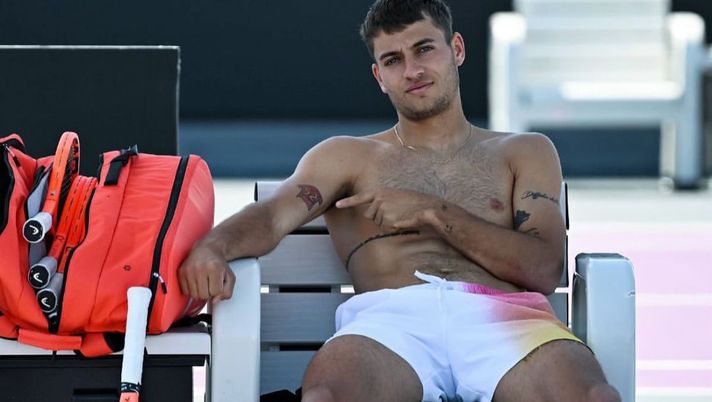
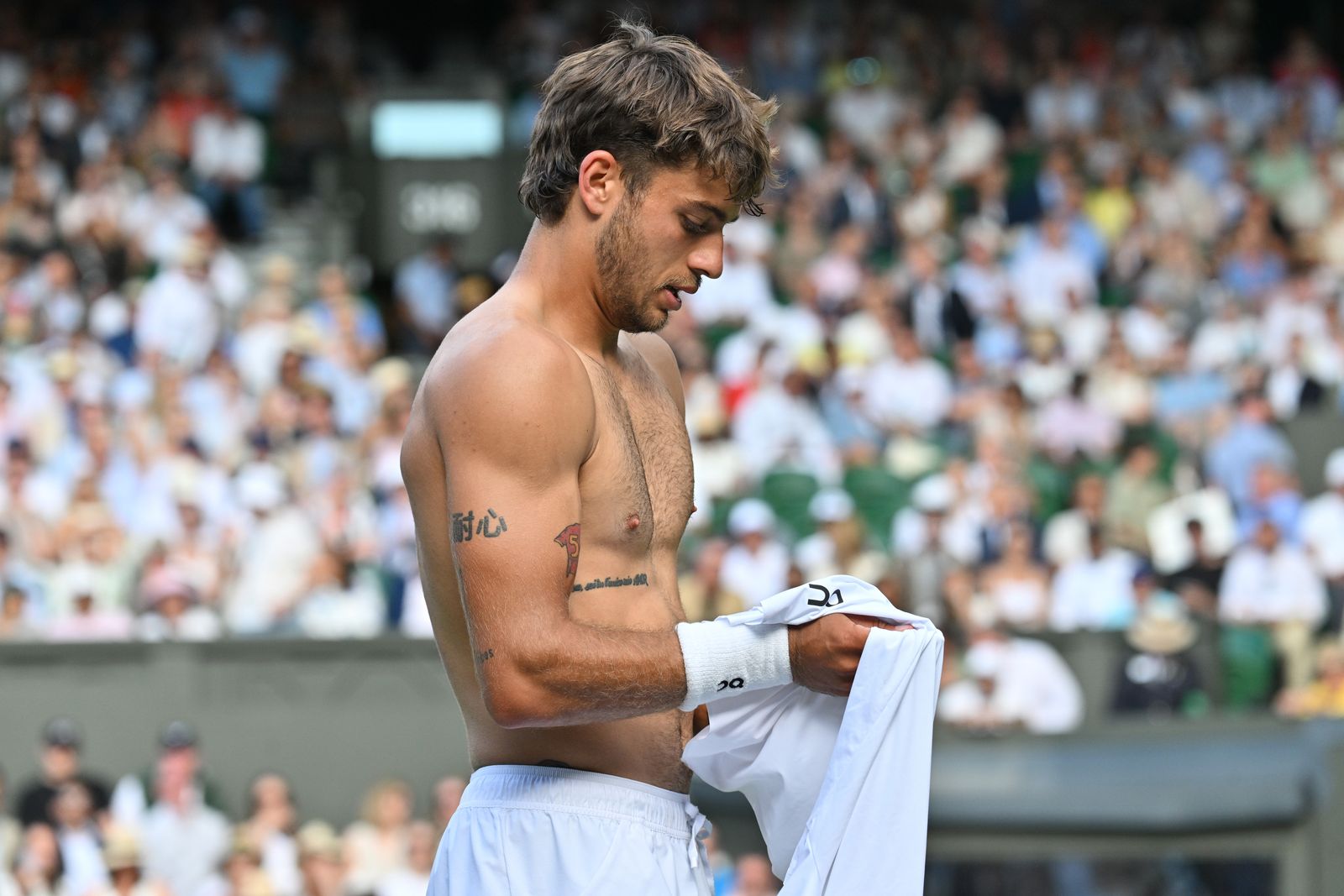
The 52 tattoo is one of Cobolli’s clearest tributes. It sits on his right arm and recreates the number from the Roma shirt worn by Edoardo Bove. Cobolli and Bove were connected through Roma’s youth setup, and their friendship continued even as one moved into tennis and the other built a football career. The tattoo puts that bond somewhere visible without needing a name or a long quote.
In the photograph, the number is made to look like a football shirt rather than plain block lettering. The red-and-gold colors do a lot of the work. Anyone who knows Roma can read the reference immediately, while the jersey shape keeps the tattoo personal instead of making it look like a generic number design.
That choice of format matters. A simple “52” could have looked like a date, a lucky number, or a sports statistic. Add the shirt colors and the design becomes a specific memory. It points to one person, one club, and one part of Cobolli’s life that existed before the bright lights of the ATP Tour.
The placement also suits the tattoo. The upper arm gives the number enough room to stay readable, and it can be covered when he’s wearing a standard tennis shirt. When Cobolli takes his top off after a win, though, the piece becomes part of the celebration. It’s a quiet tattoo that can turn loud when the moment calls for it.
If you’re borrowing the idea, the strongest lesson is to make the reference narrow. A football number means more when it belongs to a real person. Use the number of a family member, a teammate, or a place that shaped you, then give it one visual clue that makes the meaning clear. The shirt treatment does that for Cobolli without crowding the arm.
The AmoR calf tattoo and the Roma connection
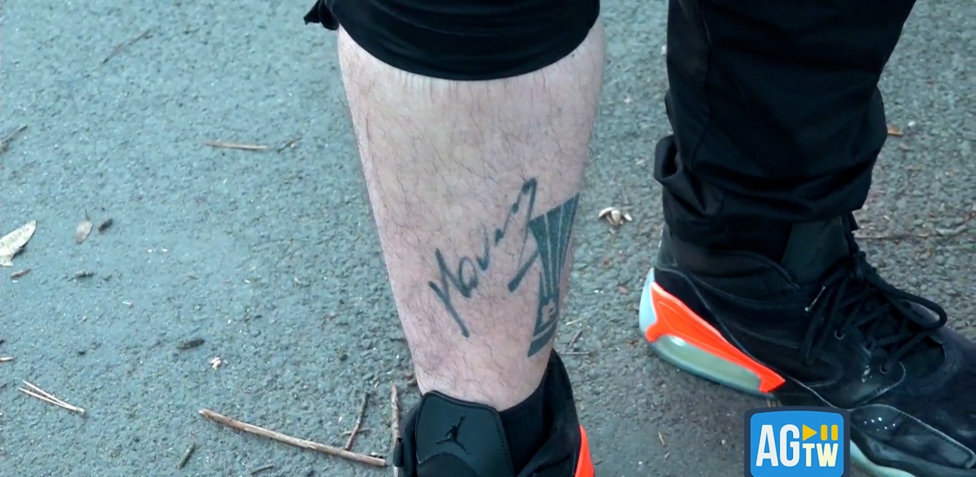
On Cobolli’s calf, the word AmoR is a small but clever Roma reference. Read normally, it looks like a stylized word. Read with the reversed-Roma idea in mind, it connects to the phrase associated with Daniele De Rossi: “Sei tu l’unica mia sposa, sei tu l’unico mio amor.” Cobolli has talked about his admiration for De Rossi, so this isn’t random football lettering placed on a leg for decoration.
The tattoo works because it leaves a little work for the viewer. It isn’t a giant club crest or a full portrait. The capital letters and the unusual spelling carry the reference, while the placement keeps it compact. It can be shown when Cobolli lifts a trouser leg after a match, but it doesn’t dominate every photograph he appears in.
Short lettering needs more planning than people expect. Four or five characters can look effortless, but the spacing has to be right and the tattoo needs to follow the shape of the calf. A word that sits perfectly on a flat sheet of paper can distort once it wraps around muscle. Cobolli’s design is narrow enough to stay legible without stretching across the whole leg.
The surrounding details help, too. The close-up view shows the tattoo beside his shoe and sock, which makes the design feel tied to match day rather than presented as a polished studio flash sheet. That’s part of its charm. The tattoo belongs to a player who’s just finished competing, not to an abstract mood board.
There’s also a nice contrast between AmoR and the 52 tattoo. One is a compressed phrase connected to a football idol. The other is a jersey number connected to a friend. Both point back to Roma, but they use different visual languages. That keeps the collection from looking repetitive even though the same club sits behind both pieces.
Other visible arm and torso ink
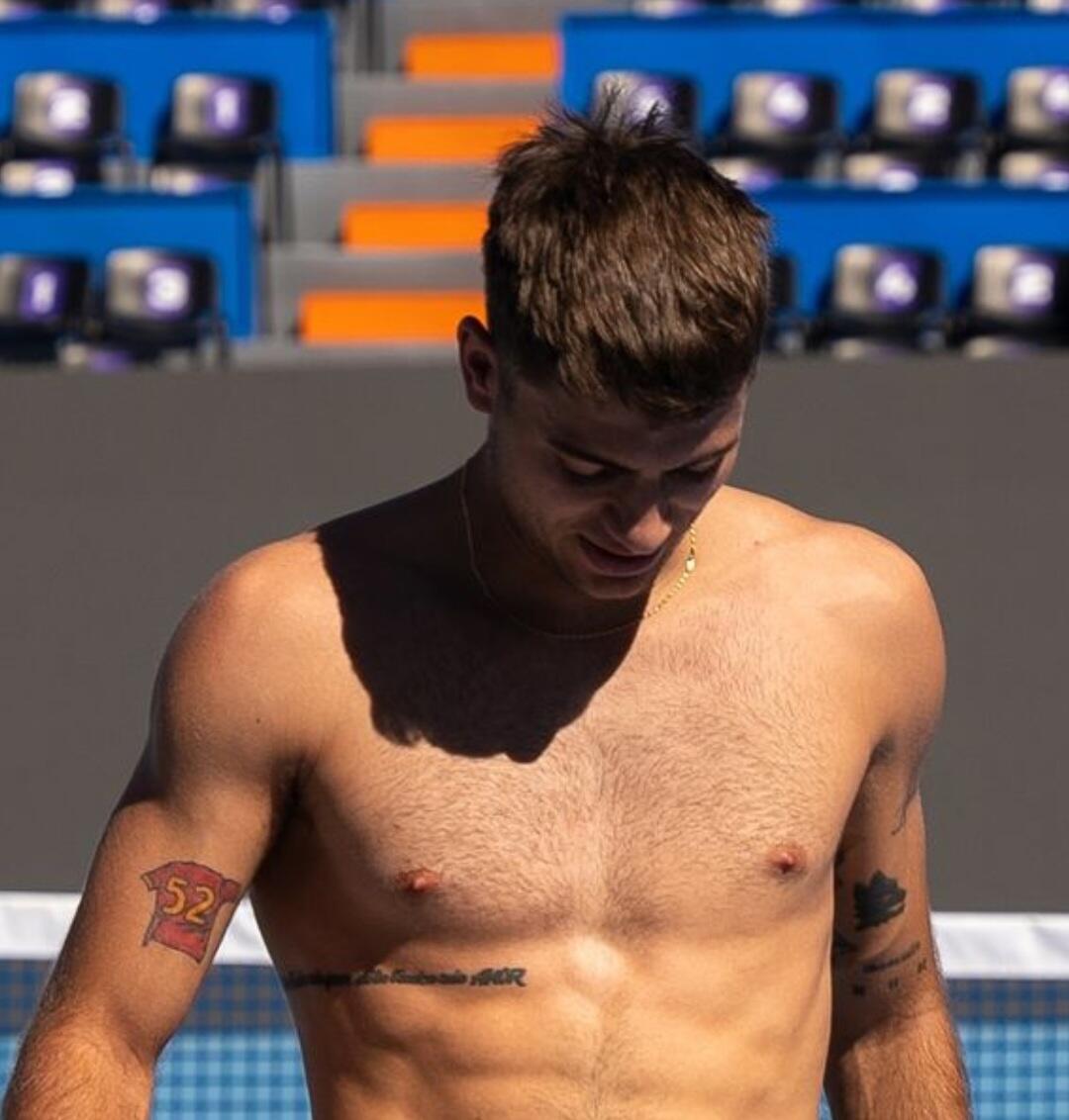
Cobolli has more visible ink than the two designs that get the most attention. Training and match photographs show additional arm pieces and lettering along his side. Some of the smaller designs are hard to identify with confidence, especially when the image is taken at a distance or Cobolli is moving. It’s better to describe what the photographs actually show than to assign a dramatic meaning that hasn’t been reported.
There is a reported wolf symbol connected to AS Roma, and the broader collection clearly leans into the club’s place in Cobolli’s life. You can also see compact marks across the arms and torso that give the tattoos a scattered, lived-in feel. They aren’t arranged as one symmetrical sleeve. They sit in the gaps created by years of adding pieces whenever a person, phrase, or memory felt important enough.
The visual rhythm is casual rather than over-designed. That makes Cobolli’s tattoo style useful reference material for anyone who likes a collection that grows slowly. Small designs can share an arm without being forced into a single theme. The trick is leaving enough space between them and accepting that the final result will look collected instead of perfectly planned.
His side lettering is a good example of why placement changes the mood of a tattoo. Words across the ribs or upper side can stay private under normal tennis clothing, then appear in a candid photograph or a celebration. That gives the wearer control. The tattoo doesn’t have to be visible all day to stay meaningful.
If you like this approach, start with the stories you return to most often. A small mark for a club, a friend, or a phrase can be more satisfying than choosing a large image just because it fills space. Cobolli’s collection shows how a few compact tattoos can build a strong identity when every addition has a reason behind it.
Cobolli’s Hulk-era court context
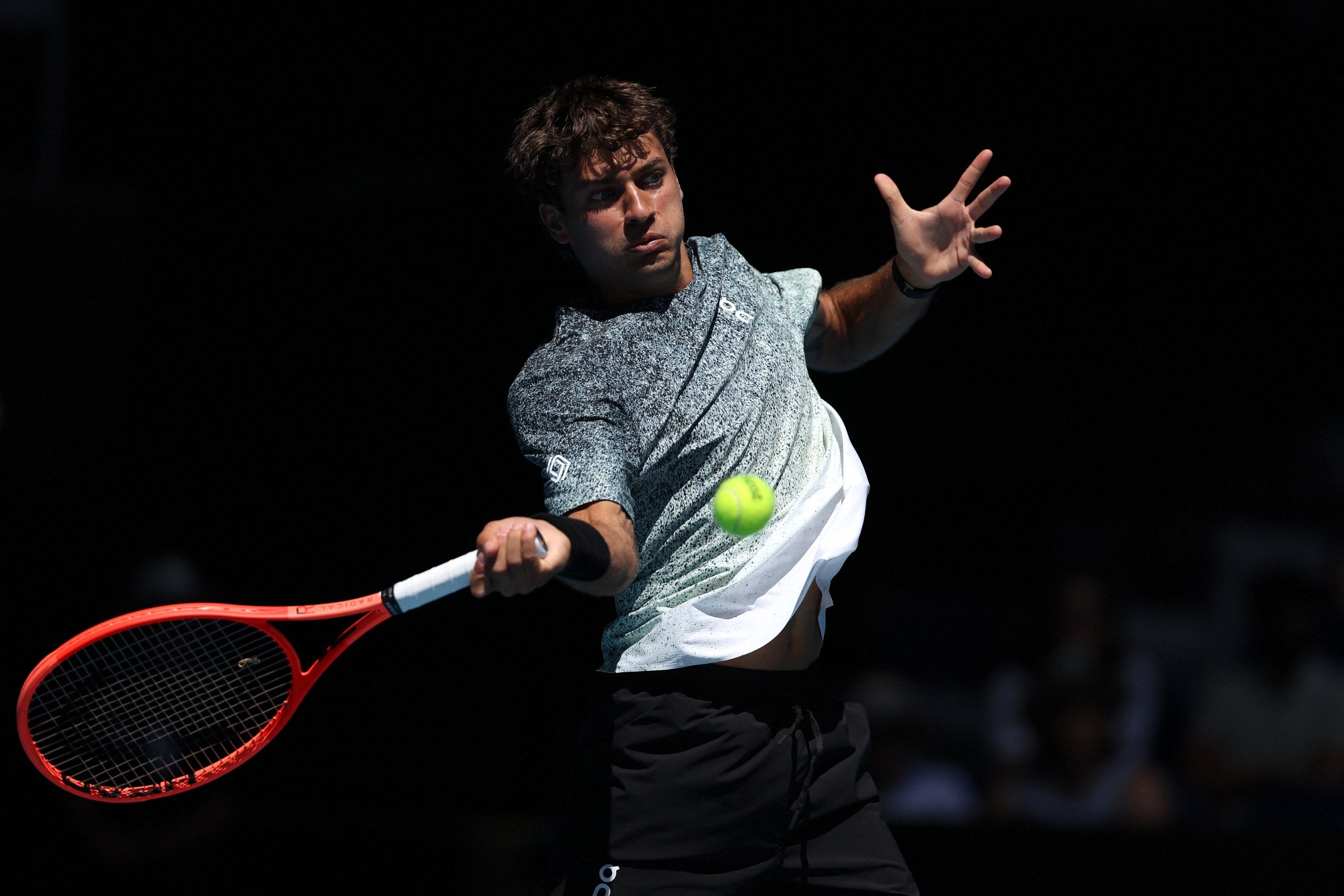
The Hulk tattoo arrived after one of Cobolli’s most dramatic tennis memories. During the 2025 Davis Cup semifinal, he helped Italy past Belgium after saving seven match points and winning a huge deciding-set tiebreak. His celebration involved ripping his shirt, and the Hulk design turns that burst of energy into a permanent joke and a permanent reminder.
When Cobolli displayed the new tattoo in Delray Beach, he said it was only about two weeks old. He also connected it directly to the feeling of being powerful in that Davis Cup moment. That explanation gives the design more weight than a standard superhero tattoo. It isn’t just an image he likes. It’s a snapshot of the version of himself he wants to remember when a match gets difficult.
The surrounding tennis photographs are useful context, but they shouldn’t be mistaken for close-up tattoo proof. Cobolli’s body art appears differently depending on whether he’s in a shirt, stretching between points, or standing at the net. A clean tattoo photograph tells you what the ink looks like. A match photograph tells you how the tattoo enters his public image: in flashes, during adrenaline-heavy moments, alongside the gestures that made the piece worth getting.
That connection between sport and ink is the real theme. Cobolli doesn’t treat tattoos as a separate fashion project. His football tributes sit alongside memories from tennis, and the Hulk piece grows out of a celebration that happened on a court. The designs follow the life he’s actually living.
Why this collection works
There are three easy takeaways in Cobolli’s collection. First, specific references beat vague ones. The number 52 carries a full relationship and a club history because it belongs to Bove. Second, lettering needs room to breathe. AmoR works because it’s short, readable, and placed where the shape of the leg can support it. Third, tattoos don’t have to match to belong together.
That last point is probably the most useful. A jersey number, a football phrase, a wolf, a piece of side lettering, and a comic-book character could look disconnected on paper. On Cobolli, they form a record of what he values: Roma, friends, national-team tennis, and the rush of a big win. The designs are different, but the choices are consistent.
Good personal tattoos usually get more interesting with context. The image can be simple. The story around it gives the piece its staying power. Cobolli’s ink isn’t trying to explain his whole personality in one glance, and that’s why the collection feels believable. Some tattoos are obvious, some are private, and some only make sense once you know the match or friendship behind them.
For a Cobolli-inspired design, you don’t need to copy the Hulk, the Roma colors, or the 52. Take the structure instead: choose one moment, strip it down to the detail that makes it yours, and place it somewhere you’ll actually enjoy seeing. A small number, a short phrase, or a compact symbol can do plenty when it comes with a real memory.
Flavio Cobolli’s tattoos are still a work in progress, just like his career. New wins will probably create new references, and older pieces may become easier to spot as his profile grows. That’s what makes the collection fun to follow. It isn’t frozen into one finished look. It keeps picking up pieces of the life happening around him.